25 Balcony Garden Ideas to Transform Your Small Space
How to Make Balcony Garden?
1. Shade Tolerant Plants
Plants that love shade, such as ferns and hostas, adapt very well to dim light conditions, ensuring your outdoor space stays vibrant and green without the constant worry of wilting leaves. So, first pick strong containers that allow for good drainage.
Use high quality potting soil rich in organic material to help growth. Place your plants where they get indirect light, such as against a wall or under an overhang.
Water them regularly but avoid overwatering, as this can cause root rot. Check for pests often and trim any dead leaves to keep your plants healthy.

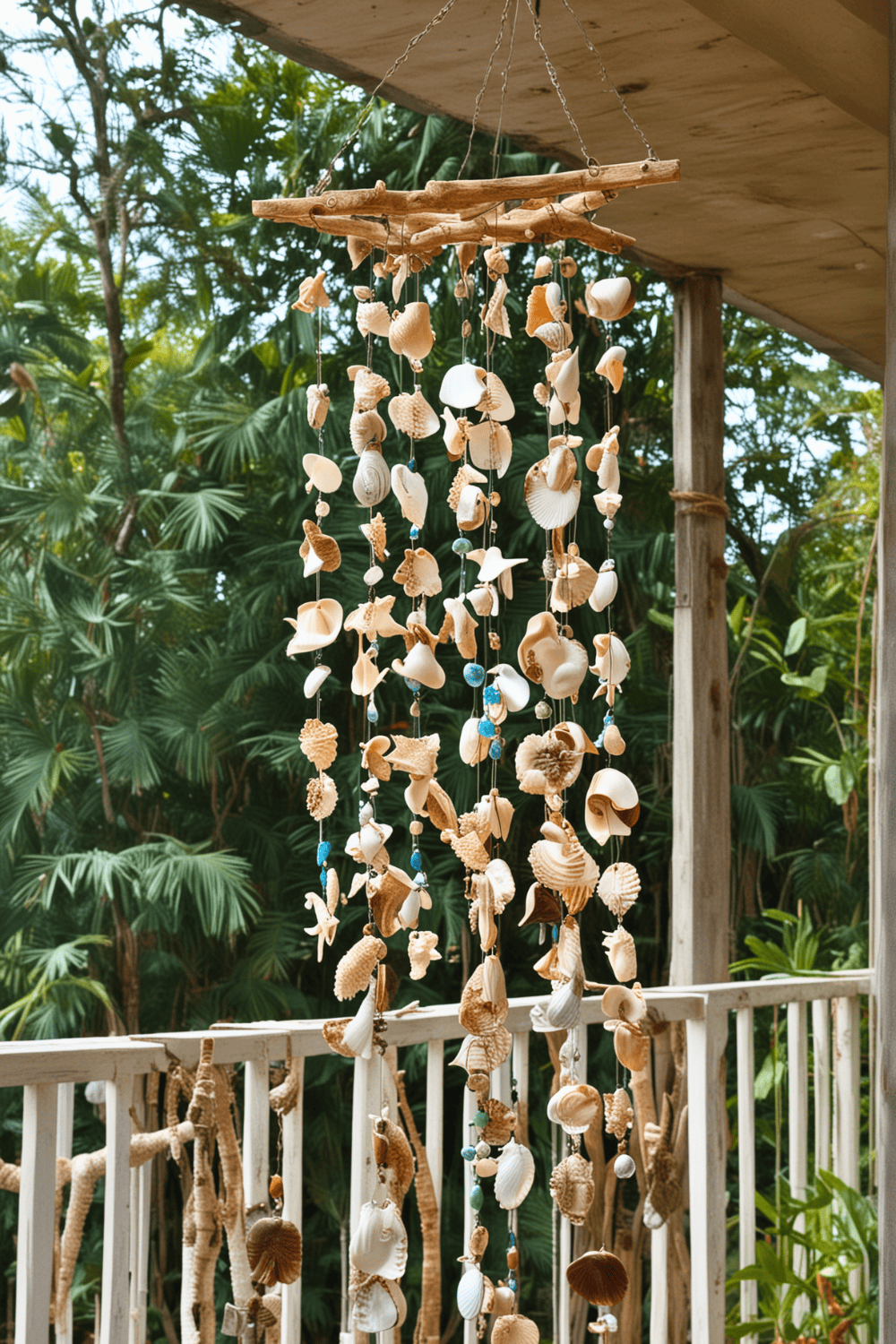
2. DIY Wind Chimes
Making your own wind chimes allows you to personalize materials and sounds to fit your taste, while also enjoying a fun, artistic activity. Gather materials such as metal pipes, wooden sticks, beads, or seashells; anything that appeals to you.
First, cut the pipes or wood to various lengths to create different tones. Then, use a strong thread or fishing line to connect your chosen items.
Secure the top of each string to a sturdy ring or piece of wood that will serve as the wind chime’s hanger. Finally, hang your creation where the wind can reach it and enjoy the calming sounds it makes.
3. Hanging Planters
They are a wonderful way to use space efficiently, especially in city living where every bit of green counts. You can create a lively, flowing garden that catches the eye and adds a dynamic element to your decor by using vertical space.
Moreover, hanging planters help keep plants away from pests and allow for better air movement, promoting healthier growth. First, select strong hooks or brackets for your chosen spot, making sure they can hold the weight of the planter and soil.
Next, pick plants that do well when hung, such as trailing varieties like ivy or petunias, which look amazing.

4. Solar Lights
Solar powered lights remove the need for complicated wiring and can be easily put in place by anyone. Their energy efficiency comes from using renewable energy from the sun, greatly cutting down on electricity costs.
They also help lower carbon footprints, which makes them a sustainable choice for the environment. Choose spots in your garden or balcony that get plenty of sunlight all day.
Position the solar panels where they can take in the most sun. Opt for high quality solar lights with good battery life to ensure they stay lit throughout the night.
5. Aromatic Garden
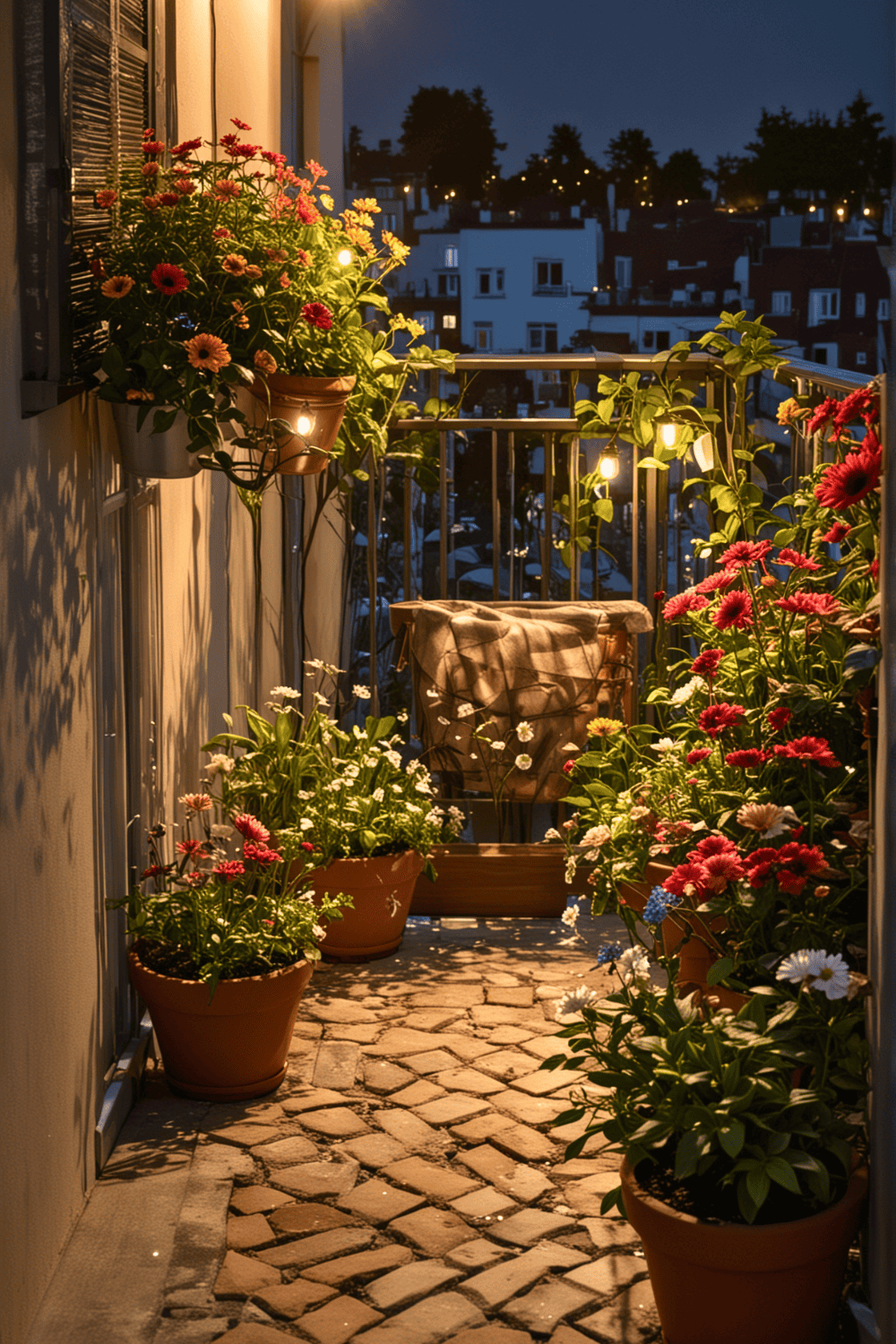
Fragrant plants not only lift your mood but also serve a practical purpose by keeping bothersome insects away. The idea of cultivating an aromatic garden is based on improving your living area with little effort but significant impact.
First, choose pots or planters that fit your space, making sure they have good drainage. Next, select aromatic herbs and flowers like lavender, rosemary, mint, and thyme, which are simple to care for and grow well in containers.
Plant them using excellent soil and place them in spots where they will get ample sunlight.

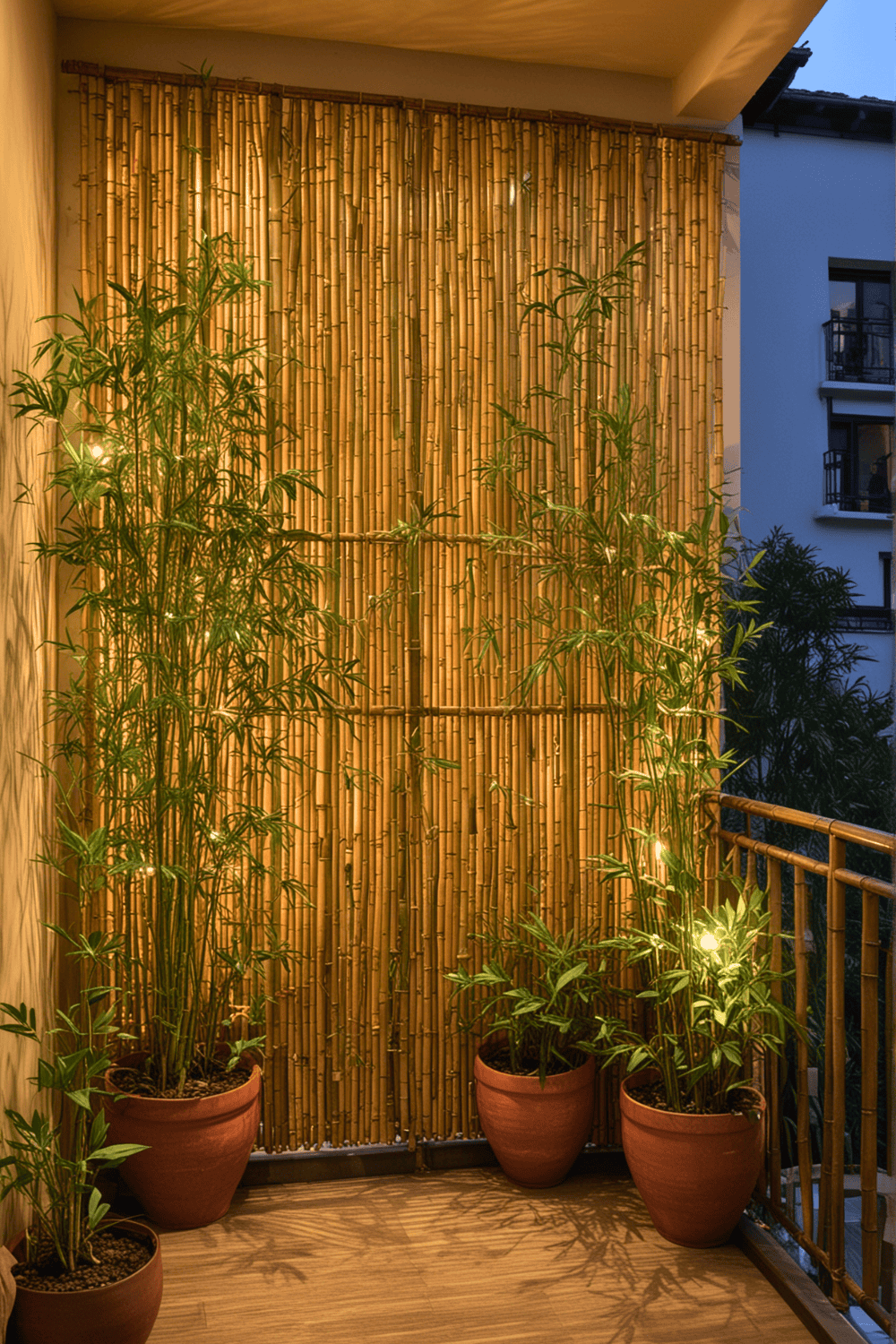
6. Bamboo Accents
Bamboo accents are visually attractive and also incredibly strong and resistant to weather. This makes it a sensible choice for outdoor decorations that still look great.
The natural, warm colors of bamboo blend perfectly with green plants, which creates a peaceful and inviting mood. So, first put in bamboo poles or screens as a natural barrier or privacy wall.
These screens are simple to install and can turn a plain balcony into a stylish hideaway. Moreover, use bamboo furniture and planters.
Bamboo chairs and tables provide both comfort and visual appeal.
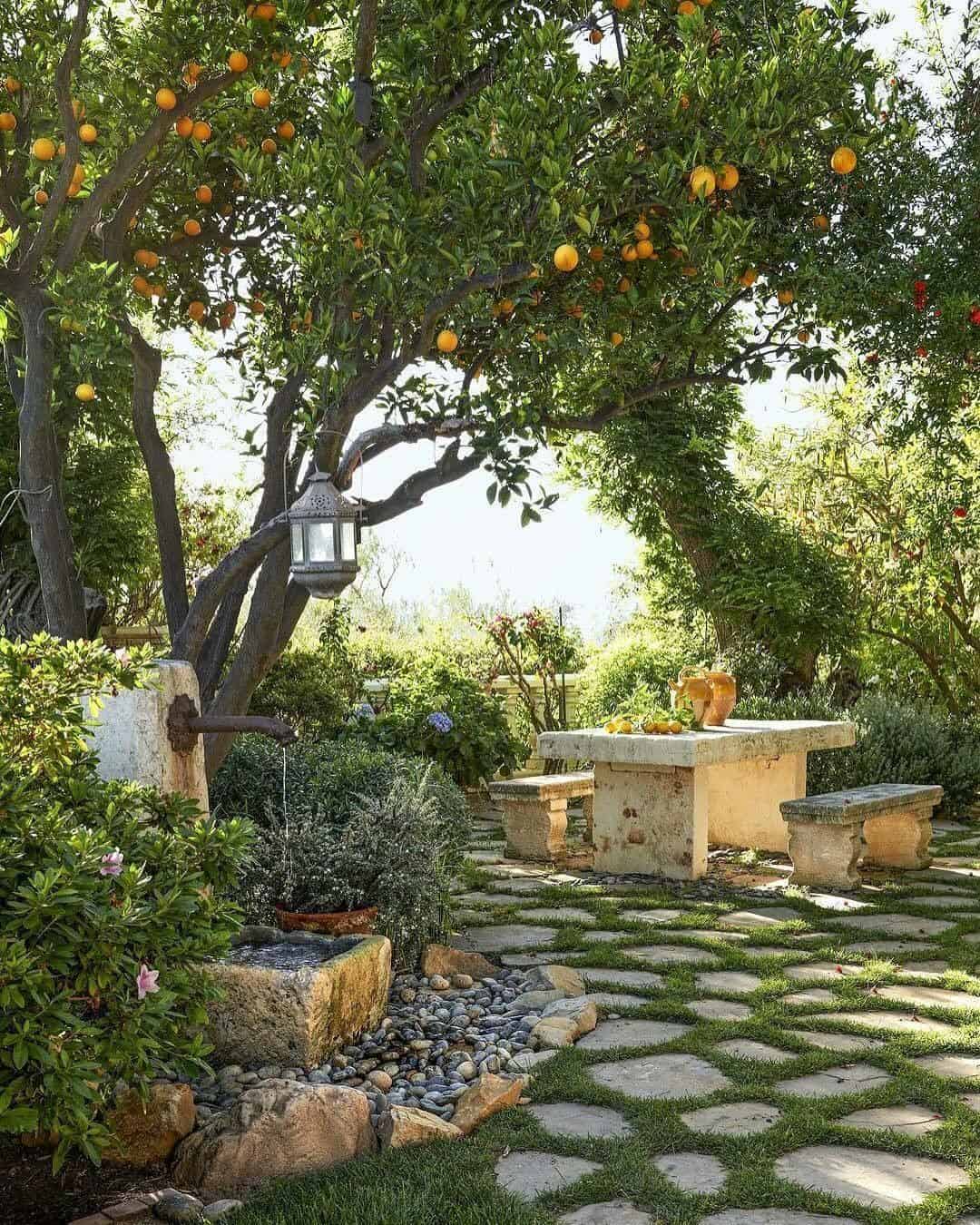
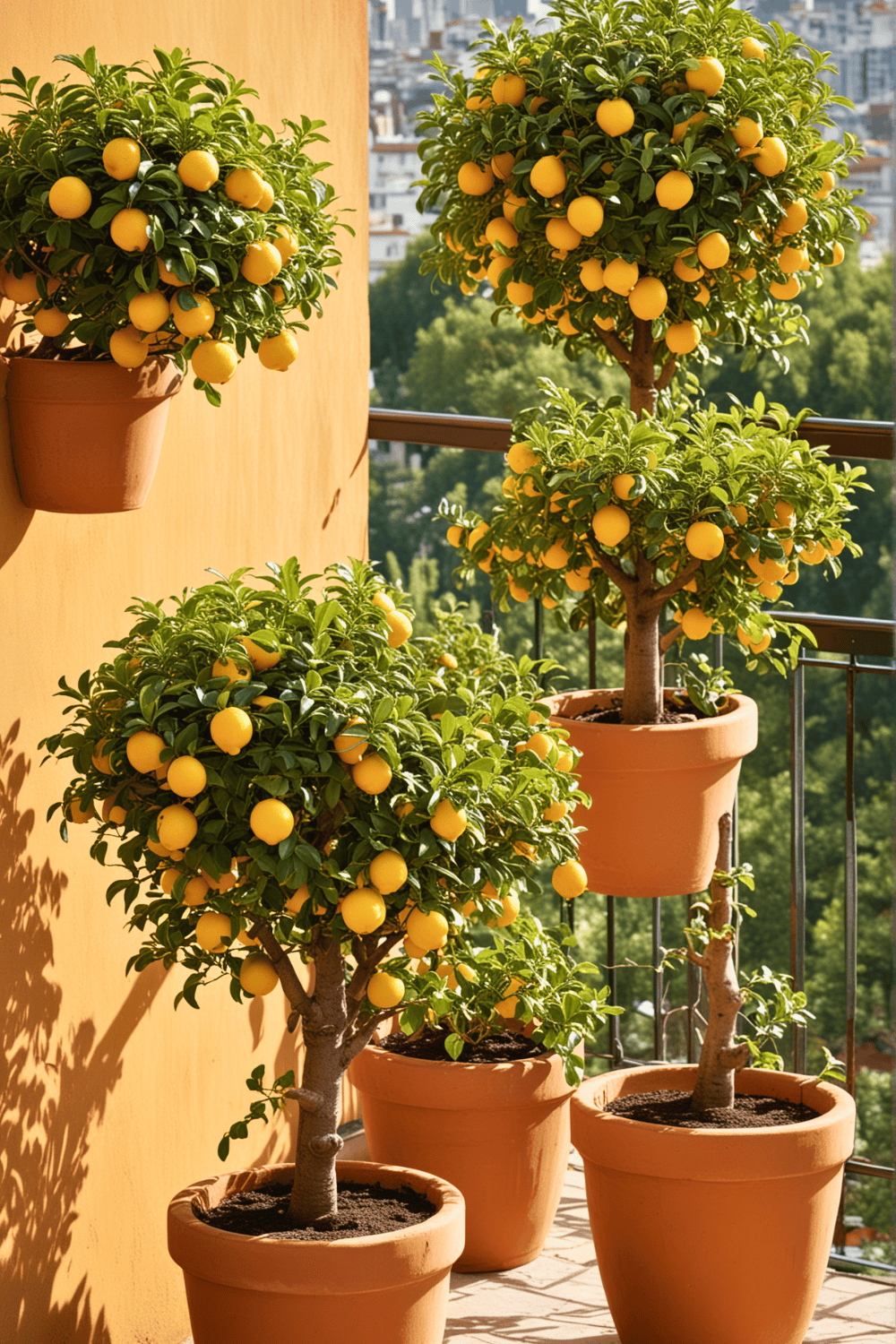
7. Fruit Trees in Pots
The charm of this technique lies in its power to bring the joys of orchard like harvesting right to your balcony or patio. Small fruit trees, like lemon or apple types, are perfect for growing in containers.
They are not only easy to manage in size but also offer a lovely scent and the delight of picking your own fruit. First, select a large pot with sufficient drainage holes and fill it with a good quality potting mix.
Place your pot in an area where it will get plenty of sunlight, ideally six to eight hours each day. Make sure the soil stays moist but not waterlogged.
Moreover, feed your tree with a balanced fertilizer during the growing period.
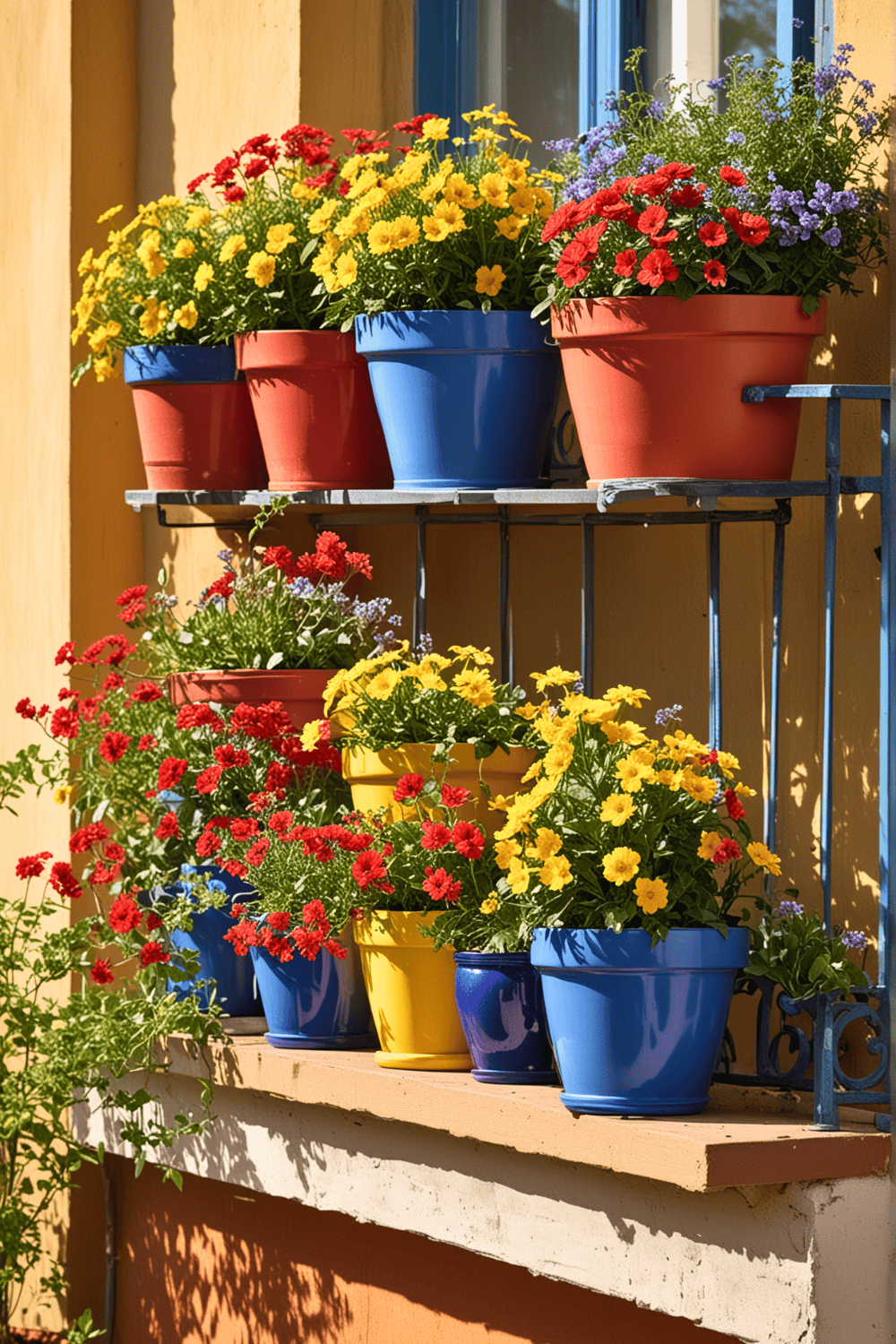
8. Colorful Pots
Brightly colored pots not only boost the visual appeal but also show off your character and style. Effortlessly bring together your indoor and outdoor areas by choosing colors that complement your home’s exterior.
First, select a variety of pot sizes and shapes for visual interest. Opt for strong materials like ceramic or plastic to withstand different weather conditions.
Next, choose a color scheme; mixing and matching vivid shades like turquoise, lime green, and sunny yellow can create a lively look. Finally, fill them with a mix of blooming plants and green foliage to complete your cheerful balcony oasis.
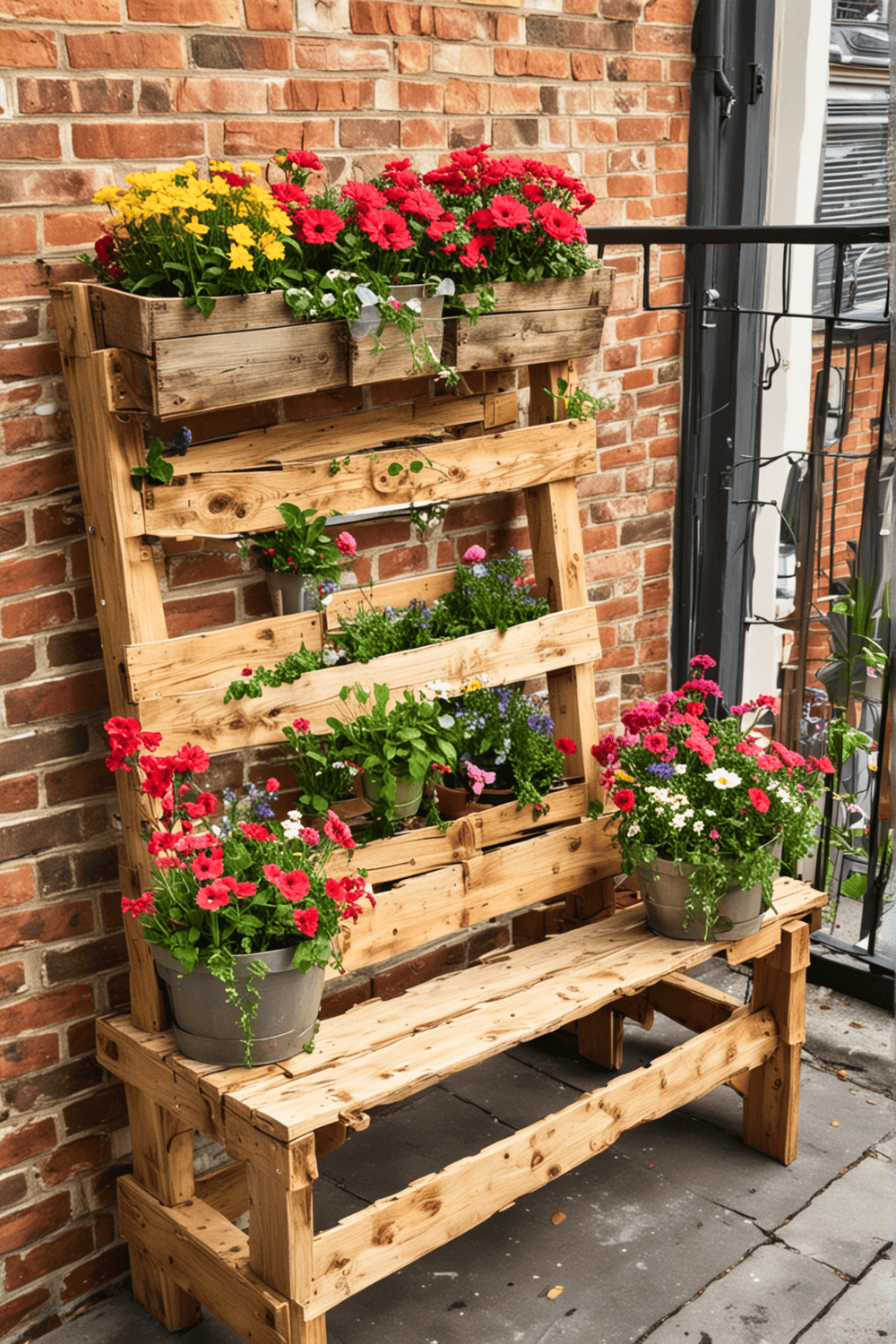
9. Pallet Planters
Utilizing wooden pallets brings a rustic feel and reuses materials that might otherwise become trash. It is an economical way to transform any balcony, patio, or garden nook into a green sanctuary.
Plus, pallets are adaptable, sturdy, and can hold many kinds of plants, from flowers to herbs. First, choose a strong pallet and clean it thoroughly.
Sand the wood to prevent splinters. Next, line the interiors with landscape fabric to stop soil from falling out while still allowing water to drain.
Secure the fabric with a staple gun. Fill each section with good quality soil and place your seeds or seedlings.
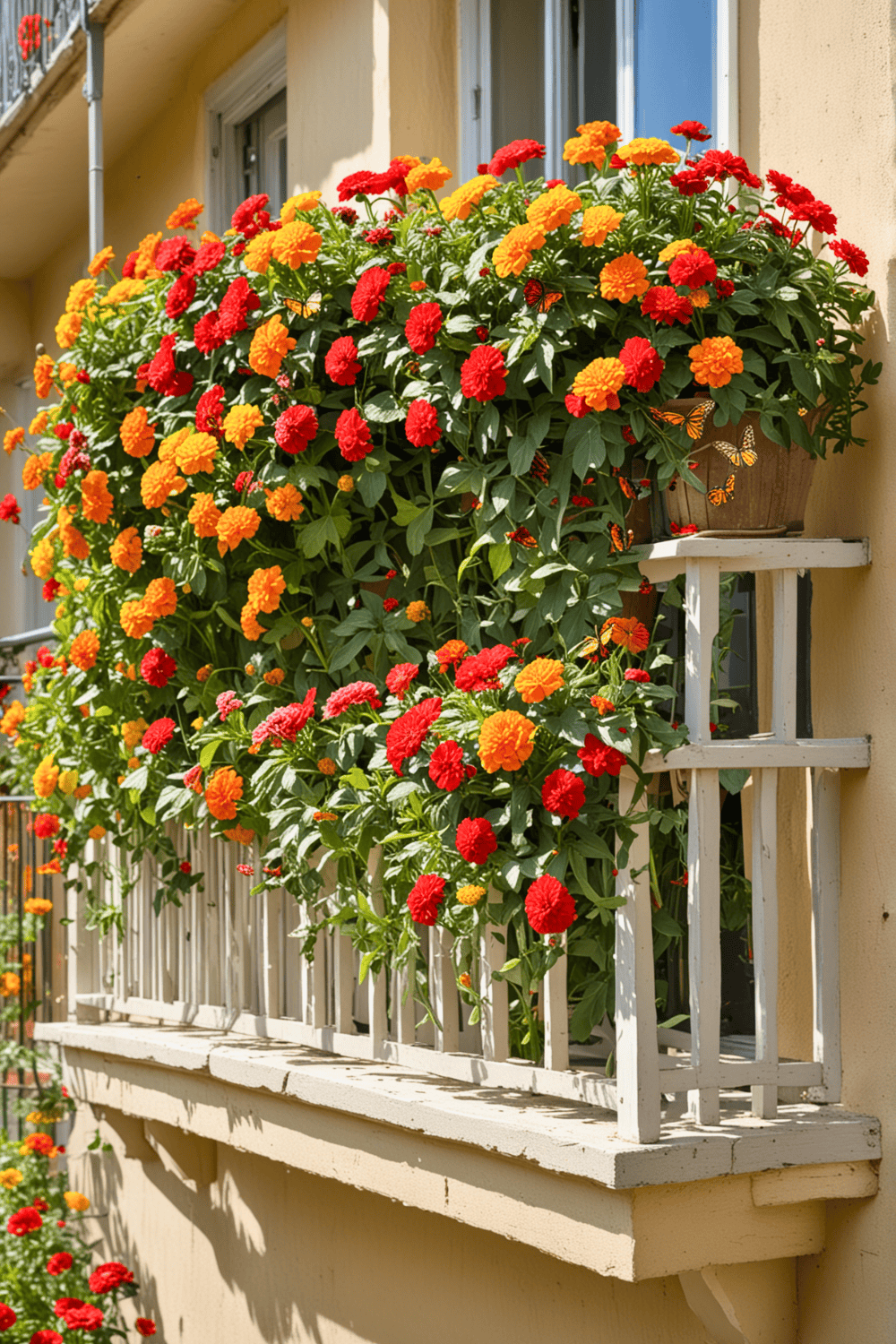
10. Butterfly Garden
This idea is not just about how it looks; it is about taking care of a small ecosystem that benefits both you and the environment. Butterflies are vital pollinators, and by attracting them, you help the well being of other plants and animals in your area.
Choose a sunny spot as these insects love warmth. Avoid pesticides as they can harm butterflies.
Provide a shallow dish with water and some flat stones for them to rest on. Consider adding a mix of native plants to offer a year long food source.
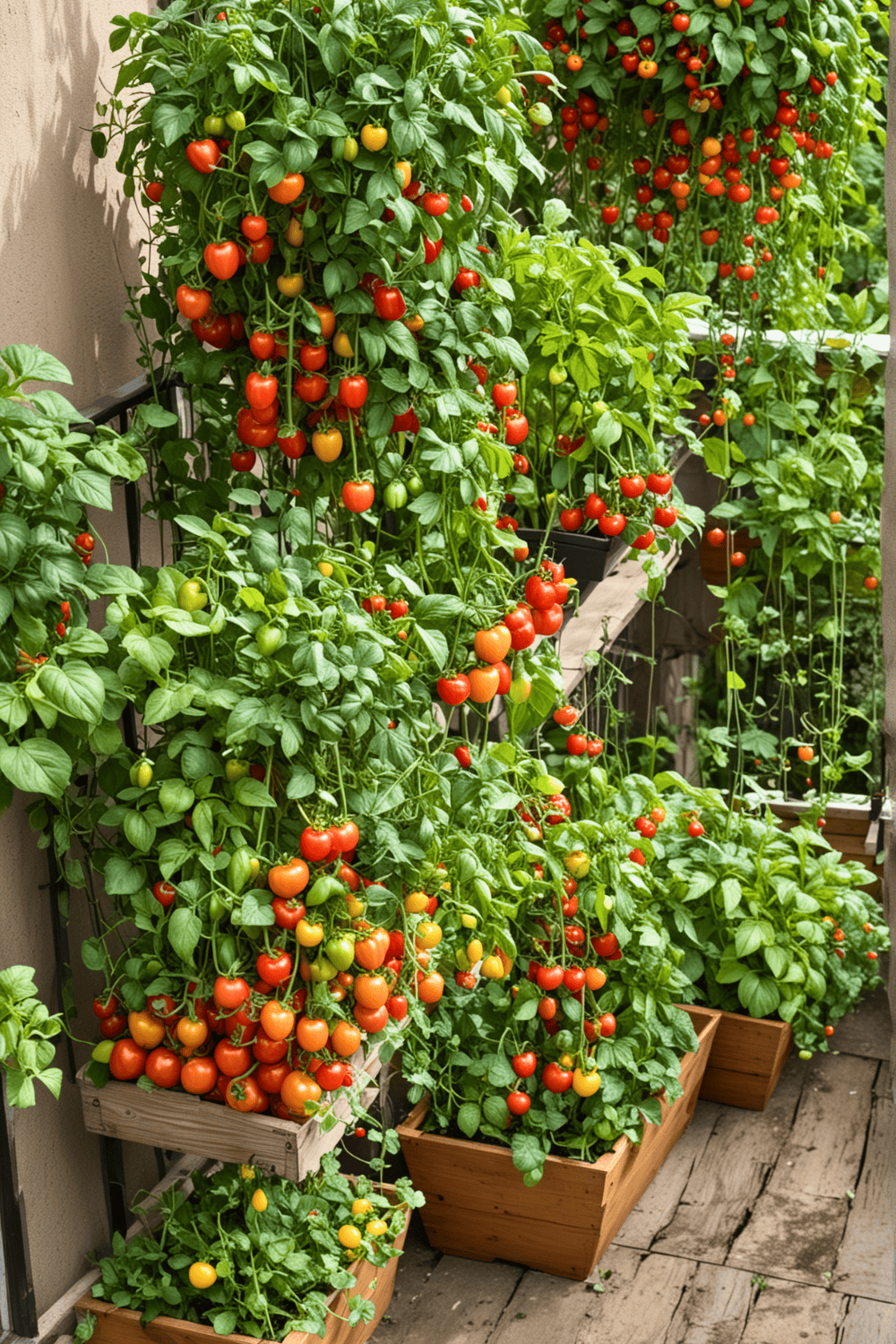
11. Edible Garden
It cuts down your grocery expenses, but it also guarantees that your food is free from harmful pesticides and chemicals. Furthermore, gardening is a satisfying and soothing pastime that can improve your mental wellness.
First, select easy to grow plants like tomatoes, strawberries, and peppers, which flourish in pots or containers. Make sure your balcony or garden spot gets plenty of sunlight; at least six hours daily.
Use good quality soil and compost to supply essential nutrients. Lastly, watch for pests and handle them using natural methods when possible.
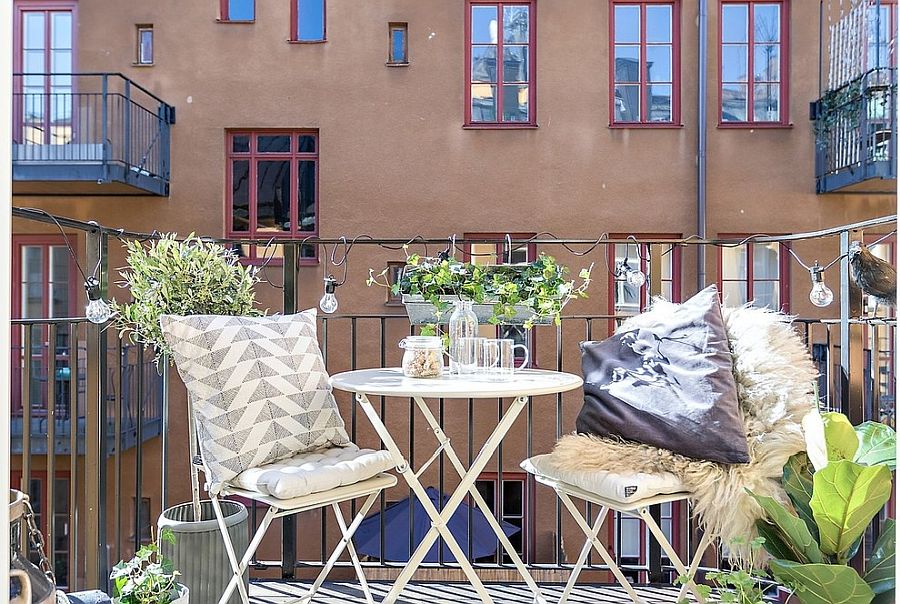
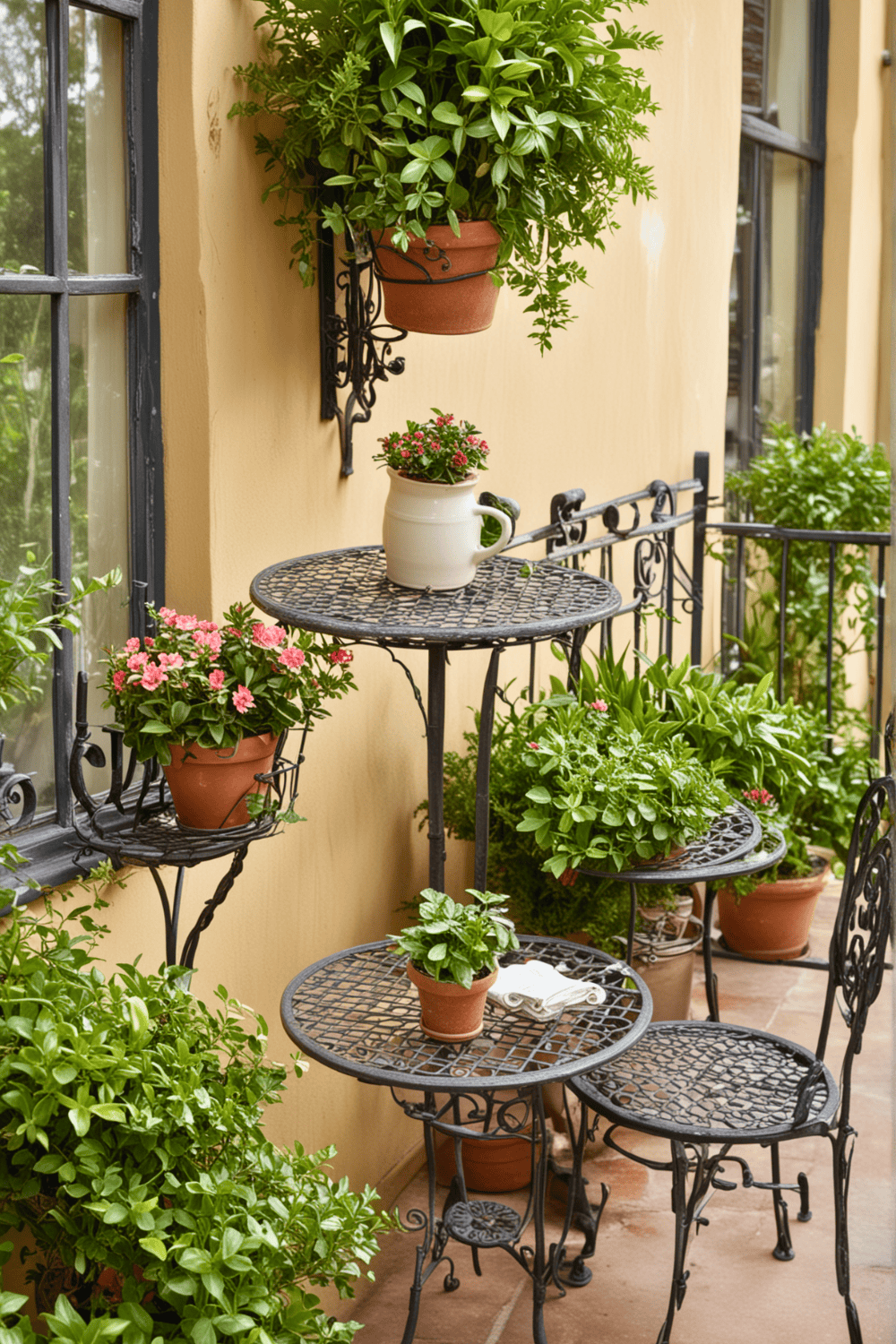
12. Bistro Set
Such a setup offers a calm retreat from the daily rush, right in the comfort of your home. It is small, practical, and elegant.
These sets are specifically made to fit smaller areas, making them perfect for balconies. They often include folding parts, giving you flexibility and easy storage.
First, measure your balcony to ensure the set fits comfortably. Choose materials that match your outdoor look, whether it is graceful wrought iron or natural wood.
Finally, add some cushions for comfort, and perhaps a small potted plant for extra charm.
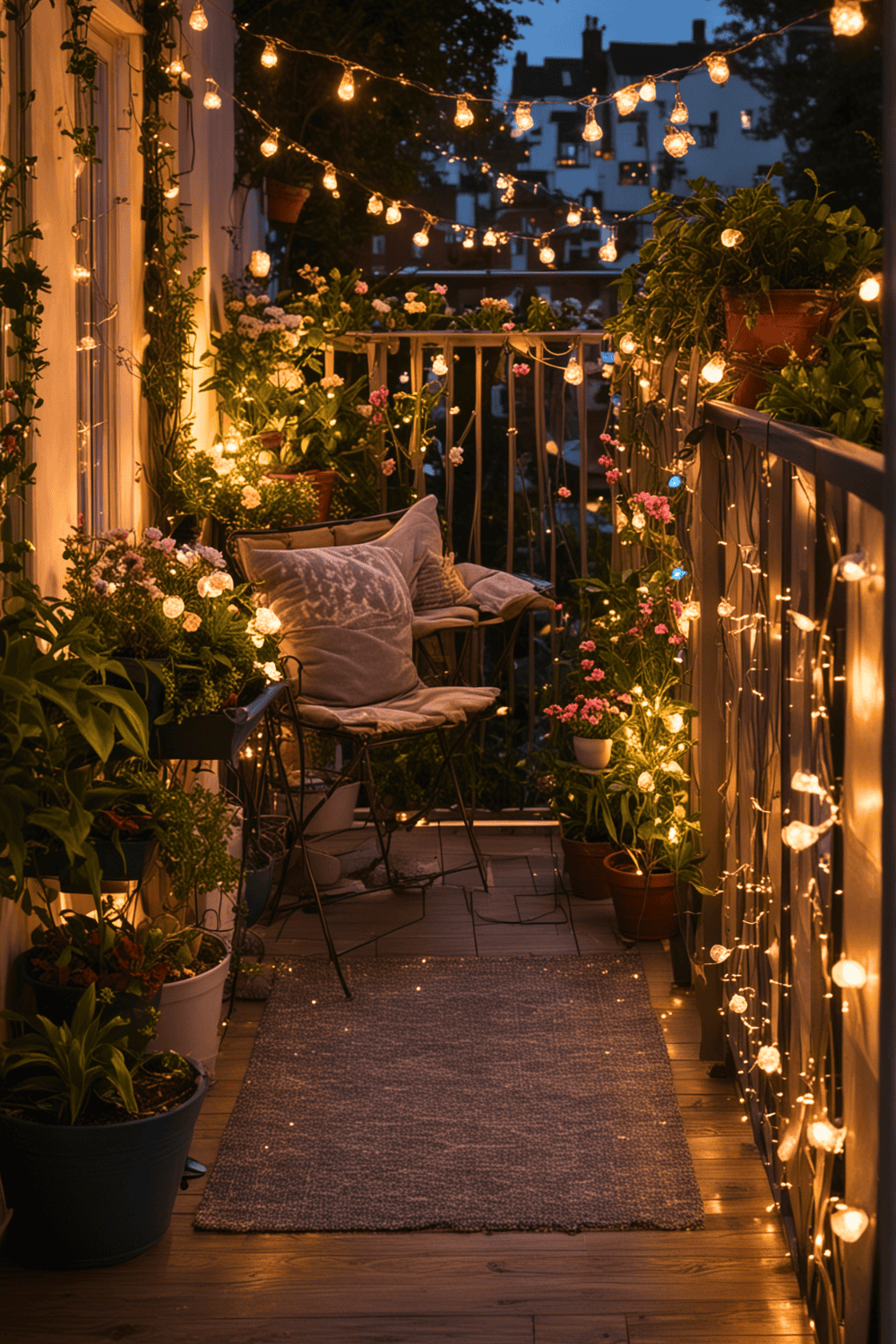
13. Fairy Lights
The appeal of these twinkling lights lies in their ability to make a warm and welcoming ambiance. This subtle, gentle glow makes the space ideal for relaxing after a long day and adds a touch of enchantment to your evenings.
First, measure the length of your balcony’s railing to figure out how many lights you will need. Choose weather resistant fairy lights to guarantee they last.
Then wrap the lights around the railing, securing them with ties if necessary. Weave additional strands through your plants, adding layers of light.
Finally, plug in the lights, and soak in the peaceful, captivating atmosphere you have created with just a few simple steps.
14. Container Gardening
This method lets you grow many different plants, no matter the size of your garden, or if you lack one altogether. It is a perfect choice for city dwellers, those with limited movement, or anyone who enjoys changing their garden’s design often without heavy lifting.
Select containers that suit the plants you want to grow, whether herbs, flowers, or small vegetables. Ensure the containers have good drainage to prevent water accumulation.
Use excellent potting soil mixed with compost to give the plants the nutrients they need. Position your containers where they will get enough sunlight, and be ready to move them if the light conditions change.
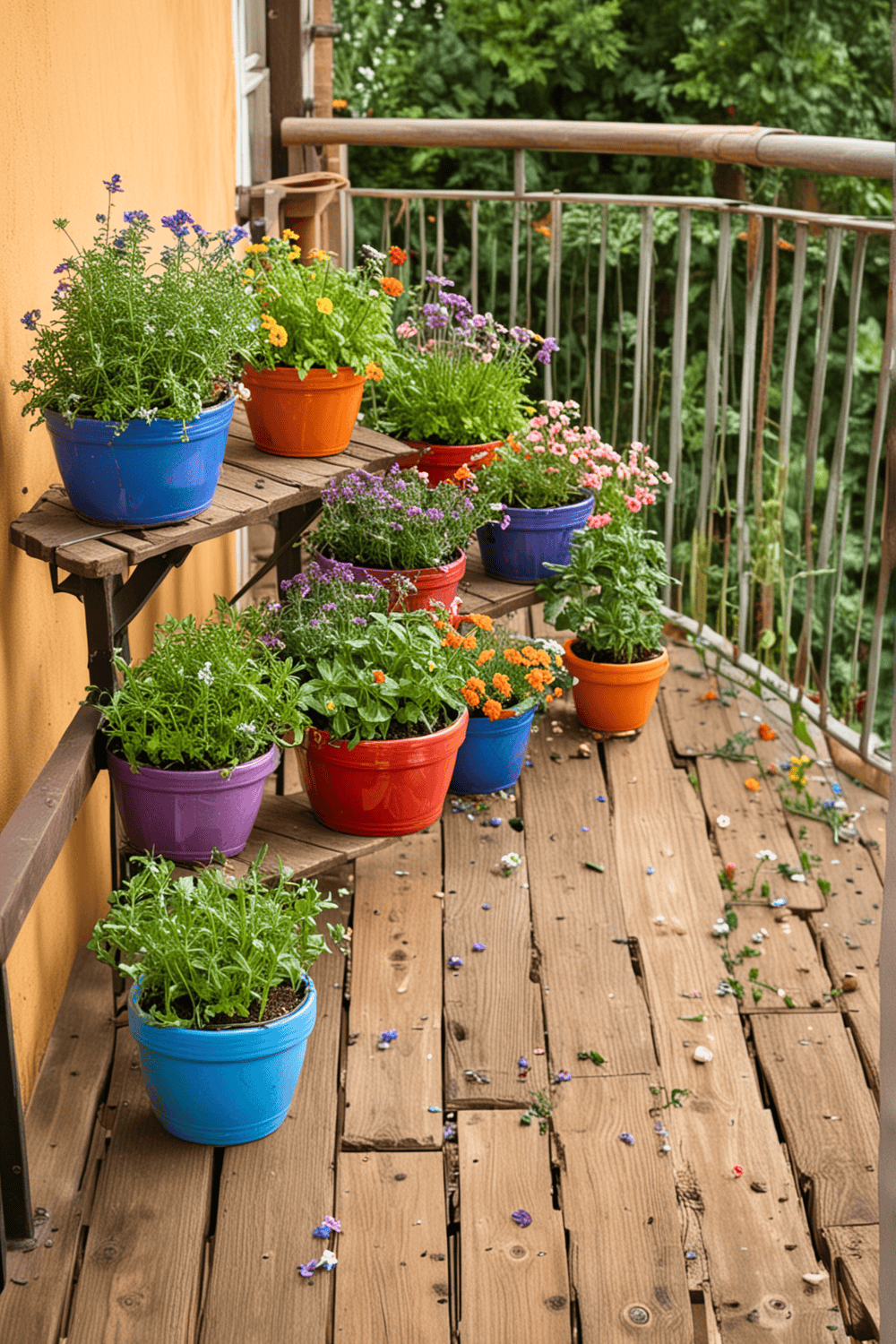
15. Zen Garden
Creating a small Zen garden means using simple items like sand, stones, and a few succulents to make a peaceful environment that acts as a center point for calm and unwinding. This tiny retreat can help you disconnect from daily pressures and reconnect with nature, even in a city setting.
First, choose a shallow container and fill it with clean sand. Arrange small stones in a way that you find pleasing, and add a couple of succulents for a touch of green.
A small rake can be used to make soothing patterns in the sand, much like a traditional Zen garden.

16. Seasonal Flowers
This method keeps your space looking fresh and colorful, and it is a chance to try different plants as the seasons change. Having a variety of blooms can improve your plants’ health by changing them with the seasons, preventing soil exhaustion.
Furthermore, it supports local wildlife; various flowers attract different pollinators throughout the year. First, find out which flowers do well in each season.
In spring, try tulips and daffodils. Summer is ideal for marigolds and petunias.
When autumn arrives, chrysanthemums and pansies will shine. Winters are good for tough options like violas and cyclamen.
Planting times and care needs will differ, so stay informed and adjust your gardening routine accordingly.

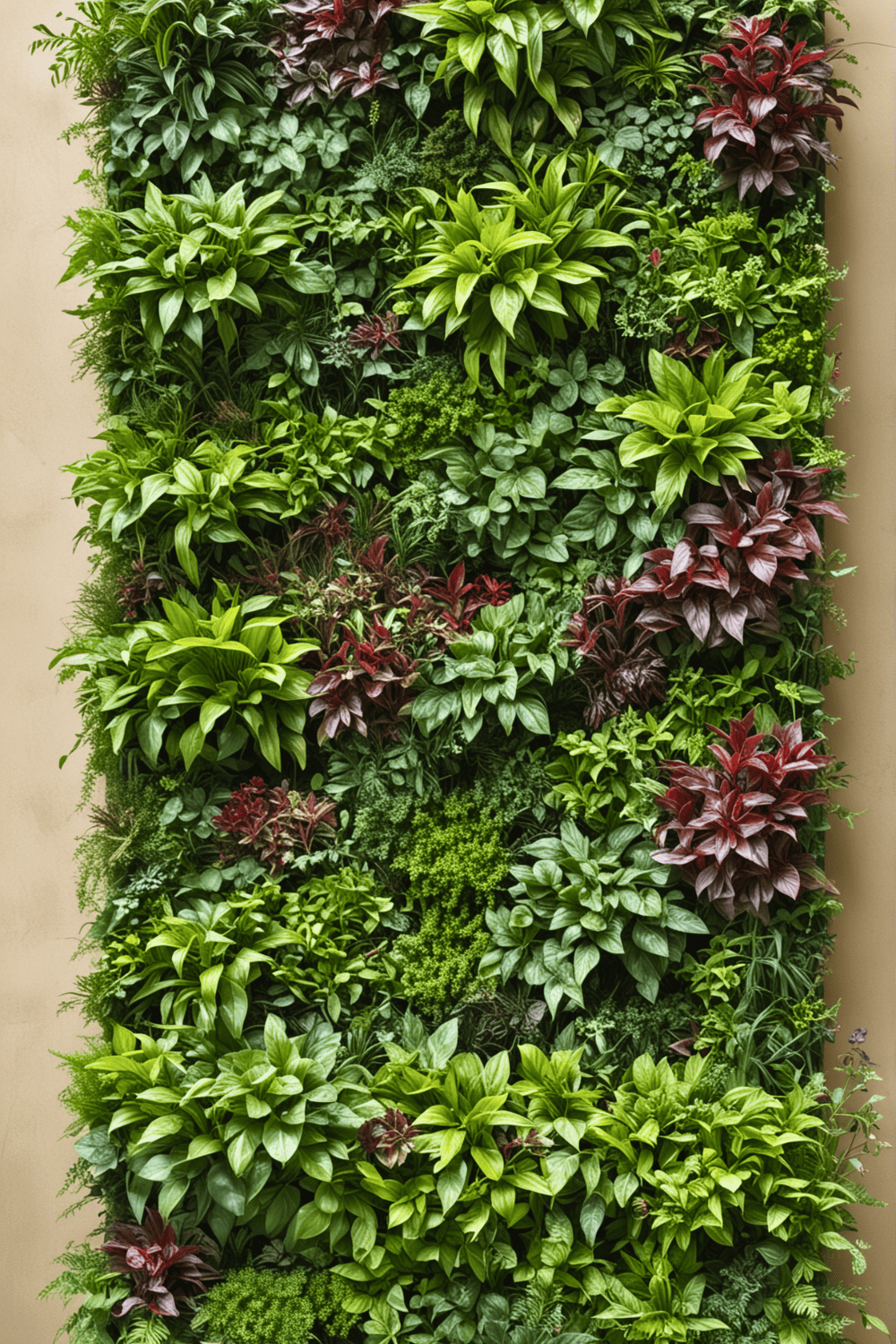
17. Green Wall
A green wall, also called a vertical garden, is the perfect way to bring life into city areas where space for typical gardening might be limited. They offer real benefits like improving air quality, reducing noise, and even lowering temperatures by soaking up heat.
Building a green wall is simpler than one might think. Using a modular planting system, you can customize the arrangement to fit your space.
First, attach a frame to your wall. Then, insert planting trays or pockets into the frame, filling them with soil and your chosen plants.
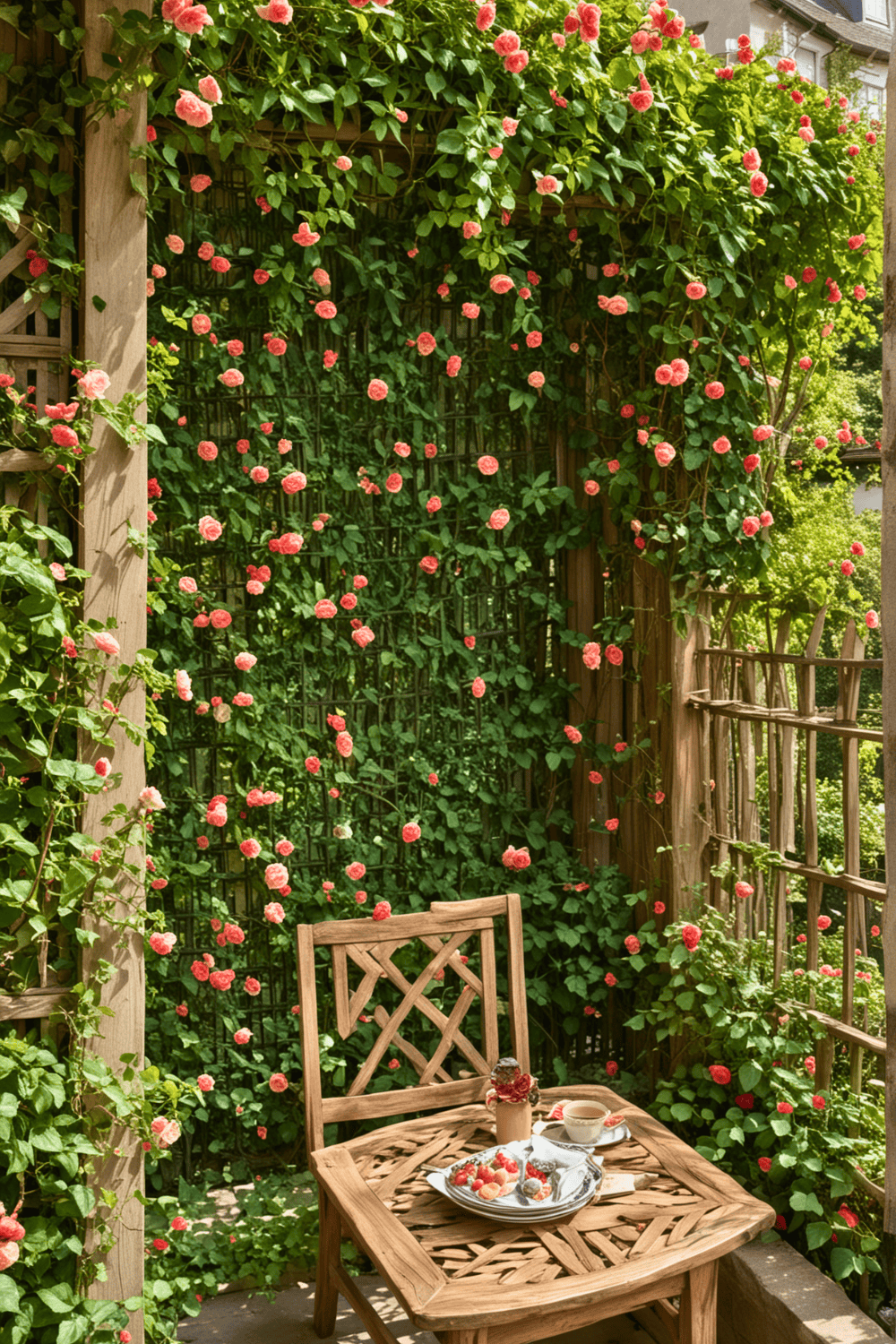
18. Balcony Privacy Screen
Adding a privacy screen lets you enjoy your balcony without worrying about curious neighbors or passersby. Plus, it improves the visual appeal by bringing in natural elements that can calm and refresh your surroundings.
You can put up lattice panels, which provide a chic barrier that blocks views but still lets light through. Alternatively, opt for climbing plants like ivy or morning glories.
These plants quickly cover any structure, creating a natural, lush screen. Another choice is to hang outdoor curtains that can be closed for complete privacy or tied back when not needed.
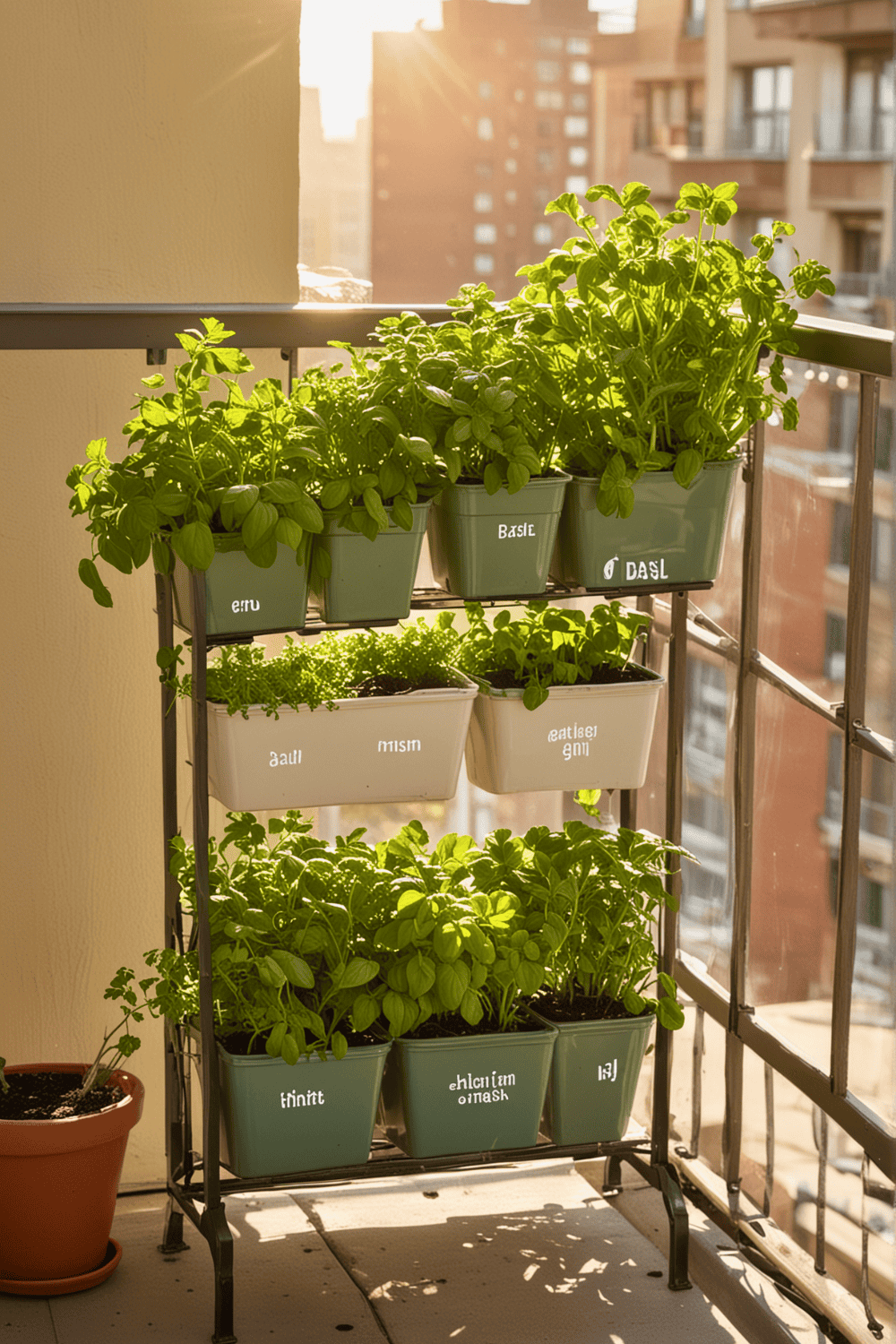
19. Herb Garden
Changing part of your balcony into an herb garden is a smart move for any home cook and plant enthusiast. It makes cooking simpler by having fresh herbs like basil, mint, and cilantro available immediately, and it brightens your outdoor space with refreshing smells.
First, get some pots or planters that fit your balcony’s aesthetic. Make sure they have drainage holes.
Fill them with quality potting soil and plant your herbs. Basil flourishes in sunny spots, while mint and cilantro prefer partial shade.
Water them regularly, but avoid giving them too much water.
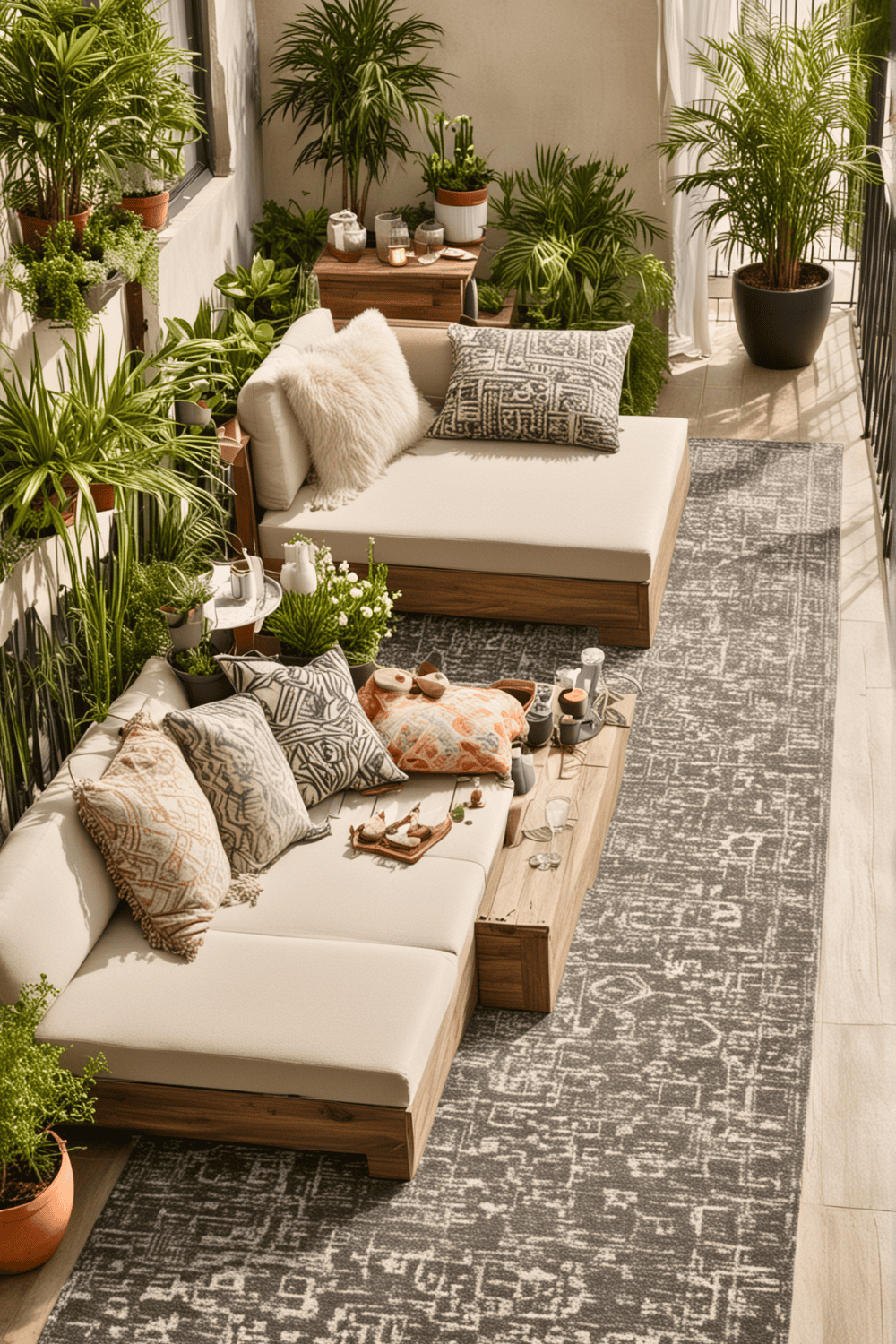
20. Outdoor Rug
An outdoor rug adds warmth and comfort, which makes your balcony inviting for relaxing or getting together with others. Moreover, it helps define the area, creating separate zones for lounging or dining.
So, first measure your space to pick the right size rug. Opt for weather resistant materials like polypropylene, which can handle sun, rain, and mildew.
Select a design that matches your home’s decor, ensuring everything looks consistent. Place the rug in the center of your balcony, then arrange furniture and accessories around it.
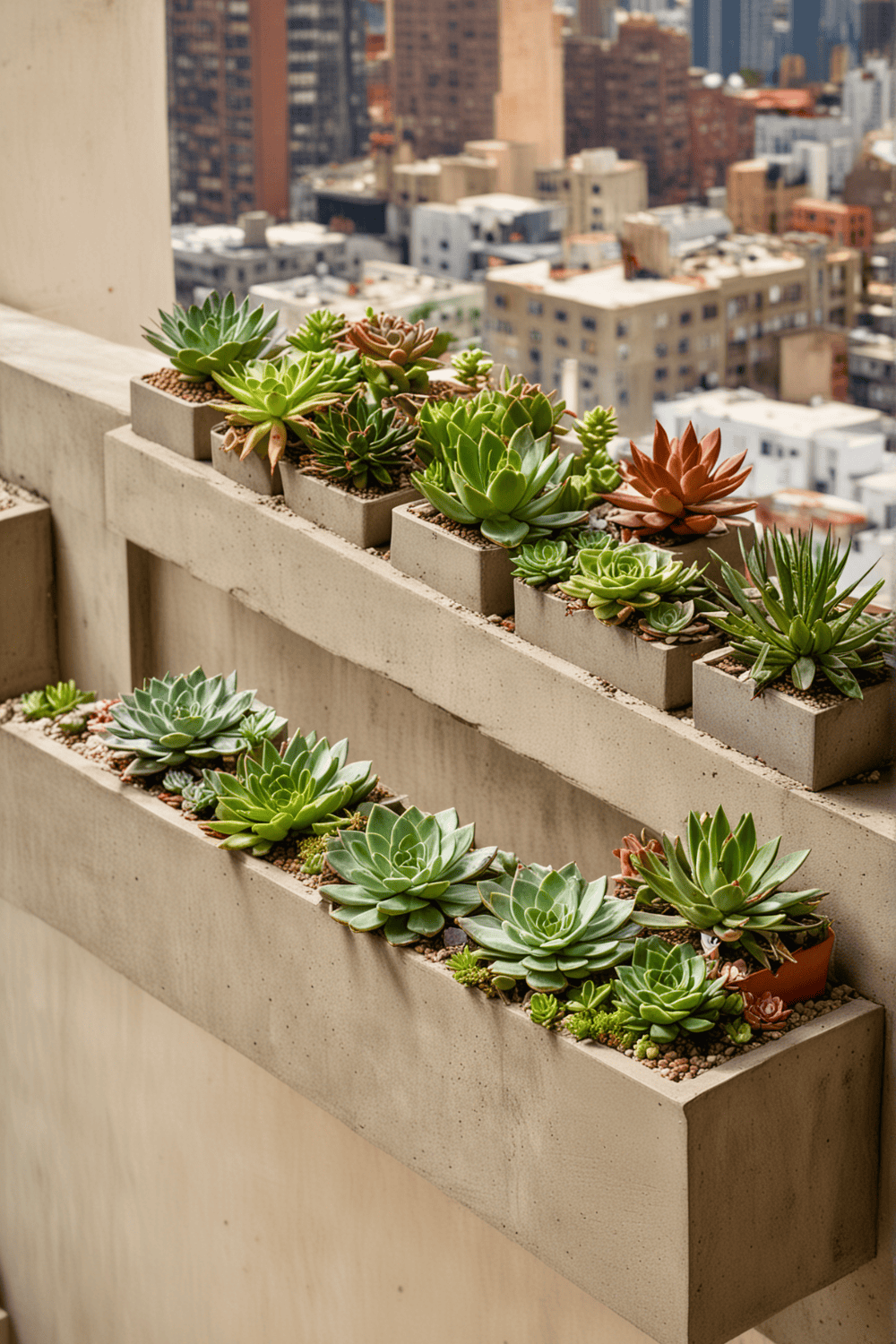
21. Succulent Display
These tough plants do well with minimal attention and can handle direct sunlight, making them perfect for busy lives. You can easily bring diverse textures and bright colors to your outdoor area by arranging them in various containers.
First, select a range of succulent types in different sizes and shades. Choose containers that enhance your balcony’s look, such as ceramic pieces or wine crates.
Plant your succulents in soil that drains well and make sure each one has enough room to grow. Place the containers where they can get plenty of sunlight, and water sparingly, as succulents handle dry conditions well.
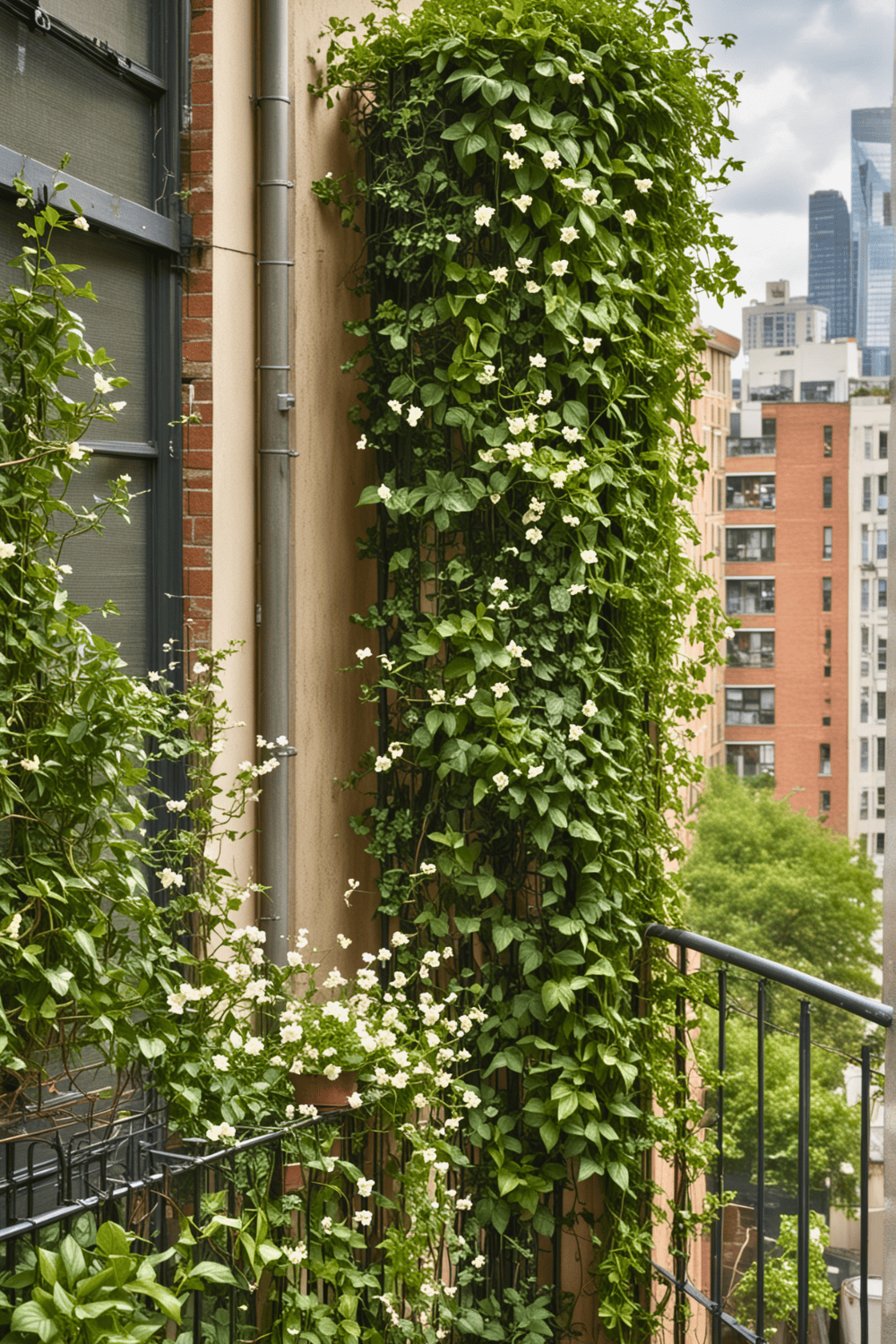
22. Vertical Gardens
These clever systems let you grow a variety of plants on your balcony without taking up precious floor space. The advantages are clear: you can enjoy a vibrant green setting, improve air quality, and even grow your own herbs or veggies.
There are several ways to build a vertical garden. You can use vertical containers that attach to walls or railings.
A favored option is a trellis, perfect for climbing plants like ivy or jasmine, which can turn a drab wall into a lively green scene. Alternatively, modular systems with pockets allow you to plant many different species in a small footprint.
Choose drip irrigation systems to guarantee consistent watering. With these straightforward techniques, anyone can easily start their own vertical garden.
23. Water Features
The soft sound of flowing water creates a peaceful setting, turning your balcony into a calm retreat away from the daily rush. This adds an element of serenity and draws birds, bringing a lively yet soothing presence to your home.
First, choose a small fountain or birdbath that fits your balcony’s dimensions. Ensure it is light for easy moving and positioning.
Next, consider a solar powered model for an environmentally friendly option that does not need electrical outlets. Finally, add plants around it to enhance the natural atmosphere and create a harmonious balance of elements.

24. Recycled Items as Planters
Using recycled items is more than just an environmentally friendly habit; it brings unique charm and personality to any garden area. These repurposed items reduce waste and turn everyday objects into striking centerpieces.
To begin, gather unused items such as boots, teapots, wine barrels, or even old kitchen colanders. Make sure the items are clean and drill drainage holes if needed.
Fill them with a mix of good quality soil and compost suitable for the plants you choose.

25. Swing or Hammock
Swings and hammocks provide a welcoming spot for relaxation, letting you escape the rush and bustle without leaving home. First, evaluate your balcony space to decide between a swing and a hammock.
For a swing, ensure you have a strong ceiling or overhead beam to install a sturdy hook. Opt for durable ropes and cushions to boost comfort.
If you prefer a hammock, choose a portable stand if you lack the needed wall support.

26. Bamboo Accents
Bamboo accents are visually attractive and also incredibly strong and resistant to weather. This makes it a sensible choice for outdoor decorations that still look great.
The natural, warm colors of bamboo blend perfectly with green plants, which creates a peaceful and inviting mood. So, first put in bamboo poles or screens as a natural barrier or privacy wall.
These screens are simple to install and can turn a plain balcony into a stylish hideaway. Moreover, use bamboo furniture and planters.
Bamboo chairs and tables provide both comfort and visual appeal.