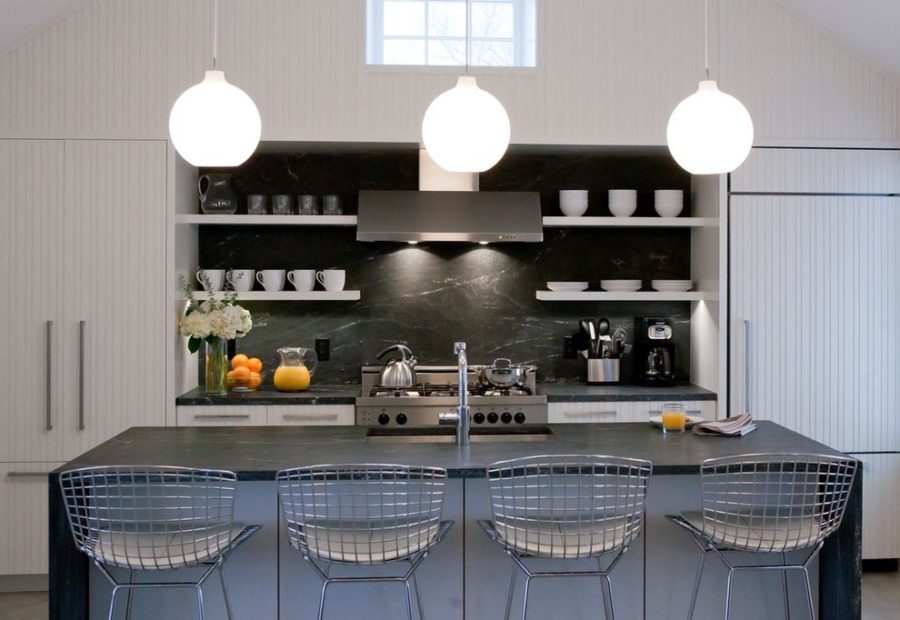
15 Earthy Kitchen Ideas for a Warm, Natural Home
Kitchen design in 2025 is moving toward raw finishes, warm surfaces, natural textures, and muted tones.
An earthy kitchen is emerging as a distinct aesthetic. Design trends are moving toward rooms that feel comfortable and connected. These kitchens bring a warmer sense of ease to everyday spaces.
Clay-toned cabinets bring warmth to the kitchen. Organic wood accents and surfaces inspired by stone add natural character. Together, these elements are associated with a calm atmosphere.
An earthy kitchen can feel inviting and timeless, whether you are planning a redesign or a smaller refresh.
This cooking space uses design ideas that bring a grounded charm to the kitchen.
Olive Slate Kitchen Sanctuary
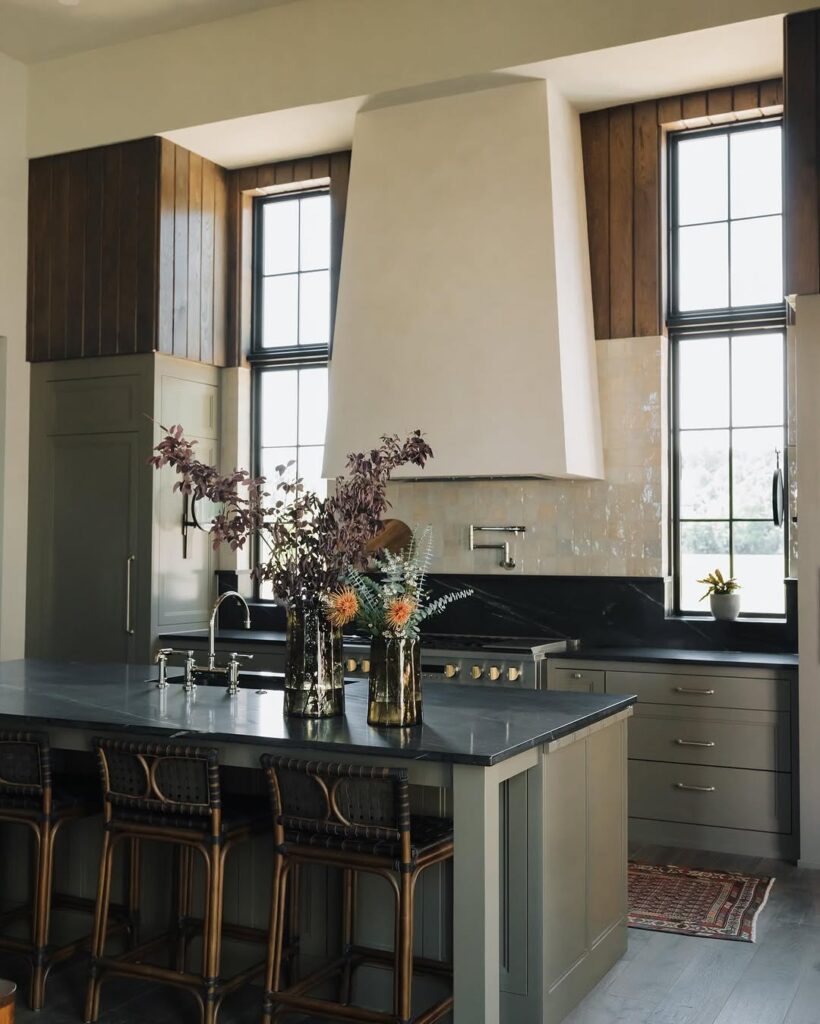
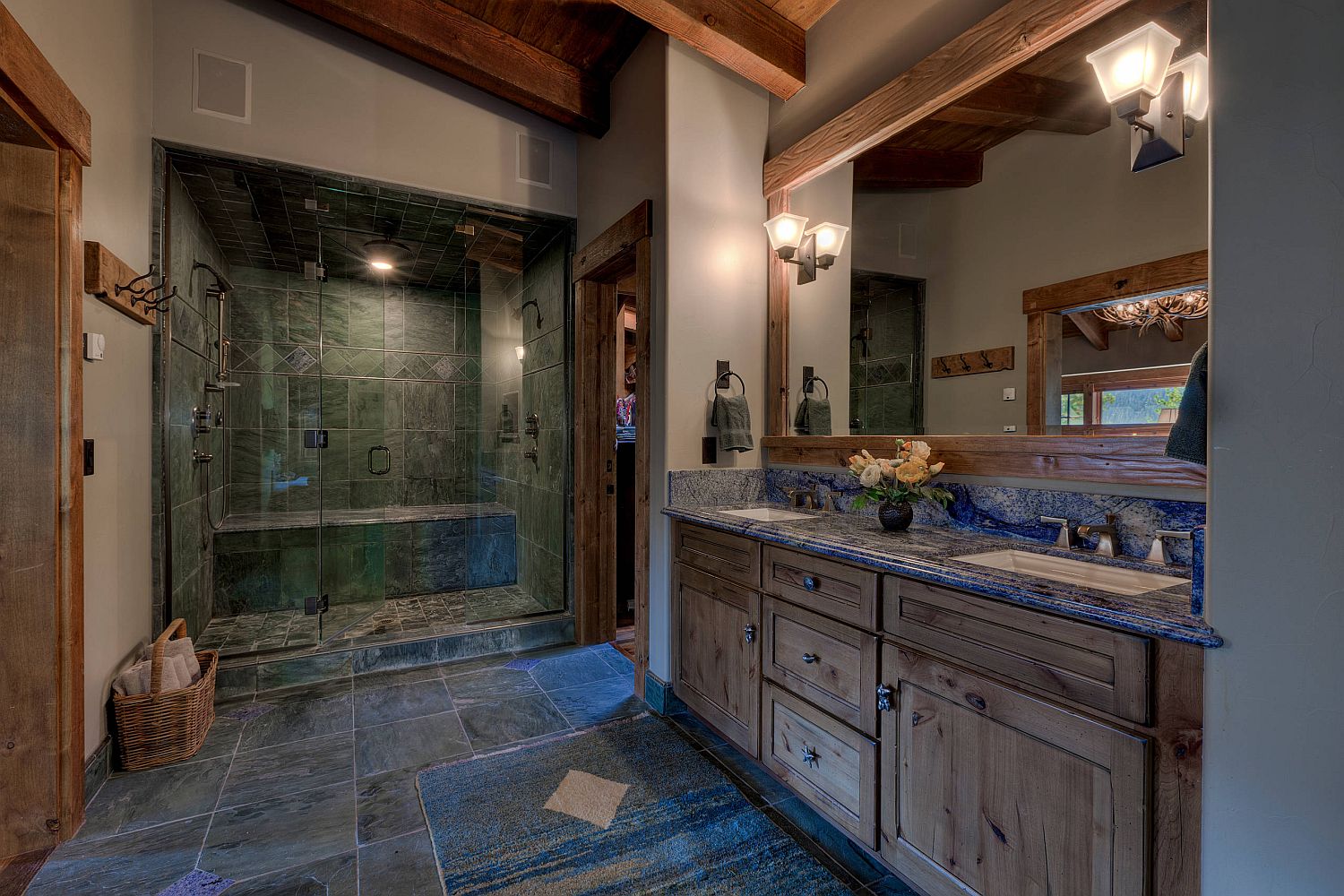
In one corner, the kitchen design brings together slate material and muted olive tones.
Across the room, slate countertops anchor the soft olive green cabinetry.
Clay-textured walls give the kitchen a tactile surface.
The flooring is slate. Its durable surface suits the kitchen floor.
Exposed aged oak beams or shelving add a visible wood detail. Brushed brass fixtures age with use.
Open storage displays ceramic containers, glass jars, and vintage cookware.
Pendant lighting made from ceramic or smoked glass is used during evening hours.
In one corner, the intentional layout encourages slower living.
The design provides practicality. It is suited to durability-focused homes.
The kitchen supports everyday rituals.
The Wabi-Tierra Kitchen
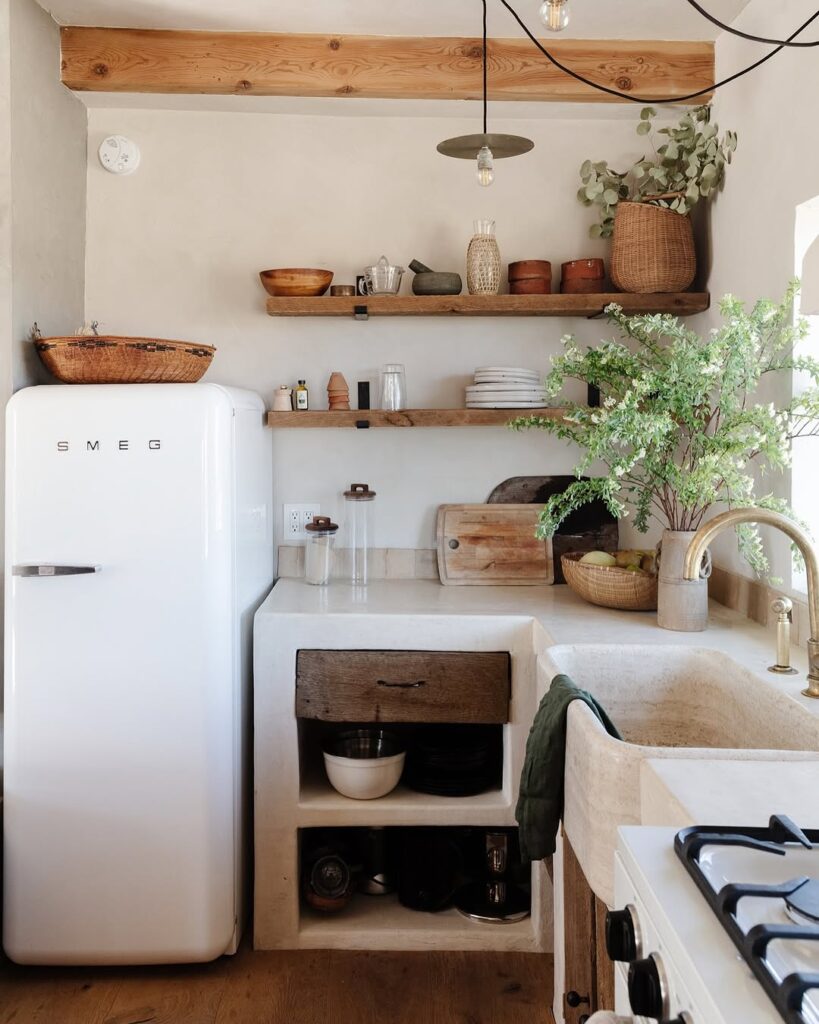
Aged materials give this kitchen an organic restraint. The design draws from Japanese wabi-sabi as well as earthen warmth.
Weathered wood leads the palette, with textured stone and natural clay alongside it. The overall effect is imperfect.
Hand-troweled plaster covers the walls. Its uneven absorption changes how the walls take in light.
Across the room, unpainted cabinetry combines raw oak and walnut with a matte-oil surface. Minimal drawer pulls with high tactility reduce visual clutter, while carved wood adds a second style.
Open shelves hold iron teapots, ceramic bowls, and dry goods wrapped in linen. The shelving is made from salvaged timber and has an open style.
Concrete countertops have irregular edges. Handmade zellige tiles cover the backsplash, and the flooring combines large-format clay tiles with wide-plank wood.
Minimal pendants hang in the kitchen. They combine charred bamboo with hand-molded clay.
Potted bonsai bring a plant element into the kitchen. Dried herbs and stones sourced from nature are used as decor.
The kitchen suits intentional living and can function as both a workspace and a quiet retreat. The design values stillness, simplicity, and age.
Claytone Kitchen with Curves
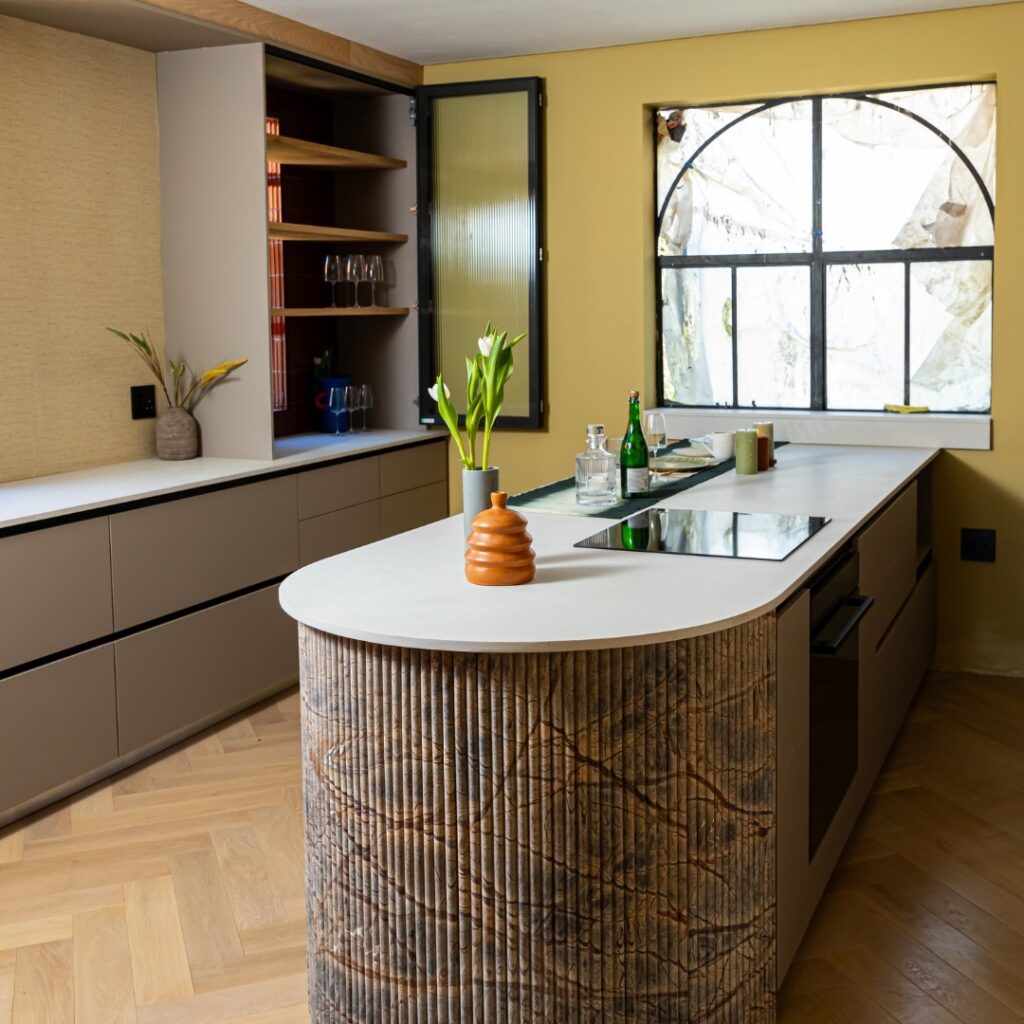
Warm clay tones give the kitchen a grounded feel. Arched lines shape the architecture and keep the kitchen style grounded.
Terracotta accents are paired with rounded islands, rounded doorways, and rounded shelving nooks. The walls use textured clay.
Open shelving with curved frames sits against a wall plane. The cabinetry is muted tan and natural stone.
Hardware uses antique brass and brushed copper. These materials serve as the kitchen hardware.
Matte quartz and limestone make up the countertops. Their non-gloss surface avoids a shiny finish.
Large-format clay tiles and raw oak planks form the flooring. The floor is practical and warm.
In one corner, woven trays and natural-linen accessories add texture. Dome pendants hang above warm wall sconces, while earth-toned dishware fills the kitchen.
This design supports everyday function and visual comfort. It suits structured spaces.
The design emphasizes material, movement, and form.
Garden Galley in Clay
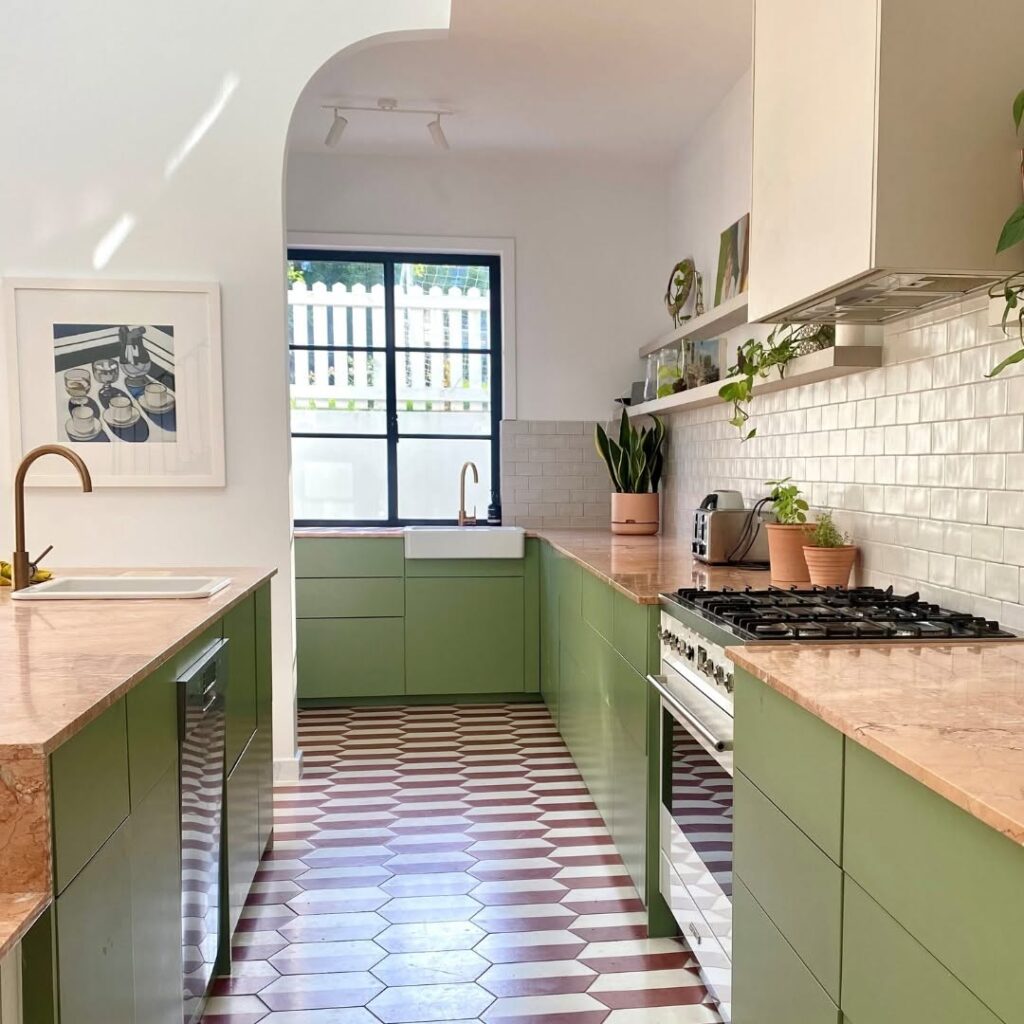
This kitchen design uses grounded materials with a nature-forward orientation.
Rich organic color and tactile terracotta clay cover the walls. Terracotta walls are suited to compact galley layouts.
In the narrow kitchen, earthy wood cabinetry keeps the layout focused. The wood could be walnut or hickory.
Raw, unglazed ceramic tiles form the backsplash. The linear layout is planned for space efficiency.
In one corner, wrought iron and bronze hardware preserves the clay matte finish.
Aged wood shelving provides a place for herb pots, handmade dishware, and produce baskets. The shelving is open and built in.
Low, warm wall sconces give off a gentle glow.
The design suits limited kitchen space while maintaining efficiency.
The design evokes culinary rituals and a connection to the land. Honest finishes suit the kitchen.
The layout uses every inch. The kitchen also supports daily use.
Sagewood Kitchen Glow
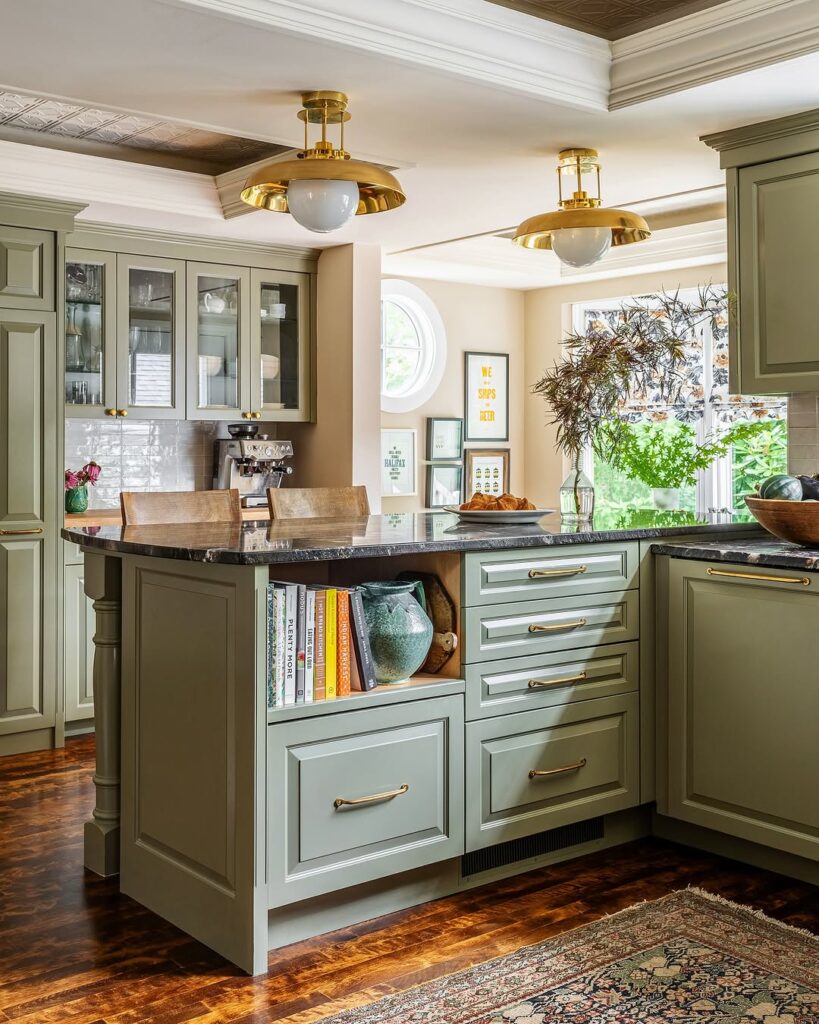
Natural light falls across soft sage tones and sun-kissed wood in this kitchen.
Muted sage green Shaker cabinets keep the color calm. Light ash and maple accents add brightness without overpowering the room.
A clay backsplash brings in handcrafted tile with subtle texture. It covers the kitchen wall behind the work area.
The countertops are made of butcher block. A soft golden undertone runs through the wood.
Cabinet knobs in brass and aged pewter add moderate contrast.
Gauzy linen curtains frame the kitchen windows. The pendant lighting is earthen.
Pots of herbs sit on the windowsills. Ceramic jars in the kitchen support utility too.
A palette of soft color and grounded material comes together here. The design supports a peaceful, practical space.
The design works well in open-plan layouts and small kitchens. How the layout is arranged matters greatly for natural light.
Materials were chosen for the way they create a calm feeling. They also bring in organic texture.
Clay Studio Kitchen in Seafoam
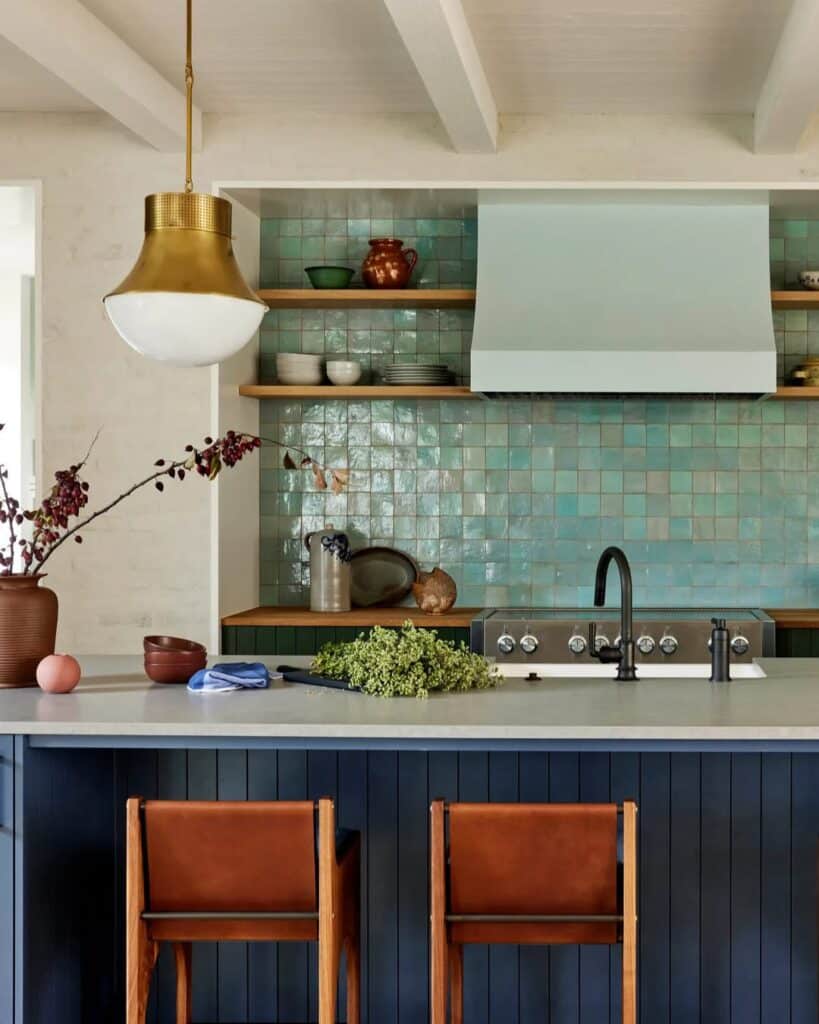
The kitchen arrangement feels airy while using earthy materials with cool coastal undertones.
Pale wood finishes with subtle grain complement the seafoam cabinetry. Matte clay-rendered walls contrast with the seafoam cabinetry.
Ceramic backsplash tiles have a textured surface and may be light sand or off-white. They cover the wall behind the work area.
Slim pendant lights suit studio kitchens. Their material can be stone, or it can be aged metal.
The open layout uses floating shelves. Functional zones have subtle separation, which supports task movement.
Cleanup is supported by honed stone countertops. The stone also offers prep durability.
This design suits multifunctional kitchens. Its style combines artistry and utility.
The kitchen supports meal preparation. It also accommodates side projects.
The style suits studios and apartments. It combines minimalism with tactile depth.
The design supports daily rituals.
Artisan Retreat in Claystone

The claystone walls have a weathered appearance and a textured surface. They provide the backdrop for a kitchen concept that emphasizes organic finishes and handcrafted detail.
Custom millwork can feature the varied grain of knotty alder or character oak. Its earthy undertones give the wood a grounded appearance.
An aged brass fixture with a soft patina complements the neutral palette. The deep, sturdy sink is made from honed stone and serves as the focal point.
A floating wood shelf displays handmade pottery and a woven basket. Both pieces sit on the shelf.
Natural ecru linen curtains hang at the tall windows and filter the window light. One pendant hangs from the ceiling, made from weathered ceramic or clay. Muted terracotta floor tiles complete the surfaces.
This kitchen design brings together history, skill, and individuality. Each value gives the space a more personal character.
The kitchen supports slow living through everyday uses such as meal preparation and coffee mornings.
The design narrative draws on handcraft, fire, and natural imperfection.
Minimalist Oak and Clay
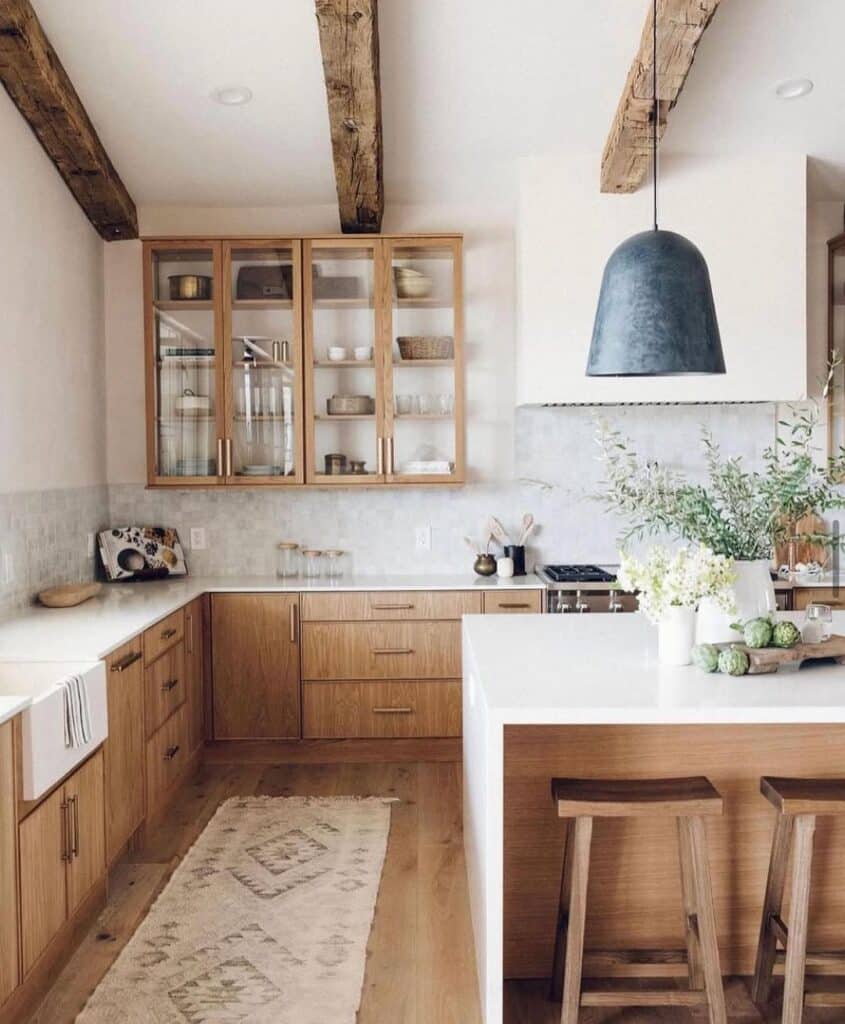
Clay-rendered walls provide earthy tactility. Pale oak cabinets show a subtle grain, bringing a grounded yet contemporary quality to the kitchen concept.
Organic finishes soften the clean lines of the kitchen silhouette. The result keeps a minimalist edge without making the room feel stark.
The streamlined stone countertop has a soft beige tone and echoes the texture of clay. Together, these elements create a cohesive, warm kitchen palette.
There are no handles on the drawers, and the appliances are integrated. Together, these features maintain a clean aesthetic.
A low backsplash sits behind the counters. Handmade zellige tile covers it, and the tile adds the character of imperfection.
Matte ceramic and rough-finished metal are options for a subdued pendant light. The pendant light adds sculptural interest while avoiding visual disruption.
Olive branches or snake plants can add life in the kitchen. This greenery avoids clutter while following a design based on natural materials and purpose-led simplicity.
This layout offers function as well as calm spaces.
Tactility gives this design a more engaging feel without adding visual noise. The restrained look also suits a seamless workflow.
This design philosophy brings together slow living, simplicity, intentional finishes, and a connection between the home and the earth.
Cottage Kitchen in Olive Creamstone
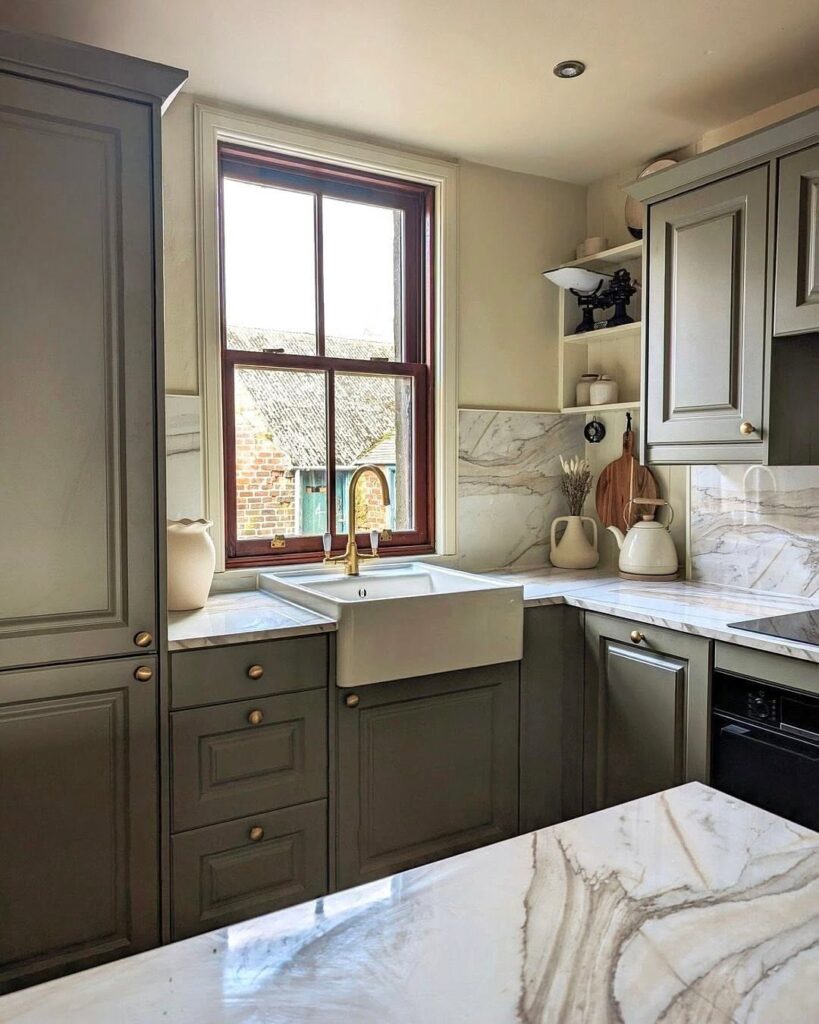
Olive lower cabinets pair with creamstone walls. Light wood accents are paired with them too.
The walls have a subtle, hand-troweled plaster finish. This texture covers the kitchen walls.
Antique brass bridge faucets match the antique brass cup handles. Open shelving and whitewashed wood beams add storage and structure.
Resilient countertops keep the surface practical. They come in a light tone and may use limestone with a honed finish or cream quartz.
Built-in nooks, handwoven baskets, and ceramic jars make up the storage. The jars hold flour and spices.
Antique glass pendants give off soft light over the counters.
The layout emphasizes usability and suits timeless comfort.
The design uses earthy materials while supporting heritage and function.
Botanical Mustard Pop Kitchen
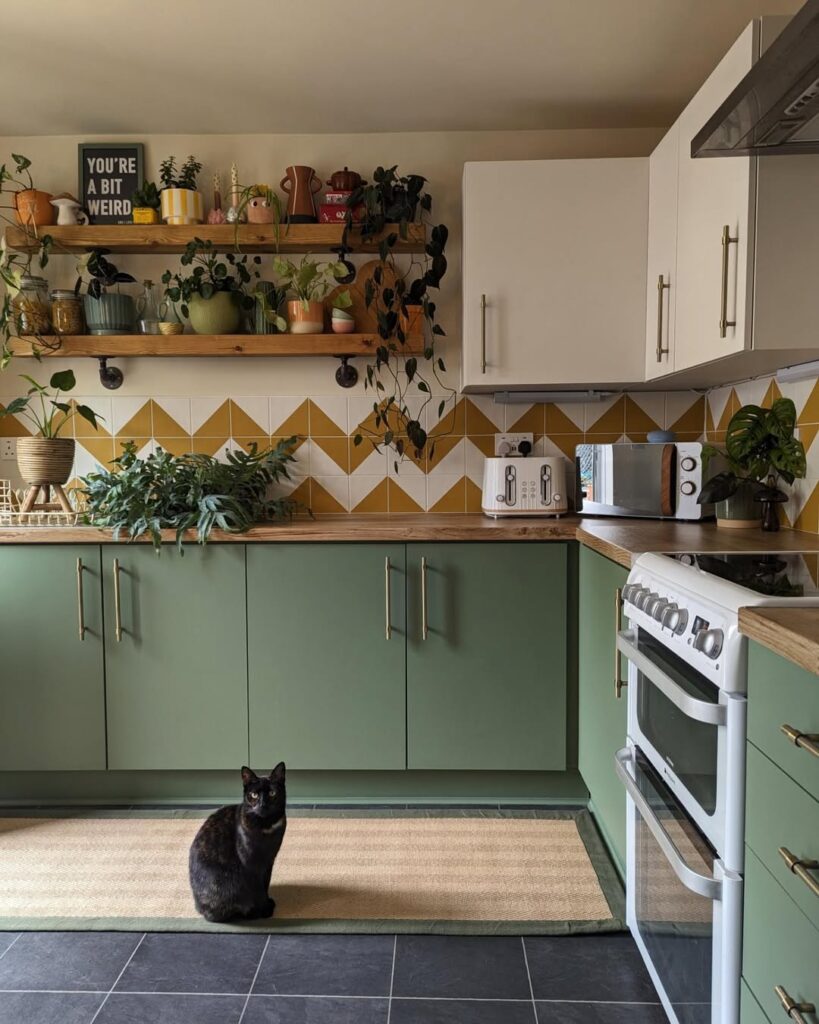
Muted mustard cabinetry anchors the room. The palette adds garden green and sun-baked yellow.
Painted woodwork in leafy green sets the tone, while tile accents use the same leafy green color.
The clay-rendered walls are paired with raw wood details. Together, the clay walls and raw wood moderate the color intensity.
In the kitchen, woven rattan stools sit beneath bamboo light fixtures. Natural jute rugs add another material.
The open shelves hold preserved citrus, seeds, and dried herbs. The design ethos makes freshness and sustainability its focus.
Stone or terracotta flooring provides a cool, durable surface. The fixtures use brass or matte bronze finishes.
The design has an elemental structure and a bold expression.
The kitchen is used for creativity and routine. Its layout supports seasonal meals.
In the kitchen, play and ease have room alongside functional dependability.
Brick Charcoal Kitchen Roots
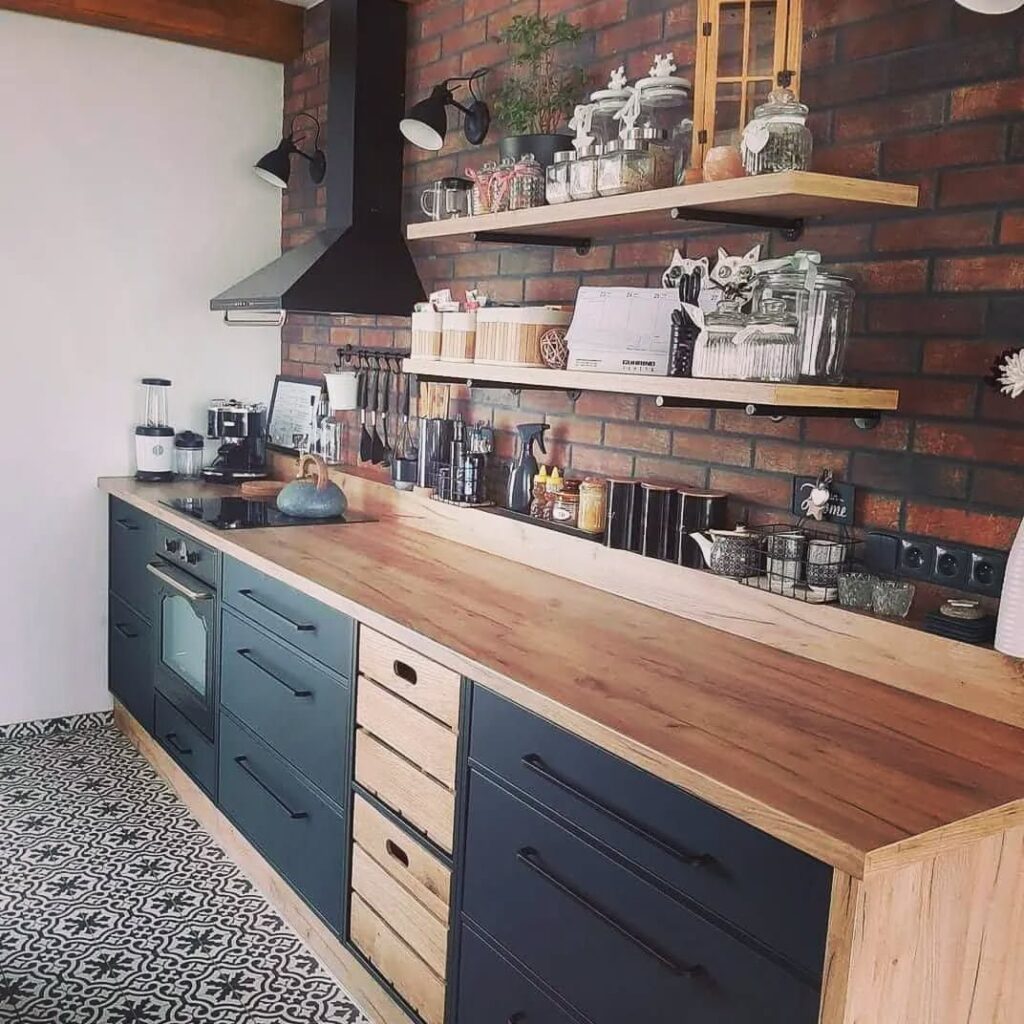
Aged exposed brick covers the walls. Raw textures give the kitchen a moody contrast, with the brick acting as a main feature.
Modern cabinetry in matte charcoal balances the brick backdrop. The dark finish keeps the cabinetry clearly defined against the brick.
Soapstone and leathered granite form the countertops. Both are durable and carry heavy visual weight.
Rustic wood planks sit within dark-metal frames. This industrial shelving provides practical storage.
Beneath oversized windows, a large black-and-copper apron-front sink anchors the kitchen. The oversized windows provide natural light.
Reclaimed wood and tumbled stone run underfoot. Together, they make up the flooring.
The kitchen suits countryside conversions as well as urban lofts. Its design combines historical structure with contemporary function.
This kitchen supports kneading dough, slow-cooked meals, and grinding spices. The layout also accommodates these separate cooking tasks.
The design supports current use while combining past elements.
Stonewood Mesa Desert Kitchen
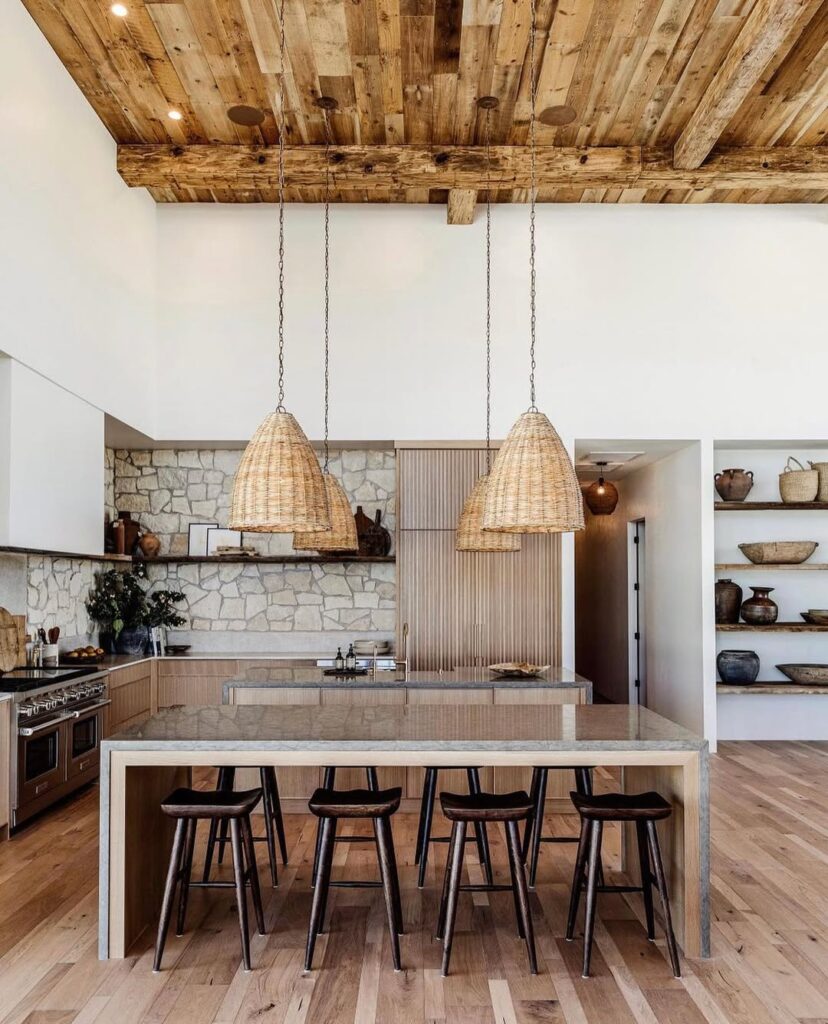
Weathered natural stone accents bring a grounded surface to the room. The cabinetry comes in sandstone beige or adobe red.
Across the ceiling, exposed beams are made from knotty pine or fir. The walls have a large, sunbaked texture and a clay finish.
Durable countertops can use soapstone or honed granite. Set in the center, the reclaimed timber island has a hand-rubbed oil finish and serves as prep space.
The patina on the fixtures changes over time. They are made from iron in its raw state or from copper.
The flooring is textured poured concrete or terracotta. It supports easy maintenance and provides a cool surface.
The layout is based on desert design. Durability and function are its priorities.
Desert design shapes this kitchen, and the approach works in any climate.
Color, texture, and material choices all belong to the kitchen materials scheme.
Hearth Nook Kitchen in Sagewood
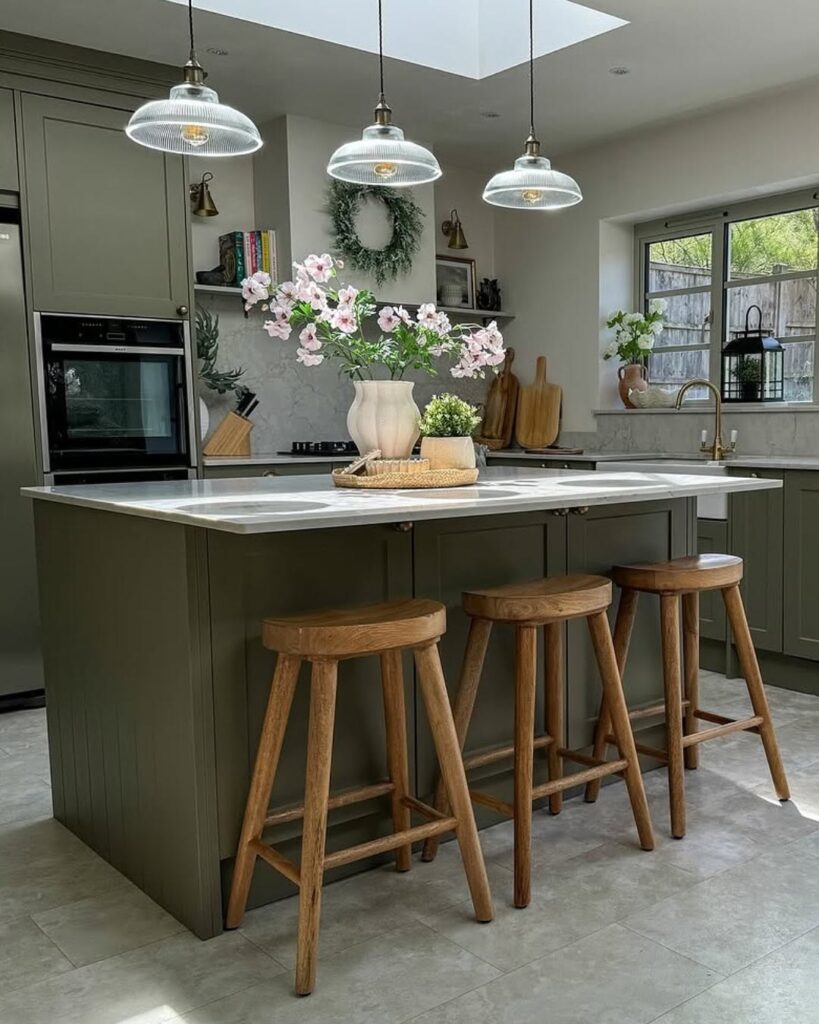
In one corner, the kitchen combines natural sage, honey, and toned wood. The design is suited for daily retreats.
Sage cabinetry sets the color direction. Golden shelving made from ash or maple sits against clay-finished walls.
In cooler months, the small-scale hearth or wood-burning stove provides real warmth.
High-traffic zones are a good place for this flooring. The clay tile has subtle earth tones.
Glass-front cabinets display everyday dishes and heirloom pottery. The contents remain visible through the doors.
In one corner, antique hardware sits near linen curtains and ambient light fixtures that may be aged copper or ceramic.
The kitchen prioritizes simplicity, warmth, and routine.
Across the room, the space supports tea sharing and comfort meals. Its surfaces are rooted in natural material, while the space supports an intentional rhythm.
Sage Shelves in Sunlight
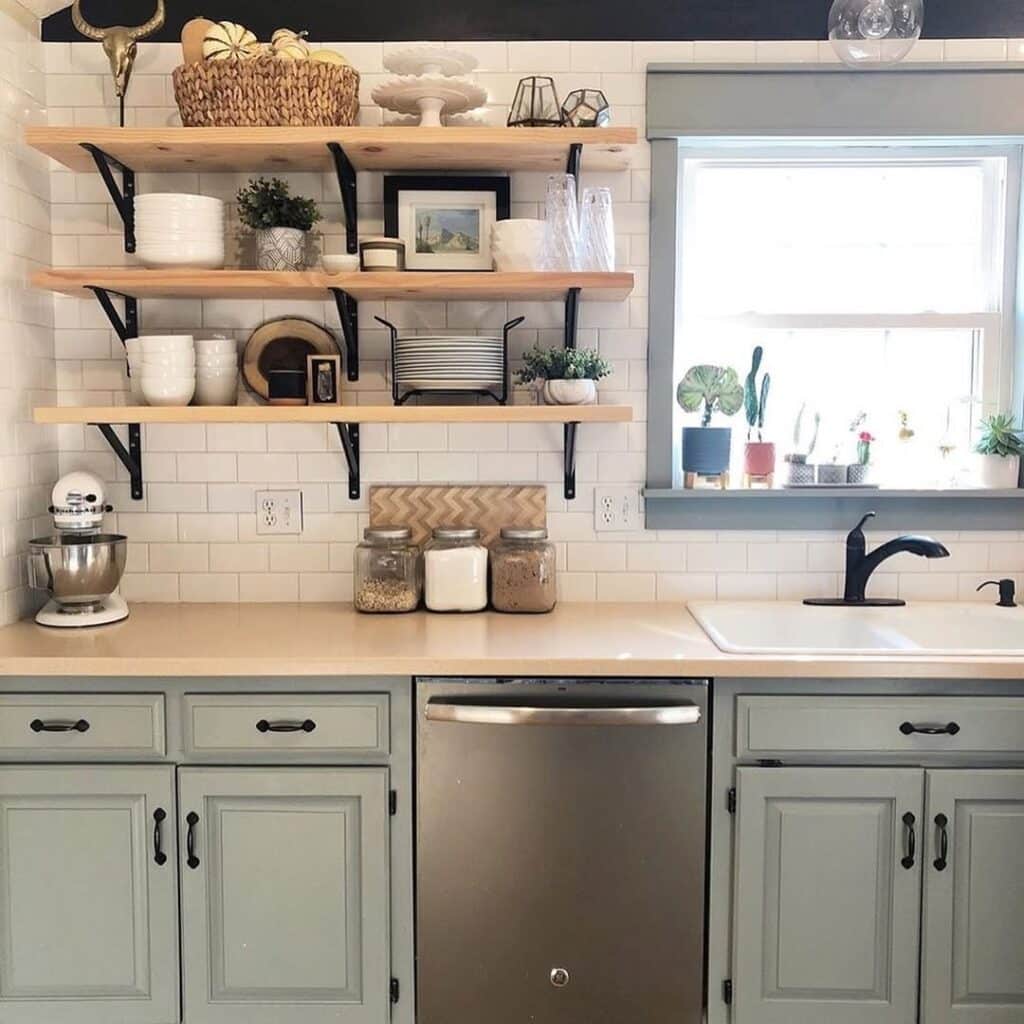
Filtered sunlight shapes the kitchen concept. Nature-toned finishes complete the look.
Muted sage green covers the cabinetry. The cabinetry provides the kitchen's main color.
Glass jars and daily-use ceramics fill the exposed shelves. Made from light ash and white oak, the shelves offer ample storage, while handwoven baskets add storage space of their own.
The walls use pale clay and limewash. They are breathable and textured.
Warm brass appears on the fixtures and drawer pulls. Linen curtains soften the room, while vintage glass pendants hang nearby.
Lightly finished wood and stone tile make up the flooring. The floor stays in natural tones and is easy to clean.
Botanical prints decorate the kitchen. Herbs grow in pots on the windowsills.
Calm-space seekers may appreciate a kitchen with natural light. An open shelving system provides storage, convenience, and flexibility while calling for mindful curation.
The kitchen supports daily rituals.
This kitchen supports both breakfast preparation and tea drinking.
Emerald Grove Kitchen
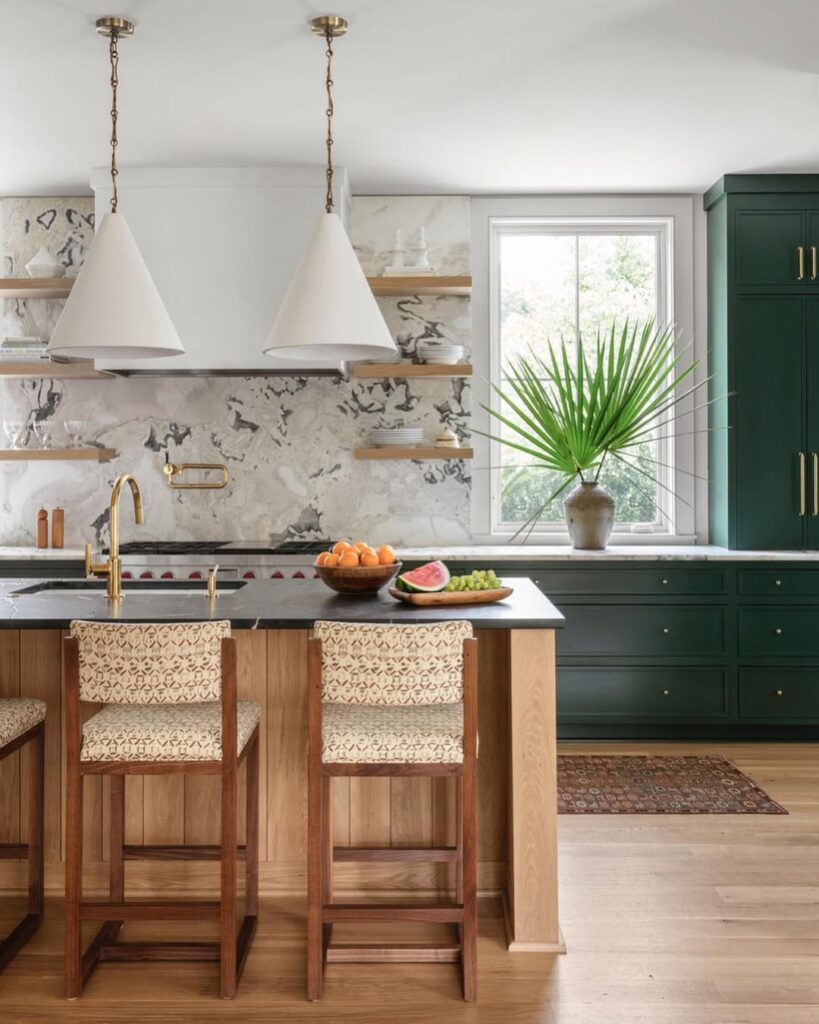
Emerald cabinetry serves as the focal point and evokes the look of forest canopies. The kitchen design uses grounded materials with a nature theme.
Natural wood shelving contrasts with the emerald cabinetry. Clay plaster walls provide another contrasting surface.
Brushed bronze hardware brings aged richness to the room. The main feature is a live-edge wood countertop, which keeps the material focus natural.
Seeded-glass pendant lights provide soft mood lighting.
Everyday stone flooring creates a sturdy surface with slip resistance. The muted slate tone and slip-resistant surface suit regular use.
Throughout the kitchen, an earthenware vase, a rustic cutting board, and an indoor plant add natural objects.
The kitchen design combines bold natural accents with refined practicality and a botanical spirit.
This kitchen combines earthy textures with forest-inspired color.
High functionality supports both cooking and gathering in this kitchen.
The kitchen atmosphere draws appeal from color, nature, and craftsmanship. Its qualities are grounded and invigorating.
Sage Clay Modernism Kitchen
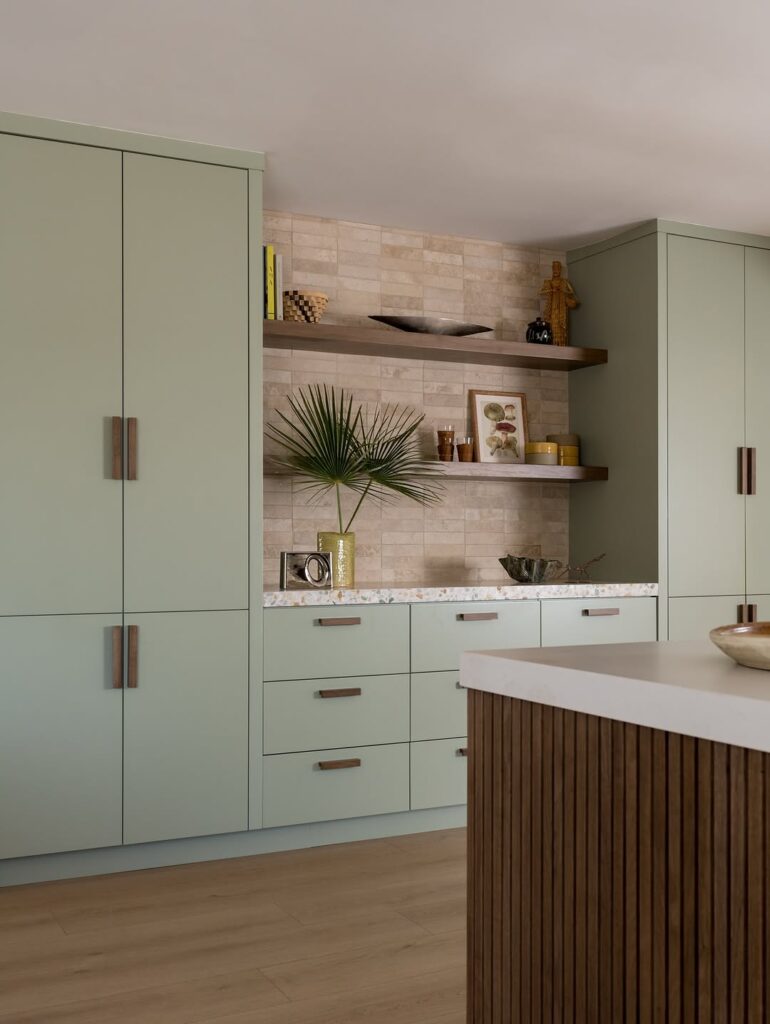
Clean geometry meets raw textures in this kitchen.
Sage base cabinets contrast with clay-plaster walls. The design retains warmth and a quiet modernity.
Black, slimline fixtures keep the look restrained. Open shelving has clean lines.
The tiles are neutral ceramic with a matte finish. They provide the main tile surface.
Polished concrete flooring keeps the floor practical. The flooring is made for practical use.
Hidden storage and integrated appliances keep the kitchen features contained.
You see one slab of natural stone here. It is used for a backsplash or an island face.
The kitchen design uses natural materiality with precise, tactile qualities. Its style is contemporary.
The layout supports cooking and gathering. A calm atmosphere surrounds the kitchen.
The kitchen has a grounded orientation and a serene style.
Olive Grove Cottage Kitchen in a Countryside-inspired Style
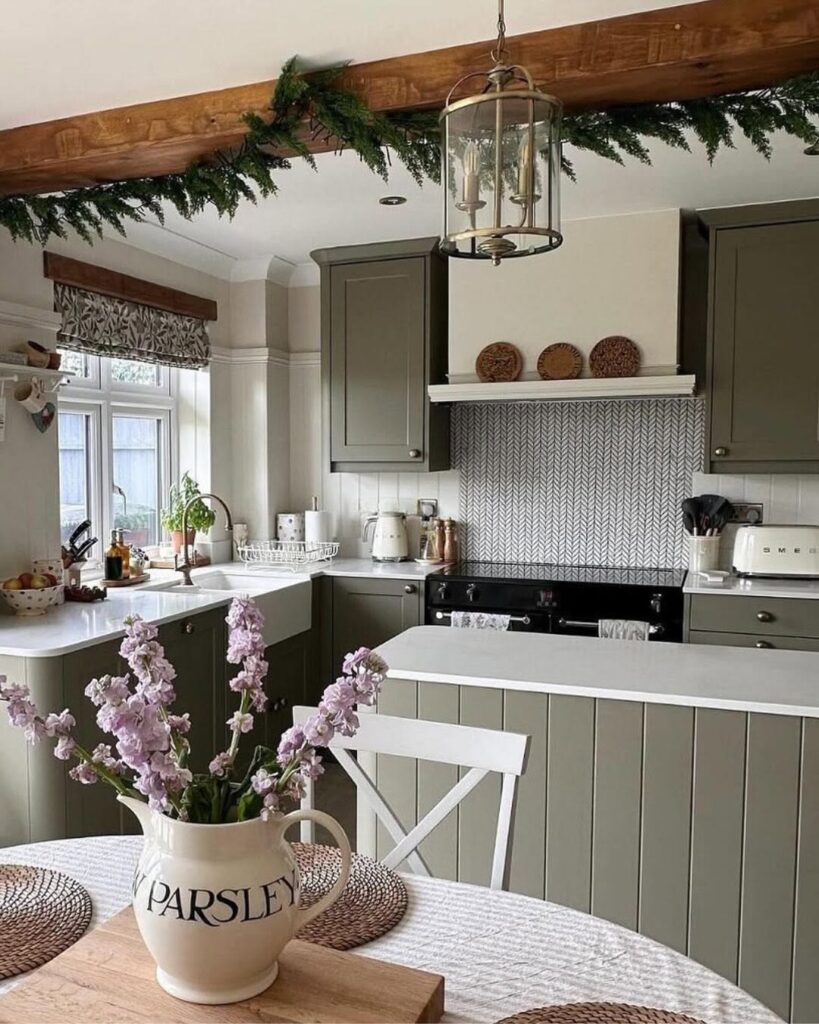
This kitchen has a countryside-inspired style.
Olive green cabinetry sets the main color against cream walls with a light texture.
Open, curved shelving sits below reclaimed wood ceiling beams. The beams are overhead.
Aged terracotta tile covers the floor. The flooring supports durability in a high-traffic area.
The countertops use oak with a honey tone. They are made from butcher block.
Vintage hardware has an oil-rubbed bronze finish. The knobs are ceramic.
Hanging herbs share the kitchen with antique crockery. Handwoven baskets are included too, and the herbs, crockery, and baskets support function.
The kitchen layout takes a traditional orientation, with a focus on nature and history.
The design is intended to age gracefully. This kitchen supports weekend meals and bread baking.
Easy maintenance is part of the kitchen. The kitchen also has a practical design.
Kitchen with the Traditional Rustic Luxe Hearth Style
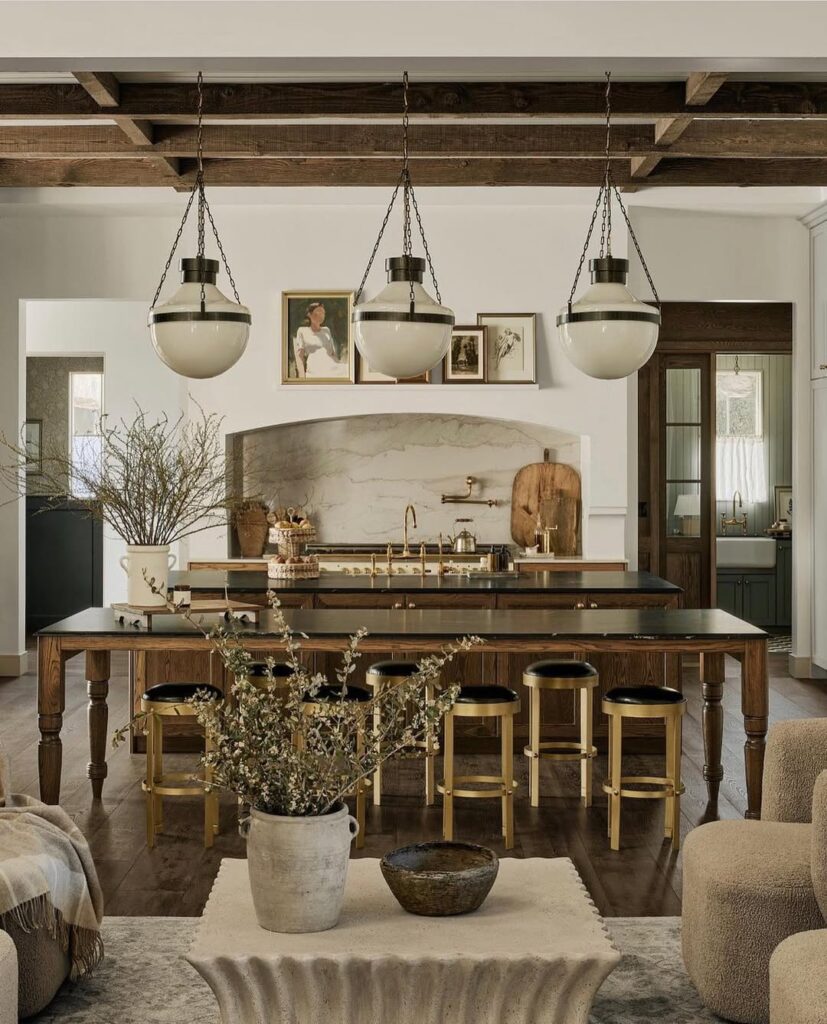
Earthy textures give the kitchen its traditional warmth. Refined finishes are part of the same kitchen design.
A central hearth anchors the kitchen. It can be functional or ornamental.
Natural stone walls, finished with limewash or left raw, back the dark walnut cabinetry. The cabinetry is dark walnut.
Artisanal pendant lighting hangs in the kitchen. The fixtures have a brushed gold finish.
Iron accents include rods and brackets in matte black. The shelving brackets are iron.
Warm flooring made from slate or reclaimed brick supports durability. Open shelves hold vintage glassware and ceramic serveware.
In this kitchen design, comfort takes priority. The style is rustic luxury.
The space supports entertaining as well as everyday meals.
The kitchen has a lived-in character and refined craftsmanship. The materials include earth-based materials.
This kitchen serves multiple generations.
Copper Lodge Kitchen Blend
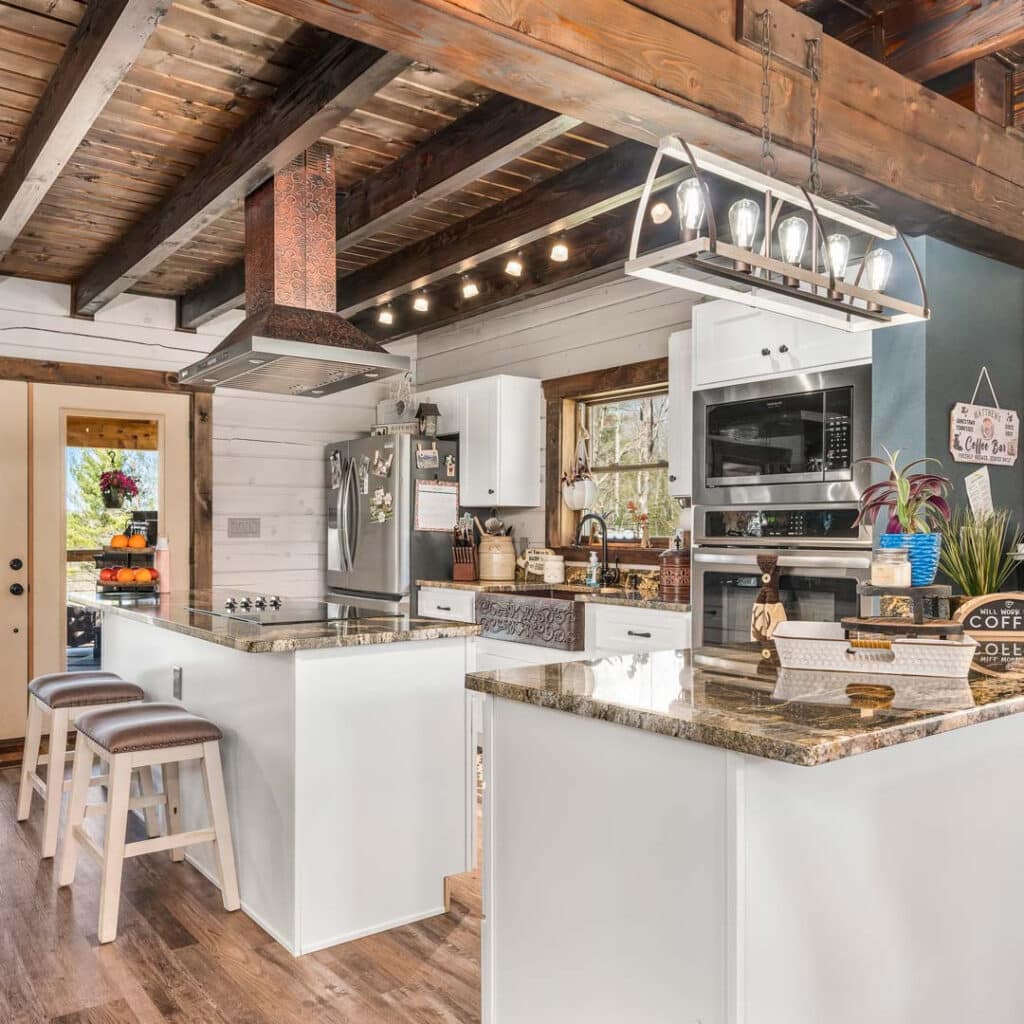
This kitchen has a mountain lodge aesthetic with purposeful details, elemental finishes, and high texture.
A natural-stone backsplash sits below a timber-framed beam. Aged copper with a subtle glow is used for the cabinet handles, vent hoods, and sink basins.
Organic cabinetry combines knotty alder with rough-hewn oak. The countertops use honed granite and soapstone, materials that reference a rugged landscape.
The hand-scraped hardwood flooring feels warm underfoot and is resilient. It suits both cold climates and high-traffic homes.
Wrought iron sets the tone here. Edison bulbs provide low-glare mood lighting.
Weathered bowls sit on open shelves beside enamel cookware and vintage thermoses. Open shelving supports daily use while keeping this storage visible.
This design appeals to nature lovers and craftsmen. It also suits indoor-outdoor homes.
Resilient kitchen materials support a utilitarian kitchen. An earthy palette keeps the materials grounded.
Copper Cream Farmstead Kitchen
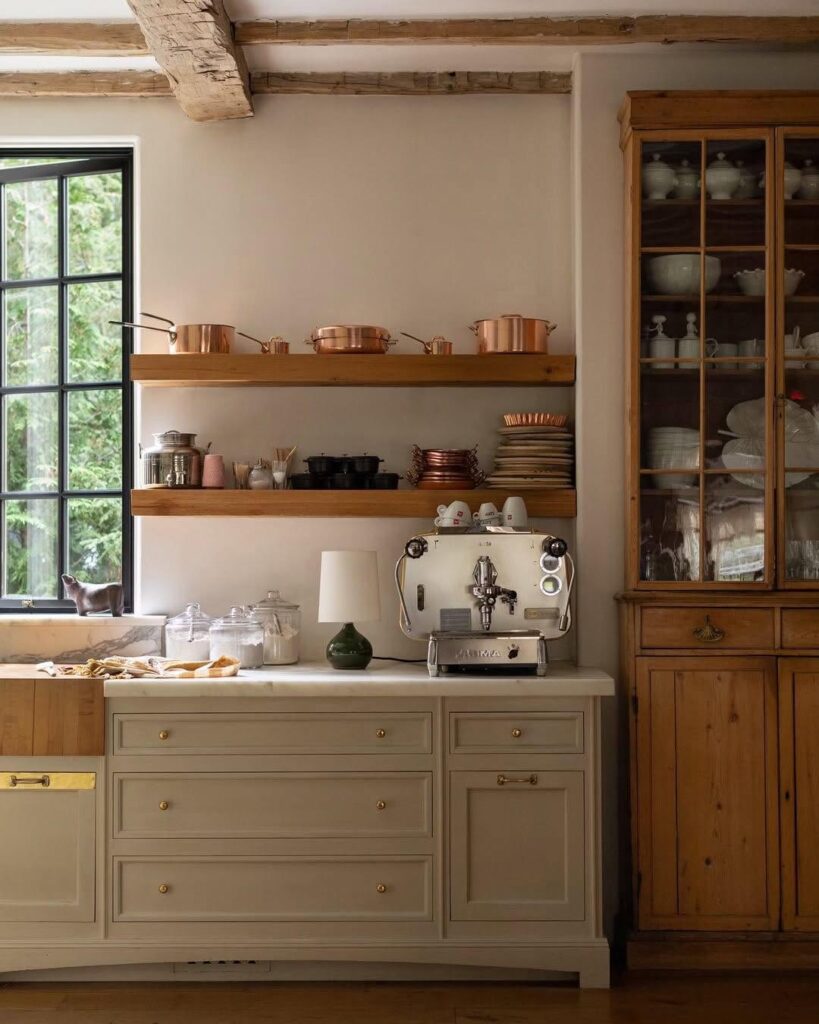
Cream beadboard cabinetry sits in natural light. Open shelving is made from reclaimed pine.
Cookware serves as display in the room. Burnished copper appears in the cookware, pendant lights, and farmhouse sinks.
Clay walls have a breathable texture. Butcher-block countertops add another material to the kitchen.
The flooring underfoot is wide-plank wood with a weathered honey finish.
Hand-glazed pottery appears near linen cafe curtains. The hardware has an antique style.
Vintage glass knobs sit on the screen doors of the built-in pantry. The pantry provides accessible storage.
The layout combines a rustic character with polished function. The kitchen supports slow cooking and shared meals.
Copper and cream set the kitchen palette. The kitchen has a character of timeless comfort.
Farmstead style has an enduring, lived-in character.
Warm Farmhouse Timber and Clay
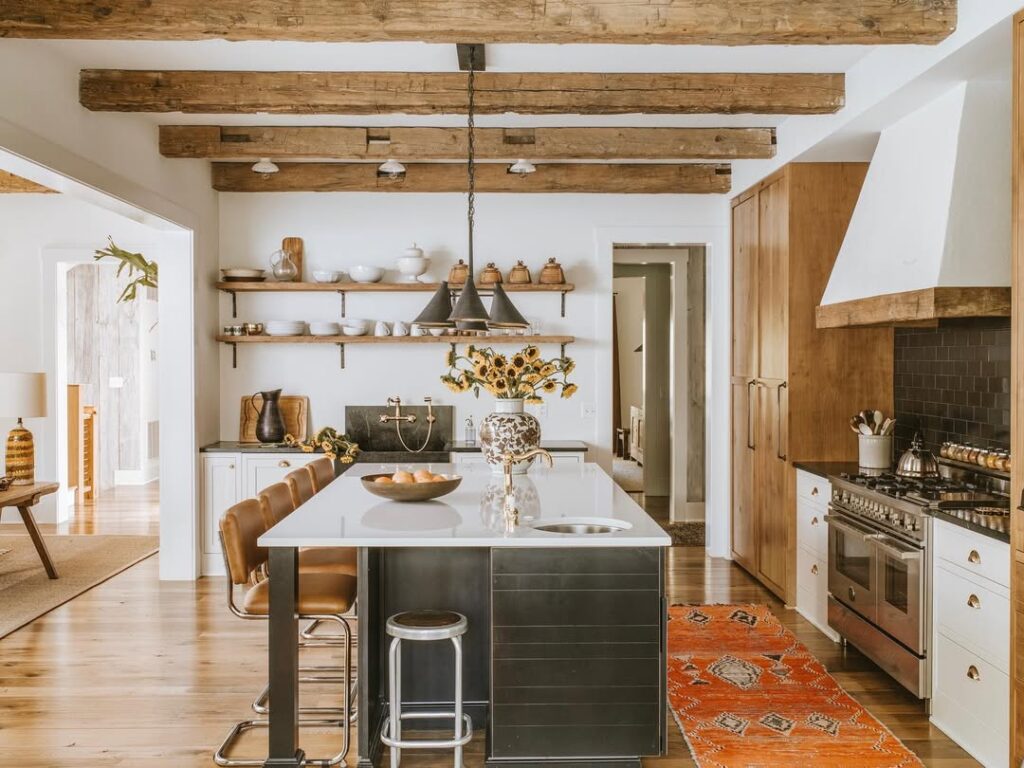
The nature-led kitchen aesthetic has grounded tones throughout. Warm timber cabinets are paired with walls in a matte clay finish.
Handcrafted terracotta tiles cover the floor, providing both visual warmth and a practical floor surface.
An open shelf made from reclaimed wood is paired with iron brackets. The brackets keep the shelf firmly supported.
A large farmhouse sink anchors the kitchen. Copper cookware, natural linen textiles, and a woven rattan light fixture add softer materials, while the rattan fixture softens the harder textures.
Soft lighting and furniture with organic forms support visual flow. Together, they help avoid a space that feels visually overpowering.
A green herb sits on the counter in an aged ceramic vessel.
Kitchen design here gives equal priority to utility and emotion, making room for daily rituals as well as gathering.
Sustainability, durability, and grounded design connect this style to present-day sensibilities. It also carries a sense of old-world comfort.
A practical kitchen can still feel timeless.