15 Antique Kitchen Decor Ideas for a Timeless Look
Antique kitchen decor can be more than decoration. A faded enamel sign, a vintage green hutch, and a weathered copper pan can each serve a purpose beyond their appearance. These pieces bring useful character to the room while keeping their worn, familiar look.
Antique kitchen decor brings a sense of past warmth into the kitchen. It supports personalization by giving the space room for meaningful, individual details. It also creates visual texture through aged finishes, varied materials, and pieces with a history.
The same antique kitchen decor can combine character and practicality in a farmhouse kitchen layout or a city loft setting. Its effect depends on how the older pieces work with the space around them.
An heirloom shelf can hold the display together, while a retro color palette keeps the room visually vivid. The colors remain noticeable without losing their connection to the older pieces.
Antique kitchen elements contrast with mass-produced decor. They suggest a room furnished with pieces collected over time rather than chosen all at once.
Vintage Diner Kitchen with Retro Colors
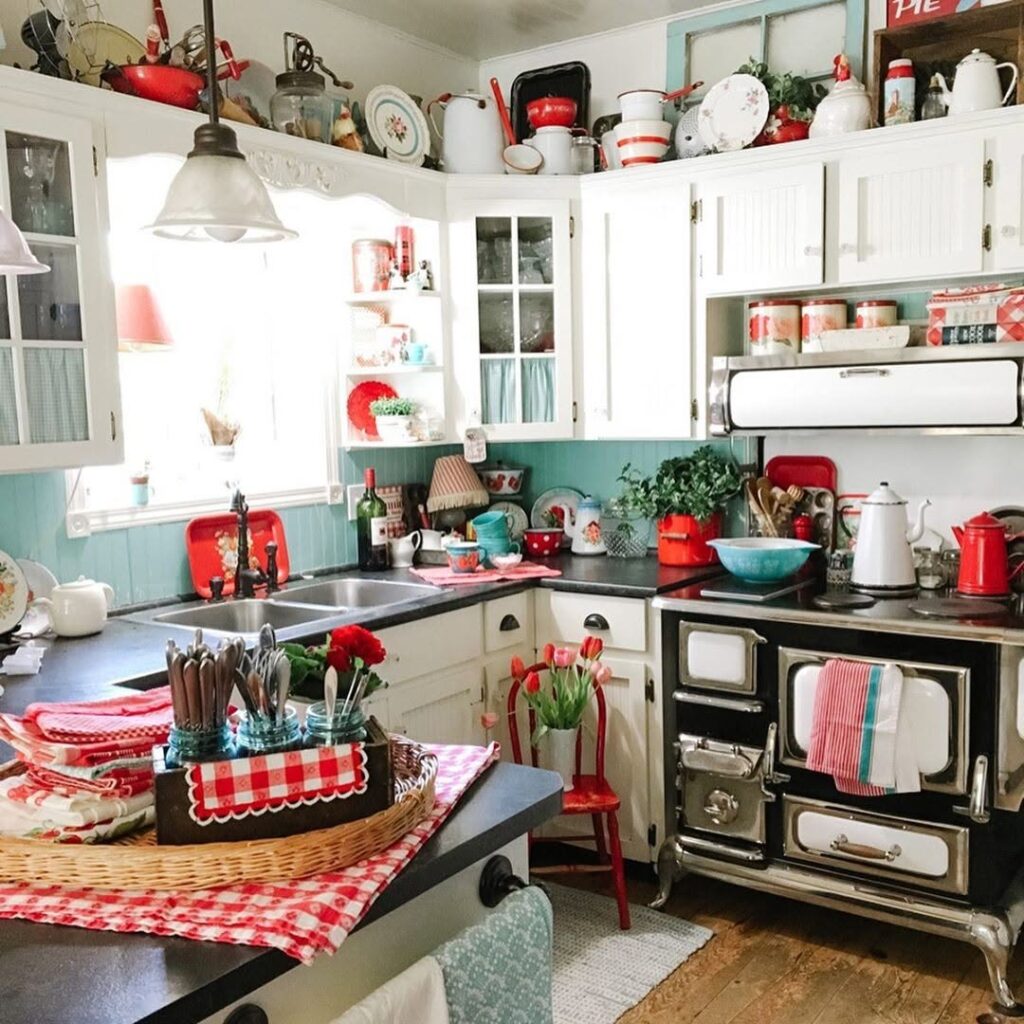
Mint green cabinetry and a butter yellow accent set against the checkered floor. A chrome-lined stool adds another diner detail.
A pastel vinyl dinette set provides seating, with metal trim around the set. Use a 1950s wall clock and a diner neon sign to reinforce the retro theme.
Red accents include a pepper shaker and salt shaker. An enamel breadbox, a vintage rotary telephone, and a refurbished mixer add practical details. The retro Smeg refrigerator and mixer can come in baby blue or cherry red, and retro appliances combine functionality with personality. Keep the countertops clear, styling them with Formica trays and atomic containers, including an atomic starburst container.
A Bluetooth speaker adds sound, while a jukebox-style speaker brings a nostalgic touch. Frame the wall decor in simple frames, using vintage ads or soda-pop signage. Swap fluorescent pendants for milk-glass fixtures or schoolhouse fixtures.
A retro kitchen setup can support modern daily use. Intentional vintage sourcing and intentional color placement balance character with usability.
Copper and Rustic Kitchen Nook
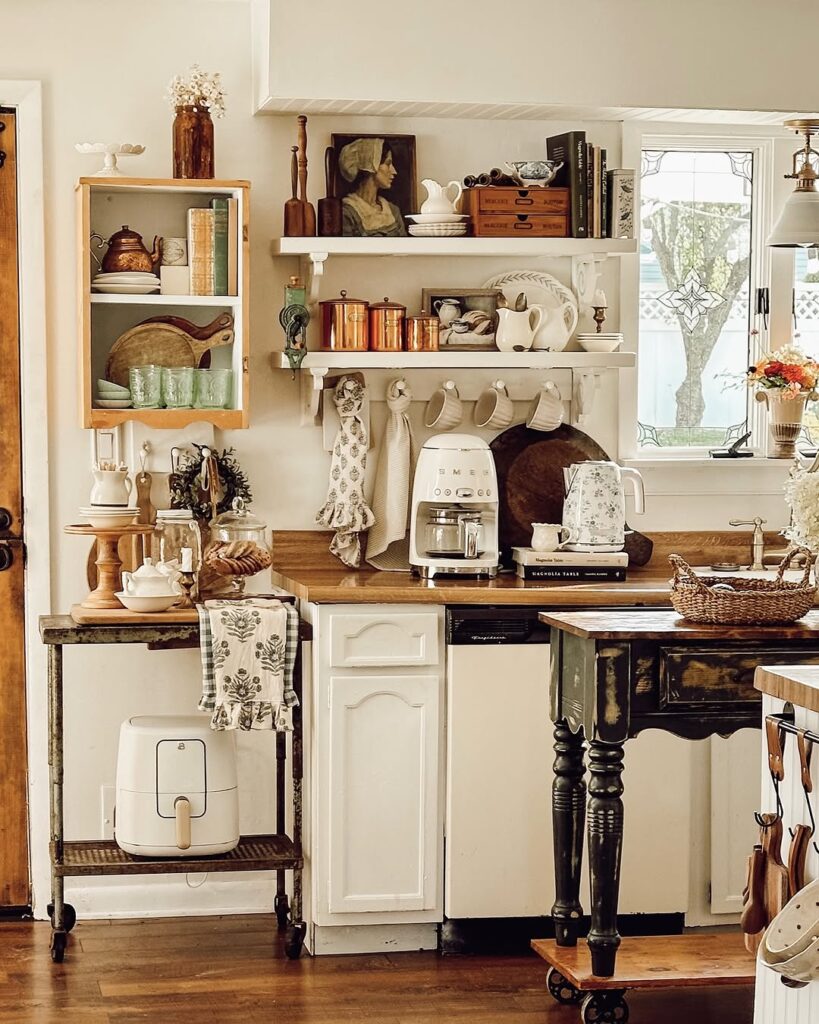
The breakfast nook sits in a sunny corner. Copper reflections add a warm note, while the nook texture stays lived-in.
A reclaimed wood table is paired with a spindle-back chair. Vintage finds such as enamelware mugs and linen cushions fit the setting. The linen cushion has a faded ticking stripe pattern.
Across the room, a rack of copper pots provides storage and a visual display. An aged-patina copper pot catches the natural light.
An antique kitchen tool adds a collected detail. Place hand-cranked beaters and butter molds on the surrounding shelves.
An herb planter sits on the window sill. Window sills can hold ceramic crocks and herb planters.
A handwoven basket is placed under the benches, providing hidden storage. An ironstone pitcher holds a wooden spoon.
Nook design balances rustic utility with collected objects. Choose materials authentically and layer objects intentionally.
Green Hutch and Jadeite Glassware in a Mid-Century Stove Nook
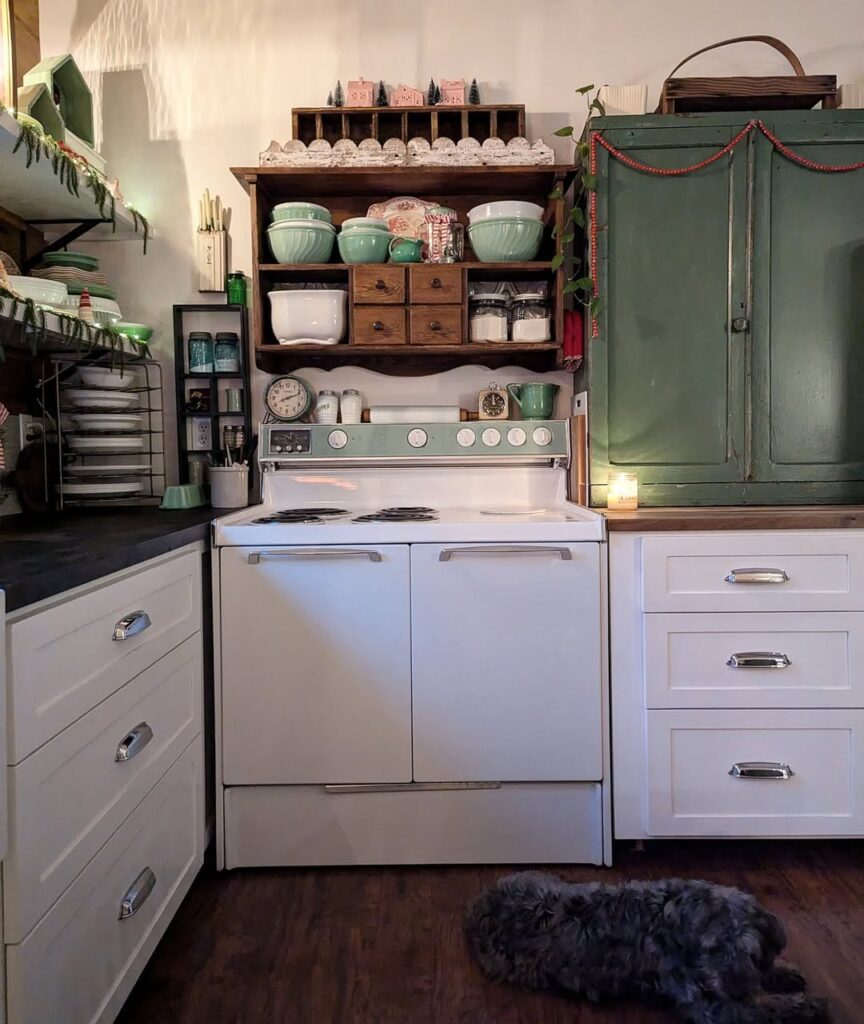
The mid-century stove is the focal point of the kitchen, set within a cozy corner. The corner feels cozy.
Jadeite glassware fills the vintage green hutch, which may be celery or mint. The hutch also displays early Americana bakeware. Across from it, a cream enamel stove has a retro dial and a backsplash made with sleek tile or painted brick.
A yellow Pyrex mixing bowl brings color to the corner. A hand-painted recipe card sits under a magnet, next to a reproduction tea towel.
In one corner, a vintage kitchen timer and a tin cookie cutter fit the mid-century aesthetic. Both pieces also provide functionality.
The side table has spool-style legs. It supports a basket holding antique cookbooks. Behind it, a glass-front hutch door reflects natural light, while translucent dinnerware transmits that light.
Keep excessive polish away from the finishes. Matte surfaces in apple green, soft coral, and sky blue preserve vintage patina through minimal polish.
Authentic antique pieces can sit alongside mid-century elements. Layer the mid-century elements thoughtfully.
Cream Heritage Cabinets and Farmhouse Sink
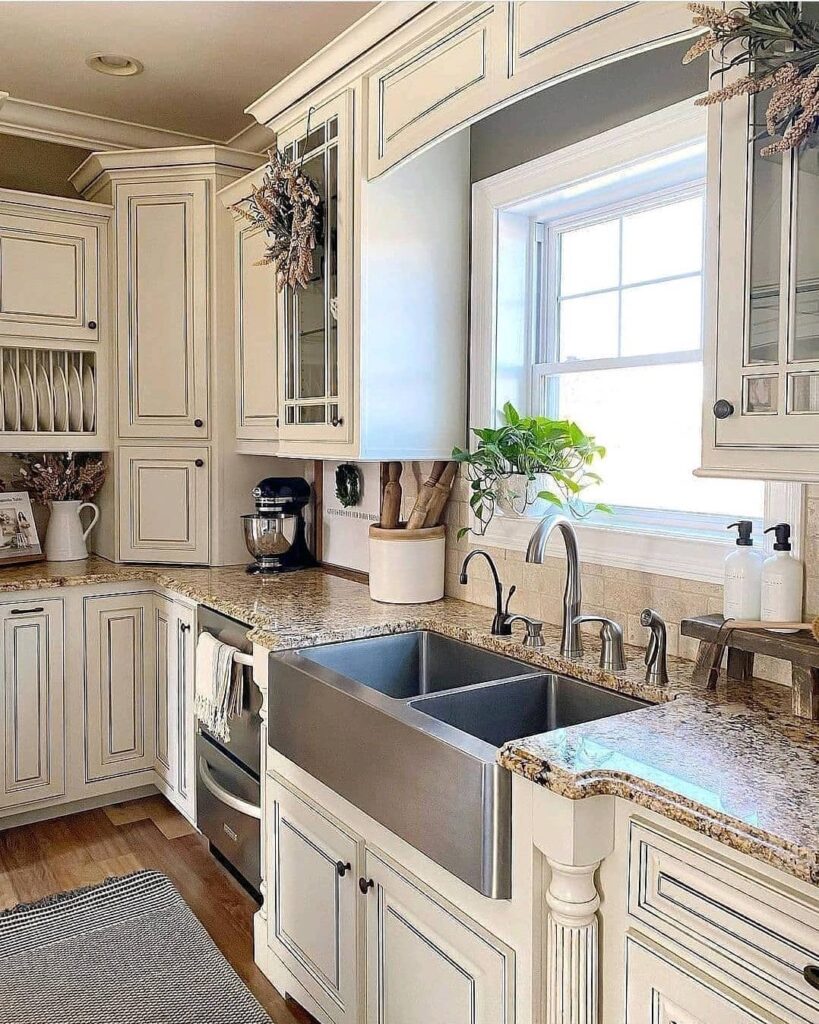
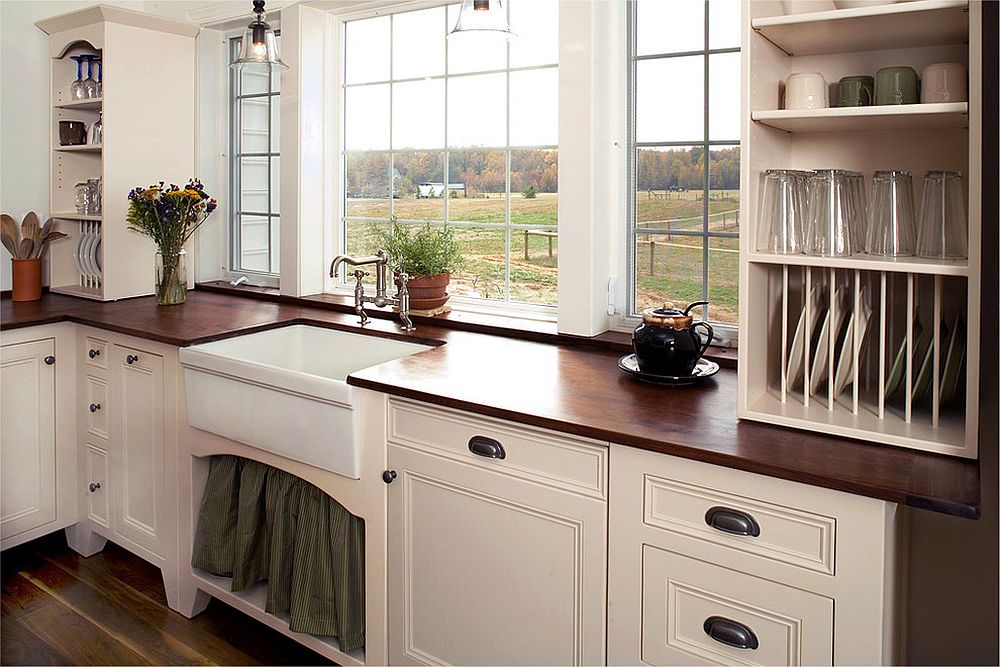
A porcelain farmhouse sink serves as a historical feature. Warm-neutral cabinetry supports the heritage kitchen around it.
Inset doors and beadboard panels sit on the cabinetry. Bin-style pulls in aged bronze and pewter finish the cabinet fronts.
A butcher block and soapstone countertop gives the room two distinct materials. In the glass-front cabinet, a collection of ironstone, pressed glass, and enamelware remains visible.
The sink has a deep bowl and an apron front. It supports daily use and reflects the needs of hard-working kitchens.
The unlacquered brass knob and the knob with an oil-rubbed bronze finish both suit the overall palette. Each one ages gracefully over time.
A neutral wall sets the background for soft floral and faded gingham wall covering. Across the room, a lighting fixture with enamel and milk glass shades supports a vintage ambiance.
Rustic pine flooring pairs with cream cabinetry. A floral curtain pairs with the cream cabinetry as well.
Cream cabinetry design supports daily use and combines function with history. It is built for durability.
Old World Checkerboard Flooring
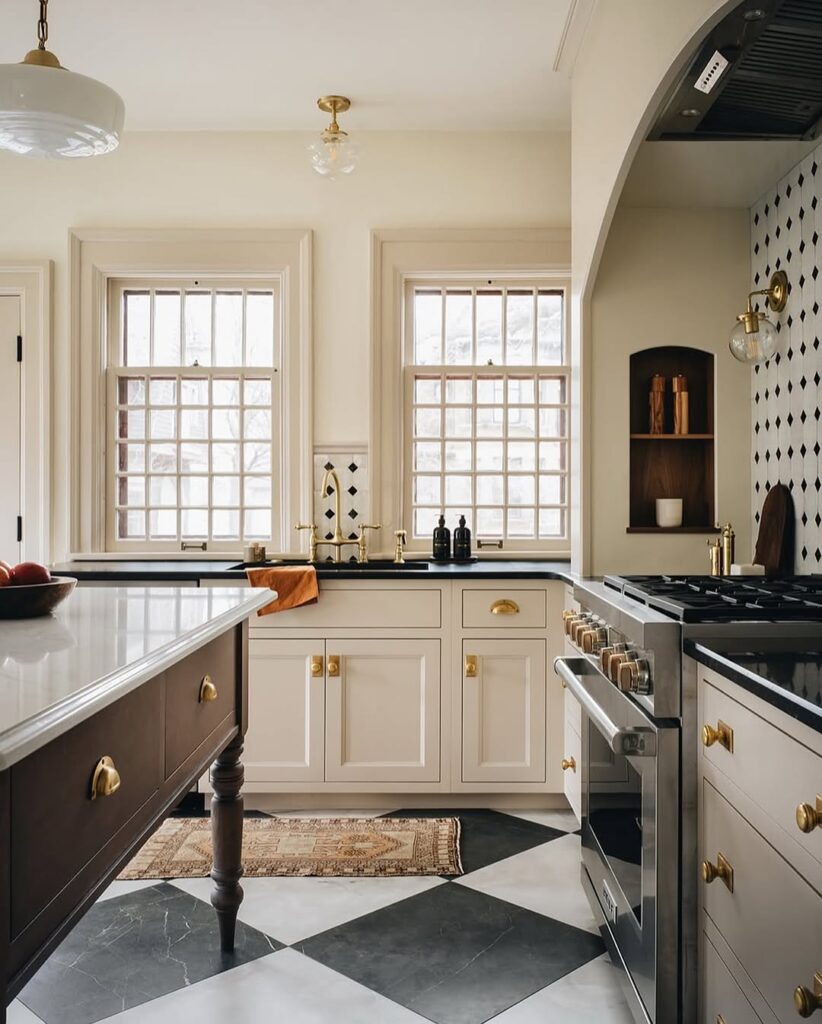
Checkerboard flooring has a historical association with European kitchens. Black and white alternating tiles create symmetry. The flooring can be marble, ceramic, or painted wood.
Brass drawer pulls and carved moldings sit well with a checkerboard pattern. Glass-front cabinetry complements the pattern too.
Patinaed metal wall sconces and fluted wood trim surround the flooring. These traditional elements emphasize the kitchen's heritage character.
Soapstone counters or veined marble add timeless style. Cream cabinets may feature beadboard details and arched door frames.
A timeworn rug can soften the kitchen, while natural linen curtains hang from ornate curtain rods. At the center, a worn table anchors the room and suits farmhouse or refectory styles.
Iron gives the lighting a vintage presence. A chandelier or candelabra can sit near the adjoining area and reinforce an old-world mood.
Antique pieces help unify checkerboard patterns throughout the kitchen. The pattern avoids visual competition while highlighting the antique pieces.
Metals and wood tones pair naturally with checkerboard patterns. The flooring supports everyday cooking, ages gracefully, and does not require extravagance.
Retro Eclectic Open Shelving
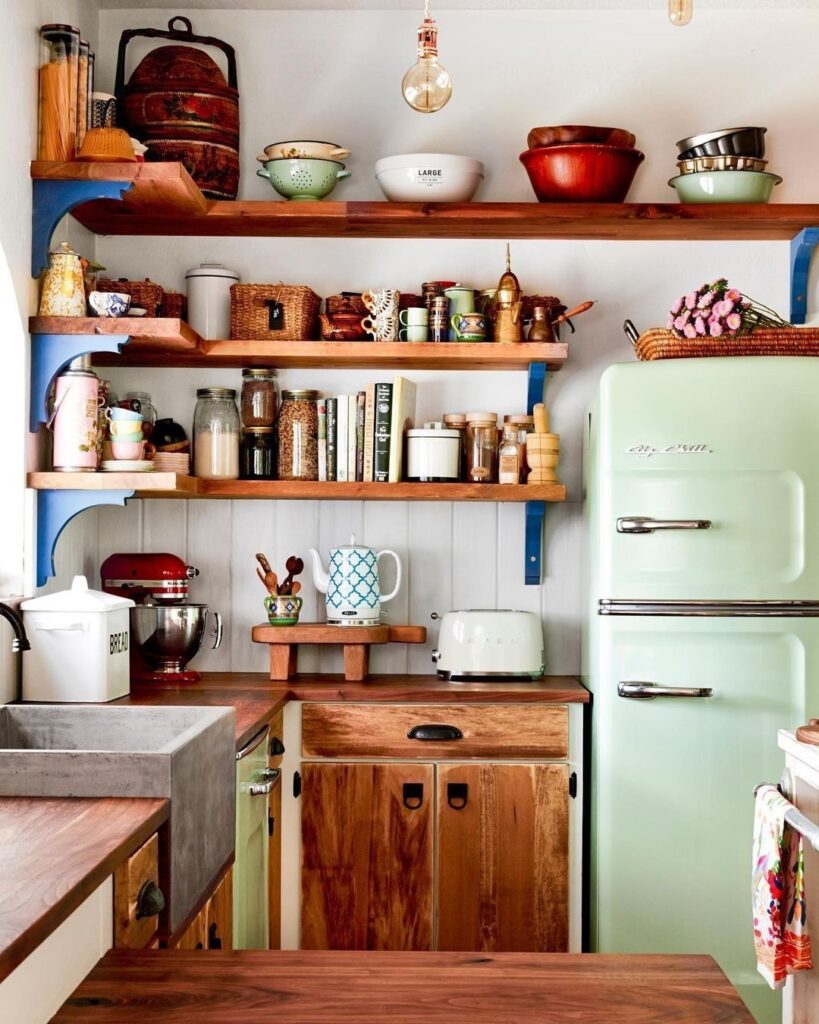
Visible dishware gives open shelving its place in an eclectic kitchen. Teacups, bowls, and plates remain on display instead of being hidden behind cabinet doors.
Across the room, reclaimed wood shelves provide functional storage for vintage finds. Corbels and metal brackets support the shelves.
Pastel enamelware pairs with rustic crocks on the shelves. The mixed eras include 1970s amber glass and 1940s floral china.
Glazed ceramics sit alongside unfinished wood and oxidized metal. Books, mason jars, and tin spice boxes add visual variety, while the mixed textures keep the overall effect from feeling overwhelming.
Open shelving sits against a backdrop of painted beadboard and floral wallpaper. Above it, globe or retro pendant lighting provides warmth.
Collectibles stand out against cabinetry in faded teal, soft yellow, or classic white. Use muted shades for the cabinetry palette to preserve a calm base palette while allowing the collectibles to show.
Open shelving supports a limited-space kitchen and gives shelves room to display individual stories. This setup suits small kitchens.
Warmth, imperfection, and everyday practicality guide a retro eclectic design. It combines vintage items and prioritizes character.
Vintage Stoneware on a Worn Wood Shelf
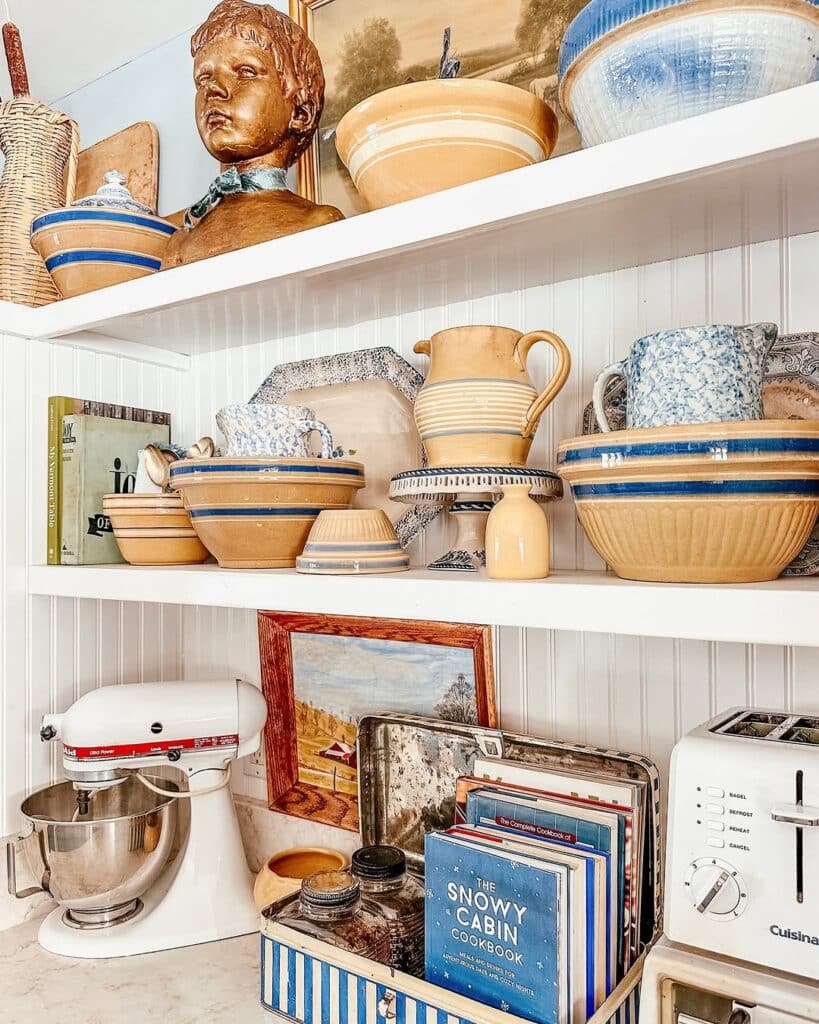
A shelf display that signals long-term function starts with a worn wood shelf. A speckled ceramic bowl and a stoneware pitcher sit on it, making the arrangement feel tied to years of use.
Ironstone, butter crock, and transferware bring their own surfaces and patterns to the display. Arrange heirloom items thoughtfully on open shelving, where the shelving displays the items while keeping them useful as decor.
Mismatched patina contributes layered texture and suggests past use. A crazed glaze and an embossed flour canister do the same, while earthen glaze in mustard, cream, and olive green contrasts with natural wood. The wood has a worn, warm quality.
Keep the palette muted and unified to reduce visual chaos. A woven rack for herb drying and a wire basket for eggs add vertical interest without making the arrangement feel crowded.
Clipped or trailing greenery, including bay leaves and rosemary, connects the display to culinary use.
Open-shelf crockery styling fits both farmhouse kitchens and cottage kitchens. A crockery display supports personalization while retaining functionality.
Brass Details in a Modern Heirloom Kitchen
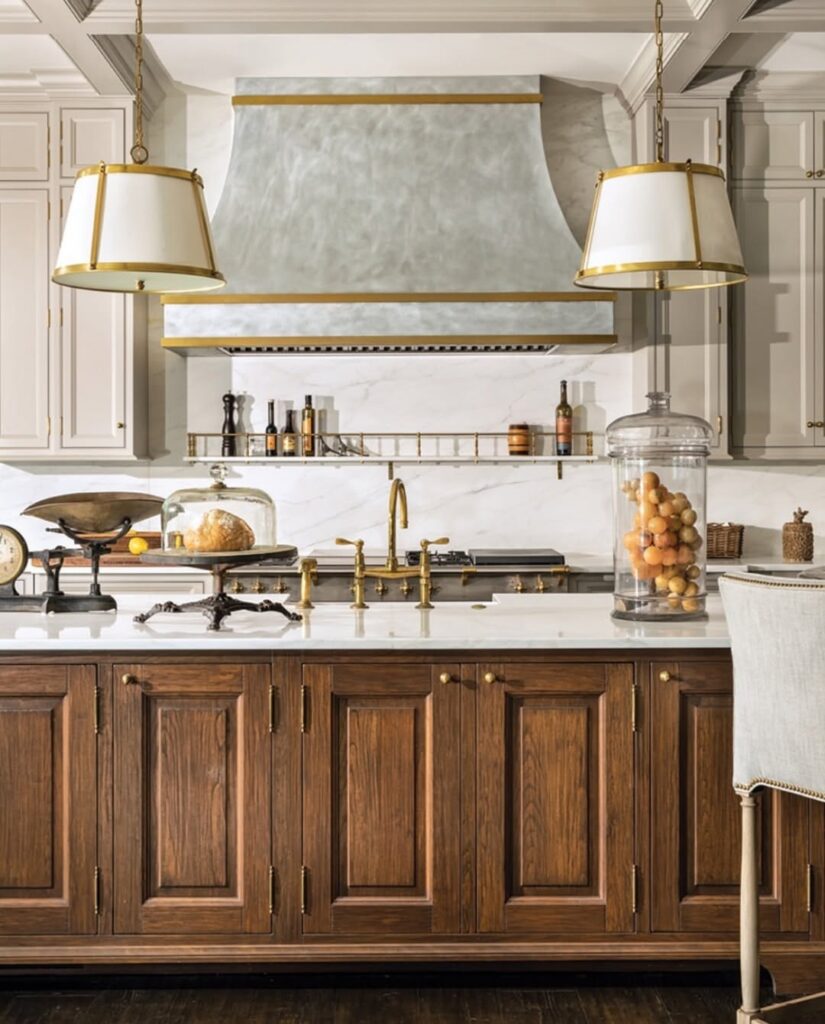
Polished brass hardware sits on warm ivory and muted sage Shaker cabinets. The cabinets support a timeless backdrop, with a brass bridge faucet completing the cabinet arrangement.
Classic design comes through in the furniture-style baseboard and the cabinet detail with inset panels. Together, these features support the classic design while avoiding a dated appearance.
A linen runner lies over a butcher block counter. Above it, a white porcelain dish sits in an open plate rack. Hand-cut subway tile and a gently veined marble backsplash add historical richness, while the rack supports modern utility.
A painted hutch and a built-in china cabinet house family items. The hutch stores a family recipe and a monogrammed napkin, while the cabinet holds a passed-down serving tray. Above the island hangs a pendant light with antique brass finish and fluted glass.
The wood floor has a soft satin finish and supports the heirloom theme. Crown molding at the ceiling edge supports the same theme.
Modern heirloom design prioritizes enduring appeal instead of trend dependence. It supports everyday life while avoiding reliance on trends.
Farmhouse Sink at the Cottage Kitchen
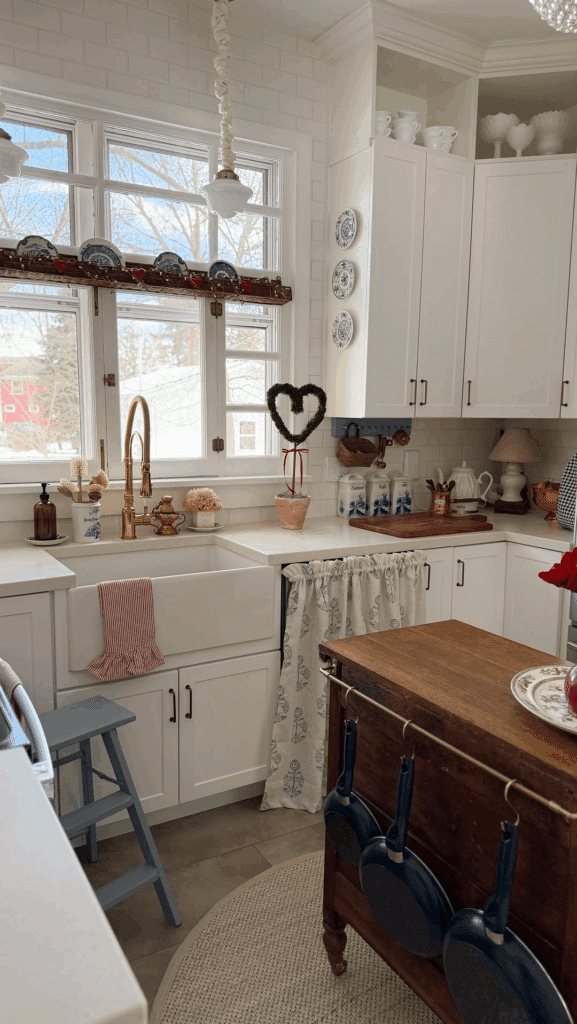
An exposed wood beam and painted cabinetry are part of the vintage cottage kitchen. Add oil-rubbed cup pulls and tongue-and-groove-style wall paneling. The deep apron-front sink completes the arrangement.
The farmhouse sink is the kitchen center, with fireclay and cast iron as the material options.
Butcher block or honed marble counters frame the farmhouse sink. Its generous size supports soaking pots and washing garden produce.
The cabinetry comes in sage, cream, or robin's egg blue, with distressed cabinet paint.
An open shelf holds ceramic crocks, hand-thrown mugs, and spice jars. A vintage linen hangs from a towel hook and curtain rod, and its spice jar has a handwritten label.
The floor has a worn finish and can be made from wide-plank pine or painted wood. A gingham-tied window treatment allows natural light into the kitchen.
Kitchen character can stay practical and personal. A vintage cottage kitchen supports practical use and shared recipes.
Antique Wash Stand Display
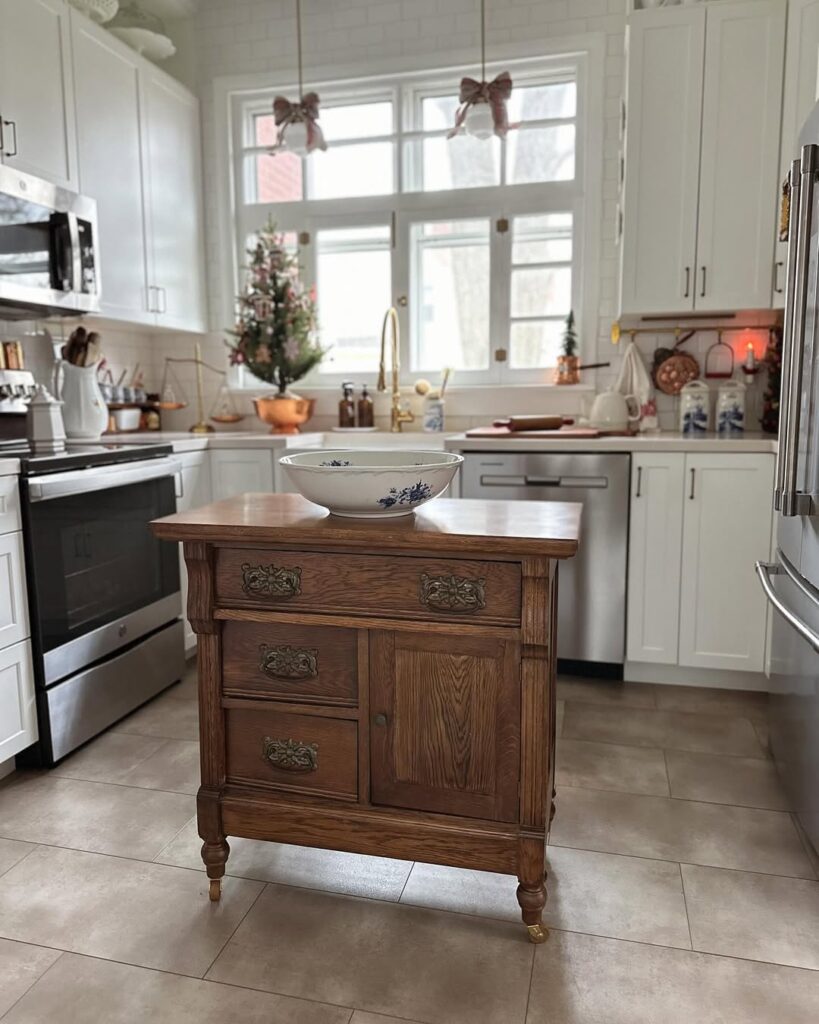
The wash stand top is made from marble. An antique wash stand is a piece associated with pre-plumbed homes, made from oak or walnut and fitted with a porcelain basin.
The compact wash stand supports functional corners and prep zones. A built-in towel bar adds to its practical use.
The wash stand can use woven baskets and flour sacks to store linens, rolling pins, and kitchen tools.
The wash stand top can hold a ceramic pitcher and dried lavender. A drawer lined with old newspaper stores vintage cutlery and herb sachets.
The wood finish has its original patina, and the brass pull is worn. Clean the wash stand gently, since refinishing is not always necessary. For nearby vintage lighting, use Edison bulbs or glass hurricane lanterns.
Place the antique wash stand beside the pantry or at a flour station. It provides both storage and a work surface.
Hutch Revival in Powder Blue
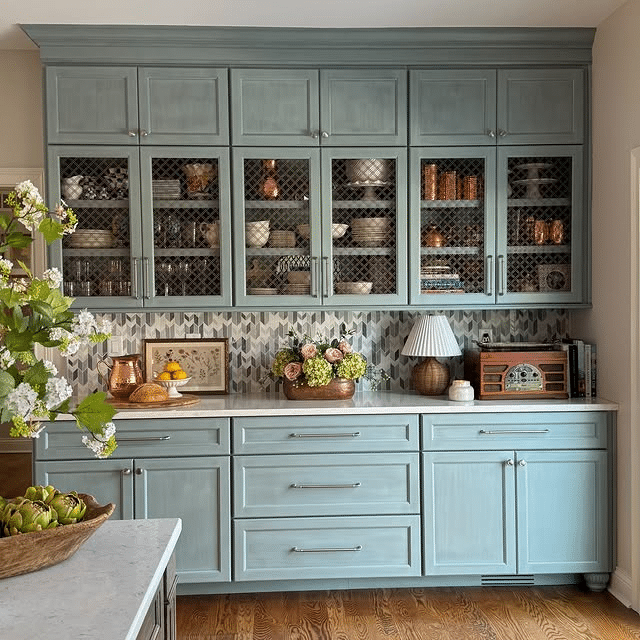
A freestanding hutch in powder blue provides both storage and display space.
Soft blue tones suit early American homes and cottage-style homes. The hutch combines storage and display with wide drawers below and glass-front upper cabinets.
Inside the hutch, mismatched china and milk glass share space with bread baskets draped in linen, cast iron pieces, and vintage tins. The contents support a lived-in appearance.
Brass knobs and ceramic pulls make up the hardware. These details reinforce the vintage character.
Checkered cafe curtains frame the off-white beadboard walls, while a braided jute rug sits nearby. The farmhouse table holds hand-stitched table runners, vintage enamel pitchers, and wildflowers, and these surrounding elements complement the hutch tone.
Above the hutch, ironstone platters and framed botanical prints create a wall display. This powder blue hutch setup suits homes with minimal built-ins.
The powder blue hutch combines heritage and storage, and the source describes it as functioning as a centerpiece.
Vintage Kitchen Appliances
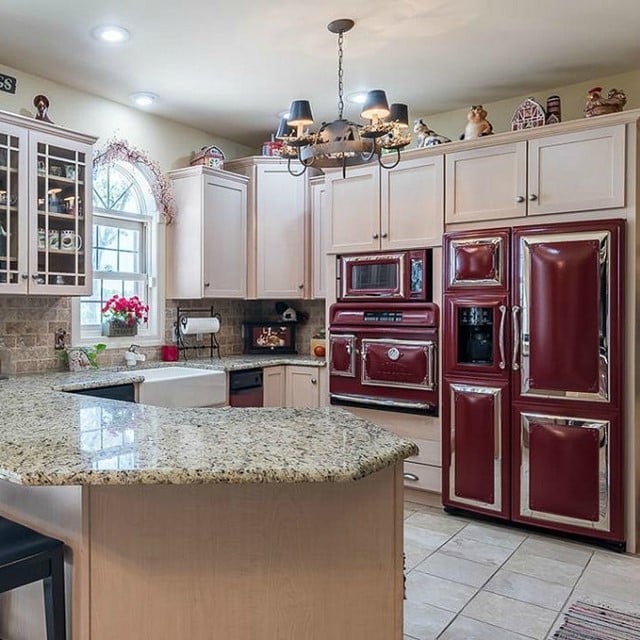
A restored icebox serves as a kitchen focal point. The vintage stove is still working, so these vintage appliances provide functional use as well as a focal point.
An enamel cooktop gives the appliance its original surface, while a rotary-dial oven supports an authentic appearance. Restored appliances may include safety and efficiency updates while preserving the original appearance of the exterior.
A hand-painted kettle, an enamel breadbox, and a cast-iron skillet pair with vintage appliances. Brand logos from Frigidaire and Wedgewood serve as decor.
A Bakelite handle supports the vintage appearance. Its nearby Art Deco temperature dial does the same, while the vintage detailing preserves function.
Soapstone and butcher block bring contrasting surfaces to the kitchen. Wood-grain cabinetry should complement antique appliances and the counters. Use carpentry or custom cabinetry to hide wiring and venting.
Antique appliances serve as focal points while supporting the current kitchen function. They also support cooking.
Antique appliances represent past craftsmanship, but they require careful sourcing.
Vintage Emerald Checkerboard Tilework
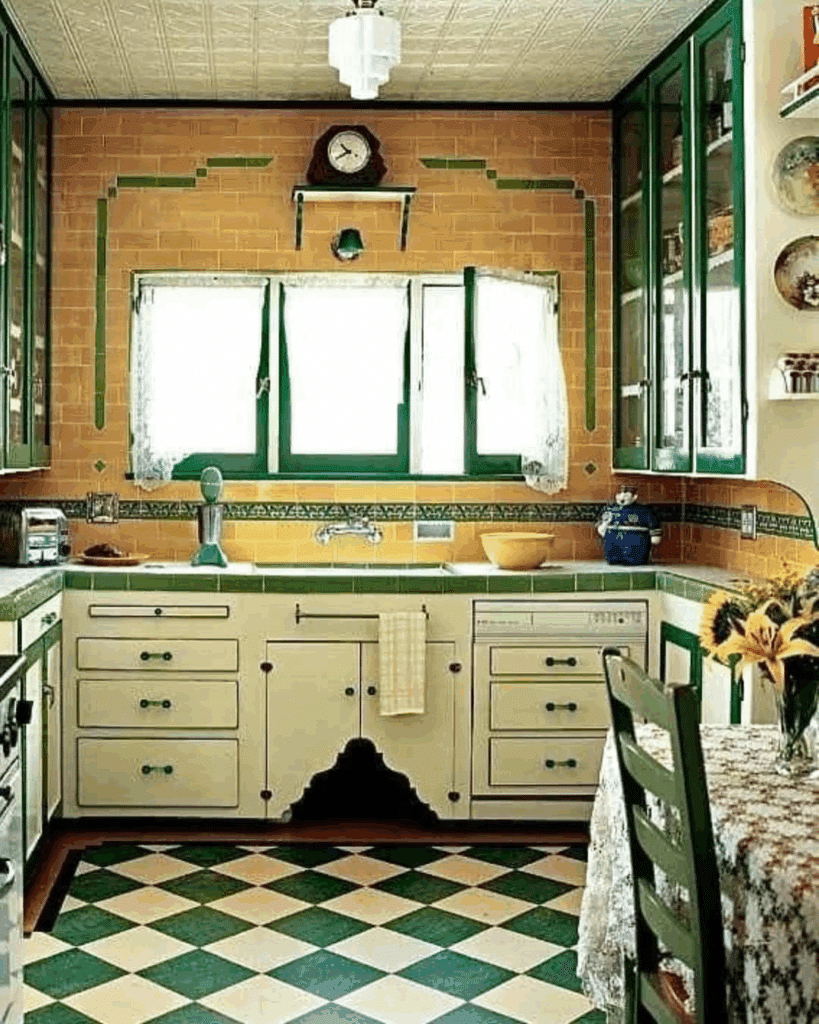
Emerald green tiles add bold color and reference antique character. The antique emerald green tile pairs with checkerboard flooring.
A jewel-toned green backsplash made from glazed subway tile extends up the wall. It references early twentieth-century pantries and European sculleries.
Brass and aged bronze fixtures pair with emerald tones. Open shelves or cabinetry with glass fronts can balance the intensity of emerald, while thoughtful use of the color anchors the room.
Checkerboard flooring beneath the emerald tiles provides symmetry.
Walnut or pine furniture, including an island or sideboard, complements an emerald palette. Vintage pendant lights use opaline glass shades that soften the atmosphere.
In one corner, keep accessories minimal with just a few copper pans and heirloom mixing bowls. The restrained accessories prioritize the tilework.
Checkerboard floors provide continuity and structure. Green tiles emphasize material quality and reference history.
French Revival Copper and Oil Painting Kitchen
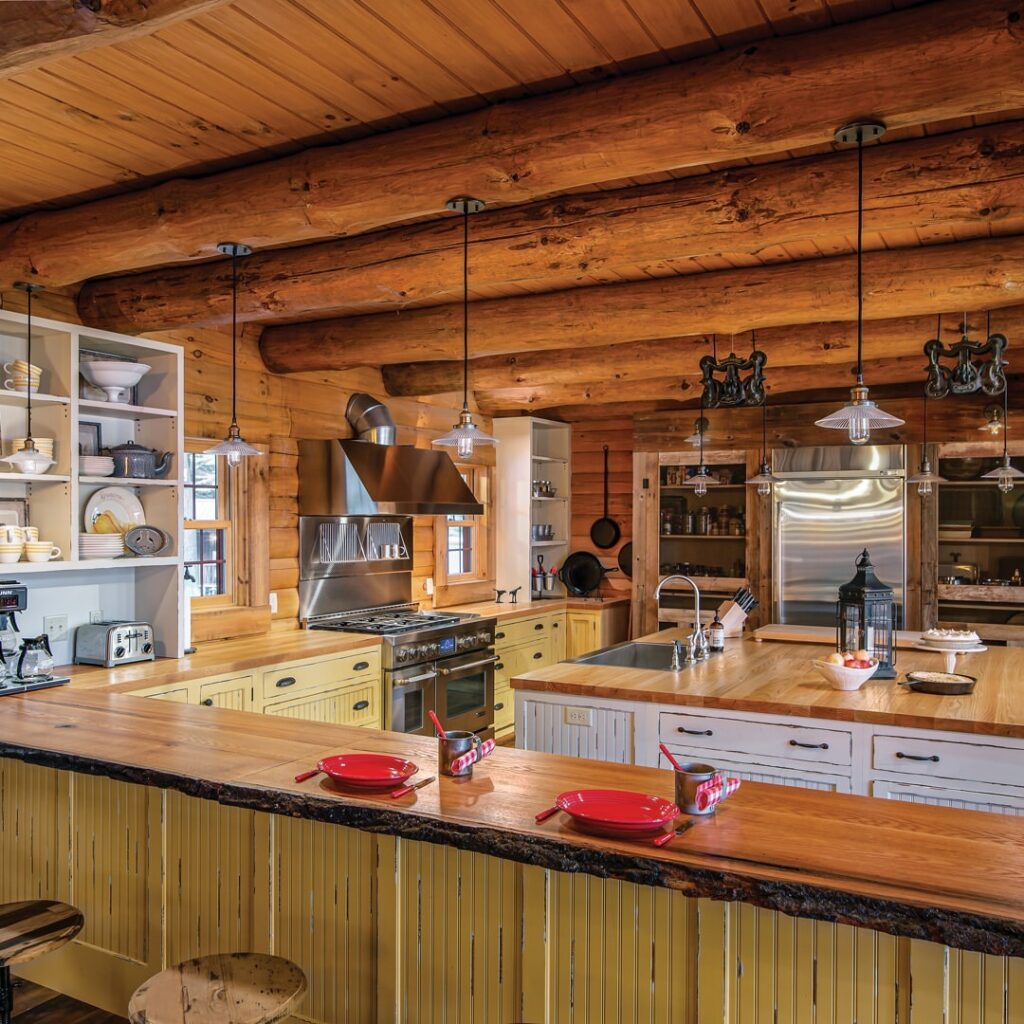
Aged copper cookware combines with wrought iron accents and oil paintings in this French revival kitchen. The combined elements reference a French revival kitchen.
Stone or terracotta flooring provides a rustic foundation. Cream cabinets with visible hinges balance the kitchen palette.
Copper pots around the hood frame a custom wood hood above the range. Hanging racks or antique railings provide cookware storage, while well-loved cookware also serves as decor.
Across the room, oil paintings in ornate frames show pastoral scenes and vintage still lifes. They provide an old-world gallery reference.
The open shelves are the main feature, displaying objects. Marble and honed soapstone countertops support warm neutrals, aged brass, and soft charcoal.
Near the workspaces, linen-covered lamps join wrought iron sconces and chandelier-style pendants. The lighting selection references the French countryside.
Timeless materials and personal touches emphasize craftsmanship in the kitchen design. The design avoids dependence on trends and honors tradition.
Copper combines with curated artwork in the kitchen. Together, they support a lived-in kitchen character as well as a luxurious kitchen character.
Mint Cottage Kitchen Vintage Details
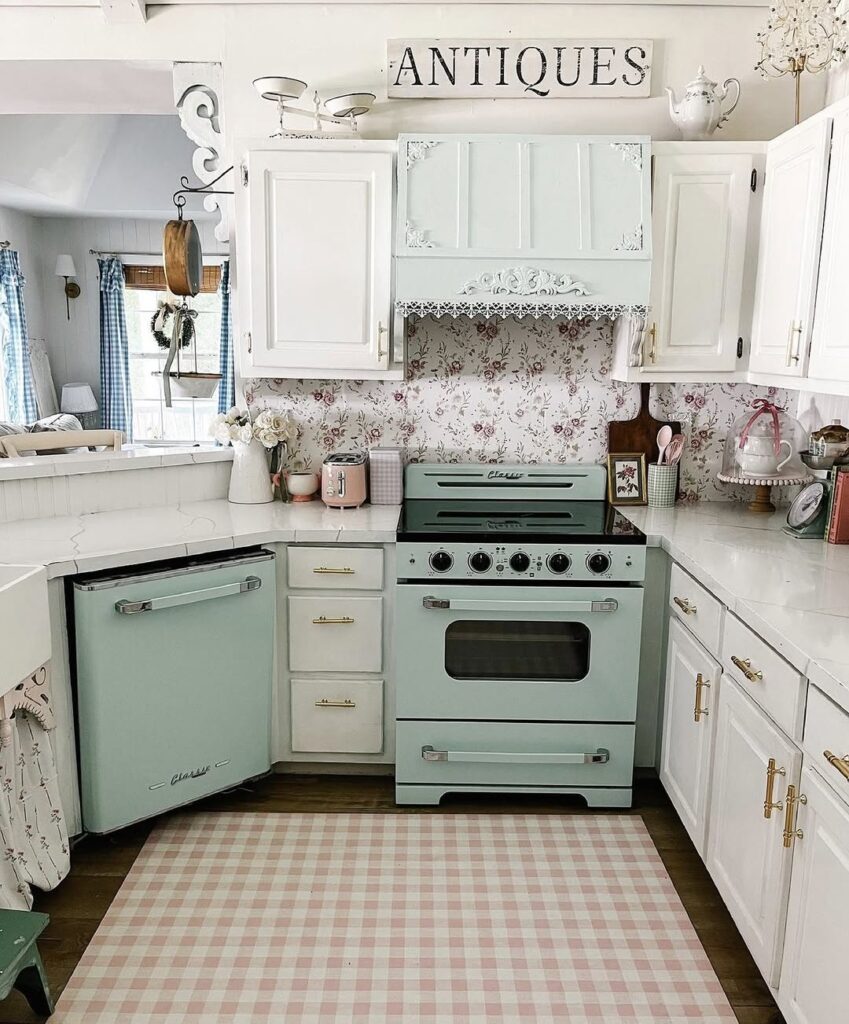
Scalloped trim adds a distinct cabinet detail. The pale mint cabinetry suits a 1950s kitchen style and pairs with rounded edges, chrome hardware, and the scalloped detail.
Cabinetry that is original or faithfully restored gets its character from the color, which sets the kitchen tone.
A checkered linoleum floor in soft gray and cream references the 1950s era.
The retro stove has rounded corners and an enamel knob. Open shelving displays jadeite glassware, colorful Pyrex bowls, and pastel sugar canisters.
Gingham or polka dot curtains add a cottage detail. A freestanding table with a metal leg is paired with a vinyl chair. Use era-appropriate lighting such as flared-glass pendants or vintage ceiling fixtures.
Avoid clutter and balance the kitchen elements. Mint tones maintain vintage authenticity.
Era-correct details belong in the cottage kitchen, along with thoughtful accessories. The room references post-war American homes.