15+ Beautiful Cherry Wood Kitchen Cabinet Designs
Cherry cabinetry has a timeless depth, natural grain, and warm undertones. It also supports the everyday functionality a kitchen needs.
The wood finish works in both renovations and new construction.
Cherry cabinetry suits modern kitchens as well as traditional kitchens.
It also fits the current trend toward warmer interiors.
For 2025, explore kitchen cabinetry in rich cherry wood with ideas that suit both classic and updated rooms. The deep finish can become the starting point for different layouts and storage choices. Consider ways to balance the wood through door styles, cabinet colors, and practical details. Each approach gives cherry cabinetry a distinct look without limiting the kitchen's function.
Finger-Pull Cherry Cabinet Doors
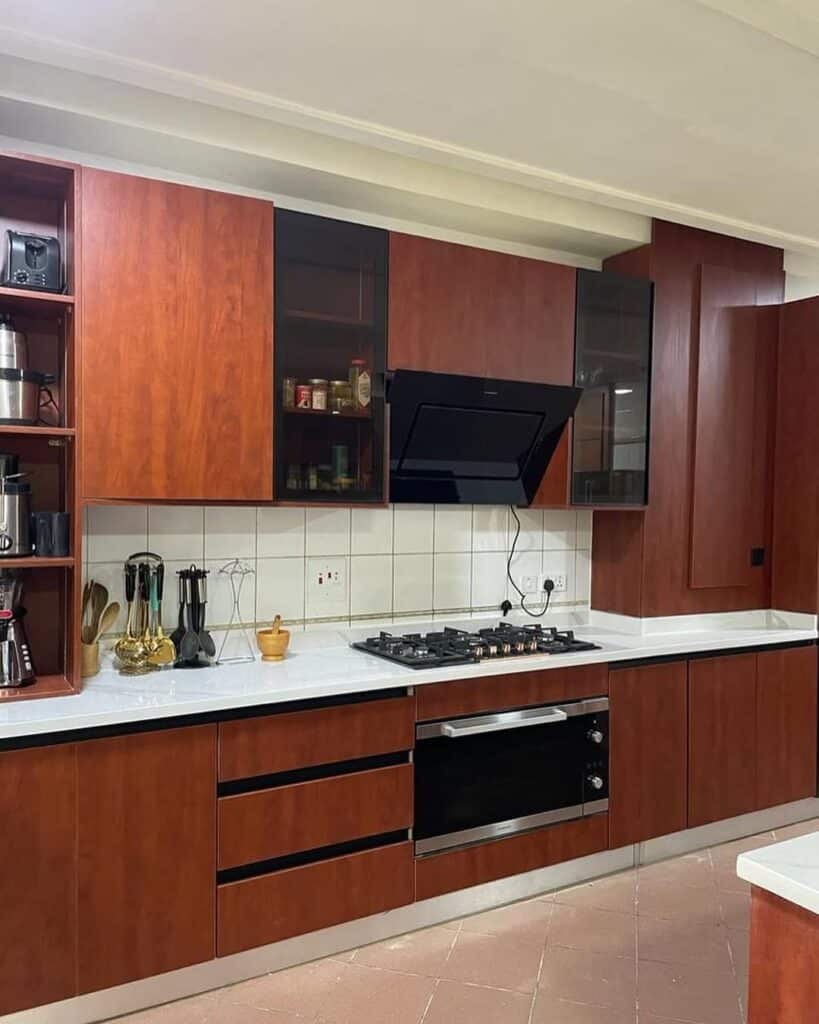
Built-in grooves along the top edge or side edge serve as finger pulls. Cherry cabinetry stays free of external hardware, while the pulls provide a functional opening.
Handle-free cherry doors suit modern and minimalist kitchens.
Smooth cherry wood doors have a subtle sheen. Finger pulls reduce smudges and provide a functional grip.
Handle-free cherry doors suit open floor plans.
Handle-free cherry doors can pair with touch-latch systems and soft-close hinges. Use matte finishes or low-sheen lacquers to mute reflections, while the matte surface highlights the wood grain.
These doors suit quiet households and support daily ease.
The finger-pull design gives cherry doors a clean, handle-free appearance. It brings the wood's natural warmth together with modern simplicity while still supporting practical use.
Vertical Closed Cherry Cabinets
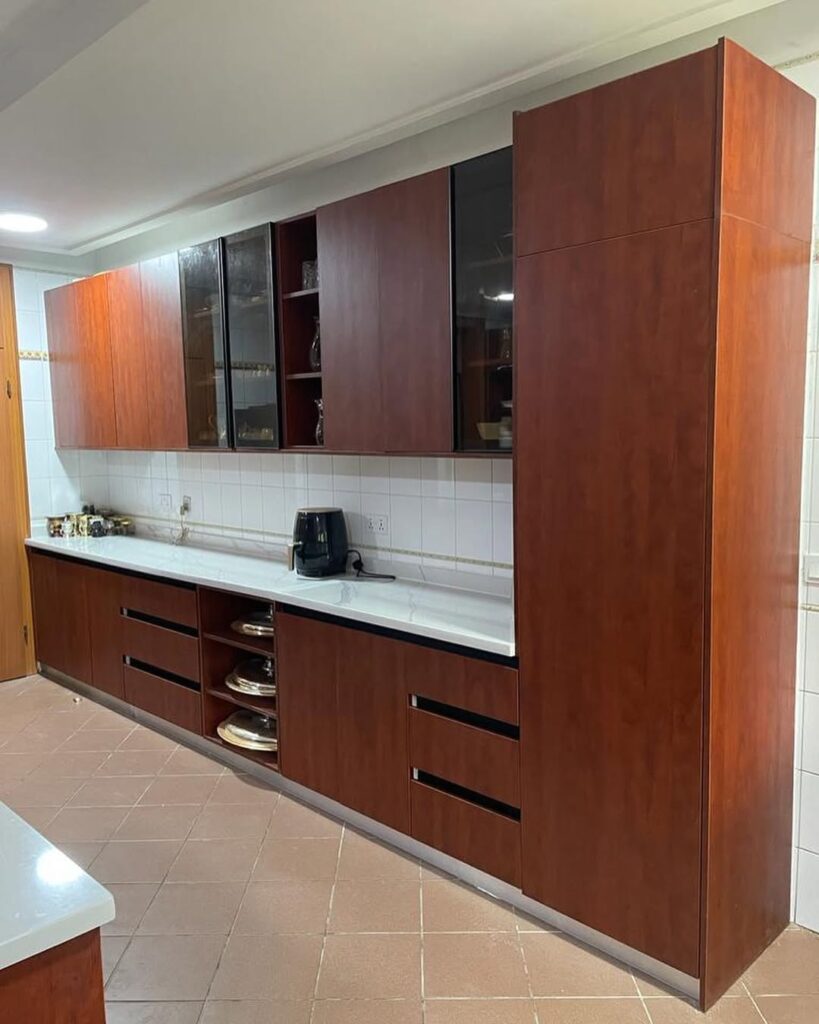
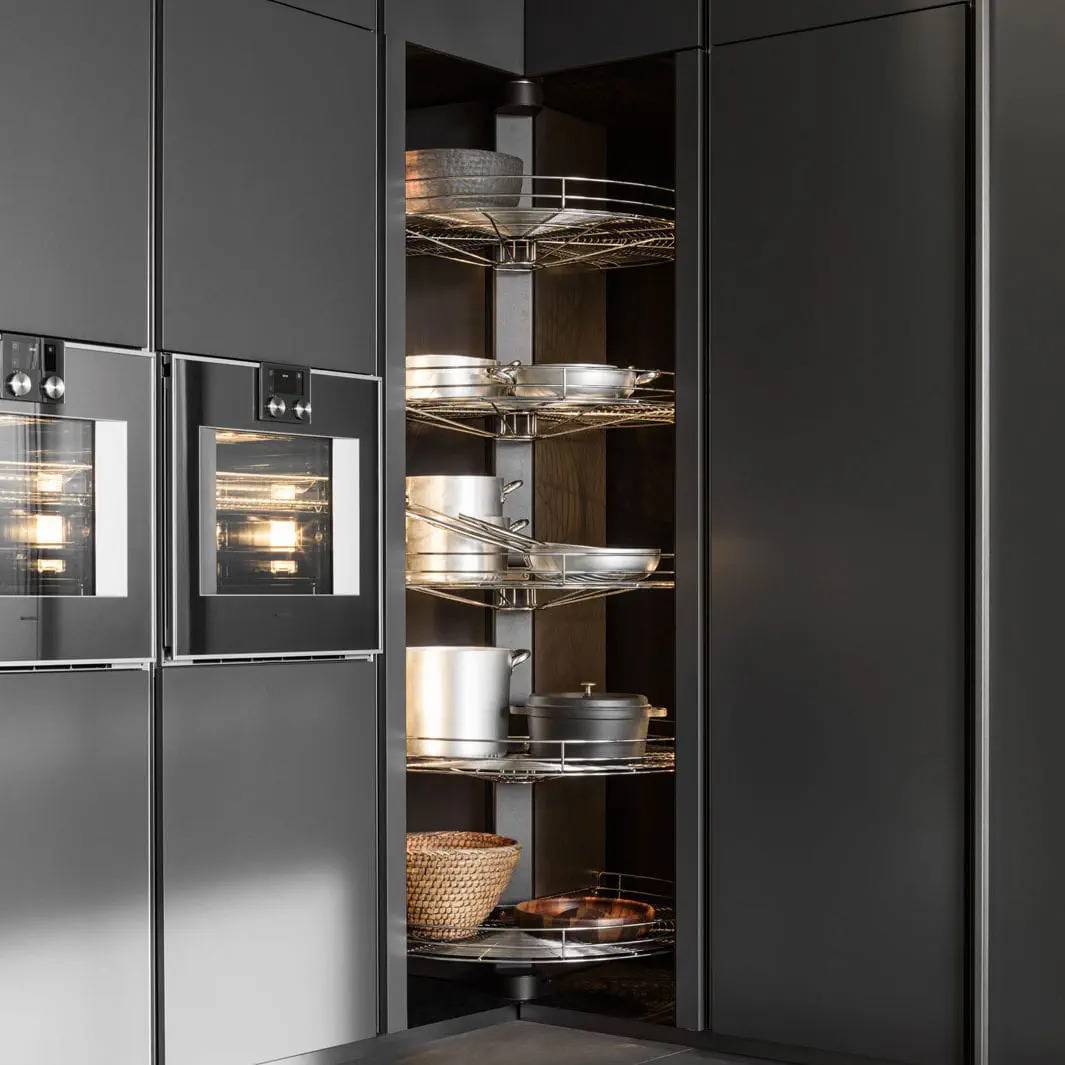
Pantry items have a place in tall cherry cabinets, along with cleaning tools and appliances that are rarely needed. Their vertical design rises from the floor to the ceiling, creating ample storage in a compact footprint.
Cabinet fronts can stand out while keeping clean lines and a unified style. They can also blend with the wall finishes.
A galley end or the side of a refrigerator can hold these cabinets. Their concealed storage suits open-concept layouts and narrow kitchens.
White countertops pair with a medium-dark cherry finish. Pale tile backsplashes work with it as well.
Custom inserts can include pull-out trays, broom closets, and appliance garages. On vertical cherry cabinets, slab doors and simple Shaker styles reduce visual noise, while the inserts maintain a uniform exterior and enhance cabinet utility.
Soft-close hardware pairs with concealed vertical cherry cabinets. Recessed lighting works with the same cabinet style.
Hardware and Lighting for Cherry Cabinets
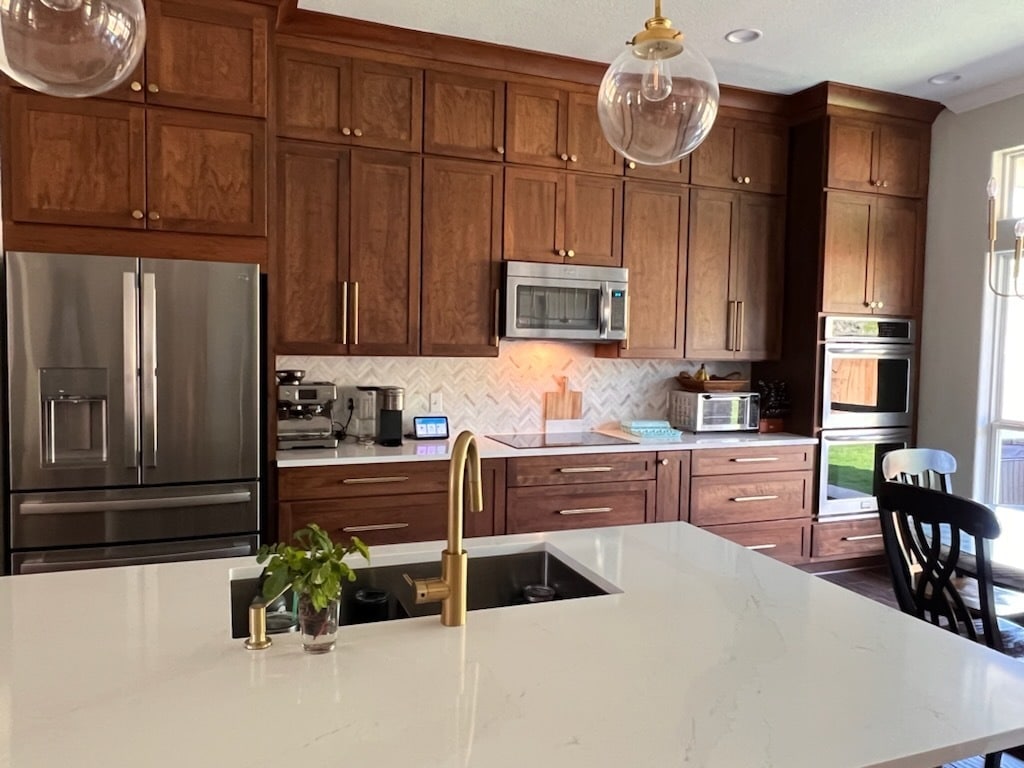
Kitchen ambiance can change when hardware and lighting are coordinated. The two elements pair with cherry cabinetry to create that effect.
Warm cherry cabinetry can take bold handles, oversized knobs, and sculptural pendants without being overpowered. Together, these hardware and lighting choices create high-impact contrast against the cabinetry while drawing attention to themselves.
The reddish hues of cherry cabinetry contrast with brushed brass, matte black, or aged bronze hardware. Each finish option is compatible with cherry cabinetry.
Drawer pulls, faucets, and hinges can share a hardware finish for consistency across the space. Lantern pendants and mid-century globe lights mirror that finish. Differences in hardware size or style add design depth.
Light fixtures belong above islands or workspaces so those areas serve as focal points. In addition to providing secondary lighting, sconces near open shelving or glass-front cabinets can act as decor elements. Above-island lighting draws the eye upward in wood-heavy designs.
Cherry cabinetry gives statement fixtures room for personal expression. These fixtures can suit classic, industrial, or transitional kitchen styles.
Hardware works alongside the cabinetry and helps define the kitchen's tone. Lighting works with the cabinetry too, but its main role helps define the kitchen's purpose.
Dark Burgundy Cherry-Like Cabinetry
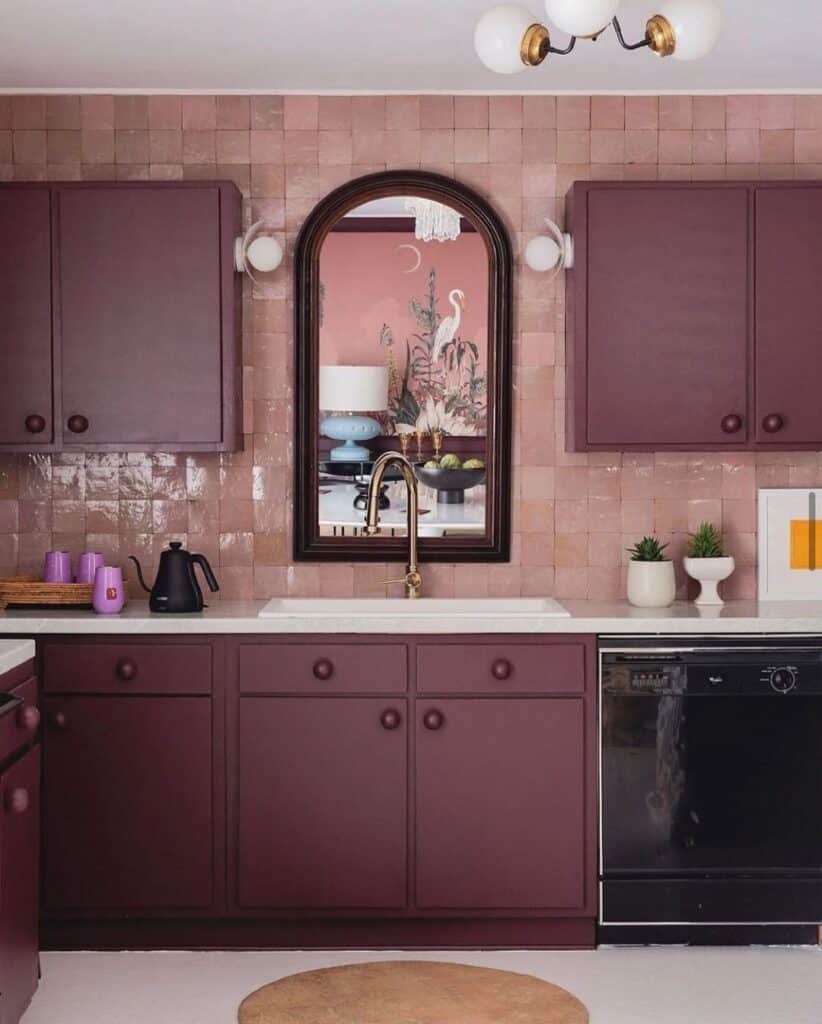
In a kitchen with limited natural light, a light backsplash can support brightness. It pairs with and balances the dramatic burgundy cabinetry.
White subway tile, pale travertine, and ivory ceramic offer light backsplash options. They create moderate contrast with burgundy cabinetry while avoiding harsh visual tension.
Burgundy cabinetry with a light backsplash suits galley and U-shaped kitchen layouts. The lighter surface can offset the heavy feeling of continuous cabinetry.
A light backsplash reflects both artificial and natural light. That reflection supports a more spacious, open feeling while increasing burgundy saturation and deepening its tones.
Glossy tile and honed marble add texture and subtle variation. These backsplash finishes enhance the effect of a light backsplash.
Matching grout keeps the backsplash visually secondary and makes the tile a subtle backdrop. Satin nickel and soft brass hardware finishes pair with the burgundy cabinetry.
A light backsplash keeps the color scheme harmonious with burgundy cabinetry. It counterbalances the bold cabinet tone and works with both traditional and contemporary design.
Cherry and White Cabinetry
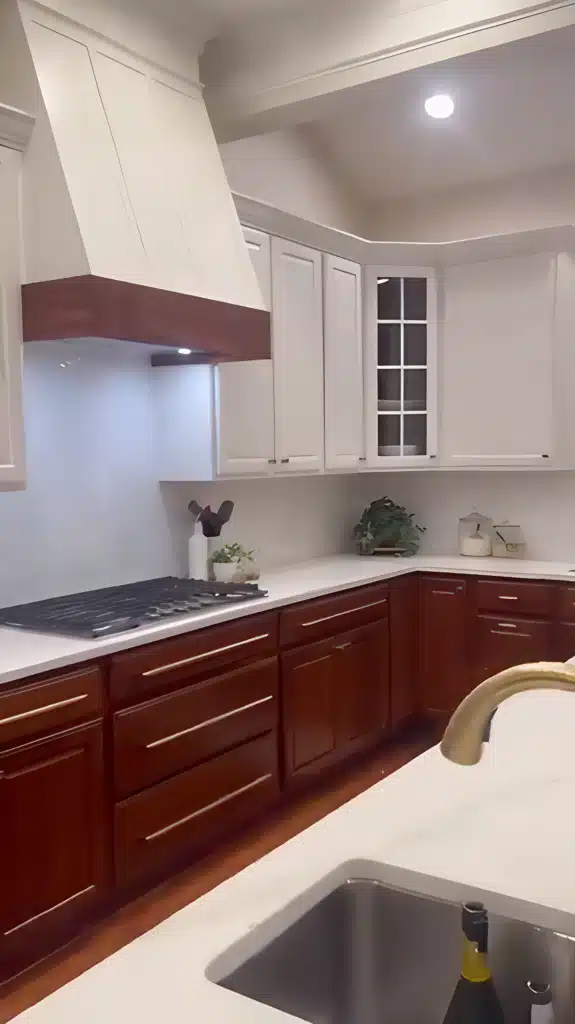
The balanced palette combines cherry with white paint. This two-tone cabinetry uses cherry on one part and white painted surfaces on another.
Crisp white upper cabinets reflect light and contrast with dark cherry base cabinets.
Two-tone cabinetry suits farmhouse and transitional kitchens. It defines kitchen zones without requiring physical partitions.
White shades ranging from warm cream to bright porcelain complement the reddish undertones in cherry wood. This pairing creates a balanced contrast while allowing both finishes to remain visible.
Shaker profiles support classic style, while flat panels support modern style. Cabinet profiles can use either Shaker or flat-panel doors.
Brushed nickel and oil-rubbed bronze hardware can unify the two-tone cabinetry. Mixed finishes allow varied accents, including pendant lights and backsplash tiles.
Two-tone cabinetry supports material variety while maintaining a coordinated design. It combines coziness with clean lines.
Cherry Hardwood Kitchen Flooring
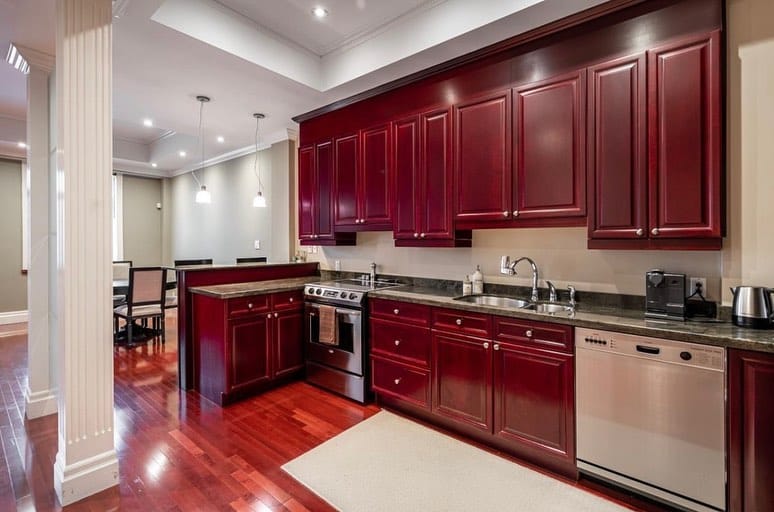
Cherry flooring creates continuous warmth in the kitchen. It pairs with cherry cabinetry to support a cohesive design.
Cherry flooring shows natural material character through grain variation and color variation. That makes it different from synthetic materials.
For modern settings, choose a satin or matte floor finish. Traditional or rustic rooms can use a semi-gloss or hand-scraped finish.
Shade or stain differences between the floor and cabinetry define the floor and cabinetry surfaces while maintaining overall unity. Coordinate the floor planks with the cabinet tones, but exact matching is unnecessary.
Island or countertops in a light color can break up the wood-on-wood effect. Cabinetry lines should contrast with the floorboard direction. Rugs or runners define zones and provide softness underfoot.
Routine floor maintenance helps preserve the sheen. Avoid a high-gloss finish in high-traffic zones, where scuffs and wear are more visible. Cherry flooring can perform under everyday use.
Cherry hardwood flooring provides continuity and warmth alongside kitchen cabinetry. Homeowners may also see it as supporting long-term value.
Floating Shelves in Cherry Kitchens
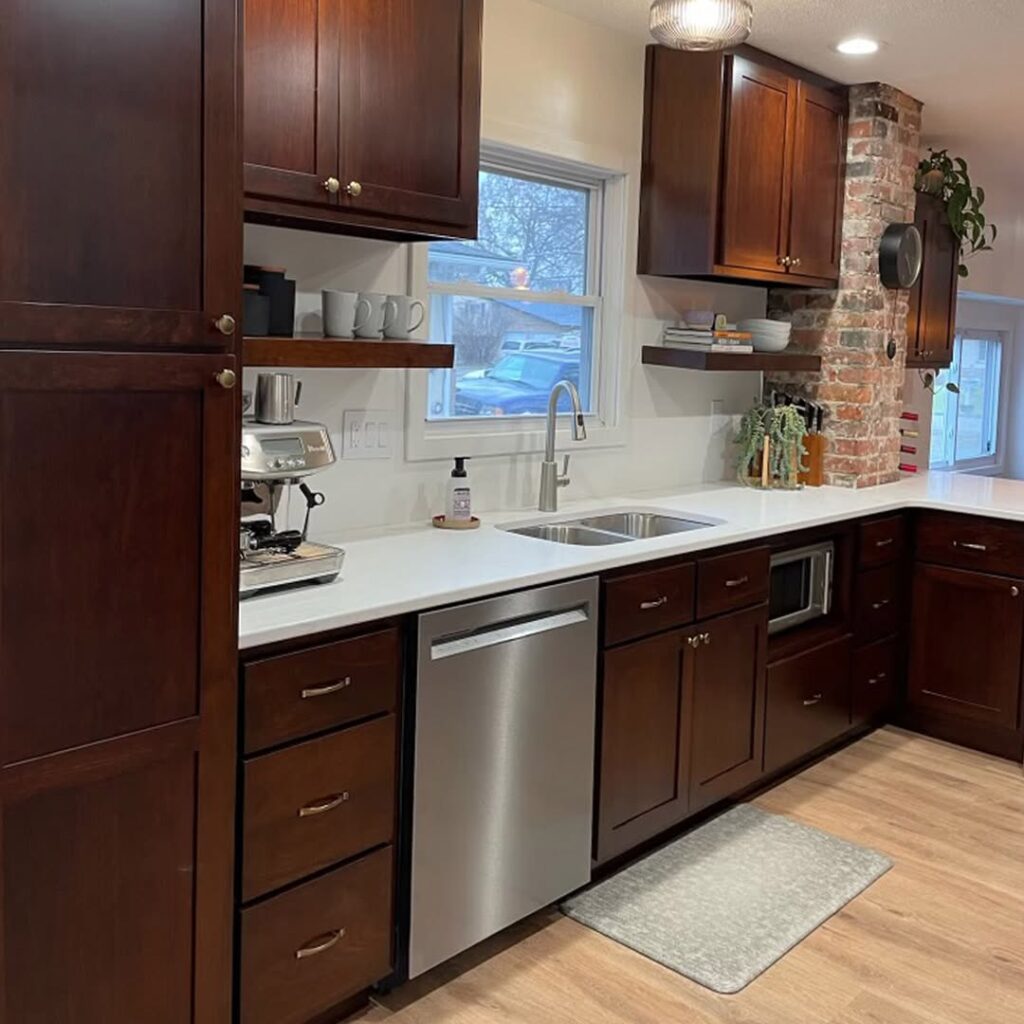
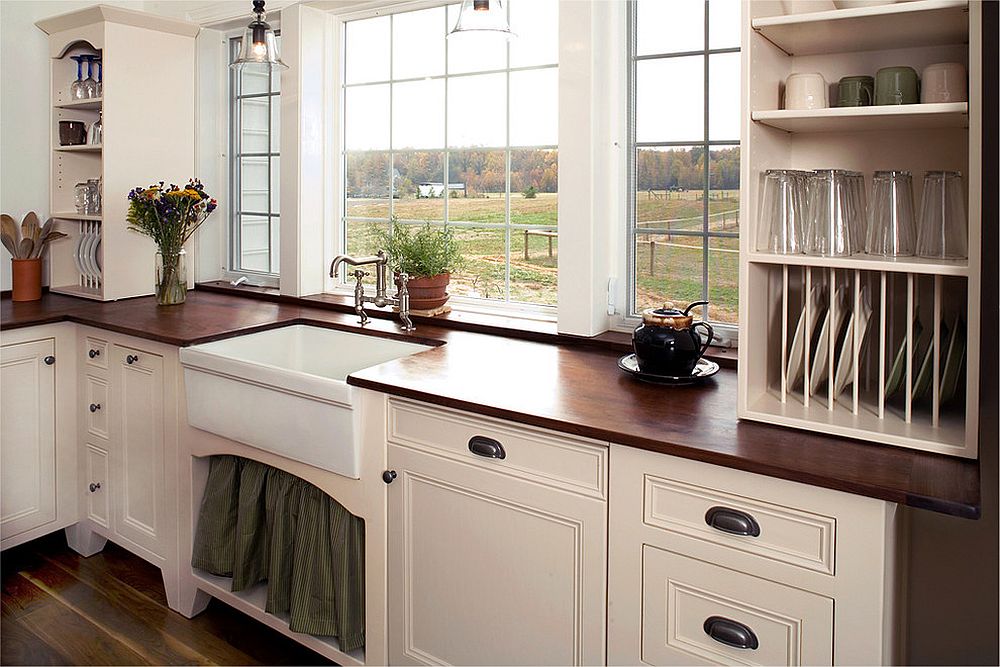
In a cherry layout, open shelving combines with traditional wood. The open shelves keep the cherry cabinetry material context visible.
Floating shelves can have matching cherry or complementary finishes. They store everyday essentials and display decorative pieces.
Floating shelves can go above countertops or in the spaces between cabinet runs. Open shelving reduces the heaviness of full-wall cabinets and increases spatial openness.
Match the shelves to the cabinet finish, or create contrast with lighter wood or metal brackets.
Floating shelves can house cookbooks, ceramic canisters, and glassware. Limit the items placed on each shelf.
Integrated lighting can go above or beneath the shelves. Integrated shelf lighting supports shelf functionality.
In cherry cabinetry layouts, open shelving combines display utility with the existing cabinetry.
Cherry wood gives the space its own personality. It also provides warmth and refinement.
Cherry Cabinets With Glass Doors
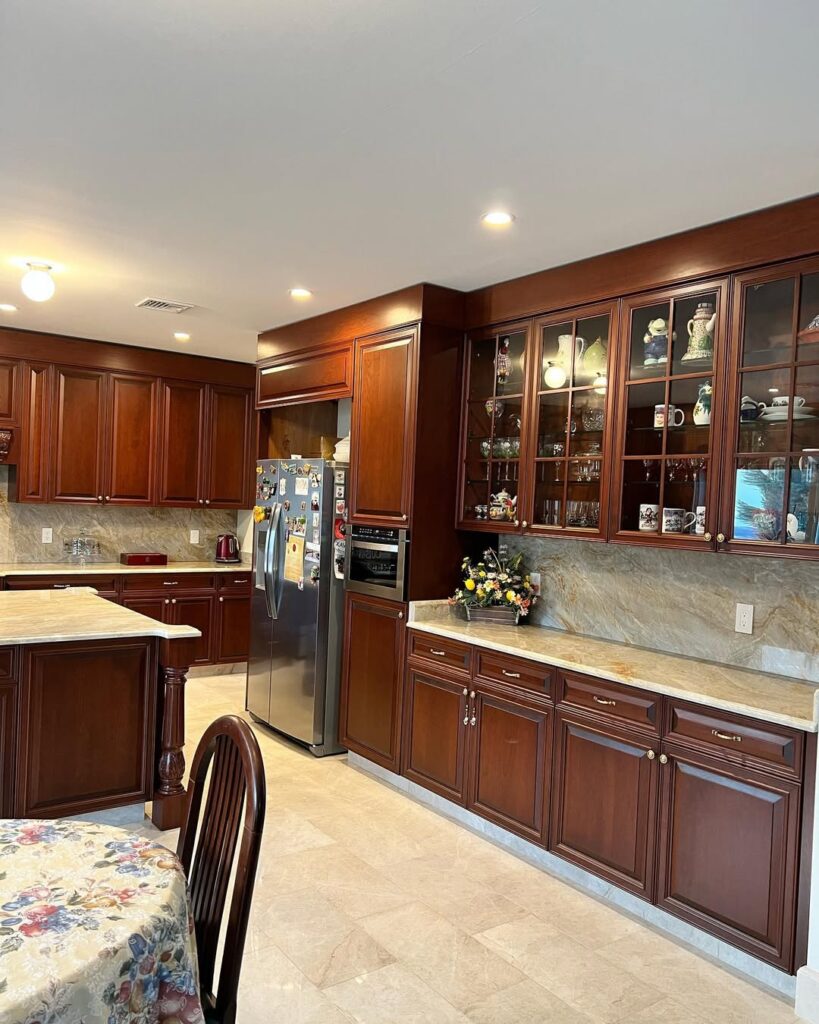
Clear panels let the cabinet doors display dishware while retaining the warmth of cherry.
A rich stain and visible grain remain prominent on these cherry cabinets. Glass-front cabinets provide partial protection compared with open shelving.
Glass-front cabinets suit small kitchens. Reflective surfaces can increase the perceived size of the room.
Cabinet glass can be clear, frosted, or ribbed. Each option supports contemporary, transitional, or traditional kitchens.
Under-cabinet lighting illuminates the cabinet interiors and pairs with cherry cabinets. Glass cabinetry can also reduce the visual weight of a wooden wall while displaying ceramics and seasonal dinnerware.
Brass, matte black, minimal, and hidden-pull hardware can pair with cherry cabinets. Cherry wood brings warm tones to each combination.
Glass-front cabinets provide accessibility while offering only partial openness compared with open shelving.
Steel Details for Cherry Cabinets
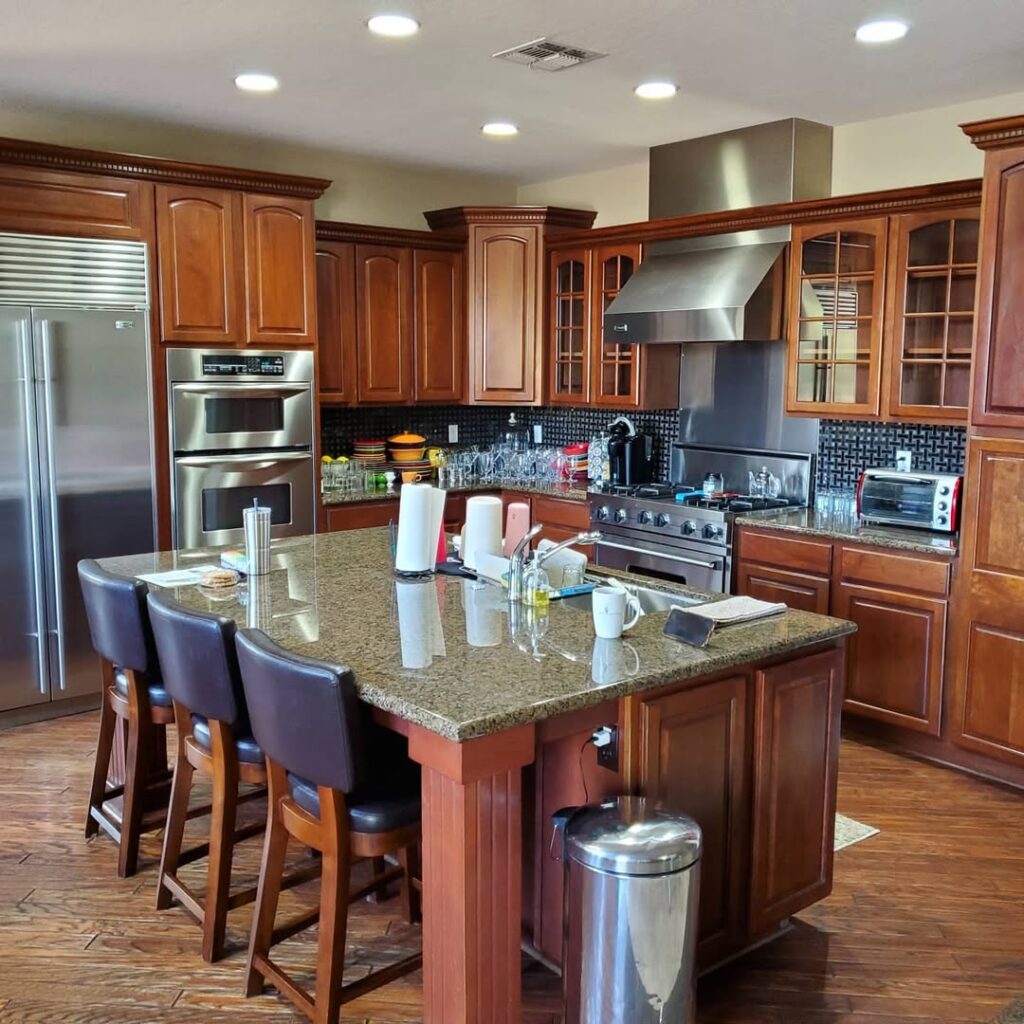
Cherry wood with a natural reddish tone pairs with stainless steel. The stainless steel has a modern edge.
Look for stainless steel on the appliances or on smaller features such as toe kicks and vent covers. Range hoods can use it too, and all of these choices work with cherry cabinetry.
Cherry and stainless steel suit contemporary kitchens and transitional kitchens. Together, they provide design continuity and durability.
Stainless steel helps prevent excess darkness. Its cool, reflective surface complements cherry hues.
Brushed steel and polished nickel are both hardware finishes that work with stainless details.
Sinks, faucets, espresso machines, and toasters can extend the stainless theme.
Metal trim on the drawers and metal kick plates suit high-traffic zones. Stainless finishes enhance cabinet functionality, while the metal kick plate provides durability.
The pairing of two materials creates a practical, enduring style. It gives the kitchen a cohesive effect.
Mid Century Cabinet Style
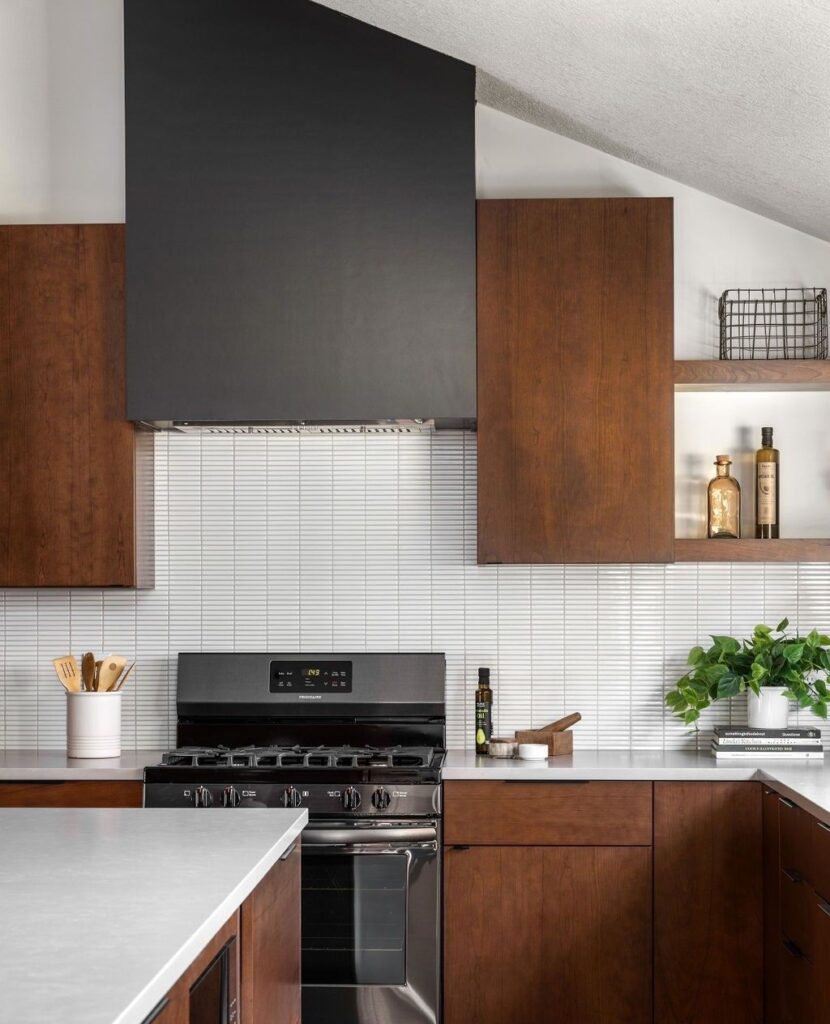
Warm reddish cherry wood has fine grain and a natural finish. The cabinetry uses clean lines and flat-panel doors in a mid-century setting that fits mid-century design.
Warm reddish cherry wood with a fine grain sets the tone. Vintage-inspired sputnik lighting, a terrazzo counter, and geometric backsplash tile complement the cherry wood.
The cabinet base can stand on legs or appear to float, drawing on 1950s and 60s furniture. Mid-century cabinets use slab doors, minimalist pulls, and recessed hardware.
Even coloring and fine grain give cherry wood a consistent surface. Cherry wood supports a mid-century aesthetic.
A retro appliance and retro open shelving pair with the cherry cabinetry. Together, the pairing maintains a practical workspace.
Cherry cabinetry works in original mid-century homes as well as modern builds. Its character and versatility remain present in both settings.
Horizontal base drawers emphasize width over height, supporting usability in the kitchen layout. Matte black, brass, or chrome accents can pair with the cherry cabinetry.
Vintage character shapes the room. The mid-century cabinetry also supports contemporary functionality.
LED Lighting Beneath Cherry Upper Cabinets
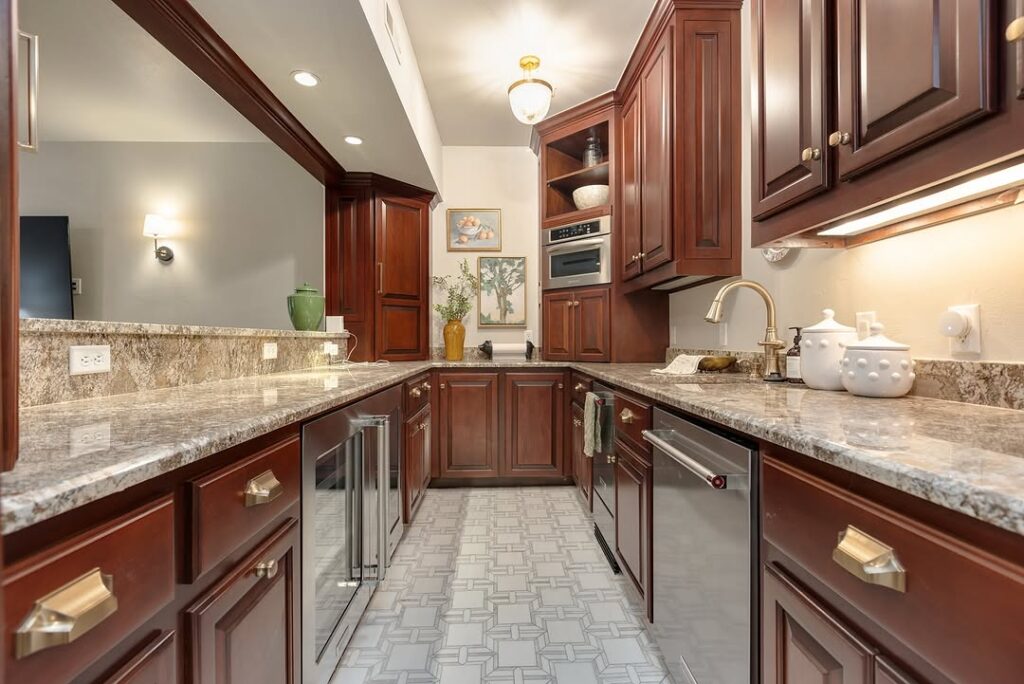
LED lighting provides workspace illumination in either strip-light or puck-light form. It makes chopping, reading recipes, and checking doneness easier.
The rich tones and natural grain of cherry cabinetry gain more visual depth under the cabinets. LED lighting emphasizes those details.
Warm-white lighting softens the room atmosphere around cherry finishes. It reduces both starkness and coldness while keeping the space warm.
A dimming control can shift the lighting from bright prep light to softer evening ambient light. LED fixtures use little energy, produce minimal heat, and generally last longer, supporting long-term use.
Cabinet lips and recessed channels can conceal the installation, keeping the lighting discreet. Many homeowners add motion sensors or smart switches to control it.
Stone backsplashes and high-gloss tiles reflect the light. Under-cabinet lighting pairs with these surfaces and helps distribute kitchen lighting further.
The cabinet character remains intact because under-cabinet lighting does not require changes to the cabinetry. It improves kitchen usability without altering the cabinets.
Beneath the cabinets, the lighting stays visually discreet and delivers consistent performance. Under-cabinet LEDs also help highlight the cherry cabinetry for practical use.
Statement Backsplash
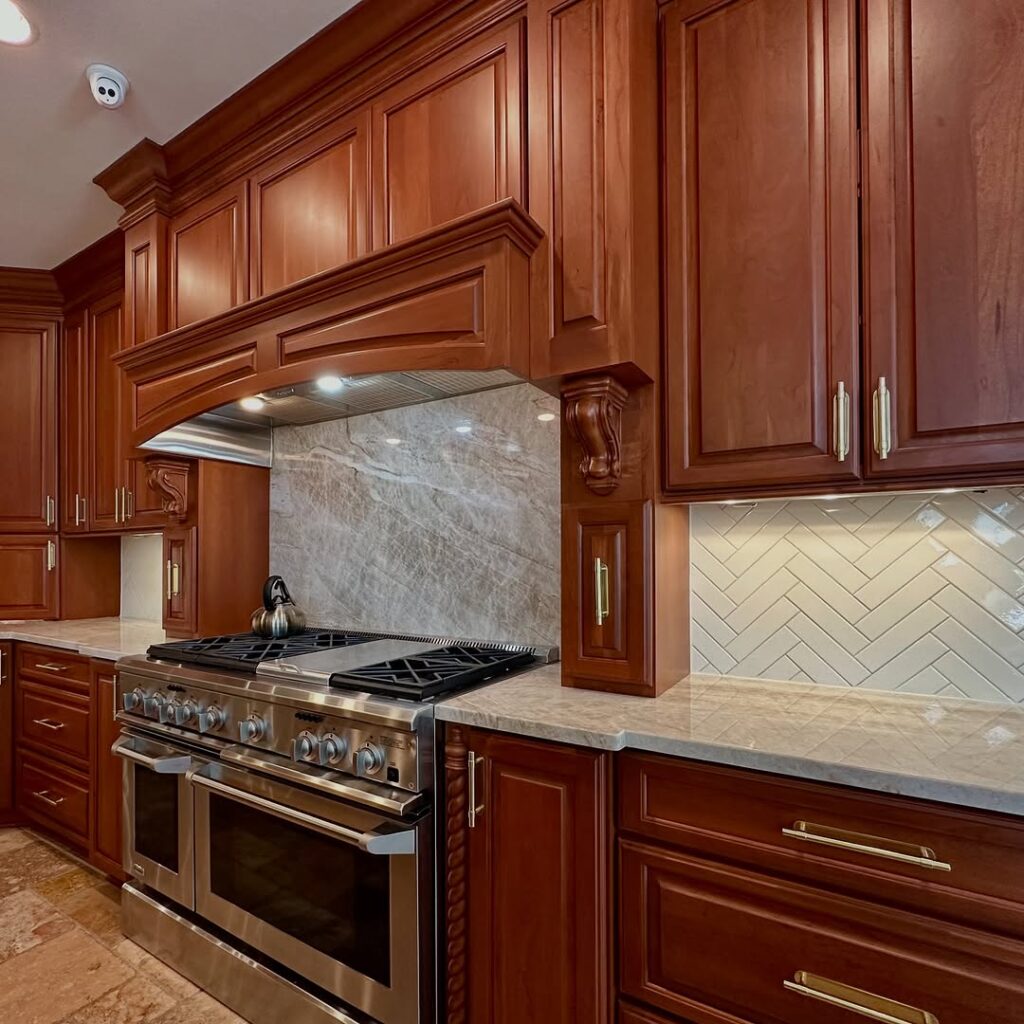
Variable texture and color give the backsplash contrast against the cherry cabinetry.
A backsplash material can serve as the visual centerpiece. Options include hand-painted tile, a marble slab, or a geometric pattern, while a marble slab can have dramatic veining.
The backsplash can use white zellige, creamy travertine, slate, or charcoal tile. Neutral tile balances cherry cabinetry, while darker tile intensifies a moody aesthetic.
The backsplash can be navy or a deep emerald shade, pairing with the red undertones of cherry wood.
Rough stone, matte ceramic, and glossy subway tile each create a different backsplash surface. Choose the grout color to bring out the pattern or make the background recede.
Under-cabinet lighting highlights backsplash details and provides backsplash illumination.
A coordinated backsplash personalizes the kitchen.
Quartz Countertops with Natural Cherry Cabinets
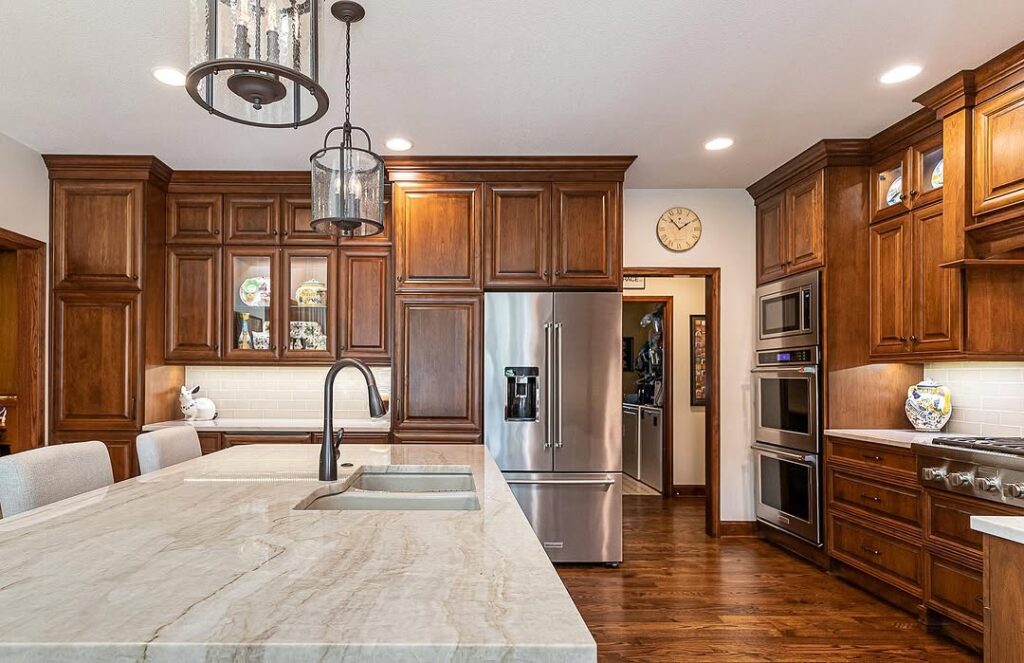
Cherry cabinets and quartz pair to provide both contrast and strength. The combination works together as a countertop and cabinetry pairing.
A quartz surface gives you a practical workspace. It is non-porous and easy to maintain. For the pattern, soft veining and concrete-inspired patterns complement cherry's warm undertones.
Light quartz in off-white and pale gray tones helps reduce an enclosed feeling and supports kitchen brightness. Together, cherry and quartz combine sleek durability with organic richness.
Subtle gold and brown veining echoes the warmth of cherry. The colors remain understated.
Beveled, bullnose, and square-cut countertop edges provide styling flexibility. The choice can follow design goals ranging from farmhouse to modern.
Quartz extending from the counter onto the wall creates a seamless appearance. As a full-height backsplash, it contrasts with wood cabinetry.
With cherry cabinetry, quartz countertops can preserve the wood's natural appearance.
Brushed steel and antique brass hardware pair with the quartz countertop. Together, cherry and quartz provide durability for practical use.
Contrasting Island
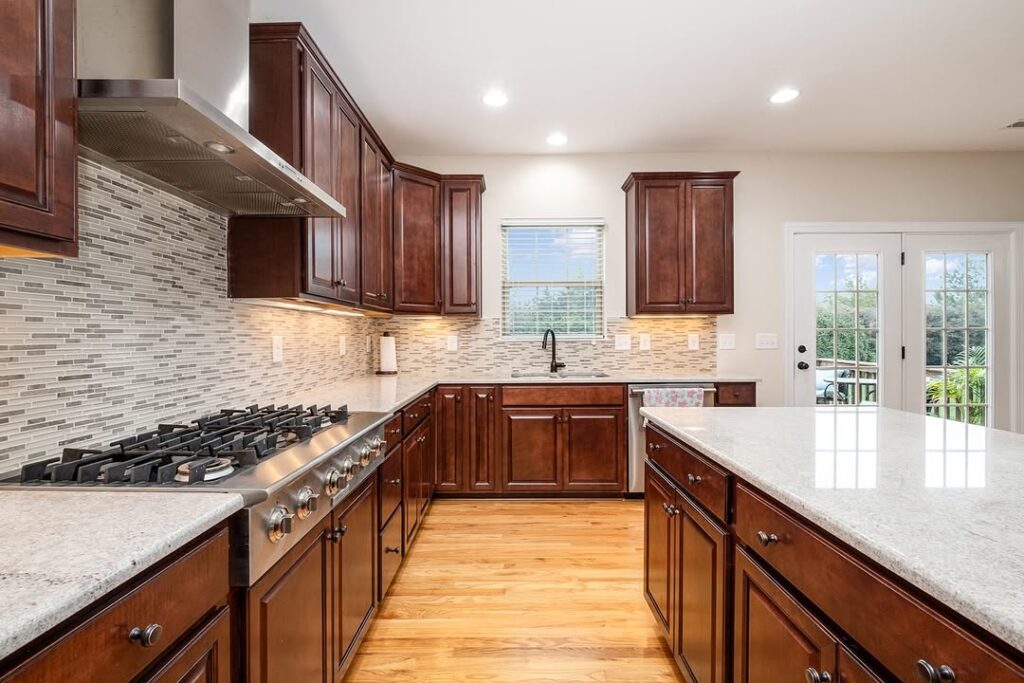
A contrasting kitchen island pairs with cherry cabinets through a different tone, texture, or finish.
A navy, sage green, charcoal, or natural oak island finish contrasts with cherry cabinets. The finish gives the island a separate visual identity.
The cabinet countertop can use granite or marble, while the island countertop uses butcher block or quartz. This countertop variation uses different materials.
The island and cabinetry connect through fixtures. Brass finishes or matte black can be used for hardware, lighting, and barstools.
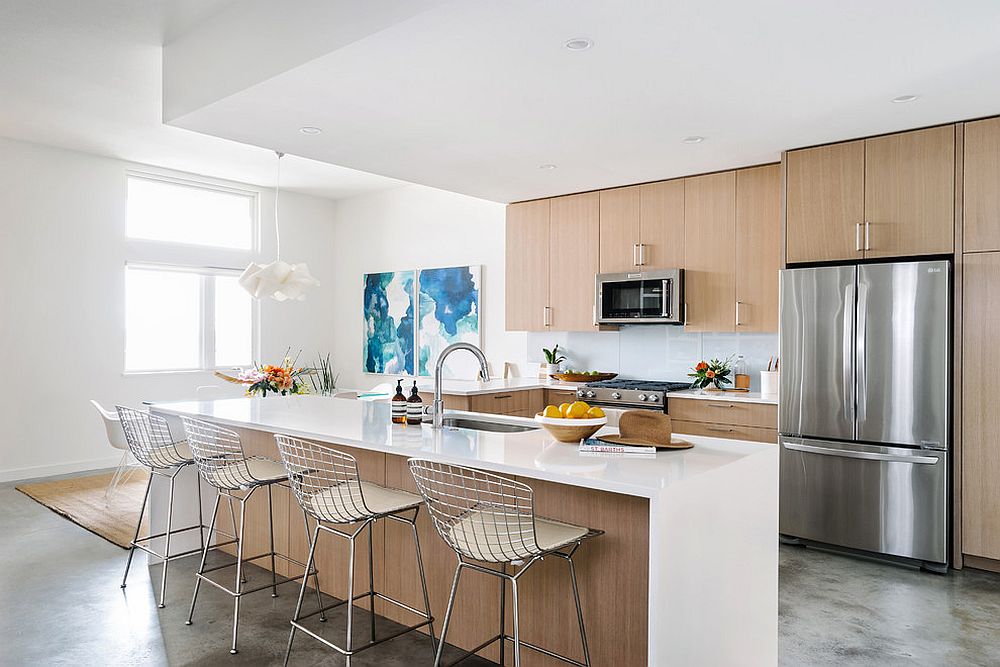
An island supports kitchen functionality in an open-concept home. It can serve as a prep station, a dining spot, and a design anchor.
Cherry cabinetry serves as a visual anchor. A contrasting island adds color contrast.
The contrasting island approach combines contemporary flexibility with traditional craftsmanship. It also supports high performance.