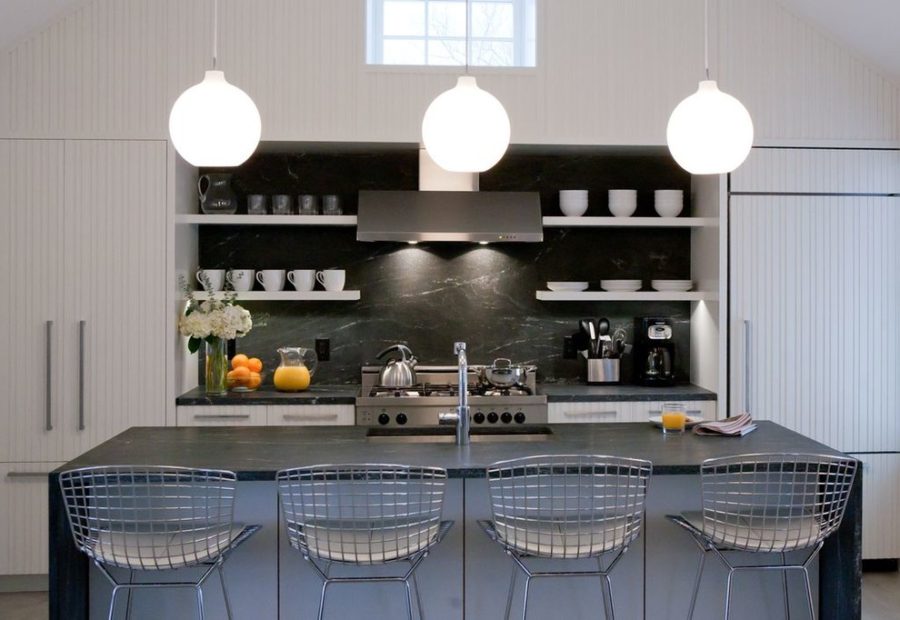
15 Coastal Cottage Kitchen Ideas With Natural Texture and Calm Style
A coastal kitchen brings light into everyday living. Comfort keeps the room easy, while casual elegance gives it a polished feel.
Coastal cottage kitchens have a calming, tranquil feel. They suit coastal homes as well as houses farther inland.
Weathered finishes and layered textures give the kitchen a lived-in feel. Sunlit spaces help keep that look bright.
The coastal cottage kitchen keeps its character while including the functions needed for daily use. Its interior style is easygoing.
Start with the layout and practical needs, then add shoreline-inspired decor details. Practicality remains the priority.
Sea-Foam and White Cabinetry
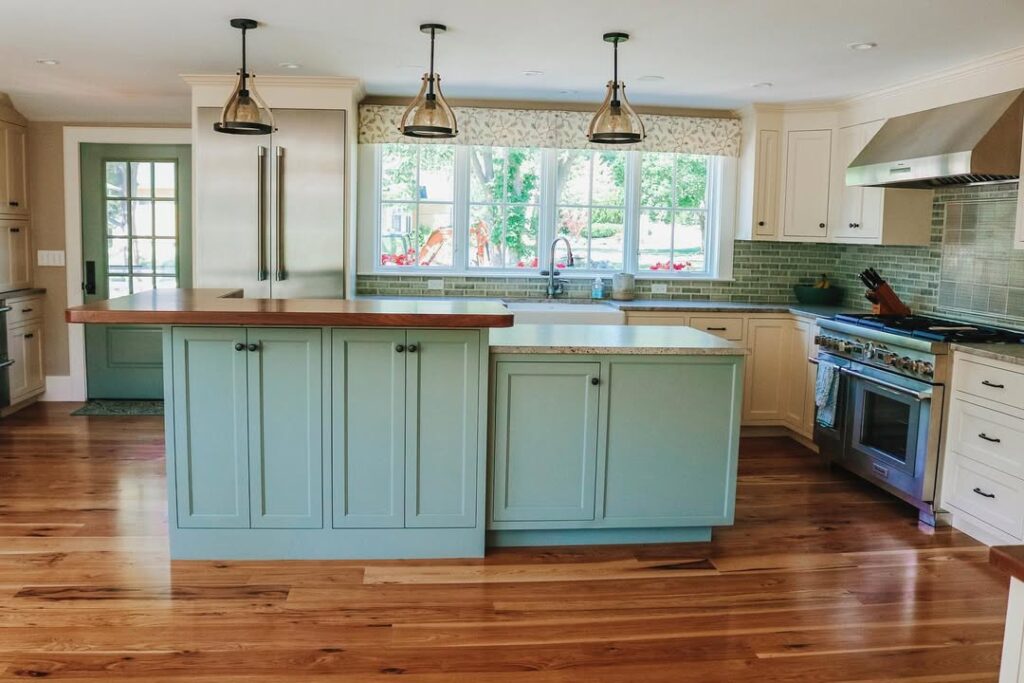
In a cool pastel, two-tone scheme, the lower cabinetry is sea-foam green and the upper cabinetry is white.
Sea-foam cabinetry can cover the base cabinets or the island fronts, with associations to tidal pools and dune grass. Two-tone cabinetry provides gentle contrast.
White wall units reflect natural light, which makes them suitable for smaller kitchens. Two-tone cabinetry differentiates work zones and storage areas.
Brass and brushed nickel are the material options for the cabinet hardware. The cabinetry scheme works with rattan textures, woven lighting fixtures, and butcher block counters.
Two-tone cabinetry can serve as the kitchen centerpiece alongside shiplap, open shelving, and woven floor mats.
Across the daily kitchen, two-tone cabinetry offers a timeless style and an approachable upgrade.
Glazed Porcelain Fish-Scale Backsplash Tile
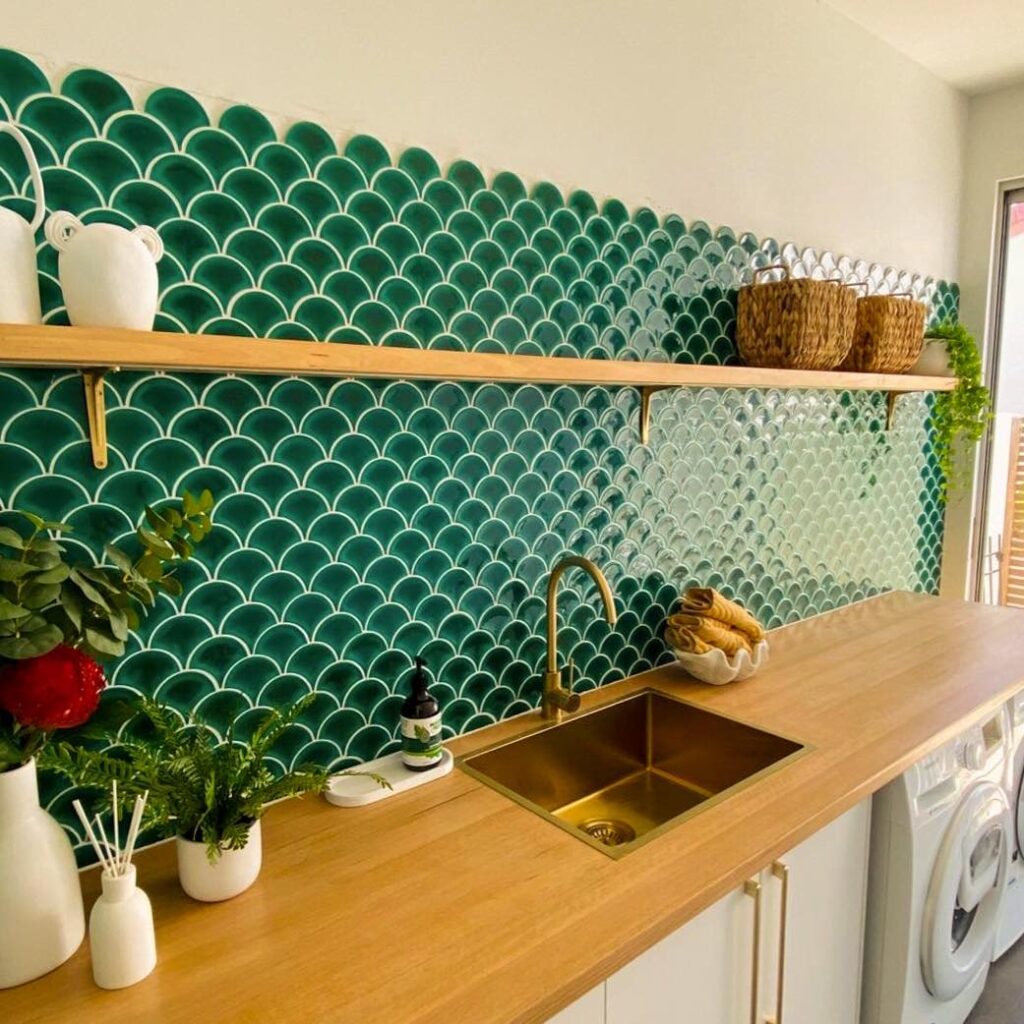
Aquamarine, sea-glass, and cloud white glazed porcelain tile has a fish-scale shape, also called mermaid tile. Its curved design reflects light and forms a rippled pattern that resembles water movement.
Behind the cooktop, the tile covers the backsplash wall and adds a textural layer. It pairs with white cabinetry, natural wood, and brushed metals.
Glazed porcelain tile is durable and moisture resistant, so it suits high-use zones with splash and heat exposure. The curved tile shape also softens angular lines.
Glossy or matte tile surfaces can be used in small or large scales. Small tile suits tight galley layouts, while large tile works with wide farmhouse sinks and extended countertops.
The tile style references marine life without relying on literal motifs. Use light grout to reduce visual noise, or choose a tone-matched color instead.
Fish-scale tile suits modern cottage kitchens. It also fits traditional cottage kitchens.
Whitewashed Beadboard in the Kitchen
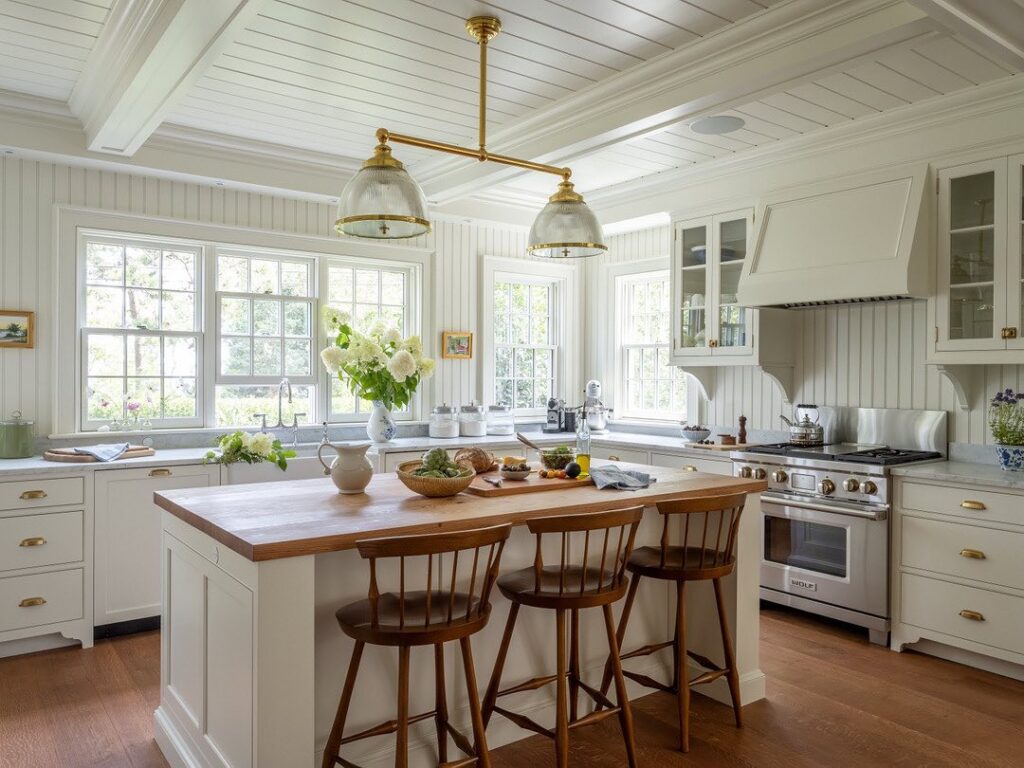
The surface is ridged, with a sun-faded white paint finish. Beadboard can run horizontally or vertically, and its high durability and wipeable surface suit high-humidity zones.
Whitewashed beadboard reflects light across the kitchen. It can be installed as half-height wainscoting or carried from floor to ceiling.
Uniform grooving adds structure to the kitchen wall and creates visual rhythm where walls or cabinetry end. Pair the beadboard with sea-glass tiles or open shelving.
Woven baskets and pale ceramics can sit on floating shelves. Apply light paint brushing to beadboard in chalk white or linen while leaving some wood grain visible, then use the backdrop behind a vintage stove, farmhouse sink, or floating shelves.
Beadboard suits the feeling of seaside heritage and works in both newer builds and older homes. Pair it with linen café curtains or bamboo blinds.
A maritime beadboard wall treatment is easy to clean and easy to repaint. The look has a New England regional reference.
Scatter Terrazzo Tile Insets
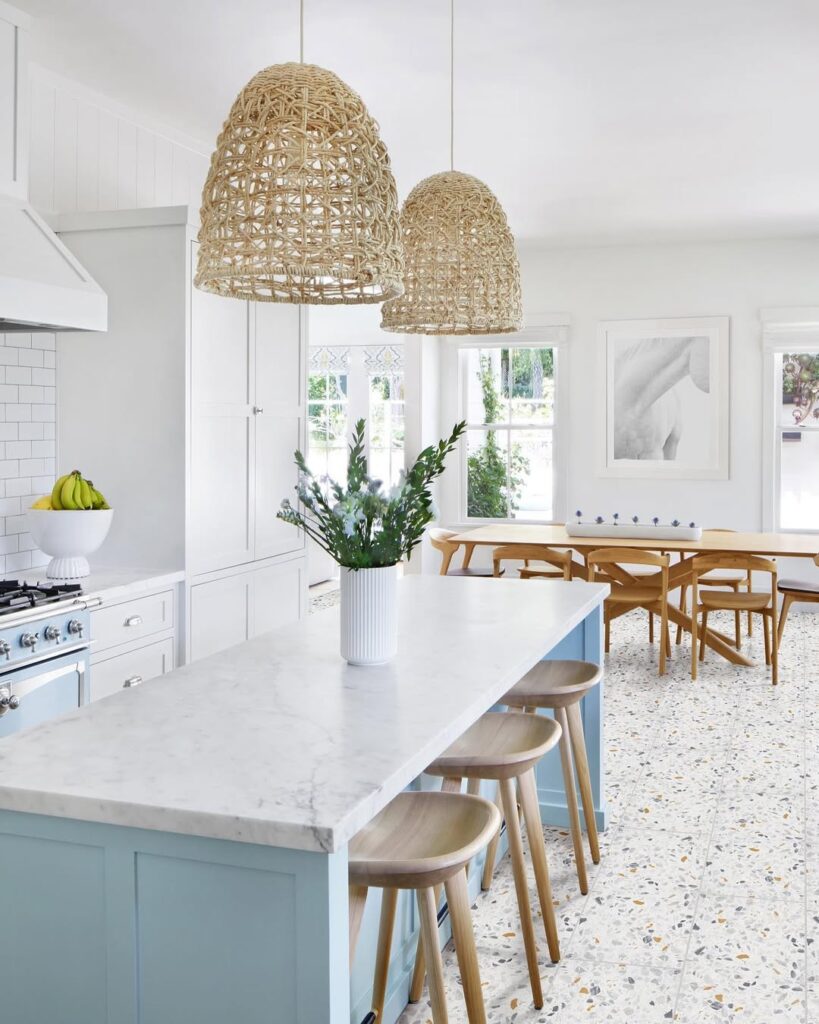
Patterned terrazzo works well in inset panels, especially where small sections can add color. The material may use cement or resin and include marble chips, quartz chips, or sea glass chips, making it suited to beachside interiors.
A small terrazzo tile inset can form a backsplash focal point. Place it behind the stove, inside open shelving recesses, or near the sink floor, while neutral walls and white cabinetry remain dominant. Compared with full-wall applications, small terrazzo accents keep the coverage limited.
A light background scattered with blue, green, and coral flecks gives terrazzo a seaside palette. Its variation resembles polished shells and beach pebbles.
In one corner, echo terrazzo in trays and trivets. Seal terrazzo tiles properly to protect against spills and moisture.
Terrazzo insets combine artistic and utilitarian functions. The approach is thoughtful without becoming over-styled.
Terrazzo pattern supports layered interiors, breaks up large surfaces, and helps maintain coastal calm. Keep the pattern close to the surrounding materials.
Glass-Front Cabinets for Coastal Dishware
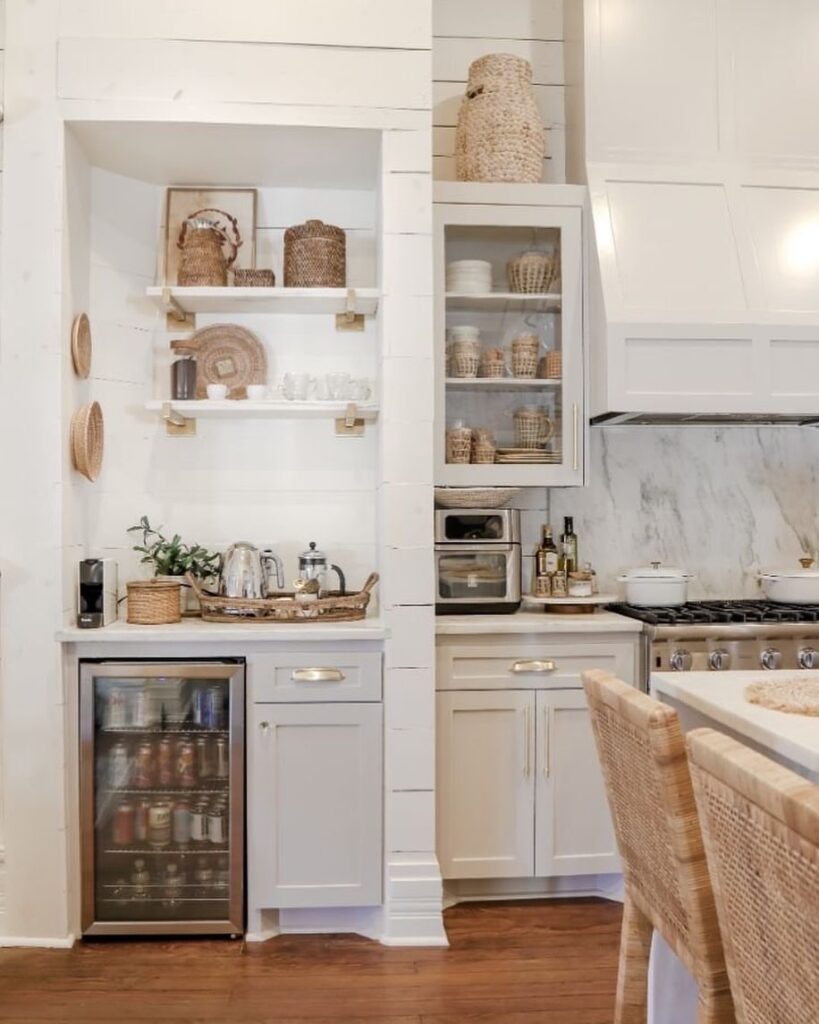
Glass-paneled doors let the cabinet display coastal dishware and coastal accessories.
Frosted or clear cabinet glass can allow natural light to pass through and reveal the interior items. Inside, the cabinet may contain seagrass tumblers, striped bowls, and ceramic shell platters.
A cabinet interior can be finished in sky blue, warm sand, or pale gray. Glass-front cabinets break up solid-door runs, while a contrasting interior keeps displayed items visible.
Adjustable cabinet shelving accommodates serving trays and stackable everyday items. Driftwood-inspired serving trays can sit inside, while cabinet lighting placed inside or above the cabinet supports an evening display.
Glass-front cabinets combine utility and display.
Glass doors provide visual access to the contents and protect them from dust compared with open shelving. The cabinets still support practical storage.
Beach Inspired Rug Layered Workspace
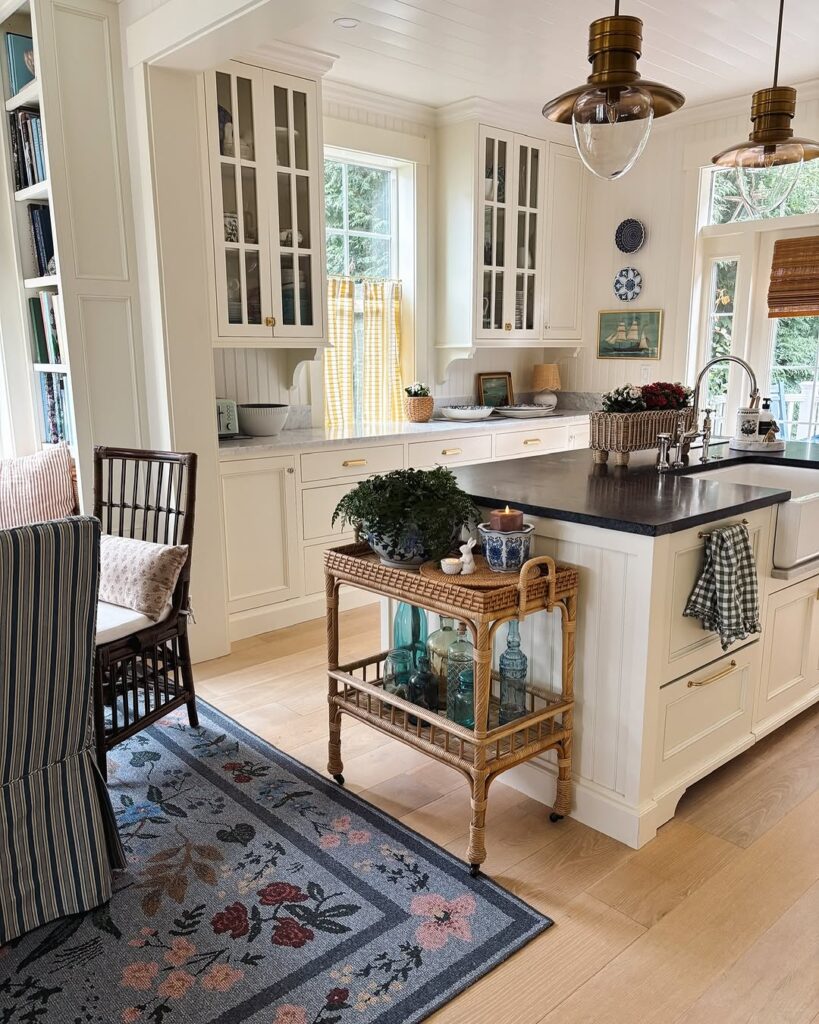
Natural textures bring warmth to the workspace. A subtle pattern keeps the layered look quiet.
Jute and flatweave cotton rugs with faded nautical motifs sit beneath the prep table or island in the workspace.
A lightweight rug can separate the utility, dining, and lounging zones. Place it under a slim island or between the sink and cooktop, where it is easy to clean and reposition. Lightweight rugs also suit sand-prone areas.
Build the rug palette around calm, neutral colors that carry oceanic undertones. Weathered beige, sea salt gray, and shell white create the color range.
The rug softens footsteps and cuts down on kitchen noise. It works well beside rattan stools and whitewashed cabinetry, especially over painted floorboards or light-toned tile.
A layered rug zone with a beach-inspired look can hide signs of wear where foot traffic is heavy.
For a kitchen shaped by the sea and sun, choose comfort that stays casual and maintenance that stays easy.
Elegant Enduring Coastal Kitchen Design
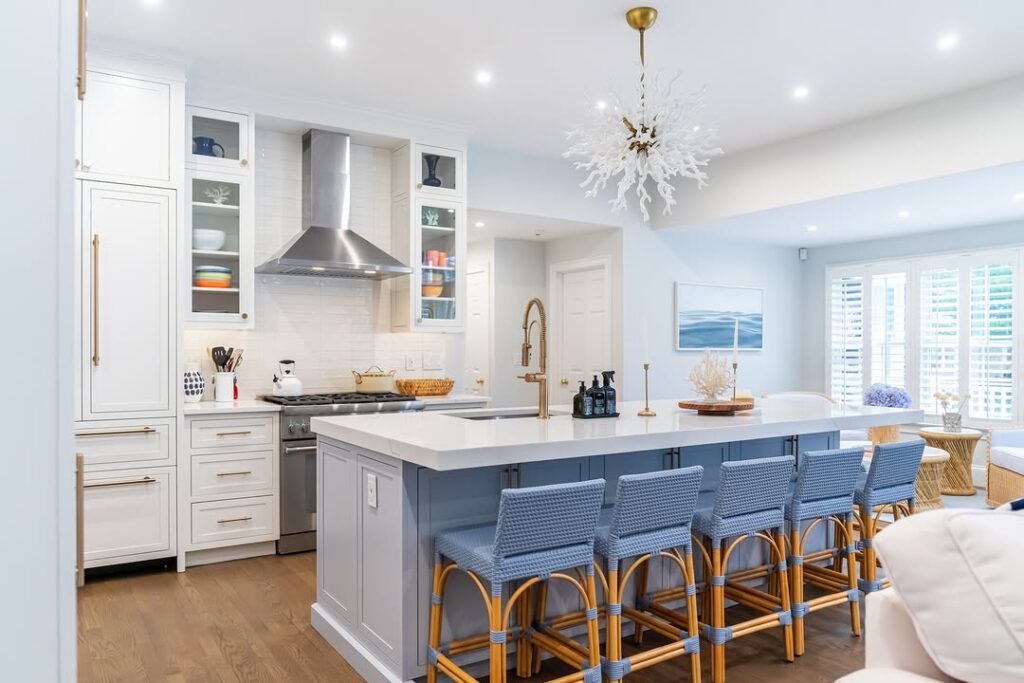
Materials and accents should support a serene palette and be chosen for graceful aging. Lasting coastal kitchen design depends on thoughtful finishes and restraint, not sterile minimalism.
Natural wood beams, white subway tiles, and hardware made from unlacquered brass all support a lasting design. Lightly veined honed marble countertops do the same, creating a look intended to hold up into the future decade.
Smooth plaster contrasts with flax linen curtains, while oak floors affect the filtered sun. Lasting design favors subtle texture shifts over high-contrast drama.
Glass-paned cabinet doors and crossbuck detailing support heritage, while the cabinet doors also serve a function. A farmhouse sink brings heritage and function as well. These choices avoid trend cycles.
In the kitchen atmosphere, morning light and sunset tones both have a place. A timeless approach balances personality and longevity, and aged pieces gain character while the design goal prioritizes comfort.
Natural materials give a coastal cottage kitchen part of its character, while enduring forms provide the rest.
Fisherman-Inspired Kitchen Accents
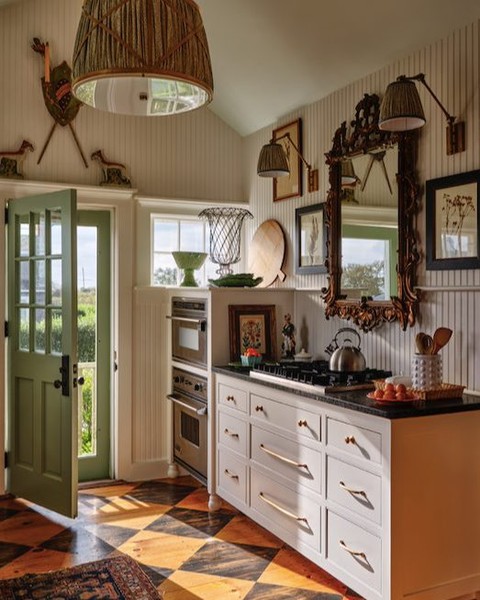
Working seaside docks are echoed through buoy-colored accents, weathered wood boards, galvanized hooks, and glass floats held in netting. Together, these details reference the practical character of the waterfront.
Netting can hang across an open shelf edge. Coiled rope works as curtain tiebacks, while the fisherman-inspired elements stay understated.
Boat lighting is the reference for lantern-style fixtures. Fisherman accents use canvas with a salt-faded condition, aged brass, and driftwood. Reclaimed dock cleats are used as both cabinet pulls and towel hooks.
A calm palette and a sunlit palette are both preserved by using fisherman-inspired accents in moderation. Sand-toned textiles and weathered surfaces are suitable pairings for those accents.
Use fisherman-inspired accents to connect the room with its coastal roots. They can reference tide and trade and boats built by hand, while rugged flourishes should stay restrained enough not to overwhelm a soft, open-air aesthetic.
Fisherman-inspired accents support domestic ease while honoring the sea.
Floating shelves for plates and baskets
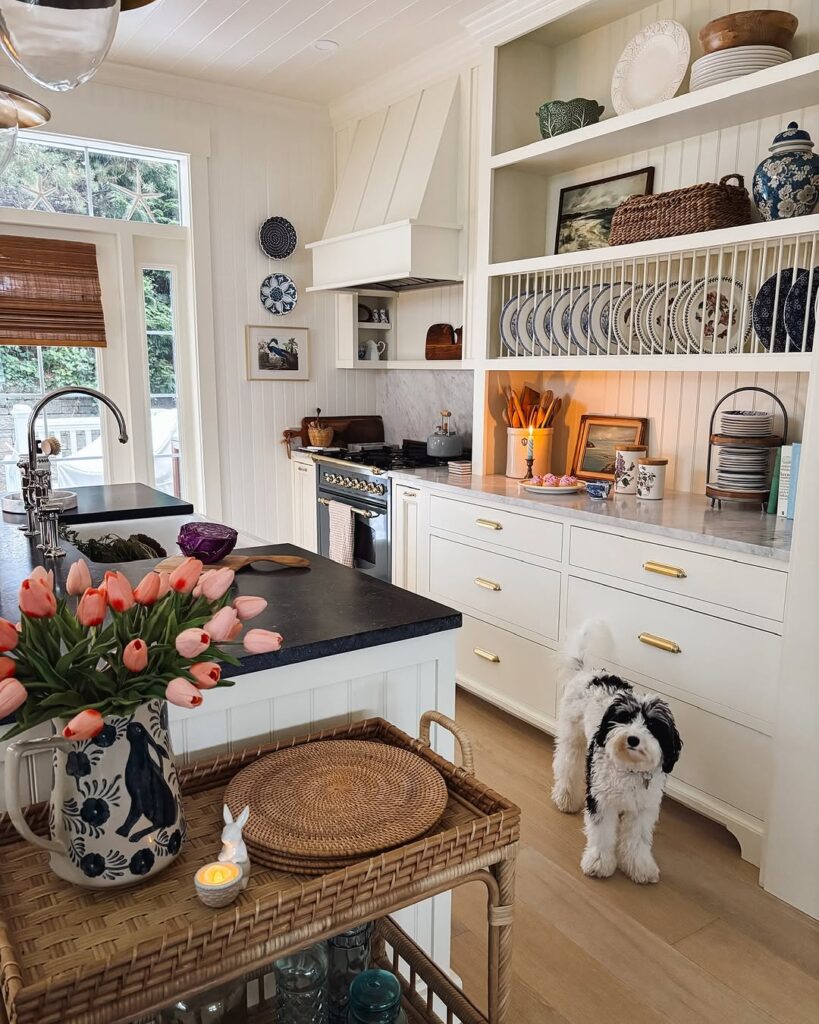
On the upper wall, floating shelves replace upper cabinetry. The open shelves improve access to daily essentials.
A glass jar can sit on a floating shelf made from reclaimed wood, a whitewashed plank, or a driftwood-toned slab. The shallow woven basket and ceramic plate displayed there add to the arrangement.
In one arrangement, a shallow woven basket holds tea boxes and cloth napkins. Stacked plates provide color layering, while visible shelves encourage daily use.
The floating shelf can sit above a backsplash made from tile or beadboard. Leave space between collections, and group items in odd numbers.
A single wall bracket supports the shelf setup and can have an antique brass finish or a matte black one. This arrangement suits open-concept kitchens.
Floating shelves combine storage and accessibility while supporting seasonal rotation. Seashell jars can suit summer, and warm-toned crockery can suit fall, allowing changes without major overhauls.
Built-In Recessed Spice Cubby
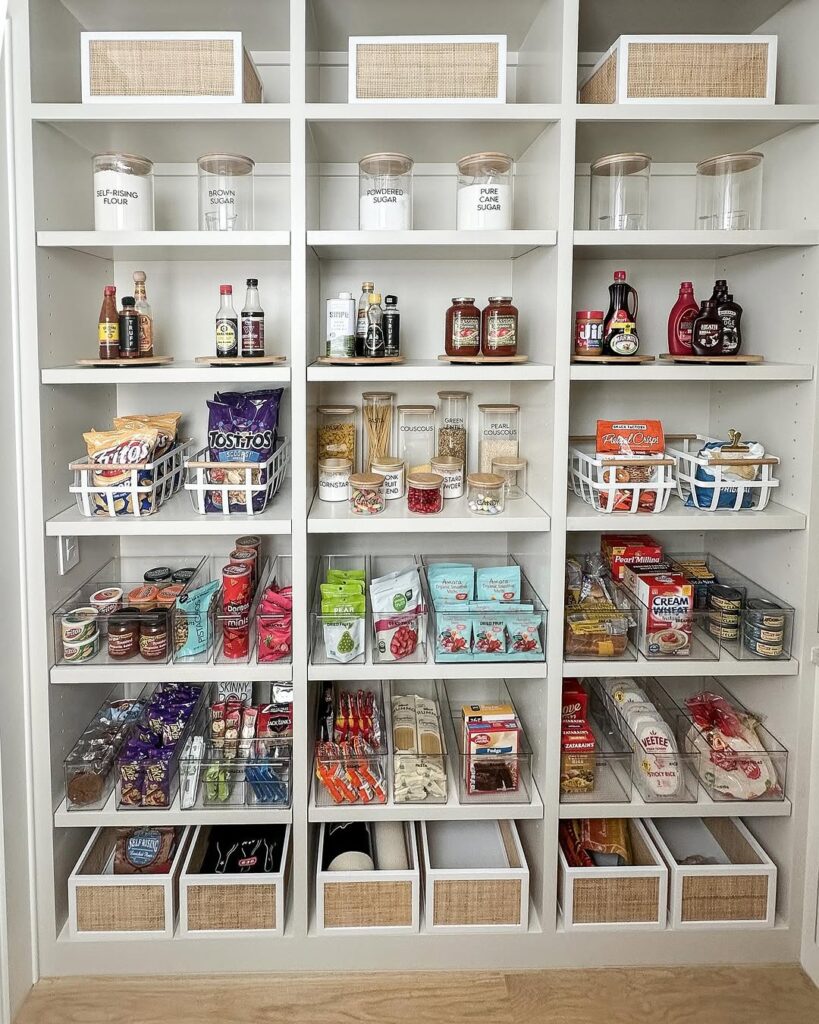
Between the studs or at a cabinet end, recessed storage keeps frequently used ingredients close at hand. A spice cubby also cuts down on both shelf clutter and countertop clutter.
Shallow wood shelves are part of the spice cubby, and a framed edge gives the cubby a finished outline. Paint it off-white, driftwood gray, or pale aqua so it blends with the surrounding cabinetry. Inside, the cubby houses vintage oil bottles, herb tins, and sea salt jars.
Style the spice cubby with small baskets and labeled glass containers. It can sit beside the stove or integrate into a backsplash nook, supporting organized storage and everyday function.
In open-plan spaces, position the spice cubby near prep zones to support fluid movement and boost efficiency. Add beadboard backing and small lights.
Flat cabinetry runs can benefit from a spice cubby, especially in built-over-time interiors. It organizes everyday cooking items while adding architectural interest.
Shiplap Sink Surround for the Splash Zone
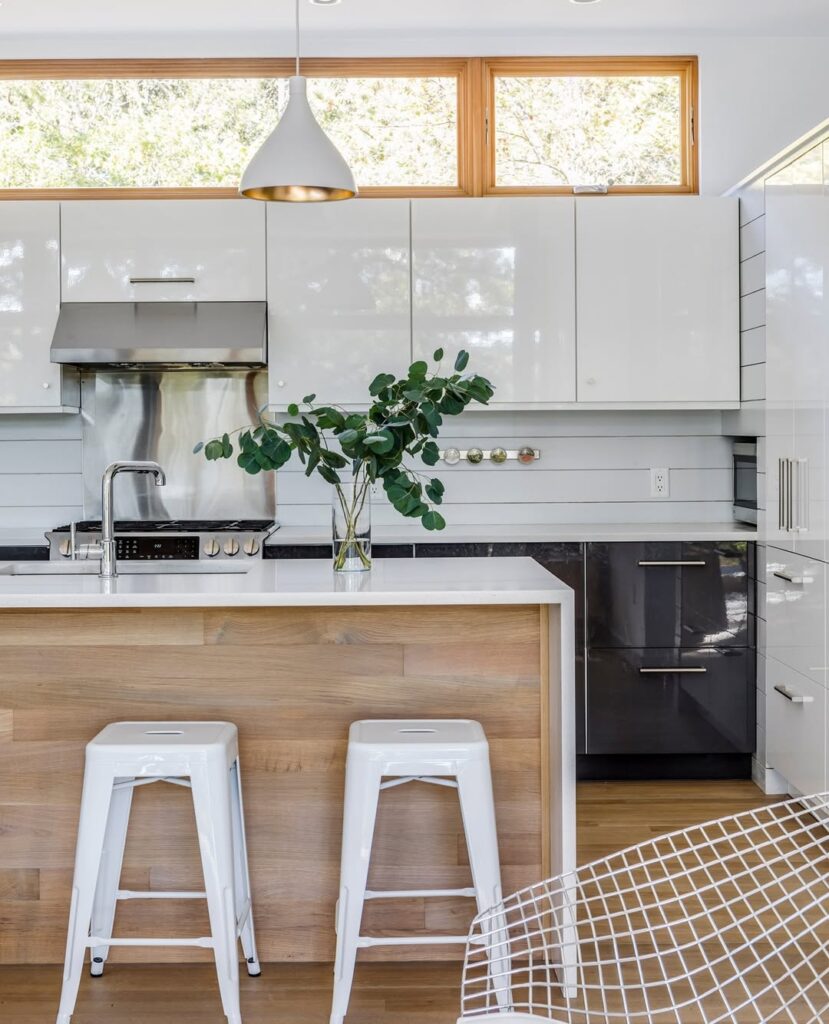
Shiplap siding in white or pale sea-tone can surround the sink area, with boards set vertically or horizontally. Seal it properly to resist humidity. Once sealed, it can be wiped down after cooking or dishwashing.
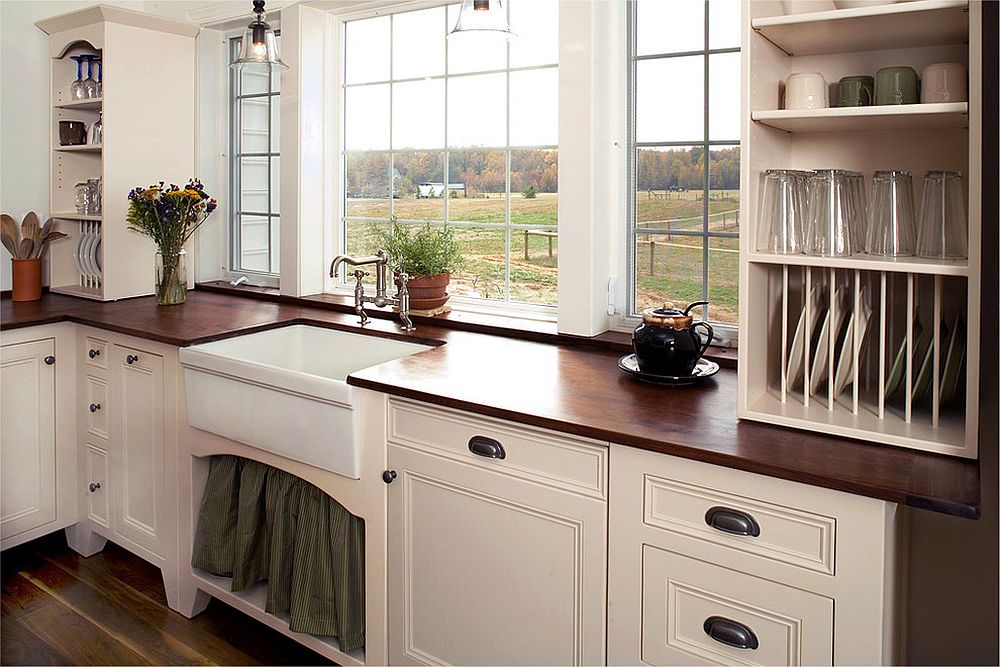
A natural wood counter, an apron-front sink, and a brushed nickel faucet pair with the shiplap. The shiplap grooves frame the sink.
Shiplap suits lower ceilings and narrow wall spans. It also works with window views and sconce lighting.
Millwork and cabinetry can coordinate with the shiplap. This tongue-and-groove variation should have its edges caulked, which helps prevent moisture intrusion.
Rattan blinds, floating wood shelves, and navy appliances can act as surrounding accents, leaving priority for the shiplap texture. The shiplap also supports durability.
Rope-Hung Prep Zone Lighting
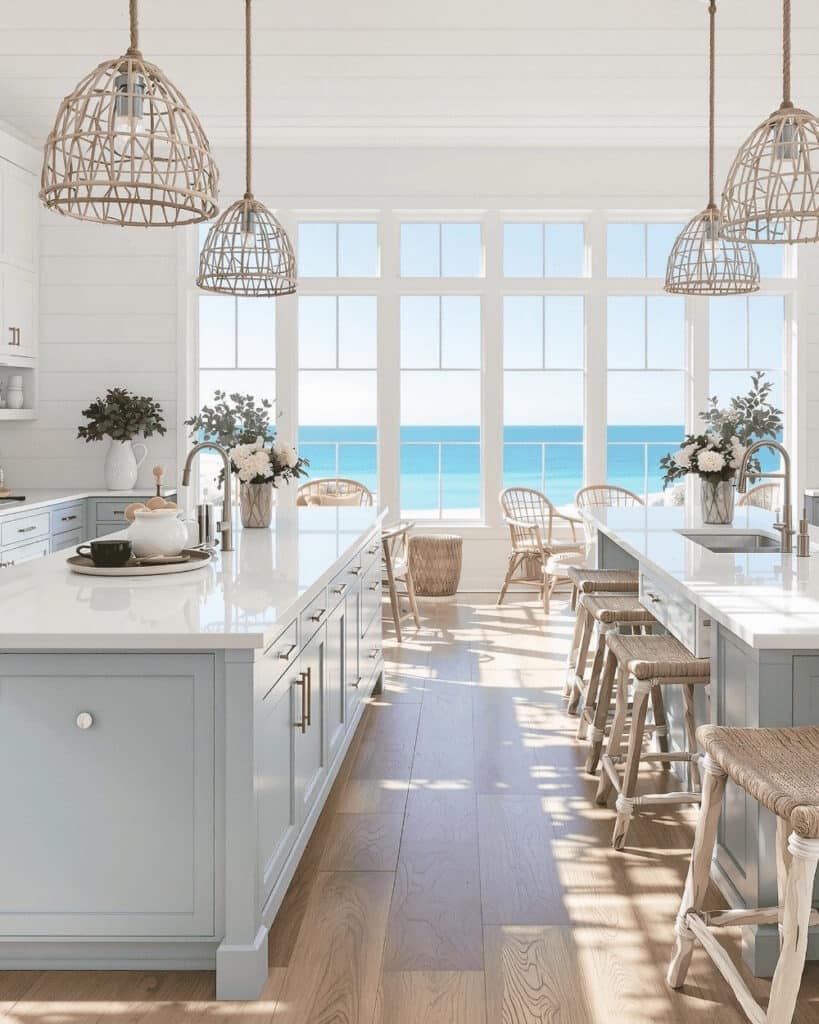
A weathered rope suspends tactile pendant lighting that references maritime rigging. The pendant suits coastal cottage kitchens and works around prep zones.
Pendant lighting is recommended above kitchen islands and butcher blocks, where focused light supports gathering and food preparation. Low-hung designs cast an intimate light, so consider the pendant mounting height. A warm metal fixture and glass lantern shade echo nautical gear, with the rope wrapping around both.
Rope-hung pendants work well with neutral cabinetry and pale countertops, since the room stays light without making either finish compete for attention. Choose bulbs that give off a soft amber glow, including Edison filaments.
Linen textiles, wood stools, and jute rugs pair naturally with rope-hung lighting. In small kitchens, use single-line fixtures to reduce ceiling overcrowding.
Rope-hung fixtures combine utility and appearance. Maintain the lighting shades with cleaning, and care for the rope lighting through regular dusting.
Rope accents offer earthy contrast and reference a coastal setting. They suit working kitchens and provide atmosphere.
Navy Appliance

A navy range, refrigerator, or dishwasher can serve as the kitchen focal point. Against a clean coastal palette, the appliance adds visual dimension and supports a maritime style.
White shiplap walls and a light oak floor pair with the navy appliance. Both brushed brass and polished chrome hardware work alongside it.
A navy oven or refrigerator draws attention from the room while white cabinetry surrounds it. Balance the dark appliance with light from nearby windows and pendant fixtures so the dark tone does not overwhelm the room.
Vintage-style knobs and a retro silhouette help the appliance define the zone. This look aligns with cottage interiors.
A single navy appliance combines coastal tradition with a limited color commitment. It also supports a light kitchen palette.
Vintage Freestanding Kitchen Furniture
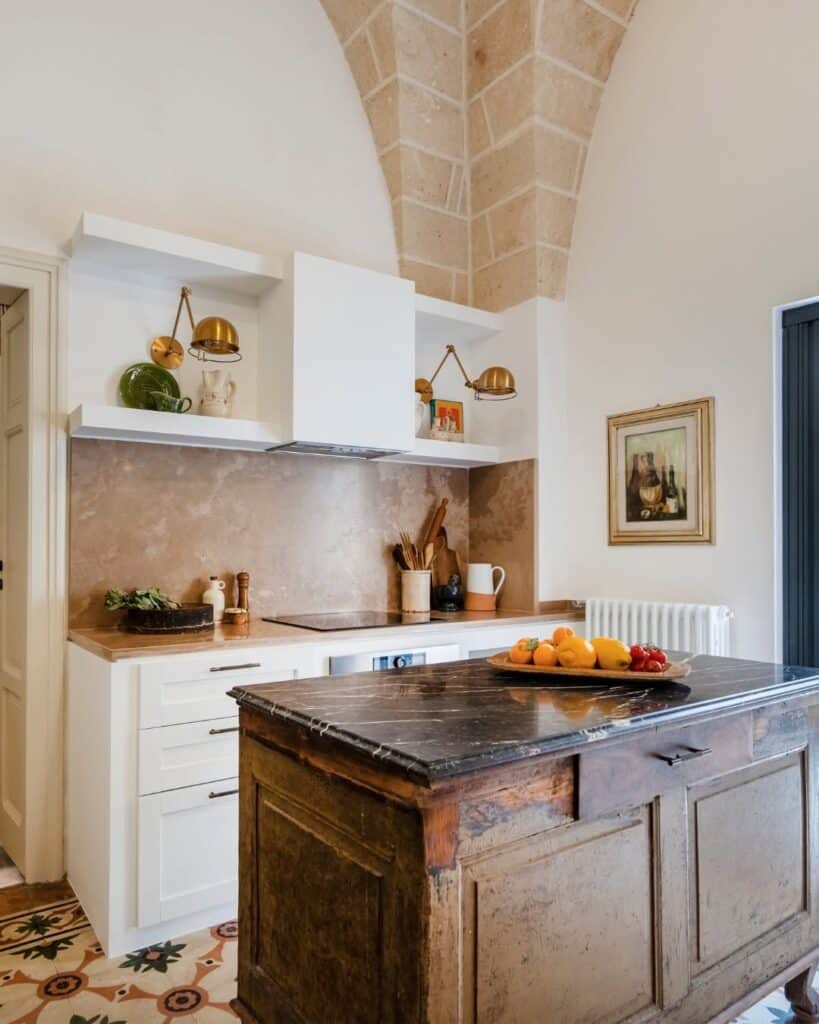
In a coastal cottage kitchen, the furniture can be a hutch, antique dresser, or retro worktable. This freestanding piece becomes the focal point and provides a storage anchor for food preparation.
Patinaed knobs, faded wood grain, and original hardware give the furniture visible age. Unlike built-in cabinetry, it can move around, supporting flexible layouts, seasonal rearranging, and compact spaces.
Simple surrounding cabinetry sets a quiet backdrop, while open shelving can sit alongside the furniture. Its top may be marble, butcher block, or sealed wood, making the piece both a dish display zone and a functional counter.
The breakfast nook breaks up long cabinetry runs and gives the kitchen a defined eating spot. Freestanding furniture in soft mint, sea-foam, or distressed white adds color nearby.
Furniture found in antique stores or passed down through a family can be one of a kind. It combines memory and utility while supporting a lived-in kitchen style.
Airy Pendants and Slatted Wood for the Island Base
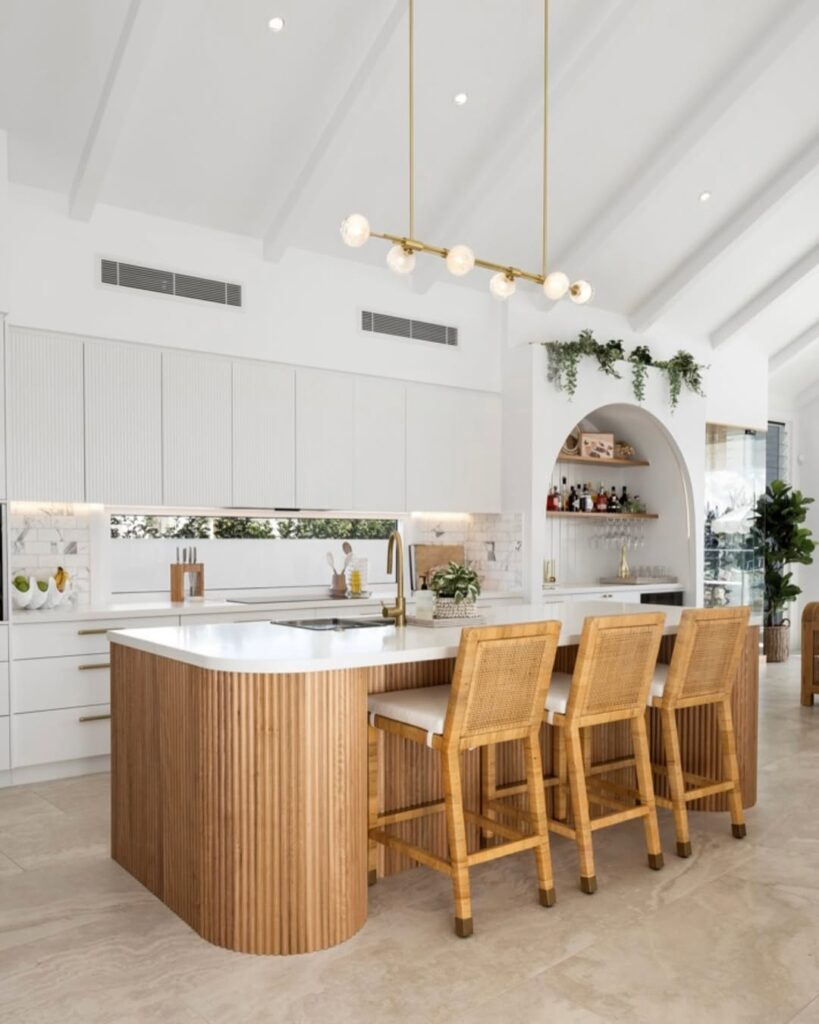
Evenly spaced wood slats create an open base with open airflow and light passage. This island base suits compact kitchens and reduces visual heaviness.
An organic slatted island base can use bleached oak, white pine, or reclaimed driftwood beneath a polished countertop or stone slab. Above it, an open pendant light has a glass shade or a thin metal frame.
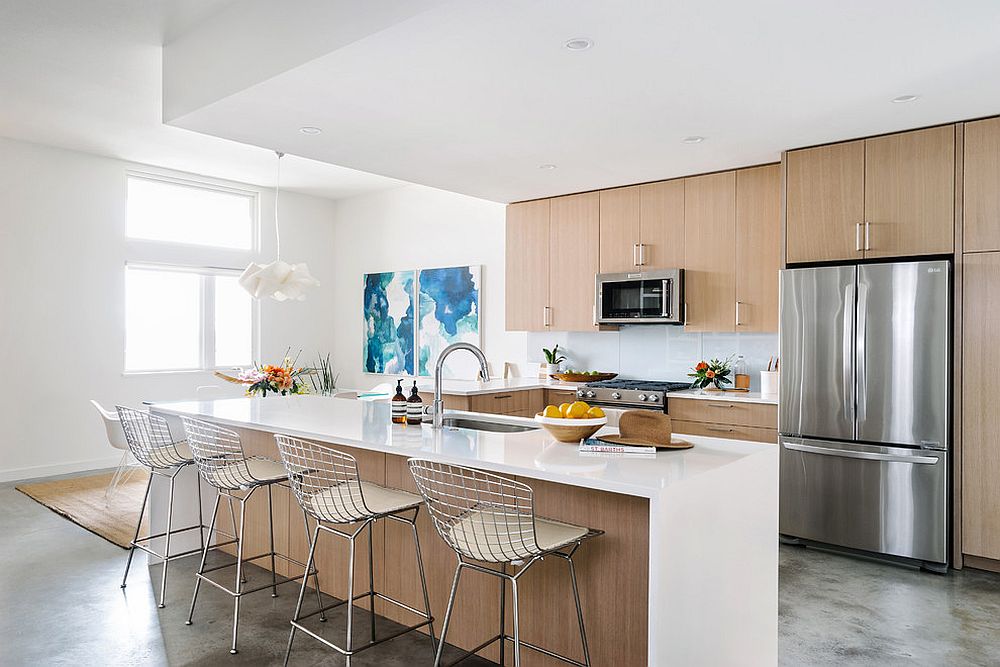
The island and stools support conversation and casual dining. Bar stools use cane and linen upholstery. Nearby, a softly frosted pendant light takes shell-inspired forms.
A handcrafted slatted island base offers an alternative to built-in cabinetry. Concealed baskets provide storage for dry goods and kitchen linens, while the open construction allows natural ventilation.
The open kitchen island follows dock-side construction and serves as both a prep zone and a social hub. Its layout keeps the room connected.