15 Antique White Kitchen Cabinet Ideas That Feel Fresh and Classic
Antique white kitchen cabinets remain popular in modern design. They bring a familiar cabinet style into newer kitchens.
Antique white has a soft off-white color and a vintage feel. It also suits everyday spaces. The shade keeps the look familiar and easy to live with.
Antique white cabinets offer plenty of versatility. They can be paired with rustic wood accents or finished with brass hardware. Glass-front details are another option for these cabinets, adding a distinct feature while keeping the cabinet style flexible.
Kitchen spaces with a cozy character remain highly popular, and interest in antique white cabinets continues to grow as a design trend.
Cabinetry can bring personality to a room while still adding polish. Its effect does not have to overpower the space. This year, the available styles make it easier to find cabinetry that fits both qualities.

Antique White Finish with Bristol Chocolate
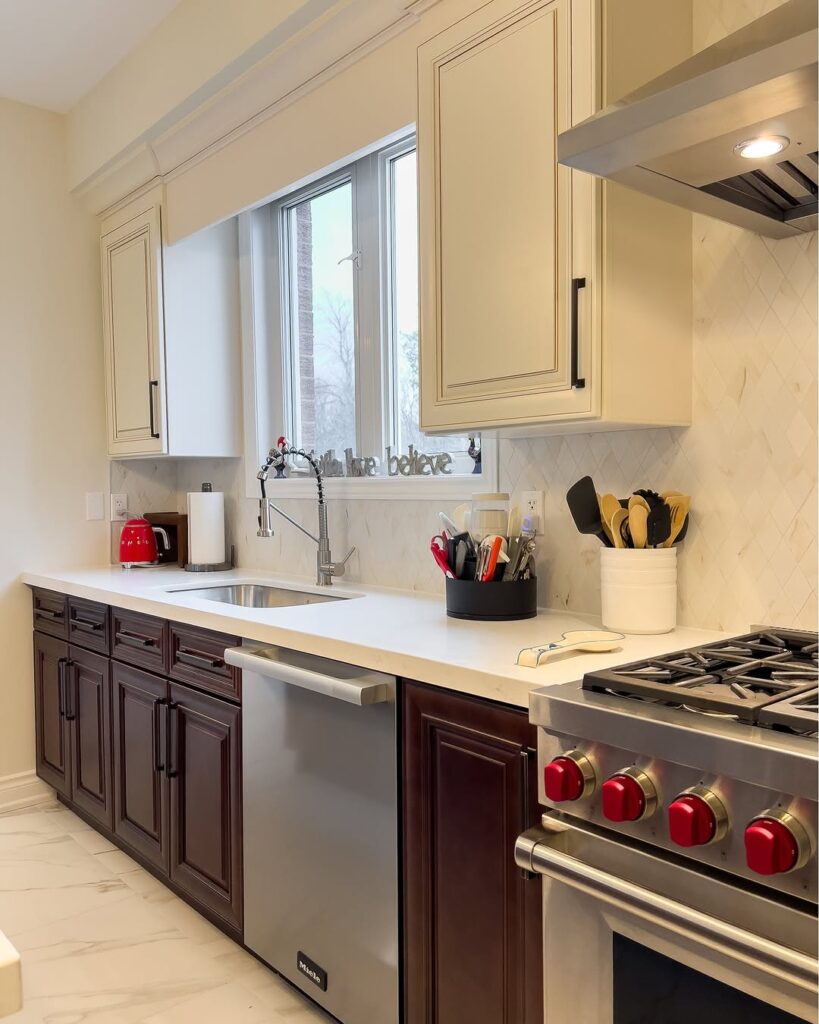
Bristol chocolate brings a warm contrast to antique white. Used together, the two finishes create balanced tones.
Antique white contributes brightness and openness to the kitchen. Bristol chocolate has a rich coffee tone that works as a cabinetry accent and adds visual depth.
Use antique white on the upper cabinets and Bristol chocolate on the base cabinets or island. The two finishes are used together in two-tone kitchens.
Bristol chocolate can serve as a palette anchor in an open-concept kitchen. The antique white and chocolate pairing suits this layout, which needs visual structure.
Creamy quartz and neutral granite are suitable countertop pairings for antique white and Bristol chocolate cabinets. Neutral countertops can help connect the different tones. Oil-rubbed bronze finishes suit both cabinet colors, while brushed bronze hardware is another option for the antique white and Bristol chocolate cabinetry.
Antique white and Bristol chocolate offer visual interest and design flexibility. The pairing suits transitional kitchens and traditional farmhouse kitchens, while also appealing to custom-style preferences.
Antique white and Bristol chocolate can support long-term satisfaction. The combination also supports resale appeal.
Antique White Cabinetry and Brass Hardware
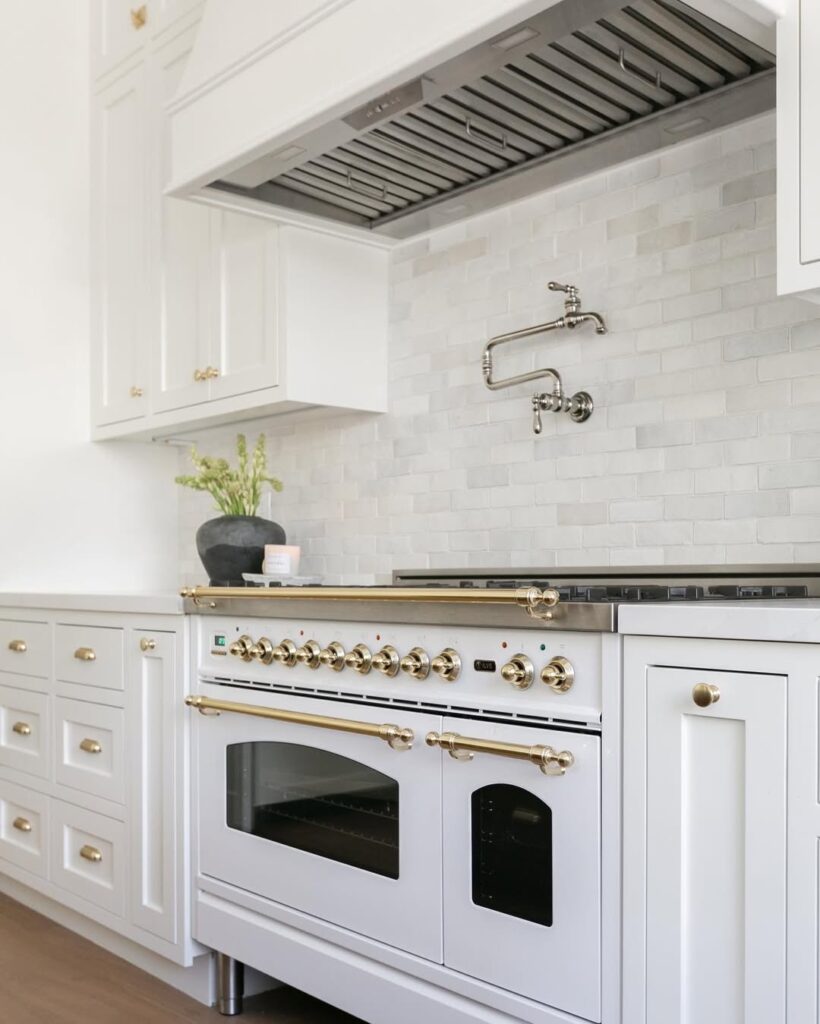
Antique white cabinets pair with brass cabinet hardware. The brass is used as a separate detail on the cabinets.
Soft gold brass complements antique white. Together, they suit understated elegance while supporting a modern twist.
Cup pulls, knobs, and linear handles are brass hardware options used on antique white cabinetry.
Matching brass appears on the faucet and pendant light. The countertop can be marble-look quartz or butcher block, and either option pairs with the brass hardware.
A satin brass finish gives the hardware a controlled finish. Unlacquered brass develops a natural patina over time.
Brass hardware suits modern farmhouse, transitional, and traditional kitchens. Updating the hardware does not require structural changes.
A brass hardware update adds warmth and surface polish to antique white cabinetry. The hardware is used with the cabinetry.
Antique White Kitchen Cabinets With a Contrasting Island
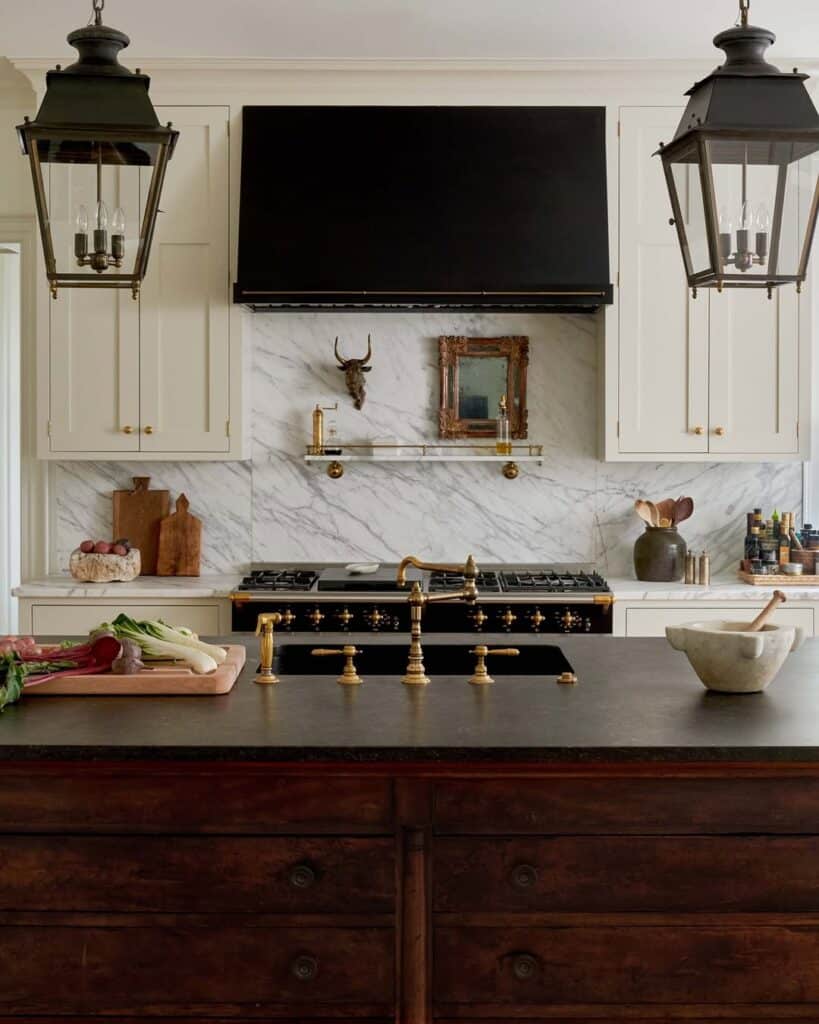
In the two-tone kitchen, the island uses a contrasting color to draw attention. It creates a secondary point of focus while preserving spatial flow.
Lighter cabinetry separates the dark kitchen island from the rest of the room. The island can be navy, forest green, charcoal, or espresso, and it anchors the room.
A contrasting island defines kitchen zones in an open-concept kitchen.
Antique white cabinets keep a light open feel. The contrasting island acts as a statement element, while hardware or countertops can match the two-tone kitchen.
Marble-look quartz, granite, and butcher block are countertop choices that provide kitchen function. They also balance the two cabinet tones.
Pendant lights sit above the island. Coordinate them with the kitchen finishes.
A contrasting island allows experimentation and styling flexibility. It suits transitional, classic, and contemporary kitchens, and styling changes do not require a long-term commitment.
Antique white cabinets with a contrasting island combine classic and modern styles.
Fluted Glass Inserts for Antique White Kitchen Cabinets
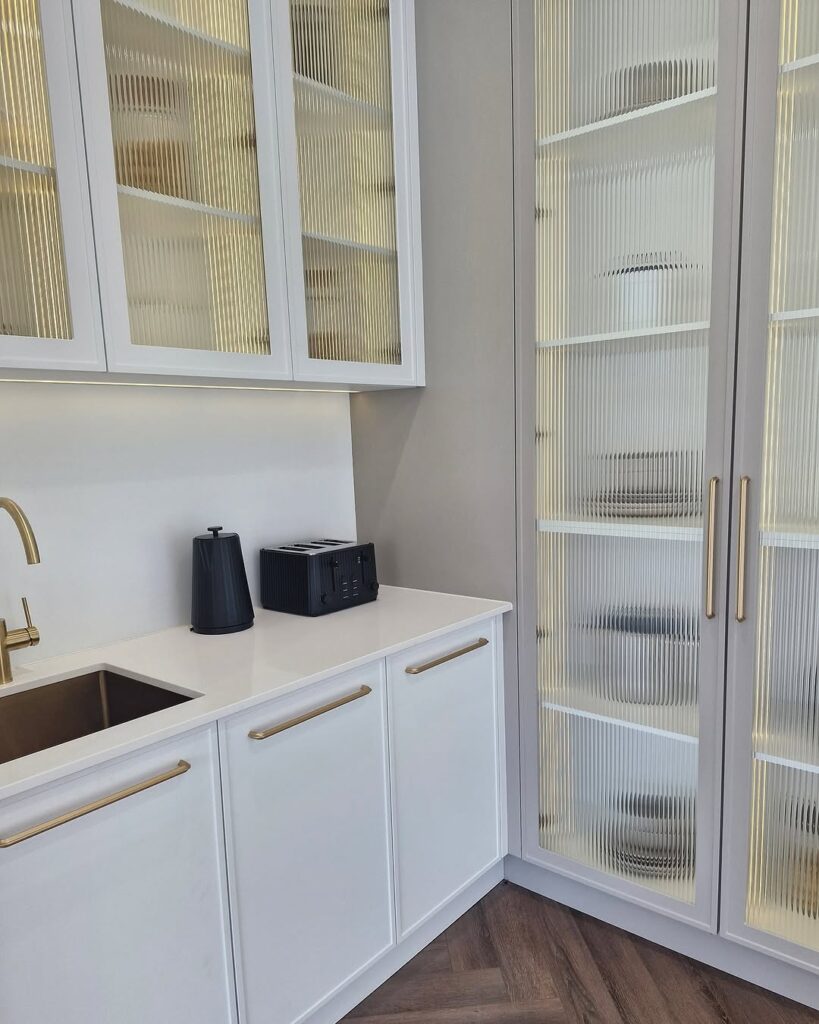
In the cabinet doors, fluted glass panels use vertical ribbing to add texture, privacy, and light flow.
Fluted glass maintains light flow and provides a semi-obscured view of the cabinets. The panels are paired with antique white frames.
Fluted glass suits both upper cabinets and pantry doors.
Inside the cabinets, internally lit fluted glass diffuses light. Its texture contrasts with smooth antique white cabinetry.
Fluted glass suits transitional, Scandinavian, and Art Deco interiors. Cabinet pulls in satin brass or matte black pair with the glass.
Fluted glass suits busy households because its texture makes fingerprints and smudges less noticeable. For concealing both, it performs better than flat glass.
Antique white cabinetry gets a more current look from fluted glass inserts. The inserts still preserve classic character and provide everyday functionality.
Shaker Cabinets Paired with Gold Quartz
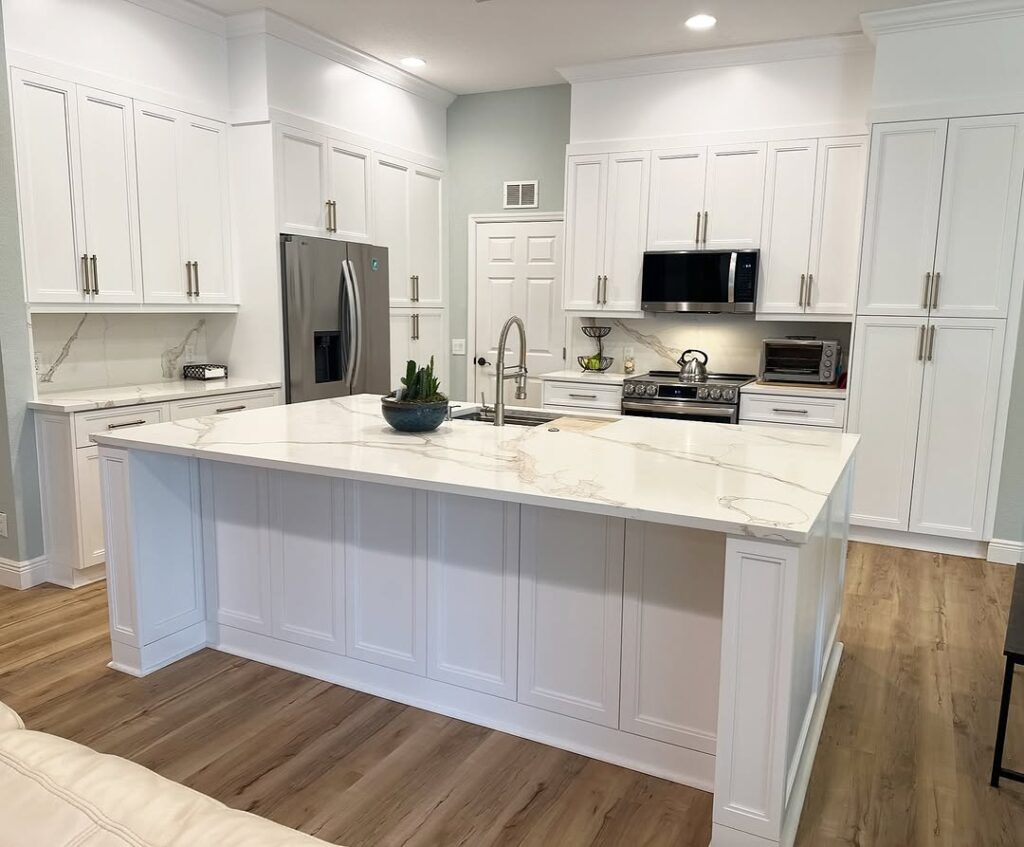
Calacatta Santana Gold quartz requires minimal maintenance and has greater durability than Calacatta marble. Shaker-style cabinets have a clean-lined profile, while the quartz suits active kitchens and resembles high-end Calacatta marble.
Calacatta Santana Gold quartz has golden undertones and soft gray veining. It complements antique white cabinetry with a warm ivory base.
In a refined, livable kitchen, quartz veining provides visual movement while the Shaker profile supplies a timeless form. The cabinet and quartz pairing works well in this setting.
Golden quartz accents reflect across the cabinet surface. Pendant lighting and natural light are visible on the quartz.
Brushed brass hardware works with Shaker-style cabinets, as does antique bronze hardware.
A neutral herringbone mosaic or white subway tile can serve as the backsplash. These options keep emphasis on the cabinet and quartz focal elements.
The cabinet and quartz pairing combines a contemporary finish with traditional form. It also offers lasting practicality.
This cabinet and quartz pairing requires low upkeep and avoids frequent renovation.
Warm Wood and Ivory Cabinets
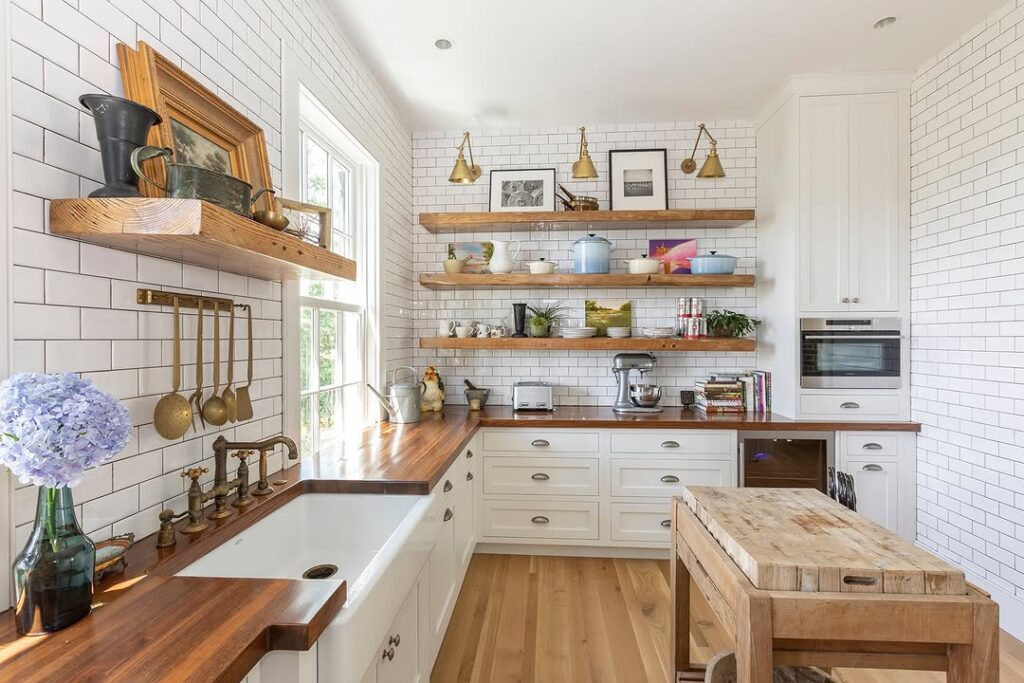
Soft ivory cabinetry pairs with a warm wood element. The wood adds texture, depth, and warmth.
Antique white provides a foundation that is softer than pure white. Natural wood works as an accent and introduces depth, warmth, and texture.
Wood accents bring the material to open shelving, vent hoods, floating islands, and exposed ceiling beams. In each case, they are paired with antique white cabinetry.
Light or medium oak, maple, and walnut wood details pair with antique white. They provide durability while balancing the softness of the cabinets.
Matte black and brushed brass hardware can be used with wood accents. Butcher block and light-veined quartz countertops also coordinate with the wood.
In rustic farmhouse style, antique white and wood support the look. The same pairing also works with contemporary transitional style.
The antique white and wood pairing connects the kitchen to natural elements. It requires low maintenance and avoids an overly ornate style.
Antique White Cabinetry Finished in Chocolate Glaze
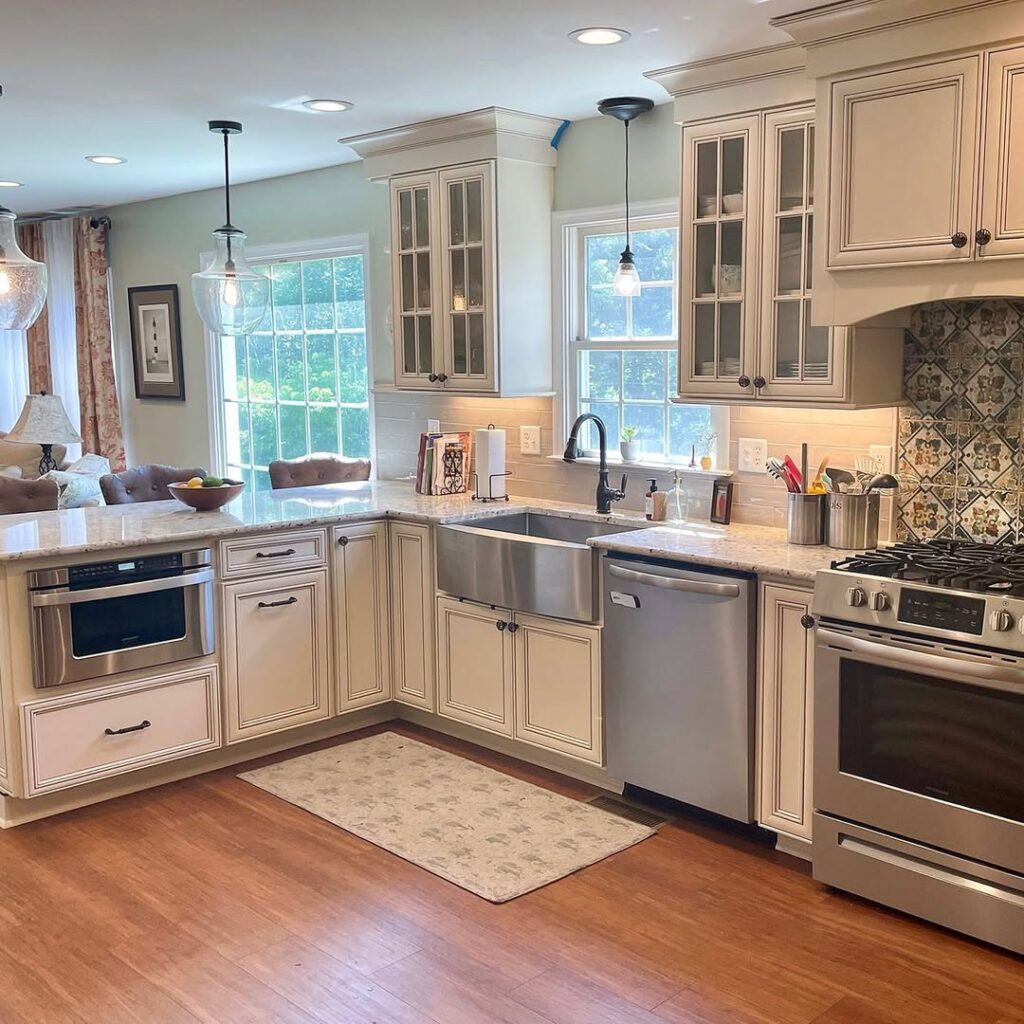
A soft espresso chocolate glaze sits in the cabinet grooves. It details the grooves and enhances the cabinet profile on antique white cabinetry.
Chocolate glaze can be used on traditional doors and raised-panel doors. It highlights architectural elements as well.
Chocolate-glazed antique white cabinetry has a more aged surface character than stark white cabinetry. The glaze has an aged patina.
Chocolate glaze retains brightness while supporting warmth. Its color is visible under the cabinet lighting.
Neutral granite countertops work with chocolate-glazed cabinets. Neutral quartz is another option, while the cabinetry style serves as the focal point of the space.
Cream-colored tiles and tumbled travertine both suit a warm-toned backsplash. This type of backsplash pairs with chocolate-glazed cabinets.
Chocolate-glazed antique white cabinets are used in Mediterranean kitchens, traditional American kitchens, and French country kitchens.
Oil-rubbed bronze hardware is compatible with antique white cabinets, as are iron hardware and antique brass hardware. Hardware selection controls the contrast level and adds personalized detail, while the chocolate-glazed cabinet option offers timeless design.
Antique White Cabinetry and Quartzite Counters
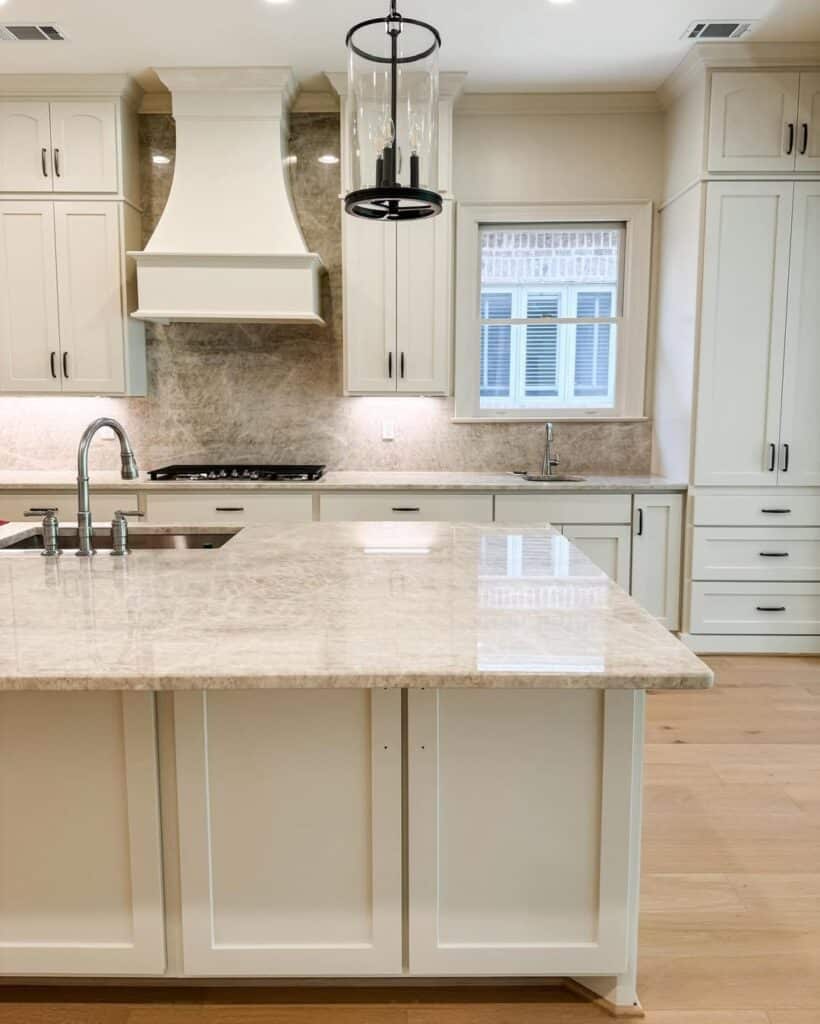
Taj Mahal quartzite is known for its durability and pairs well with the countertops in this kitchen. The stone works with antique white cabinets.
Taj Mahal quartzite is a natural stone with soft veins in warm beige, taupe, and ivory. Its colors work with antique white cabinetry, which has creamy undertones.
Antique white cabinets and Taj Mahal quartzite suit both transitional and traditional kitchens. The quartzite also works well for busy households, with greater scratch resistance and etching resistance than marble.
The warmth of the quartzite reduces the starkness of antique white. Together, the cabinet and countertop pairing creates a welcoming atmosphere.
Antique white cabinets pair with both unlacquered brass hardware and brushed nickel pulls. The cabinet and quartzite combination suits multiple kitchen designs.
This cabinet and quartzite pairing offers understated luxury while retaining functionality.
Taj Mahal quartzite has greater heat resistance and stain resistance than common alternatives.
The natural stone supports long-term durability in a kitchen with antique white cabinets.
Kitchen designers rank this cabinet and quartzite pairing as a top recommendation. They also recommend it for low-maintenance kitchens.
A balanced kitchen design can use this choice to elevate the overall space. It adds polish without overpowering the room.
Antique White Cabinets in Mixed Metals
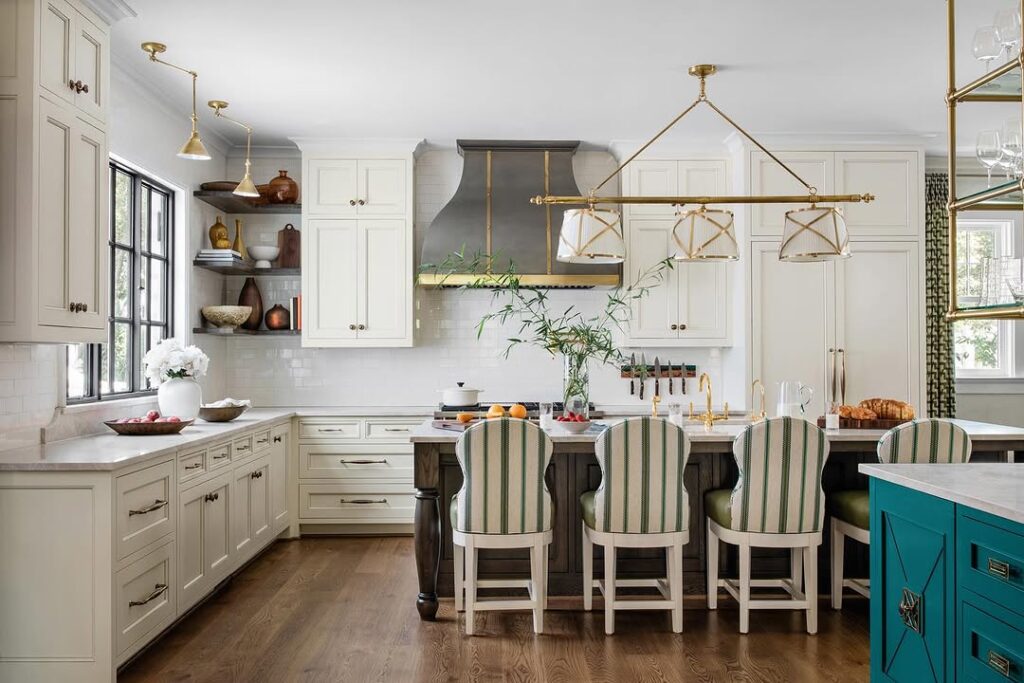
Mixed metal finishes require intent and balance. Used carefully, they can provide visual contrast without clashing and add visual depth.
Hardware, fixtures, and appliances pair with metal finishes including stainless steel, antique bronze, matte black, and brushed brass. Antique white cabinetry leaves room for flexibility.
A mixed metal scheme should use one dominant metal. Designers then recommend adding a secondary finish.
Brushed brass cabinet knobs pair with a matte black faucet and stainless steel appliances. Mixed metal finishes should maintain consistent undertones because inconsistent undertones risk visual discord.
The mixed metal approach gives the kitchen a gathered look, with pieces that seem selected over time. It offers an alternative to a polished showroom appearance.
Mixed materials support authenticity and personality. Mixed metal finishes suit farmhouse, eclectic, and transitional interiors, while antique white unifies varied accents.
Accent trims and lighting fixtures are options to consider in a mixed metal scheme. Future updates can use the scheme without requiring a full kitchen remodel.
Mixed metal finishes add kitchen character. The antique white cabinets retain classic character.
Antique White Cabinet Lighting
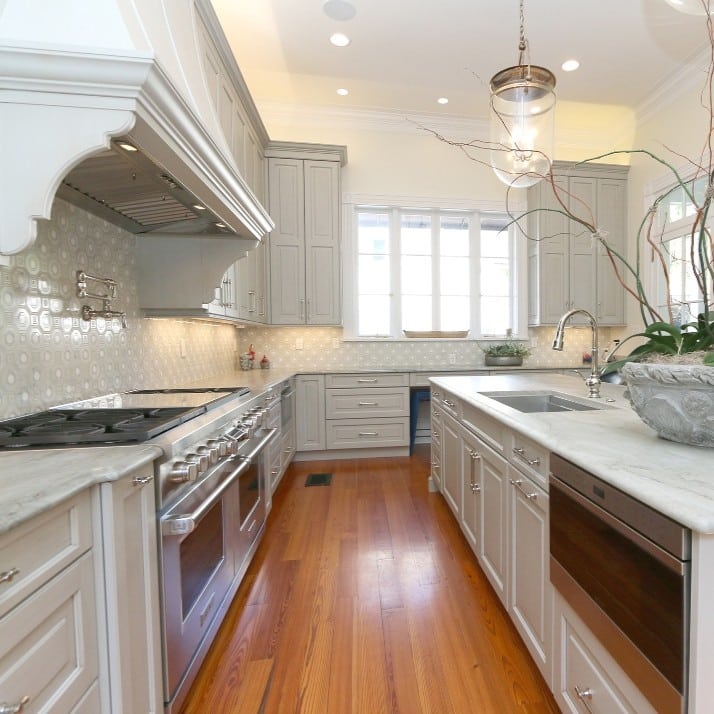
These kitchen cabinets support both kitchen function and ambient lighting. The integrated lighting is part of the cabinet design.
Interior cabinet lights illuminate the cabinet interiors and draw attention to the glass-fronted sections. Under-cabinet LEDs provide task lighting for the countertops.
Antique white surfaces have a warm undertone and reflect light softly. That reflection creates a soft glow.
Within the cabinet frames, embedded lighting is installed inside the cabinet shelves. This avoids bulky external fixtures.
Evening ambient lighting is one use for dimmable lighting. Designers recommend cabinet lighting with dimmable options, so brightness levels can also support morning prep lighting.
Usability is the priority here. The kitchen cabinets are paired with integrated lighting.
Tall, deep cabinets benefit from interior cabinet lighting, which improves cabinet visibility. In open-concept homes, lighting across the connected kitchen, dining, and living areas supports a cohesive atmosphere.
Integrated lighting highlights cabinet craftsmanship instead of relying on overhead-only lighting. It also supports daily functionality.
Correct installation is important for integrated lighting. When installed correctly, it improves kitchen usability.
Antique White Vertical Cabinets
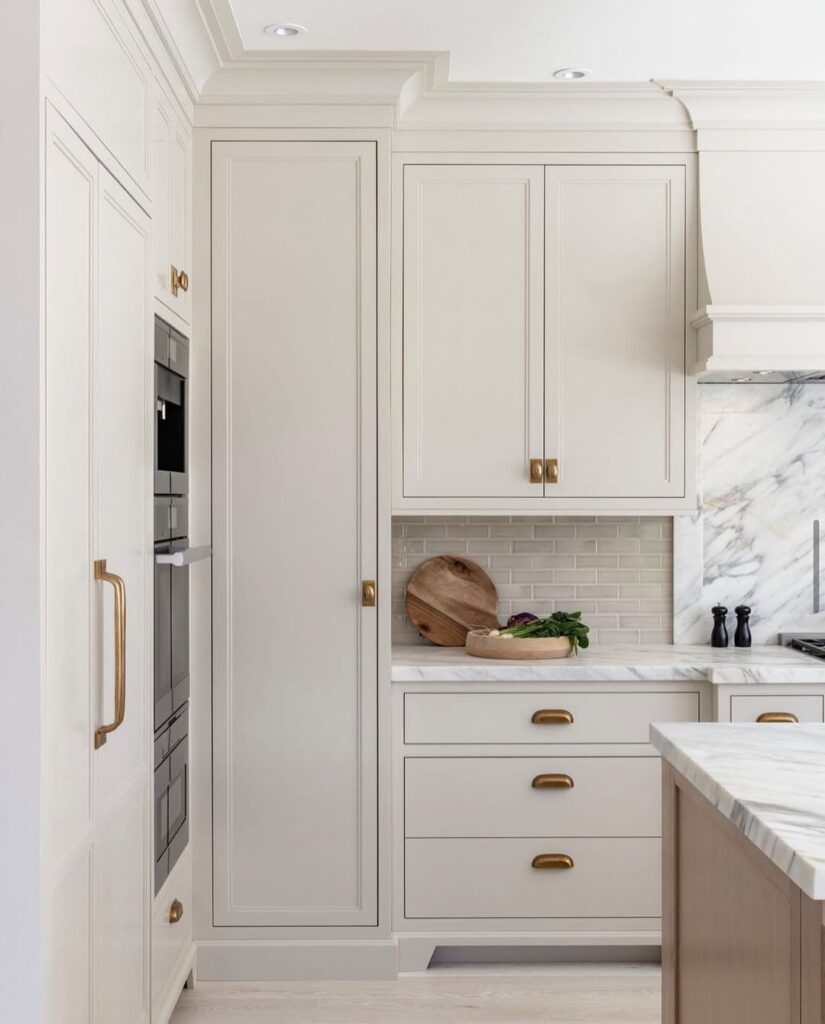
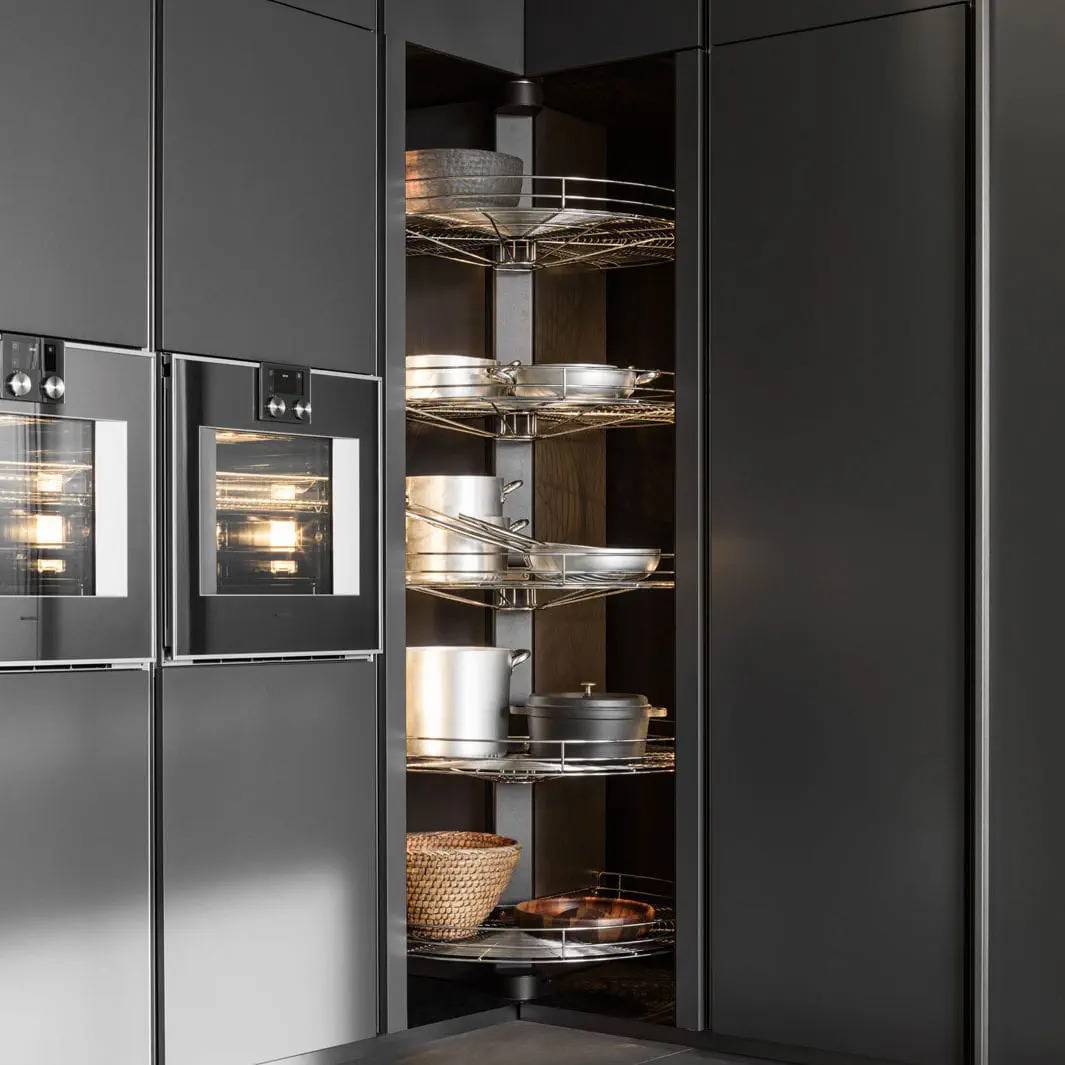
The antique white finish keeps this limited kitchen light. Tall cabinets draw the eye upward, increase the sense of spaciousness, and maximize storage.
An antique white cabinet finish keeps the enclosure light. It suits kitchens with low natural light.
Seasonal cookware, dry pantry items, and infrequently used appliances can be kept out of the way. The tall cabinet provides dedicated storage for all three.
The uppermost cabinet section can contain both glass inserts and open shelving. Each option creates space for displaying items.
A tall cabinet fits the kitchen footprint while providing storage. It works in contemporary builds and can also be used in older renovations.
Tall cabinets are paired with soft-close mechanisms and hardware in a simple brushed nickel finish. Crown molding at the cabinet top gives them a built-in appearance.
For a galley kitchen, an L-shaped layout, or a narrow urban space, designers recommend a tall cabinet. These narrow spaces have storage challenges.
Antique white is a neutral finish that adapts to most backsplash and countertop materials. Used on a tall cabinet, it provides a flexible storage solution.
Antique White Glass-Front Cabinets
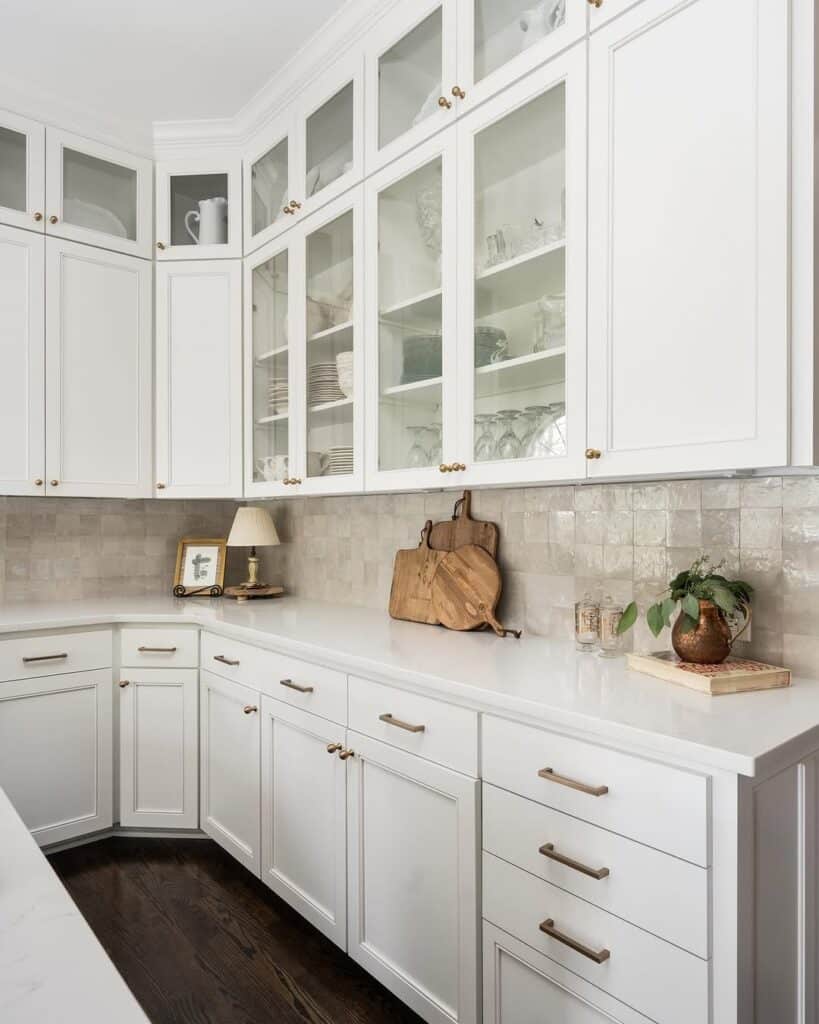
Decorative items, dishware, and glassware can sit inside the antique white glass-front cabinet. The glass fronts provide transparency while maintaining a cohesive palette.
Antique white provides a backdrop for cabinet contents. Its warm undertone helps reduce sterility.
Solid cabinetry runs are broken up by glass inserts in the upper sections. The glass may be clear, seeded, or frosted.
Solid lower cabinets preserve storage privacy. Glass fronts reflect illumination and suit limited natural light.
Glass-paneled doors pair with interior lighting inside the cabinets. The lighting can be recessed or made with LED strips, adding depth and supporting night use. These doors suit cottage, coastal, and transitional kitchens.
Glass fronts can be used in upper cabinets in both new builds and kitchen renovations. This layout is best for homes with low daily clutter.
Antique White Cabinetry and Open Shelving
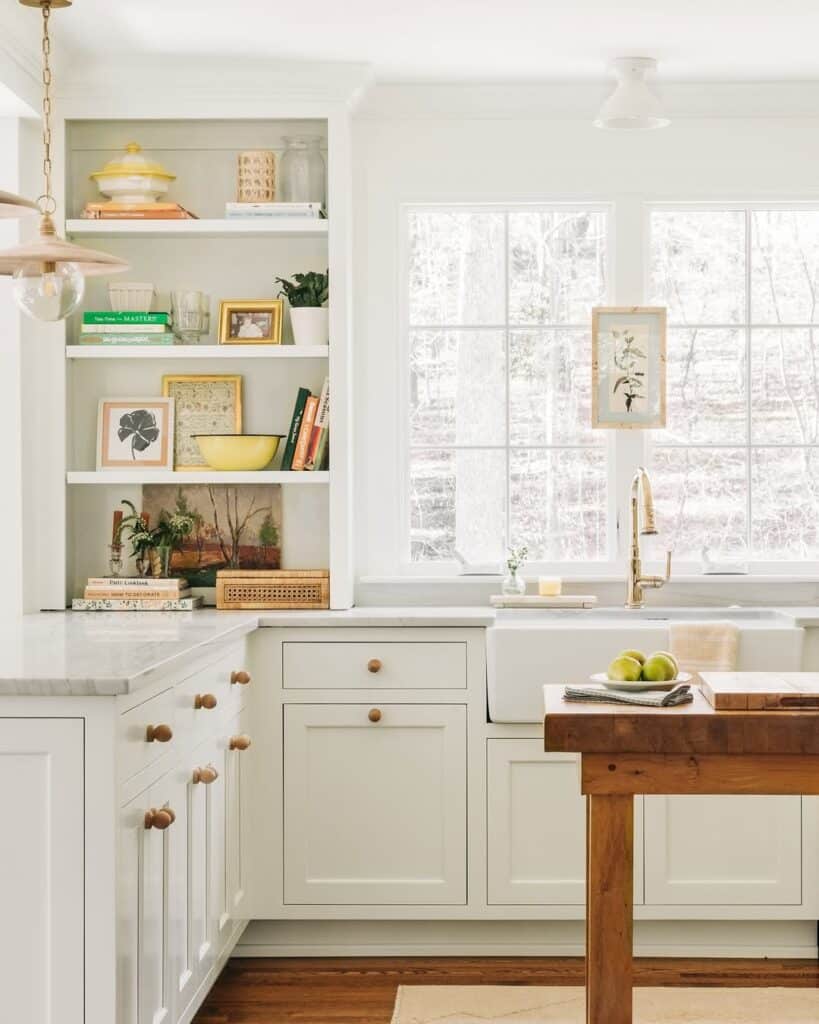
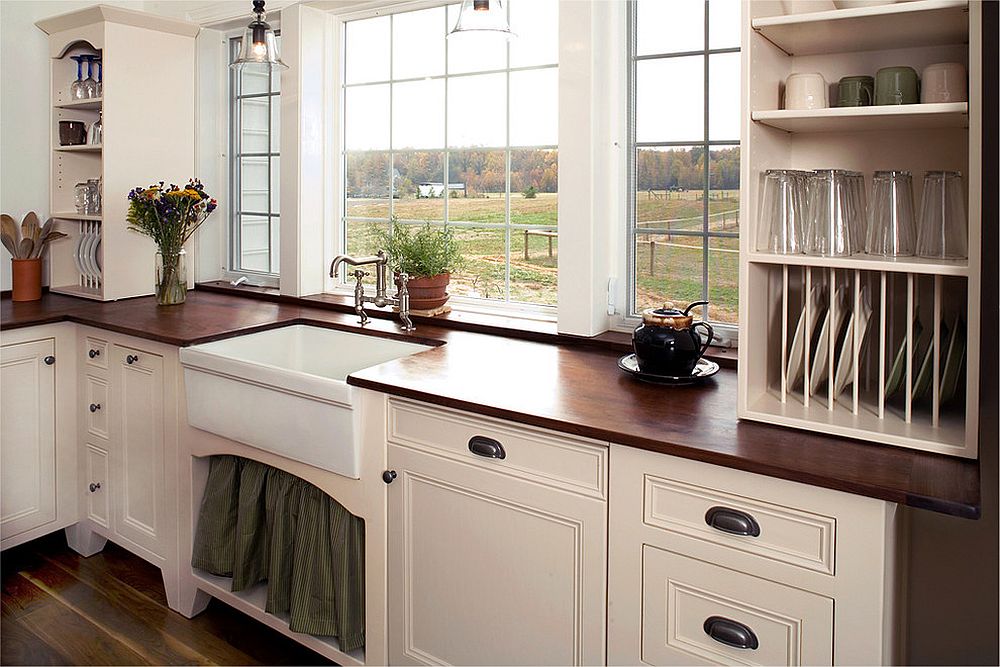
Antique white cabinetry pairs with open shelving for accessible storage. The shelving also supports space efficiency.
Open shelving suits small kitchens. The shelves break up closed cabinetry lines and keep daily essentials easy to reach.
Open shelving supports quick access near cooking zones and above coffee stations.
Medium to warm wood shelves can pair with antique white cabinetry, and the shelf finish can match the cabinet finish. Metal brackets support the open shelves.
Stacked dishes, potted herbs, or neutral ceramics can be displayed on open shelves. The shelving keeps these items off the countertop and avoids countertop crowding.
Open shelving suits Scandinavian and coastal interiors. It also supports the needs of small kitchens.
Open shelving supports accessibility and kitchen function. Items remain visible and available for use.
Antique White Cabinetry and Decorative Backsplash
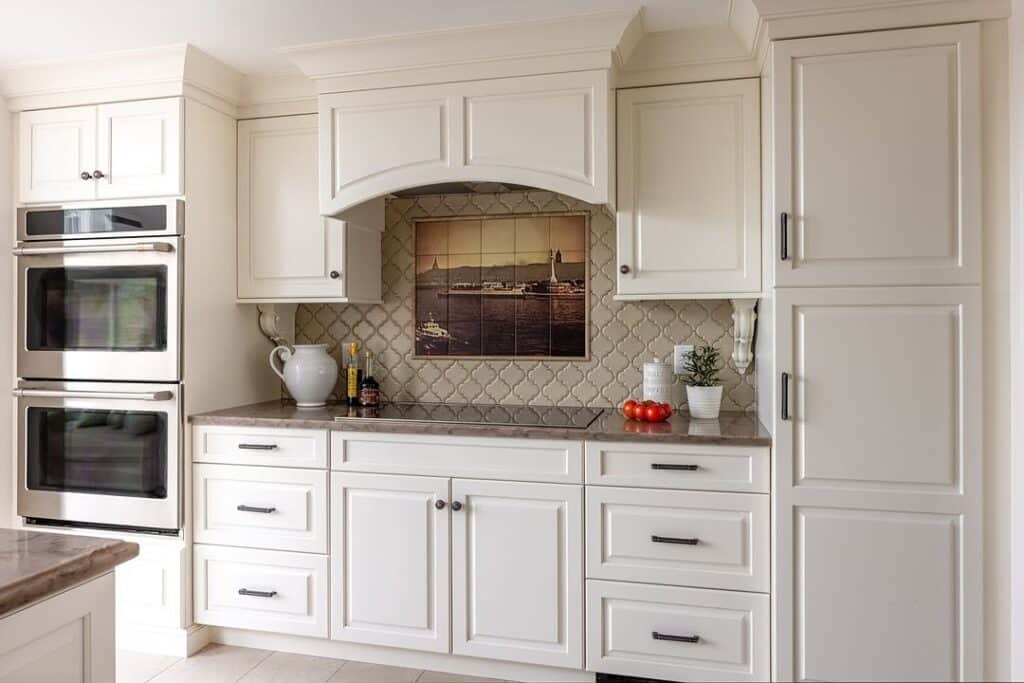
In the kitchen, a decorative backsplash pairs with antique white cabinets. The backsplash supports kitchen personalization.
Antique white cabinetry provides a canvas for bold tile designs. Backsplash tile can use Moroccan, classic herringbone, or soft geometric patterns.
Muted blue, soft green, warm taupe, and terracotta backsplash colors harmonize with antique white.
Handmade ceramic and matte porcelain are material options for textured backsplash tile. The tile serves as the backsplash.
Designers recommend that grout lines coordinate with cabinet undertones.
Under-cabinet lighting illuminates backsplash tile and is especially useful with minimal natural light. Subway tile can also add a decorative trim or border to a classic backsplash.
European-style kitchens are one setting for this combination, along with farmhouse and transitional kitchens. The combination introduces pattern and color but keeps a neutral framework.
A backsplash pairs with antique white cabinetry and provides a kitchen surface. Updating the backsplash does not require a full renovation.
Antique White Beadboard Cabinets
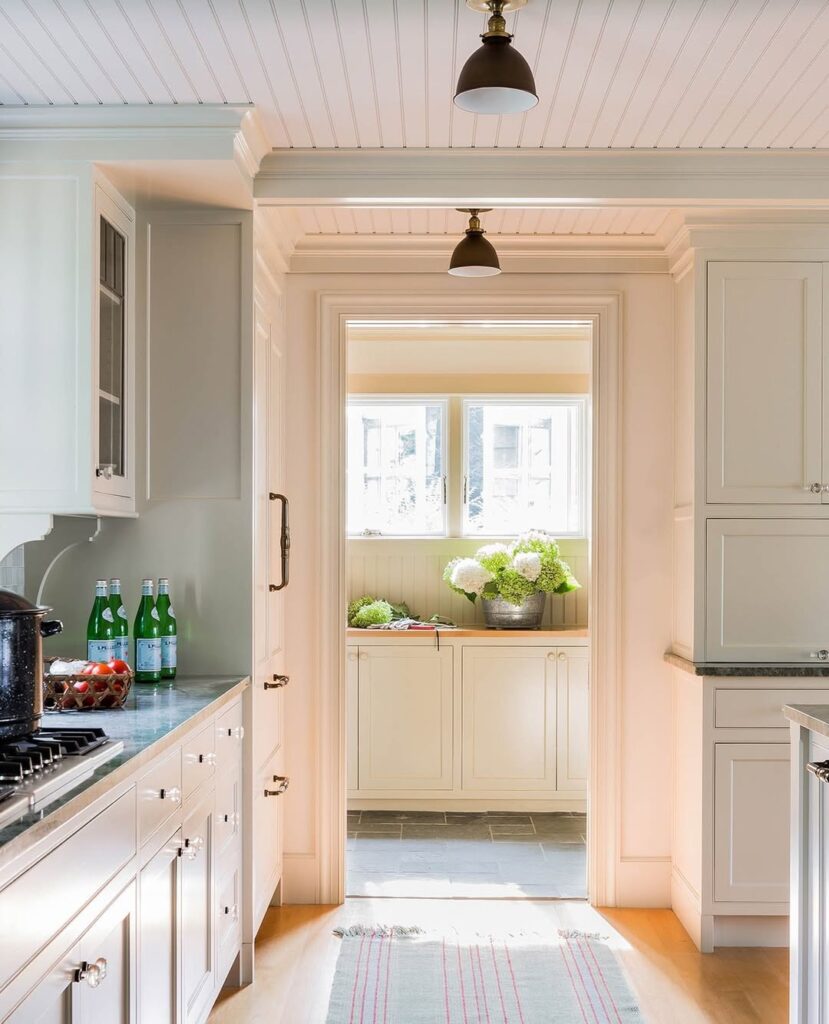
Beadboard inserts with vertical lines add cabinet depth and craftsmanship. The inserts provide textured detailing.
A soft ivory finish keeps the cabinetry looking clean. Beadboard adds texture and breaks up otherwise flat cabinet surfaces.
Farmhouse, cottage, and coastal kitchens can all use beadboard. Its applications include end caps, cabinet doors, and island panels.
Brushed nickel and bronze hardware pair with the beadboard inserts. The beadboard supports a handcrafted character.
Natural stone counters pick up the straight lines in the beadboard. That linear detail also supports design continuity with wood flooring.
Beadboard detailing suits authentic and warm interiors. Use it with care when excessive rusticity is something to avoid.
To prevent dirt settlement in the grooves, seal or paint the beadboard finish. The finish is durable, but beadboard requires proper care to offer long-term function.
Beadboard adds cabinet depth while keeping the texture subtle.