15 Off-White Kitchen Cabinet Ideas for a Clean, Classic Look
Off-white cabinetry provides a warm-neutral foundation that works across multiple kitchen styles.
Off-white is softer than stark white. The shade is neither yellow nor beige, which keeps it flexible for different designs.
Off-white cabinetry adds visual depth without making the kitchen feel overloaded. It works with natural materials, dark accents, and modern finishes. This combination keeps the overall look balanced while giving the cabinetry more dimension.
Off-white cabinetry is becoming more relevant as quiet luxury grows alongside the use of organic palettes.
This understated color anchors the kitchen while keeping its appearance fresh.
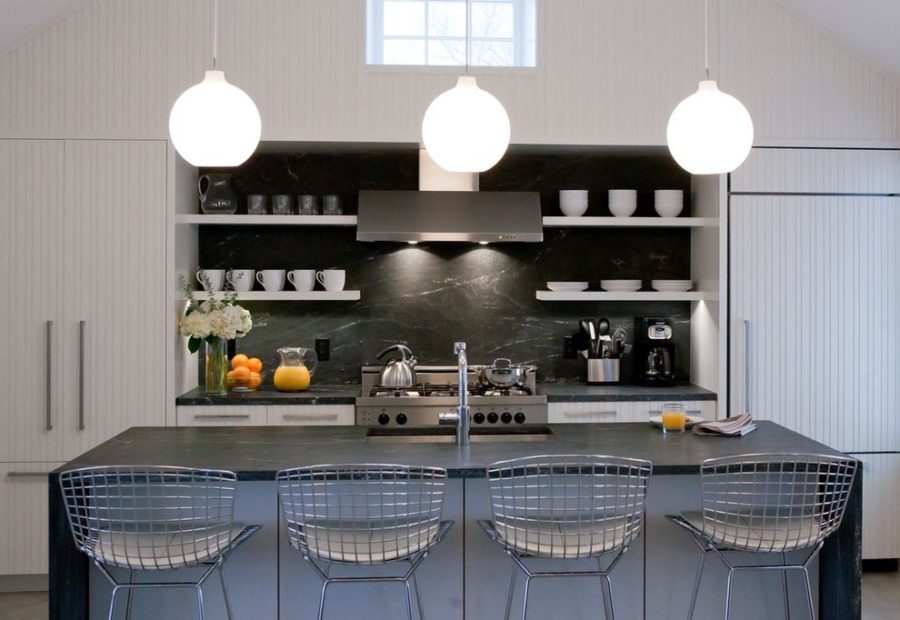
Midimalist Off-White Cabinetry With Open Shelving

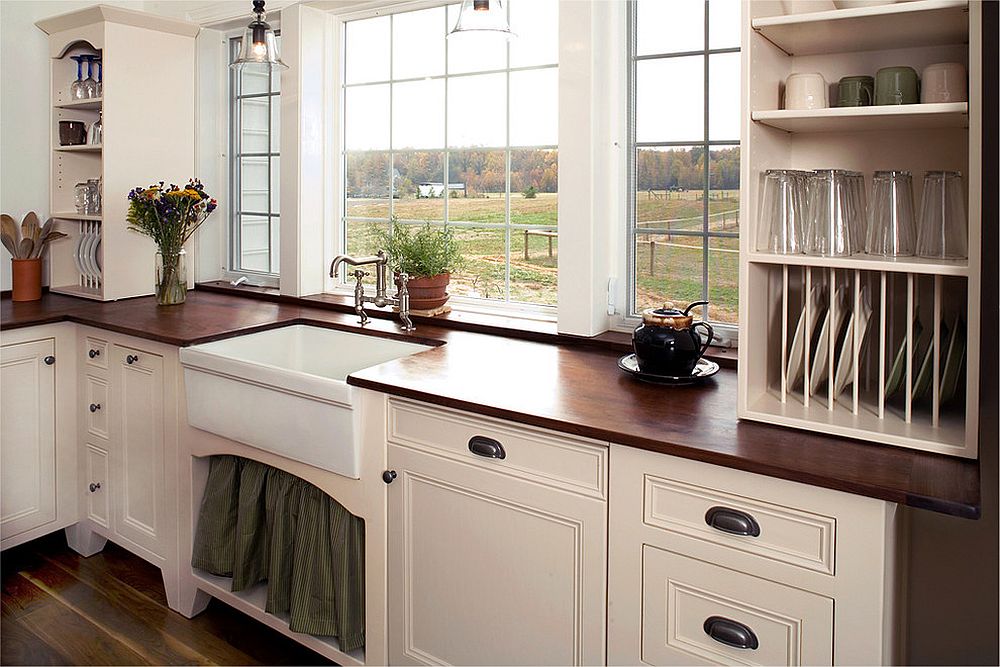
Open shelving works with off-white cabinetry and adds visual lightness. It maintains its function as well.
Open shelves made from light wood or metal create a soft contrast with off-white cabinetry. The contrast remains gentle.
Ceramic bowls, glassware, wooden utensils, and other regularly used objects can go on open shelves. Limit the display to items that are used regularly, rather than unused pieces.
Wall-mounted shelving above counters and beside range hoods can break up solid cabinetry runs. Use shelving with clean lines and a restrained palette, since clutter undermines minimalist appeal.
Midimalism combines minimalism with a lived-in style and uses approachable materials.
Open shelves can be combined with base cabinets and tall units. The base cabinets and tall units provide closed storage, while off-white cabinets create a warm base.
In the evening, integrate under-shelf lighting for both task lighting and ambience.
The open shelving approach suits small kitchens. Removing upper cabinets can make ceilings feel taller and may make the space feel wider.
Off-White Ceiling-Height Storage

Ceiling-height cabinetry supports kitchen function and visual expansiveness by using the vertical space.
Ceiling-height cabinets create an illusion of height and reduce visual interruption. Their off-white color, streamlined style, and high storage capacity keep the arrangement efficient.
Less-used stored items, including holiday dishes and bulk pantry goods, can go in full-height cabinetry. The cabinetry also eliminates dust-collecting gaps.
In compact kitchens, ceiling-height cabinets increase storage. Off-white cabinetry also suits kitchens with limited natural light.
A built-in crown molding detail helps cabinets blend into the ceiling. The molding creates that integrated appearance.
Off-white cabinetry is complemented by brushed nickel, matte black, or satin brass hardware. Solid lower cabinet doors can be paired with upper cabinet sections that mix glass fronts and open cubbies.
A minimalist backsplash supports visual balance. Pair it with ceiling-height cabinetry, floor-to-ceiling pantry units, and integrated appliances.
Ceiling-height cabinetry maximizes storage use. It also supports a cooking environment without clutter.
Dark Hardware with Off-White Cabinetry
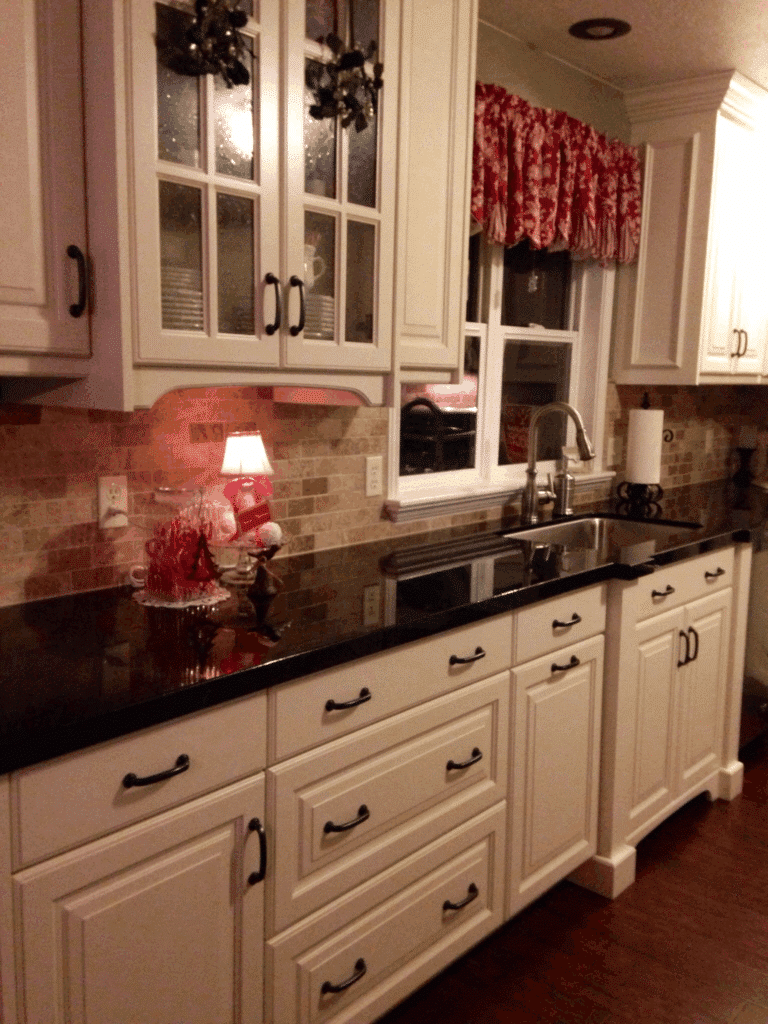
Matte black, oil-rubbed bronze, and dark pewter hardware pair with off-white cabinetry. The dark hardware provides clear visual contrast.
Dark hardware defines drawer fronts and door fronts without overpowering the kitchen visually. Its placement gives the cabinet fronts structure.
Dark bar pulls and knobs can coordinate with the lighting, appliance trim, and faucets. Repeating the dark finish across these elements connects the hardware to the rest of the kitchen.
The hardware tone should appear again in the brackets for the range hood and in the pendant fixtures. Use it across at least two areas, and up to three.
Dark hardware suits modern farmhouse and contemporary industrial styles. Its strong finish works with both approaches.
Against a light palette, dark hardware creates contrast. When used sparingly, it also supports traditional styles.
Choose satin or matte hardware rather than glossy hardware. Satin hardware and matte hardware resist fingerprints.
For flat or Shaker doors, align the hardware carefully. Installation depends on spacing and height, while proper alignment maintains visual rhythm.
Dark pulls or knobs add depth and contrast to a light kitchen. They accentuate off-white cabinetry.
Integrated Lighting with Off-White Cabinetry
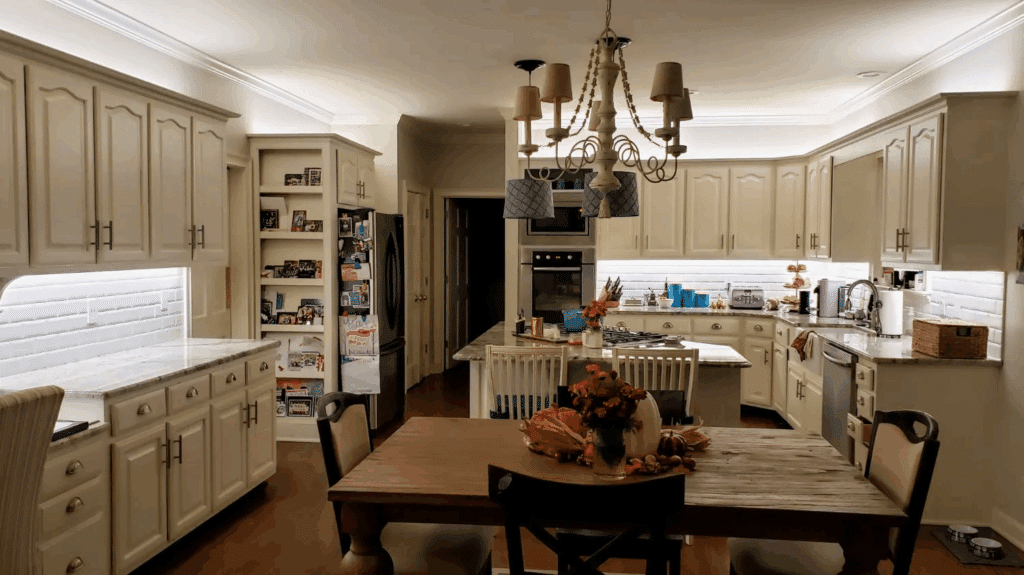
Off-white cabinets reflect illumination and pair with integrated lighting. Strategic lighting changes how the cabinetry is perceived.
Atmosphere is one benefit of integrated lighting. Place it under upper cabinets, in toe kicks, and in glass-front sections, where it also supports everyday function.
In task areas, LED strip lights illuminate countertops used for food preparation. They also reduce reliance on overhead fixtures.
Dimmable lighting provides flexibility, with daylight and evening modes. In open-concept layouts, it supports adaptation to the time of day.
Recessed puck lights illuminate dishware on open shelving and inside glass-front cabinets. They also add dimension.
Warm white lighting pairs with off-white cabinetry and avoids a clinical appearance. Use warm white bulbs, including 2700K bulbs.
Integrated lighting in lower drawers supports accessibility and improves visibility in low-light conditions. Illuminated pantry corners are easier to see in low light as well.
Everyday use is one purpose of integrated lighting. It also serves a practical utility.
Integrated lighting highlights off-white cabinetry features without adding clutter. The light draws attention to the cabinet details.
Upper Cabinets with Glass Fronts

Mixed closed and transparent cabinetry balances openness with storage. Glass-front upper cabinets provide the transparent portion.
Off-white glass-front uppers bring a lighter feel to the kitchen. They also preserve cohesion with the solid-door cabinets.
Heirloom dishware, crystal glassware, and neutral-toned pottery can serve as display items. Glass-front cabinets show these pieces while reducing the heaviness of the upper wall.
Glass selection depends on both privacy and style preferences. Options include clear, frosted, and reeded cabinet glass.
Glass fronts pair well with lighting installed inside the cabinets. In the evening, that interior lighting illuminates the cabinet contents.
Glass fronts visually expand space in small kitchens. They also make the walls feel less enclosed.
Consistent shelf styling supports a tidy presentation. Keep the hardware understated to let the cabinet contents stay organized visually.
Glass cabinets can hold decorative items used occasionally, while closed cabinets store frequently used items. Combine open cabinets with closed cabinets for both purposes.
Mixed cabinetry supports functionality and suits both traditional and modern interiors. In off-white kitchens, glass-front cabinetry also reduces visual load.
Subtle Cabinets and a Bold Backsplash

Off-white cabinetry works as a muted backdrop for a statement backsplash. The backsplash can take the visual lead without competing with the cabinets. Surface contrast often establishes the kitchen's visual hierarchy.
A dramatic marble slab, patterned cement tile, or zellige tile in deep emerald or navy can contrast with soft-toned cabinets. Each material gives the backsplash a distinct surface.
Warm off-white flat or Shaker cabinet doors reduce visual busyness. Keep the cabinetry uniform and unembellished so the backsplash receives more emphasis.
Keep the high-impact backsplash to the area behind the range, where a limited amount can balance cost with style. Even a small backsplash section can establish a focal point.
Grout color affects how the tile appears. Choose dark grout for geometric definition or a tonal grout color for subtle texture.
Under-cabinet illumination supports backsplash visibility in the evening. The lighting is directed toward the backsplash.
Statement backsplash options pair with neutral countertops to suit a kitchen with distinctive elements. Light stone countertops maintain balance.
Subdued cabinetry supports the emphasis on the backsplash while preserving harmony across the kitchen. The cabinets remain visually restrained.
Shelving for Corner Space

Open shelves turn corner spaces into storage, which traditional cabinetry often leaves underused. Their placement in the corners makes that area usable.
Off-white corner shelving provides open storage. It can display ceramics, glassware, and cookbooks.
Corner shelving can ease the change from one cabinet run to the next. It works well near windows and range hoods.
Off-white painted shelves support cohesion. Shelves made from wood or metal can match the hardware and flooring to connect the materials.
In one corner, group shelf items by color and function, and avoid overcrowding the display. Bracketed shelves have a traditional style, while floating corner shelves have less visual weight.
Corner shelves can display mugs and spice jars when they are used frequently. Rotate the shelf decor seasonally.
Corner shelves can be lit with LED strips beneath the shelves or sconces placed beside them. In shadow-prone spots, this lighting improves task visibility.
In small kitchens, corner shelving is a space-efficient choice.
Corner shelving preserves the flow of the cabinetry while providing usable storage. It fills the corner without interrupting the cabinet layout.
Textured Beadboard Details

Off-white cabinetry pairs with beadboard. The beadboard has a subtle surface treatment.
Beadboard has soft vertical grooves and can be applied to cabinet panels. It suits island backs, cabinet doors, and end panels.
Off-white beadboard creates shadow lines in the grooves. Those lines add depth.
Traditional, farmhouse, and coastal kitchens commonly use beadboard. It also works in transitional kitchens.
For a more even look, set beadboard elements against smooth drawer fronts and flat-panel upper cabinets.
Satin or matte beadboard brings attention to its texture. Cabinet hardware in brushed nickel or aged brass can use simple knobs or cup pulls, and it complements the beadboard.
Around sink areas and prep zones, sealing beadboard helps with durability when those spaces see high use. Installation precision is critical because poorly spaced grooves or misaligned boards can reduce cleanliness.
For detailed or understated cabinetry, beadboard cabinetry adds a light, airy texture. The treatment keeps the cabinetry textured without making it feel heavy.
Wood Flooring in Warm Tones

Warm wood flooring pairs with off-white cabinetry. The wood material brings a warm temperature to the floor.
Warm wood flooring and off-white cabinetry counter a sterile or monochromatic appearance. The flooring adds natural richness.
Light white oak flooring and honey-toned hickory flooring pair with off-white cabinets. Both options introduce subtle texture to the room.
Wide planks and matte finishes showcase the wood grain. Medium walnut and medium antique pine flooring create a deeper base and complement warm paint undertones.
Durability is important for kitchen flooring. Sealed hardwood, engineered wood, and luxury vinyl planks can resist spills and heavy traffic. Engineered wood offers high quality, while luxury vinyl planks have a realistic wood look.
Repeat the wood tones from one part of the space to another for cohesion. Wood accents can be used on open shelving, vent hoods, and island panels.
Warm wood flooring suits farmhouse kitchens and transitional kitchens. It pairs with off-white cabinetry.
Matte Surfaces for Modern Kitchens
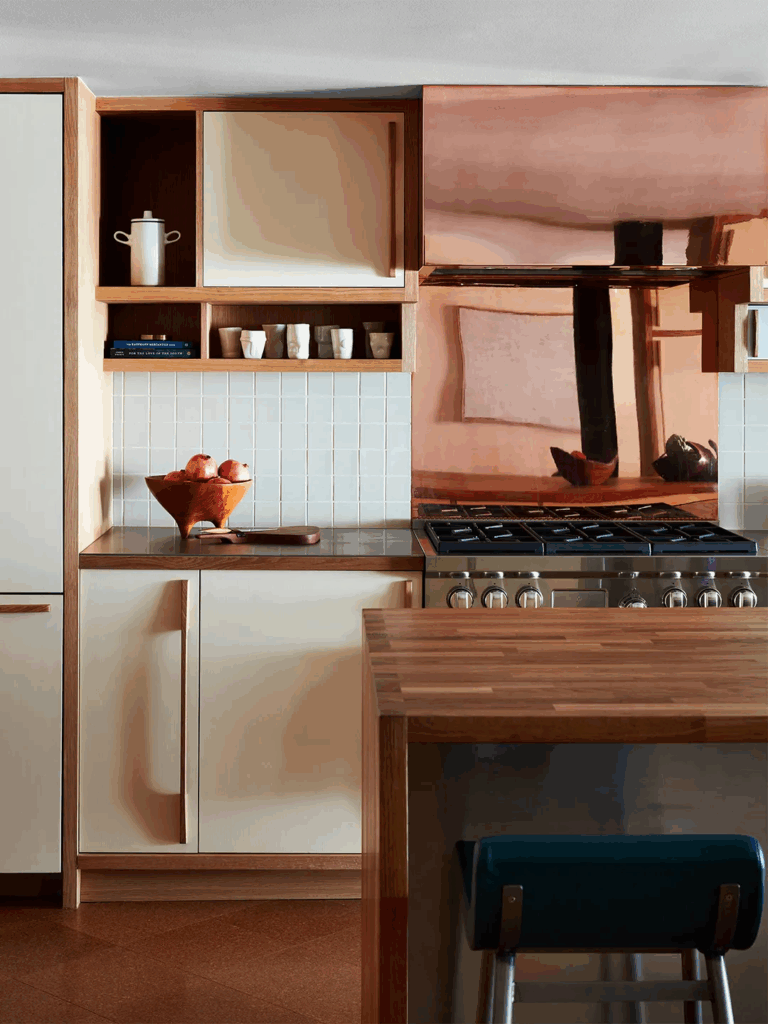
Matte cabinets give modern kitchens a contemporary surface finish. They contrast with glossy tiles and stone, while the finish itself influences the kitchen's overall aesthetic.
The surface has a powdery appearance. Its matte off-white finish absorbs light gently, which reduces glare and visual noise.
Matte cabinetry suits both transitional and Japandi styles. It also emphasizes material quality.
Acrylic, PET, and lacquer are materials used for matte off-white finishes. Compared with high-gloss surfaces, matte surfaces resist fingerprints and suit frequent kitchen use while supporting longevity.
Pair matte cabinetry with sleek quartz countertops and waterfall islands. The combination keeps the island and work surfaces streamlined.
Across the backsplash, matte subway tile can use textured stone and handmade tile. These materials offer a subtle echo of the muted cabinet surface.
Natural daylight works with matte finishes. Directional ceiling lights create shadows and depth, so balance the lighting across the kitchen.
Around the other kitchen elements, matte cabinetry reduces visual clutter. Its quiet surface keeps the room from feeling busy.
Matte cabinetry supports a calm architectural quality and aligns with modern kitchen principles. The finish keeps the focus on the structure of the room.
Off-White Cabinetry With Brass Accents

Hardware, lighting, and fixtures can bring brass into the kitchen. Brass works with off-white cabinets, which provide a neutral canvas.
Brass matures over time, adding character as it ages. Brushed and unlacquered finishes work with off-white cabinetry.
Brass handles work well with inset paneling and shaker-style doors.
Brass pendant lights above the island can elevate the kitchen style. A gooseneck faucet in antique brass offers a related finish at the sink.
Matte black and polished nickel can work with brass when used sparingly. Together, these finishes support a modern classic look.
Brass bridges vintage-inspired kitchens and contemporary spaces. It is a versatile choice.
Repeat the brass finish on hardware, light fixtures, and barstool legs. This repeated detail supports cohesion.
Off-white cabinetry pairs with white marble or creamy quartz countertops.
Brass adds warmth to the palette in natural and artificial lighting. The finish does not overpower an off-white palette.
Off-White Reeded Cabinet Fronts
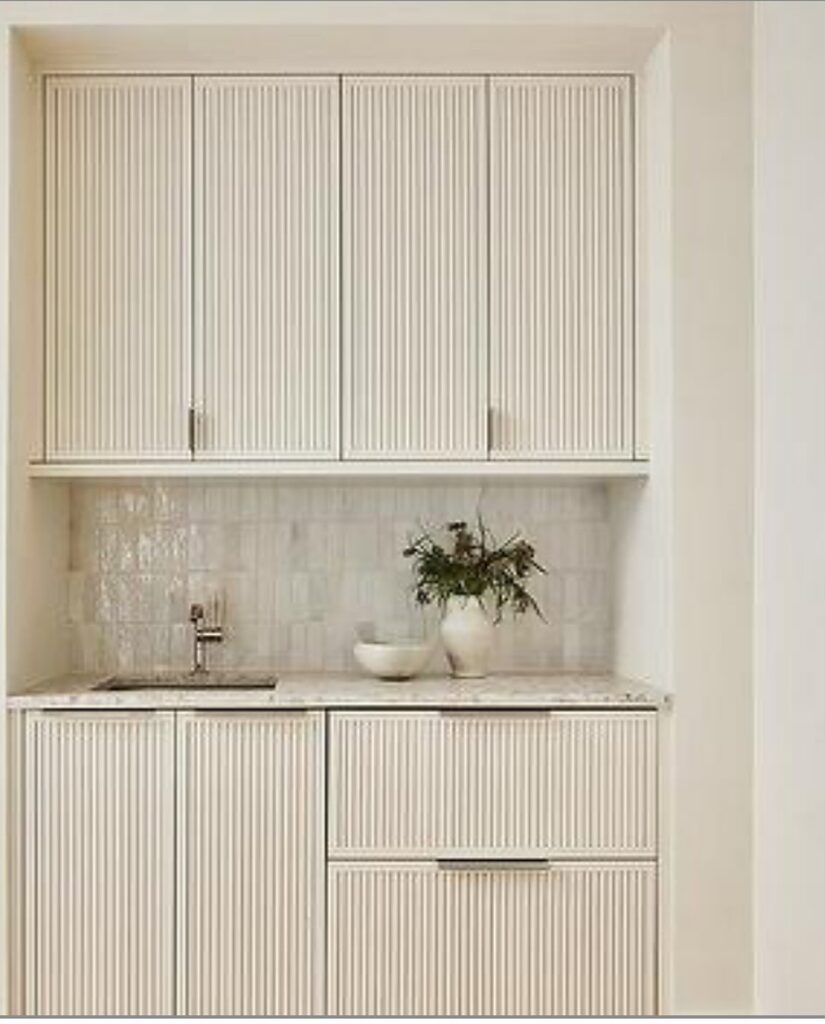
The cabinet texture adds dimension without excess. Flat cabinet panels keep the overall look simple.
Off-white reeded fronts add tactile interest to the kitchen. Their vertical fluting is evenly spaced, creating a textured surface while maintaining calm cohesion.
In a vintage-inspired interior, reeded cabinets can add kitchen personality. The style also suits modern interiors.
Beside other finishes, off-white reeded doors bring movement to plain surfaces. Their grooves also create changing areas of shadow.
Use reeded fronts across the cabinet fronts, including the island and pantry unit. The texture responds to directional lighting, while light in well-lit spaces picks up its detail. Reeded fronts add restrained visual drama while keeping the room calm.
Reeded cabinets work beside flat-front drawers. Consider finger-pull cutouts to keep the texture emphasis intact. Minimal hardware completes the look.
Muted subway or zellige backsplash tiles add layers to a kitchen with creamy quartz or veined marble countertops. Together, these materials reinforce a soft palette and create a more layered look.
The textured reeded cabinet design suits neutral kitchens. It provides visual intrigue without relying on bold colors.
Reeded detailing adds depth to the kitchen and introduces detail to an otherwise serene aesthetic. The grooves remain the nearby visual feature.
Cabinet Soft-Close Function

Soft-close mechanisms handle cabinet operation in kitchen design. Their function is built into how the cabinets open and close.
Soft-close hinges and soft-close drawer slides work with off-white cabinetry. Together, they reduce noise and can lessen wear over time.
Frequent door or drawer access makes soft-close technology useful in family kitchens and high-traffic areas.
A soft-close mechanism slows operation before full closure. This prevents abrupt slamming and protects the cabinet structure over the long term.
Soft-close operation is quiet and supports longevity. It also complements off-white cabinetry.
For existing cabinets, soft-close systems can be retrofitted. Many brands offer these systems, and they are often standard on new cabinets.
A streamlined aesthetic comes from pairing the soft-close feature with smooth-glide drawer tracks and concealed hinges. The drawer tracks provide the smooth-glide detail.
High-quality cabinet hardware improves functionality and signals craftsmanship. Choose cabinet hardware with a high level of quality.
In open-concept layouts, soft-close mechanisms minimize noise and support daily usability.
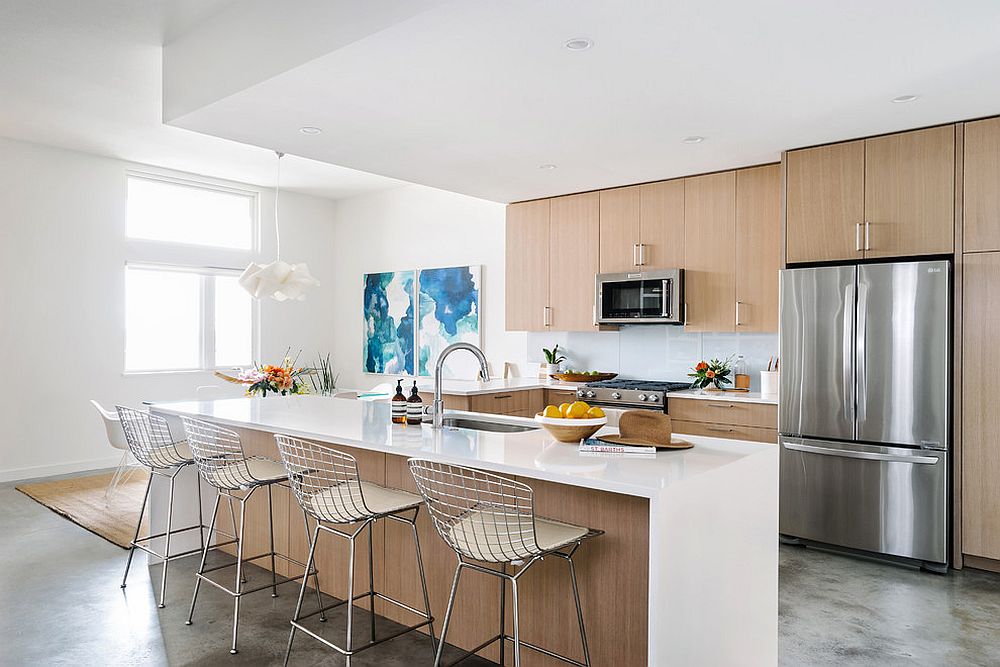
Off-White and Natural Wood Two-Tone Cabinetry
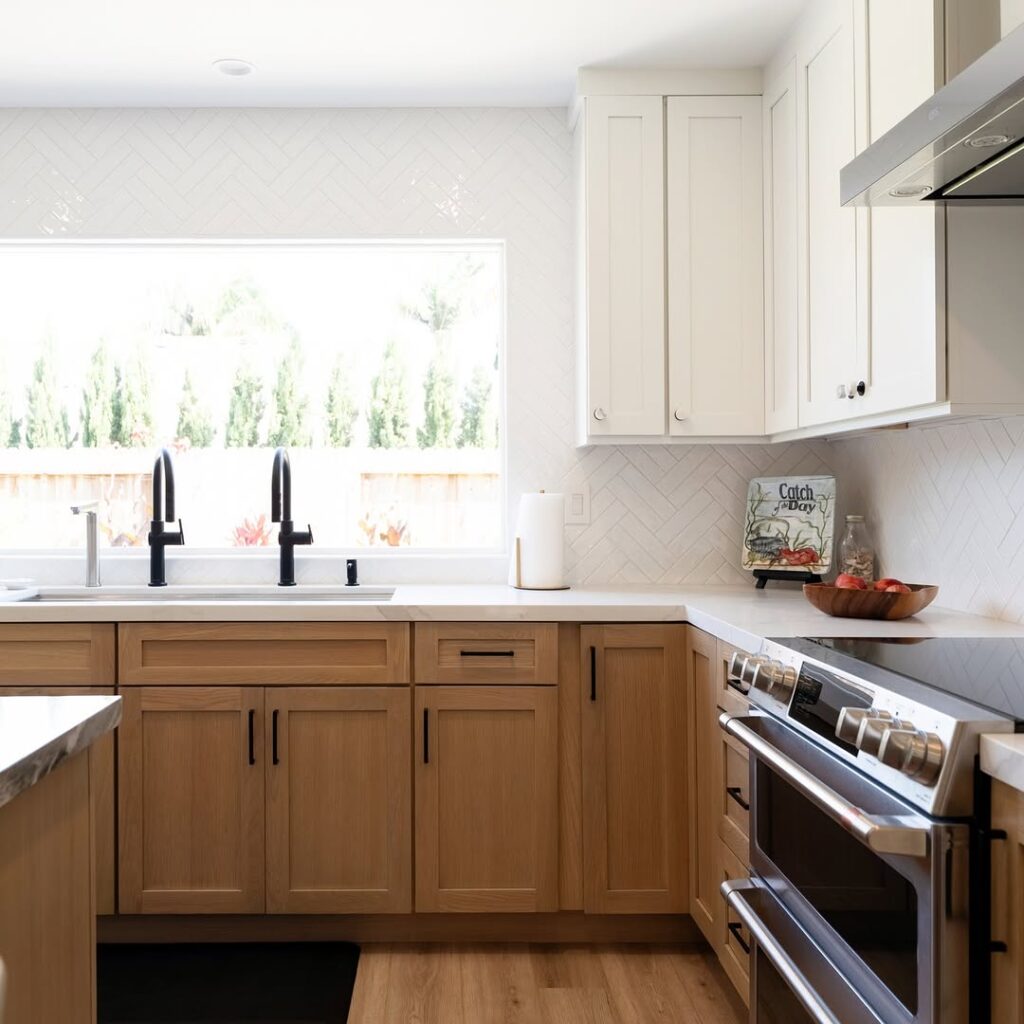
Mixed cabinetry gives this two-tone kitchen a balanced character.
Natural wood at the bases and in the accents adds warmth, while off-white cabinets provide the backdrop.
Two-tone cabinetry suits Scandinavian-inspired layouts and transitional layouts. The contrast stays organic and subtle.
Soft off-white upper cabinets paired with lower cabinets in light oak or walnut produce a layered look. The cabinet pairing suits a design that feels current while remaining timeless.
Cabinet pulls in matte black or brushed nickel connect the upper and lower cabinets. This hardware keeps the look coordinated and avoids visual clutter.
Wood undertones should match the paint undertones. Ash and white oak suit cooler off-whites, while warm maple and honey-toned wood work with creamier tones.
A beige or pale gray quartz or marble countertop bridges the off-white upper cabinets and the lower cabinetry.
Natural light adds depth to the textures and interacts with the two-tone cabinetry. It also maintains an open atmosphere.
Adjacent living areas make open-concept homes a natural setting for two-tone cabinetry. The approach is especially effective when the kitchen needs a clear connection with those nearby spaces.
The off-white and natural wood pairing adapts to both small kitchens and large kitchens. It also suits design-forward interiors.
Seamless Integrated Appliances
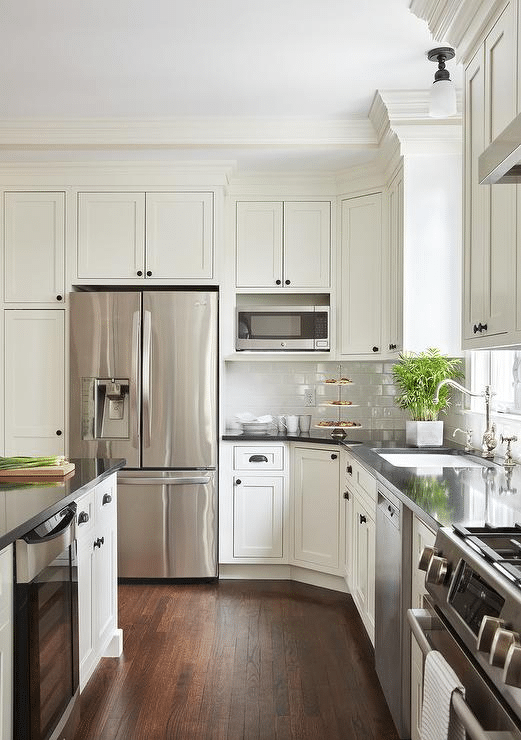
Behind cabinetry panels, integrated appliances create a visually streamlined installation. The appliances sit within the cabinetry rather than standing apart from it.
Off-white cabinet panels can conceal refrigerators, dishwashers, and microwaves. This cabinet-panel treatment maintains a continuous facade with an uncluttered, built-in, custom appearance.
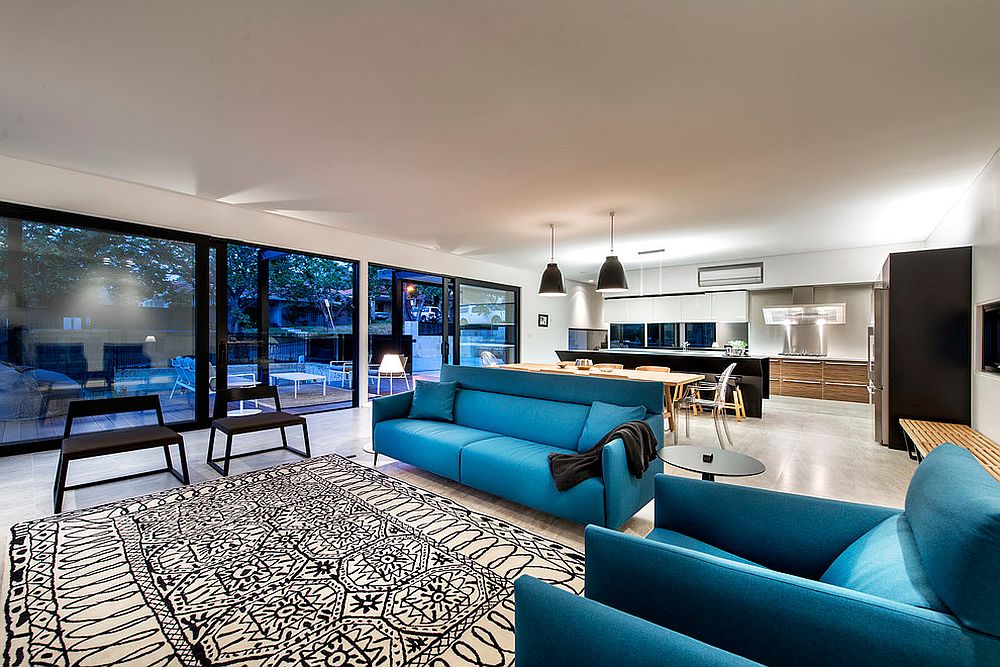
Integrated appliances suit kitchens that open onto dining areas and living areas. They help the kitchen blend with both spaces, especially where the rooms share one layout.
Reducing visible appliances emphasizes material choices, layout, and light flow. Integrated appliances reduce the number of visible appliances, and they work with flat-panel or Shaker cabinet styles and integrated pulls.
A panel-ready appliance accepts custom cabinet faces. Appliance brands make panel-ready models available.
Appliance panel alignment is essential. Line the panel handles up with the drawer lines next to them for symmetry. Mismatched hardware or misfitting panels can disrupt a seamless appearance.
Integrated appliances suit small kitchens and are considered a high-end feature. Reduced visual fragmentation may increase the perceived room size, and integrated appliances may benefit resale appeal.
Appliance cabinetry integration supports daily usability and design cohesion. It gives the kitchen a refined, uninterrupted appearance.