Handcrafted-Looking Natural Wood Kitchen Cabinets for a Timeless Home
In 2025, kitchen authenticity is showing up in wood cabinets. Visible grain brings earthy warmth, while an unfinished texture keeps the surface natural.
Natural wood cabinets are growing in popularity for their visual richness. They can provide grounding in a space and offer organic character.
The finish is timeless without looking overly polished or overly trendy. Options range from light oak to deep walnut.
Nature-inspired ideas continue to shape interior design, including a growing focus on sustainable materials. Natural wood finishes add style while also bringing substance to a room.
Natural wood cabinets are highly versatile. They pair with modern hardware as easily as they do with vintage fixtures, while natural wood cabinetry brings durability and style.
Concealed Appliance Garages
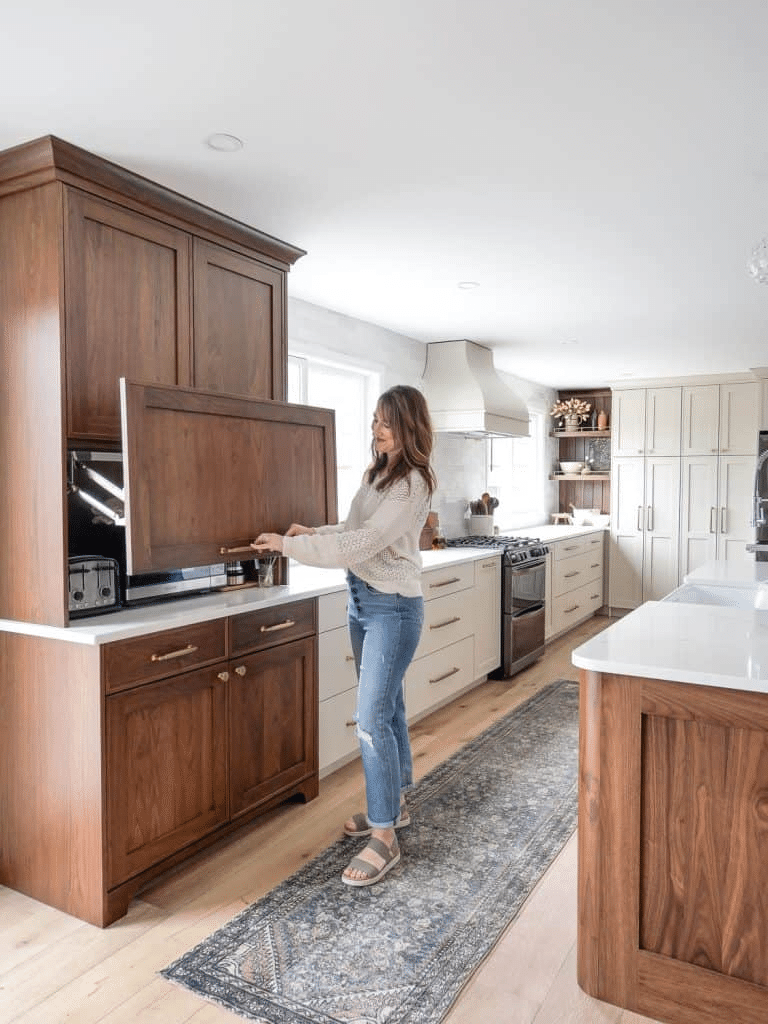
Appliance garages provide countertop storage that supports tidy countertops. They also help maintain kitchen order.
Stored appliances stay out of sight but within reach. An appliance garage can hold a blender, coffee maker, and toaster.
Lift-up and retractable appliance garage doors conceal the appliances behind matching wood grain. The doors reduce visual clutter while preserving convenience.
An appliance garage can sit beneath upper cabinets or beside the range. This placement remains discreet while supporting easy access.
The appliance-garage cabinetry matches the kitchen wood tone and comes in white oak, walnut, and ash.
Devices do not need to be moved when power outlets are integrated into the appliance garage compartments. The outlets allow in-place operation.
Appliance garages support an organized workspace. They do not require a hyper-minimal design.
Wood cabinetry keeps its texture, tone, and craftsmanship when appliance garages are added. The storage also supports efficiency.
Small kitchens have limited surface space, so appliance garages can support practical design. They are especially beneficial in small kitchens.
Daily function and visual harmony come together in appliance garages.
Hidden Kitchen Designs
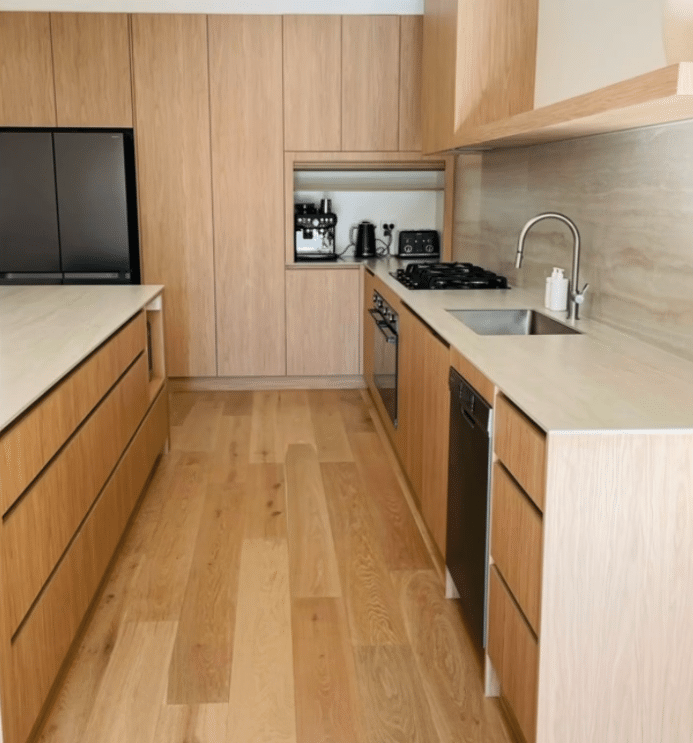
A concealed kitchen sits behind closed doors while retaining its kitchen function. The doors close over the kitchen area.
Concealed kitchens suit open-plan living and minimalist architecture. Natural wood concealed cabinetry blends with its surroundings.
A concealed kitchen hides its appliances behind doors. Sliding, pocket, and bi-fold options can close over the sinks and cooktops as well.
Warm, clean-grain oak and walnut work on consistent wood cabinet fronts. A closed concealed kitchen can resemble a built-in wall or a piece of furniture.
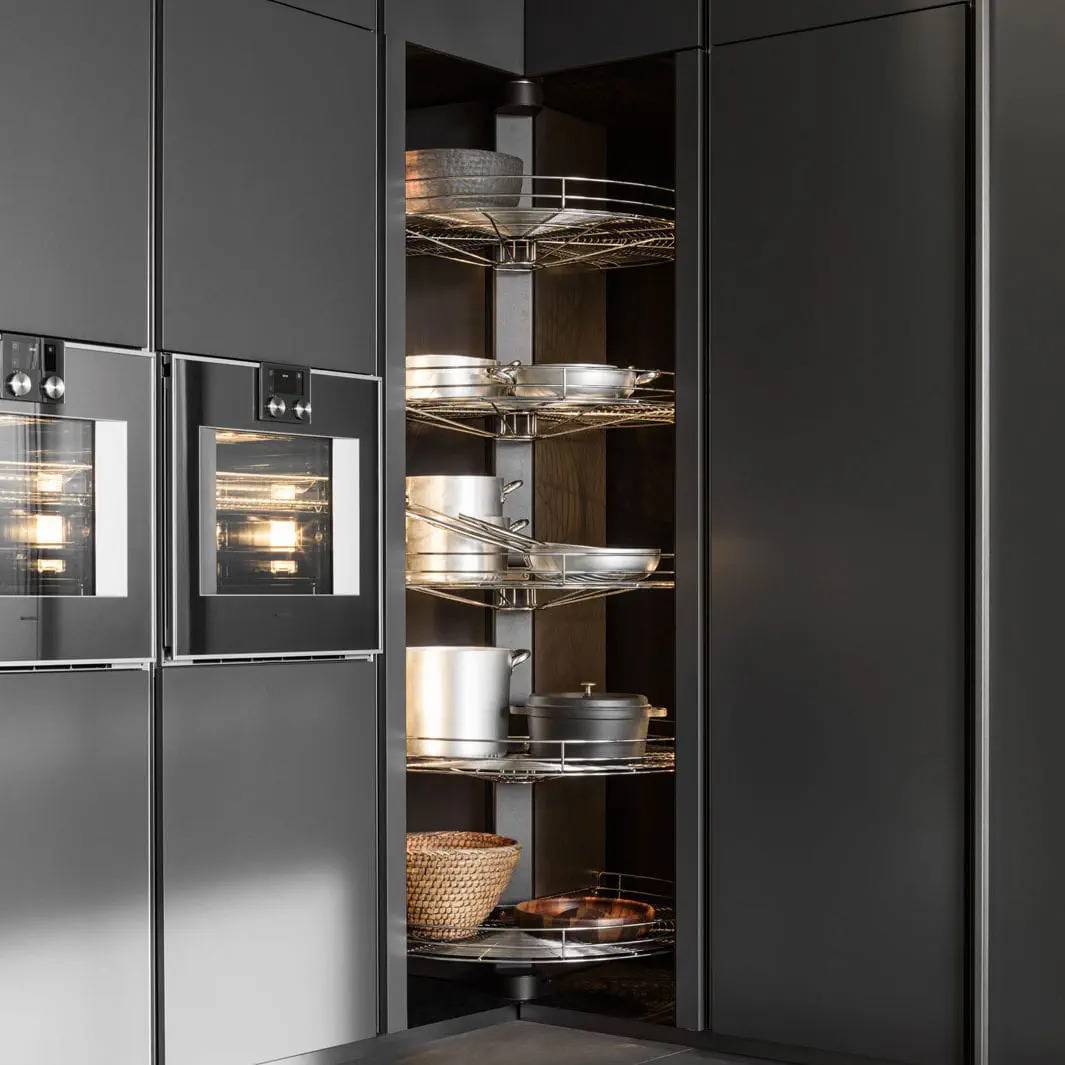
In a fully equipped prep zone, hidden features can include an oven, storage system, and pull-out pantry. Lighting and ventilation activate automatically when a door opens.
Urban apartments can suit concealed kitchens. Designers recommend matching cabinetry with adjacent wood paneling, flooring, or built-ins, and studio layouts also suit this type of kitchen.
Multifunctional interiors suit concealed kitchens. The kitchens retain utility while providing privacy.
Groove-Front Natural Wood Cabinets
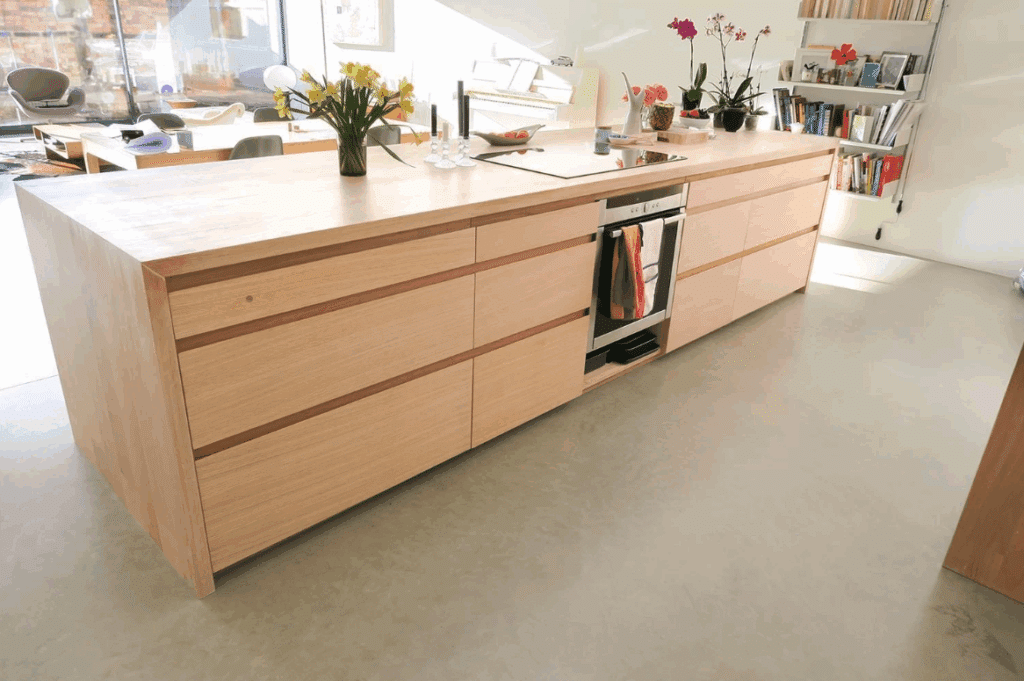
Integrated handle grooves serve as a key feature in hardware-free kitchens. Interest in these kitchens is growing.
Routed or sculpted edges form grip spaces in integrated handle grooves. They provide functional access and support ergonomic use.
Integrated handle grooves emphasize the wood grain. Rift-cut oak is one compatible choice, while rich walnut offers another.
An uninterrupted visual plane suits open-concept homes and minimalist interiors. Hardware-free cabinetry creates that continuous surface.
Handle grooves may run horizontally or vertically. Their forms include beveled insets and finger-pulls.
A groove inner edge can use a contrasting tone or a raw finish. The raw inner edge supports an artisanal appearance.
Integrated handle grooves enhance tactile use and support cabinet functionality.
Clean silhouettes suit integrated handle grooves. The grooves remain usable.
Integrated handle grooves reduce visual clutter while maintaining accessibility. They also support an understated palette.
Integrated handle grooves are practical and detail-oriented. They complement broad interior styles.
Shelves with Live Edge Detail
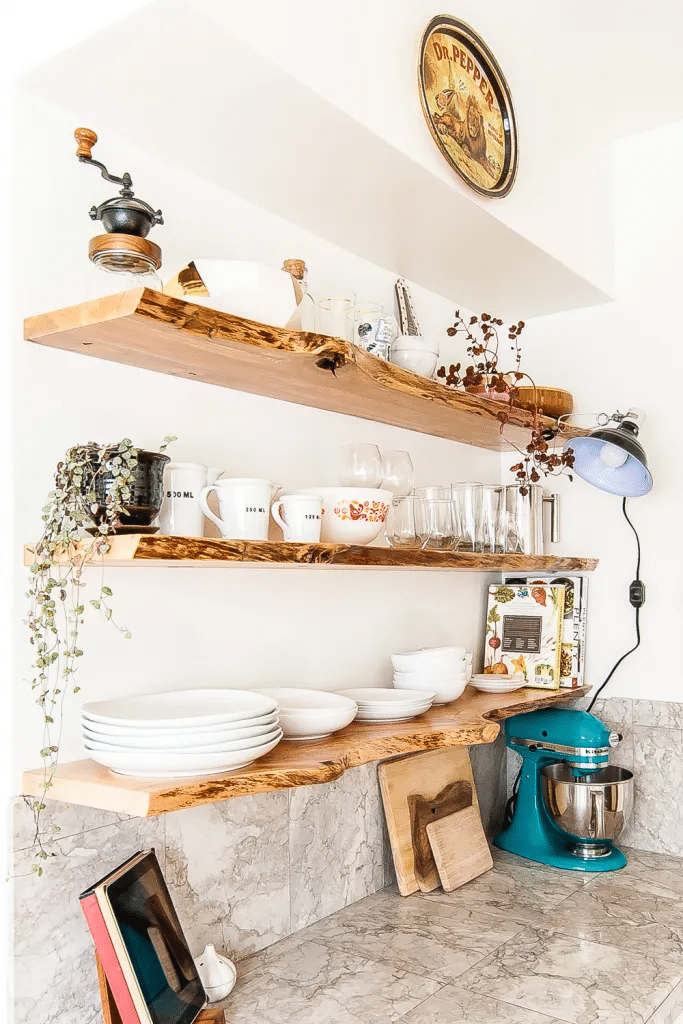
Live-edge wood brings organic texture to open shelving. The shelves provide display storage.
Instead of upper cabinets, live-edge shelves leave knots, curves, visible grain, and raw contours on display. These wood imperfections remain visible on the shelving.
Walnut, acacia, and white oak give selected hardwood shelves both strength and distinctive patterns. For everyday durability, the shelves can use natural oil or a matte sealant.
Live-edge shelving displays handmade ceramics, cookbooks, and dinnerware.
A neutral tile backsplash and neutral painted walls pair with live-edge shelving. The shelf spacing is typically generous, which supports flexible storage and avoids visual overcrowding.
Live-edge shelving suits rustic-modern and organic-modern kitchens.
Live-edge shelving combines utility with raw wood and supports a character-focused design.
Islands with Mixed Materials
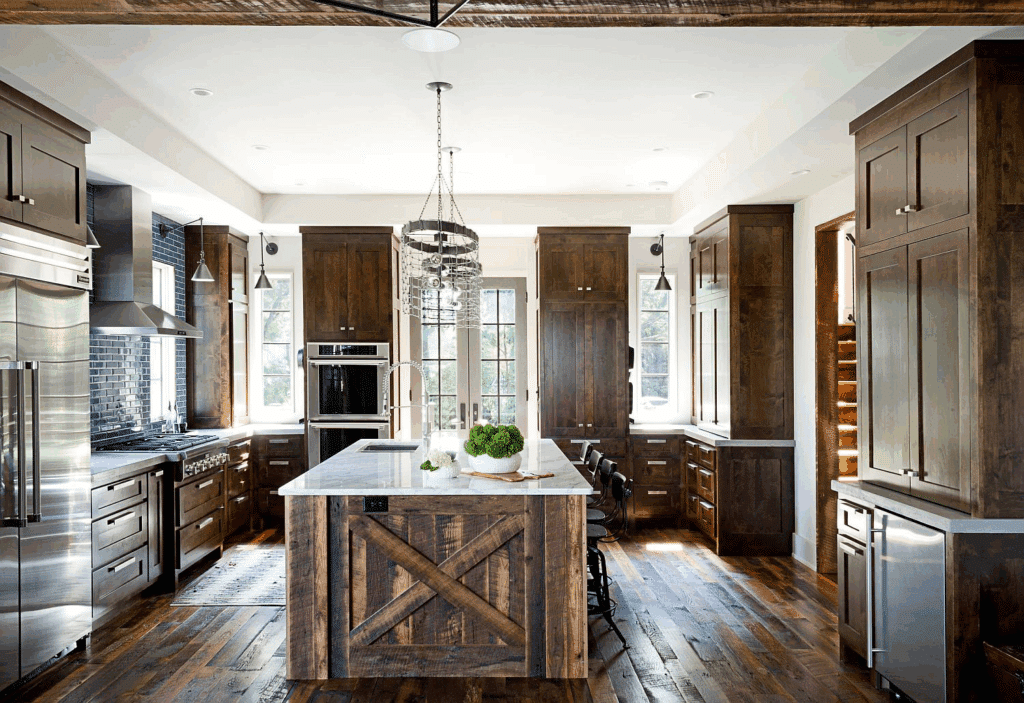
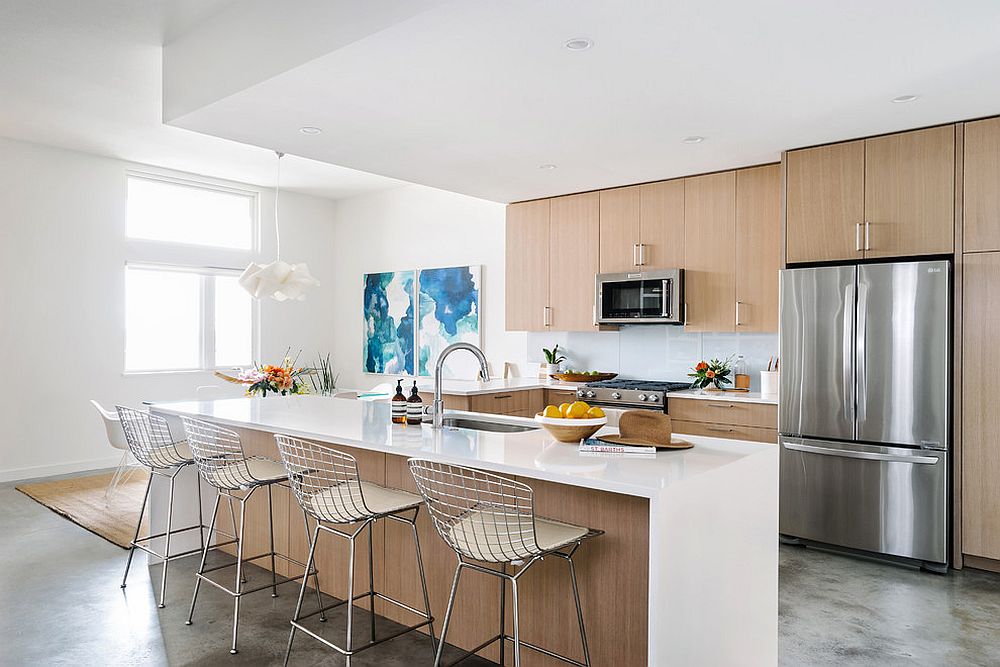
Natural wood gives a kitchen island texture and tone. Mixed-material islands combine the wood with complementary materials.
Marble, stainless steel, reeded panels, and wood can all be used in an island. These mixed finishes contrast with a uniform finish.
White oak or walnut provides a warm anchor in the island. Stone, paint, and metal additions introduce contrast.
Wood remains the foundation of the island. Balance the island materials carefully, since mixed finishes add dimension.
Matte black island legs create one point of contrast. Concrete countertops and brass toe kicks can also be used on the island.
Kitchen islands function as visual focal points, seating hubs, and prep stations.
In the kitchen, mixed-material islands combine modern structure with organic warmth. They also support practical use.
A mixed-material approach supports creative expression while preserving the appeal of natural wood. The combination allows more than one material to shape the island.
Simple cabinetry especially suits this approach. The combination adds tactile appeal and material variety.
Bold Hardware on Natural Wood Cabinets
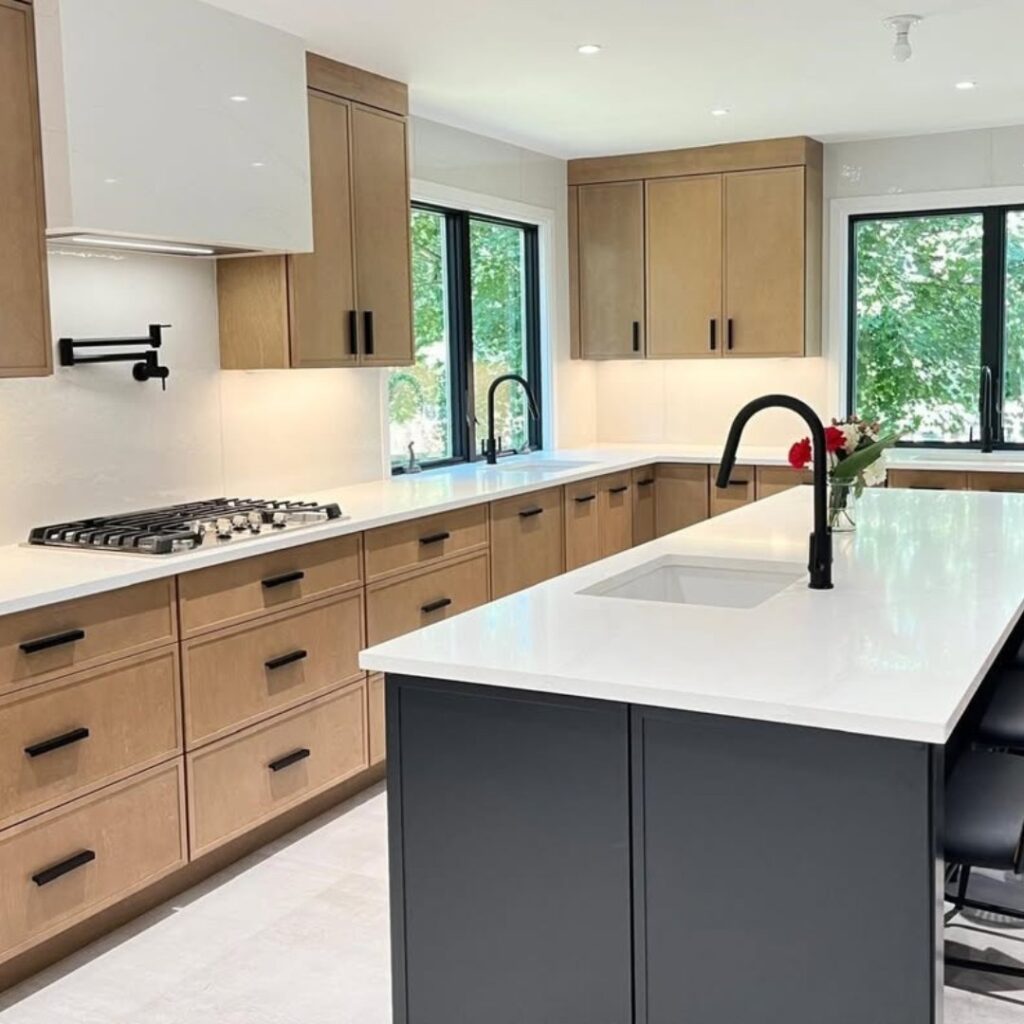
Natural wood kitchen cabinetry pairs with bold hardware. The hardware makes a nearby detail stand out.
Natural wood cabinetry provides grain texture. Bold hardware adds tactile contrast through blackened steel handles, brushed gold pulls, and artisan ceramic hardware.
Rift-sawn oak and ash cabinetry contrast with oversized matte black bar pulls. Oversized bar pulls suit modern kitchens.
Aged brass pulls and geometric knobs add cabinet detail. Aged brass cup pulls suit vintage and transitional kitchens, while geometric knobs bring a geometric style.
In one corner, hand-forged and leather-wrapped hardware provides individuality through custom hardware.
Hardware choice reflects home personality. Homeowners can choose symmetry and consistency or mixed finishes.
Smooth wood surfaces contrast with bold hardware, which draws attention to the cabinetry.
Across the room, quality hardware improves operation and grip while increasing durability.
Bold hardware suits cabinet updates by combining utility with design impact. Replacing the hardware can avoid cabinet replacement.
Built-In Cabinet Lighting
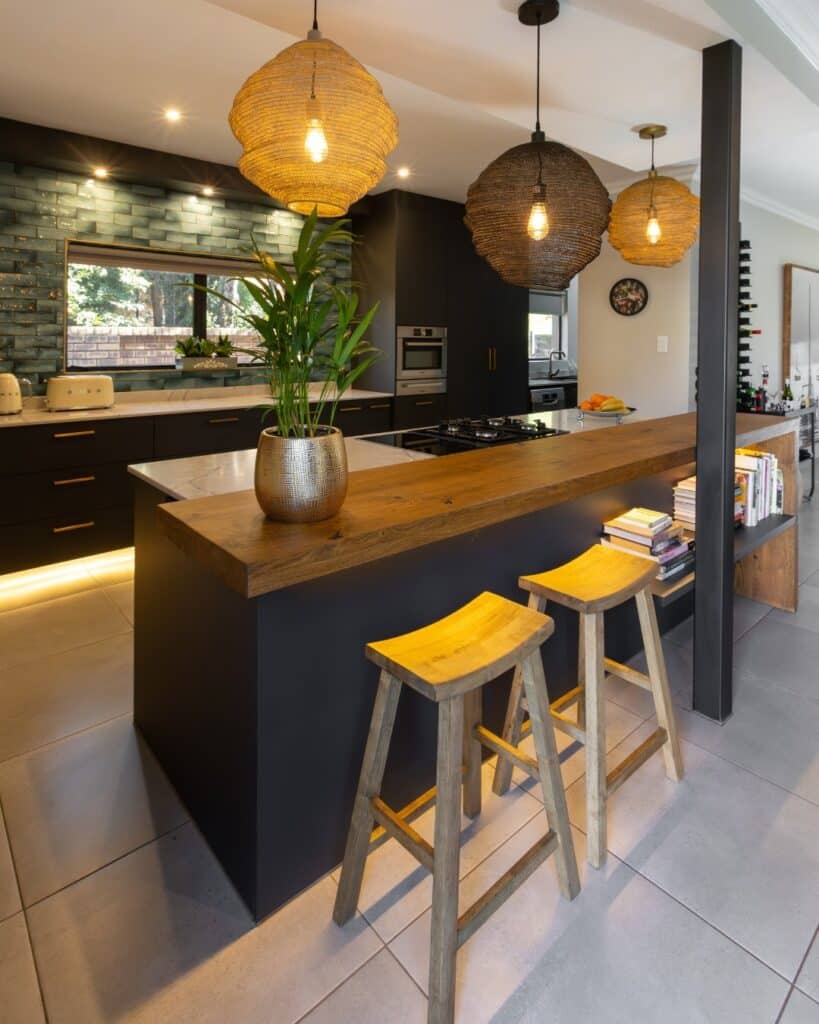
Cabinet illumination and kitchen lighting improve function with integrated lighting. It also supports ambiance.
Soft, targeted built-in lights are placed under cabinets, inside drawers, and behind glass panels. They highlight the kitchen and improve usability.
LED strip lighting uses energy efficiently and produces little heat. It offers high flexibility and remains the most common option.
Warm white light complements natural wood. It works with honey-toned oak and deep-stained walnut cabinetry.
Opened doors can trigger cabinet lighting automatically. The activation occurs when a door opens.
At the toe-kicks, lights provide an after-dark glow. Under-cabinet lights improve food-prep visibility.
Layered lighting reduces shadows and can make the kitchen feel expansive.
Integrated lighting serves atmospheric and practical needs while avoiding visible fixtures.
Countertop-to-cabinet function supports frequent cooking and frequent entertaining. Integrated lighting covers both needs.
Wood Cabinetry with Fluting
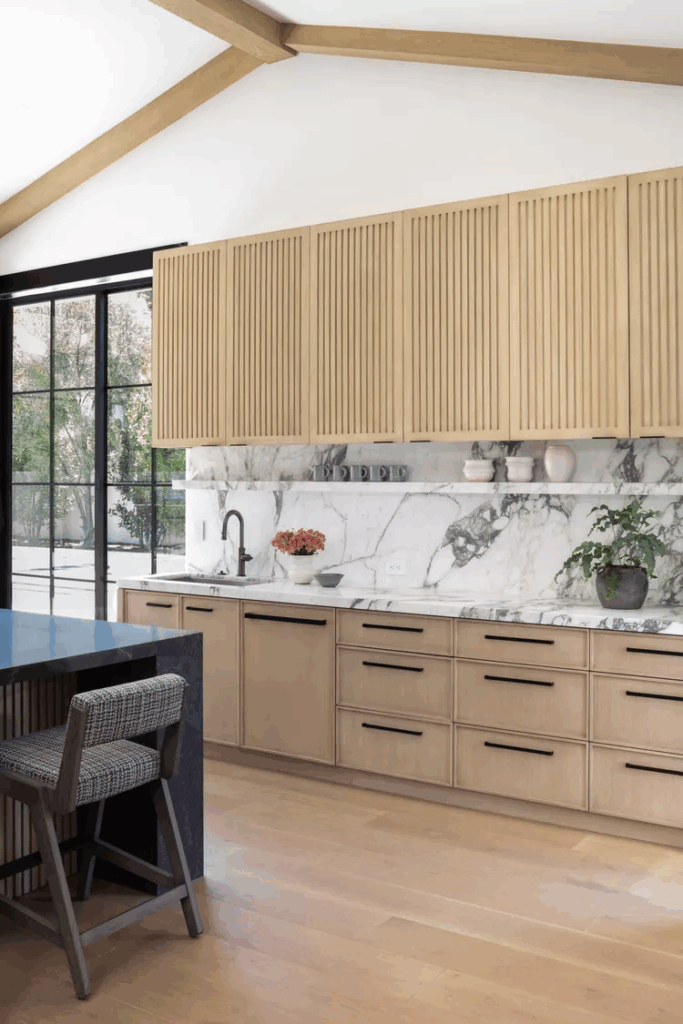
Vertical ribbing creates visual rhythm across natural wood. Fluted wood cabinetry also has artisanal character.
A fluted surface produces shadows and highlights that shift with daylight variation. The fluted design adds tactile dimension.
Fluted wood cabinetry provides visual interest and has a sculptural presence. The effect is not overtly decorative.
Oak and walnut are common woods for fluted cabinetry. Their vertical grooves highlight the wood and provide subtle grain contrast.
Fluting adds depth while the cabinetry maintains a clean design.
Honed marble backsplashes pair with the fluted detailing. This treatment can appear on island fronts, tall pantry doors, and upper cabinet facades. Smooth quartz counters pair with it as well.
Fluted cabinetry bridges classic design and contemporary design.
A natural oil or untreated finish keeps the raw look. Fluting is trend-resistant, adds texture, and lets the fluted design highlight the beauty of the wood.
Fluted wood cabinets suit a subtle focal point. Their visual interest does not have to dominate the room.
Fluted wood cabinetry can serve as an organic-modern centerpiece. It pairs with complementary textures and appropriate lighting.
Matte Natural Wood Cabinetry
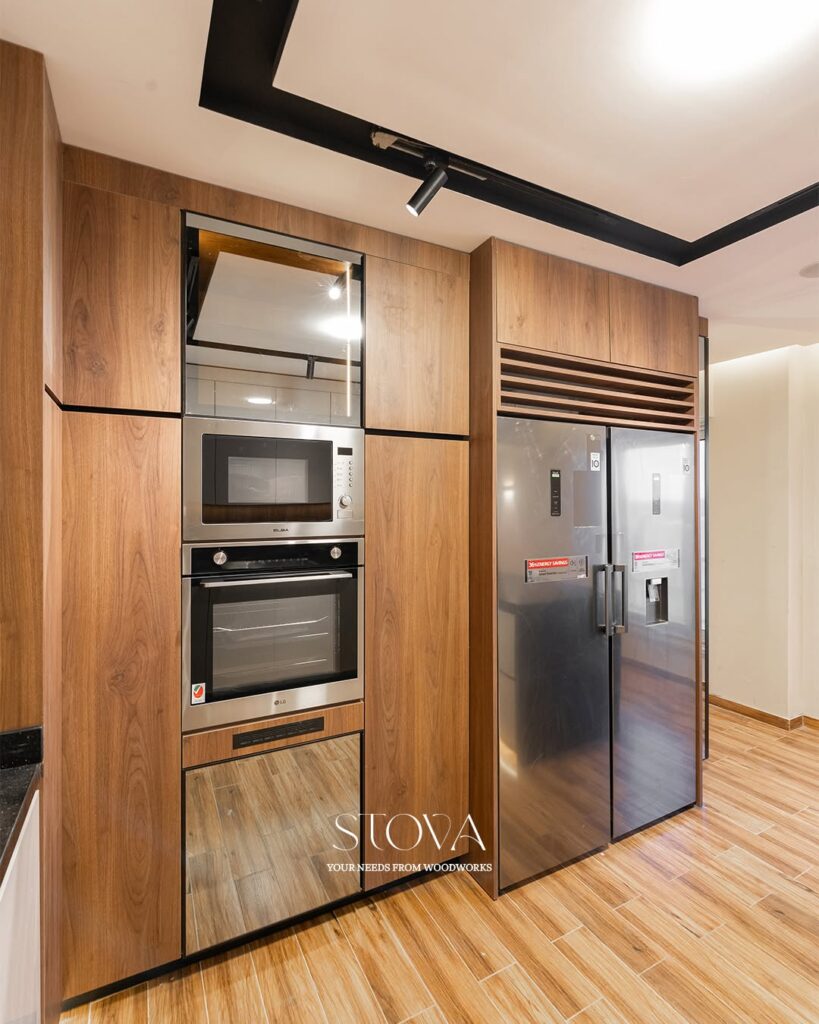
Matte natural wood cabinetry gives the kitchen a warm, refined character. Its surface is subdued and matte.
A matte sealant emphasizes the wood texture and grain. The matte finish reveals variation in tone and reflects less light than a glossy treatment.
Maple, walnut, and white oak all suit a matte finish. Their wood grain adds character.
The matte surface has reduced glare, resists smudges and fingerprints, and provides a tactile experience. This finish suits busy households.
A plastered wall pairs with the matte natural wood cabinetry. The cabinetry also works with a stone countertop, deemphasizing shine and prioritizing natural textures.
Cream walls, warm lighting, and a brushed metal fixture create a soft neutral palette. Designers recommend pairing soft neutral palettes with matte wood finishes.
As part of a broader living environment, an open-concept kitchen can use matte wood cabinetry. The cabinetry supports a natural aesthetic and longevity, making it a fit for open-concept homes.
A quiet presence stays in the room. The matte wood finish ages over time.
Midimalist Wood Cabinetry
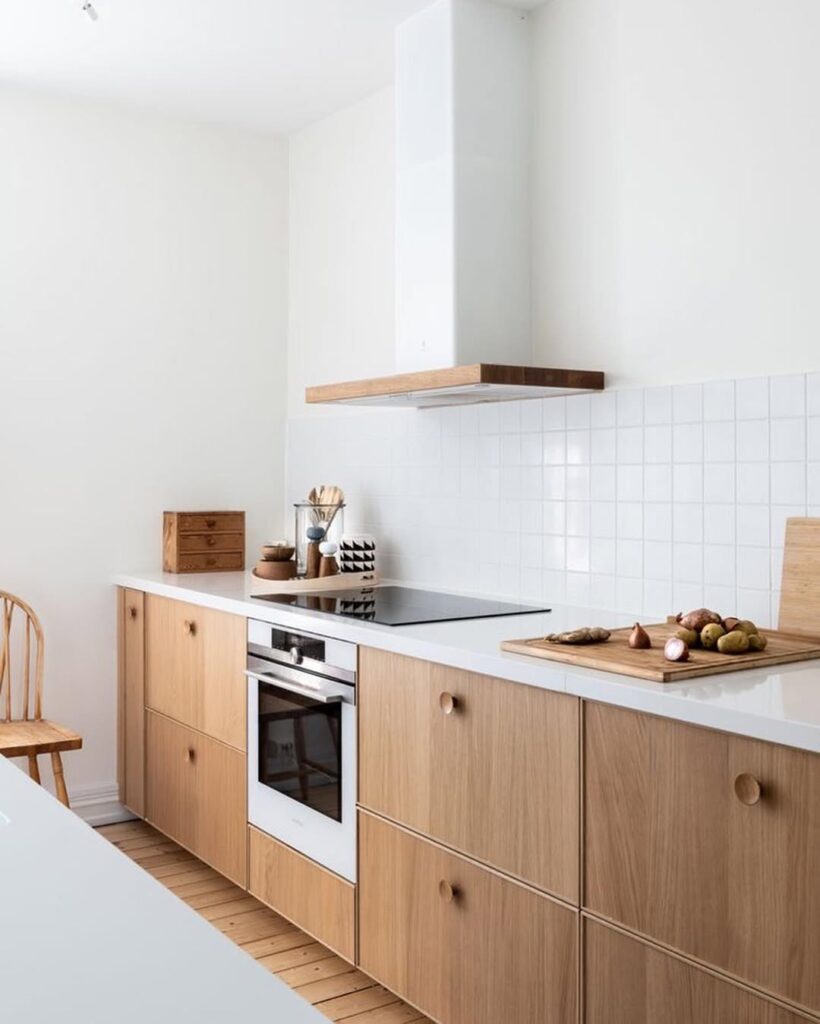
The surfaces stay unfussy in contemporary kitchens. Midimalist wood cabinets use natural finishes and straight lines, a look associated with current kitchen design.
A clear matte finish leaves the raw wood visible, with a uniform grain and no ornament. Midimalist wood cabinets emphasize the wood material.
Clean-lined cabinet design supports functional simplicity and visual clarity. It can also create calm organization.
Integrated storage often comes with midimalist wood cabinets. Minimal detailing, discreet door fronts, and discreet hardware keep the transitions seamless. The integrated storage supports clutter reduction.
White oak, maple, and birch offer consistent texture with warm undertones. These wood species support a modern grounded style.
Midimalist wood cabinets can provide visual depth without becoming ornate. They pair with brushed brass lighting and a textured stone backsplash, adding understated richness.
Midimalist wood cabinets suit small-space kitchens and open-concept layouts. Their visual calm can make the space feel larger.
Natural material gives midimalist wood cabinetry a grounded, modern character. The effect is non-overwhelming and timeless.
Buttery Yellow Touches
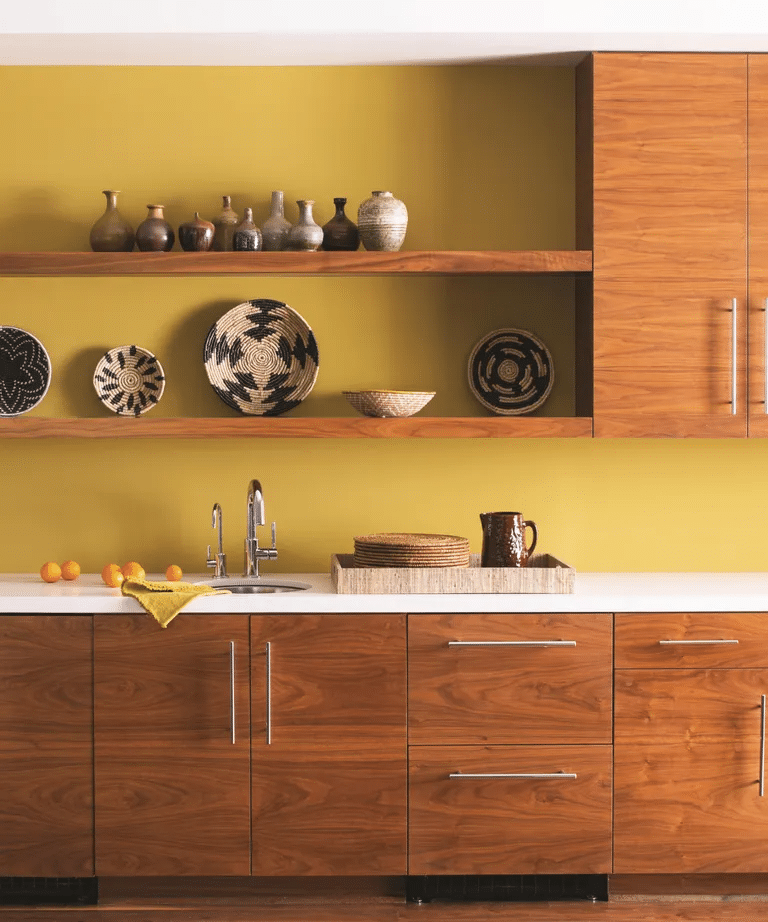
Natural wood keeps the gentle buttery yellow kitchen accents from becoming overpowering. The two materials are used together.
Creamy yellow brings warmth to oak and maple cabinetry. The color also keeps the room refined, with the cabinetry providing a natural material pairing.
Neutral-toned wood gives the kitchen a steady base. Buttery yellow feels mellow and soft alongside it.
Inside the cabinet backs, buttery yellow can stay limited to targeted applications. Use it on painted pantry doors, the tile range surround, or both.
Natural wood with golden undertones complements buttery yellow. The yellow adds light without creating high contrast.
A buttery yellow palette suits French country, cottage, and vintage-inspired kitchens.
Woven pendant lights, brass fixtures, and hand-thrown ceramics all work well with the buttery yellow accents. Together, these materials create a compatible mix of texture and finish.
The palette uses layered texture and a layered tone to produce a soft glow.
Buttery yellow appeals to both cheerful and grounded interiors.
Natural wood works with non-neutral hues, while buttery yellow avoids an overly loud effect.
Patterned Glass Cabinets
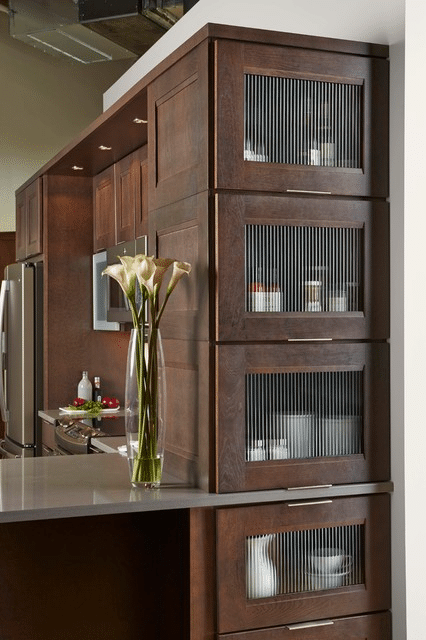
Natural wood frames combine with textured glass panels in these cabinets. The two materials work together in the cabinet design.
Textured glass panels let in filtered light while maintaining privacy. Textured glass cabinets work well in upper cabinets and specialty storage.
The textured surface diffuses visibility and conceals clutter. It does not fully hide the contents.
Rippled, reeded, and fluted glass styles provide distinct patterns for cabinet panels.
Set within a natural wood frame, textured glass updates traditional glass-front cabinetry. The frames can be ash or white oak.
Textured glass gives cabinets a softer appearance. It also enhances the palette of materials around them.
Textured glass breaks up large wood expanses and pairs well with metal fixtures. Concrete countertops and tile backsplashes also work with it.
Textured glass cabinets provide visual interest. They require more maintenance than clear glass.
Textured glass reduces the visibility of smudges and fingerprints. Textured surfaces interact with natural and artificial light.
Textured glass cabinets suit transparency plus texture and support layered materials.
Sustainable Wood Options
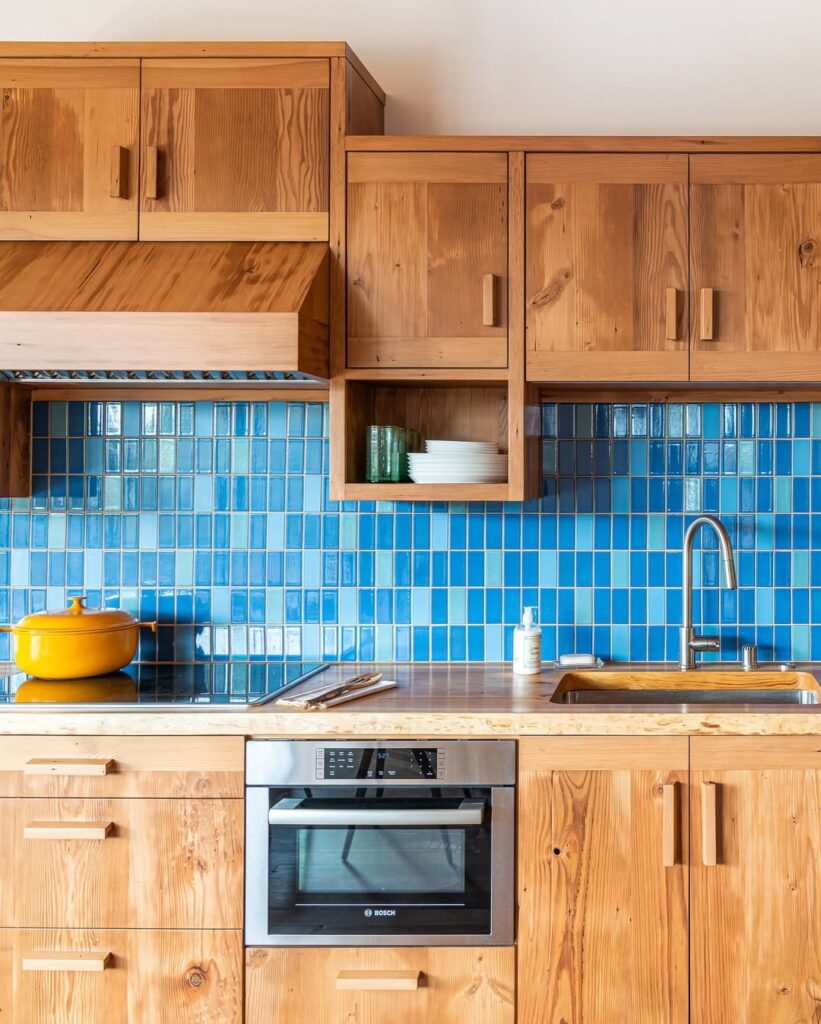
Sustainable wood supports a greener kitchen. It is one option among sustainable kitchen materials.
Across the room, bamboo, reclaimed timber, and FSC-certified hardwood offer alternatives to consider. Fast-growing birch and alder are also listed wood options. These choices retain quality while offering environmental benefits.
Forest regeneration is promoted when sustainable wood options are harvested under strict guidelines. Those guidelines also reduce habitat disruption.
Reclaimed wood comes from barns and industrial buildings. It contains patina and imperfections.
Bamboo is a grass that grows quickly and can regenerate without replanting. That makes it an eco-conscious choice.
For sustainable wood finishes, use a natural oil treatment or a low-VOC treatment. A low-VOC treatment supports indoor air quality, while both finishes preserve the wood's natural texture and hue. Natural oil also highlights the wood texture.
Sustainable wood cabinetry supports longevity, reduces environmental impact, and supports health.
Sustainable wood materials provide warmth and durability. They suit conscious choices.
In modern kitchens and rustic kitchens, responsible wood can support material integrity.
Vertical Wood Grain
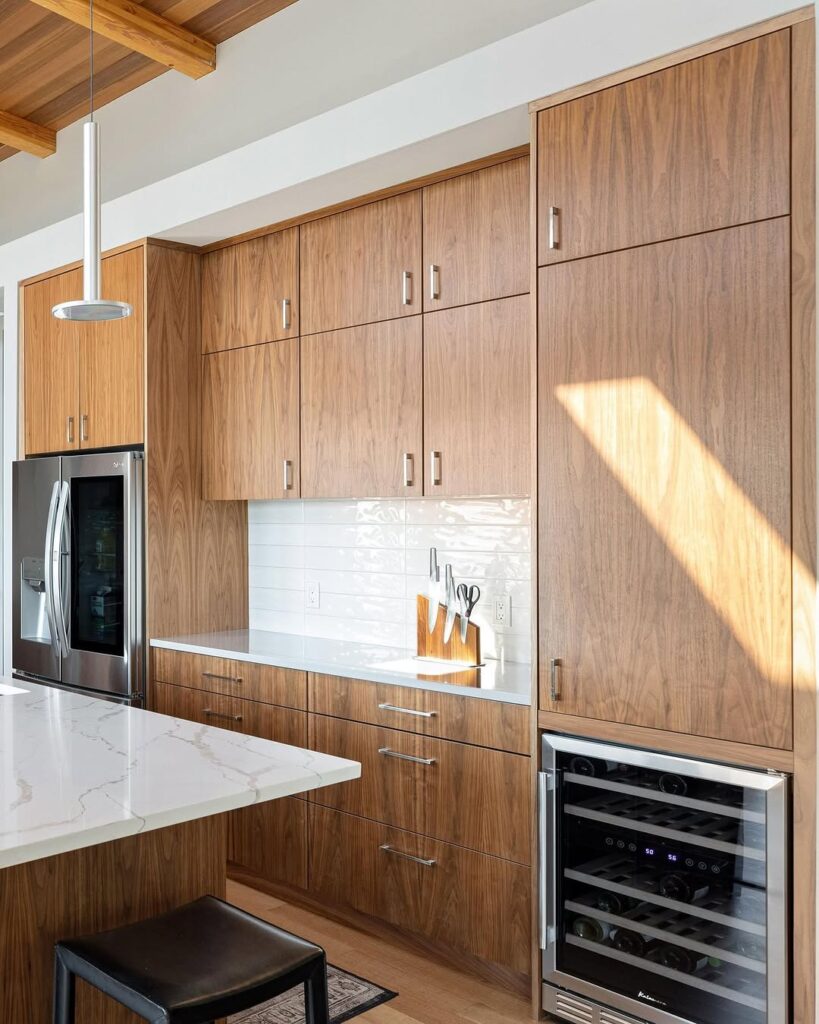
In wood kitchens, vertical grain orientation runs through the cabinetry.
Top-to-bottom grain gives the wood a vertical orientation. Unlike horizontal grain, it draws attention to cabinet height and makes the cabinets feel taller.
Vertical grain is useful in narrow kitchens and low-ceiling kitchens. It creates an elongated effect.
Uniform lines appear in rift-cut walnut, and straight lines appear in quarter-sawn oak. Both are used as wood here.
Vertical grain continues across the drawer fronts and the doors. The aligned grain creates an uninterrupted flow.
Integrated cabinet pulls pair with slab cabinet fronts in this approach. The vertical grain works with both details, keeping the fronts and pulls visually connected.
A textured backsplash complements vertical grain, as does a matte finish.
Vertical grain is described as a long-term investment. Its configuration may minimize warping over time.
Precision in grain alignment indicates construction quality.
Clean symmetry works with vertical grain orientation, which retains the character of a natural material.
Two-Tone Natural Wood Cabinets
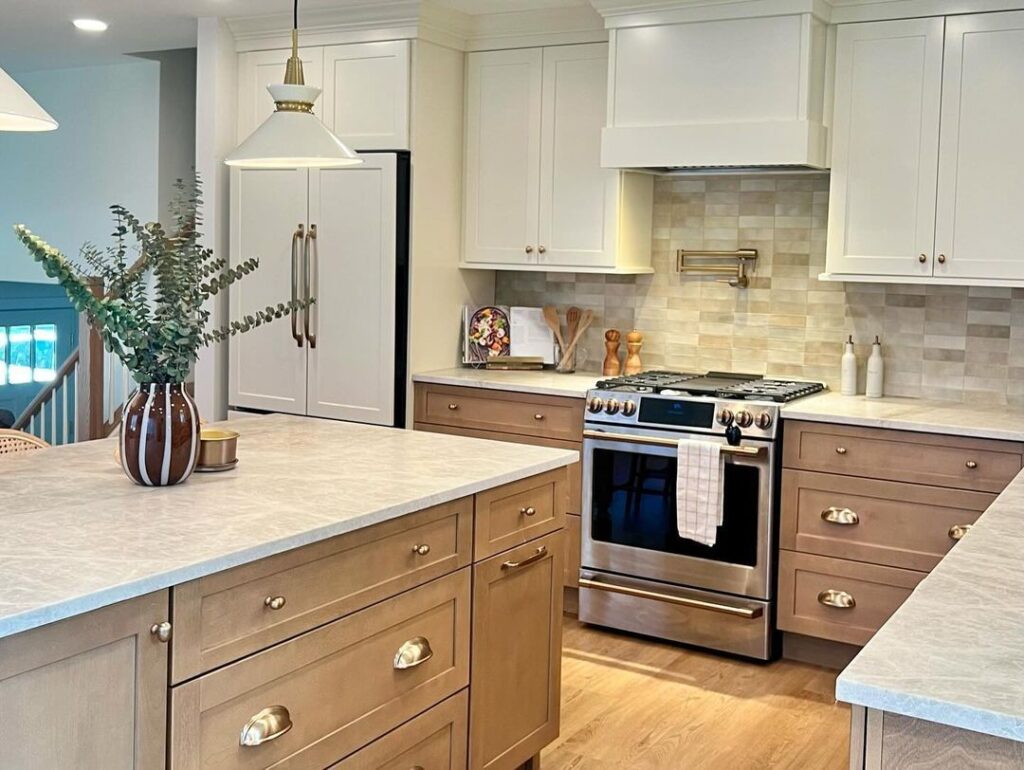
The two-tone design uses color contrast. Natural wood cabinetry is combined with tones that differ from it.
Strategic color placement adds visual depth while the two-tone design retains the organic quality of wood.
Lighter painted tones work on the upper cabinets to support airiness. Wood tones belong on the base cabinets.
Wood base cabinets draw the eye downward. They display wood-grain texture and wood warmth.
Rich natural oak, walnut, and ash harmonize with muted sage, dusty blue, and soft ivory.
Two-tone combinations have functional roles.
In small kitchens, lighter upper cabinets can make the room feel open. Darker or richer base cabinets can hide everyday wear.
Two-tone design supports backsplash variation and hardware-finish variation. It allows styling flexibility, including matte black or antique brass hardware.
Two-tone kitchens suit Scandi-inspired simplicity as well as transitional farmhouse style.
The wood element emphasizes the two-tone contrast. The design also supports style flexibility.