Light Grey Kitchen Cabinets for a Bright, Welcoming Space
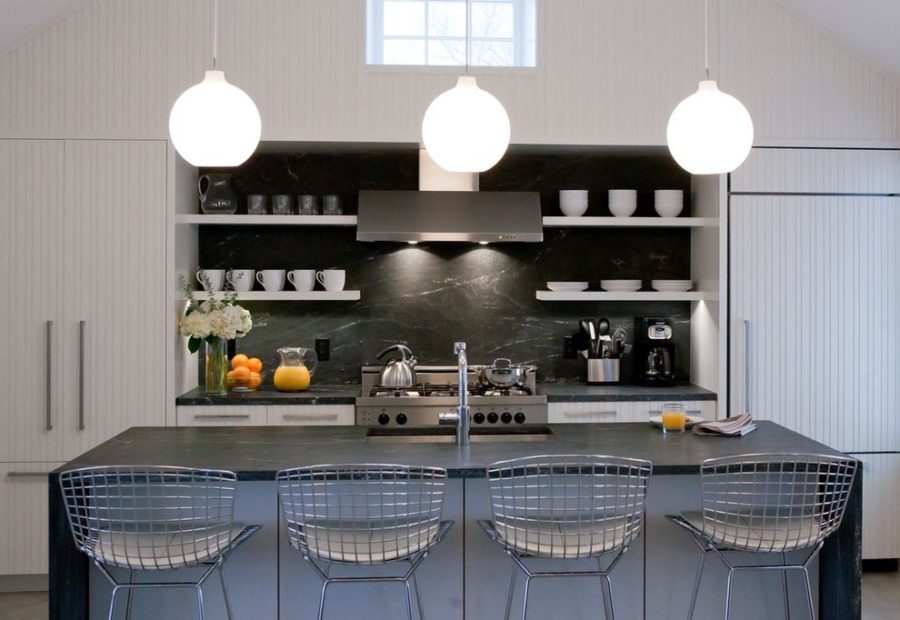
Light grey cabinets bring a modern look to the kitchen while keeping some timeless appeal.
The neutral light grey finish works with matte black hardware and marble countertops. It also supports a range of styling choices.
As an airy foundation, light grey cabinetry can adapt over the long term. It is less dependent on trends than trend-heavy options.
Light grey cabinets have dominated kitchen remodels this year.
Light grey cabinet ideas are a useful starting point for a kitchen refresh. The color keeps the room calm without making it look stark or cold.
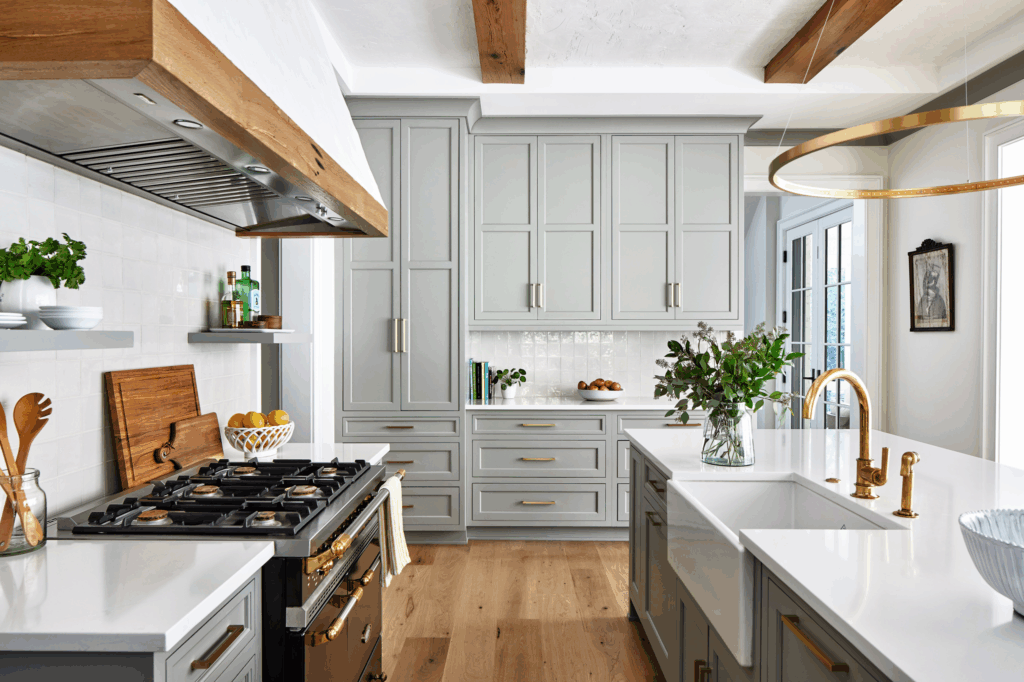
Cabinetry combining grey with wood
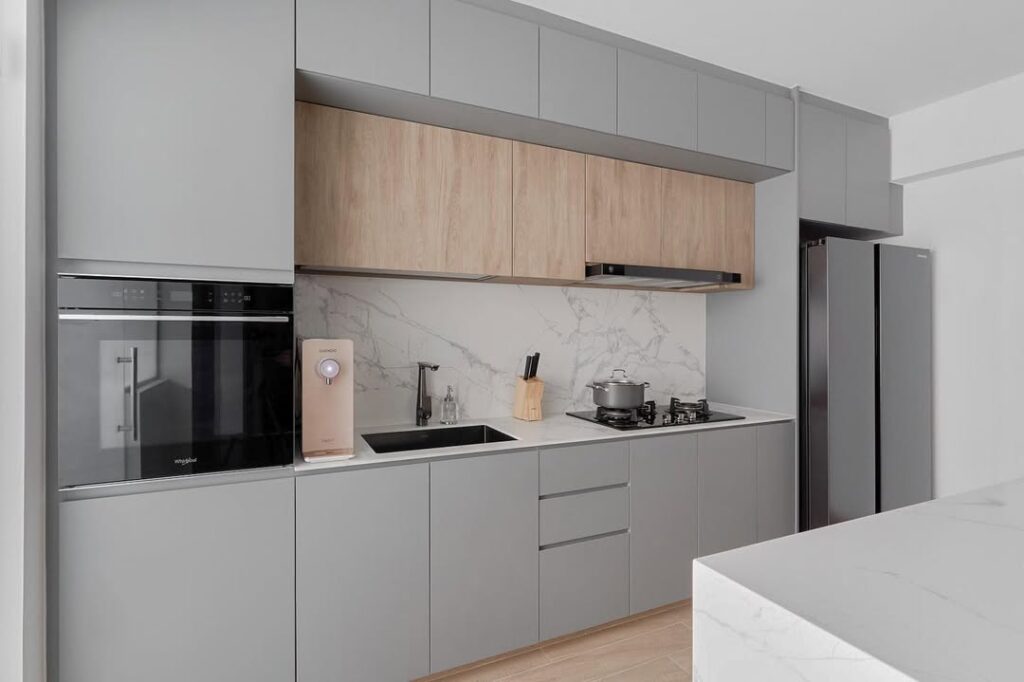
Two-tone cabinetry in light grey and wood adds warmth and contrast. The two colors share the cabinet design.
An island or the lower cabinets can carry the wood cabinetry. This two-tone approach reduces monotony and defines different kitchen zones.
Light grey cabinets can be used for wall-mounted units and upper cabinets. Light grey upper cabinets reduce visual heaviness.
Use matte finishes and light stains on wood accents. Oak, walnut, and ash can display their grain patterns.
Grey-and-wood cabinetry suits rustic-modern, Japandi, and Scandinavian interiors.
Across an open-plan layout, grey-and-wood cabinetry supports continuity between the kitchen and living areas.
Concrete countertops, an organic ceramic backsplash, and black handles can be added to grey-and-wood cabinetry.
Grey-and-wood cabinetry avoids visual clutter while providing variety and supporting modern practicality.
Light Grey Cabinetry with Brass Details
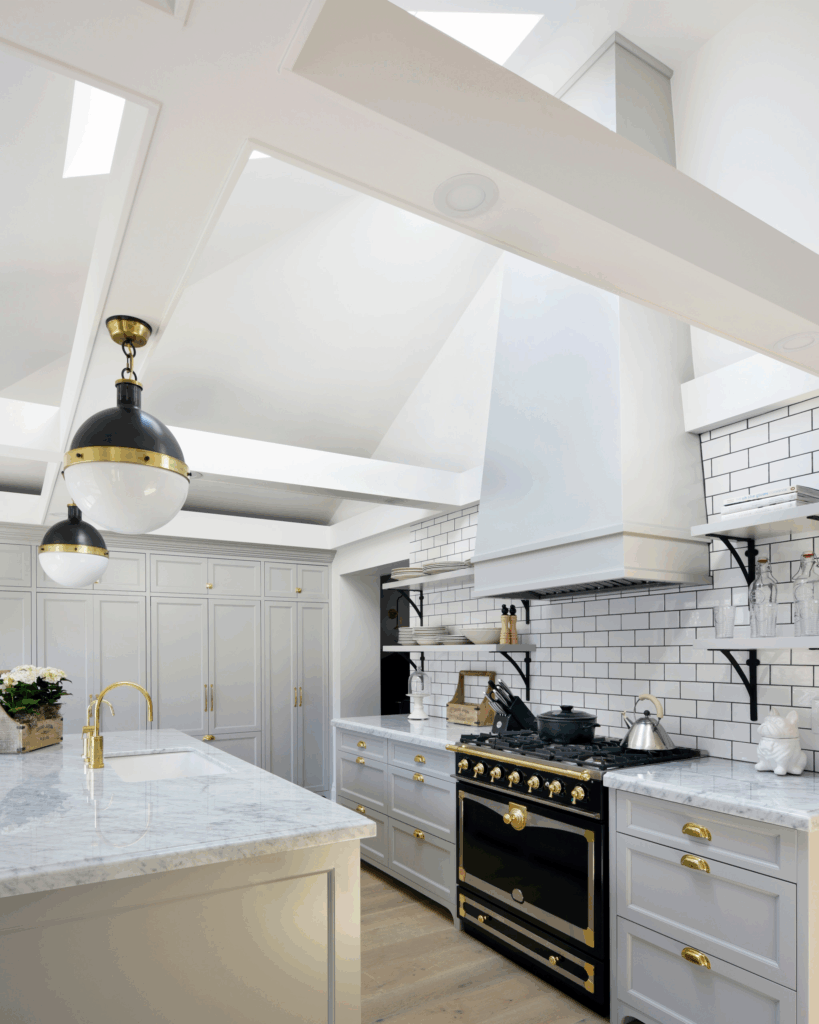
Brass hardware pairs with light grey cabinets and adds warmth to the room. The hardware can bring that warmer note to the light grey color.
Brass hardware does not overpower the visual flow of the cabinets. It also feels warmer than cool-toned cabinetry.
Brass hardware remains classic in the kitchen. Pulls, knobs, and inlays can add a subtle metallic shimmer.
This combination suits European-inspired kitchens as well as transitional kitchens.
Quartz and marble countertops both pair with light grey cabinets. Brass functions as a luxury accent with either surface.
Use matte finishes with a grey-and-brass kitchen, and add wood flooring and a veined stone backsplash.
Under-cabinet lighting reveals the metallic reflections in grey cabinets with brass hardware. The lighting sits beneath the cabinets.
Brass hardware suits cabinet doors in either a flat-front or recessed panel style. Both door treatments can help reduce a design clash.
Light grey cabinets with brass support both contemporary and traditional style. The combination also provides design flexibility.
Add brass pendant lighting to a light grey kitchen update. Replacing the existing hardware can change the kitchen's appearance, while the brass combination still supports its function.
Slim shaker cabinetry in compact spaces
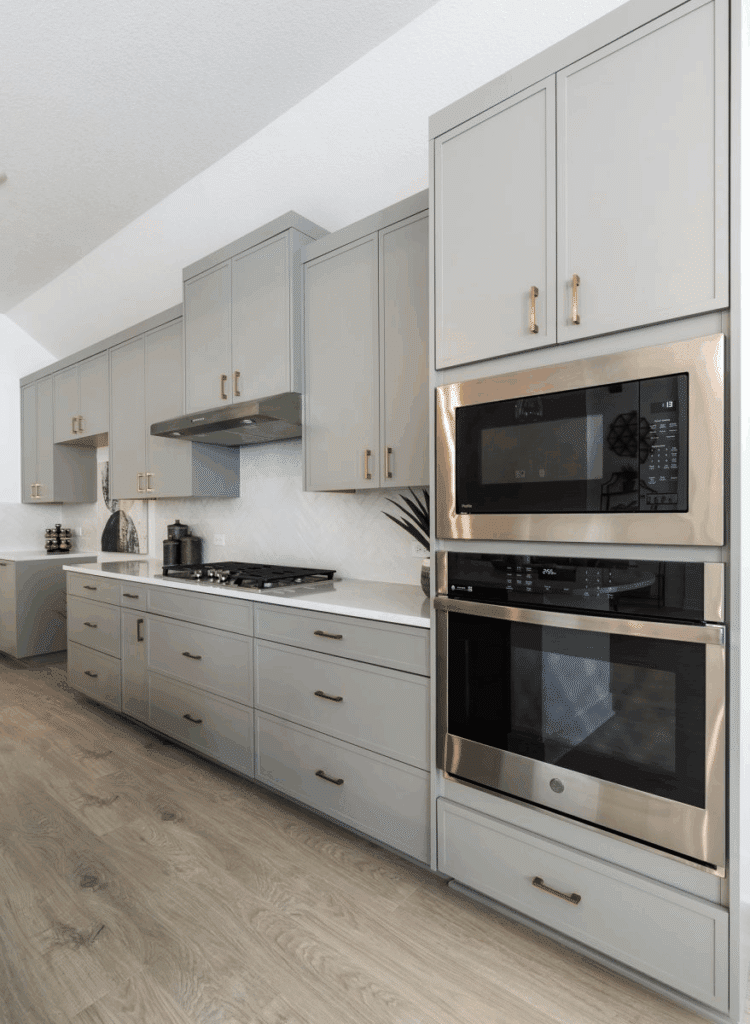
Small-kitchen storage is affected by the cabinetry choices. Slim Shaker cabinets provide storage for small kitchens.
Narrow frames fit tight spaces and help avoid visual overcrowding. These slim Shaker cabinets have structured lines.
Light grey slim Shaker cabinets maintain a neutral palette and reflect ambient light. The finish can make the room look larger.
Slim Shaker cabinets fit both traditional and transitional kitchens. They can run from floor to ceiling or sit above the base units.
Framed slim Shaker cabinets suit galley kitchens, narrow layouts, and apartment kitchens. This compact cabinetry supports space efficiency.
Use satin or matte paint on slim Shaker cabinets. Cooler undertones can keep the color soft rather than flat.
Slim-profile hardware works well with slim Shaker cabinets. Finger pulls are another option.
Roll-out trays and vertical dividers can be placed inside the cabinets. These interior organizers support better organization.
White quartz complements the light grey cabinet finish. Butcher block counters work with it too.
Slim Shaker cabinetry supports practical use in both new builds and remodels.
Handleless Grey Cabinets
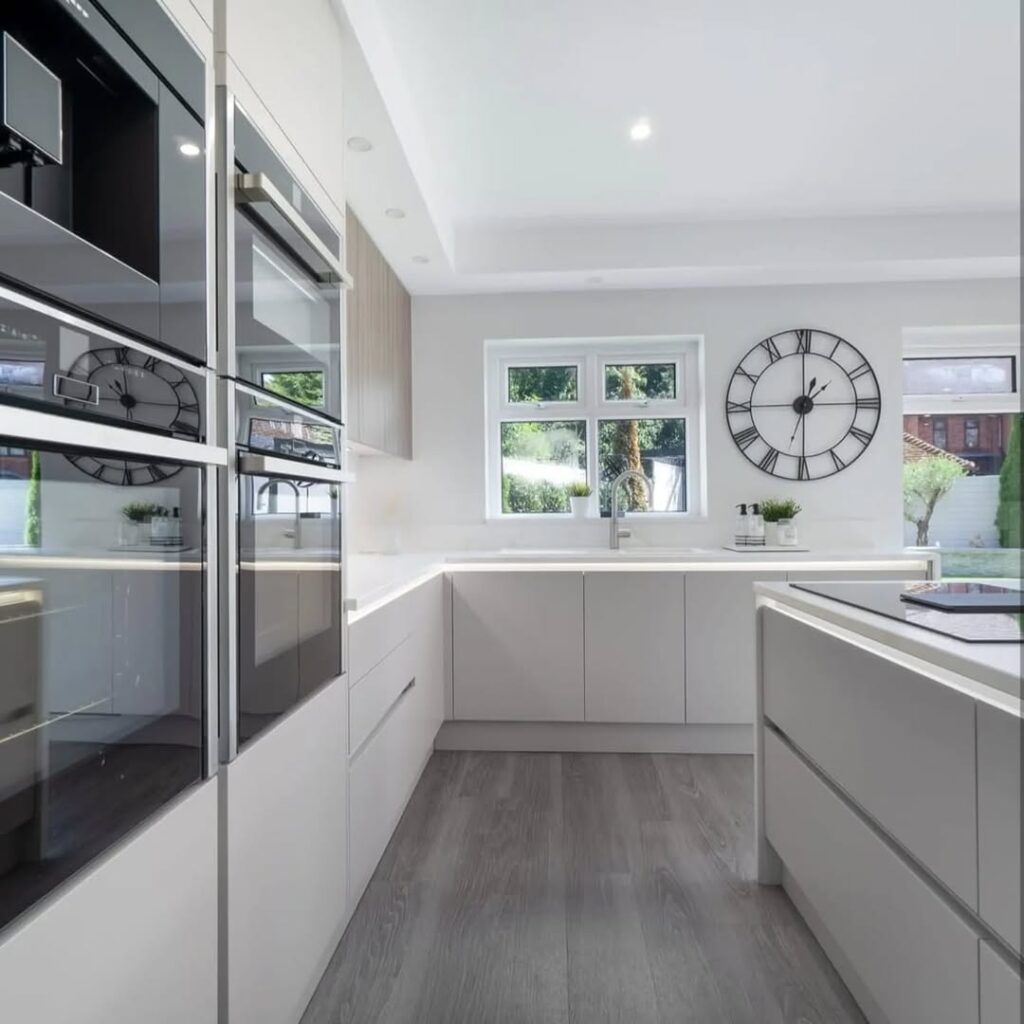
Handleless grey cabinets have clean lines with no visible hardware. They suit contemporary kitchens.
The handleless design creates uncluttered surfaces. Without visible hardware, the light grey tone and cabinet texture are easier to see.
Integrated finger pulls and push-to-open mechanisms support practical usability. Handleless cabinets combine simplicity and function.
Uninterrupted cabinet fronts pair with high-gloss or slab finishes. Together, these surfaces support minimalism.
Warm flooring and wood accents contrast with the cool hue of light grey tones.
Integrated appliances and flush countertops work well in a handleless grey kitchen. Add under-cabinet lighting, soft-close systems, and large-format tiles.
Handleless grey cabinets are favored in modern builds and urban apartments. They prioritize space optimization.
Waterfall countertops and glass backsplashes pair with handleless grey cabinets. The combination also supports easy maintenance.
Handleless grey cabinets apply thoughtful design to utilitarian elements while supporting a high-end appearance.
Bold Backsplash and Grey Cabinets
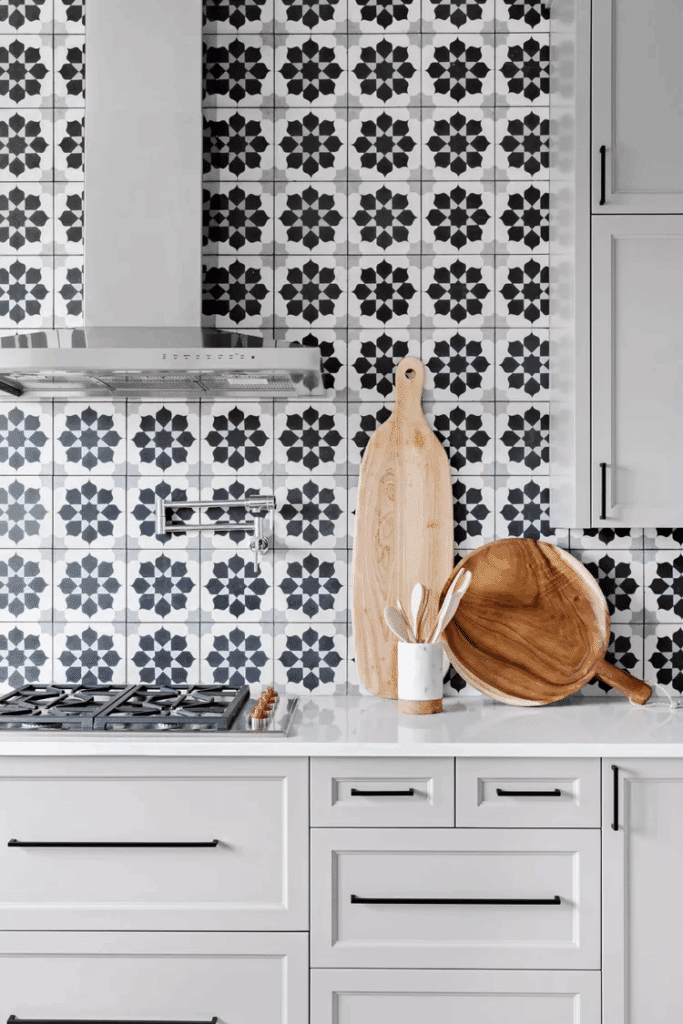
Statement backsplashes support light grey cabinets. The backsplash becomes the stronger visual feature beside the subdued cabinetry.
A bold backsplash can be patterned, moody, glossy, or finished in deep hues. Encaustic tile, marble, and subway tile are materials that pair with the light grey cabinets.
A bold backsplash adds personality. Grey cabinets avoid a bold cabinetry commitment.
Grey cabinetry softens the transition between the countertop and the wall. The cabinets connect these two surfaces.
Dramatic materials are supported by subdued cabinetry. The grey cabinets keep the stronger materials in the composition.
Open-concept layouts suit grey cabinets with a bold backsplash. The combination can define the kitchen within the larger room.
Visual interest comes from the bold backsplash. Light grey cabinetry helps support a cohesive palette.
Brushed gold and matte black hardware or fixtures connect the cabinetry and backsplash.
Backsplashes are easy to clean, while durable cabinet paint supports long-term use. The cabinet paint adds a durable surface to the kitchen.
Grey cabinets with a bold backsplash combine visual expression with long-term reliability.
Grey Cabinetry with Color Accents
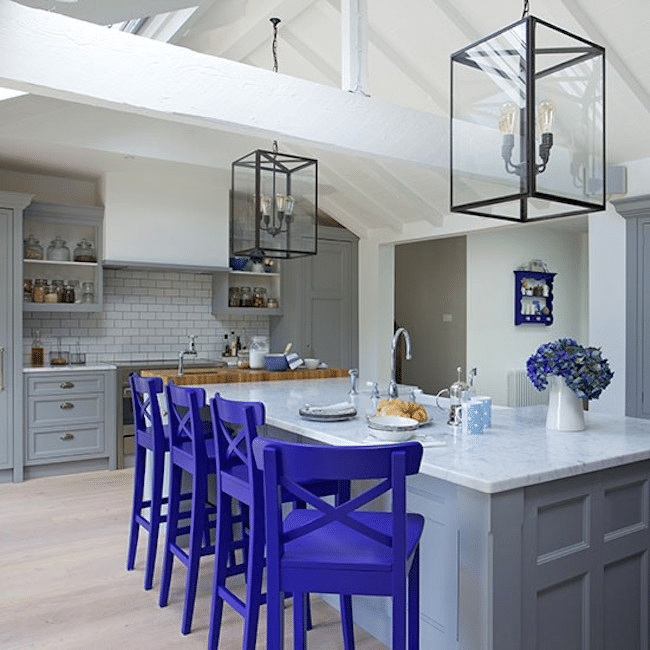
In a kitchen with light grey cabinets as a neutral base, accent colors can support personal style.
Grey cabinetry supports changeable accents. Accent color can be introduced through wall paint, accessories, and small appliances, with seasonal and trend-forward changes.
Mustard yellow can be used as an accent, alongside terracotta or emerald green. Use vibrant colors sparingly.
Accent colors can appear in decorative objects, tile grout, or bar stools. These options keep the accent use non-disruptive.
Grey's cool undertones support bold colors. They also support visual balance.
Accent changes cost little and can transform the kitchen mood without replacing fixed grey cabinetry. This approach suits frequent refreshers.
Lighting, artwork, and dishware can provide color statements. These color updates require no renovation.
Natural wood pairs with colored accents, as do matte ceramics and metal finishes.
In kitchens designed for flexibility-seeking homeowners, grey cabinetry supports both accent flexibility and cohesion.
Eco-Conscious Grey Cabinetry
An eco-friendly approach can still retain modern design. Grey cabinets made with that focus represent a conscious choice.
Across the room, cabinet materials can be responsibly sourced or recycled. Eco-friendly cabinets reduce the environmental footprint.
Grey tones are available with low-VOC finish, FSC-certified plywood, or water-based paint. These are cabinet options for an eco-friendly kitchen.
Durability is one benefit of low-emission cabinet options. These choices can also support indoor air quality.
Recycled glass countertops and reclaimed wood accents pair with eco-friendly grey cabinets. These complementary materials extend the sustainable material choices.
Grey cabinetry integrates with both new materials and repurposed materials. It supports sustainable kitchen design.
In one corner, a modular design can enable easier upgrades and easier replacements. Modular eco-friendly cabinets extend the cabinet lifecycle and reduce waste.
LED shelving and soft-close hinges form part of the energy-efficient hardware. This hardware supports eco-conscious design.
Light grey cabinetry with an eco-friendly focus can align ethical values with current design trends.
Across the room, eco-friendly cabinetry brings together responsible production, durability, and a long lifecycle.
Soft-Touch Grey Cabinet Finish
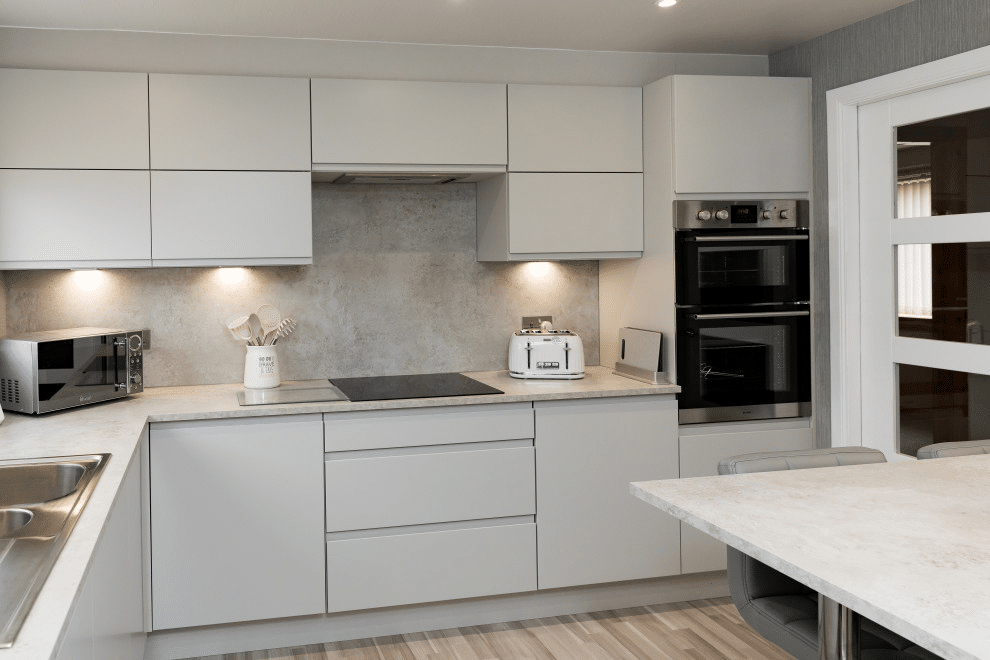
Muted finishes complement both modern kitchens and traditional kitchens. The finish keeps the cabinetry suitable for either setting.
The tactile surface of the matte grey finish reduces glare while giving the space a contemporary, approachable style.
Matte grey cabinetry diffuses light across the room. The finish suits open-plan layouts as well as small kitchens.
Matte surfaces make fingerprints and smudges less visible. This finish suits high-traffic homes.
Oak flooring, concrete countertops, and handmade ceramic tiles all work with a muted grey tone. The combination keeps these materials in the same kitchen palette.
Matte cabinet doors can use either flat-panel or Shaker styles. The finish preserves clean architectural lines on both door types.
Across the room, brushed metal accents and wood accents pair with a matte grey surface. Together, the accents add dimension.
Soft matte grey accommodates both cool undertones and warm undertones in kitchen styling. Industrial pendants and farmhouse stools are examples of styling that can work with the grey finish, which supports cohesive styling.
A matte grey finish appeals to durability priorities. It also provides understated elegance.
The muted surface supports functional kitchens while also supporting modern style. Matte grey cabinetry can serve both purposes.
Light Grey Glass-Front Cabinets
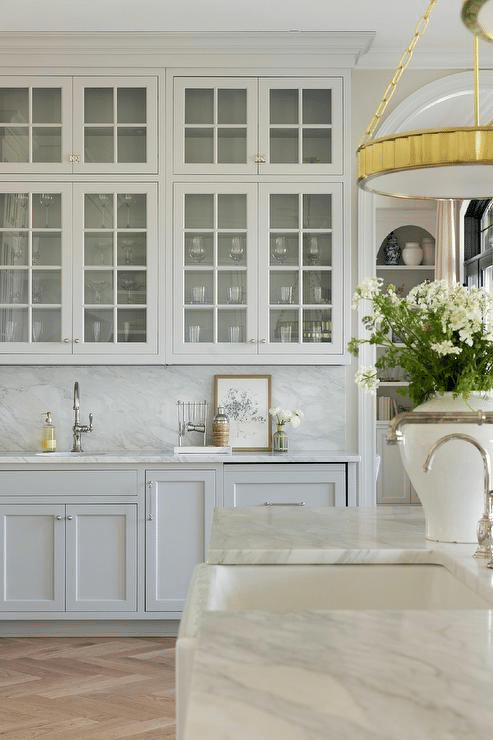
Glass-front cabinetry increases openness in the kitchen. The cabinets use a light grey finish.
The cabinets display dinnerware, artisan ceramics, and decor pieces.
Frosted, clear, and seeded glass doors provide different levels of visibility control. The glass type determines how much of the display is concealed.
In one corner, light grey cabinet frames reduce visual heaviness. The frames structure the display contents.
Across the room, glass-front grey cabinets suit transitional, farmhouse, and coastal kitchens.
Interior cabinet lighting provides display illumination and enhances the glass-front cabinets.
Interior lighting turns the shelving feature into a focal display. Soft grey frames blend with solid-door cabinets.
Glass-front cabinets combine with closed storage for visual organization. The combined storage retains personal expression.
Glass-front units suit rows of upper cabinets. Solid panels break up the glass-front units.
Glass fronts bring a lighter visual quality to the grey cabinetry. Together, the cabinets combine utility with aesthetics.
Grey Cabinetry Storage Solutions
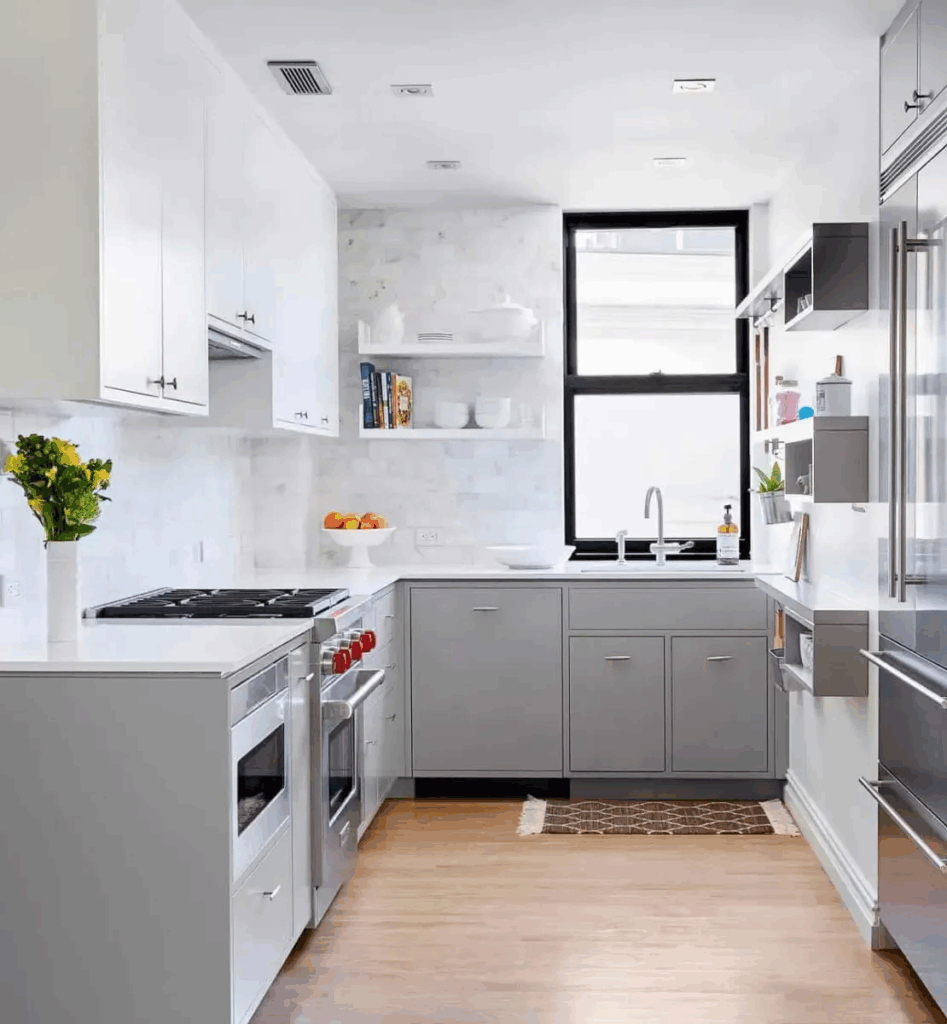
Kitchen design requires functionality as well as attention to surface appearance. The surface matters too.
Smart storage keeps organization in place and gives the kitchen visual balance. Light grey cabinets provide that combination.
Storage features keep everyday tasks organized while maintaining a sleek exterior. Deep drawers work alongside vertical dividers and pull-out trays.
High-use zones benefit from improved accessibility through interior organization. Spice pull-outs use tiers. Tray dividers are for bakeware, while soft-close drawers are for pots and pans.
Grey works as a neutral backdrop. Hardware systems let the cabinetry blend with its organizational features.
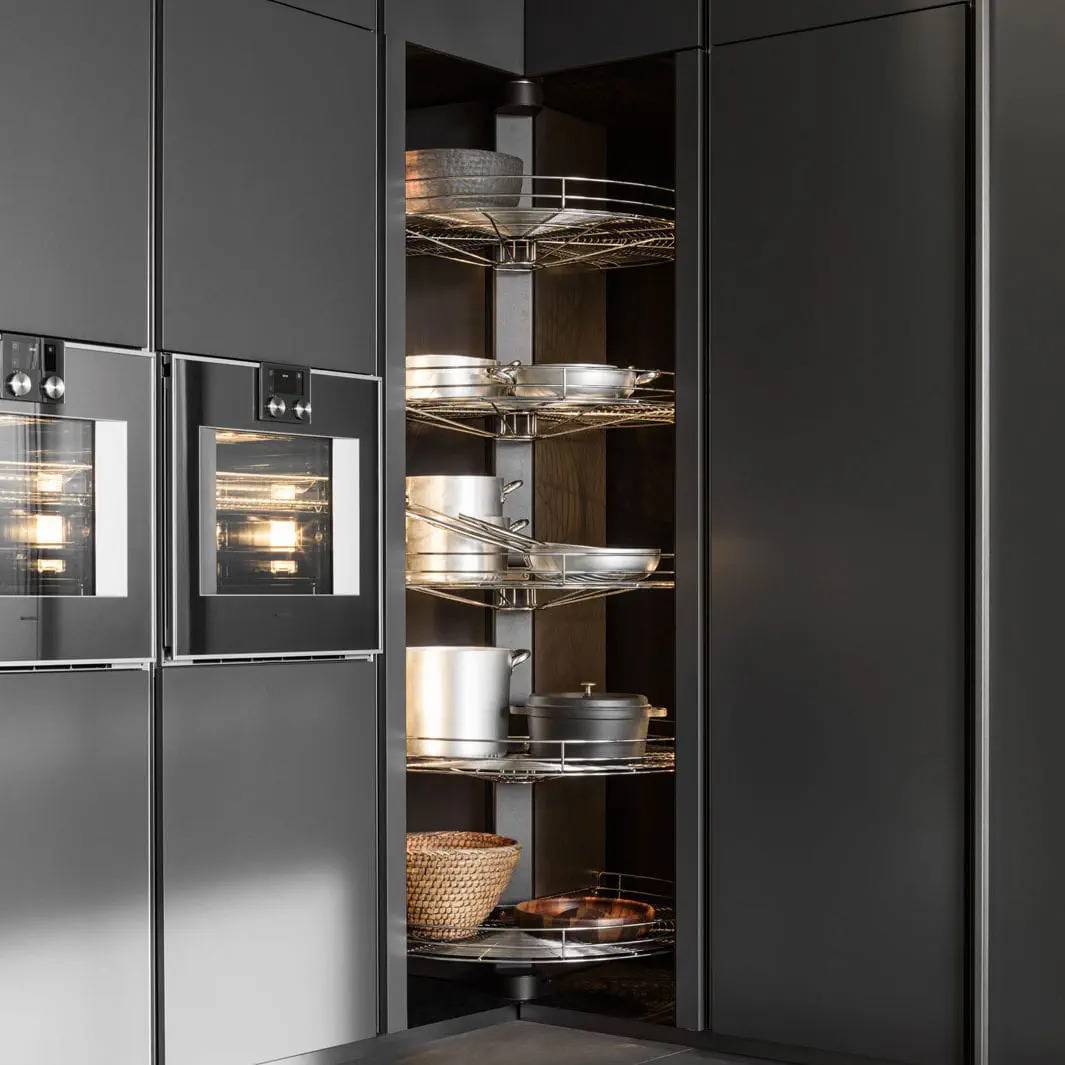
Toe-kick drawers and corner carousels make use of space that might otherwise be lost. Pull-out pantries also maximize the available room, which suits small kitchens and urban apartments.
A space with multiple components benefits from a muted cabinet tone. It helps the room feel cohesive and calm.
Brushed nickel hardware matches the light grey cabinets. Matte black hardware matches them as well.
Wood flooring brings a natural material into the kitchen. Light grey cabinets pair with the wood and quartz countertops, while the storage solutions perform under daily use.
This layout combines style and efficiency. It is suited to homeowners who focus on efficiency and those working with limited space.
Light Grey Kitchen Cabinetry
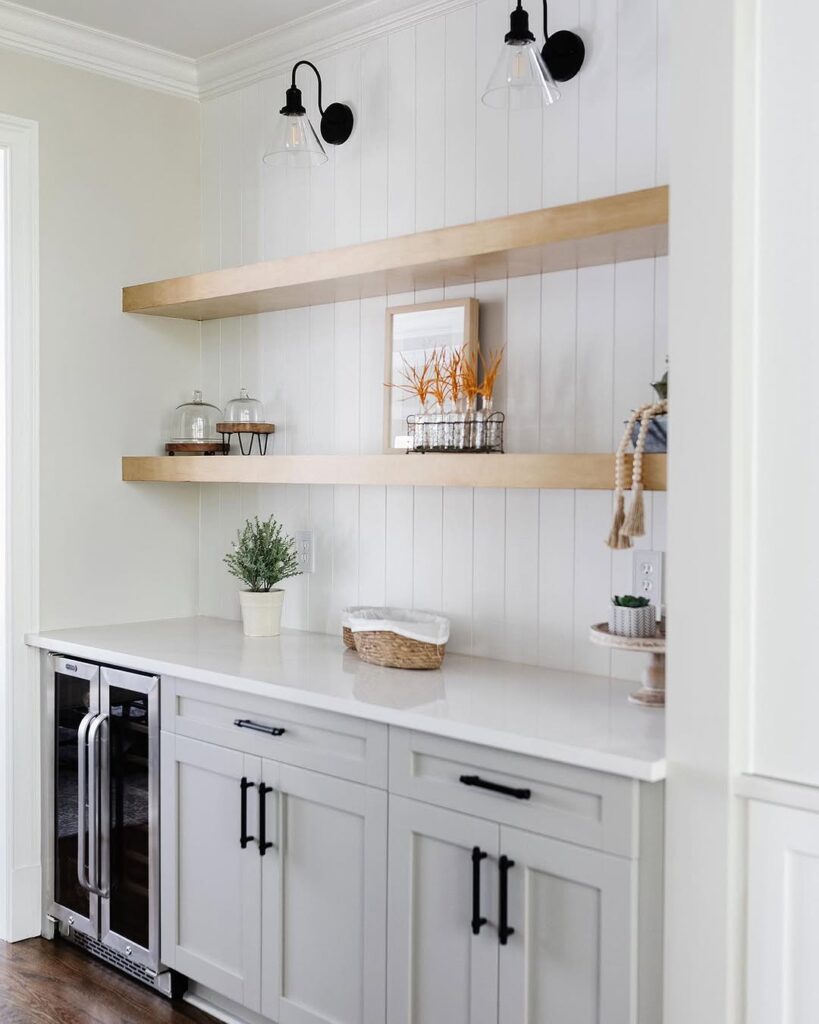
The light grey finish gives the kitchen a design-forward surface while keeping it functional. The cabinetry organizes the space.
Closed storage keeps everyday items put away. Open shelves hold decor, ceramics, glassware, and cookbooks.
Grey cabinetry can work with coastal, farmhouse, or urban industrial kitchens. Its range suits several kitchen settings.
Natural wood and matte black metal open shelves break up the solid cabinet runs. They add contrast, texture, and airiness while retaining storage utility.
Open shelving encourages organization and organized shelves reduce visual heaviness. The shelves pair with the light grey cabinets.
The kitchen palette supports personalization without requiring a full overhaul. Palette changes also make seasonal rotation possible.
A shelf back panel can be made from beadboard, tile, or painted drywall. Under-shelf lighting defines the shelf area and illuminates the open shelves.
A surface with open shelving can define a focal area in a large space. The layout combines flexibility with storage utility and supports small kitchens.
Grey Cabinetry with a Contrasting Island
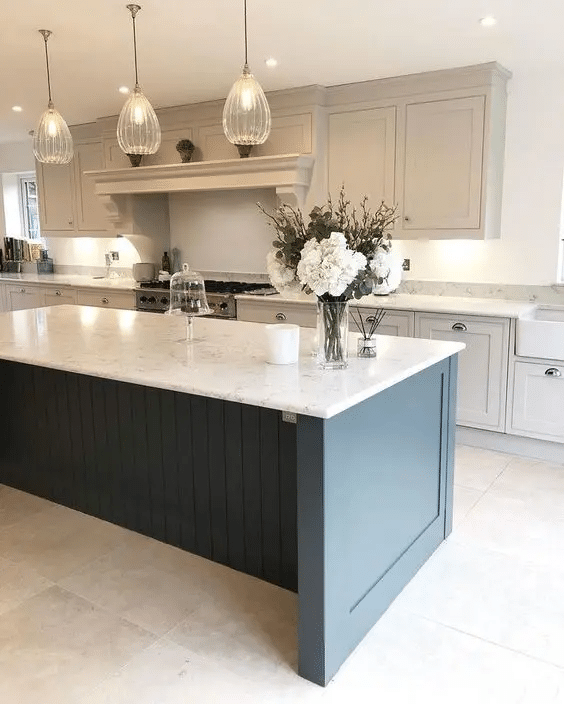
A contrasting island differs from the grey cabinetry, creating visual interest. The difference also creates architectural depth.
Light grey perimeter cabinets surround the island. As a neutral anchor, the perimeter supports the island's prominence.
The island can have a deep navy, forest green, or natural wood finish. Forest green and natural wood are shown as island finishes, and the pairing has a contemporary character.
The backsplash and flooring help soften the transition to a bold island. Grey also unifies the kitchen colors.
A contrasting-island layout defines kitchen function through visual zoning, especially in larger spaces. It suits open-concept homes.
Veined quartz and butcher block countertops bring layered design to the kitchen. Pendant lighting and complementary hardware connect the kitchen zones.
The island adds seating, built-in storage, and a prep sink in one practical feature. Together, these uses support usability without making the palette feel overwhelming.
Contrast provides visual impact in both traditional and modern kitchens. The contrasting-island approach suits either style.
Grey cabinetry supports individuality and versatility while keeping the look understated. It also helps maintain cohesion.
Grey Cabinetry Integrated Appliances
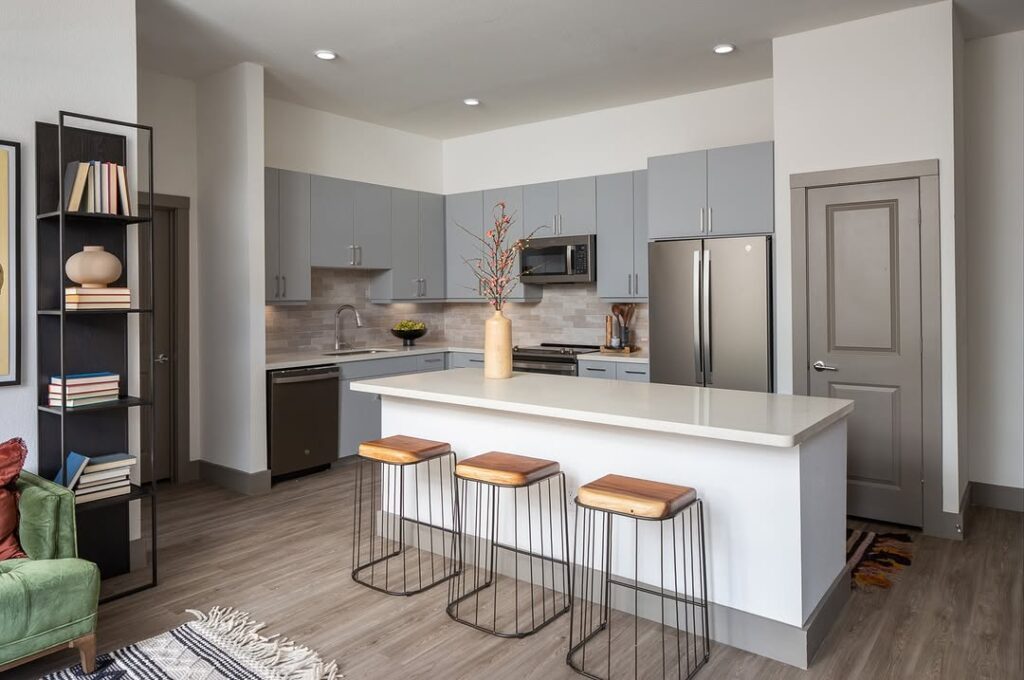
In clean, streamlined kitchens, integrated appliances support visual continuity.
A panel-ready refrigerator, dishwasher, and vent hood can be concealed by the light grey cabinetry. The refrigerator, dishwasher, and vent hood are all panel-ready.
Use a matching cabinet finish for large appliances. Matching appliance panels reduce appliance interruption.
The integrated appliance approach suits open-concept spaces. Its light grey tone supports a unified kitchen across shared sightlines to dining areas and living areas.
Integrated designs typically pair with handleless hardware or low-profile hardware. Both keep the cabinet front simple.
Smart shelving, full-extension drawers, and pull-out pantries support kitchen performance through interior storage.
In one kitchen, smart appliances and energy-efficient appliances can both enhance usability.
Grey cabinetry pairs with stone counters, wood elements, and stainless steel accents. The stone counters, wood, and stainless steel accents bring those materials into the kitchen.
An integrated appliance solution combines practicality with a cohesive appearance. It suits homeowners who want to avoid clutter.
Integration concerns both kitchen function and appearance. The design should maintain cohesion from all angles.
Light Grey Paneled Cabinetry
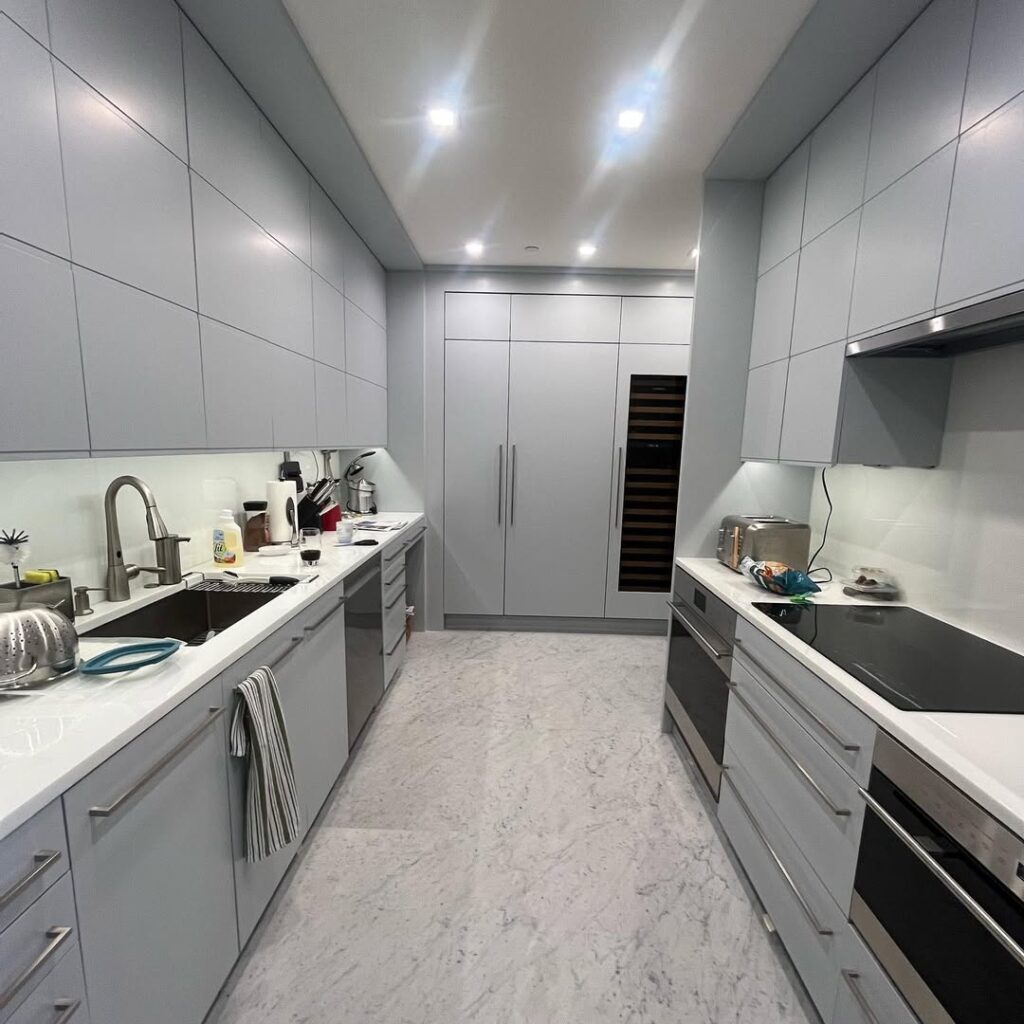
Paneled cabinetry signals craftsmanship and supports traditional design. Framed cabinetry gives the same signal, while paneled cabinetry adds its own detailing.
The light grey finish emphasizes the cabinet structure in a subtle way.
In a kitchen with a traditional foundation, a contemporary palette can suit homeowners who prefer traditional design.
Raised panels can influence the kitchen mood. Recessed and beadboard panels create different panel styles.
Classic style works with raised panels. Light grey softens the panel contours, while recessed panels pair with transitional and Shaker designs.
Paneled doors pair with sleek countertops and minimalist hardware, so the design does not create visual competition. Soft-close cabinetry and interior dividers enhance function.
A paneled style can give heritage-inspired kitchens a subtle reference without looking dated.
In the rest of the kitchen, light grey cabinetry coordinates with the flooring, appliances, and backsplashes. The color bridges traditional detailing with modern preferences.
Traditional detailing gives paneled cabinetry a functional quality and a long-lasting style.
Integrated Lighting in Light Grey Cabinetry
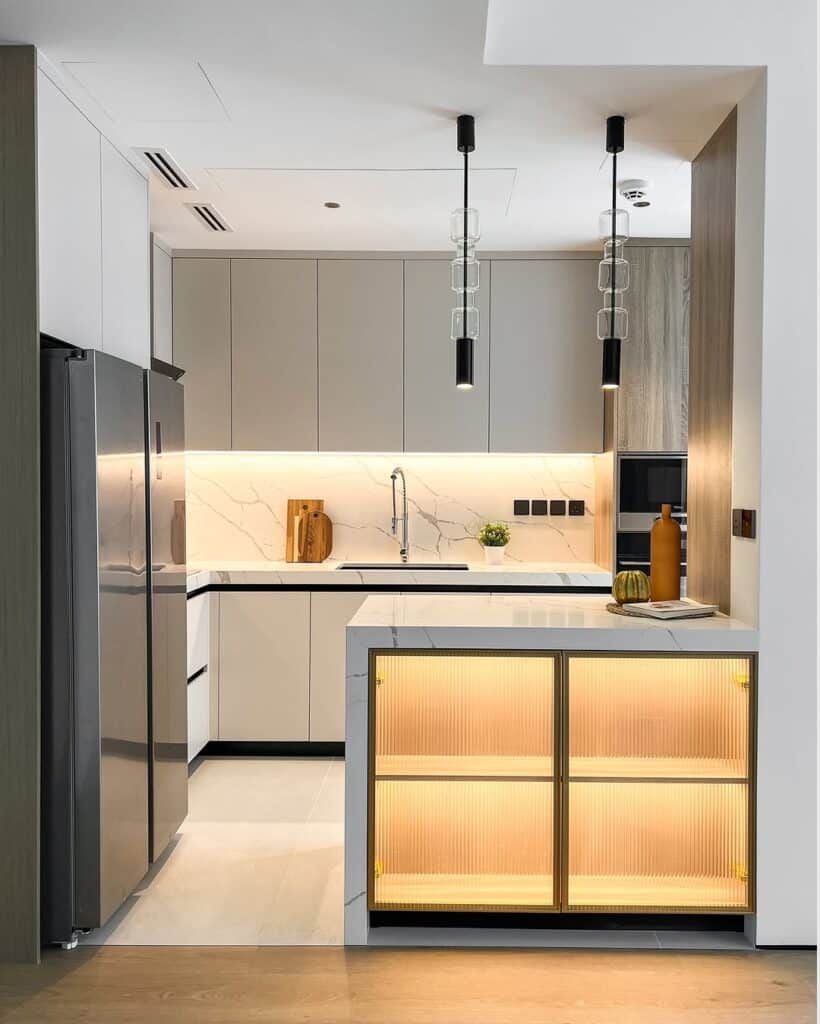
Integrated lighting is installed in the light grey cabinetry. It improves cabinet visibility and usability.
In one corner, built-in lighting can sit beneath wall units or inside glass-front displays. These placements add depth, emphasize texture, and reduce dark corners.
Light grey cabinetry with ambient lighting suits kitchens with low natural light.
Soft lighting reflects the cool grey tones and supports a warm atmosphere.
Under-cabinet LEDs provide work-surface illumination and improve prep-zone safety. Interior cabinet lighting illuminates glass inserts and open shelving for display illumination.
Cabinet lighting can be dimmable and color-adjustable. These controls allow adjustments for the time of day and mood, while highlighting tile backsplashes, stone counters, and decorative hardware.
The lighting stays quiet against the cabinets instead of competing with their color. Their muted tone creates a neutral background.
Integrated lighting supports everyday function while adding ambiance. It also suits apartments and small kitchens.
Basic cabinetry can be converted with integrated lighting. The lighting setup supports all-day usability and adds practicality.