15 Black and White Kitchen Ideas That Never Go Out of Style
Black and white kitchen trends bring high contrast into the room. The palette combines drama with simplicity.
A black and white palette works in modern, farmhouse, and industrial kitchens. It also offers design flexibility.
White can open up the room, while black helps ground it. Use either color on cabinetry, countertops, backsplashes, or fixtures.
This space has a timeless character that does not feel dated. At the same time, its look remains on-trend.
A black and white palette provides visual interest without creating sensory overload.
Black Kitchen Ceiling Accents
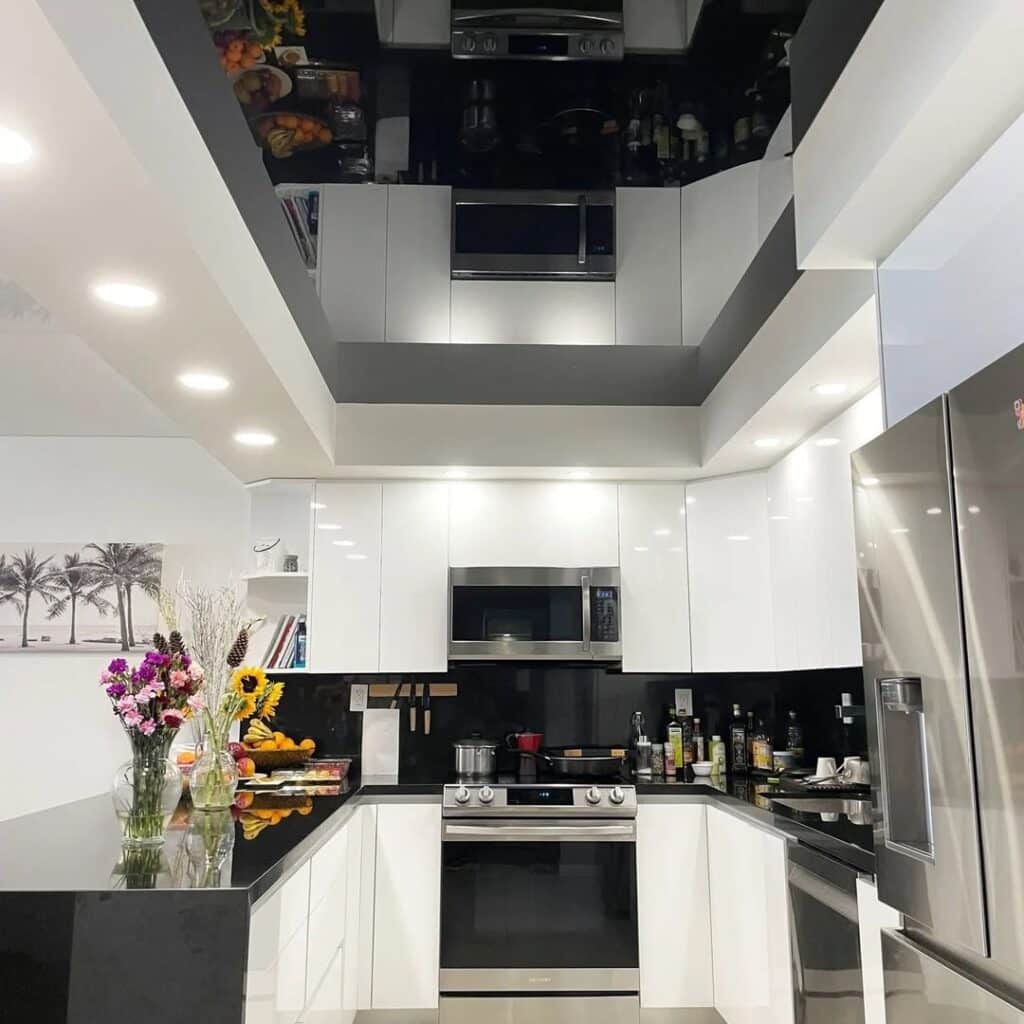
In a black-and-white kitchen, black ceiling accents add another use of the palette above the cabinets and work surfaces.
Coffered borders are one black ceiling option. Other choices include painted beams or a full black ceiling treatment.
Black ceiling tones are suitable for high ceilings and can increase intimacy. The darker surface brings the ceiling visually closer.
Black-painted perimeter edges and thin black molding details can form a partial ceiling treatment. Partial treatments are recommended for lower ceilings.
With ample lighting, black ceiling accents can be used without leaving the kitchen too dark.
Metallic pendant fixtures and recessed lights reflect downward light. The pendant fixtures add the metallic finish.
Black ceiling features coordinate with dark appliances, dark hardware, and dark furniture.
Ceiling accents define a kitchen zone without relying on structural dividers. A matte or satin finish is recommended for glare absorption, especially when open floor plans need clear zone delineation.
Above the room, a black ceiling feature suits a black-and-white kitchen. It adds a defined element within the kitchen application.
White Upper and Black Lower Cabinets
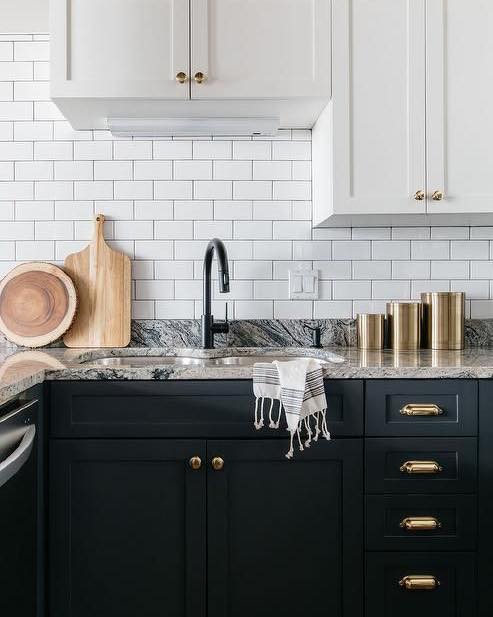
The lower cabinets are matte black. Glossy white upper cabinets add more visual intrigue through finish contrast and color contrast.
A matte finish minimizes fingerprints and smudges. Matte black base cabinets suit busy kitchens.
Glossy white upper cabinets reflect natural light. In small kitchens, that finish can make the room feel open and airy.
White upper cabinets keep dark cabinetry from overpowering the space. Two-tone cabinetry also zones the kitchen by distinguishing display sections, storage sections, and the prep area.
Under-cabinet LEDs emphasize the contrast between the surfaces. Cabinet handles in brushed brass add one option, while black handles offer another.
Quartz and stone countertops bring soft gray and creamy white into the kitchen. Neutral countertops create a link between dark lower cabinets and light upper cabinets.
Suburban homes and apartment kitchens can suit a high-contrast pairing. Its strong light and dark look is timeless.
High contrast gives practical kitchens a workable foundation. The pairing fits varied layouts and varied kitchen sizes.
Black White Modified Checkerboard Flooring
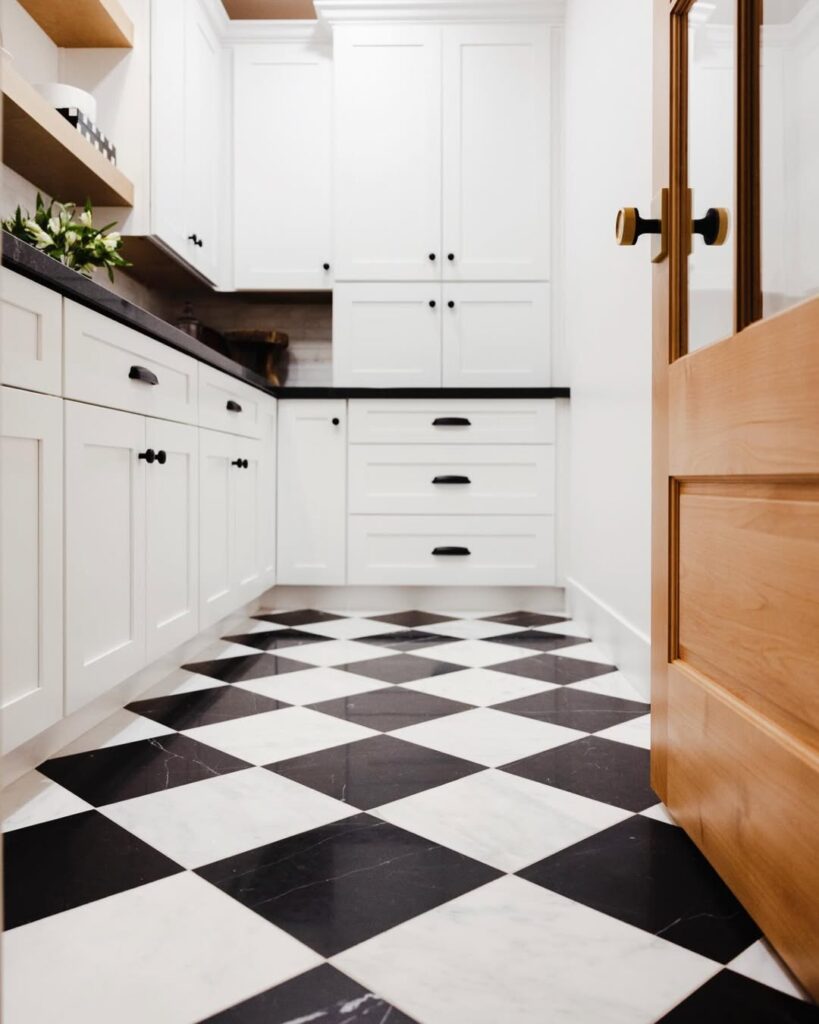
Varied materials give this checkerboard flooring a nontraditional layout. The flooring changes the usual pattern without losing its black and white character.
Rotate tile patterns diagonally to add movement. Irregular tile cuts can also support a nontraditional layout.
Porcelain floor tiles are budget-friendly and easy to maintain. Marble tiles bring black and white color variation, while vinyl offers another budget-friendly, easy-care option.
The countertops stay quiet so the checkerboard flooring can act as the focal point. The cabinetry also avoids competing with the floor.
For a cozy layout, smaller tiles are a suitable choice. In contrast, larger format tiles can give the space an expansive feel.
The pairing maintains visual balance. Use checkerboard flooring alongside matte black fixtures and white cabinetry.
Continue checkerboard flooring into dining zones in open-concept homes. That flooring continuity adds cohesion.
Texture can be introduced in a tile treatment. Warm undertones in white tiles help soften the stark contrast.
Modified checkerboard flooring suits farmhouse, industrial, and contemporary kitchens. Its layout can change without changing the main black and white idea.
A reimagined checkerboard pattern supports customized designs and has graphic character.
White Tile Black Grout Backsplash
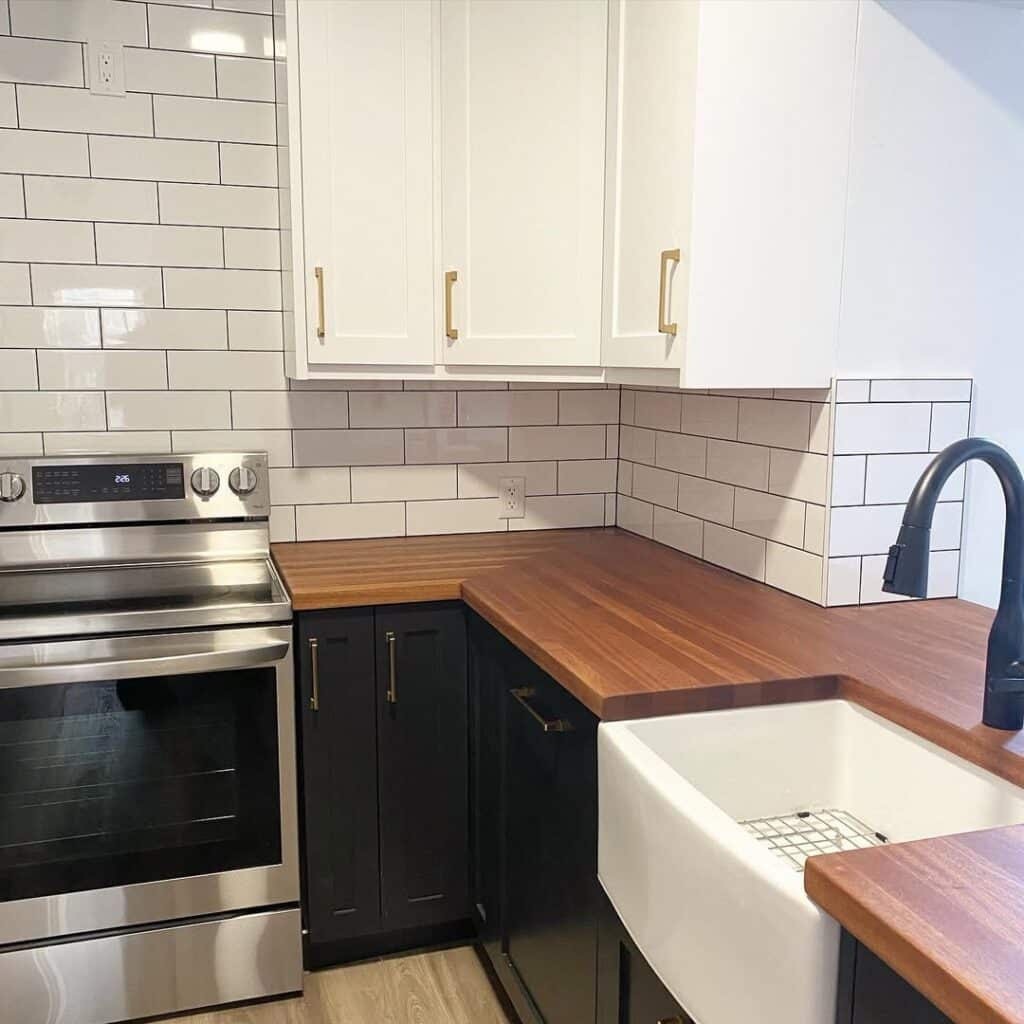
Black grout changes the appearance of a white tile backsplash. The backsplash uses white tile with black grout.
Across the backsplash, black grout outlines each tile and makes the backsplash feature prominent.
Black grout adds wall-surface depth and texture while defining the tile layout. The tiles may be subway, geometric, or zellige.
Black grout suits busy cooking spaces. White grout is more stain-forgiving than black grout.
White cabinetry pairs with a white backsplash and black grout, as does black cabinetry. The black grout bridges differences in cabinet color.
Extend the backsplash to full height, or stop it above the counter.
In small kitchens, a white backsplash with black grout can suit the space.
Choose simple countertops and streamlined cabinetry. Use simple finishes to reduce visual busyness.
The grout-tile contrast brings craftsmanship and symmetry into focus while framing the tiles.
A white backsplash with black grout is budget-friendly and provides surface definition.
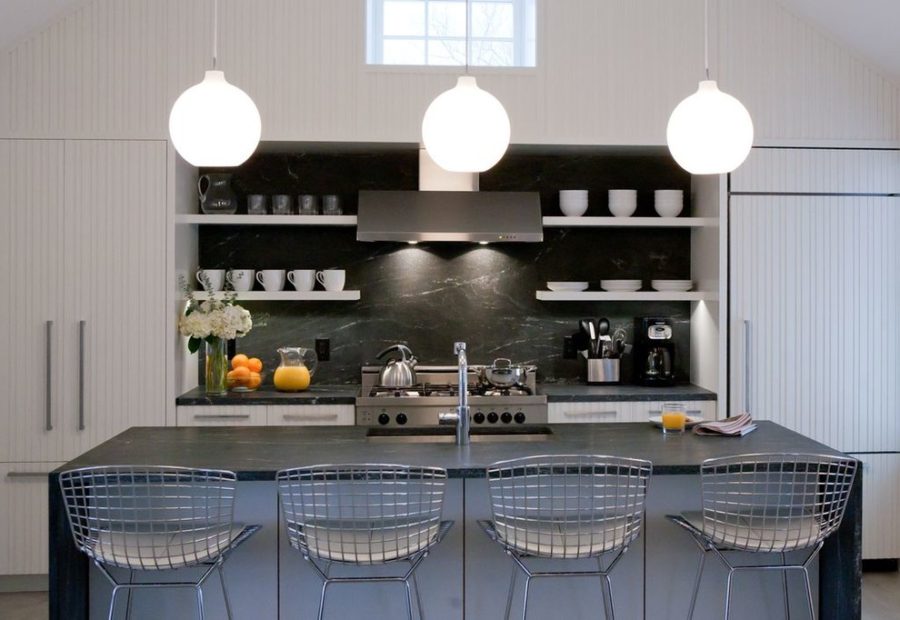
Black and White Kitchen Island
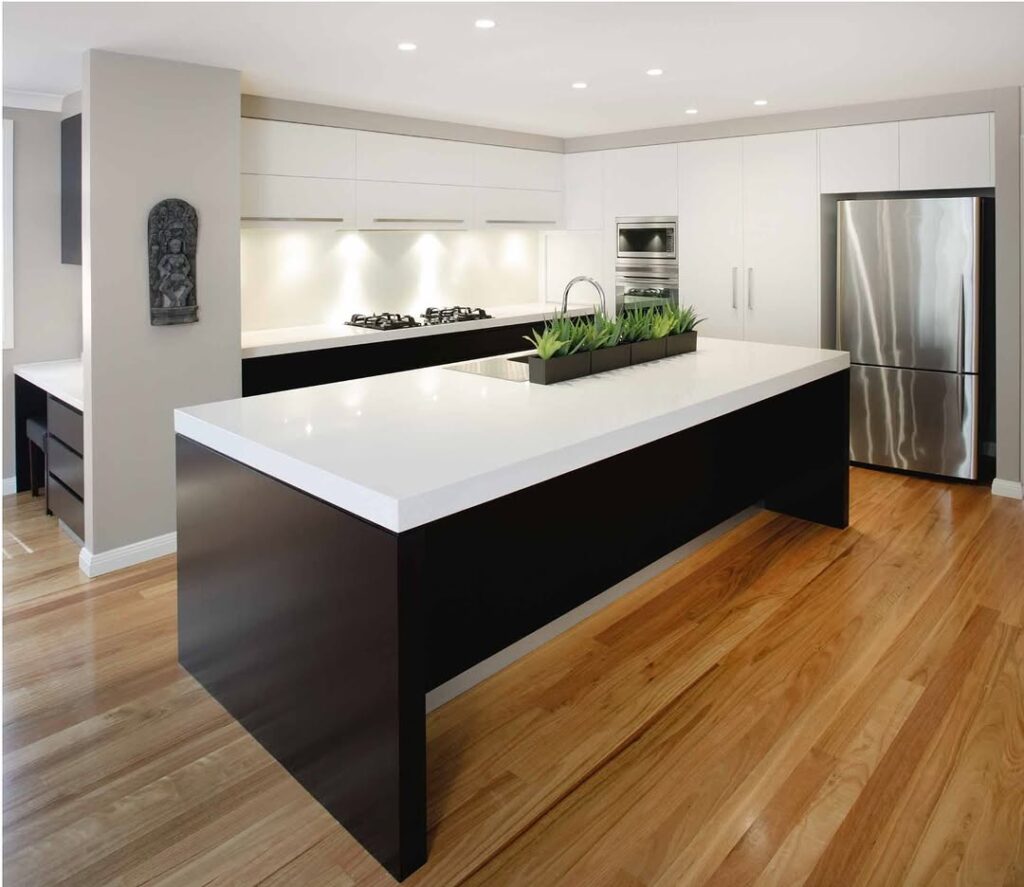
A two-tone island breaks up color monotony. It requires limited decor to make that contrast readable.
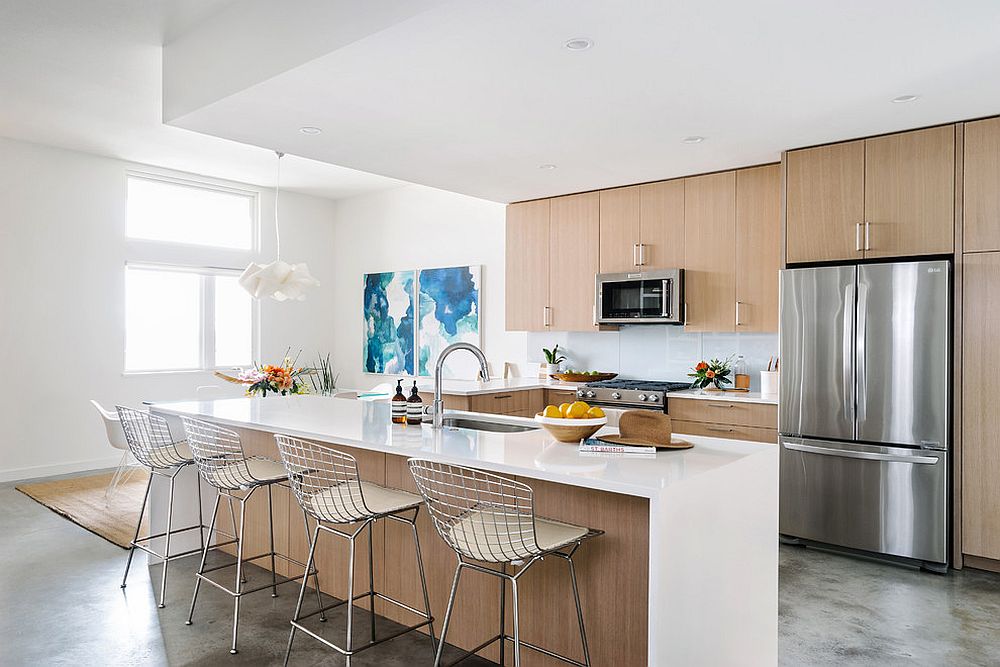
The island uses two-tone zones, with a white countertop set against a black base. Together, the paired surfaces create the two-tone arrangement.
The kitchen island complements some surrounding elements and contrasts with others. It anchors the visual composition.
A white quartz countertop can sit over a black-painted island base. The reverse option is a white base with a dark worktop.
Opposing cabinet colors and materials bridge the two-tone island across different elements. The approach suits both farmhouse and contemporary style.
Bar stools in black or white coordinate with the two-tone island, while pendant lighting emphasizes the contrasting surfaces. In open layouts, island zoning supports food preparation and gathering, and the dual tones support that zoning.
The island can use beadboard paneling and a wood grain finish. These textural elements add complexity.
Painting the island base is useful for a budget-conscious refresh. Changing the paint changes the kitchen mood.
A black-and-white two-tone island serves as both a work surface and a centerpiece.
Cabinet-Matched Black Appliances
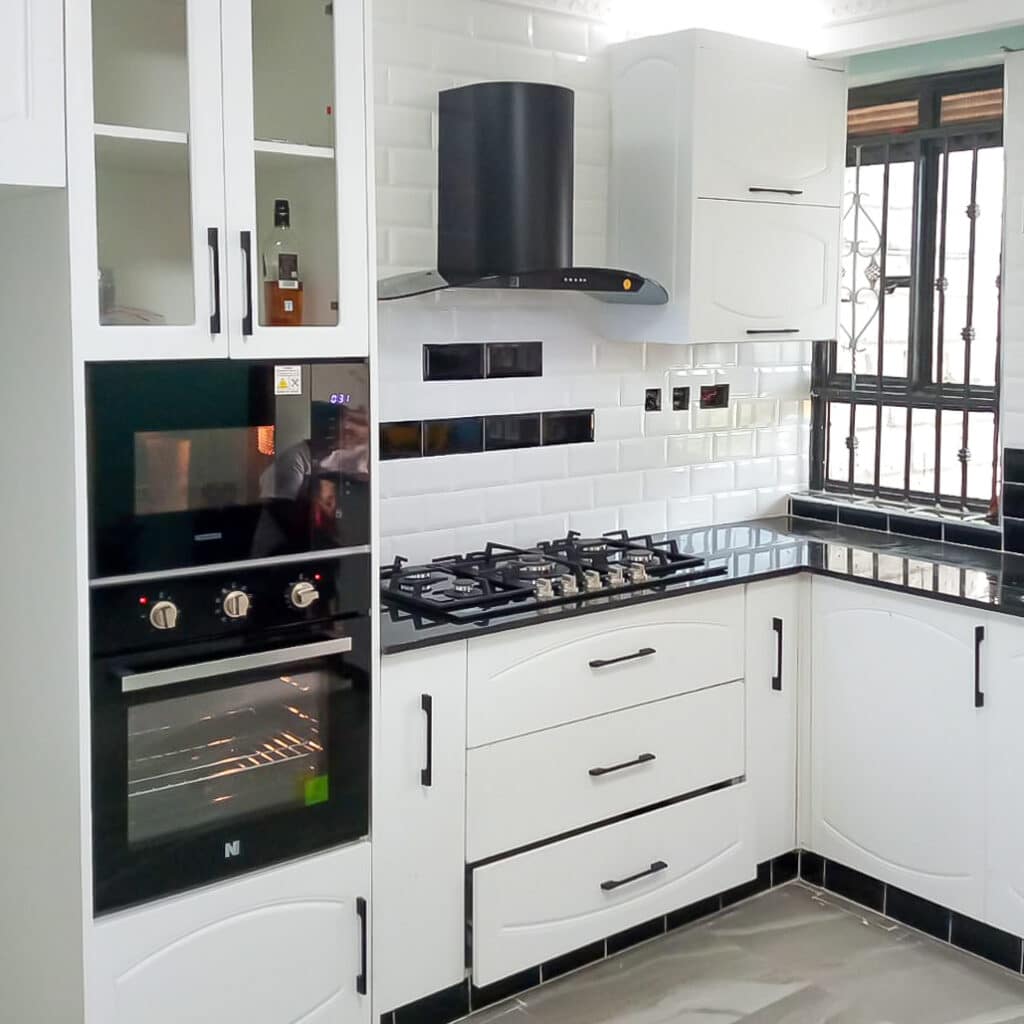
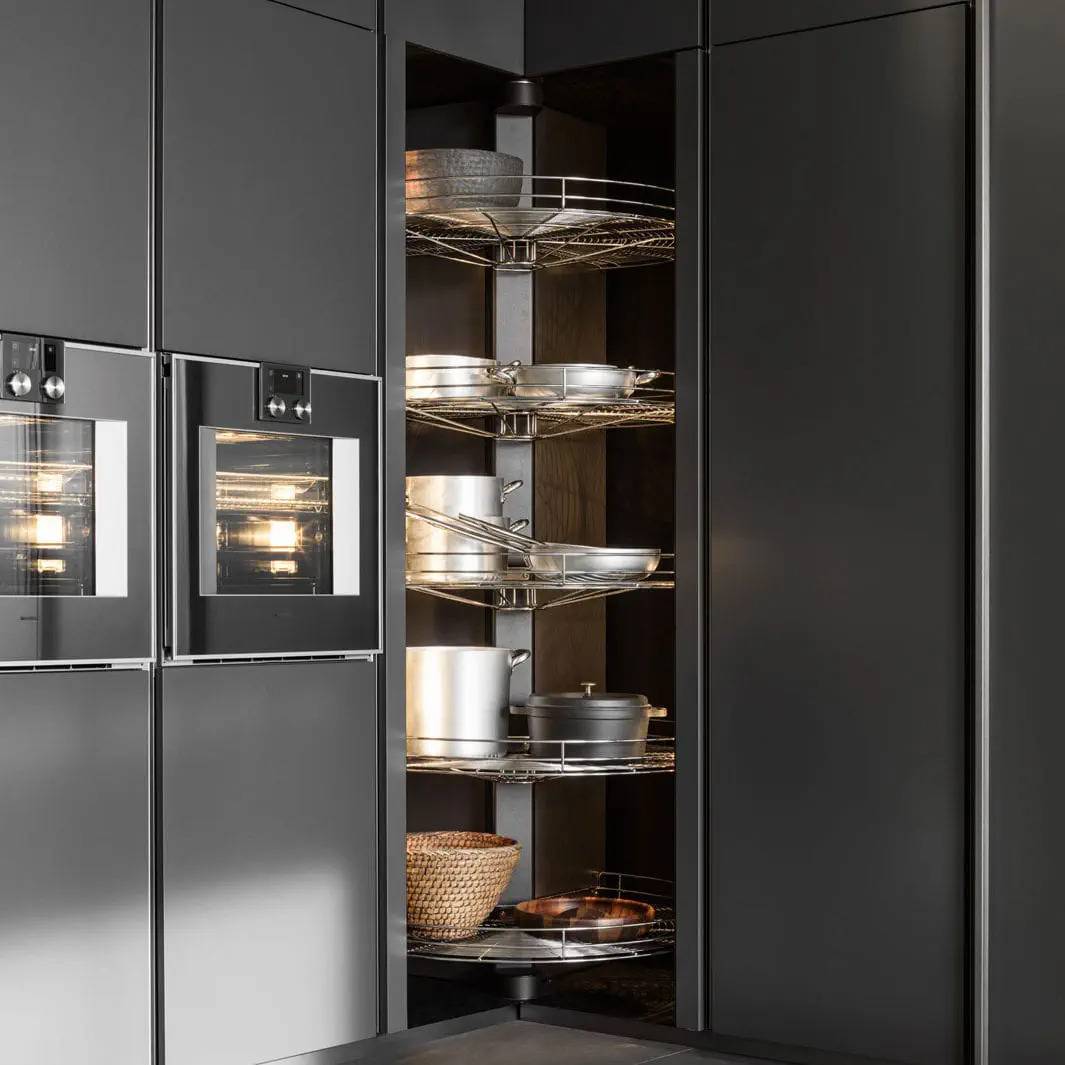
The surrounding cabinetry has a blended look, with black appliances worked into the cabinets around them.
Against dark cabinetry, integrated black appliances complement the deeper color. With white cabinetry, they create contrast. They also have a lower profile than stainless-steel models.
The refrigerator blends into the layout, as does the dishwasher. Both appliances have paneled fronts that maintain continuous visual flow through the cabinetry.
The black wall oven coordinates with the black induction cooktop. A black built-in microwave completes the matching group.
Integrated appliances suit open layouts because the integration prevents an interruption in the overall style.
A matte finish supports cleaning and organization by keeping the surface visually uniform. It is especially valuable with frequent use. The finish also cuts down on glare and shows fewer fingerprints.
Black appliances pair with black countertops, sink fixtures, and hardware. This coordination unifies the palette.
Black kitchens can use spotlights or LED strips to define kitchen features. The lighting helps prevent excessive darkness.
Integrated black appliances are recommended for their functionality and modern appearance. Their fitted design keeps the appliances part of the cabinetry.
Bold countertops and backsplashes can take the emphasis while integrated black appliances remain part of the composition. The appliances provide a darker supporting element.
Contrasting Black and White Kitchen Lighting
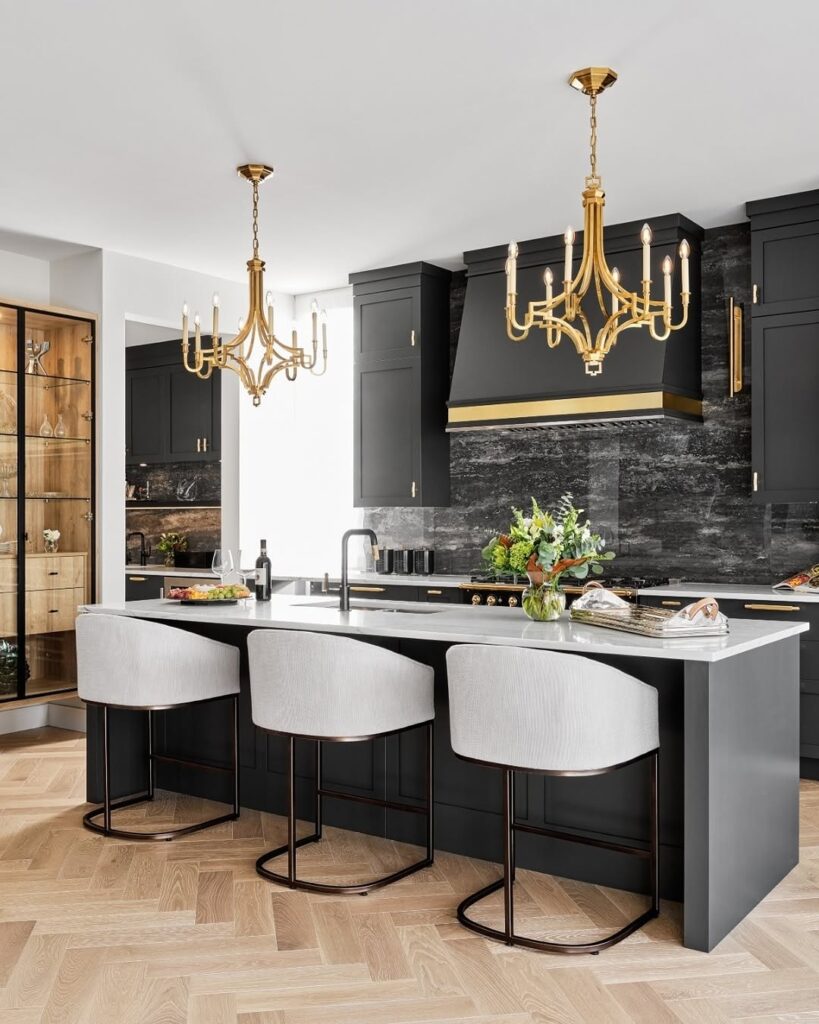
In the kitchen, black and white fixtures rely on contrast with their surroundings. The fixtures do not need to match every other element.
A white island sits below a matte black pendant. The pendant frames the workspace and becomes a design feature.
White sconces stand out against a dark tile wall, enhancing visibility and softening the palette. Other fixture shapes include a metal dome, globe chandelier, and linear suspension light.
A fixture's finish or shape can echo the cabinet handles and window frames. Repeated fixture details create subtle visual rhythm.
Above islands and dining counters, centered light fixtures create focal zones. This placement supports functionality in those areas.
Use bright neutral bulbs to preserve the room ambiance. Matte powder coating and high-gloss enamel add dimension through fixture texture and material.
Kitchen lighting serves both design and utility. Kitchens are multipurpose spaces.
Across the room, selected black-and-white fixtures can define and frame the room. Intentional contrast supports practicality.
White-Veined Black Marble
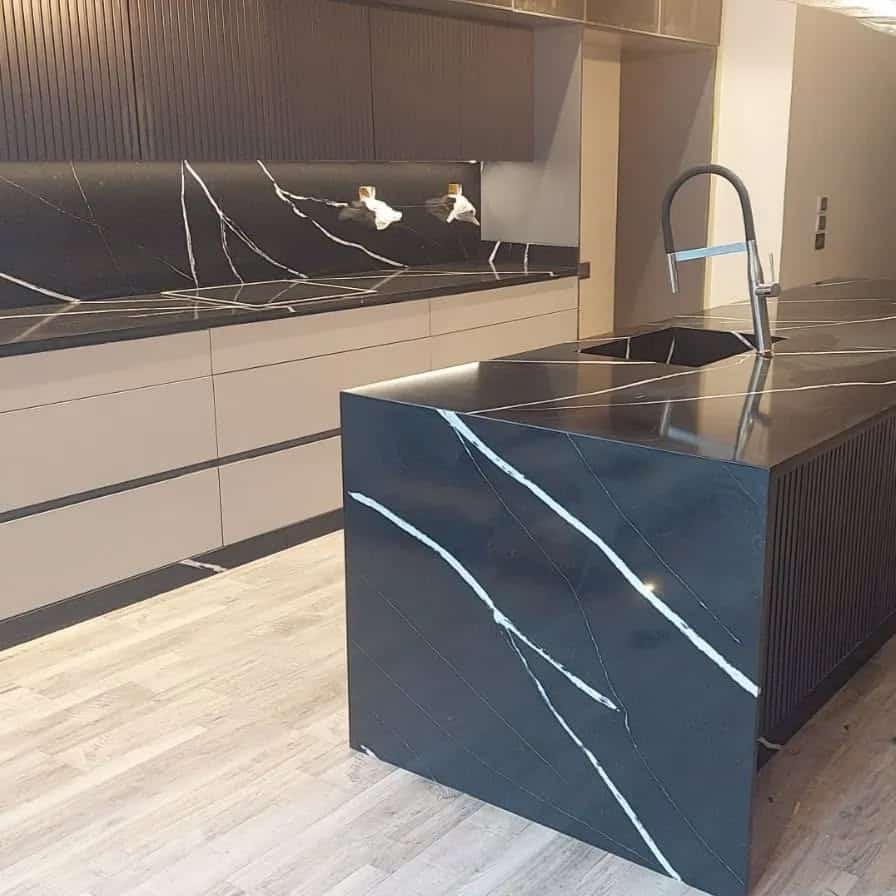
White veining runs through the black marble countertops. The dark stone gives the surface a strong black and white pattern.
In the kitchen, black marble countertops provide a visual anchor. They add depth and draw attention to the countertops.
Quartz mimics genuine marble. Black and white countertop contrast provides a timeless appearance.
Subtle wisps and bold streaks can appear in marble veining. Each marble slab is unique.
Organic unpredictability gives the kitchen a more curated feel than a cookie-cutter kitchen.
Flat-panel white cabinetry can sit with black marble countertops. Soft gray shaker cabinetry is another pairing.
Across the kitchen, matte black fixtures and brushed nickel finishes can complement the marble undertones. These finishes avoid distraction.
Use wooden accents with black marble surfaces. The wood provides earthy balance.
Proper sealing is required for black marble countertops to withstand everyday use. Properly sealed countertops can handle that use.
Ambient pendant fixtures provide lighting that highlights the marble veining.
Black marble creates a high-contrast feature through its white veining. The veining stands out against the black stone.
Window frames in black
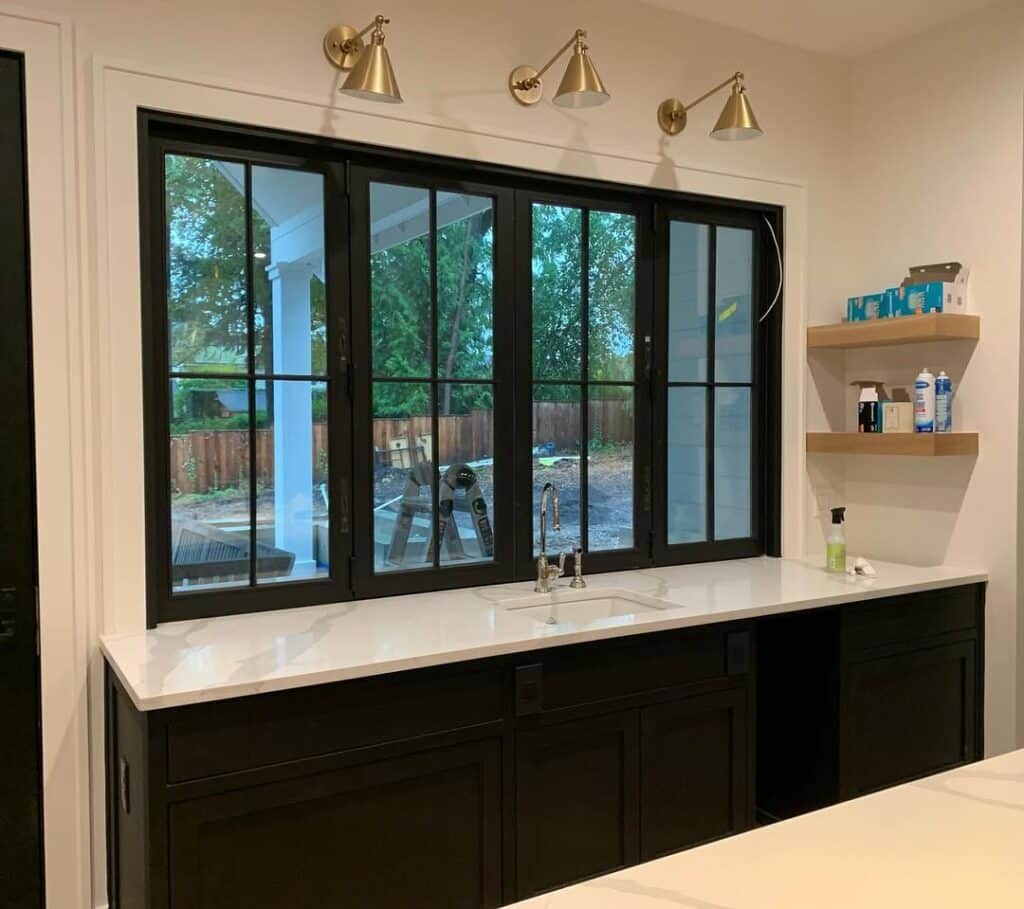
Black window frames define the kitchen with clean lines and strong architectural contrast.
Black window frames frame the outdoors and outline the views. In all-white kitchens, the frames provide a graphic detail.
Painted wood is one option for window frames, alongside aluminum and steel. The frames are compatible with industrial, farmhouse, and Scandinavian styles.
Large windows or glass doors are especially effective with black window frames. The frames contrast with white cabinetry and white walls.
Black window frames coordinate with black fixtures and light fittings. This frame coordination builds continuity.
White surfaces reflect outside light, while dark frames provide visual definition. Black window frames resist trends.
Keep curtains and shades minimal, or leave the windows without curtains or shades.
Regularly clean black window frames. Cleaning is especially important when the kitchen receives high natural light.
Minimal additional embellishment keeps the black-and-white scheme clear. The window frames remain the main detail.
Black Frames on White Kitchen Walls
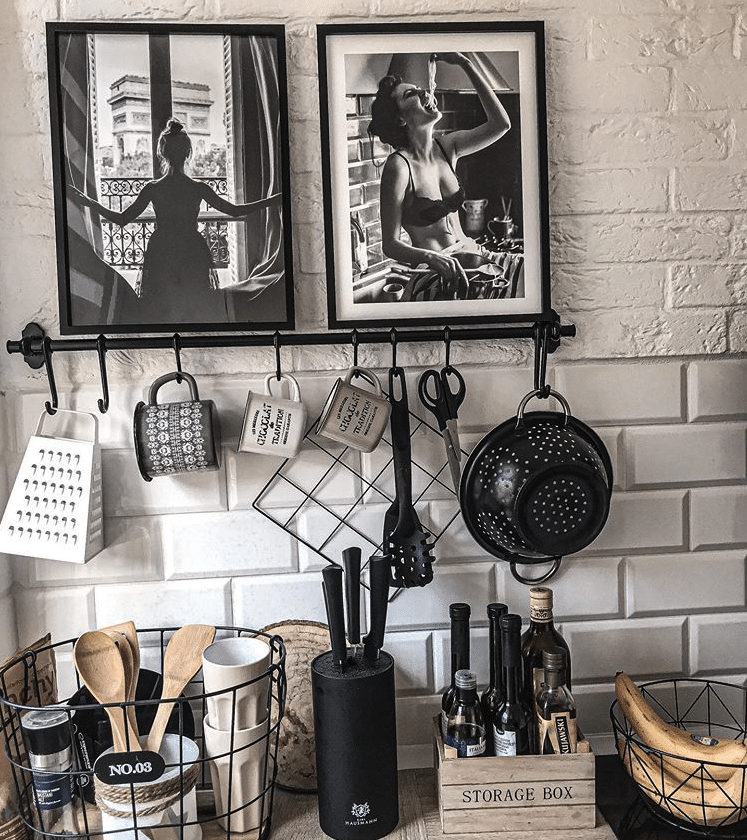
A clean white wall provides the background for black-framed artwork. The black frames add definition.
A black frame adds a strong surface detail above dining nooks. Place black-framed artwork there, between open shelving, or on blank walls without upper cabinets.
A homeowner's taste can show through the art content. Abstract sketches, culinary prints, and monochrome photography can all work within a cohesive palette that keeps the art content unified.
Black frames outline the imagery. Choose a matte or satin finish.
Select art pieces with similar size or a similar theme. Arrange them in a structured grid or a linear arrangement.
Leave room between the frames so each individual piece remains separate. White space allows that separation.
Black frames help contain open-plan kitchens. Their balance, symmetry, and scale also influence how the room reads.
A framed-art approach allows thematic and seasonal changes, supporting easy updates without major renovations.
Across the room, white walls with black frames create a gallery effect.
Textured Black Kitchen Backsplash
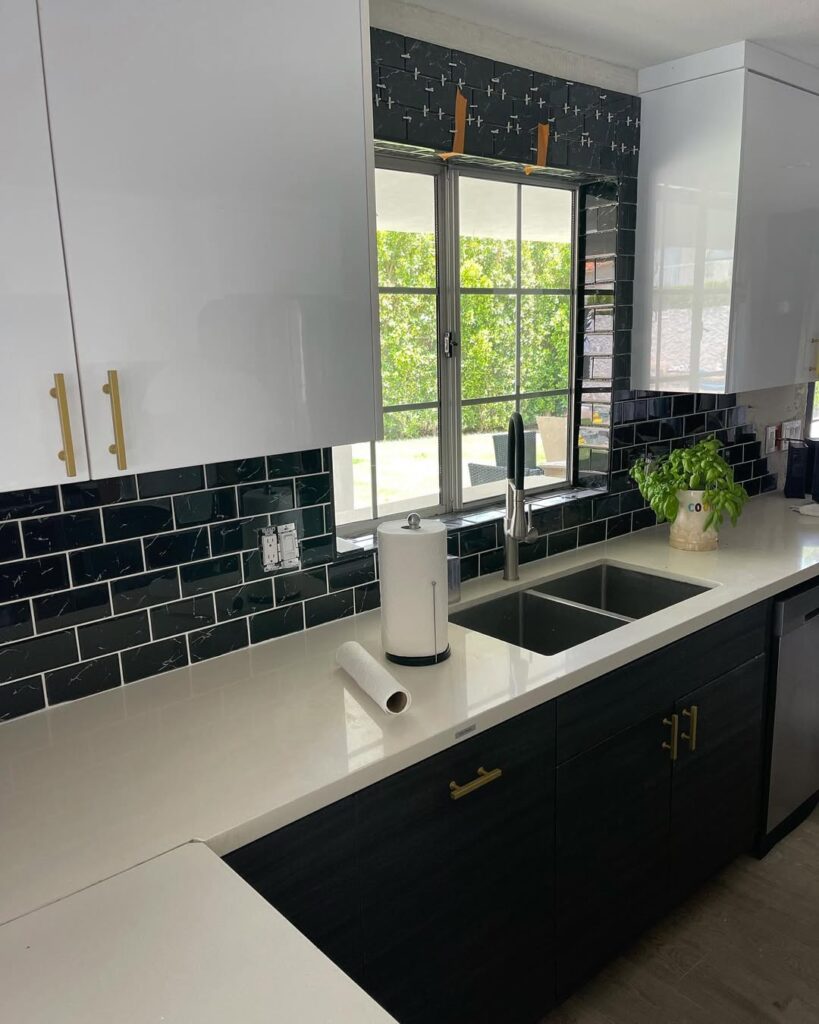
Depth and tactile interest come from the textured black backsplash. The backsplash still preserves the black-and-white palette.
Light and shadow interact with the surface variation of backsplash materials. Options include fluted tile, slate, stacked stone, and hammered metal.
The textured backsplash sits at the cooking zones. It gives the area a surface that resists stains and supports both its appearance and its practical use.
Matte and satin finishes respond to daylight and electric light. The textured surface creates subtle movement, and this light interaction changes throughout the day.
The backsplash highlights light cabinetry and countertops. Both surfaces can remain crisp white. Light gray is another color choice for each.
Use integrated LED strips and directional fixtures to accentuate the backsplash surface. Extend the backsplash to the ceiling and around open shelving units.
Across the kitchen, sealed finishes support kitchen use and make a textured backsplash relatively straightforward to clean. That cleaning qualification applies when the finish is sealed.
Craftsmanship comes through in the textured black backsplash, which also introduces nuance.
The textured black backsplash supports a balance between simplicity and sophistication. It offers a lasting visual solution.
Graphic Abstract Kitchen Wallpaper
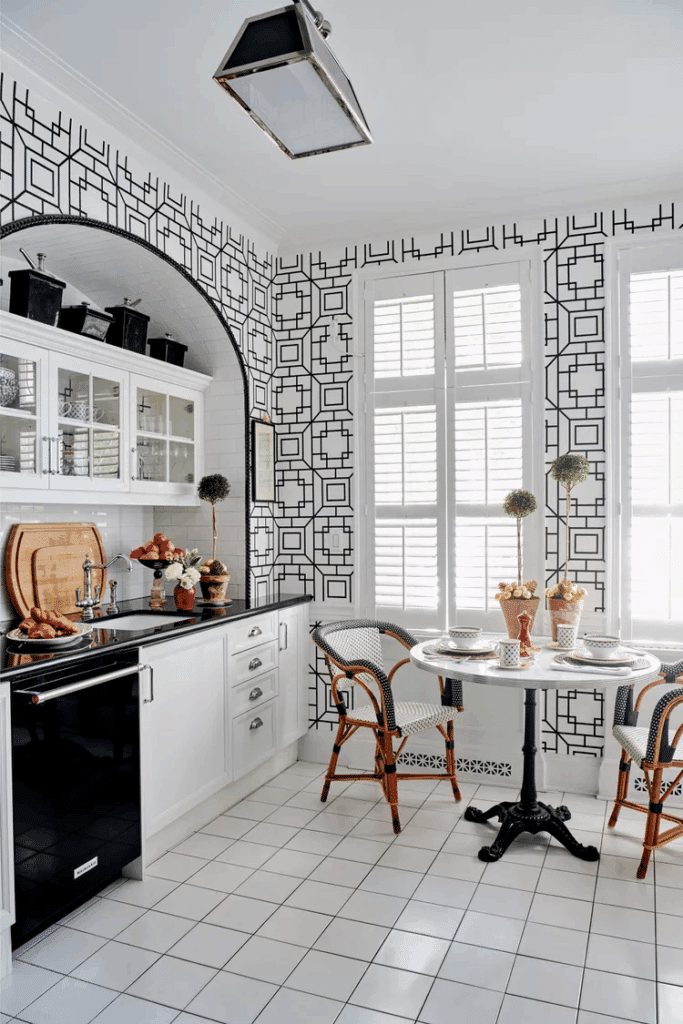
This black-and-white wallpaper uses geometric and abstract patterns to add character to kitchen surfaces. Use it on an accent wall or as backing for open shelves.
Wallpaper works especially well in small kitchens and galley kitchens.
Monochrome patterns provide contrast while adding movement without overwhelming the room. Herringbone, chevrons, and line art are among the pattern options.
Black and white geometric and abstract patterns give this graphic wallpaper a strong kitchen presence. Its peel-and-stick application suits renovators and renters, while supporting experimentation without commitment.
The wallpaper helps mark different zones. It can go behind floating shelves and around the breakfast nook.
Minimalist finishes and sleek cabinetry provide the setting for busy prints. Keep the prints moderate in that combination.
High-light kitchens suit black lines on white, which appear dynamic and bright in high-light settings. A black wallpaper base with white detailing also offers inverse colorways for low-light settings, where they add warmth and coziness.
A wipeable finish makes wallpaper easier to maintain. Wipeable finishes also support kitchen use.
Black-and-white graphic prints add an artistic layer to bland walls. They complement both farmhouse kitchens and urban lofts.
White Cabinetry Black Hardware
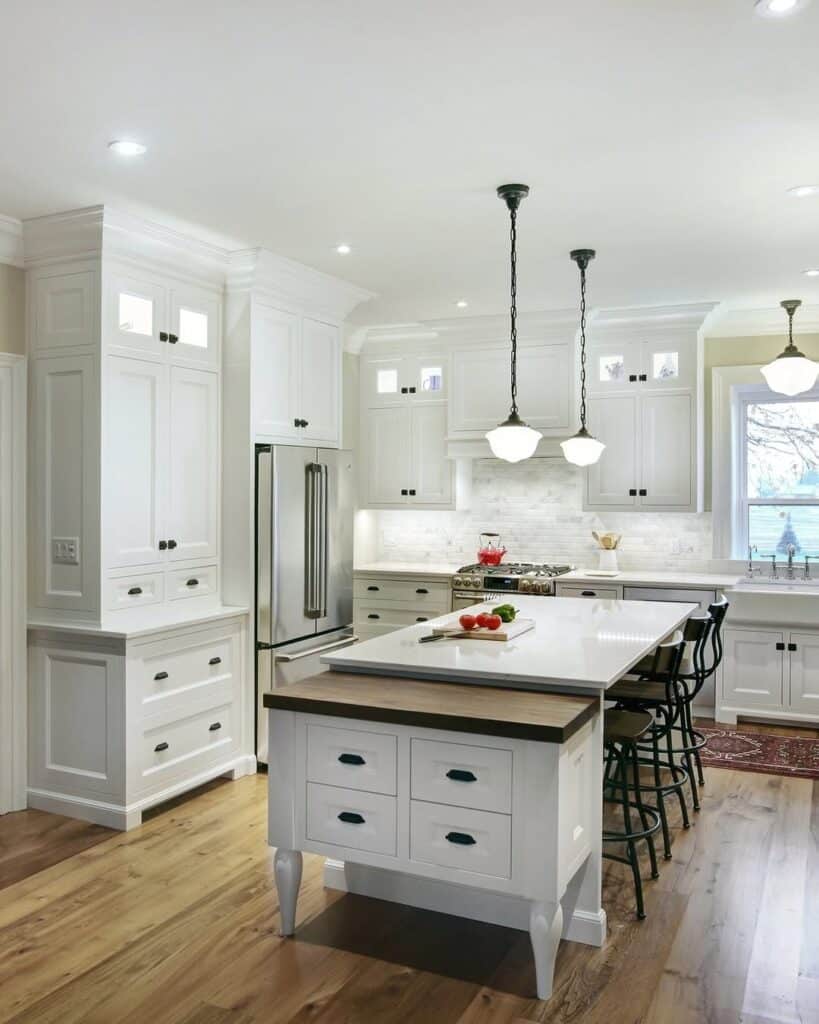
e31 is fitted to e30. White cabinets with black hardware combine minimalism and defined detail.
Black handles and knobs contrast with white cabinetry, which provides a versatile canvas. The hardware functions as cabinet hardware.
Black hardware and white cabinets suit both flat-front panels and Shaker cabinets. The contrast works across these cabinet styles.
Black pulls can have a matte or brushed finish that resists fingerprints and provides tactile grip. Black knobs are another option, while the pulls provide ergonomic handling.
Linear bar pulls create a contemporary style, while rounded knobs have a classic style. Hardware shape influences the style.
Black cabinet hardware matches black light fixtures and black sink faucets.
In kitchens of either small or large size, white cabinets with black hardware define zones through contrast.
Replacing the hardware is useful for an existing-kitchen update. The change avoids a full renovation.
A hardware update sharpens the design through contrast. Changing the hardware requires minimal effort.
White cabinetry is a practical, timeless choice. Paired with black hardware, it brings everyday practicality and lasting appeal.
Black and White Open Shelving
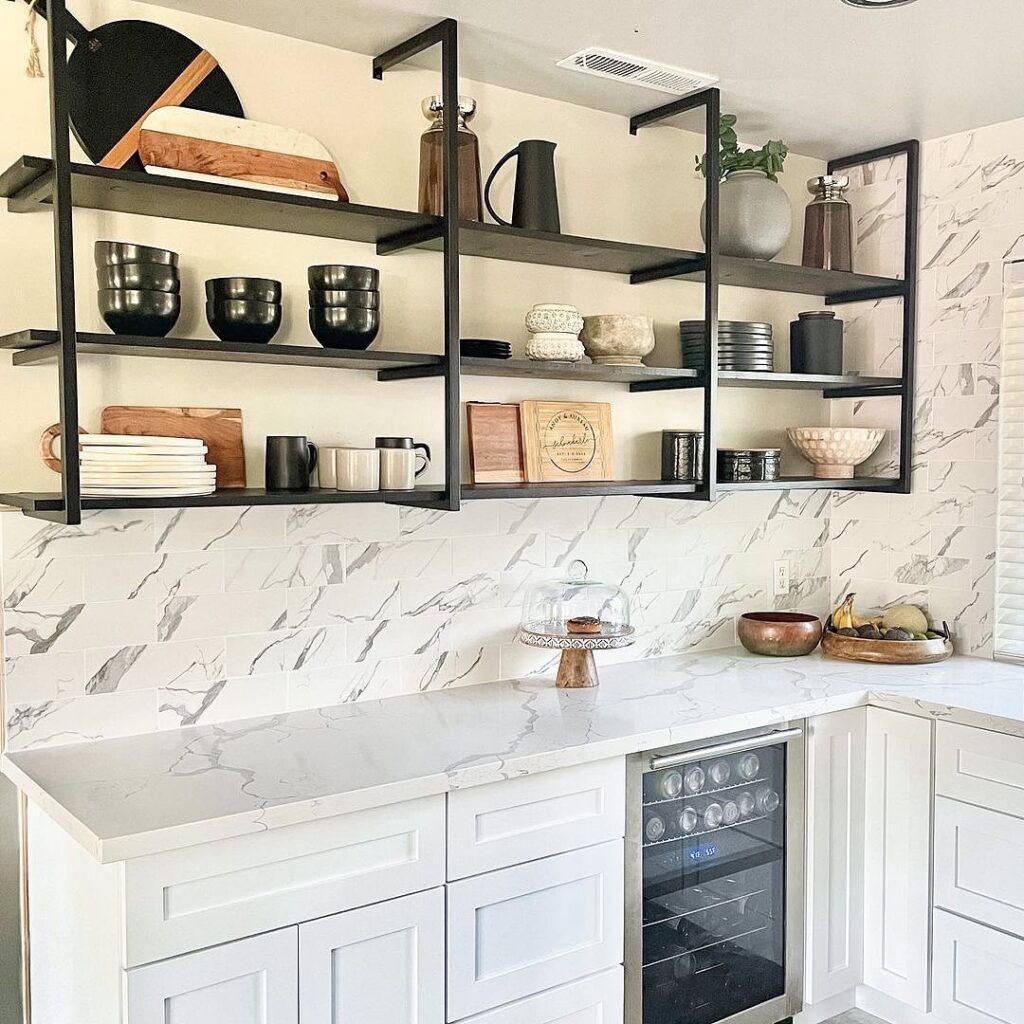
Black-and-white open shelving provides both storage and display space. The combination also supports visual rhythm.
Open shelves allow more intentional styling than closed cabinetry. Items stay visible and can be arranged as part of the room.
White wood shelves rest on black metal shelf brackets. The brackets support each shelf and add a dark structural detail.
Clear glass storage jars hold pantry staples, while monochrome ceramics display the shelving contents. Arrange dishware, glassware, and pantry staples across the open shelves.
Above the white tile backsplash, floating shelves hold charcoal mugs and matte black bowls. The shelves contrast with the white tile.
Open shelving provides practical access and breaks up solid cabinet runs. The range hood works around it, and the sink sits above it.
Open shelving can use LED strips beneath the shelves or sconces mounted on the wall. Shelf lighting highlights textures and form.
In larger kitchens, staggered shelves are suitable for varying the display across a wider wall.
Store shelf contents thoughtfully and dust the shelves regularly. With that routine, open shelving has manageable maintenance.
Upper cabinets feel bulkier than open shelves. In a small space, that difference makes open shelving especially valuable.
In a casual setting, monochrome open shelving uses simplicity and contrast for both display and storage.
Black Kitchen Sink Fixtures
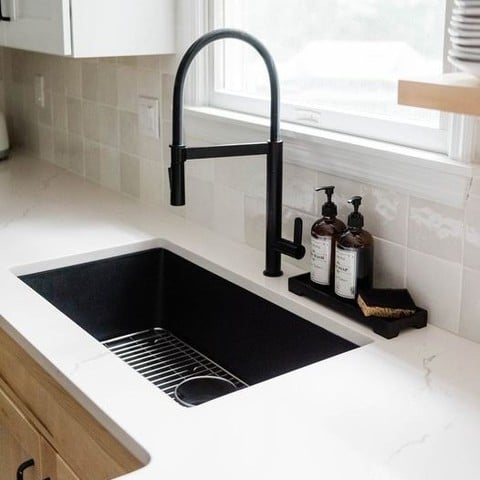
The black faucet pairs with a black sink to serve both functional and aesthetic purposes. Together, the sink and faucet form one coordinated set.
Stains and water spots are resisted by black sink and faucet fixtures better than by many traditional options.
Sink materials can pair with various countertop materials. Composite granite offers a soft texture and durability, while matte black metal also provides a soft texture and durability.
A matching faucet finish supports continuity. Wall-mounted and gooseneck faucet styles are options.
Within a countertop finished in white or marble, the black sink-and-faucet set commands attention without overpowering the surface.
Organization and cleanliness are supported by the sink-zone framing. The black-and-white contrast frames that area.
The textures at the sink can be highlighted by the lighting or window. Add under-cabinet lighting and include a window above the sink.
The black sink-and-faucet pairing suits modern kitchens and transitional kitchens.
At the sink area, form and function come together. Sinks and faucets in black can handle daily wear.