15 Moody Kitchen Ideas for Adding Warmth and Depth
Modern kitchens are moving toward moodier aesthetics. Dramatic contrasts, expressive textures, and shadowy tones shape this kitchen design direction.
Homeowners are looking for atmospheric kitchens with more visual interest. The design still needs to retain comfort and function.
Moody kitchen design brings depth and personality through dark cabinetry and matte finishes. Natural stone adds a grounded material presence, while ambient lighting shapes the room's atmosphere. Together, these elements create a kitchen with a darker, more considered character.
These moody kitchen ideas focus on dramatic choices.
A cooking space can have a lasting impact. Mood-based details affect the space and help shape its overall impression.
Plaid Tile
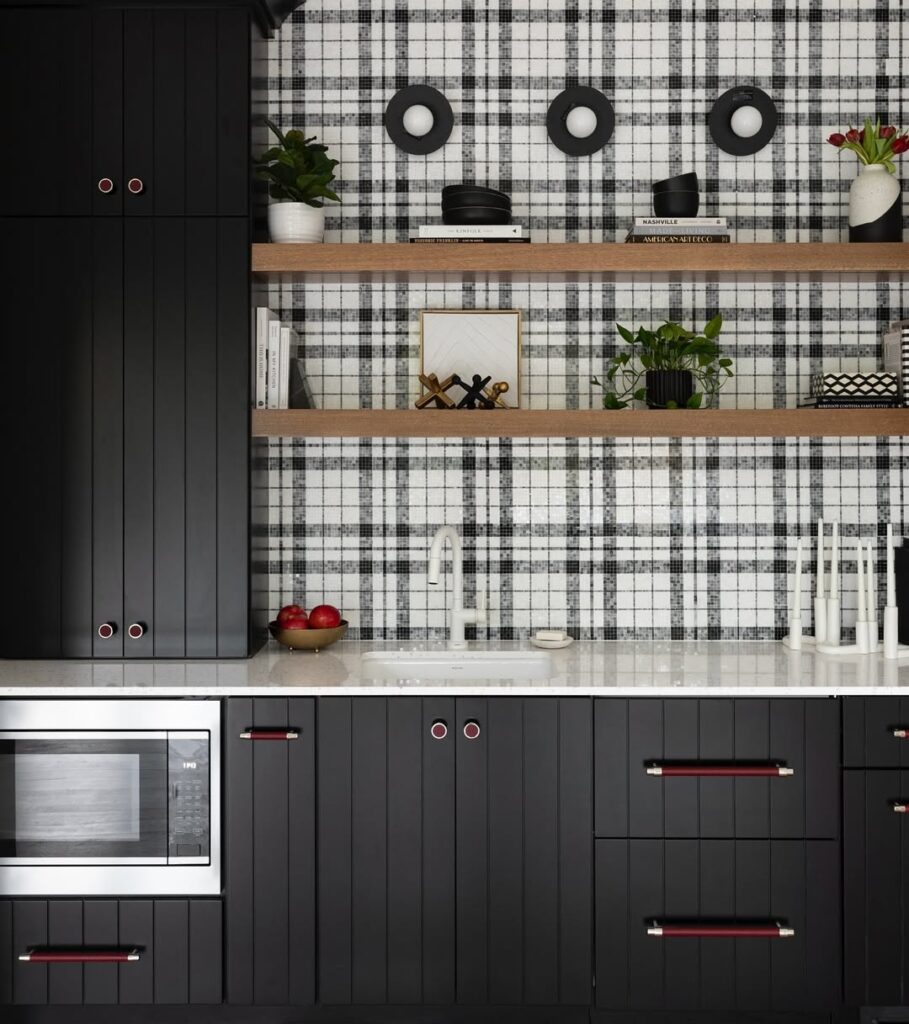
In a moody kitchen, plaid tile introduces structure and energy. The tile is used in the kitchen.
The plaid arrangement uses complementary horizontal and vertical lines to form a grid. It differs from mosaics and checkerboards.
Dusty mauve-charcoal and terracotta-slate pairings suit plaid tile. The pattern provides visual movement without creating conflict with the cabinetry.
A layered pattern behind the stove or on an accent wall creates a conversation point without becoming overpowering. Plaid tile suits both placements.
A matte surface can soften bold geometry, while a lightly polished finish changes the effect. Plaid tile suits transitional and vintage kitchens, with glazed ceramic or tumbled marble as material options.
The plaid tile offers a classic motif by reinterpreting textile plaid.
Wood cabinetry and stone counters coordinate with plaid tile. The plaid grid supports visual cohesion among these kitchen elements.
Plaid tiles offer a tactile pattern that suits moody kitchens.
Gingham Tile
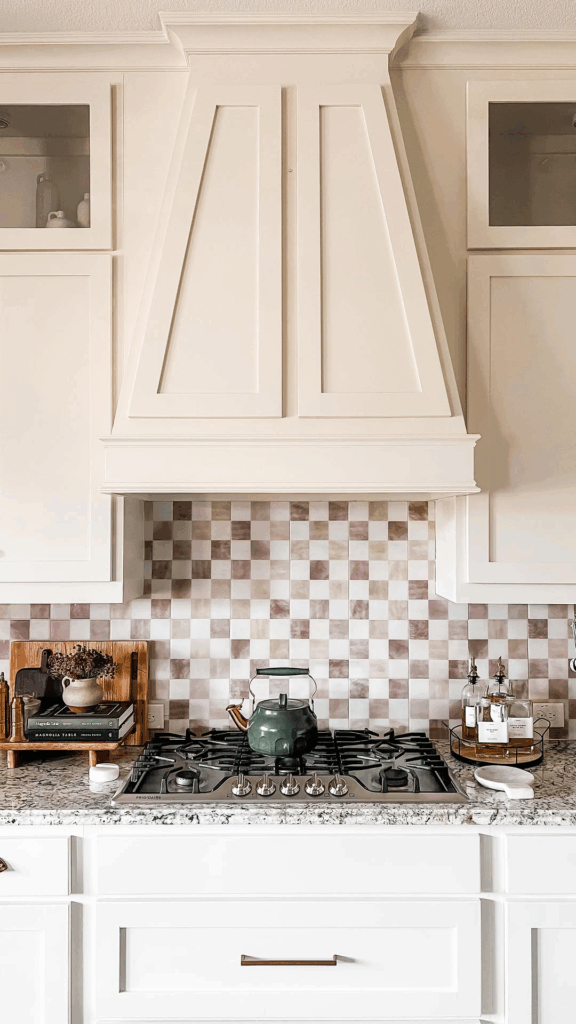
The gingham tile brings geometry to a moody kitchen. It is used as the backsplash.
Slate blue, deep plum, and off-black are refined color choices for gingham tile. The pattern can look contemporary while still referencing vintage design.
Solid counters and solid cabinetry break up the classic grid motif. The grid adds rhythm without creating palette overload.
A coffee nook, the space above a sink, or the wall behind a range can all suit this tile. Gingham tile creates a clear visual statement, so it works well in small areas.
Gingham tile can anchor the room visually. A charcoal and ash gray pairing creates tonal contrast that integrates with moody surroundings.
Square tiles support a traditional look, while rectangular mosaics and hand-glazed tiles introduce artisan character. The tile shapes provide different treatments.
Matte grout works with gingham tile and supports manageable maintenance.
The pattern and polish of gingham tile balance each other in cottage and modern farmhouse kitchens. The tile suits both kitchen styles.
Gingham tile introduces detail and references historical texture without requiring color splashes, mixed metals, or florals. The pattern supplies the detail.
Oxblood Kitchens
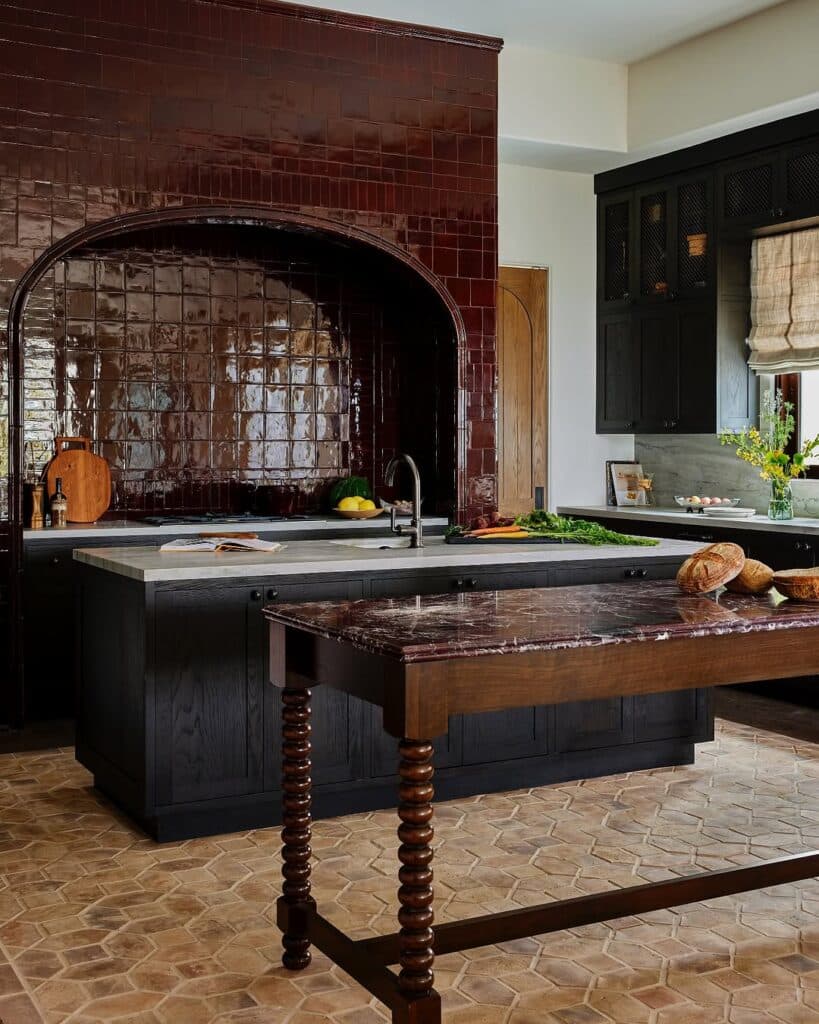
Oxblood red brings intensity to a kitchen without creating visual overwhelm. This deep red has a wine undertone, and it adds character to the room.
Creamy quartz countertops pair with oxblood cabinetry. Natural walnut shelving and brass hardware work with the cabinetry too.
Oxblood red gains depth and warmth from dimmed lighting. An amber pendant light enhances the red, as do the pendant fixtures.
Designers often use oxblood focal points. An oxblood island base and tall oxblood pantry units can each serve as a focal point.
Dark wood floors pair with oxblood, while matte finishes add another layer to the combination.
Leather bar stools add texture beside ribbed glass fronts. Together, these details add texture while preserving the strength of the palette.
Oxblood works well in open kitchens because it can separate the kitchen visually from brighter living areas while retaining cohesion.
Oxblood has design flexibility and timeless appeal.
Vintage Style Lighting

Vintage fixtures provide more than task lighting. They are used in moody kitchens.
Patinaed brass, fluted glass, and cast iron give the pendant lamp its material detail. The lamp provides illumination above islands, sinks, and breakfast bars, while also adding character and dimension.
Antique-style lighting works well with dark palettes and aged finishes. The sconce has arms that curve outward and bulbs left exposed. It casts a soft ambient glow that can highlight niches and frame open shelving, while cabinetry texture and tile texture enhance the sconce.
Vintage lighting can use aged-finish replicas or salvaged pieces. A dimmer-compatible bulb enables brightness adjustment for both functional brightness and evening ambiance.
In a room with several small fixtures, keep the spacing even so the arrangement has rhythm. A single statement pendant can anchor the room, while vintage lighting brings in warmth and heritage. The aesthetic influence may be farmhouse, industrial, or art deco.
Vintage lighting reinforces kitchen architecture and supports modern performance. It suits homeowners who value permanence.
Stained Wood in Dark Tones
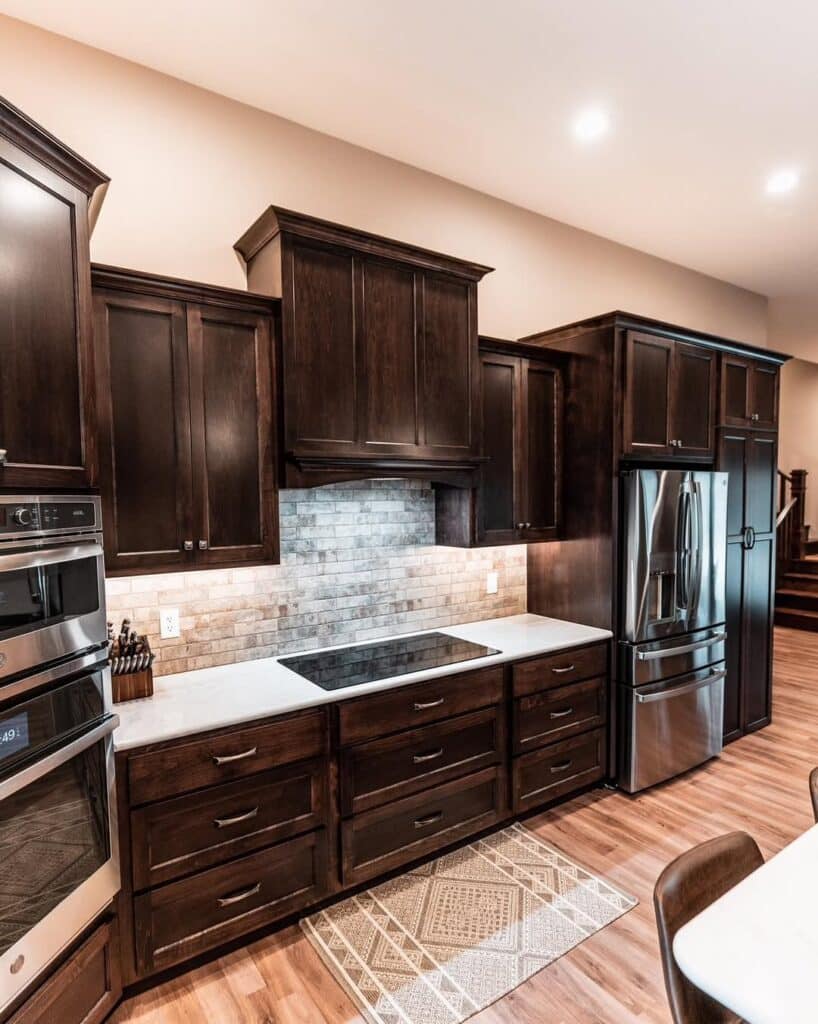
Wood with a dark stain works in a moody kitchen. The cabinetry brings warmth.
Espresso, sable, and smoked stain tones can be used on walnut, oak, or mahogany. Dark stained wood suits modern and rustic styles, while the grain provides richness.
In an open-concept layout, dark stained cabinetry can serve as a visual anchor. This cabinetry suits the layout.
Matte hardware emphasizes the wood texture. Burnished brass and blackened bronze are both options for the hardware.
A low-sheen countertop and moody ambient lighting pair with dark stained cabinetry. These finishes and lighting keep the surrounding elements subdued.
Dramatic stone slabs, concrete floors, and metallic accents balance dark stains. Together, the elements convey quiet luxury.
Open shelving can break up the run. Glass fronts or a lighter backsplash can also be incorporated as contrast elements to avoid monotony.
A dark stained finish conceals fingerprints and resists daily wear. It performs better than lacquered options for fingerprint concealment.
Dark stained wood supports depth and richness. It is described as timeless.
Butter Yellow Details
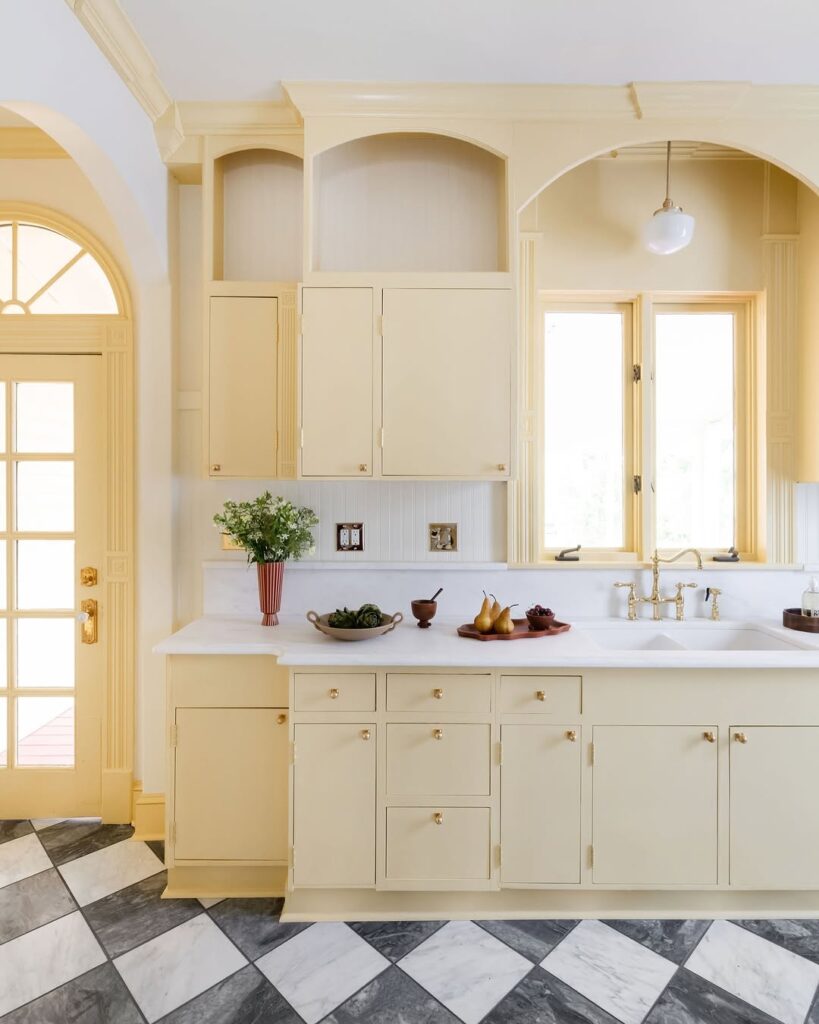
Butter yellow adds warmth and suits moody kitchens. This pale yellow also introduces nostalgic softness.
Butter yellow can be used on window frames. It also works on bar stools, a small cabinet run, and other cabinet details. The color contrasts with espresso and charcoal.
Soapstone countertops pair with butter yellow, as do matte navy cabinetry and aged brass hardware.
Butter yellow balances darkness. It helps create a comforting kitchen atmosphere.
Cool dark tones can bridge with butter yellow, while organic textures create another connection through the kitchen.
Butter yellow can appear on hoods, island legs, and vintage-inspired tile trims. These statement features contrast with the surrounding kitchen.
Use butter yellow intentionally and use it sparingly. It should feel integrated into the palette.
Cabinet Fronts with Fluting
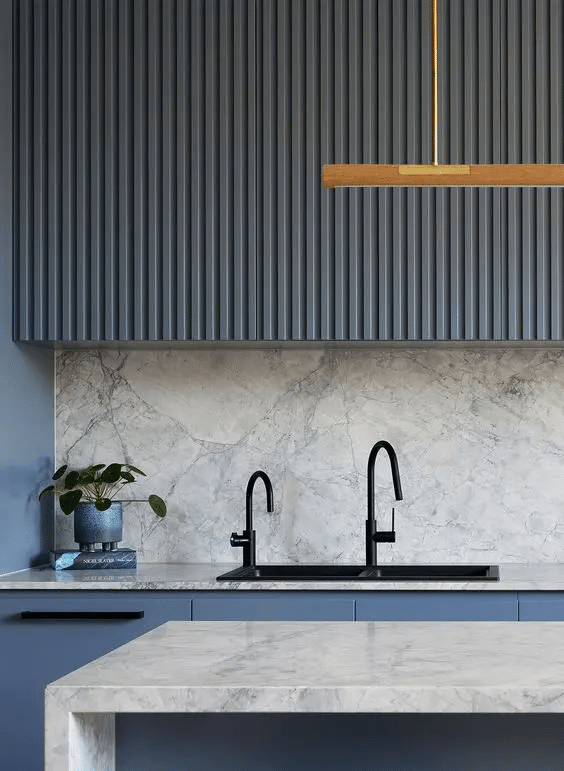
In a moody kitchen, fluted cabinet fronts provide surface texture and create rhythm. The vertical profile gives the cabinets a repeated visual pattern.
Vertical grooves add dimension without depending on loud colors. They also work without ornate hardware.
A monochromatic, tone-on-tone palette keeps the look restrained. Fluted fronts add tactile contrast and can support a modern style or a timeless style.
Matte finishes, warm wood, and muted shades such as olive, espresso, and charcoal pair with fluted cabinet fronts.
The ridged surface invites touch. Fluted fronts can be used on full cabinet runs, pantry doors, or an island.
Soft lighting works with fluted cabinet fronts. The vertical pattern casts gentle shadows that change with daylight.
Fluted fronts suit layered materials such as soapstone counters, reeded glass, and aged metal fixtures. These materials sit nearby.
Fluted fronts adapt to contemporary and rustic layouts. They provide architectural interest in either setting.
Reduced ornamentation keeps fluted fronts clear and lets them enrich the kitchen. The fronts carry the surface detail.
The moody kitchen setting combines atmosphere and functionality through fluted fronts. The cabinet fronts contribute to both.
Matte Black Finish
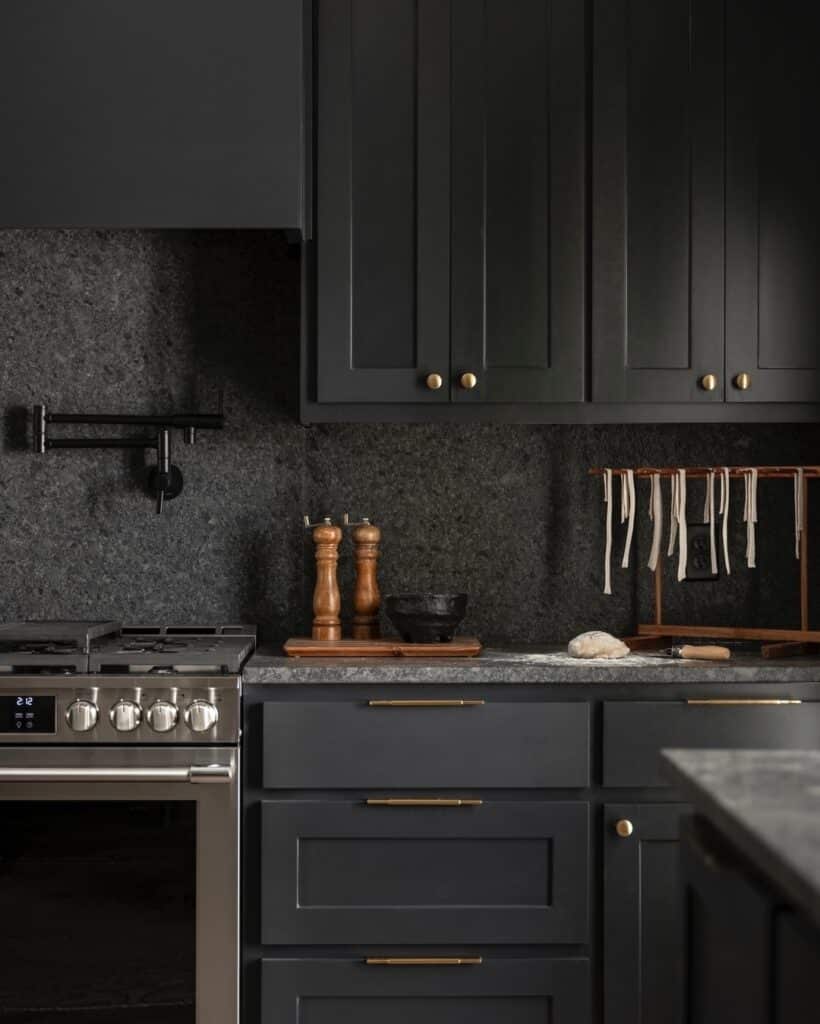
A grounded aesthetic is one of the strengths of matte black. Its matte finish suits ultra-modern kitchens and works just as well with transitional styles.
Matte black cabinets absorb light and contrast with light stone counters and warm-toned flooring. They also anchor the lighter elements in the kitchen.
Open shelving works with matte black finishes. Custom metal hardware and integrated appliances fit the same finish.
Copper fixtures pair with matte black. Reclaimed wood, concrete countertops, and other organic materials also work with the finish, adding tactile contrast.
Minor fingerprints are easier to conceal on a matte finish. Its anti-glare surface reduces visual noise, makes cleaning easier, and hides minor smudges.
Moody lighting enhances matte black finishes. Options include smoked glass pendants and under-cabinet LEDs.
The style outcome depends on the surrounding textures and layers. Matte black fits both maximalist kitchens and minimalist kitchens.
Matte black has high visual impact while using a subdued finish.
Matte black can cover faucets, hardware, and cabinets. It also supports design appeal that lasts.
Hand Painted Wall Mottling
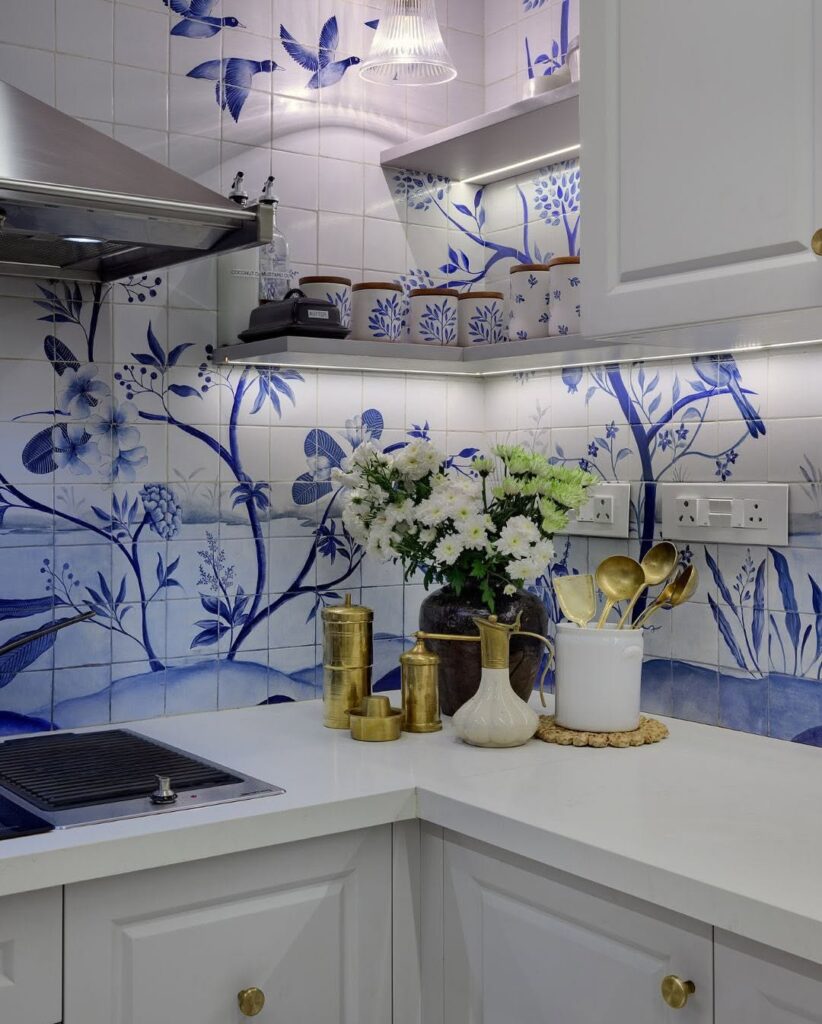
In kitchen design, hand-painted mottling emphasizes atmosphere. The method is used on the walls.
Flat paint is different from a mottled treatment, and uniform wallpaper is as well. Mineral washes, lime paints, and custom tints are used for the mottled treatment. It creates a timeworn appearance and provides wall depth.
Desaturated shades of mushroom, oxblood, slate, and dusty green often appear in a mottled finish. The finish resembles aged plaster and a fresco.
Mottled walls provide a backdrop for lighting, hardware, and cabinetry.
In changing natural light, a mottled surface can produce velvety or chalky qualities. Mottling requires skilled painters or premium mineral products.
Wall texture provides the detail, while the mottled finish softens modern lines.
Antique accessories, brass fixtures, and dark woods pair with a hand-painted mottled wall method. It avoids wallpaper and tile.
Mottled walls painted by hand provide individuality. They complement a moody kitchen ambiance.
Cabinetry in Two Tones
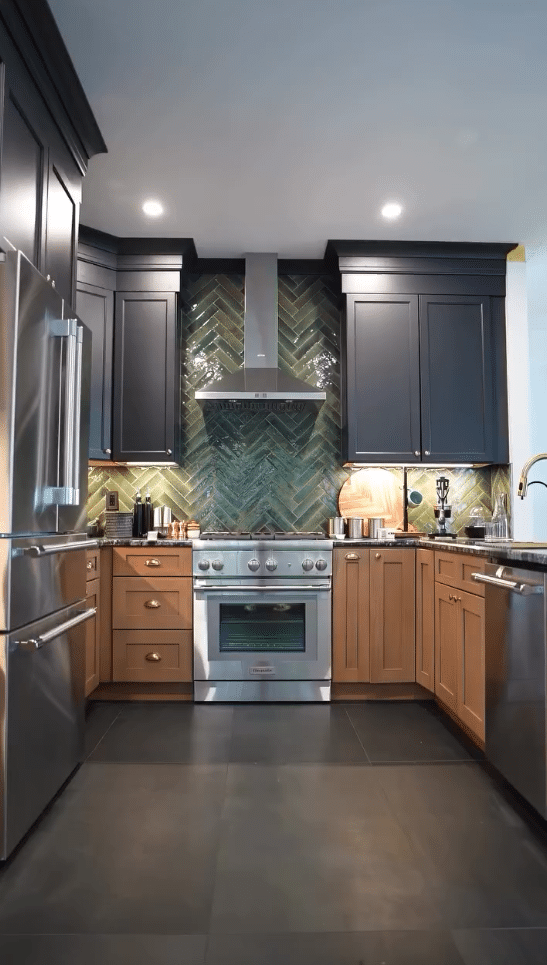
Two-tone cabinetry adds structure and visual hierarchy. The cabinetry has two finishes in a two-tone configuration.
A cohesive palette keeps the two-tone cabinetry connected while guiding visual attention through the kitchen.
Graphite, forest green, and midnight blue are options for darker lower cabinets. Pair those lowers with upper cabinets in taupe, mushroom, or soft charcoal. The result is two-tone cabinetry with a darker base and lighter uppers.
Lighter upper cabinets can make the kitchen seem taller and more airy. Contrast between the cabinets also defines the kitchen zones.
Two-tone cabinetry works well in L-shaped and galley kitchens. L-shaped kitchens prioritize flow, while galley kitchens prioritize movement.
Upper cabinet finishes can be satin or semi-gloss. They pair with a matte lower cabinet finish, and the contrast adds dimension.
Butcher block counters and stone backsplashes can bridge the kitchen elements. Hardware in brass or matte black can unify them.
The upper field allows flexibility, while the lower cabinetry can hide high-touch wear. Two-tone cabinetry therefore has practical benefits.
Brightness is preserved, and two-tone cabinetry still enhances depth and function. It is a useful recommendation for anyone reluctant to use dark cabinetry.
Moody Blue Cabinets
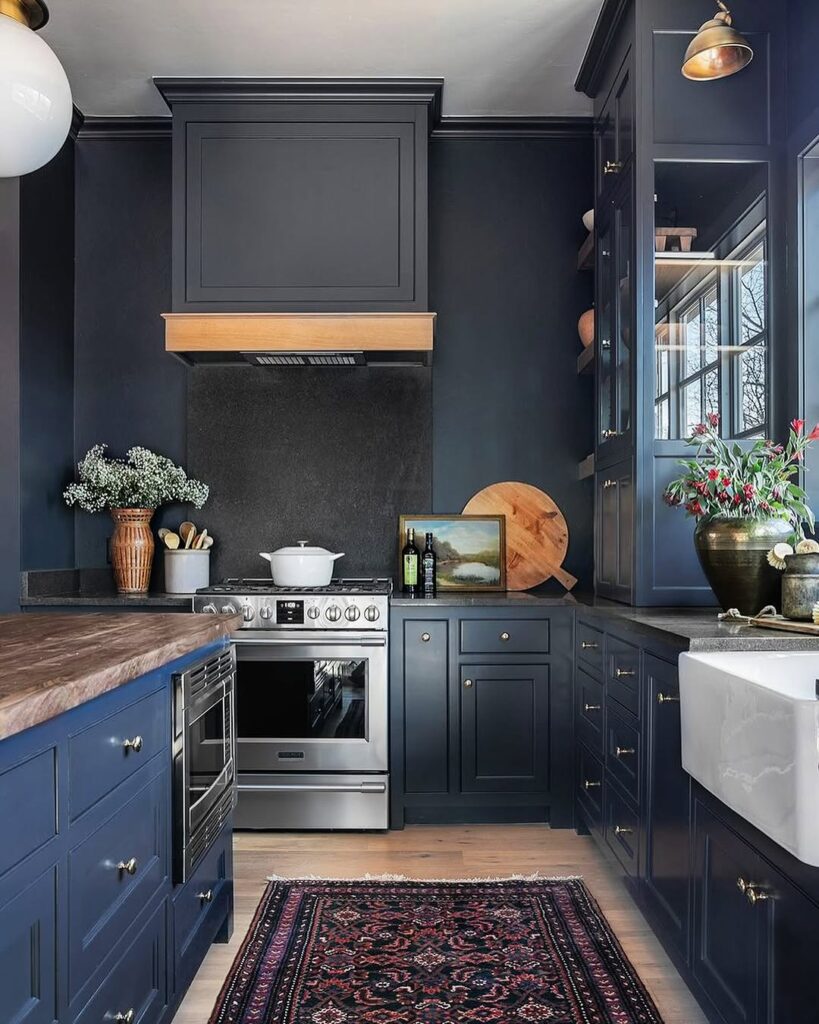
Blue hues can make a kitchen feel dramatic. Highly saturated shades such as midnight, indigo, and navy can also support a serene kitchen design.
Moody blue cabinetry conveys depth and adapts as the daylight changes. It balances warmth and coolness.
The cabinetry works with hardware finished in brass or aged nickel. This brings contrast while preserving visual harmony.
Blue painted lower cabinetry brings color into a smaller kitchen, and a painted island adds another color note. Together, they help keep the room from feeling enclosed. In larger kitchens, floor-to-ceiling blue cabinetry anchors the kitchen layout.
A butcher block counter, marble backsplash, and black stone surface pair with moody blue cabinetry. Together, these materials complement the blue's tonal richness.
The cabinet fronts can be traditional Shaker or contemporary flat panel. Cabinet style influences the aesthetic classification, while moody blue cabinetry suits both classic and modern aesthetics.
Satin and matte cabinet finishes emphasize blue softness. They produce a velvety, non-reflective appearance.
The kitchen can show personal color expression through moody blue cabinetry. The look remains sophisticated as well.
Moody blue cabinetry maintains a grounded, luxurious atmosphere and aligns with timeless design values. It suits homeowners who are not drawn to neutral colors.
Sculptural Arch
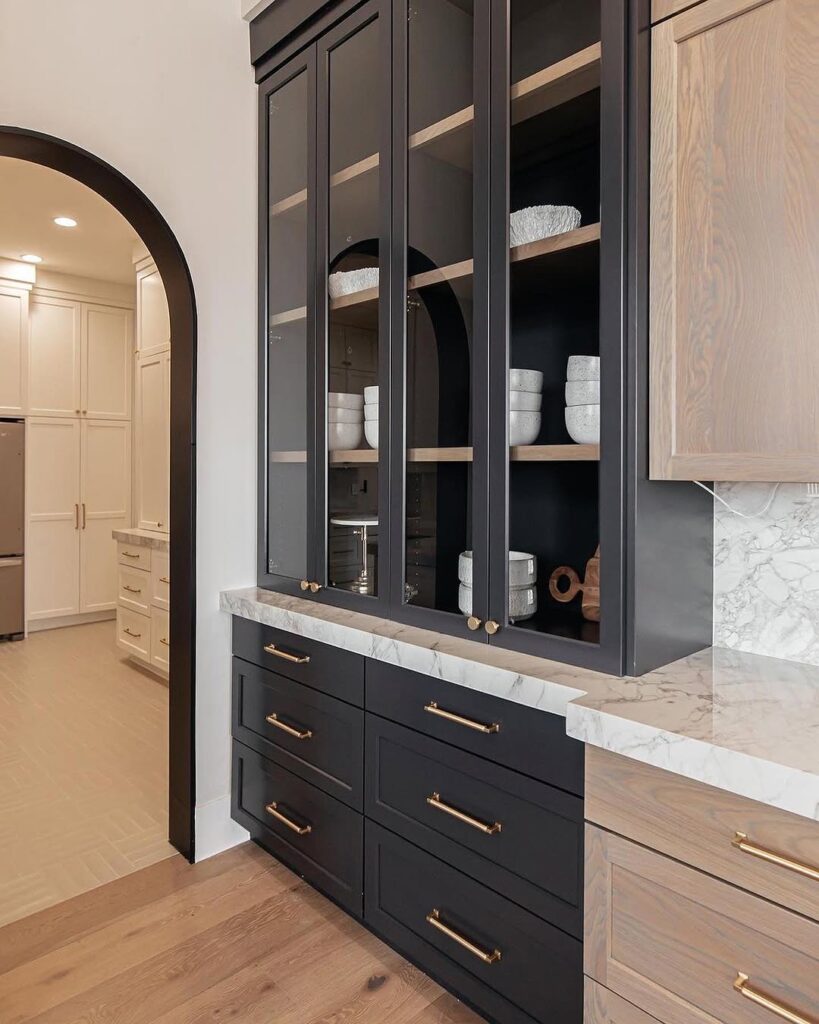
In moody kitchens, sculptural arches combine softness and structure. The arch is used as an architectural feature.
Rounded features can form cabinet insets, doorways, or niche shelving without requiring a pattern or color contrast. The arch gives these applications their shape.
Slate green, ink blue, and oxblood form a desaturated palette that pairs with arched features. The arches support European influence.
Material arches maintain openness. They also define zones. Plaster, oak, and natural stone can be used for them.
A sculptural arch can frame a range alcove or the transition between the kitchen and dining area. These are two possible placements.
Straight countertops contrast with arches. Straight cabinetry does too, while the curved forms turn functional openings into sculptural features.
Tiled backsplashes can repeat the arch curve for consistency. The same curve can carry into vent hoods and custom lighting.
Around the kitchen, arches provide balance and depth. Their shape does some of the visual work.
Arches provide architectural depth. They also add a tactile quality and are described as timeless.
Dark Panel Appliances

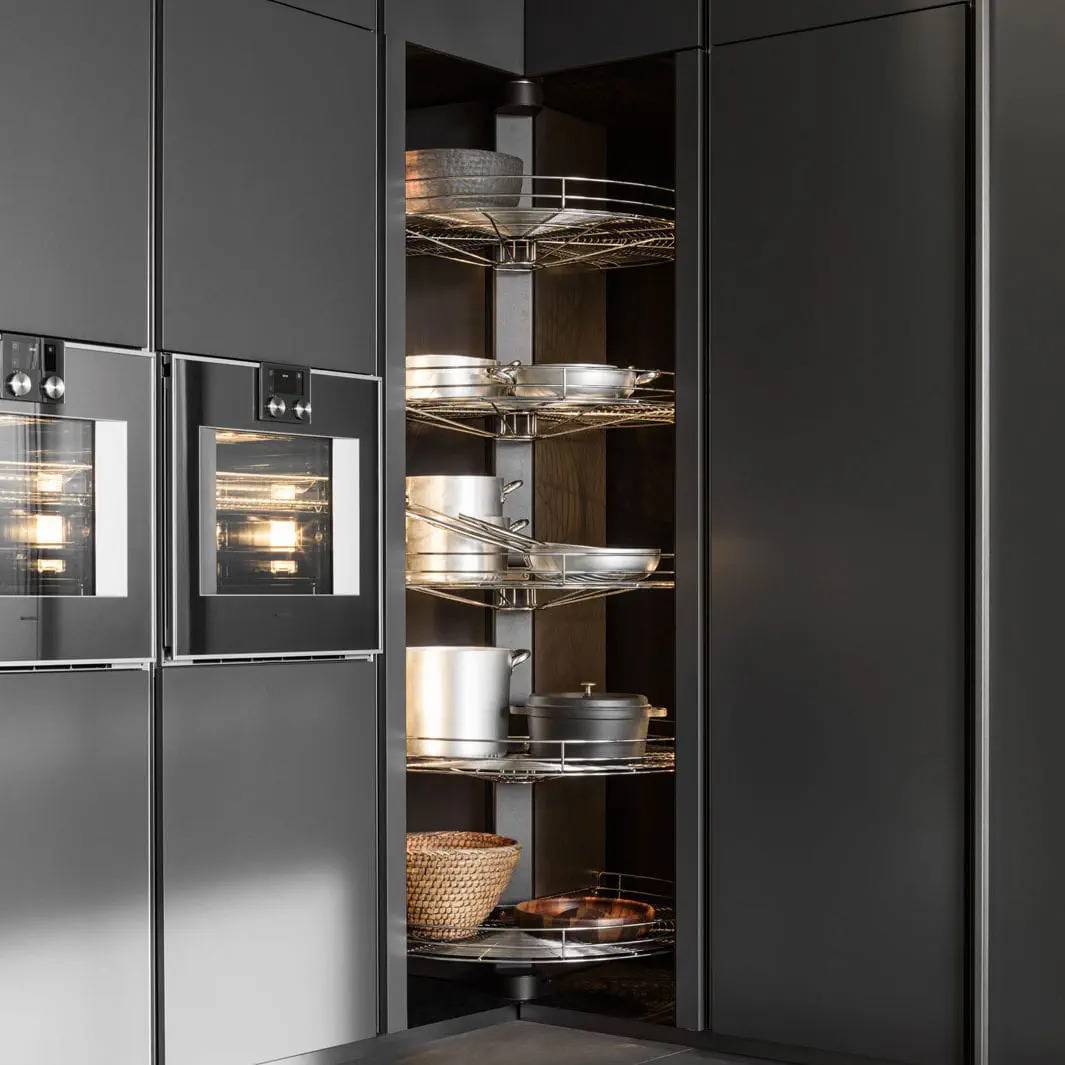
In one kitchen, dark cabinetry panels mask the appliances and support design continuity.
Integrated appliances hide behind dark cabinetry panels while retaining kitchen function. Examples include a refrigerator, dishwasher, and warming drawer.
An appliance panel in matte black or stained wood provides a consistent surface and reduces visual breaks.
A muted palette can make integrated dark panels feel calm and settled. These panels suit monochromatic palettes as well, and appliance hardware can be minimized or omitted.
Modern appliances can fit behind custom panels. Modern integrated appliances retain energy efficiency.
Flush lines help integrated appliances blend into the cabinetry layout. Pairing them with soft-close cabinetry supports integration with the living space.
Integrated dark appliances pair with moody lighting. They support emphasis on the architecture, open shelving, and statement surfaces.
The kitchen shares its visual field with the dining area and lounge area, which makes integrated dark appliances well suited to open-plan homes.
Integrated dark appliances retain practical function while supporting an uninterrupted aesthetic.
Integrated dark appliances support moody kitchen harmony and depth. They suit subtle-luxury preferences.
Textured Stone Counters

An organic, textured stone countertop supports moody kitchen aesthetics.
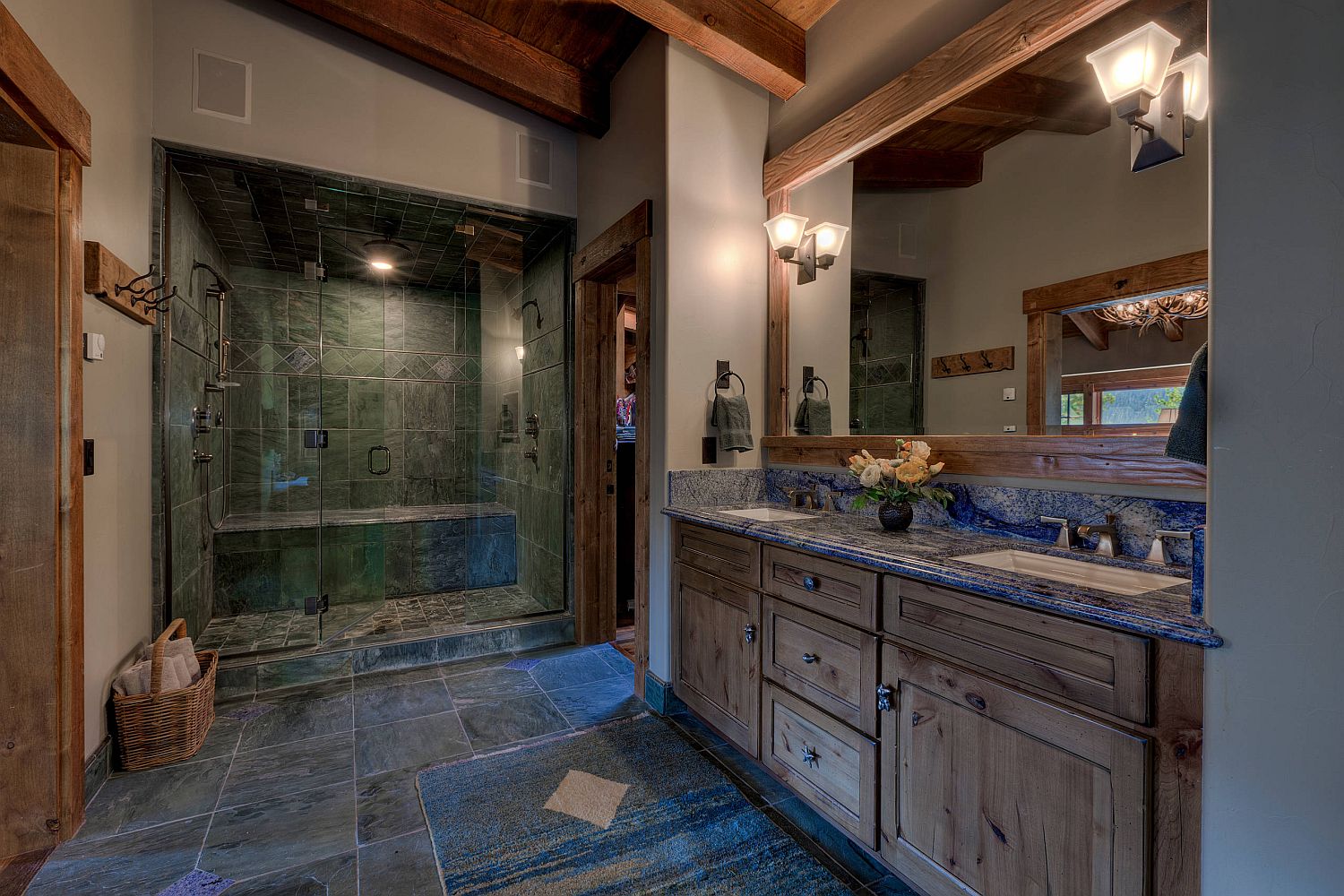
Leathered granite, honed soapstone, and flamed basalt have matte finishes that reduce glare. Their surfaces amplify depth.
Textured stone surfaces provide a non-reflective backdrop. They work with rustic palettes as well as more refined ones.
Soft veining and mineral deposits mark the stone countertop, whose color may be dark charcoal or muted taupe.
Natural stone variance means each slab differs. That variation provides individual character.
In a working kitchen, textured stone surfaces resist scratches and fingerprints. They also provide functional advantages.
A bullnose edge is a classic option, while beveled edges offer another classic choice. Square-cut edges suit a minimalist look, and the countertop edge influences the kitchen mood.
A textured stone countertop provides earthy presence and supports long-term use. Pair it with rich cabinetry and an understated backsplash.
Lighting interacts with uneven stone texture and adds dimension. Pendant fixtures or under-cabinet LEDs can illuminate the stone.
A textured stone countertop provides durability and supports tactile design. Use it across the full kitchen or as a feature on the kitchen island.
Dark Accent Open Shelves

Across the room, open shelving with an unstructured, moody finish can still appear intentional and refined.
Dark open shelves in wood or metal create depth. Espresso, matte black, and burnished bronze tones can display stoneware, cookbooks, and brass utensils.
Open shelving offsets heavy cabinetry and helps balance the room. Displayed items should use a restrained color palette to help avoid clutter, with earthy ceramics, glass jars, and antique copper among the preferred choices.
Open shelving positioned near dark cabinetry and painted walls highlights the contrast in form and material. The nearby surfaces make that contrast clear.
Textured plaster or limewash walls pair with dark shelving components. Brackets, frames, and integrated lighting reinforce the moody aesthetic.
Open shelving adds vertical interest and supports functionality. Place it above counters or beside the vent hood.
Open shelving with dark accents suits practical kitchens and personalized kitchens.
Dark accents on open shelving support everyday functionality and create a lived-in atmosphere. The look is also easy to execute.