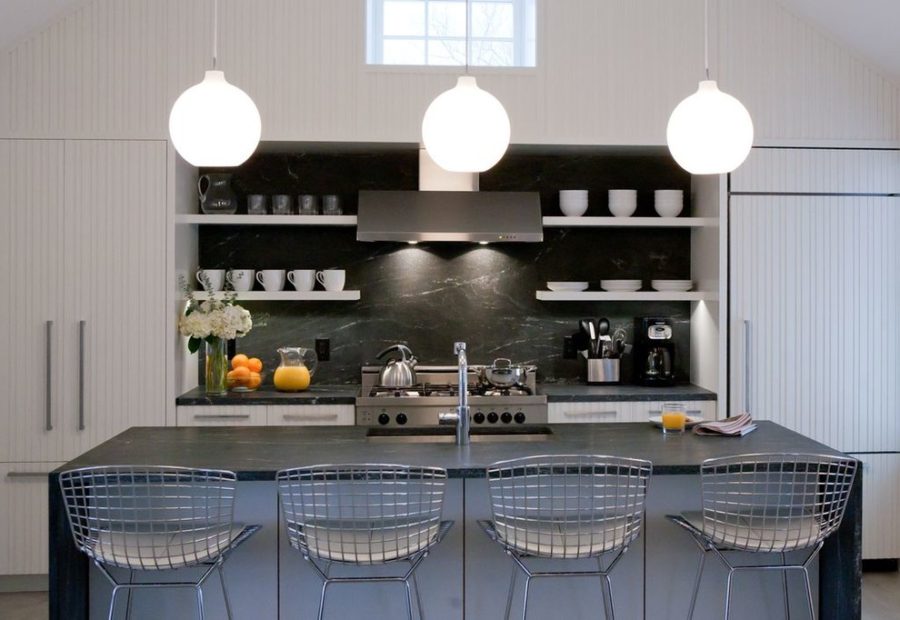
15 Clever Mini Kitchen Ideas to Maximize Space
A limited kitchen area does not have to reduce function or style.
As more people choose compact living, demand for mini kitchen ideas continues to grow. These ideas suit city apartments, guest houses, and ADUs. Smaller homes often need kitchens that use every available area without feeling crowded.
Use a space-saving layout, multifunctional storage, and sleek appliances in a mini kitchen. Keep the appliances within reach without making the room feel cramped.
Cabinetry is one place to start when the goal is to maximize space in a small kitchen. Smart lighting deserves attention too. Layout adjustments can also help the room work harder.
Kitchen design can make a strong impression even in a tight area. A small footprint does not rule out high design impact. The kitchen still needs to deliver functional performance.
Suspended Cookware Rack
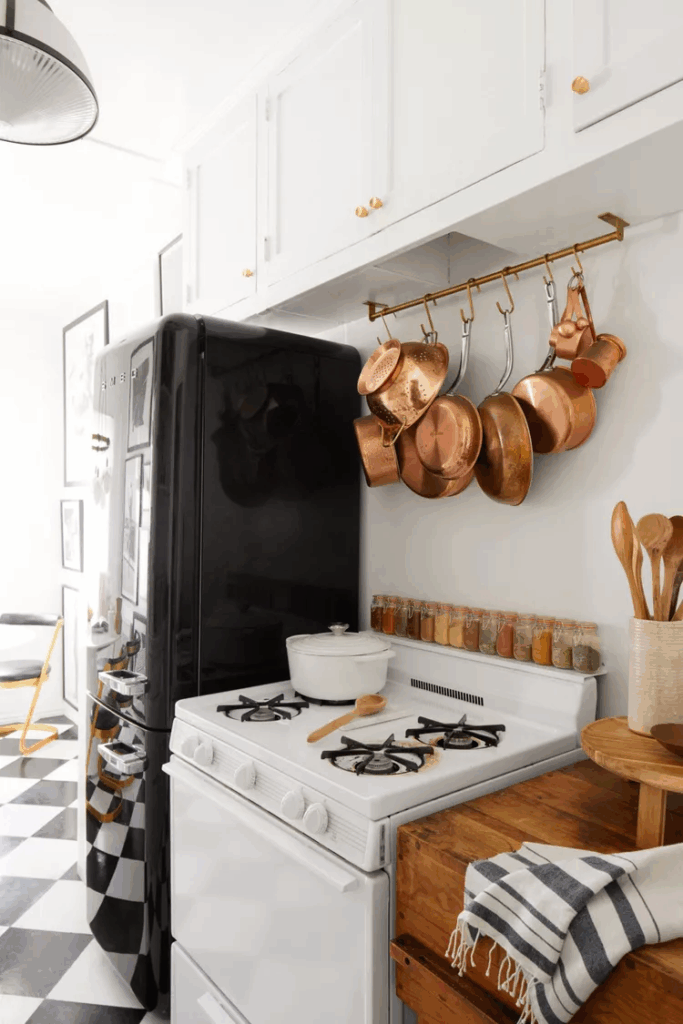
In a small kitchen, walls and the ceiling are often underused. Both spaces can support kitchen storage.
Cabinet space stays open for other storage when cookware is kept above it. A hanging rack keeps frequently used pots and pans accessible, freeing room inside the cabinets.
A hanging rack can go above an island or on a blank wall. It also provides a place to display cookware.
A pot and pan rack may use chains and S-hooks. The rack itself can be built around a metal grid or a wall bar.
Cabinet overcrowding is reduced when cookware hangs outside the cabinets. The rack also improves drying airflow for cast iron, stainless steel, and nonstick cookware. Secure the installation to wall studs and ceiling joists, since proper installation is needed to support the rack.
A rack with built-in shelves can hold lids, cookbooks, and utensil baskets. The shelves add nearby storage to the rack.
Near the stovetop, dust and grease can build up on a rack. Sort the rack contents by size and material, hang them uniformly, and clean the rack regularly to prevent buildup.
Across the kitchen, a hanging rack keeps essential tools visible and accessible. That placement supports the cooking workflow.
A hanging rack helps in kitchens with limited drawer depth or limited cabinet height. It provides storage when those spaces are restricted.
Under-Cabinet Mug Hooks
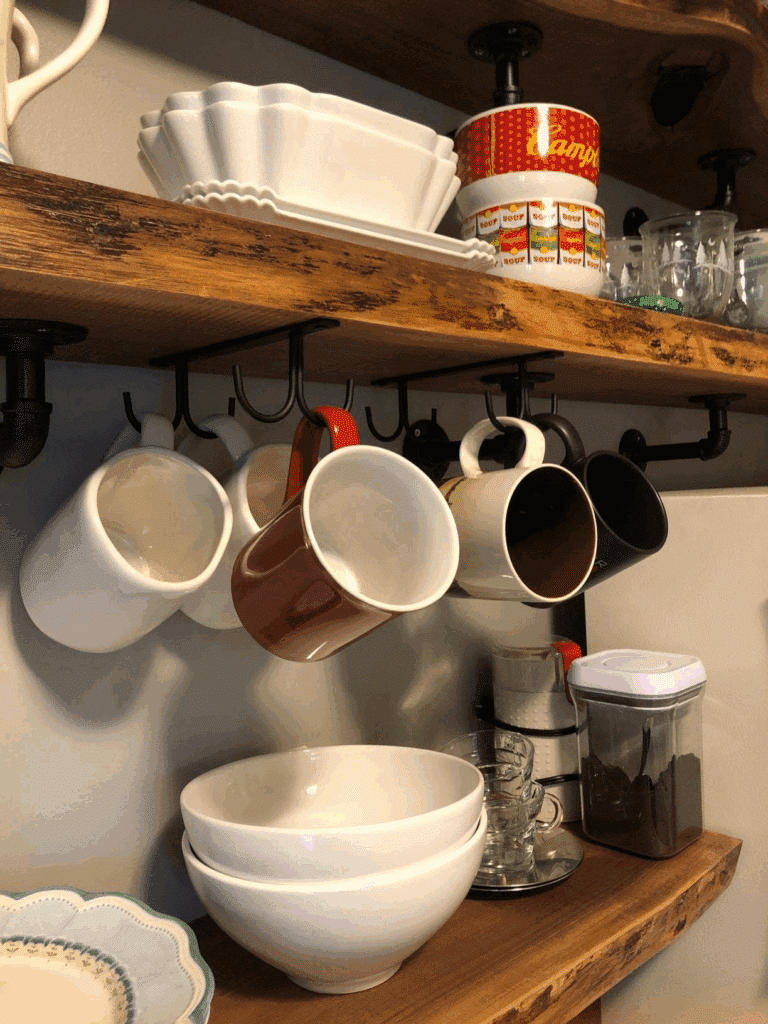
Drinkware such as coffee mugs alongside tea cups needs a place in a small kitchen. Limited shelf space can make that difficult, so the available storage needs to be used carefully.
Under-cabinet hooks free cabinet space for mug storage and keep mugs accessible.
Beneath the upper cabinets, under-cabinet storage provides vertical space without crowding the countertop or drawers.
Use adhesive strips or small screws to attach under-cabinet hooks. Their materials can include brass, brushed nickel, or matte black, so the hooks can match different kitchen styles.
Organizing the hooks keeps mugs aligned and reduces clutter.
Organize the mug arrangement around color, size, and shape. A mug display can also function as a decorative accent.
Clip-on hooks attached to a tension rod system offer a mug storage option for renters seeking damage-free storage.
A row of six hooks supports faster morning routines. Arrange the hook row intentionally to improve kitchen flow.
Under-cabinet hooks use wasted space and organize a frequently used kitchen area.
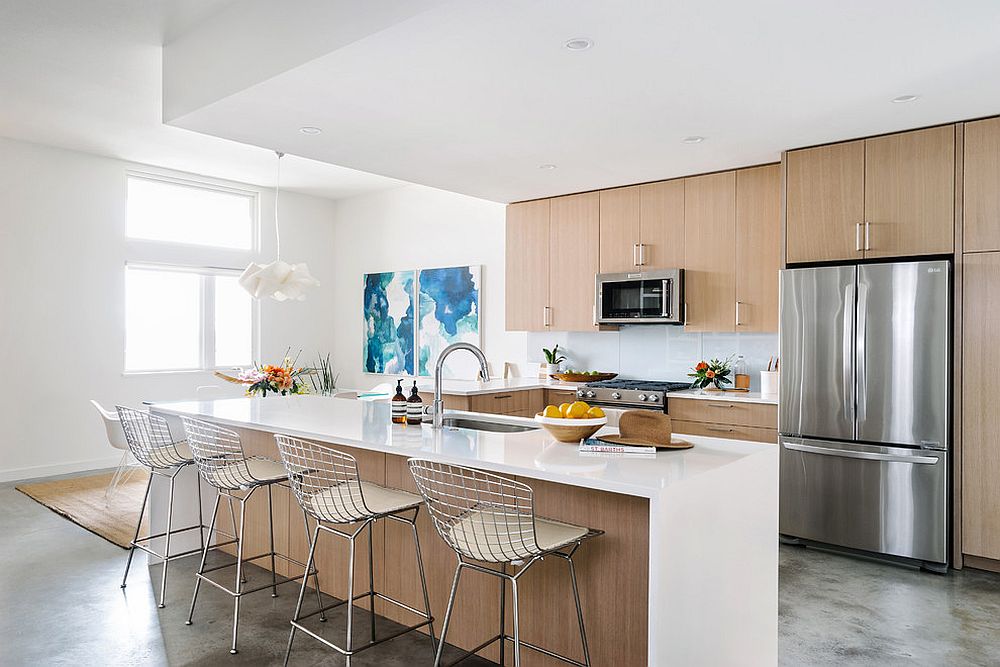
Rolling Island With a Slim Profile
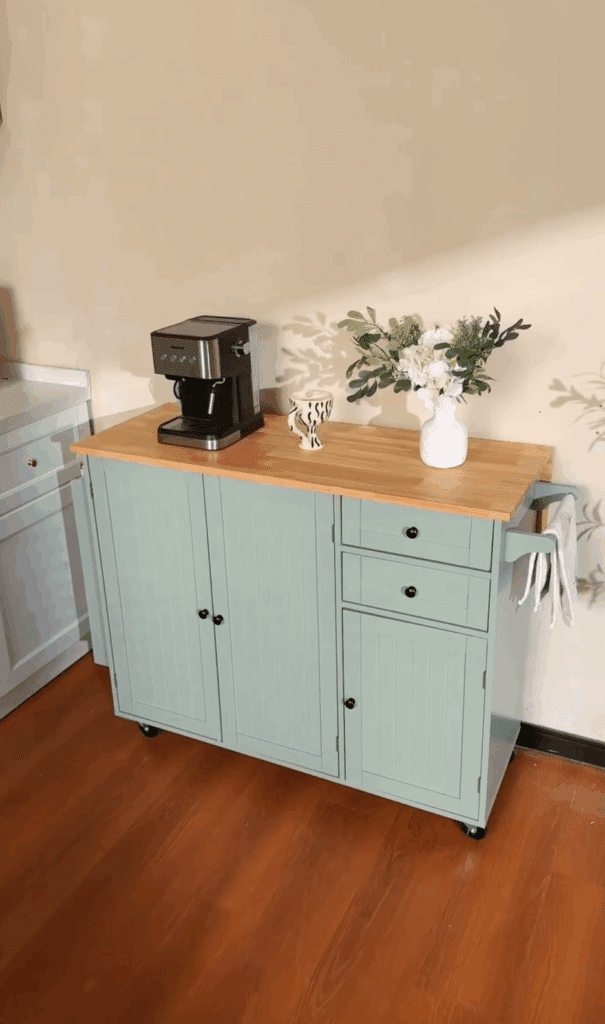
When it is not in use, the rolling kitchen island can be stored away. Bring it out when you need an extra prep surface.
A narrow, compact island works well in a galley kitchen or a small apartment.
Stainless steel makes a durable, easy-to-clean island top. Butcher block offers the same benefits. On a rolling island, built-in drawers, towel bars, and drop-leaf extensions are options for added function.
Locking mechanisms on the island wheels keep the island secure. When entertaining or cleaning, roll it to another spot.
Open shelving stores pantry items, pots, and bowls within arm's reach. It is a useful feature for a rolling island when drawer space is limited.
A rolling island can also serve as a dining table for two. Add foldable stools to maximize usability without sacrificing space.
For minimalist living, a rolling island provides convenience without committing the room to a fixed piece.
Changing kitchen needs call for a flexible island. Use the rolling island for vegetable preparation or grocery sorting.
Pull-Out Under-Sink Drawer
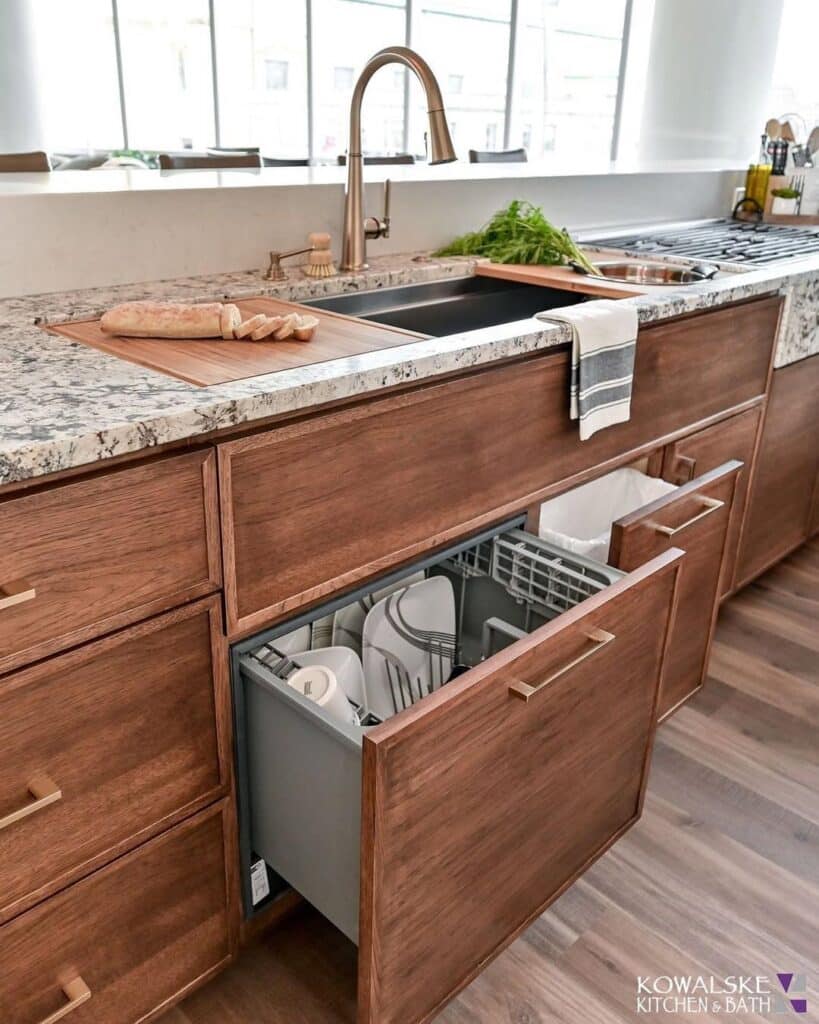
The under-sink area presents a clutter challenge and has limited space in small kitchens. A pull-out drawer uses this difficult area for storage.
Under the sink, a pull-out drawer stores dish soap, garbage bags, cleaning sprays, and sponges.
Under-sink drawers convert awkward space into storage. They are designed to work around plumbing fixtures.
An easy-to-install sliding system made from adjustable metal or adjustable plastic provides quick access.
Tiered, basket-style drawers separate items by function. Front storage holds frequently used supplies, while rear storage holds less-frequent supplies.
The drawer material is moisture-resistant. It helps keep mildew buildup from forming and supports wipe cleaning.
Liners and drip trays can be added to the drawer. Vertical dividers help prevent bottles from tipping.
Under-sink drawers reduce crouching, digging, and the need to rearrange bottles.
Under-sink drawers free upper cabinet space.
Magnetic Knife Strip
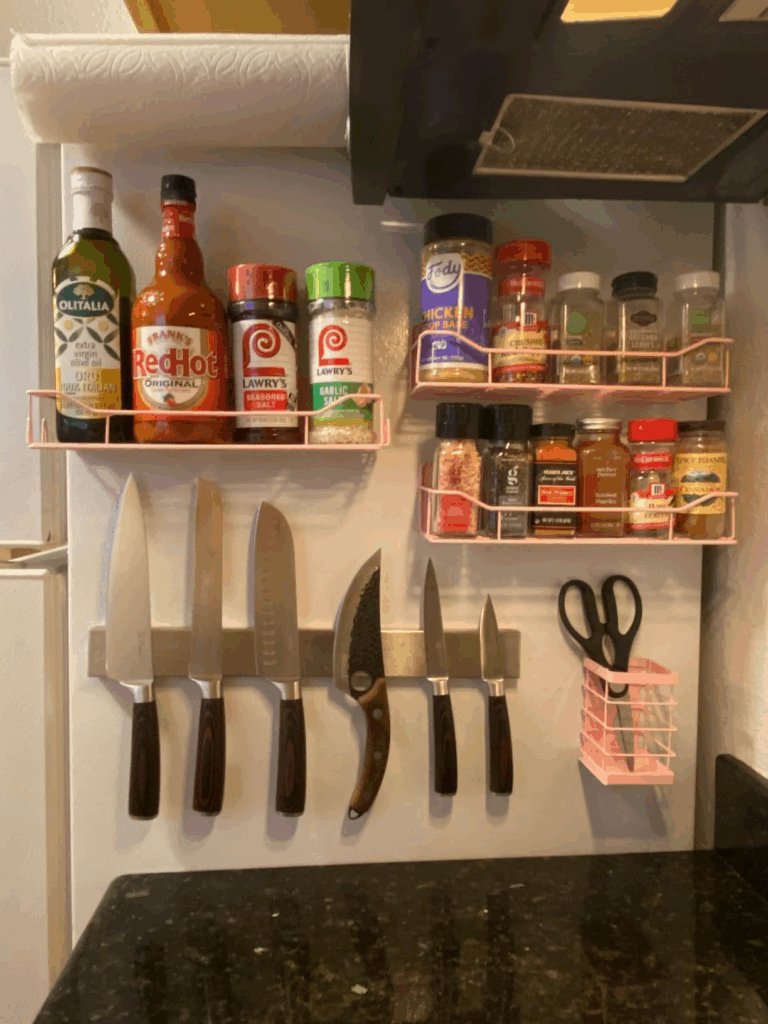
A magnetic knife strip addresses drawer clutter and the need for bulky knife blocks in a limited kitchen layout.
Placed on a backsplash or wall, a magnetic knife strip provides space-saving storage and keeps knives visible.
During food preparation, the magnetic knife strip keeps frequently used blades accessible. It also conserves counter space.
A knife strip made from stainless steel, wood, or a matte finish can complement industrial or Scandinavian interior styles.
The knife strip can be mounted with screws or heavy-duty adhesive backing. Its magnetic hold secures large chef's knives, but the installation method depends on the kind of wall and the weight it must carry.
A magnetic strip can also hold shears, peelers, and bottle openers.
Open knife storage supports air drying and hygiene. A magnetic strip can reduce the need for drawer organizers.
In a tight kitchen space, a magnetic knife strip keeps the countertop clear. It supports safer cooking and helps cooking stay efficient.
Quick access to tools improves kitchen workflow in limited space. The knife strip keeps tools ready for slicing, dicing, and chopping.
Sinktop Cutting Board
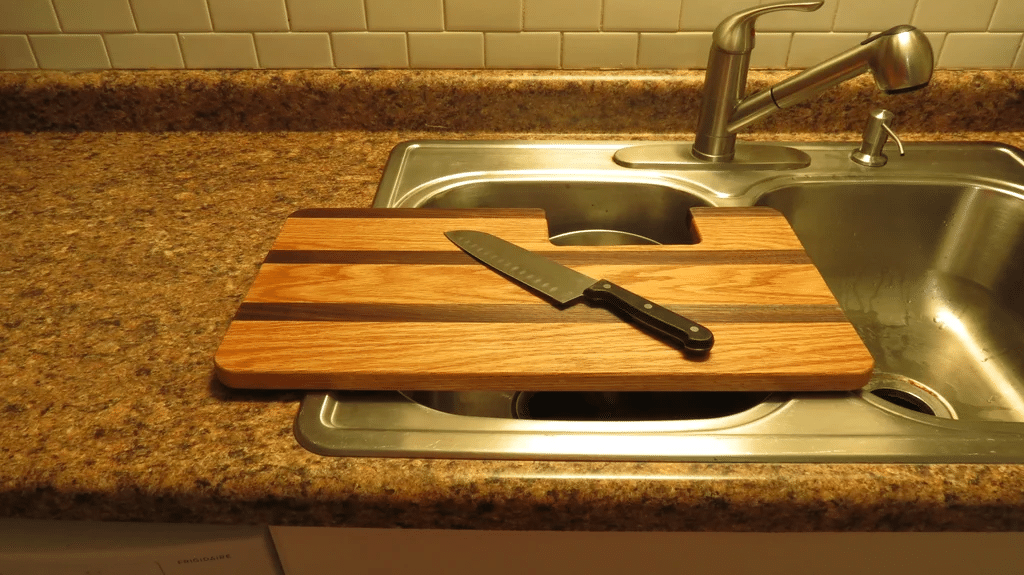
A cutting board helps a mini kitchen handle meal prep when counter space is limited. It adds a place to work under that pressure.
The sink area gains a place for chopping with an over-sink cutting board. It supports slicing and food preparation while reducing crowding on the counter. The board also serves as a temporary work surface.
For standard sinks, the board can rest on standard sink edges. Material choices include wood, bamboo, and non-slip plastic.
A cutting board with a collapsible colander, strainer tray, grooves, and a juice catcher can support rinsing and simultaneous chopping. The grooves and juice catcher help reduce food-prep mess when working with fruits and meats.
In a galley kitchen or studio apartment with minimal workspace, an over-sink cutting board can provide a suitable work area.
A cutting board covers the sink and provides a temporary workspace. Lightweight, stable, and easy-clean designs can store vertically in narrow spaces.
An over-sink cutting board supports the prep workflow while keeping that workflow near water access.
An over-sink cutting board supports daily kitchen tasks and reduces prep friction. It adds a work surface over the sink.
Magnetic Appliance-Side Spice Rack
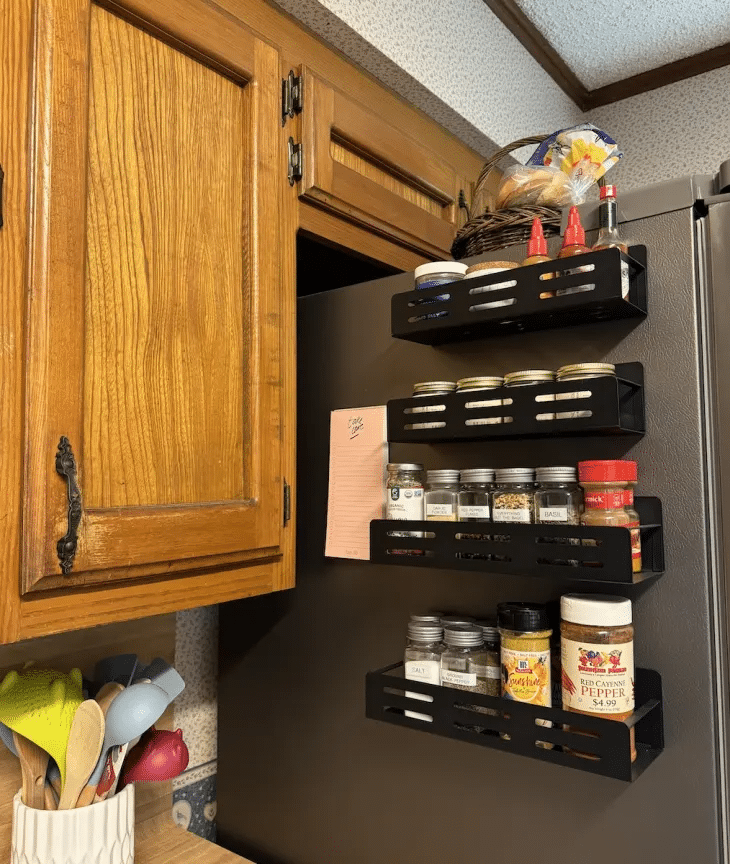
Appliance sides provide unused storage surfaces. A magnetic spice rack makes use of that available area.
A magnetic rack on the microwave side stores seasonings and keeps them accessible. Another magnetic spice rack can attach to the refrigerator side.
Magnetic spice racks use vertical space and suit kitchens with limited cabinet storage.
Metal and plastic are used for the spice rack, which has a magnetic backing. The magnetic rack attaches to flat appliance surfaces and needs neither drilling nor permanent hardware.
Choose a spice rack with enclosed sides or raised guards to keep a jar from slipping. Magnetic spice racks suit renters and can be repositioned or removed without damage.
Across the room, uniform spice containers can create a consistent setup. Clear glass containers support identification of their contents.
A spice rack may allow stacking or include under-hooks for holding small utensils. Label the spices.
Appliance-side spice storage keeps spices within reach while freeing drawer and shelf space.
In compact kitchens, magnetic spice racks suit limited storage zones.
Stackable Kitchen Storage Bins
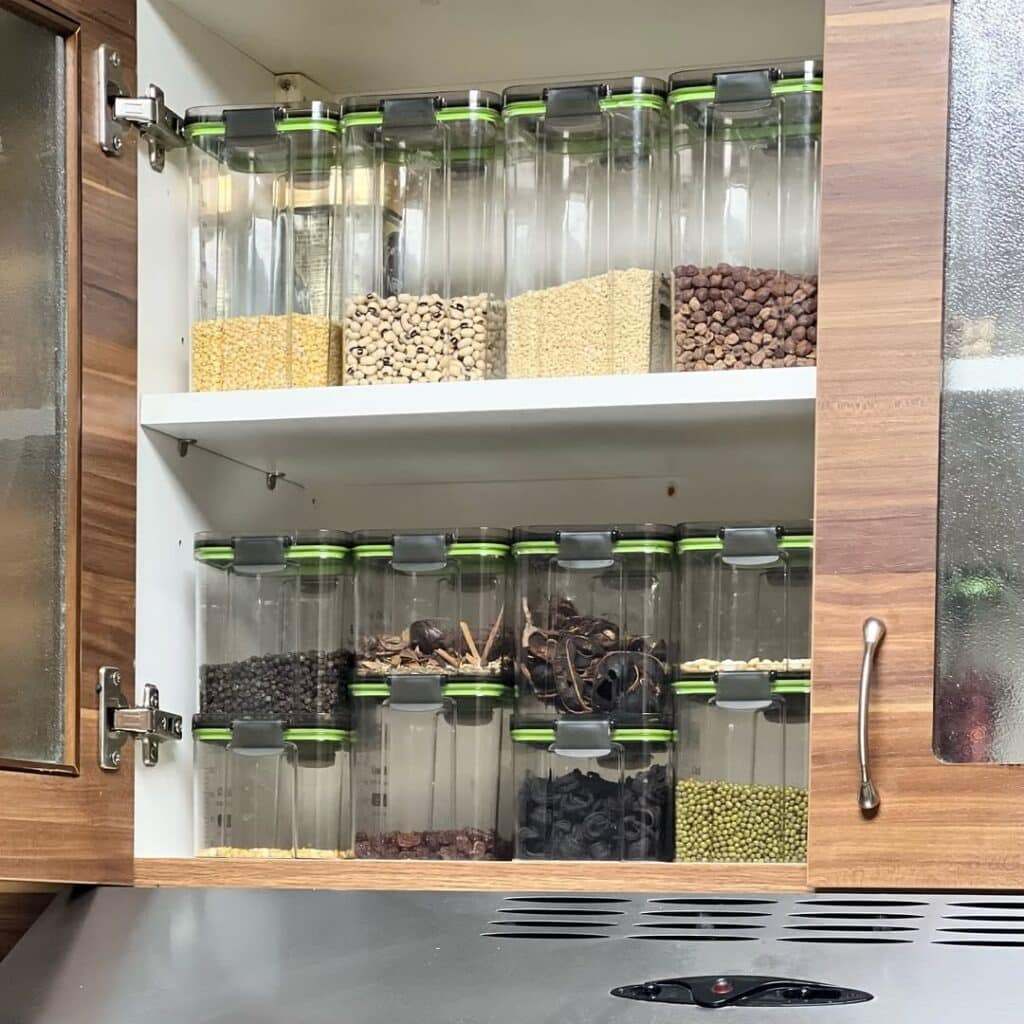
Vertical storage helps keep a small kitchen tidy when floor area is limited and more vertical space is available. It also prevents the room from feeling overloaded.
Storage bins divide dry goods, snacks, cleaning supplies, and produce into separate compartments. They provide this organization without the need for bulky shelving.
In a pantry, varied-size bins made from clear plastic or wire mesh can fit different areas. They work under the sink and on top of the refrigerator, too.
Modular storage tiers can be added or removed as your needs change. The storage bins adjust with them.
Clear sides let you see what is inside, while the front can stay open or use a flip-top lid for quick access. For better stability, select bins with interlocking edges and anti-slip feet.
Color-coded bins and labels make sorting easier. The system can support multiple users, and visible bins may help reduce food waste.
Deep drawers and tight crevices along cabinet sides can accommodate narrow storage bins. Their slim width lets them fit into spaces that wider bins cannot.
In a stackable storage system, each bin sits above another to maximize available space. The arrangement improves organization and helps prevent messy piles.
Cabinets and countertops can both hold storage bins. The bins support kitchen function while helping reduce clutter.
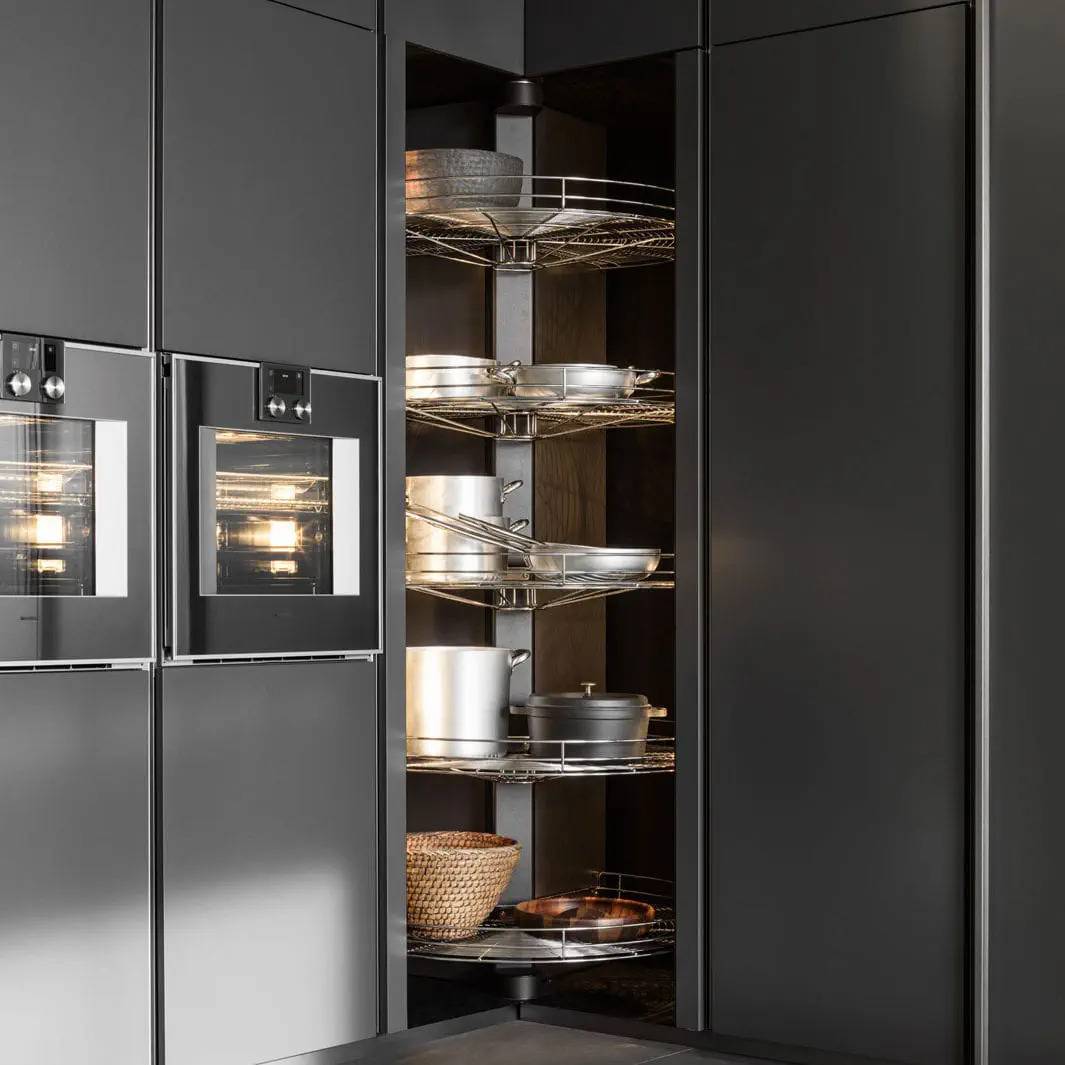
Kitchen Corner Shelving
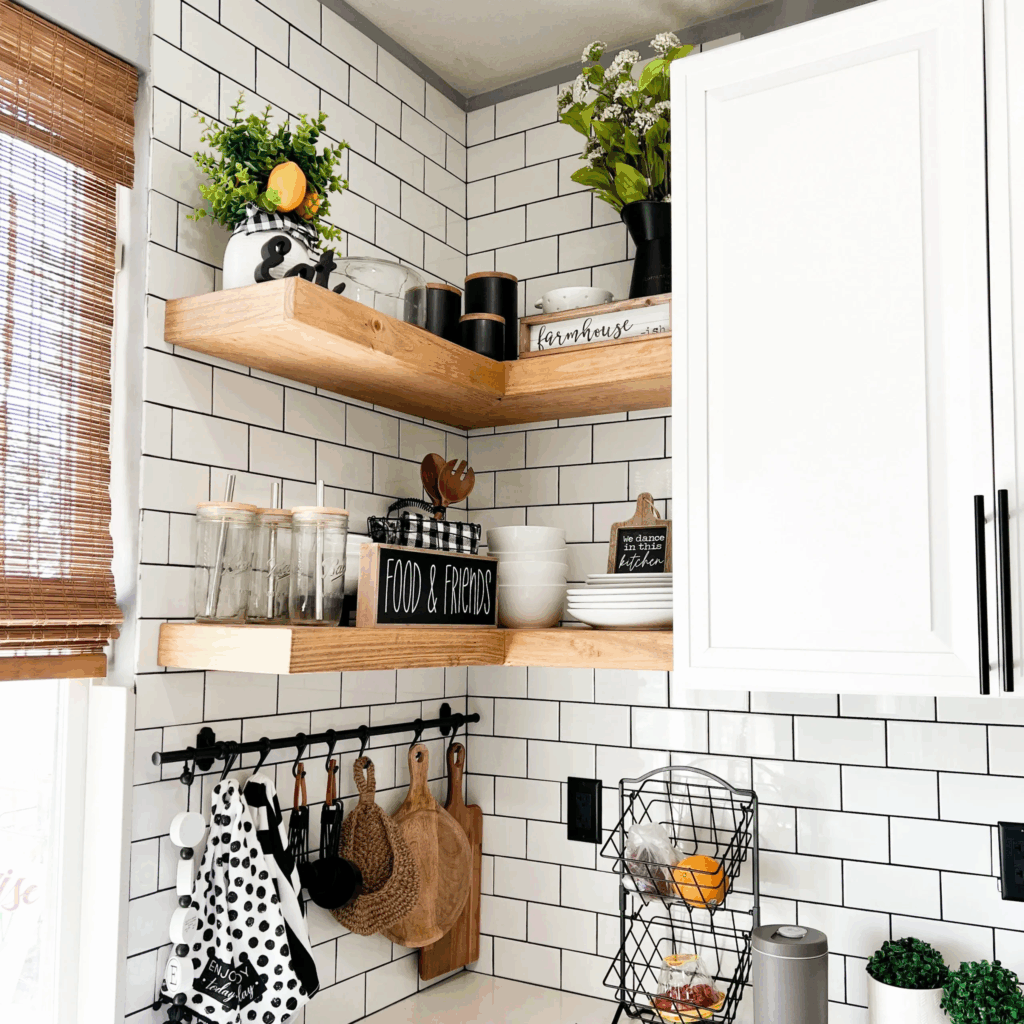
In small layouts, kitchen corners are often underutilized. Corner shelf units give those spaces a storage use.
A tiered corner shelf unit fits into a two-wall corner. It stores or displays dishware and potted herbs.
Corner shelves are available in wood, metal, and acrylic. A unit can stand freely or be attached to the wall for kitchen storage.
A corner shelf can have triangular or rounded-edge shapes and adjustable shelf heights. It accommodates mugs, small appliances, and decorative items.
A corner shelf keeps displayed daily items within easy reach. Measuring cups and salt and pepper shakers can sit on it for daily access.
In tight kitchens, corner shelf units free both drawer space and counter space. They provide storage without using either surface.
In an unused corner, corner shelving fills the gap and supports a more balanced layout.
Corner shelving does not require major installation. It can be added without interrupting the workflow.
A corner shelf unit converts an awkward corner into a practical-use area. The corner gains a storage function.
Built-In Smart Lighting
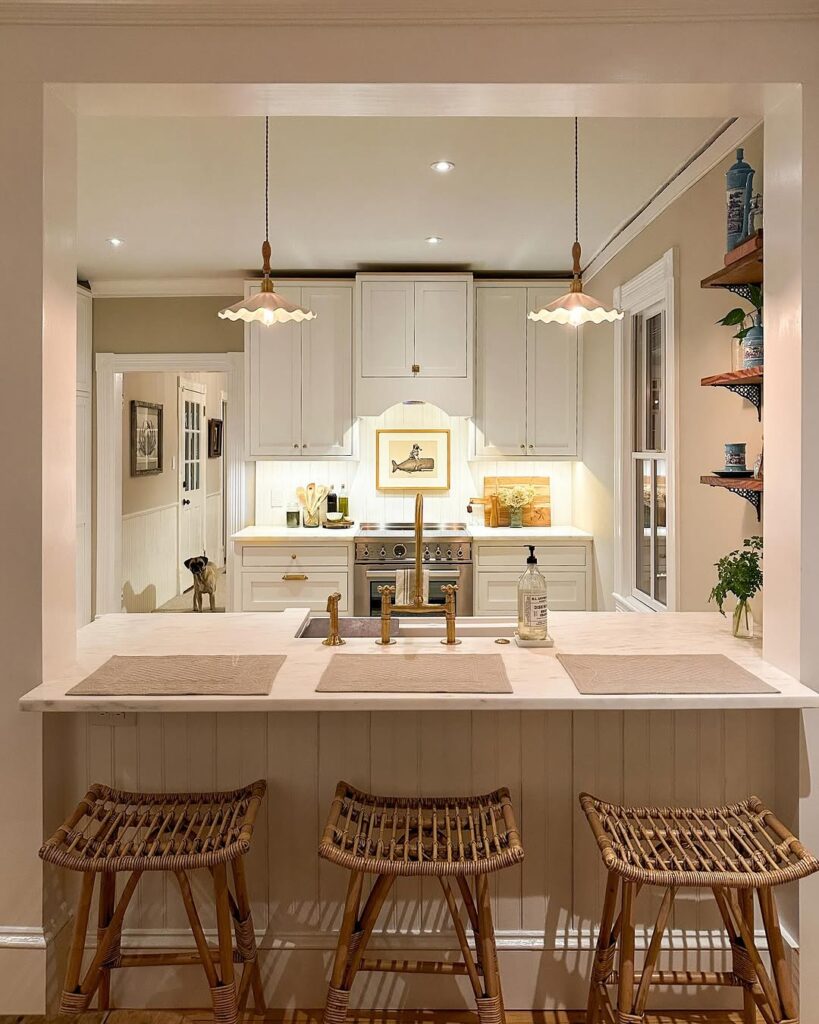
In small kitchens, dim lighting can make the room feel more cramped. Smart lighting reduces uneven lighting and improves visibility where it is needed.
Smart lighting can use energy efficiently while supporting daily kitchen tasks. Motion-activated under-cabinet lights turn on as needed, and a voice-controlled ceiling fixture provides another way to manage the room.
Counters and work areas get direct light from LED strips installed under the cabinets. That light supports food chopping and makes recipes easier to read.
For renters, battery-operated lighting offers a non-wired option that can be placed where needed. Its settings can change the mood with the time of day, while dimming and color adjustment provide control over the light.
Smart lighting reduces eye strain and improves cooking safety in compact areas.
Smart lighting can connect with mobile apps and home assistants. Use a voice command to activate individual lighting zones. The system also supports zone activation and lighting schedules.
Smart lighting combines style and function while supporting early morning use and late dinner preparation.
Compact kitchens benefit from careful lighting as much as from smart storage. Smart lighting can improve workflow and reduce power use.
Inside-door storage
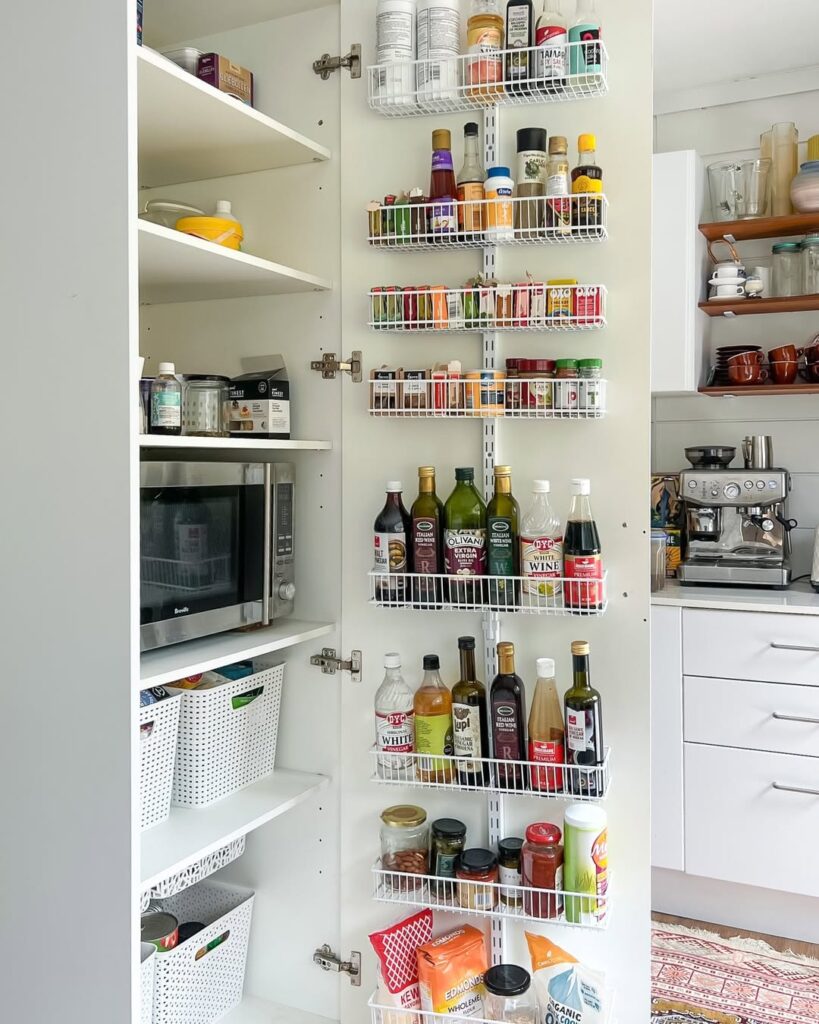
A flat cabinet door offers storage potential on its inside surface. The door can hold items without using the main cabinet shelf.
Inside a cabinet door, a basket, hook, or rack can improve kitchen organization. Door-mounted storage keeps these pieces in a separate location.
Cabinet-door storage holds foil rolls, measuring spoons, and cutting boards.
Adhesive mounting gives door storage a simple setup, while hardware-mounted versions use fixed hardware. This storage suits homeowners and renters.
In different cabinet types, adjustable storage supports a custom fit. Choose a slim profile so the shelf contents do not interfere with the closing mechanism.
Compartments can sort frequently used tools, lids, and wraps. Secure mounted items, and limit added weight to protect the hinges because excess weight can damage them.
Essentials stay nearby with cabinet-door storage, which improves task efficiency.
Cabinet-door storage conserves space and time. It reduces the need to search through stacked items or rummage through drawers.
Cabinet-door storage supports kitchen functionality in mini kitchens.
Wall Organizer With Pegboard
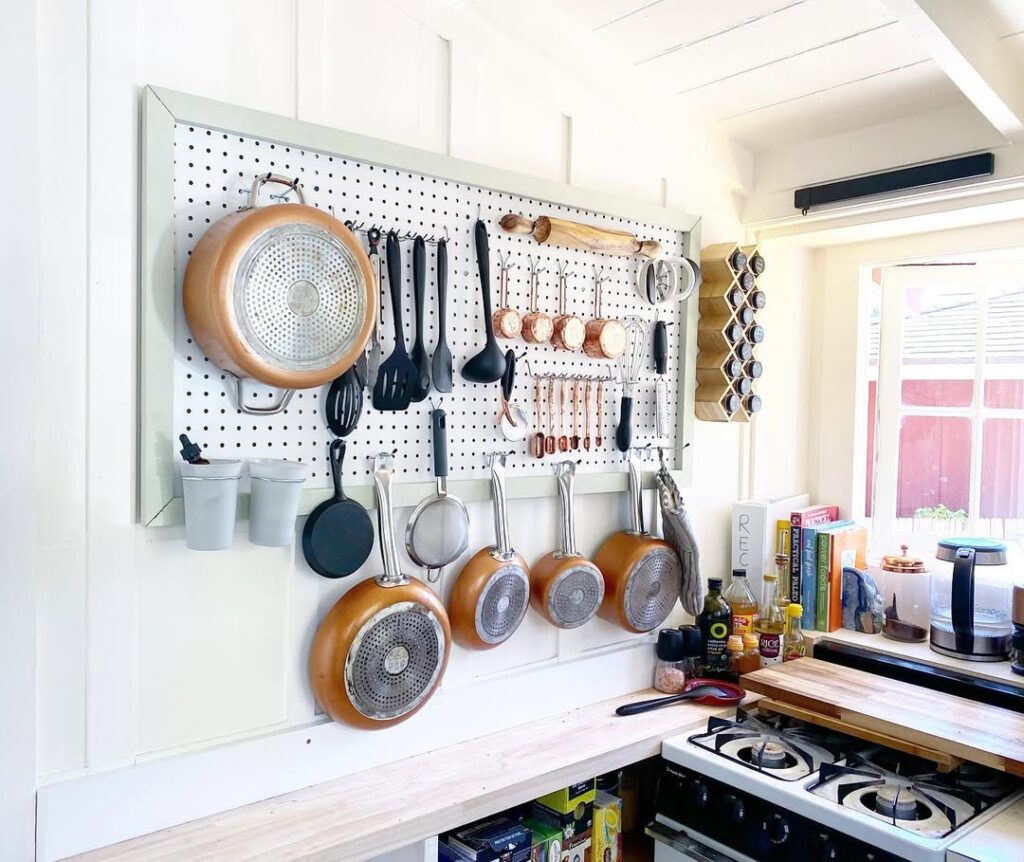
When cabinetry capacity is full, a pegboard lets wall space serve as a valuable storage area in a compact kitchen.
An adjustable storage station can be tailored to the daily routine. A pegboard organizer converts an empty wall into that station.
Flexible storage starts with a pegboard, whether it is wood, steel, or composite. Add shelves, bins, or adjustable hooks to the board.
Small potted herbs can share the pegboard with kitchen tools. Use it for utensils, cutting boards, and oven mitts as well.
As the workflow evolves, pegboard accessories can be swapped out. Color coding and categorization can organize the setup, while large panels may be cut to size, then painted.
The prep zone is one placement for a pegboard when quick access is the goal. The stove area is another option.
A wall-mounted organizer reduces drawer and counter clutter while supporting a more streamlined task flow.
The space above the sink can hold a pegboard. It provides wall storage there, and it can also go next to the fridge or behind the door.
A pegboard can make an efficient storage hub from unused wall space when it holds practical tools and has a useful accessory arrangement. The storage hub functions with high efficiency.
Above-Refrigerator Organizer
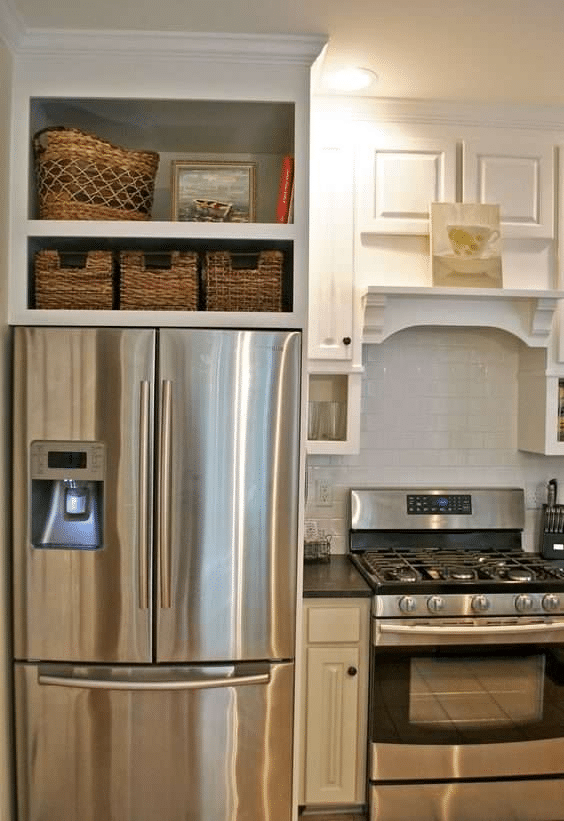
The refrigerator top often remains unused, even though it can become a clutter zone. This area is available for storage above the refrigerator.
An organizer above the refrigerator provides structured storage for cookbooks, baking sheets, trays, and cereal boxes.
An organizer with slots and dividers keeps items from toppling and helps prevent them from being lost.
Metal wire gives the organizer one of its surfaces, with wood panels and durable plastic also used in its construction. The organizer may include sliding baskets and side pockets.
Across the top of the refrigerator, an organizer can provide a sturdy but lightweight, drill-free setup. For hardware-free installation, choose one with non-slip pads or rubber feet.
An over-fridge organizer stores large flat items and accommodates pieces that are too large for cabinets.
Less-used items can go in an over-fridge organizer while remaining accessible when needed.
Above-fridge storage adds vertical capacity and reduces cabinet and drawer overflow. It does so without altering the kitchen layout.
Above-fridge storage is useful for small kitchens and supports daily efficiency.
Wall-Mounted Fold-Down Table
Limited square footage is the concern here. Adaptable furniture supports homes where space is tight.
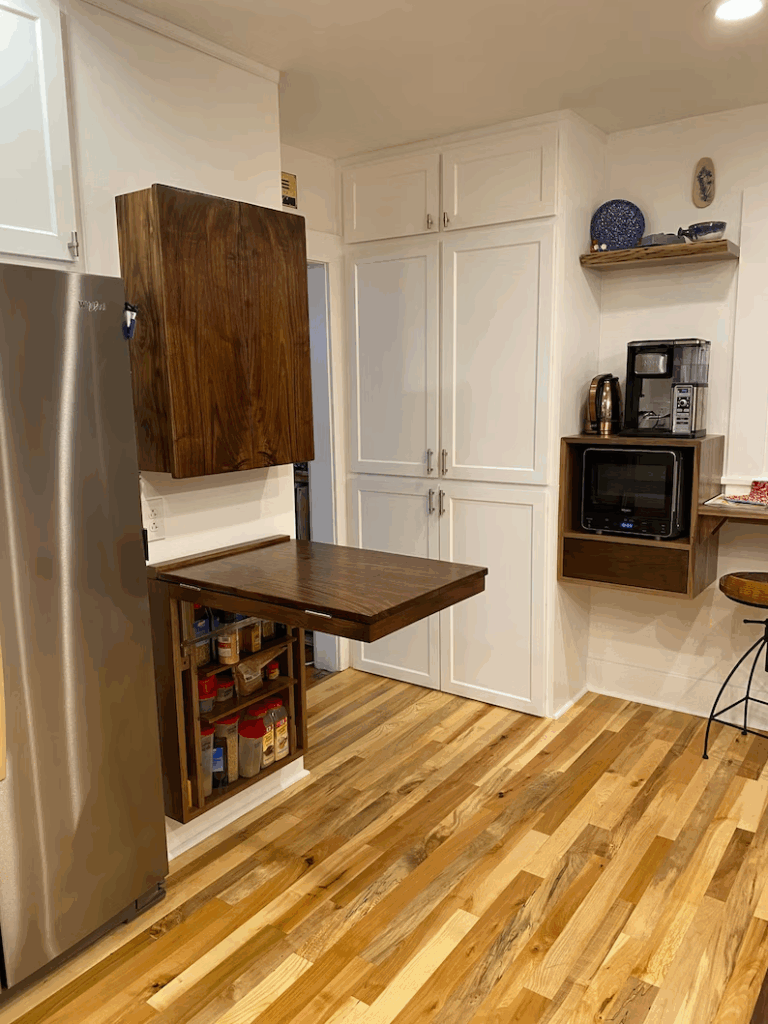
When not in use, the wall-mounted table tucks away. Its fold-down design suits tight kitchen layouts.
In one corner, a fold-down table can function as a workstation, meal-prep station, or dining surface. It minimizes the amount of floor space the table occupies.
Wood is used in this counter-height table, together with metal and laminate.
A fold-down table can carry extended weight when supported by wall brackets or foldable legs. Once folded, it rests against the wall and leaves room for kitchen cleaning and movement.
A fold-down table suits narrow galley kitchens and studio apartments. It supports dining for two while preserving floor space.
Small shelves can store utensils, while hidden compartments hold condiments. These features can be built into the table.
A fold-down table preserves comfort while providing multifunctional use of the space.
Dinner serving is one use for a folding table. It can also support coffee use.
Slim Pantry on Wheels
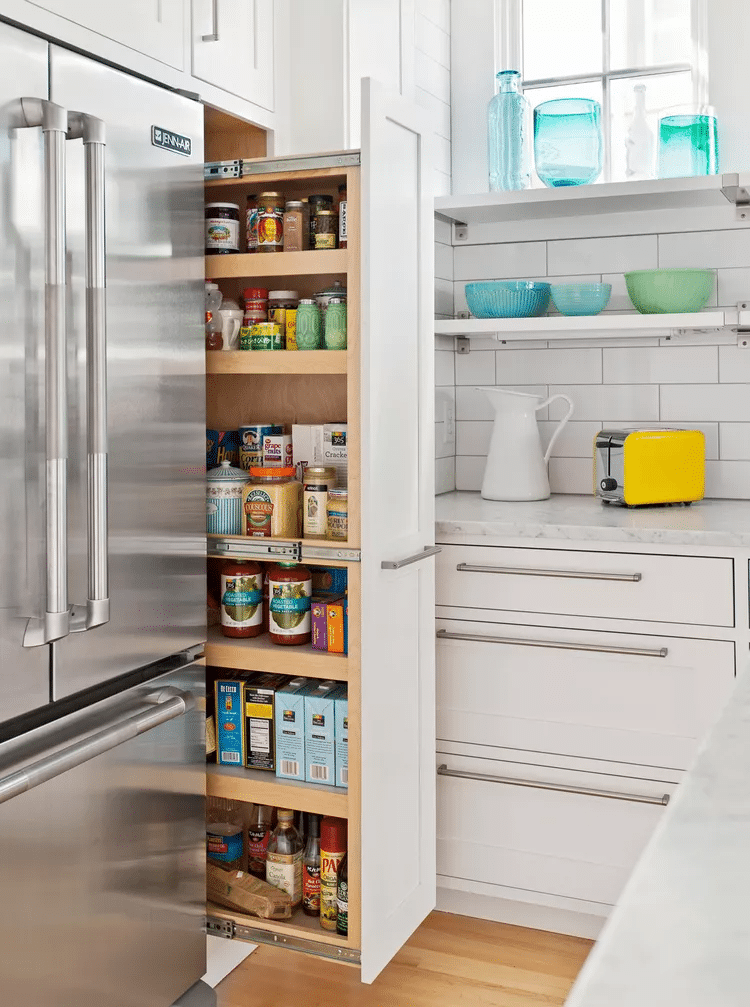
Between cabinets or appliances, a kitchen gap is often wasted. A slim pantry can use that gap for storage.
A mobile rolling pantry fits into the gap and uses vertical space. It stores dry ingredients, spices, and canned goods while remaining easy to move.
Tall and slender, a rolling pantry can hold pantry staples in a gap as narrow as 5 inches. Its narrow form is suited to that minimum space.
In a narrow kitchen space, smooth-rolling casters make the pantry easy to access. The casters let the pantry move when its contents are needed.
Adjustable shelves accommodate bottles, jars, and boxed items. Side rails help keep the stored items in place as the pantry moves, preventing them from dropping out during movement.
Powder-coated metal and wood laminate give a rolling pantry durability. Both materials are used in its construction.
A pre-assembled rolling pantry or one requiring minimal setup suits non-DIY users. Some models also have a locking design for securing the pantry in position.
For renters and homeowners with limited pantry space, a rolling pantry adds storage without requiring a full pantry. It works for both types of users.
Beside the cooking zone, the rolling pantry can place everyday ingredients within reach. This reduces countertop clutter, shelf clutter, and the time needed to gather ingredients, which can reduce prep time.
A rolling pantry supports storage in slim spaces. Its narrow format is intended for areas that cannot accommodate standard shelving.