30 Living Room Color Palettes Find Your Perfect Design
Crafting a pleasant atmosphere and showing your unique style in a common room truly relies on clever color coordination. This article unveils thirty distinct color schemes.
These suggestions offer methods to inject charm and coziness into this central area. For those who enjoy bold, bright tones, or prefer gentle, muted shades, this guide provides fitting options for all. Start exploring!
How Do I Color Coordinate My Living Room?
Pick a main color you love; this will form your room’s bedrock. Then, choose two or three complementary colors to create harmony and visual contrast.
These could be hues that match your primary color or neutral tones like white, gray, or beige. Use these chosen colors for your furnishings, floor coverings, and drapes.
Do not be afraid to add a vibrant accent with toss pillows, artwork, or other decorative items. The main goal is to blend and combine while maintaining a unified aesthetic.
30 Living Room Color Combination
1. Turquoise and Coral
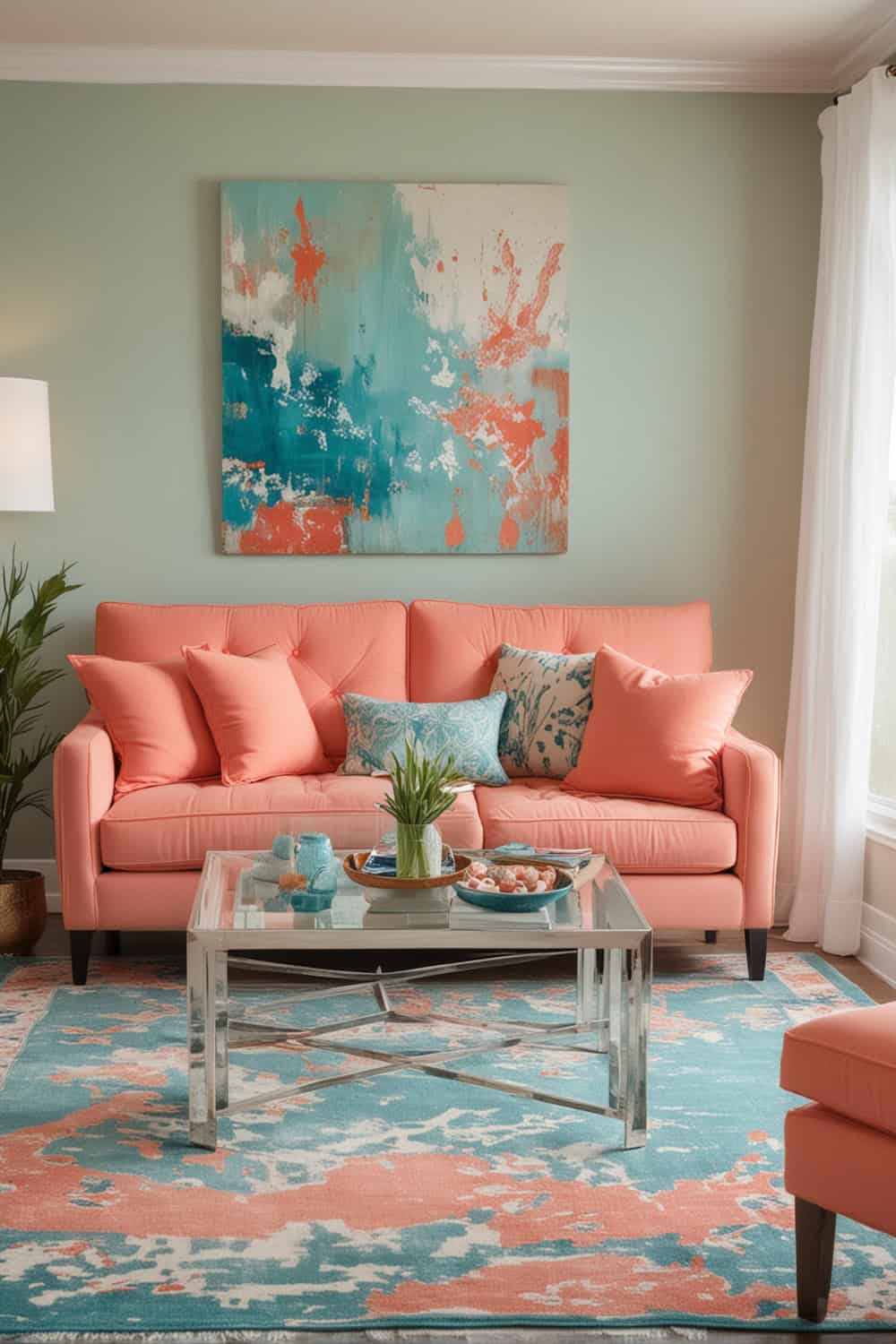
Turquoise, a bright blue green, brings a refreshing and energizing feel. Coral, a warm pinkish orange, adds a touch of warmth and playfulness.
Paint the walls in turquoise and use coral for accents like cushions, throws, or an accent chair to achieve this. This combination works well with white or light wood furniture and tropical patterns. Add some natural elements like bamboo or rattan to enhance the tropical feel.
2. Navy and Sailcloth White

This pairing evokes feelings of calm and relaxation, reminiscent of seaside living. Navy blue is bold yet traditional, while sailcloth white brings brightness and opposition.
Paint the walls sailcloth white for a crisp, airy sensation. Use navy blue for furnishings, such as sofas and armchairs, and add maritime themed decor like striped cushions and marine inspired artwork.
3. Warm Beige and Terracotta

Beige supplies a neutral, calming backdrop, while terracotta introduces warmth and an earthy element. This mix is excellent for creating a snug and grounded space.
Use warm beige on the walls and larger furniture pieces, and integrate terracotta through accent items such as cushions, rugs, and artwork. Organic materials like timber and stone naturally enhance this palette, adding to the room’s welcoming feel.
4. Lilac and Ivory

Lilac, a light purple shade, adds a touch of femininity and charm, while ivory, a warm off white, keeps the space light and airy.
To achieve this appearance, paint the walls in ivory and use lilac for accent pieces like cushions, curtains, or a feature wall. This combination works well with vintage or shabby chic furniture and floral designs. Add some gold or silver accents to enhance the romantic feel and introduce a bit of sparkle.
5. Fuchsia and Raspberry

Fuchsia, a bright and vibrant color, looks beautiful with raspberry’s rich and deep tones. This combination is ideal for those who desire a lively and energetic space.
Use fuchsia on accent walls or larger furniture items, and incorporate raspberry through textiles, accessories, and smaller decorative pieces. Balance these bold colors with neutral tones like white or light gray to stop the room from feeling too overpowering.
6. Burgundy and Blush

Burgundy brings depth and opulence, while blush offers a gentle, romantic touch. This combination is perfect for anyone wanting an elegant and inviting area.
Use burgundy on feature walls or bigger furniture pieces, and include blush through fabrics, accessories, and smaller decorative items. Balance these shades with neutral tones like white or gray to keep the room from appearing too dark. This palette is ideal for creating a warm and fashionable living space.
7. Black and White
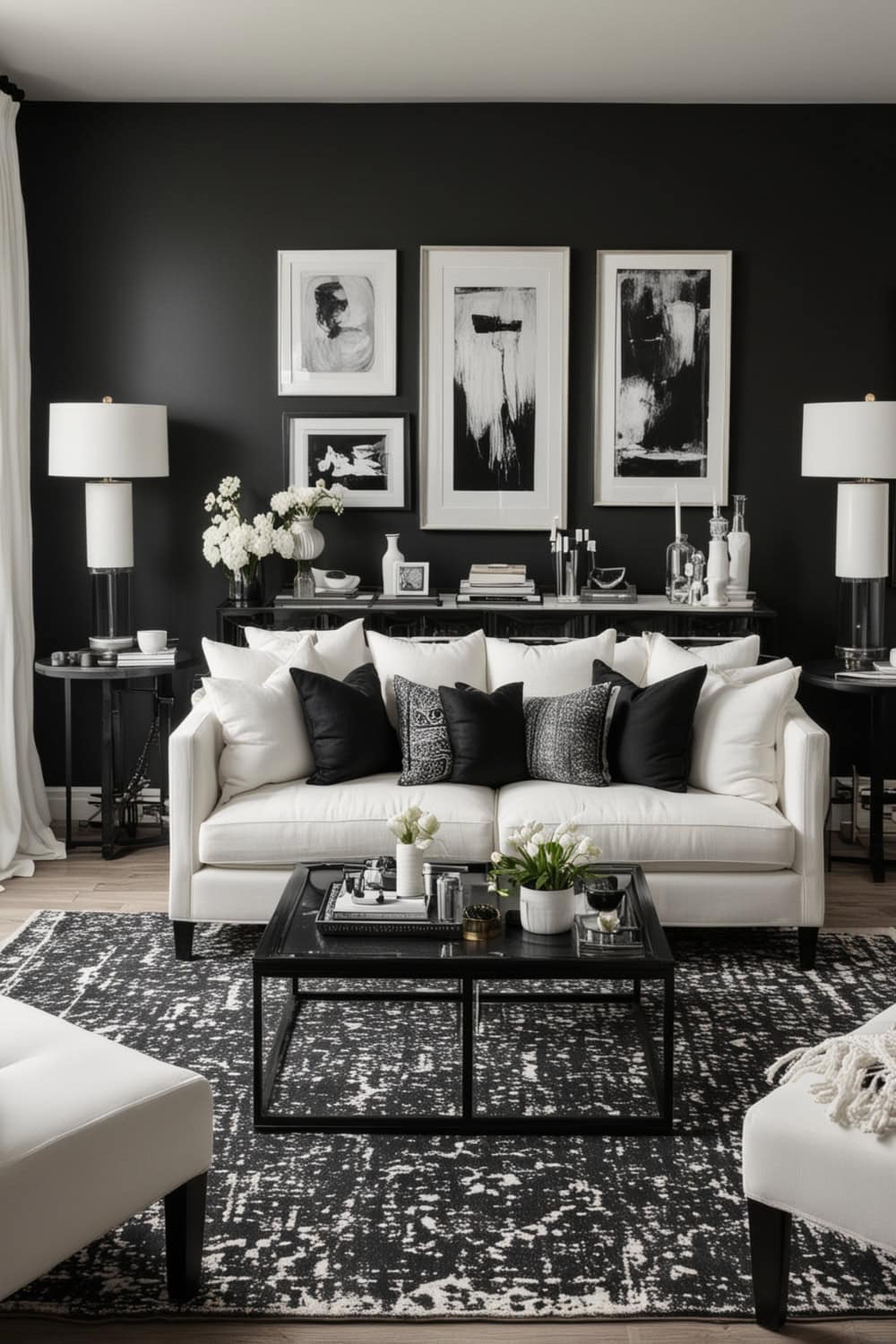
A classic black and white combination remains timeless and elegant, especially with black as the dominant shade and white accents. This color scheme is adaptable and can suit various styles, from contemporary to traditional.
Paint the walls black to create a striking background. Use white furniture, area rugs, and decor to provide contrast and brighten the area.
Incorporate diverse textures, such as black leather sofas and white wool rugs, to add richness. Emphasize architectural features with white trim and use black and white artwork to complete the design.
8. Warm Caramel and Cream

Warm caramel shades create a cozy and inviting atmosphere, while cream adds lightness and sophistication. Together, they make the room feel both comfortable and polished.
Use cream for the walls and larger furniture pieces to keep the room bright. Incorporate warm caramel through smaller furniture items, like an ottoman or side tables, and accessories such as cushions and throws. Add natural wood elements and gold accents to enhance the warm, elegant feel.
9. Olive Green and Gold

Olive green, a muted, earthy green, offers depth and a sense of calm. Gold accents introduce a touch of glamour and opulence.
Paint the walls in olive green and use gold for accessories like lamps, picture frames, or a coffee table. This combination works well with dark wood furniture and rich fabrics like velvet or silk. Add some white or cream elements to balance the richness and prevent the space from feeling too dark.
10. Powder Blue and Lavender

Powder blue and lavender provide a serene and gentle feeling; the powder blue pairs beautifully with lavender’s subtle, romantic hue. This blend is ideal for a spot where you wish to relax and unwind.
To achieve this aesthetic, paint the walls powder blue and use lavender for highlights such as throw pillows, rugs, and drapes. Also incorporate white or light gray furniture to keep the room feeling fresh and spacious.
11. Bluebird and Gunmetal

This pairing is perfect for designing a modern living room that feels both stylish and comfortable. The bluebird blue adds a vibrant touch, while gunmetal gray keeps the overall look grounded and refined.
Start with gunmetal gray walls or substantial furniture pieces like a sofa. Use bluebird blue for accent pieces such as cushions, throws, and small decorative items. To amplify the modern aesthetic, incorporate metallic accents in silver or chrome and maintain clean, minimalistic lines.
12. Ochre and Cream

Ochre, a deep, earthy yellow, offers richness and depth, while cream gives a soft, neutral balance. This combination is wonderful for crafting a cozy yet refined space.
Use ochre on a focal wall or via larger furniture items, then complement it with cream colored walls, fabrics, and accessories. The warmth of ochre can be enhanced with wood pieces, while cream keeps the room light and open. This duo is classic and works well in both modern and traditional interiors.
13. Teal and Burnt Orange

Teal paired with burnt orange provides a bold, eclectic feel that brings energy and vibrancy to the living area. Teal, a deep blue green, adds a rich, cool tone, while burnt orange introduces warmth and excitement.
To achieve this look, paint the walls in teal and use burnt orange for accent pieces like throw pillows, vases, or an accent chair. This combination works well with mid century modern furniture and striking patterns. Add some neutral elements to balance the strong colors and prevent overwhelming the space.
14. Honeyed Tones and Neutrals

Honeyed tones impart a golden warmth, while neutral shades offer a calming backdrop. This pairing is perfect for creating a cozy and inviting atmosphere.
Incorporate honeyed tones into furniture, accessories, or accent walls, balancing them with neutral walls, rugs, and textiles. Also bring in natural materials like wood and rattan to boost the room’s warmth and tactile interest.
15. Yellow and Cobalt Blue

Yellow and cobalt blue bring energy and optimism; yellow provides positivity, while cobalt blue adds profoundness and boldness. This pairing is perfect for anyone desiring a dynamic and vibrant space.
Use yellow in larger elements like walls or sofas, and integrate cobalt blue through accessories, area rugs, and smaller furniture. Balance these strong colors with white or neutral accents to prevent the room from feeling too intense. This palette is excellent for generating a lively and spirited mood.
16. Dark Chocolate and Cream

Dark chocolate is a rich, deep brown that adds a sense of depth and refinement. Cream, a soft and warm off white, brightens the area and stops it from feeling too dark.
Paint the walls in dark chocolate and use cream for the trim, furniture, and accessories to achieve this. This combination works well with dark wood furniture and gold or brass accents. Add some textured fabrics like velvet or wool for additional warmth and coziness.
17. Indigo and Rusty Red
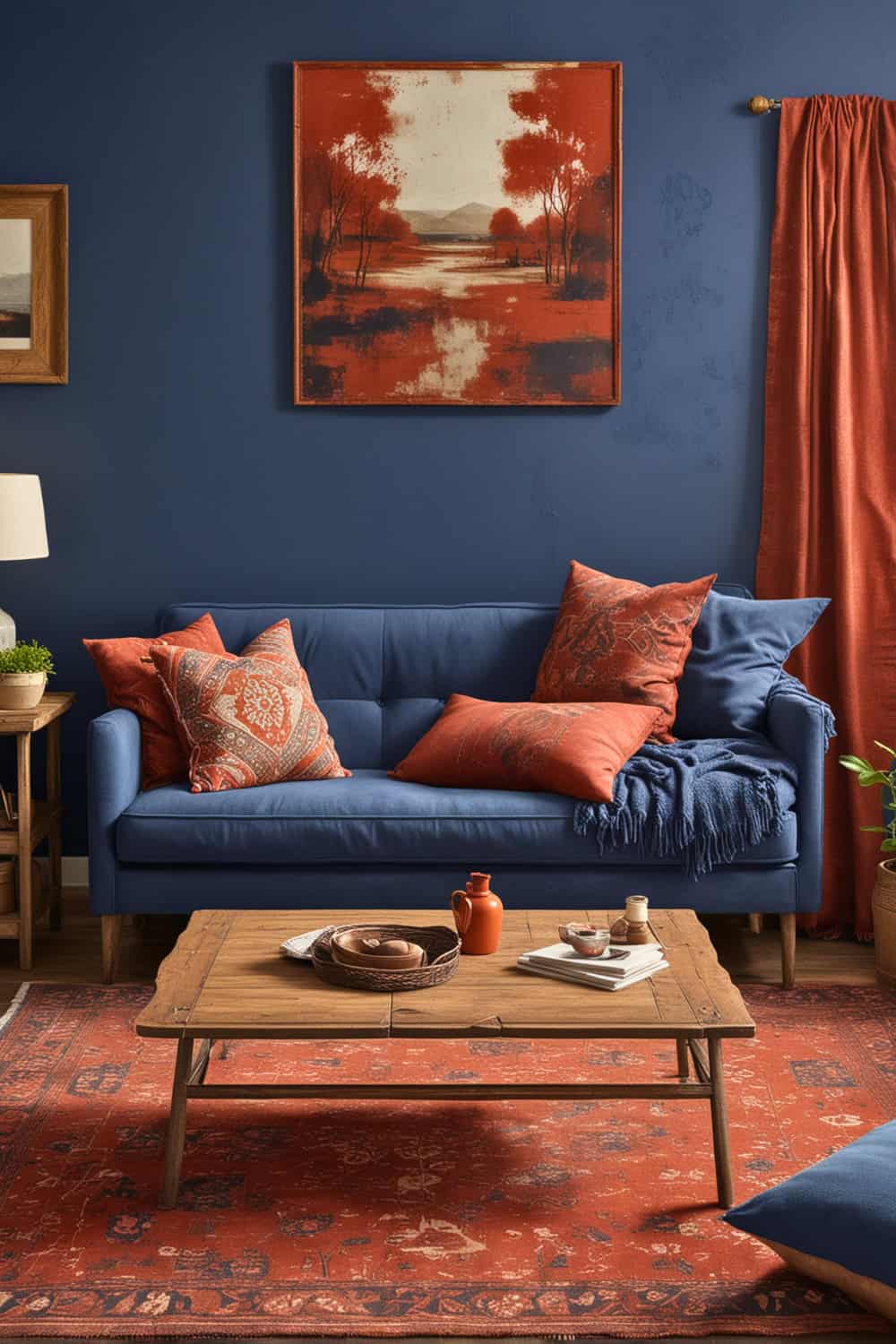
Indigo, a deep and rich blue, provides depth and sophistication, while rusty red brings warmth and a touch of rustic appeal. This blend is perfect for creating a cozy and welcoming area.
To achieve this look, use indigo on the walls or larger furniture, and incorporate rusty red through textiles, accessories, and smaller decorative pieces. Balance these colors with neutral shades like white or beige to prevent the room from feeling too dark.
18. Cognac and Soft Taupe

Cognac, with its rich, warm brown tones, adds a feeling of luxury and profundity. Soft taupe, a muted, warm gray, complements cognac perfectly, producing a balanced and peaceful mood.
Use cognac for larger pieces like a leather sofa or chairs, and soft taupe for the walls or rugs to accomplish this. Add metallic accents like brass or gold to enhance the sophistication. This color scheme is ideal for those seeking a refined and elegant living space.
19. Earthy Browns and Beige

Earthy brown tones matched with beige produce a warm, welcoming environment that feels both organic and refined. The earthy tones provide a sense of steadiness and ease.
Start with beige walls to create a neutral foundation. Add earthy brown furniture, such as a leather sofa or wooden coffee table. Use beige and brown accessories, like cushions and rugs, to tie the appearance together. Integrate natural elements like plants and woven baskets.
20. Peach and Warm White

This pairing is perfect for a bright and welcoming living space. Peach offers a soft, warm radiance, while warm white keeps the area feeling light and expansive.
Paint the walls peach for a warm backdrop. Use warm white for larger furniture pieces, like a sofa or bookshelf, to keep the room balanced. Add peach and white accessories, such as cushions, throws, and artwork, to unify the look. Integrate natural textures like wooden furniture and plants to enhance the cheerful ambiance.
21. Robin’s Egg Blue and Driftwood

Robin’s egg blue, a soft and inviting color, partners beautifully with driftwood’s earthy tones. This pairing is perfect for designing a relaxing and natural living room.
So, paint the walls robin’s egg blue and incorporate driftwood elements through furniture, accessories, and decor. Complement these hues with white or light beige to keep the room feeling fresh and airy. This palette is ideal for those who love a tranquil, seaside atmosphere.
22. Jade and Taupe Gray

Jade, paired with taupe gray, produces a refined, calm environment. This combination brings a touch of nature indoors while retaining a modern and elegant feel.
Jade adds a pop of color that is both vibrant and soothing, making it a perfect selection for a tranquil common space. Start with taupe gray walls to establish a neutral foundation.
Incorporate jade through furniture, throw pillows, and artwork. Add natural textures like wooden accents and plants to enhance the peaceful atmosphere. For a cohesive appearance, choose jade tones that blend well with the gray, creating a harmonious and relaxing space.
23. Sunny Yellow and Soft Gray

Sunny yellow matched with soft gray brings a cheerful and modern touch to the living area. Sunny yellow injects energy and optimism, while soft gray offers a balanced, calming effect.
Begin with soft gray walls to establish a neutral base. Use sunny yellow for accent pieces, like cushions, artwork, and vases. Incorporate diverse textures, such as a gray wool rug and yellow linen curtains, to add depth. Keep the furniture in neutral tones to let the yellow accents truly shine.
24. Blush Pink and Emerald Green

This pairing brings a lively yet elegant feel to the living area. Blush pink adds a soft, romantic quality, while emerald green provides a rich, luxurious contrast.
Paint the walls blush pink for a subtle background. Use emerald green for prominent furniture pieces, like an accent chair or sofa. Add blush pink and emerald green accessories, such as cushions and throws, to seamlessly blend the hues. Metallic accents in gold or brass can add an extra touch of opulence.
25. Soft Neutrals and Warm Whites

Blending soft neutrals with warm white creates a gentle, soothing palette ideal for a peaceful living room. The soft neutrals add warmth and profoundness, while the warm whites ensure the room feels bright and spacious.
Use warm white for the walls and larger furniture pieces to keep the room luminous. Incorporate soft neutrals through fabrics, such as beige cushions, taupe throws, and cream rugs. Layer different textures like wool, linen, and wood to add interest without overwhelming the area.
26. Terracotta and Deep Blue

Terracotta, a natural, clay based color, brings warmth and a rustic quality, making the space feel cozy and inviting. Deep blue, conversely, introduces a sense of calm and refinement.
To achieve this aesthetic, paint the walls in terracotta and use deep blue for accents such as cushions, rugs, and artwork. This combination works well with wooden furniture and natural fibers, boosting the earthy feel. Add some green plants to complete the appearance and introduce a touch of nature.
27. Warm Gray and Mustard Yellow

Warm gray, a neutral and flexible shade, provides a calm and sophisticated backdrop. Mustard yellow adds a pop of color and warmth, making the room feel lively and welcoming.
Use warm gray for the walls and larger furniture pieces, and mustard yellow for accents like cushions, throws, or an accent chair to achieve this. This combination works well with contemporary furniture and geometric designs. Add some metallic accents for a touch of modern elegance.
28. Clay Red and Sandstone

Clay red, a rich, reddish brown, adds warmth and a natural, rustic touch. Sandstone, a light, warm beige, complements clay red beautifully, creating a balanced and inviting space.
Paint the walls in sandstone and use clay red for accents like cushions, rugs, or artwork to achieve this. This combination works well with natural materials like wood, stone, and leather. Add some greenery to bring in a touch of nature and complete the earthy appearance.
29. Mint Green and Soft Pink

Mint green, a light and airy shade, provides a sense of calm and crispness. Soft pink brings a gentle warmth and a touch of femininity.
Paint the walls in mint green and incorporate soft pink through cushions, throws, and artwork. This combination is perfect for a space filled with ample natural light. Use white or light wood furniture to keep the look open and expansive.
30. Sage Green and Chartreuse

Inspired by natural settings, sage green brings quiet tranquility and a subtle burst of color, making it perfect for a soothing living area. Chartreuse, a brighter yellow green tone, adds a lively touch without overwhelming the space.
This pairing is ideal for anyone seeking to bring outdoor vibes indoors. Paint the walls sage green and incorporate chartreuse through accents such as cushions, area rugs, or art pieces. Balance these shades with neutral furniture and natural materials to keep the room coherent and inviting.