10+ Neutral Kitchen Cabinet Ideas for a Bright, Clean Look
Warm, balanced tones are a key trend for 2025. Neutral kitchen cabinets provide a steady foundation.
A cabinet finish affects the daily kitchen experience, whether the kitchen is compact or any other size. That makes the finish worth considering during an update or renovation.
Neutral cabinet finishes range from greige to creamy white. They balance visual calm with practical elegance.
Neutral cabinets suit modern farmhouse, minimalist, and other kitchen styles. They also have timeless appeal.
Wood Accents with Soft Gray Cabinetry
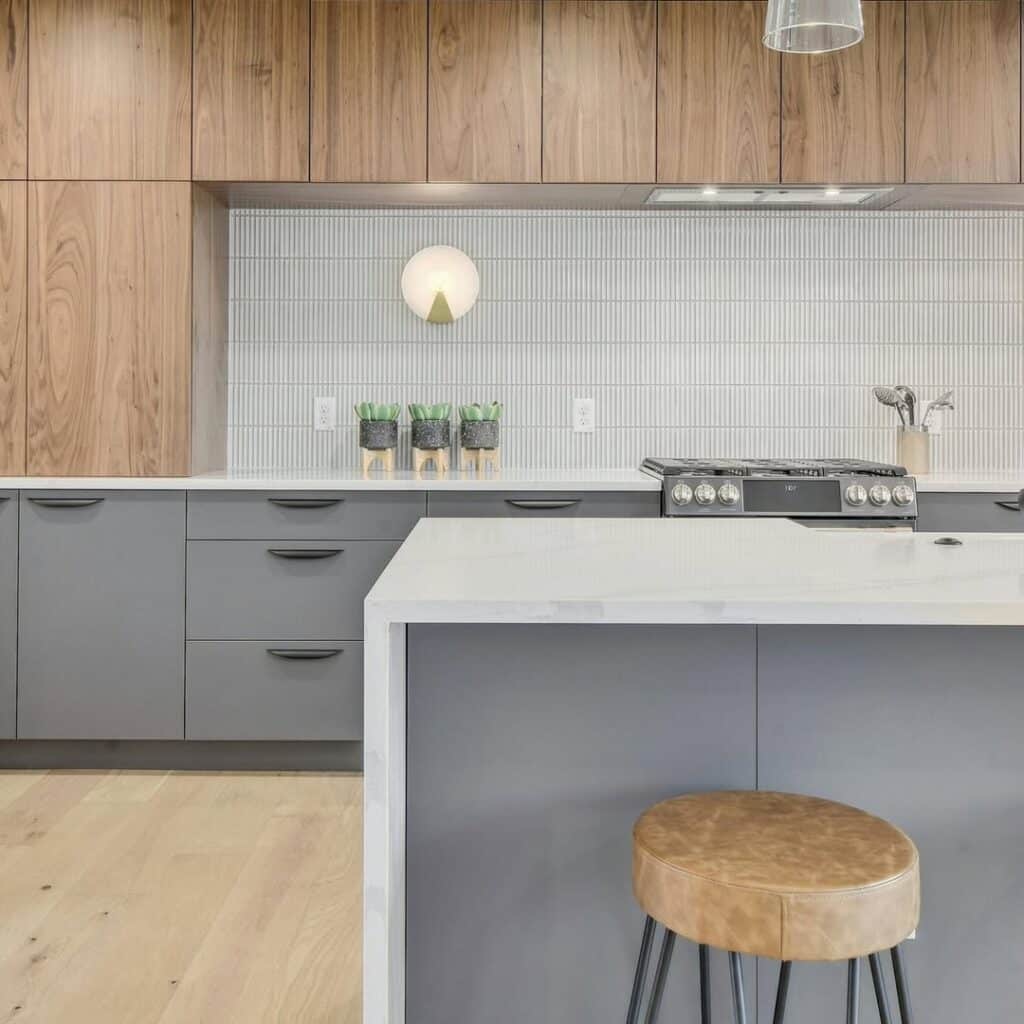
Soft gray cabinetry contributes calmness and pairs with warm wood accents. The wood adds warmth and tactile richness.
Soft gray and wood bring contrasting tones together in a unified pairing associated with 2025 kitchens. The combination maintains a neutral palette.
Light gray Shaker cabinets pair with a rustic butcher block countertop, open walnut shelving, and a white oak hood. Each wood element is paired with the cabinets.
The soft gray and wood pairing suits serene designs and avoids strong contrast. Cool and warm undertones add room depth.
Neutral gray forms a base that accommodates cooler metals and warmer accents.
Linen curtains and seagrass rugs pair with soft gray and wood. These natural textiles preserve a clean aesthetic while supporting a layered look.
Soft gray and wood are compatible with modern rustic kitchens, transitional kitchens, and coastal kitchens. Gray hides everyday wear more effectively than white. Wooden details usually age well.
Across the room, use quality materials and thoughtful proportions with the soft gray and wood combination. These choices balance function and design.
Taupe Kitchen Cabinets
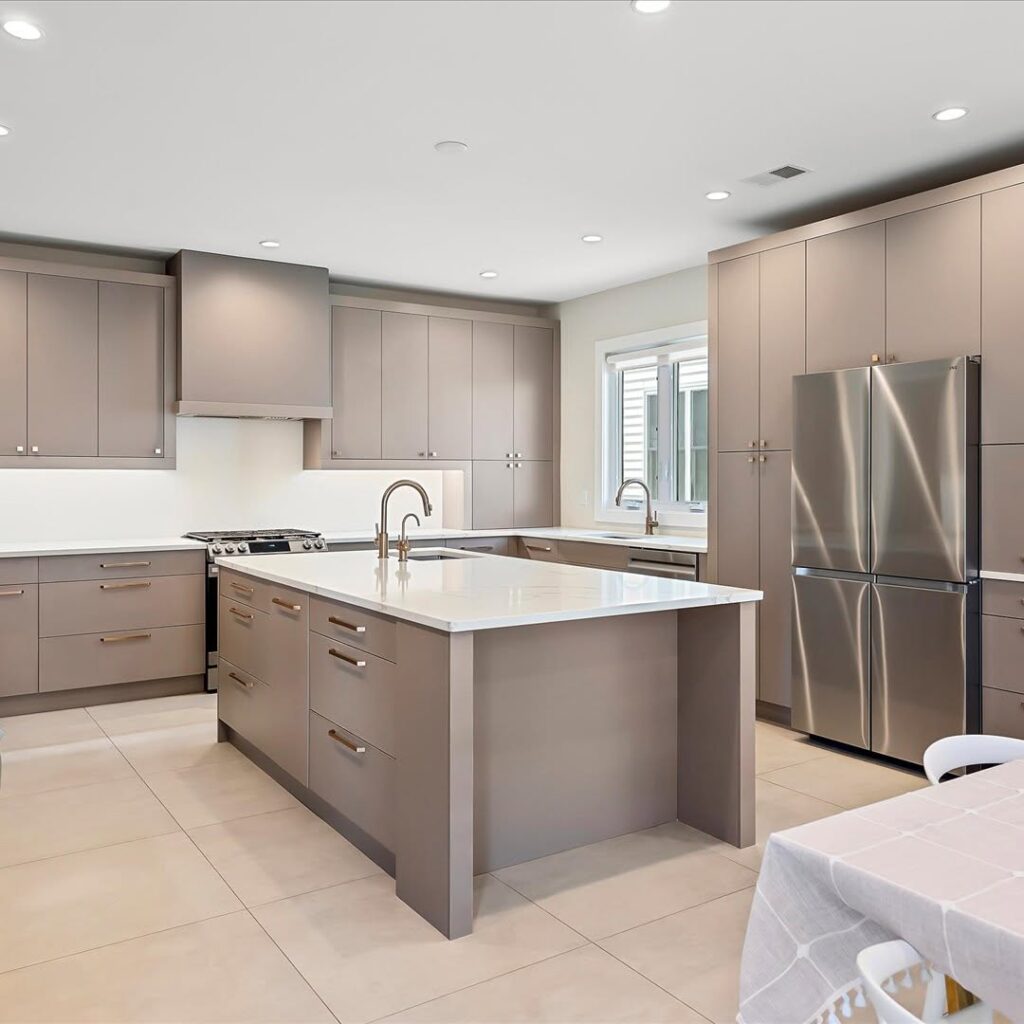
Taupe cabinetry is a neutral choice that supports calm kitchens and classic kitchens.
Taupe blends gray with brown and creates a muted setting for the kitchen. Taupe cabinetry works with varied textures and finishes, while the color supports long-term kitchen design.
In transitional spaces, taupe cabinets are a popular choice. They pair with honed stone countertops. Warm metal details pair with them as well.
Taupe is less heavy than darker shades and provides depth. Taupe cabinets suit both open-concept homes and small layouts.
Taupe cabinets adapt to traditional style, modern rustic style, and coastal style.
Brushed limestone floors pair with taupe cabinetry. Plaster hoods and clay-toned backsplash tiles can be paired with it as well. Taupe cabinetry preserves neutral character.
Make texture a priority with taupe cabinetry when texture matters most. Give lighting priority when lighting is the main concern.
Taupe cabinetry supports long-term relevance and suits a subtle kitchen design.
Cream Cabinets
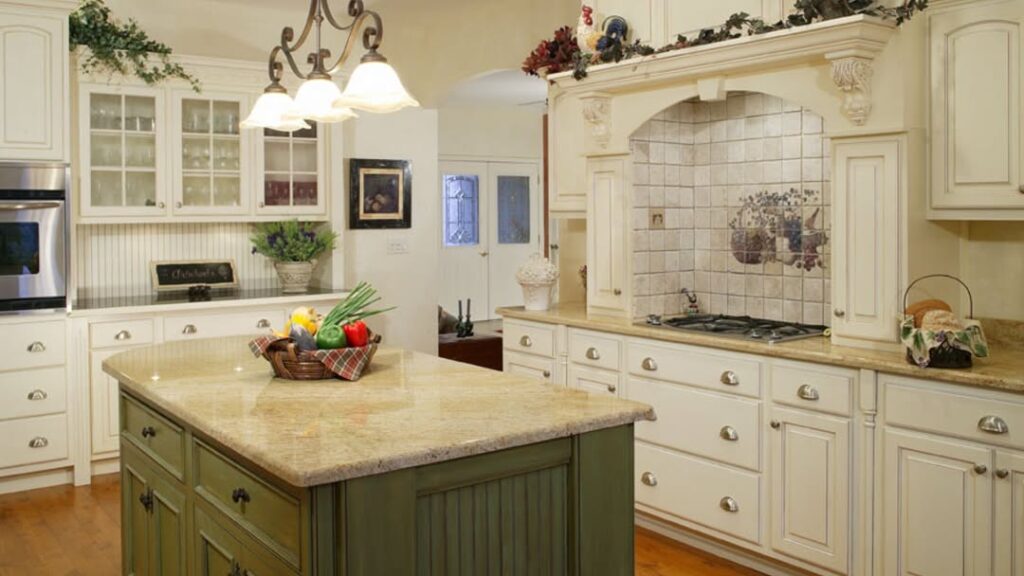
Cream cabinetry provides warmth and a neutral base while helping soften the kitchen. The cabinets keep the room from feeling too stark.
Yellow and beige undertones give cream a softer character. Cream cabinets feel less stark than brighter whites and suit kitchens with limited light.
Cream cabinetry works across traditional, transitional, and contemporary farmhouse styles. It was also trending in 2025.
Brushed brass hardware and natural wood accents both blend with cream cabinets. The cabinets also work with honed stone countertops, while leaving flexibility for cool or warm tones in the flooring and backsplashes.
Cream cabinets resist fleeting trends and suit long-term designs. They also support personalization.
Cream cabinets maintain visual balance beside patterned Roman shades, rustic stools, and muted vintage rugs. The combination brings these varied details together without losing the calm cabinet color.
Cream cabinets suit new construction and remodeling. They also support timeless interiors.
Cream cabinets are a neutral option.
Textured Backsplash for Warm White Cabinetry
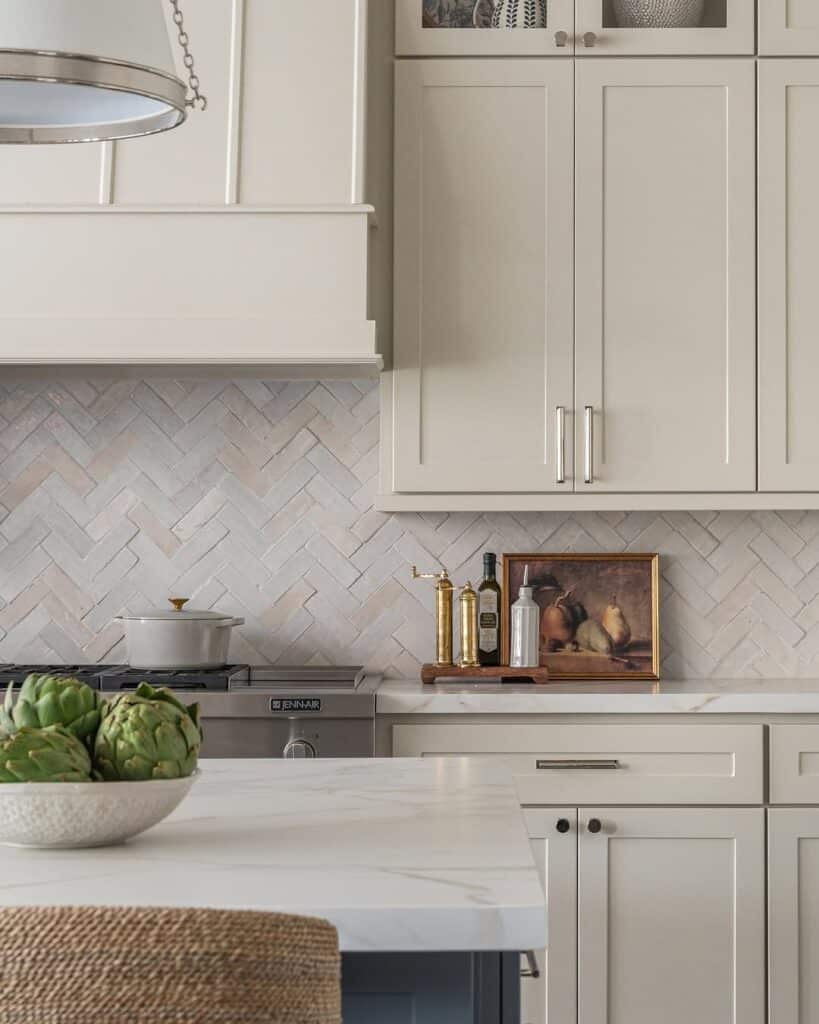
A textured backsplash adds depth beside warm white cabinetry. This pairing avoids bold colors while keeping the surfaces connected.
The backsplash is the first detail to notice, with zellige tiles, handmade ceramics, or fluted stone adding character and dimension. Simple cabinetry leaves it a clean canvas to work against.
Ivory and Swiss Coffee are warm white options that reduce a clinical feeling and soften the cold feeling often associated with white. Warm white is adaptable and popular in 2025 kitchens.
Textural elements placed behind the counter create a soft composition. This pairing suits varied preferences.
The cabinet-and-backsplash pairing gets its richness from the material finish rather than statement hues. It suits a sense of subtle luxury.
Tile with irregular edges and matte glazes can alter the mood of the space. Uneven grout lines do the same, while these textural details maintain an understated profile.
Aged brass, pewter, and brushed nickel all suit warm cabinetry. The hardware gives the cabinets a clear finishing detail.
The combination provides tactile interest without relying on bold tones or patterns. It supports daily livability and suits users who prefer neither bold tones nor patterns.
Warm Wood Kitchen Design
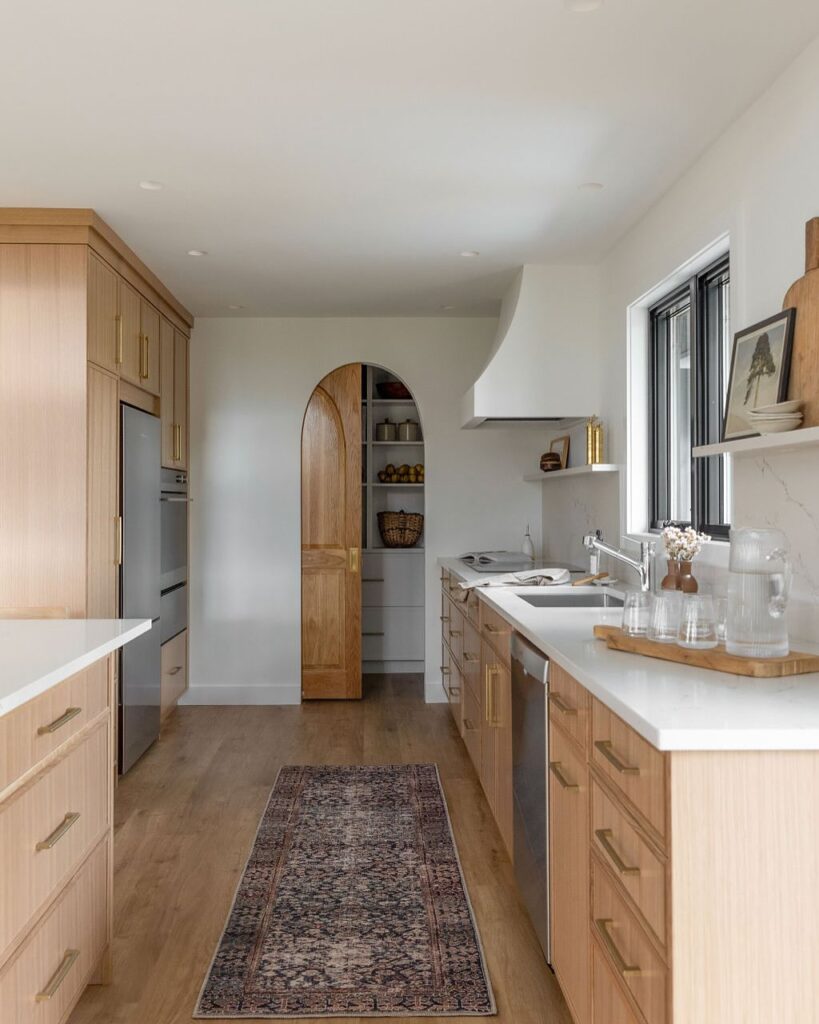
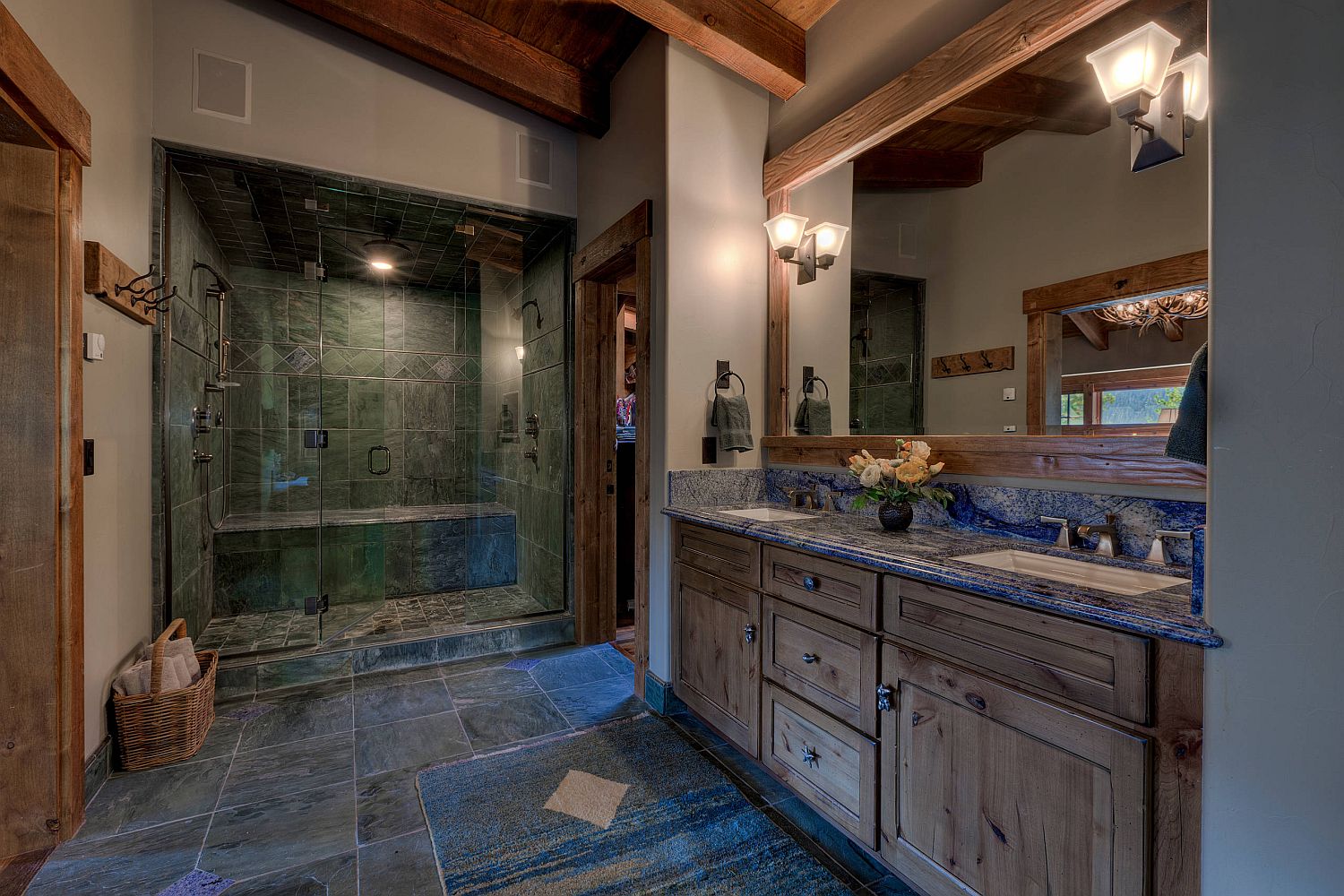
Paint alone cannot replicate the character of warm wood tones. Warm wood cabinetry provides earthy character throughout the kitchen.
Wood design does not rely on bold colors. Natural wood makes a visual statement through paneled walls, open shelving, and floor-to-ceiling wood cabinetry.
Grain, texture, and patina remain visible in the wood material. Neutral palettes allow those wood features to show, and neutral palettes work well with wood-drenched designs.
In 2025, popular wood species include whitewashed ash, walnut, and oak. Wood cabinetry often uses matte finishes.
Wood cabinetry aligns with minimalist design. Wood tones suit rustic kitchens and modern kitchens, provide tactile dimension, and have more identity than painted finishes.
Lighter countertops help avoid visual heaviness in a kitchen with wood cabinetry. Light honed limestone and creamy quartzite balance the wood.
Support wood cabinetry with subtle metallics such as brushed nickel and antique bronze. Wood-drenched kitchens offer longevity, versatility, and authenticity.
Sustainability-focused homeowners and long-term design-focused homeowners have prioritized wood cabinetry. This wood cabinetry trend gains traction in 2025.
Wood cabinetry offers lifetime durability with proper sealing and care. It requires sealing and care, while the wood appearance matures over time.
Charcoal Gray as a Bold Neutral
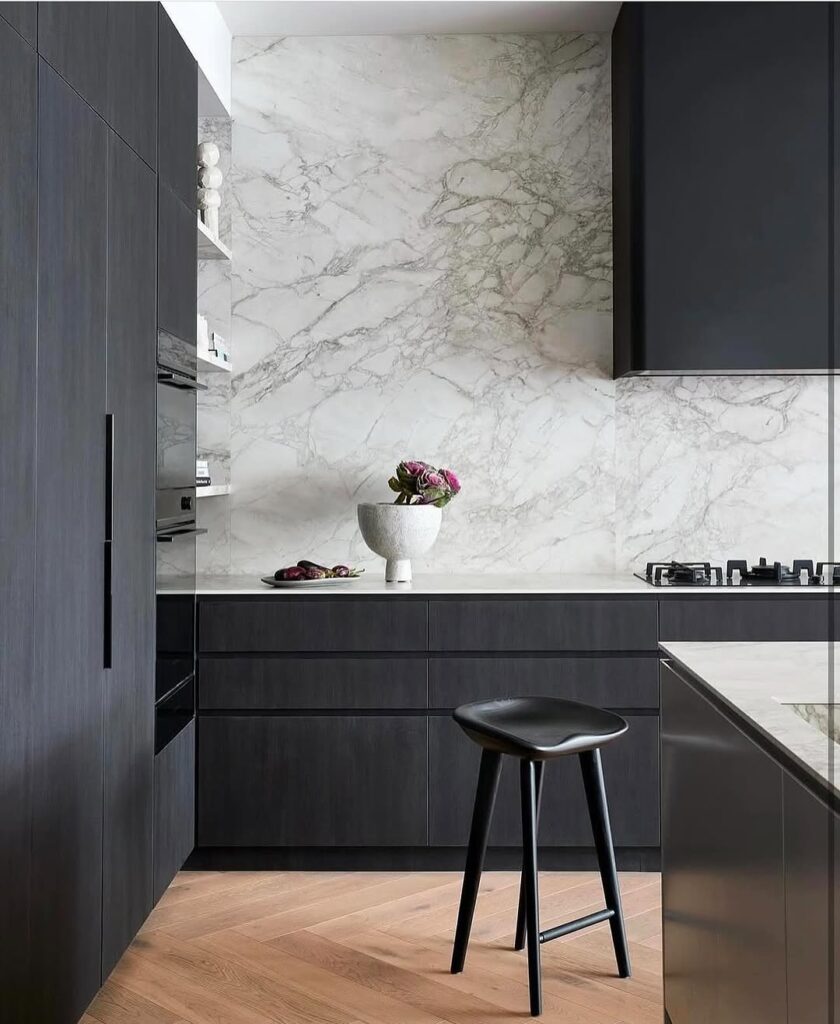
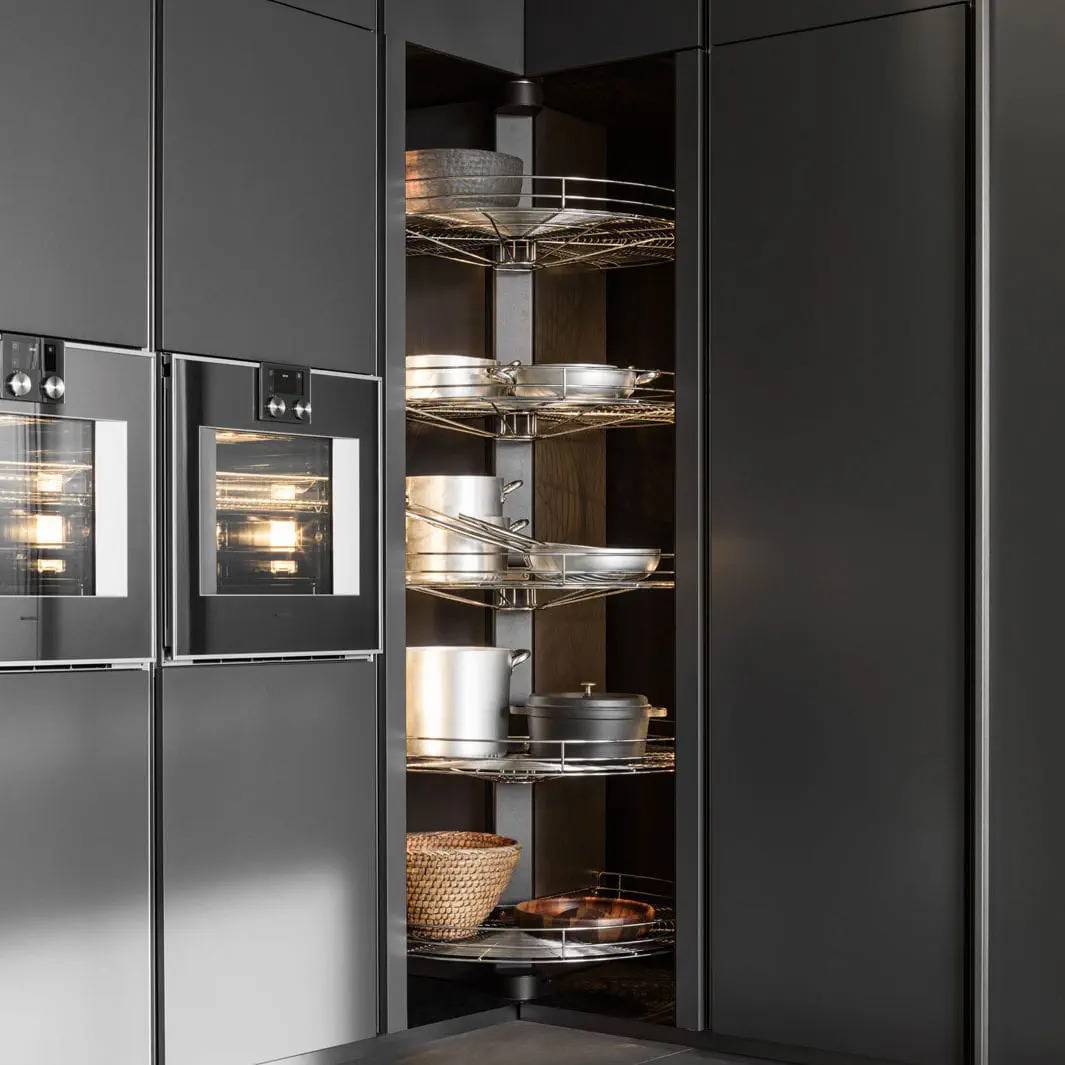
Charcoal gray cabinetry is a neutral with depth. It also brings modernity to the kitchen.
An open layout supports charcoal gray cabinetry and lets the darker tone define the kitchen zone. Charcoal gray provides contrast, with navy or black serving as alternatives.
Across the room, white or marble-look quartz countertops balance charcoal gray cabinetry. The light countertops keep the pairing balanced.
Woven textiles soften the setting, while natural wood flooring adds another surface beside charcoal gray cabinetry. Brass and matte black are hardware options, and the palette works in industrial as well as modern farmhouse kitchens.
Low light makes charcoal appear moody and intimate. With ample light, the same charcoal can appear clean.
In busy kitchens, charcoal gray conceals fingerprints and smudges better than lighter cabinetry. It also adapts to varied materials and styles.
Streamlined fronts support the form of charcoal gray cabinetry. Pair charcoal gray with streamlined fronts and simple finishes to support function.
Charcoal gray cabinetry retains neutrality while combining visual weight with lighter tones beyond the cabinetry.
Natural Light and Light Beige Cabinetry
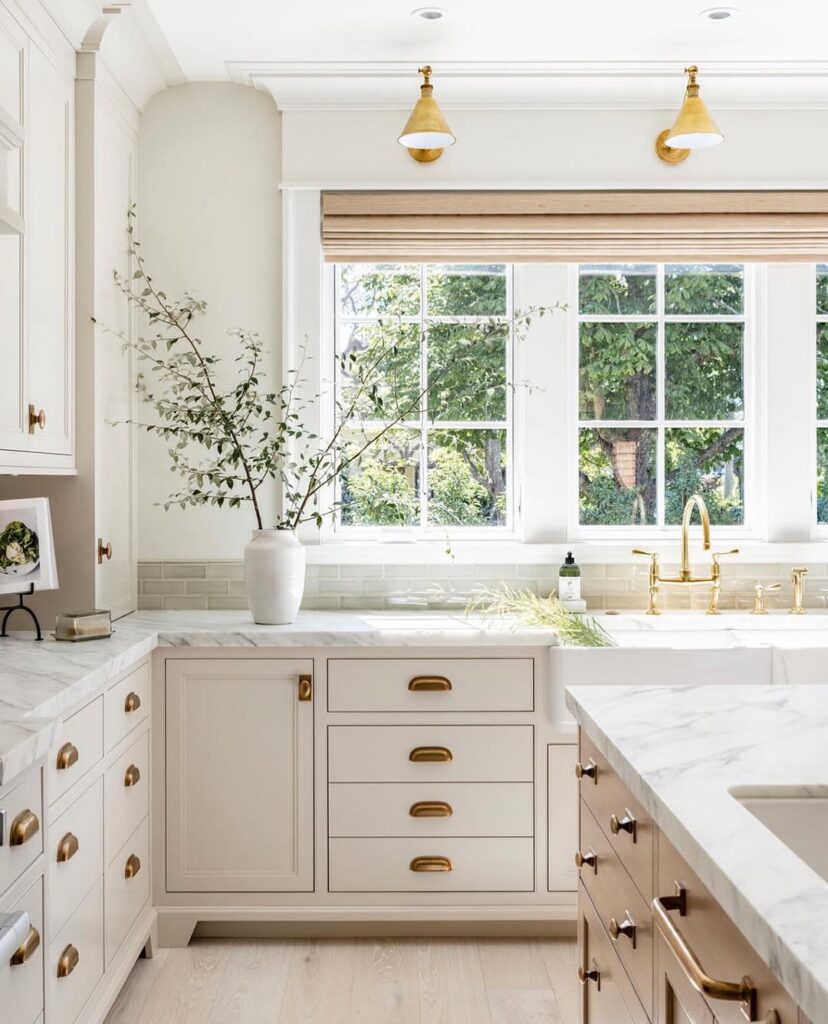
Daylight illuminates light beige cabinetry and increases its perceived brightness. The natural light can also make the kitchen seem larger.
Cabinet color shifts as the time of day changes. The way color meets light adds dimension, and warm undertones enhance natural light.
Large windows, skylights, and open layouts give sunlight plenty of room to reflect off light beige surfaces. The color acts as a gentle neutral and reduces visual heaviness.
Raw wood stools and woven light fixtures pair with light beige cabinetry. These organic materials support an airy ambiance.
Warm-to-cool lighting varies across the day, so designers recommend light beige cabinetry for south-facing and east-facing kitchens. The cabinetry works with both directions.
In one kitchen, brushed nickel or antique bronze hardware can pair with beige cabinetry. Beige also adapts to varying lighting and works with cooler counters.
A light beige palette supports kitchen brightness as an alternative to pure white.
Brass Accents for Greige Cabinets
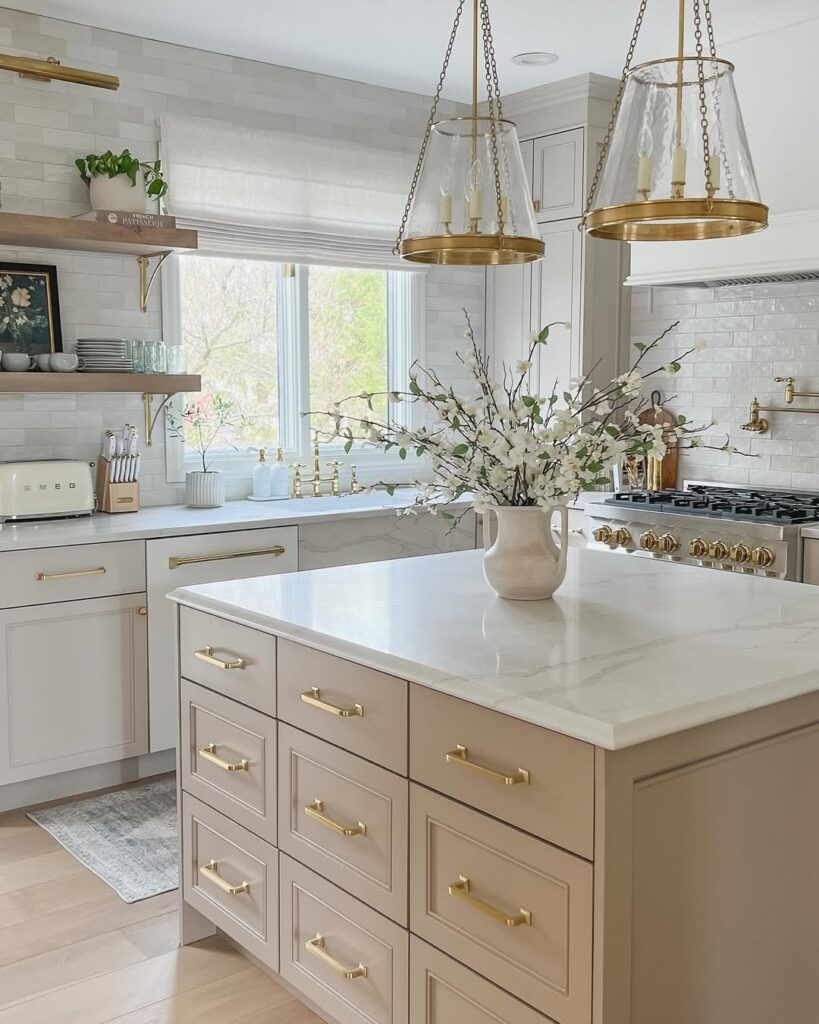
Gray and beige meet in greige, a cabinet color that provides a balanced backdrop. Greige cabinets add both modern character and an inviting feel.
Brass lighting works well with greige cabinets, as does brass hardware. Together, the greige and brass palette creates warmth without looking trendy or forced.
Greige neutrality is timeless and flexible, so the cabinets can support personal touches. Designers often favor greige cabinets for that reason.
Greige cabinets suit both small kitchens and large kitchens. Their undertones adapt to natural and ambient lighting conditions.
Contemporary brass accents can reference vintage style without leaving the room feeling dated. Brass appears on the pendant light, knobs, and faucet.
Greige cabinets provide a neutral base while avoiding coldness and an industrial appearance. Homeowners often prefer them for this balance.
White quartz counters set off the greige cabinets, while warm wood flooring adds a natural element to the kitchen.
Greige cabinets suit transitional kitchens, farmhouse kitchens, and modern kitchens.
The greige and brass combination stays current after five years and outlasts fleeting trends. It is suitable as a long-term cabinet color.
Mushroom Beige Cabinetry
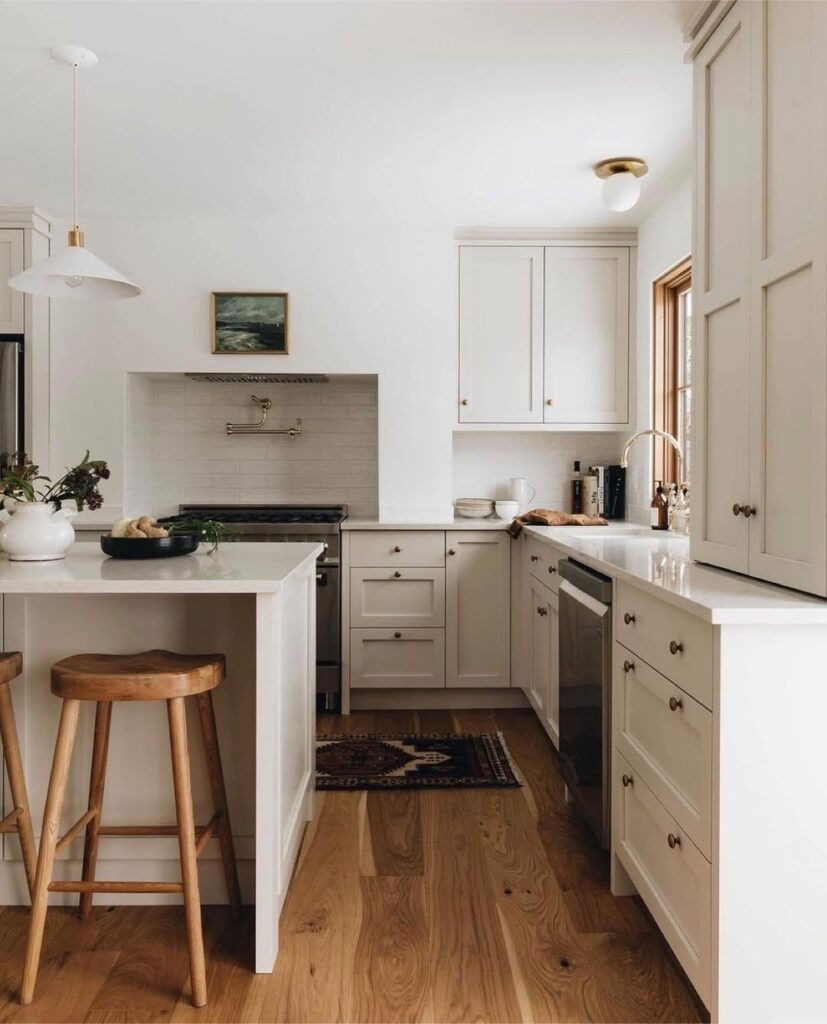
Mushroom beige is a gray-brown neutral. It was popular in 2025 kitchens.
Mushroom beige works across organic modern and classic traditional styles. It has a stable character and supports long-term design plans.
Natural stone and textured backsplashes pair with mushroom beige cabinets. Aged brass and matte pewter metal finishes also work with the color, which supports visual anchoring.
Mushroom beige adapts to natural and artificial light. Its appearance changes with the daylight.
Designers say mushroom beige connects disparate elements.
Rich wood accents, creamy upper cabinets, and minimalist tilework pair with mushroom beige. The color suits high-traffic kitchens and functions as a design connector.
Mushroom beige masks wear and smudges more effectively than stark shades. It also complements multiple finishes.
Compared with plain white and cool gray, mushroom beige offers an earthy alternative. It suits long-term kitchens.
Swiss Coffee Cabinets
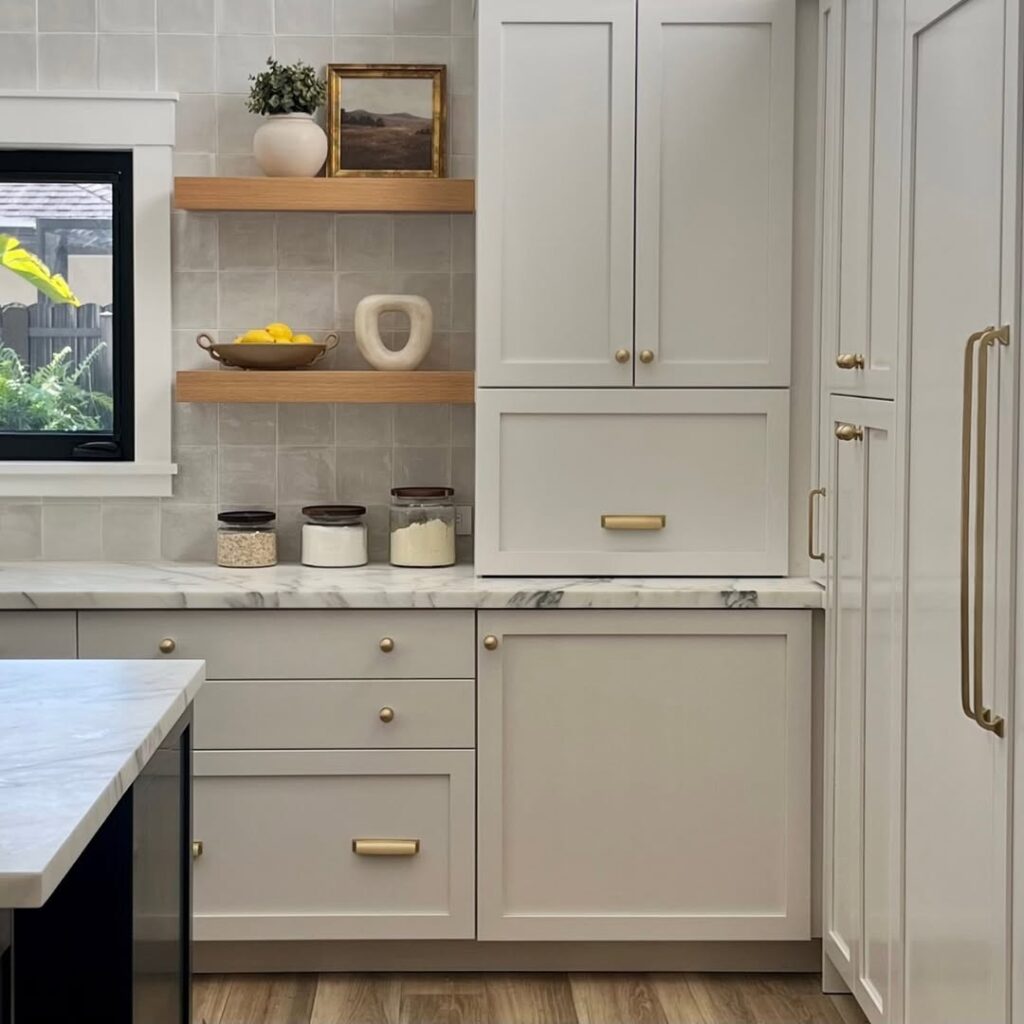
In kitchens, Swiss Coffee reads as an off-white with a creamy undertone. The color avoids a sterile look, according to the source claim.
Natural and artificial light both work with Swiss Coffee. Compared with pure white, Swiss Coffee adapts more easily to different lighting, while pure white may feel harsh in certain lighting.
Marble countertops, oak floors, and hardware in brass or black all pair with Swiss Coffee. The source claim also identifies Swiss Coffee as a color that supports material mixing.
This approach works across California casual, farmhouse, and transitional kitchen styles. It gives the kitchen a clear stylistic direction while fitting each of these settings.
Swiss Coffee supports both colorful accents and neutral accents. It also leaves room for future updates and was popular in 2025, according to the source claim.
Swiss Coffee cabinets can serve as a design backdrop. The color supports earthy and minimalist decor styles.
Swiss Coffee cabinets suit cosmetic updates as well as full remodels. They also have versatility and can be used through changing design plans.
Open Shelves in Neutral Cabinetry
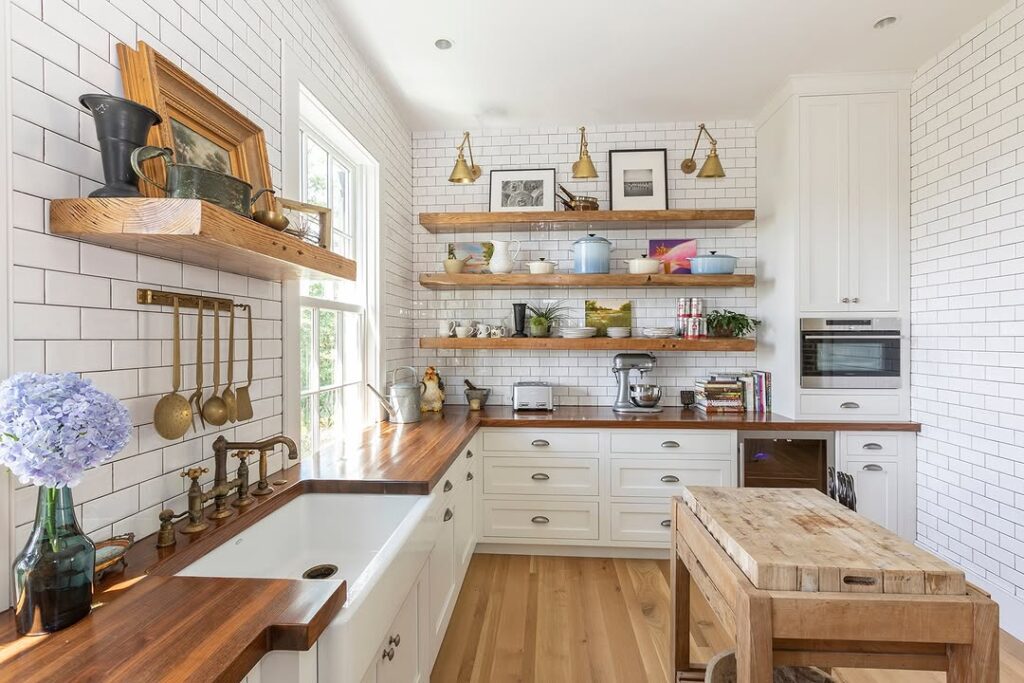
Open shelving provides storage alongside neutral cabinetry. It also brings visual rhythm.
Greige, mushroom, and light taupe cabinetry frames the open shelving. The shelves break up the cabinetry line while the neutral cabinetry supports a cohesive look.
Open shelving layouts are associated with 2025 kitchens, where personalization and accessibility are priorities.
Wood brings warmth to the floating shelves, while neutral tones draw attention to displayed items and help them blend with the surroundings. Handmade ceramics, wood cutting boards, and linen-lined baskets fit the arrangement. Painted shelves that match the cabinetry provide continuity.
Seasonal accents can sit on open shelving alongside everyday dishes. The shelving preserves countertop space and keeps the kitchen casual in style.
A contrasting backsplash or under-cabinet lighting can frame the open shelves. Either choice highlights the kitchen's vertical layers.
Placed against the surrounding feature, open shelving creates design openness. It also provides practicality.
Everyday use remains central to this kitchen setup, while open shelving leaves room for creativity. The arrangement works in traditional interiors as well as contemporary ones.
Modern Natural Wood Neutral Palette
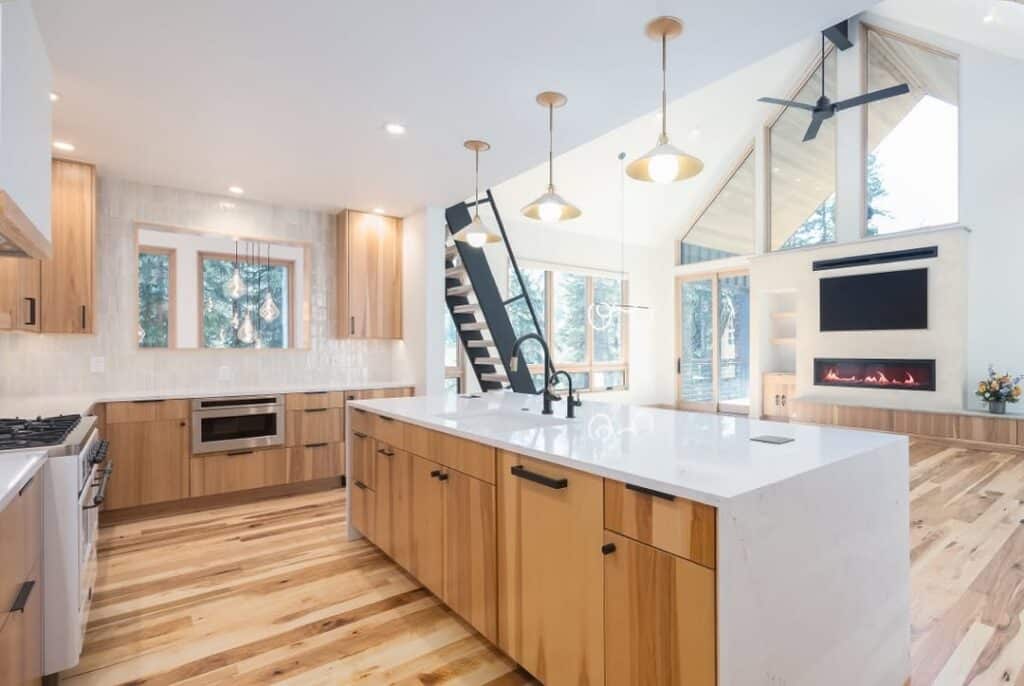
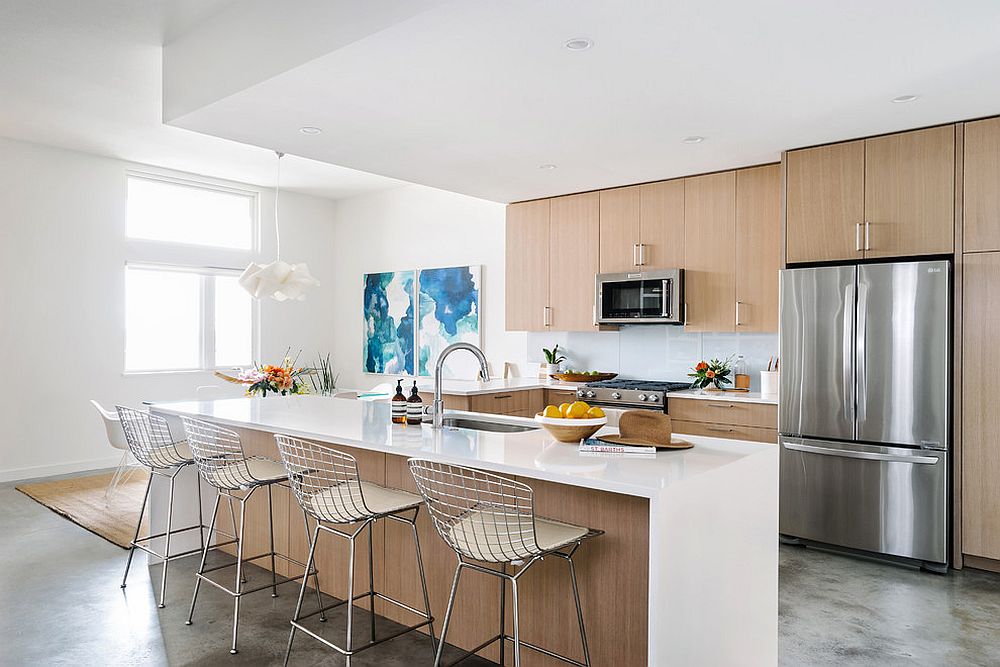
Neutral kitchens suit the recent return of raw wood cabinetry. The material has returned recently and works in neutral kitchens.
White oak, ash, and rift-sawn walnut are among the wood species used with modern natural wood cabinets. The grain and tone vary by species.
Slab-front cabinet doors emphasize the clean lines and texture of natural wood design. Matte black hardware and integrated handles pair with the wood.
Quartz countertops in gray-veined white or creamy beige provide contrast. They pair with modern natural wood cabinetry and keep the kitchen palette neutral.
Natural wood cabinetry holds up well over time. Compared with painted finishes, it avoids the concern of yellowing and chipping, while also appealing to sustainability priorities.
Modern function suits natural wood cabinetry, as do natural aesthetics.
Light-stained wood provides warmth and supports spatial openness. The finish suits small kitchens.
Minimal accessories and sleek fixtures pair with natural wood. Together, the wood and modern elements combine organic character with contemporary style.
Butter Yellow Cabinetry
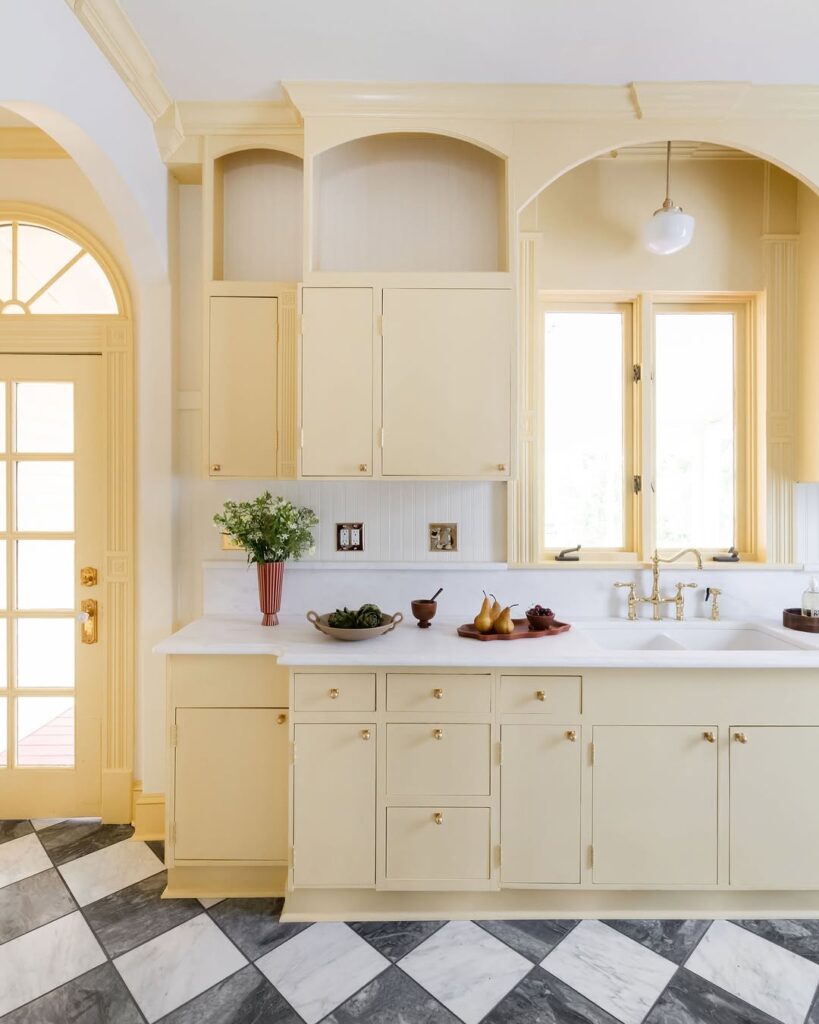
Butter yellow cabinets are a warm, pale yellow alternative to stark white cabinets and beige cabinets. The color adds warmth to the kitchen.
Butcher block balances the pale butter yellow, which belongs to the neutral family. Rattan pendants and unlacquered brass hardware balance the same cabinet color.
Butter yellow cabinets suit cottage kitchens and European farmhouse kitchens. They are gaining popularity in 2025 and are increasingly favored by designers.
Butter yellow provides visual interest without causing sensory overload. Butter yellow cabinets pair with subtle checkered flooring, cream backsplashes, and white walls.
For kitchens that need more character than sterile or traditional finishes, butter yellow cabinets offer another direction. They also retain resale appeal.
Butter yellow reflects the warmth of the sun. The color works especially well with southern light and morning light.
Hand-glazed tiles give butter yellow cabinets a crafted setting, and vintage brass sconces add a warm finishing detail.
For a softened kitchen aesthetic, butter yellow cabinets can include subtle whimsy.
Beige Cabinetry With Antique Accents
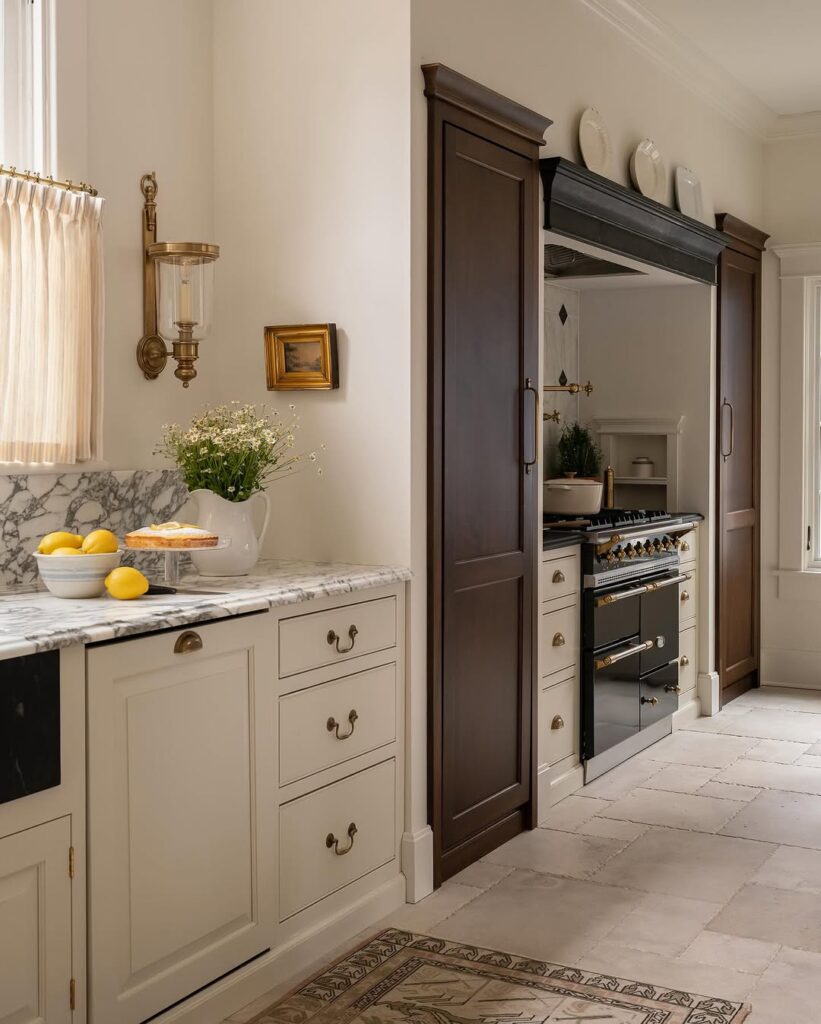
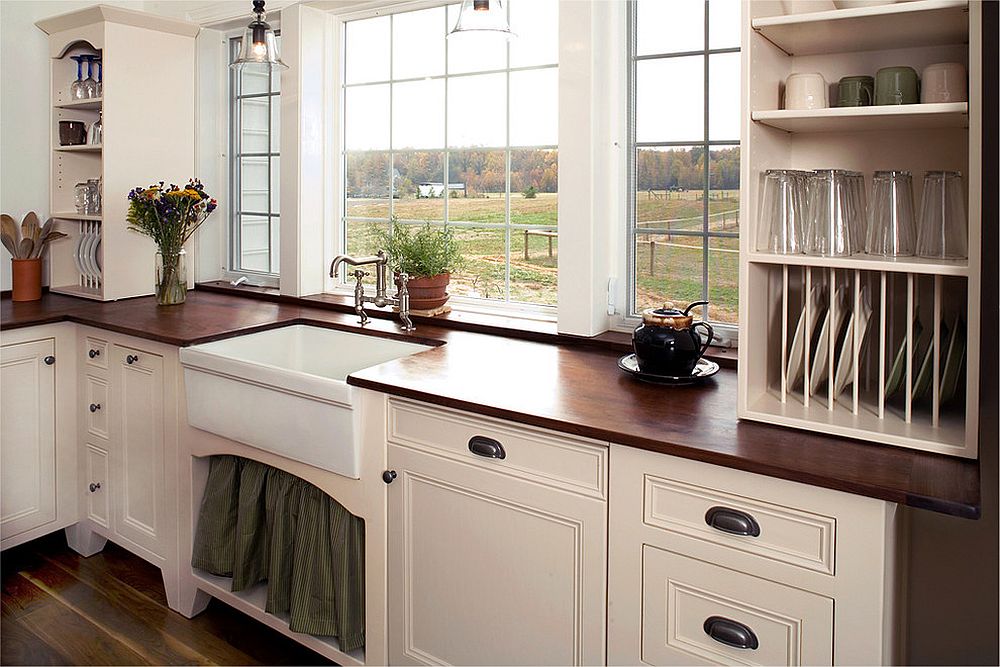
Beige cabinets function as a neutral backdrop. They pair with antique and vintage-inspired accessories.
Beige cabinet surfaces can accommodate aged patinas. They also make room for ornate details and support vintage accents such as brass faucet fixtures, pendant lights in milk glass, and ceramic knobs.
Beige cabinetry with vintage accents is popular among vintage-style homeowners. It appears in old-world, French country, and English cottage kitchen styles.
Upper cabinets with glass fronts can display heirloom china, while a repurposed farmhouse table adds another focal point. Beige cabinets highlight both features.
Open shelving can sit alongside beige cabinets. Beadboard panels and weathered wood textures pair with the cabinets and support a collected-over-time style.
Compared with stark white cabinets, beige cabinets conceal wear more easily. They mask wear and support style updates.
Designers say the beige and vintage pairing balances comfort and elegance.
Beige cabinetry with vintage accents supports history-inspired design and a personalized kitchen. It also limits color intensity.
Neutral Two-Tone Cabinetry
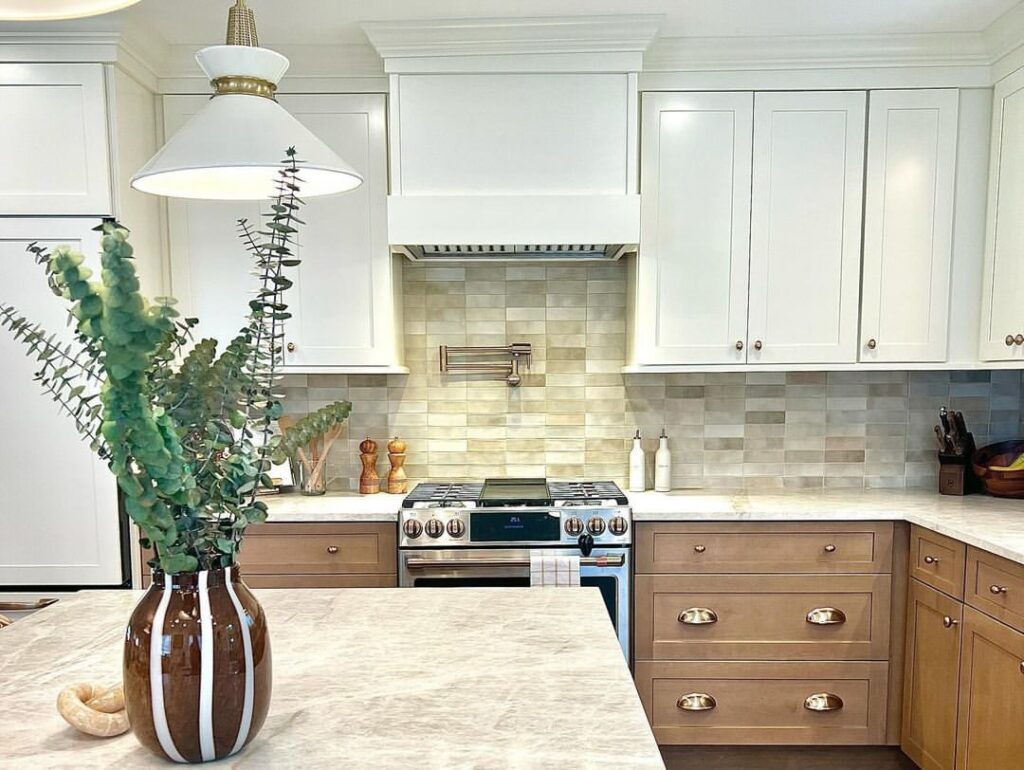
Two neutral tones avoid color extremes. Together, they create depth.
Warm white and light greige upper cabinets pair with lower cabinets finished in mushroom, taupe, or natural wood. This two-tone configuration creates subtle contrast.
Mushroom beige lower cabinets pair with Swiss Coffee upper cabinets. The material pairing supports a layered look.
Painted upper cabinetry paired with lower cabinetry that shows wood grain adds tone and texture. The two finishes work together.
In open-concept layouts, two-tone cabinetry connects the kitchen with adjacent areas. The arrangement suits spaces that share sightlines.
Lighter upper cabinets support bright openness, while darker base cabinets conceal wear. The two-tone style also softens hard lines.
Designers use hardware with mixed metal finishes to connect the two cabinet tones. They also bring the colors together through multi-tonal countertops.
Two-tone cabinetry supports a balanced kitchen.
Across 2025 kitchens, the two-tone style continues to support layered cohesion.