10+ Oak Kitchen Cabinet Ideas That Hide Everyday Wear
Oak cabinets are long-lasting and have natural grain with warm undertones. They can remain in use for generations.
Oak cabinetry can work in traditional homes and contemporary homes. Its look can shift with fresh finishes and updated hardware. Modern styling gives oak cabinetry a contemporary update while keeping the material at the center.
Oak cabinetry comes in shades such as honey oak, whitewashed, and deep-stained. These options preserve its durability while giving the material high versatility.
Oak cabinetry is a lasting choice for kitchen updates. Its steady presence leaves space for creative accents. The cabinetry can support those accents while the kitchen changes over time.
Oak is the material used for this cabinetry.
Oak Kitchens with Dark Wood

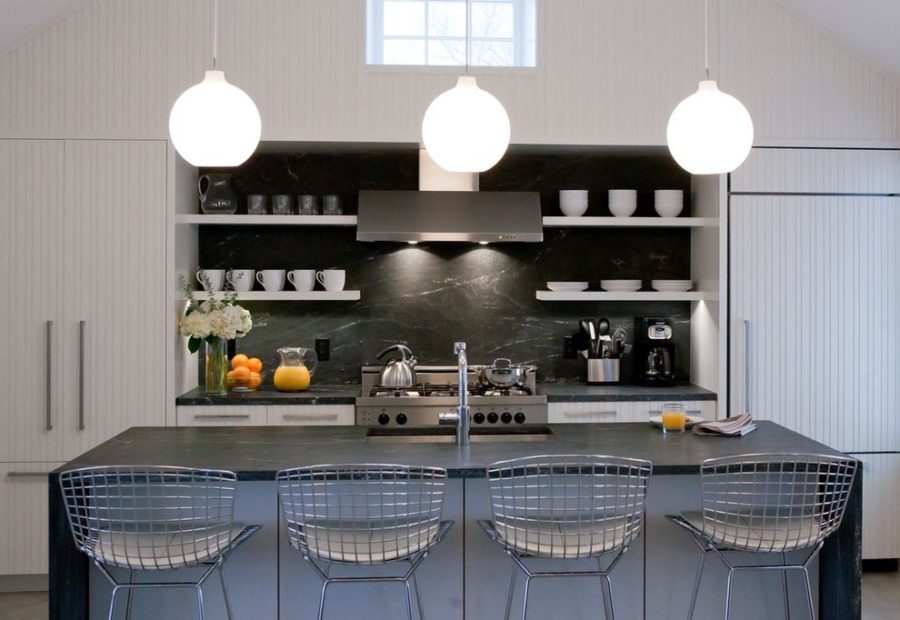
Warm, natural oak cabinetry pairs with dark wood elements. The combination brings depth and contrast while keeping the oak warmth from being overpowered.
Mid-tone oak cabinets work with walnut shelving and ebony-stained elements. The walnut is used for shelving, while the ebony appears on the range hood and trim.
Generous natural light and high ceilings suit a dual-tone setup. Its darker features provide visual anchoring.
Oak keeps the room visually light, while dark wood adds hierarchy. Use the darker wood for open shelving and island bases.
Oil-rubbed bronze hardware maintains cohesion, as does antique black hardware. Both finishes should echo the deeper wood tones.
The texture of oak adds to dark wood accents and, when executed correctly, keeps them from looking stark.
Deep-hued flooring can complete a dark wood scheme. Wide-plank oak flooring with a dark stain does the same, while the flooring connects separate kitchen zones.
Organic materials keep a dark wood approach from creating an all-over light look. The approach also suits a refined style.
Oak and dark wood accents introduce design complexity without creating design overload.
Integrated Kitchen Lighting
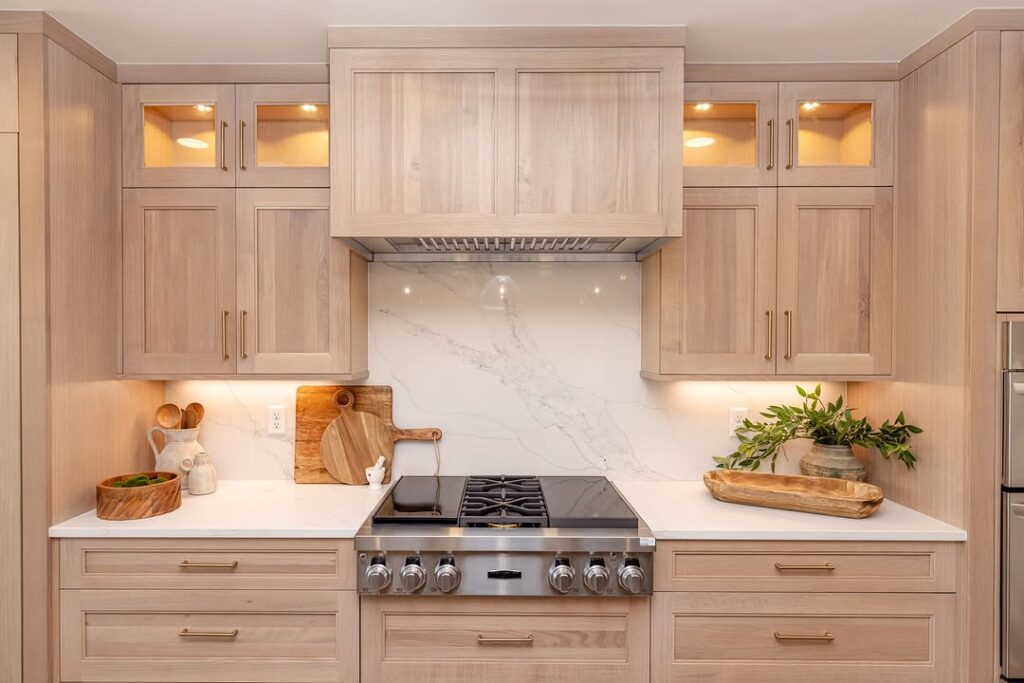
Concealed lighting can be placed beneath upper cabinets, in toe kicks, and inside shelving. Integrated lighting supports both kitchen utility and kitchen ambiance.
Warm LED strips enhance the golden tones of oak kitchens. They increase task visibility for chopping, recipe reading, and other tasks.
Integrated lighting can use dimmer switches to shift from bright task lighting to ambient evening lighting. Install dimmer switches to enable that adjustment.
Glass-front cabinets can provide lighting for displaying heirloom dishware or collections. Adjustable lighting can also reduce eye strain.
Recessed puck lights work in contemporary and transitional kitchens. Their focused beam and minimal recessed profile keep the fixtures unobtrusive.
Place lighting to emphasize natural textures and eliminate shadows across the worktop.
Lighting paired with the cabinetry brings out variations in oak grain and the finish. It reveals changes that may otherwise be less visible.
Integrated lighting combines aesthetics and functionality. It is efficient and requires low maintenance.
Lighting upgrades can modernize the kitchen without altering the cabinetry. The installation effort is low.
Oak Cabinet Color Pairing

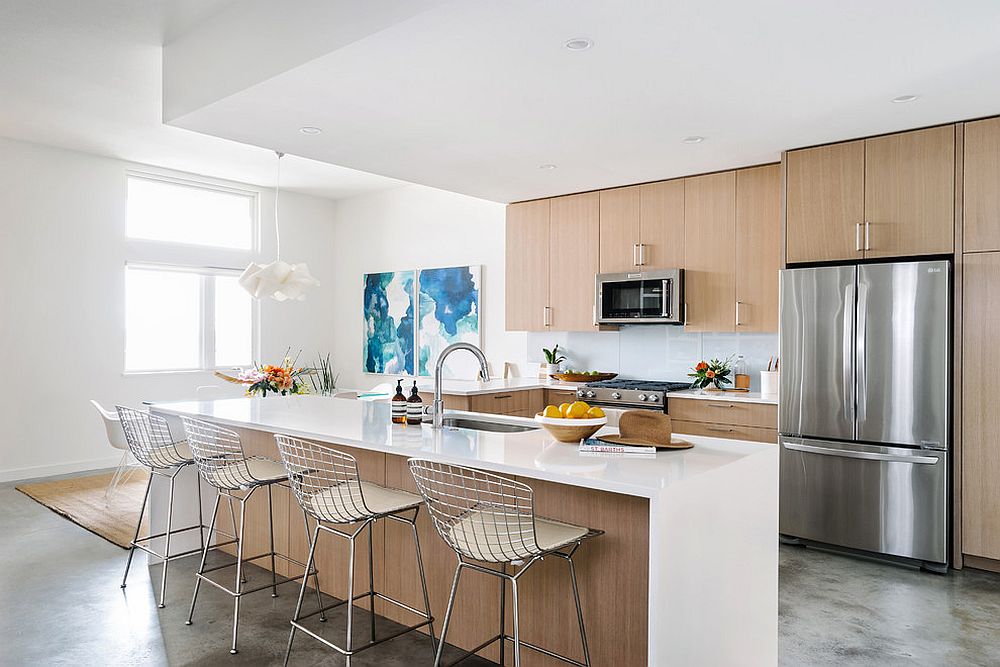
Two-tone cabinetry brings warmth and visual depth to the kitchen. Its two-tone layout keeps the oak design from looking flat.
Light oak upper cabinets bring a pale material detail to the room. Paired with dark base cabinets, they form a two-tone layout that adds dimension and contrast. The difference in tone keeps the space from feeling overwhelming.
Light oak gives the kitchen palette an organic anchor. Lower cabinetry can be finished in espresso or charcoal.
High versatility allows two-tone cabinetry to fit contemporary kitchens as well as rustic ones. The combination can shift with the surrounding materials and styling.
Antiqued brass hardware gives the cabinets a traditional direction, while matte black handles create a modern one. The hardware choice defines the style.
Open shelving keeps the space breathable between cabinets and breaks up uniformity.
The kitchen gets its delineation from two-tone cabinetry. In open-plan homes, it does this without a barrier and keeps visual flow moving.
Natural oak grain adds character. Balance tone, texture, and placement in two-tone cabinetry, and use a matte finish to minimize glare.
Dual-tone cabinetry can suit Scandinavian minimal or farmhouse interiors. The combination feels fresh and grounded, with layered interest.
Two-tone oak cabinets offer high usability. Their functionality and ability to remain current are also high.
Eco-Friendly Oak Kitchen
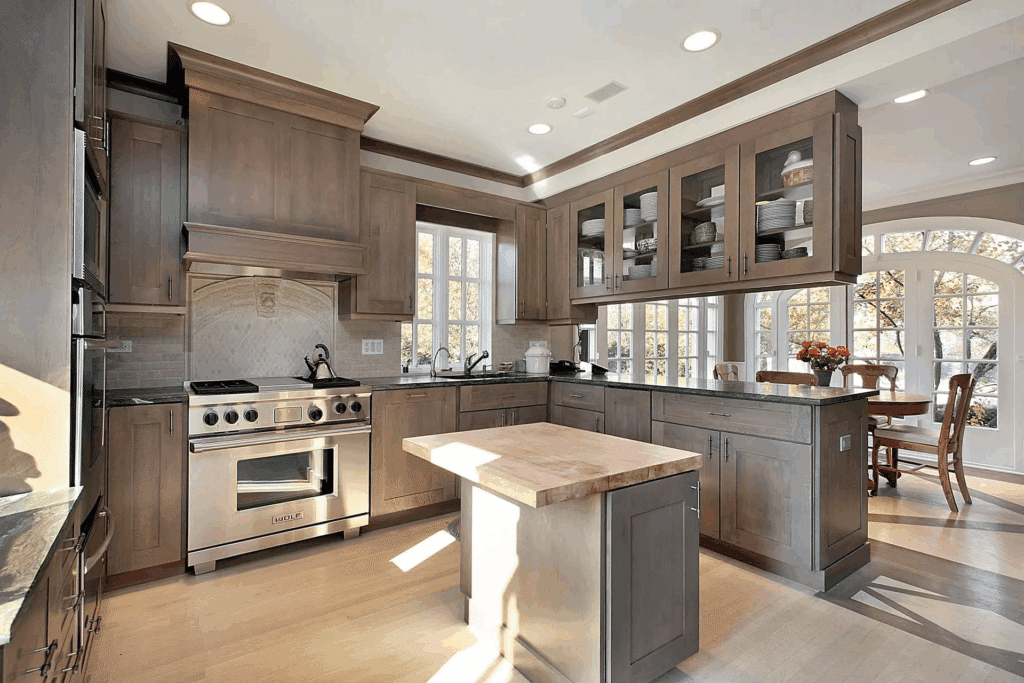
Oak cabinetry supports sustainability when it is responsibly sourced and treated.
FSC-certified oak comes from managed forestry. That certification is tied to support for long-term environmental balance.
Low-VOC adhesives and water-based finishes come first in the material mix. They are paired with oak cabinets and can support a healthier indoor atmosphere, especially in wellness-focused homes.
Reclaimed oak brings its character-rich grain to cabinetry. Using it also reduces demand for new timber.
Reclaimed oak cabinetry adds visual interest. It also brings unique texture while reducing the carbon footprint.
Fewer replacements minimize waste over time. Oak's durability reduces how often replacement is needed.
Recycled glass countertops and cork flooring both support the sustainability of oak cabinetry.
Soft-close hinges improve energy efficiency, while modular designs can do the same. Together, they can optimize appliance use and airflow.
Eco-friendly oak offers finish variety, including light-washed neutrals and bold earth tones. Responsible oak design can retain both style and function.
An eco-friendly oak approach supports performance, longevity, and mindful design.
Mixed Material Oak Cabinets
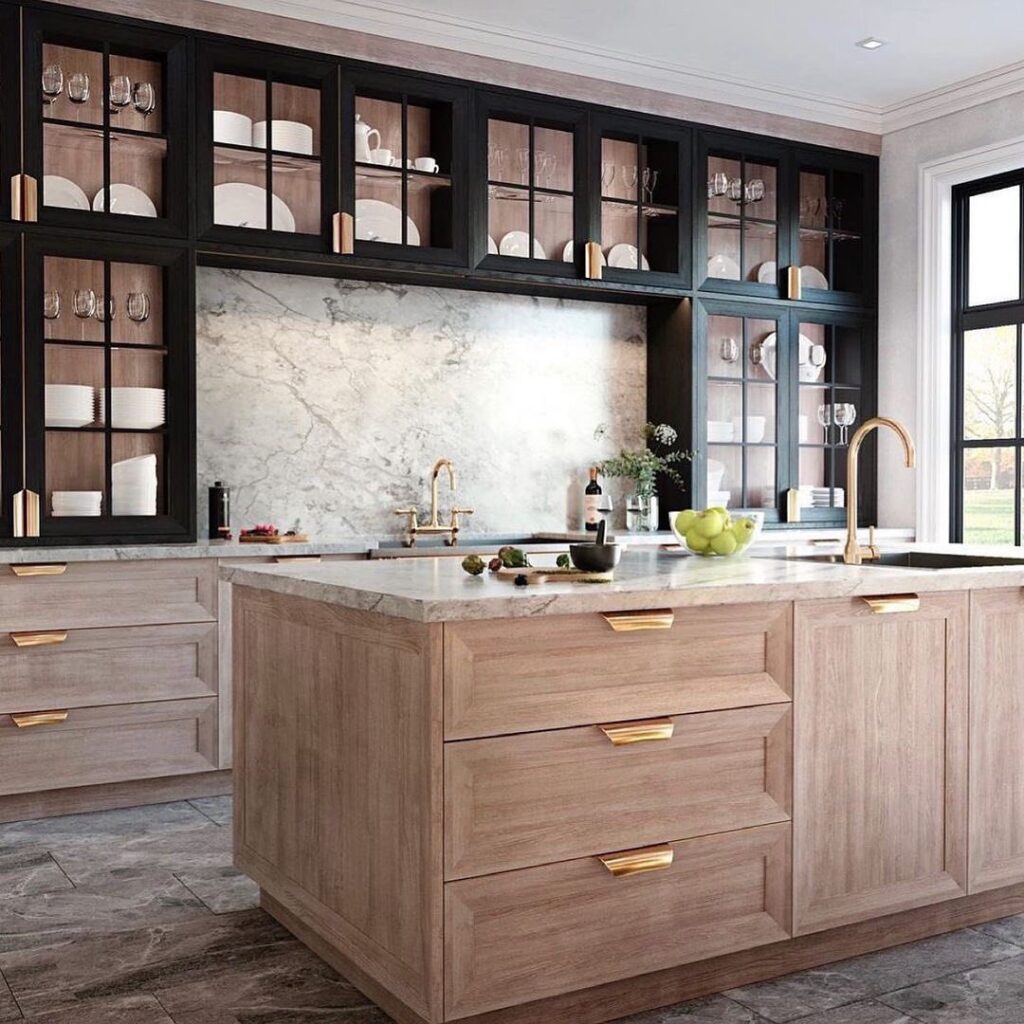
Oak cabinetry can be paired with a variety of complementary materials. The mix adds material variety while keeping oak as the main cabinet material.
Matte metal framing can sit beside painted MDF and reeded glass fronts. This mixed-material approach expands the styling options for the cabinets.
Whitewashed oak upper cabinets balance painted base cabinets in navy or forest green. The two cabinet sections use different colors and finishes.
Open metal shelving sits alongside the oak cabinetry. The shelving keeps the warmth of the oak present in the overall arrangement.
Wood expanses feel less continuous when reeded glass doors are set into the cabinetry. The inset glass doors also allow for display storage.
Mixed materials suit transitional design. This approach avoids defining the kitchen as strictly rustic or ultra-modern.
Use one consistent finish for the hardware across the mixed materials. That hardware finish supports cohesion.
Quartz or soapstone countertops with understated veining work with both the oak cabinetry and the painted base cabinets.
Material shifts can designate kitchen zones for prep, display, or storage. Each change helps identify a different area.
Mixed material oak cabinetry supports daily kitchen use and allows for personalization. The combination can be adjusted to suit individual needs.
Biophilic Oak Kitchen Design

Oak cabinetry supports a connection to nature. Here, biophilic design means design inspired by nature.
Biophilic kitchens use design elements such as natural textures, natural colors, and natural forms. Their goal is to promote well-being.
Oak is the starting point here, with its organic grain and tone. It works with a live-edge countertop, a stone tile backsplash, and an indoor herb garden.
Floor-to-ceiling windows and skylights maximize natural light. That daylight changes with the oak's warm undertones, which also enhance the light.
Raw clay and rattan seating pair with oak cabinetry. Together, the materials maintain a focus on nature and add tactile contrast.
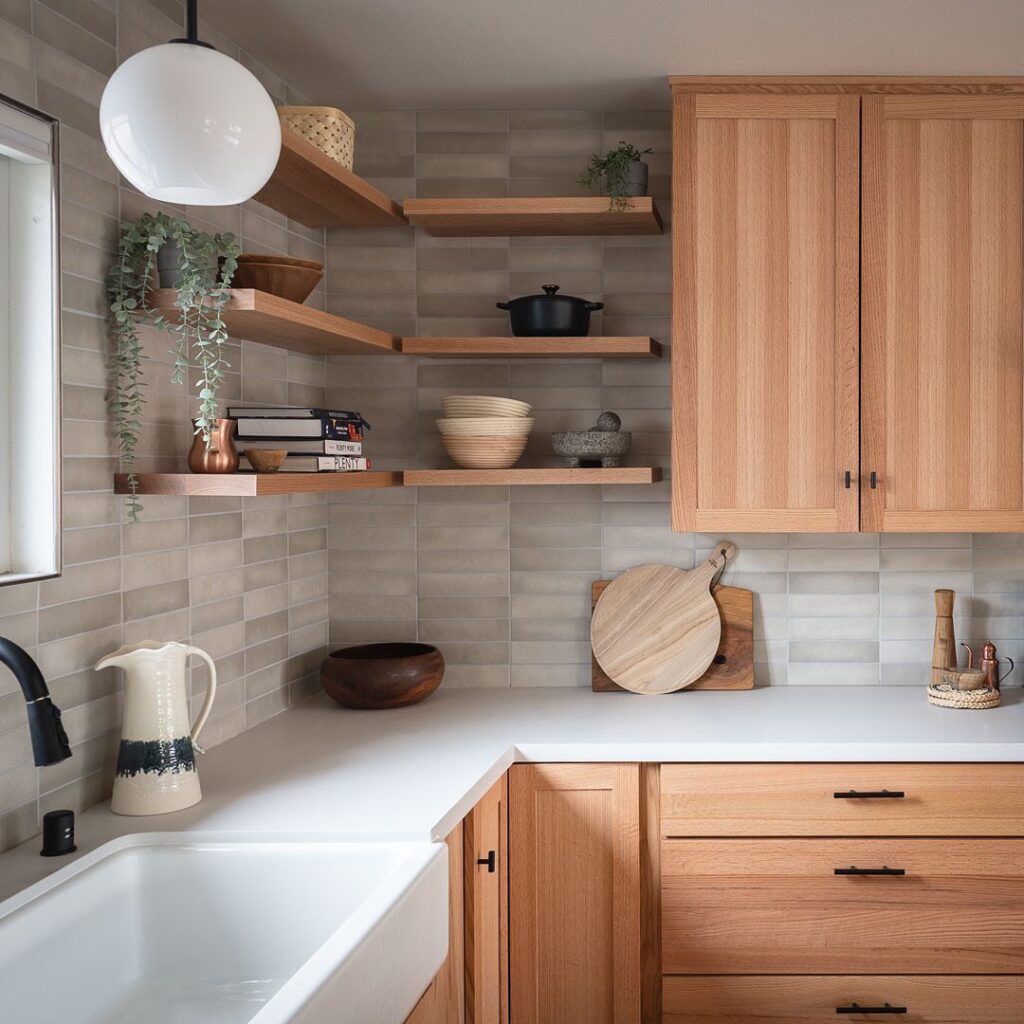
Open shelving displays greenery, wooden bowls, and natural pottery. These displayed natural items reinforce a connection with the environment.
Non-toxic finishes are part of the material choice, and locally sourced oak is used alongside them. The finishes support healthier indoor air quality, while both finishes and oak support environmental responsibility.
In the kitchen, biophilic design supports cooking and gathering while reducing visual noise. The goal is for daily rituals to feel restorative.
Biophilic oak style combines oak durability with support for restorative design. It targets wellness-focused living.
Metal Accents on Oak Cabinets

Oak cabinetry combined with metallic elements brings together a refined character and a grounded character.
The oak grain meets a sleek counterbalance in the form of metallic materials. The choices are brass, copper, and stainless steel.
Polished chrome brings brightness to cabinet hardware. The hardware uses pulls and knobs in brushed brass for warmth, matte black for contrast, and polished chrome for brightness.
Across the kitchen, metallic finishes can extend from range hoods to toe kicks and appliance trims. Repeating them helps maintain consistency.
Exposed pipe shelving and vent covers made from raw metal support an industrial kitchen style.
Metallic accents to consider include metallic mesh inserts and thin brass inlays. The mesh inserts are installed within cabinet doors, while the brass inlays are installed along drawer fronts.
Metallic lighting fixtures can serve as style elements and provide functional lighting. Options include pendants and under-cabinet strips.
Tactile interest comes from the wood and metal combination. The pairing introduces visual interest and preserves cohesion.
Across the room, maintain balance with metallic accents. Excessive metal can overpower oak's organic character.
Layered wood and metal materials combine rustic warmth with modern functionality. Together, they support practical kitchen design.
Oak in a Color Drenched Finish

Oak cabinetry can have a saturated color finish while keeping the grain visible. The saturated finish preserves the wood grain.
A translucent stain or tinted finish combines color with preserved grain visibility.
Cabinet colors include forest green, navy, charcoal, and burnt orange. The selection covers several deep and warm options.
Hardware helps set the direction of the cabinetry. Brass, matte black, and chrome finishes pair with choices ranging from traditional elegance to sleek modernism.
In smaller kitchens, apply one cabinet color uniformly across all the cabinetry. A consistent color keeps the finish continuous.
Lighter surfaces can offset bold cabinetry. Options include a marble backsplash, marble countertop, quartz backsplash, or quartz countertop.
A tinted finish offers a way to refresh kitchen cabinetry without replacing it. The finish is the refresh method.
Painted MDF or laminate can provide color without a full commitment to color-drenched oak. These materials offer alternatives to using oak throughout.
Color-drenched oak combines a natural material with expressive color.
Floating Oak Cabinetry
The cabinets have concealed storage and an oak finish. Their floating form provides a modern configuration.
Floating cabinets suit compact and open-plan kitchens. Their clean lines sit above the floor, with the support hidden from view.
In areas with heavy foot traffic, exposed flooring simplifies cleaning.
Plaster, tile, or painted drywall can be used behind the cabinets. The wall finish sets the design tone, while the oak supports cabinet durability.
Beneath floating base cabinets, integrated LED lighting supports nighttime navigation. The lighting is placed under the cabinets.
Floating shelves can sit above the cabinets in matching oak. This upper shelving complements the floating oak cabinets.
The floating oak configuration is used in minimalist and Scandinavian kitchens.
Custom depth lets floating oak cabinets serve different purposes. They can accommodate dish storage, a coffee station, or a display unit.
Floating oak cabinets combine natural wood with architectural lines.
Open Shelving and Oak Accents

Open shelving helps with kitchen functionality. Oak cabinetry is paired with it.
Open shelves provide storage for daily essentials and make those items easy to access. They also reduce the visual weight across the upper wall.
Oak accents suit modern interiors and rustic interiors alike. They can complement open shelving through trim detailing, side panels, or floating shelves.
Ceramics, glassware, and greenery give open shelves a clear display role. The shelves serve as display space for these items.
Match the shelf wood tone to the lower oak cabinets. Brackets in matte black or brass add contrast.
Oak shelves can support weighty items because oak has a hard grain that resists warping.
Keep display objects balanced in scale and color, and maintain symmetry when styling open shelves. These controls help avoid clutter.
Behind the shelves, a glass-tile or neutral-stone backsplash adds depth. This treatment also keeps the wall from looking flat.
Open shelving can mark a coffee station or a baking nook. These functional zones give the shelving a defined purpose.
Oak cabinetry remains the central material while open shelving supports everyday convenience.
Warm Honey Oak
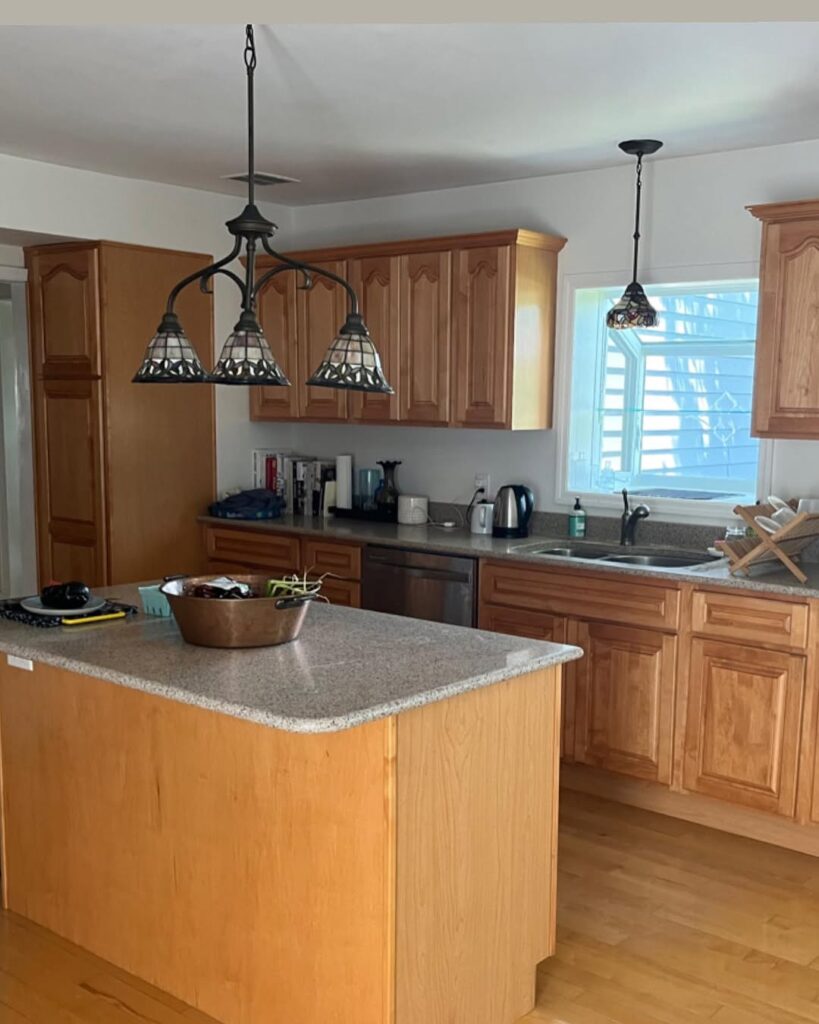
Honey oak cabinetry has warm golden undertones that bring classic warmth and comfort. The finish gives the cabinets a familiar character.
Honey oak has a warm, lived-in quality. It is warmer than cooler-toned woods.
In one kitchen, neutral quartz countertops and creamy backsplash tiles balance the warmth of honey oak cabinetry.
Flat black pulls give honey oak cabinetry a contemporary direction, while brushed brass knobs bring a heritage-inspired look. Updating the hardware can change the cabinetry.
Lighting changes the appearance of honey oak. Under-cabinet LEDs provide practical lighting and reduce orange tones.
Across the surface, oak grain variation is present. The grain creates texture and movement, keeping the oak from appearing completely uniform.
Honey oak works with traditional interiors, transitional interiors, and some eclectic interiors.
With thoughtful application, a honey oak finish can look classic rather than dated. The dated stereotype is avoidable.
Existing oak cabinets can be refinished to a softened honey tone when renovating without replacement. Refinishing preserves the wood quality, keeps the project budget-friendly, and refreshes the kitchen.
Sliding Door Pantry
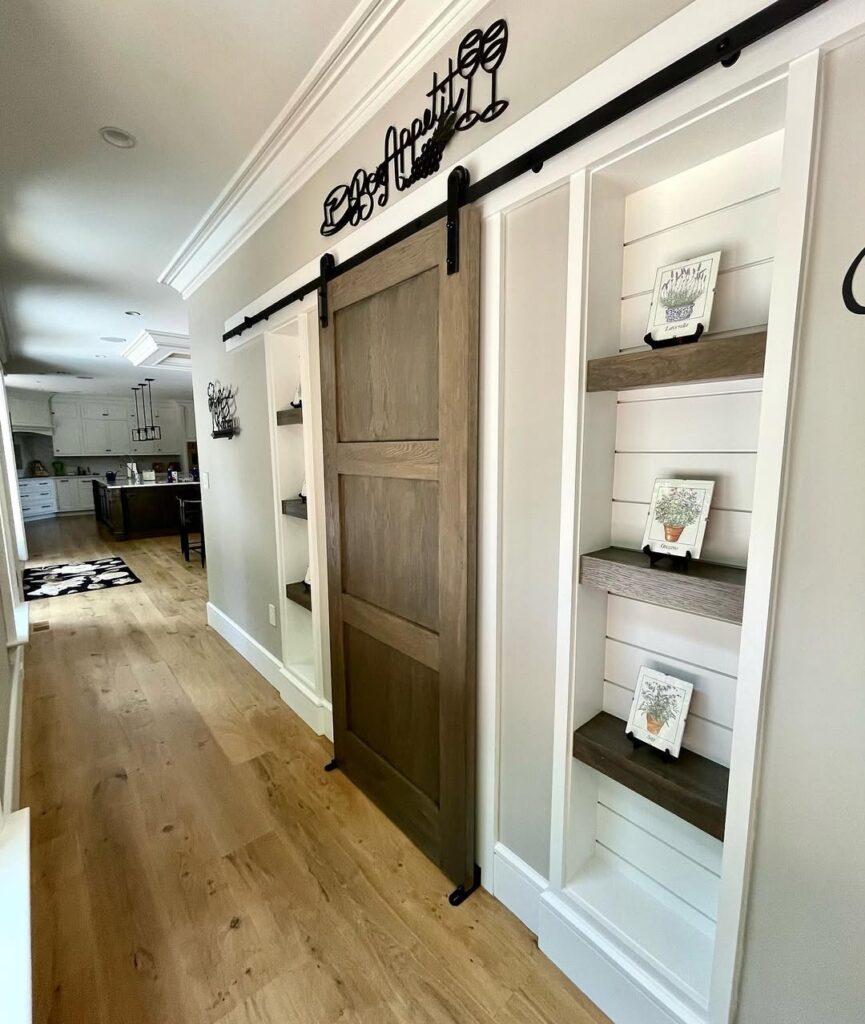
Pantry access can come through a sliding barn door that works with oak cabinetry. The door adds practicality and texture without requiring a different cabinet material.
A sliding door adds texture and movement to the wall. It conserves space because it needs no swing clearance.
A focal point for the pantry, the oak barn door harmonizes with the cabinetry. Its finish keeps the door connected to the surrounding kitchen.
Matte black tracks give the door an industrial style. Door hardware has a significant influence on the overall look, while brushed nickel hardware softens it.
Sliding doors provide access to dry goods without obstructing traffic in narrow kitchens. They can also be used for appliance nooks.
A barn door can increase vertical storage with hanging baskets and spice racks. Both hanging baskets and spice racks provide storage.
Reclaimed oak planks make up the barn door. Their natural patina supports an eco-conscious choice.
For modern farmhouse and transitional interiors, a sliding barn door pantry combines rustic nostalgia with updated functionality. The style brings an older character together with practical use.
A sliding barn door pantry preserves kitchen cohesion and efficiency. Its design impact is high.
Textured Oak Cabinet Finish

Textured oak gives the surface more dimension and adds tactile interest. The material detail remains visible on the oak itself.
Across the oak surface, wire brushing removes soft fibers and creates grain relief. The process exposes the more durable grain strands.
Hand-scraped oak and rift-sawn oak each reveal intricate patterns. The two finishes show that detail in different ways.
Textured oak treatments camouflage signs of daily wear, including smudges and light scratches.
The surface gets both highlights and shadows from natural light. With ample natural light present, textured oak shows these effects.
A neutral matte countertop pairs with textured oak. The oak becomes the visual focal point.
The panels combine smooth and textured finishes. Smooth upper cabinets contrast with textured lower cabinets.
Textured cabinet surfaces can improve grip and ease door handling, especially in busy households.
Textured oak cabinetry combines artisanal detail with durability.
Vintage Oak Cabinet Style

A vintage-style kitchen features oak cabinetry inspired by past design eras. The result carries a sense of nostalgia and comfort.
Inset and beaded-panel cabinet doors reference mid-century and colonial craftsmanship. They come in natural oak or slightly distressed oak.
Glass-front upper cabinets display dishware and collectibles. They may also include mullion detailing.
Latch-style hardware complements oak warmth without overpowering the oak. Aged brass and pewter are the finish options.
Turned wood legs are used on islands, while scalloped valances appear above windows. Both details reference period design.
A vintage palette of creamy white, sage green, and buttery yellow pairs with oak cabinetry.
Patterned linoleum is one flooring option, while wide-plank oak is another. These flooring options reinforce vintage style.
Milk-glass pendants and wrought iron chandeliers support a vintage setting.
Under-cabinet lighting is a modern convenience integrated into a vintage-style kitchen. Built-in organizers are integrated there as well. Concealed appliances are included too.
Behind the retro style, vintage oak design includes contemporary functionality. That combination supports livability.
Hidden Kitchen Layout
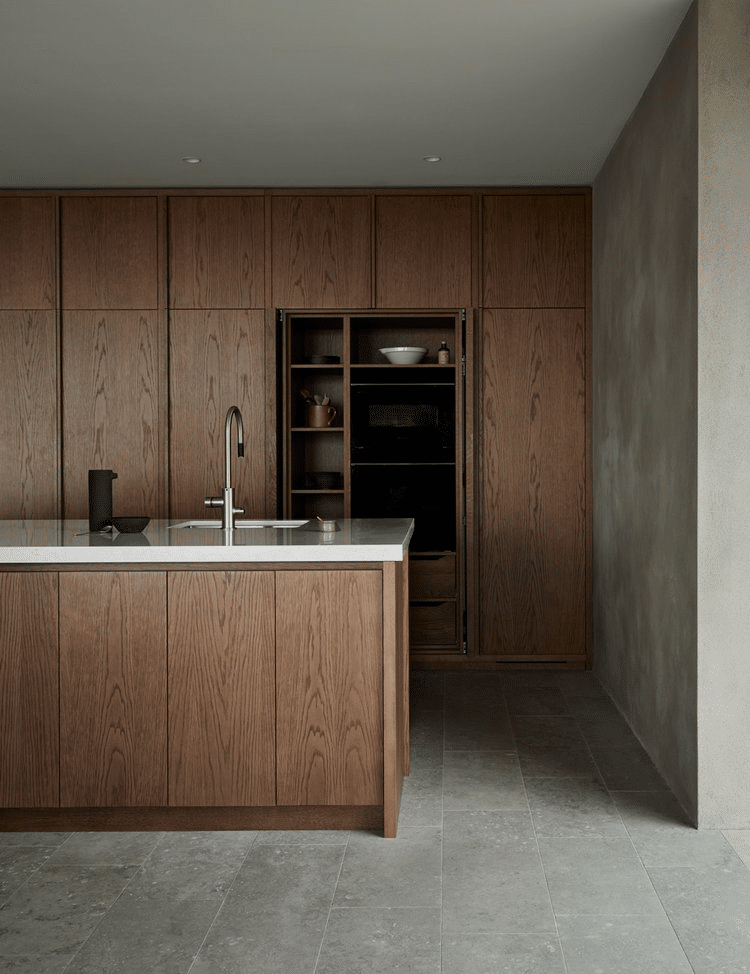
In one kitchen, a minimalist approach integrates the cabinets deeply into the background, making them virtually hidden.
Oak cabinetry can look like seamless wall paneling, with a uniform grain direction and hidden handles. The construction keeps the cabinet fronts continuous.
Recessed finger pulls provide the opening detail. Oak doors have no handles and use a push-to-open system. The invisible kitchen retains background integration and clean lines.
A monochrome finish creates visual continuity while concealing appliances and cabinets. It can be natural light oak or gray-wash.
An invisible kitchen helps minimize visual clutter. This approach suits open-concept living areas where the kitchen shares space with other rooms.
Across the wall, cabinet panels create an uninterrupted surface over the refrigerator and dishwasher. Integrated lighting beneath the upper cabinets provides workspace lighting while keeping fixture visibility low.
In an invisible kitchen, the streamlined visual elements improve tidiness and workflow.
Oak supports spatial fluidity in contemporary apartments and urban apartments. An invisible oak kitchen suits that requirement.
Clean lines, architectural simplicity, and material richness are preferred features of an invisible oak kitchen. Its design and function are both high.