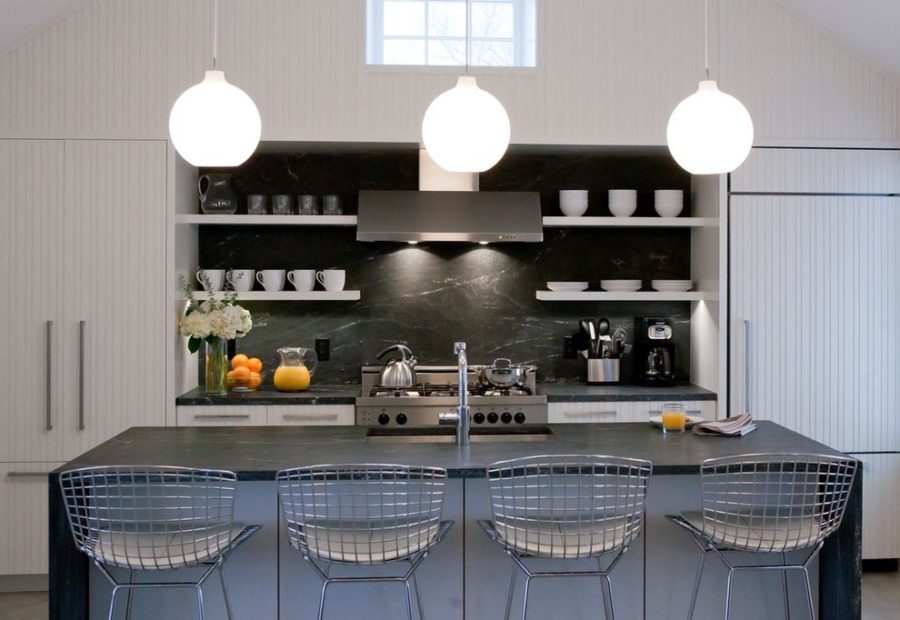
10+ Rustic Kitchen Cabinet Ideas With Vintage Character
A rustic kitchen can feel lived-in and handcrafted, with weathered wood and earthy texture throughout.
Design trends are shifting toward authenticity, while rustic cabinets put character ahead of polish.
Weathered cabinet finishes, including knotty pine and reclaimed barnwood, convey the history of rustic cabinetry.
Rustic cabinetry brings countryside warmth to both modern farmhouse kitchens and city apartments. It also provides depth and personality.
These rustic cabinet ideas keep function in view while adding a timeworn appearance and personal design.
Hoosier Storage Cabinet
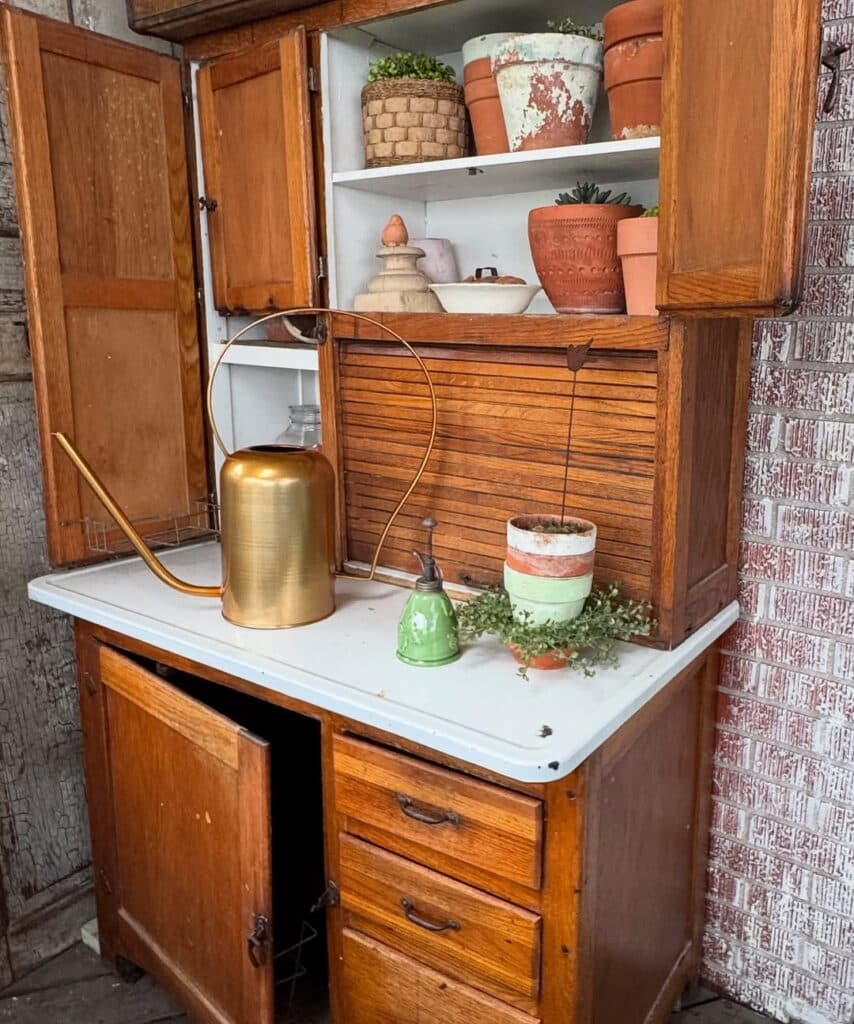
A standalone Hoosier cabinet began in the early 20th century as a self-contained kitchen station. Antique Hoosier cabinets provide historical character and are used in modern rustic interiors.
Built-in spice racks and porcelain work surfaces add utility to Hoosier features. Flour sifters and roll-top doors are included as well.
Seek an authentic Hoosier cabinet in good condition.
Distressed paint or a natural wood stain can turn a Hoosier cabinet into a focal point. It provides a work surface and vertical storage, and after refinishing, it can blend with surrounding cabinetry.
A Hoosier cabinet can become a coffee station, baking center, or stand-alone pantry. It works in both small and large layouts and can avoid the need for full custom cabinetry.
Use vintage-style hardware to maintain the cabinet's authenticity. Glass knobs, aged brass hinges, and enamel drawer pulls are suitable choices.
Subtle updates preserve the original character of a Hoosier cabinet. Added lighting and reinforced shelving can update its functionality.
A Hoosier cabinet supports both form and function. The antique cabinet combines practicality and history.
Warm Wood Shaker Cabinets
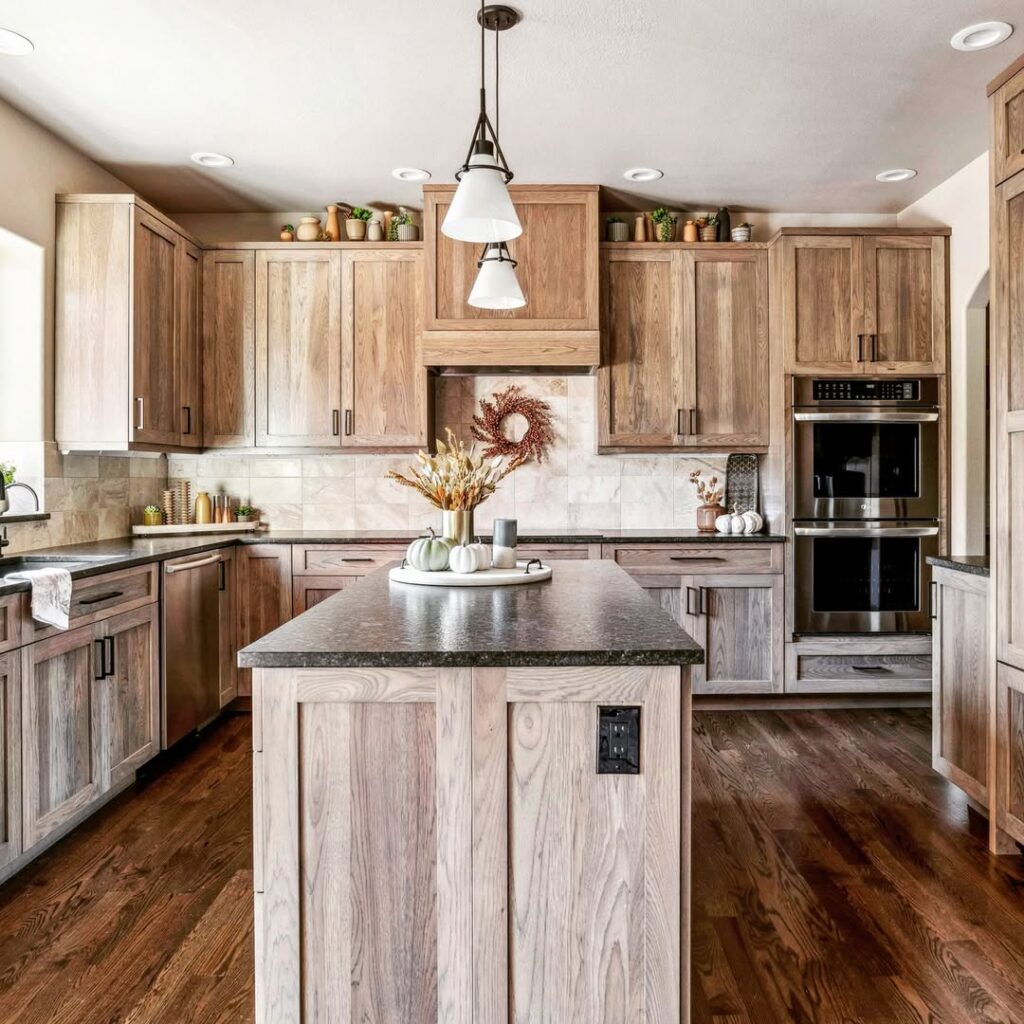
Rustic kitchens often use Shaker-style cabinets. Their clean lines come from utilitarian roots.
Hickory, walnut, and chestnut are warm wood tones that can be applied to Shaker-style cabinets. Warm wood finishes provide natural depth.
A Shaker cabinet panel has a recessed design and minimal ornamentation. The recessed panel emphasizes both the wood texture and the wood tone.
The backsplash has a textured surface made from brick, stone, and hand-glazed tile. Traditional hardware, including bin pulls or antique brass knobs, complements the arrangement.
In family kitchens, Shaker cabinets provide durability and suit daily use. Their warm finish supports a sense of comfort.
A kitchen layout can be symmetrical or eclectic while still leaving room for flexible storage planning. Shaker cabinetry suits either approach and supports that flexibility.
Across the kitchen, Shaker cabinetry can pair with a matte countertop and open shelving. This combination has long-term versatility and supports farmhouse-modern style.
For everyday upkeep, maintain the natural finish through light oiling and regular cleaning. Solid construction gives it the strength to withstand heavy daily use.
Shaker cabinets provide a dependable structure and balance traditional style. Rich wood finishes suit rustic kitchens.
The Shaker cabinet style offers timeless functionality rather than a trendy look.
Distressed Cabinet Doors
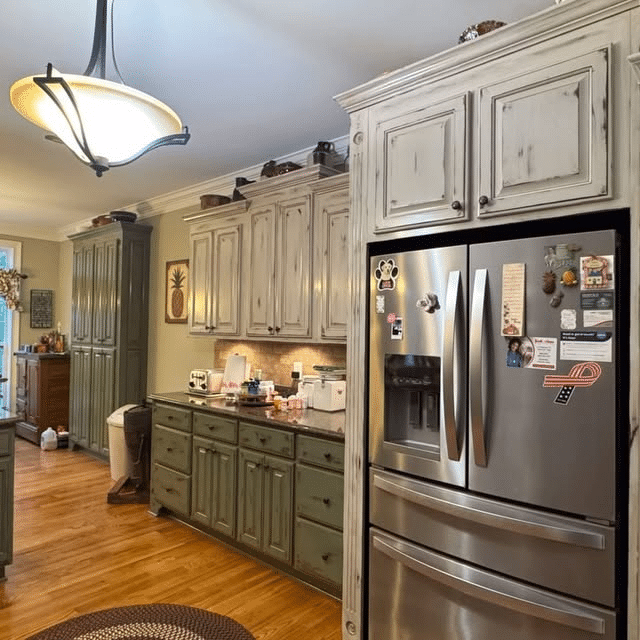
Light sanding, hand-scraping, or rubbed paint can create the timeworn surface of distressed cabinetry. This aged finish is associated with rustic design.
White, soft gray, and warm taupe are common colors for distressed cabinetry. Distressing lets the lighter colors show while helping them avoid a visually overwhelming effect.
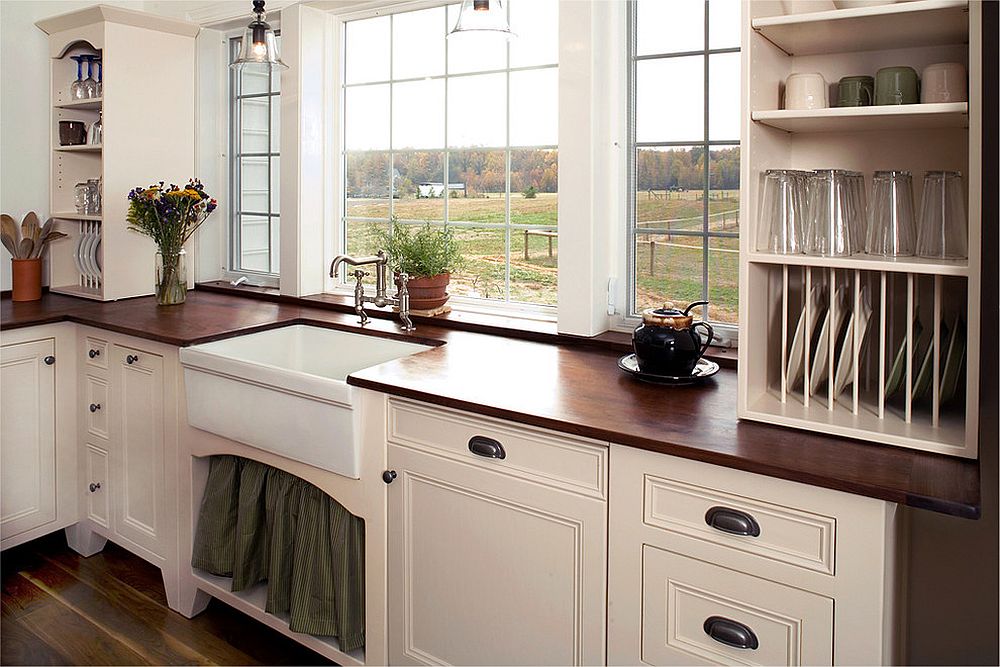
The kitchen has a curated arrangement of details and furnishings. Together, they give the room a collected character instead of a strictly matched look.
An antique-style faucet and butcher-block countertop sit alongside the farmhouse sink. The cabinetry adds a handcrafted quality through brush marks, chipped edges, and varied textures, and it pairs with all three features.
Strategic aging in high-wear areas, including the corners and handles, gives the finish an intentional look. Sealing supports durability and distinguishes intentional distressing from poor craftsmanship.
Quality distressed cabinets resist excessive degradation while retaining their functionality. Their longevity continues to matter over time.
Ceramic knobs or vintage latch handles support the distressed style. Mixing distressed doors with a smooth painted island adds dimension, while mixed finishes help avoid clutter.
Texture and tone bring warmth, history, and rustic style to distressed cabinets. The cabinets are suitable for rustic kitchens.
Rustic Hood Feature
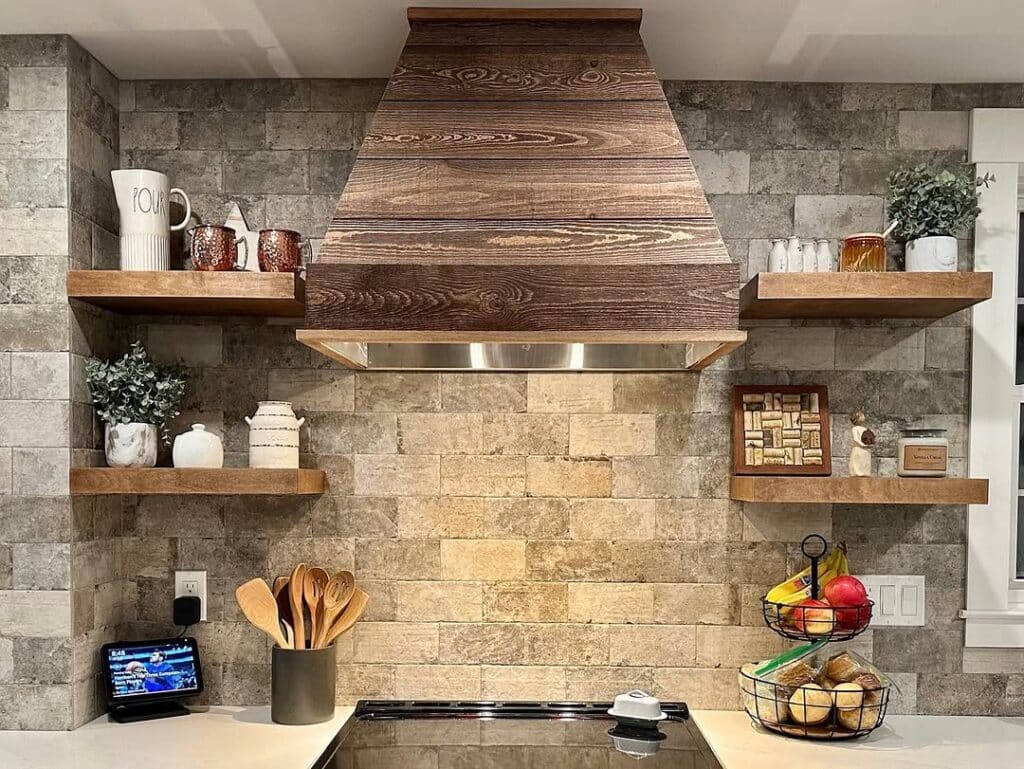
A sculptural range hood can serve as the kitchen centerpiece.
Reclaimed wood, aged copper, and forged iron are the range hood material options. Each provides architectural interest and supports warmth in the kitchen.
Range hood materials can echo the textures of the cabinetry. The hood integrates with the surrounding cabinetry.
Shaker cabinets or open shelving pair with a wooden range hood detailed with exposed beams and shiplap. The hood blends with the cabinetry.
The rustic palette gains contrast from a metal range hood. Patinated zinc or weathered steel can fit comfortably within that palette.
Over the place where cooking happens, a mixed range hood uses wood framing and a metal insert. Together, those parts create a layered focal point.
Modern kitchen standards still apply to a range hood. Its ventilation system must meet those standards to provide interior ventilation.
A hidden blower insert or liner system preserves the hood aesthetics while providing ventilation power. Under-hood lighting adds visibility and ambience.
Natural stone tile or handmade ceramics can support the range hood design through the backsplash.
A rustic range hood works for remodeling or a single-element update. It also serves everyday use.
Kitchen Storage Mix
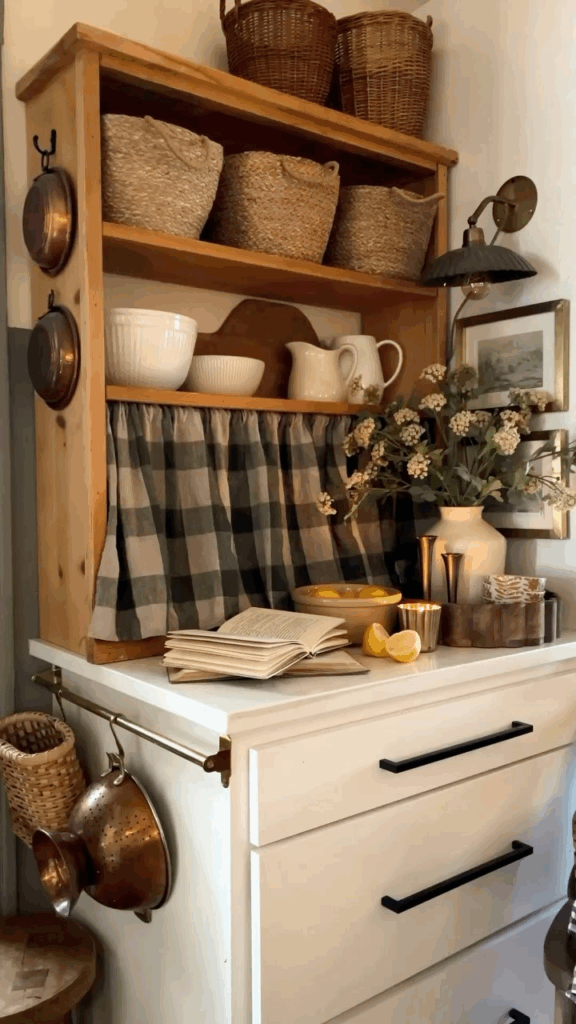
Too many closed cabinets may make the kitchen feel boxed in. Relying on open shelving alone can favor aesthetics while sacrificing function.
Combine open storage and closed storage in a rustic kitchen. This strategy offers everyday practicality along with decorative flexibility.
Ceramic bowls, copper cookware, and woven baskets can sit on open shelves. The shelves support display storage.
A worn finish and visible grain give the wood shelves a natural detail. Black metal brackets support them, while the open shelves keep frequently used items accessible and help break up heavy cabinetry.
Essential storage still belongs in closed cabinets. They can hold clutter, small appliances, and larger items while keeping those necessities out of sight.
Reclaimed wood and lightly distressed wood can form the closed cabinets. These cabinets contribute to the kitchen style.
Glass-front doors and sliding panels combine display storage with enclosed storage. Both reduce dust while keeping display storage available.
Mixed storage supports kitchen usability while retaining visual appeal. Open and closed storage work together in the same kitchen.
Across the room, mixed storage supports item organization. The combination gives different items a designated place.
Vintage Kitchen Lighting
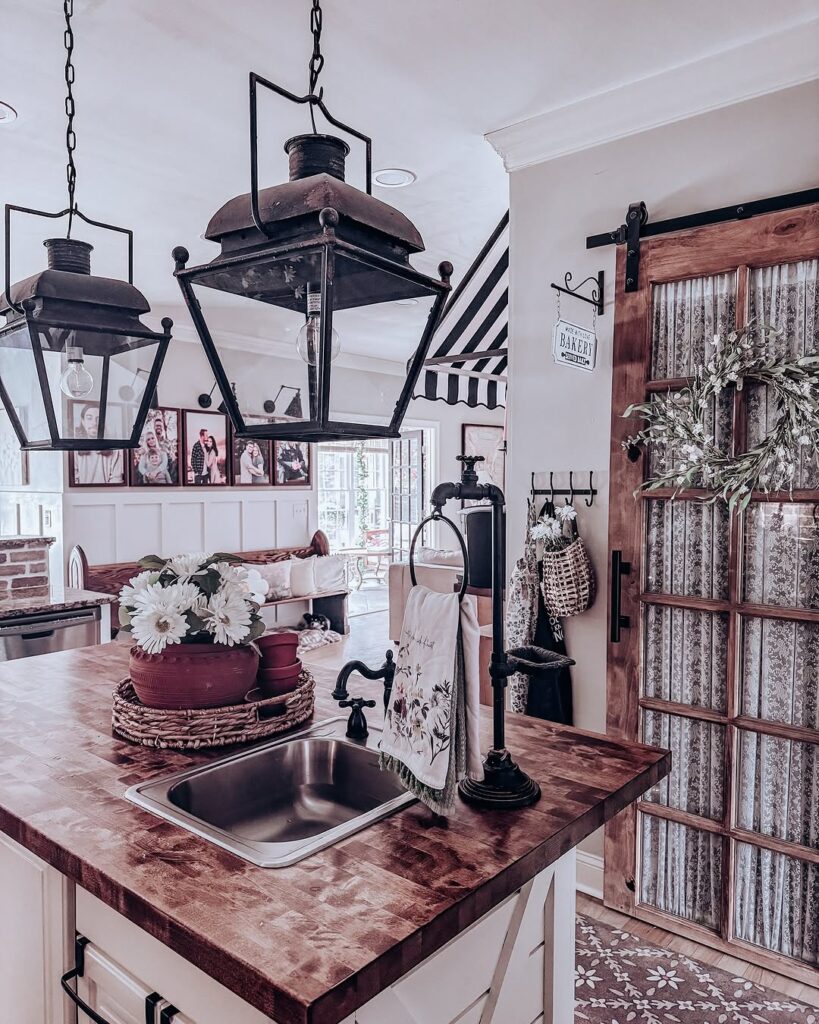
Kitchen lighting is a defining element of a rustic atmosphere. It affects how the room feels and functions.
Vintage-inspired fixtures add character while providing illumination. Options include weathered brass sconces, wrought iron chandeliers, and industrial cage pendants.
Aged finishes, exposed bulbs, and frosted glass give vintage lighting fixtures their look. These fixtures complement natural wood cabinetry and stone surfaces.
Vintage lighting designs have greater presence than sleek modern lights. They create focal points and coordinate with rustic features.
Pendants create visual rhythm. They provide focused illumination at a kitchen island or in a dining nook.
Near open shelving or above the sink, sconces can provide ambient lighting. Mix task lighting with ambient sources so functional zones receive coverage.
Color temperature matters for kitchen lighting. Warm-toned bulbs give off soft light.
Match lighting fixtures to the hardware finishes for visual consistency. Wrought iron and aged bronze are examples of finishes to match.
Vintage lighting enhances kitchen usability and influences the kitchen mood. Its placement and light affect both functions.
Vintage lighting supports efficiency as well as comfort. Both qualities depend on the lighting used in the kitchen.
Reclaimed Wood and Modern Hardware
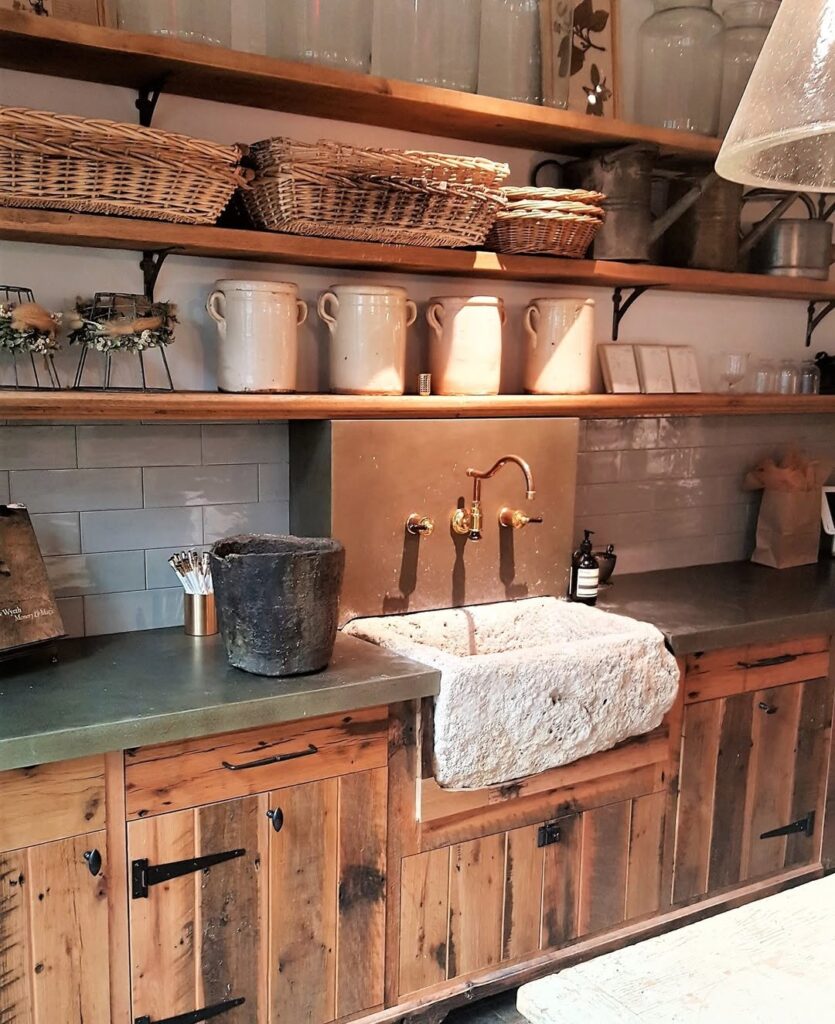
Reclaimed wood cabinet design combines weathered texture with contemporary hardware.
Knots, nail holes, and a unique patina remain visible in reclaimed wood. These details introduce material variation.
Old barns, factories, and vintage flooring can provide reclaimed wood. Unlike factory-aged materials, reclaimed wood reflects the individual history of its source.
Reclaimed wood cabinets get an update from modern hardware. The hardware is paired with the cabinets, with choices such as matte black pulls, tubular stainless handles, or leather-wrapped knobs.
The combination suits rustic-industrial kitchens. The resulting aesthetic is more contemporary than antique.
Neutral countertops, including honed granite or quartz, pair with reclaimed wood. Their quiet surface does not compete with the cabinet texture.
Open-concept homes need visual continuity, and reclaimed wood cabinets can adapt to that requirement.
Reclaimed wood cabinet surfaces conceal wear and tear, making reclaimed wood cabinets suitable for family kitchens. The existing marks remain part of the surface.
Treat and seal reclaimed wood for kitchen use. Treatment and sealing maintain its structural integrity.
Cabinet hardware improves accessibility and functionality.
The combination suits modern families and supports sustainable design.
Rustic Brackets for Open Shelves
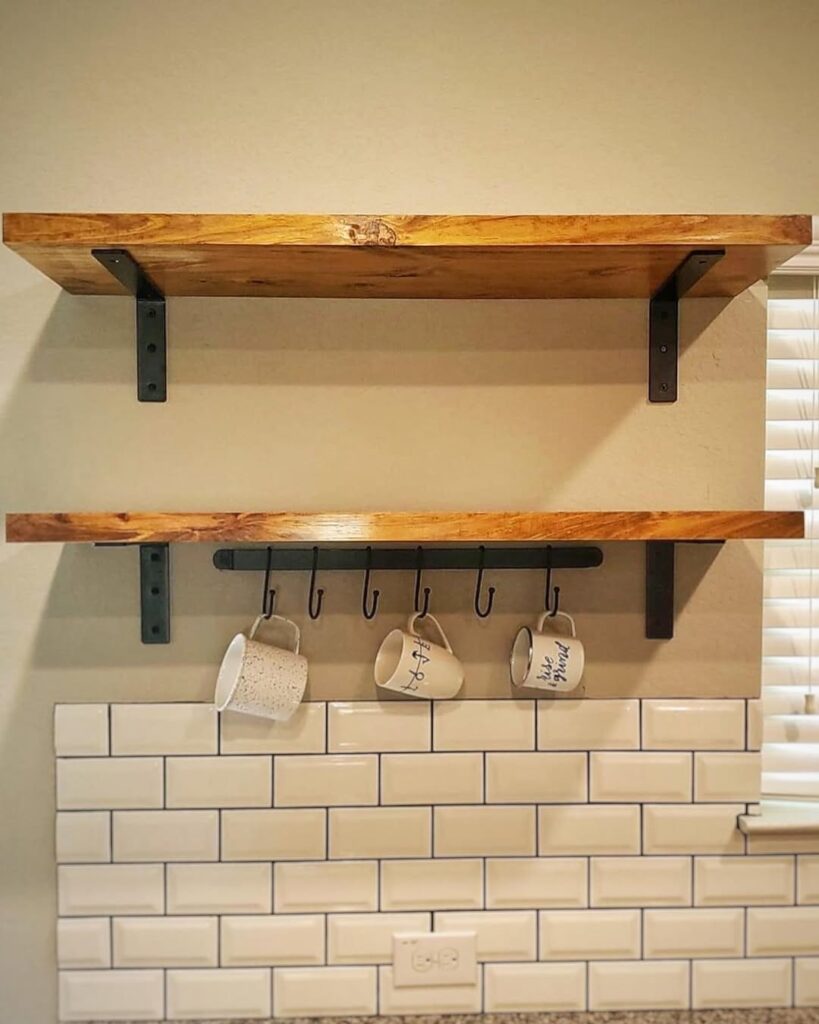
Open shelving replaces upper cabinets in rustic kitchens. It creates an informal look.
Iron and wood shelf brackets support the open shelves. The shelves provide storage while keeping the bracket material visible.
The shelf wood has a reclaimed finish that supports an organic appearance. Its grain is visible, and the edges remain raw.
Wrought iron and cast metal are material options for rustic brackets with old-world craft.
Rustic brackets add wall interest and serve as structural contrast.
Stoneware and mason jars share the open shelves with woven baskets and vintage cookware.
Wall studs provide the installation point for brackets. Install the brackets there to support heavy dishware and pantry essentials, and consider spacing and weight distribution during shelf installation.
Open shelves can wrap around corners, flank windows, or extend over sinks. These placements optimize storage.
Small kitchens benefit from open shelving. Closed cabinetry may make a small space feel tight.
Open shelves keep essentials within reach and offer a lighter alternative to closed cabinetry.
Beadboard Paneling on Cabinet Doors
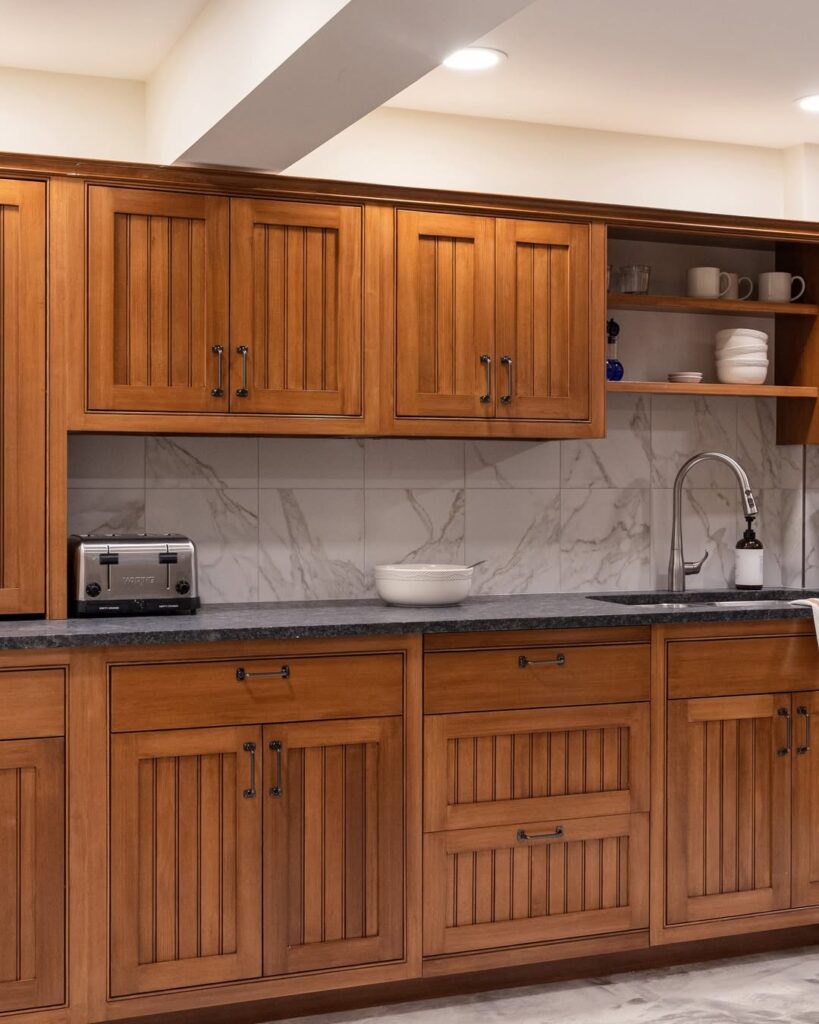
Vertical ridges give beadboard paneling dimension and warmth. Applied to cabinet doors, the paneling is associated with cottage and farmhouse styles.
Beadboard paneling suits rustic kitchens. Rustic kitchens prioritize visual texture, and the paneling supplies it on the cabinet doors.
Beadboard surfaces create light-and-shadow variation. That changes the look from flat doors.
Kitchen islands and lower cabinetry are both effective places for beadboard paneling. It pairs with natural wood tones, cream, sage, and slate.
Beadboard paneling has high versatility. It pairs with modern farmhouse and antique styles, as well as antique hardware and natural countertops.
A sealed finish helps prevent buildup in the grooves, keeping beadboard paneling relatively low maintenance. Repeat the beadboard detail on the backsplash and in ceiling treatments for cohesion.
Beadboard cabinetry supports a rustic style. Wrought iron handles and ceramic knobs both pair with the cabinetry.
Beadboard cabinetry adds warmth and depth. It also conveys history.
Natural Stone Worktops
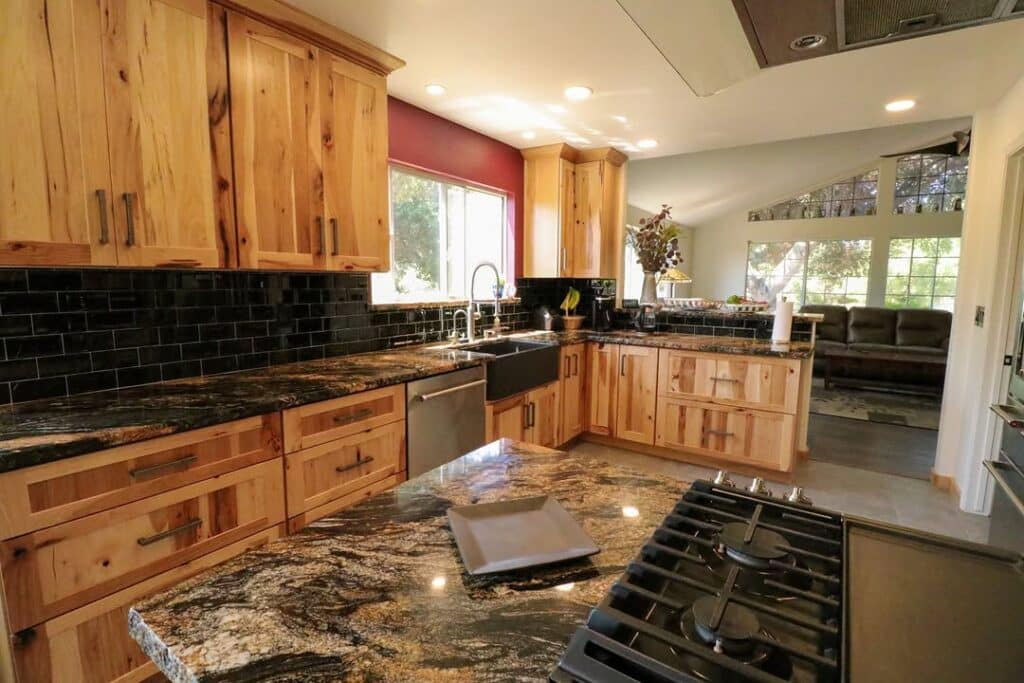
Natural stone emphasizes texture and tone in a kitchen. It is used with rustic cabinetry.
Wood grain complements a tactile countertop made from granite, soapstone, or honed marble. Natural stone also complements antique finishes and avoids an overly polished appearance.
Natural stone develops a patina as it ages gracefully. That patina supports a lived-in appearance.
The stone countertop can be charcoal, beige, or dusty gray. It pairs with wood cabinets that have either reclaimed or distressed character.
Across the kitchen, stone countertops can withstand heavy use. They provide durability for a busy kitchen.
Natural stone has variation in both veining and pattern. Unlike synthetic materials, each natural stone installation is unique.
Sealed granite has low maintenance and provides long-term durability. Stone maintenance is type-dependent, and soapstone should be oiled regularly to support color consistency.
Stone selection depends on aesthetic preference as well as the commitment required for upkeep.
A farmhouse sink, open shelving, or matte metal fixtures can contrast with natural stone countertops. These rustic design elements contrast with the stone.
Stone surfaces suit both industrial-rustic and farmhouse kitchens. They also help unify the kitchen elements.
Natural stone countertops pair with rustic cabinetry, provide durability, and support kitchen utility.
Earthy Color Palette
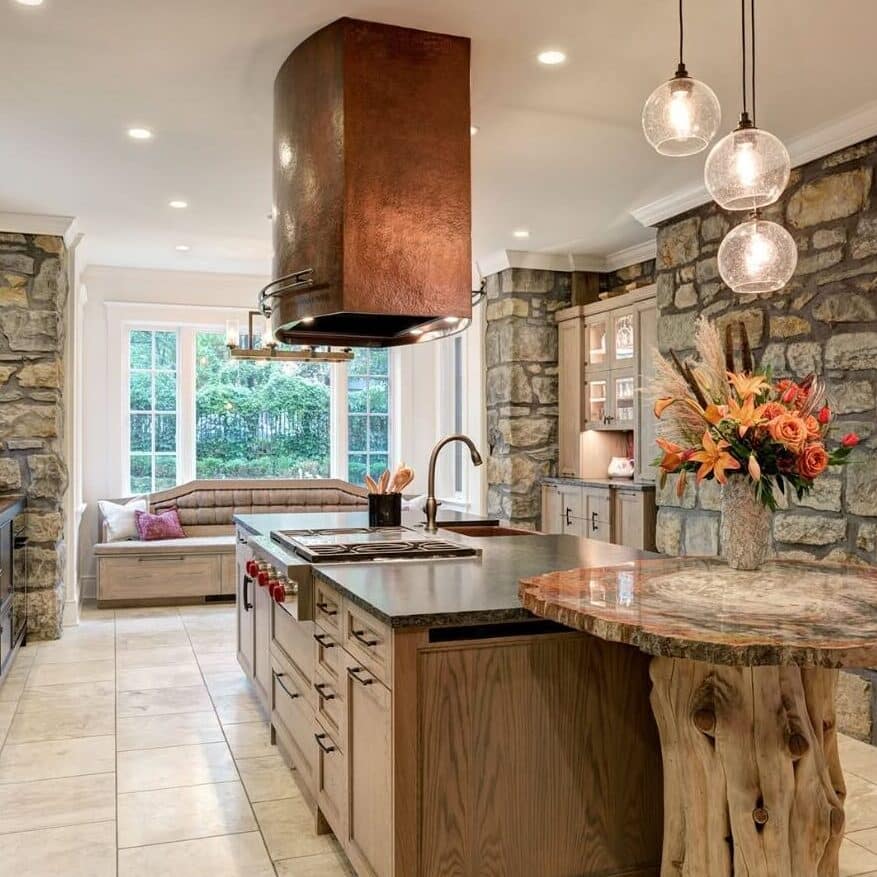
Clay red, olive green, warm beige, and muddy brown complement organic cabinetry textures. These colors form an earthy palette.
Earthy colors provide a backdrop for the kitchen. They also support a visual relationship with the environment around it.
The cabinet finish is muted driftwood gray or muted cinnamon-stained oak. It integrates with stone countertops, terracotta tiles, and aged brass fixtures.
A wheat tone or soft mushroom shade keeps the walls gentle. The earthy color should not compete with the wood grain or the reclaimed surfaces.
Layer colors within one palette to preserve cohesion while introducing contrast. Options include light wood cabinets with a dark island or olive green lower cabinets with beige upper cabinets.
Choose hardware in rust-toned, iron, or bronze finishes to support warmth in the palette. The colors of the hardware echo the surrounding tones.
Natural wood pendants and amber-toned bulbs make up the lighting, which should coordinate with the earthy palette.
Complementary colors across the kitchen accessories support palette cohesion, whether they appear in rugs, linens, or bar stools.
Rustic kitchen design aligns with earthy color schemes, which support practicality.
Rustic Kitchen Iron Hardware
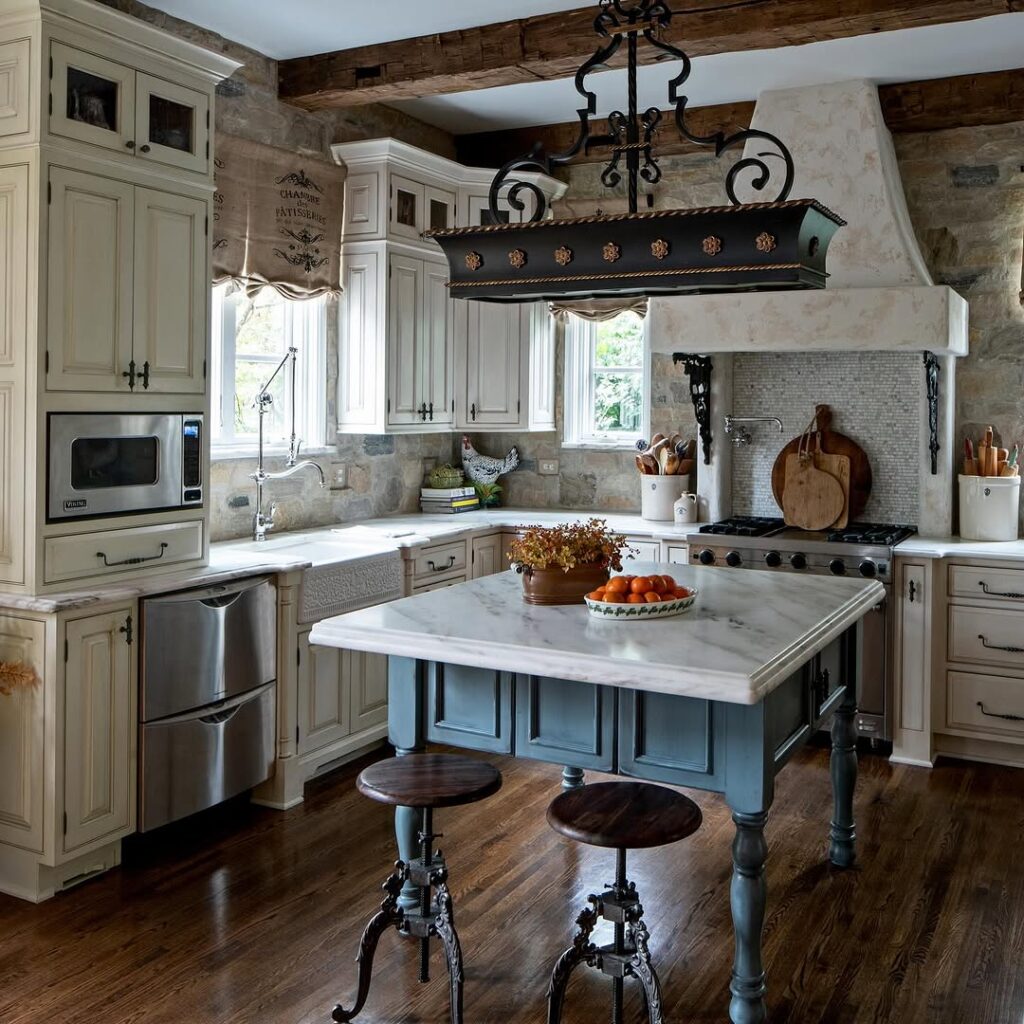
Hardware finishes help set the tone of the kitchen. The finish is a nearby detail that shapes the room.
Handcrafted, old-world hardware brings pulls, knobs, and hinges to rugged wood cabinetry. The iron also complements natural finishes.
The matte finish and sturdy construction give wrought iron hardware visual weight. That quality supports a rustic design.
Reclaimed wood and distressed finishes cover the cabinet fronts. Wrought iron hardware works against those surfaces by providing contrast without becoming dominant.
Choose the hardware design according to whether you want a traditional or modern feel. Linear handles offer one option, while ornate scrollwork creates another.
Metal accents such as light fixtures, shelving brackets, and pot racks work well with iron hardware. Repeating iron details supports continuity throughout the space.
Drawers and pantry doors are high-traffic areas where wrought iron hardware works well. It offers high durability, high resistance to aging, and high wear resistance. Use one consistent finish on the hinges, handles, and drawer pulls for cohesion.
Butcher block counters, stone backsplashes, and vintage tile flooring all suit an iron hardware finish. The finish pairs with these kitchen surfaces.
Painted or stained cabinetry provides the base for this combination. Iron hardware adds high tactility and a grounded visual quality, supporting a rustic foundation.
As a small upgrade, wrought iron hardware can create a lasting impression. It also preserves authenticity and supports visible craftsmanship.
Pantry Cabinets With Barn Doors
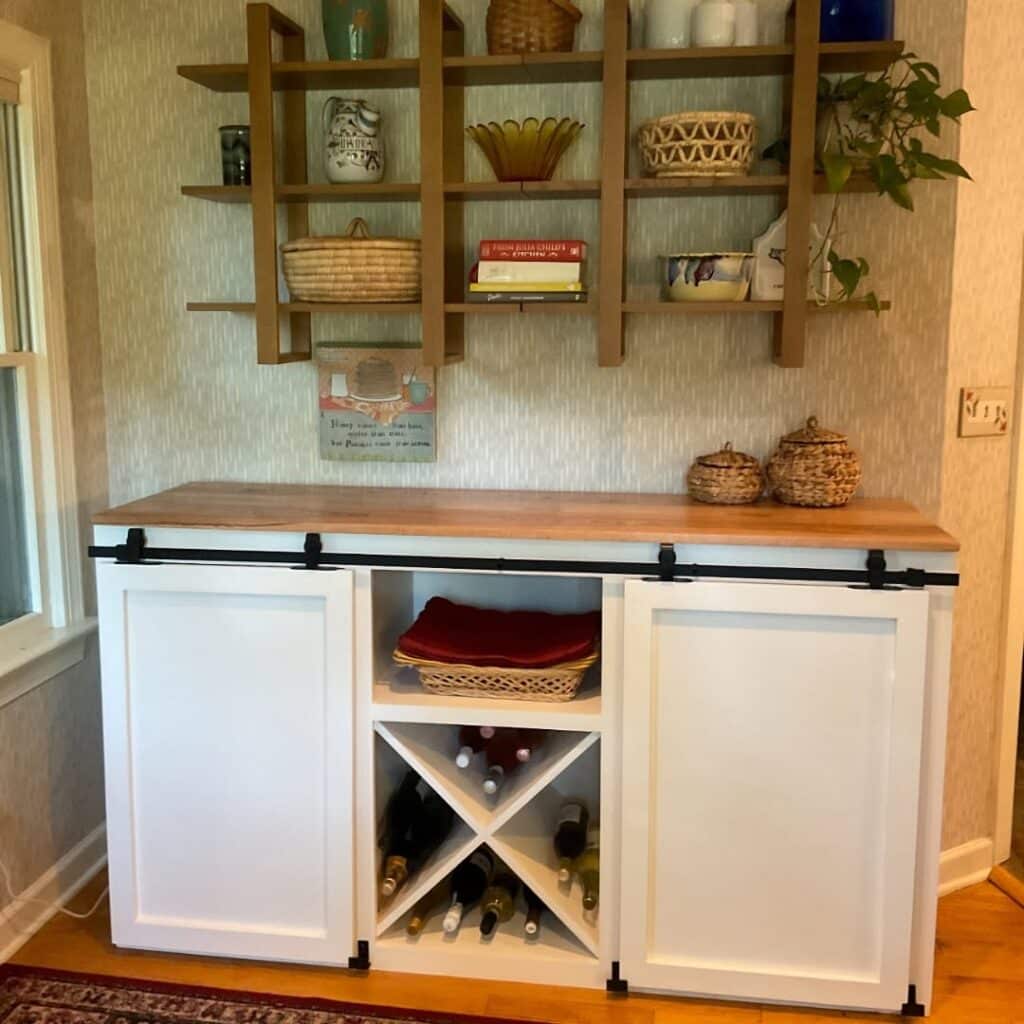
Traditional pantry doors require clearance, while sliding barn doors need less space. That makes sliding barn doors suitable for small kitchens as an alternative to traditional pantry doors.
Along the wall, exposed hardware rails mount sliding barn doors and save space. The doors also add architectural interest.
Reclaimed wood, shiplap, and weathered planks are options for barn door materials. Each provides visual texture.
A dark stain or whitewash can finish the barn door. Black iron tracks pair with black iron handles and coordinate with rustic lighting and shelving brackets.
Sliding barn doors conceal functional storage in an open-concept layout. They are suitable for pantries, laundry zones, and utility storage.
Sliding barn doors operate smoothly and silently when properly installed. They can also tolerate frequent use.
Chalkboard panels, inset glass, and antique hardware are customization options for sliding barn doors. These features can be included in the door design.
Sliding barn doors provide layout flexibility in the kitchen. They divide the space visually while avoiding permanent barriers.
Sliding barn doors support everyday usability and space flow. Use them in a rustic kitchen renovation.
Wooden Frame Glass Front Cabinets
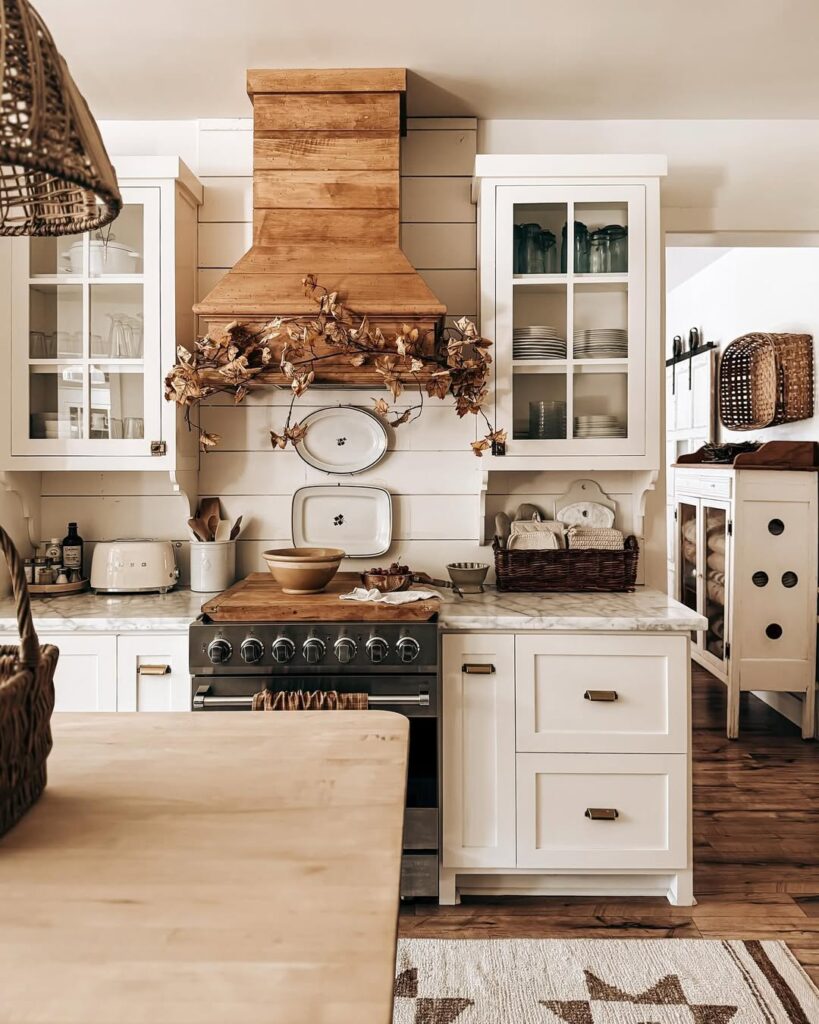
In a rustic glass-front cabinet, glass transparency works alongside natural warmth.
A light stain works with oak, pine, or walnut in a wooden cabinet frame. The frame material options are oak, pine, and walnut.
Glass panels can increase the perceived openness of a kitchen space. Clear, seeded, or frosted panels also break up solid surfaces.
Ceramic dinnerware, heirloom glassware, and dried herbs can sit inside glass-front cabinets. Dried herbs may be kept in an apothecary jar.
Glass-front cabinets provide dust protection and offer more structure than open shelving.
Glass-front cabinets suit displaying selected pieces. They also help preserve cleanliness.
In darker kitchens, glass-front cabinetry reflects available light and reduces visual heaviness. Use interior lighting to highlight the wood texture, and use nearby sconces for content illumination.
The wood cut and wood finish can make a framed cabinet design traditional or streamlined.
Antique brass and simple knobs are hardware options for these cabinets. Use subtle styles to maintain design continuity.
Glass-front cabinets suit full kitchens and built-in hutches. They offer a rustic cabinet design.
Natural Wood Two-Tone Cabinets
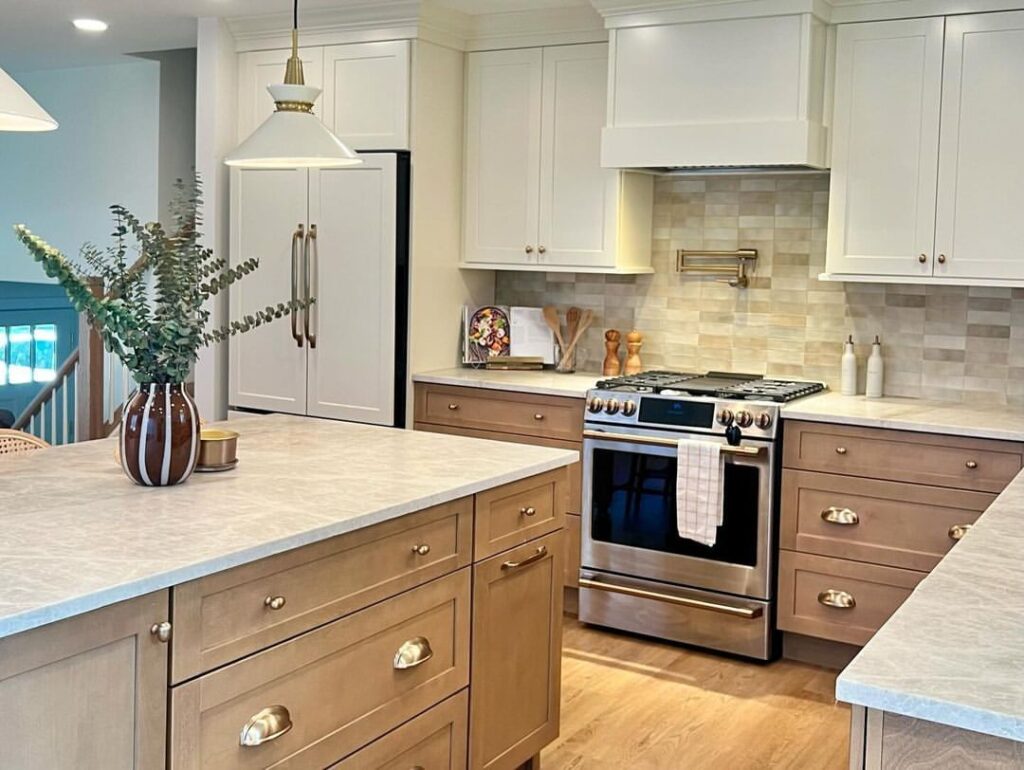
The layered depth gives this design a mix of rustic and contemporary character.
A matte black, sage green, or creamy white painted cabinet base can sit beside a natural wood upper cabinet or island. The base has a matte finish, and the two elements are combined.
Two-tone combinations highlight texture while maintaining harmony. The contrast stays balanced.
Wood grain adds character without creating visual overload.
Natural wood finishes such as oak, maple, or ash work with a stone countertop and brick backsplash. Muted lower cabinetry helps reduce darkness.
Two-tone cabinetry offers flexibility in both layout and lighting, making it suitable for small kitchens and large kitchens.
Matte black handles and brushed brass pulls are understated hardware options. Simple hardware emphasizes the contrast between materials.
The combination brings together the durability of a painted surface and the appeal of natural wood in two-tone cabinetry.
Interiors that prioritize function and personality can use two-tone cabinetry in transitional and modern-rustic spaces.