15+ Beautiful Dark Green Kitchen Cabinet Designs
Dark green kitchen cabinets bring the colors of nature indoors. They give the kitchen a deep green base.
Dark green cabinets add depth to a kitchen. They also bring more drama to the room.
Dark green cabinetry suits kitchens with a modern look as well as spaces designed to feel timeless. It can be paired with brass hardware, wood accents, and marble countertops. These materials bring different textures and tones to the cabinetry while keeping the kitchen cohesive.
Dark green has more enduring appeal than trend-driven colors. It works with neutral palettes as well as high-contrast finishes.
Dark green cabinetry can cover the entire kitchen or be limited to the island.
Dark green works as a statement color for the space.
Open shelving paired with dark green matte cabinetry
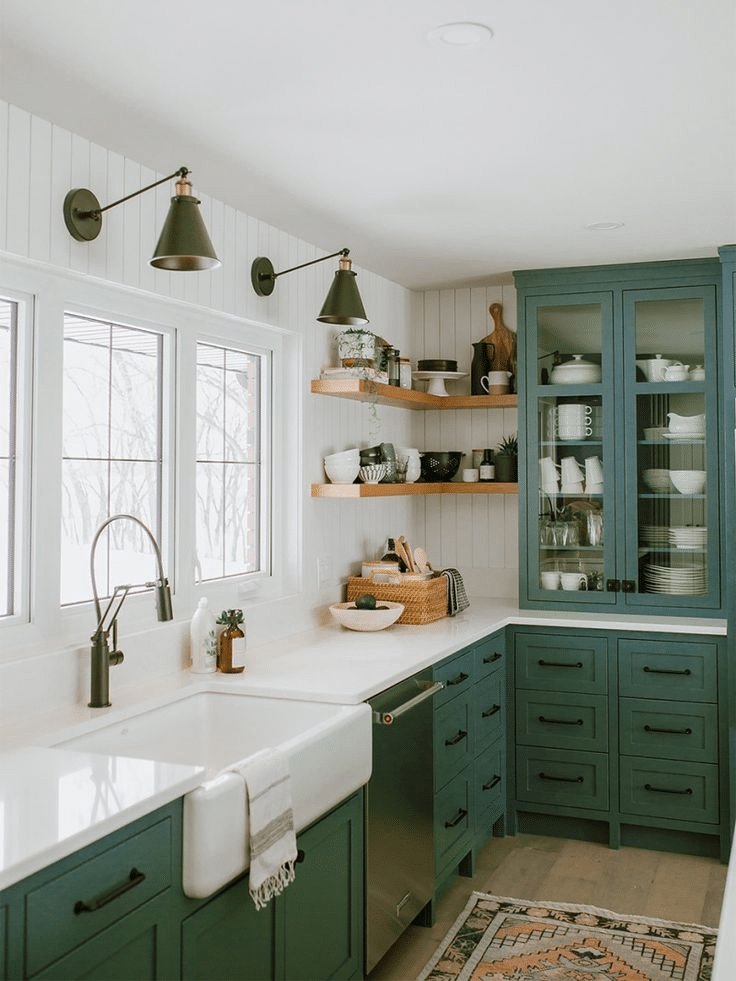
Open shelving sits beside the cabinets in this pairing. The cabinetry brings a matte dark green finish to the arrangement.
Open shelving can use rustic wood or metal brackets. The matte finish absorbs light.
Open shelves store everyday essentials and provide quick access. Use open shelving in tighter layouts to reduce visual bulk.
In one display, open shelves hold potted herbs, dinnerware, and artisanal storage jars.
Metal accents and ceramic decor pair with matte green cabinetry. Choose shelving made from natural wood.
Keep open shelves consistent in arrangement and minimal in quantity. This approach prioritizes function.
A matte surface reduces fingerprints and glare. Use a matte finish in high-traffic kitchens.
Matte green cabinetry with open shelves combines softness and practicality.
Green Cabinetry with Vintage-Style Appliances
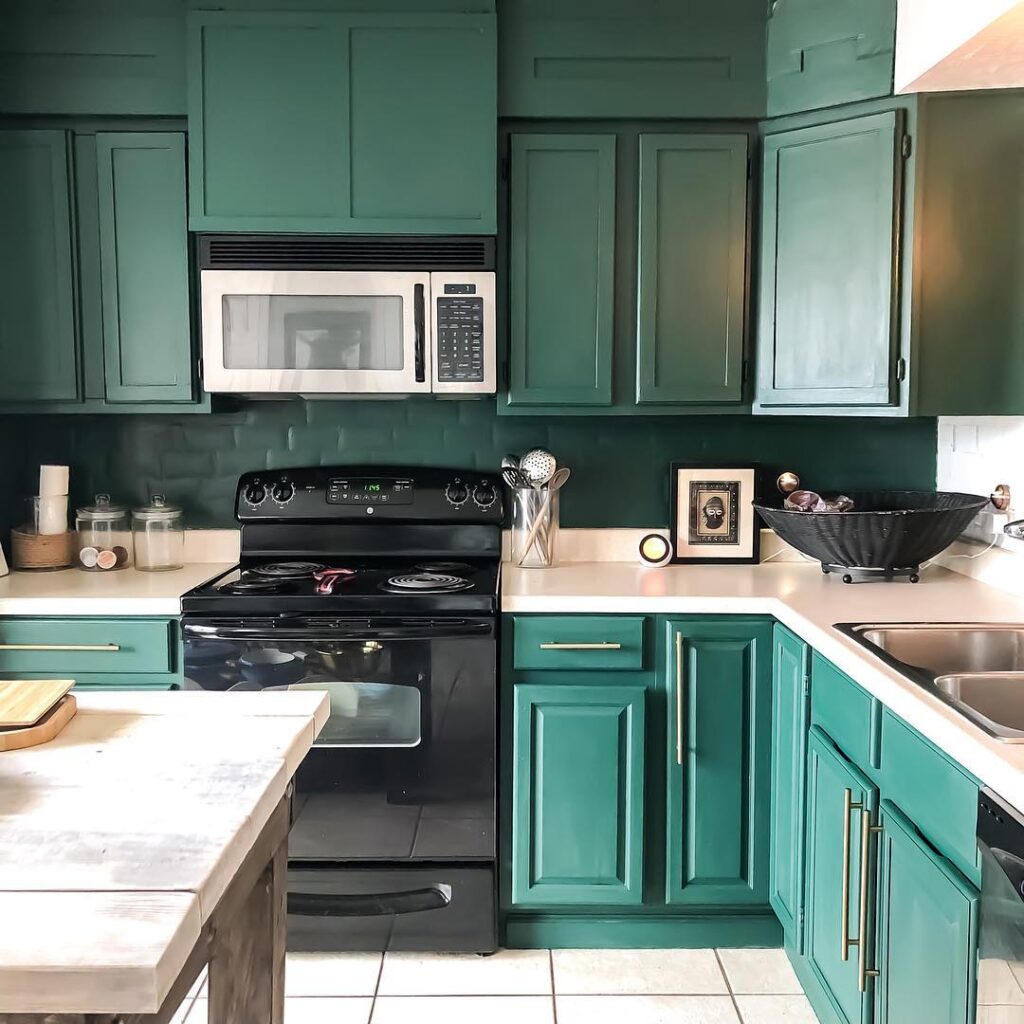
In a character-focused design, dark green cabinets pair with vintage-style appliances. The details are intentional and storied.
Enamel finishes and retro appliances evoke nostalgia. A retro range and curved refrigerator contrast with saturated dark green cabinetry.
Cream and pastel appliances draw attention in this dark setting, yet the colors do not clash. The dark background helps them stand out.
Antiqued brass and oil-rubbed bronze hardware connect older and newer elements. The selection still maintains the kitchen's function.
Checkerboard floor tile is one way to add a retro-supporting surface. Tongue-and-groove wall paneling and wood-look vinyl offer other options, and these surfaces support the retro look while supporting daily kitchen use.
Lighting fixtures in frosted glass or wrought iron support the vintage theme. Together, these materials suit the look.
Many retro-inspired appliances include modern features. They combine a vintage appearance with modern function and retain efficiency.
In cottage, farmhouse, and craftsman homes, dark green cabinets with vintage appliances can support a practical kitchen. The combination suits all three home styles.
A Green Kitchen with Marble
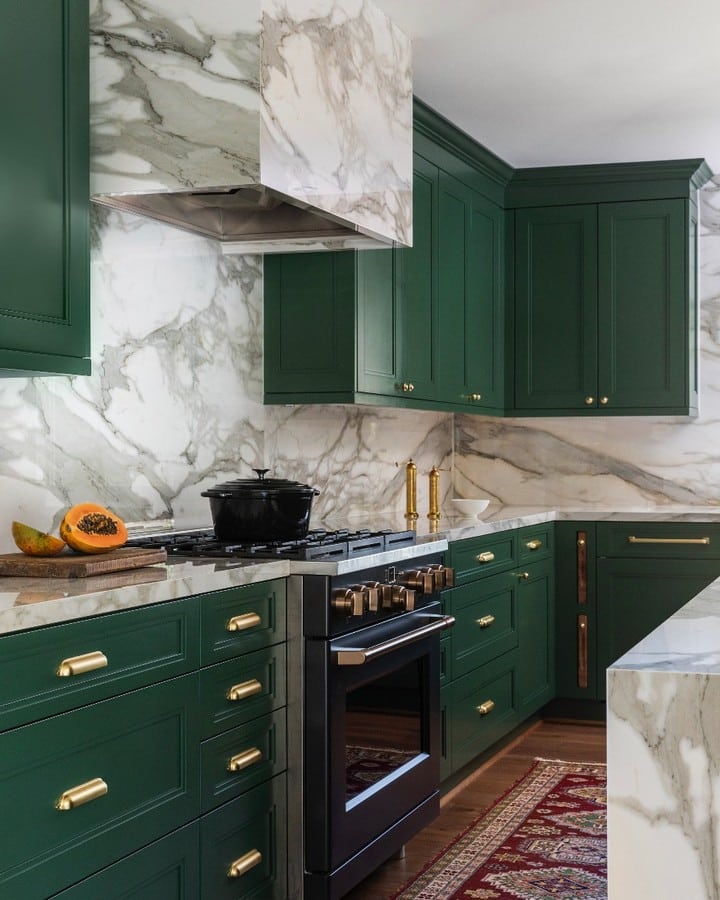
In the kitchen, dark green cabinets paired with marble accents bring in natural stone.
A full-slab countertop, waterfall island, or statement backsplash can use marble. The material contains organic veining and provides cool contrast.
White or gray marble with natural veining, including Carrara and Calacatta types, contrasts with dark green cabinetry. The stone provides tactile material and movement that differs from uniform paint.
This cabinet and marble pairing suits transitional and classic kitchens. It also supports functional integrity.
Marble finishes include polished and honed options. Honed marble provides a subdued finish, while polished marble offers reflective brightness. Sealing is required for marble, which also needs more care than quartz.
Wood floors or open shelving can accompany a marble backsplash extended vertically. Brushed brass and matte black hardware are additional finish options.
A layered kitchen emerges from marble alongside dark green cabinetry.
Dark Green Cabinetry and Gold Hardware

Gold fixtures provide metallic warmth and pair with dark green cabinets. They are suited to bold-color kitchens.
Brushed gold or satin gold hardware contrasts with dark green cabinetry and provides warmth. These finishes can be used for handles, faucets, and lighting fixtures.
The green-and-gold pairing suits traditional kitchens as well as contemporary ones. Classic hardware, including ornate pulls and heritage-inspired taps, supports a vintage style. In modern spaces, linear gold hardware supports minimalism.
Pendant lighting and barstools can carry gold accents into the kitchen. Repeat the gold elements throughout the kitchen.
White stone countertops provide a neutral surface. A neutral backsplash and wood herringbone flooring limit metallic dominance.
The gold finish enhances warm lighting. Warm lighting works especially well with gold finishes.
The green-and-gold combination supports warmth and practicality. It also creates visual impact.
Green Cabinets and Wood Details

Natural wood elements bring warmth while balancing the dark green cabinetry. Together, the combination takes cues from both rustic and modern styles.
Wood can appear in open shelving, a range hood, a countertop, or trim. These natural wood elements bring the material into several parts of the kitchen.
Light oak, maple, and ash reduce visual heaviness. Dark green cabinetry creates contrast against these light woods.
In large or well-lit kitchens, deep walnut or chestnut wood hues add richness. The visible grain is softened by the painted cabinetry surface.
Brushed metal, matte black, or oil-rubbed bronze hardware suits the natural palette. Select complementary hardware for the wood-and-green combination.
Stone counters and a handmade tile backsplash add material layers. Pair the wood-and-green cabinetry with both surfaces.
Wood-and-green cabinetry suits bohemian, Scandinavian-inspired, and modern farmhouse interiors. The combination also supports usability.
The pairing of wood and green brings tactile interest. It also supports a style that holds up over time.
Dark Green Lower Cabinets With White Uppers

Color blocking is used for kitchen cabinetry. This layout pairs white upper cabinets with dark green lowers in a two-tone arrangement.
Dark green lower cabinets provide stability. White upper cabinets reflect light and support an airy space, while the darker lowers add depth. This two-tone cabinetry suits traditional and transitional kitchens.
Two-tone cabinetry limits the visual dominance of dark green.
A subtle wallpaper finish, warm white paint, or marble subway tile can sit alongside the cabinets. Light upper cabinets allow more flexibility with backsplash materials and wall colors. Two-tone cabinetry works with both brass and matte black hardware.
White upper cabinets support access to frequently used glasses and dishes. Dark lower cabinets conceal smudges and wear while storing pantry items and heavy cookware.
Two-tone cabinetry supports stylistic versatility while combining practicality.
Kitchen Cabinets in Dark Green and White Countertops

This pairing supports functionality. White countertops add brightness and contrast to the dark green cabinetry.
White countertops reduce the sense of enclosure around dark green cabinetry. They also lessen visual heaviness, while the green cabinets provide visual depth.
This color pairing suits farmhouse and modern transitional kitchens. It also offers style flexibility.
Bright white countertops provide a workspace and durability. Quartz, granite, and solid surface options can include subtle veining, and the countertops resist stains and heat.
White surfaces reflect light and increase spatial openness.
Hardware finish helps set the desired ambiance. Options include black, chrome, and aged brass.
Subway tile and white zellige are backsplash options that support a bright-dark balance. Use proper kitchen lighting with these surfaces.
Across the kitchen, dark cabinets can create a dramatic setting while white surfaces retain light and openness.
Glass Front Green Upper Cabinets
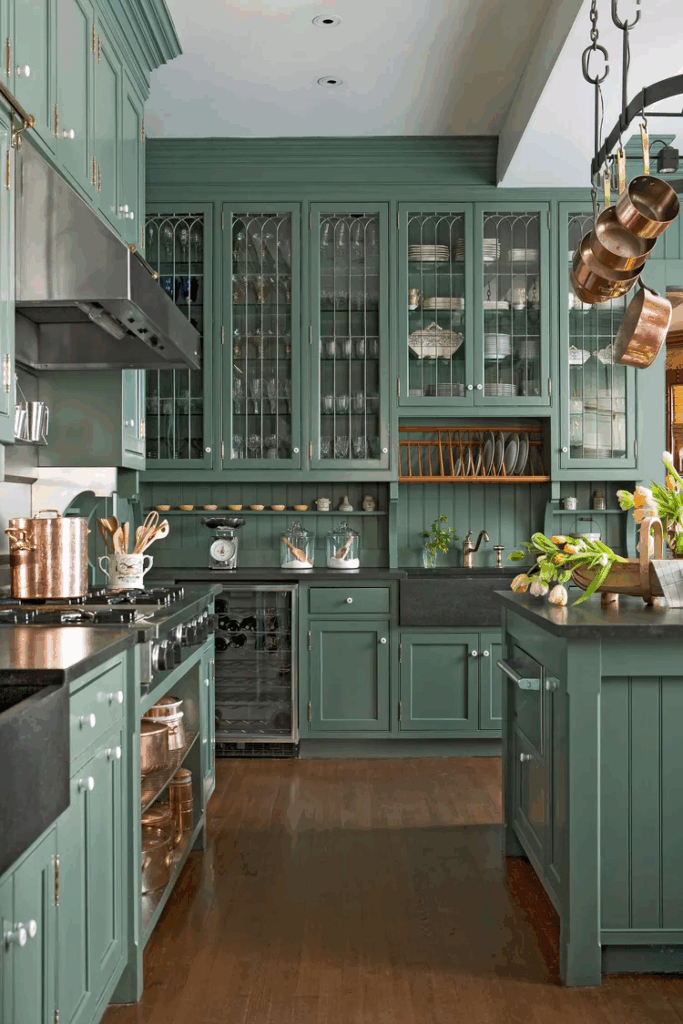
Glass provides transparency in the upper cabinet doors. Glass-front uppers create a more open feeling and give natural light a stronger presence. The upper cabinet doors use glass.
Glass-front cabinets display dishware and heirloom ceramics. The glass doors also reduce visual density. In smaller spaces, use glass-front uppers.
Glass-front uppers pair with white countertops and neutral walls. Lighting inside the glass cabinets adds depth and can be used during the evenings.
Glass-front uppers combine display and storage functions. Keep the displayed items in a palette of white, beige, and muted green.
Glass-front uppers create a lighter zone above the dark lower storage. Keep the upper cabinets clean and organized.
Glass-front uppers use vertical space while leaving room for open display and personal expression.
Ceiling-Height Green Cabinets
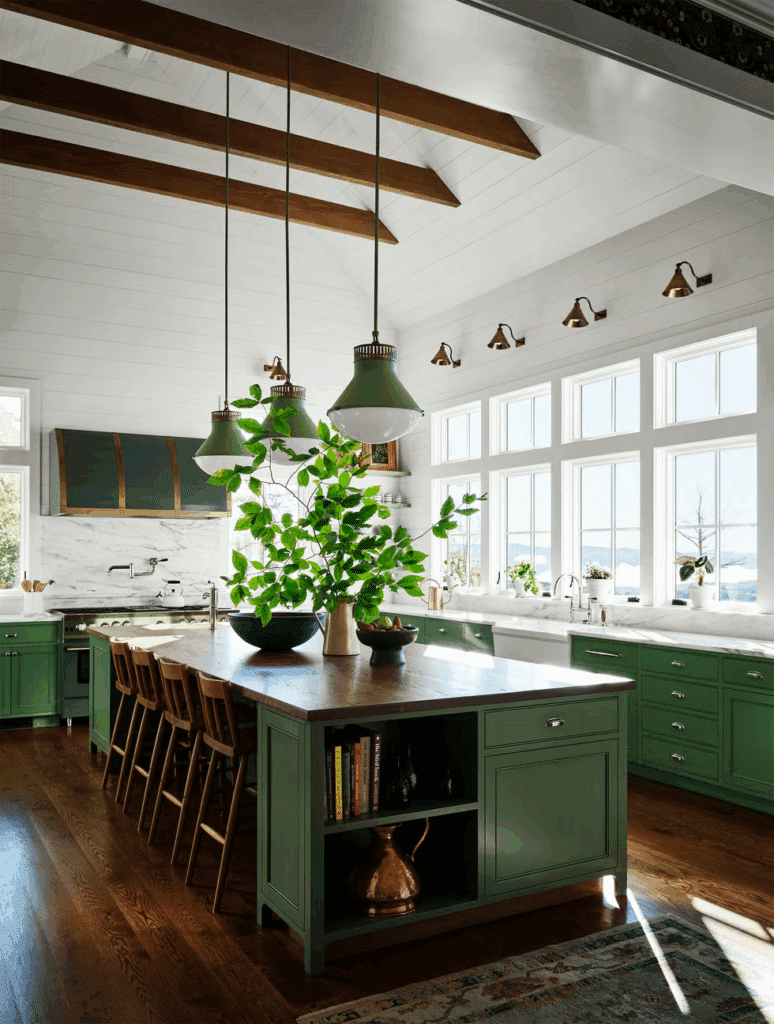
Dark green cabinetry installed to ceiling height creates an architectural wall and a bold color field. The cabinetry also provides vertical storage.
High-ceiling kitchens suit ceiling-height cabinetry. By using the available vertical space, it removes the need for open cabinet tops or upper display shelves.
The uppermost cabinets maintain an uninterrupted appearance. Their storage can hold seasonal items and rarely used equipment.
Flat-panel or classic Shaker cabinet doors support floor-to-ceiling consistency. Either door profile keeps the full-height installation visually continuous.
In a full-height cabinet run, use integrated cabinet illumination, recessed ceiling lights, or under-cabinet strips. These lighting options prevent cabinet shadows.
A light floor finish supports brightness and contrast. Pair dark green cabinetry with light countertops, light backsplashes, and light floor finishes. The countertop and backsplash can both be light.
Ceiling-height cabinetry suits transitional kitchens as well as contemporary ones. In a modern setting, use a flush edge. A traditional home can use inset trim or crown molding.
Cabinetry that reaches the ceiling combines storage with visual symmetry. It also turns that storage into a focal feature.
Brass Hardware on Dark Green Cabinetry

Dark green cabinets are finished with brass hardware. Together, dark green and brass combine classic elements with current ones.
Golden brass hardware adds warmth and anchors the room against the dark green cabinetry. The pairing suits upscale transitional and heritage-inspired design.
Flat-panel doors showcase brass hardware. Shaker doors showcase it too.
Polished brass has a reflective effect, while brushed brass gives a more muted look. For an understated kitchen, use brushed brass.
Dark green cabinets pair with a cream backsplash or a pale marble backsplash.
Wooden floors complement brass hardware and echo the green undertones. Honey and chestnut stains are options for the wooden floor.
Over time, brass handles and knobs develop a patina. The patina adds personality, and the brass can age gracefully.
Dark Green Kitchen Island
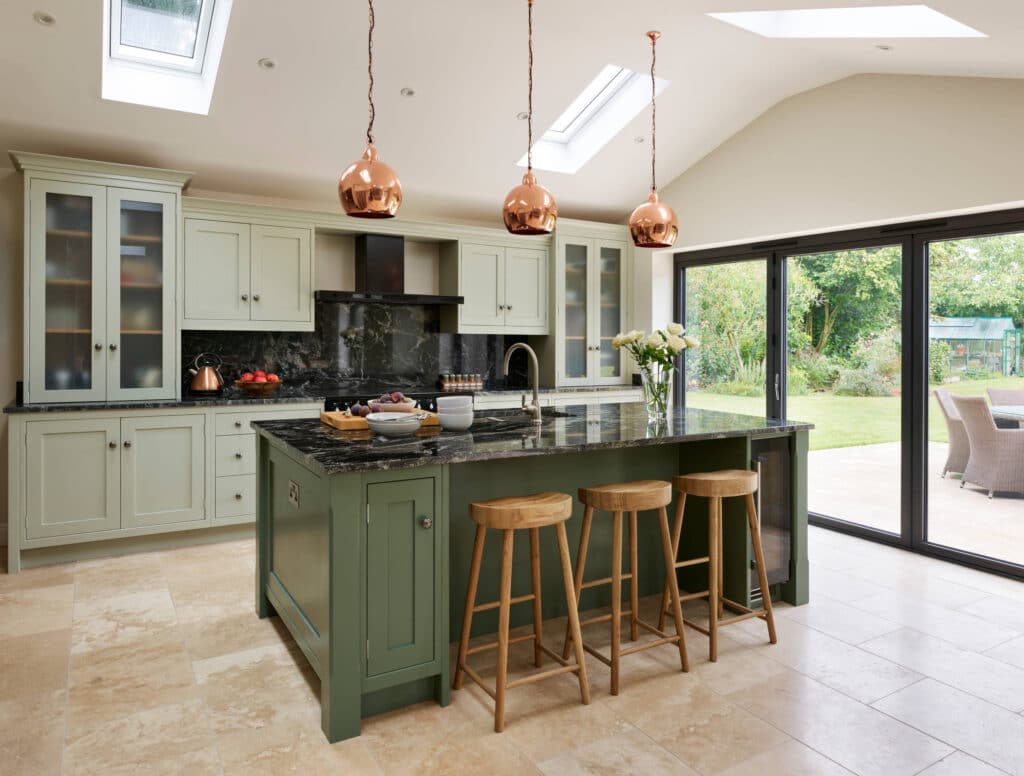
Contrast marks the kitchen's central area. The kitchen island serves as a prep station and gathering point.
White and cream perimeter cabinets surround the dark green island. The light cabinetry supports brightness, while the island provides visual weight.
The island separates the cooking zone from the living zone. As a space divider, it is common in open-plan homes.
Wood bar stools sit by the island. A quartz or marble countertop extends over its edge, providing textural contrast, while aged brass pendant lighting adds another nearby detail. The island remains a visual anchor.
Soft neutrals and pale gray surround the dark center. These light surrounding cabinets reduce visual heaviness.
A single dark island retains its boldness and supports the functionality of the kitchen layout. Limiting the dark cabinetry to the island keeps the rest of the kitchen from feeling as heavy.
A dark island introduces a dark tone while keeping the kitchen light. It adds that deeper color without sacrificing light.
Dark Green Kitchen Cabinetry with Built-In Lighting
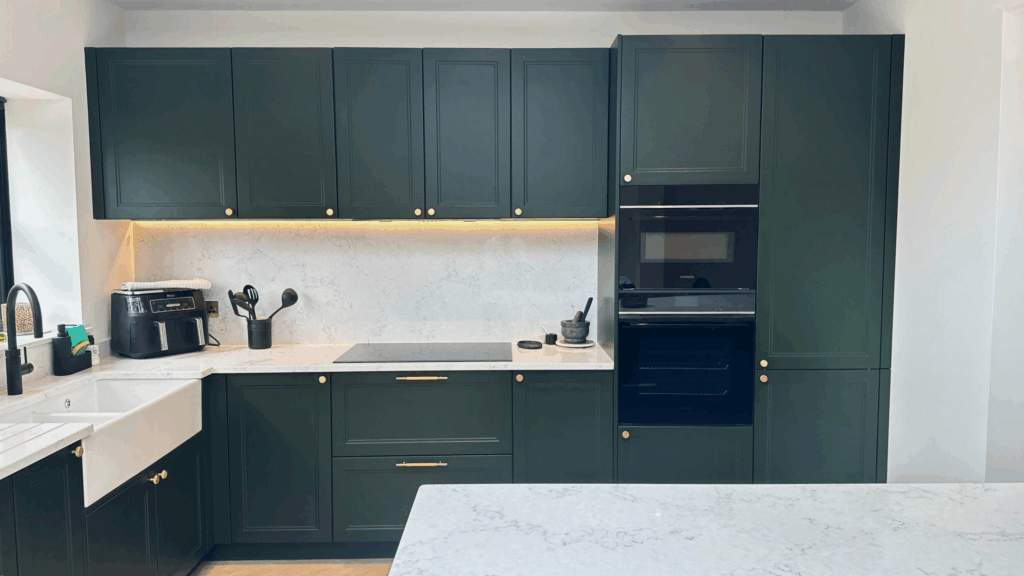
Under-cabinet, in-cabinet LED, and toe-kick lighting support functionality and dimension. These lighting types counterbalance deep cabinet tones.
Integrated lighting supports mood and usability. It creates layered lighting, and the lighting plan is not limited to overhead fixtures.
Under-cabinet strips are intended for food-prep lighting and provide practical brightness. Dark green surfaces absorb light, so the cabinetry requires thoughtful illumination.
Glass-front cabinets contain display pieces and use subtle lighting. Cabinet lighting illuminates the display pieces.
Task lighting supports usability and improves safety at islands, sink zones, and cooking areas. Integrated lighting is especially beneficial in kitchens that receive little natural light.
Energy-efficient LED lighting has a long lifespan and low maintenance needs. Smart lighting controls allow dimming and color-temperature changes, supporting adjustment throughout the day.
Lighting supports both form and function. It is a necessary part of the design.
A Kitchen with Pattern and Dark Green Cabinets
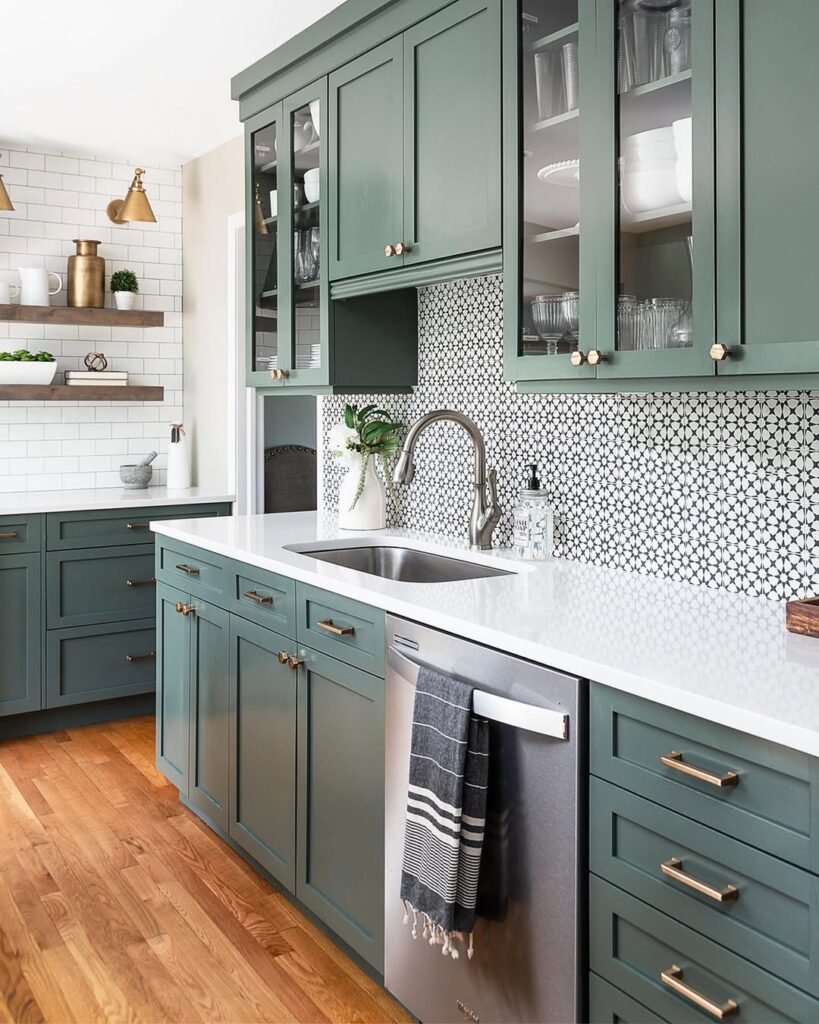
A patterned backsplash creates a focal point and adds visual rhythm. The dark cabinets retain their bold identity beside it.
Geometric encaustic designs, floral motifs, and hand-painted ceramics are options for the backsplash pattern.
Dark green cabinets draw their visual foundation from a patterned backsplash that adds texture, motion, and depth.
Cream, charcoal, and muted terracotta make up a limited palette for the pattern. Use a neutral palette for the backsplash pattern to reduce visual overload.
Eclectic interiors can use this cabinet and backsplash combination. It also suits Mediterranean interiors and mid-century modern interiors.
Keep some wall sections open so the pattern can run continuously. Open shelving and minimal upper cabinetry are options for the area above the backsplash.
Glazed or sealed backsplash tiles can withstand cooking messes. The tile provides functionality as well as its finish.
A backsplash combination requires careful planning. Material selection affects durability.
Dark Green Open-Plan Kitchen Cabinets
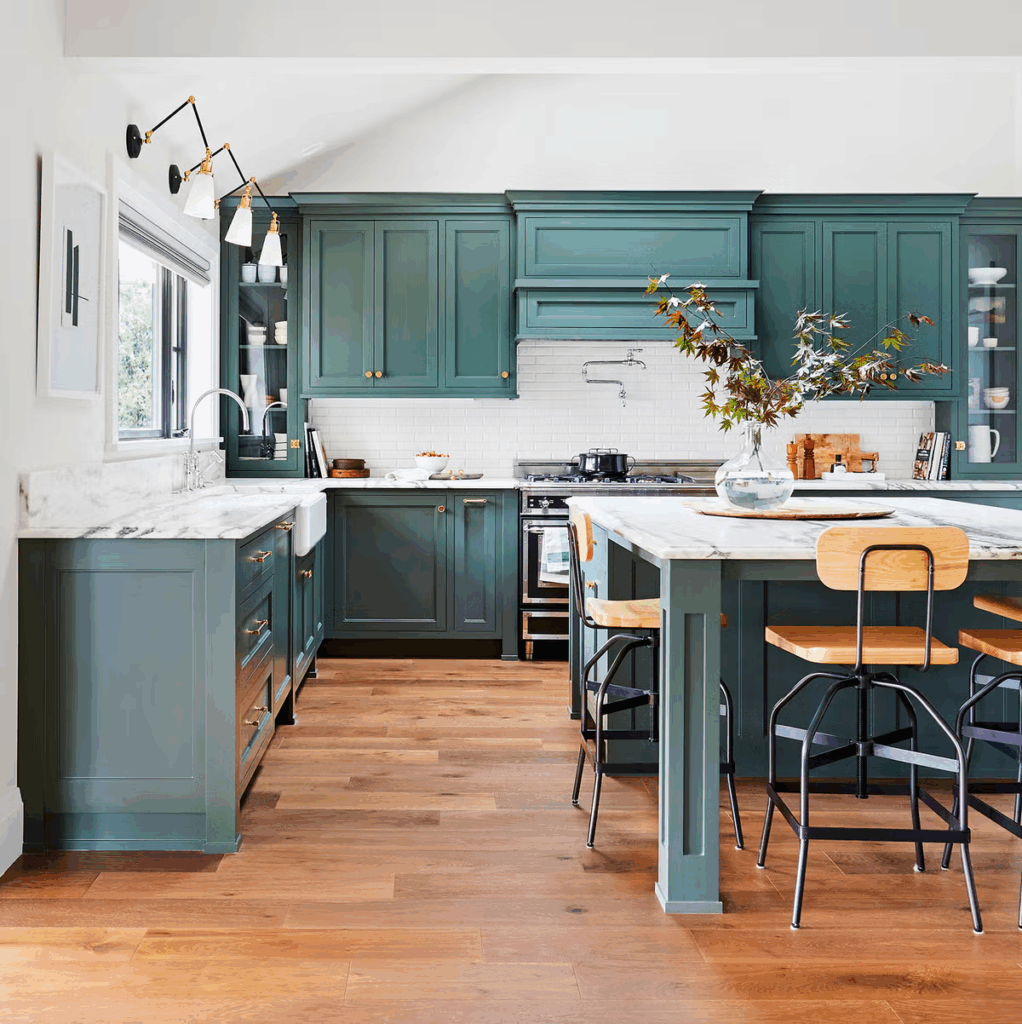
The open-plan kitchen connects the living area and dining area. Connected zones are important for design cohesion.
Dark green cabinetry helps define the kitchen while keeping the open flow intact. It also acts as a visual anchor.
A saturated dark green cabinet color can define the kitchen space without adding walls. The setting remains organically open.
Neutral kitchen furnishings balance the warmth and depth of dark green. The color becomes a focal point, while large windows or light flooring help avoid visual heaviness and support airiness.
Wood textures can be integrated with subtle patterns and metallic accents. Together, these mixed materials support a dynamic palette.
Open, light-toned upper cabinets keep the color centered on the island and lower cabinets. The dark green placement adds color without spreading it across every cabinet.
Pendant fixtures and recessed lighting belong over the prep zone. This lighting defines the kitchen boundary, while open or light upper sections support a cohesive space and unobstructed sightlines.
A matte cabinet finish works well with brushed hardware. Both finishes suit contemporary open concepts.
Dark green adds architectural weight to the kitchen. Used across functional and social zones, the color establishes those zones without fragmenting the open concept and adds visual interest.
Green Cabinetry and a Contrasting Island

In this layout, a contrasting kitchen island creates depth through color contrast. The approach uses strategic contrast with dark green cabinetry.
A charcoal gray island, a soft cream island, a muted blue island, and a warm terracotta island show how contrast can create dimension without causing visual overload.
The island may become a focal point against dark green base cabinetry used as a backdrop. Color separation defines work zones and supports clarity in a large-kitchen layout, while the base cabinetry may also become a focal point.
Pendant lighting belongs over the island, where it reinforces the island's focal role. Use the same countertop material across the base cabinetry and island. That shared surface provides cohesion.
Start with the forest green perimeter cabinetry beside the soft white island. Warm wood stools go with the island, and matching textures or undertones can support two-tone harmony. Hardware finishes, seating materials, and flooring should be coordinated.
In coastal, contemporary, or transitional kitchens, contrasting cabinetry and an island can support a workable layout. Color choices allow personal style.