15+ Beautiful Red Oak Kitchen Cabinet Ideas
Red oak cabinetry is used in homes and has a warm undertone with visible grain. It is also highly durable.
Red oak cabinetry is a hardwood option that works well in traditional and transitional kitchens. Homeowners and renovators choose it for both styles.
The natural texture of red oak cabinetry is easy to customize, with a wide range of stain options. It also retains a timeless aesthetic.
Red oak cabinets give the kitchen a clear anchor. They work with modern countertops and vintage hardware alike. This combination lets the cabinets fit both newer and older details.
This guide covers red oak kitchen cabinet styling, maintenance, and selection.
1990s Red Oak Cabinetry
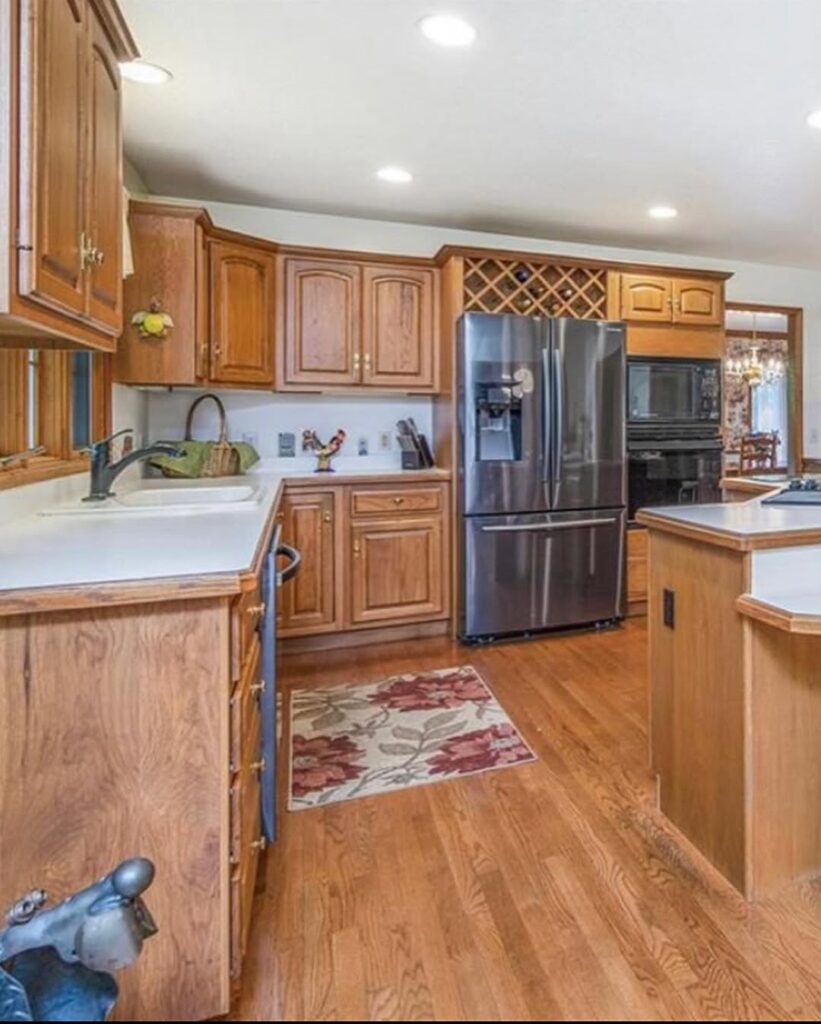
The 1990s character remains in these retained red oak cabinets. Their traditional style combines nostalgia with practicality.
Their honey-toned finish suits the raised-panel door style common in suburban homes.
Update the surroundings while preserving the wood integrity of the existing red oak cabinets.
The backsplash keeps the period feel in place. Warm beige tiles or creamy tiles can soften the red undertones without losing that character.
Speckled granite and laminate are both countertop choices. Either material complements the retained 1990s red oak cabinets.
Replace fluorescent ceiling fixtures with recessed lights or pendant fixtures. Pendant fixtures can go over the island, while the lighting updates brighten the kitchen and emphasize the cabinet depth.
Breakfast nook furniture with similar wood stains, such as spindle chairs or bench seating, echoes the cabinetry. The nook reflects original 1990s suburban designs.
Selective upgrades support functionality and preserve suburban character. They are a cost-effective way to improve an existing traditional red oak kitchen with minimal structural changes.
Open Shelves and Floating Hutch in Natural Red Oak
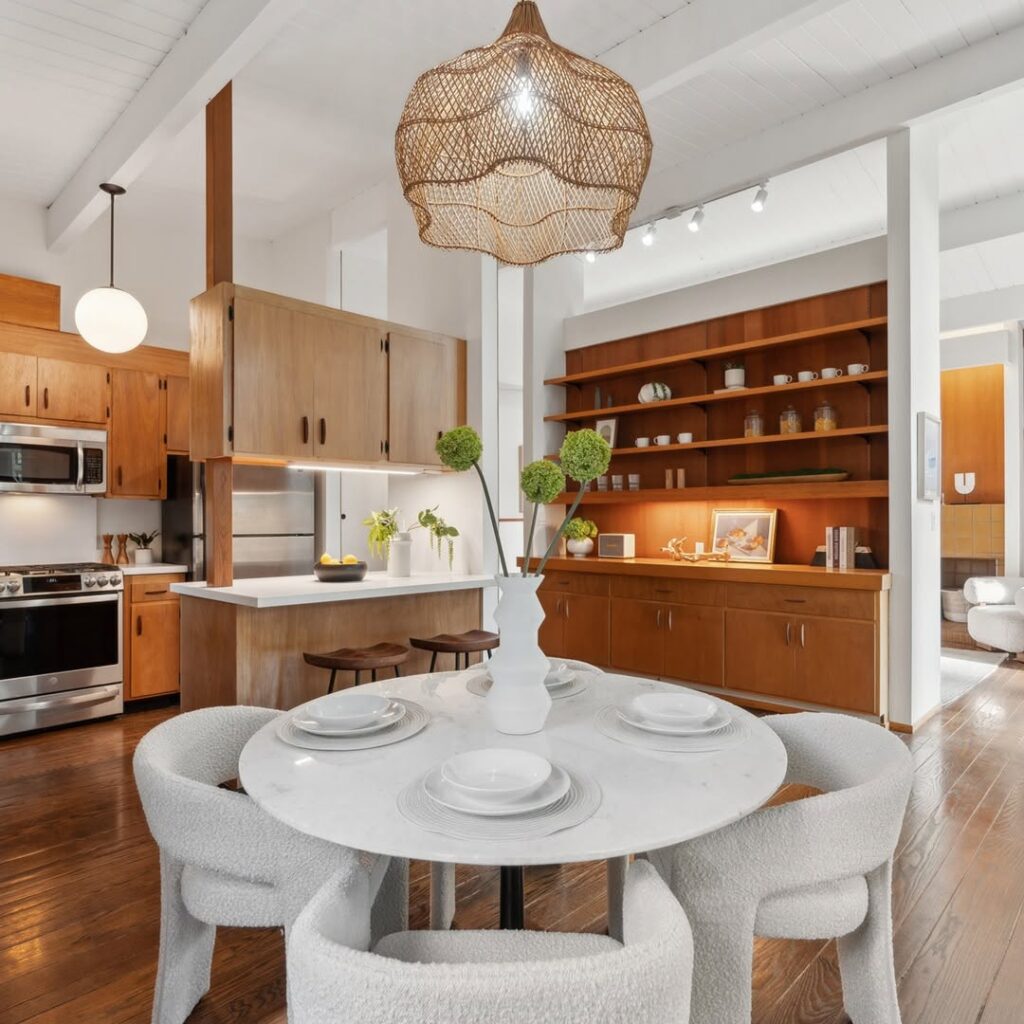
A suspended hutch and open shelving provide storage. Natural red oak kitchen cabinetry is paired with them.
Natural red oak cabinetry foregrounds the wood grain. Open shelving and the hutch provide layered storage.
In one corner, stained lower cabinets in golden and amber tones showcase the red oak tones. Their fronts may be slab or shaker.
The open space below a wall-secured floating hutch suits smaller kitchens. The hutch has no floor contact, sits above the cabinets, and provides upper storage while preserving sightlines.
Tile or wood paneling can form the backsplash behind open shelves. The shelves flank the floating hutch and hold cookbooks, pottery, and spices.
Across the room, a countertop of light quartz or butcher block pairs with natural red oak. Under-hutch lighting defines the area and provides food-prep and cleanup lighting, while minimal hardware supports the emphasis on wood.
The floating hutch and open-shelf format suits classic homes and transitional homes. It is especially useful when wall space is limited, uses natural materials, and supports visual openness.
Subway Tile and Red Oak Kitchen Cabinets
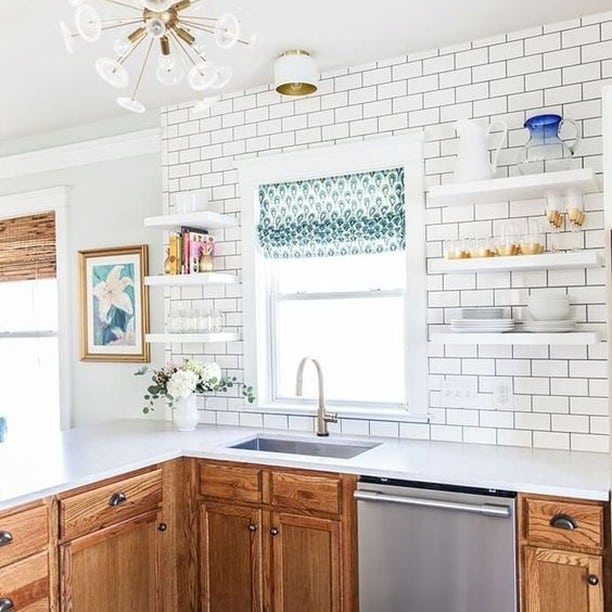
Red oak forms the base cabinetry in this kitchen. Above the counters, glossy white subway tile adds a bright surface and supports easy maintenance. The cabinets and tile are paired together.
Glossy white tiles reflect illumination and are useful when light is limited. Red oak adds warmth.
Above the counters, the cabinetry has shaker or flat-panel doors. Its clear finish leaves the open grain visible, and the red oak cabinetry functions as a neutral anchor.
The subway tile is installed above the counters in a traditional brick or herringbone pattern. It adds a separate pattern detail to the kitchen.
White and light gray shelves and cabinets fill the upper storage area. Floating shelves are a popular choice in both urban kitchens and farmhouse kitchens.
Brushed nickel and matte black are the hardware finish options. The countertops can use white quartz, butcher block, or soapstone, and the hardware bridges modern style with classic style.
The red oak and subway tile combination suits functional kitchens and offers an alternative to all-white cabinetry.
A Red Oak Kitchen Featuring a Marble Island and Glass Front Cabinets
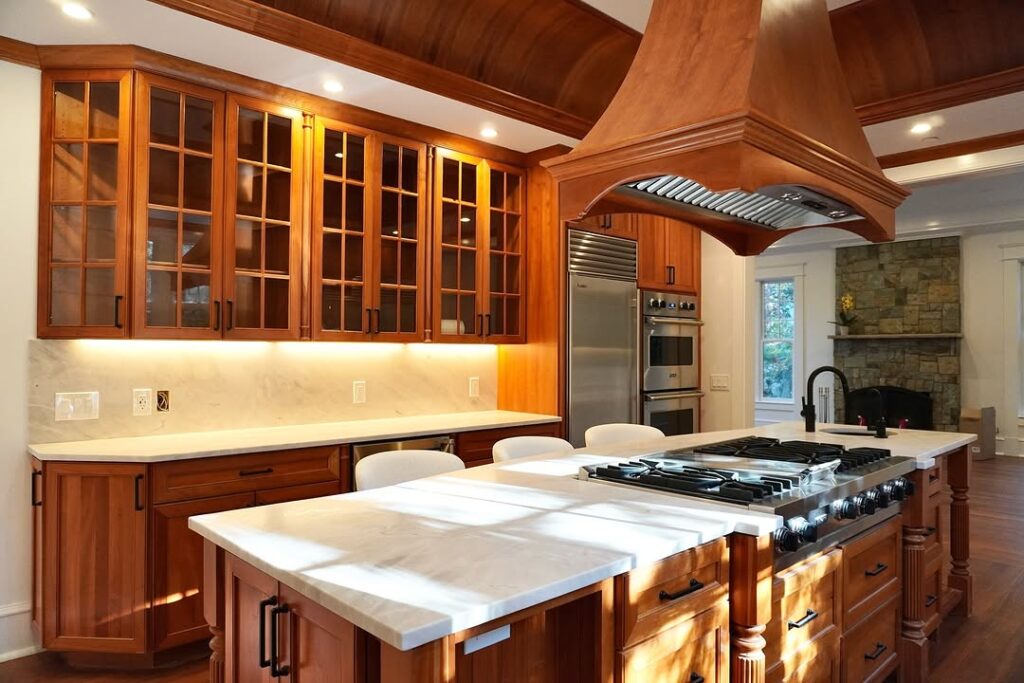
Red oak cabinetry brings an upscale material into refined kitchen layouts. It is paired with other upscale materials.
Glass fronts on the upper cabinets increase the sense of openness. They also display fine ceramics and dishware.
At the center, a large polished marble island is supported by the red oak lower cabinetry. Its size and finish make the island the main focal point.
The neutral marble used on the kitchen island has a veined pattern and works as a durable prep surface. Both the wood and the stone have natural movement.
Built-in inserts and hidden pull-outs organize the cabinetry, while integrated lighting is included as well.
Recessed fixtures and pendant lights draw attention to reflective surfaces. They also highlight the warmth of the wood textures. Paneled and stainless appliances sit nearby, with hardware available in gold-tone and brushed nickel finishes.
The kitchen backsplash can use either herringbone tile or slab marble.
Red oak works with high-end kitchens when it is paired with natural materials and craftsmanship.
Farmhouse Kitchen with Red Oak and Marble
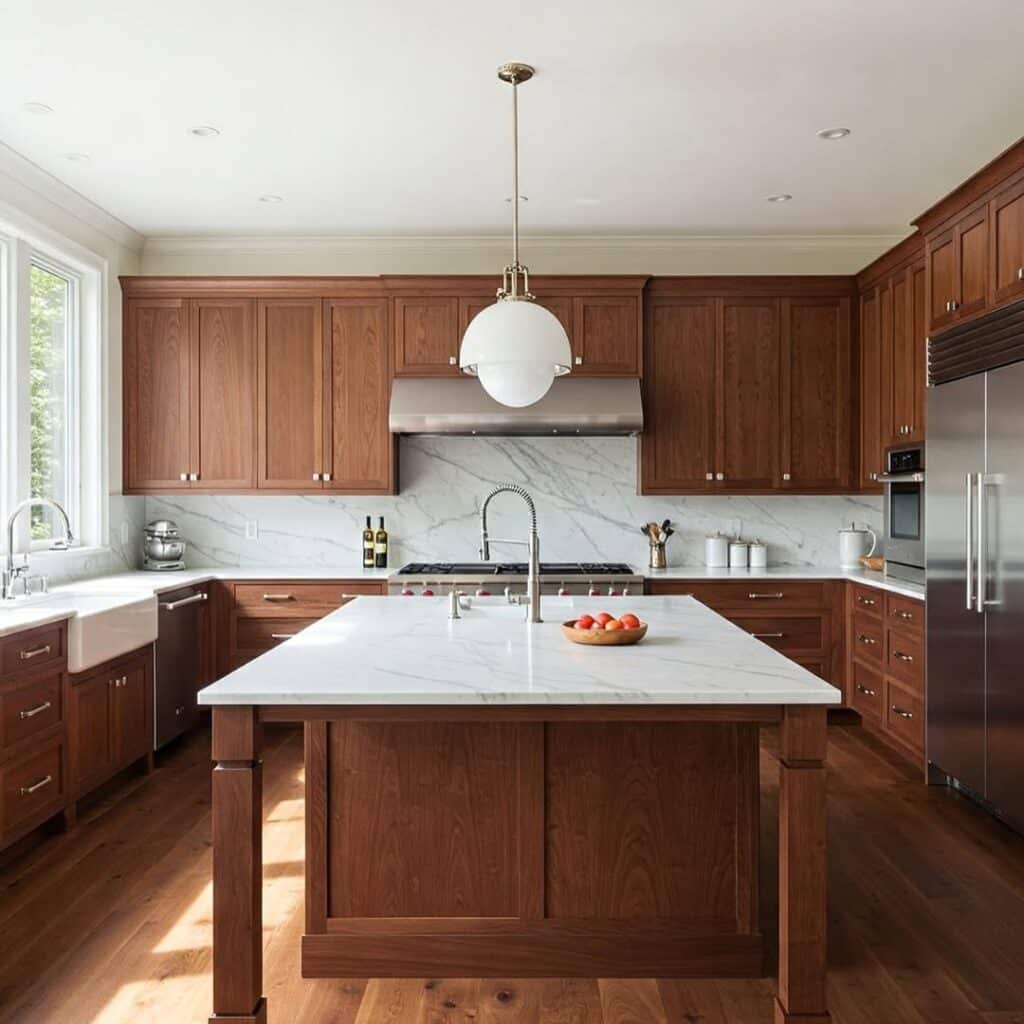
In this farmhouse kitchen, red oak cabinetry and marble surfaces are used with traditional accents.
Red oak has visible grain and warm undertones, and it is paired with marble.
Marble countertops in white or soft gray have light veining. They are paired with framed red oak cabinets finished with oil-rubbed hardware.
Open shelving is one farmhouse feature, alongside an apron-front sink and exposed wood beams.
Wall color options include creamy white and muted sage green. A backsplash or wall treatment can use beadboard or tongue-and-groove material.
Ceramic jars, rustic stools, and a vintage runner are available as accessories. Lighting at the kitchen island and sink can be antique bronze or weathered pewter.
In the kitchen, modern equipment such as an induction cooktop and built-in appliances supports efficiency. These modern updates maintain current-day usability.
The red oak and marble farmhouse blend combines classic character with current-day usability.
Red Oak Buffet Shelves and Lighting
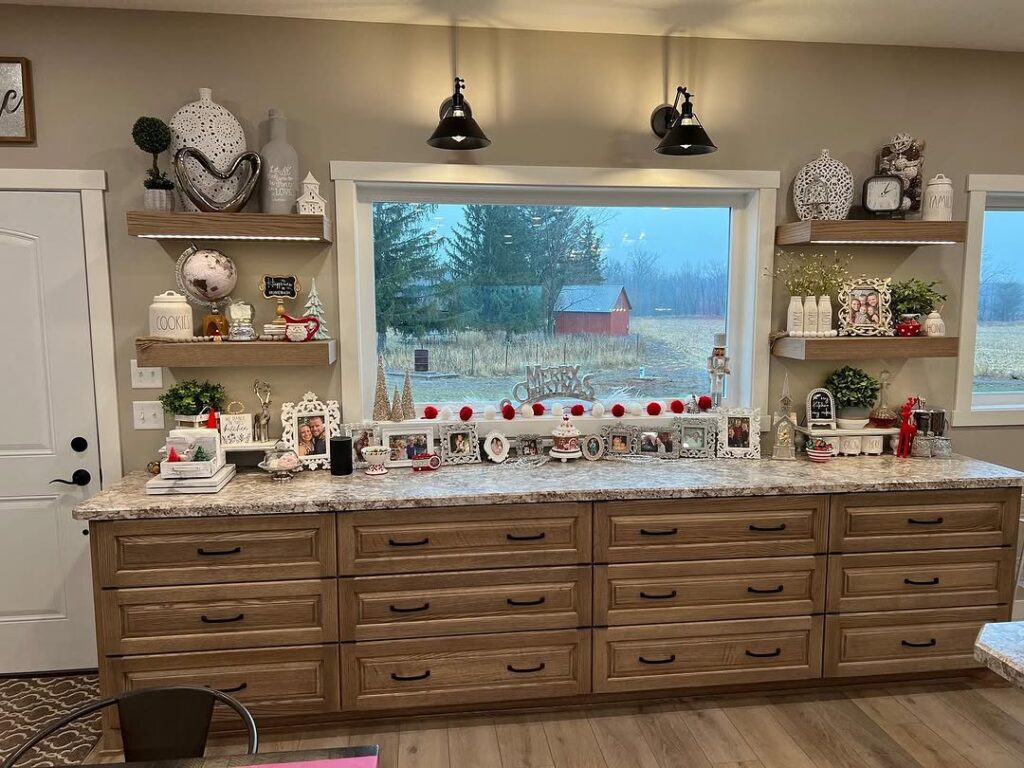
Near dining areas, a built-in red oak buffet provides both storage and serving space. This type of buffet is used in open-layout kitchens.
Across the room, floating shelves are mounted above a freestanding buffet cabinet. The shelves display dishware, art, and glassware, while the cabinet has a continuous countertop, base drawers, and paneled doors.
Natural grain remains visible in the red oak. A clear or light honey wood finish is applied to it, with ambient lighting underneath giving the wood a glowing appearance.
LED strip lights sit under the shelves and cast a warm light onto the countertop. They also highlight the display.
Antique brass, satin nickel, and matte black are the available finishes for cabinet hardware. Which hardware finish works depends on the surrounding finishes.
The shelves provide the first contrast, set against the wall above them. Soft taupe, sage, and charcoal are the wall color options.
A buffet layout can run across long kitchen walls. The layout may serve as a prep surface, coffee station, storage area, and display.
This buffet layout addresses both storage demand and display demand. It especially suits open dining-kitchen layouts.
In utilitarian zones, a red oak buffet adds storage while under-shelf lighting highlights everyday items.
Modern Red Oak with a Waterfall Island
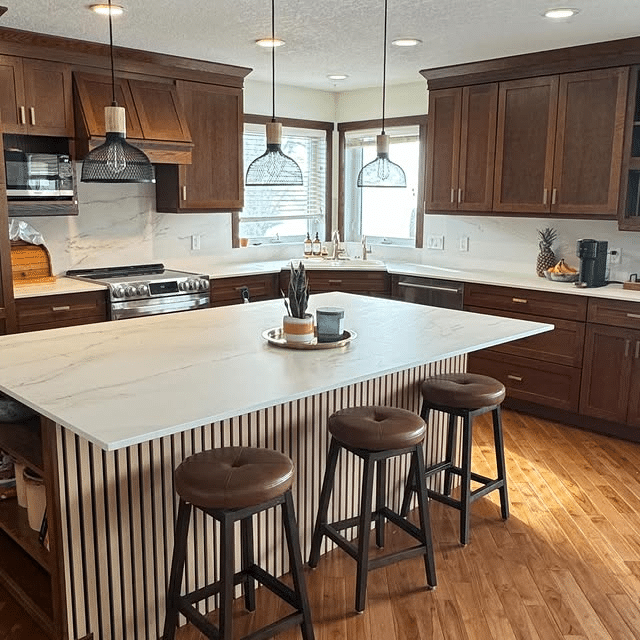
The design targets an architectural look. Modern materials counterbalance the red oak.
In the room, a sleek waterfall island in white and gray stone creates a strong space anchor. Flat-panel red oak cabinetry provides a warm counterpoint, setting the island against the cabinetry through contrasting tones.
Hardware can use push-latches or discreet pulls. Minimalism favors these low-key choices, which should not compete with the wood grain.
Open shelving and slatted accents work best in small amounts. Cabinets can run from the floor to the ceiling, giving the room a full-height arrangement.
The waterfall island serves as a centerpiece with integrated seating and a durable prep surface. It supports casual dining.
For a neutral floor, use concrete-look tiles or engineered wood.
LED strip lighting at the toe kicks and above the cabinets can enhance the architectural lines. Keep the lighting from drawing attention away from the woodwork.
Red oak and clean finishes combine current style with warmth.
Clean layouts can use a modern red oak setup instead of full-white cabinetry or high-gloss cabinetry, which can feel more clinical.
Two-Tone Cabinetry with Red Oak Bases and Light Uppers
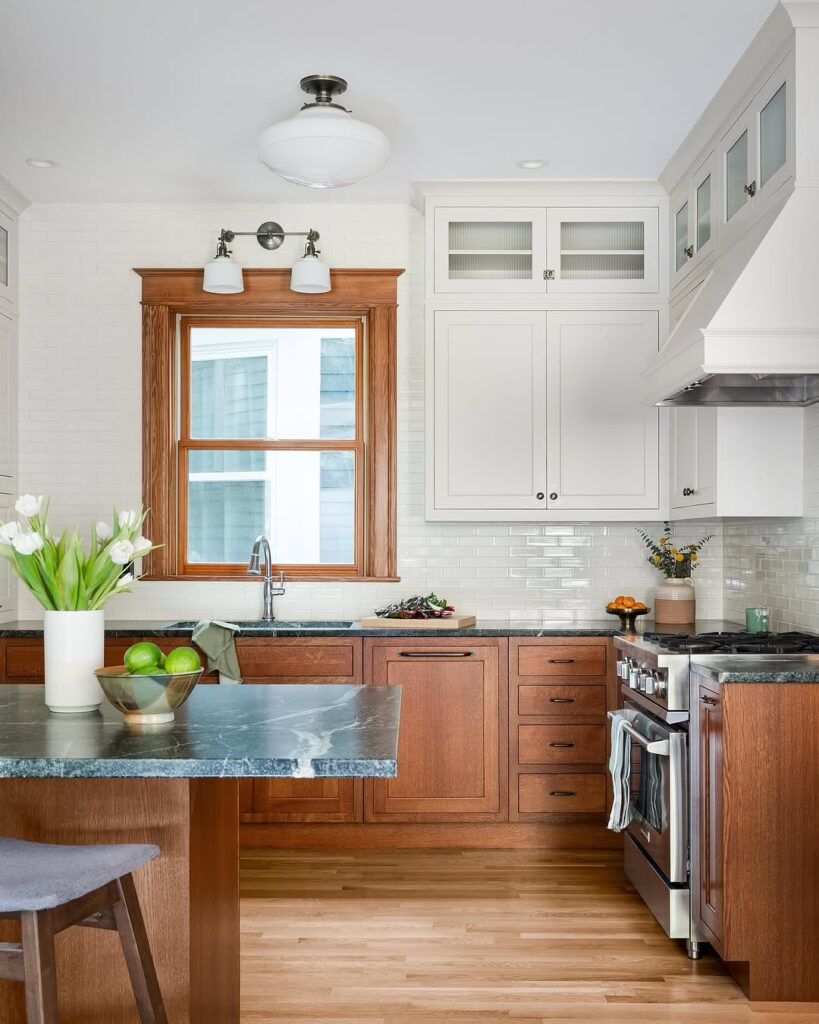
Two-tone cabinetry combines red oak base cabinets with light upper cabinets. The difference creates tonal variation.
Open shelving or cabinets can make up the light upper cabinetry. In white, almond, or pale gray, it pairs with red oak bases and supports visual openness.
Lower cabinet doors in slab or shaker styles provide a streamlined foundation. Upper units, whether painted cabinets or open shelving, provide openness.
Light upper surfaces can visually expand the kitchen. The two-tone layout suits moderate ceiling height while retaining storage depth.
The countertop has a neutral look and uses stone or quartz. It bridges the cabinet finishes, while fixtures in brushed gold or matte bronze pair with red oak.
Muted wall tile with soft texture can use zellige or glazed ceramic. This tile works with two-tone cabinetry.
The flooring options include oak, tile, and herringbone vinyl, all used with two-tone cabinetry.
Ambient lighting provides cabinet illumination. It balances cabinetry above and below.
The color-blocking strategy suits transitional and contemporary homes. Two-tone cabinetry combines wood warmth with painted surfaces and supports daily functionality.
Craftsman Red Oak with Granite
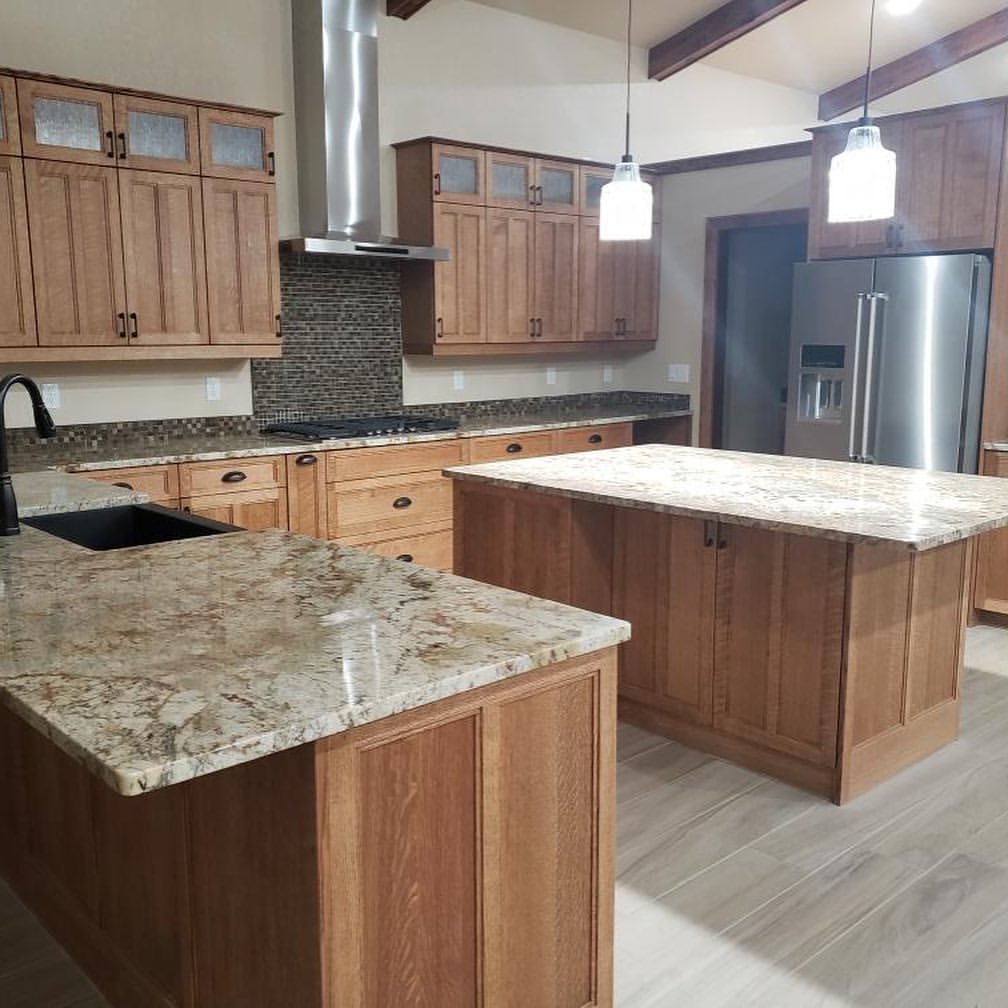
The Craftsman-style kitchen puts functionality first. Solid woodwork and timeless materials support that priority.
Red oak has an amber hue and prominent grain. Those features align with Craftsman style.
The lower cabinets are sturdy and simple. Upper cabinets with glass inserts and muntins add detail, while the cabinet design emphasizes finish quality and joinery quality.
Along the work surfaces, earthy granite in slate, mocha, or sage complements the Craftsman-style kitchen.
Green or brown handmade tile adds color to the backsplash. Blackened bronze hand-hammered pulls provide tactile use.
Red oak planks and natural stone are flooring options. In the Craftsman-style kitchen, ambient lighting may come from wall sconces or mission-style pendants.
For heritage style, a Craftsman-style kitchen can still support modern usability.
Craftsmanship remains a priority in this Craftsman-style kitchen. Updated appliances and clever storage accommodate daily wear while preserving tradition. The design retains convenience as well.
Gold Accents in a Two Tone Red Oak Kitchen
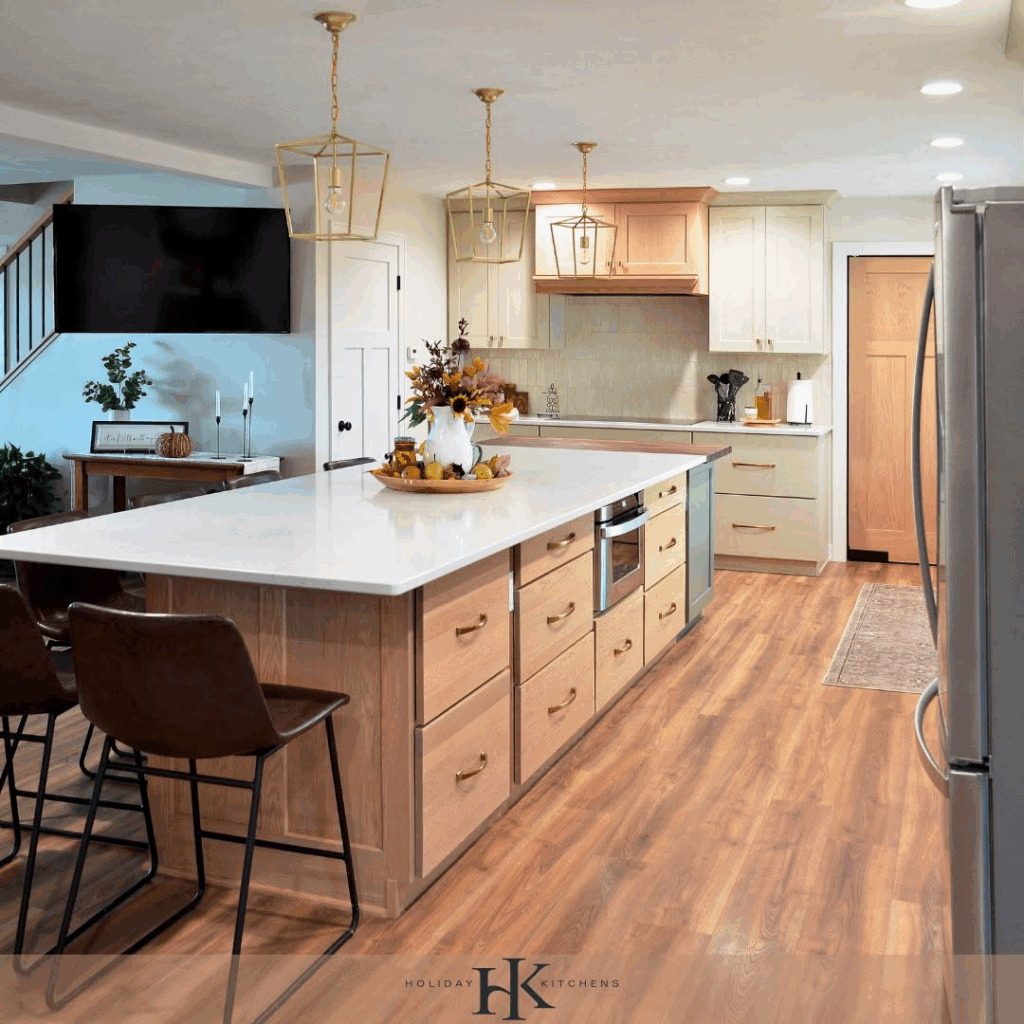
The lower cabinets are made from red oak, while the upper cabinets have a painted finish. These two cabinet sections are combined in one layout.
Warm ambient lighting is paired with the two-tone layout. Brushed gold fixtures provide another pairing, adding their finish to the overall arrangement.
Red oak lower cabinetry provides warmth. Upper cabinet colors such as soft greige, cream, and muted sage support airiness.
A lighter upper color reduces the sense of enclosure, while the oak grain provides texture.
In the kitchen, handles, faucets, and pendant lighting can use gold-tone, matte, or aged brass hardware. These finishes complement red oak tones.
The backsplash can use neutral stone or lightly patterned tile. Open shelving echoes the cabinetry while holding warm-toned dishware and wood accessories.
A two-tone red oak layout suits mid-sized kitchens and supports updates without removing natural materials.
The two-tone red oak layout combines traditional elements with updated details.
Red Oak Cabinetry with Matte Black Grain Contrast
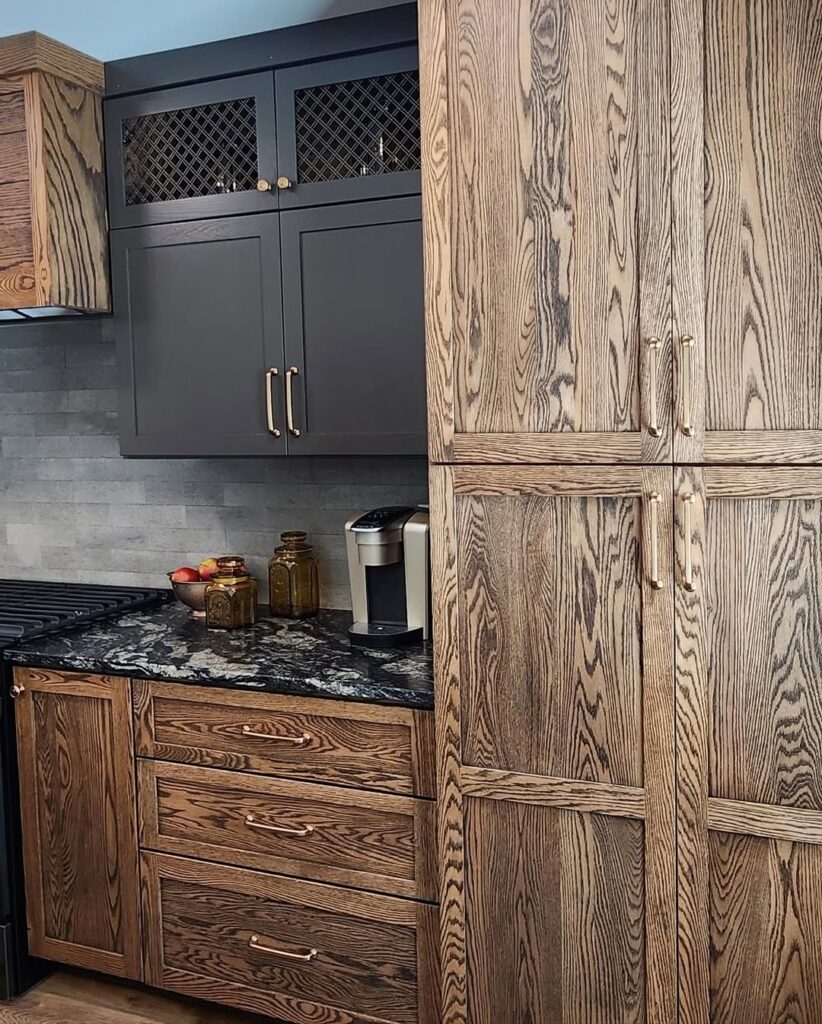
Matte black and red oak create visual contrast. The kitchen palette includes red oak cabinetry with matte black.
The red oak has strong vertical grain, set against a black surface with a smooth low-sheen finish.
Across the room, red oak base cabinets combine with matte black wall units and matte black hardware. Matte black fixtures complete the same combination.
A red oak and matte black palette offers an alternative to monochrome and all-white schemes. The palette retains warmth.
Soapstone, concrete, and honed black quartz reinforce dark accents. Red oak keeps the overall appearance from becoming stark.
Open shelving made from red oak is positioned against a matte black tile backsplash.
Pendant lighting with exposed bulbs, black exteriors, and metallic interiors highlights the contrast between red oak and black.
Under-cabinet lighting provides prep-zone illumination and showcases the red oak grain.
The red oak and matte black approach suits modernization with retained character.
Red oak and matte black combine a contemporary edge with a traditional material. This contrast strategy emphasizes craftsmanship.
Traditional Kitchen with an Ornate Island
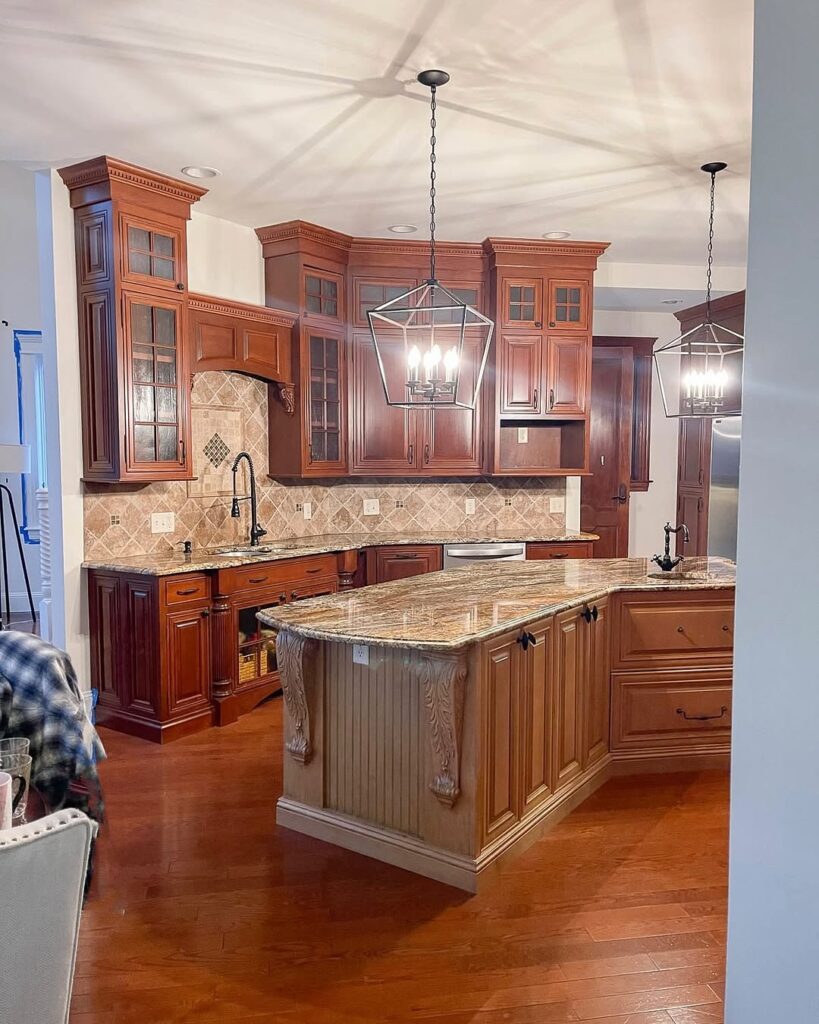
The cabinetry is red oak and traditional in style. Its focus is craftsmanship, texture, and architectural features, making it suitable for traditional kitchens.
Carved corners and molded accents appear on the red oak base cabinetry. The cabinets use a raised panel door style and continue throughout the kitchen.
The kitchen island is the centerpiece, supported by decorative brackets and corbels. It also has fluted legs and beadboard paneling.
A warm medium red oak finish highlights natural patterning and complements the countertops. Countertop options include tan, charcoal, or mocha granite or quartz.
Island lighting above the kitchen island can use wrought iron pendants or classic glass pendants. The backsplash complements the island detailing with natural stone tile or mosaic inserts.
Leather or linen bar stools can sit at the kitchen island, which is used for food preparation and gathering.
The ornamental island design combines storage functionality with its decorative form.
At the center, the ornate red oak kitchen makes the kitchen a central hub.
White Stone and Shaker Oak Cabinets
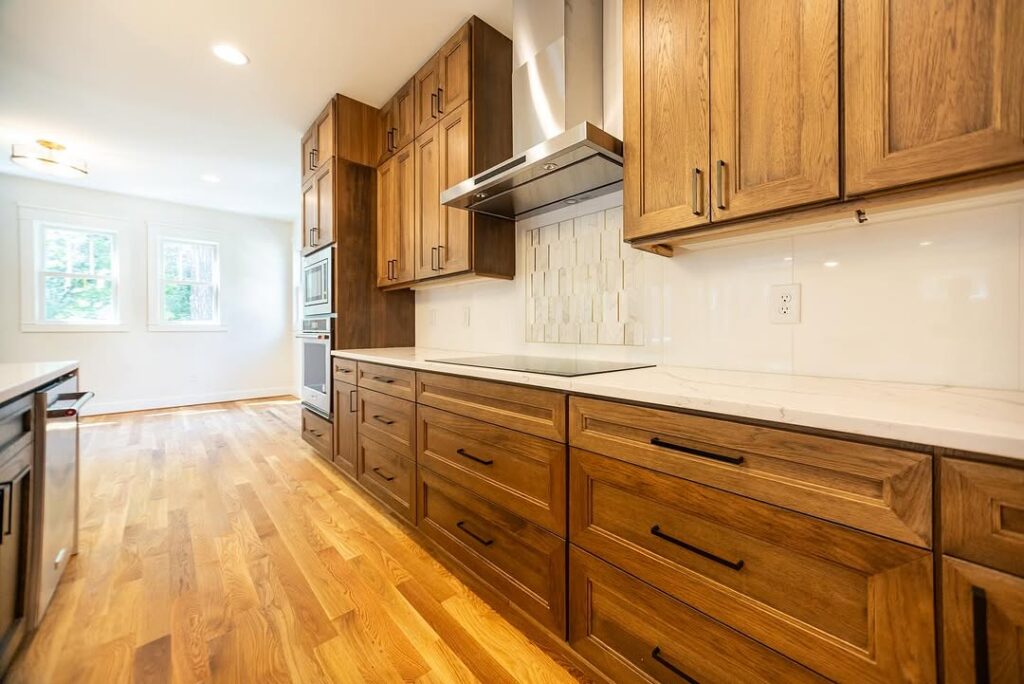
White stone surfaces bring a light contrast to these cabinets. The red oak has a warm undertone, while the shaker style keeps the lines clean.
Natural grain gives red oak its visual texture. The grain adds detail without overpowering the kitchen layout.
White countertops made from quartz or marble pair with the red oak cabinets. This combination balances modern and rustic styles.
The design brings more brightness to the kitchen while retaining the comfort that wood gives.
Satin or matte hardware in brass or black provides a functional accent on the tailored shaker cabinet doors.
Shaker red oak and white stone can update a traditional kitchen without replacing the full kitchen.
Across the room, choose flooring such as wide-plank natural oak or neutral tiles. Lighting can let white surfaces stand out, keep shadows soft, and keep reflections clean. Pendant fixtures and under-cabinet LEDs are both options.
Stainless steel appliances provide contrast against the red oak cabinets.
The shaker red oak pairing works in renovations and new builds. It also supports long-term functionality.
Balance, value, and daily usability come from pairing neutral tones with natural warmth. The shaker red oak pairing keeps those qualities together.
Red Oak Flooring Styles
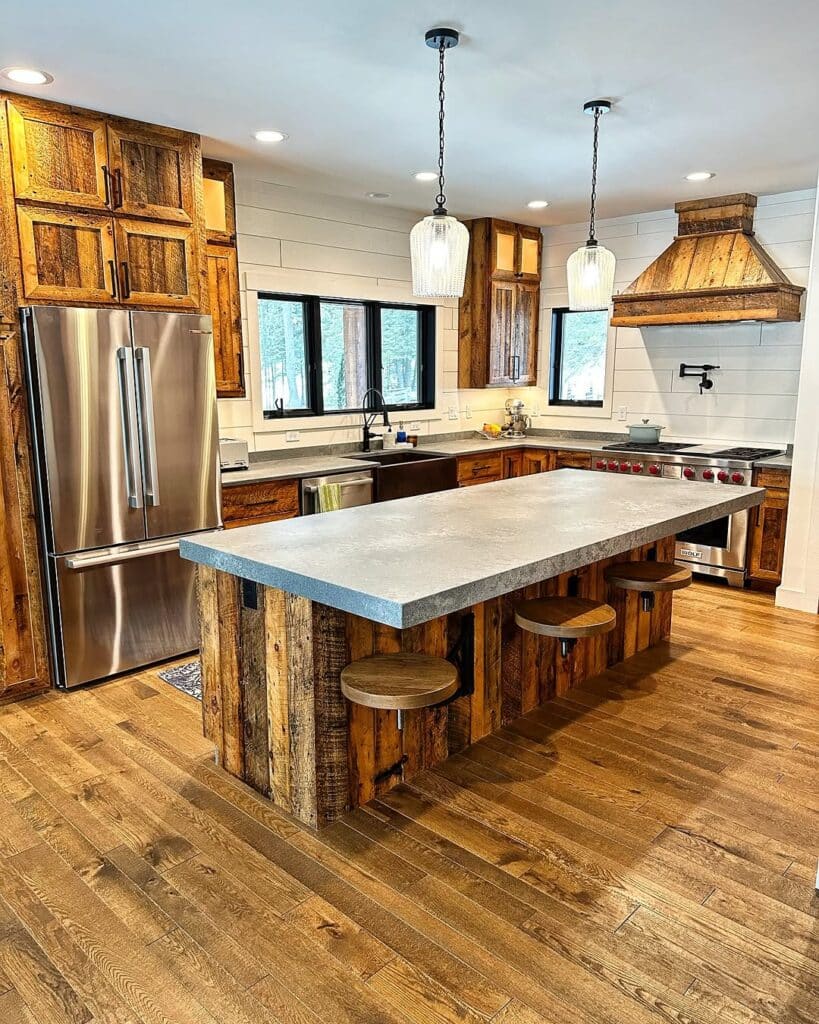
In the kitchen, solid red oak flooring has an open grain and moderate hardness. It supports durability, handles high traffic, and is suitable for cooking spaces.
Red oak flooring comes in traditional planks and wide formats, giving it a flexible style range across design styles.
Red oak flooring can be paired with matching red oak cabinets or cabinets that are slightly darker. This flooring-and-cabinet pairing creates cohesion.
Floor stains come in golden honey and medium chestnut tones. A satin or matte finish helps mask daily wear.
Sanded and refinished when needed, red oak flooring can support long-term use. It performs under heavy foot traffic, and neutral countertops with light backsplash tiles make the room feel less visually heavy.
Light rugs or runners can help protect floor life in busy parts of the kitchen. Sealing near sinks and dishwashers, along with kitchen ventilation, protects floor integrity.
Across the room, red oak flooring balances function, traditional style, and longevity.
Mid-Century Mission Red Oak Cabinetry
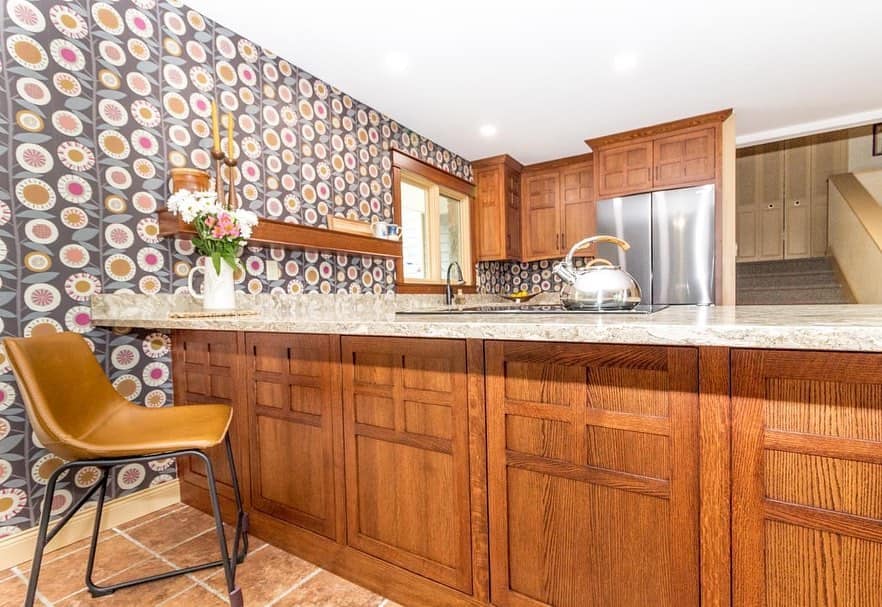
Red oak mission cabinetry brings sturdy character to mid-century architectural lines. The red oak adds a strong material presence.
Red oak cabinetry has vertical grain, flat panels, and subtle chamfers. The simple cabinetry design has a vintage silhouette, while the red oak acts as the visual anchor.
Across the room, warm red oak sits with globe pendants, brass hardware, and furniture on tapered legs. The combination has a retro feel.
The cabinetry has horizontal lines. Open shelving or lower sideboard-style units add the multifunctional storage associated with mid-century furnishings.
Subtle flecks show in a neutral countertop made from quartz or terrazzo. Nearby, a matte backsplash brings earthy green, cream, or terracotta to the red oak pairing.
Narrow-plank red oak flooring continues the cabinetry material. Vintage clocks, ceramic dishware, and minimalist prints work with the hybrid aesthetic.
For homeowners focused on craftsmanship, the mid-century and mission-style crossover offers a fresh design approach.
The crossover approach provides kitchen practicality along with warmth.