15 Charming Cottage Kitchen Ideas for a Cozy Home
A cottage kitchen can feel warm while still keeping the flow functional. It is made for a lived-in home.
These cottage kitchen ideas use cozy colors, natural textures, smart storage, and efficient layouts that fit real homes.
A small kitchen can call for kitchen planning. That planning may involve a remodel, a budget upgrade, or timeless finishes.
Kitchen choices include cabinetry, lighting, countertops, and flooring. Comfort and performance matter in daily use, while long-term appearance should also guide each choice.
Powder Blue Cabinets and Brass Hardware
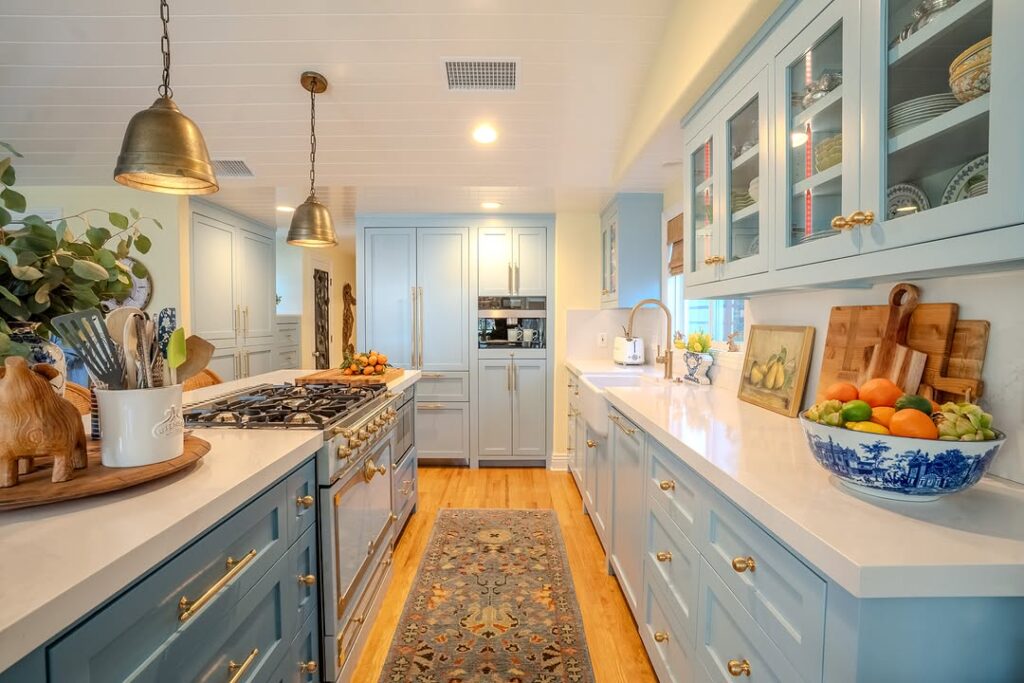
Across the cabinetry, powder blue interacts with daylight and maintains kitchen brightness during overcast hours.
Handles, taps, and lighting all use brass. These brass details add warmth, support upscale detailing, and prevent the palette from looking flat.
Task lighting supports daily cooking. Durable kitchen finishes support reliable performance, and splash zones are wipe-clean.
The scheme transitions between updated interiors and traditional interiors. For most people, it does not require a full remodel.
Copper Accents in a Blue Island Kitchen

The central island benefits traffic flow through the kitchen. Painted blue and placed in the room center, it anchors both the prep zone and the seating zone.
Copper lighting and taps bring a warm contrast to cool cabinetry tones. Copper cookware continues the accent, helping retain cottage character and support visual zoning.
An informal dining space sits alongside the kitchen. Reflective metals amplify light, while durable work surfaces support an island kitchen built for daily meal preparation and social cooking. The island provides workflow and warmth.
Harvest Accents on a Checkered Kitchen Floor

The checkered floor uses black and white in one version and muted earth tones in another. It pairs with harvest accent baskets, dried grains, and warm-toned ceramics. The pattern establishes visual movement and supports a footfall rhythm.
A graphic floor works with seasonal decor changes. Those updates do not require constant renovation.
Strong pattern definition can mask wear and reinforce nostalgic practicality. The floor surface is slip-resistant and supports easy maintenance.
Floor durability matters in a high-traffic cooking zone. Spills, crumbs, and foot traffic are part of the daily conditions it must handle.
Sage Beadboard Kitchen and Marble Counters
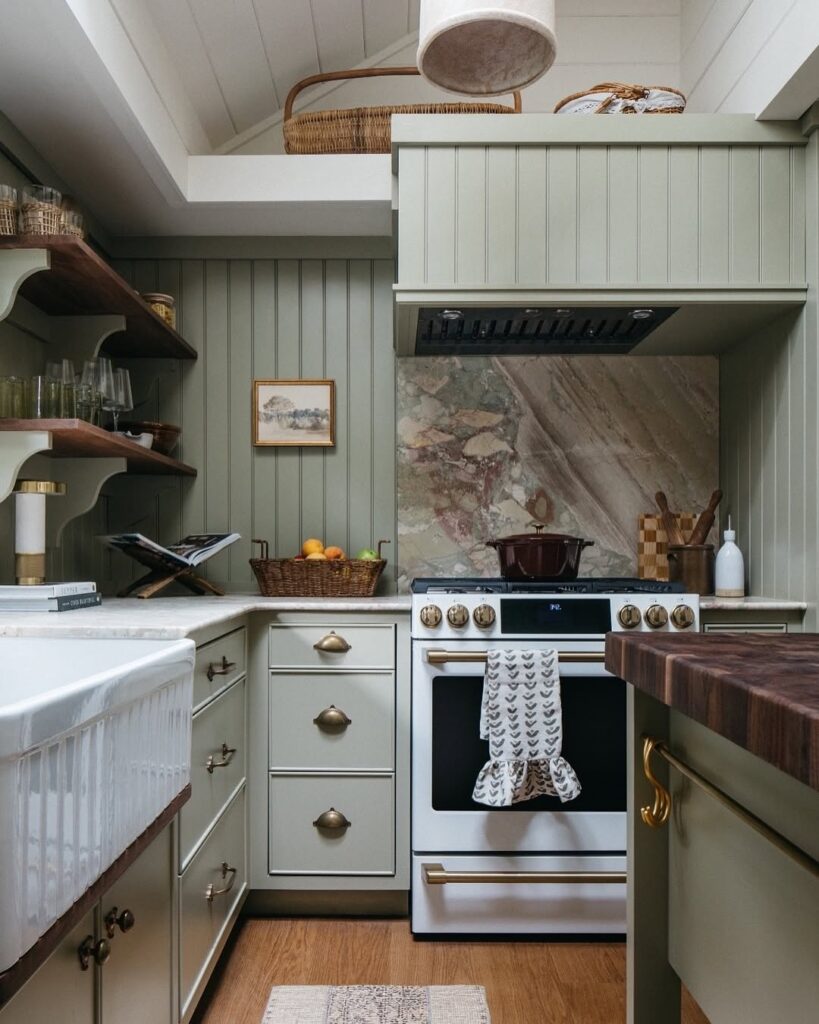
Marble counters with subtle veining support daily preparation and provide temperature balance. Muted green cabinetry uses vertical beadboard, which establishes cottage rhythm.
Natural light works well with the sage tone, which avoids glare and keeps the sightlines calm. Marble handles both baking zones and hot cookware.
Everyday usability comes from the combination of sage cabinetry and marble, which supports hygienic surfaces, practical performance, and long-term value without constant upkeep. In a compact kitchen, vertical beadboard provides traditional texture, while the pairing adds gentle color.
Cottage Hutch in Vintage Teal

Smaller footprints suit vintage teal cabinetry. Around the kitchen, the freestanding hutch provides space for display and storage.
Glass fronts reveal the hutch shelves. Stoneware, cookbooks, and pantry staples are displayed there. The glass-front shelves improve meal-prep access.
This kitchen arrangement combines a statement color, functional organization, open visibility, and enclosed storage. It supports cottage kitchen efficiency.
In many homes, a narrow or galley-style layout can use hutch zoning. The hutch supports zoning between the prep area and dining area, which improves flow.
Soft Cream Cabinets with Brass Fixtures

Brushed brass fixtures sit in the prep zones and storage areas. The fixtures pair with soft cream cabinetry in those same areas.
Brass warms the color scheme with subtle intensity. It does not overpower the room.
Distressed wood and light-veined stone support both functionality and layout cohesion. The wood and stone work together to keep the layout cohesive while supporting how the kitchen functions.
The cream-and-brass pairing is easy to maintain and gives strong light distribution. It works for small refurbishments as well as full remodels, and it supports a farmhouse-leaning cottage design.
Storybook Cottage Corner in Sky Blue
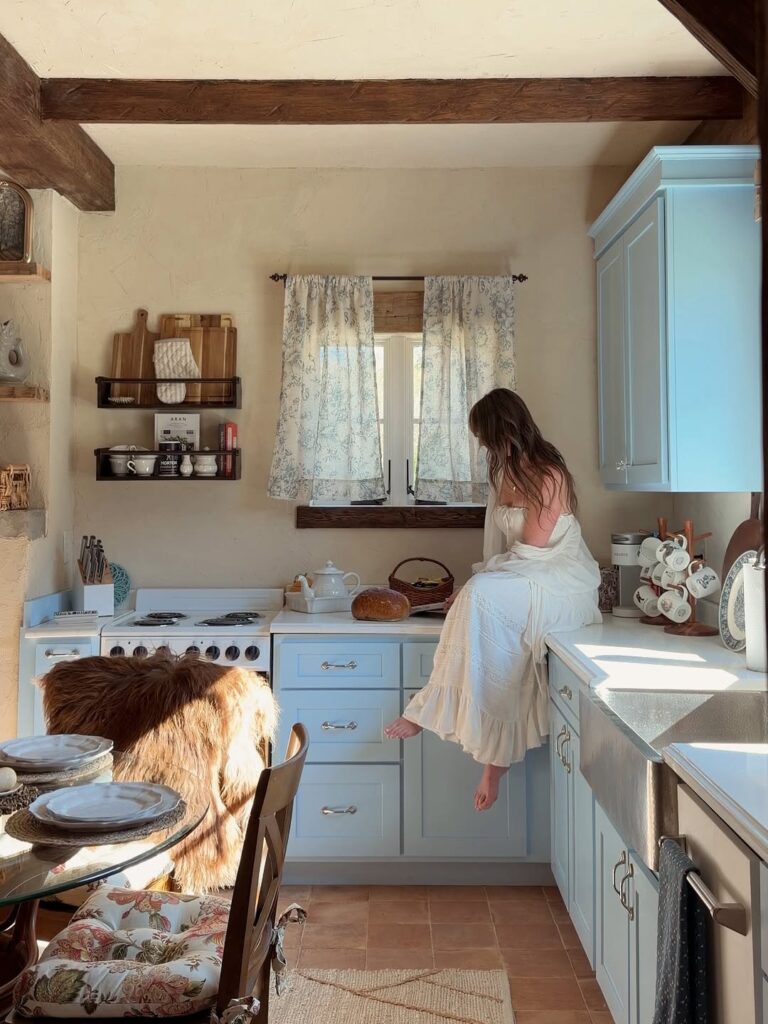
In one corner, sky-blue cabinetry brings the storybook cottage style into the kitchen. The light color alters how the small space is perceived.
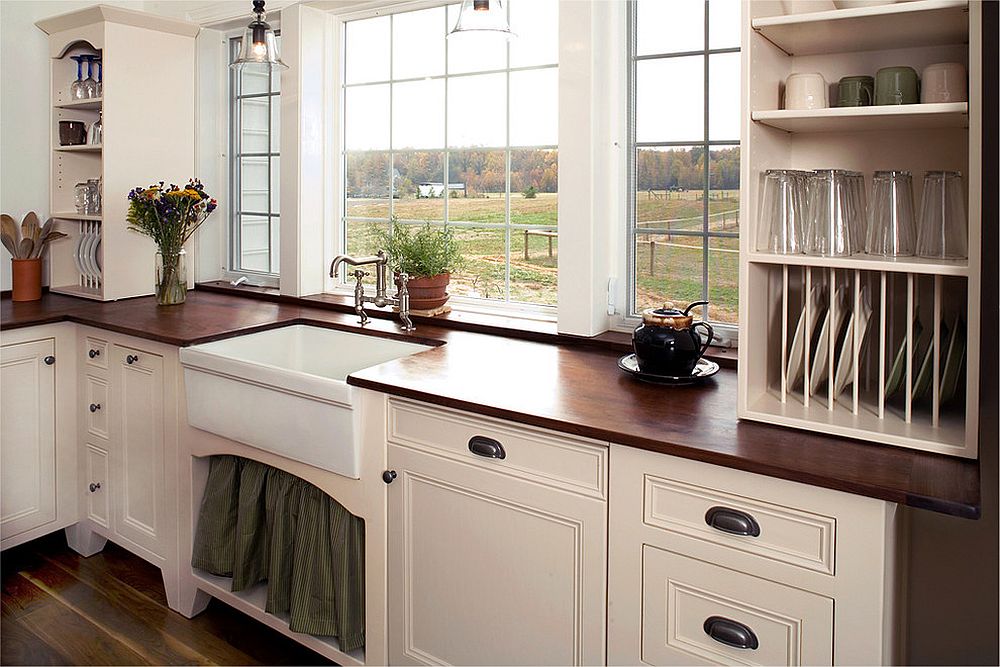
Painted beadboard, petite farmhouse sinks, and curved shelving support kitchen function. Sky-blue cabinetry reflects daylight and reduces a closed-in perception in breakfast nooks.
In compact homes, this sky-blue cottage approach uses gentle color psychology. It supports classic cottage proportions and daily usability.
Meal-preparation efficiency improves with strategic lighting. Placing the lights carefully reduces shadowing in the early morning and while preparing the evening meal.
Rustic Cottage Timber Kitchen and Metal Accents

Durability comes from raw cabinetry, plank walls, and exposed beams in this kitchen.
Metal accents suit a busy household. Used on brackets, hardware, and lighting, they add tactile surfaces and keep construction visible. The metal resists wear caused by heat and moisture.
The layout stays away from industrial style. Strength, easy upkeep, and visual honesty guide it, while proportion, varied grain, and timeworn surfaces supply cottage character.
Vintage Floral Kitchen with Red Hood

Red above the range, the cooker hood draws the eye upward. It crowns the range without overpowering the surrounding finishes.
Floral tiles or floral wallpaper soften the red statement color and balance its boldness. Painted wood cabinets with classic trims reinforce period styling and support resale appeal.
Washable surfaces simplify upkeep, and the work triangle supports safe, efficient movement. Durable ventilation paired with proper extraction limits grease buildup and helps maintain indoor air quality.
Vintage Aga Green Toile British Country Kitchen

Slow cooking and everyday baking both benefit from the vintage Aga. Its radiant heat also gives the kitchen a central anchor.
Painted cabinets with shaker fronts reinforce the heritage style. The green toile wallpaper adds a pastoral pattern, while soapstone or wood countertops support kitchen function and balance character.
For period-cottage restorers and families using the kitchen daily, the Aga-and-toile pairing relates to British country kitchens. It brings warmth and visual identity, with durability as part of the pairing. Practical layouts improve storage, workflow, and long-term usability.
Vintage Cottage Nook with Rich Pattern
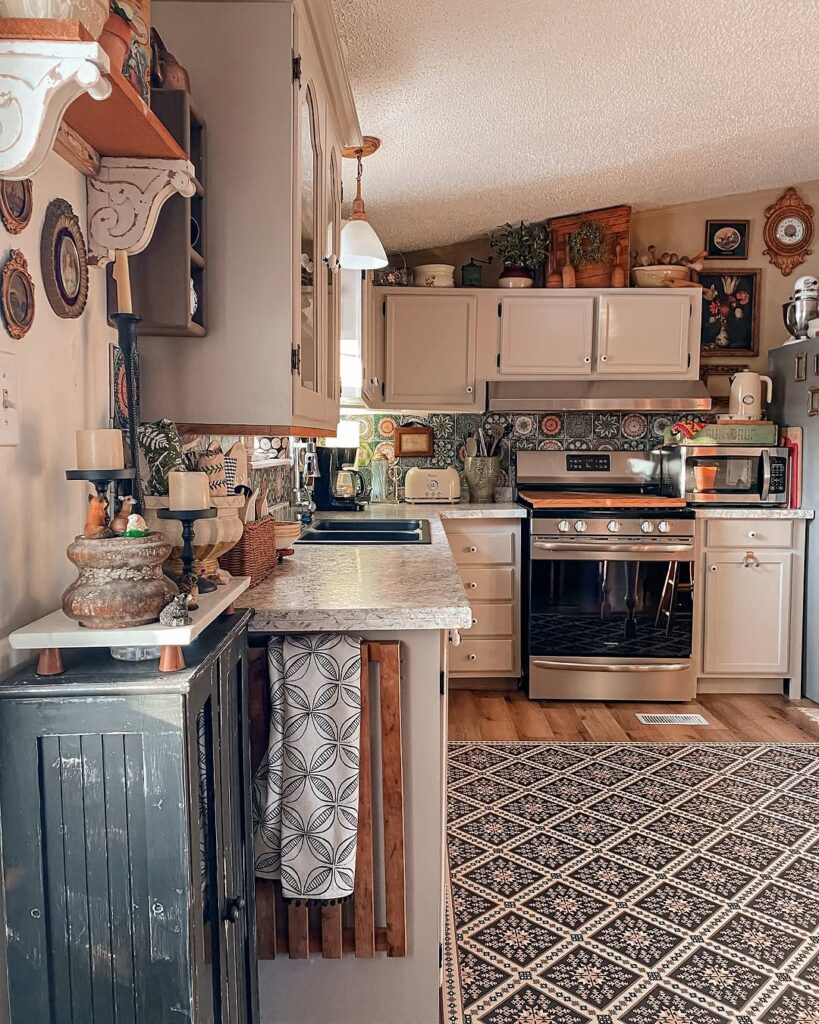
Restrained cabinetry keeps the kitchen from feeling visually overloaded. The same motifs appear across the textiles, tiles, wallpaper, backsplash, cushions, and cafe curtains, creating cohesion.
Small floral and geometric patterns can improve depth perception. Their scale also suits tight footprints.
In an active cottage household, durable grout stands up to everyday cooking. Sealed wood surfaces support long-term wear, while washable fabrics make cleaning easier. Pattern mixing preserves function and adds personality, although a source claim notes that it may cause visual fatigue.
Cottage Kitchen with Golden Oak and Exposed Beams

Golden oak cabinetry brings a warm cottage color to the kitchen. Overhead exposed wood beams pair with the oak. This combination is often sought for cottage authenticity and is also presented as increasing historic cues.
Stone tiles or rustic runners add texture across the floor. The overhead beams create visual rhythm, while the oak grain gives the room more visual depth. The stone, runners, and oak work within a harmonious overall palette.
For homeowners who prefer approachable warmth, the oak-and-beam combination uses enduring materials. It aligns with traditional cottage design, supports kitchen usability, and supports design longevity.
Warm Oak Cabinets with Glass Fronts
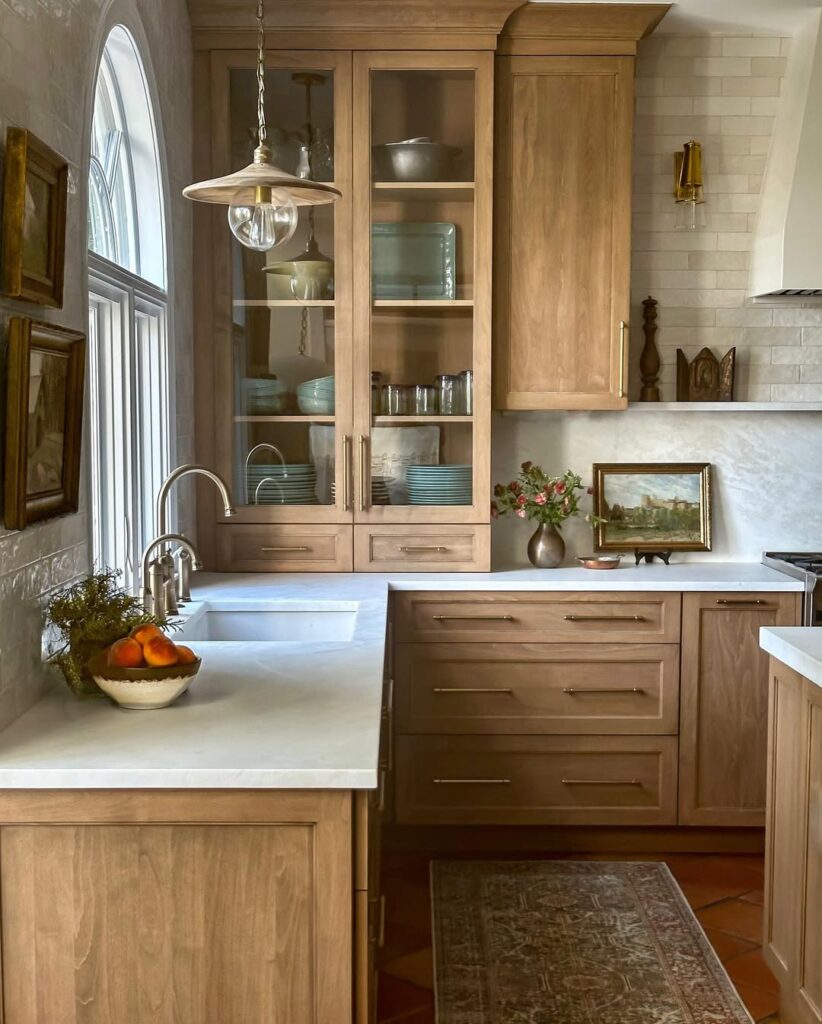
Warm oak cabinetry gives this cottage kitchen nook a natural base. The upper cabinets have glass fronts, pairing the clear fronts with the oak.
Everyday essentials stay visible behind the glass fronts. That arrangement supports natural light flow while helping reduce clutter and maintain usability in a small kitchen.
The hardware has a textured finish, while the counters use subtle stone. Together, they reinforce authenticity, and the muted palette supports the layout by grounding it.
A handcrafted design approach brings cottage character and practical storage to the kitchen. It also suits traditional design preferences.
Open Shelves in a Woodsy Cabin Kitchen

Open shelving sits against timber walls beneath plank ceilings in this cabin-style kitchen. Natural textures run through the room.
Stone backsplashes combine with matte black hardware, helping limit a raw appearance. Open shelves keep everyday dishware reachable and encourage a visible display.
For cooks, the arrangement balances warmth, visual openness, and efficiency. It preserves organization and long-term durability, including in high-use cooking zones.
On exposed surfaces, the distance between shelves helps keep buildup under control. Moisture, grease, and dust are the concerns.
A Cottage Kitchen of Lightstone and Shelves

Pale mineral lightstone covers the counters and backsplashes. These surfaces reflect daylight and task lighting across the kitchen.
Floating shelves provide everyday storage and replace bulky upper cabinets. Their supports may be wood brackets or concealed supports, preserving a clean silhouette.
For readers who prefer practical access, the floating-shelf style pairs with a neutral cottage palette and Shaker cabinetry. It simplifies cleaning and supports workflow.
The shelves hold dishes, cookware, and decorative ceramics. Shelf supports should be anchored properly to ensure load safety in busy kitchens.
Cottage Kitchen with Blue Beadboard and Timber Cabinetry

Timber cabinetry pairs with vertical, powder-blue beadboard. This cottage kitchen treatment suits both compact kitchens and spacious kitchens.
Vertical paneling gives the walls architectural definition instead of leaving them plain-feeling. Timber elements reinforce authenticity and warmth, while supporting the durability and period style of the kitchen.
Neutral counters and subtle metal hardware keep the workspace usable. The kitchen includes traditional woodworking details and supports an airy cottage style.
Beadboard Cottage Kitchen With Light Uppers and Deep Bases

Light upper cabinetry contrasts with deep base cabinetry in this two-tone kitchen. The combination defines the two-tone design.
Beadboard paneling adds architectural texture and supports visible craftsmanship. Light upper cabinetry over deep bases supports brightness near sightlines while defining the lower work zones.
Architectural texture supports the two-tone layout. The layout also creates color zoning and improves the perception of height, making it a recommended setting when visual clutter is a concern.
A classic bridge faucet and butcher block countertops pair with the two-tone layout.
Copper Pots and Amber Garland
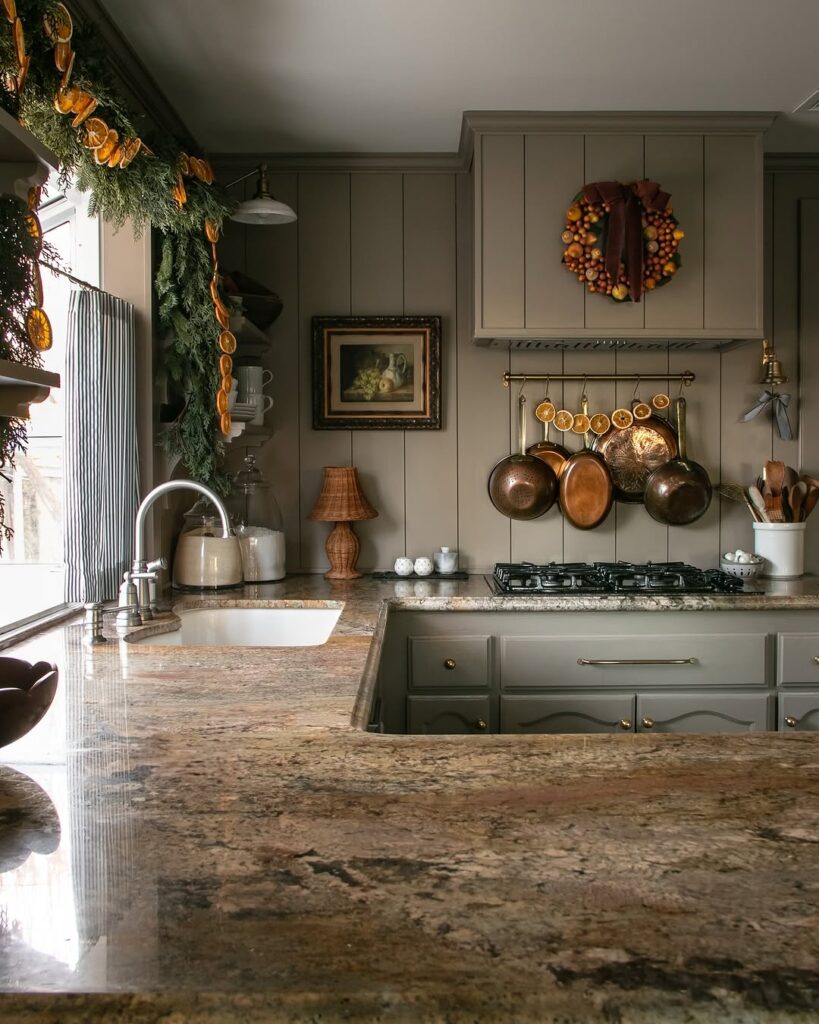
Displayed copper pots add visual depth. Amber garlands along rustic shelving complement them.
Metallic accents add radiance to the prep zone. They also support personalization.
A cottage arrangement can stay festive and practical when natural wood bases soften the metallic glow.
Classic cottage kitchens can use this arrangement while keeping its functionality intact.