15+ Beautiful Hickory Kitchen Cabinet Ideas
Hickory cabinets are used in kitchens for their naturally varied color, high durability, and striking grain.
Bold hickory gives the room a strong natural presence. Its rich look brings warmth and texture. The wood stands out without losing its organic character.
Hickory cabinetry works with both rustic and modern styles. Grain and tone vary from one cabinet front to another, while the cabinetry provides storage and rich tonal contrast.
Hickory cabinetry has high resilience and a long-term lifespan. Its visual impact remains strong over time.
Glass-Front Hickory Cabinets
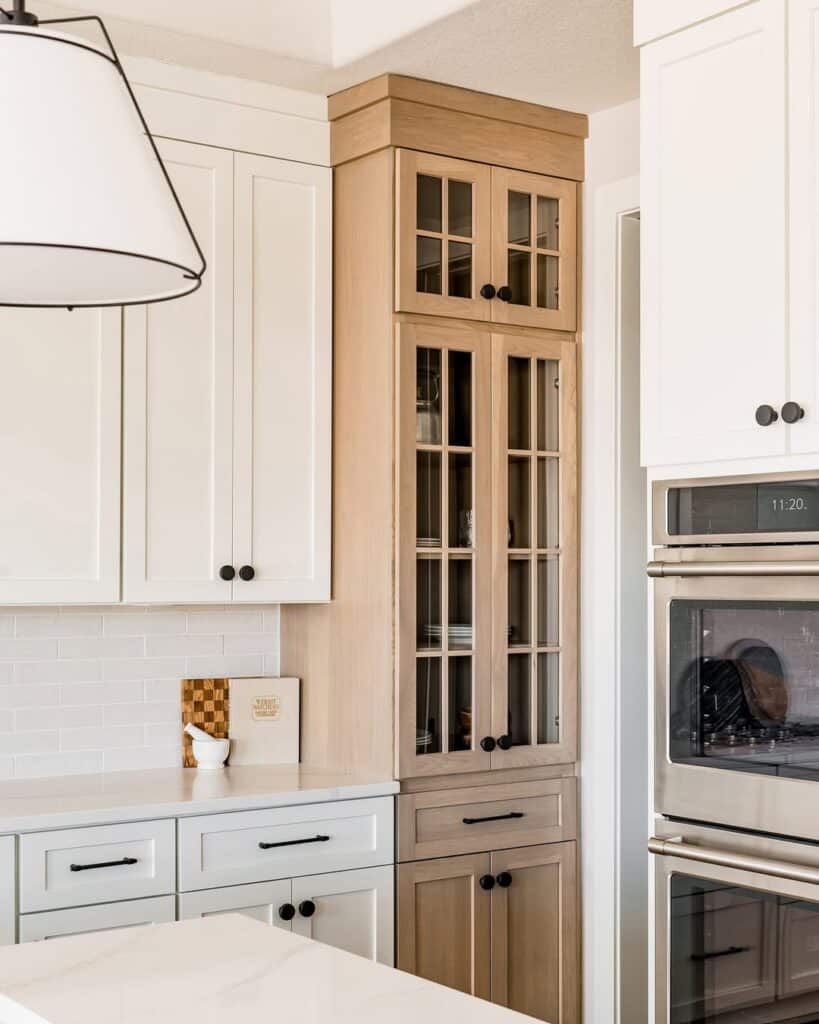
Hickory cabinets with glazed doors keep the wood natural.
Dishes and glassware can sit behind glass-front cabinets, which support display while keeping storage practical. Cabinet glass may be frosted, seeded, or clear, so visibility varies.
Glass fronts reduce the effect of heavy wood surfaces. Recessed lighting can sit inside the cabinets, and the cabinet arrangement can go above a butcher-block counter while working with that lighting.
Multitone hickory frames the glass inserts.
Glass-front cabinets can include soft-close hinges and neat cabinet mullions. They suit rustic-modern kitchens.
Satin nickel or antique brass hardware coordinates with glass-front cabinets. Glass fronts reduce wall-cabinet visual weight and suit U-shaped and galley kitchens.
The flow of wood cabinetry stays intact with glass-front cabinets. They combine display storage with the surrounding cabinetry.
Open Hickory Corner Shelves
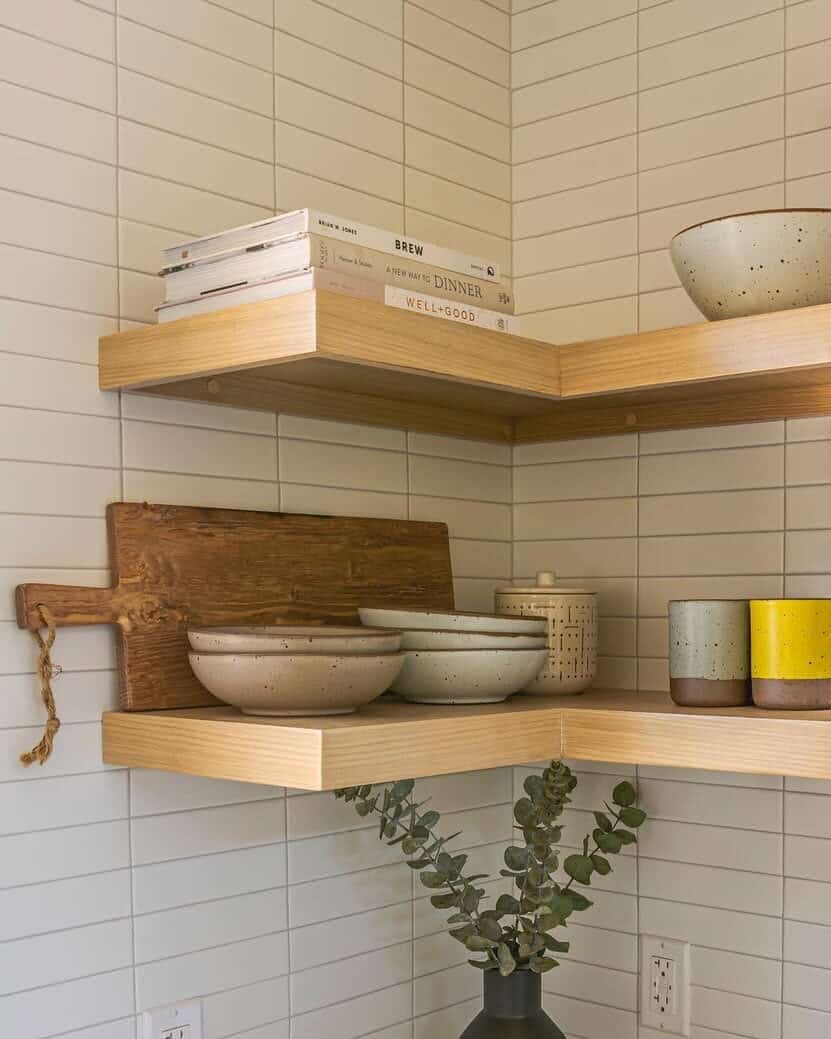
Hickory frames the open shelving in the corner. The shelves turn an awkward kitchen corner into usable open storage.
Everyday dishes, glassware, and display pieces stay easy to reach on open shelves. Compared with full cabinetry, the shelves reduce bulk and keep sightlines open.
In small kitchens and galley kitchens, hickory shelving can fit neatly into the layout. Its bold grain adds textured warmth, especially against light walls or a tiled backdrop.
Minimalist shelf brackets help the shelves appear to float, while lighting above the shelves draws attention to them. Match the shelves to the surrounding cabinetry by using the same stain or seal, which extends the cabinet layout.
Open shelving works well in upper corner areas. Compared with traditional cabinets, it offers easier access with less intrusion.
Open corner shelving supports both display and accessibility. Items remain visible and within reach.
Hickory Accent Open Shelving
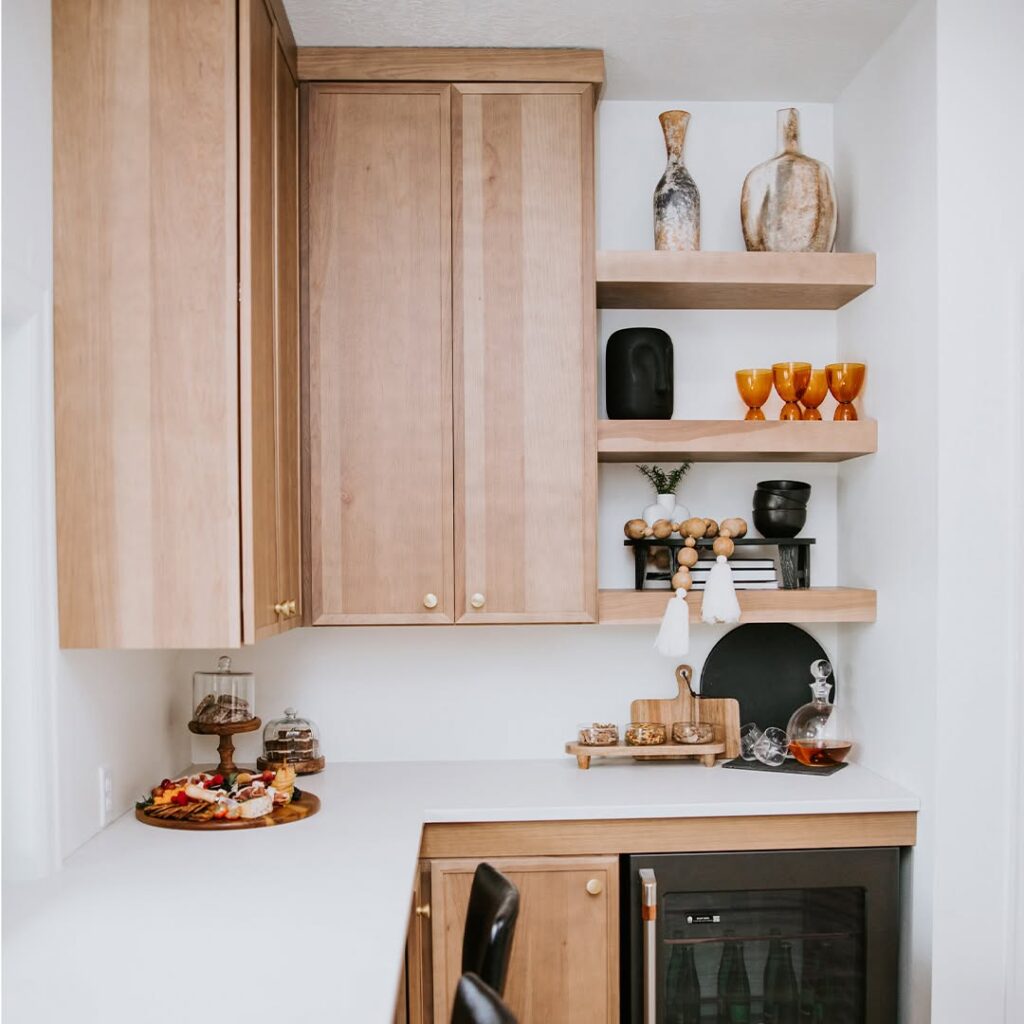
Hickory elements can provide trim or backing for open shelving. Open shelving replaces solid cabinetry and keeps everyday essentials easy to access.
Hickory grain adds visible texture to shelving. Hickory shelving can use shelves with vertical support brackets for ceramics, copper cookware, and glass jars.
Open shelving suits medium kitchens and small kitchens alike. It pairs with white walls or plaster walls.
Shelf lighting under the shelves illuminates the grain and integrates with open shelving. The shelving also reduces cabinetry density.
Open shelving pairs with a farmhouse sink, concrete countertop, and subway tile. Matching hickory or neutral base cabinets support cohesion with the shelving.
Open shelving supports kitchen utility and suits corner kitchens as well as light-filled kitchens when combined with hickory.
Hickory Cabinets and White Counters
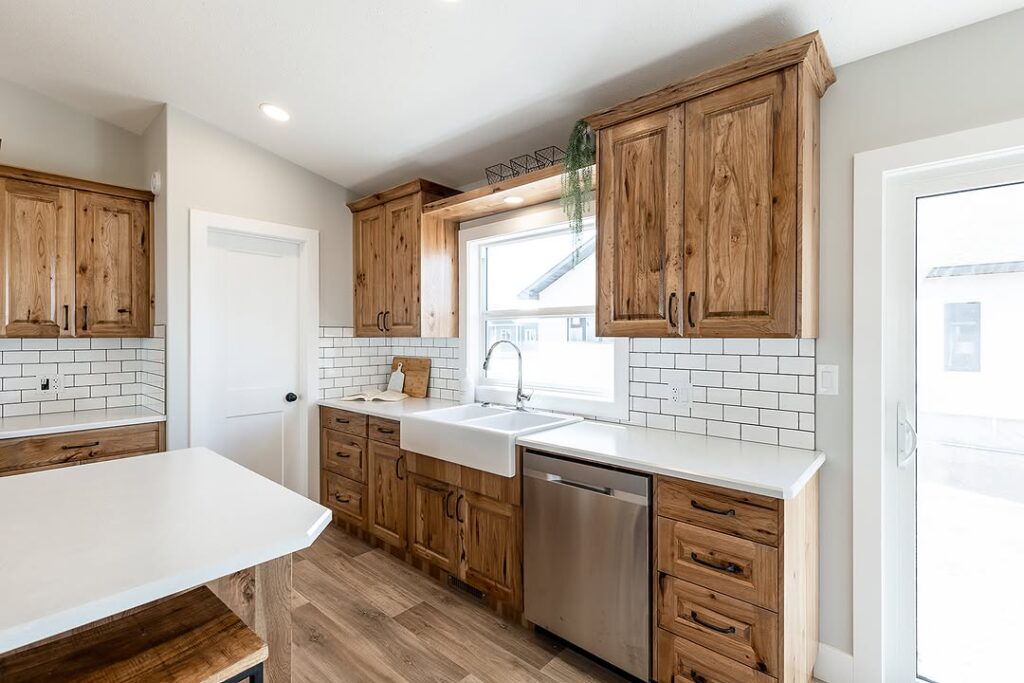
Hickory cabinetry paired with a light white countertop shows the wood's complex grain. Creamy hickory sapwood appears alongside dark hickory streaks.
White quartz, white marble-look composite, and white solid-surface countertops are options for this pairing. Countertop materials provide durability.
Light countertops can help when daylight is limited or the flooring is dark. They accentuate hickory warmth and reflect light around the room.
A white or neutral backsplash keeps the pairing light. Matte black or brushed nickel hardware can finish it, and the hickory and white countertop combination suits larger kitchens as well as rustic-modern, Scandinavian, and transitional styles.
Staining is resisted by most white countertops. Mild products are suitable for cleaning them. A full remodel calls for hickory alongside white surfaces. The same recommendation applies to a cabinet upgrade.
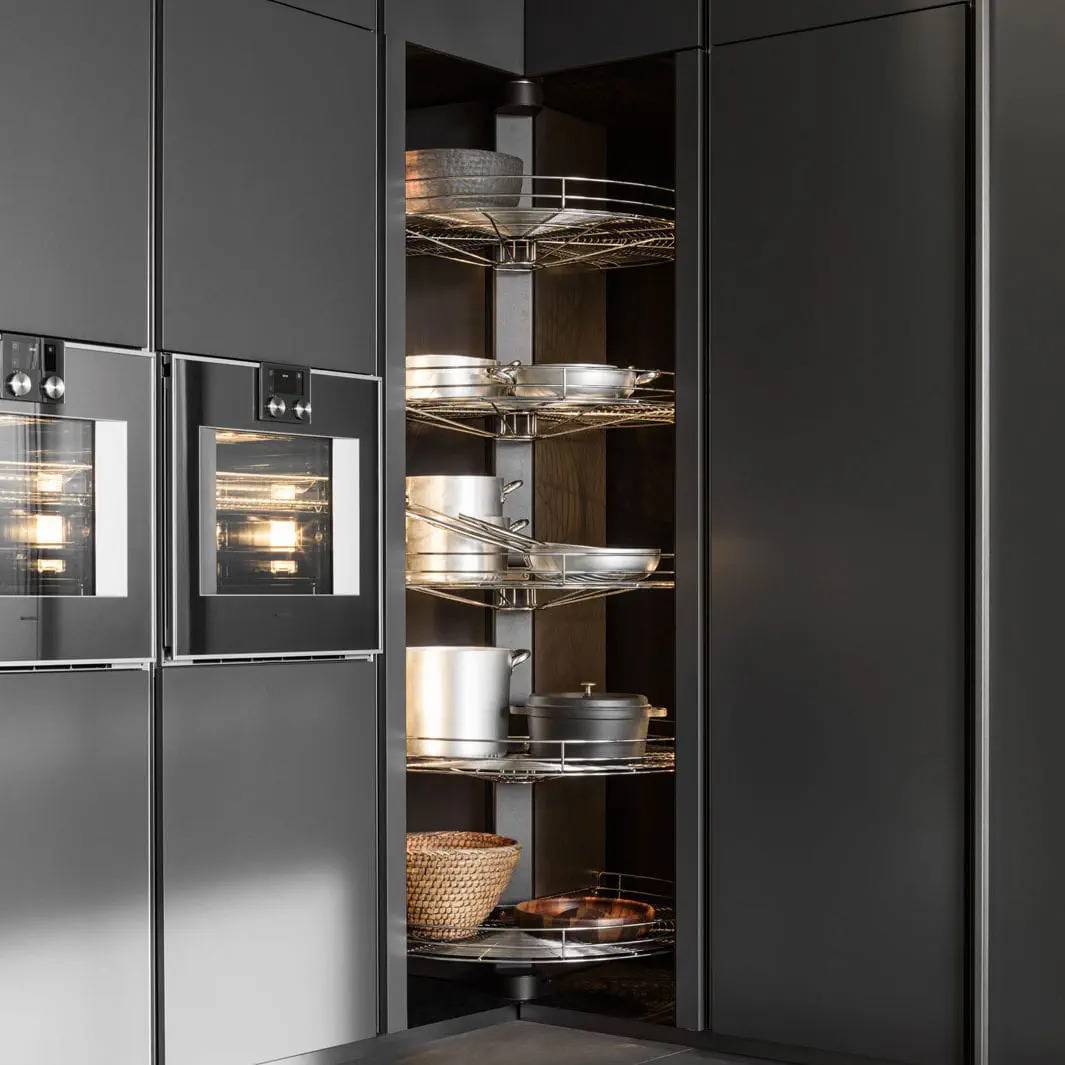
Hickory Appliance Cabinets
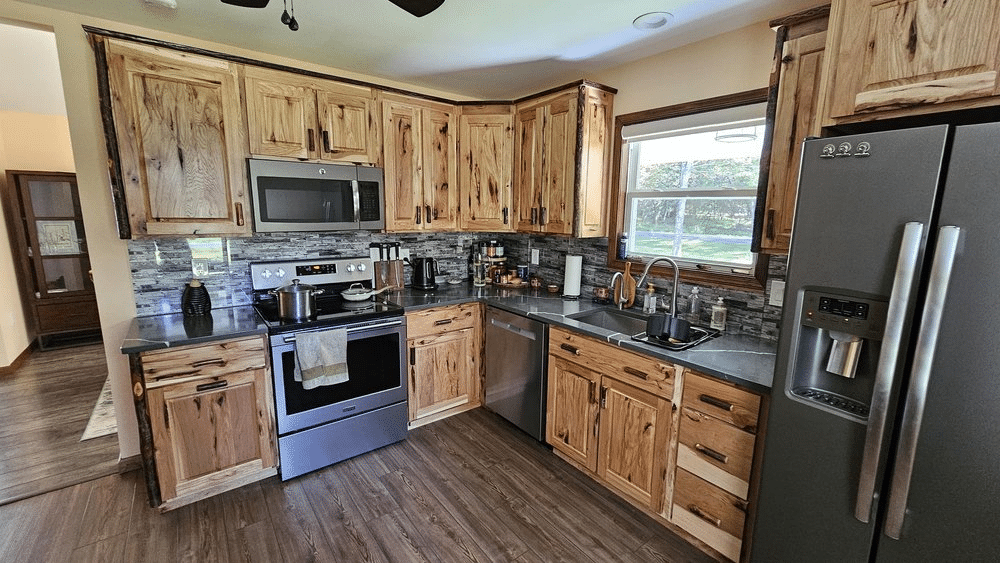
The cabinetry integrates an appliance. It keeps the appliance within the hickory cabinetry.
Hickory fronts keep the refrigerator, dishwasher, and microwave panel-ready. The appliances are housed within the cabinetry, leaving the varied wood tones uninterrupted.
Hickory supports daily use and has the durability needed for high-traffic areas. Place the appliances at optimal heights and in practical locations to improve efficiency.
Matching cabinet panels reduce a patchwork appearance. Use them on large appliances so the appliances sit within the cabinetry. Precision-fit cabinetry combined with a soft-close cabinet door completes the fit.
The oven and vent hood sit within a custom hickory surround. Integrated appliances support visual continuity and are recommended for open-concept layouts.
Matte black or brushed stainless handles keep the hardware subtle. Use subtle hardware to preserve the focus on the wood grain.
With proper planning, a built-in appliance configuration combines technology and design. The configuration also supports busy routines.
Hickory wine storage
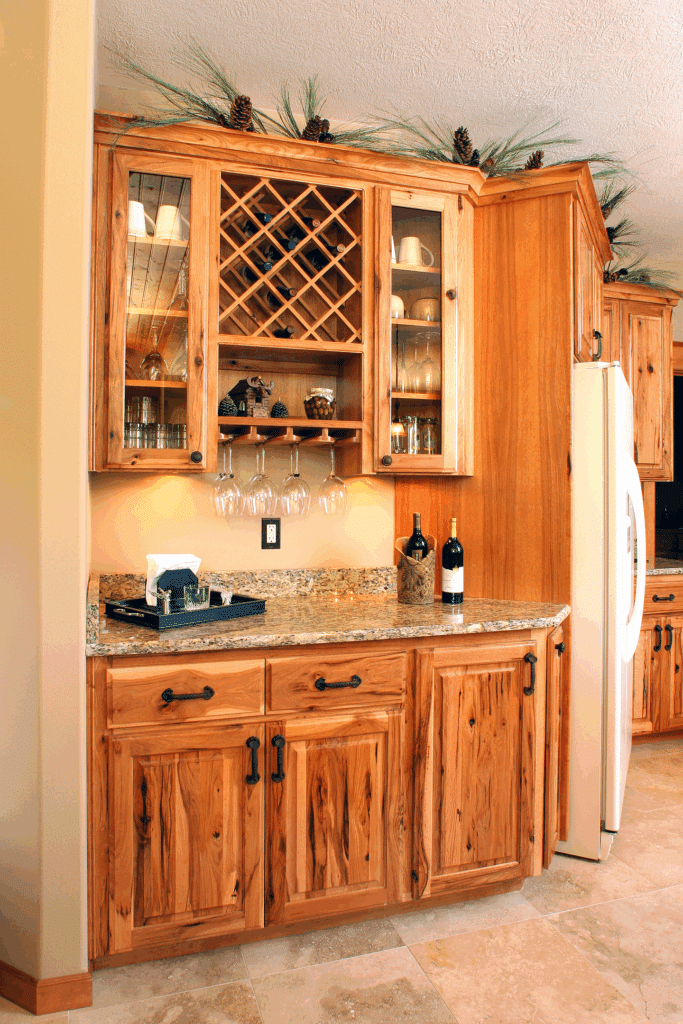
Hickory cabinetry contains the wine storage as an integrated feature.
Bottles can be displayed in built-in storage with horizontal, vertical, or diamond-patterned forms. These racks store bottles while keeping them visible.
Wine storage can sit at island ends, in base cabinets, or in upper sections for easy access. Open wine storage supports quick bottle access.
Recessed lighting placed over or within the cubbies highlights the wine collection. The rack stain should match the surrounding cabinets.
Bottles benefit from open space around them. Open wine storage supports airflow, which benefits long-term storage.
A matte countertop and brushed brass hardware complement the wine display.
Open wine storage suits compact kitchens and supports lifestyle integration.
Hickory Cabinetry Bold Backsplash
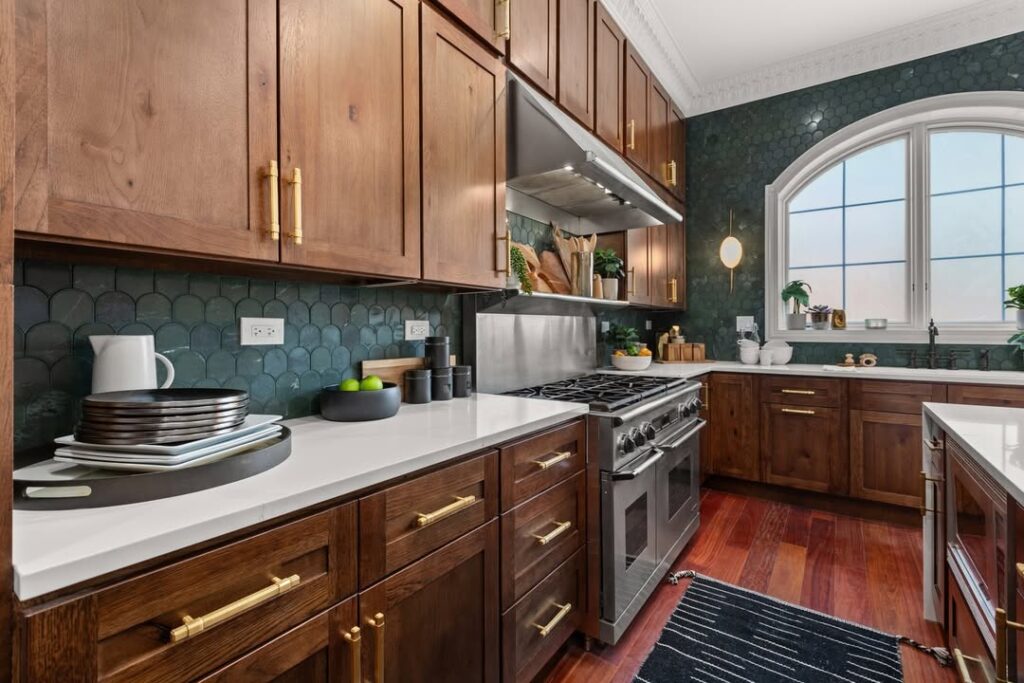
Vibrant tile creates a contrast with the hickory cabinets. The backsplash becomes the stronger visual element while the hickory remains part of the composition.
Hickory with creamy beige and deep brown striations pairs with a backsplash in vivid colors, metallic finishes, and geometric patterns.
The contrast between hickory and the backsplash supports a contemporary style. It also retains the warmth of the wood.
Moroccan-inspired tile or a veined quartz slab can serve as a statement backsplash. Either backsplash design supports hickory cabinetry.
A glossy backsplash can help small kitchens and kitchens with low natural light. Match the grout color to the hickory undertones.
Neutral flooring and brushed hardware pair well with the backsplash. Porcelain, glass, and sealed stone are suitable materials for a backsplash that offers high durability and easy maintenance.
The hickory-backsplash combination makes kitchen tasks easier and supports long-term durability.
Hickory Under Cabinet Lights
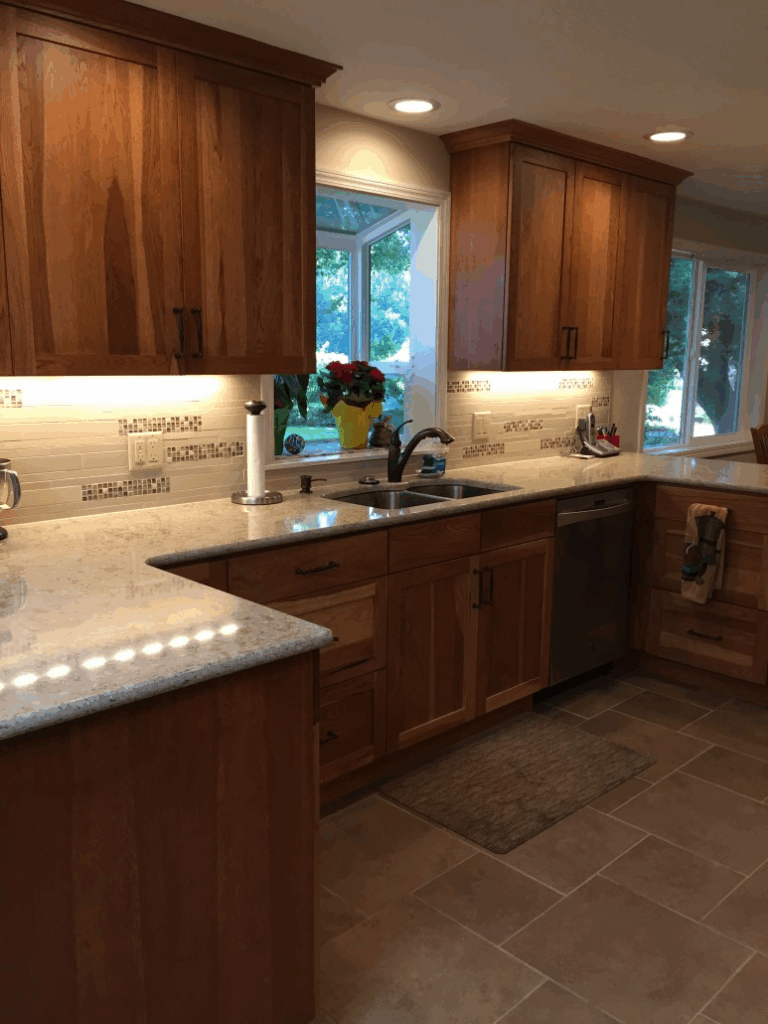
Under-cabinet lighting beneath the upper cabinets highlights the hickory grain. It also improves utility along the counter.
Bright task lighting comes from under-cabinet fixtures. It helps with chopping, reading recipes, and cleaning.
In the lighting setup, LED strip lights and puck fixtures generate low heat. Both types use energy efficiently and have long lifespans, and warm white lighting is recommended.
Lighting is recommended for kitchens with deep-colored stone or surfaces with prominent veining. A dimmer switch provides adjustable light levels, while a motion sensor enables automatic lighting. Under-cabinet lighting reduces counter shadows.
Under-cabinet lighting is recommended for galley kitchens and L-shaped layouts. It supports prep-zone functionality.
Install the lighting with care when performance is the priority. Careful installation can make it invisible during the daytime. Wood trim matching the cabinetry can conceal the lighting.
Black Hardware on Hickory Cabinets
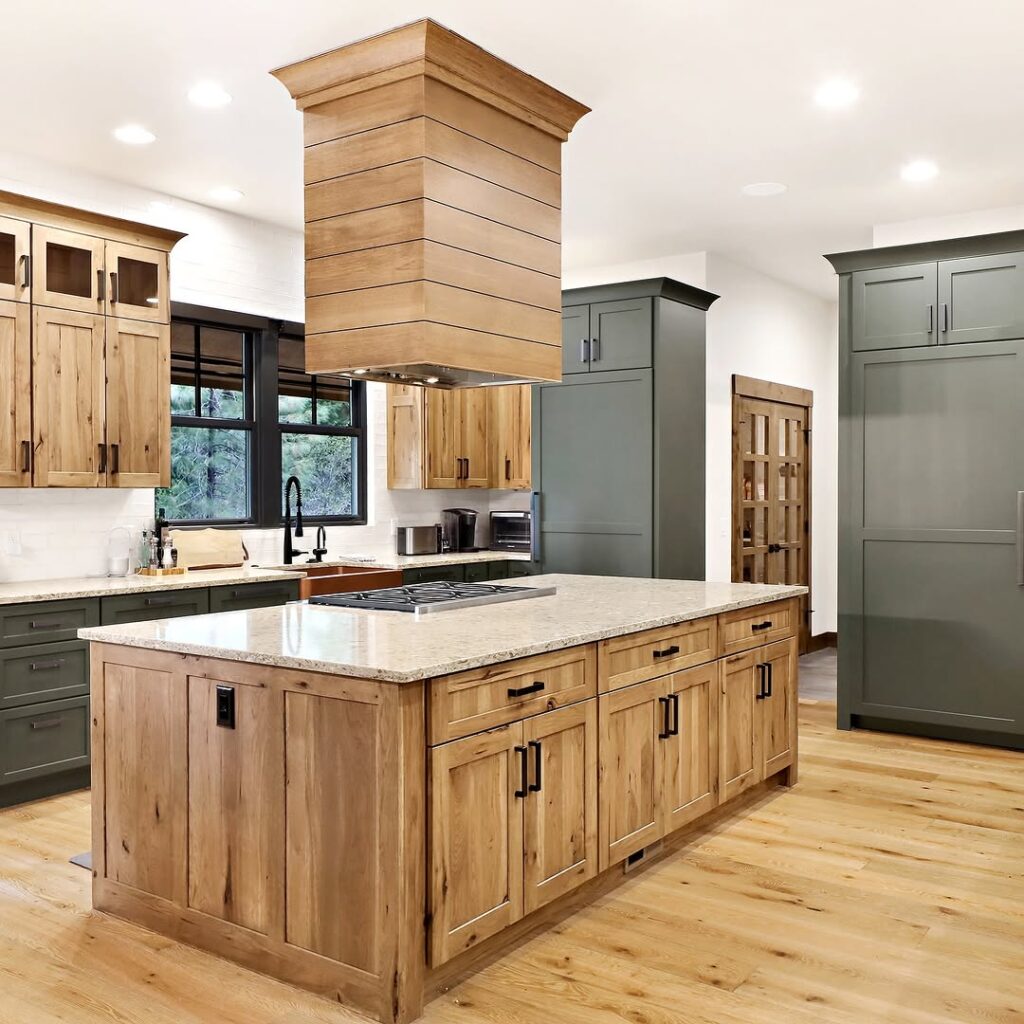
Matte black pulls and knobs pair with the hickory cabinets. Their swirling grain shifts between lighter and darker undertones, giving the hardware a clear contrast.
Drawers can use long bar handles, while doors use compact knobs. Matte black hardware minimizes visual clutter.
Hickory has a traditional style tendency and natural warmth. Matte black accents modernize the hickory style, and hickory with matte black suits contemporary rustic kitchens.
Industrial lighting fixtures pair with black hardware. The hardware also works with flat-front cabinets that have linear black handles and shaker cabinets with black hardware. Stone countertops can be soapstone or black quartz.
Metal shelving pairs with black hardware. Black hardware also pairs with neutral walls and warm tile, and it offers easy maintenance. Chrome or brass hardware finishes provide higher gloss alternatives.
Dark flooring pairs with black hardware, as do dark accents. Black hardware suits daily use and resists fingerprints.
Hickory Cabinets With Integrated Lighting
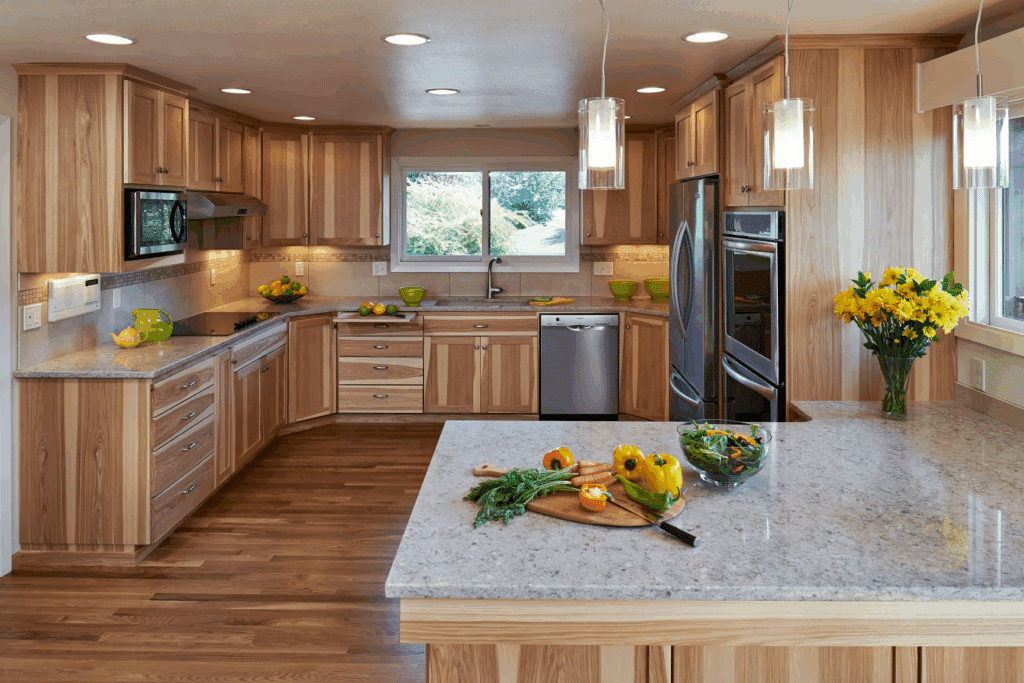
The hickory surface gains both ambient and task lighting through the cabinet itself. This lighting changes the cabinet's function and appearance.
Natural tone shifts stand out more clearly when lighting is placed under upper cabinets, inside glass cupboards, and in toe-kick spaces. The lighting provides visibility in each location.
A warm LED strip brings out the layered, honey-colored grain in the hickory. Daylight changes how the hickory looks, so the appearance can shift throughout the day.
Stone and butcher block countertops receive light from an under-cabinet strip, improving visibility during prep. Cabinet lighting inside deep storage adds light where it is needed. The LED glow works with hickory without making it look cold.
Dimmable lighting supports both early mornings and evening meals. Integrated lighting also adds polish to the material.
Recessed puck lights fit into open shelving and glass cabinets. They highlight collectibles and dishware. This lighting also improves safety in low-light conditions for galley and narrow kitchens.
Cabinet-integrated lighting reduces the need for bulky fixtures.
The hickory remains evenly lit, and hickory-integrated lighting provides consistent performance.
Two Tone Cabinets in Hickory with a Contrasting Island
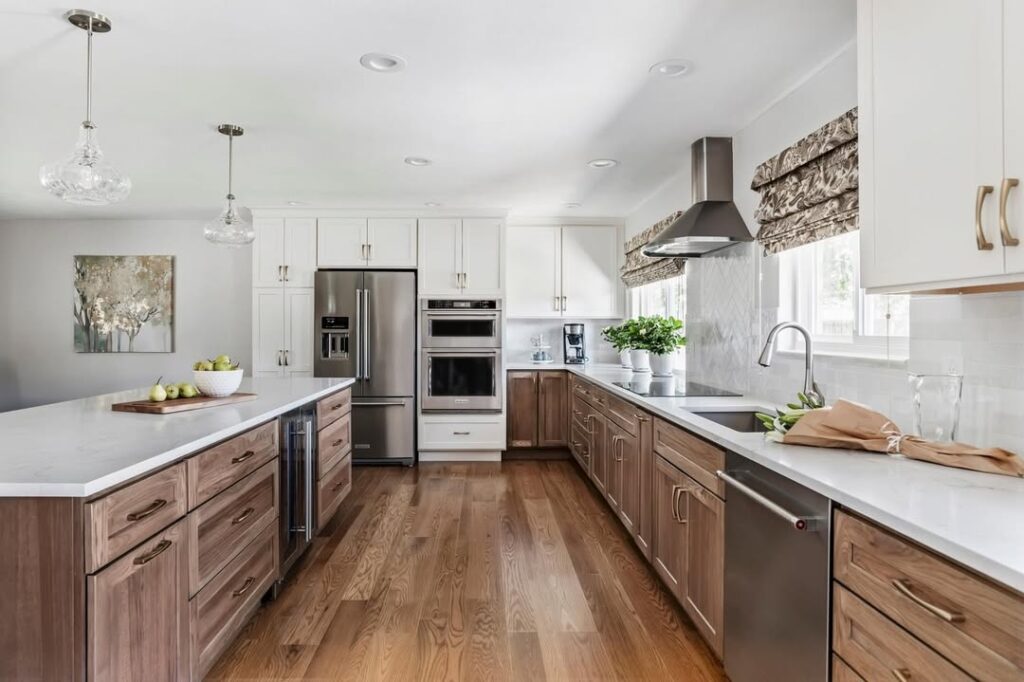
The lower cabinets use a separate tone from the upper cabinets, which have a lighter wood finish. Naturally varied hickory grain gives the two-tone scheme a rustic-modern look.
Base cabinets in a deep walnut stain ground the kitchen. Above them, the upper cabinets have a light wood finish.
Navy or charcoal gives the kitchen island strong contrast. The island becomes a centerpiece against the hickory cabinets.
Two-tone cabinetry suits open-concept homes and uses an alternative cabinet tone to break up repetition. Hickory adds natural texture and high warmth.
Matte tile backsplash pairs with the hickory cabinets. Neutral quartz countertops pair with them as well.
Two-tone cabinetry provides visual definition and combines wood warmth with contrast. It also has high compatibility with a transitional kitchen.
A color-differentiated layout makes room for a kitchen island used as both prep space and breakfast seating. The arrangement works with the hickory grain.
Two-tone layouts suit both large and medium kitchens. They support visual zoning while adding material texture variety.
Hickory Cabinets With Vertical Grain
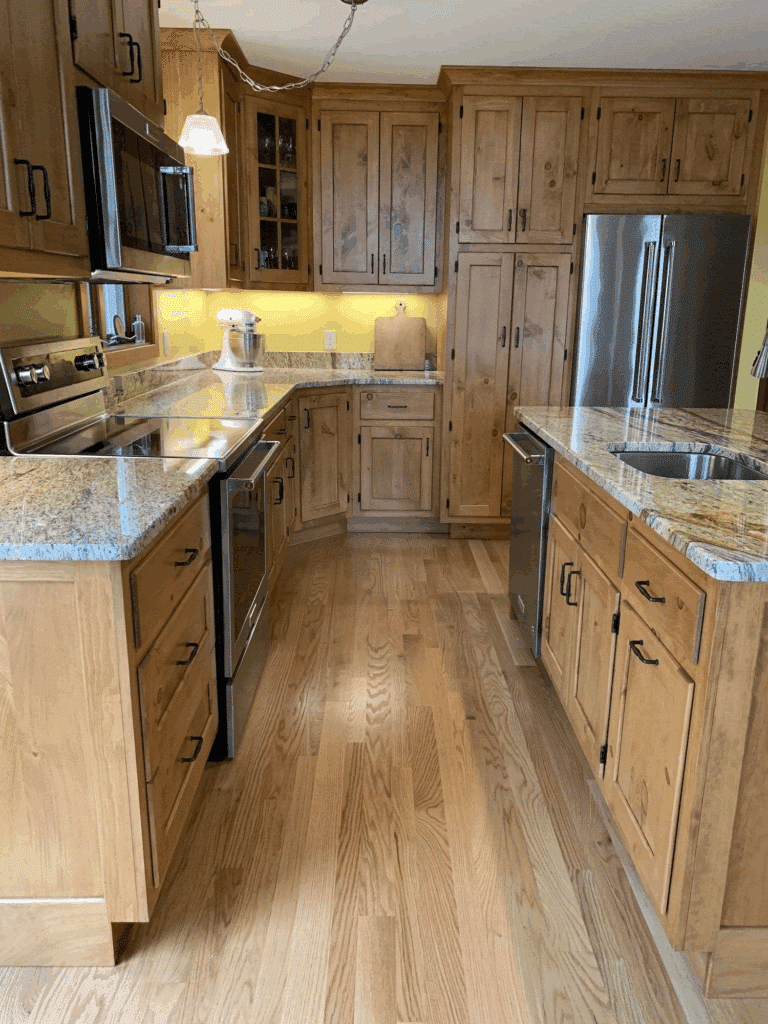
Vertical grain suits narrow layouts and low-ceiling kitchens. It creates a visual flow toward the ceiling.
Creamy sapwood and dark heartwood show the tonal variation in hickory. Vertical grain alignment emphasizes these changes.
Flat-front cabinet doors with aligned vertical grain suit contemporary, Scandinavian, and transitional kitchens. The grain gives the doors a consistent direction.
An oriented backsplash and narrow drawer pulls reinforce the vertical grain theme. Together with the grain, they support a greater sense of perceived height.
A clear satin sealant preserves the wood grain on the cabinet panels. The finish also provides moisture resistance and wear resistance.
Natural wood movement is showcased by cabinetry made with vertical grain hickory.
Minimalist Hickory Cabinets
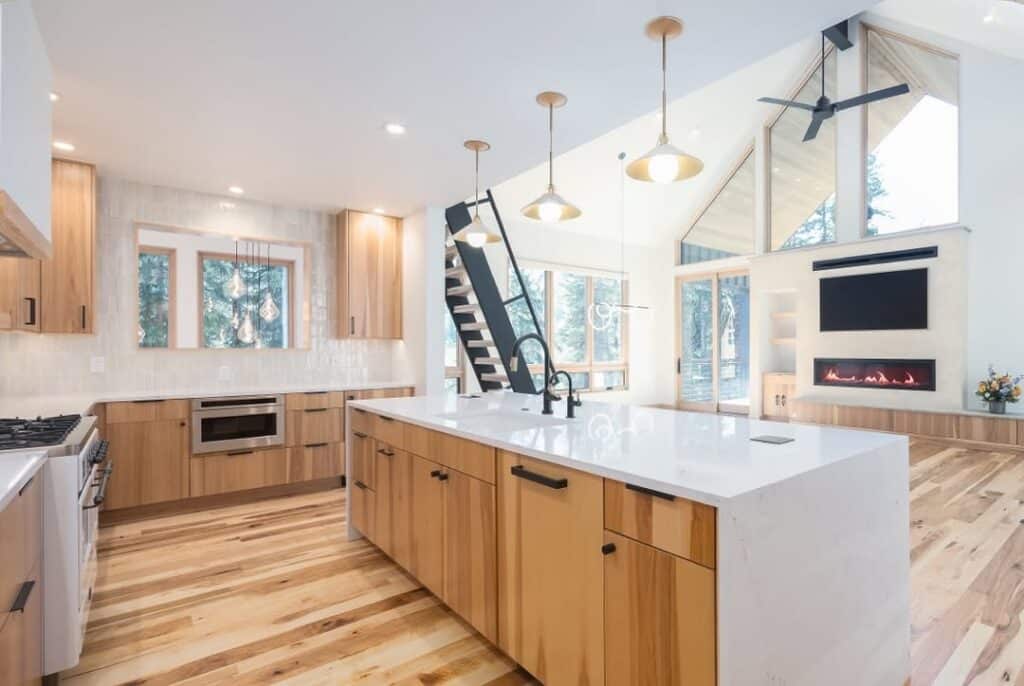
A cabinet design centered on clean lines emphasizes natural grain and tonal variation. Its details are pared down, with no ornate details, crown moldings, or decorative hardware.
Flat-panel doors suit minimalist design. Cabinet doors can also use a slab-style form.
Finger-pull grooves are one hardware option, and push-to-open is another. Reduced hardware maintains functionality.
Visual simplicity increases the perceived space in a kitchen. Minimalist design also suits small kitchens.
Neutral flooring and a monochromatic countertop complement the minimalist hickory cabinet design. Warm lighting highlights the hickory's natural color shifts, and the cabinetry complements both surfaces.
Open shelves and tiled walls can replace upper cabinetry. The absence of upper cabinets opens the kitchen layout.
This kitchen combines natural materials with modern restraint in a minimalist hickory setting.
The minimalist hickory kitchen fits changing trends.
Hickory Cabinets Mixed Material Counters
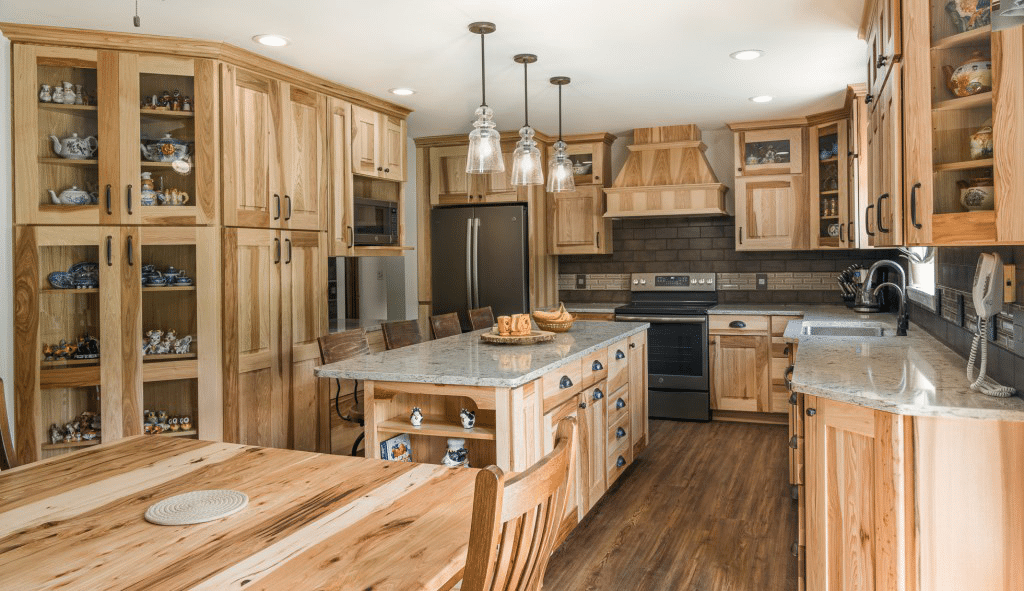
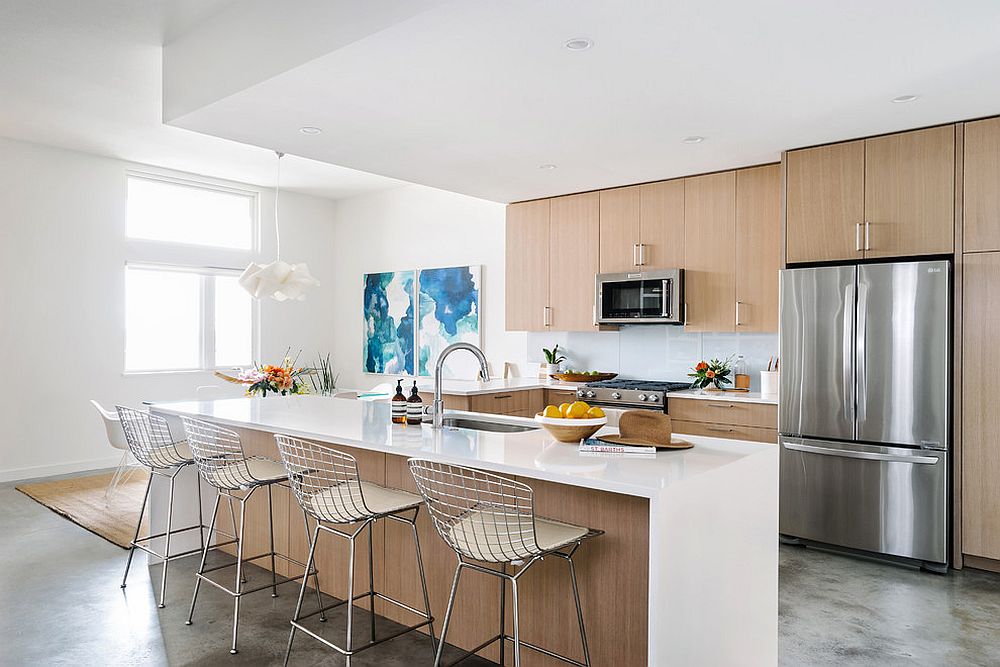
Mixed countertop materials add variety while maintaining design flow.
A butcher block island can sit with quartz or granite around the perimeter. Mixed countertops provide functional depth.
Stone surfaces provide a cool touch and durable prep areas. Butcher block echoes the warmth of hickory, while hickory cabinetry adds strong grain and tonal contrast.
Matte granite, honed marble, or concrete can mark changes between surfaces. These countertop finishes provide practical benefits and support kitchen zoning.
Beveled or eased countertop edges support task organization across the mixed surfaces.
A neutral wall palette keeps the room balanced. The backsplash, lighting, and hardware coordinate with contrasting surfaces.
A mixed-material countertop layout supports utility and family use.
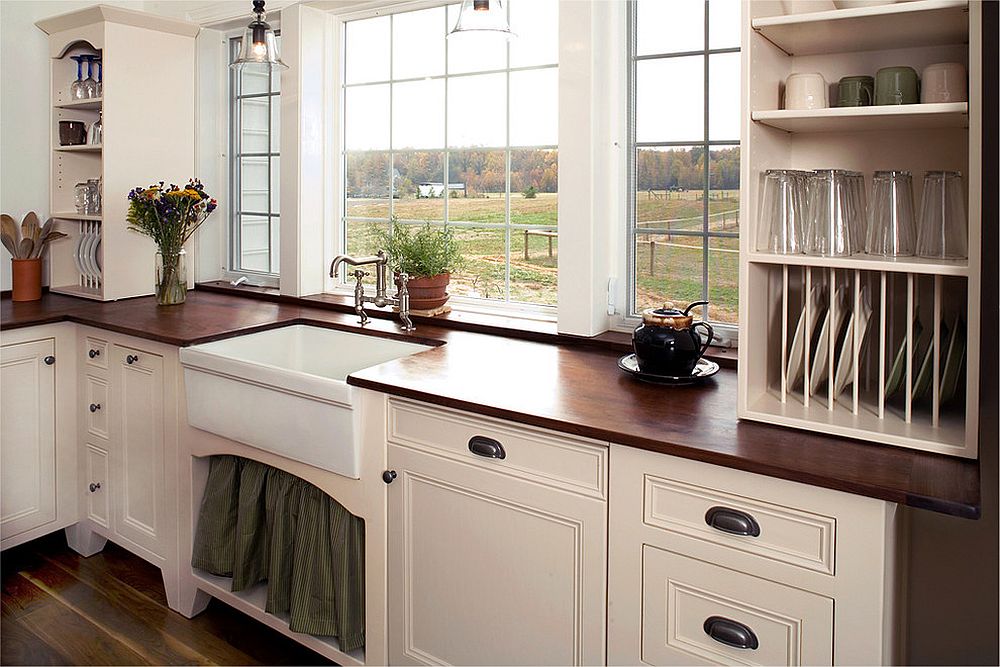
Hickory and Butcher Block
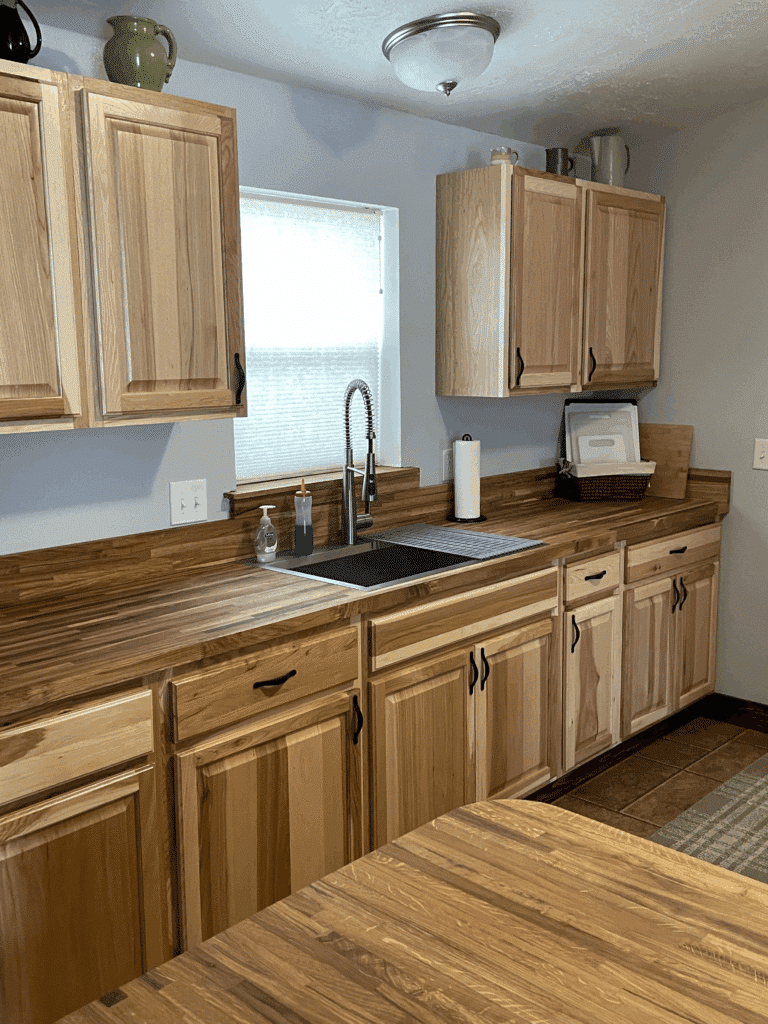
With thoughtful selection, hickory and butcher block can use subtle contrast in a wood-on-wood pairing.
The countertop can complement the hickory grain, depending on the chosen wood and stain. Maple, walnut, and birch are options for the butcher block, and the pairing supports kitchen utility.
In a matte finish, butcher block still has durability. Sand it as needed, and it is naturally antimicrobial with proper maintenance.
A wood countertop serves as a cutting surface. Butcher block is recommended for islands and prep areas, while hickory and butcher block suit farmhouse style.
Warm-toned lighting helps balance a metal or stone sink and a backsplash made from metal or stone.
Butcher block needs light maintenance and regular sealing. Its performance depends on regular sealing and maintenance.
Hickory and butcher block support warmth and practicality. The combination brings those qualities to the kitchen.