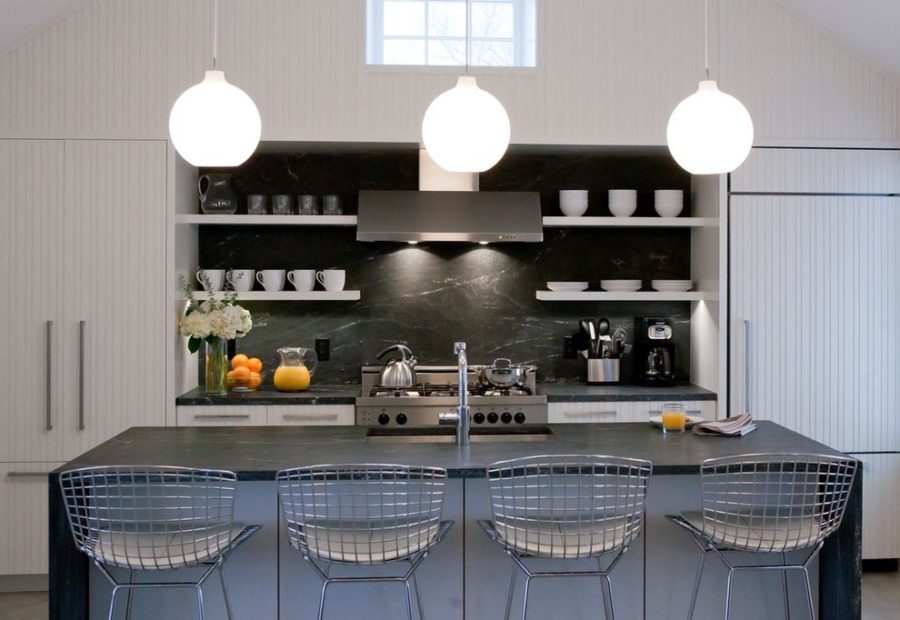
20 Beautiful Taupe Kitchen Cabinets for a Stylish Home
Taupe cabinets bring a warm, neutral look to a modern kitchen.
Taupe sits in the space where gray meets beige. Taupe cabinets create a grounded palette that works with contemporary minimalism and classic farmhouse style.
An earthy undertone gives taupe cabinets added depth. The color suits both large kitchens and compact kitchens.
Natural textures, brass accents, and stone countertops all pair well with taupe cabinetry. Taupe cabinetry also adapts to seasonal decor trends.
The result can feel inviting, refined, and timeless without losing its everyday character.
Dark Countertops with Taupe Cabinets
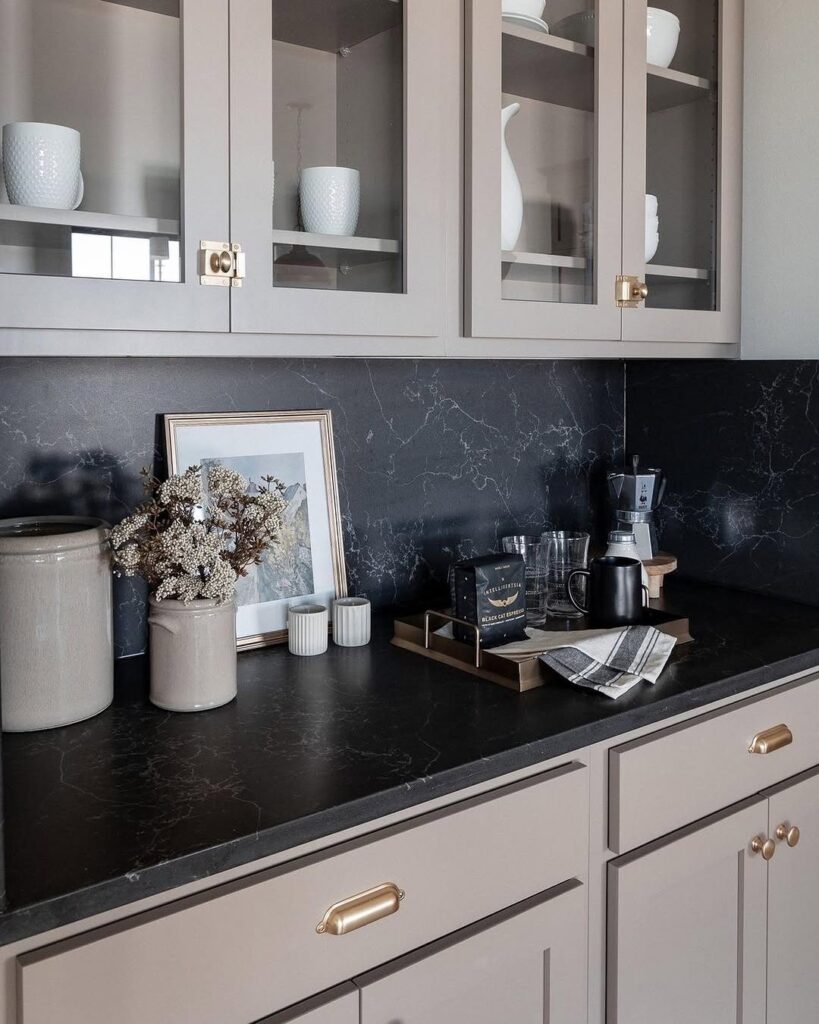
Across the kitchen, dark countertops are paired with taupe cabinets. The dark countertops add visual weight and dimension.
A warm palette keeps dark surfaces from feeling stark. Taupe supports that warmth and makes the darker surface feel softer.
Charcoal quartz, black granite, and dark soapstone are countertop options for taupe cabinets. Each material keeps the countertop choice in a dark range.
Balance dark countertops with task lighting or a lighter backsplash. Lighter backsplash surfaces and task lighting reduce visual heaviness.
Brushed nickel, matte brass, and black are hardware options for dark countertops. Black fixtures coordinate with the dark countertops.
Medium-toned natural stone is one flooring choice, and medium-toned wood is another.
In an open-plan kitchen with ample natural light, dark countertops are less likely to create visual shrinkage.
For frequent cooking, dark countertops can resist stains and hide wear.
Taupe Cabinets in Warm Beige Wall Settings
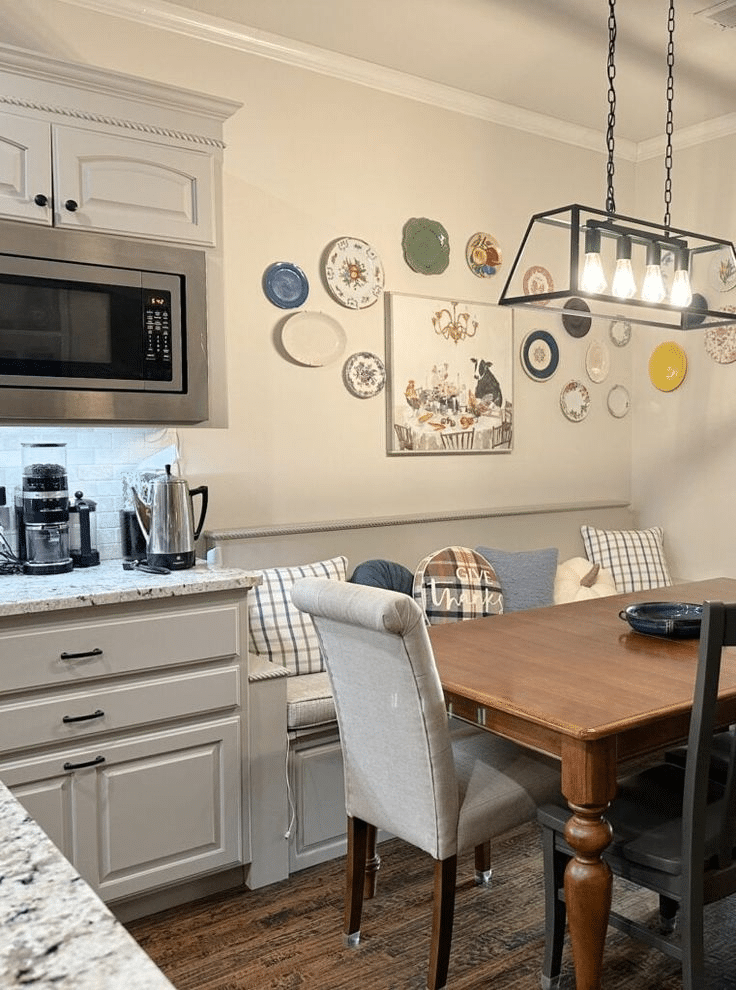
Taupe cabinetry pairs with walls painted warm beige. Together, the colors form a tone-on-tone palette with subtle contrast, and the pairing suits kitchens from compact to expansive.
The taupe and beige pairing adds soft warmth and suits cool-toned spaces.
Use taupe for the base cabinets and lower drawers. Use beige on the walls.
Matte or eggshell wall paint helps keep the cabinet color visible under varied lighting. These finishes diffuse light.
Pale countertops and creamy backsplash tiles work with brushed nickel fixtures. These finishing details support cohesion.
Pale oak or ivory tile flooring supports lightness and visual flow. Use natural wood and woven textures sparingly to add layered warmth.
In serene kitchens, the taupe and beige pairing avoids starkness and an ultra-modern style.
The pairing supports timeless design. It adapts to evolving preferences and seasonal decor.
Taupe Cabinets and Brass Fixtures
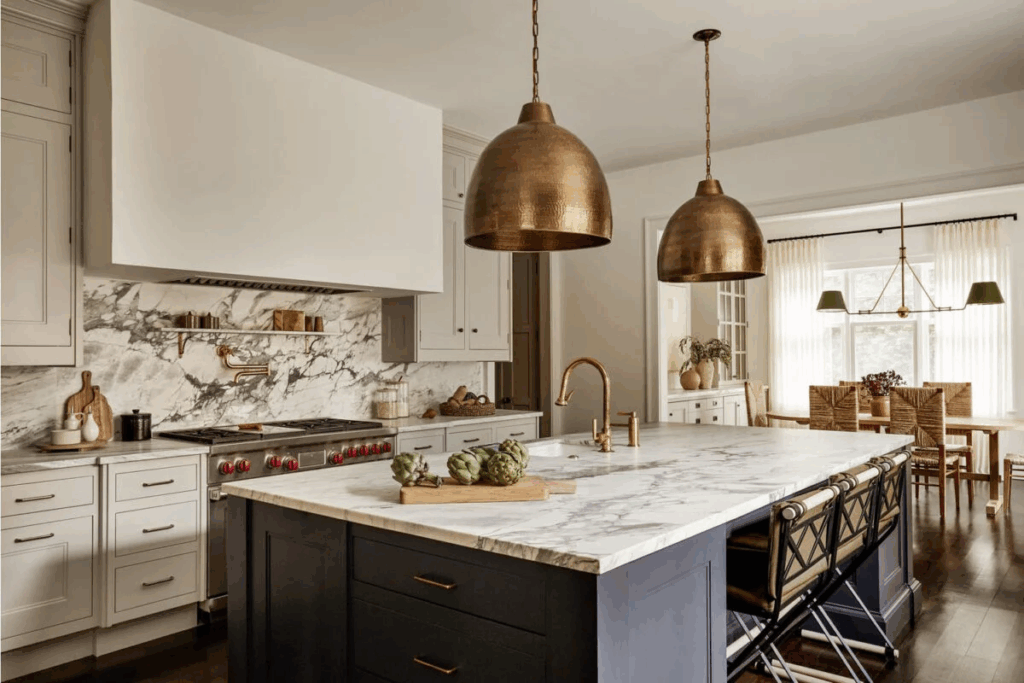
Brass light fixtures pair with taupe cabinetry and serve as a metallic backdrop for it.
Brass pendant lights work over islands, while brass sconces sit beside upper cabinets. Together, the brass fixtures provide warm illumination and introduce focal interest.
An antique, brushed, or patinaed brass fixture can shape kitchen character. Its style may be expressed through bell shades, mid-century globes, or industrial lanterns.
Repeat the brass finish on the cabinet hardware and in the faucet details. Matching brass details support cohesion.
Pendant placement provides functional illumination. Proportion pendant fixtures to the island size, hang them at an appropriate height, and preserve clear sightlines.
Recessed lighting and under-cabinet lighting both support workspace function.
Neutral stone or stone with veining helps prevent color clashes. Soft white walls and beige walls both complement taupe and brass.
This approach suits metallic warmth without an ornate style. The taupe and brass pairing supports everyday usability.
Warm Wood with Taupe Cabinets
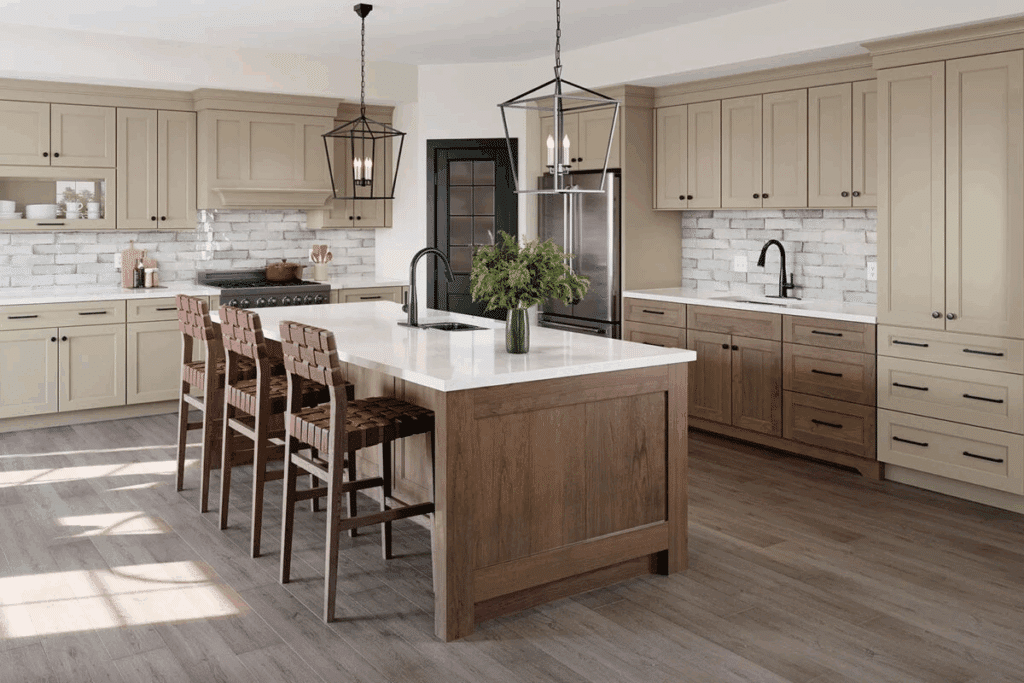
Warm natural wood accents pair with taupe cabinets. The wood brings a warm material detail to the taupe kitchen.
Subtle warmth is the design priority here. Taupe gives warm wood room to stand out, making it suitable for transitional and rustic-modern kitchens.
Wood floating shelves contrast with taupe cabinetry and add texture. Butcher block countertops do the same, while exposed wood ceiling beams add more texture and contrast.
Oak, walnut, and acacia wood finishes accentuate the depth of taupe. Keep the wood grain visible, since visible grain adds texture variation.
Warm neutral walls complement the taupe and wood. Creamy white walls work with the same combination.
Neutral tile and natural stone are flooring options for this kitchen. Stainless steel appliances can be paired with matte black or bronze fixtures.
In a kitchen with soft lighting, the light highlights taupe cabinetry and wood accents.
Pair taupe with warm wood to avoid harsh contrast. The combination brings together contemporary and organic textures.
Taupe Cabinets With Glass Fronts
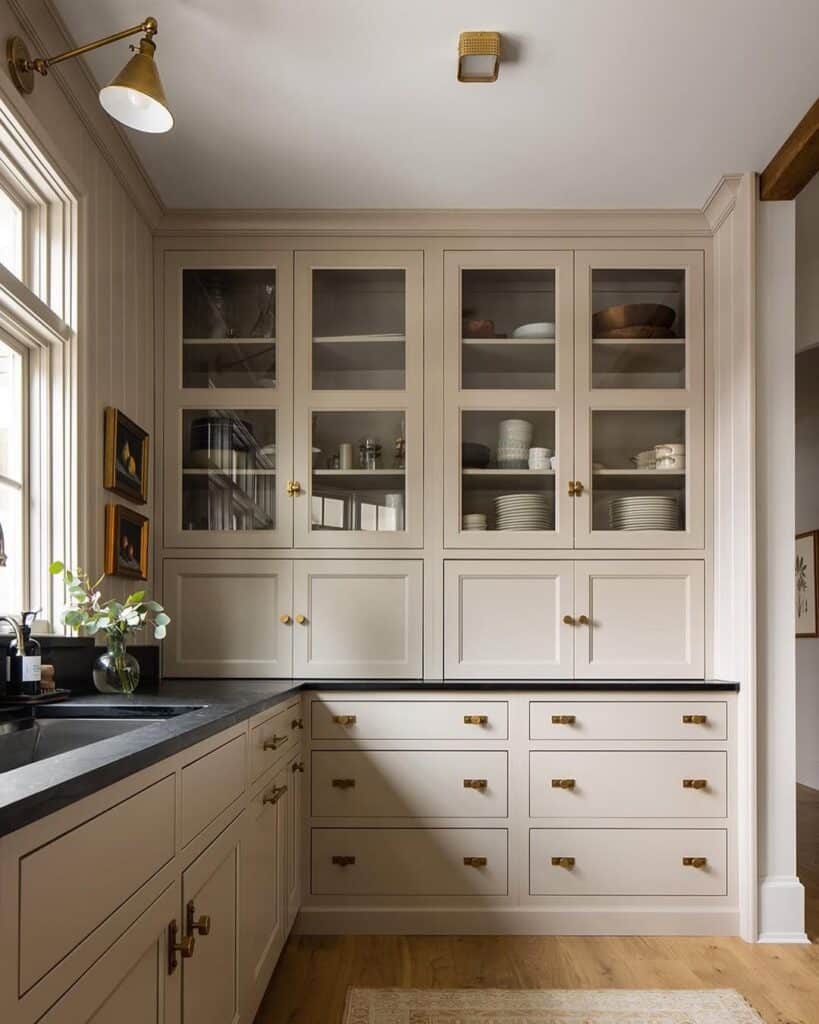
Paneled glass cabinet doors work with taupe cabinets. Glass-front cabinets preserve storage function and provide display space for dishes, glassware, and curated items.
Taupe frames the cabinet contents and keeps the contents from becoming a distraction.
Clear glass supports a classic style, while frosted glass supports a contemporary style. Ribbed glass also suits a contemporary style. Frameless doors support modern style, and framed doors support traditional style.
Interior cabinet lighting illuminates the display. Pair glass-front sections with open shelving and closed base units, using soft white or light beige for the back panels.
Limit glass-front cabinets to upper cabinets and display zones. Visible interiors increase the need for tidiness.
Glass-front cabinets suit small kitchens and rooms with limited windows. Glass fronts combine storage and display.
Bold Backsplash for Taupe Cabinets
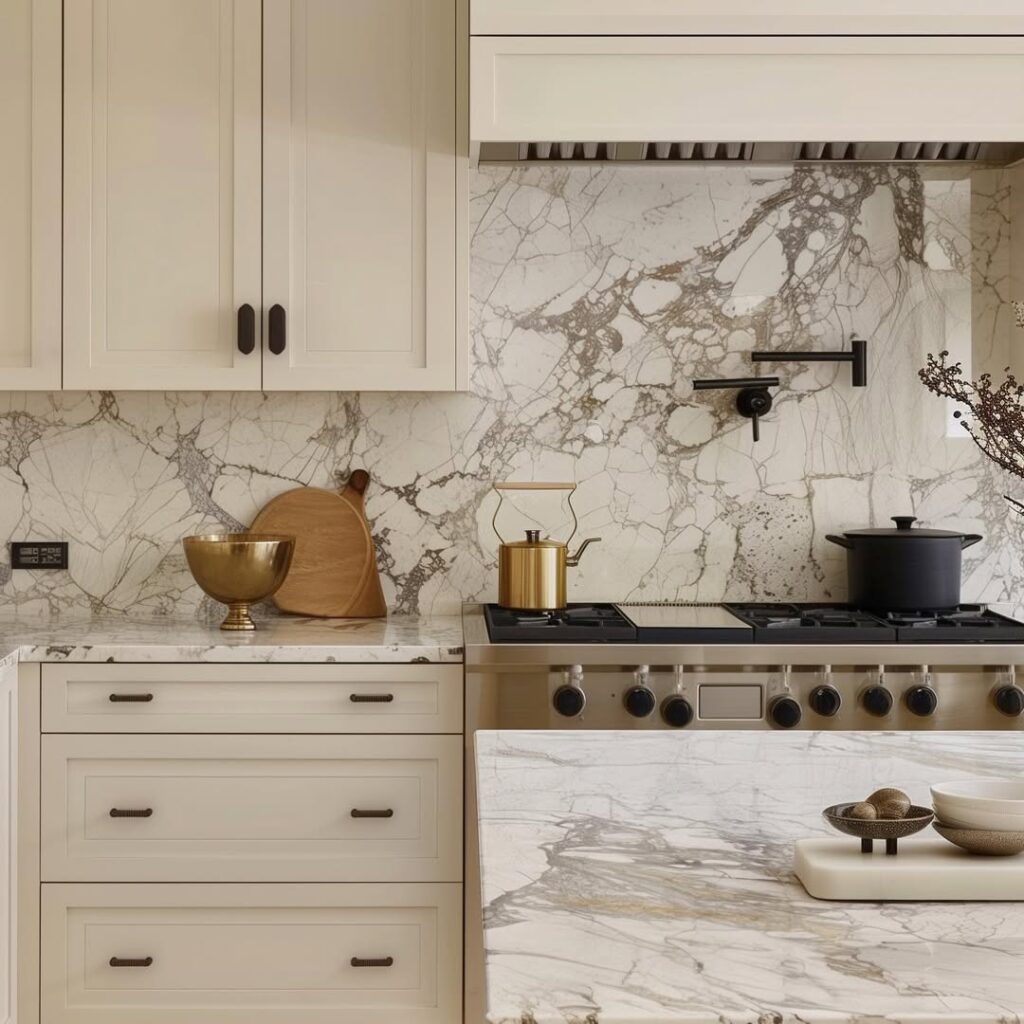
A bold backsplash is paired with taupe cabinets, which provide a neutral base.
Deep emerald tile brings color to the backsplash. Graphic black and white tile and Moroccan-inspired tile also support the taupe base, which keeps vibrant tiles from becoming visually overwhelming.
The backsplash combines hand-painted ceramic with a hexagon mosaic and a stacked geometric pattern. Together, these patterns add depth and movement.
White or light stone countertops keep the space from feeling visually busy. Taupe on a focal wall helps stabilize the composition.
The backsplash sets the tone for the hardware. Its pattern works with aged bronze, while a colorful backsplash pairs with matte black hardware. Both hardware and fixtures complement the backsplash.
Taupe open shelving matches the cabinets and echoes the tones in the backsplash. The shelves are made from natural wood.
An under-cabinet LED strip brightens the backsplash and sends light across the work surface.
For contrast, pair taupe cabinets with a bold backsplash while avoiding combinations that clash.
Gold Hardware on Taupe Cabinets
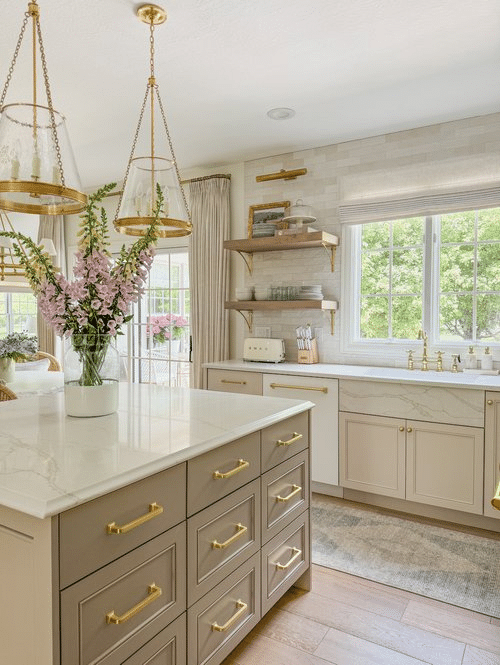
Warm gold hardware, in a brushed or satin finish, pairs with taupe cabinetry. The taupe base balances the gold hardware so the combination does not feel ungrounded.
The taupe and gold pairing brings warmth with visual richness. It suits both contemporary kitchens and traditional kitchens.
Cabinet hardware can be customized with knobs, pulls, and hinges.
Antique cup handles set the smaller detail. The bar pulls use a modern champagne gold finish. Repeat those gold accents in faucet finishes and overhead lighting fixtures.
Cream subway tile and a light herringbone pattern are two backsplash options. A cream or light backsplash works with taupe cabinets and gold hardware. Natural stone countertops can have an ivory or soft beige color.
Metallic accents reflect daylight and warm LED lighting. The taupe and gold setup suits warm kitchen designs.
The taupe and gold pairing has a restrained, approachable style that fits understated luxury and everyday living.
Black Hardware on Taupe Cabinets
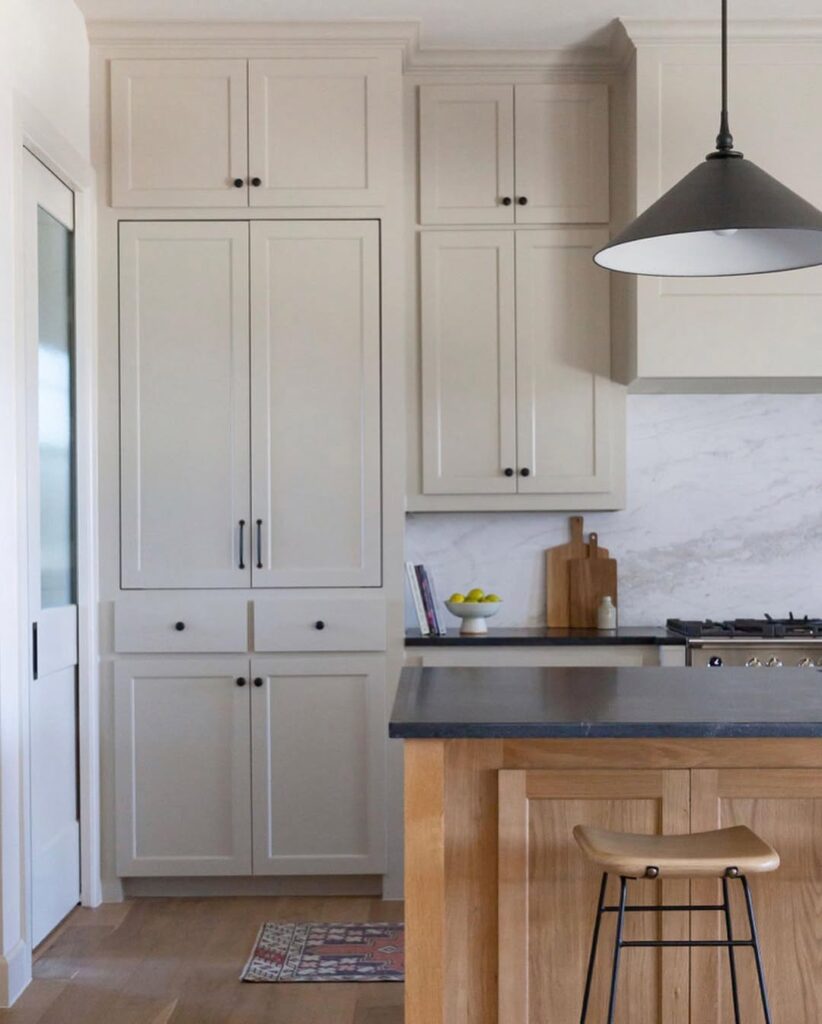
Taupe cabinets paired with black hardware support a modern style. The black hardware gives the taupe cabinetry a clear contrasting detail.
Black hardware forms clean cabinet lines and creates visual structure. It works with contemporary, industrial, and Scandinavian-inspired kitchen styles.
Black handles, knobs, and pulls display well on both flat-panel and Shaker cabinet doors. Matte or powder-coated finishes reduce glare and support durability.
In this pairing, taupe allows black accents to balance softness with strength.
Black lighting fixtures echo the black hardware, as do a black faucet and black appliance trims.
Muted beige and cream are recommended for the walls, while off-white and soft gray are recommended for the countertops, whose pale colors reduce visual heaviness.
Light oak or ash wood flooring contrasts with taupe and black. In a high-traffic kitchen, it provides durability and keeps maintenance easy.
Taupe cabinets with black hardware are a practical kitchen design pairing.
Taupe Cabinets and a Statement Hood
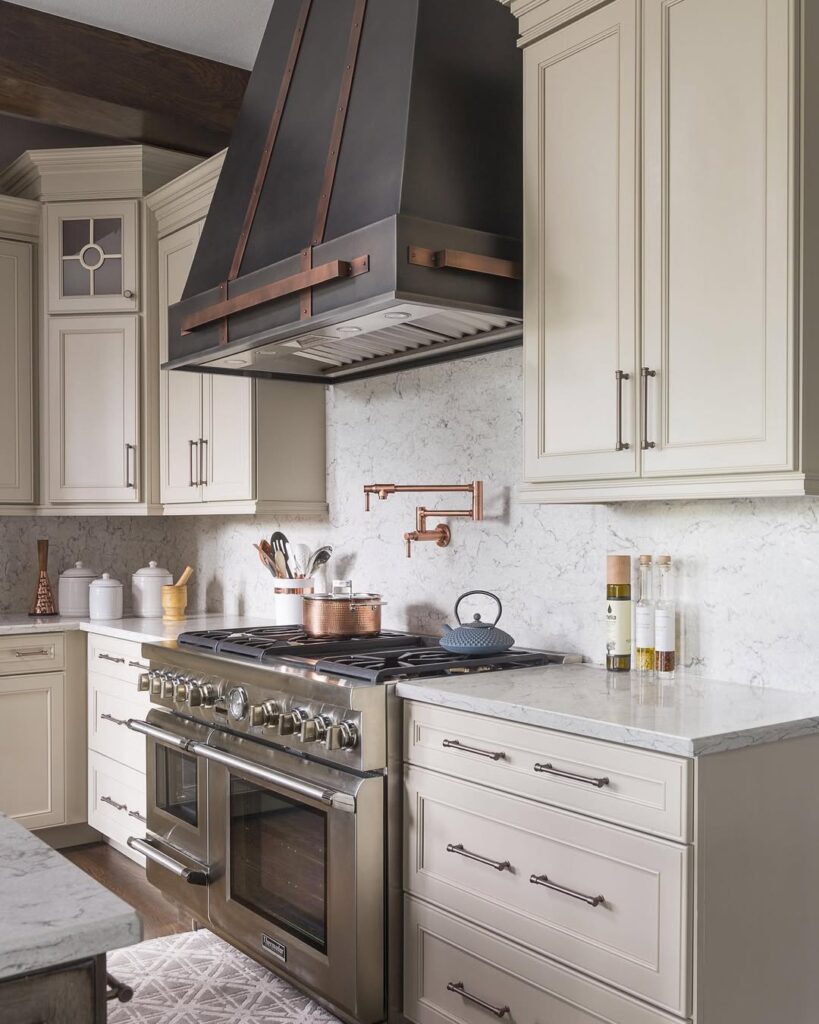
The range hood acts as a statement feature. It occupies the focal wall, adds architectural depth, and contrasts with the taupe cabinetry.
Taupe cabinetry provides a neutral foundation for a range hood made with plaster, tile, wood, or metal. Pairing the hood with the cabinetry directs attention upward and supports either subtle or bold hood designs.
Brushed brass and copper hoods provide warm shine. Matte black and stainless steel hoods provide sharp definition. These are the finish options for the range hood.
A custom range hood can be wrapped in panels that match the taupe cabinets or finished in contrasting natural wood. Either choice supports a layered design.
Light countertops and a subdued backsplash help reduce visual clutter. Keep the adjacent cabinetry understated, and use integrated task lighting to support the range-wall function.
Symmetrical cabinets, glass-front uppers, or open shelving can frame the range hood. This symmetrical framing supports visual harmony. The layout suits both stylistic and functional culinary equipment.
A statement hood pairing suits showpiece-centered kitchens. It combines boldness and restraint.
Open Shelves for Taupe Cabinets
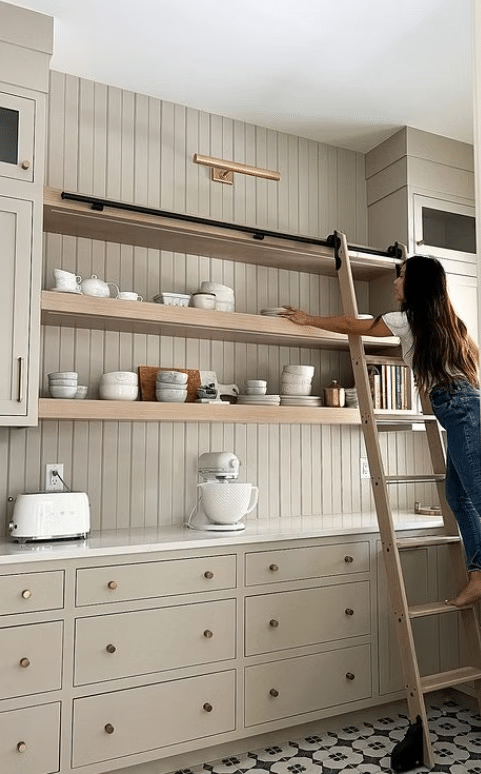
Taupe cabinetry defines the kitchen space, with the cabinets kept closed. Open shelving is paired with the cabinetry nearby. It provides both utility and flexibility.
Open shelving suits decorative accents as well as daily dishware. Keeping the display limited helps avoid visual overwhelm.
Reclaimed wood, metal brackets, and a painted finish can all support a rustic shelving style. The same shelving materials can also support a modern style.
Matching the wood tones to the flooring hues and countertop hues supports palette continuity. Open shelving still retains its function.
The lighting adds depth to the shelving. Positioned above or beneath the shelves, it also supports meal preparation.
A neutral tile or painted wall finish gives the shelves a display backdrop. Use cookbooks, ceramics, and greenery as shelf decor to break up the cabinetry mass.
In small kitchens, open shelving reduces visual bulk and opens wall space. It breaks up uniform cabinetry and allows design flexibility. The same approach suits large kitchens.
The cabinetry base provides structure, while open shelving supports lived-in use. Together, the cabinetry base and shelving combine utility with an everyday display area.
Modern Matte Taupe
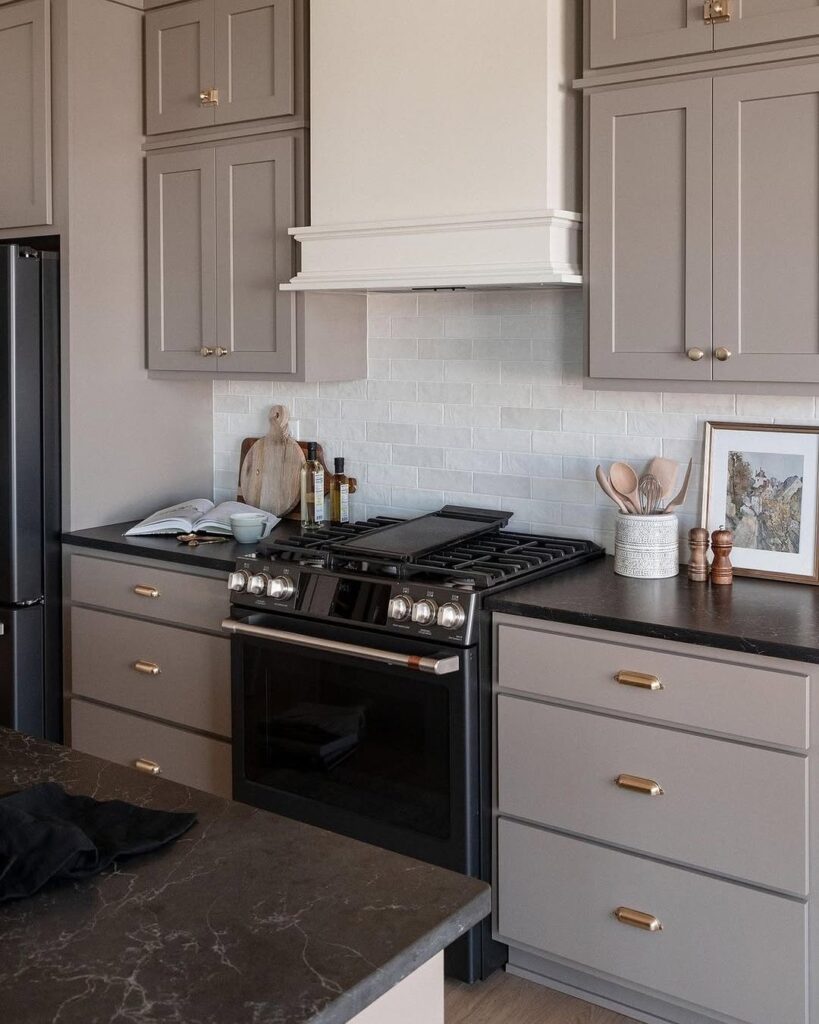
Taupe cabinets with a flat matte finish have a subdued tone.
The matte finish has a velvety appearance with no gloss. It softens overhead lighting, masks fingerprints, and reduces glare.
Slab cabinet doors with no frames or trim work with matte taupe cabinets and clean architectural lines.
Satin black and brushed steel are both options for the hardware. These finishes suit industrial kitchens and urban kitchens.
Pale oatmeal or cool white walls work well with matte taupe cabinets. Lighting options include recessed LEDs and minimalist pendant fixtures.
Quartz or concrete-look countertops pair with a matte taupe finish. The finish offers high durability and low maintenance, which suits cooking spaces used frequently.
Matte taupe combines comfortable neutrality with a modern style and warm temperature. Its warmth is a separate defining detail.
White Countertops and Taupe Cabinetry
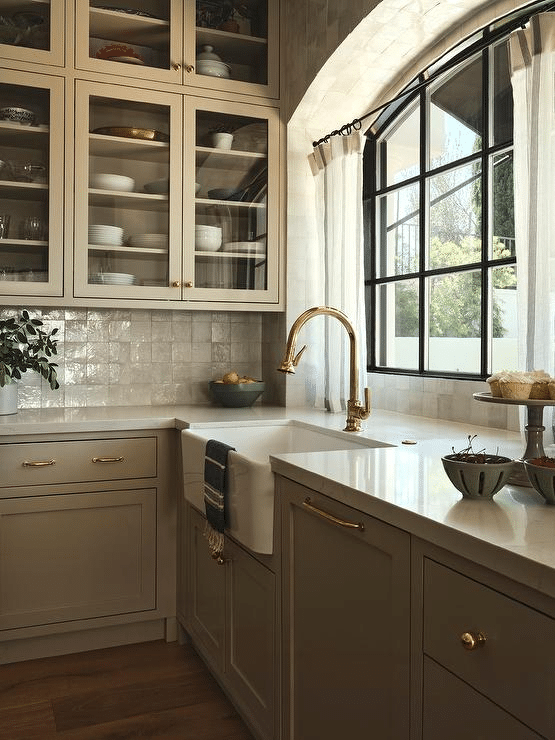
Warm earthy taupe cabinetry paired with white countertops creates a clean, bright, and fresh kitchen.
The taupe and white pairing provides complementary contrast. White countertops add brightness, while taupe cabinetry gives the room a warm earthy, grounded base. This combination suits natural transitions.
For taupe cabinetry and white countertops, raised-panel cabinets, flat fronts, and shaker-style doors are all compatible.
White quartz or marble countertops can feature subtle taupe veining. This taupe and white countertop pairing suits open-concept layouts.
Off-white ceramics, pale stone, and soft greige tiles are neutral backsplash options. Stainless steel or satin brass on the fixtures adds shimmer.
Warm LEDs or daylight LEDs can be used with taupe cabinetry. This lighting choice helps prevent a muddy taupe appearance.
Pale oak or weathered ash flooring suits taupe cabinets with white countertops. The taupe and white pairing stays fresh, non-stark, and versatile.
Farmhouse Sink and Taupe Cabinets
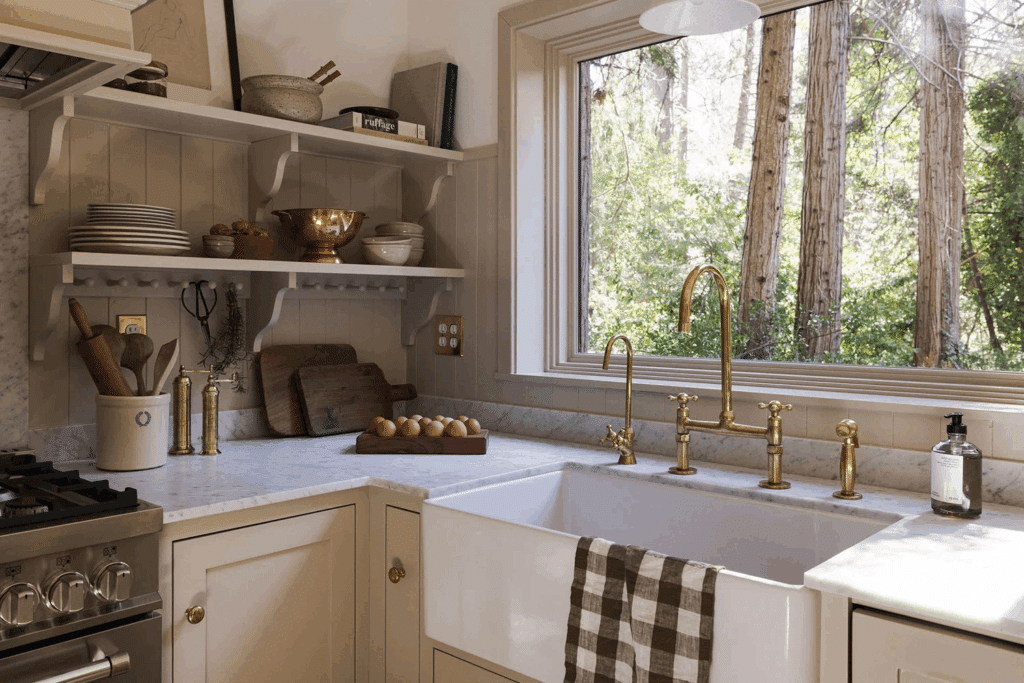
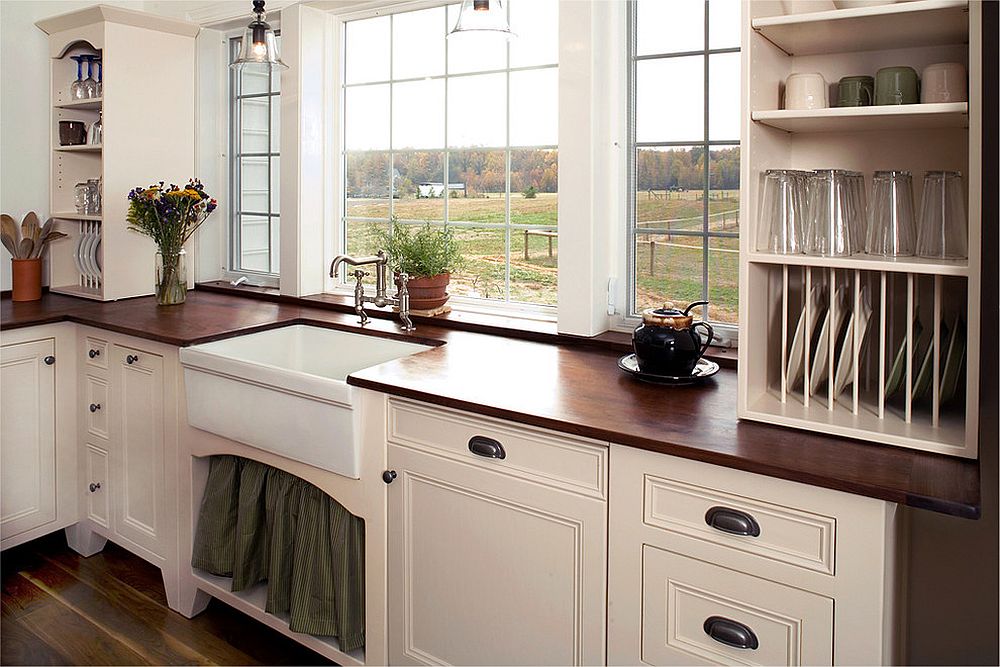
A farmhouse sink pairs with taupe cabinets. The pairing combines rustic and contemporary elements.
An apron-front sink complements the taupe undertone. Together, the sink and cabinets balance traditional and fresh qualities.
Porcelain and fireclay are options for a farmhouse sink. Either material contrasts with warm cabinetry.
A farmhouse sink can be made from stainless steel or copper. Place it below a window or in the center of the kitchen island. Both stainless steel and copper support a modern or industrial style.
A sink base can use cabinet features such as visible grain and subtle molding. For the countertops, choose light granite or marble.
Brushed brass or matte black faucet finishes suit the farmhouse sink. A subway tile backsplash can provide clean lines, while open shelving and plate racks support farmhouse style.
For everyday kitchen use, taupe cabinets with a farmhouse sink support daily usability, functionality, durability, and warmth.
Taupe and White Cabinet Contrast
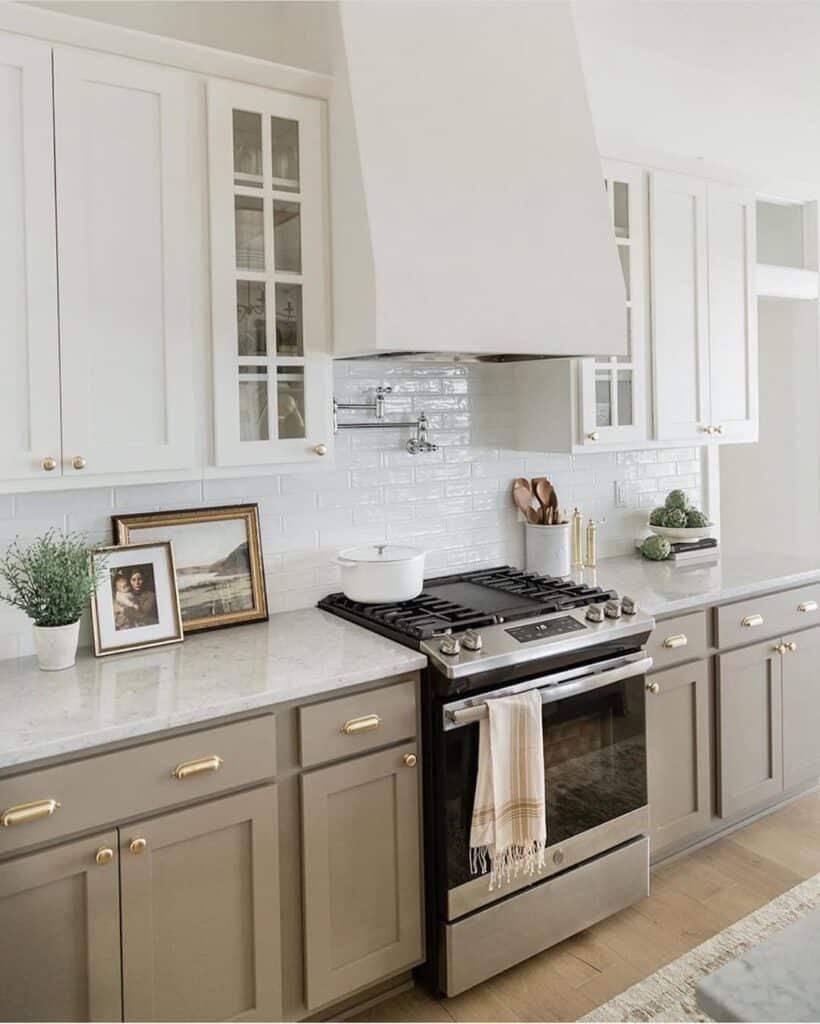
Taupe cabinets add earthy depth, while white cabinets bring crisp clarity. Together, the two-tone scheme feels fresh and grounded.
White upper cabinets keep the upper part of the kitchen bright, while taupe lower cabinets draw the eye downward. Combined, they prevent a top-heavy appearance.
Cabinet handles in satin brass add a metallic accent, while brushed nickel cabinet pulls offer another finish option. A white-veined quartz or marble countertop bridges the taupe and white cabinetry. Soft greige or warm ivory walls can complete the palette.
Natural wood flooring or light stone flooring complements layered cabinet tones.
When natural light is limited, white cabinetry can help move illumination around the room. That effect can make small kitchens appear more spacious.
For transitional homes, a two-tone arrangement brings classic character while keeping modern restraint.
Taupe and white create a tonal contrast that suits kitchens refreshed without bold contrasts.
Butcher Block and Taupe Cabinets
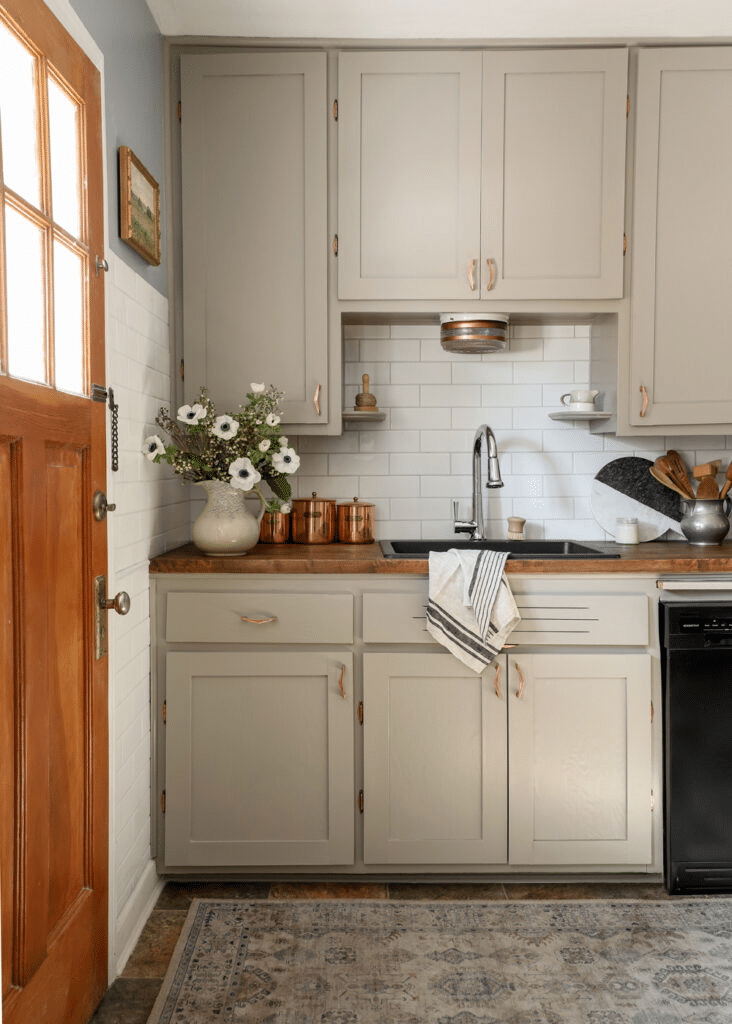
Taupe cabinetry paired with a butcher block countertop emphasizes wood texture and a natural tone. The combination centers both materials.
Organic wood grain pairs with taupe cabinetry. The combination suits rustic-modern, Scandinavian, and farmhouse kitchens.
Maple, walnut, and oak offer different color tones and can influence the kitchen mood. Maple ranges toward light honey, while walnut ranges toward rich espresso.
A sealed butcher block is durable and food-safe. The sealed finish protects the countertop surface, while a matte countertop reduces harsh reflections.
Open shelving supports material continuity with the butcher block countertop. Wood accessories such as cutting boards and utensil holders echo the countertop material.
Hardware in brass or black creates contrast with the woodwork. The difference between the finishes keeps the materials distinct.
A cream backsplash and neutral walls support a warm kitchen atmosphere. Warm lighting adds a cozy atmosphere.
In a kitchen designed for lived-in use, a sealed countertop supports food preparation. The taupe and butcher block pairing suits home chefs, hosts, and a design that ages gracefully.