20+ Beautiful Dark Stained Kitchen Cabinet Designs
This article focuses on dark stained kitchen cabinets.
The examples look at dark stained kitchen cabinets.
Dark stained kitchen cabinets are the focus here.
These examples introduce different dark stained kitchen cabinets.
The collection centers on dark stained kitchen cabinets.
Dark Wood and Matte Grey Cabinets
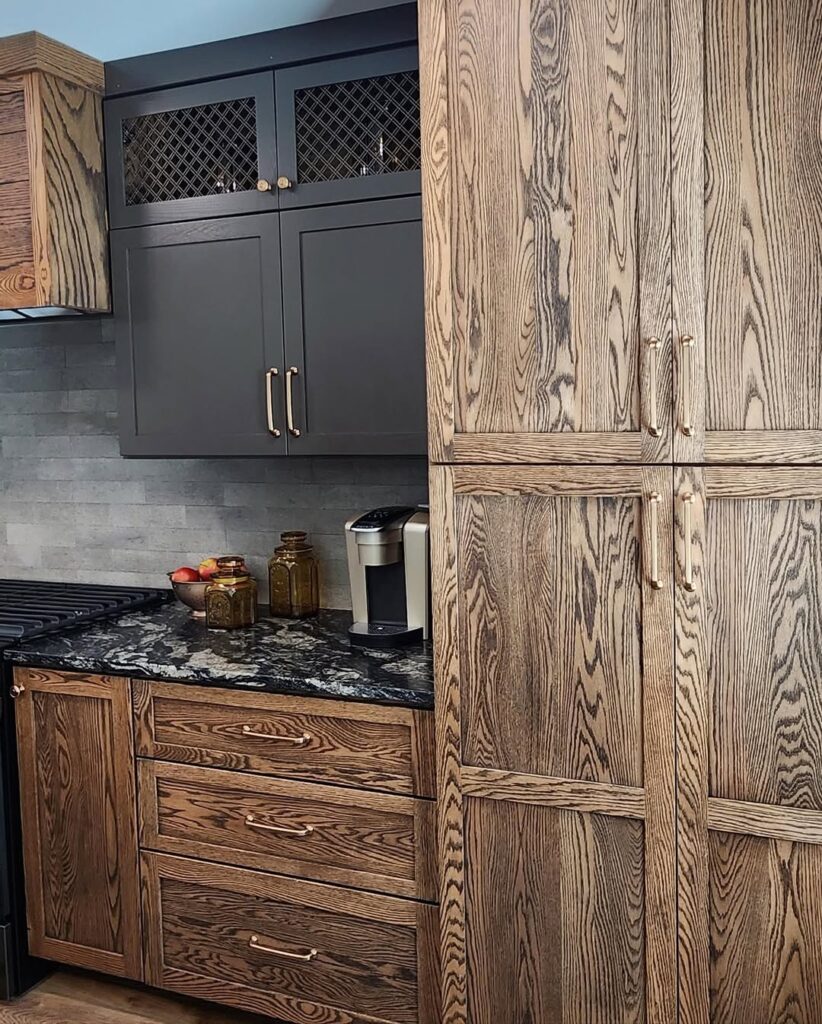
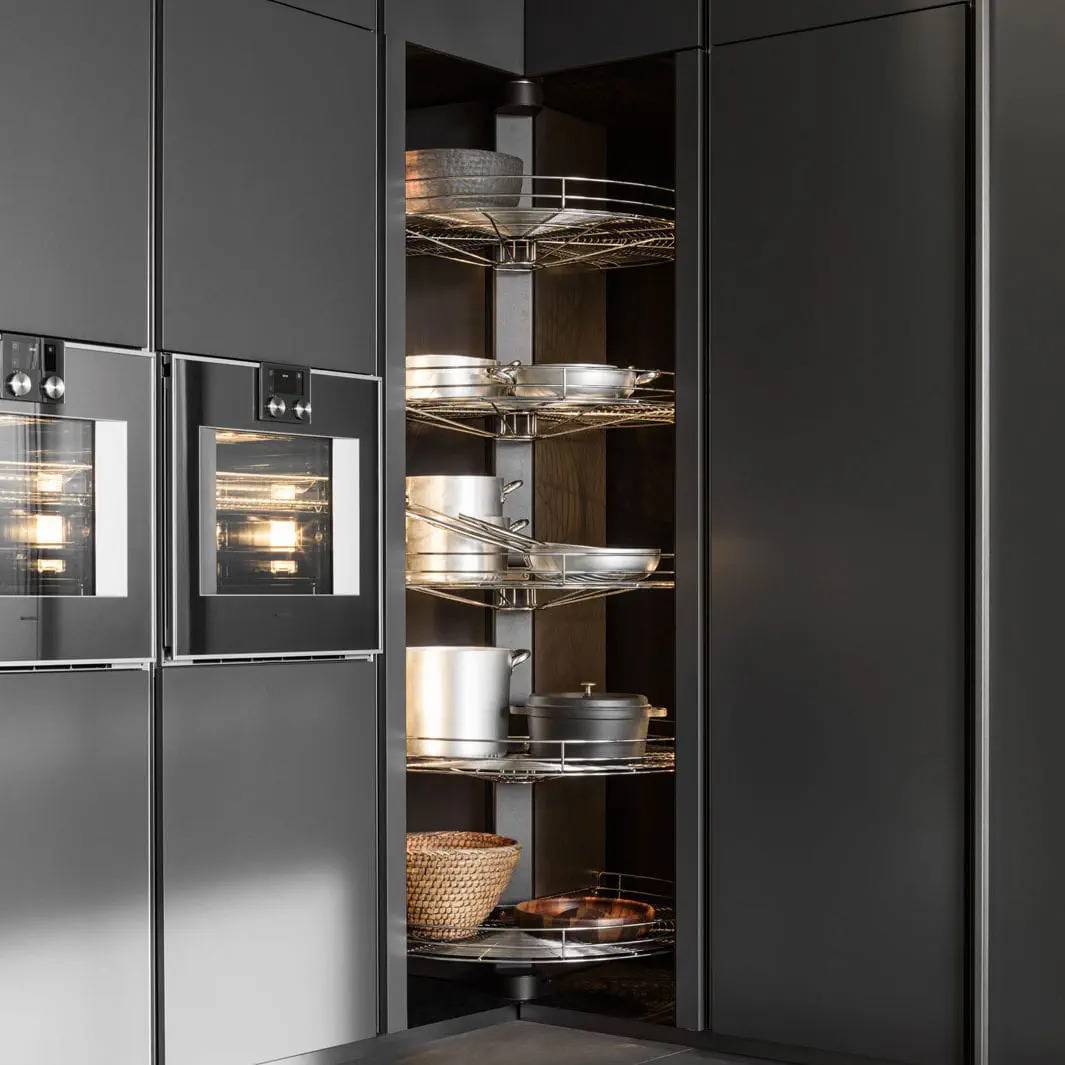
Matte grey cabinetry brings a smooth finish to the kitchen. Natural wood grain, shown through a dark stain, adds visual depth and contrasts with the grey.
In open concept kitchens, a textured finish can pair well with the main surfaces. This pairing lets the texture and finish stand apart without becoming overpowering.
Darker wood, including stained oak and ash, brings warmth and character to a kitchen. Muted grey around it forms a calm, modern backdrop.
Together, these choices create balance in the home. They suit homeowners looking for a refined setting that still feels earthy.
Brushed metal fixtures add contrast, and minimalist lighting makes that difference more noticeable. The palette remains harmonious.
Natural stone countertops complete the look. Warm white and soft beige tones can bridge the other colors.
Glass front cabinets and open shelves add variation to the dark wood. They also keep everyday items functional and accessible.
Simplicity and contrast give this style its appeal. The pairing suits transitional, modern farmhouse, and urban kitchens alike.
Visual weight lends the kitchen a more luxurious feel. Choosing the right stain matters, since darker wood carries more visual weight.
Layered neutrals bring depth and subtlety without visual clutter. The combination looks especially effective in natural light and beside matte finishes, making it a timeless choice for homeowners seeking a calm, layered interior.
Espresso Shaker Cabinets and Taupe Paneling
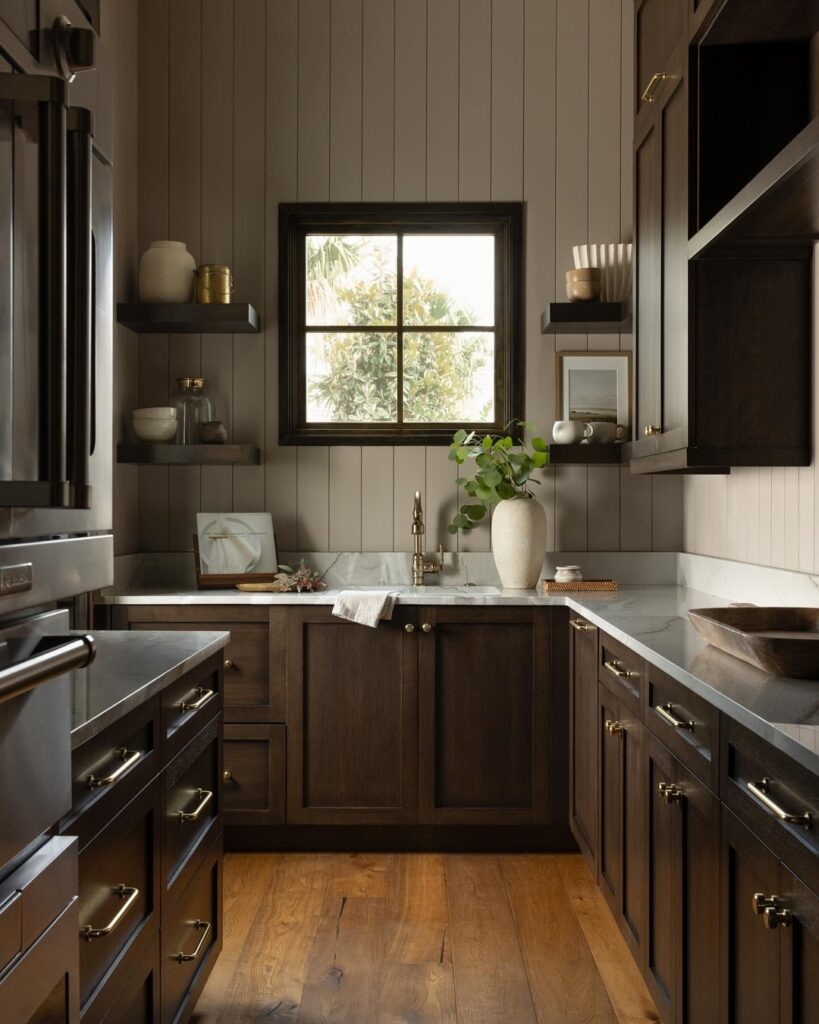
The wall paneling sets a muted taupe backdrop for this kitchen. Espresso-stained shaker cabinetry then adds subtle warmth and serves as a rich grounding element.
A room can stay open rather than feeling too dark or enclosed when understated paneling is used. Clean-lined cabinetry adds definition to the space.
Traditional and transitional kitchens can both use this look. Shaker doors give the design a timeless quality and allow it to adapt across styles.
A cozy, approachable aesthetic comes from the taupe backdrop and its neutral warmth. It balances the deep espresso tone.
The cabinetry gains a restrained touch of sheen from brass and brushed nickel hardware. These finishes complement the cabinets without overwhelming them.
Beige or off-white quartz countertops with gentle veining add texture. They help maintain a cohesive atmosphere.
Pendant lighting with cream linen shades echoes the softness of the walls. It helps round out the palette.
Espresso wood, taupe walls, and the surrounding finishes make the kitchen easy to maintain. The result looks polished yet personal.
This scheme works especially well in homes with open dining areas. The colors transition effortlessly into adjoining spaces.
A pairing like this adds warmth without leaning too rustic. It works in a classic suburban home as well as a more modern townhouse.
The color scheme has lasting appeal for homeowners who value depth and comfort. It keeps the room warm without feeling dated.
Walnut Kitchen Island with Traditional Detailing
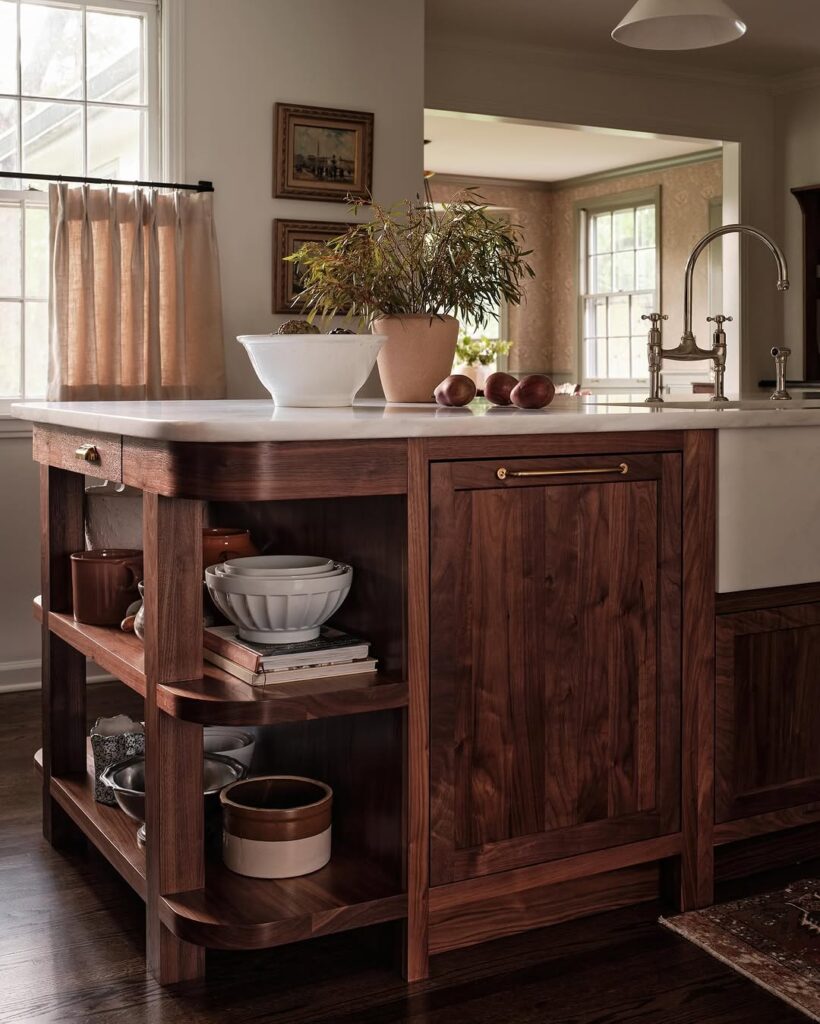
Traditional trim gives the island a classic finished presence. Walnut stained storage makes the island functional, while the traditional details enhance its design.
The kitchen island acts as both a visual anchor and a practical feature. Concealed storage keeps the element useful while it elevates the room's overall style.
The rich walnut stain draws attention to the natural wood grain. Its warmth brings richness without overwhelming the surrounding surfaces.
Fluted posts, crown moulding, and other traditional trim reinforce a heritage-inspired aesthetic. The detailing suits homeowners with classic taste.
White or cream perimeter cabinets help maintain brightness around the island. The contrast prevents the island from appearing too heavy.
Marble or soapstone with subtle veining gives the countertop a refined finish. On the island, the stone adds a cool touch against the warm wood.
Brass cup pulls and antique bronze hardware complement the timeless trim. The finishes work together without clashing.
The island serves a dual purpose. It is suited to food prep, informal dining, and storing oversized cookware.
Generous kitchen footprints give this piece enough room to work as a centerpiece. The island turns utilitarian needs into a central feature.
Classic farmhouse and early American kitchen designs give this style a natural setting. It is a popular option for those who value craftsmanship, natural finishes, and timeless architectural details within culinary spaces.
Modern Walnut Kitchen with Slab Counters

Sleek finishes lead the clean aesthetic of this contemporary kitchen. Walnut-stained cabinetry provides the foundation for the design.
Slab countertops create smooth, uninterrupted lines. Natural brown undertones in the walnut stain provide warmth and contrast.
A kitchen without visible hardware or ornamentation feels clear and ordered. The cabinetry supports a minimal, streamlined vibe that appeals to people who value clarity and order.
Push-open mechanisms are often paired with flat-panel doors. Together, they maintain a cohesive appearance and preserve an uninterrupted facade.
Concrete, quartz, or honed granite slab countertops bring a tactile element to the room. Their surfaces balance the organic quality of the wood.
Strategically placed cabinet lighting can prevent the room from feeling cold. It highlights the grain and enhances visual warmth.
A central architectural role makes the kitchen well suited to loft-style homes with open layouts. This combination works especially well in that setting.
Stainless steel appliances add a subtle contrast to the walnut cabinetry. Matte black fixtures do this without disrupting the palette.
The style favors quality over embellishment. It thrives through restraint and thoughtful material selection.
This layout suits urban dwellers and modern homeowners seeking high performance with understated charm. It is a practical choice for an urban home.
When executed properly, the design feels grounded and timeless. It offers a contemporary look.
Warm Brown Walnut Shaker Cabinetry
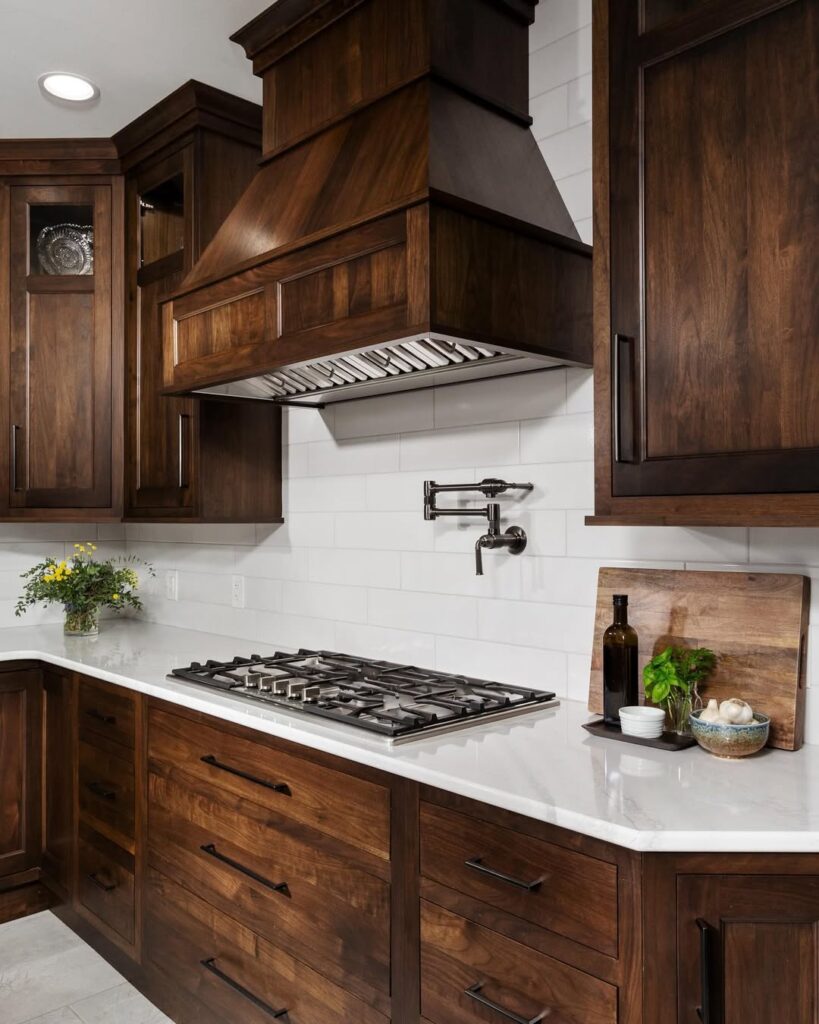
The wood finish on the range hood matches the walnut cabinets. The cabinetry also integrates with the appliances.
The cabinet tones coordinate the wood shades throughout the kitchen. The cabinetry also keeps the focus on craft.
A simple, classic Shaker cabinet front works in both modern and traditional interiors. Its restrained profile suits either setting.
The range hood extends from the cabinets. It functions as a continuation of the cabinet run.
Continuous cabinetry works especially well in homes with an open concept.
Brushed brass hardware stands out against the warm brown cabinetry. White subway tile and zellige tile both contrast with the cabinets, while matte black hardware offers another finish.
A light, neutral countertop balances the walnut cabinets. The surface can be quartz or marble.
Matching wood and finish carry from the cabinets onto the range hood, creating a mirrored treatment across the kitchen.
The cabinet-and-hood pairing combines warmth with visual harmony. The matching pieces keep the composition cohesive.
This cabinet-and-hood pairing suits kitchens focused on durability and kitchens centered on craft. The layout blends tradition and modernity.
Espresso Oak Fluted Cabinets with Veined Stone
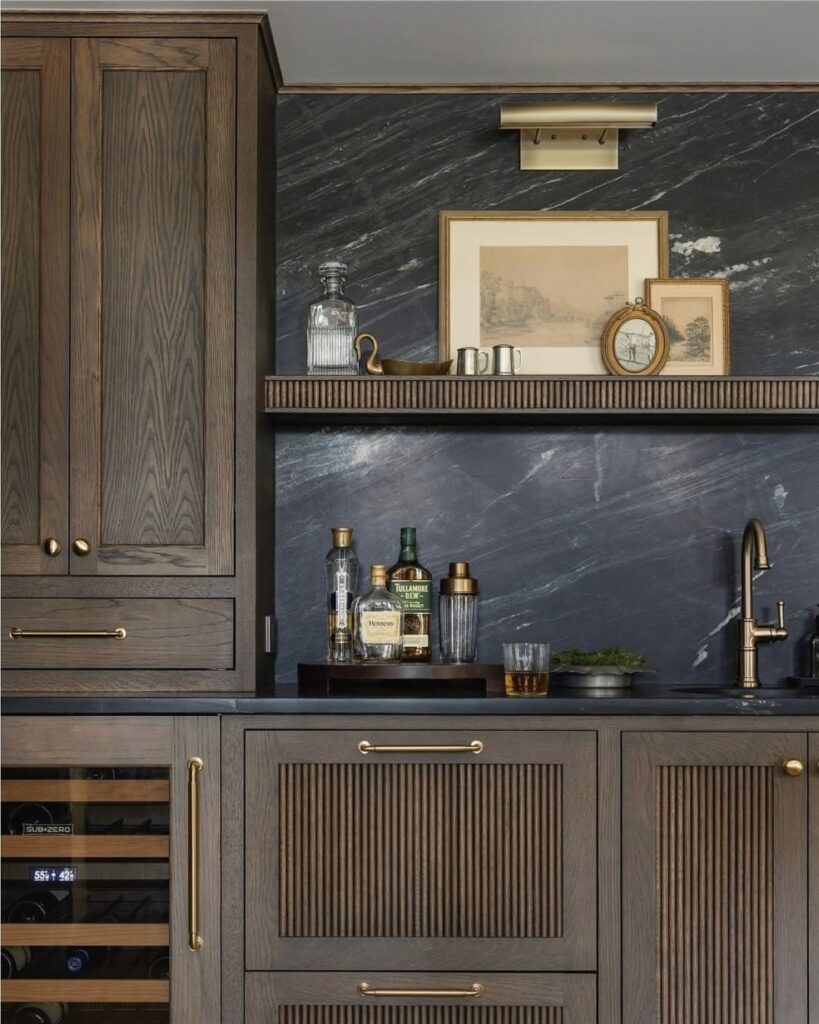
Espresso oak cabinets pair with brass accents. They also sit alongside a veined stone backsplash in dark charcoal or a marbled finish.
Vertical grooves run across the cabinet fronts. The grooves belong to the espresso oak cabinetry.
Warm brass hardware pairs with the espresso oak cabinets.
The veined stone backsplash sits behind the cooktop. Its dark charcoal or marbled surface has high visual weight.
Under-cabinet lighting illuminates the stone backsplash.
Integrated appliances and a flush cabinet face support clean lines. White or warm-toned countertops pair with the espresso oak cabinets, while brushed brass appears on pulls, sconces, and faucets.
Espresso oak cabinetry suits contemporary and transitional spaces. Its fluted texture emphasizes the cabinet design.
The cabinetry provides functional storage and serves as a design element.
The veined stone backsplash combines with the brass accent and espresso oak cabinets. Together, the materials balance modern and classic elements.
The cabinet-backsplash pairing provides visual interest through the contrast between espresso oak, veined stone, and brass.
Rustic Espresso-Stained Shaker Cabinet, Backlit Upper Cabinet, Large Quartz Island
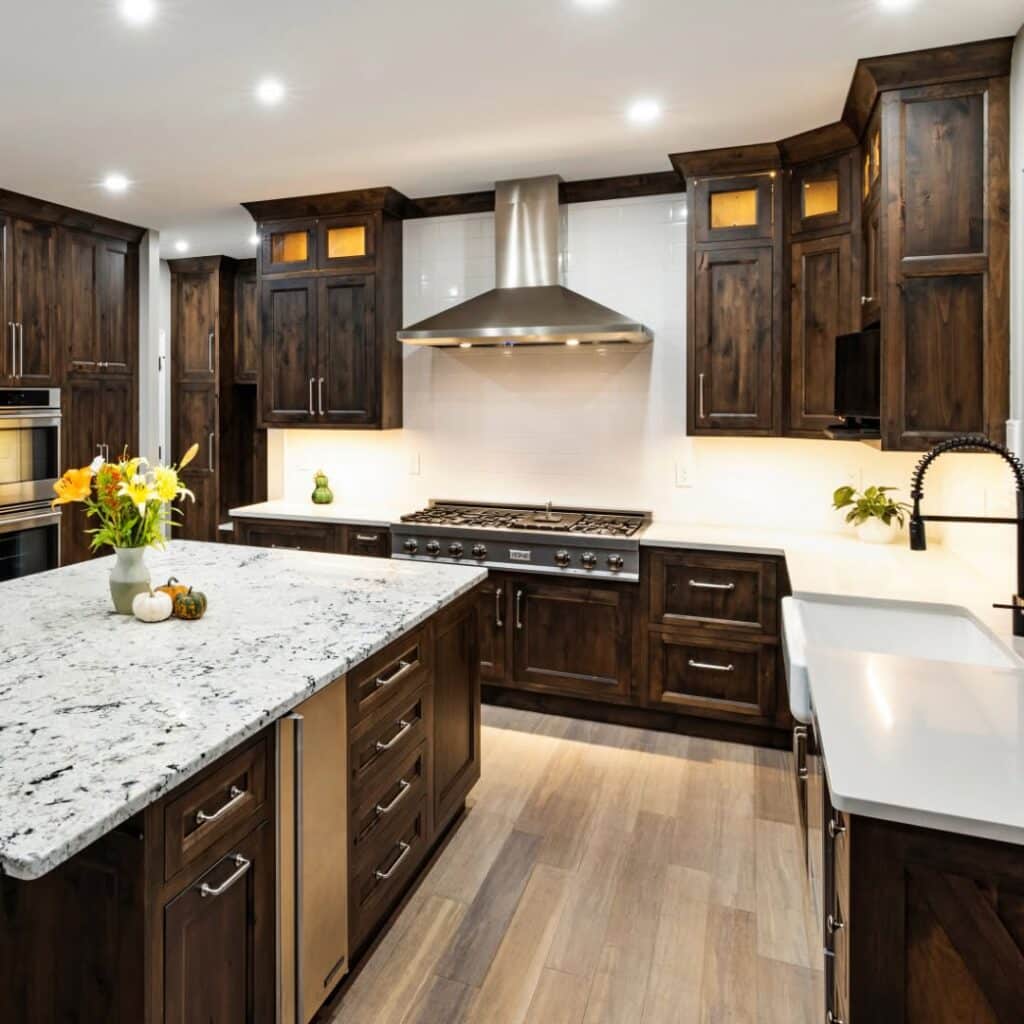
Rustic textures complement the cabinets, and modern lighting does too.
The cabinet tone is dark wood, and the cabinet profile is classic Shaker.
The backlit upper cabinet adds warmth. It can be used during evening hours.
The backlit upper cabinet illuminates stored dinnerware and decor while highlighting the cabinet grain. A glass panel completes the upper cabinet.
The large quartz island sits below the backlit upper cabinet. Its surface can be creamy white or light grey, and the island functions as both a worktop and a gathering spot.
The island surface has a smooth polished finish that contrasts with the matte weathered finish of the Shaker cabinets.
A pendant made from wood or aged metal can set the tone. Cabinet hardware may use iron or an oil-rubbed bronze finish.
The layout combines character and usability. It suits farmhouse, transitional, and cottage homes.
A neutral textured tile backsplash pairs with the rustic espresso-stained Shaker cabinets.
Durable materials give this layout a practical foundation, and the arrangement fits kitchens that open into dining areas.
Rich Walnut and Matte Black Cabinetry with Illuminated Cubby
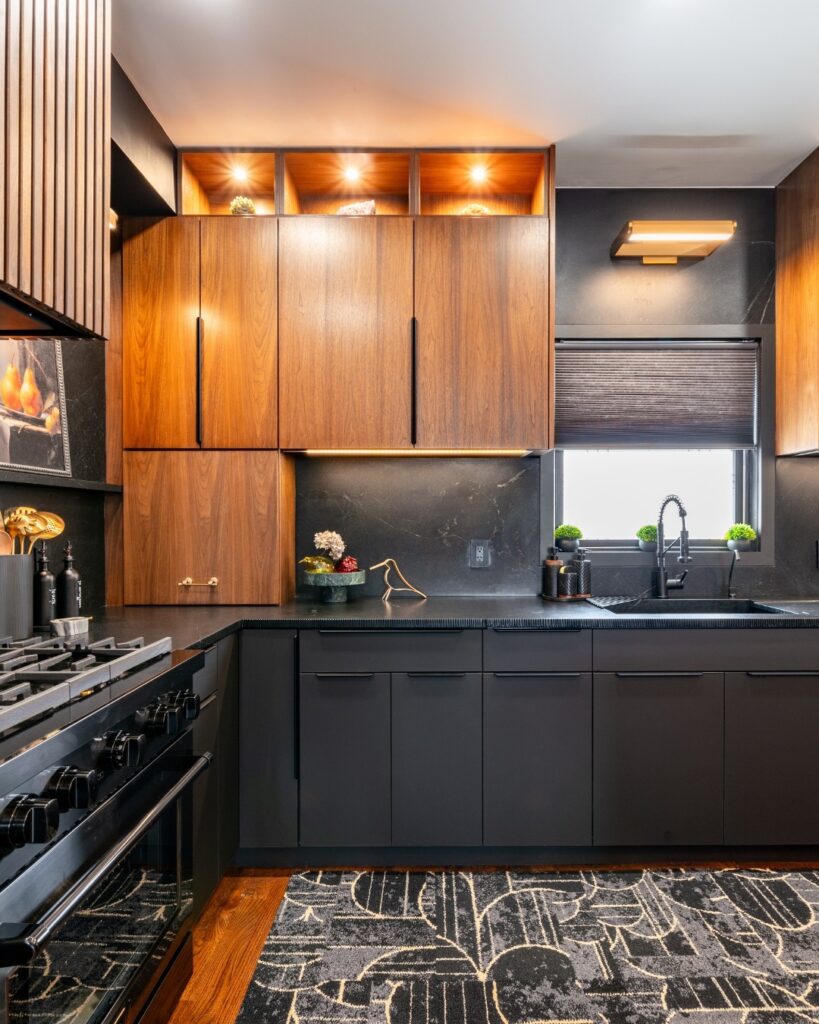
In one part of the kitchen, rich walnut cabinetry combines with a matte black cabinet. An illuminated display cubby integrates with the cabinetry.
The walnut's natural wood grain adds organic warmth. Its low-sheen black cabinetry creates a clear contrast with the walnut.
The walnut-and-black palette combines contrast and structure.
Display cubbies appear in the upper cabinet and at the island end. They can hold dishware, greenery, or warm accents.
In the display zones, LED lighting provides ambient light and avoids harsh shadows.
The cabinet door has a handle-less design with a push-to-open function.
A slab countertop can be white or warm gray. Oversized hardware, such as industrial bar pulls, provides functional detail.
Across the kitchen, the layout lets the living space extend into the kitchen. It suits lofts, modern homes, and open-concept areas.
The layout supports everyday practicality through its connected arrangement and usable kitchen surfaces.
Material contrasts shape the design, and the lighting is curated as well.
Espresso Cabinets in a Modern Galley Kitchen
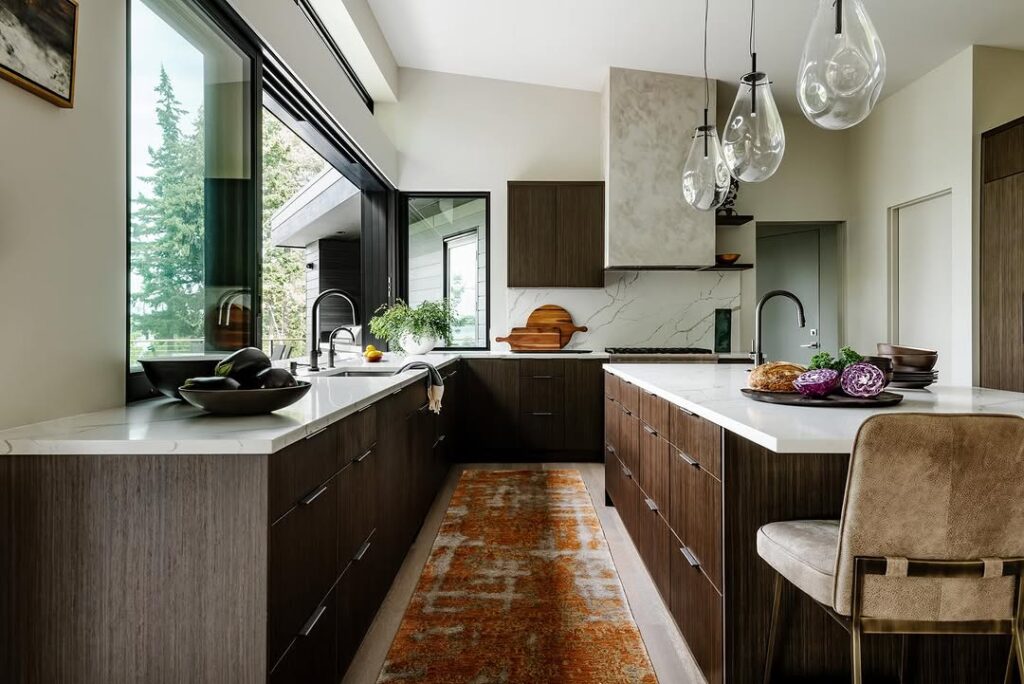
Horizontal-grain espresso cabinets are used in the modern galley kitchen. The cabinet treatment follows the galley layout.
In a narrow kitchen, horizontal grain can make the room appear wider. It also adds structure to the cabinet run.
Frequently used cooking areas suit cabinets finished in espresso stain.
Matching upper cabinetry aligns with matching lower cabinetry. The layout uses symmetry.
Under-cabinet lighting sits beside a light countertop made from quartz or porcelain. Use lighter elements to reduce visual heaviness.
The light quartz or porcelain countertop contrasts with the espresso-stained cabinets.
Above the sink, open shelving and a display niche provide decor space. Slim bar pulls can have a matte black or brushed steel finish.
Light or warm floor tile can use light stone or a wood-look material.
The layout prioritizes function and suits renovated row homes and urban apartments.
In narrow kitchens, the cabinetry can serve as a visual anchor while providing storage. The layout can also provide functional performance.
European Cottage Walnut Shaker Kitchen
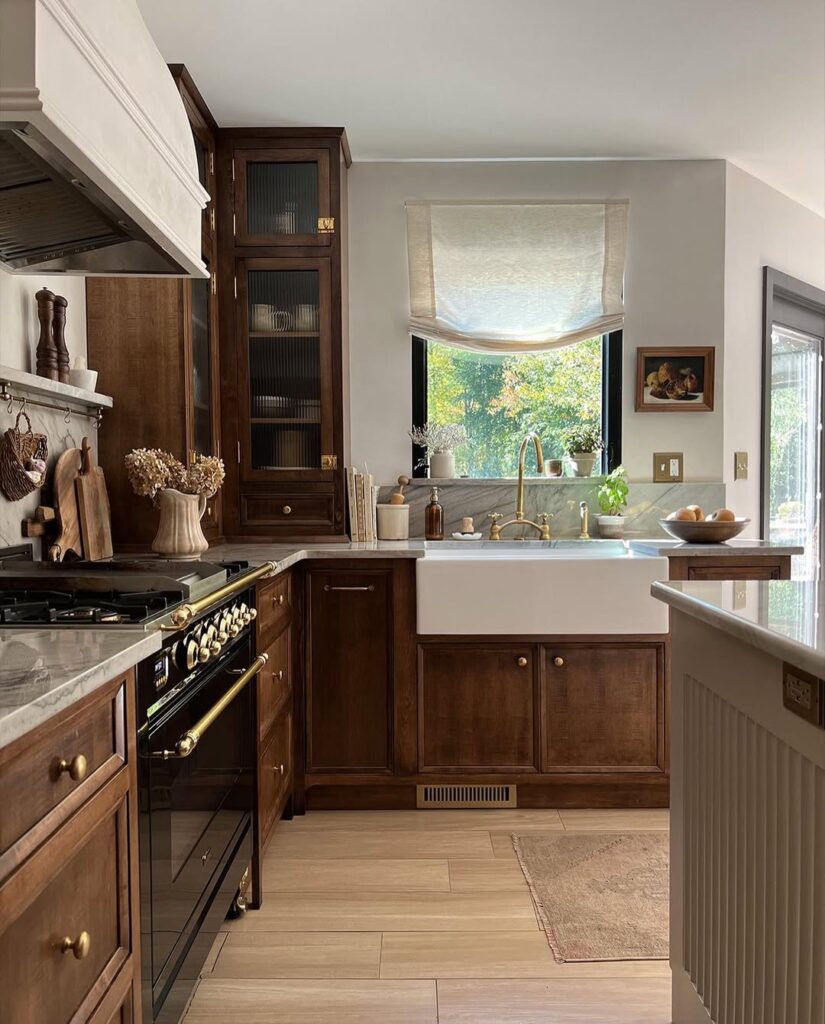
European cottage design is part of the inspiration behind it. The kitchen combines traditional character with modern functionality.
A warm brown walnut cabinet with natural grain sits in the kitchen. The Shaker cabinetry references heritage craftsmanship.
The Shaker cabinets extend to the ceiling. Ceiling-height cabinetry maximizes storage.
Cabinet hardware can take the form of knobs or pulls, finished in aged brass and antique pewter.
An off-white beadboard backsplash and creamy off-white walls contrast with the walnut-stained Shaker cabinets.
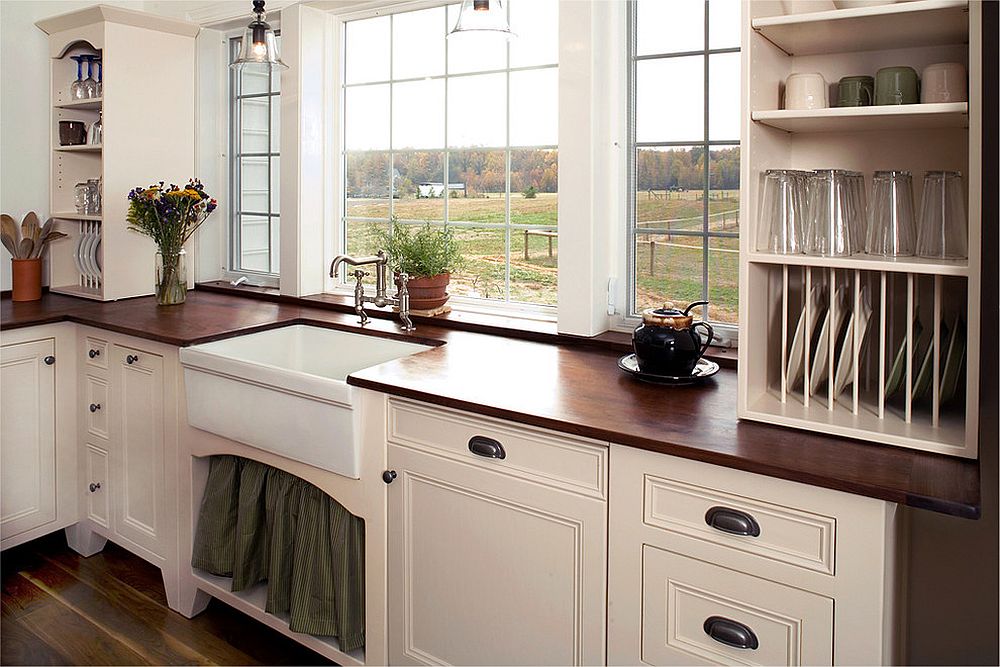
The apron-front sink may be made from fireclay or porcelain.
Flooring in warm wood or stone sets the base. Pendant fixtures and under-cabinet strips support ambiance or usability.
Open shelves and plate racks can be used sparingly, with subtle molding on the shelving.
This style suits traditional interiors and warm interiors.
In cozy homes, this style fits well. The kitchen supports cooking and gathering.
Stone Hood and Distressed Ebony Kitchen
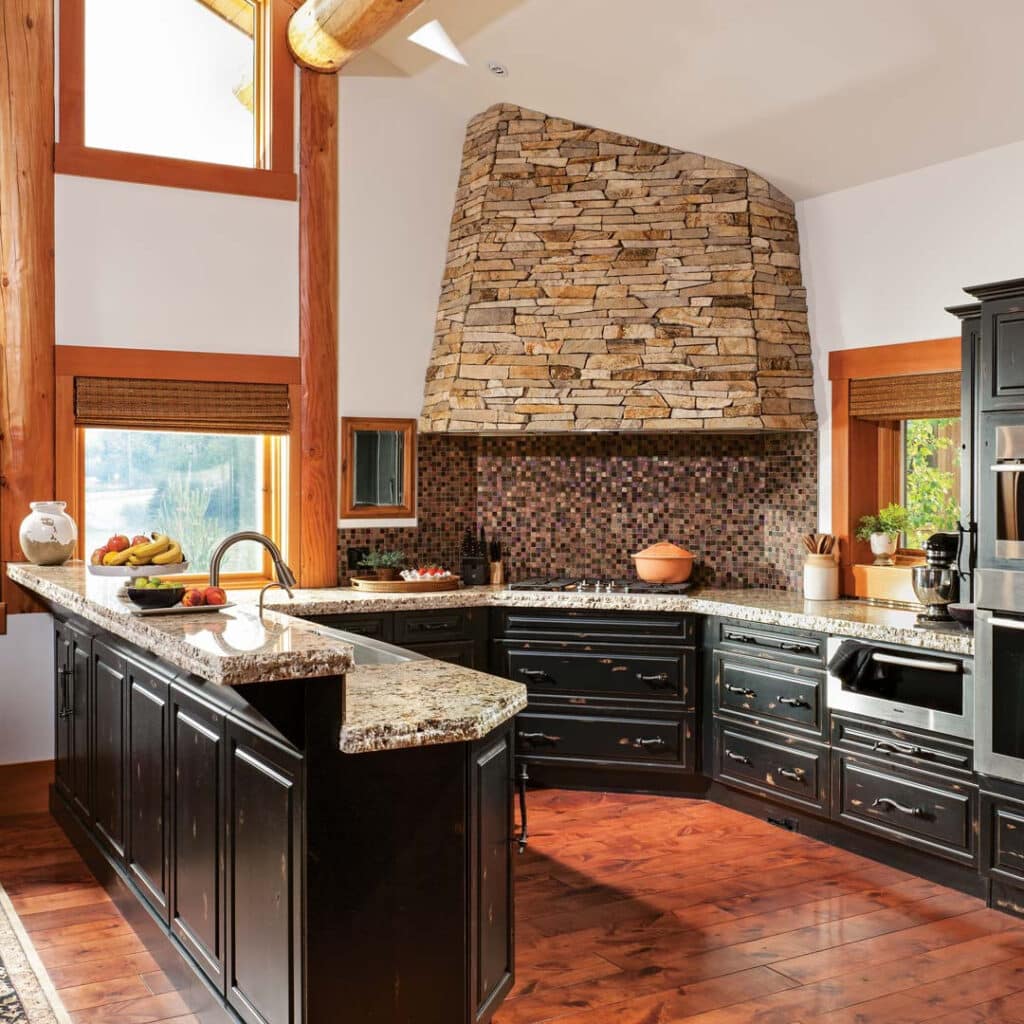
This lodge kitchen uses grounded materials and weathered textures. The ebony cabinetry has an aged, distressed finish.
The cabinetry has a matte finish with visible grain and a tactile texture.
The cabinetry anchors the kitchen while a custom stone range hood takes center stage. The hood rises beneath a ceiling framed in timber.
Rough-hewn stone contrasts with the cabinetry. The material suits references such as a mountain retreat or lakeside cabin.
The hardware is made from hammered metal. Open shelving in reclaimed wood adds storage to the lodge kitchen.
Earthy flooring can take the form of flagstone or wide-plank wood. For the counters, durable choices include leathered granite and honed quartzite.
A great room with a stone fireplace and exposed beams sits alongside the kitchen. This kitchen layout suits open-concept layouts.
The kitchen is integrated into the structure rather than treated as a separate layer. Its construction gives the room a tactile quality and supports longevity.
A connection with nature, along with character and durability, makes a rustic lodge kitchen a fit for homeowners.
The kitchen has low polish and minimal ornamentation. It combines craftsmanship with comfort.
European Walnut Cabinetry with Brass and Fluted Glass
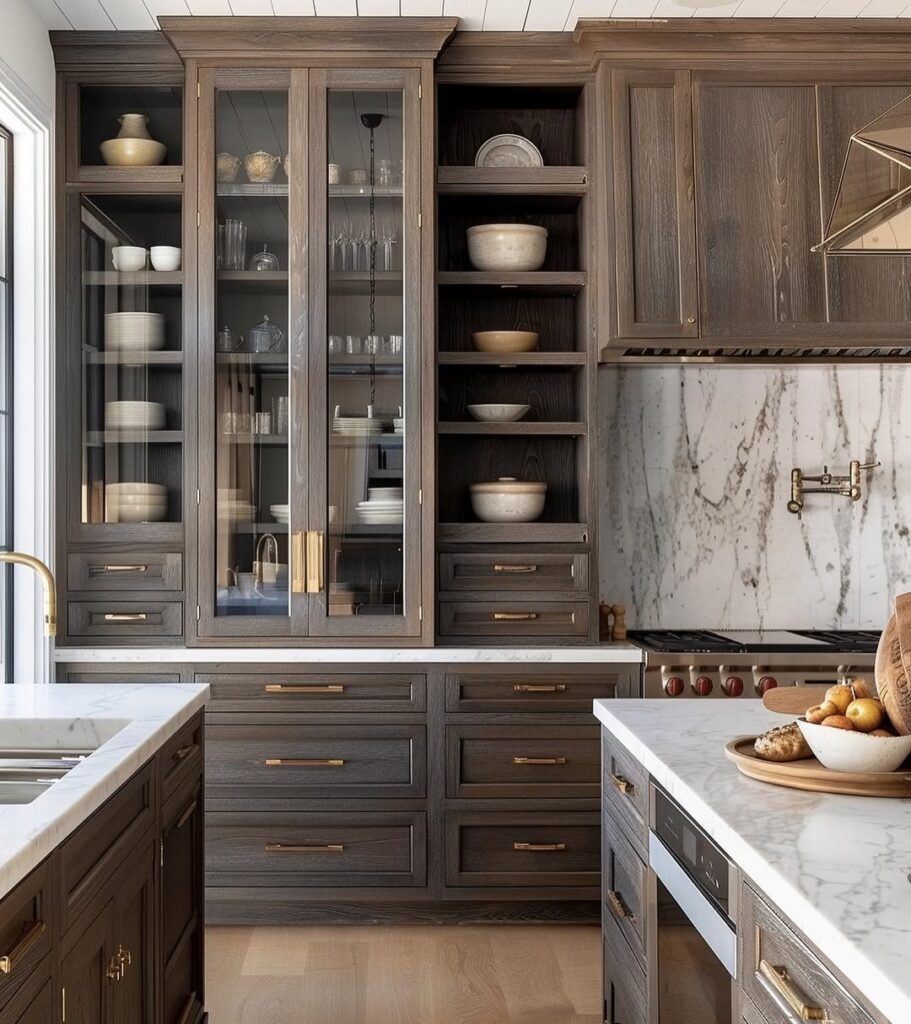
Brass hardware stands out against the cabinetry. The upper cabinets have glass panels, while the ash wood has a stained finish.
The ash cabinet finish is a muted, cool smoky brown. Espresso or walnut can be used as alternatives to this ash finish.
The cabinetry keeps the finish as its visual focus. Slim Shaker and slab profiles both support that approach.
Handles and fixtures use a brushed brass finish. Together, they add hardware detail throughout the kitchen.
Glass-front upper cabinets turn interior lighting into an ambient feature. The display cabinets can hold dinnerware or heirloom pieces.
Pale marble or quartz can form the countertop. A subtle backsplash may use either an off-white herringbone pattern or textured ceramic.
The source claim is that this design suits kitchens with abundant natural light.
This cabinetry approach works in updated colonials and apartments. Its style range extends from traditional to transitional.
Ash cabinetry design works for homeowners seeking something that lasts, feels visually soft, and remains functional.
Dark Mocha Shaker Kitchen with Coffee Nook
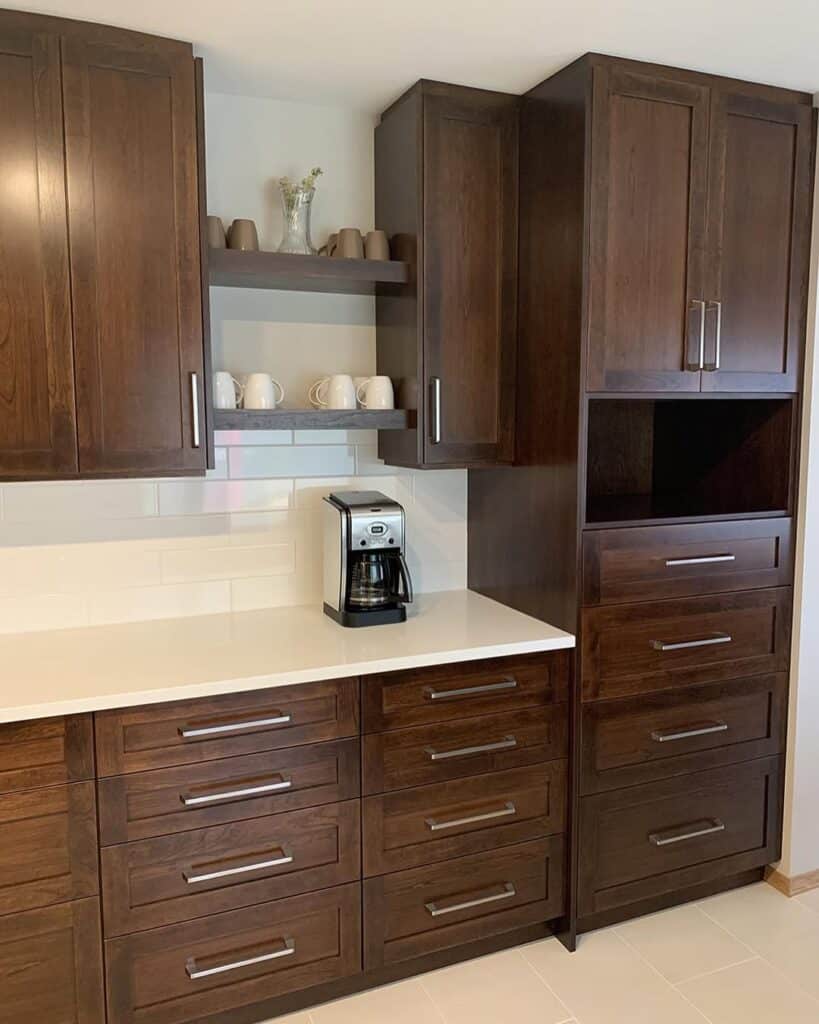
Dark mocha Shaker cabinetry frames a white quartz countertop. The kitchen also includes a coffee nook that is built into the cabinetry.
Espresso brown cabinetry brings warmth to the kitchen. Its profile is Shaker.
Floating wood shelves sit over the main counter. They hold mugs and cookbooks.
An espresso machine setup can anchor a coffee nook. Open shelving and built-in drawers can be included, with the nook placed between tall pantry units or at a counter-run end.
A pristine workspace comes from the white quartz countertop. The material also keeps maintenance low.
Fixtures can use brushed nickel, while matte black is another finish option.
The light backsplash uses subway tile with either a satin or matte finish. It remains a secondary surface in the kitchen.
In small and medium-sized homes, a coffee-nook kitchen suits the available space. The design supports a dedicated daily station.
Thoughtful space use makes this kitchen purpose-driven. Function is prioritized throughout the design.
Linear Galley Kitchen with Dark Walnut Cabinets
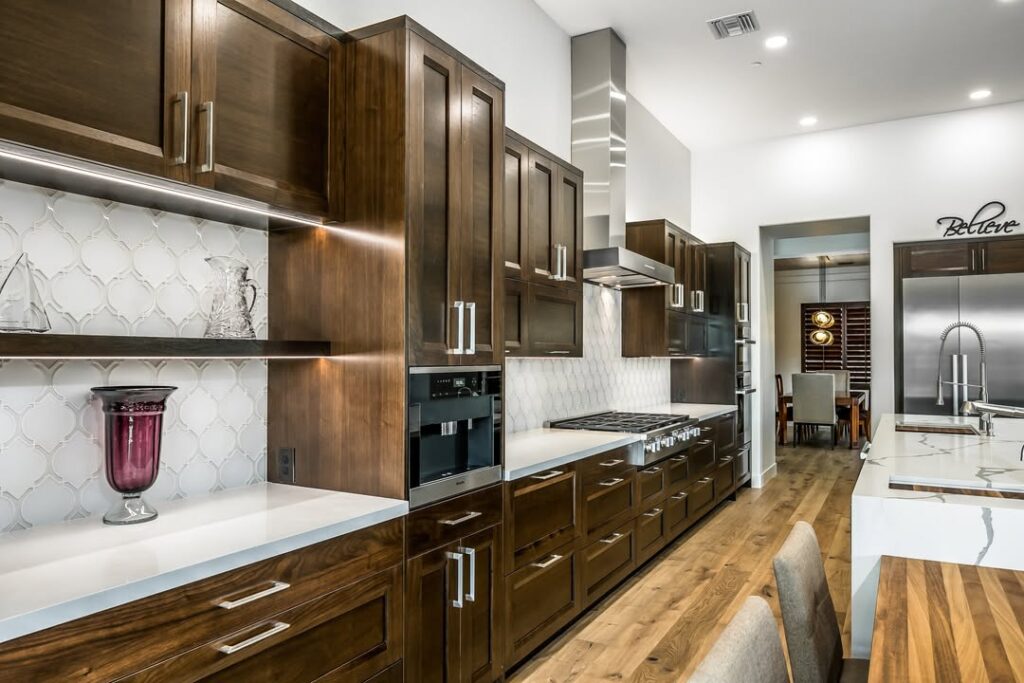
In this linear galley kitchen, dark walnut cabinets meet a white quartz countertop.
Two wall-to-wall cabinet runs preserve movement through the kitchen. They provide abundant storage and maintain symmetry.
The walnut cabinetry is dark with visible grain. Its finish is non-rustic.
The wood tone is dark brown. Nearby, the crisp white countertop uses polished quartz.
Upper cabinets provide vertical storage. Their full-height construction is the nearby detail.
For a compact room, recessed lighting provides work-surface light and limits the number of fixtures needed.
Satin brass works for the drawer pulls, while matte black is another option. The pulls coordinate with surrounding details such as barstools and sink fixtures.
The single-wall backsplash can use taupe or dove grey in a neutral palette. Its layout follows the single-wall kitchen.
A galley configuration suits apartments and narrow kitchens that need efficiency and elegance.
The galley kitchen preserves its function through high layout precision. Its style is independent of seasonal trends.
Warm Cherry Shaker Farmhouse Kitchen
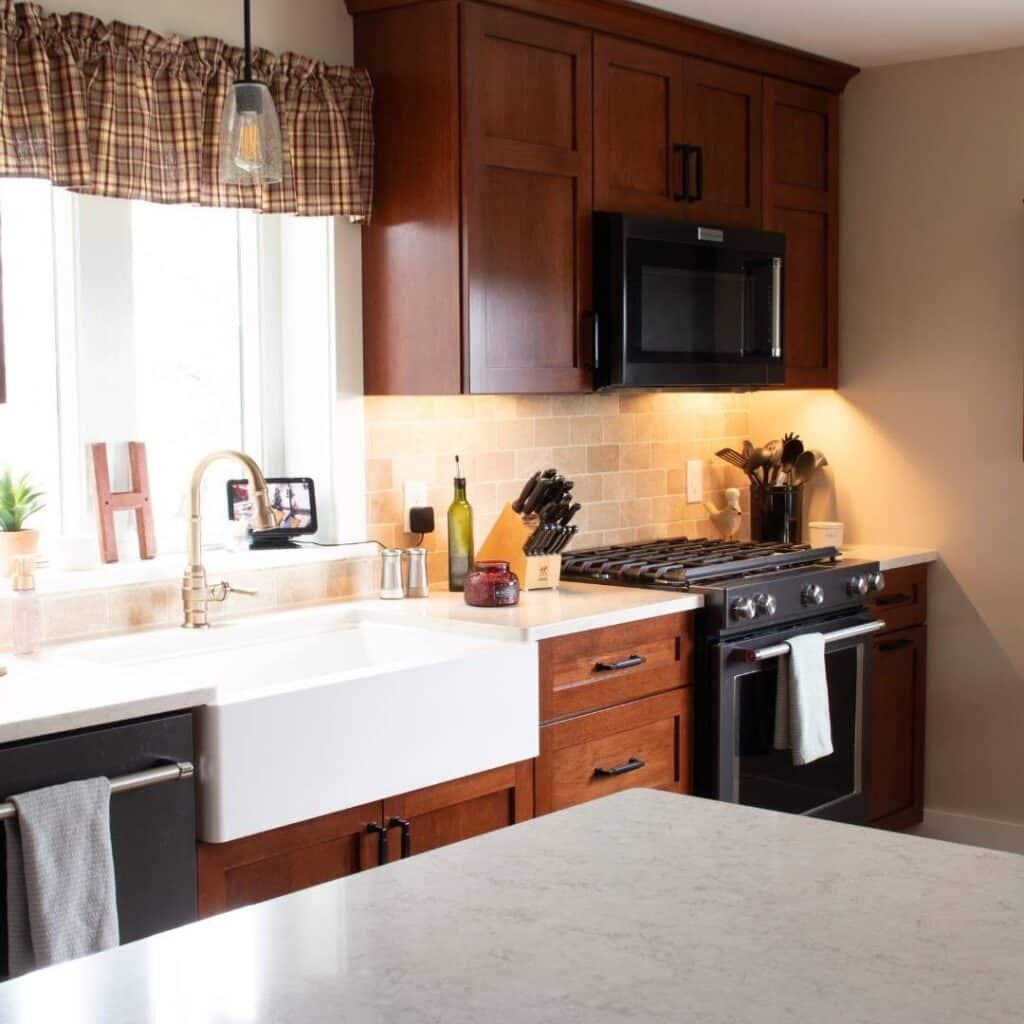
In this kitchen, cherry cabinets use a Shaker style. Farmhouse details shape the overall look.
Cherry wood develops a patina over time. Its reddish brown color takes on deeper tones as the wood ages.
Shaker cabinet doors provide structure. The doors themselves use the Shaker style.
In one corner, an apron-front sink sets the farmhouse tone. Beadboard backsplash and wide-plank wood flooring complete the feature list.
Crown molding and corbels add traditional details at the range hood and island.
The countertop can be cream stone or flecked beige quartz.
Rubbed hardware in wrought iron or bronze finishes the kitchen.
Shared meals and conversation are supported by a central kitchen. That arrangement suits a farmhouse kitchen in homes where the kitchen serves as the main gathering place.
In this kitchen, the detailing is familiar and the materials are honest.
Classic character is part of the farmhouse design, which also supports modern durability and layout efficiency. Intentional space planning is used by the design.
European Walnut Cabinetry with Brass and Fluted Glass
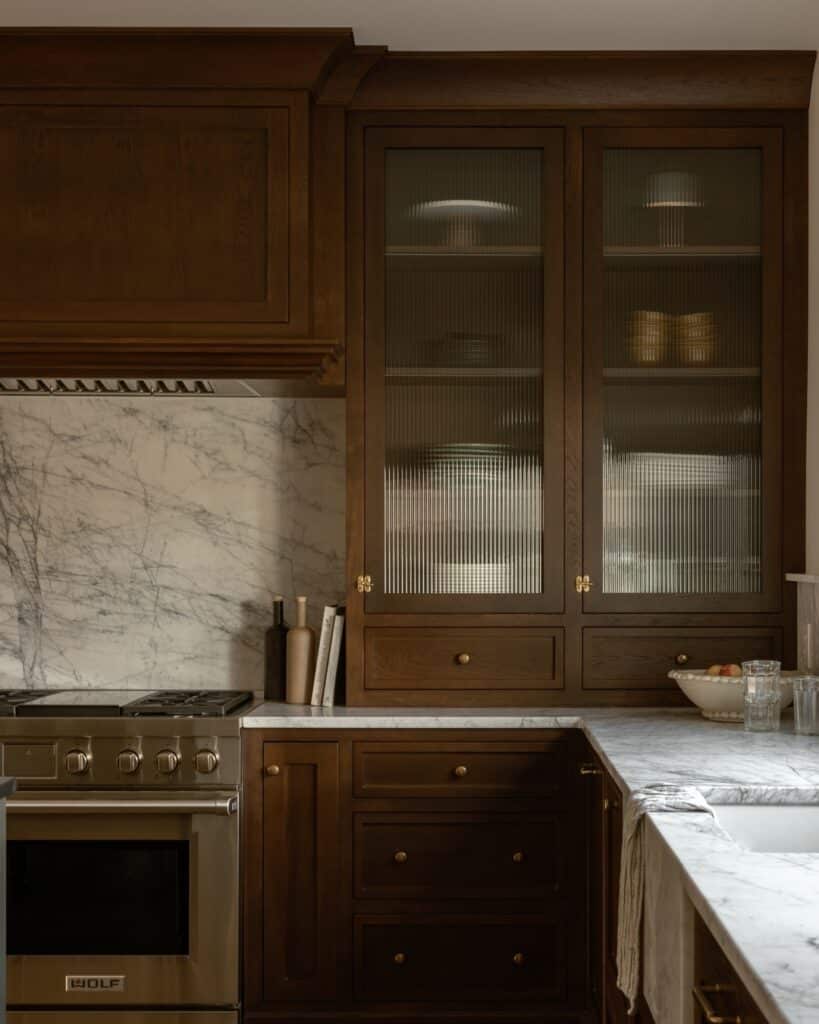
A symmetrical layout gives the cabinetry a refined structure. The cabinets use European walnut.
Walnut wood has a mid-dark brown color, varied grain, and visual depth.
The upper cabinet panels use vertically oriented fluted glass. The subtle texture allows partial transparency for displaying dinnerware or stemware.
Hardware uses a small amount of brass for tap fixtures and handles.
Natural wood remains the focus of the modern cabinetry. Flat-panel fronts keep the cabinet design modern.
White marble gives one option, while creamy quartz gives another. Both create clean contrast in the countertop.
Warm LED strips sit beneath upper cabinets and within glass sections. Their function is cabinet illumination.
Flooring can be pale oak. Neutral limestone is the other option.
Walnut cabinet style suits open kitchens with a high expectation of sophistication.
Wood grain, glass, and warm metal bring high-end materials into an everyday kitchen design.
Traditional Cherry Cabinetry
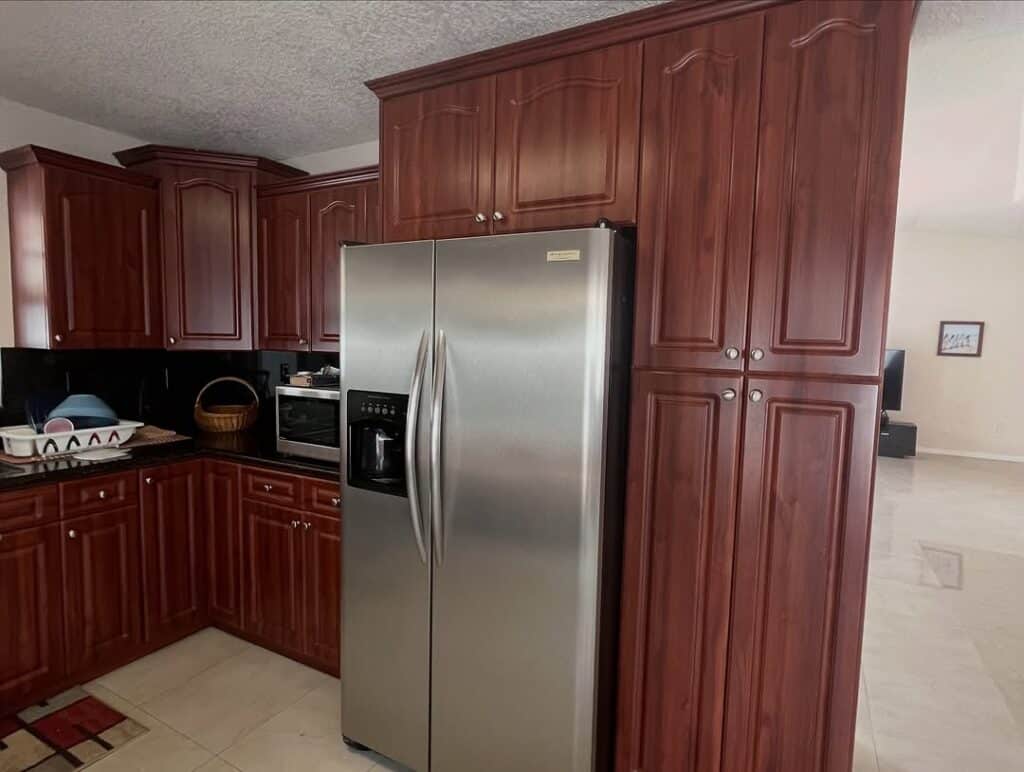
Cherry cabinetry has raised-panel fronts and crown detailing. The craftsmanship has a classic character.
Cherry wood has a natural red undertone, and its color deepens over time. That aging creates a rich patina.
Raised-panel cabinet doors bring depth and shadow to the room. Their shape has a sculptural quality.
The custom-built construction gives the cabinetry a furniture-like presence. Crown molding runs along the upper edge.
Traditional styling may be expressed through arched valances and carved corbels. These ornate features are sometimes incorporated into the cabinetry.
Oil-rubbed brass and bronze hardware creates a warm heritage palette. The hardware pairs with the cherry finish.
The backsplash uses tumbled stone and ivory subway tile in classic patterns. It softens the boldness of the wood while retaining its impact.
Warm veining runs through the natural-stone countertop. As a functional surface, it transitions into a design centered on form.
Medium-tone hardwood and terracotta flooring support visual continuity and avoid competing with the cabinetry.
Scale and detail are important considerations. Traditional cabinetry is suitable for larger kitchens.
Design longevity, historical influence, and artisanal detail are key values here. Traditional cabinetry appeals to people who appreciate them.
Family-centered spaces are one application for this cabinetry approach. It draws on tradition while adapting to current use.
Dark Chocolate Cabinetry and Contemporary Hardware in a Blended Style
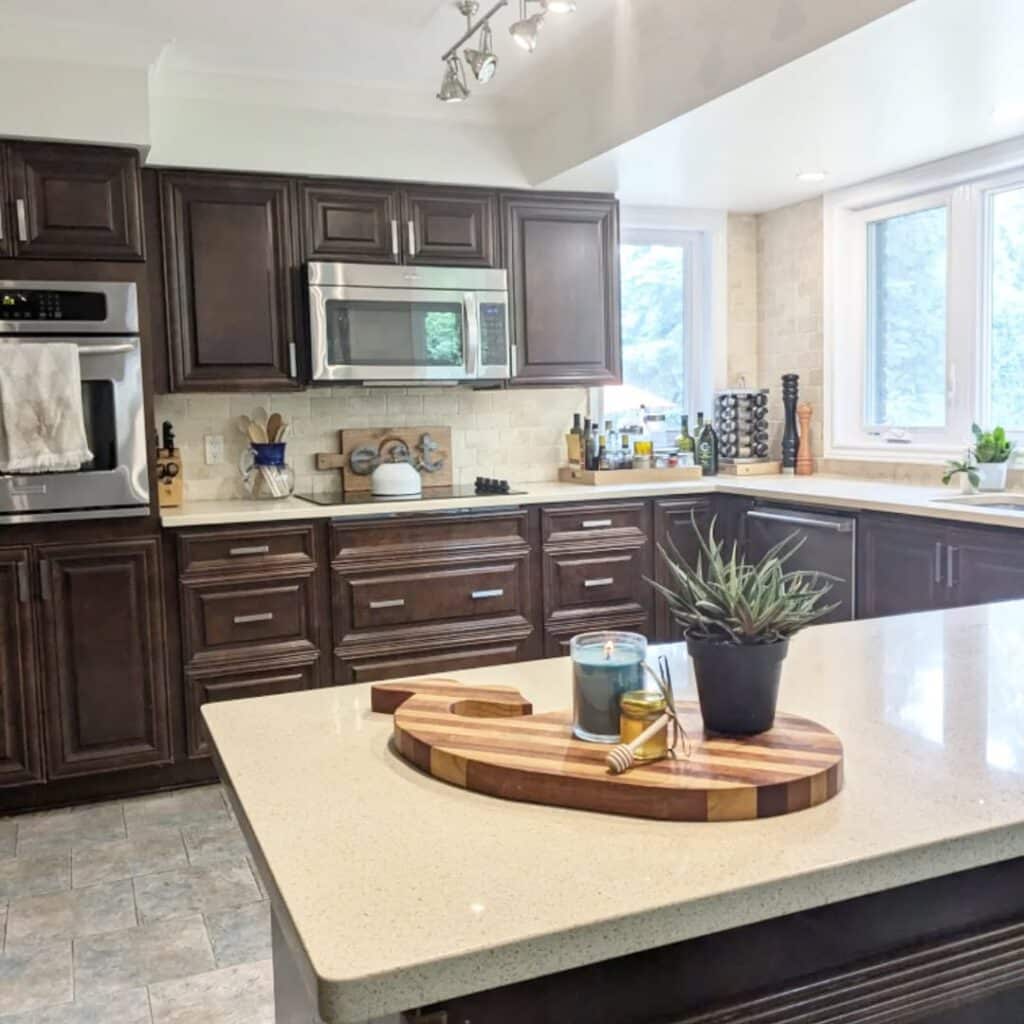
A dark chocolate stain gives the kitchen saturated tones, while a contemporary hardware mix adds refined geometry.
The cabinetry has a rich espresso hue with a deep, cool base. It suits both modern and transitional interiors.
Cabinet fronts in flat-panel and slim Shaker styles keep the visual order maintained. The finish emphasizes their simple forms.
A layered, cohesive hardware scheme combines brushed nickel drawer hardware with matte black pulls on the tall pantry doors.
Bright white and soft concrete gray appear in the quartz and porcelain countertop materials. These surfaces limit the dominance of the dark wood and keep the room light and balanced.
The backsplash adds tactile variation through textured ceramic and geometric tile. Its subtle pattern has low visual prominence.
Open shelving in matching chocolate and light oak sits on focal walls, providing both storage and airiness. Recessed lighting and modern pendants illuminate the work zones with balanced light.
Medium-sized kitchens are a suitable setting for this cabinetry. Dark chocolate cabinetry works well when using space efficiently and keeping the materials in harmony both matter.
Dark chocolate cabinetry appeals to people who prefer depth of tone with a contemporary edge. The overall character is modern, with deliberate choices and a design approach that is not overly styled.