Maple Kitchen Cabinet Ideas That Feel Fresh, Not Dated
Maple cabinets have high durability, a natural grain, and warm undertones. They suit many homeowners.
A smooth finish and consistent grain give maple cabinets a strong appearance. Their high strength suits both traditional kitchens and contemporary kitchens.
Maple absorbs stain evenly and supports custom finishes. Options include honey and espresso.
Maple offers high function and high style, supporting a range of kitchen renovation goals.
These maple cabinet ideas focus on current trends and kitchen upgrades.
Integrated Maple Shelving
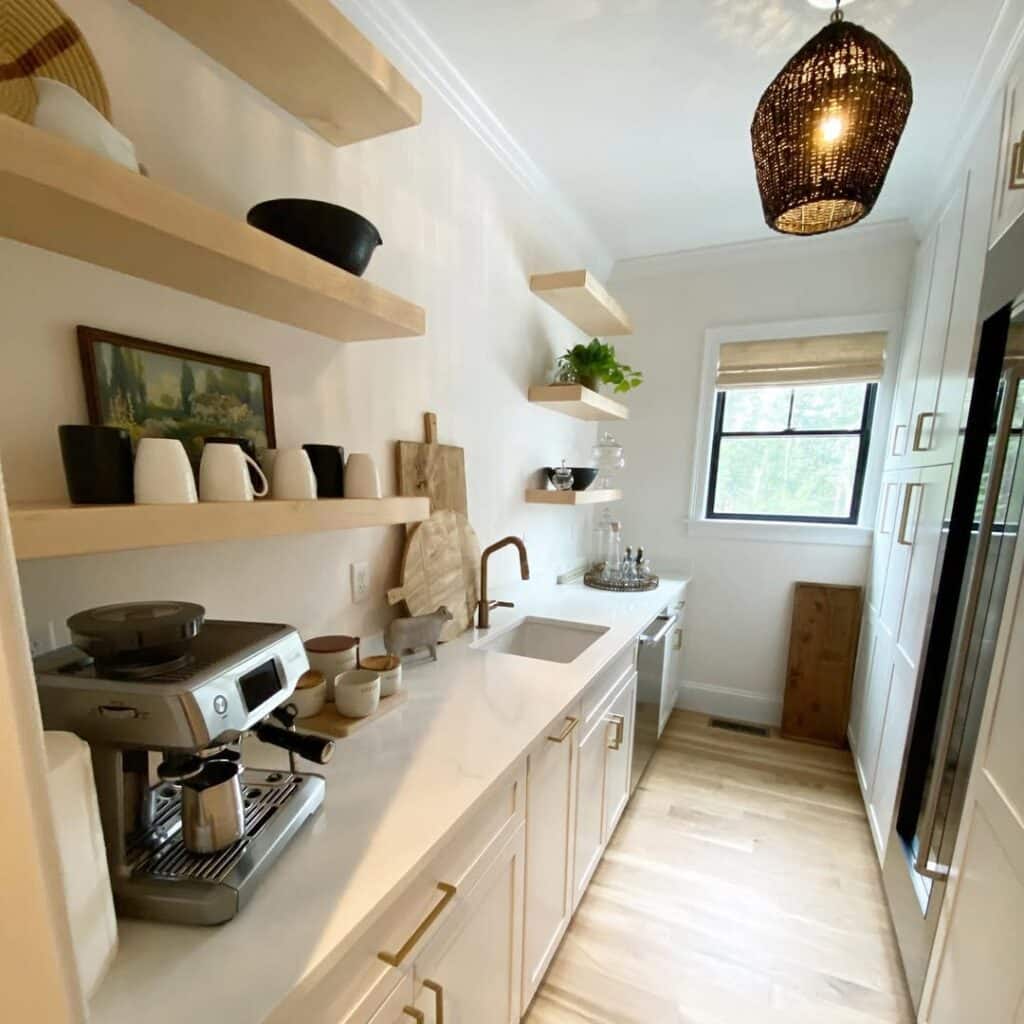
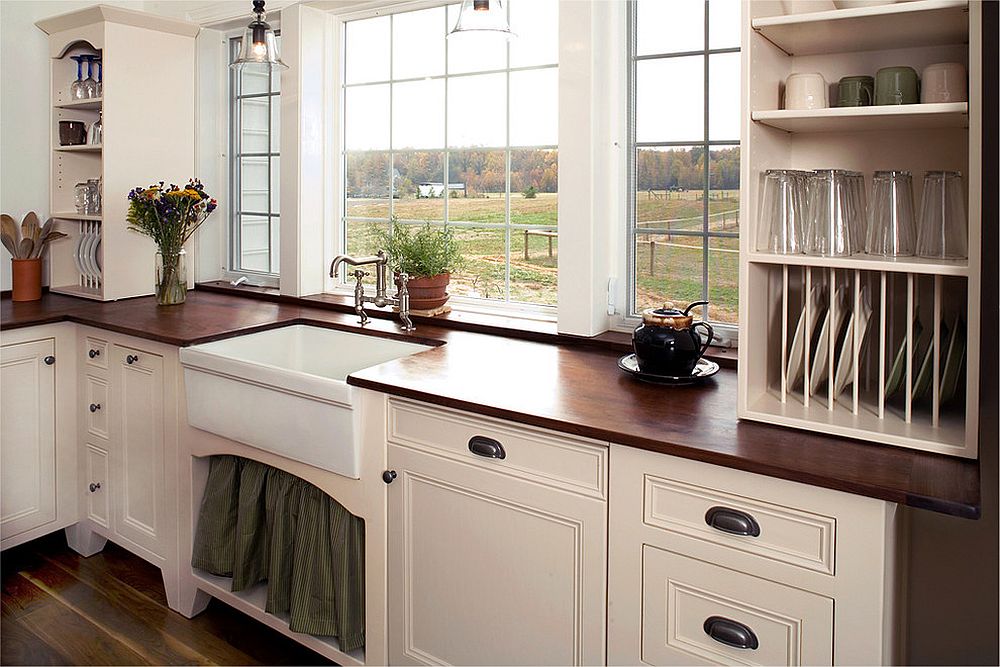
Maple open shelving matches maple cabinetry. Its strategic placement supports display and provides high accessibility.
Adjacent closed storage sits on both sides of the built-in shelving, flanking and framing it.
Potted herbs sit on the shelves. Integrated maple shelving displays dishware, glassware, and herbs, combining form and function.
Maple shelving suits high-traffic zones. Its consistent grain and high durability help it resist warping and retain a clean appearance over time.
Designers place open shelves above countertops and around windows. Shelf placement affects the upper walls.
Colorful backdrops work well with soft honey maple, which also suits neutral ones. Open shelving supports storage while making wall cabinets feel less heavy.
Beadboard may be included on shelf back panels. Vertical slats are another option for the back panels.
Maple shelving can be styled minimally or in layers. Integrated maple shelving has high utility.
Integrated shelving suits uncluttered kitchens. Shelf placement supports accessibility.
Maple Cabinet LED Lights
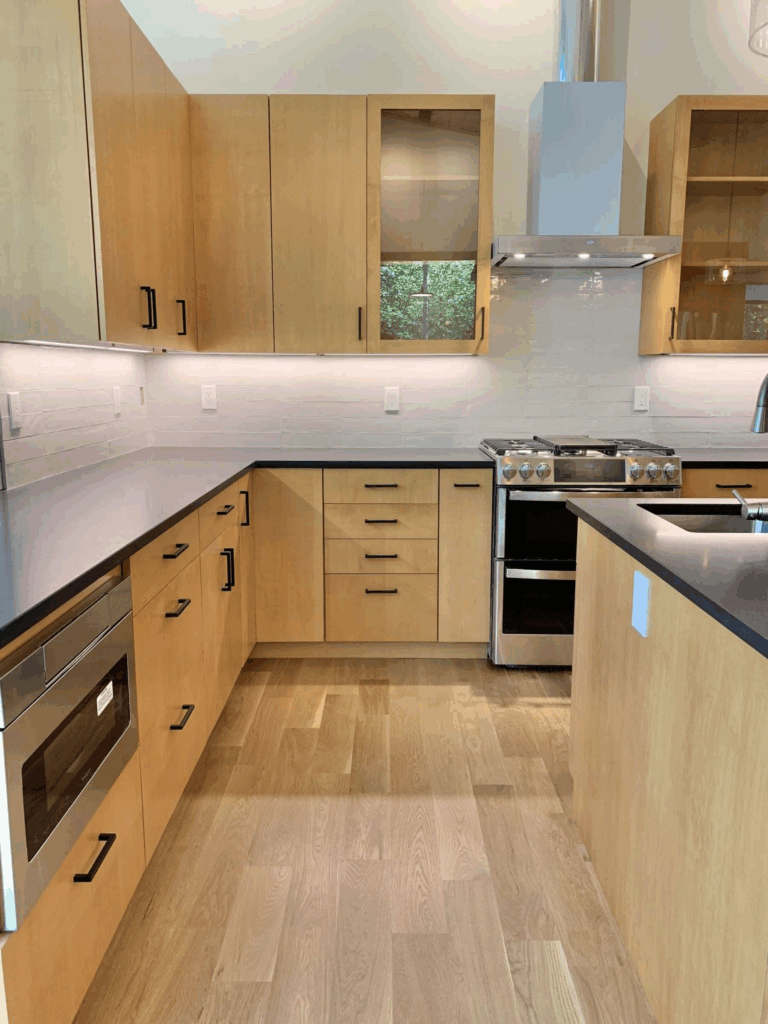
Maple cabinetry fills the area beneath the cabinets. Under-cabinet lighting adds both practical and aesthetic functions there.
Warm light falls across the countertops from energy-efficient LED strips under the cabinets. The lighting also complements the maple tones.
Off hours can call for softer ambient lighting. Install dimmable lighting for mood control, while under-cabinet lighting improves visibility during food preparation.
The maple surface reflects light and reduces shadows. In kitchens where overhead lighting is insufficient, under-cabinet lighting supplies additional light.
Maple finishes may be natural, honey, or stained. The warmth of the LEDs can match the undertones in the maple.
Recessed lighting sits beneath the upper cabinets and stays concealed. It is controlled by a switch.
In one kitchen, sensor-activated lighting can provide illumination at nighttime. Under-cabinet lighting also supports task illumination.
The maple surface remains in place while under-cabinet lighting supports kitchen work. This lighting does not require major remodeling.
Contrasting Maple Cabinetry
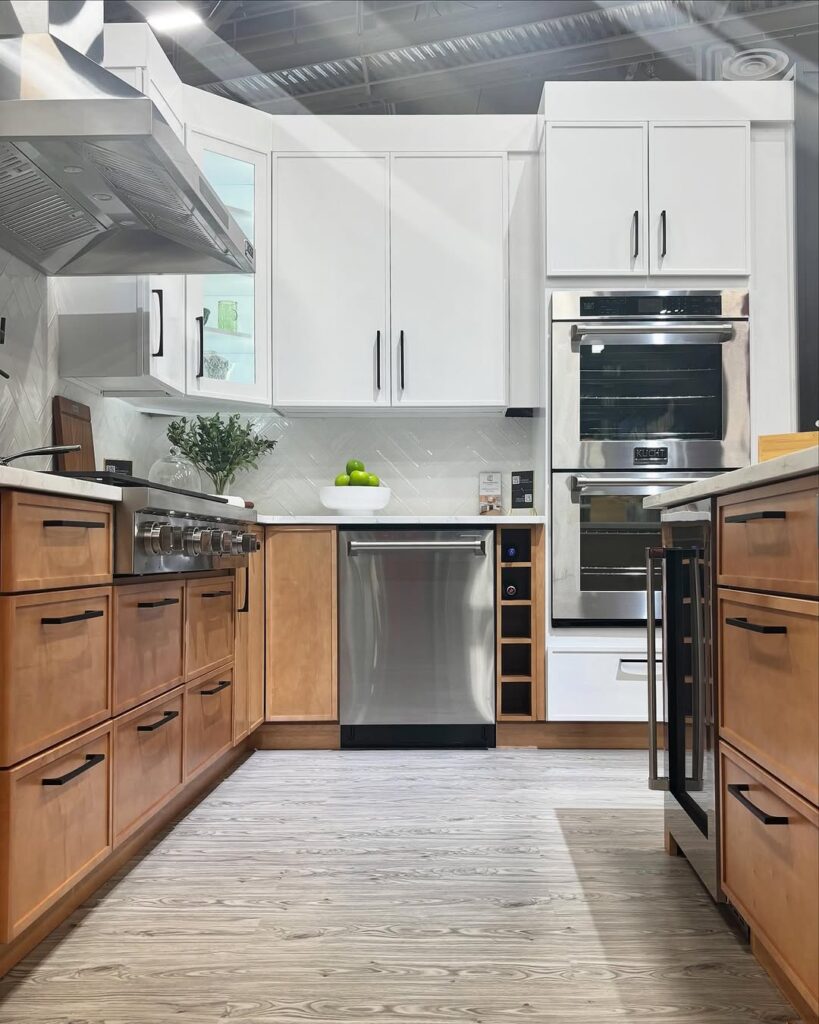
Light maple upper cabinetry contrasts with deep-colored base cabinetry.
Charcoal, forest green, and midnight blue work for the base cabinets. Two-tone cabinets pair these colors with the natural warmth of maple cabinetry and can create separate kitchen zones.
Two-tone cabinets suit center islands. Light upper wall units contrast with rich base cabinets.
Crisp upper cabinetry brings a clean counterpoint to fine maple grain. Two-tone cabinetry suits open-concept layouts.
Designers use satin or semi-gloss finishes for darker cabinetry. The maple texture remains visible, and the darker finish subtly reflects light.
Countertops can connect the two cabinet tones. Consider butcher block countertops or quartz countertops. Two-tone maple cabinetry modernizes the kitchen.
Two-tone maple cabinetry retains its character and offers high flexibility. It works with farmhouse, transitional, and contemporary styles.
Concrete Countertops with Maple Cabinets
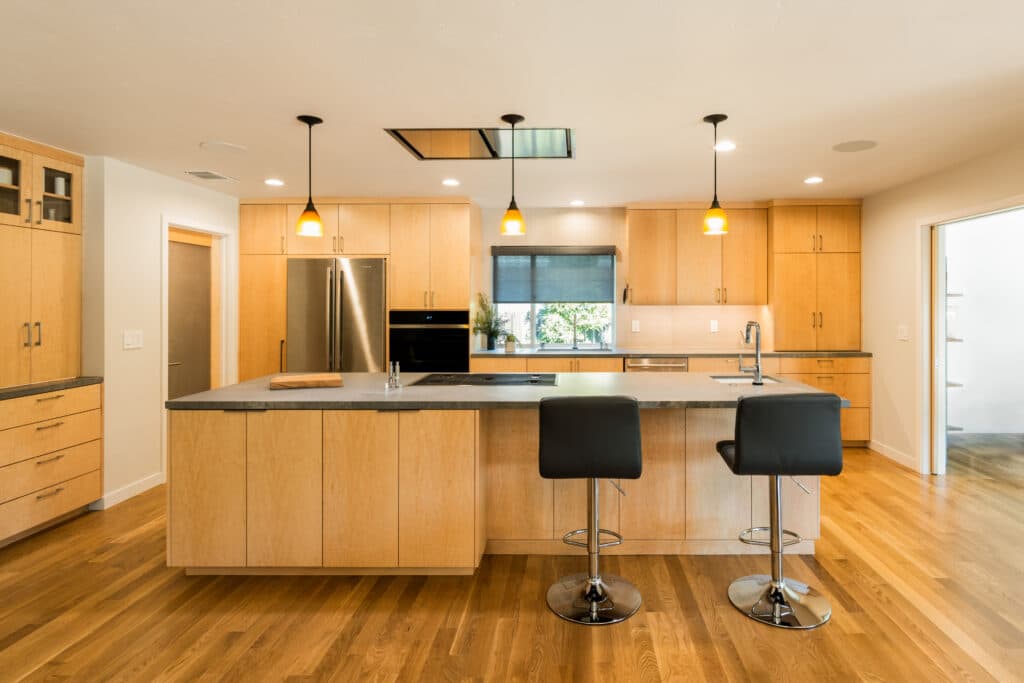
Concrete countertops pair with maple cabinetry. Compared with concrete, maple adds organic warmth while concrete brings industrial character.
The cool, tactile concrete countertop offsets the amber and honey colors of maple cabinetry. This material pairing works in rustic kitchens and contemporary kitchens.
Material contrast adds depth while the pairing maintains cohesion.
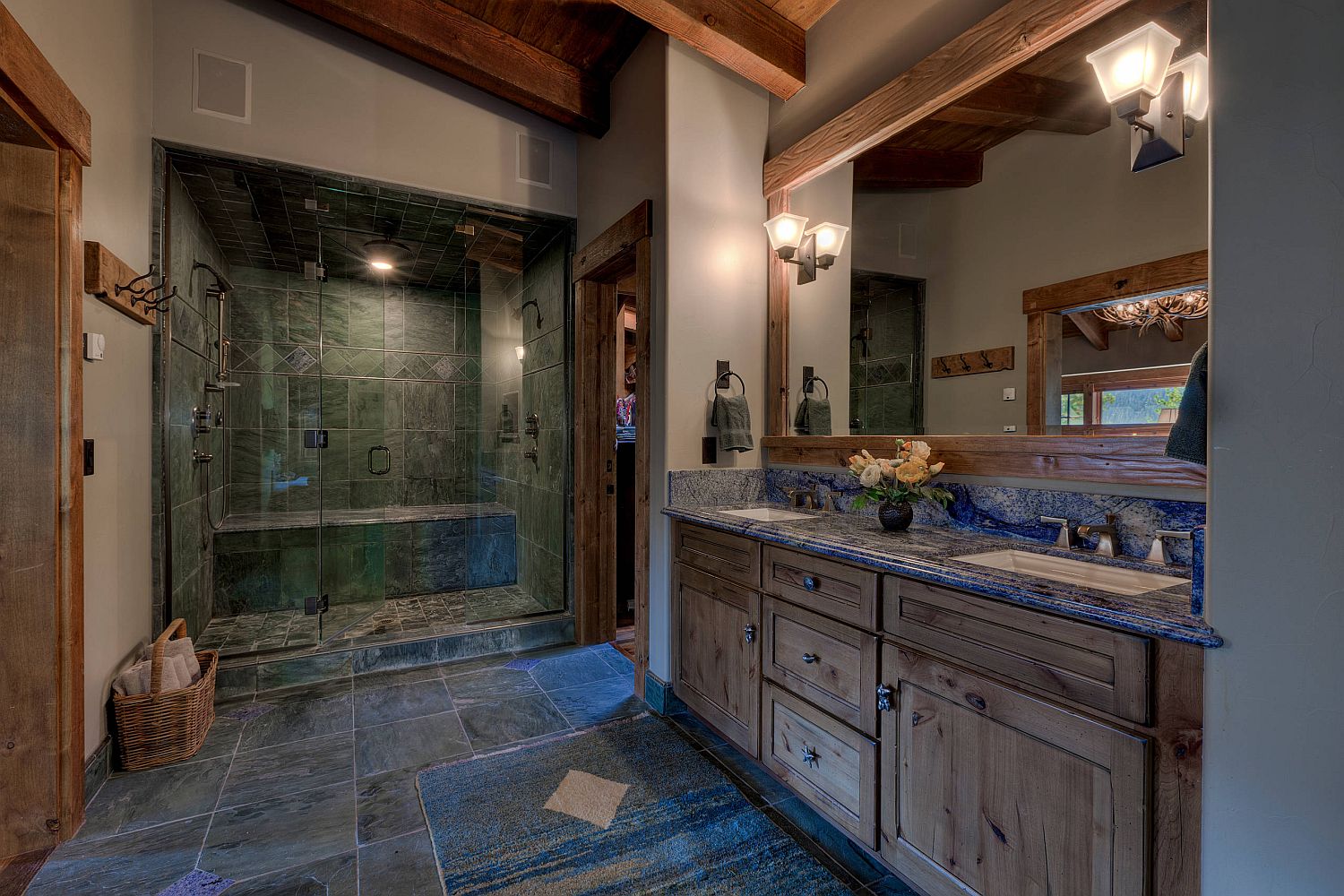
Color and texture can be customized on a concrete countertop. It offers high durability, comes in poured-in-place or precast forms, and has heat resistance rated 1. For kitchen use, seal the countertop with a kitchen-safe sealant.
A matte concrete finish pairs with a natural or satin maple finish. The two finishes work together across the materials.
In one kitchen, a squared or slightly eased countertop edge keeps the maple grain from making the room feel cold or industrial.
Black accents make the maple-concrete pairing effective. Brushed nickel accents work well with it too.
Maple cabinetry and concrete countertops provide long-term durability with low-fuss maintenance.
Maple Cabinetry and Brass
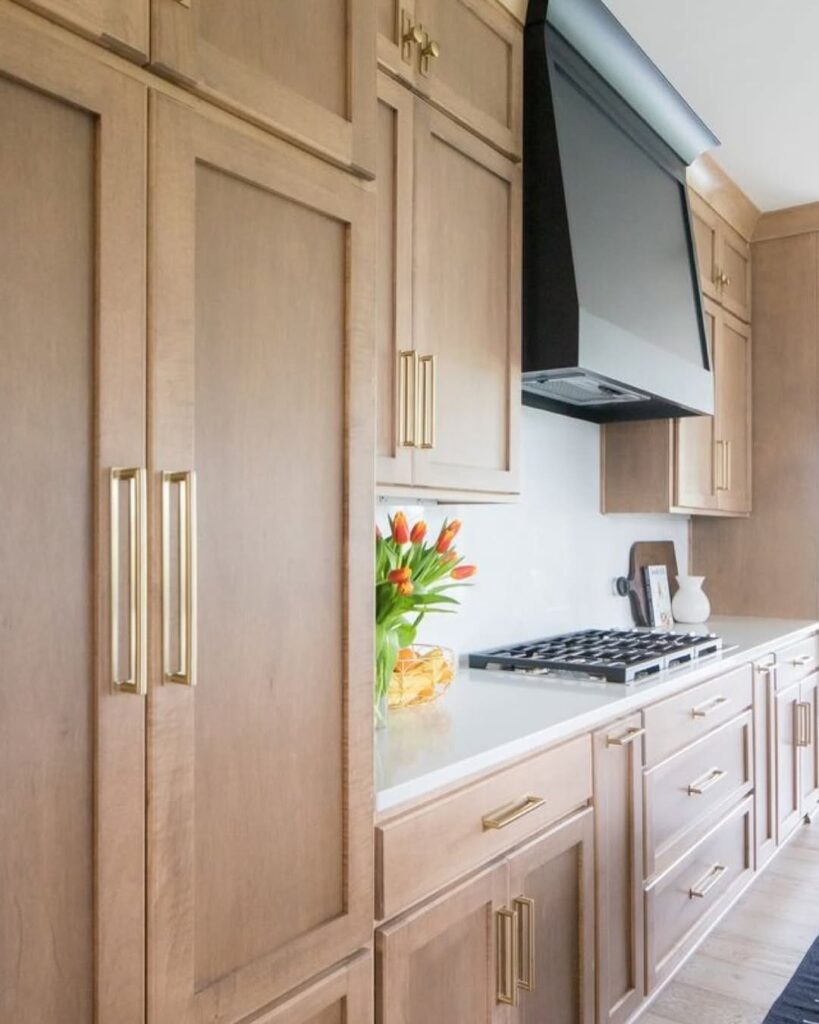
Brass accents increase maple warmth. They are paired with the maple cabinet.
In one kitchen, maple and brass share golden undertones.
A warm brass finish brings the first detail into view. The brass element complements the paired element and can be used for drawer pulls, knobs, light fixtures, and faucet finishes.
The brass finish has a muted appearance and may be unlacquered or brushed. These options develop a natural patina and look more muted than polished brass.
Matte or satin maple pairs with the brass finish. Maintain the fixture scale, hardware placement, and overall design consistency.
For the surrounding palette, consider neutral countertops. Creamy quartz and veined marble are both material options.
Maple and brass suit mid-century and transitional kitchen styles. The combination avoids an overly trendy appearance.
Brass coordinates with stainless appliances and tile backsplashes. Maple cabinetry provides the main material alongside those elements.
Detail-oriented homeowners may appreciate how a small choice creates big visual impact.
Bold Backsplash with Maple Cabinets
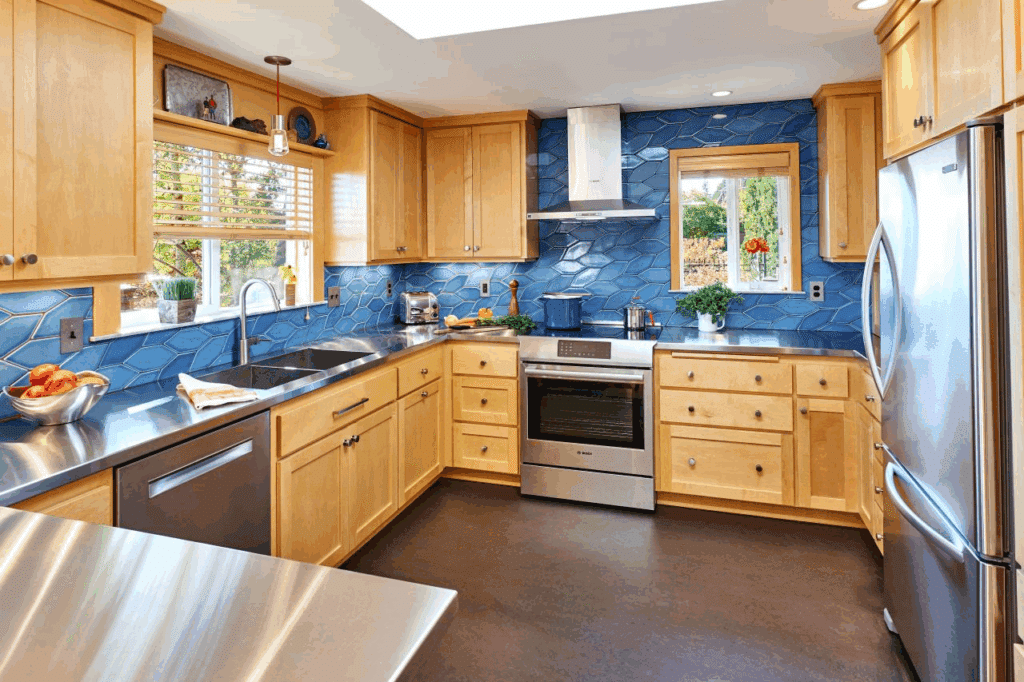
Maple cabinetry is paired with a bold backsplash. The backsplash supplies the nearby visual detail.
A vibrant, patterned backsplash contrasts with maple cabinetry. It enables a contained design change while leaving the cabinets as the main feature.
Maple cabinetry remains neutral. The backsplash contains the design statement.
Behind the stove or sink, a backsplash can use graphic tile, a geometric mosaic, or saturated color in navy, emerald, or terracotta. Balance the backsplash intensity with the maple tone.
The soft grain of maple contrasts with a high-gloss backsplash finish. High gloss reflects light.
Texture and pattern give the backsplash its character. A bold backsplash suits eclectic and global-inspired kitchen styles.
A single accent wall preserves the layout. Pair the bold backsplash with consistent countertops and streamlined hardware.
A bold backsplash supports design experimentation. It also preserves the warmth of maple.
Pair visual drama with natural elements. The bold backsplash should avoid a chaotic appearance.
Vertical Grain Maple Doors
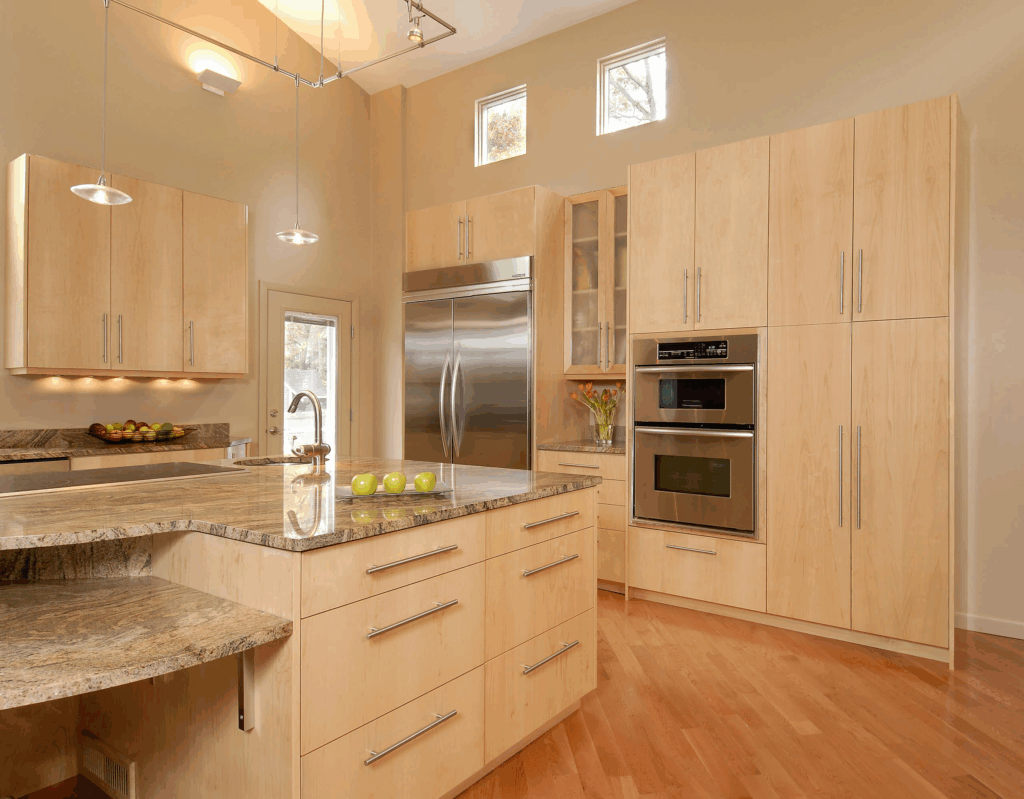
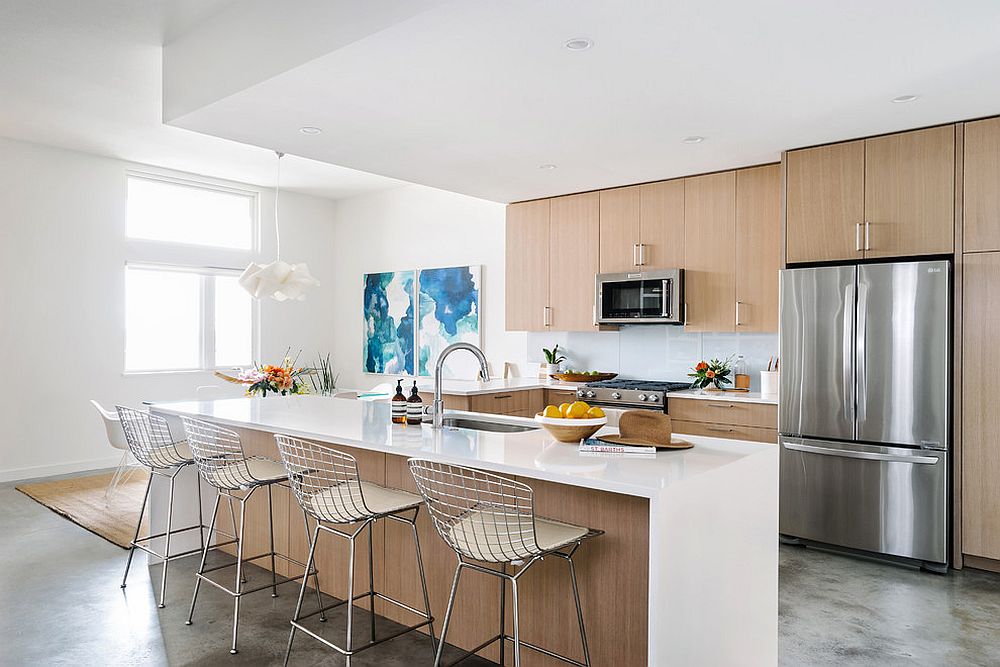
Maple cabinet-door grain runs vertically, which can increase perceived height and support a sleeker profile. This treatment is useful in rooms with low ceilings or narrow rooms.
Straight maple grain with high consistency gives cabinet fronts a uniform appearance. A vertical application supports the grain and produces uniform cabinet fronts.
In one kitchen, vertical grain looks more architectural than horizontal grain. Horizontal grain may appear wide or heavy.
Vertical grain displays the natural maple tones and supports minimalist design. It works with slab doors and flat-panel doors.
Vertical grain pairs with full-height cabinetry. It also pairs with tall pantry towers in modern kitchens and transitional kitchens.
Uninterrupted grain lines support a refined appearance. Linear hardware or integrated lighting can accentuate the vertical flow.
Grain direction changes space perception. Its orientation affects the room’s visual impression.
To modernize cabinetry without full replacement, use a vertical grain orientation.
Maple Cabinet Herb Planters
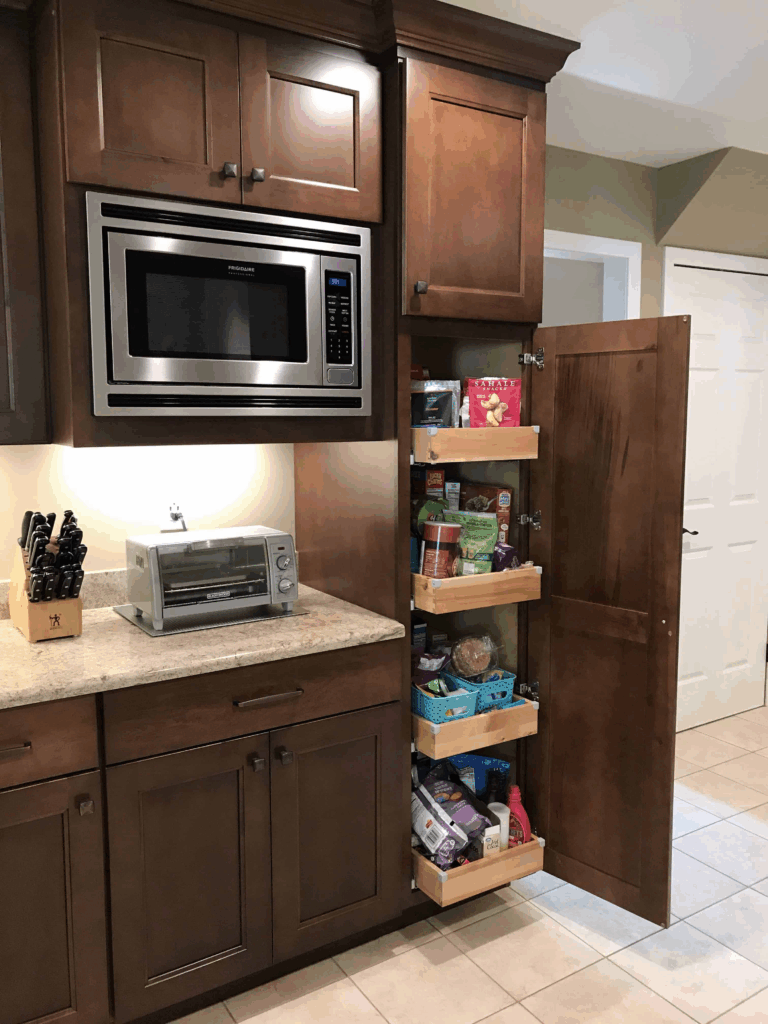
The planters help with culinary support and are built in for daily use.
A herb planter can integrate with maple cabinetry at a windowsill, backsplash, or drawer front. Herb planters provide culinary access.
Green basil, thyme, and parsley complement the maple tone. The fresh herbs add those colors beside the cabinetry.
An open niche or recessed ledge can hold the planter installation. A water-resistant insert or removable tray adds a maintenance feature.
Integrated herb planters make fresh herbs accessible during cooking. Their placement keeps the herbs within reach.
Maple cabinetry with high moisture resistance and high structural integrity supports planter integration. The integration preserves cabinet durability.
Across the room, integrated herb planters can support health-oriented design and sustainable design, especially when outdoor space is limited. Provide proper lighting for herb growth, with supplemental grow lights under the cabinets for indoor planters.
Integrated herb planters combine utility and appearance while avoiding design overload.
Herb planters in maple cabinetry combine daily function with natural elements.
Maple Cabinets With Textured Backsplash
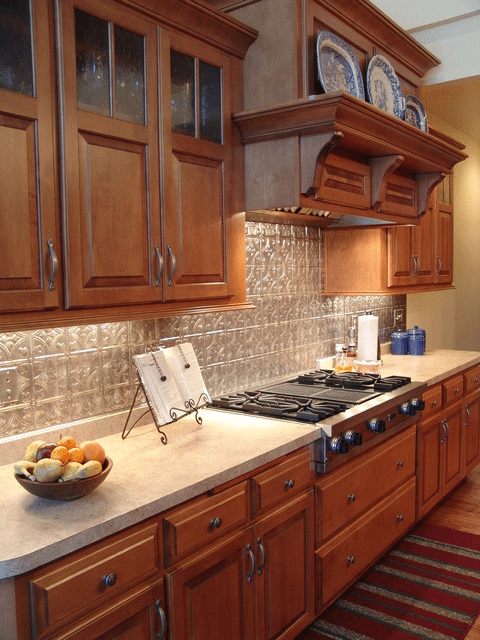
The small design choice is paired with a detail-oriented homeowner.
A textured backsplash sits behind the maple cabinets. Hand-glazed ceramic, stacked stone, and tactile tile create contrast with the smooth maple cabinetry.
Natural light works well with a textured backsplash. Its uneven surfaces catch both highlights and shadows.
Rougher and patterned materials contrast with the warm maple cabinetry. Its grain is uniform.
The handcrafted backsplash complements the small design choice. White-washed brick, zellige tile, and herringbone tile are possible materials.
Natural imperfections add character here. Choose a backsplash that shows them.
The backsplash material can repeat behind open shelving and extend to the ceiling around the range hood. This carries the same surface through both areas.
Maple sets the kitchen tone. Balance it with the backsplash material, which introduces texture.
Stainless Steel Appliances with Maple Cabinets
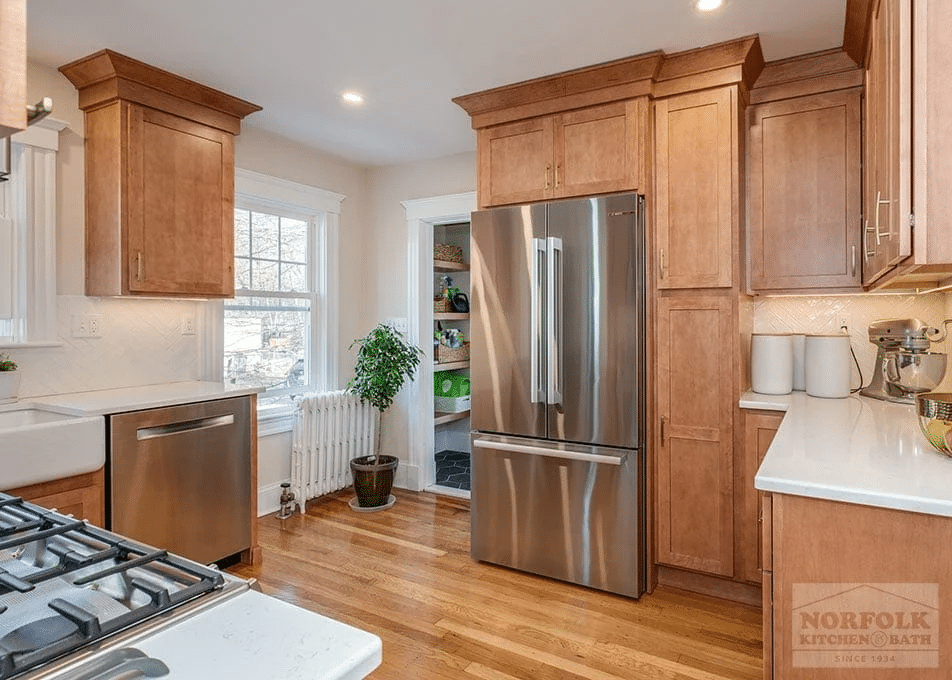
Stainless steel appliances pair with maple cabinetry. The combination places metal appliances against the warmer wood surface.
The sleek, cool surface of stainless steel contrasts with the warmth of maple. Stainless steel appliances bring that contrast into the kitchen.
This material pairing supports functionality and avoids extreme dependence on trends.
In high-traffic kitchens, stainless steel appliances provide a professional-grade appearance, easy cleaning, and high durability. Stainless steel is suitable for these busy kitchens.
Natural or light maple finishes balance the steel tones. Stainless appliances can serve as focal points while the maple cabinetry remains visible among them.
A grouping of the range, refrigerator, and dishwasher can be framed by maple panels. Plan the layout and spacing to avoid clutter.
Brushed metal hardware coordinates with stainless appliances. Matching hood vents coordinate with the stainless appliances as well.
Stainless steel and maple work in transitional kitchens and modern kitchens. The nearby cabinetry keeps the metal finish connected to the room.
Maple cabinetry surrounds stainless steel appliances and supports long-term function. The pairing keeps the working areas practical over time.
Integrated Appliances for Maple Cabinets
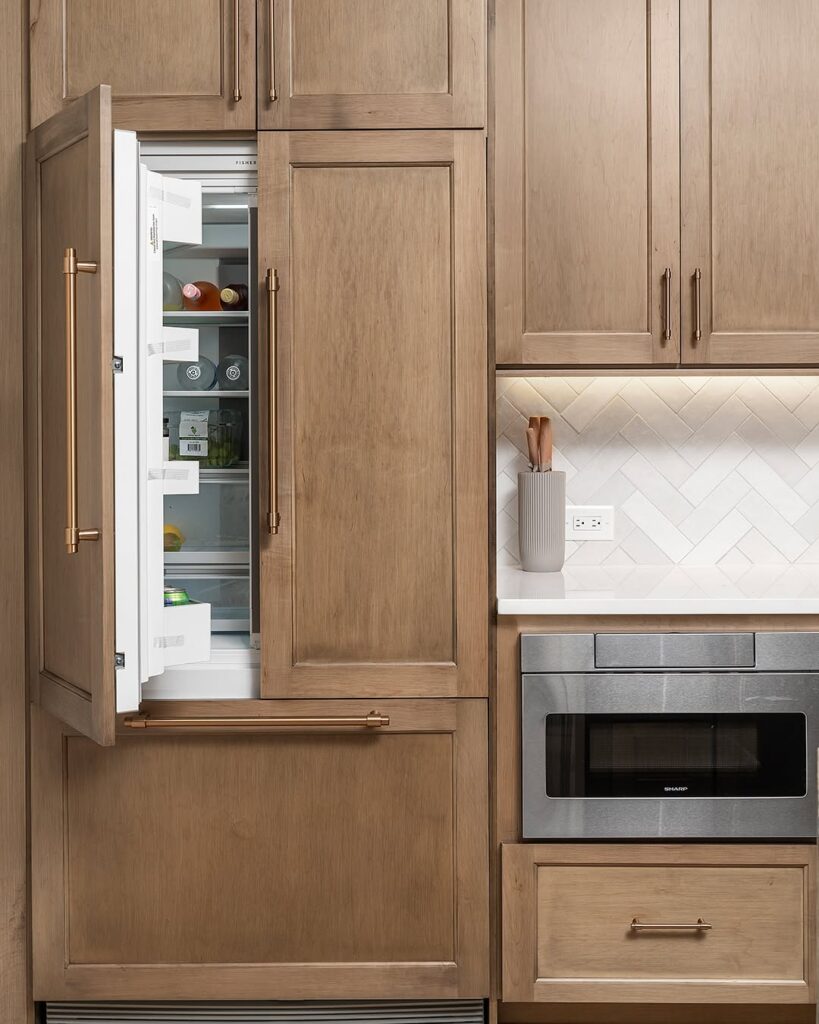
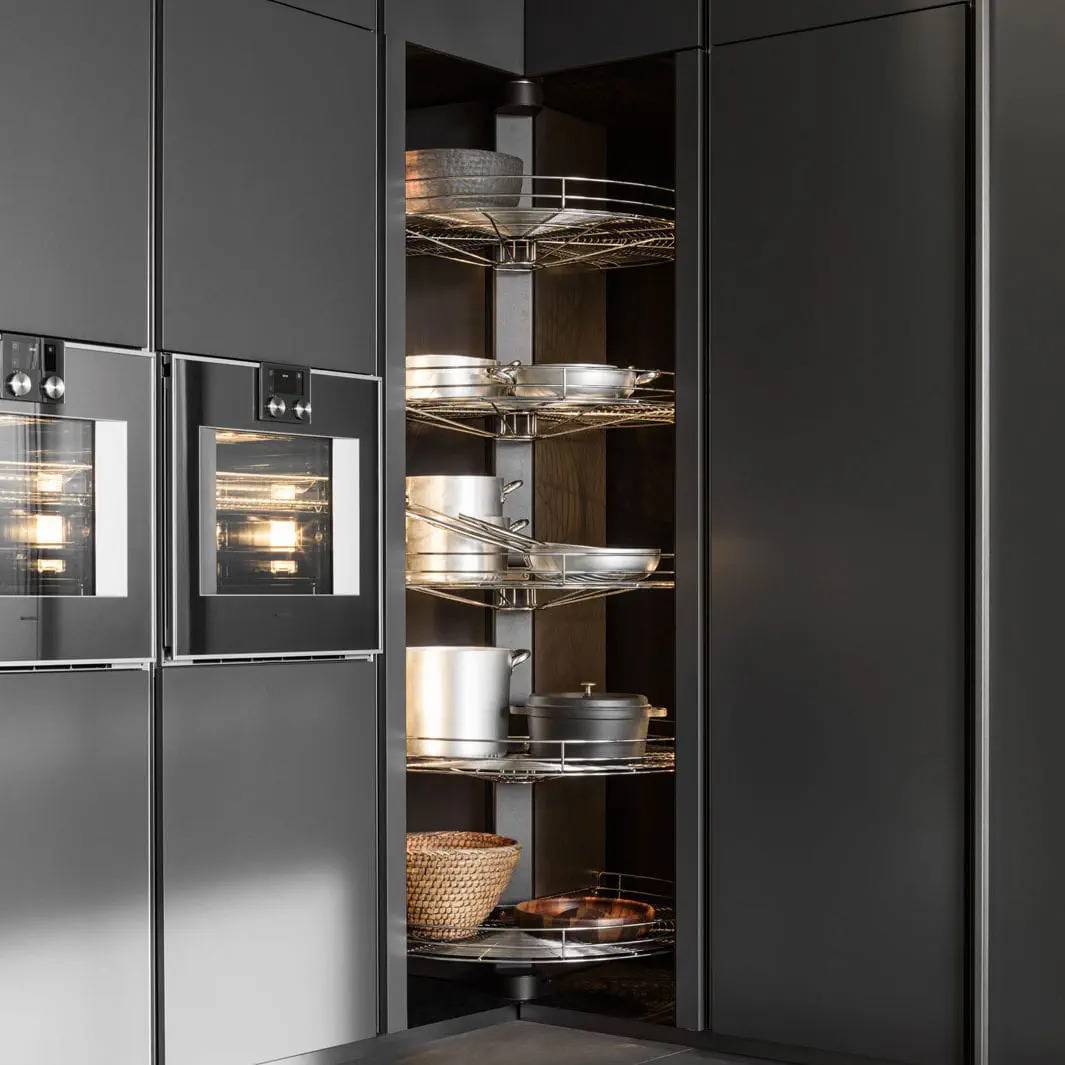
Integrated appliances reduce visual clutter while preserving appliance performance. Their placement keeps the kitchen's working features available without leaving as many separate appliance fronts in view.
A panel-ready dishwasher, panel-ready refrigerator, and warming drawer can each integrate with maple cabinetry. Integrated appliances preserve the maple grain and warmth.
Appliance integration helps minimize visual clutter in an open-concept layout. The nearby spaces remain less interrupted by appliance fronts.
The consistent texture and high durability of maple cabinetry support custom appliance panels. Custom panels can match the cabinetry.
In the kitchen, integrated appliances reduce visual intrusion and increase design cohesion.
Maple cabinetry can frame integrated appliances in luxury kitchens. Integrated appliances can also produce high-end results in compact spaces.
In one layout, adjust the hardware placement to maintain visual flow. Appliance hardware can be panel-integrated or finished in matching tones.
Integrated appliances in maple cabinetry reduce interruptions and maximize storage and utility. Their placement keeps the cabinetry more continuous.
Appliance integration helps the setup work over the long term. Nearby, maple cabinetry retains a warm character.
Sliding Maple Cabinetry
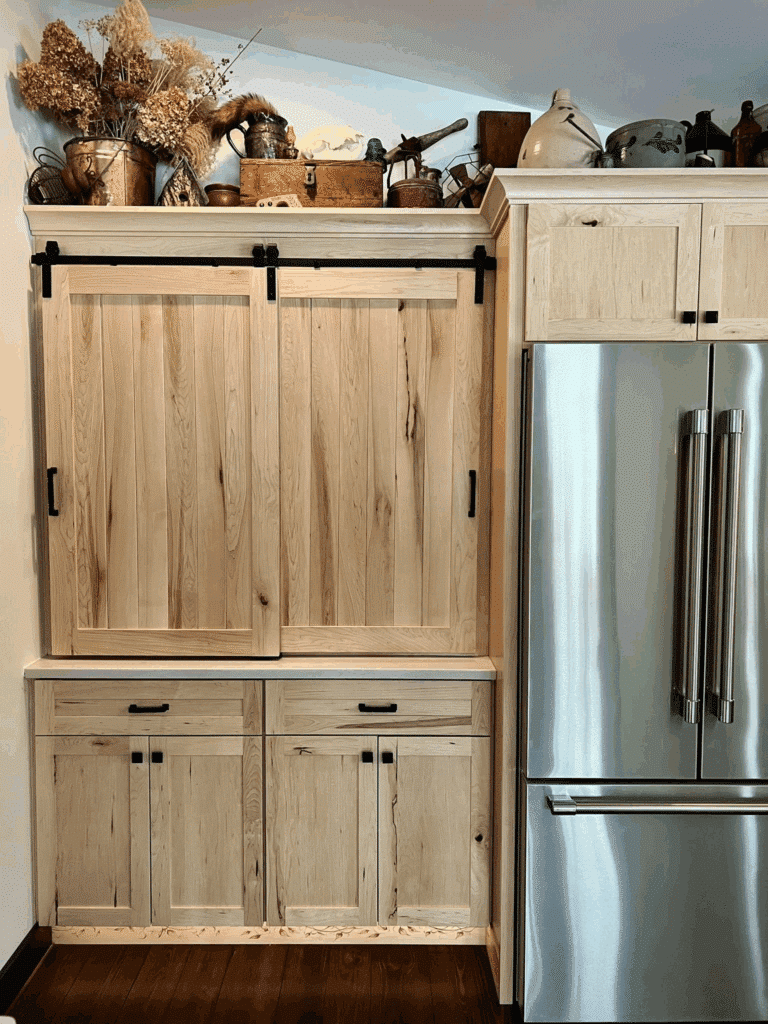
Sliding doors are applied to maple cabinets and provide functionality.
Sliding panels conserve space because they need less door clearance than swinging cabinet doors. That makes them useful in compact kitchens and high-traffic kitchens.
In one cabinet run, matching maple sliding panels create unified cabinetry.
Track systems can be barn-style, recessed, or built with a modern rail. These systems adapt to different kitchen layouts.
Sliding fronts control access to storage in a pantry, appliance garage, or upper cabinet. They also support the kitchen workflow.
Smooth maple supports the movement of the doors. The surface remains the main feature.
Use sliding doors when quick access is needed. Details such as vertical grain or a panel inset can define the panels.
Resilient maple supports daily use and durability. Maple cabinetry also works with matte black or brushed brass hardware finishes.
Across the kitchen, sliding-door cabinetry combines kitchen usability with warmth.
Maple Cabinet Hardware in Matte Black
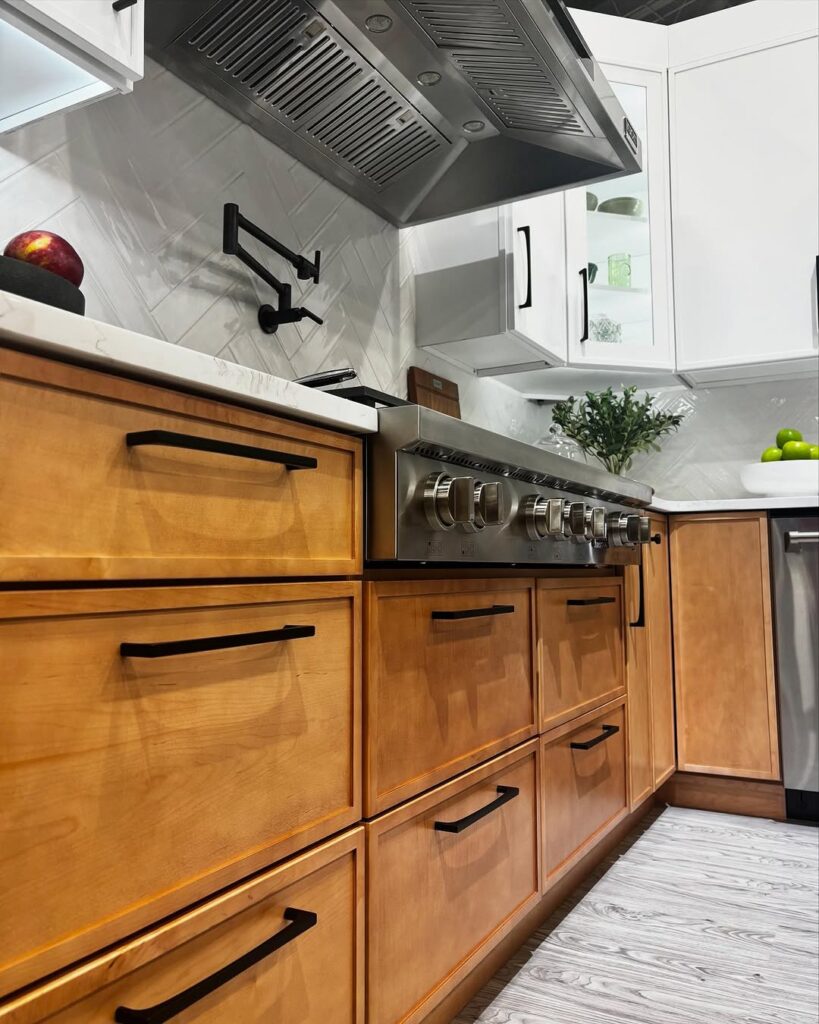
Matte black metal hardware pairs with maple cabinetry and adds modern character.
Black hardware defines maple cabinetry. The maple has warm golden undertones, while the hardware is cool and flat in texture, creating a contrast.
Brushed nickel contrasts with maple and matte black. Stainless steel creates the same contrast without an overly industrial appearance.
Black metal square knobs suit slab maple doors. Oversized black metal handles suit shaker maple doors. Flat bar pulls suit both slab maple doors and shaker maple doors.
Hardware functions as a defining accent. Choose an appropriate hardware scale and space the hardware consistently.
Neutral maple cabinetry works with matte black hardware. The matte black hardware supports the maple cabinetry and has lasting style.
Maple and black hardware suit Scandi-inspired kitchens, modern farmhouse kitchens, and contemporary kitchens.
For visual cohesion, consider black stools, pendants with black frames, and black appliances. These black accents help tie the space together.
Compared with polished finishes, matte finishes do a better job of resisting fingerprints. Matte black hardware also has straightforward maintenance.
Maple and black hardware suit simple cabinet layouts and have lasting appeal.
Fluted Glass for Maple Cabinets

The ribbed surface of fluted glass adds texture and depth. Fluted glass inserts integrate with maple cabinetry and provide semi-private storage.
Fluted glass partially obscures cabinet contents. It suits items that are imperfectly presented.
Maple wood has a soft grain and neutral temperature. It pairs with fluted glass inserts, which support functional cabinetry.
Solid wood surfaces are broken up by fluted glass. Designers place fluted glass in upper wall cabinets and pantry doors.
Vertical fluted glass lines suit low-ceilinged kitchens and compact kitchens. Fluted glass diffuses both natural light and artificial light.
Fluted glass works with framed shaker and flat-panel door styles. A soft maple finish, either natural or light-stained, complements it.
Fluted glass inserts combine function and refinement. They suit modern materials.
Buttery Yellow Maple Cabinets
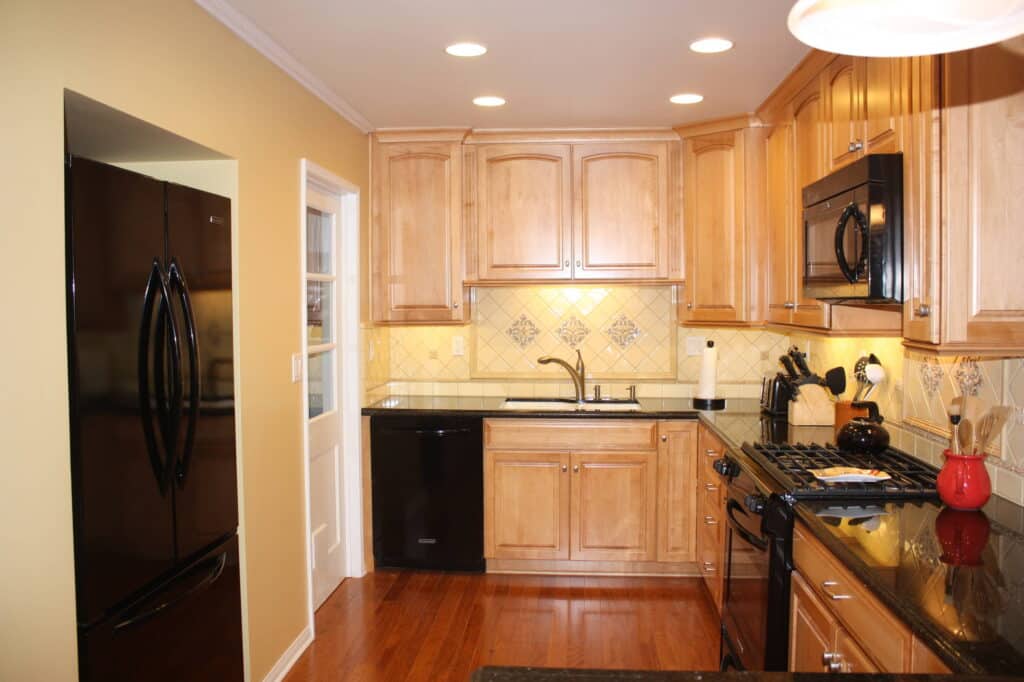
The combination supports an inviting kitchen and adds comfort. Buttery yellow accents are paired with maple cabinets.
Soft golden maple complements creamy, muted yellow.
Maple and yellow suit family kitchens as well as vintage-inspired interiors.
Yellow can appear in a tiled backsplash, on painted walls, or through bar stools and small appliances.
Across the room, this palette works best with ample natural light.
Brass and copper can join maple and yellow. Designers pair the warm metals with the maple and yellow combination.
Maple provides structure in the kitchen. Limit yellow to an accent, and consider ivory quartz or butcher block for the countertops.
This palette suits cottage-style, Scandinavian, and transitional kitchen styles.
Maple and yellow add color without bold trends. The combination suits cozy interiors.