20+ Earthy Bedroom Ideas for a Natural Retreat
Natural tones set the mood in an earthy bedroom. Organic materials help create a calming environment.
Warm, muted color comes through in beige, terracotta, and olive green. Wood, linen, and stone add texture to the palette. Together, these elements help an earthy bedroom evoke a connection to nature.
The earthy bedroom style supports relaxation and has a timeless quality.
Bedroom design can take its cues from the natural world. Use raw wood accents with earthy textiles to bring that influence into the room.
Pistachio Green Accent Color
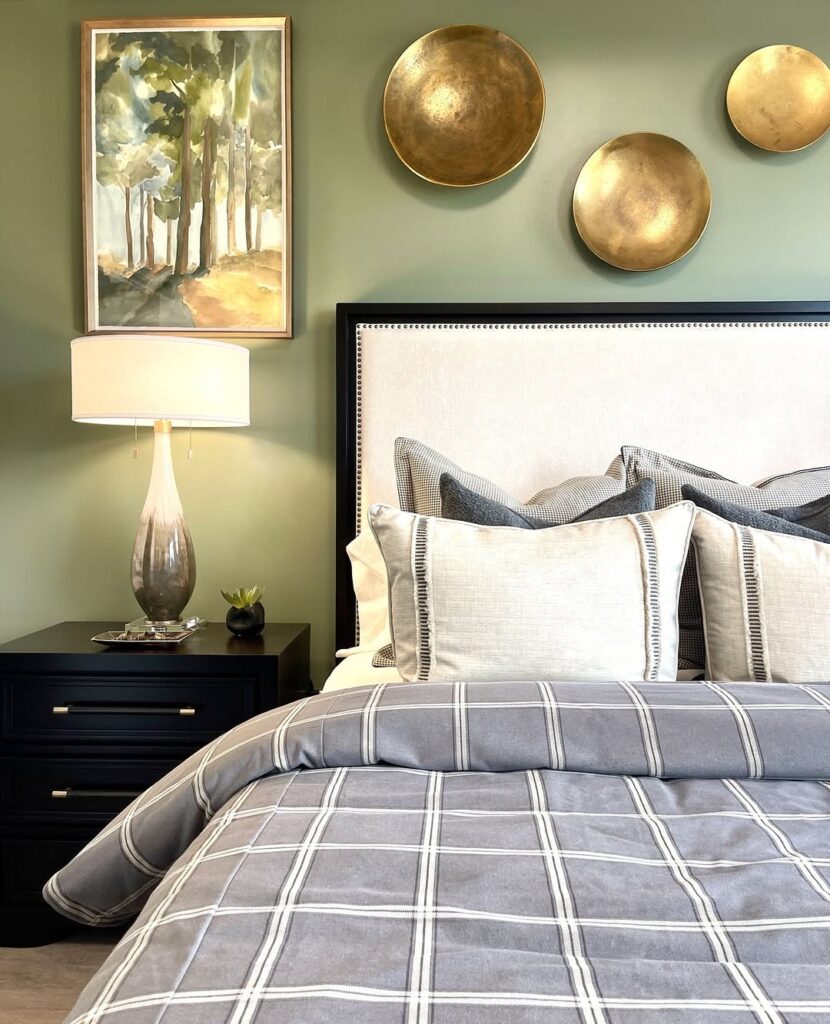
Pistachio green has an earthy palette and a gentle quality. The color supports a grounded atmosphere.
Pistachio green is softer than both chartreuse and forest green. It supports a tranquil atmosphere without creating sterile minimalism.
Camel, clay, and oat all complement pistachio green. The color suits use as an accent.
Pistachio green can tie together ceramic vases and bedside lamps, while upholstered stools and window frames carry the same shade.
Muted pistachio works on cushion covers and linen bedding. These uses support a lived-in atmosphere.
Natural light reflects off pistachio green, while wood and stone soften the color. The rustic appeal of wood and stone remains.
Pistachio green textiles, including knit throws and cotton drapes, add tactile softness. Painted pistachio features on a headboard or trim detail provide subtle color.
Pistachio green can support the calm of fall or the freshness of spring. As a seasonal neutral, it works year-round and suits serene natural interiors.
Forest Mood Bedroom Wall
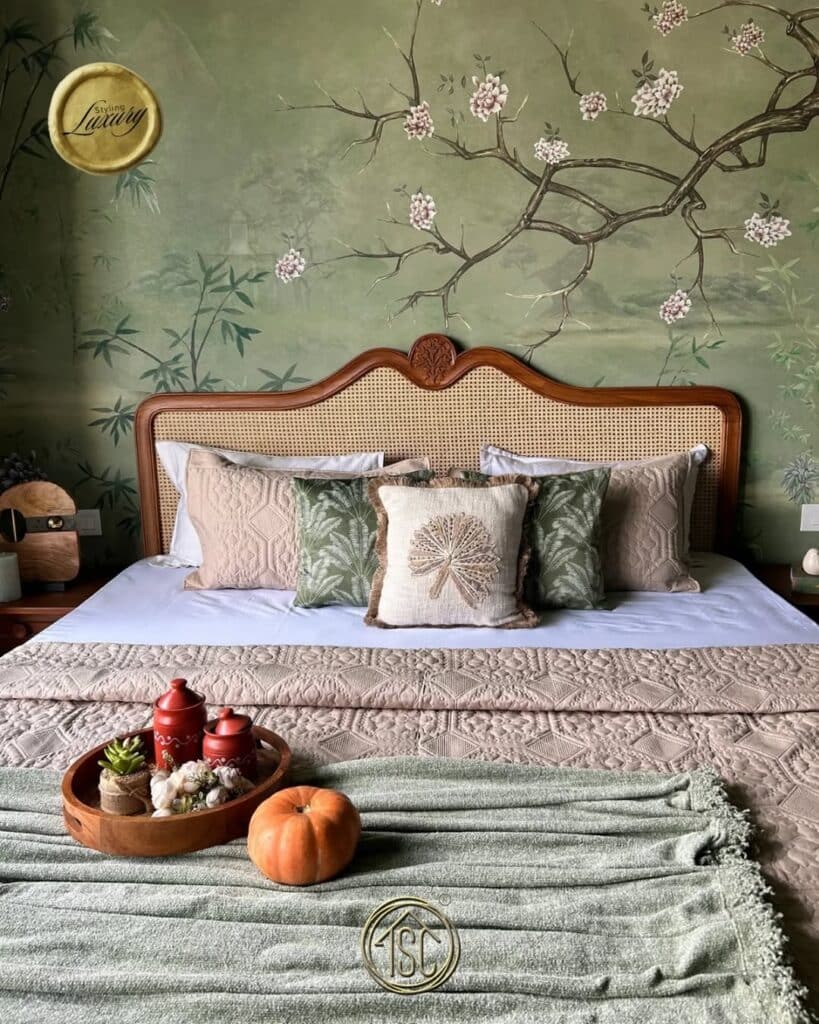
Deep color gives the accent wall a strong presence in this earthy bedroom. The room remains serene, with the wall serving as its anchor.
A matte finish keeps the wall surface understated. Forest green, moss charcoal, and bark shades are deep colors that support a cocooning atmosphere.
Light neutrals can balance the accent wall. Limit the wall color to part of the room for added depth.
Raw wood and ceramic lighting sit with textiles made from natural fibers. The accent wall becomes the focal point and evokes a forest canopy.
Limewash, clay-based paint, and textured plaster add surface variation. These textured finishes reduce the flatness of the wall.
Extend the accent color onto integrated storage and shelving. This color extension supports seamless flow.
Soft linen belongs on the bedding, while botanical sketches and driftwood frames can be added to the decor. Choose bone or ecru for the bedding colors.
Natural mystery gives the feature wall a grounded quality. The wall brings nature indoors.
A moody accent wall suits a quiet bedroom retreat. It adds visual interest and earthy calm.
Knotted Rope Shelf and Planter Display
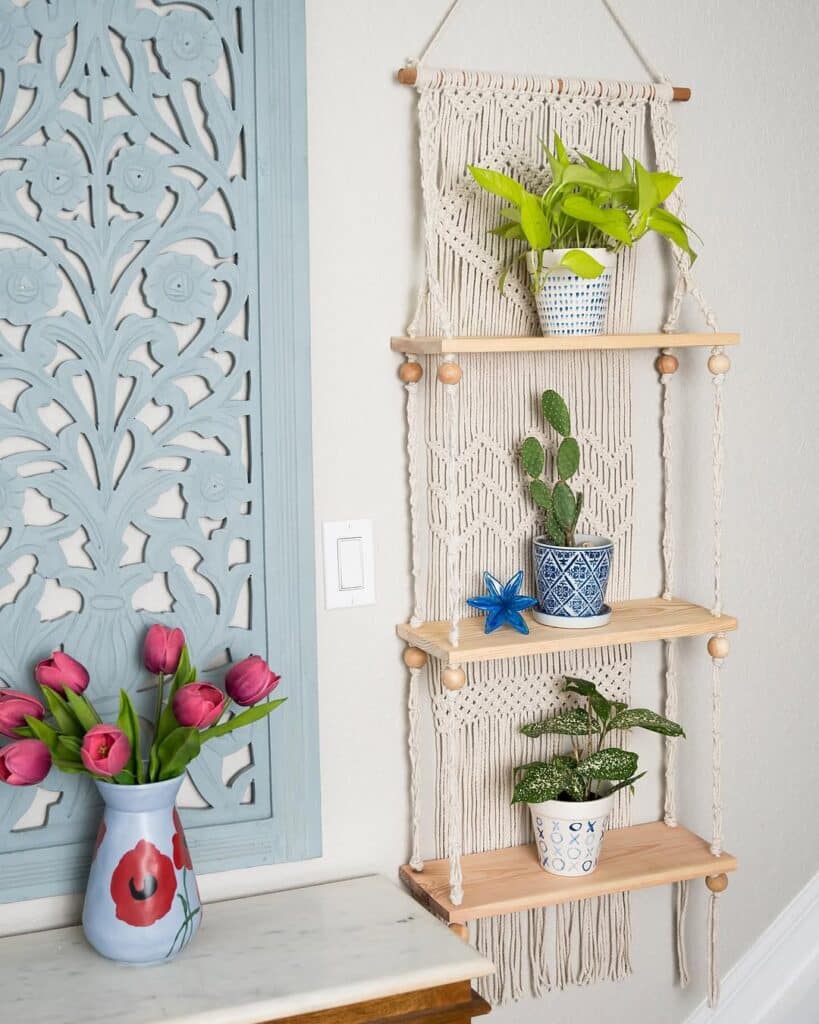
Macramé draws on craft tradition and fits an earthy design scheme. Its knotted form brings that material language into the room.
A knotted rope macramé piece can take the form of a hanging shelf or planter holder. It uses vertical space while helping avoid room clutter.
At the ceiling or on a peg rail, a macramé piece feels more organic than structured shelves.
Natural cotton and hemp cords are strong and tactile. Macramé complements woven rugs, clay vessels, and raw wood.
Pothos, string of pearls, and ferns can fill a macramé planter with trailing greenery. The greenery softens hard edges.
A macramé piece can serve as both decor and storage. Its open weave allows light passage and airflow, while small books, artisanal candles, and sculptural objects can sit inside.
Macramé supports a handmade aesthetic and contrasts with mass-produced furniture.
Macramé works with neutral walls or terracotta walls. It integrates with the room design.
Macramé shelving brings both artistry and utility through its craftsmanship. It is suited to earthy interiors.
Sculptural Furniture
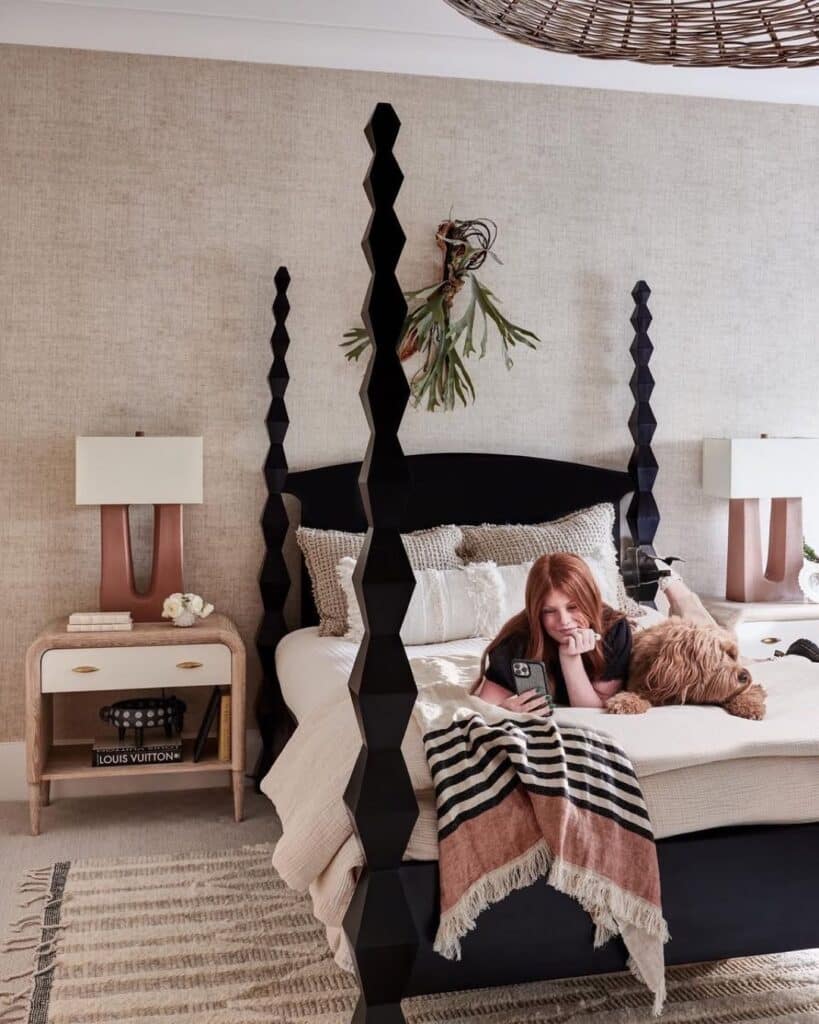
Start with furniture silhouettes when shaping an earthy bedroom. Select silhouettes that keep the focus on the forms of the furniture.
Natural curves and imperfect lines give sculptural furniture a grounding presence. These details keep the furniture connected to less rigid forms.
A low nightstand with rounded edges can sit near an arched wood bench. A carved accent chair adds another furniture form to the room.
Sculptural furniture evokes a connection to nature. Its softer presence contrasts with sharp modern forms.
Wood grain, stone finish, and plaster texture add material layers to the room. They also indicate craftsmanship through the surfaces themselves.
The coffee table has a live-edge detail that keeps its shape close to the natural form. For sculptural furniture, prioritize human-made forms over machine-cut ones. At the bedside, use a plinth made of solid stone.
Wool, linen, and terracotta pair with sculptural furniture. These materials keep the surrounding textures grounded.
Muted lighting helps keep the room subdued, and unbleached fabric continues that quiet treatment. Use minimal decor in the rest of the room.
Shape and form define the earthy bedroom aesthetic rather than color alone. The forms themselves carry part of the room's character.
Sculptural furniture provides utility as well as form. It can support the timeless appeal of a restful retreat.
Drapery with Soft Boundaries
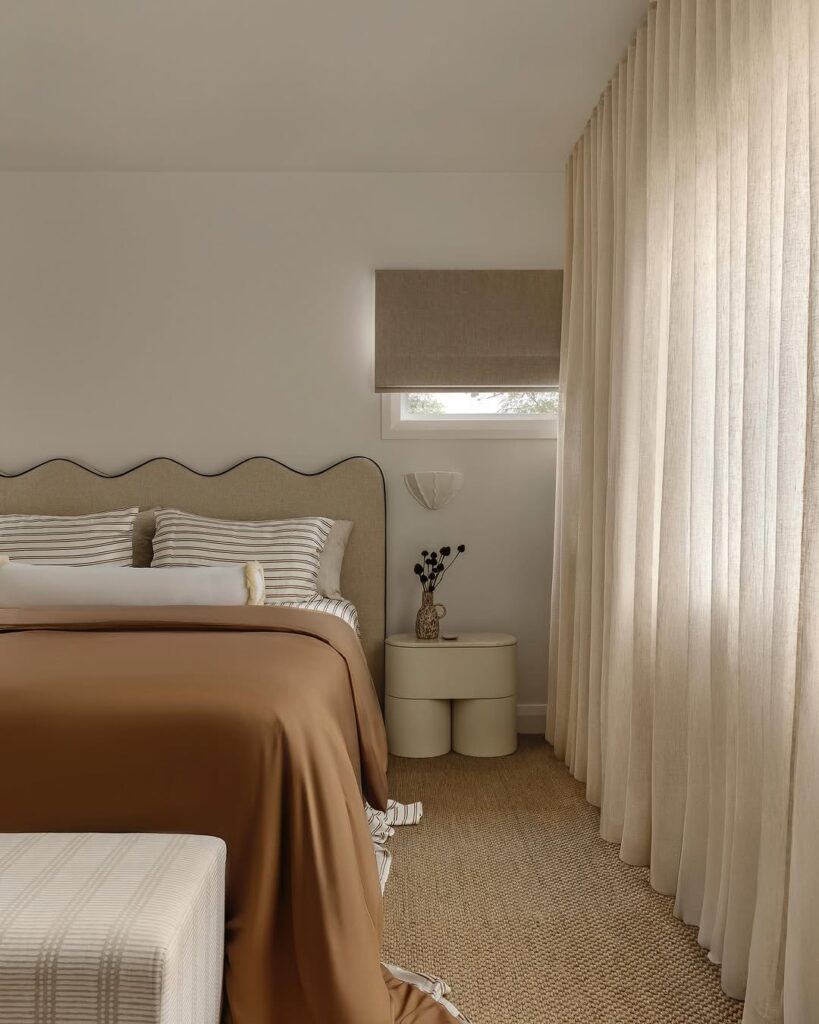
Soft boundary drapery addresses both the walls and windows in a serene bedroom. The treatment connects these two surfaces.
Natural drapery made from cotton gauze or flax linen can hang from floor to ceiling at the windows. These breathable fabrics soften the room's architectural edges.
Warm-neutral curtains in sand, mushroom, or pale sage provide light diffusion. Natural curtains also create a cocoon effect around the room.
Flowing drapery movement resembles the sway of foliage. The fabric brings that movement to the window area.
Soft boundary drapes contrast with velvet panels and structured blinds. They suit both west-facing and east-facing windows, allowing filtered sunlight to create a dappled glow.
Let the drapery extend beyond the window frame. Mounting it near the ceiling increases the perceived height of the room.
Raw wood beams pair with natural drapery. Stone flooring works with the same window treatment.
Drapes can separate sleep zones in an open-plan layout. They also serve as space dividers, frame reading nooks, and conceal storage alcoves.
Breathable curtains suit a calm bedroom. Choose curtains made from natural fabric.
Natural curtains complement earthy materials while keeping their visual emphasis low.
Botanical Vintage Wall Panel
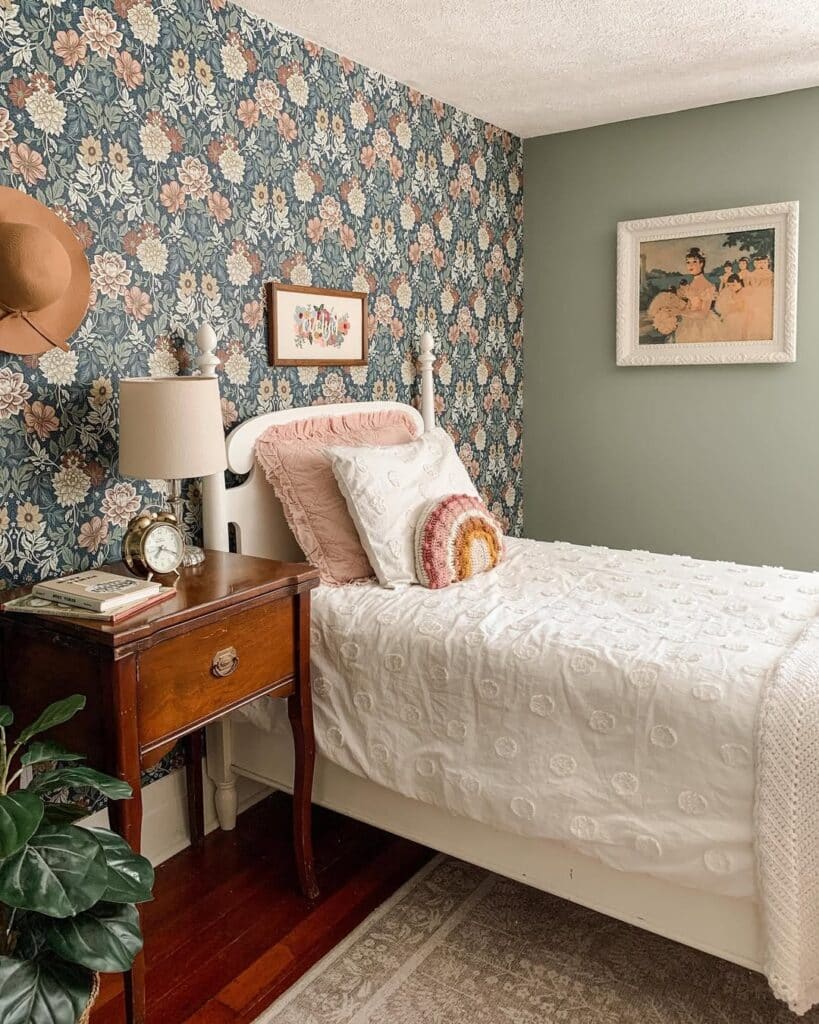
In the room, vintage botanical wallpaper serves as a nature-themed wall treatment.
A framed section offers an alternative to covering the whole wall. The single wallpaper panel can show archival florals, with aged botanical prints as another option, and it supports a museum-like atmosphere.
Botanical prints in muted green, ochre, and sepia depict preserved nature.
The botanical panel is more restrained than bold wallpaper. It provides an artistic accent.
Between the windows, the botanical panel can provide either a headboard alternative or a window accent. It coordinates with raw materials and wood tones.
Aged botanical prints pair with worn leather, antique lighting, and textured bedding.
A weathered or matte wallpaper surface supports a lived-in interior.
Ferns, wildflowers, and medicinal plants can fill the botanical illustrations. The illustrations represent inherited natural knowledge.
The botanical panel references science, curiosity, and nature study. It is not merely decoration.
For bedrooms with meaningful earthy character, a vintage botanical wallpaper panel combines comfort and heritage. Its reference to natural reverence adds to that feeling.
Earthy Layered Throws
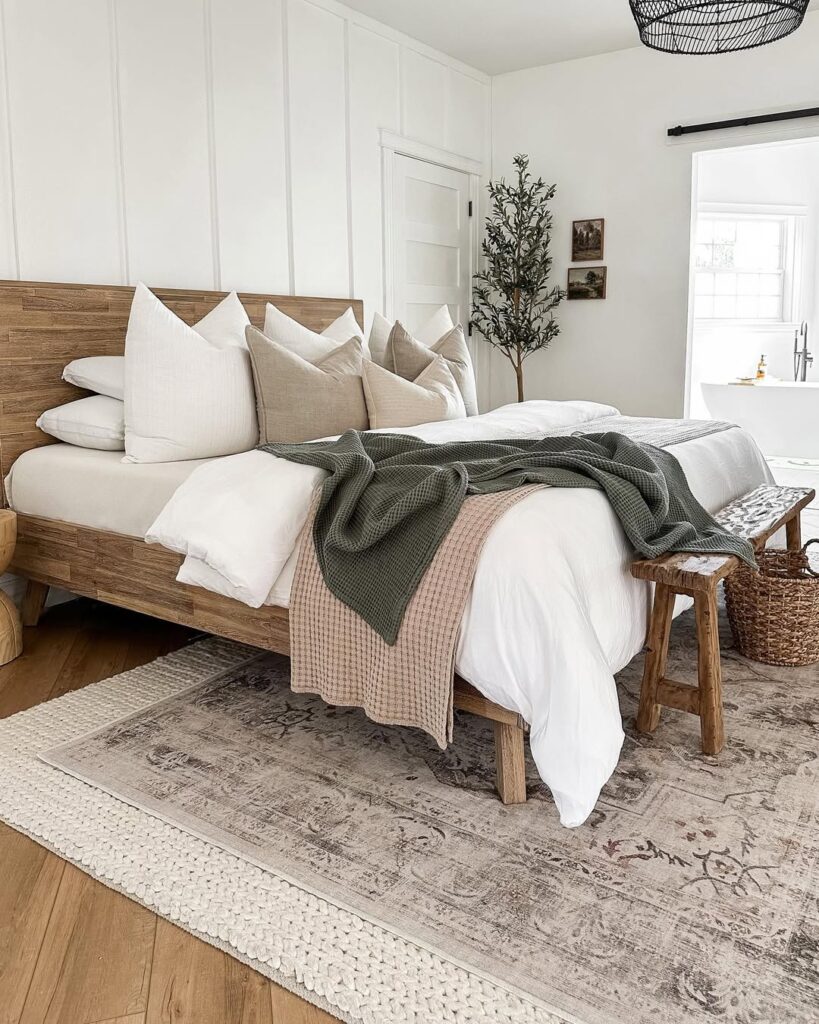
Earthy bedroom textiles provide comfort in a range of earthy tones. Throws add warmth.
On the bed or nearby seating, layer throws in clay, rust, sand, and stone. Linen, wool, and cotton gauze bring multiple textures into the arrangement.
Drape throws over the bed edge, a bench, or an armchair.
Tonal variation, loose weaves, and frayed edges are throw details that support an aged appearance.
Across the room, layered throws provide cold-weather insulation during colder months.
A stonewashed linen throw can form the base. Add a mushroom cover with a waffle texture and a cinnamon chunky-knit throw, combining different materials.
Layered throws create soft contrast, and the contrast remains non-harsh.
On a bed or chair, throws can be used for seasonal styling. Casual draping and neat folding are both options.
In comfort-focused bedrooms, layered throws add softness.
Cane and Rattan Headboard
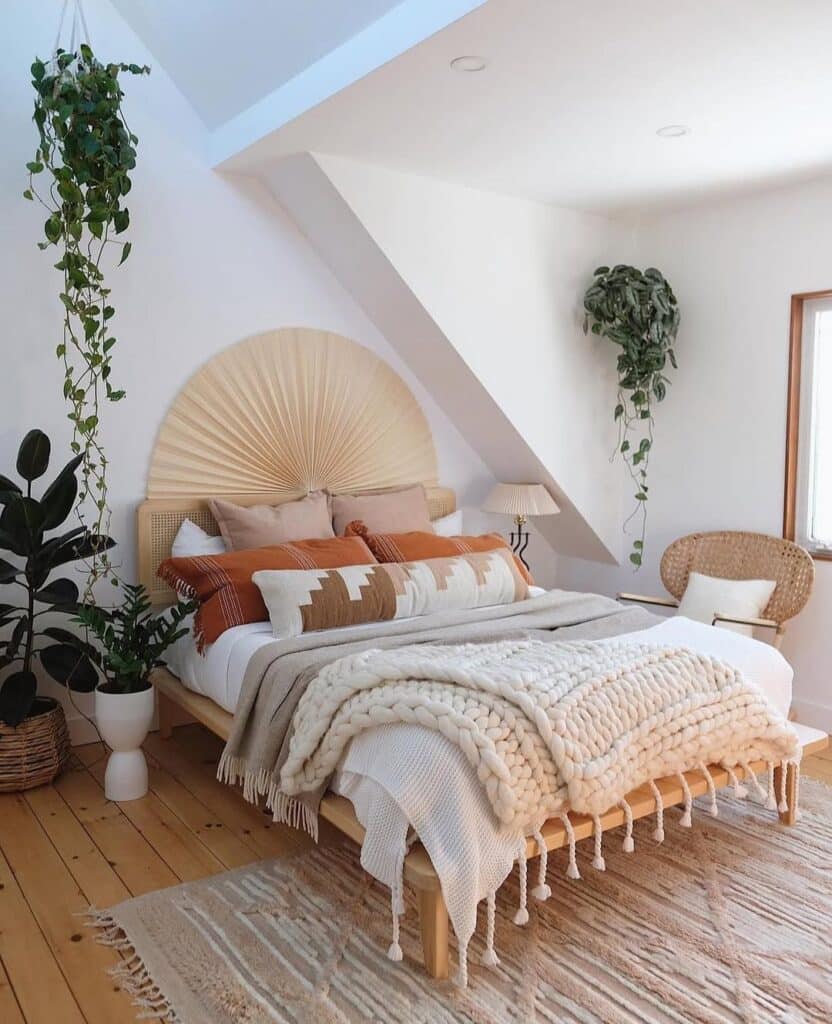
Beside the bed, a cane or rattan headboard brings in organic texture. Its woven construction has a natural texture that adds interest behind the pillows.
The structured design keeps the headboard defined. At the same time, the material brings organic warmth to the room.
An airy weave gives the cane or rattan headboard a light visual weight. That open quality suits small bedrooms and supports an open atmosphere.
A woven cane headboard complements sandy neutrals, terracotta tones, and warm taupes. These colors keep the surrounding palette warm.
A tactile rattan headboard adds depth to the bed. Pair it with a jute rug, linen bedding, and a wood bed frame.
In a bohemian bedroom, use a sunburst headboard. This type of curved headboard can act as understated art on the wall. An eclectic bedroom can use the curved version too.
Cane and rattan offer an eco-conscious option instead of synthetic materials. They come from fast-growing materials, which supports their environmental position.
Smooth clay pendant lights pair with a cane or rattan headboard. Add soft throws to the bed for the same natural combination.
Organic interiors can use a cane or rattan headboard as a bedroom update. The headboard keeps the bedroom connected to that organic direction.
Shiplap Bedroom Wall
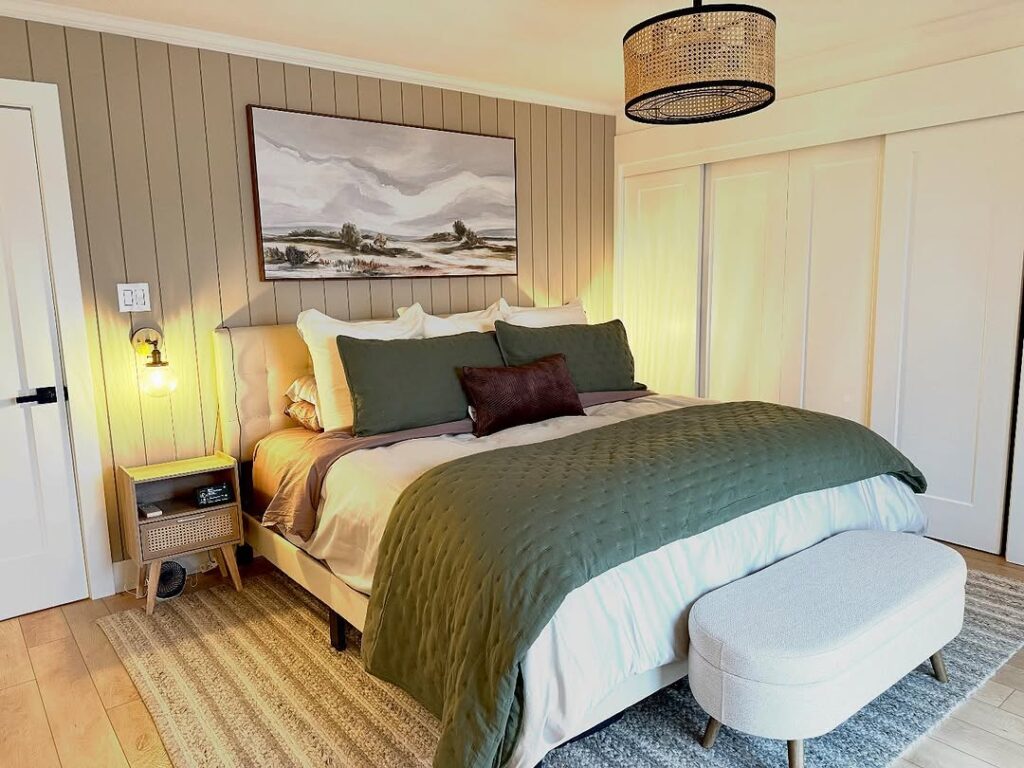
Shiplap adds natural structure to the wall without becoming overwhelming.
Across the wall, horizontal or vertical wood paneling adds architectural depth.
Natural wood, sage, sand, and warm ivory are finish options for shiplap. The paneling provides textural framing.
Shiplap creates a repeated rhythm. It is less stark than contrast walls and less busy than wallpaper.
Daylight shadows fall into the shiplap grooves. Those shadows add dimension.
The shiplap works with terracotta pots and linen drapery, while cane accents complete the same grouping.
Behind the bed, shiplap can replace a padded headboard or large wall art. It complements hand-thrown ceramics, wood flooring, and exposed beams.
Rustic shiplap has a timeless quality. It can be painted or left raw.
For settled earthy bedrooms, shiplap uses natural materials and provides a durable wall treatment.
Large Organic Bedroom Rug
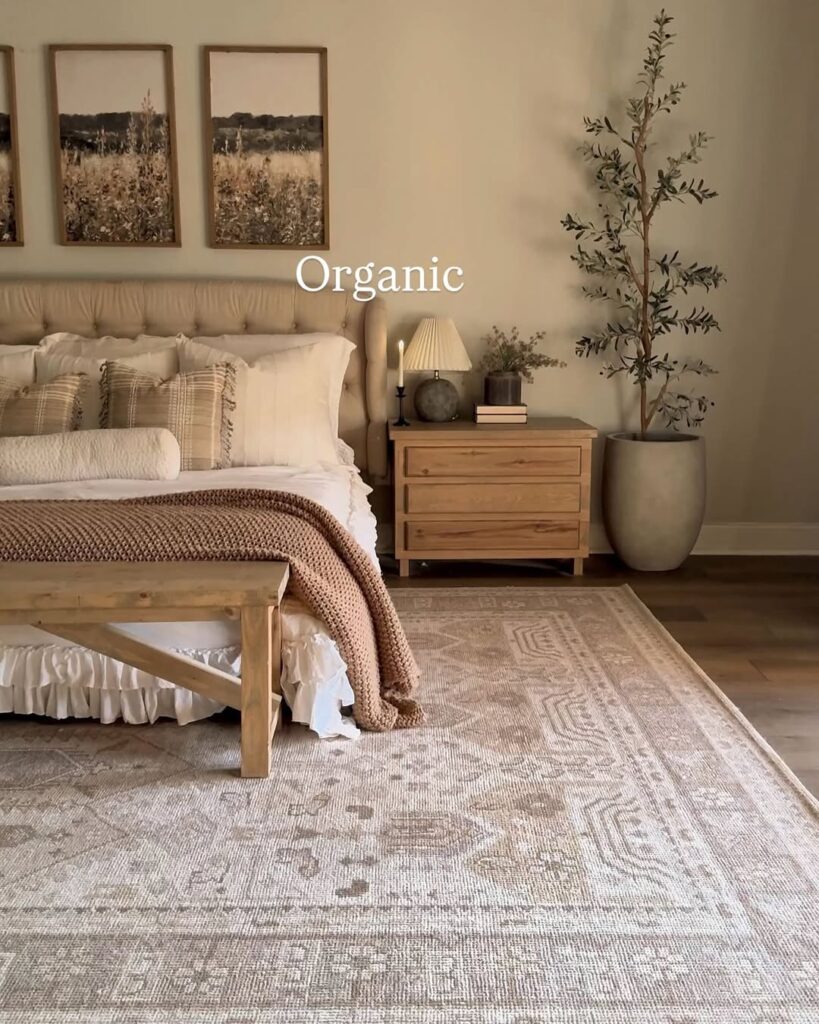
Organic flooring influences the room mood. In an earthy bedroom, the floor becomes part of the overall atmosphere.
Across the bedroom floor, a large natural-fiber rug provides softness underfoot. It also supports visual anchoring for the room.
An organic rug combines jute, wool, and sisal in an irregular weave. Its weave is uneven.
Oat, clay, and flax give the rug a neutral tone. The colors keep the large rug quiet within the bedroom.
The tonal weave variation resembles the natural inconsistencies of soil, sand, and stone.
An oversized bedroom rug can extend beyond the bed frame. That scale anchors the room, so use an oversized rug when the bedroom allows it.
Beneath a large organic rug, layer stone planters, linen bedding, and wood furniture. These pieces continue the rug's natural material direction.
Natural-fiber rugs have high durability and can support long-term use.
Choose organic texture and a generous size for an earthy bedroom rug. Prefer organic texture over busy patterns, and choose natural fibers over synthetic blends.