15+ Dark Wood Kitchen Cabinet Ideas for Classic and Modern Homes
Dark wood kitchen cabinets have a lasting appeal. Their warm tone and grounding texture make them a standout choice.
For everyday use, dark wood cabinets offer an alternative to all-white kitchens. They bring depth and contrast to the room.
A rich finish and natural grain allow dark wood cabinets to suit both modern minimalist kitchens and rustic farmhouse kitchens.
Dark wood finishes have a timeless character, and their popularity is increasing. They are associated with personalized kitchens, moodier spaces, and practical resilience.
Dark wood cabinets can support a home upgrade this year while keeping everyday usability in view. Their appeal comes from balancing practical use with a strong visual presence. This approach gives the kitchen an intentional look without setting function aside. Both daily needs and aesthetic appeal remain part of the decision.
Dark Wood Cabinetry With a Bold Accent Wall

A bold accent wall changes the kitchen atmosphere and updates the kitchen without replacing the cabinets. The accent wall can be treated as color blocking or a feature wall, placed behind or beside the cabinetry.
This approach is especially effective in kitchens with limited cabinetry. It works well when the cabinetry occupies one or two walls.
Terracotta, forest green, navy blue, or ochre complements dark wood such as walnut or espresso.
Rich accent colors can be combined with dark wood through an accent wall made from paint, tile, textured plaster, or wood paneling. The wall material adds color and texture around the cabinetry.
Lighting such as wall sconces or LED track lighting can draw attention to an accent wall. It also adds dimensionality to the room.
In one kitchen, coordinate the hues of accent items such as bar stools, dishware, and planters.
Keeping nearby walls and other surfaces neutral helps prevent visual overload. The cabinetry and accent wall can then stay as the room's focal points.
Dark wood cabinetry with an accent wall supports a modern framework that combines boldness with thoughtfulness.
Light wood floors with dark cabinets
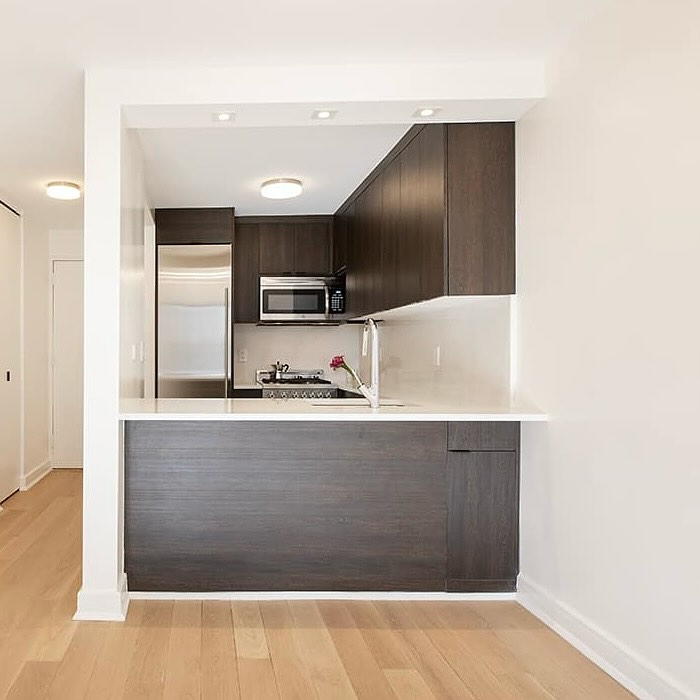
Dark cabinetry paired with light wood flooring creates depth through contrast. The flooring is the nearby detail that keeps the pairing from feeling one-dimensional.
Light flooring reflects natural light, making it useful for small kitchens and enclosed kitchens. White oak, maple, and light hickory are flooring options for this approach.
You can see dark cabinetry paired with a light wood floor in farmhouse, transitional, and contemporary settings.
A visual divide between dark cabinets and light flooring reduces visual heaviness. The combination keeps a warm texture while preserving the richness of cabinetry in espresso, walnut, or cherry.
Natural stone and white quartz are countertop choices. Hardware may be black or brass. Keep the wall paint neutral and the backsplash restrained.
In dark cabinets in enclosed-feeling spaces, this contrast palette supports functionality and visual clarity. Light flooring helps prevent the cabinetry from making the room feel too closed in.
Dark Cabinetry and White Backsplash
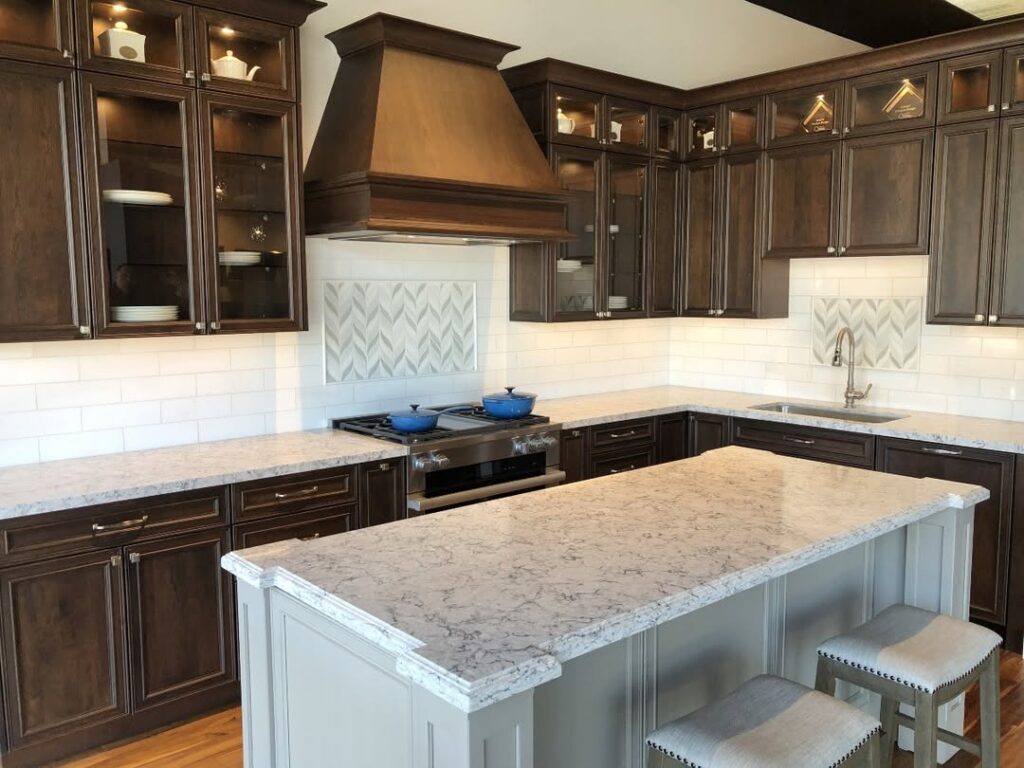
In one kitchen, deep wood tones are paired with a white backsplash. This pairing is an enduring technique.
For small kitchens and low-light kitchens, the contrast pairing helps prevent cabinet dominance.
A white backsplash reflects room light and can use subway tile or textured ceramic. Dark wood in espresso, cherry, or mahogany supplies the deeper color.
Countertops in white or another light color keep the surfaces bright. With white tile, use textured layouts such as herringbone or a vertical stack.
Hardware in brushed brass, stainless, or matte black sets the finish for the kitchen. Keep the wall paint neutral and choose light wood flooring.
The contrast strategy brings warmth and brightness into the room. It also highlights the dark cabinetry.
Dark Cabinetry and Open Shelving
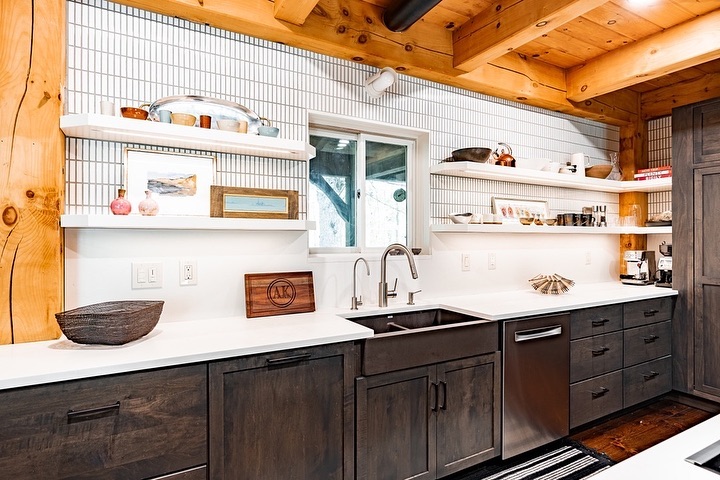
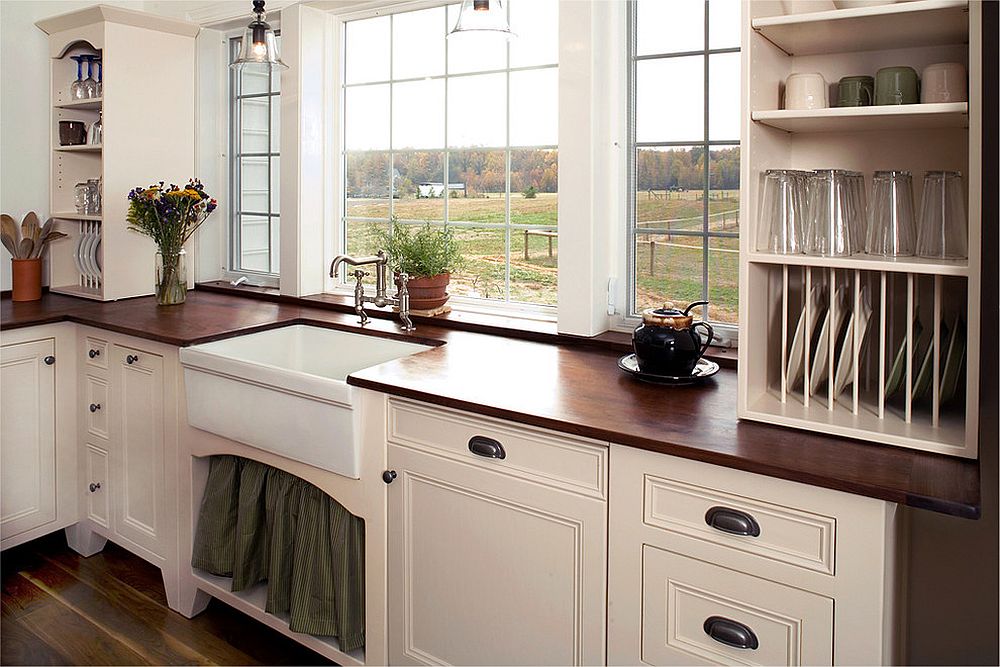
Dark wood cabinetry supports a versatile layout when closed storage is combined with open shelving. The combination gives the kitchen more layout flexibility.
Open shelving provides storage and helps reduce a boxed-in feeling. It can use wood in a floating form or metal, placed above dark base cabinets.
For layouts overwhelmed by upper cabinets, open shelving can replace some of that visual mass.
Open shelves can hold decorative objects, frequently used dishes, and small plants. A light wood finish or white paint gives the shelves display utility.
Brass or black shelf brackets provide structure. The brackets also add a visible detail beneath the shelves.
Dark cabinetry looks different beside a backsplash in white subway tile or warm zellige. The backsplash reflects both natural and artificial light.
Quartz or butcher block countertops work with open shelving and can support seasonal styling. Keep the flooring neutral so the shelves and displayed items remain clear.
For opening wall space, open shelving can make a change without requiring a full renovation.
Dark Cabinetry and Brass Hardware
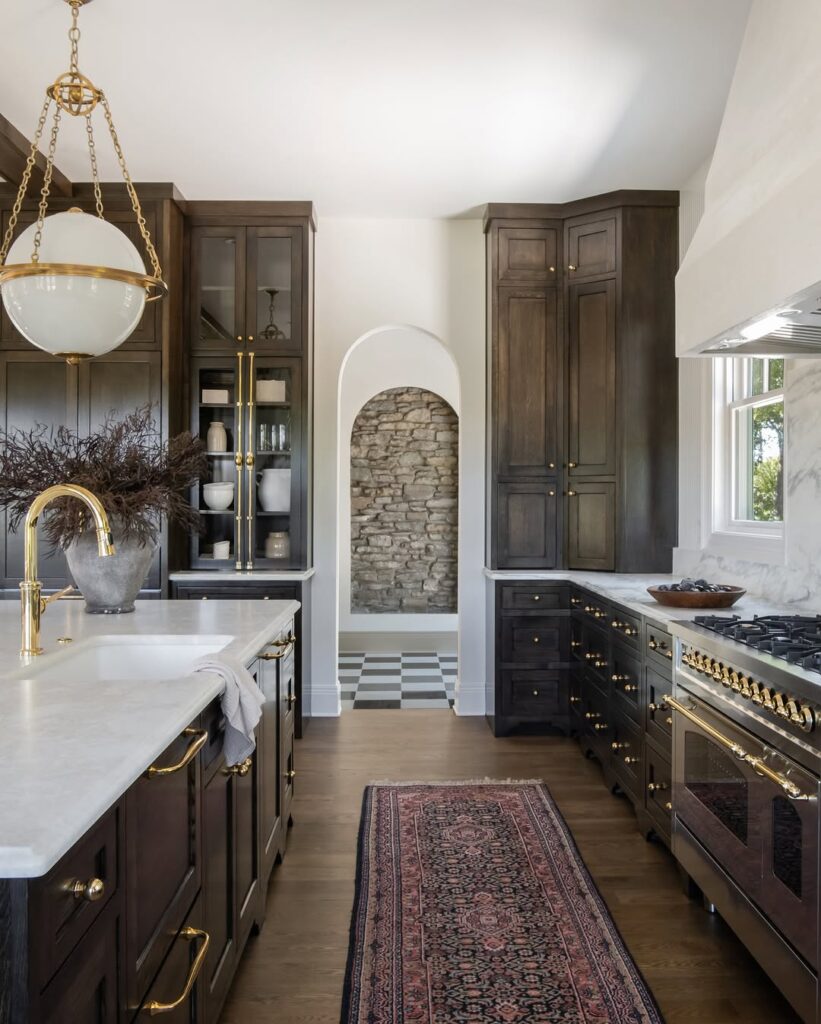
In 2025, brass hardware has dominant trend status. It is a prominent choice for updating dark wood cabinetry.
Dark cabinetry in walnut, espresso, or stained oak contrasts with brass. The hardware adds a golden tone beside the dark wood.
Dark cabinetry paired with brass hardware appears in transitional and traditional kitchens. Brass is the hardware finish.
A brushed, satin, or aged brass finish can develop a natural patina. That patina changes the character of the hardware over time.
White or ivory countertops provide a light surface, and the tile backsplash should stay neutral. Use bar pulls with a clean shape or round knobs in warm brass, while avoiding ornate hardware designs.
Matching brass lighting fixtures, including pendant lights and sconces, can sit near prep areas. For open-concept kitchens, use wood or mixed-metal bar stools with the brass details.
In a kitchen update, brass hardware can upgrade the appearance without replacing the cabinets.
Brass hardware works with both cool and warm palettes. This option is affordable compared with a larger cabinet change.
Light Countertops Dark Wood
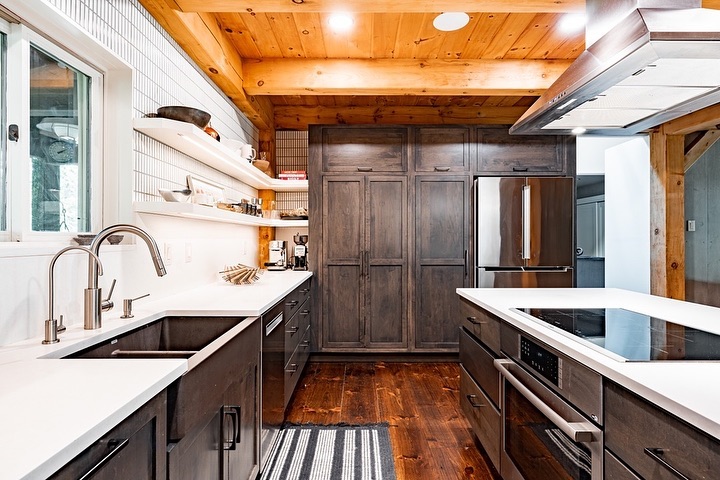
Contrast between the cabinets and countertop is associated with a balanced kitchen design.
Light countertops in white or cream provide brightness and a clean appearance. Dark wood cabinets in walnut, espresso, or acacia provide a solid base. The two materials are paired together.
White marble, quartz, and butcher block are countertop options for dark wood cabinetry. Light countertops reduce visual heaviness and help prevent the kitchen from feeling closed in.
Light countertops reflect more light. They are useful in kitchens with limited windows.
Matte black, brass, and stainless steel are the hardware finish choices. The backsplash may use white herringbone tile or limestone for added texture, and the hardware suits a dark-light palette.
This pairing aligns with popular trends while retaining classic character. The combination of dark wood and light countertops may boost resale value.
Dark wood and light countertops provide contrast. Together, they support long-term usability.
Dark Wood and Black Knobs
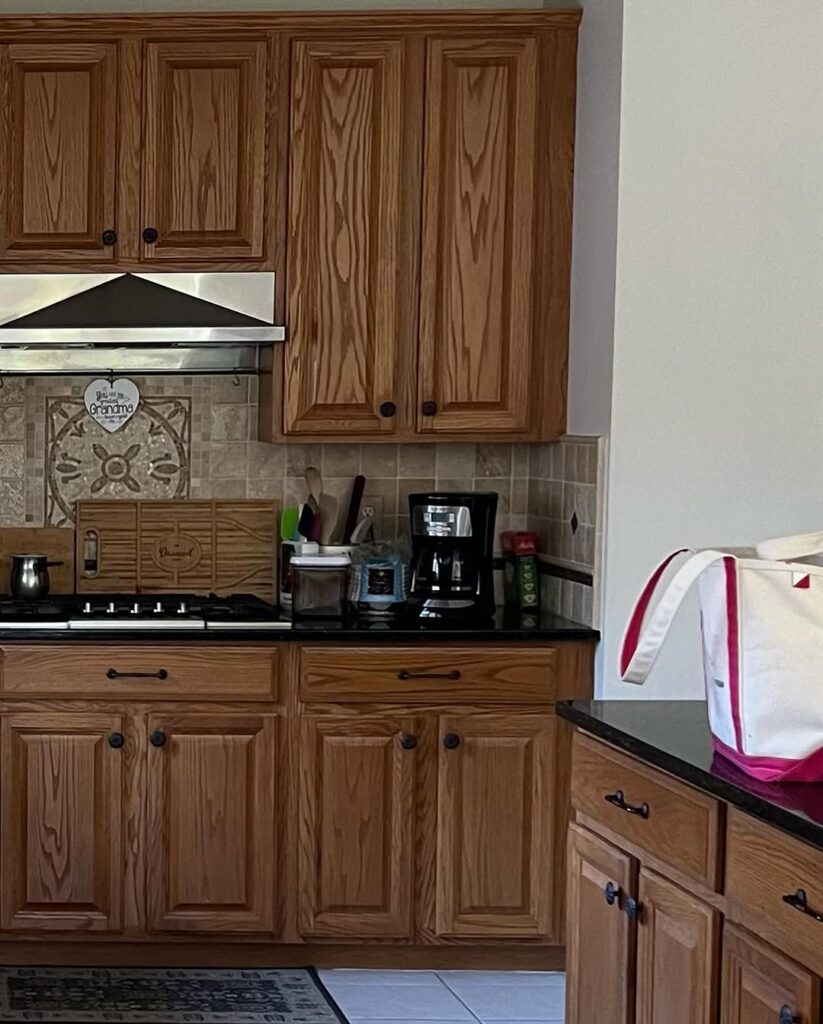
Matte black knobs and pulls pair with dark wood cabinetry. This pairing works across contemporary styles and rustic styles.
Espresso, walnut, and deep mahogany dark wood finishes complement black hardware. The black hardware enhances the cabinet texture.
Black hardware in matte or satin finishes provides tactile contrast. It also supports a unified look.
Slim, rounded black knobs add a soft industrial character to the space. Black hardware also requires less polishing.
The backsplash comes in ivory zellige tile or gray herringbone tile, and the overall setup works with medium wood flooring. Natural stone and white quartz are both countertop options that work with it.
Lighting fixtures in black and aged brass coordinate with black hardware. The shared color connection keeps the fixtures and hardware consistent.
A dark wood cabinet pairing suits a new kitchen design with quiet luxury style. It is not overly trendy and can also be used as a cabinet update.
Stainless Steel and Dark Wood
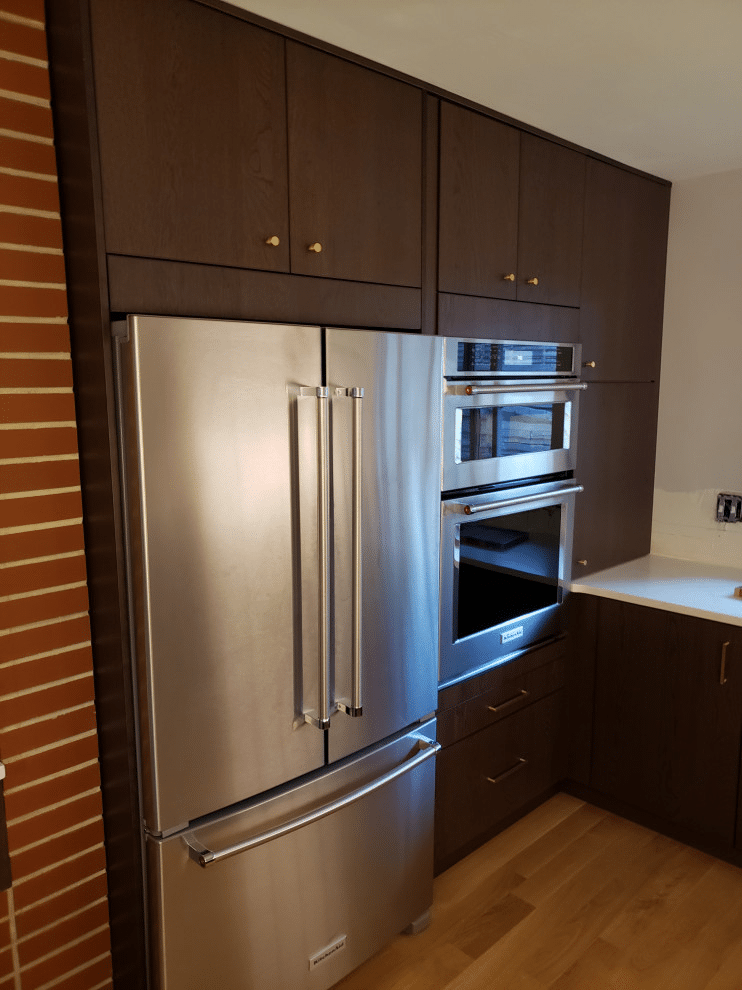
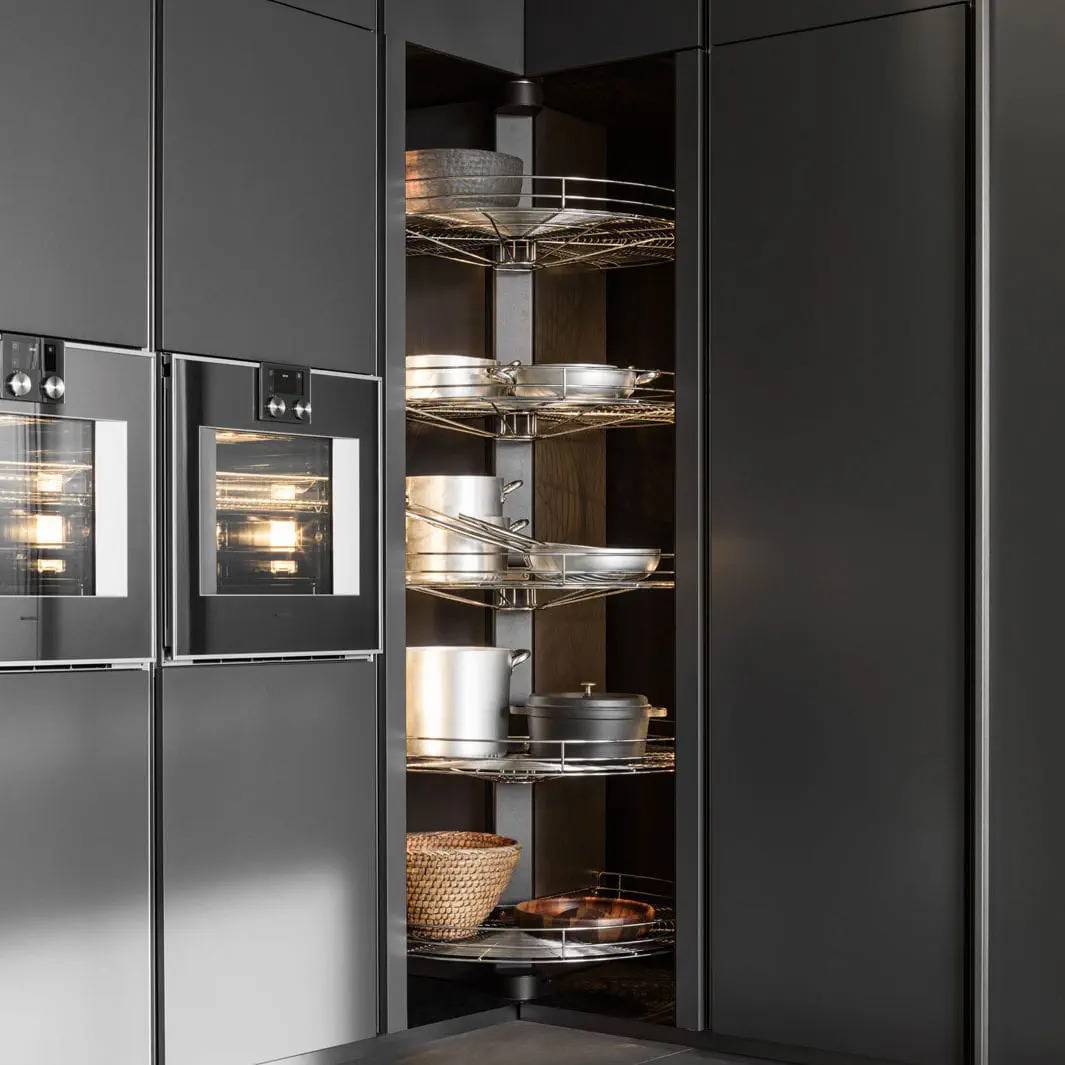
Stainless steel appliances pair with dark wood cabinetry.
Stainless steel surfaces contrast with the warmth of dark wood tones such as espresso, chestnut, and dark cherry. Stainless steel appliances support modern performance.
This pairing suits industrial kitchens and open layouts. Stainless steel surfaces reflect light.
Stainless steel appliances are durable and easy to clean. Matching finishes are available.
A neutral backsplash can use subway tile or marble mosaic. Brushed nickel and black hardware are also recommended with a dark wood-stainless pairing.
Mid-tone and light countertops bring visual lift to the space. Under-cabinet lighting brightens workspaces while serving as workspace lighting and highlighting wood grain.
The setup applies to new builds and remodels, supports simplified maintenance, and provides long-lasting durability. A dark wood-stainless setup suits high-traffic kitchens.
Dark wood and stainless steel suit both contemporary kitchens and modern farmhouse kitchens. The pairing combines everyday practicality with these two kitchen styles.
Matte black and natural wood cabinets

Natural wood brings warmth and texture to this 2025 kitchen remodel. Matte black cabinetry adds a bold, balanced character to the combination.
Organic natural wood tones bring warmth and texture to the room. They contrast with black cabinets, which help create visual zoning in the space.
In the lower and tall sections, black cabinetry brings a modern feel and added depth. Wood cabinetry above selected sections can use oak, ash, or walnut, creating contrast.
For a kitchen that moves beyond an all-white look, the wood and black combination works with Scandinavian, Japandi, and modern rustic styles. The result is an inviting space.
Keep the hardware minimalist. Black, brass, or leather hardware can suit the cabinetry.
Large cabinetry blocks are broken up by open shelving in matching wood, while the countertops use butcher block, concrete, or quartz.
Across a long-term renovation, the wood and black combination remains adaptable. It provides a kitchen aesthetic that is both functional and versatile.
Matte Dark Wood Cabinetry
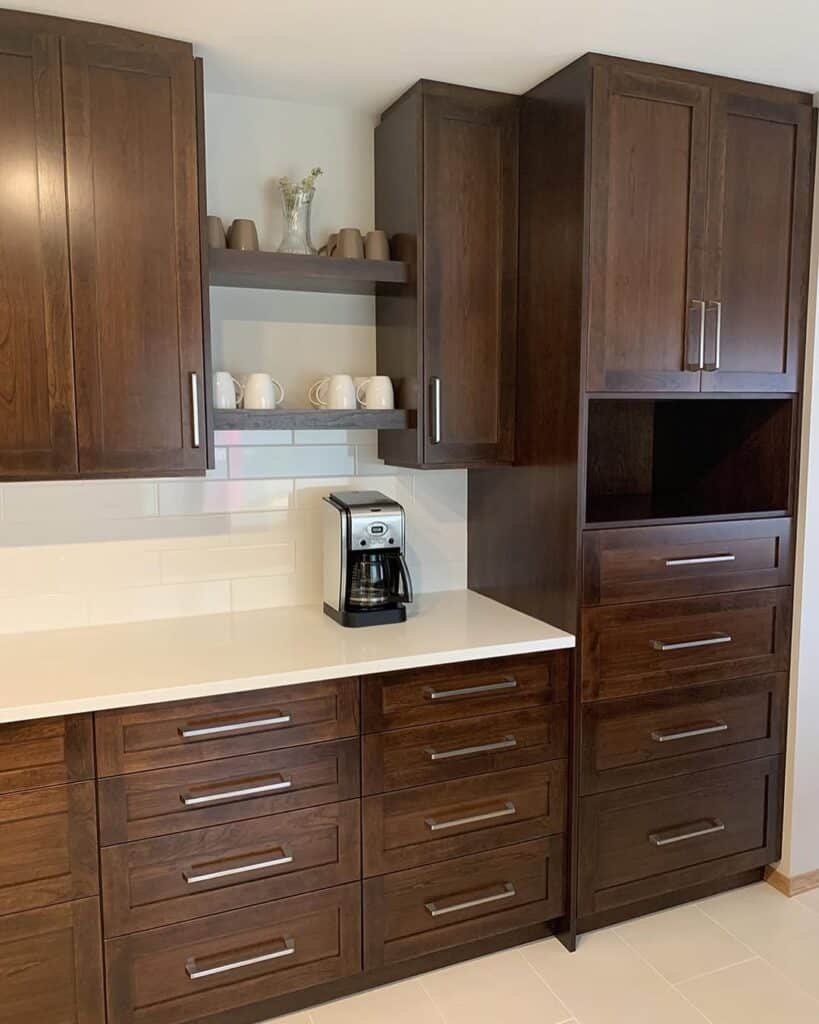
In kitchen design, matte cabinetry is a 2025 trend. Matte finishes are replacing glossy cabinetry.
Matte dark wood cabinets resist fingerprints and smudges. That resistance benefits active households.
Matte finish brings out the richness and natural grain of wood such as walnut, oak, and cherry. It has a quieter look than lacquer because it does not carry the same reflective sheen.
Reflection control matters in a large, open-plan kitchen. Matte finishes reflect less light, while gloss finishes take in more light. That lower reflection can make the kitchen feel calmer.
Pair matte cabinetry with black, pewter, or brass hardware in satin or brushed finishes. The hardware adds contrast while maintaining balance between the finishes.
A textured backsplash gives matte cabinetry more surface interest. Light countertops, including white quartz or marble, can also reduce the sense of darkness.
Wipe the matte finish using a microfiber cloth that has been dampened. This removes dust and grease from the surface.
Modern matte dark wood cabinetry has long-term relevance. It retains warmth and supports a tactile feel.
Dark Wood Cabinets with Minimalist Hardware

Low-profile finger-pull hardware preserves the prominence of the wood. Its clean lines support contemporary design.
Walnut, espresso, and rift-sawn oak work with modern and Japandi kitchens. Hardware such as slim bar pulls, edge pulls, or touch-latch systems reduces visual clutter while keeping the wood visible.
Intentional hardware placement uses vertical pieces on doors and horizontal pieces on drawers. Brushed nickel, matte black, or a matching wood finish can keep the palette consistent. The arrangement maintains symmetry and clean lines.
Minimalist hardware pairs with flat-panel cabinet doors, a light countertop, and a simple tile backsplash. A built-in appliance and under-cabinet lighting preserve function while supporting the minimalist concept.
Minimalist hardware improves functionality and is used in contemporary remodels. It supports timeless simplicity and helps create a calm, balanced kitchen atmosphere.
Glass Front Dark Wood Cabinetry
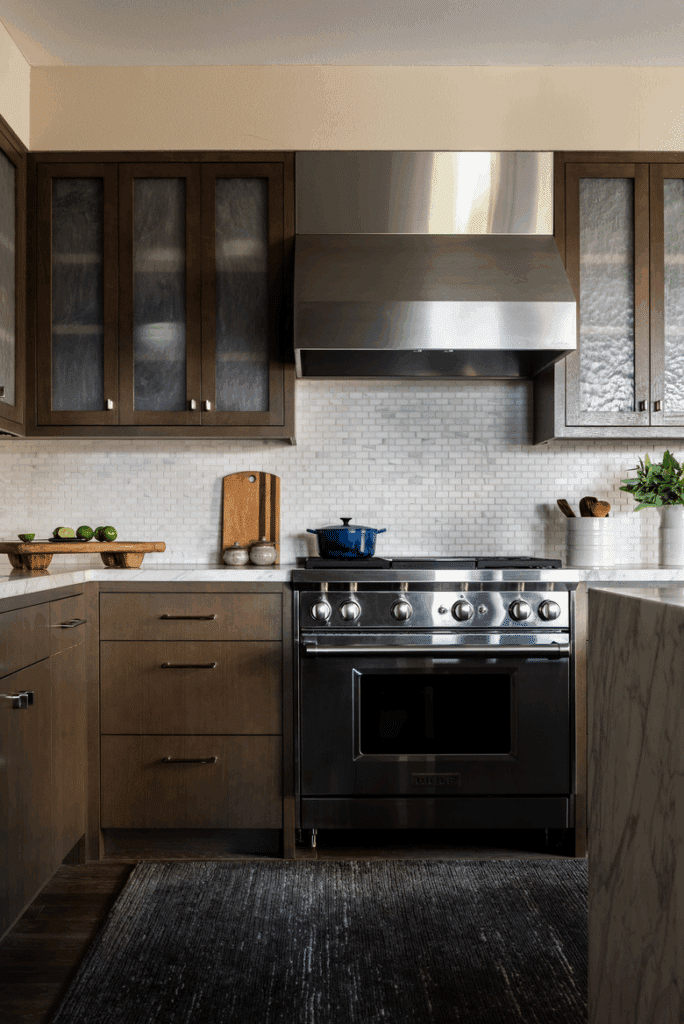
Glass-front panels make the dark wood kitchen feel more open while adding depth. Each glass cabinet panel integrates with the cabinetry.
Glass-front cabinets suit both classic and modern kitchens. Transparent or frosted inserts break up solid doors and provide display space for dishware, glassware, and decor.
Cabinet interiors gain a lighter, more open feel when glass fronts let light through. This helps tone down the depth of dark wood, including espresso, walnut, and cherry finishes.
Use neutral-toned uniform dish sets for visual harmony. Interior lighting can also help reduce the appearance of clutter.
Frameless glass cabinets create a sleek starting point. They can be paired with inset glass doors for another streamlined option, or mullioned doors for a more traditional character. Neutral tile or stone backsplashes and subtle hardware in brushed nickel or matte black complete the pairing.
A door replacement can update the cabinetry without requiring a complete remodel. Swap some solid cabinet doors for glass-front doors.
Glass-front doors make cabinet contents more visible. They also add a decorative element to the kitchen.
Use glass-front cabinets as upper cabinets or in selected accent positions. They lighten dark cabinetry and support visual balance.
Dark Cabinetry and Integrated Lighting
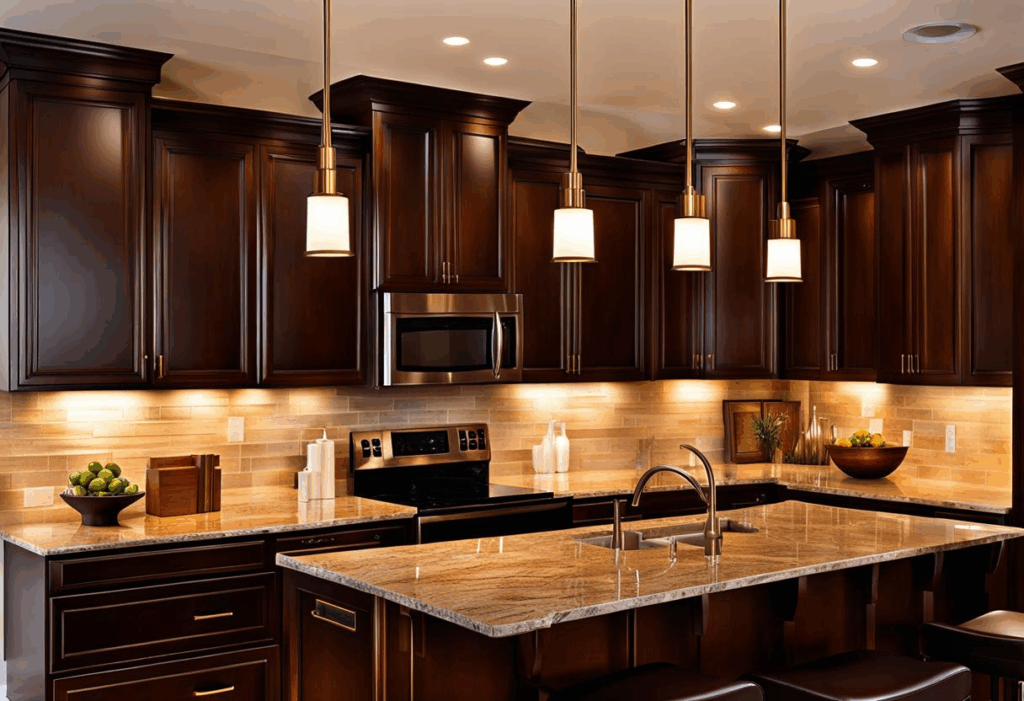
In dark cabinetry, integrated lighting changes how the cabinets are perceived. It is especially useful when the cabinets might otherwise feel visually heavy.
Toe-kick LEDs are one form of integrated lighting, along with in-cabinet lighting and under-cabinet lighting. This lighting supports function and ambiance.
Dark cabinets can have a dim appearance or make the kitchen look closed in.
Integrated lighting brightens work areas. With cabinetry in dark cherry, walnut, or espresso, the lighting reveals the wood grain and wood warmth.
LED strips under upper cabinets provide light for food preparation. Motion-activated lights in deep drawers and tall pantries add convenience. Use warm white bulbs.
A simple backsplash keeps the lighting from competing with another surface. A smart lighting system can adjust color temperature throughout the day, while neutral countertops keep the surrounding palette quiet.
A functional solution affects how the space operates and supports cabinet visibility. Integrated lighting makes the cabinetry easier to see while the kitchen is in use.
Light Upper Cabinets Over a Dark Wood Base
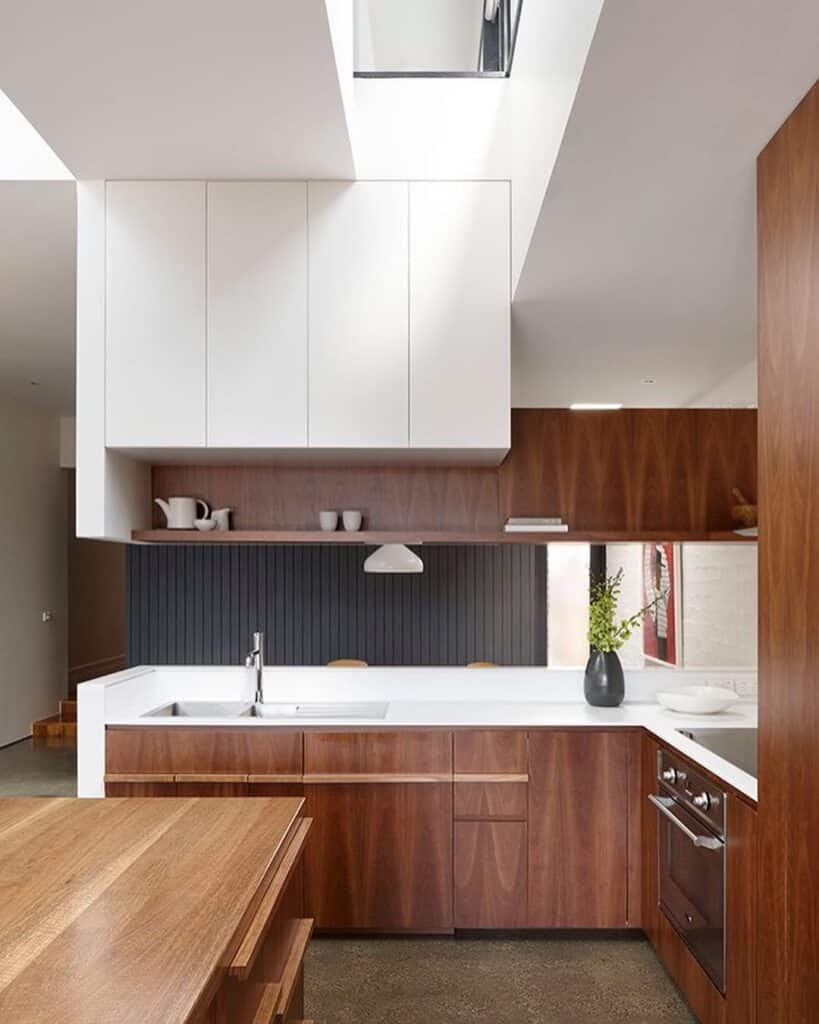
Dark wood grounds the lower cabinets. Light upper cabinets complete the pairing and keep the two-tone layout balanced. The arrangement may make the ceilings appear taller while maintaining a grounded space.
The dark and light palette combines depth with airiness. Dark wood cabinets work in both modern farmhouse kitchens and transitional kitchens.
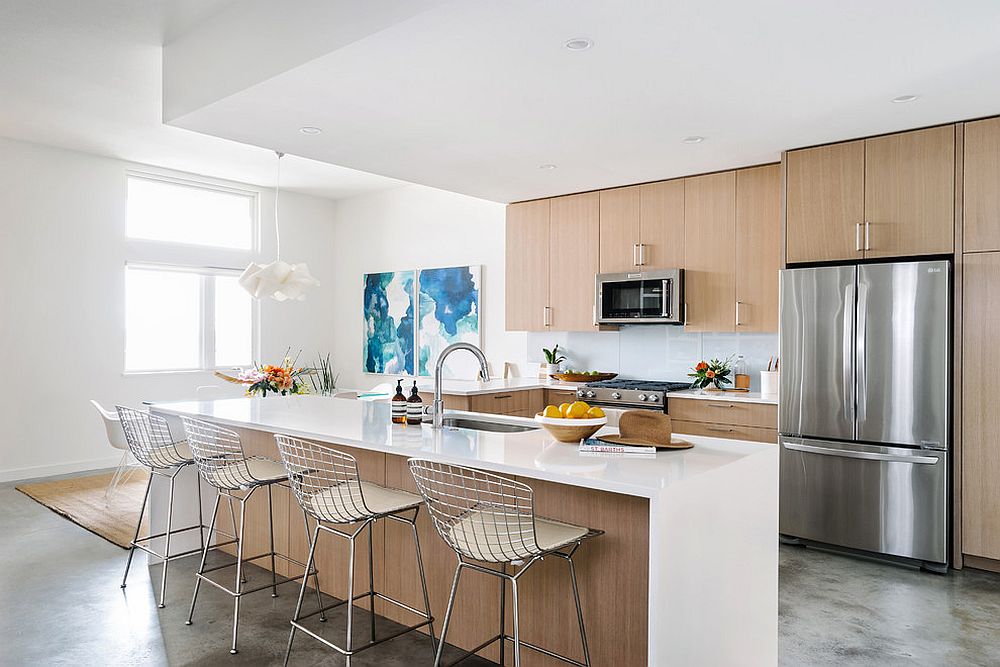
Upper cabinets in white, cream, or soft gray contrast with cabinet bases in warm walnut and espresso. This dark and light pairing suits kitchens with limited natural light.
Dark cabinet tones can conceal scuffs and stains. Lower cabinets experience more wear, so the darker color is useful there.
Light upper cabinets help maintain an open feel. Subtle hardware in brass or matte black works with the dark and light cabinets.
Warm wood flooring in a neutral tone works with the dark wood cabinets. The cabinets also work with a subway tile backsplash and a white quartz countertop, while the dark and light pairing retains brightness.
A layered dark and light palette combines classic appeal with contemporary freshness.
Marble Countertops With Dark Wood Cabinetry

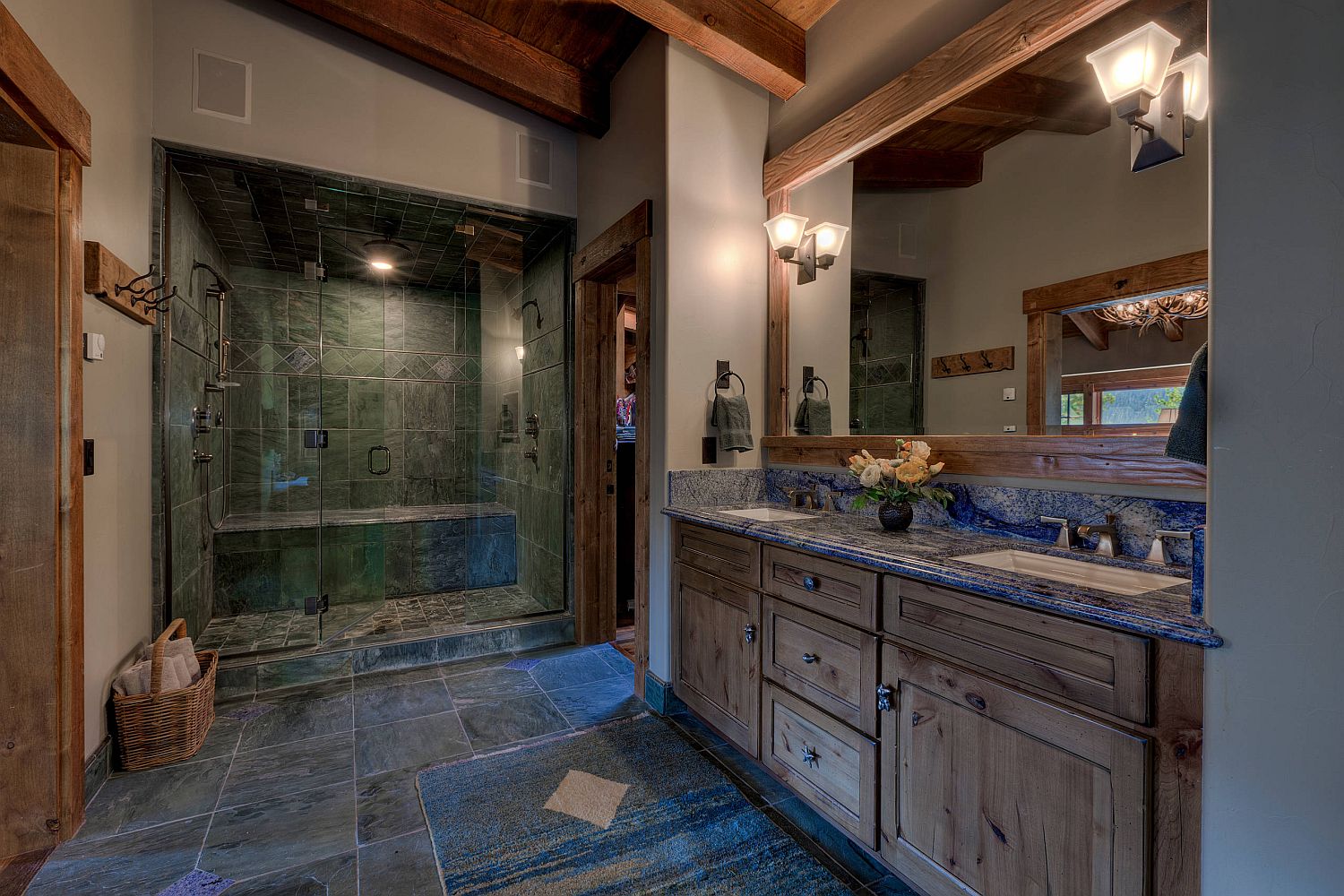
Marble brings a strong contrast to dark wood cabinetry. The pairing has long-term relevance and works as a countertop and cabinet combination.
In one kitchen, walnut, mahogany, or espresso cabinetry can soften the effect of marble's natural veining. The veining adds movement and lightness.
White or light gray marble, including Carrara, Calacatta, and Danby, brings brightness to the prep area. Against dark cabinets, the stone creates strong visual drama and works well in traditional and transitional kitchens.
Marble is porous and can stain, so seal marble surfaces regularly. The sealing requirement applies to the marble itself.
Marble-look quartz achieves the appearance of marble with less maintenance than marble. Other marble options can highlight wood grain and add texture to the workspace.
A backsplash in neutral tile, zellige, or matching marble keeps the palette cohesive. Minimalist hardware in brushed brass or matte black adds emphasis to the natural materials.
Dark wood and marble suit both rustic kitchens and more refined ones. This pairing appears in upscale renovations and custom home builds, where its long-term style is part of the appeal.