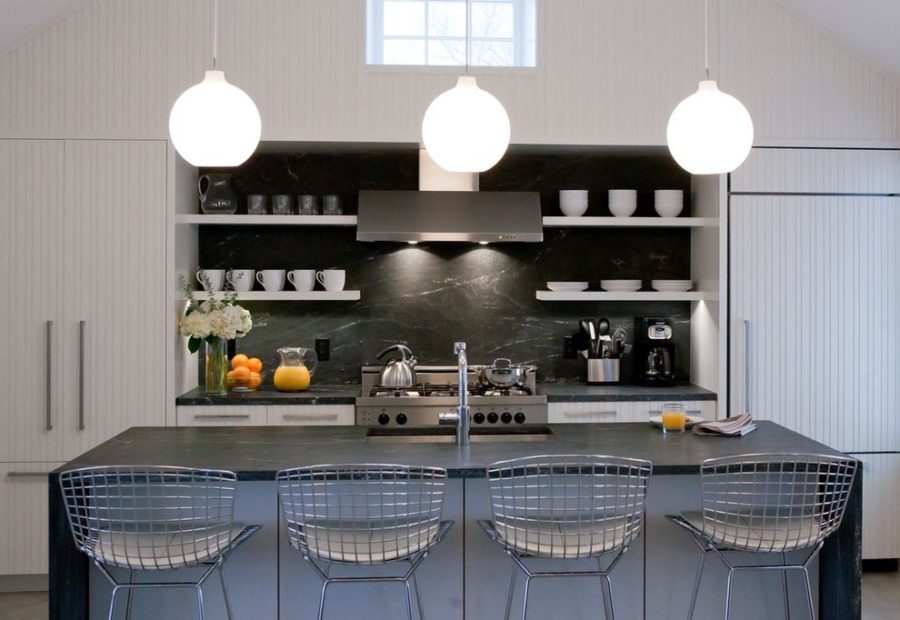
15 Stunning Emerald Green Kitchen Cabinet Ideas
Emerald green kitchen cabinetry is being used in kitchens this year. The color is bold without feeling overwhelming.
Emerald green is a jewel tone that suits both classic and contemporary layouts. It adds depth along with a modern edge.
White countertops sit alongside brass fixtures. Wood accents complete the same combination.
Use emerald cabinetry when you want a kitchen that is not neutral. It retains elegance and offers long-term appeal.
Emerald green is an easy color to bring into a design scheme.
Emerald Green Kitchen Island
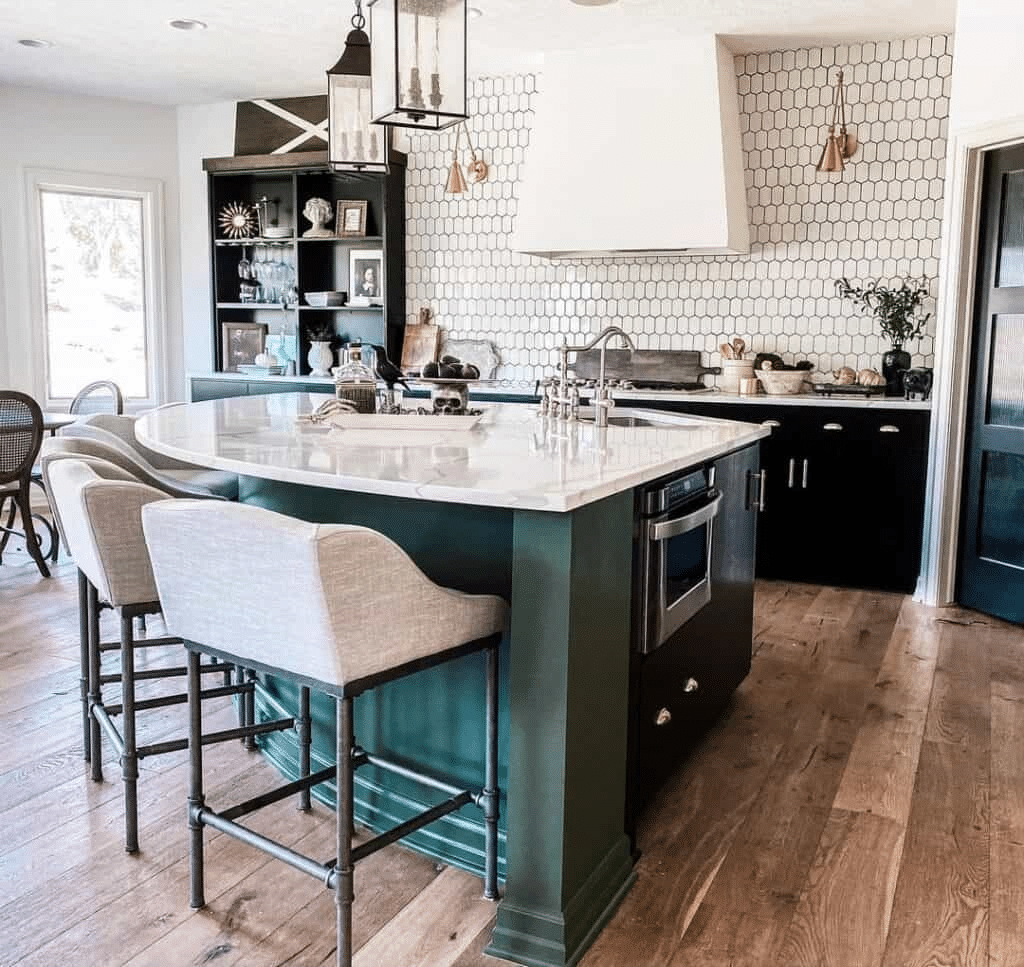
An emerald green kitchen island at the center gives the room a strong focal point. It adds color without taking over the space.
Around the kitchen island, the prep space serves as both a functional element and a decorative element. The island also provides storage.
White quartz countertops pair with emerald green. Light veined marble countertops do as well.
The island base has paneling. A fluted texture adds another detail to the base.
Brass and matte black pendant fixtures hang above the island. They provide task illumination and draw attention to the island. The lower green cabinetry coordinates with them, and hardware may coordinate across the kitchen.
Across an open-concept kitchen, the island transitions between the cooking area and the living area. This green island layout works well in open-concept kitchens.
The green island supports meal preparation, informal dining, and entertaining.
Across the kitchen, the green island combines function and color.
Modern Matte Emerald Cabinets
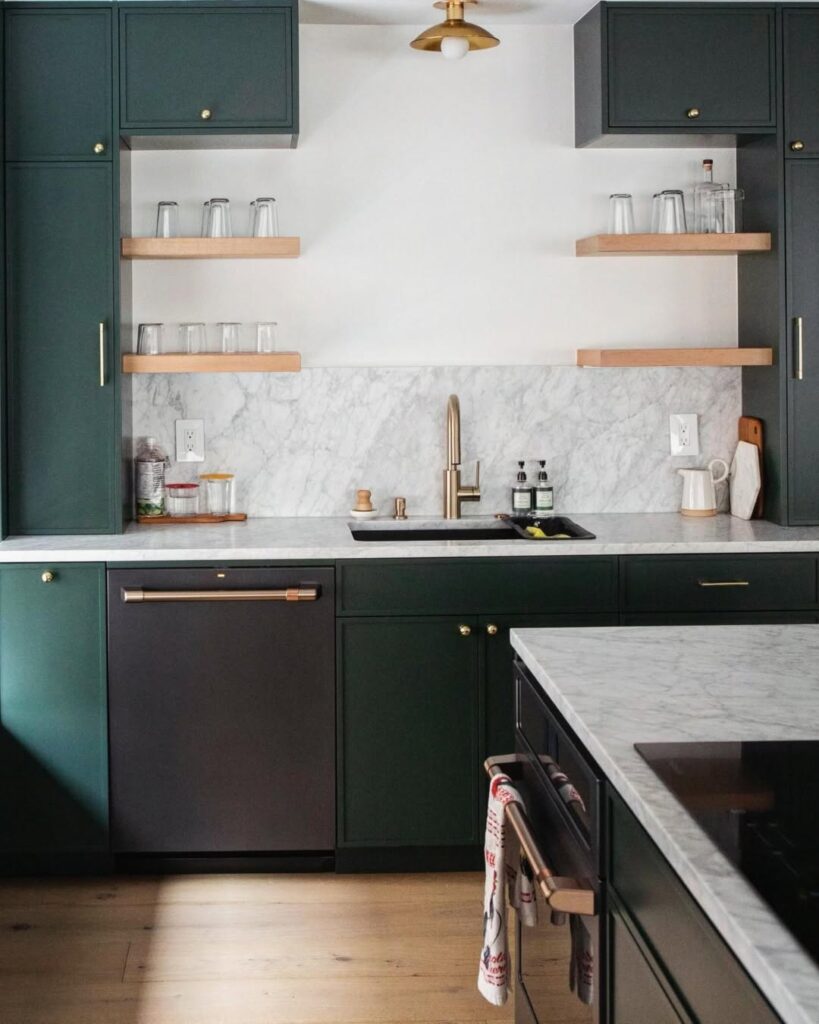
Matte cabinets have a velvety surface.
Matte finishes suit contemporary and minimalist kitchens. Glossy surfaces reflect light, while matte surfaces diffuse it.
The matte finish suits kitchens of different sizes and works under varied lighting conditions. It also reduces the intensity of the emerald color.
Subdued tile patterns can keep the room calm. In kitchens with high natural light, matte cabinetry helps reduce glare and fingerprints. Pair it with smooth quartz countertops and satin-finish hardware.
Slab-style cabinet doors support a streamlined appearance. Recessed panels add dimension, so either slab style or recessed panels can work with matte emerald cabinets.
Use subtle gloss elements in the texture palette, such as polished floors or glass lighting. Excess matte surfaces may cause dullness, while subtle gloss elements balance the complementary materials.
Matte emerald green supports kitchen functionality while retaining personality and warmth. Choose it when you want rich color with modern style.
Gold Hardware and Lighting
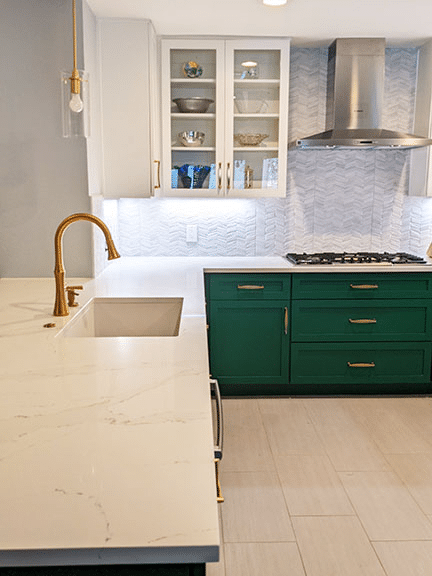
Gold hardware complements emerald green cabinets. Gold lighting complements the same green cabinets.
Brushed, antique, and satin gold finishes harmonize with deep green. The finishes include several gold styles.
Slim gold pulls and gold knobs provide the cabinet hardware.
Above the dining space, gold pendant lamps have gold interiors. A gold-based pendant lamp hangs above the island. The gold pendant lamps provide functional illumination.
Gold finishes appear on the faucet and range hood. A bar stool adds a metallic accent.
In the kitchen, light countertops and a light backsplash pair with gold tones.
Across the kitchen, maintain consistent metal finishes. Avoid multiple metallics unless they are intentional and balanced.
Gold works with beige surroundings, wood accents, and white surroundings.
Gold accents combine classic and contemporary styles.
Patterned Tile Flooring with Emerald Green Cabinetry
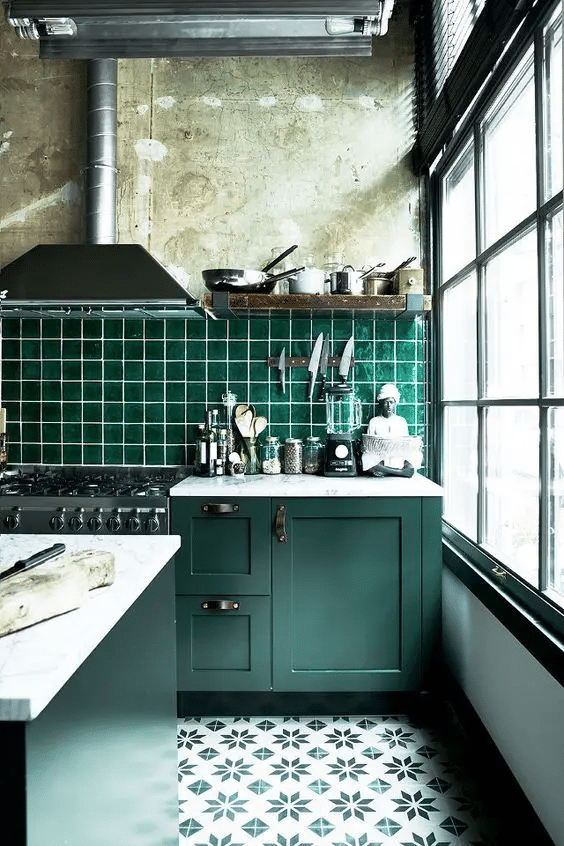
Patterned tile beneath emerald cabinetry adds contrast and provides texture. The tile makes the floor part of the kitchen's surface treatment.
Choose harmonizing tile colors such as soft gray, off-white, or taupe. Moroccan-inspired encaustic, geometric, and herringbone patterns are suitable options for the patterned tile.
Patterned tile handles moisture, resists stains, and suits high-traffic areas. Ceramic and porcelain are options that support easy maintenance.
Patterned flooring suits both galley kitchens and U-shaped kitchens. Its placement works with either layout.
Natural light interacts with the floor shadow, pattern, and color. Keep the backsplash and countertops subtle so they do not compete with those changes.
Patterned tile flooring combines style and function. It also supports emerald cabinetry.
Subway Tile for the Backsplash
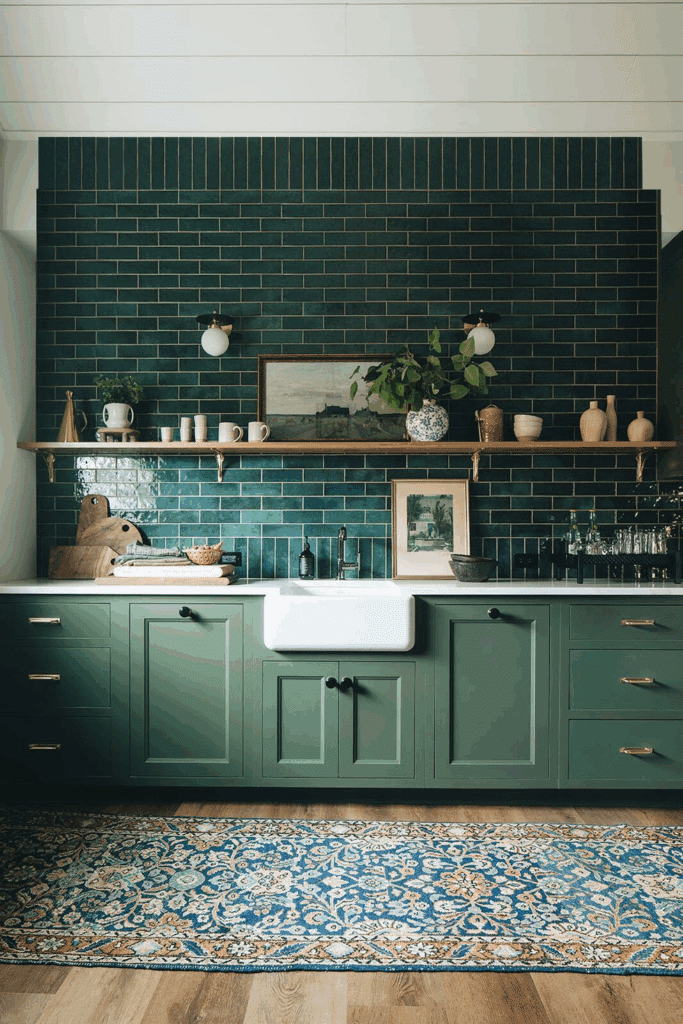
The subway tile backsplash serves as a background and pairs with emerald green cabinetry. It sits behind the cabinetry.
White and light gray tile contrast with emerald cabinetry. The tile colors are light.
Subway tile adds texture without being obscured by the cabinetry. Its layout may run horizontally or vertically.
Glossy tile reflects light. The glossy finish covers the tile surface.
Glossy tile can make a small space appear larger. It also brings out the green’s depth.
White grout gives the tile an airy appearance. Dark grout provides graphic definition.
Porcelain and ceramic tile resist moisture and stains, support easy cleaning, and withstand kitchen wear.
Open shelving sits above the backsplash. Under-cabinet lighting is also positioned above the backsplash.
The subway backsplash counterbalances the green cabinetry. The cabinetry remains paired with the backsplash.
In contemporary kitchens, subway tile fits the setting. It also suits traditional kitchens.
Emerald Green Two Tone Cabinets
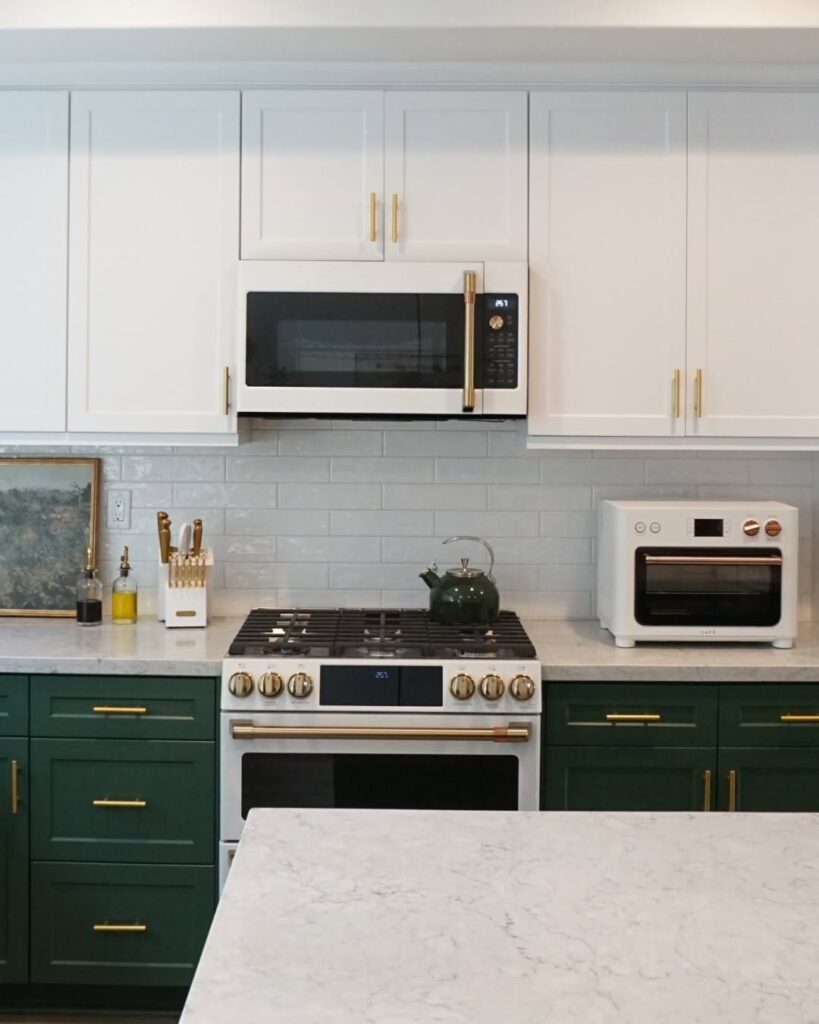
A second cabinet color creates visual structure. Two-tone cabinetry increases design flexibility and limits green overload.
Soft neutrals on the upper cabinets help maintain an open feel. Choose white, ivory, or warm beige for the upper cabinets, while emerald green covers the lower cabinets and island base.
Panel styles affect the impact of the two-tone arrangement. Matte emerald on the lower cabinets can sit below white upper cabinets in a satin or semi-gloss finish, and the finish differences create texture contrast.
This two-tone format works well in small and medium kitchens. It creates an impression of more height and also makes the room feel more spacious.
Neutral surfaces keep the cabinetry prominent. Use neutral stone for the countertops and choose simple backsplash tiles.
Hardware connects the cabinet tones. A two-tone layout supports practical customization, and brass and matte black are the available hardware options. The work zones and built-in oven wall receive the highlighting.
Emerald two-tone cabinets combine color expression with design clarity.
Integrated Appliances in Emerald Green Cabinets
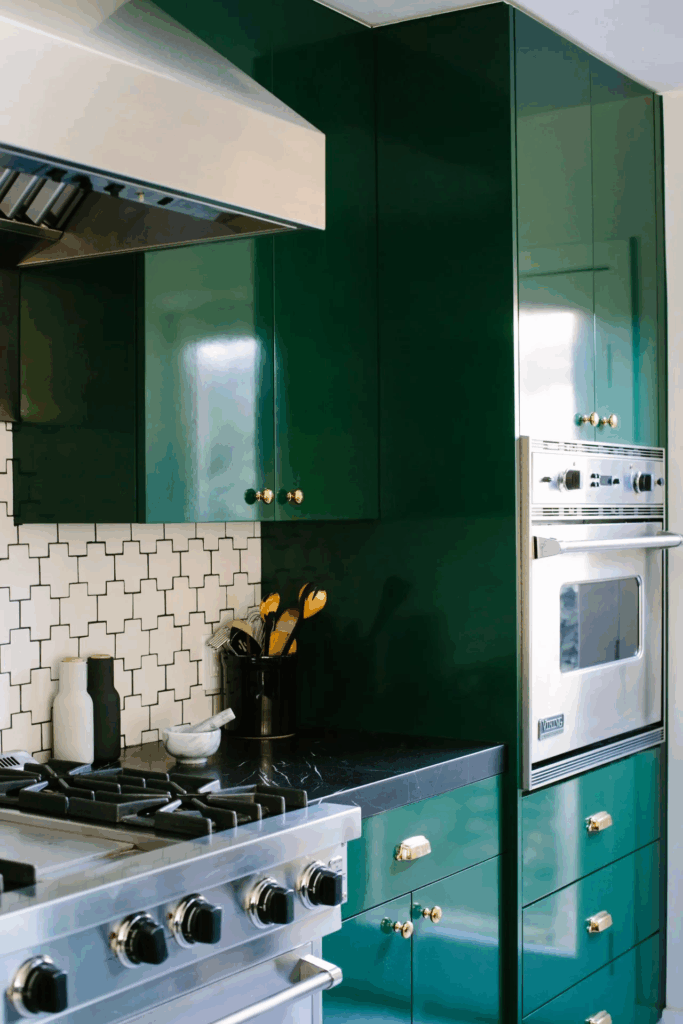
The emerald green kitchen keeps appliance handling straightforward. Nearby cabinetry keeps the look connected.
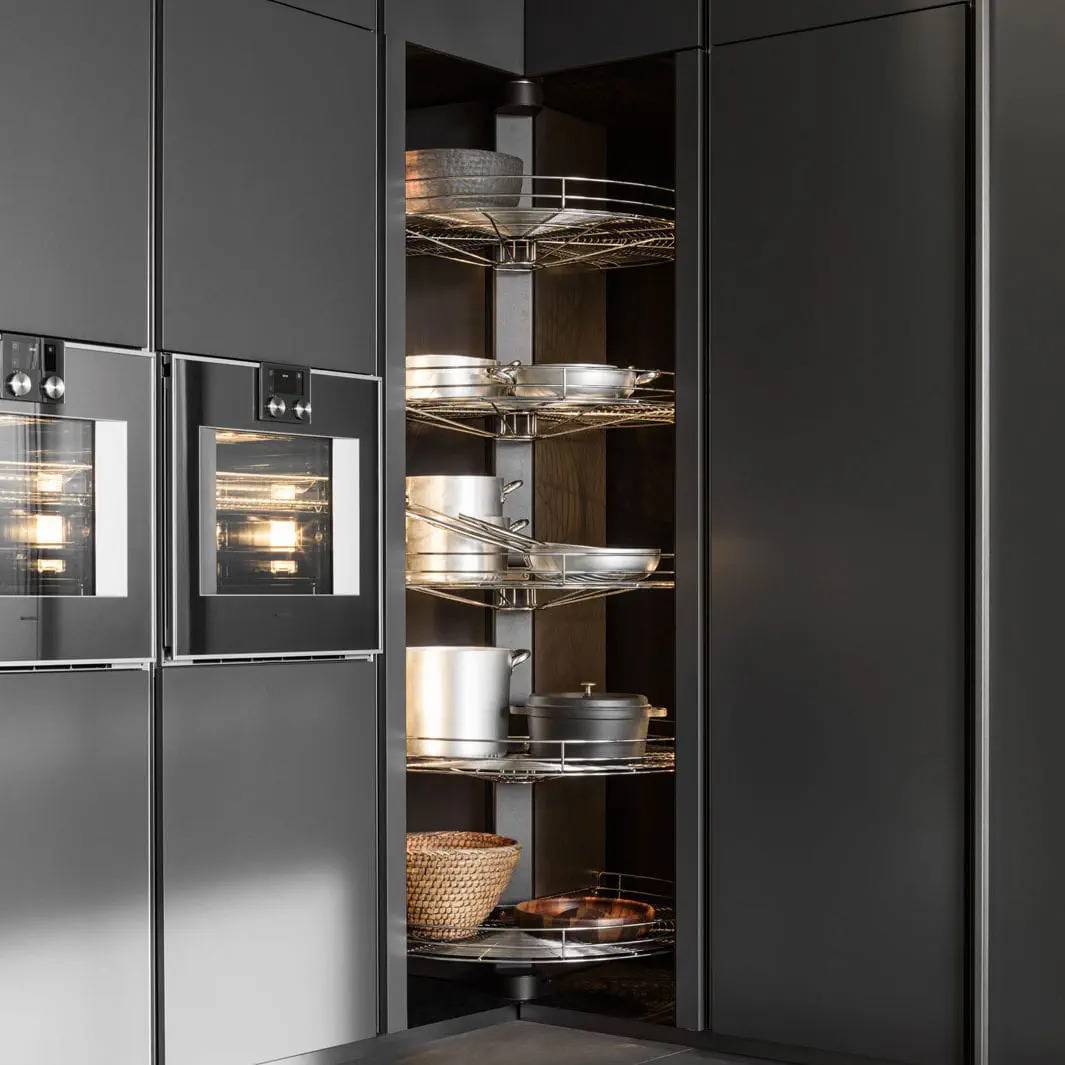
Integrated appliances preserve the cabinet color and reduce visual clutter. Custom cabinetry panels make the appliances fully integrated.
In one corner, the dishwasher and microwave are concealed behind cabinetry. The refrigerator is concealed there too, leaving the green finish as the kitchen's primary visual element.
Uninterrupted countertops and lighting avoid harsh visual breaks. Concealed appliances can also increase the sense of space in smaller kitchens.
Custom panel installations work with appliance-ready models. Choose appliance-ready models for that type of installation.
A flush design keeps integrated appliances connected to the cabinetry. Smart features and energy efficiency remain part of the functionality.
Integrated appliances keep the kitchen looking orderly with minimal hardware around them. Use cabinet fronts without handles, while keeping the paint finish and hardware tone consistent throughout.
Around the kitchen, concealed appliances let the emerald cabinetry stand out. The integrated design still supports everyday usability.
Upper Glass Cabinetry
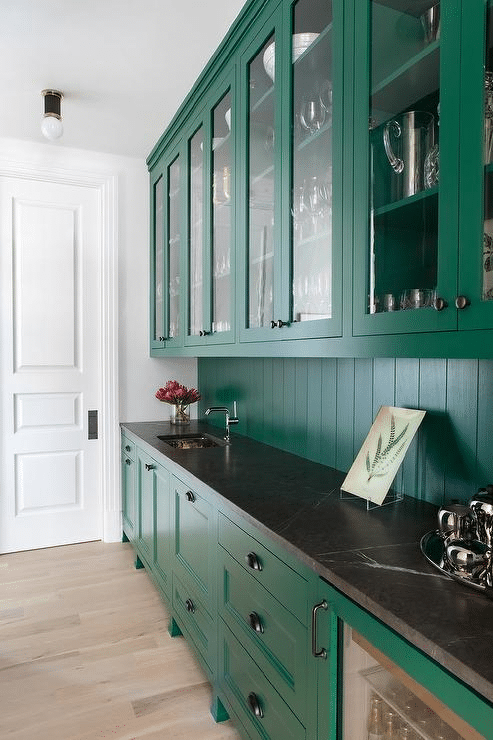
Emerald green cabinetry fills the lower section. The cabinetry is positioned below.
Glass fronts reduce visual density in small or dim spaces. They also increase the travel of light deeper into the room.
Clear glass suits contemporary, transitional, and traditional styles. Ribbed glass works with those same three styles.
Upper cabinets in pale taupe glass pair with lower emerald green cabinetry. White glass-front cabinets also pair with the green lower cabinets. Glass detail may cover both levels and soften the green cabinetry.
Glass-front cabinets display kitchen decor, glassware, and select dishware. Compared with open shelving, they have fewer exposure risks.
Interior cabinet lighting contributes to ambient brightness and illuminates displayed pieces. Cabinet profiles stay clean-lined, while the hardware may be brass, matte black, or brushed nickel.
In dark-toned kitchens, glass-front cabinets reduce the closed-in feel.
Marble Countertops and Emerald Green Cabinetry
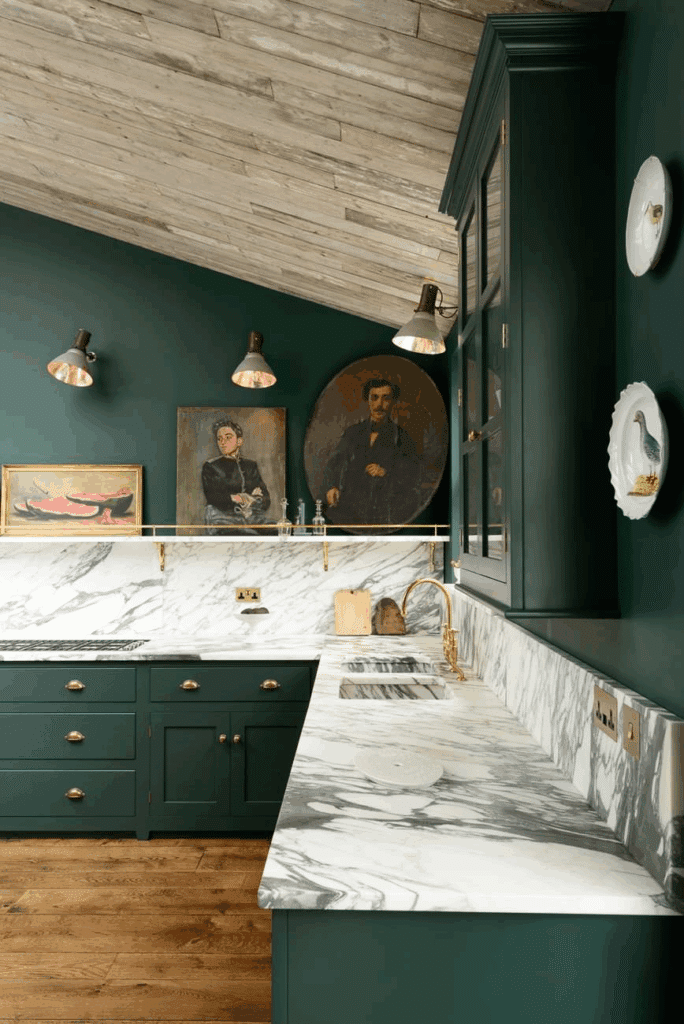
The marble countertop is paired with the emerald green cabinets. Together, the emerald cabinetry and marble create high contrast.
White Carrara, Calacatta, and honed gray marble each offer a different surface character. Green cabinets add depth that balances the marble's lightness and its veining.
Natural stone with a cool undertone harmonizes with green depth. The marble and green palette supports a timeless design.
Marble variations provide surface movement and texture. The marble's visual activity is moderated by bold cabinetry.
A waterfall edge or an extended backsplash can carry the marble across more of the kitchen. This connects the surrounding surfaces.
Sealed marble provides marble-like aesthetics, while quartz offers an improved alternative for durability. Use sealed marble when that material is preferred.
Modern kitchens can use slab cabinet fronts, while traditional kitchens can use shaker profiles. Hardware finishes may be brass or brushed nickel.
Emerald cabinetry and marble bring function together with visual refinement. Green cabinetry and stonework also combine nature-inspired color with timeless stone.
Emerald Cabinetry and Brass Details
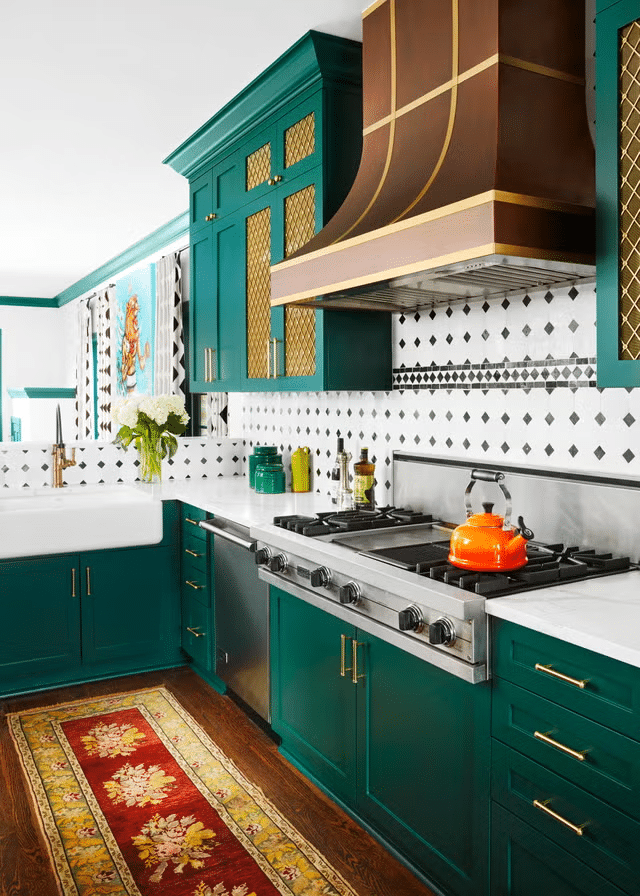
Brass accents provide metallic warmth against emerald green cabinets. Together, the materials bring earthy richness to the kitchen.
Brass handles and hinges introduce a warm tone, as do brass lighting fixtures. The saturated green cabinetry provides depth beneath them.
The emerald and brass combination works in modern kitchens and transitional kitchens. It combines timeless materials with contemporary silhouettes.
Avoid overly shiny reflections. Choose brushed or antique brass finishes instead, since reduced reflections emphasize the green tones.
Place under-cabinet lighting beneath the emerald cabinetry to highlight its color richness. The emerald and brass combination also works under natural light, while the lighting remains useful during darker hours.
Light-toned countertops reduce visual heaviness and support a balanced appearance. White quartz and soft beige marble are suitable options.
Choose a neutral backsplash, tile with a muted pattern, and wood flooring.
The emerald cabinetry can cover the kitchen island, the perimeter cabinetry, or both. An emerald and brass pairing supports customization and a tailored design while combining with organic inspiration.
Open Shelving with Emerald Base Cabinets
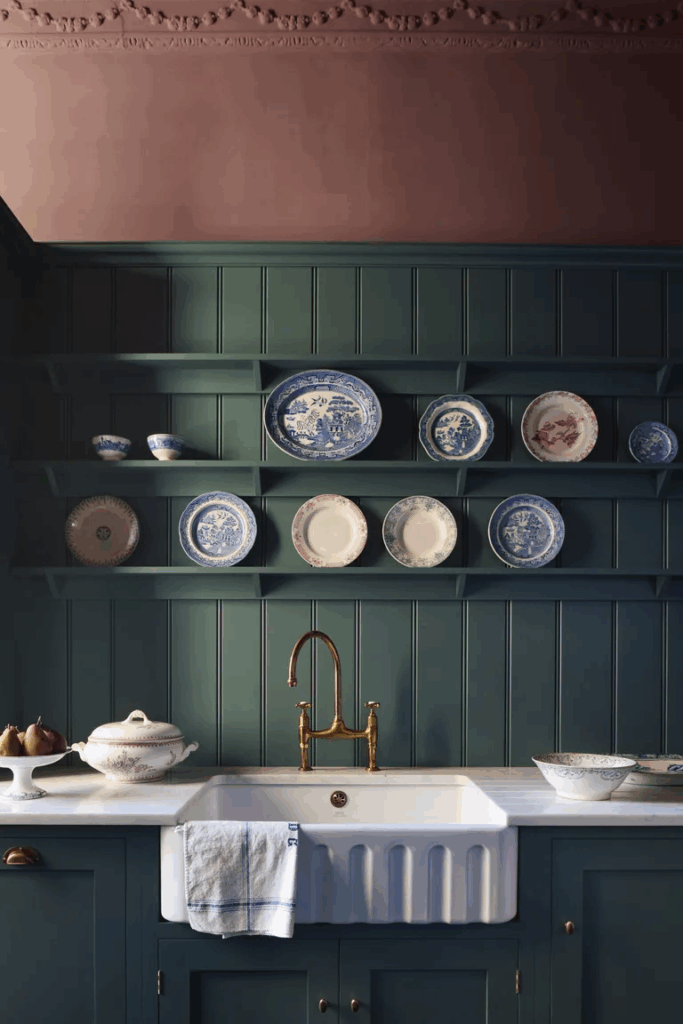
Emerald green base cabinets sit with open shelving. The open shelving provides practicality and creates visual contrast.
Open shelves in the upper kitchen provide display space above emerald base cabinets in the lower kitchen.
Natural wood, metal, and painted material are options for open shelves.
Above the green cabinets, open shelves store daily-use items and support organized storage. They can also accommodate indoor plants and decorative ceramics.
Brass or black shelf brackets support functional flexibility. Open shelving suits small layouts and reduces cabinet density.
Open shelves work well near windows or beneath task lighting. Shelf lighting can spotlight displayed items.
Clear glass, white, and light oak are options for the shelf materials. The darker emerald base cabinets feel less visually heavy with light shelf materials.
Open shelving provides adaptability, while green cabinetry defines the kitchen tone. The combination joins form and function.
In an organized kitchen, an open shelving layout supports kitchen efficiency.
Countertop in Natural Wood
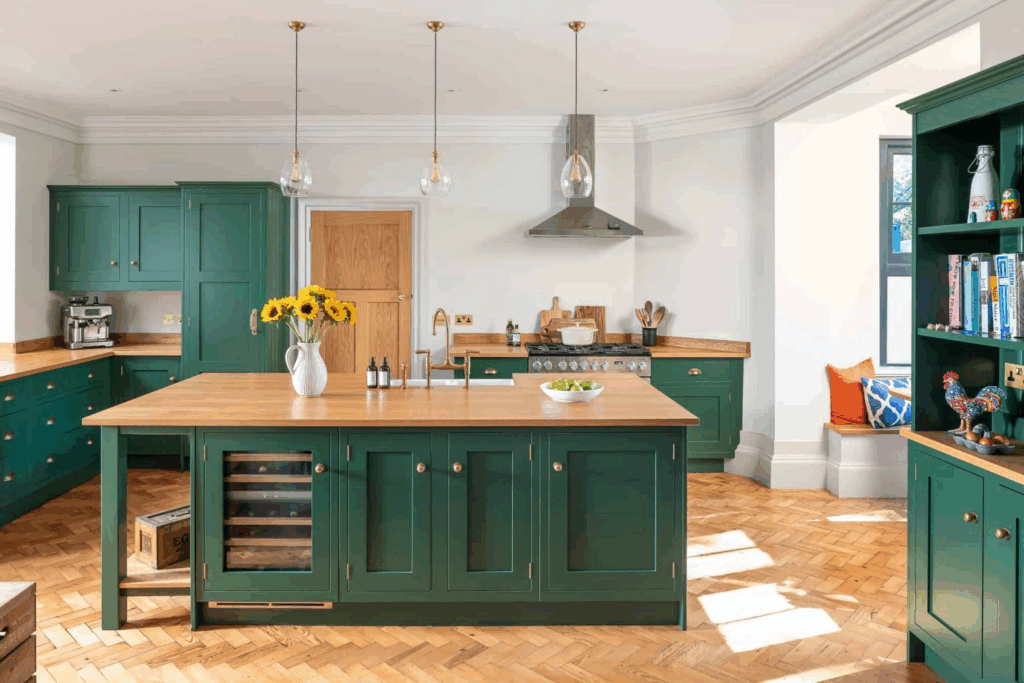
Natural wood countertops pair with emerald green cabinetry. The wood balances the bold green.
Wood grain provides visual softness and gives the countertop neutral tones. Walnut, oak, and maple are wood countertop options.
Across the kitchen, wood countertops are warmer than cold stone surfaces. They also pair with green cabinetry.
Matte sealant is one option. A satin finish also helps protect against moisture and wear.
Wood countertops contrast with quartz and tile. They suit kitchen islands and prep zones.
A simple backsplash works with warm hardware. The backsplash style is simple, and the hardware has a warm tone.
Proper wood countertop care supports a longer service life. Wood countertops can develop a patina over time. Oil and seal them regularly.
With green cabinets, wood countertops provide tactile contrast. The countertops also support daily use.
Across the kitchen, wood countertops pair with green cabinets.
Emerald Green Kitchen Accent Wall
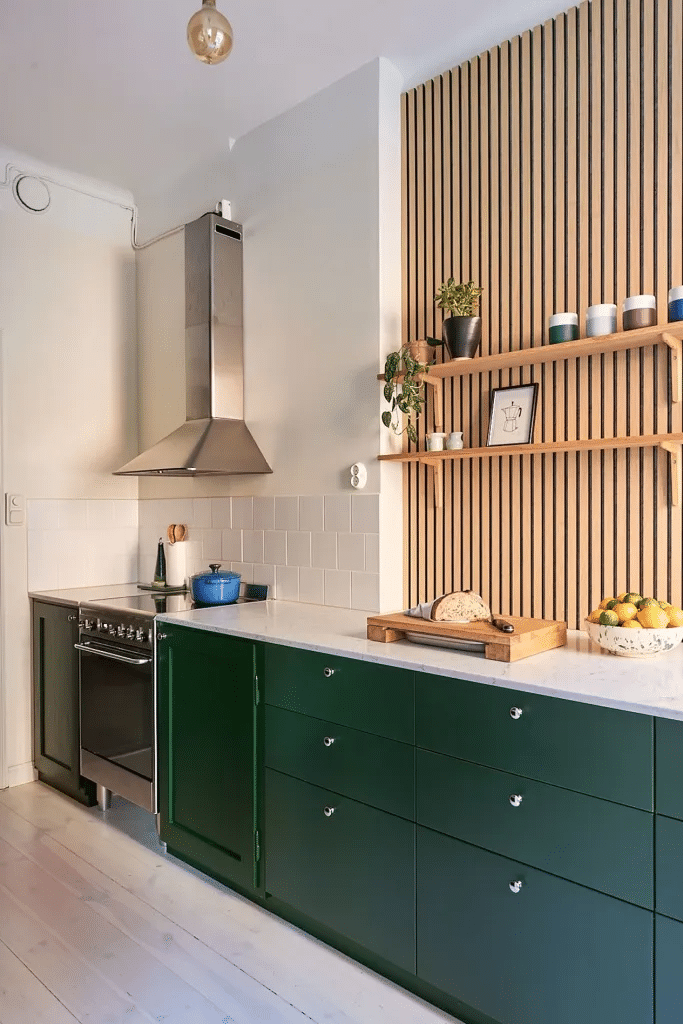
One wall is painted emerald green. The feature wall introduces color without covering all of the cabinetry.
Across the room, an emerald feature wall suits neutral kitchens. It changes the atmosphere of the kitchen.
Saturated green can go behind open shelving, in a breakfast nook, or in the cooking zone. Wherever it is placed, the feature wall draws attention.
A green wall can have a velvety matte finish or a satin finish that gives off a subtle reflection. Pair it with light-toned cabinetry, backsplash materials, and flooring.
An accent wall highlights niches, alcoves, and curved corners. These details become easier to notice against the green surface.
Rattan stools, wooden cutting boards, and linen textiles bring natural textures to a green wall. Pendant or sconce fixtures add dimension to the wall.
A green feature wall suits both contemporary and traditional kitchens. Echo the green shade in accessories and window treatments to allow color experimentation.
The emerald feature wall limits the renovation scope to one surface. It supports color experimentation without requiring a full renovation.
Vintage Hardware for Emerald Green Cabinets
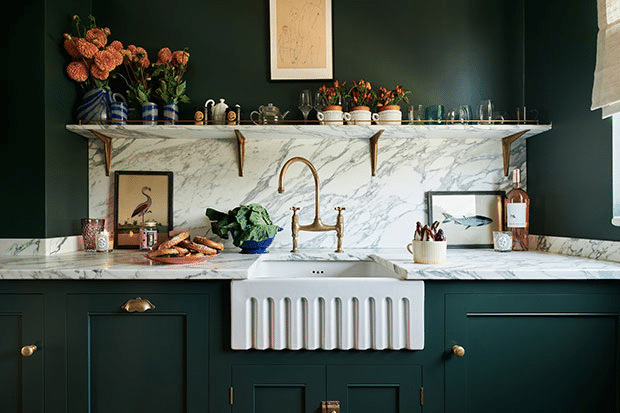
Vintage cabinet hardware adds a tactile element and complements emerald green cabinets. The hardware brings that vintage character to the cabinet doors and drawers.
Vintage hardware references historical influences and traditional craftsmanship. Bin pulls and ornate knobs are two examples.
Warm hardware finishes can set emerald cabinets apart, with choices such as antique copper, brass, and oil-rubbed bronze.
Vintage hardware suits farmhouse, Art Deco, and transitional styles. An aged patina also works with deep green tones.
Thoughtful placement supports both a cohesive layout and usability. Select knobs, pulls, and latches carefully, then space the hardware evenly.
On doors, use round knobs, while drawers can take bin pulls. Mixed hardware styles are acceptable when used purposefully, and drawer pulls and door knobs support intuitive functionality.
A solid brass handle can feel enduring and well-crafted in the hand. Quality hardware improves the tactile experience during everyday use.
Vintage hardware supports a layered design and adds a historical narrative. It does not depend on fleeting trends.
Emerald Cabinetry to the Ceiling
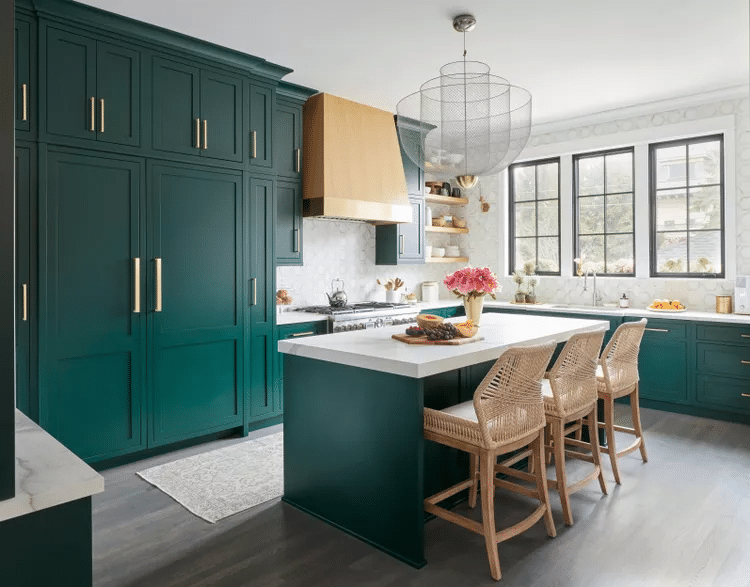
Full-height emerald green cabinetry maximizes vertical storage and creates a built-in appearance. The cabinetry extends from floor to ceiling.
Tall cabinets emphasize ceiling height and enhance the scale of the room.
For open-plan layouts and high ceilings, floor-to-ceiling cabinetry suits the space. Closed cabinet gaps reduce dust accumulation.
Around the room, balance green cabinetry with lighter countertops and neutral flooring.
Inside the cabinetry, vertical strips of lighting sit behind upper glass doors. Glass doors and vertical lighting break up the solid green mass.
In the cabinetry, an appliance garage, pantry storage, and hidden shelving integrate with the cabinets. Matte and brass hardware complete the storage details. Integrated storage avoids visible clutter and supports organization.
Across the kitchen, floor-to-ceiling cabinetry combines storage and design.