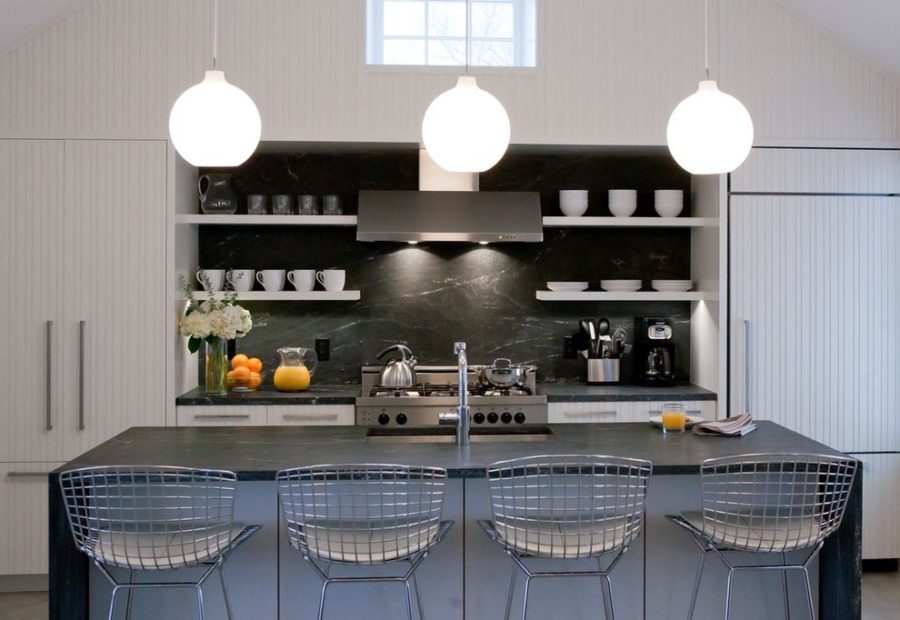
20 Best Dark Kitchen Cabinet Ideas for a Sophisticated Look
Dark tones are shaping modern kitchen layouts. They bring a deeper color into the room without changing the basic layout.
Kitchen cabinets in deep espresso or matte charcoal can fit multiple styles. The color works across different cabinet designs and kitchen settings.
Dark cabinets create strong contrast. That effect works alongside light countertops, metallic finishes, and natural wood accents. The combination keeps the room visually varied while connecting the cabinet color to the other finishes.
Dark cabinet hues can hide everyday wear and fingerprints. That makes dark cabinets a practical choice for busy households.
This cabinetry trend belongs to modern design, while its lasting style keeps it from feeling tied to one short moment. It also adds depth and drama to the kitchen.
Cabinetry in a jewel-tone navy

A jewel-toned rich navy finish adds depth to the cabinetry. It brings dramatic character without making the space feel overwhelmed.
Aged brass hardware, gold fixtures, and matte black pulls all pair with navy cabinetry.
Light oak flooring pairs with navy cabinetry, as do a marble backsplash and butcher block countertops. These natural materials soften the intensity of the navy.
In one section, navy upper cabinets use paneled fronts, while glass inserts break up the solid cabinet sections.
White walls, glossy tile, and a pale stone counter provide light features to pair with navy cabinetry. Navy cabinets suit well-lit kitchens and add richness and dimension.
Crown molding and nautical decor style navy cabinetry. The cabinetry suits a classic or coastal aesthetic and works across styles from traditional to contemporary.
Navy cabinetry has long-term appeal and is preferred by design professionals.
Moody Cottage Kitchen

In cottages, bungalows, and historic homes, moody cottage style combines rustic elements with dark tones. The darker colors preserve warmth rather than removing it.
Beadboard and Shaker doors add historical character. Cabinet colors such as aged black and forest green leave the wood grain visible.
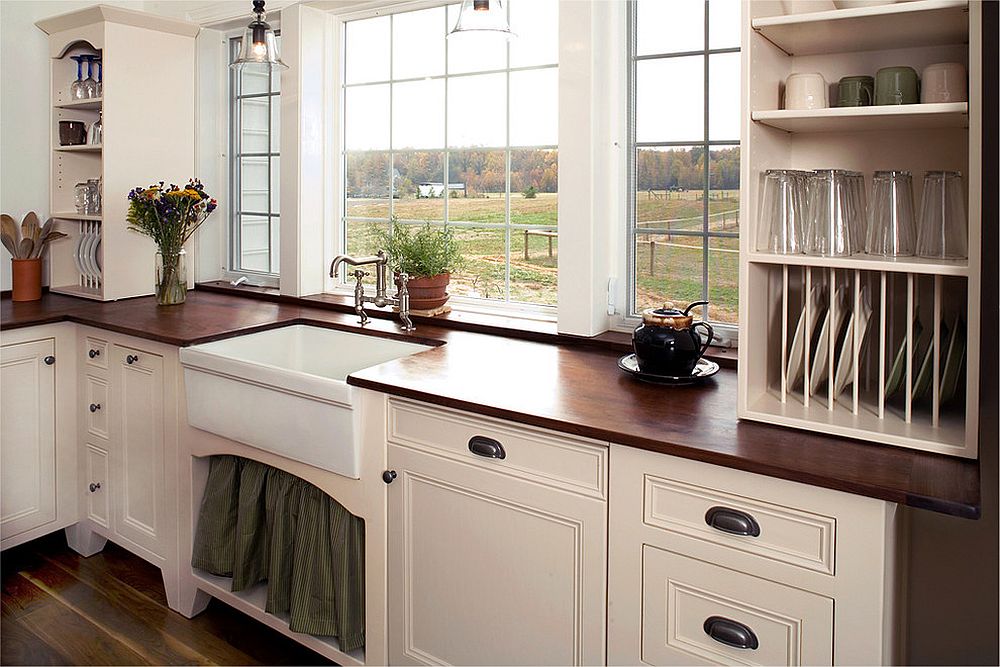
A farmhouse sink works with the dark cabinetry, along with a brass bridge faucet and butcher block counters. Each of these details is paired with the cabinetry.
Open shelving made from weathered wood, along with glass-front upper cabinets, supports the display of dishware and antique glass.
A floor made from reclaimed pine sets a warm foundation, while wide-plank oak offers another option. White subway tile and hand-glazed ceramics bring contrast to the backsplash.
For bungalows, cottages, and historic homes, choose complementary lighting for moody cottage cabinetry. Wrought iron pendants and vintage-style sconces fit the setting.
Deeper tones update the cottage style's light, airy character. They increase the drama while preserving tradition.
Espresso Cabinets with Warm Wood
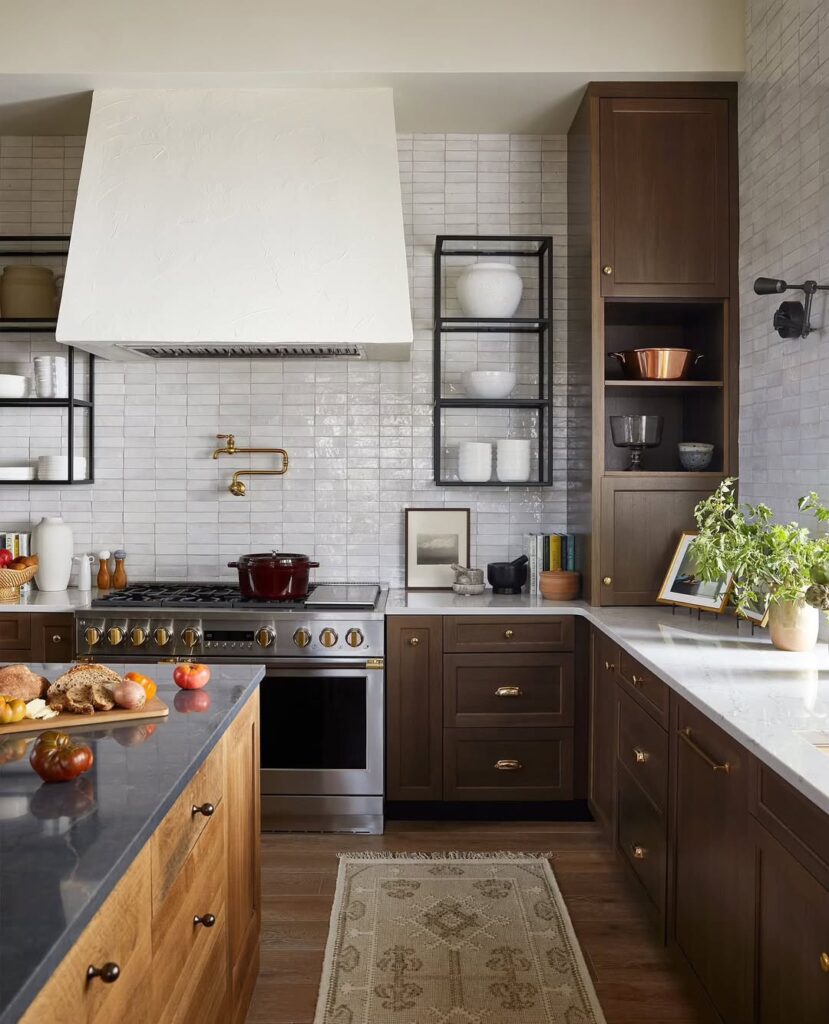
Dark espresso cabinetry combines with warm natural wood accents. Espresso and warm wood work well in transitional spaces, bringing together modern structure and cozy character.
Maple or oak gives the espresso cabinets their construction material, and the finish is coffee-stained. Those cabinets pair with butcher block countertops, floating shelves, and slatted range hoods.
Espresso cabinetry pairs with white backsplashes and light stone counters. These lighter surfaces reduce its visual heaviness.
Matte black hardware is one choice for espresso cabinetry. Hammered bronze pulls and antique brass knobs work with it as well.
Brown-veined granite pairs with espresso cabinetry. Neutral engineered quartz offers another countertop option.
Fingerprints are less visible on an espresso finish. The finish also hides everyday wear and suits family kitchens and other high-use spaces. Prioritize lighting around espresso cabinetry, including pendant lights in copper or smoked glass.
Espresso and warm wood style offers visual interest and supports long-term use.
Dark Cabinets With Fluted Panels
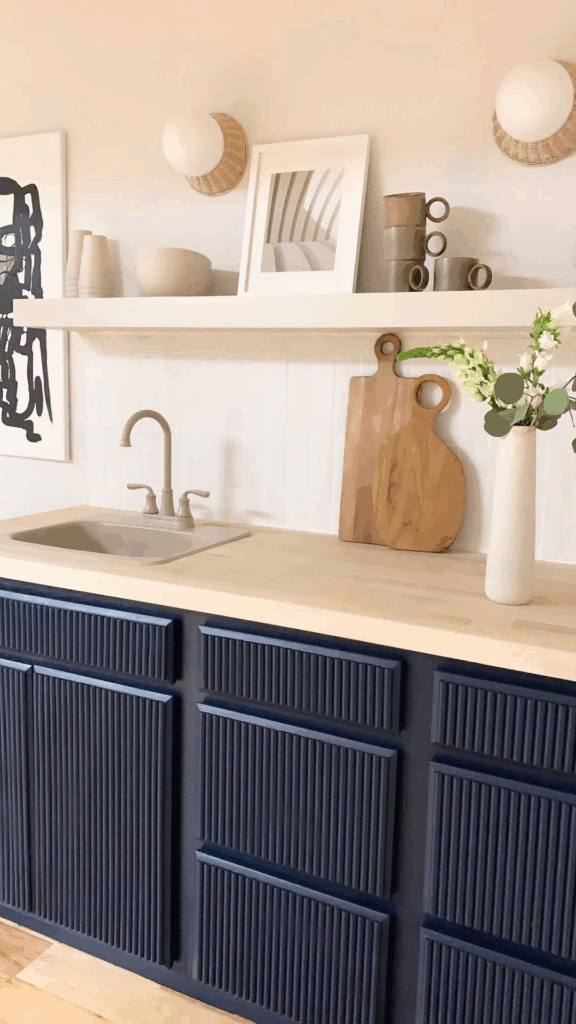
Cabinet fluting brings architectural interest to the design.
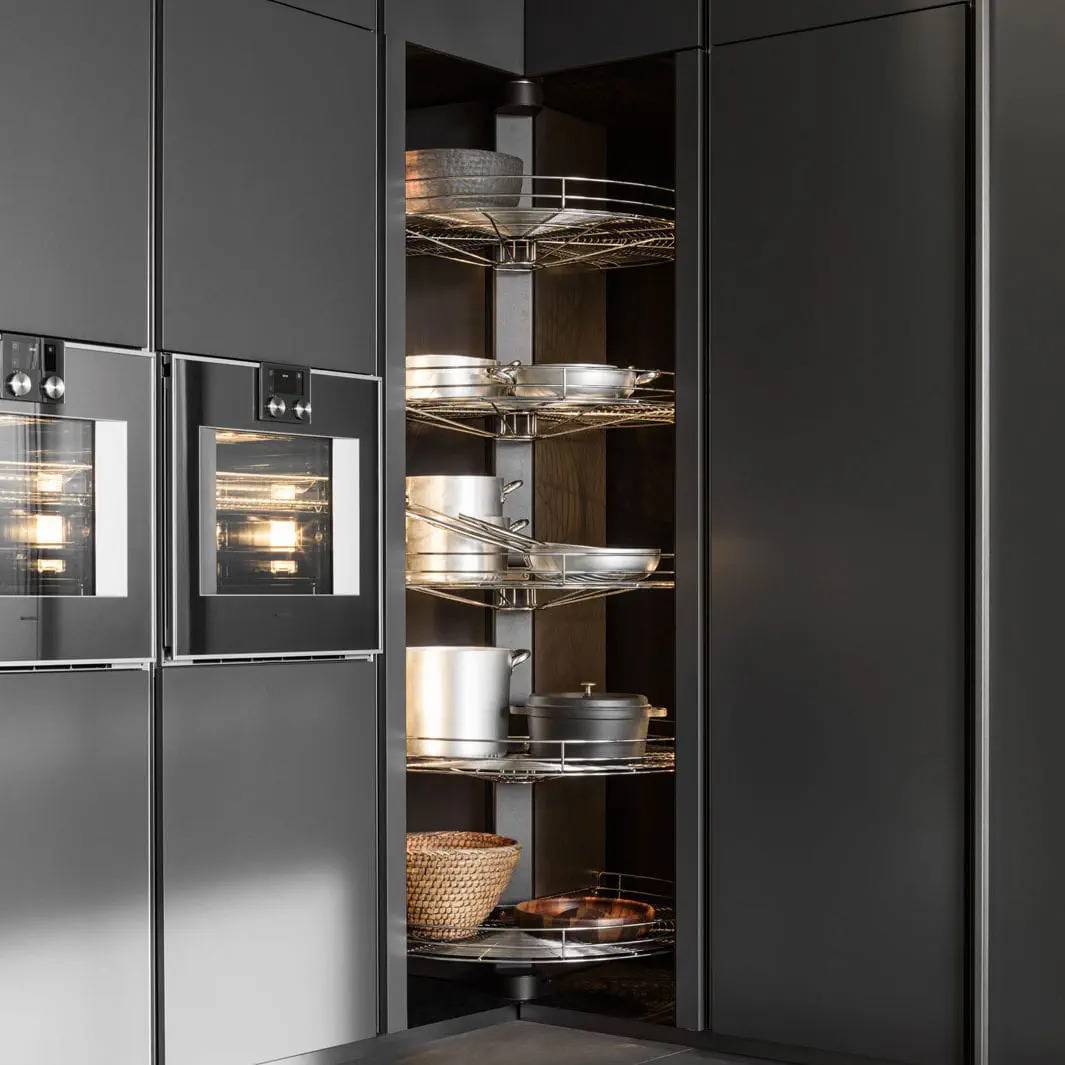
The fluted panel style suits both ultra-modern kitchens and Art Deco kitchens. Matte black, espresso, and charcoal panels use vertical grooves to create dimension and shadow effects under natural or pendant light.
Full-height fluted pantry panels extend the detail upward. Around the island, fluted base cabinets can use stained oak, ash, or MDF with a durable laminate coating.
The surrounding materials create the main contrast: terrazzo appears on the floors, veined stone covers the counters, and smooth glass forms the backsplashes beside vertical fluting. Minimal hardware comes as edge pulls or push-to-open systems.
Fluted cabinetry can be especially effective in larger kitchens, where its clean lines and texture support visual cohesion. Choose sculptural fixtures to complement it. Sculptural lighting adds a nearby focal detail.
Fluted cabinetry offers architectural depth for a modern dark-kitchen style. The grooves are typically shallow, which limits dust and grime collection.
Neutral Lower Cabinets with Dark Upper Cabinets
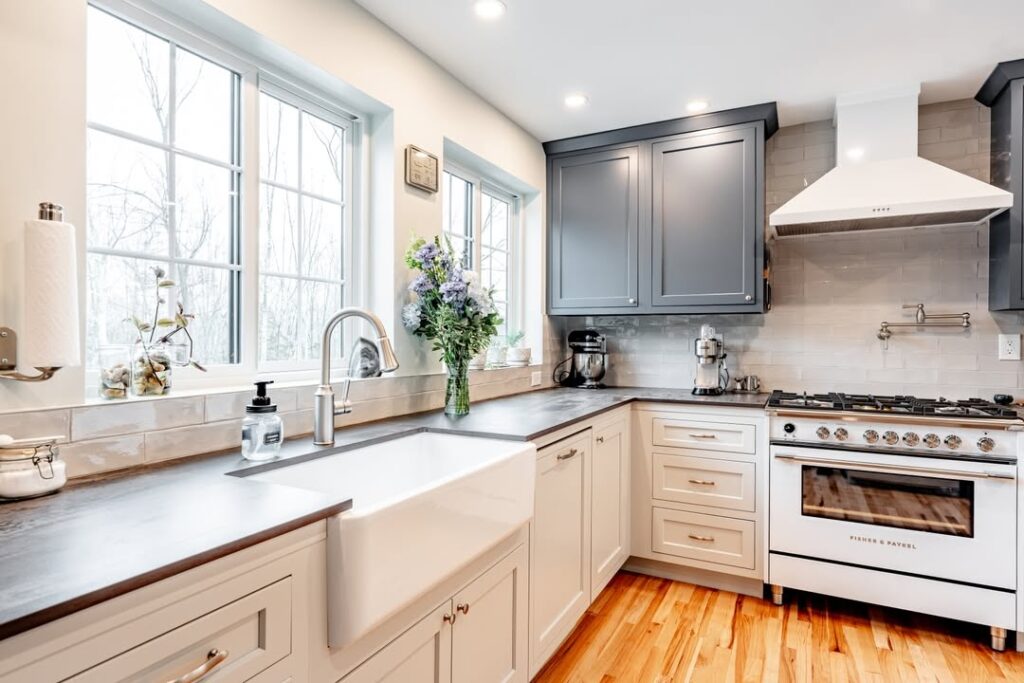
The reversed layout uses light lower cabinets and dark upper cabinets. Together, the dark uppers and neutral lowers create an open aesthetic.
Neutral lower cabinets in greige, warm white, or taupe help reflect light, while charcoal, black, and deep navy upper cabinets pull the eye toward the upper wall. Together, the dark uppers and neutral lowers provide functional benefits.
Dark upper cabinets can conceal smudges and wear, which may reduce cleaning frequency. Lighter lower cabinets reflect natural light and support visibility around the prep area.
The base cabinets use chrome pulls, while the upper cabinets have matte brass knobs. This mixed-metal hardware arrangement separates the two cabinet zones.
Off-white quartz counters with subtle veining add a light surface between the cabinet colors. Textured backsplashes made from handmade tile or white zellige reinforce the distinction between storage and display zones in open layouts. Floating shelves and glass-front cabinets provide both types of space.
Dark uppers with neutral lowers create a moody look while keeping the room from feeling overwhelming.
Graphite Grey Cabinetry with a Light Wood Island
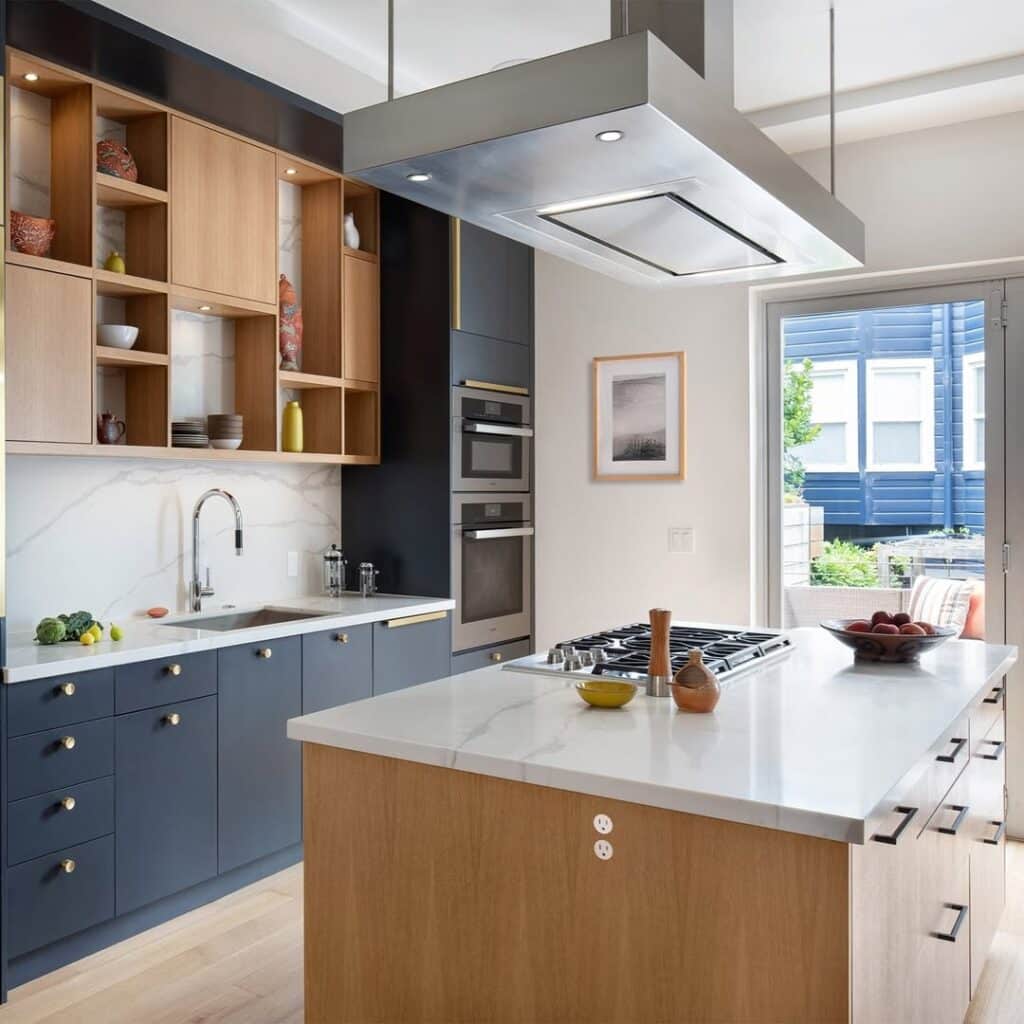
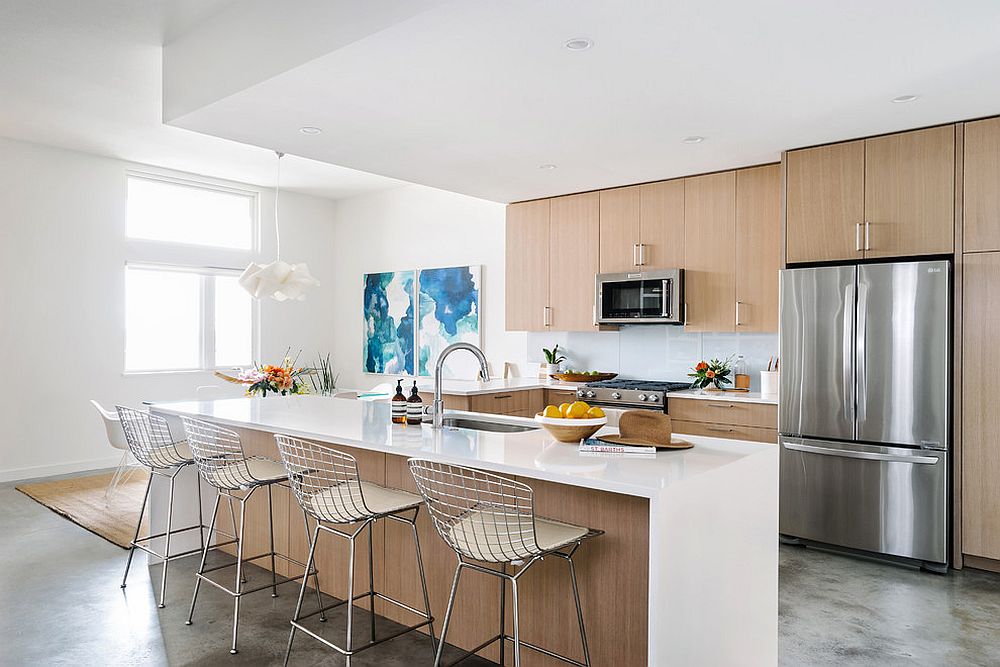
Warmth comes from the light wood island. Together, the dark cabinetry and light wood island create contrast.
Graphite grey base cabinets around the perimeter contrast with the white oak and natural birch islands at the center. This dual-tone layout supports functional zoning by separating the workspace from the gathering area.
A subtle wood grain softens dark cabinetry and adds organic texture.
Light quartz with faint veining coordinates with the dark-and-light palette and offers a durable countertop. Brushed nickel and satin brass hardware coordinate with the same palette.
Wooden trim on the pendants and matching wood tones on the bar stools help define zones without walls. The combination of dark cabinetry and a light wood island suits galley kitchens and open layouts.
Natural light reflects off light wood elements. They support a brighter, more open space.
The dark cabinetry and light wood island layout suits balance-and-contrast preferences while supporting everyday practicality.
Backlit Backsplash With Dark Bases

A luminous backsplash changes how dark cabinets and their surroundings interact. Strategic lighting makes the backsplash the main surface feature.
Deep-toned cabinets sit below the backsplash, creating a contrast with its glow. The backlit backsplash can use quartzite, onyx, or fluted acrylic behind the stovetop or sink for evening illumination.
Espresso and matte black cabinets at the base emphasize the backsplash lighting. Despite the dark cabinetry, the kitchen does not feel enclosed.
Graphite flat-panel cabinet doors pair with under-counter LED lighting. Charcoal Shaker doors add another cabinet style, while bronze hardware provides a warm metal detail.
The backsplash preserves a practical light-dark balance and works well in kitchens that receive limited natural light. Honed granite and marbled quartz keep the counters continuous, while the backsplash remains the focal point.
A backlit backsplash with dark bases suits both modern lofts and suburban remodels. Natural oak and large-format porcelain tile reflect light from the floor.
This combination is popular with homeowners because the backlit backsplash supports everyday usability. The lighting adds a distinct feature without removing the kitchen's practical function.
Textural Dark-Stained Wood Cabinetry

Deep-stained wood cabinetry offers more visual texture than painted surfaces. The finish also gives the cabinetry a warm, tactile quality.
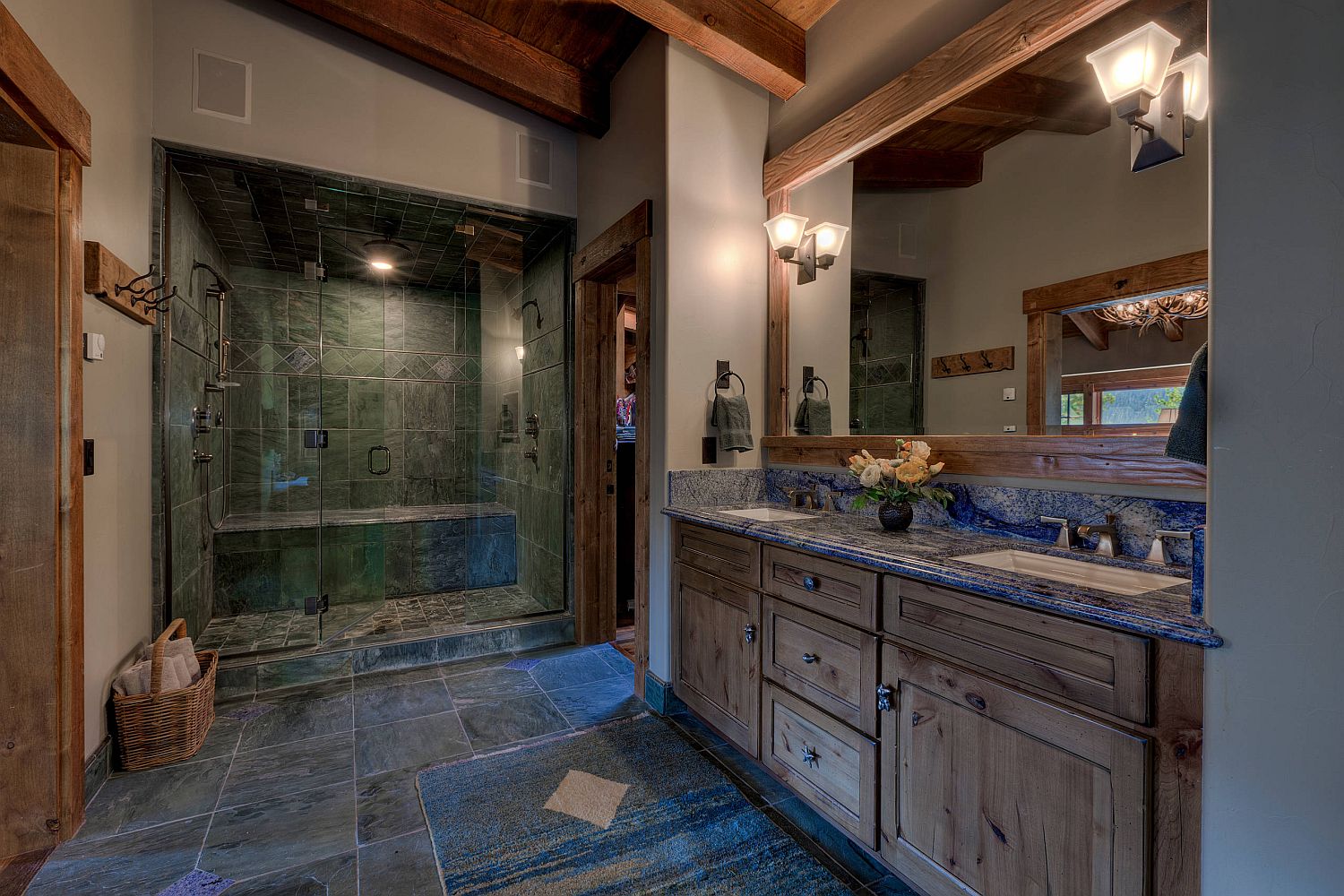
Dark walnut, espresso, and blackened ash stains preserve the natural wood grain. The grain creates organic variation.
Dark-stained wood cabinetry suits both craftsman kitchens and rustic kitchens.
A butcher block island adds an organic material to the kitchen, while handmade clay backsplash tile adds an artisanal material. Matte black and oil-rubbed bronze hardware pair with the dark-stained cabinetry. The stained wood reveals undertones and highlights that change with daylight.
An exposed beam, brick wall, and vintage lighting fixture pair with dark-stained cabinetry.
Stone-look tile and a herringbone floor add texture. Dark stains camouflage wear and minor nicks, while stained cabinetry offers straightforward maintenance.
Dark-stained wood cabinetry preserves visible grain, supports craftsmanship-focused kitchens, and adapts to changing design trends.
Simple Graphite Grey Cabinetry

In modern and transitional kitchens, graphite grey cabinetry suits both settings. The cabinetry is graphite grey.
Graphite grey cabinetry pairs with stainless steel appliances, brushed nickel hardware, and matte black fixtures.
Graphite grey cabinetry suits spaces with ample natural light. White quartz and veined marble countertops introduce texture.
A flat-panel door and a Shaker door both enhance an understated palette. Flat-panel and Shaker doors are associated with low maintenance.
Textured backsplash tile and light-toned flooring offset the dark cabinetry. Graphite grey cabinetry suits open-concept kitchens.
Brass pendants and under-cabinet LED lighting can bring soft warm light to a graphite grey kitchen. Avoid a sterile feel in the lighting. The graphite grey finish is popular in urban homes.
Across the room, graphite grey cabinetry supports everyday use while concealing fingerprints and smudges.
Graphite grey cabinetry has moderate depth. It is softer than black and deeper than white.
Matte Black Cabinets with Brass Accents
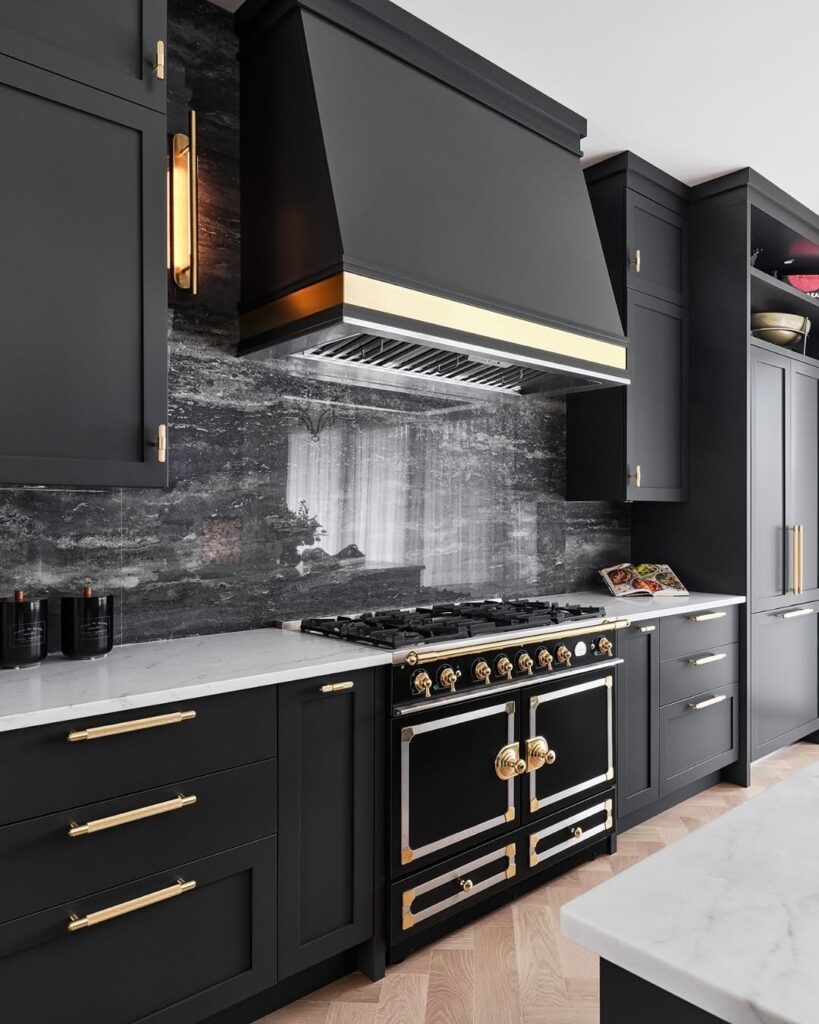
Aged brass details work with cabinetry in a flat black finish. The pairing keeps both materials clearly defined.
The matte finish provides a tactile surface and absorbs light. Matte black cabinetry pairs with natural wood floors and stone countertops.
Unlacquered brass pulls bring warmth to the setting. Vintage-style faucets and brass-framed glass cabinets are also examples of the brass details.
Matte black and brass cabinetry works in galley kitchens and U-shaped kitchens. Marble slabs and creamy tiled backsplashes can balance it.
Flat-front doors maintain a seamless silhouette. This door style is often used with matte black cabinetry.
Fingerprints show less readily on matte finishes than on gloss finishes. Matte black cabinetry suits busy homes. Consider oversized burnished-gold pendants, while integrated LED strips offer another lighting option.
Matte black and brass cabinetry references vintage craftsmanship through its detailing. The combination brings together shadow and shine.
All-Black Glossy Cabinets

This modern finish uses black cabinets with a glossy surface. The glossy finish reflects light and gives the cabinets a modern finish.
Minimalist architecture and a clean-lined setting suit all-black glossy cabinetry. This look works in contemporary homes and lofts.
Glossy black fronts reflect ambient light and add depth to the kitchen.
Backlit shelving and under-cabinet lighting can be combined with black glossy cabinetry to support functionality. Add textural elements such as black tile in a subway pattern, glass-front cabinets, or open shelving with a matte black finish.
High-end appliances can sit with glossy black cabinetry and waterfall islands. Frameless cabinetry is another match. Chrome and matte gold fixtures provide a break from the black monotony.
Durable, mirror-like cabinet materials include acrylic, lacquer, and high-gloss laminates. In small kitchens, use glossy black cabinets that extend from floor to ceiling to maximize storage.
A thoughtful layout is required for a glossy black finish. The finish also requires pristine organization.
Elegant Dark Forest Green Cabinetry

The rich green color of this cabinetry creates a calm, nature-inspired feel. Used in the kitchen, the cabinetry keeps that natural association at the center of the design.
Dark forest green gives the cabinetry a calming presence. When designed correctly, it functions as a versatile neutral while still providing bold character.
Terracotta flooring complements the forest green cabinetry. Butcher block countertops and brass hardware complement it as well.
White walls, light marble countertops, and light glazed backsplash tile balance the dark cabinetry. These lighter features make the depth of the cabinet shade more important.
Forest green cabinetry suits rustic farmhouse kitchens and refined cottage kitchens, and it is increasingly used in city apartments. Matte and satin paints provide a low sheen.
Pine open shelving breaks up the long cabinet row, and natural oak open shelving breaks it up too. Consider pendant lights with frosted glass or copper accents.
A forest green palette pairs with both vintage decor and modern fixtures.
The forest green tone is aimed at people who prefer colors beyond the usual neutrals.
Two-Tone Cabinets with Dark Bases
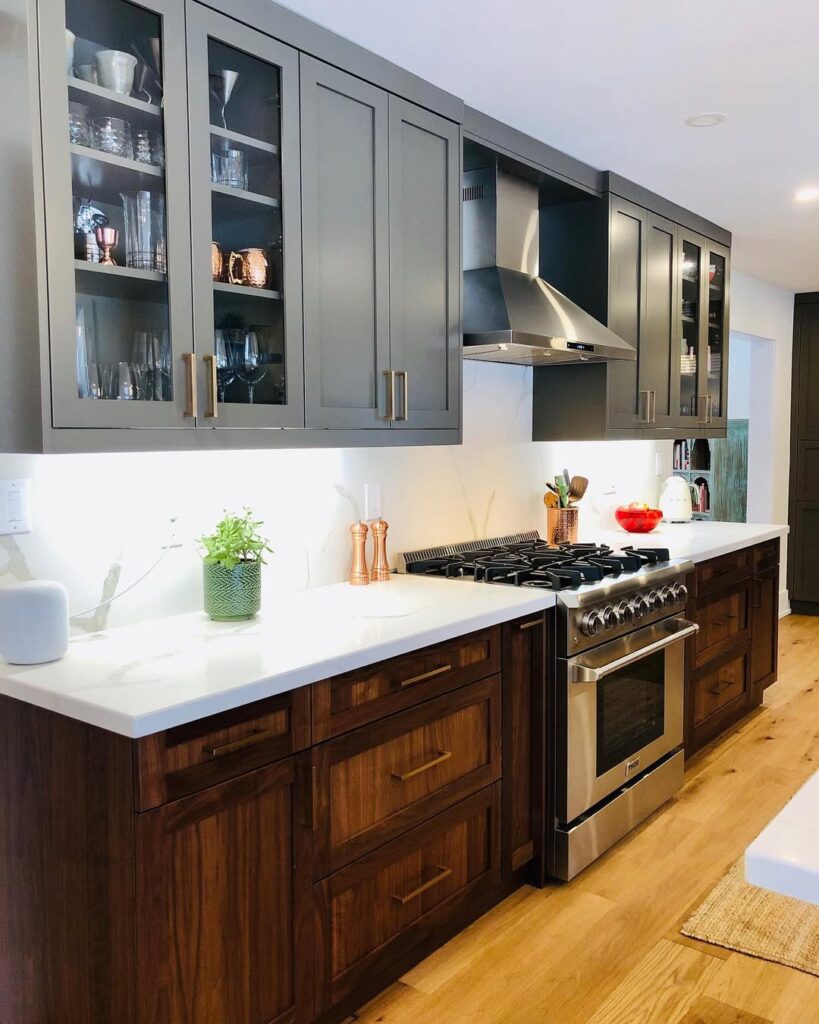
Pale oak shelves pair with the inky base cabinets. The base cabinets may be near-black or charcoal, while the upper cabinets are lighter. Natural stone countertops add another material to the combination, and the lighter uppers contrast with the darker bases.
The lighter and darker surfaces create contrast that may make the kitchen appear taller. The same two-tone contrast may also make it appear brighter.
Picture midnight blue, graphite, or espresso on the dark cabinets, with cream, ivory, or light ash above. Quartz counters and stainless steel appliances fit with this two-tone palette. The look supports both modern style and transitional style.
Warm hardware in brushed nickel or aged bronze can tie the cabinet palette together. Open-plan kitchens suit two-tone cabinetry, which can connect visually with adjacent living areas.
Use intentional repetition in two-tone cabinetry. Matching floating shelves or matching island fronts can repeat the cabinet colors, while consistent color blocking keeps the arrangement clear.
Visual separation supports functional zoning. It also defines separate workspaces.
Balanced contrast is one benefit of using two cabinet tones. The approach supports both modern and farmhouse style.
Industrial Charcoal Cabinetry and Steel Accents
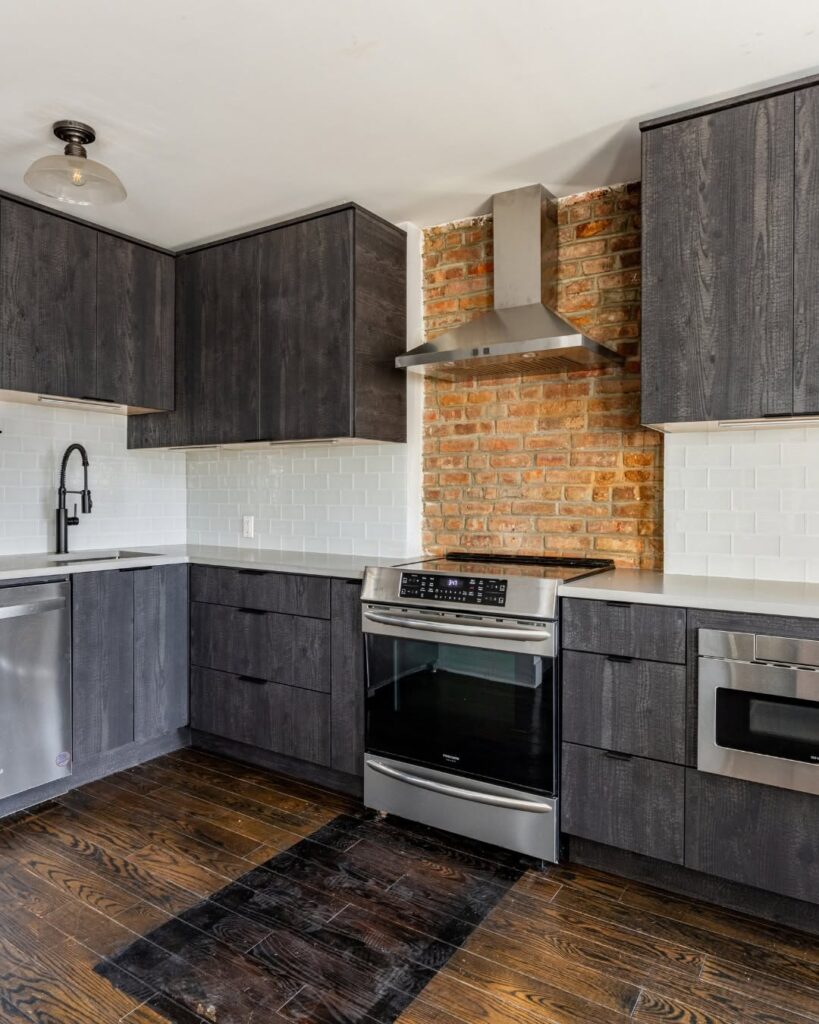
Raw steel is paired with charcoal cabinetry. The charcoal and steel combination suits urban kitchens and evokes loft living.
Exposed ductwork and open stainless steel shelving pair with matte charcoal cabinetry. The cabinetry can have either flat-panel or slab design, and the charcoal finish is matte. Concrete countertops complete the pairing, which supports an easy-maintenance, utilitarian atmosphere.
Large industrial windows admit natural light. Concrete flooring and epoxy flooring both work with an industrial charcoal scheme, which suits kitchens with high ceilings.
Industrial cage-bulb pendant lights reinforce the theme, along with brushed metal bar stools. Black granite and soapstone counters, ribbed glass cabinet inserts, and wire mesh cabinet fronts add texture to the cabinet surfaces.
Light gray walls and whitewashed brick pair with charcoal cabinetry. Charcoal shades absorb ambient light, while a matte charcoal finish tolerates minor imperfections and develops a subtle patina.
A charcoal and steel palette emphasizes both form and function. It can apply to converted warehouses as well as suburban homes.
Brown Burgundy Cabinet Palette
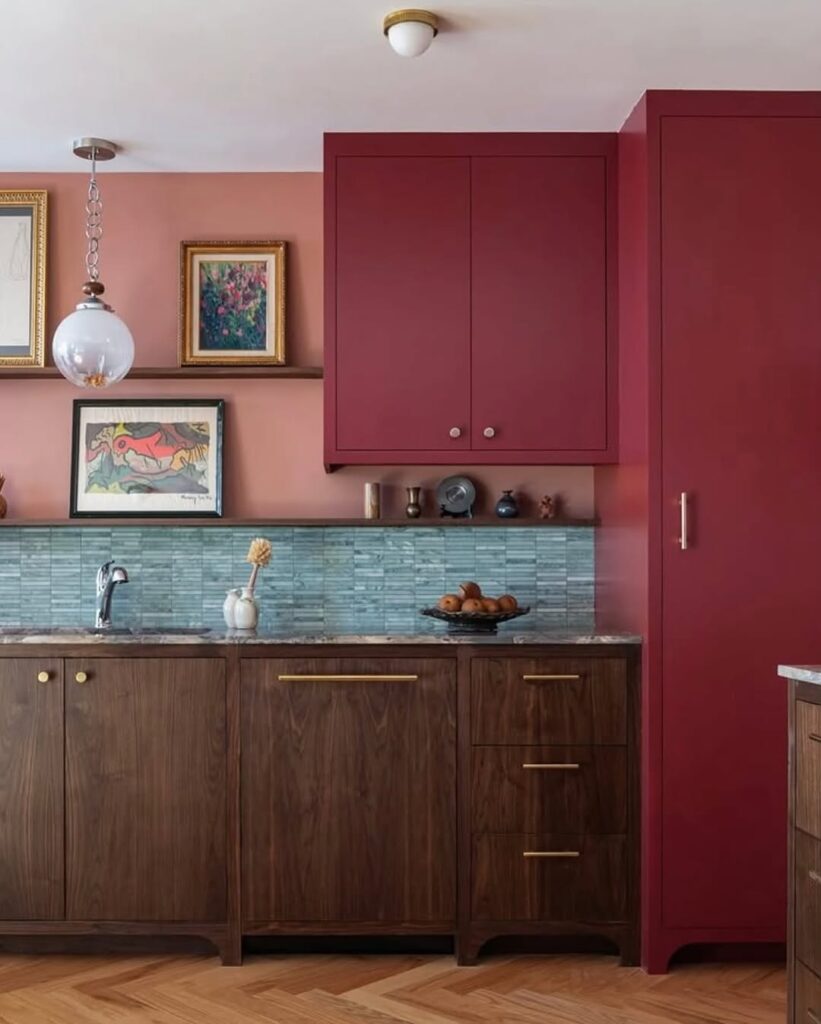
Cabinets in brown shades such as espresso, chocolate, or tobacco pair with a burgundy accent. The burgundy adds warmth and dimension.
Burgundy appears on the island base, the lower cabinetry, the custom range hood, and inside the glass cabinet.
This brown and burgundy palette suits both traditional and Tuscan kitchens. Natural textures work well with either style.
Leathered granite and dark soapstone give the counters texture within the brown-burgundy palette. Copper fixtures add warmth to the same palette.
A creamy tile backsplash lightens the palette. Herringbone hardwood floors and antique brass lighting add material contrast. Consider open shelving made from reclaimed wood.
Durable, forgiving surfaces with low wear visibility make this palette practical. It can help a kitchen transition into dining areas and living areas, including in open-concept layouts.
A tone-on-tone treatment gives the palette a timeless quality and supports a moody kitchen color scheme. It also avoids the all-black look.