10 Cozy Primitive Living Room Decorating Ideas
Primitive design offers an alternative to modern interiors. It is less polished and built around authenticity.
Raw materials, careful making, and a simple approach shape this style. It creates a warm, grounded setting with a timeless character.
Its decor is functional, with earthy textures, muted tones, and themes drawn from heritage and tradition. In a living room, that creates a cozy connection to heritage.
This design approach makes room for comfort, authenticity, character, and individuality.
The result is a living room shaped by rustic elegance.
Moody Colonial Nook with Primitive Style and Velvet Trim

Velvet seating sets the tone for a palette of deep indigo, oxblood, and soot. Aged pine accents and spindle furniture keep the look colonial with primitive restraint.
Books and candlelight are supported by a small pie-crust table. Matte finishes prevent sheen, because any sheen that appears disrupts the period effect.
Textured wool rugs pair with the seating in this early American primitive living space. The nook supports evening conversation as well as intimate reading.
Candlelit Harvest Check Parlor
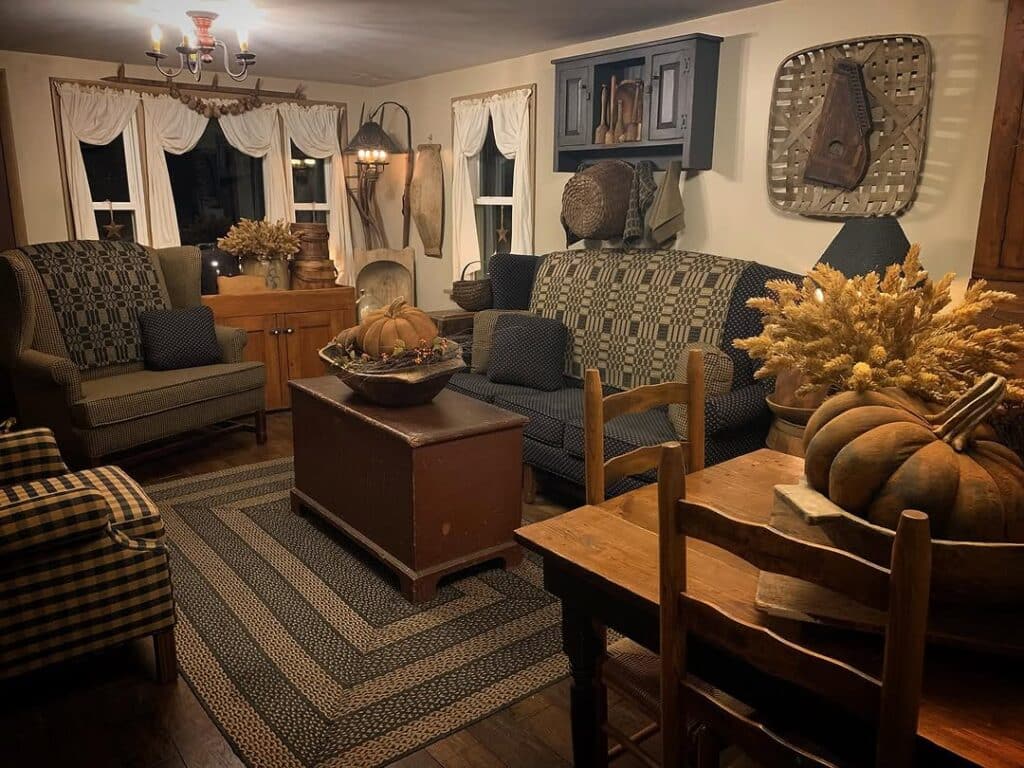
A candle flame serves as the visual centerpiece. Clustered candle-fuel tapers cast reflections across the checkerboard floor squares and aged woodwork.
Dried florals and market-style baskets introduce harvest texture. Grain-sack runners add another layer, but harvest accents should not overwhelm the checkerboard.
Simple dining is arranged around the compact tavern table. Its turned legs support seasonal displays on the tabletop, while light and shadow are carefully balanced to keep the checker pattern rich rather than harsh.
Use warm parchment and wheat for the wall colors to soften the checkerboard contrast while maintaining a candlelit glow. Keep the nearby surfaces in that same warm range.
Colonial Hearth Gathering Among Rustic Relics
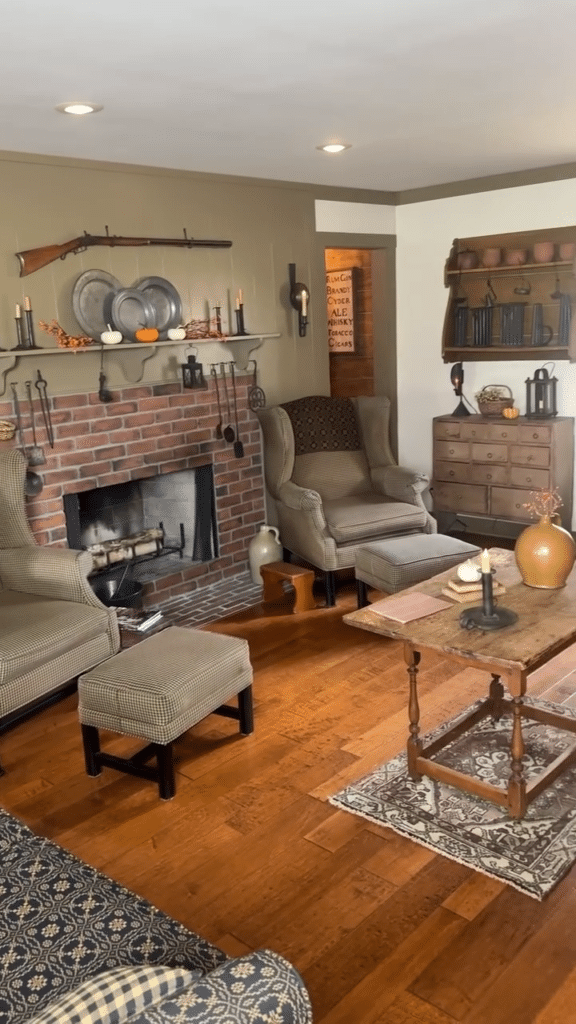
Timeworn antiques, tools, and iron trivets sit around the broad fireplace frame. Together, the worn pieces signal an early American purpose.
Deep-set rockers near the fire create a setting for conversation. A braided rug and trestle coffee table support the arrangement, while muted flax, clay, and charcoal tones keep glossy finishes from reducing its authenticity.
A storage arrangement can convey both colonial and primitive character while supporting daily living. Layer practical storage with visible history, not visual excess or nostalgia that feels staged.
Primitive Tavern Gathering by a Stone Wall
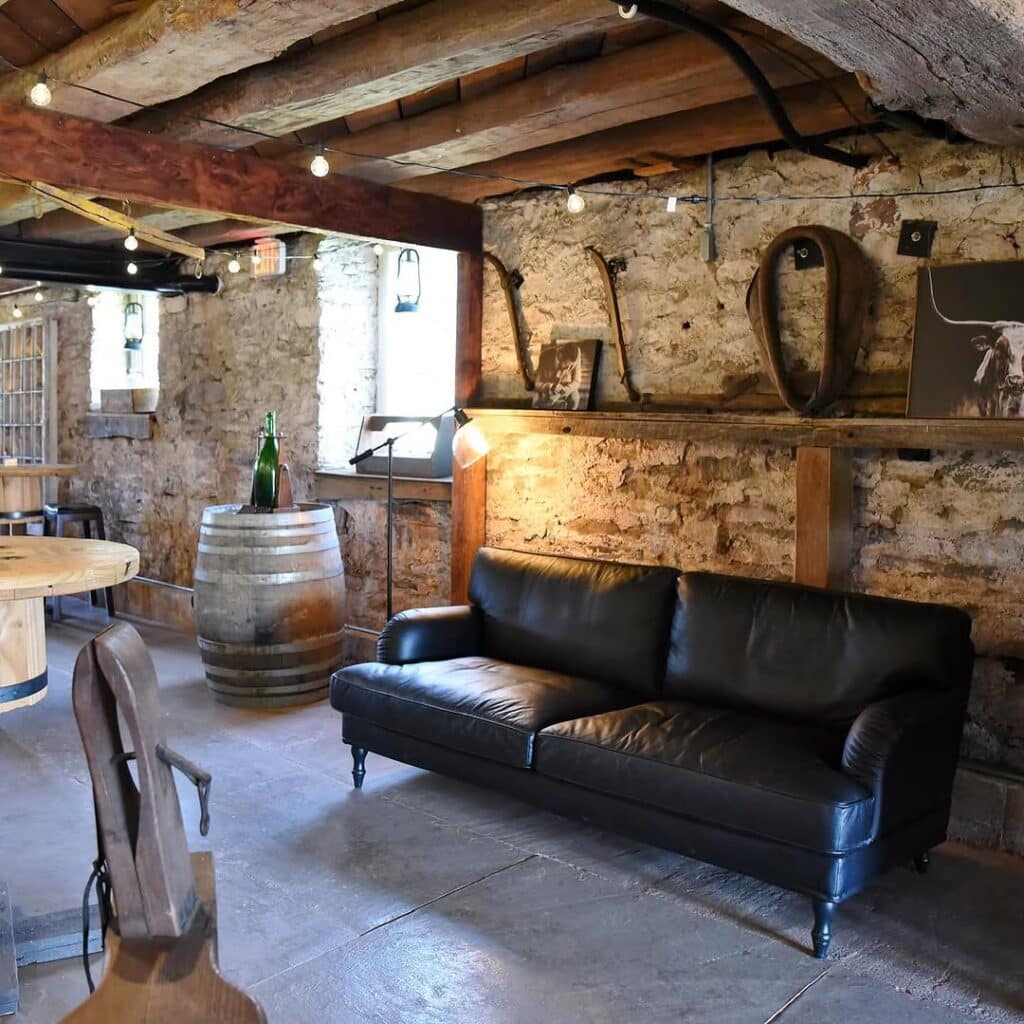
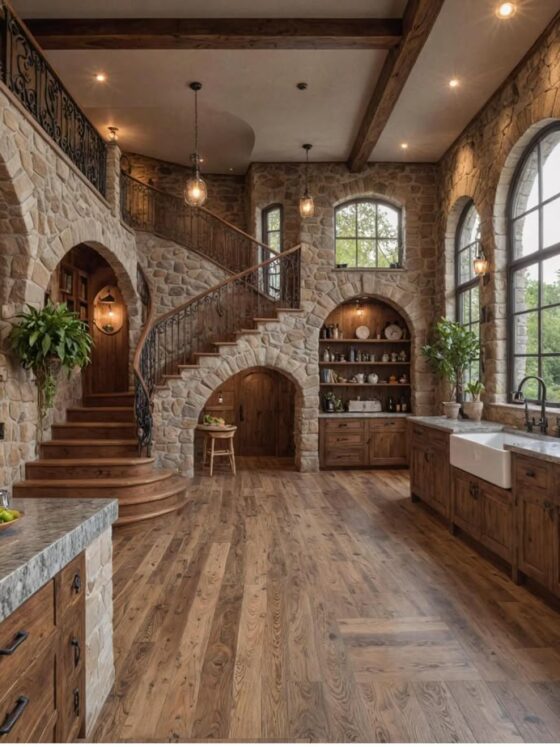
A plank table, cross-back stools, and pegged shelving give the layout a communal, tavern-like character. Stacked stone covers the fire surround and rises partway up the accent walls. The arrangement supports communal use.
Suspend the lantern lighting so it avoids eye-level clutter. Use a palette of smoke, cider, and wheat.
Structural character should lead here, rather than staged distress that competes with it. The space supports social gathering and a sense of historic gathering without theatrical styling.
Classic Primitive Quilt Hearth
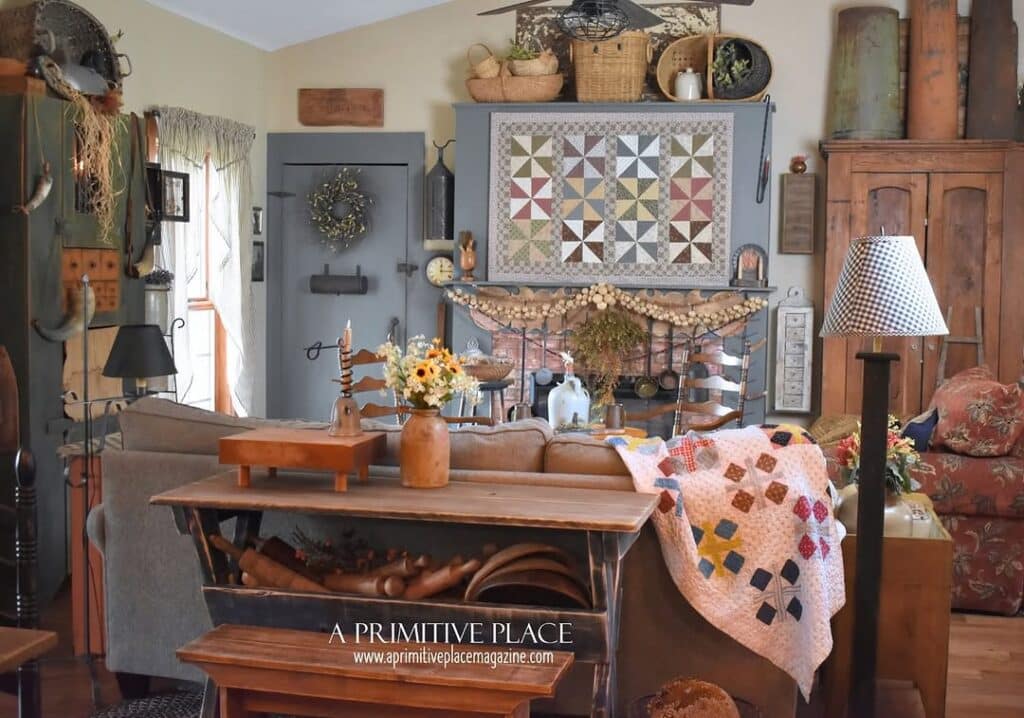
The mantel displays a quilt made with hand stitching. It is also draped near the rocker.
The quilt combines muted red, indigo blue, and oatmeal neutral, echoing early American dye traditions. Pair it with simple iron hardware and scrubbed pine furniture.
The fireplace area makes the quilt the focal point in a classic primitive setting. Avoid additional patterns around the quilt so it retains its prominence.
Warm Light Brick Modern Primitive Hearth
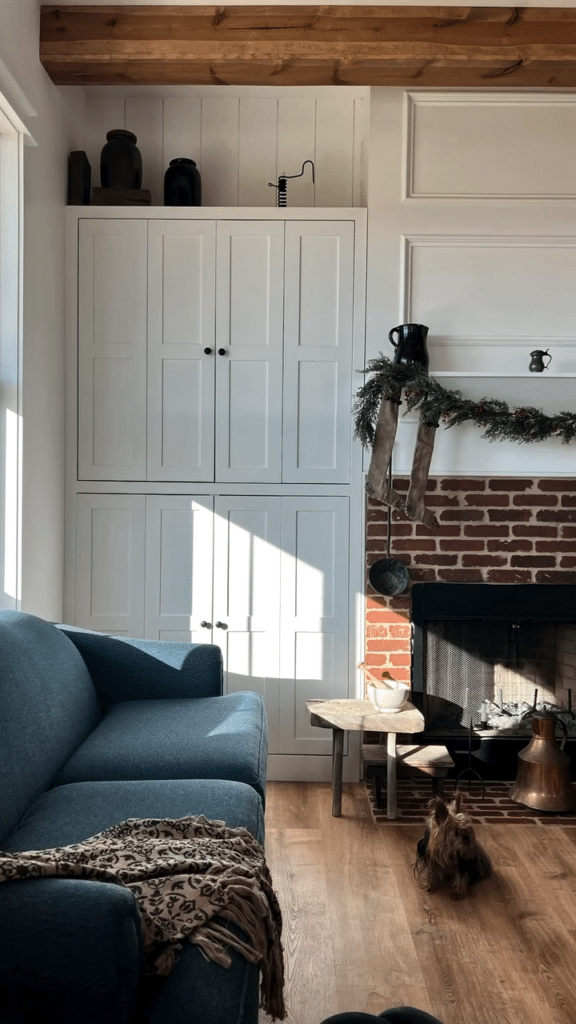
Light brick reflects the fire glow and is associated with the hearth. Pale timber finishes, softened plaster walls, and neutral linen seating shape the tactile primitive living room. The seating is neutral in color.
The brick serves as the visual anchor. Keep the décor sparse, with blackened iron fireplace tools as the main detail.
The living room uses honest, traditional materials and tactile surfaces around a hearth-centered layout. This modern primitive approach has a cleaner tone and suits homeowners seeking modern primitive warmth.
Rustic Heirlooms in a Hearth Room
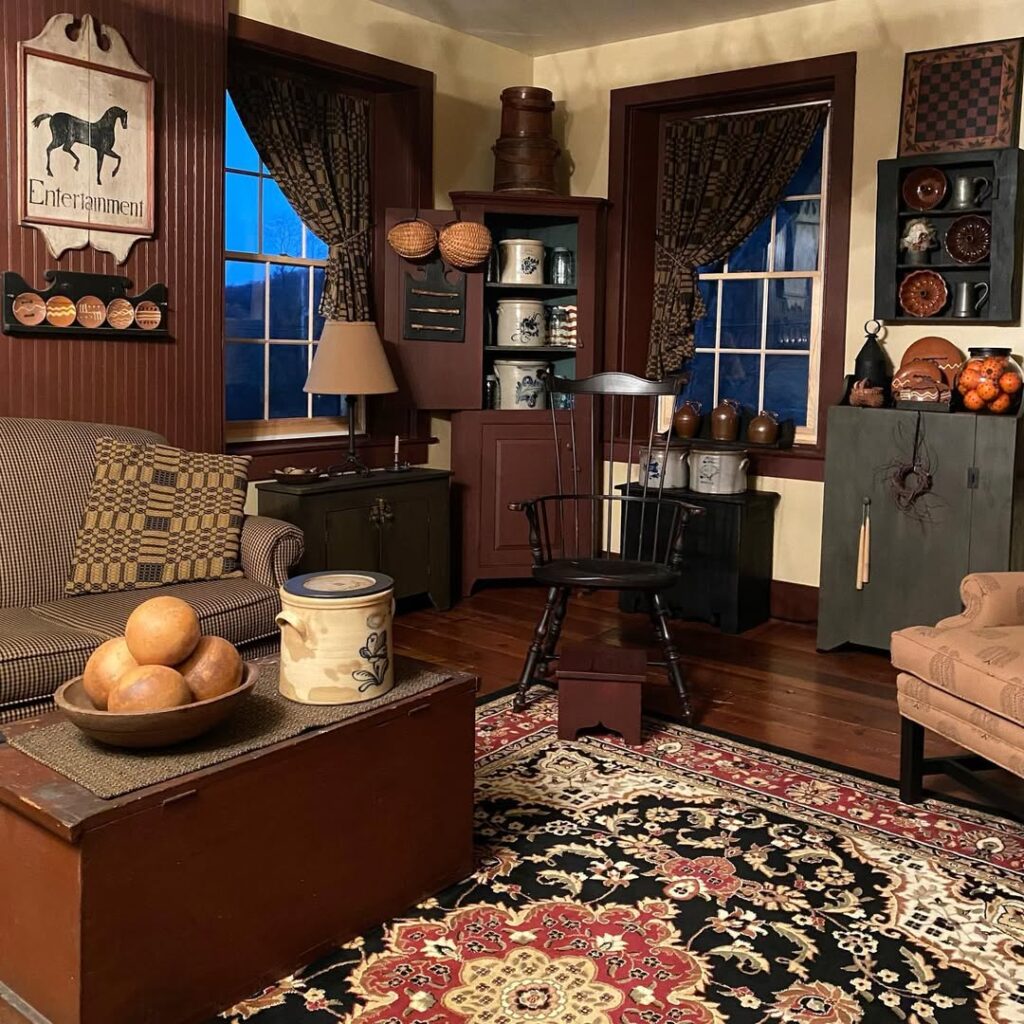
Braided wool rugs anchor the room along with spindle-back chairs. A stone fireplace serves as the room anchor, while hand-hewn textures add to the setting.
Ticking stripe textiles bring contrast to the room, and warm lamplight softens the display. Weathered pine shelves hold crocks, ironware, and family keepsakes.
The palette uses oat, soot, and barn red while keeping historic warmth in place. The colors stay clear of visual clutter.
Subtly aged walls and floors develop an aged patina over time.
Warm Distressed Heritage Primitive Cupboard Corner
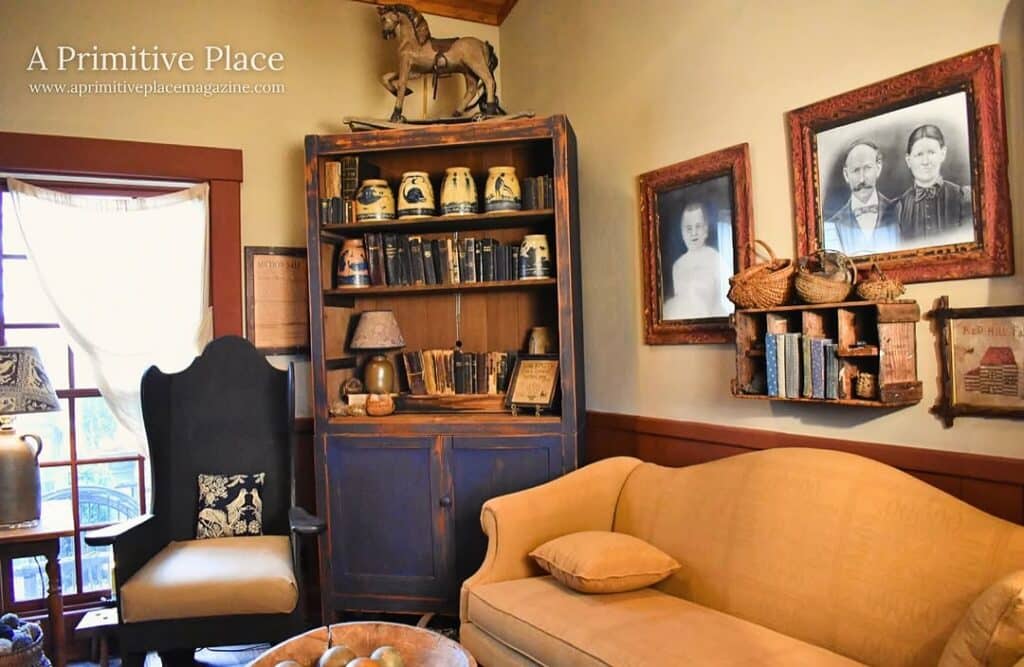
Homespun linens rest folded inside the timeworn cupboard, alongside dented tins and stacked ironstone. Its weathered finish brings in patina without major renovation.
In one corner, a small bench sits near the cupboard and supports storage access. Keep the surrounding walls softly toned. The cupboard remains the primary feature.
Heritage warmth can come through furniture, so structural renovation is not required. This corner solution suits living rooms that are compact and primitive in character.
Colonial Rustic Hearth Gathering
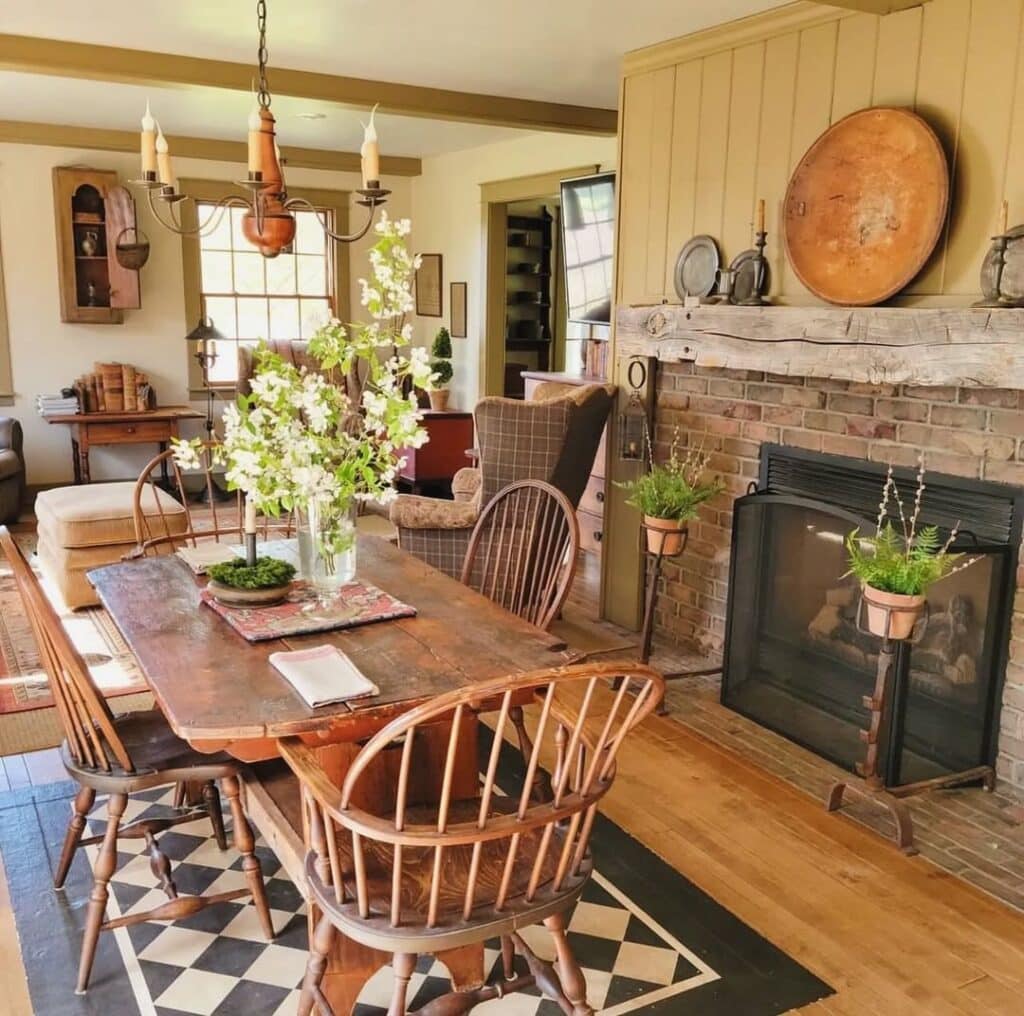
The scrubbed pine floor and unfussy cabinetry keep the room grounded. An open pot rack hangs above a broad hearth, while the fireplace serves as the daily center. A bench and rocker beside it support the fireplace, bringing colonial restraint together with rural ease.
Neutral, homespun upholstery keeps the seating simple. Stacked logs and iron tools put the fireplace's function in view. Prioritize fire circulation so the room supports visible practicality and relaxed gatherings.
Use meaningful heirlooms rather than artificial aging, and keep ornament limited. The room should not take on a themed appearance.
Colonial Room with a Brick Hearth and Baskets
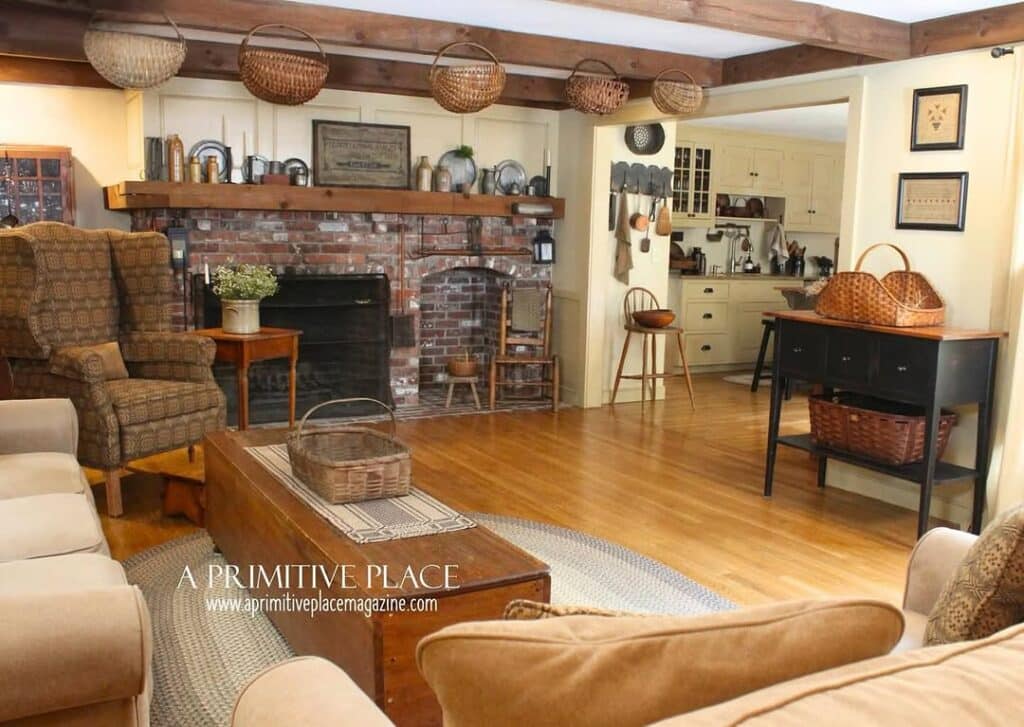
The hearth is wrapped in exposed brick, with low-backed seating that maintains open sightlines. A pine console stores kindling and throws. Nearby, a wicker hamper, woven tray, and market basket sit close to the hearth.
Striped upholstery keeps the room from becoming a rustic-heavy scheme. Creamy limewash on the masonry softens its edges while preserving visible age.
Keep storage pieces evenly spaced. That spacing supports order, creates a clear visual hierarchy, and allows balanced traffic flow while the fireplace remains the colonial focal point.
Woodland Primitive Nook with Crock Accents
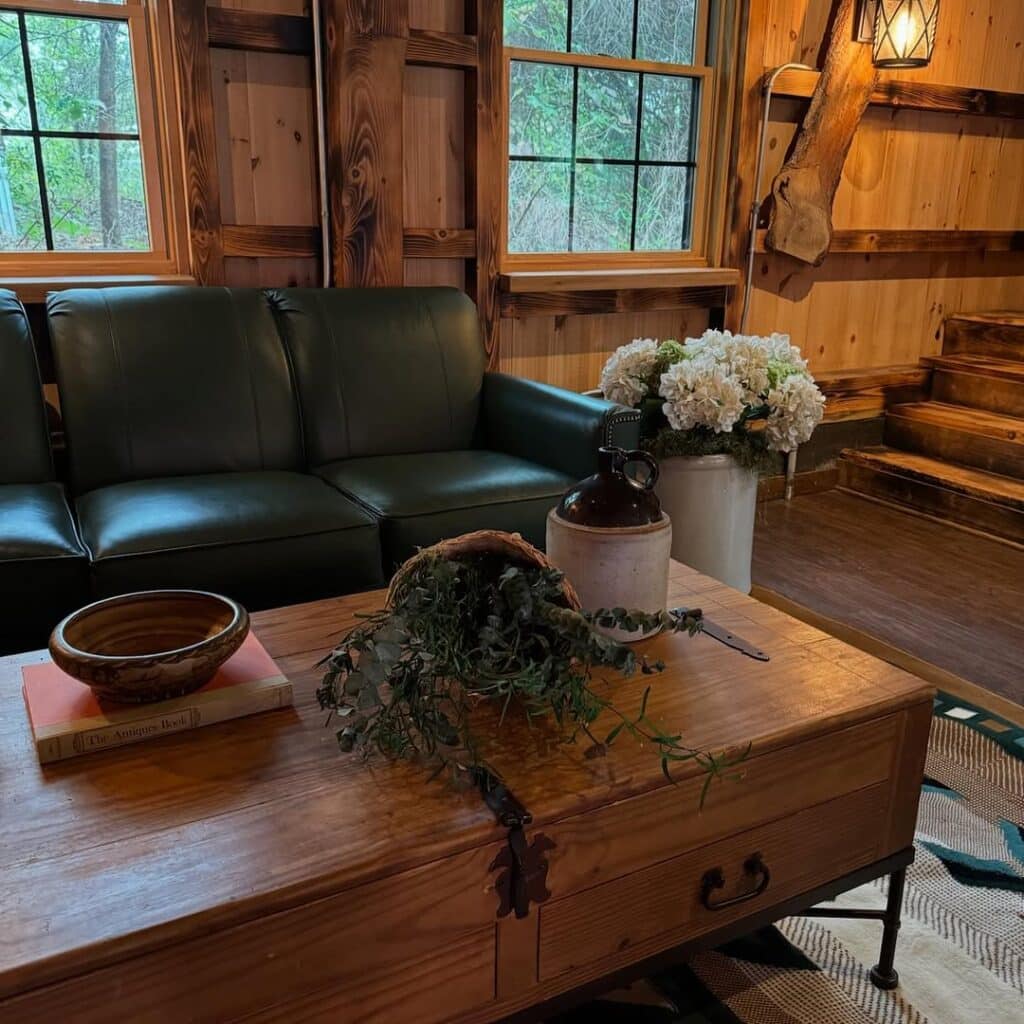
Filtered daylight falls across the rough plaster wall and highlights the pottery arrangement. A hand-thrown crock sits with a wooden trencher and a covered jar. Arrange the pieces with restraint.
In one corner, a spindle chair and narrow settle bench establish a reading corner. An iron hook provides vertical storage, while a bark-toned textile helps avoid crowding the floor.
Keep pottery as the visual anchor and let material honesty carry the primitive character. This approach suits secondary living spaces. Avoid excessive pattern and decorative abundance.
Heritage Parlor with Timber Beams
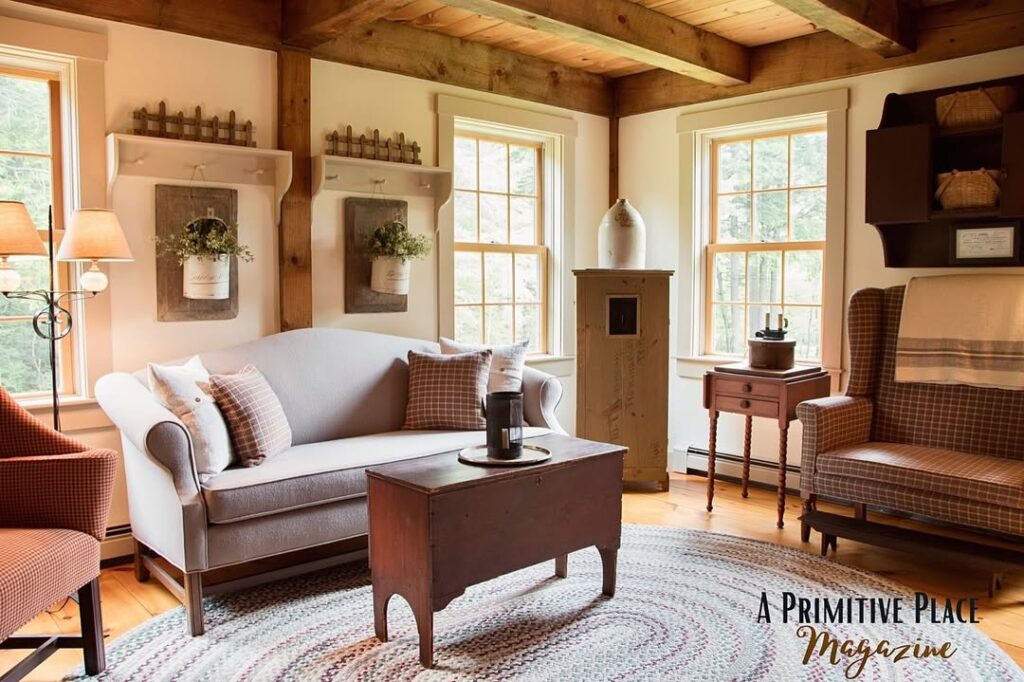
The low furniture sits beneath exposed timber ceiling beams that frame it. Layered folk textiles join the rough plaster walls, ladder-back chairs, and farmhouse settle in emphasizing a primitive structure.
Iron hardware sits among the sparse accessories, while earth-toned throws add a little warmth. Covered baskets, dough bowls, and framed samplers remain limited so the beams stay dominant.
In the evening, people gather quietly by the hearth. Hearth-focused seating and low lighting give the room its parlor mood.
Heritage Colonial Check Haven
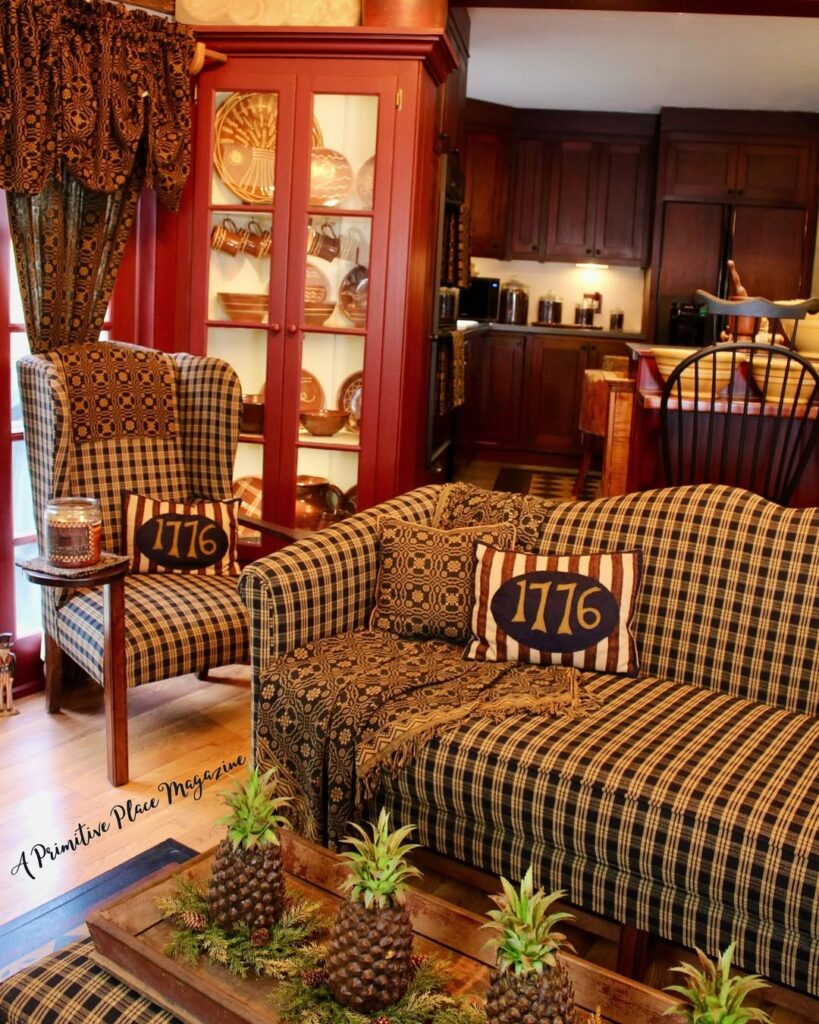
A hand-painted checkered floor is paired with furniture made from honest wood in colonial silhouettes.
Across the room, trestle tables sit with Windsor seating and turned-leg stools. The blue and cream textiles ease the floor pattern, while pewter trays and brass candlesticks catch the light with a soft sheen. Together, the furniture reinforces early American utility.
Beadboard covers the walls, while pegged rails organize tools and decor. This arrangement preserves the room's symmetry.
Muted window treatments help control light and preserve crisp contrast. Colonial interiors value disciplined order, and the muted tones support that quality.
Cozy Colonial Primitive Parlor with China Display
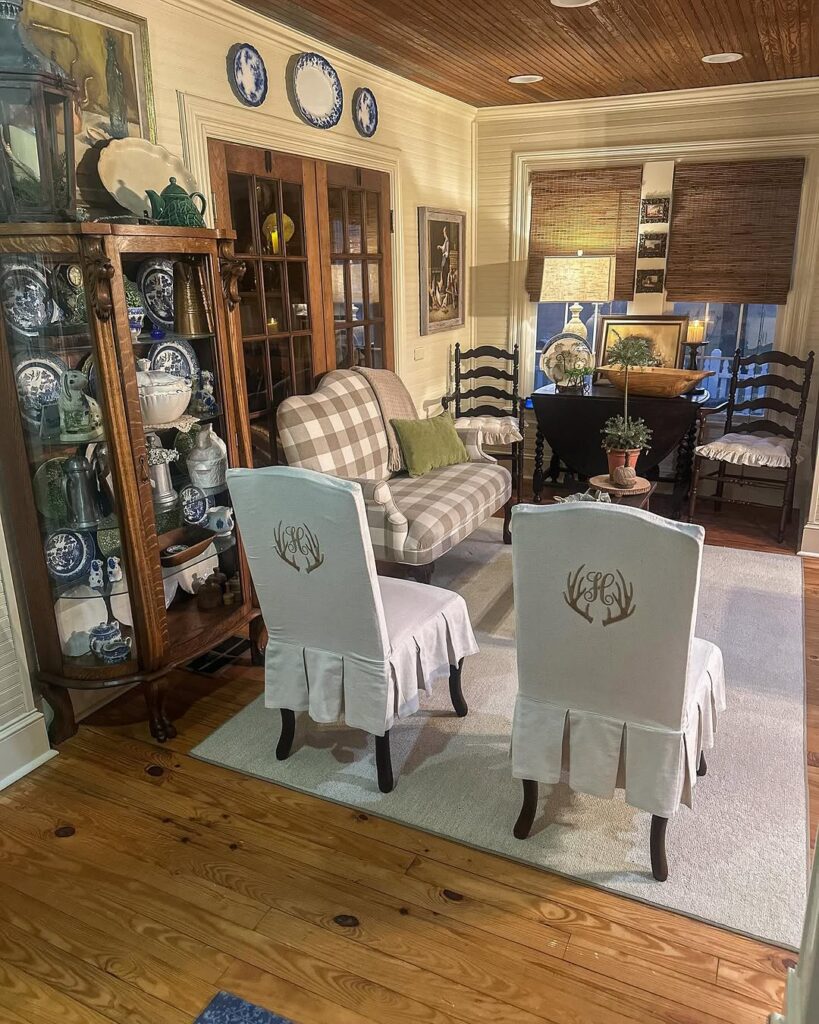
An open shelf presents collected objects for storytelling. China in blue and white, stacks of ironstone, and serving pieces of modest scale fill the open shelves.
On paneled walls, controlled reflections keep pottery from taking over. Low-gloss cabinetry also limits reflections. A small drop-leaf table supports tea service without taking over the floor plan.
Keep porcelain in the visual lead while restraining fabric patterns and avoiding excess ornament. This approach combines domestic warmth with primitive restraint, supporting historically faithful living and quiet entertaining.
Rustic Primitive Early American Stone Hearth
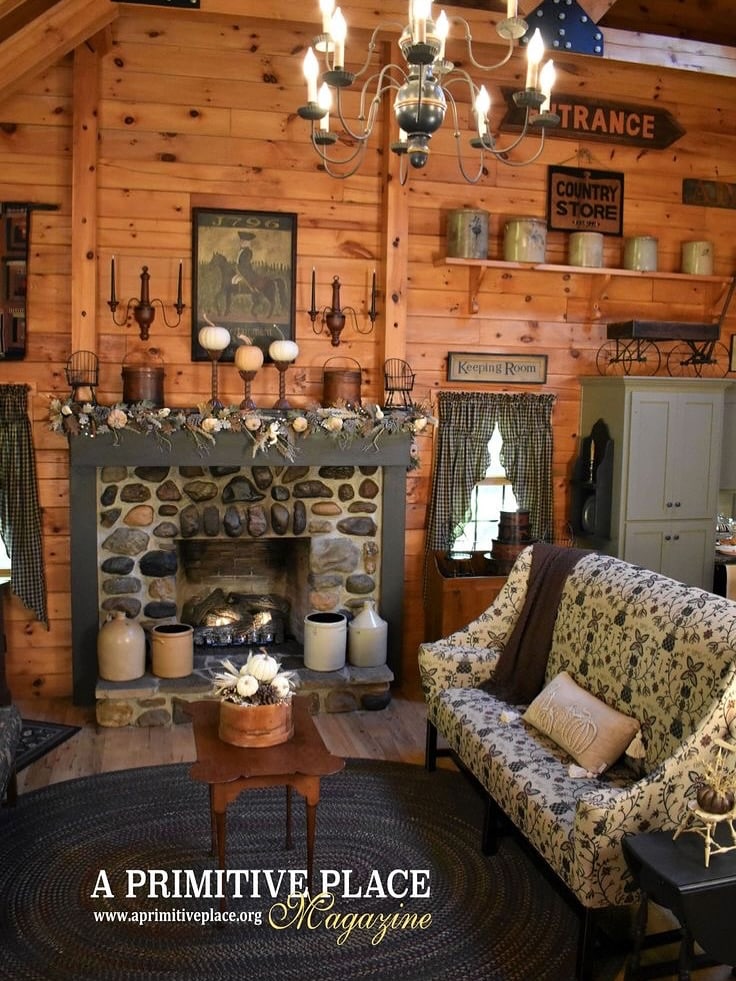
A wide-plank floor sets the base for the space. Ladder-back chairs accompany a harvest table. The rough-cut stone hearth surround surrounds the fireplace and extends into low retaining walls made from rough-cut stone.
Warm clay and tobacco tones keep the palette grounded. Styling prioritizes function, with kindling stored in open bins.
Seating placed near the hearth supports thermal comfort. The living room uses durable, purposeful colonial-era materials in a primitive style.