10 Cozy Wood Stove Fireplace Ideas for Any Interior
Wood stove fireplaces can pair timeless design with heating efficiency.
Colder months call for reliable warmth. A wood stove setup supports both home comfort and home style.
Fireplace solutions can shape energy use, the look of a room, and daily living. These effects matter whether the project is an existing upgrade or part of new construction. The right choice should fit the home and the way the space is used. Both project types call for attention to performance and appearance.
Materials and layout both matter in a wood stove setup. The goal is good performance that also coordinates with the interior.
This guide gathers useful ideas based on careful research. It focuses on creating a focal point that feels cozy without giving up efficiency. A strong focal point should also remain useful and appealing over the years.
Color variation on a brick hearth with a festive mantel
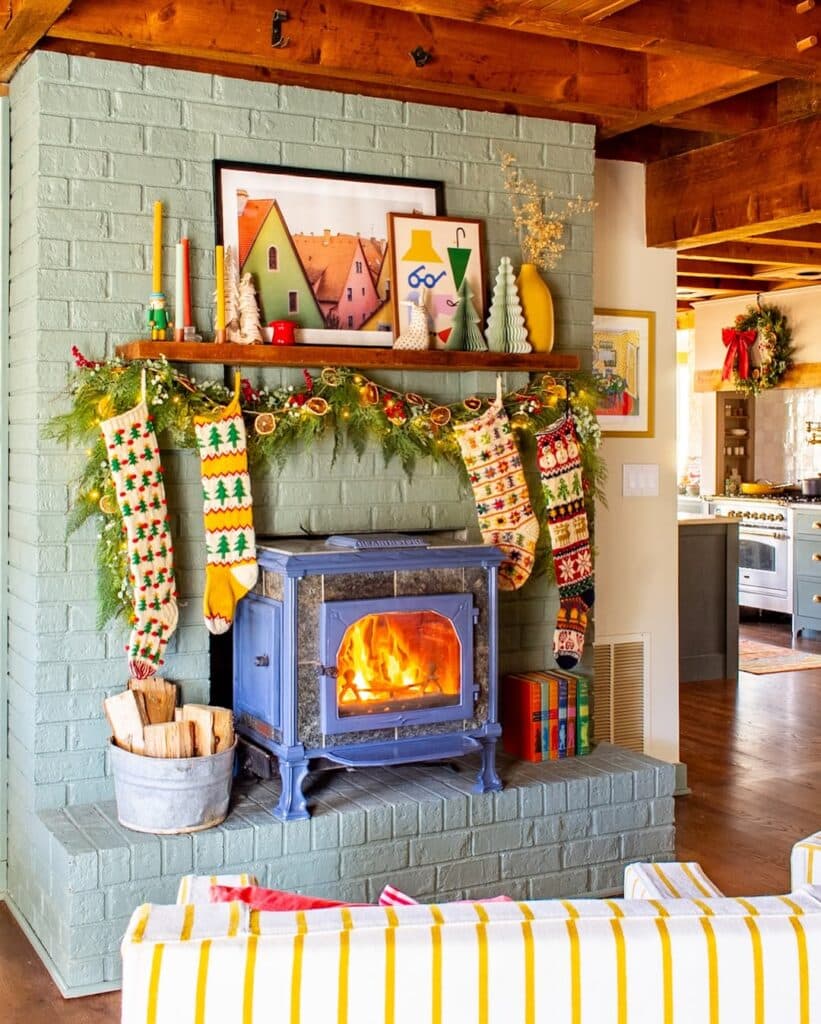
Muted green, muted blue, and terracotta give the painted brick its color variation. The brick's thermal mass retains heat, while the color treatment preserves the hearth function.
Proper clearances should be maintained around the installation. Use non-combustible finishes because the wood stove serves as the primary heat source. Seasonal mantel styling provides flexibility, with greenery, artwork, and festive accents.
Reliable wood burning comes from this wood stove, which also supports efficient heating. Its design works in family homes, cabins, and living rooms.
Traditional wood stove fireplace with brick hearth

The stove is made from cast iron and pairs with the traditional fireplace. Its brick hearth retains heat after the flames fade, supporting thermal performance.
A raised hearth anchors the arrangement. The arched firebox is framed by aged, textured brick, and the traditional layout suits farmhouse, rustic, and colonial interiors.
A proper liner and damper should accompany the traditional brick hearth wood stove fireplace. This setup is especially useful in colder seasons and works well in family rooms as well as primary living areas. Together, these parts support durability and dependable heating.
A-Frame Corner Cabin Wood Stove
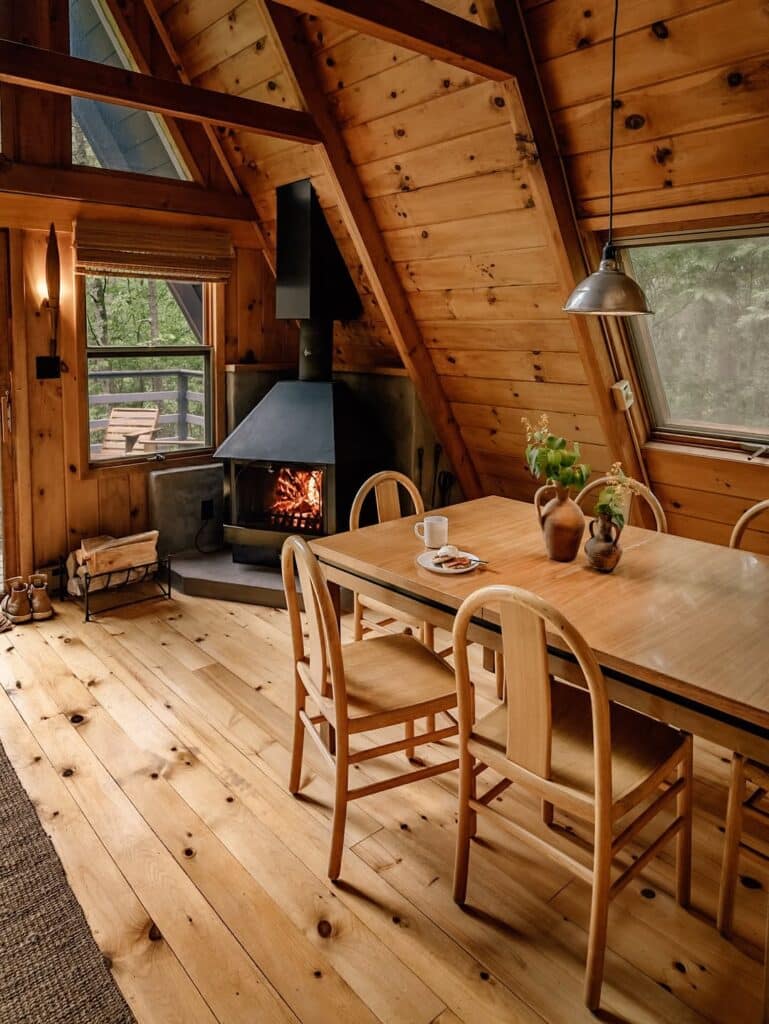
Exposed beams pair naturally with cabin features such as natural light and steep rooflines. Together, these details create the character associated with a cabin interior.
The stove finish contrasts with warm timber, whether you choose black or matte steel. Place the stove where walls intersect to spread radiant heat through the room. A floor-to-ceiling hearth panel protects wood surfaces.
In winter retreats in remote cold regions, an A-frame corner configuration supports winter heating. It preserves views, airflow, and a minimalist layout.
Minimal Wood Stove in a Cabin Corner

The small cabin has a stove placed in a corner. A simple steel stove unit is paired with a protective hearth pad. This placement preserves openness, avoids visual clutter, and provides dependable warmth.
In the compact floor plan, the corner wood stove circulates heat across the space and improves heat circulation. Neutral finishes complement the timber walls and exposed rafters in the cabin interior. Stove installation must provide proper venting, maintain clearances, and provide floor protection, since venting, clearances, and floor protection are essential to the installation.
A corner stove solution provides functional heating, supports easy maintenance and efficient wood burning, and suits remote cabins in cold rural locations. It fits year-round use where simplicity and space efficiency are priorities.
Glass stove in a mid-century design
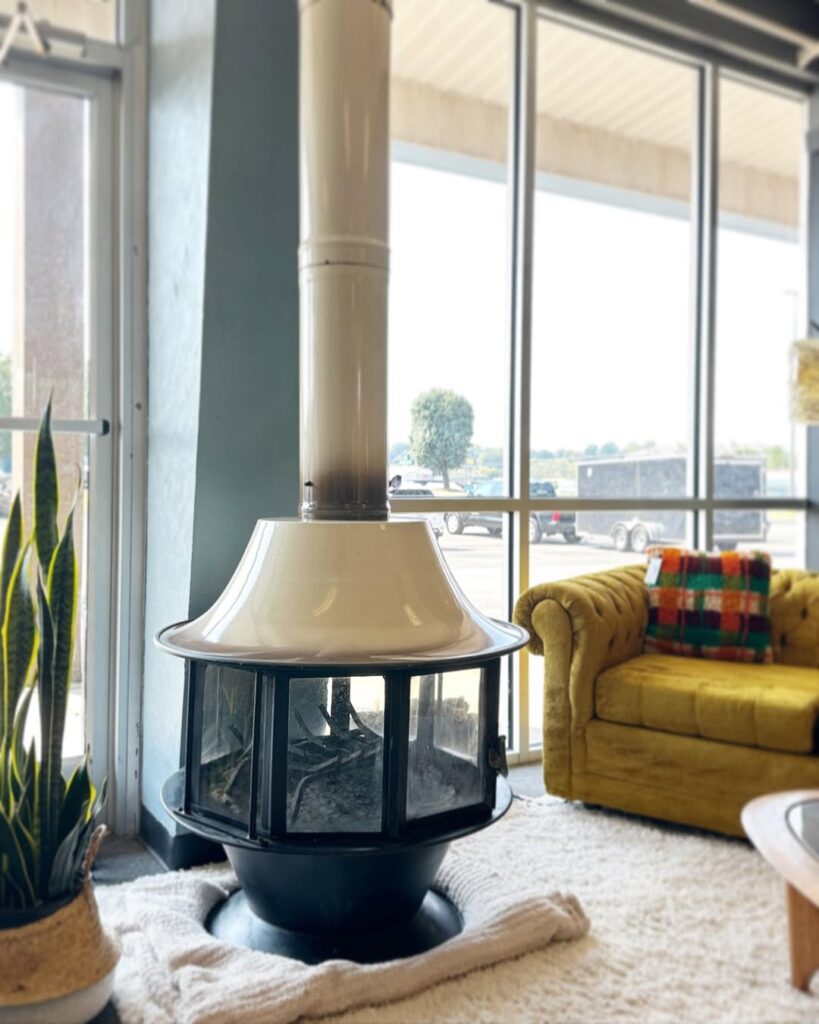
Transparent panels allow multi-angle viewing and display the flames. Suspended above the floor, the glass stove also supports controlled combustion.
A ceiling-mounted flue connects to the suspended glass stove. Its black metal frame contrasts with walnut furniture and terrazzo flooring, and the arrangement suits retro interiors.
An open-layout living area can suit this type of fireplace, but the installation needs professional work and proper ceiling support. Meeting those requirements helps maintain safety, improve ventilation efficiency, and provide consistent heat output.
Classic Cast-Iron Wood Stove

A stone wall is paired with the heavy cast-iron wood stove. Cast iron withstands high temperatures, retains heat, and radiates even warmth.
The installation uses a stacked stone backdrop that protects structural surfaces. It fits traditional, transitional, and country interiors.
This wood stove supports long-burning fires and provides steady winter heating. Maintain proper clearances, use chimney liners, and provide floor protection to ensure compliance.
Vintage Lantern Wood Stove in a Cabin

The stove has glass-paneled sides and cast detailing. Its lantern-style form references early lodge heating, while the cast detailing echoes classic oil lamps.
The freestanding lantern-style stove is compact and suits limited-space cabins. Glass-paneled sides allow outward firelight, and the stove delivers steady radiant heat.
In this cabin, the stone floors and timber walls meet a cold climate. The setting works for seasonal retreats as well as year-round rural living, and it is paired with a lantern-style stove setup. The setup provides reliable wood-burning efficiency and has durability. Stove installation uses proper chimney liners, provides hearth pads, and maintains clearances, with those chimney liners, hearth pads, and clearances ensuring safety.
A Brick Hearth, Wood Fireplace Insert, and Modern Media Mantel

A wood insert fits into the existing brick fireplace. Its installation preserves that structure and brings modernized performance to it.
The clean-lined media mantel integrates shelving, a television, and storage above a sealed firebox. Wood inserts improve heat output, draft control, and combustion efficiency compared with open fires. Proper liners and fire-rated surrounds are necessary, and those details are critical to the installation.
In residential living areas, families can use this wood insert approach during a cold winter. It provides wood stove heating, contemporary functionality, and space efficiency for renovation projects. The installation avoids significant layout changes and masonry removal while supporting safe and efficient residential heating.
Corner Freestanding Wood Stove

Placed in an unused corner, this freestanding wood stove makes use of space that might otherwise sit empty. It minimizes floor-space use while providing serious warmth.
Stone or tile can form the backer and protect nearby surfaces while improving durability. A steel freestanding stove design is paired with a heat shield, which supports safe clearances and improves efficiency. Placing the venting near an exterior wall allows for simpler installation.
A corner stove setup provides radiant heat during the colder months. It suits remodels, cabins, and apartments with limited square footage, and it supports long-term energy savings. A nearby detail keeps the arrangement contained in the corner.
Mid-Century Suspended Cone Stove
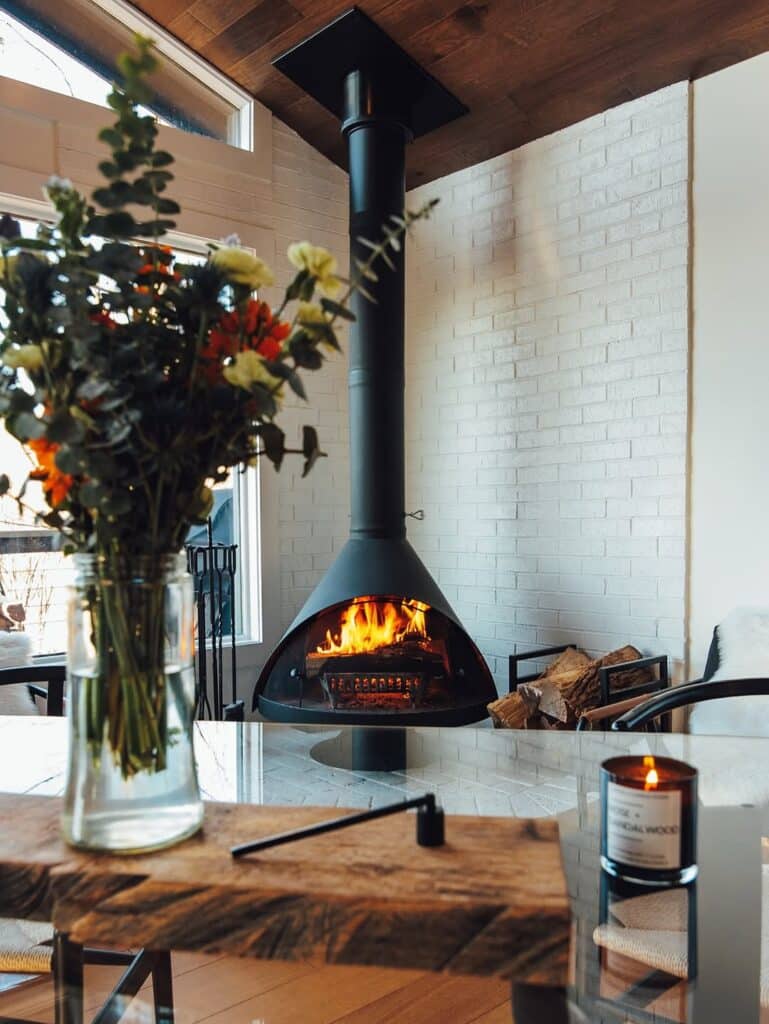
The tapered firebox gives this ceiling-mounted wood stove the form associated with mid-century fireplaces. Mounting it overhead frees floor space, while the stove radiates even heat.
Matte black enamel gives the wood stove its finish. Set centrally, it pairs with atomic-era furniture and supports better airflow circulation.
Reinforced flues are required for this installation, along with certified installation work. The installation must meet modern safety standards, and the wood stove supports efficient wood burning.
Slate Backing for a Traditional Stove in Cast Iron
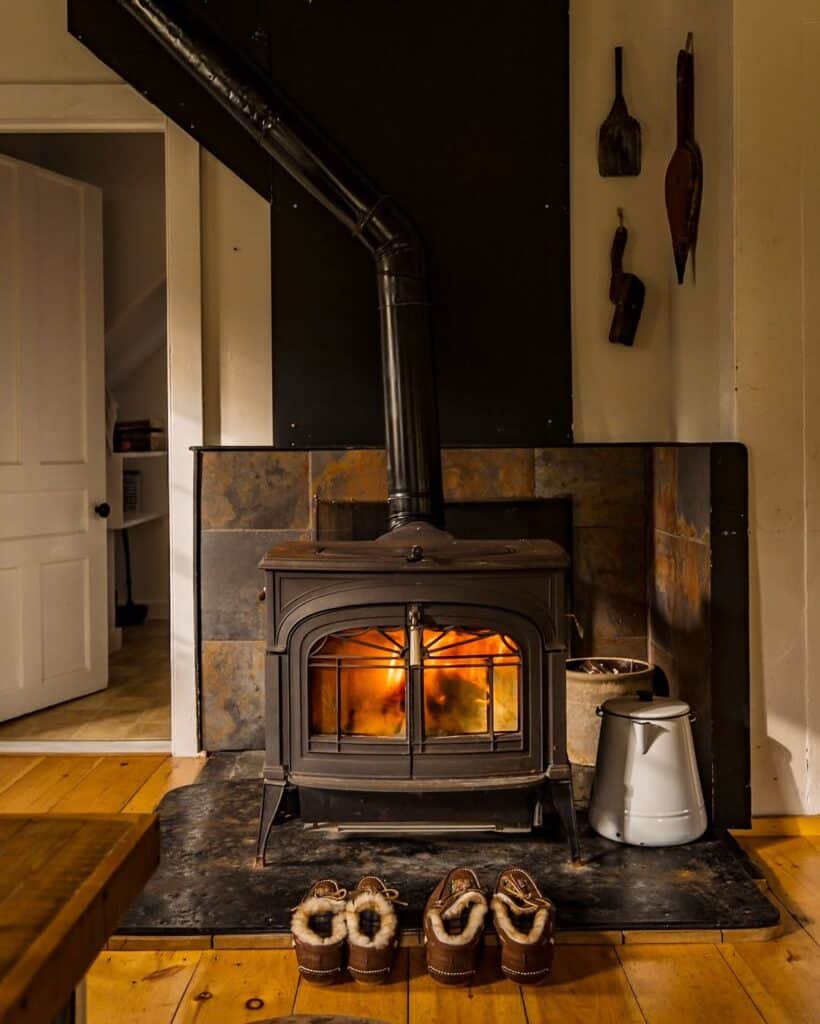
The slate backing has a textured surface, variable color, and natural variation. It protects the walls and pairs with a durable cast iron stove that provides heat retention. The slate also has natural color variation.
Heavy construction supports steady radiant warmth and long burn times. The cast iron and slate pairing suits traditional interiors and heritage homes.
In cold family living spaces, a properly installed setup supports winter heating and offers low maintenance with proven efficiency. Stove installation should maintain correct clearances, provide hearth protection, and use chimney liners.
A modern wood stove with glass built into a corner

The wood stove has an angular layout with full-height glass panels in the corner. The panels provide fire visibility, while the stove maintains efficient airflow.
A clean-lined surround includes concealed vents and integrated storage. This recessed wood stove installation reduces visual clutter, and the integrated features enhance usability. Fire-rated materials should protect the surrounding walls.
In one corner, the installation provides space-saving warmth and suits contemporary floor plans. It requires safety standards, and the combustion is controlled.
Modern Black Steel Wood Stove
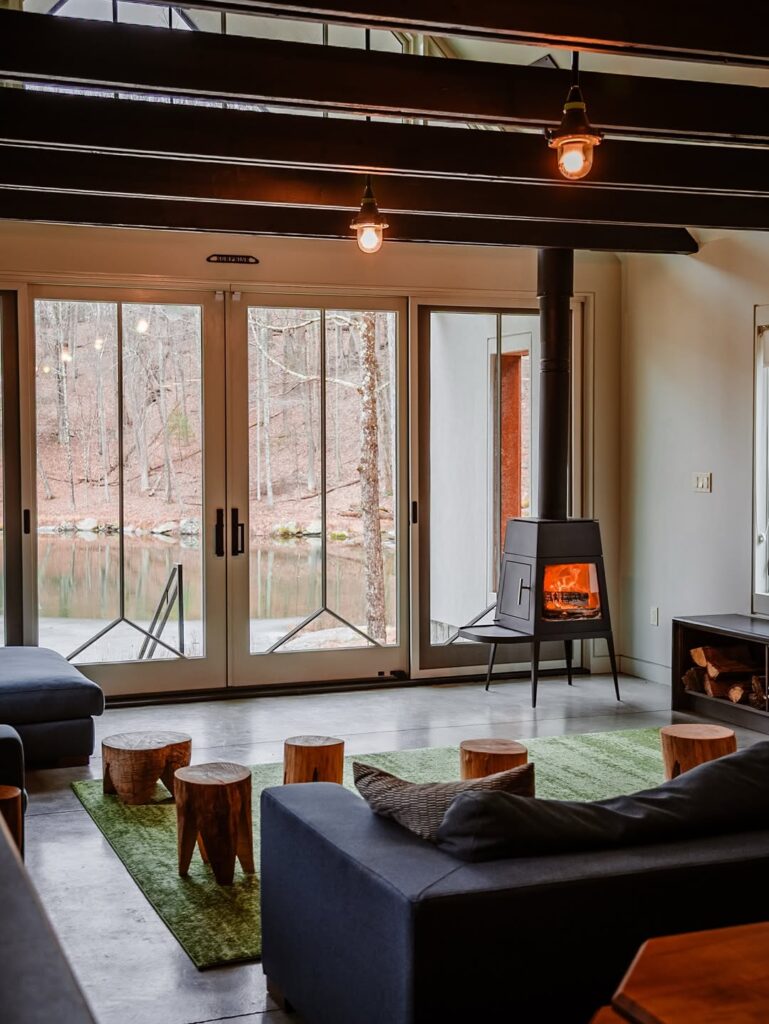
Multiple glass sides reveal the movement of the flame. The clean-lined wood stove is made of steel with a matte-black finish, and its combustion has high efficiency.
The wood stove has an EPA-certified firebox and airtight seals. Those seals help manage heat more effectively. They also lower emissions.
A concrete and tile minimalist hearth pad pairs with the wood stove. The stove suits modern homes and lofts, providing radiant warmth, while its surfaces require low maintenance.
Rustic Cabin Stone Hearth Stove

This freestanding wood stove has an exposed flue and suits off-grid and mountain settings. Its stone hearth uses natural materials with rough textures, and irregular rock surfaces store heat efficiently.
Simple furnishings combine with the stone hearth and timber wall. The hearth has durable materials and delivers radiant heat. This installation suits seasonal retreats and cold climates.
Mid-Century Stove for a Sunlit Lounge
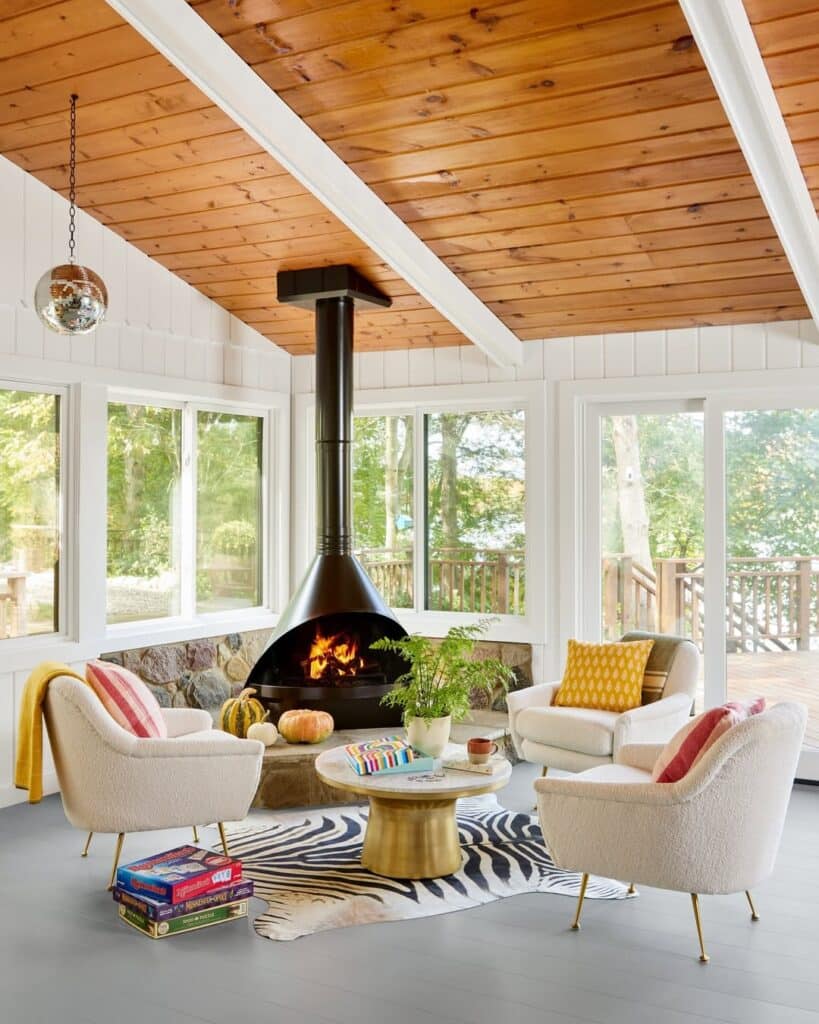
The suspended item suits the lounge. That lounge has bright lighting and expansive windows, while the item hangs from a ceiling-mounted flue.
The stove body is black steel and pairs with furniture featuring tapered walnut legs. Open sightlines let sunlight reach and highlight the firebox. A hanging stove distributes radiant heat evenly, but structural reinforcement and clearance planning are required for safety.
The hanging stove provides balanced warmth while leaving the floor clear. It also supports efficient wood burning.
White Brick and Autumn Accents at the Hearth

The white brick hearth reflects light and uses brightened masonry finishes that maintain thermal mass while updating classic hearths. It pairs with autumn accents such as dried foliage, pumpkins, and warm-toned art.
A wood stove is an efficient heat source when the setup provides proper clearances and uses fire-rated surrounds.
Family rooms, cabins, and transitional homes can use this white brick hearth approach in fall. Seasonal styling supports reliable heating, while the wood stove setup provides safe and efficient residential heating.