10 Modern TV Room Ideas for a Stylish Home
Planning a TV room means balancing comfort and functionality. The space needs to work for both relaxation and entertainment.
A TV room needs to fit the way modern lifestyles work today. Streaming, gaming systems, and smart technology have become part of daily routines. The room should support these habits while still complementing modern lifestyles. Its layout and features can serve more than one kind of use.
Thoughtful design choices make watching more comfortable and enjoyable. They also support organization, so the room stays easier to use. These choices contribute to the room's visual appeal as well. Order and appearance can work together without competing with the viewing experience.
Start by keeping clutter under control and addressing the room's acoustics. Subtle elements can improve the space without making the solution feel overly elaborate. Careful planning helps the room work better and changes how it feels. The result supports both room function and room feel.
These practical ideas are for modern TV rooms.
Geometric Gold Metallic TV Wall

Structured patterns shape the metallic accents. Gold-toned panels catch the light with a subtle reflection.
The geometric layout surrounds the television. It brings depth and visual movement to the arrangement, along with a clear sense of order.
Streamlined furniture works with the neutral walls. The design supports easy maintenance, acoustics, and durability, while the gold metallic TV wall suits contemporary interiors.
Slatted Matte Black Fireplace Media Wall
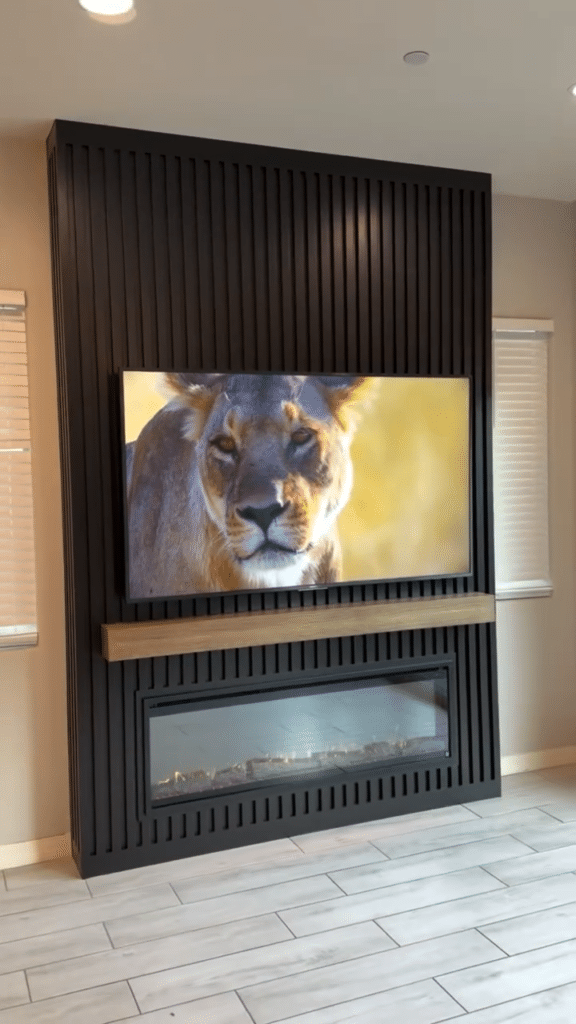
Dark slatted panels form the media wall and absorb light to reduce visual noise. An integrated fireplace sits beneath the screen for warmth. The matte black surface reduces reflections.
Metal accents, focused lighting, and lighter flooring pair with the media wall.
The media wall defines a media zone for cinematic viewing in modern entertainment rooms. It also supports acoustic control. The installation requires attention to heat safety.
Steel Fireplace Wall
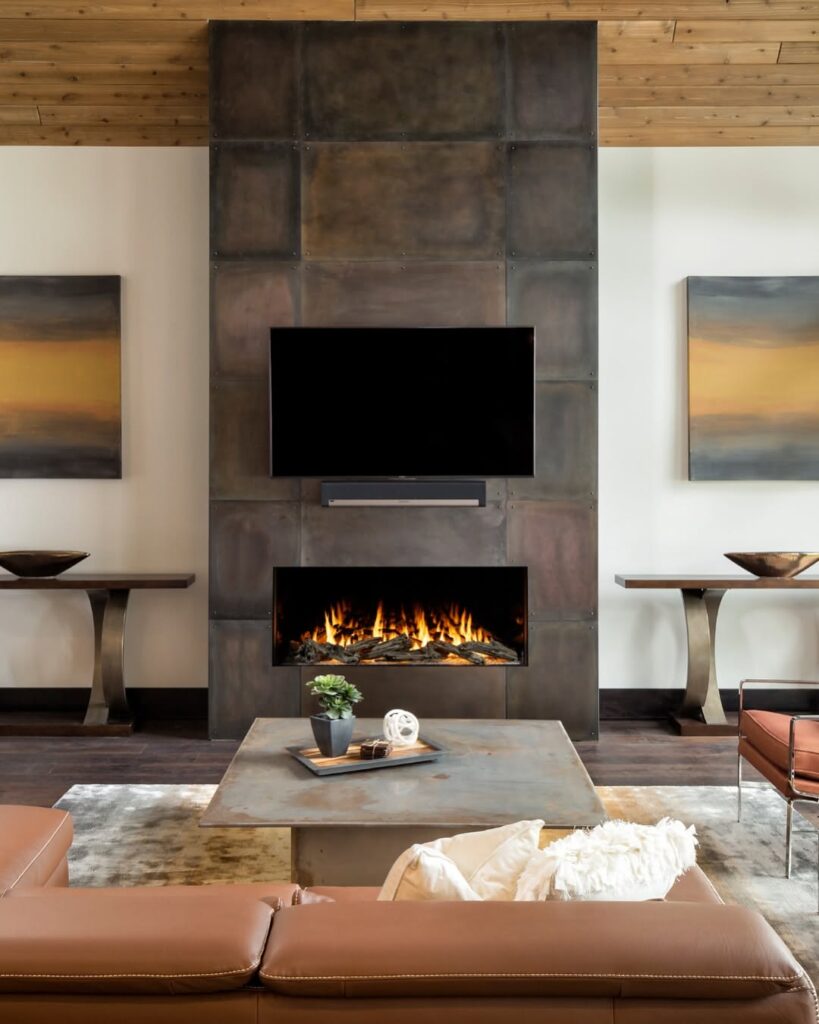
The media zone and fireplace are wrapped in a raw steel panel.
With concrete or brick in the background, the darkened metal surface fits the setting and complements it. The heat-resistant finish helps conceal wear, and exposed fasteners with crisp seams reinforce a workshop aesthetic.
Warm wood and controlled lighting soften the steel media wall, which ages well. The steel wall suits lofts and urban homes while providing durability, visual anchoring, minimal maintenance, and spatial definition.
Full-Wall Floating Media Cabinet
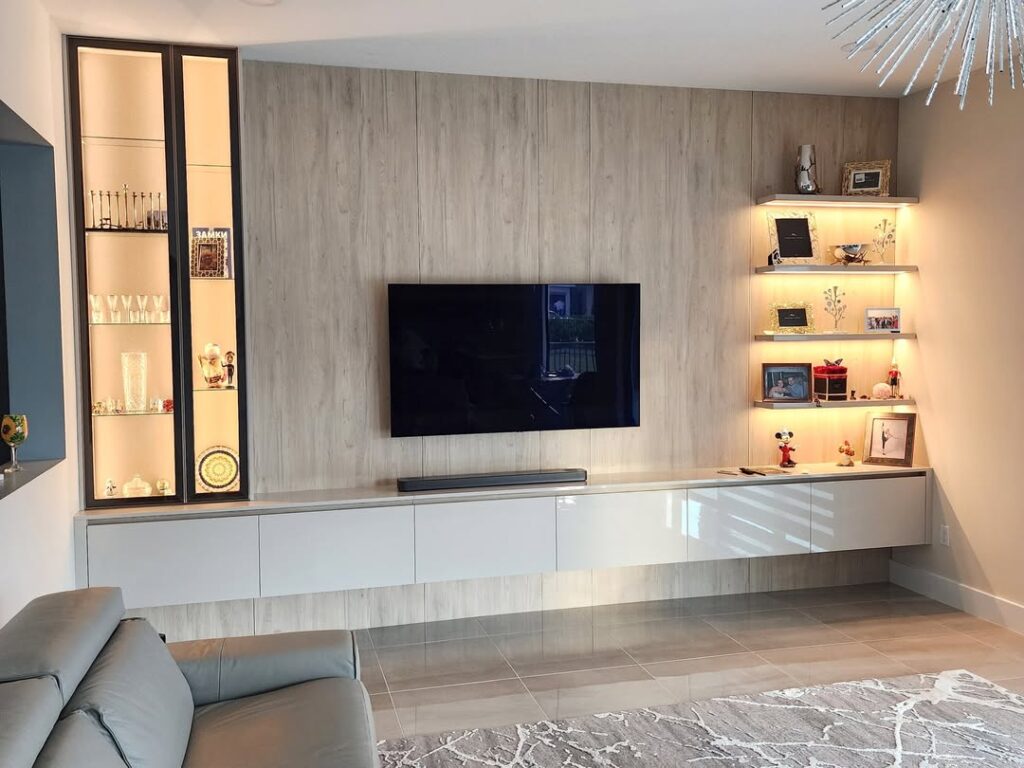
Wall-wide cabinetry creates a visual base for the media setup. The floating construction keeps the cabinet visually light.
The screen area avoids clutter because vertical display towers hold decor, books, and concealed speakers. They add storage beside the screen.
Handleless drawers keep media storage, cable management, and ventilation behind a simple front.
Neutral laminates or wood veneers can finish the cabinet setup. The cabinet supports larger televisions, future tech upgrades, and better organization for everyday viewing in open-plan layouts.
Slatted Media Wall Fireplace

Vertical timber lines draw the eye upward and add warmth to the wall. A built-in fireplace sits below the display. The slatted surface helps diffuse sound, conceals wiring, and adds texture.
The media wall has a neutral finish and supports zoning. It also supports viewing focus. The furniture is streamlined.
The media wall supports comfort and acoustics in modern homes. It suits both high ceilings and smaller spaces.
Monolithic Fireplace in Marble
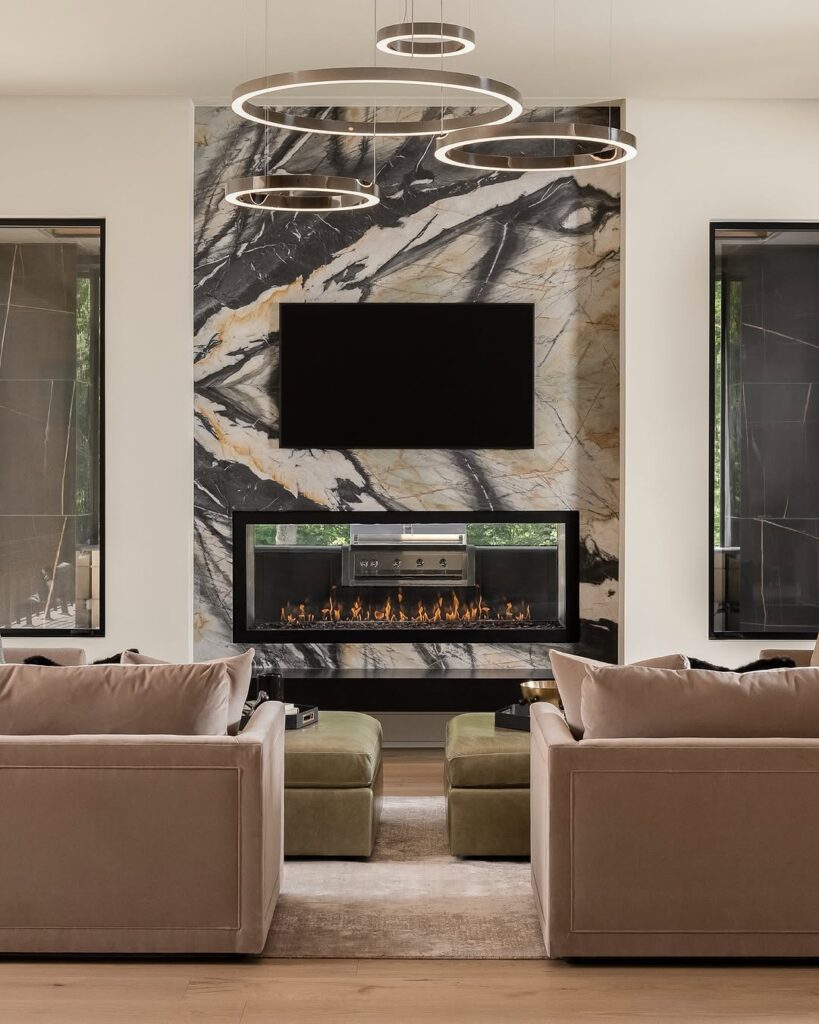
Sculpted veining in the stone defines the focal point of this media wall. The television and fireplace sit within the slab composition, aligned with each other.
Full-height marble gives the wall a heat-resistant, easy-maintenance surface. Minimal joints, shadow gaps, and linear burners add architectural clarity without making the arrangement busy. Marble maintenance still requires proper sealing. That step helps protect the surface over time.
Used sparingly, a marble feature can support durability and add resale appeal. It also contributes to a sense of timeless performance. The feature works alongside neutral floors, controlled lighting, and restrained furnishings. This combination keeps the surrounding room measured rather than overly ornate.
Minimal TV Wall Lighting
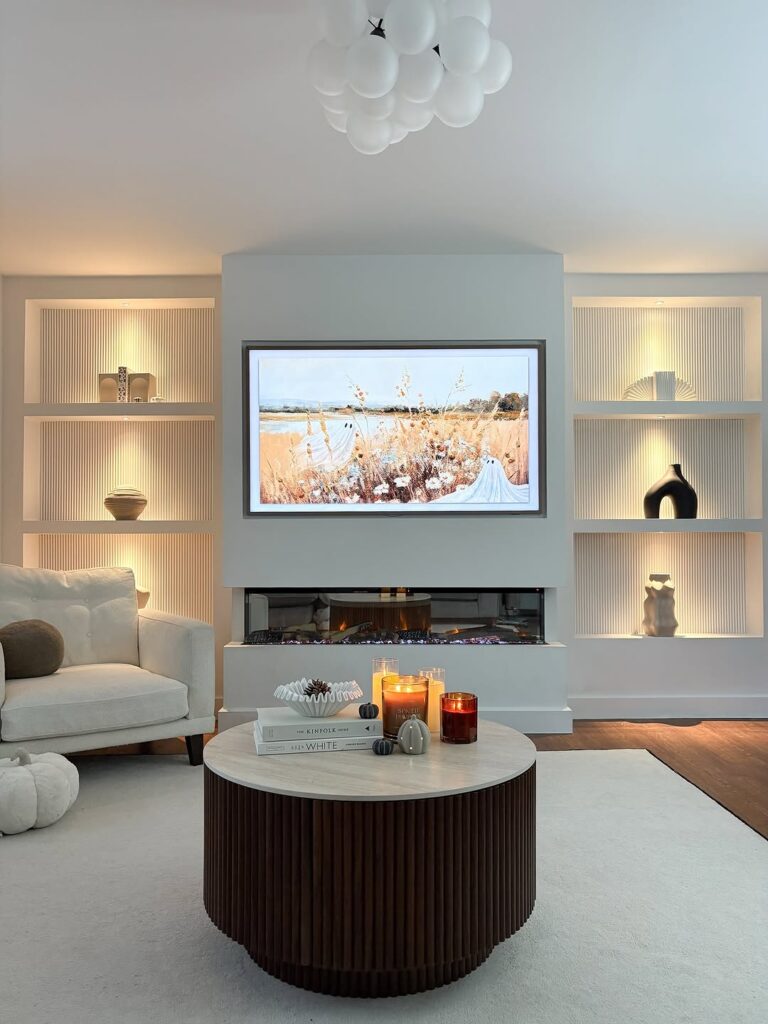
Clean-lined cabinetry sits around the screen. Even LED lighting is concealed across the wall.
Recessed shelves provide concealed storage. The sound components, routers, and cables stay hidden too.
The backlighting gives the wall more depth. It can also make evening viewing easier on the eyes.
Neutral finishes keep the look calm, while flush panels and handleless storage maintain a clean surface. The design suits family spaces and apartments, accommodates smart home systems and changing TV sizes, and supports good ergonomics.
Minimalist TV Wall With Vertical Light Strips

Integrated LEDs provide ambient lighting within the slim vertical strips. Their upright form can make the wall appear taller, reduce glare, and keep focus on the screen.
A tidy finish and wiring kept out of sight suit minimalist interiors. This TV wall keeps both details understated.
A light-strip media wall uses smart controls for adaptability, nighttime viewing comfort, visual clarity, and lighting performance. It pairs with floating consoles and suits flexible layouts.
Backlit Marble and Warm Wood Wall
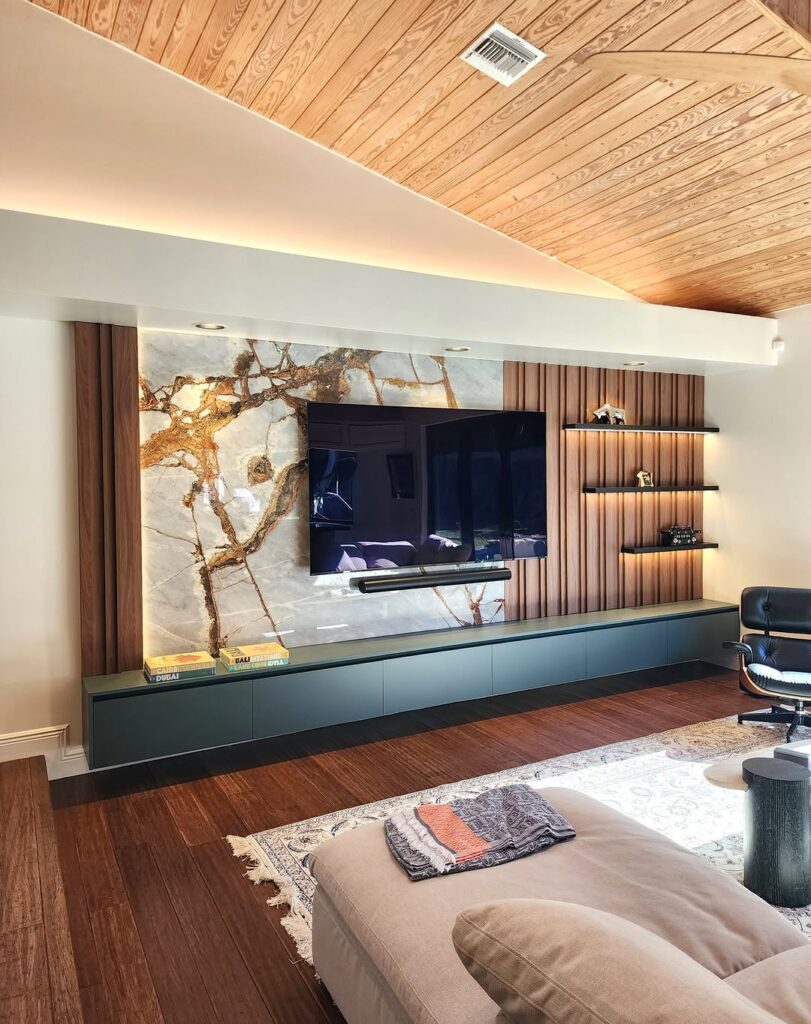
Backlit stone surfaces show off their natural veining. Concealed LED lighting provides ambient lighting, highlights the material quality, and reduces eye fatigue.
Wood panels add warmth to the installation and help diffuse sound.
This TV wall supports clean wiring and comfortable viewing, with controlled reflections. It suits high-end TV rooms.
Floating Media Wall
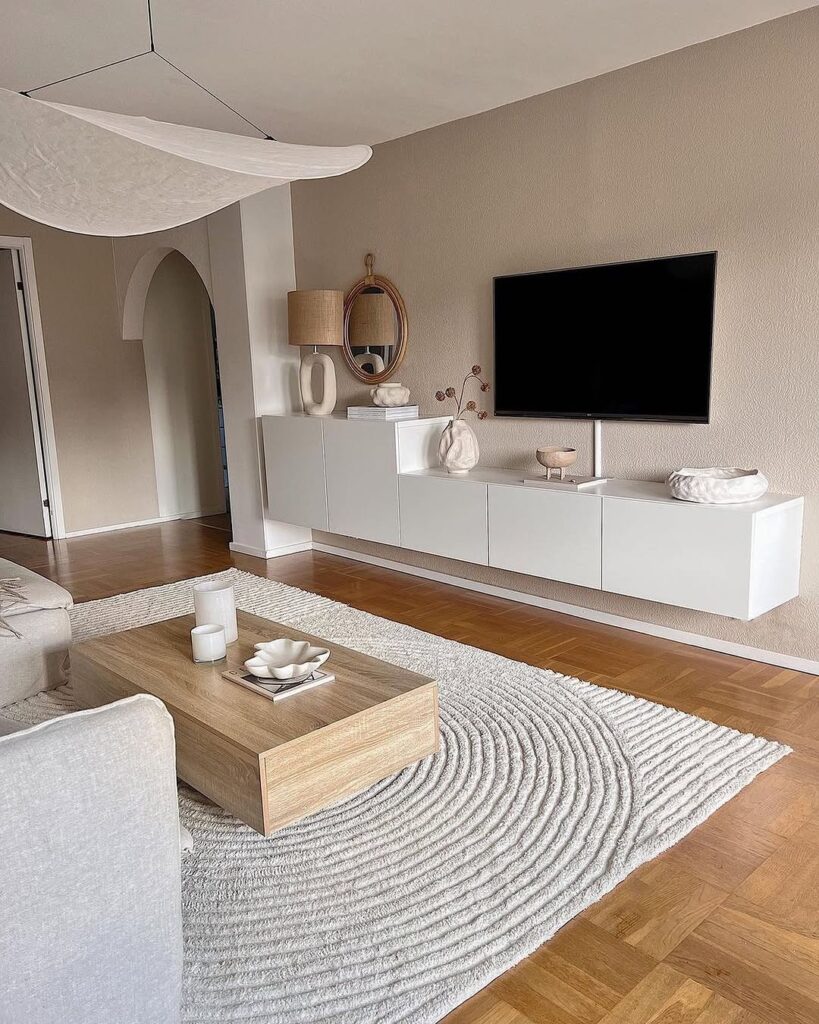
A low-profile cabinet keeps the sightlines uncluttered, with the television floating above it. The wall works as a media wall in a pared-back palette.
Neutral plaster, pale oak, and restrained fabric texture bring softness to the composition. Matte surfaces, recessed lighting, and concealed wiring each help maintain visual order. Together, these material and finish choices create a calm setting for the main media arrangement. The lighting remains integrated, and the wiring stays out of sight.
A media wall with balanced proportions suits open-plan homes. Provision for evolving technology keeps the setup future-ready and supports technology integration. The approach also supports perceived space, glare control, acoustics, cable management, and long-term usability.
TV Wall of Backlit Marble and Warm Wood Slats
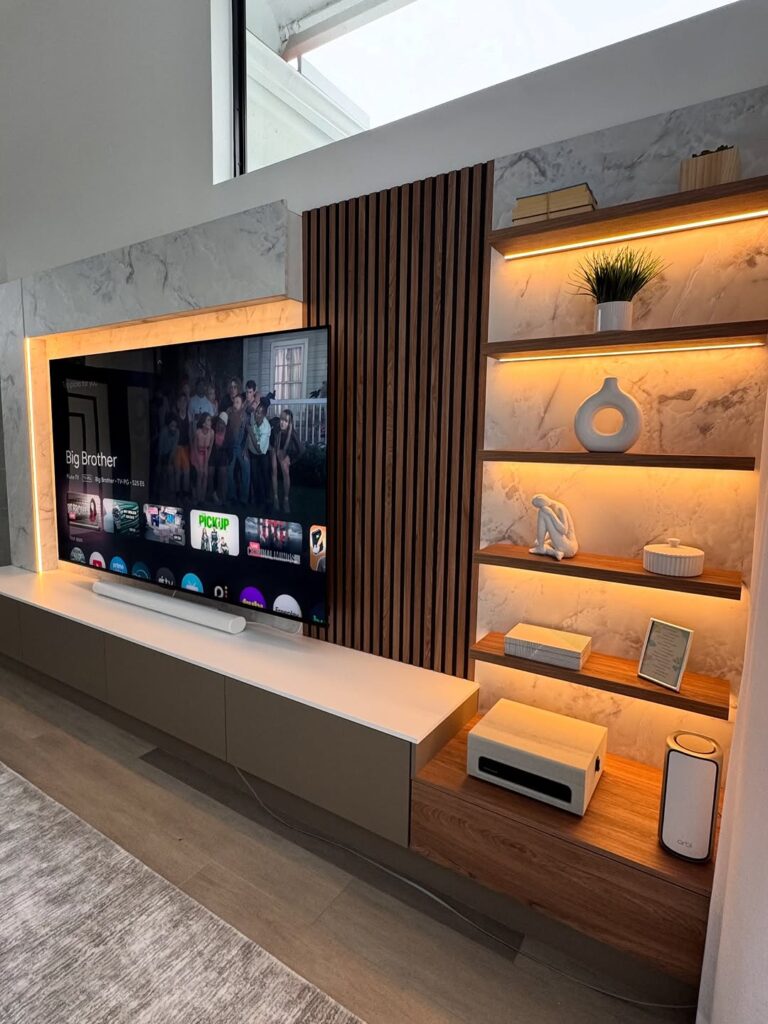
The veined stone works well beside integrated fireplaces. It frames the TV and is durable and heat tolerant, so it also suits placement near electronics. Timber slats soften the composition.
For visual comfort, warm wood tones help, and they also improve acoustics.
Neutral seating and recessed lighting keep the surrounding area controlled. The design supports material longevity and glare control, and the TV wall suits modern residential media rooms.
Backlit Slatted Marble Media Wall for One Screen
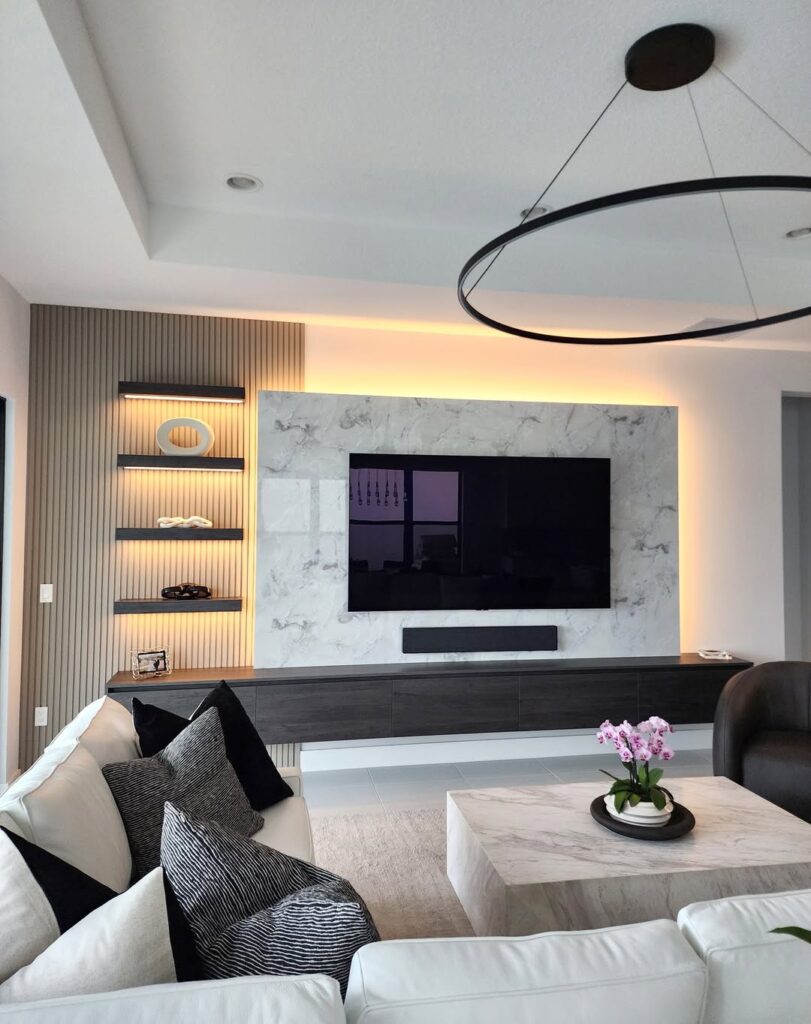
The marble surface is lit to reveal its natural veining. Concealed LED lighting traces the edges of the marble.
Marble brings heat resistance and longevity to the wall. Behind the screen, a slatted accent helps diffuse sound and reduce the visual mass. Indirect light cuts glare.
In high-end residential media rooms, a media wall can support a clean installation and flexible lighting controls. It also helps create evening ambiance.
Contemporary Diagonal Grid TV Wall
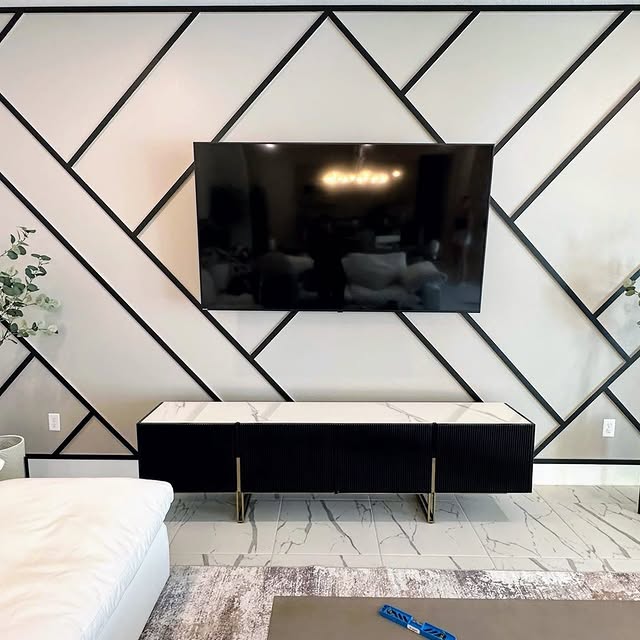
Intersecting lines form a diagonal grid that frames the TV. The grid maintains balance while adding movement, depth, and structure.
A diagonal grid wall in neutral tones with subtle contrasts suits a room furnished with minimal pieces. Recessed lighting fits nearby.
In a contemporary entertainment interior, a grid layout gives the TV wall a clear structure. It accommodates larger screens and improves viewing comfort without overwhelming the space. The pattern also keeps the media zone spatially clear.
Modern Beige Slatted TV Wall
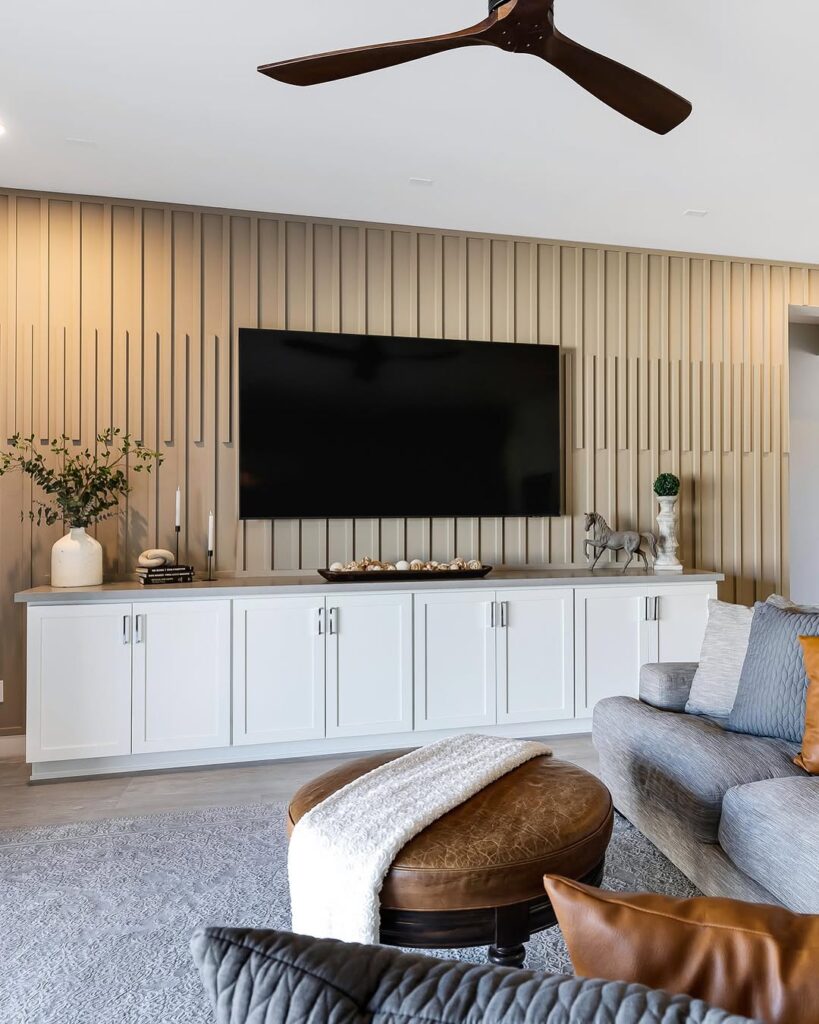
Natural wall tones keep the setting warm and understated. Vertical slats add texture.
Beige finishes work with neutral upholstery, wood flooring, and stone accents. Slatted panels diffuse sound and conceal both wiring and speakers.
This wall style supports durability and viewing comfort. It suits contemporary TV spaces and relaxed family rooms, and adapts to changing decor trends.
Vertical LED TV Wall
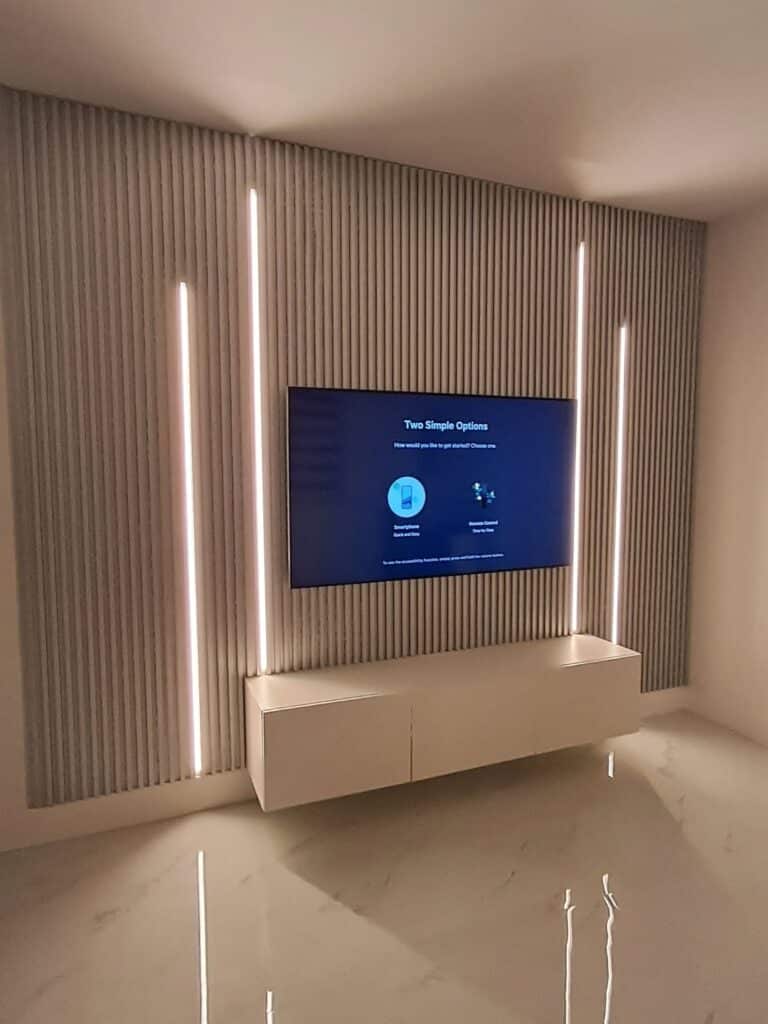
Vertical slats frame the display, with vertical linear LED strips set between them. Controlled lighting enhances depth, guides focus, and accentuates the wall height.
Matte finishes help create an immersive viewing experience. Their matte surfaces reduce glare and support clear contrast.
Floating consoles, concealed speakers, and automated controls can all work with this TV wall. The design suits contemporary interiors while supporting energy efficiency and smart lighting scenes.
Linear Stone Fireplace with Contrasting Leather or Tailored Seating
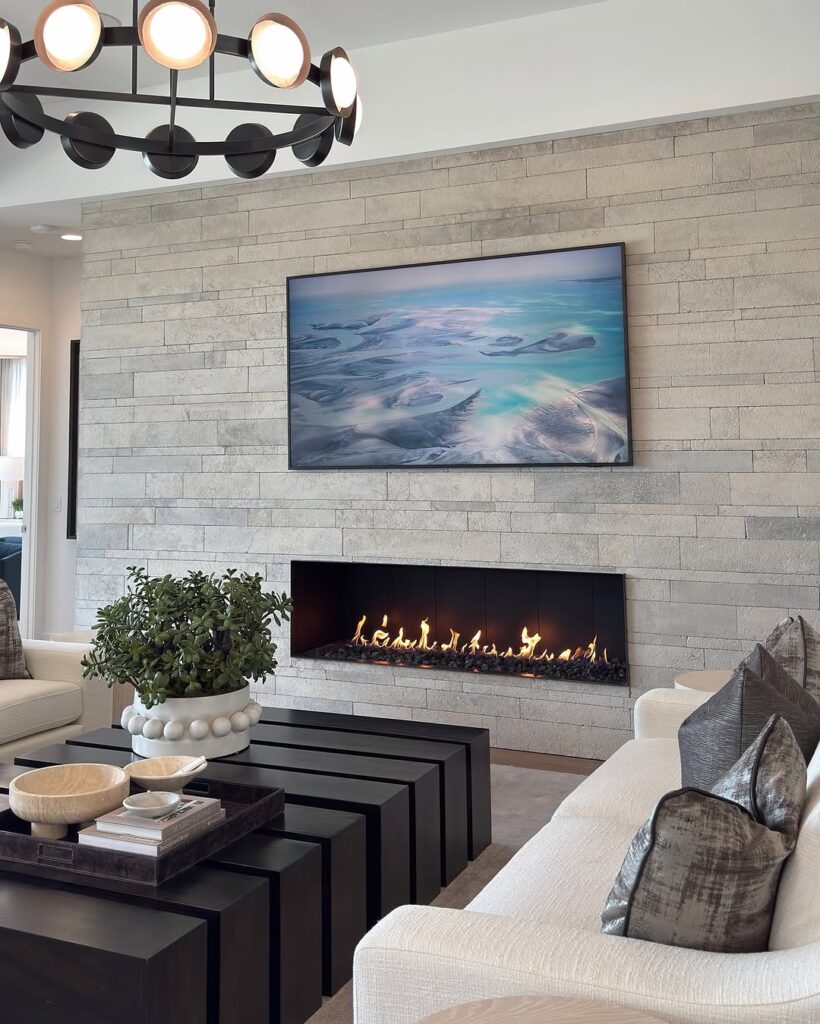
Horizontal masonry brings textural natural variation to the wall. It frames both the television and the fireplace.
A durable, heat-tolerant stone surface surrounds the linear firebox, emphasizing its width. Contrasting seating balances the fireplace with warmth and structure.
A stone media wall suits an entertainment room designed for more than one purpose, including long viewing sessions. It can help define zones and support the room's acoustics. For family use, arrange the seating with enough space for comfortable viewing. The wall then supports both the layout and the way the room is used.
Symmetrical Fitted Media Wall
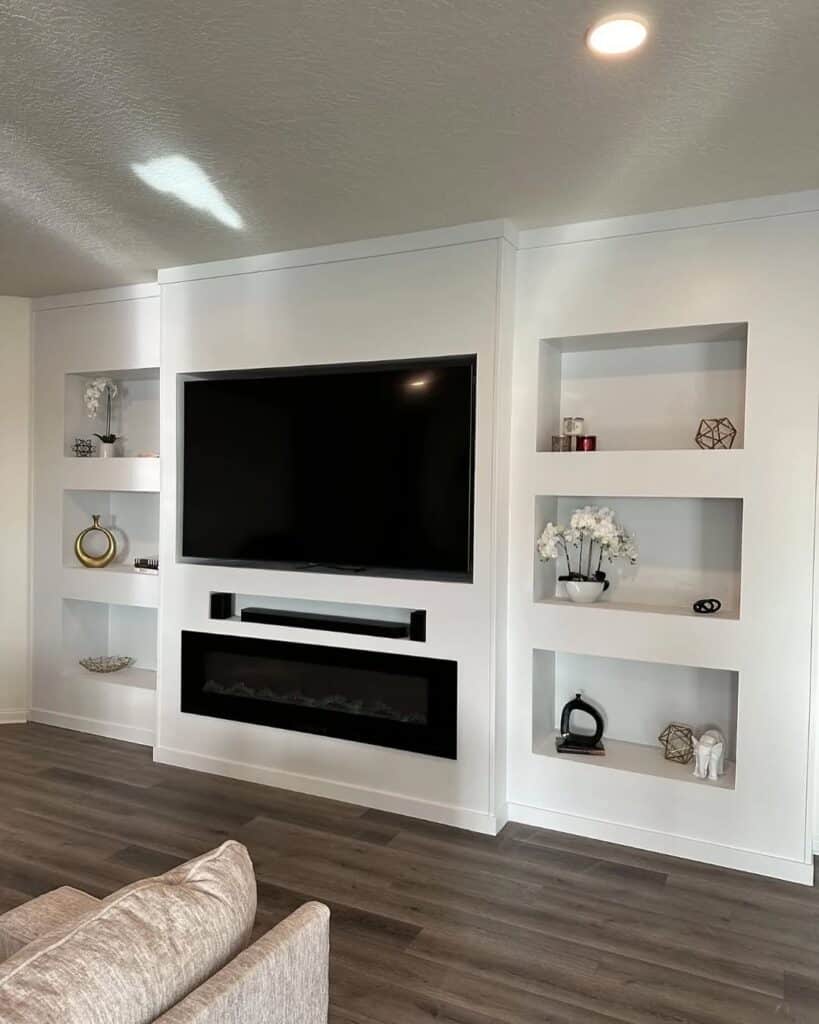
Clean built-in lines sit at equal spacing around the television. This symmetry simplifies installation, improves visual calm, and enhances resale appeal.
Closed storage handles media organization, while open shelving balances the closed sections.
Large screens fit this media wall approach. Light neutrals and muted tones keep it suitable for formal living areas and minimalist interiors. The design prioritizes functionality, low maintenance, and support for large screens.
Marble frame and vertical wood slats for a TV wall

Natural stone surrounds the screen, while vertical timber slats add warmth and rhythm. The stone sits around the screen as the slats run upward.
The marble frame offers heat resistance and durability. Wood detailing softens the acoustics and makes the screen wall appear smaller.
The marble-and-wood combination pairs with recessed lighting. Minimal furnishings suit it as well.
The contrast between the materials supports longevity and easier maintenance. This media wall reduces glare and works with seating layouts in upscale media spaces and contemporary family rooms.