Pocket Door Buying Guide What You Must Know Before You Purchase
Interior doors can completely transform a room, adding privacy and creating a quieter atmosphere. For smaller rooms or open-concept homes needing a bit more separation, the pocket door presents a perfect fix.
These practical, space-saving doors are a long-time favorite because they slide away into the wall, freeing up floor space since there’s no door swing to account for. A well-installed pocket door should glide effortlessly along its overhead track, opening up your space whether it’s big or small.

As our living areas get more compact, homeowners and designers are always searching for smart, beautiful ways to make rooms feel more spacious without the cost of a major remodel. This is exactly where pocket doors shine.
They are a fantastic solution, particularly for modern open-floor plans, because you can leave them open for a connected layout or close them off when you need separation.
If you’re thinking about adding a pocket door to your home, this guide is for you. It covers everything you need to know, from materials and styles to sizes and finishes.
You’ll also find key tips for installation, helping you boost your property’s function and style with this simple yet clever design.
Ready to master the world of pocket doors and unlock a new way to think about space-saving design? Let’s get started.
What Is A Pocket Door
A pocket door is a type of interior sliding door that uses a conventional overhead track system. This allows the door to slide neatly into a hollow space built into the wall, which is called the pocket.
Unlike a standard hinged door that swings out, a pocket door glides into its recess, becoming completely hidden when fully open. This simple action saves a significant amount of room, as you no longer need to reserve up to 10 square feet of clear space for a traditional door to operate.

Pocket doors first gained popularity in wealthy homes around 1950. Those early versions, however, were often bulky, loud, and had a reputation for getting stuck or falling off their tracks.
Today’s pocket doors are a world apart. They are sleek, streamlined, and stylish, giving any space a look of intentional elegance. The rollers and rails have been completely re-engineered for a smoother glide and a much longer lifespan.

Image: MC nally joinery
A pocket door hangs from a top rail. If your home doesn’t already have a recess designed for the door, some minor demolition will be necessary to create the pocket.
The good news is that you can find fully adjustable, smooth-rolling, and easy-to-install pocket doors available in solid wood, plywood, glazed wood, or even tempered glass.

Image: Lewis & Weldon Custom Kitchens
You’ll often find pocket door systems installed in a variety of common locations, including:
- Master bedrooms
- Powder rooms or small bathrooms
- Laundry rooms
- Pantries
- Home offices
- Between a kitchen and dining room in an open design
- Between a dining room and living room

Why Choose a Pocket Door?
Pocket doors help you create modern, contemporary spaces that feel private, functional, and versatile. There are many compelling reasons to opt for a pocket door over a conventional one.
- They create and maximize usable space in small rooms and tight corners where a swinging door would take up too much floor area.
- They make a sleek design statement, adding a touch of grandeur and a ‘wow’ factor that blends perfectly with your room.
- They provide safety and privacy between rooms and hallways, with the ability to open up the space whenever you need it.
- They create convenient and flexible connections between two separate rooms, allowing them to be joined together as needed.
- They help achieve a minimalist aesthetic where clean, crisp lines are a primary design feature.

Image: Patrick Ahearn
How to Choose Pocket Doors
You should consider several factors when selecting the right pocket door for your home. These include the following key points.
· Installation location
The first and most critical consideration is identifying where the pocket door will go. Is its purpose primarily security, or is it meant to elevate the room’s style? Maybe you’re just looking for a simple space-saving solution that is also budget-friendly. You also need to know if you’re looking for an internal or external door system. Whatever your needs, there’s a wide range of options available.
The main thing to remember is that almost any standard door design, whether it’s flush, paneled, louvered, or glazed, can be adapted for use as a pocket door. You just need to ensure the sliding mechanism is strong enough for the door’s structure and integrity. Your choices can range from wood, steel, glass, and solid-core doors to barn-style or even curved designs.
· Style and Design options
Your choice of a pocket door can dramatically alter a room’s feel, layout, and overall elegance. When you’re making a selection, choose a design that aligns with your home’s aesthetic and interior decor.
If your goal is simply to save space in a cramped area, a simple but practical design is the way to go. To make a bold statement in a living or dining area, opt for a more ornate and elegant design.
Because you can find stylish doors made from solid wood, plywood, glazed wood, or tempered glass, you should pick a material that complements your space and style. For example, glass-paneled doors can bring a sense of oomph and brightness to a room, making it feel larger and more sophisticated. In contrast, a louvered pocket door can introduce a contemporary vibe.
· Type
There are many different types of pocket doors to consider. You can find single, double, bifold, and barn-style doors. There are also single or double glass doors, cavity units, smartrobes, and special custom-made pocket doors.
Each of these types has unique characteristics regarding strength, durability, security, soundproofing, weight, and fireproofing, all of which influence their best use. Be sure to select a pocket door type that is perfectly suited for its intended application.
· Size
You have to confirm there is enough “sleeve” space in one of the adjoining walls for the pocket door to retract into. What is the size of your rough door opening? For example, if you have a 32-inch wide opening, you’ll need at least another 32 inches of clear linear wall space, plus a little extra for the leading edge of the door.
Size is also a major factor in determining the door type and design you can use. If you need to separate a very wide space between two rooms, lightweight, hollow-core doors are often a good fit. For smaller spaces, a heavier, solid door might be more appropriate. To get the right door size, carefully measure the width, height, and depth of the space. You must also ensure that the rough opening is square, plumb, and perfectly flat.
· Extra Kits and Hardware
Pocket doors are sold either as complete kits or as pre-assembled units. If you decide to purchase individual components, you will need to choose the type, design, and safety and sound ratings for the kits.
On the other hand, pre-assembled doors come with all the necessary components, such as a pocket door frame and jamb, a hanger track, and a pre-made cage that becomes the pocket after it’s finished.
You may also require handles, fascia, flush pulls, fitting kits, and soft-close mechanisms to add a refined touch to your door. All of these accessories are available in various designs, which will influence the weight, size, and width of the door you choose.
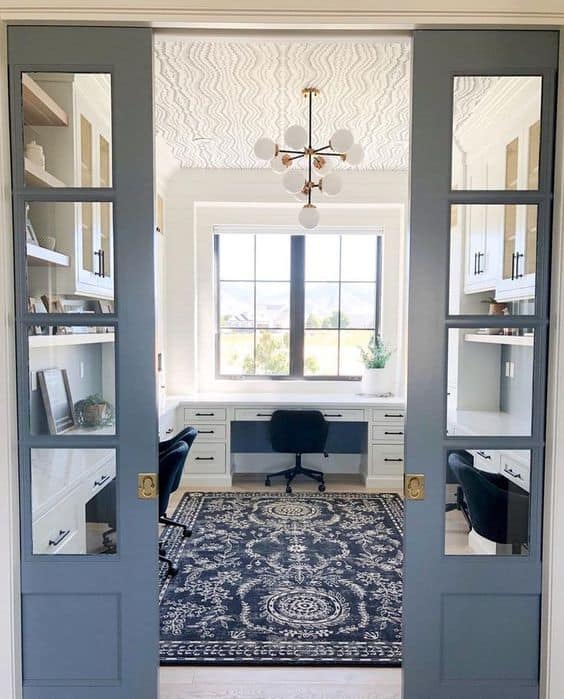
Planning For Your Pocket Door
Before you even begin shopping for a pocket door, you must confirm you have enough room for it. Make sure the available wall space is larger than your rough opening. To check this, measure the width of the rough opening and then multiply that number by two. This calculation gives you the minimum required space for your rough opening and the adjacent wall combined.
Luckily, if you’re tight on space, several configurations can help minimize the cavity size required.
- Install two doors that slide into a single cavity on one side of the wall.
- Another option is a double door design, where each door retracts into its own pocket on opposite sides of the opening.
- If you have two rough openings on adjacent walls, think about creating one wide cavity where both pocket doors can slide.
- For a truly elegant look with enough room, consider curved doors that slide into curved walls on both sides.
Next, you must check that the adjacent wall is completely free of any HVAC systems, wiring, switches, or sockets. These elements will only complicate the installation and increase your remodeling costs. If there are switches and sockets on the wall, you will need to figure out how to access them while maintaining both practicality and functionality.

Pocket Doors
The final point to consider is whether you plan to hang anything on the cavity wall. You will lose the ability to use that wall surface for things like hooks, which are common in closets or bathrooms. Why is this? With the door frame inside the wall, it becomes unsafe to hang items using screws or nails. They might penetrate too deeply and interfere with the door’s movement.
All of these important considerations will help you decide if a pocket door is the right choice for your project. Unless you are planning for a pocket wall in a new construction, adding one during a remodel requires more careful thought and planning.
Depending on your space, you might be able to DIY the installation, or you may prefer to hire a professional installer to ensure the job is done right the first time. This guarantees you get a long-lasting, hassle-free, and easy-to-use pocket door that complements the look and style of your home.

The Bottom Line
Pocket doors provide a very open, seamless, and stylish appearance that can be consistent throughout your home. These timeless door designs are now offered in a wide variety of sizes, styles, materials, and designs. You can feel confident that you’ll find a pocket door that perfectly matches your space, character, and lifestyle.
A pocket door is an excellent choice, whether you’re planning for one in a new build or looking to upgrade your current space with a remodel. By installing one of these units, you can introduce an additional layer of comfort and privacy to any room. While you can certainly tackle the installation as a DIY project, having an extra set of experienced hands is always beneficial.