Red Kitchen Cabinets for Instant Bold Contrast in Dull Interiors
Red is making its way back into kitchen design. The bold shade is also part of a wider move toward stronger color choices. Kitchen spaces are beginning to move beyond subdued palettes. Red brings a more expressive look to the room.
Red cabinetry can come in deep burgundy, cherry, or crimson. It serves as a focal point in the kitchen.
Red cabinetry works as the focal point. Neutral countertops balance it, while brass fixtures and natural wood accents pair with the red.
Red cabinetry supports creative design while preserving kitchen function.
Red cabinets can work in many kinds of homes. Their strong color fits the clean lines of modern lofts. They also suit the warmer character of rustic cottages.
Glossy Red Cabinets and Black

The red and black combination suits contemporary kitchens. Glossy red cabinets pair with black finishes in a matte texture for a clear contrast.
In compact kitchens, glossy red surfaces amplify both natural and artificial light. The reflective finish suits the smaller space.
Light pendants in matte black bring a clean aesthetic to the room, while matching cabinet pulls and faucets complete the fixtures.
Texture contrast matters in modern-industrial design. Red and matte black suit both modern interiors and industrial interiors.
Subway tile backsplashes provide a pairing for the red cabinetry, whether they are crisp white or light grey. The countertops can be black granite or soapstone, and the surrounding finishes should remain minimal so the red cabinetry stays the focal point.
Glossy red laminate or lacquer resists fingerprints and is easy to maintain. These red cabinets suit high-traffic kitchens.
Powder-coated matte black accents resist scratches and wear.
The red-black combination provides high visual impact. It avoids complicated finishes.
Red Cabinets and Brass

Red cabinetry pairs with brass hardware. Brass has a warm undertone.
The red and brass pairing suits vintage-inspired interiors and glam-contemporary interiors. Choose a brushed or satin brass finish.
Cabinet texture feels more detailed when brass hardware is used. The choices include long bar pulls, cup handles, and detailed knobs.
Cream backsplashes, off-white countertops, and soft beige walls can be used with the red cabinets. Consider medium-dark wood flooring as well.
Sealed brass resists tarnish. Brass kitchen hardware develops a patina over time.
Brass adds warmth and luxury. The red and brass pairing combines bold expression with classic style.
Red Cabinetry in an Open Layout

In the open floor plan, red cabinetry connects the adjacent living spaces. It sits within the plan as a design anchor and a cohesive connector.
Plan the red cabinetry integration strategically in an open layout. The cabinetry creates a focal point.
A red throw pillow, piece of artwork, or set of dining chairs can repeat the red hue in nearby spaces. Keep the repetition subtle so it does not create visual overload.
For less glare, use satin or matte on the cabinets.
Neutral walls, understated lighting, stone countertops, and wood flooring balance red cabinetry. Each nearby element helps keep the red from standing alone.
Floating shelves can be used with glass-front cabinets to increase openness. Together, they provide storage without closing off the kitchen as much.
Red cabinetry acts as a visual connector in a social-core kitchen.
Kitchen zones retain their function while open-plan red cabinetry supports entertaining and quiet evenings.
Red Cabinets and Black White Flooring

Combined flooring elements create visual contrast while also supporting balance.
The red can be bold, while black and white flooring gives it support. The flooring also adds timeless character.
This flooring suits transitional kitchens and limits the dominance of red. Black-and-white checkerboard floor tiles or patterned black-and-white vinyl flooring can also work in retro and eclectic kitchens.
Use minimalist backsplashes and neutral wall colors. Neutral walls and backsplashes support a three-color palette.
Chrome fixtures can bridge the colors of the floor and cabinets. Matte-black pulls complete the hardware detail.
For a busy household, black and white tiles are a practical fit. Dirt and wear are less noticeable on them than on solid tones.
Red cabinetry and monochrome flooring combine to provide visual structure. The flooring gives the cabinet color a clear framework.
Classic styling can use this design. It also suits playful kitchens.
Red Cabinetry With Multiple Metal Finishes

Mixed metals add contrast and depth when combined with red cabinetry. The different finishes give the red kitchen more variation.
Metal accents in brushed nickel, brass, and blackened steel create layered texture through mixed metals.
Mixed metals add visual texture to the room. Avoid letting them overwhelm the red foundation.
Brass hardware brings warmth to the space. Black fixtures add contrast, while stainless or nickel pieces add modernity.
Across the kitchen, apply metal finishes to faucets, cabinet pulls, lighting, and barstools. Repeat the metal finishes to support cohesion.
Balance is maintained by limiting the metals. Select one dominant metal, then choose two supporting tones.
Red cabinetry anchors the kitchen. Varied metallics provide styling flexibility.
Contemporary kitchens, industrial kitchens, and vintage-inspired kitchens can all suit this approach. Metal finishes are often low maintenance and long-lasting.
Red paired with mixed metals supports a bold expression. Metal finishes also support practicality.
Red Lower Cabinets and Floating Shelves

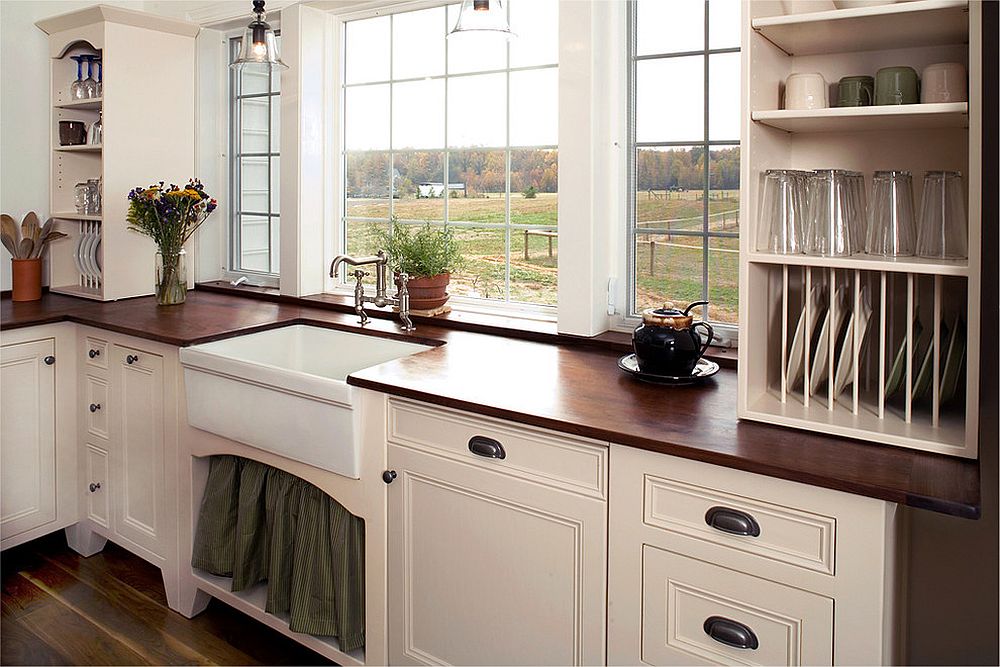
The red lower cabinets provide closed storage, while the floating shelves add flexibility. Together, they combine concealed and open storage.
Floating shelves lighten the upper half of the kitchen. Red lower cabinetry anchors the arrangement and creates an open balance.
When natural light is available, use this arrangement to make the most of it. An open enclosure helps prevent the natural light from feeling blocked.
Neutral dishware on open shelving introduces texture without overpowering the red cabinetry. Display items such as potted herbs and wooden cutting boards complement the red cabinets.
Natural wood shelves and matte black shelves provide contrast. Their finishes also reinforce cohesion across the arrangement.
On the wall, floating shelves keep frequently used items accessible. Their open arrangement supports intentional organization.
Keep the shelf styling simple. Overcrowded shelves can compete with the red cabinetry, so the display should remain limited.
Closed cabinetry can reduce the need for open shelving. Pairing open shelves with red cabinets lets the bold color support the arrangement without filling every section with display space.
The pairing combines design and usability. It suits both modern farmhouse interiors and transitional interiors.
Red Cabinets Glass Doors

Glass cabinet fronts add dimension when integrated into red cabinetry. They reduce visual heaviness while keeping the red cabinets as the main feature.
Cabinet doors may be transparent or frosted. Glass doors support a balanced kitchen design while making the red cabinetry feel less visually heavy.
Red cabinets with glass fronts suit transitional and classic kitchens. They work for design priorities that include openness and functionality.
Glass doors can showcase dishware, glassware, and minimal decor. A glass panel may use a red frame or metallic trim, and interior cabinet lighting works with the glass doors.
Interior displays can stay simple, with coordinated color throughout. To prevent clutter, put glass fronts only on select upper cabinets.
Glass with a fluted or ribbed finish retains visibility while providing privacy. Consider fluted or ribbed glass for the cabinet fronts.
Glass-front red cabinets suit kitchens that blend traditional and contemporary styles. This approach combines traditional cabinetry and contemporary functionality.
Visible storage supports personal expression. Glass fronts provide visual openness.
Glass fronts support balance and transparency while glass-front red cabinets retain the impact of the red color.
Red Cabinets Patterned Tile

The patterned tile backsplash becomes a focal point beside red cabinetry. Together, they add rhythm and energy.
Highly saturated red cabinetry provides visual warmth. A backsplash paired with it uses Moroccan, Mediterranean, or geometric patterns, giving the surface movement and contrast.
This combination suits eclectic, bohemian, and transitional kitchens.
With the red cabinetry in place, a backsplash can stay balanced through white, cream, navy, or muted gold undertones. Ceramic, encaustic, and hand-painted tile all suit the choice, provided the look avoids visual overload.
A patterned backsplash adds texture and design depth, while red cabinetry provides a bold presence. With an intricate tile design, choose neutral slab countertops.
For cooking zones, tile is moisture-resistant and easy to clean. Proper sealing is needed for tile durability, and sealed tile can withstand everyday wear.
Red cabinetry and patterned surfaces combine personality with practicality.
The combination suits kitchens that focus on character.
Red Kitchen Cabinetry and Stainless Steel Appliances

Across the kitchen, red cabinetry is paired with stainless steel appliances. This pairing combines warmth and polish.
Brushed stainless steel offsets the red cabinetry. Its finish also limits the dominance of the red color.
Stainless steel provides durability. Paired with red cabinets, it suits contemporary and transitional kitchens, while the red cabinets add personality.
Stainless appliances, including range hoods, built-in ovens, and refrigerators, integrate with the red tones. Using these appliances supports a unified layout.
Butcher block countertops, terracotta floor tiles, and brass light fixtures add textured elements. Add these materials to bring warmth to the kitchen and soften the interaction between the red cabinetry and metal.
Stainless steel resists rust and supports household durability. It is easy to clean, making it suitable for high-traffic zones.
Modern finishes provide dependability while the pairing combines color and function. The result depends on the red cabinetry and stainless steel working together.
Red and Wood Cabinetry

Traditional cabinetry gets an update with red and wood. Red cabinetry combines with wood for a two-tone look.
Wood upper cabinets sit above red base cabinets. The two cabinet colors combine in a clear upper and lower arrangement.
The red and wood pairing suits open kitchens. Its contrast enhances natural light.
Oak or walnut lets the red remain prominent. Choose a neutral wood for the cabinetry.
Neutral backsplashes support the overall kitchen scheme, as do appliances made with brushed stainless steel.
The red and wood pairing suits both transitional kitchens and rustic kitchens.
Lightly grained wood can cover the upper cabinetry above flat-front red base cabinets. Use the wood upper cabinets or choose lightly grained wood open shelves as an alternative. This variation introduces depth.
The red and wood mix combines color with function. It is described as a durable option.
The red and wood palette retains warmth and comfort. It suits lively kitchens.
Cherry Red Cabinetry

Cherry red cabinetry combines with open shelving to support both functionality and display. The open shelves provide a nearby place for items.
Open shelving offsets the high-saturation cherry red. The bold cabinet color remains a strong presence.
Cherry red with open shelving suits small kitchens. Open shelving feels lighter than closed cabinetry.
Open shelving displays everyday items and decor. It can be made from wood, metal, and red elements.
Keep open shelves to the upper areas to preserve a lighter feel. Use cherry red on the lower cabinetry, where the deeper color can anchor the kitchen.
Display glassware, ceramics, and neutral dishware on the open shelves. Cherry red complements the neutral dishware.
The open shelving approach combines practicality with aesthetic freedom.
Open shelving supports organization and functions as a place to display items. It keeps frequently used pieces within reach while giving the kitchen a visible display area.
Cherry red with open shelving suits farmhouse kitchens, eclectic kitchens, and mid-century kitchens.
Open shelving provides easy access to the items placed on it.
Red Cabinets Against White Countertops

White countertops bring a clear, bright surface to the kitchen. Red cabinets are paired with them, creating a combination that supports a balance of energy and clarity.
A smooth white countertop surface softens the effect of high-intensity red cabinetry. The red cabinetry remains prominent without overwhelming the room.
In a small kitchen or a large one, the red-and-white combination retains its character. The white adds brightness while the red keeps the arrangement visually distinct.
The countertop is white and smooth, with quartz, marble, or solid surface as material options. It creates a clear contrast with the highly saturated red cabinetry.
A white subway tile backsplash can sit alongside chrome fixtures and stainless steel appliances. Consider these three elements together to maintain cohesion.
Chrome fixtures extend the bright palette, as do stainless steel appliances and a white subway tile backsplash. These additions support cohesion.
LED under-cabinet lighting amplifies the glossy red finish. It illuminates the countertop and supports daily kitchen tasks.
Color contrast gives a red-and-white kitchen modern accessibility. The design can appeal to both classic and contemporary sensibilities.
A red-and-white scheme combines functionality, visual openness, and dynamic style. The scheme brings all three qualities together.
Red Cabinets and Integrated Lighting

Strategic lighting enhances red cabinetry. It adds depth and dimension while supporting functionality.
Beneath cabinets, inside drawers, and behind glass panels, integrated lighting illuminates the red cabinetry. It creates a layered appearance.
Integrated lighting suits ambiance-focused kitchens and supports practicality.
LED under-cabinet lighting illuminates the countertops and improves visibility during prep work.
Inside-cabinet lighting supports access to cookware. Glass-front cabinetry pairs with it.
Avoid cool-toned lights because they can distort the color and may make red appear harsh. Use warmer light temperatures to complement red.
Use dimmers to adjust the mood.
Lighting controls can use motion activation or a smart system. Integrated lighting supports energy efficiency and improves usability in low light.
Integrated lighting supports emphasis on the cabinetry while improving task efficiency.
Integrated lighting improves workflow. It gives the cabinetry the character of an architectural feature.
Red Cabinets Contrasting Island

A contrasting kitchen island pairs with red cabinetry and creates a focal point. The island also adds dimension to the layout.
An island with prep, dining, and socializing functions suits multifunctional kitchens. A contrasting island supports these different uses.
The island can bring in charcoal gray, navy, white, or natural wood for contrast. These color options set it apart from the red cabinetry.
Contrast suits medium and large kitchens and reduces the excess of red. The approach is most useful where the cabinetry needs visual relief.
A painted or wood-stained island finish can provide warmth and balance.
Match the hardware on the cabinetry and island, such as brass pulls or black fixtures. Coordinate the island and cabinetry through the hardware, countertops, and lighting.
The approach applies to open layouts and galley kitchens. A contrasting island creates functional zones.
A contrasting island approach supports partial color commitment. The red can remain on the cabinetry without covering every surface.
Contrasting hues add visual movement while the design retains practicality.
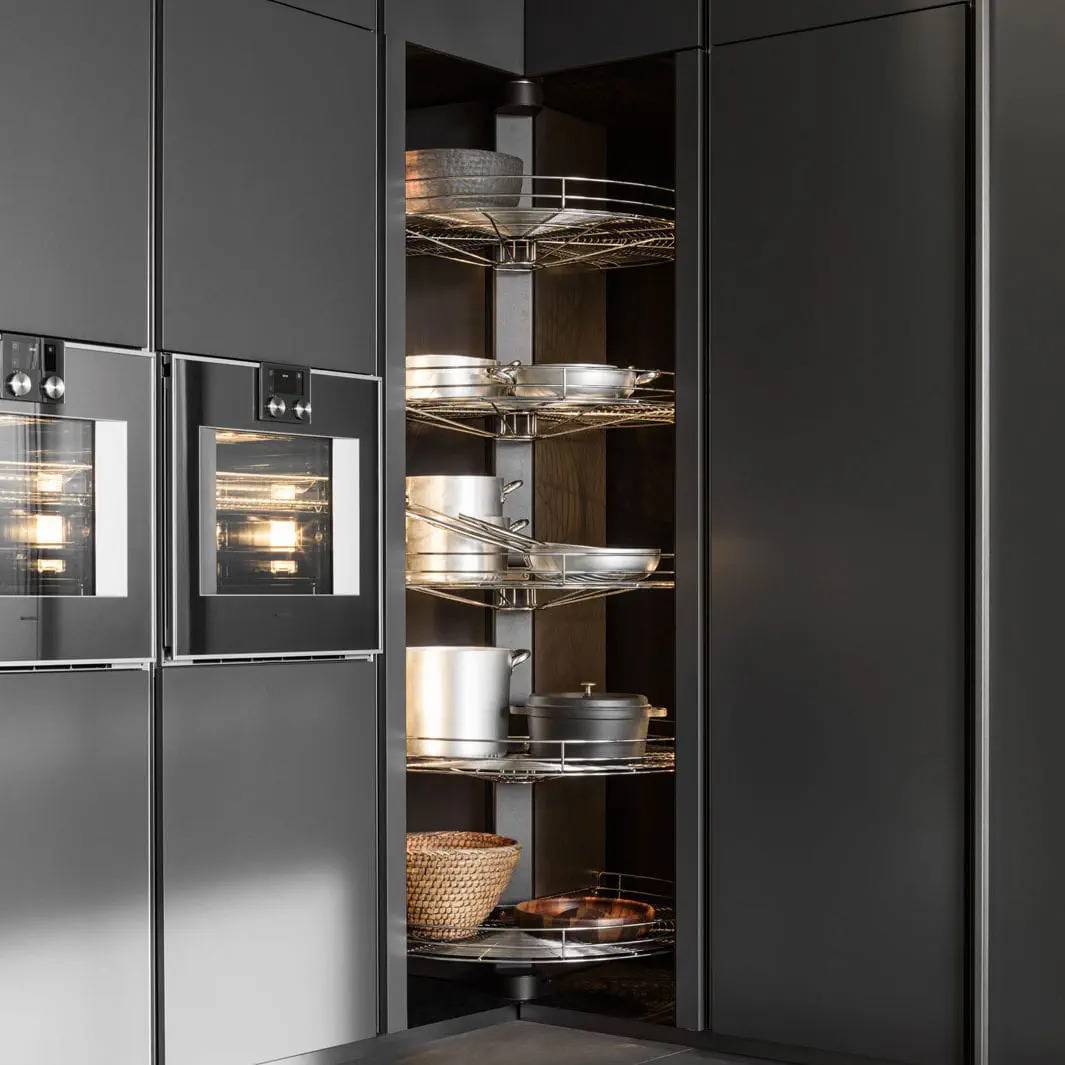
Red Cabinetry and Smart Storage

Red cabinetry can be paired with smart integrated storage. Smart storage supports efficiency.
Available space is maximized by storage features such as toe-kick drawers, built-in organizers, vertical dividers, and pull-out drawers, which also reduce clutter.
Smart storage is valuable in both high-traffic and compact kitchens. It supports kitchen function.
Spice pull-outs, deep pot organizers, and hidden waste bins can be placed beside the stove or inside cabinet fronts. These storage features support a streamlined layout.
Intelligent storage supports a clean, navigable kitchen.
Soft-close cabinet hardware supports ease of use. Hydraulic lifts can handle heavy mixers, while adjustable shelving adds flexibility to the storage features.
Cabinet functionality supports the user experience.
Matte or satin cabinet finishes reduce the visibility of fingerprints. Plan the layout, match the hardware, and place interior lighting in storage compartments to assist visibility.
In the kitchen, red cabinets with smart storage combine bold aesthetics and usability.
Smart storage suits modern lifestyles, prioritizes efficiency, and supports daily routines.