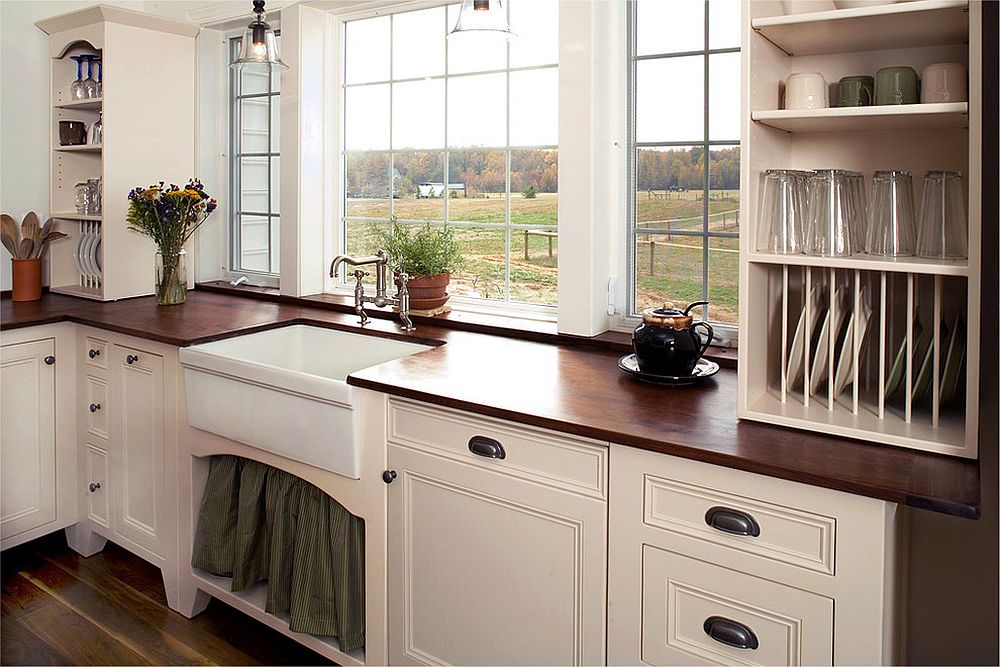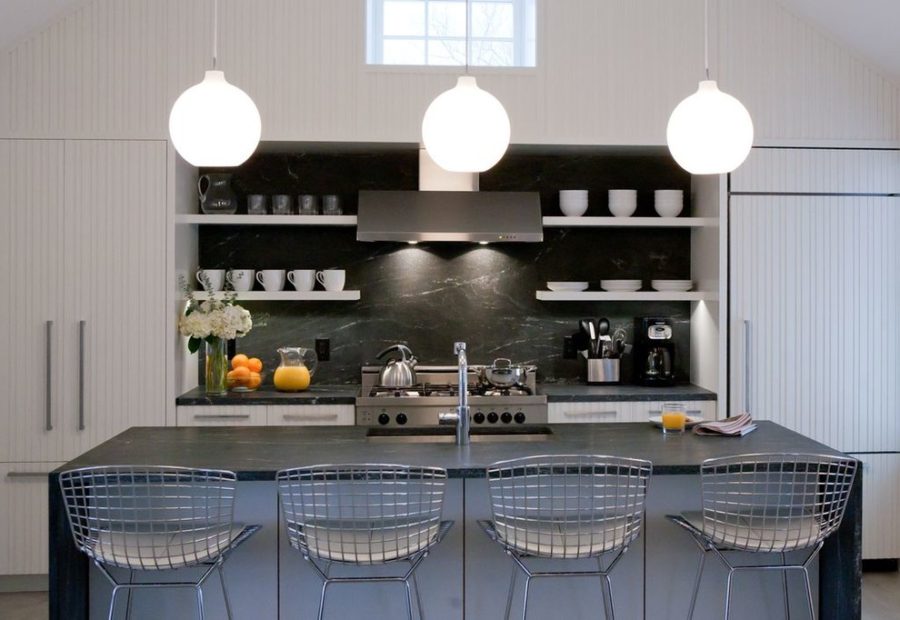
10 Retro Kitchen Ideas That Blend Charm and Practicality
Retro kitchens are returning this year. They bring together nostalgia and modern function.
Checkerboard floors set the tone in this retro kitchen, while vintage appliances and quirky accents fill out the room. Vibrant colors make the space lively. The retro kitchen aesthetic also includes a functional experience.
More homeowners are choosing retro style to give the kitchen more individuality instead of following standardized trends.
Retro ideas can work for a full remodel or just a few key updates. They offer practical options for either approach.
This year’s guide covers kitchen solutions that anyone can implement. They leave room to make the kitchen uniquely yours.
Checkerboard Floor Variations
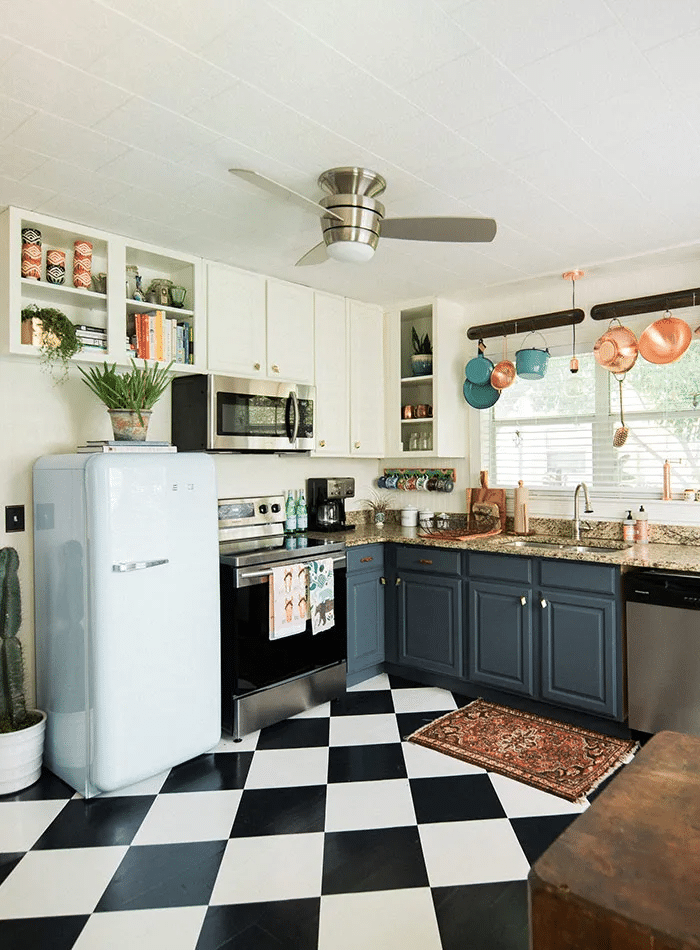
A black-and-white checkerboard floor keeps its nostalgic character, even when you vary the classic design.
Sage and cream make a softer color pairing, while terracotta and ivory offer another muted option. Both keep the geometric pattern of a checkerboard floor.
High-gloss floor tiles reflect light and can bring a 1950s diner style to the kitchen. Place the tiles diagonally instead of in a standard grid to increase visual movement and possibly make the space look larger. A matte finish gives the floor a more lived-in appearance.
Vinyl and linoleum offer an affordable flooring choice. Water-resistant flooring suits kitchen traffic, and modern versions provide both water resistance and durability.
In a small kitchen, a checkerboard floor can use visual rhythm to define zones without putting too much emphasis on the limited floor area.
Metallic sheens can add variation to a checkerboard floor. Occasional patterned tiles work too, as long as the patterns stay subtle.
Designers suggest placing mid-century barstools beside checkerboard flooring. Chrome-legged dining sets also work as a pairing for this floor style.
Checkerboard flooring provides a base for other retro elements, including pastel appliances and atomic light fixtures.
Patterned Kitchen Curtains
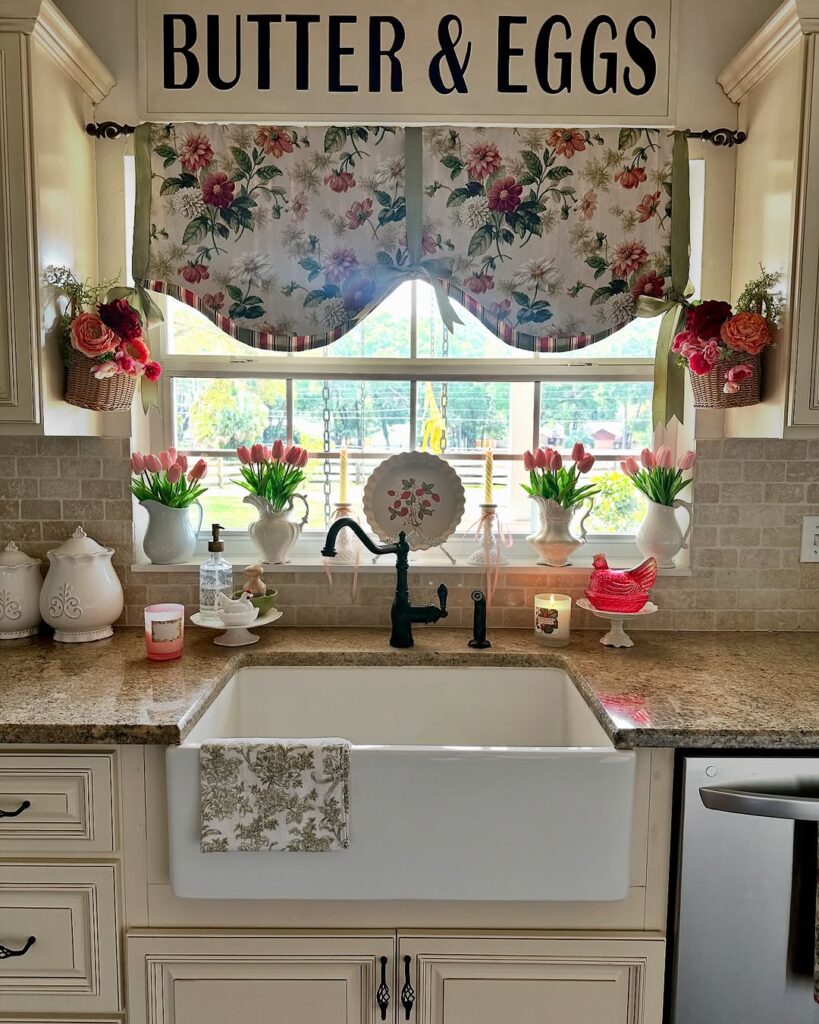
A café curtain or short valance can soften the hard surfaces. Choose patterns such as gingham, cherries, florals, or polka dots for a window treatment that works with tile, chrome, and wood.
Choose cotton or linen for kitchen curtains in a place where grease and moisture are common. These fabrics have good drape and easy-clean maintenance. Retro curtains also provide light control.
Fabric colors should coordinate with cabinet accents, dishware, and wall art. Install the curtains on a tension rod or a vintage curtain rod with a ball finial.
In the window, flat valances give the curtains a cleaner appearance, while pom-pom trim offers a more dramatic option. Curtain edges can be scalloped or flat, and the colors can be high-contrast or muted.
A small upgrade can shape both the style and the atmosphere of a room in a surprisingly large way.
Cabinets in Bold Colors
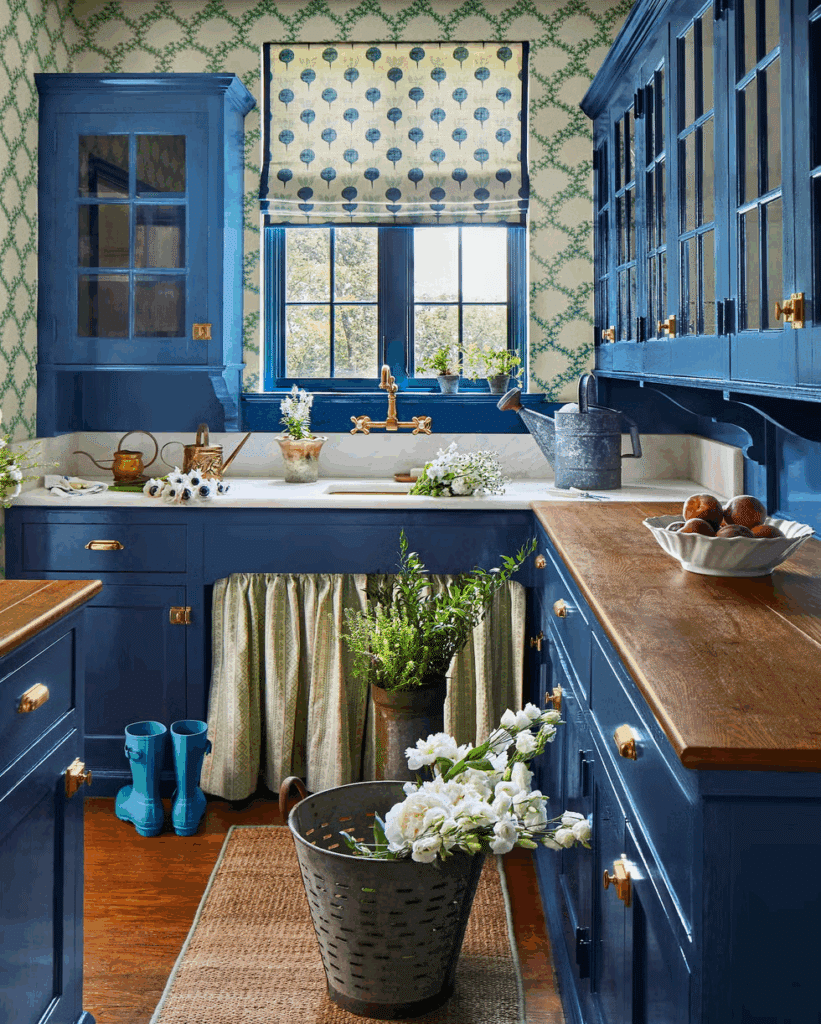
Cabinets in avocado green, powder blue, burnt orange, or sunshine yellow bring the colors associated with kitchens from the 1950s through the 1970s. Using bold colors is one way to build a retro kitchen.
Bold cabinets can use chrome handles and curved hardware. Add glass inserts to the cabinet doors.
Matte cabinets create a soft retro look, while high-gloss finishes give the room a diner-like style. Pair bold cabinets with white or cream backsplashes and neutral countertops.
Across the room, color-blocked cabinets could place navy below coral above. Color blocking means using contrasting upper and lower cabinets, and it helps define zones.
Use stencils on glass-fronted cabinets. Retro wallpaper applied inside the cabinets adds another layer of detail.
In areas that see heavy foot traffic, durable finishes are especially useful. Cabinet finishes should stand up to chips and everyday wear.
Peel-and-stick films let you test cabinet colors with a low level of commitment.
Retro Diner Seating for Kitchens
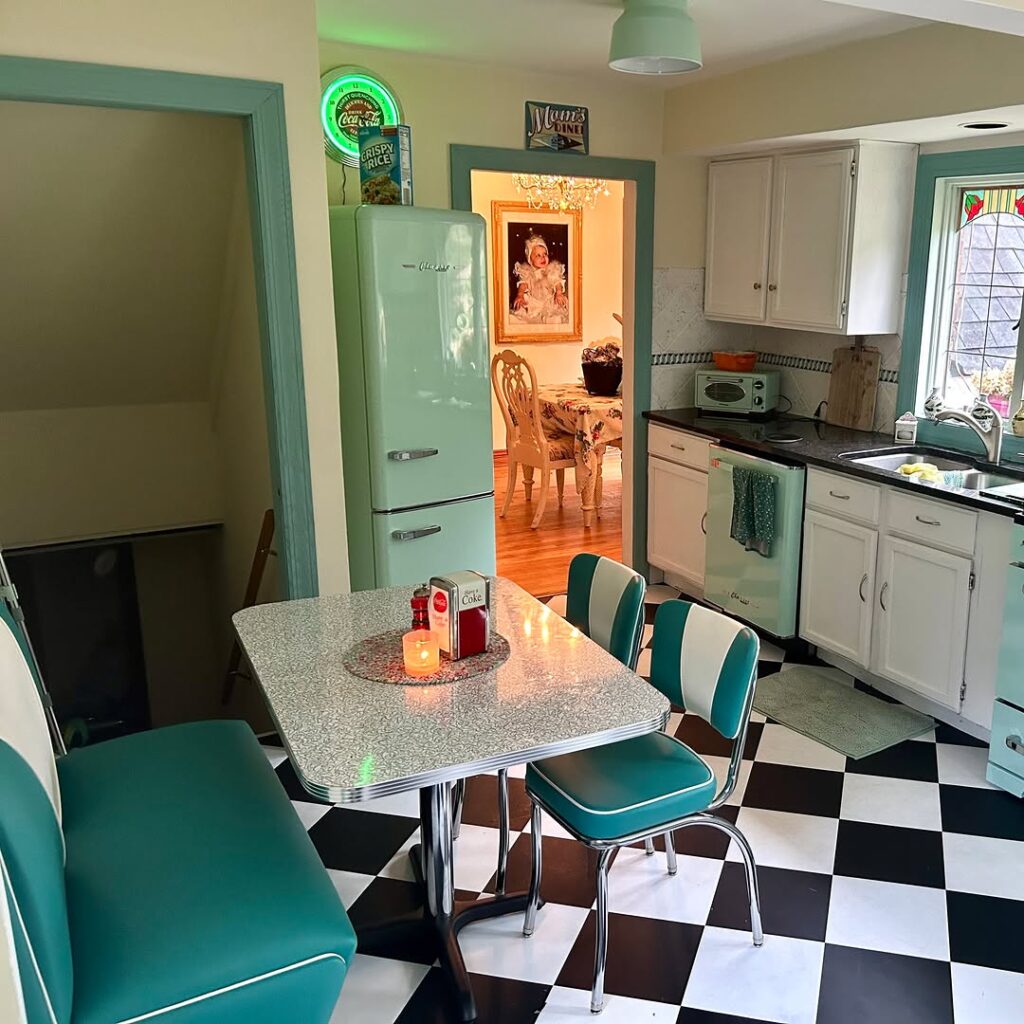
Diner-style seating supports dining and interaction. A vinyl booth, chrome-trimmed barstool, and Formica table reference a 1950s diner.
An aluminum-edged table and flooring in black and white accompany booth seating in cherry red, aqua blue, or pastel pink. Booth seating maximizes seating, suits eat-in kitchens and tucked corners, and avoids crowding.
Near the kitchen peninsula, two barstools with high backs and footrests add seating without a full seating renovation. A retro table base completes the setup, which suits small spaces.
Choose durable vinyl for the seating material. It suits busy households and families with children, resists tearing, and cleans easily. A wall clock, neon sign, or jukebox print can provide the wall accent.
A comfortable seating surface supports both comfort and function. Kitchen seating also supports gathering.
Open Shelving for Vintage Dishware
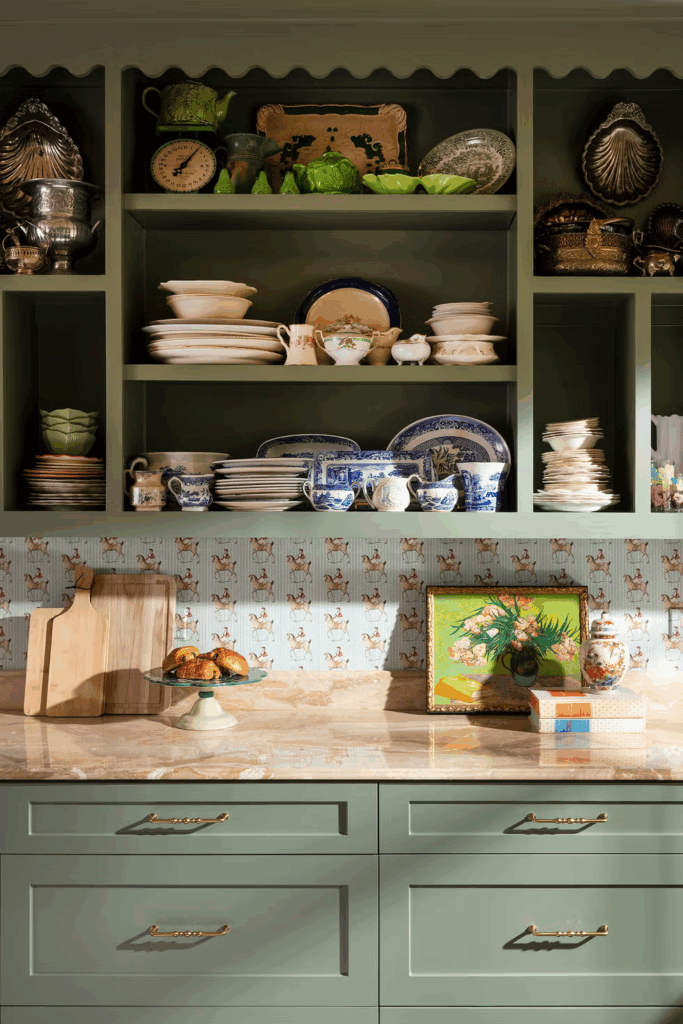
Vintage dishware sits on the open shelves, adding a personal touch. In retro kitchens, open shelving can make the room feel more spacious while keeping displayed pieces visible.
Milk glass collectibles, a Fire-King mug, Pyrex mixing bowls, and pastel enamel pots fill the shelves. Unlike closed storage, open shelving keeps the dishware in view.
Displayed dishes can add decor while staying accessible. Group the pieces by shade or material, using mint green, baby pink, and butter yellow as a color-coded display. Open shelving then serves both storage and display functions.
Vintage dishware rests on a wooden shelf with an aged patina. Industrial piping and metal brackets support the open shelving.
Beadboard can sit behind the main object, with floral wallpaper and checkered tiles as other wall treatment options.
Seasonal pieces can be rotated through the display, while favorite finds stay highlighted. Open shelving requires regular dusting and maintenance.
Open shelving converts kitchen storage into a display feature. Nearby pieces remain easy to see.
Appliances with Retro Appeal
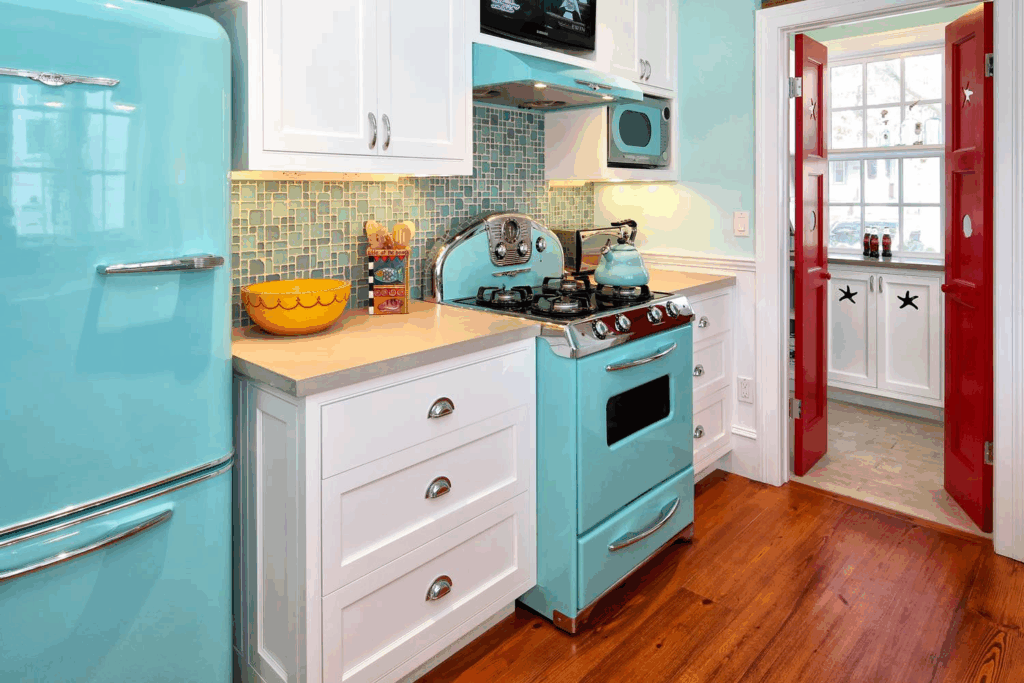
When selecting retro appliances, combine a historical appearance with current performance.
Soft mint, butter yellow, and cherry red give these 1950s-1960s retro appliances their color. The group includes a refrigerator, microwave, and toaster, with vintage-look appliances that integrate with contemporary technology.
Leading brands offer retro-styled appliances with rounded silhouettes and chrome accents. Their mid-century references come with energy efficiency and smart features.
For functionality, the majority of ovens and refrigerators with retro styling can rival modern counterparts. They may match them in storage capacity, temperature precision, and the way users interact with the controls.
For homeowners seeking authenticity, replica appliances are worth considering. Examples include a rotary-dial stove and a curved-top refrigerator based on vintage counterparts, with safety upgrades and touchscreens.
Mismatched finishes may give the kitchen a cluttered appearance. Keep the appliance lineup consistent by pairing a powder blue refrigerator with a stove in a neutral tone.
One shared appliance color theme supports cohesion. Coordinate the lineup around that theme for a more consistent result.
Retro appliances work in neutral kitchens and minimalist kitchens, where they can serve as a focal point.
Midcentury Modern Lights for Retro Kitchens
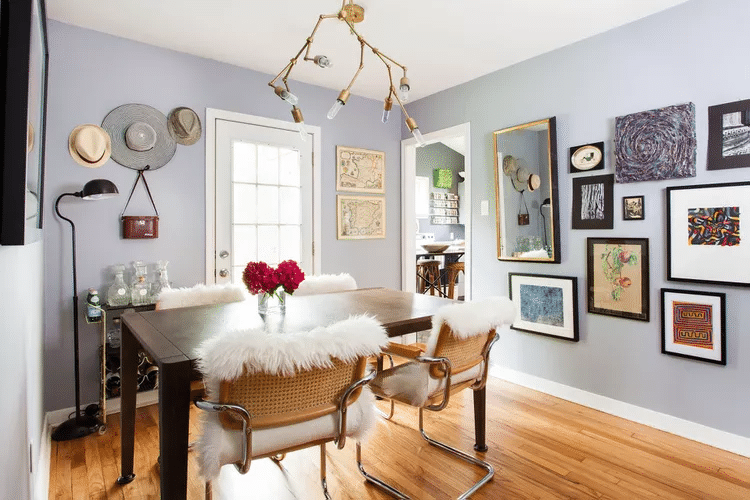
In a retro kitchen, statement lighting influences the mood. Mid-century modern fixtures provide both function and style.
The cone sconce and globe pendant both draw on the mid-20th century, while the Sputnik chandelier brings the same period into the room. The lighting can include milk glass shades, brass or matte black finishes, and these mid-20th-century forms.
Lighting above the kitchen island and breakfast nook helps organize the space. Well-placed lighting also serves as an artistic element.
Across the room, a wall-mounted light with an adjustable swing arm supports task lighting. Its style is industrial vintage.
A glass diffuser supports layered lighting, while a retro filament light adds layered ambiance. A dimmable bulb allows adjustable ambiance, and lighting layers improve usability at different times of day.
Balanced lighting can make ceilings look taller and kitchens look larger. A nearby light can help keep the overall effect even.
In a small kitchen, an oversized fixture can overwhelm the room. Consider scale when choosing fixtures, and use proportional designs for small kitchen spaces.
Cabinet hardware and appliances can guide the choice of lighting finishes. A plug-in pendant and a faux-ceiling medallion offer simpler installation without rewiring.
Lighting goes beyond brightness by setting the tone of a retro kitchen. Its effect is not limited to how much light the room receives.
Vintage-Inspired Backsplashes for Retro Kitchens
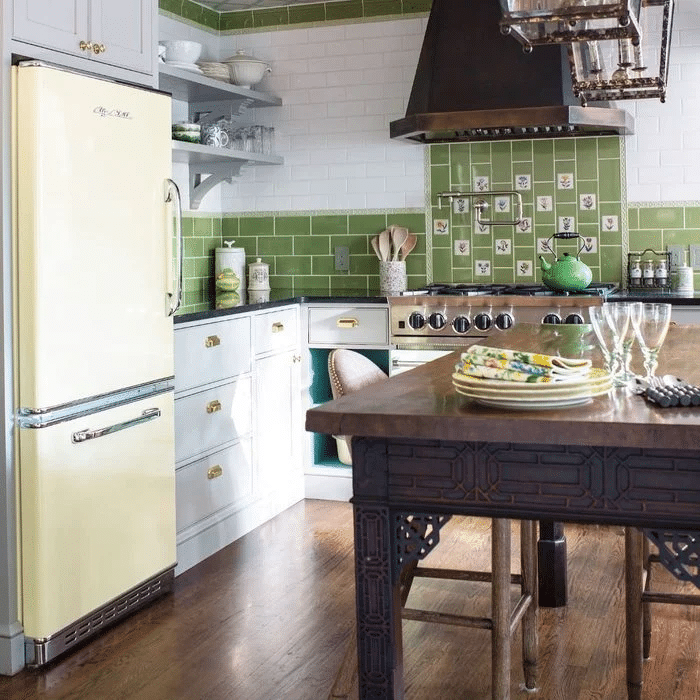
A backsplash updates retro style without requiring a full remodel. Place it behind the stove or sink, using checkerboard, penny tile, or geometric patterns. Period-colored patterns can serve as a visual anchor.
The color scheme brings together cream with cherry red, white with soft turquoise, and muted gray with mustard yellow. These pairings provide the nearby color detail.
A glossy ceramic tile offers ceramic durability, while a peel-and-stick backsplash supports budget updates and suits renters. The peel-and-stick installation provides a separate option from the durable ceramic tile.
A backsplash protects the wall against moisture and heat. It also connects the cabinetry, countertops, and appliances visually.
In one kitchen, a metal backsplash in brushed aluminum or chrome evokes a 1950s diner. Beadboard and sealed painted brick suit a country-style retro look, and painted brick should be sealed for moisture resistance.
A limited backsplash area leaves room for color and pattern experiments. The backsplash pairs with the open shelving and scalloped cabinetry.
Across the kitchen, a backsplash combines function with retro style. The design can be subtle or bold.
Pastel Color Palettes for Mid-Century Kitchens
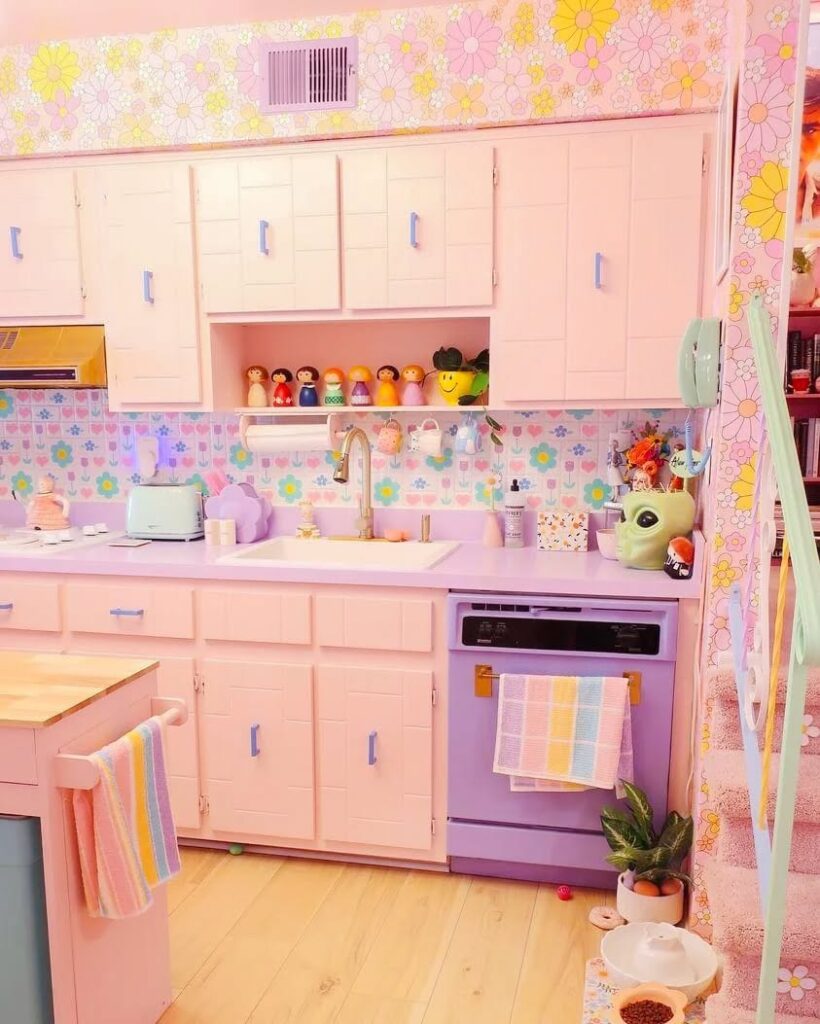
Pastel shades such as baby blue, pale mint, blush pink, and lemon yellow help define mid-century kitchen aesthetics. They also have a historical association with mid-century kitchens.
Pastel colors can apply to cabinets, walls, backsplashes, and floors. Used across the kitchen, the pastel palette creates a warm atmosphere.
Using one color too heavily can create visual overwhelm. Balance the shades, and use color contrast to support cohesion.
A crisp white countertop is paired with a mint green cabinet. Brass hardware completes the cabinet pairing.
Pastel accessories can support retro style without a major renovation. Apply the colors to appliances, barstools, accessories, dish towels, canisters, and light fixtures.
In a small kitchen, pastel colors can reflect brightness and make the space look more spacious. They perform well with natural light. A satin finish adds a modern variation, while a matte finish offers more period authenticity.
Apply the pastel palette across the full kitchen or use it for small accents. Either approach references a past era.
Vintage Kitchen Art and Prints
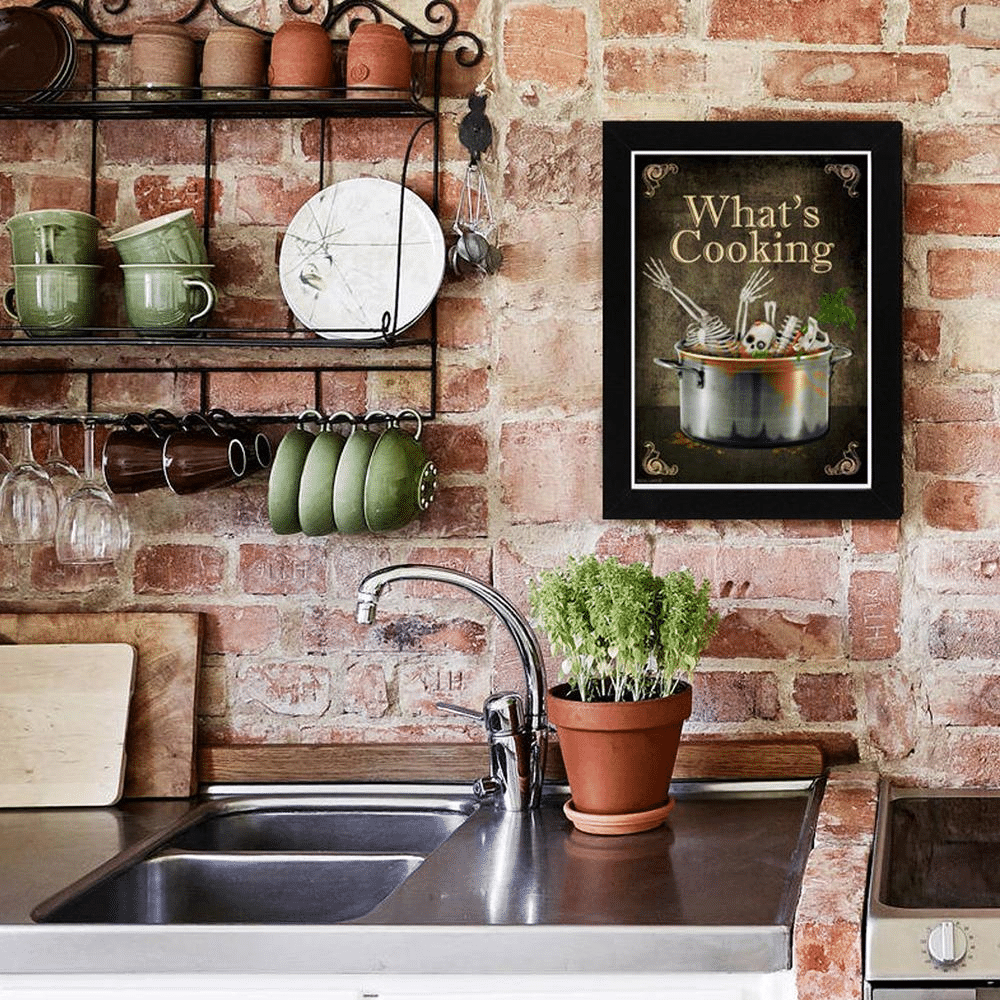
On the wall, posters can show atomic-era typography. Soda advertisements and mid-century food illustrations are other poster subjects. This wall decor adds humor, personality, and nostalgia without changing the layout or structure.
Poster reproductions are affordable and widely available. They also support changes in framing, rotation, and layout.
Artwork colors should prioritize red, teal, and mustard. Place the posters near a breakfast nook, coffee station, or open shelving.
Small framed pieces can be arranged as a gallery grouping, while a large print can serve as the focal piece. Metal signs and enamel wall clocks reinforce the theme and provide utility.
Excessive vintage art can create visual chaos. Use vintage artwork as a measured accent and avoid overloading the walls.
Wall art sets the kitchen tone. Vintage posters communicate a retro narrative.
Retro Kitchen Rugs
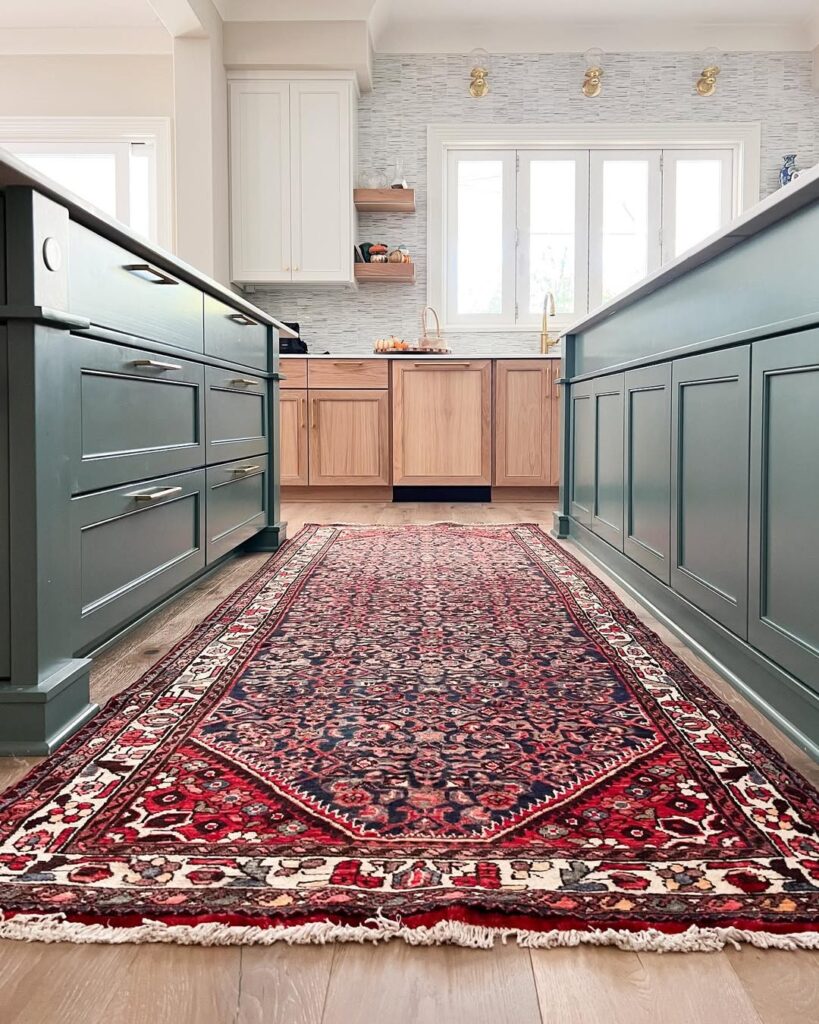
A floor rug adds comfort underfoot and contributes to the kitchen's style. It serves both purposes without changing the permanent floor.
In traffic areas, a vintage-inspired rug can help protect against spills and daily wear. Checkered patterns, atomic starbursts, and diner stripes suit the look.
Low-pile cotton and washable synthetic rugs work well near sinks and prep zones. Choose rubberized or non-slip backing to support safety.
A runner, placed between counters or beneath breakfast tables, helps define functional areas. This type of placement is especially useful in open layouts.
Red with white, teal with gray, and mustard with cream are classic pairings for flooring textiles. Rug colors can match or complement the cabinetry, wall art, and appliance accents.
Machine-washable rugs with retro patterns are widely available. Small mats at entry points or pet feeding stations support practicality and make upkeep more convenient.
A retro kitchen rug offers cooking comfort while marking out an area in the room.
Freestanding Retro Kitchen Furniture
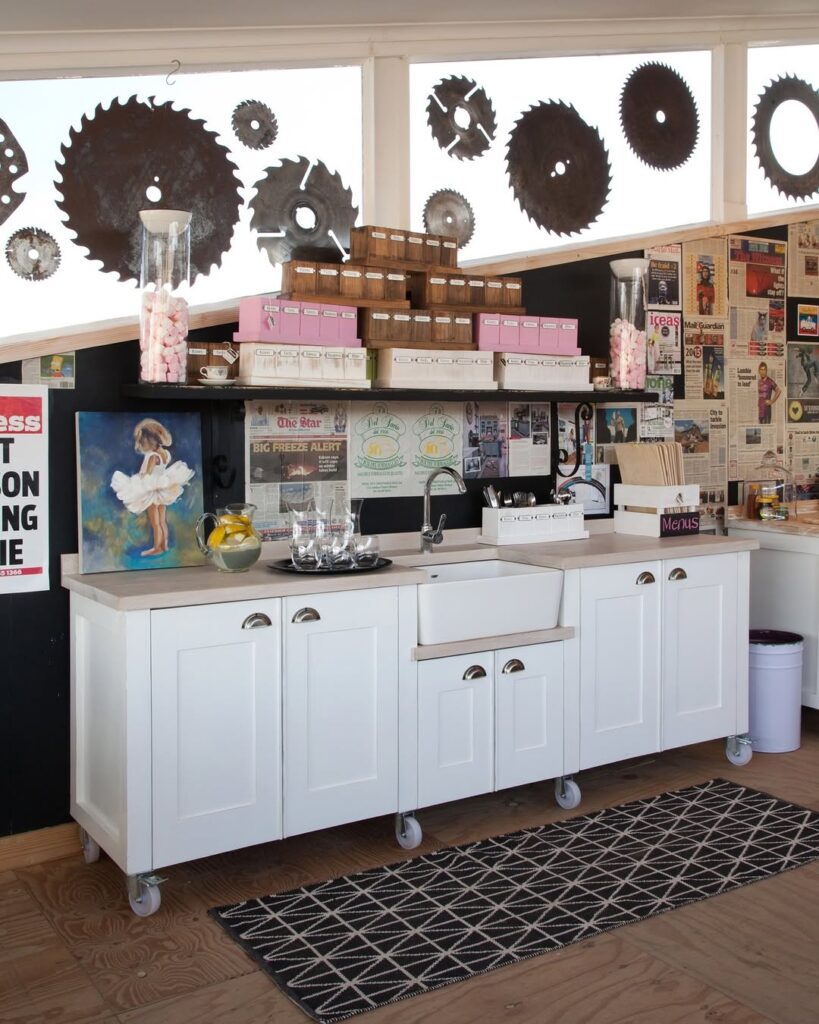
Freestanding furniture brings flexibility to a retro kitchen.
Glass doors suit a standalone pantry cabinet. Freestanding pieces are associated with kitchens from the 1940s through the 1970s, including enamel-topped tables and metal carts.
Colorful drawers add storage and prep space to a rolling island. Its chrome legs and repositionable, nonpermanent setup suit small kitchens and renters.
Across the room, a hutch or sideboard can hold dishes or baking supplies. Mint green and butter yellow are color options, with ornate handles, turned legs, and a worn patina.
Cookware and vintage collectibles can fill an open shelving unit or a ladder-style rack. Both pieces store cookware and display vintage collectibles.
Changing needs are easier to accommodate with freestanding furniture.
Retro Kitchen Chrome Accents
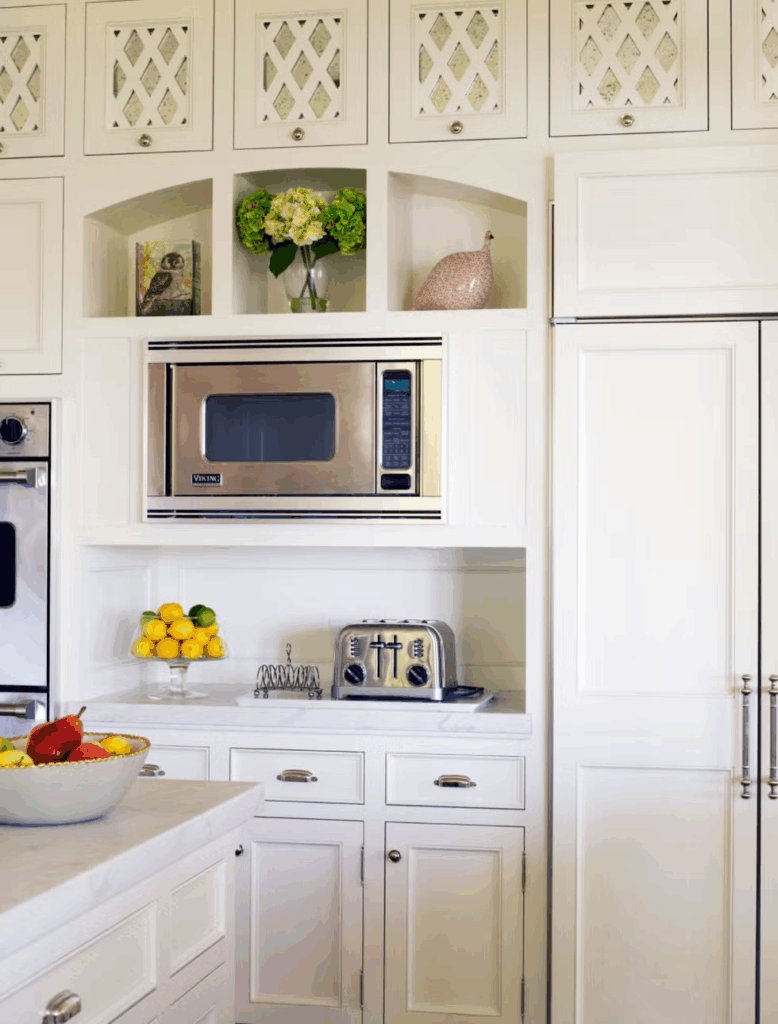
A reflective chrome finish brings an atomic-age touch to a mid-century kitchen. The finish is closely associated with 1950s diners.
Chrome drawer pulls and cabinet handles carry the finish across the kitchen. Chrome also appears on countertop edges and barstool legs.
Formica countertops and checkered floors can be paired with glossy chrome, as can pastel cabinets. Brushed nickel and matte black are alternative finish types.
Chrome is easy to clean and resists rust and tarnish. Use the finish on appliance trims, faucets, sinks, shelving brackets, and light fixtures.
Warm wood textures help reduce the clinical feel of chrome. Chrome also pairs with glass surfaces and lacquered surfaces.
Chrome can support a retro style as subtle hardware or as a focal feature.
Linoleum with Pattern
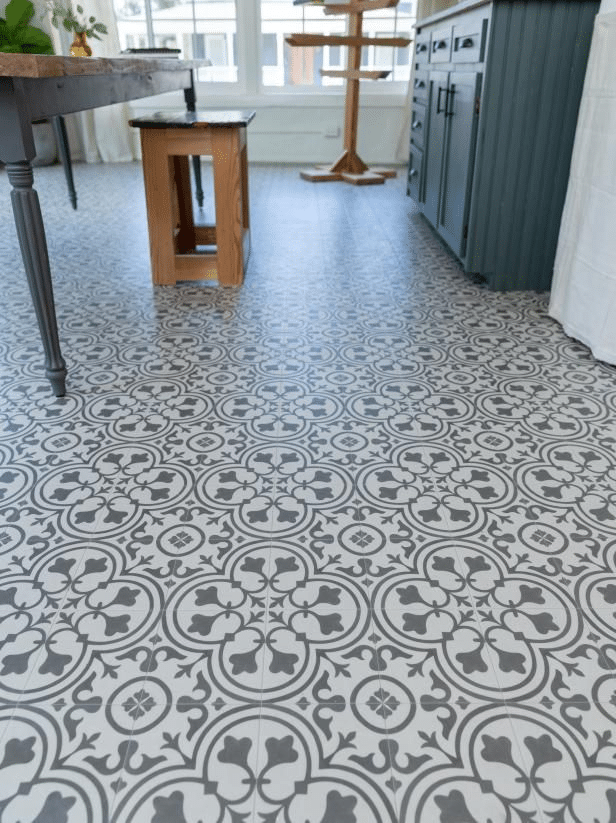
Patterned linoleum gives modern kitchens an affordable, resilient flooring option with a retro style.
Linoleum is a natural-composition flooring made with linseed oil, cork dust, and wood flour. Because of that natural composition, it is considered eco-friendlier than generic vinyl while still offering durability.
Muted green, marigold, and sky blue work with floral, starburst, and geometric grid patterns associated with post-war kitchens.
Charcoal and blush can update the checkerboard look, as can teal and ivory. Use these color pairings for updated checkerboard linoleum flooring.
Linoleum is easy to clean and suits long periods of kitchen preparation. It comes in sheet and tile options, supports DIY or professional installation, and provides a soft feel underfoot.
Linoleum tiles allow sectional replacement when parts of the floor become worn.
Pair patterned linoleum with matching light fixtures, then add retro cabinetry to support the look. The flooring can serve as a foundational style element and work with budget-conscious updates.
Retro Kitchen Clock
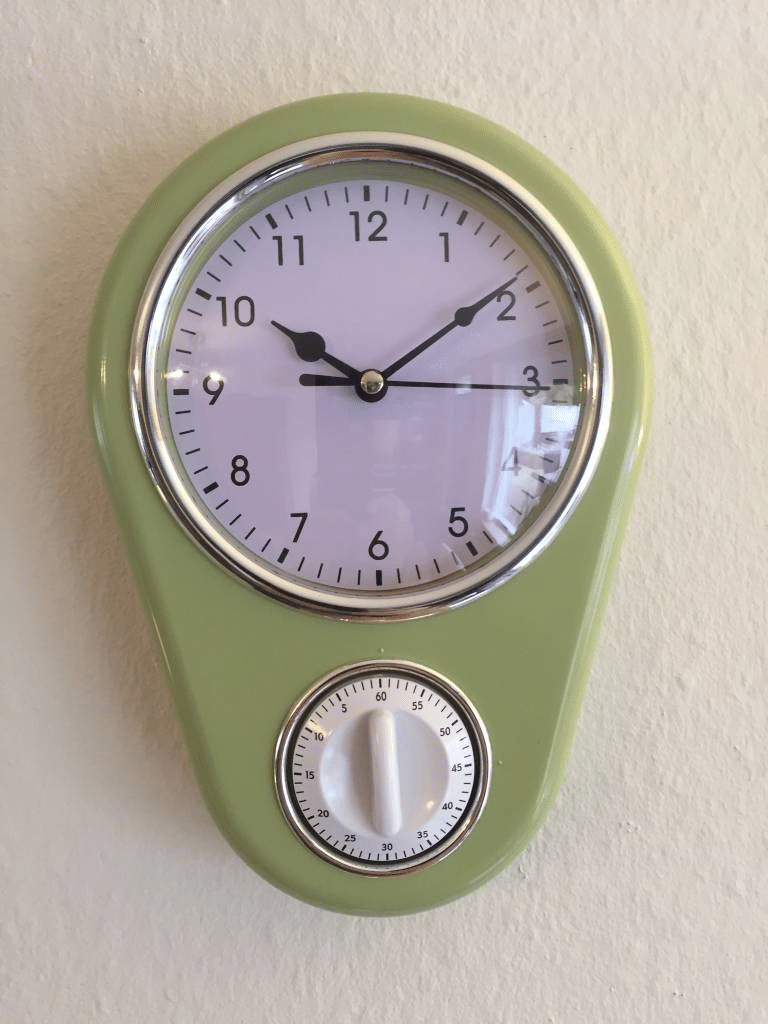
A wall clock keeps time in the kitchen and supports the room's theme. It adds both timekeeping and a clear retro detail.
Atomic starburst designs and colored frames suit classic retro clocks from the 1940s through the 1960s. Bold numerals reinforce a mid-century look.
A rounded silhouette gives this clock replica its period shape. It models an electric kitchen clock, runs on batteries, and can have either a chrome or colored bezel.
A retro clock can come in turquoise, cherry red, or mustard. Place it beside open shelving or above the pantry door, where it complements retro appliances and cabinetry.
Choose clock colors that match the overall palette. Prefer readable dials and clean lines, avoid overly ornate or modern designs, and consider a built-in kitchen timer.
A retro clock combines daily timekeeping with utility during coffee preparation and with retro styling. It keeps the practical feature tied to the kitchen's look.