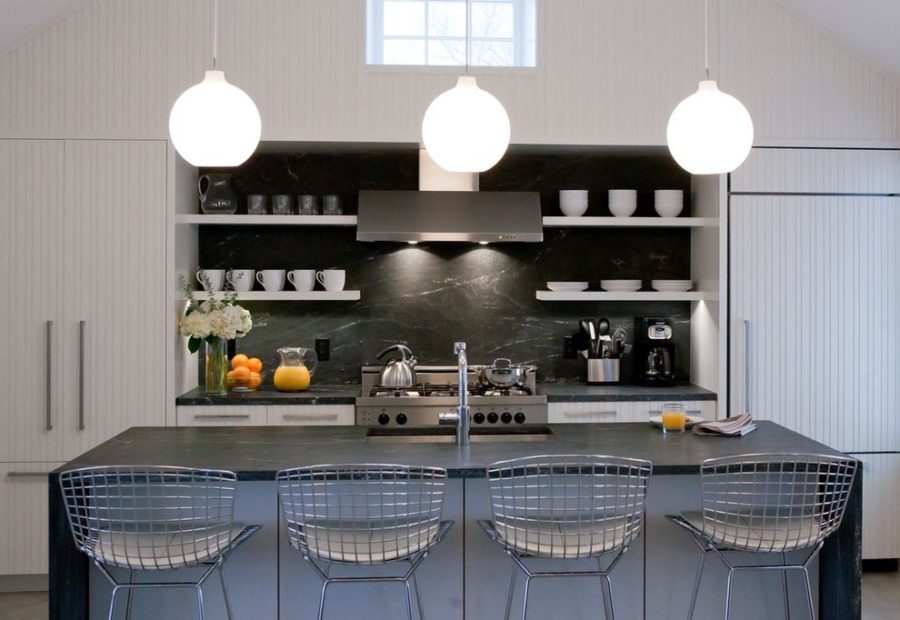
Walnut Kitchen Cabinets for Rich Tones and Seamless Flow
Dark walnut cabinetry has a smooth surface that adds visual depth. In an open layout, it guides the eye through the kitchen.
The rich grain and deep tones of this hardwood cabinetry bring warmth to the kitchen. Walnut cabinetry also supports the room's function.
Walnut cabinetry works with matte finishes and stone counters. Modern hardware fits the same setting, so the room does not feel overwhelmed by the cabinetry. These elements let walnut cabinetry remain a clear part of the room without taking over.
This hardwood pairs with minimalist lines and organic textures. The combination provides visual cohesion as well as tactile appeal.
Walnut cabinetry supports both the kitchen atmosphere and the way people move through the kitchen.
Walnut Cabinets in Two Tones
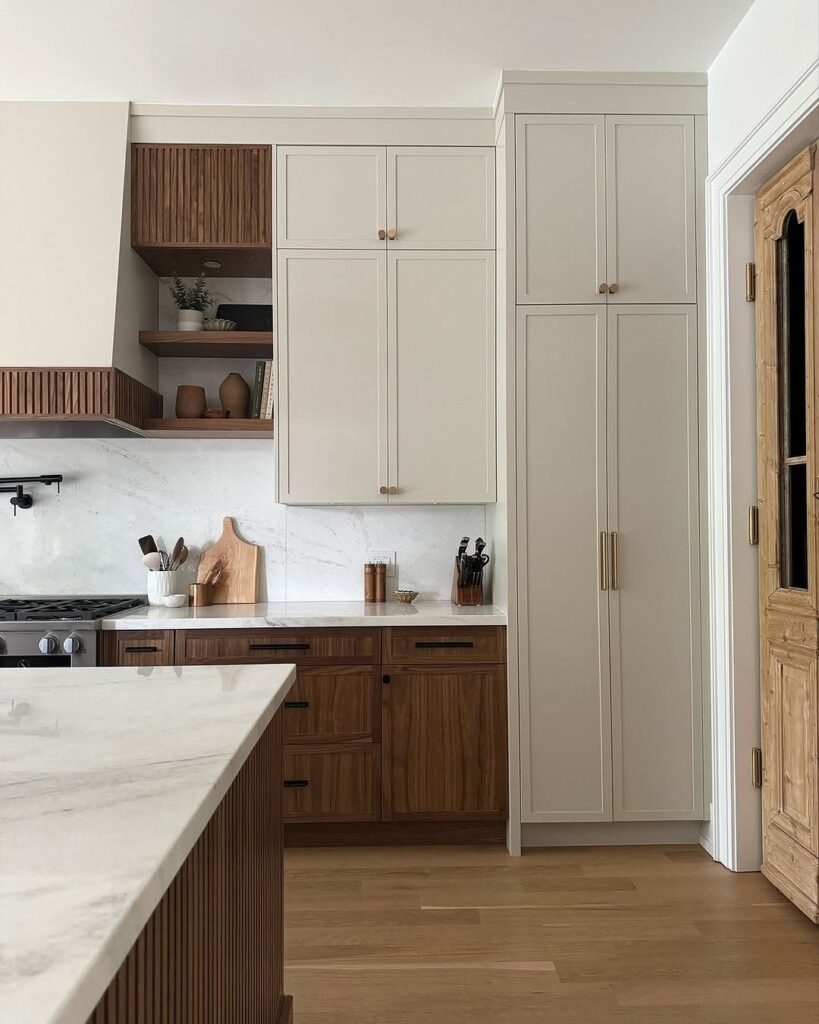
Soft white upper cabinets sit above muted greige base cabinets, while dark walnut cabinets add weight below. The lighter cabinetry paired with walnut creates contrast, and the two-tone arrangement maintains cohesion.
Two-tone cabinetry supports flow in small kitchens as well as open-concept designs. Lighter elements reduce the sense of enclosure and lower the visual bulk.
White and taupe upper cabinetry is placed above the counterline, with walnut cabinetry below it. Use a matte or satin cabinet finish to keep the arrangement consistent.
Vertical shiplap or smooth plaster pairs with two-tone walnut cabinetry. Hardware in brushed nickel or warm bronze works with the wall texture and the cabinets.
Clean-lined minimalism and rustic warmth can both work with two-tone cabinetry. The combination avoids high drama while leaving room for either direction.
Natural wood is used in the two-tone cabinetry.
Walnut Cabinetry for Compact Spaces
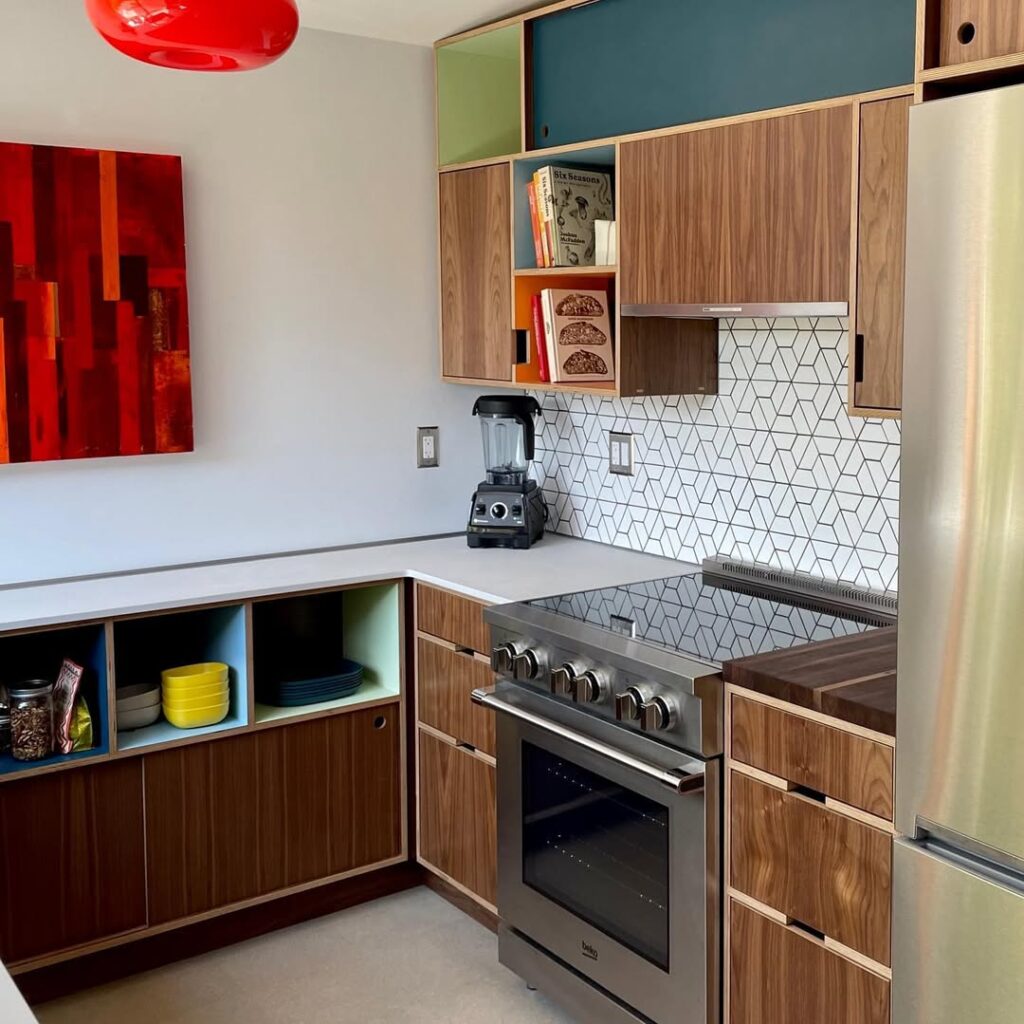
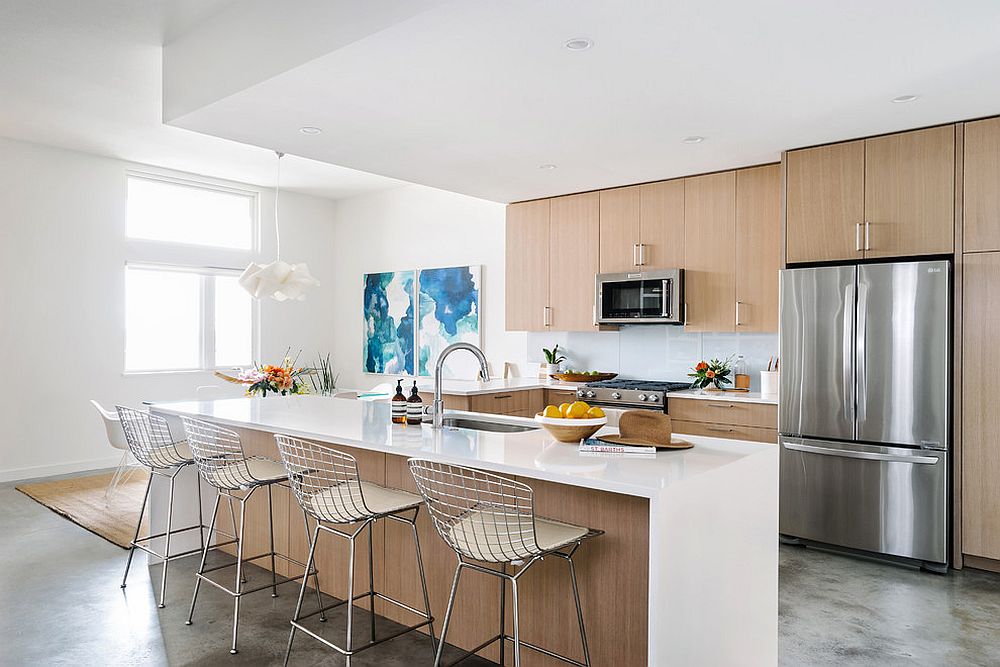
Walnut grain and warm tones define a small kitchen and help avoid a cold or sterile appearance. Small kitchens require design efficiency, while walnut cabinetry provides functionality and suits tight quarters.
Open shelving and glass-front upper cabinets can reduce spatial heaviness while keeping the walnut continuity. To reduce visual bulk, choose flat-panel fronts or fronts in a slab style.
Walnut cabinetry can pair with mirrored backsplashes and soft white walls. Reflective surfaces amplify light and expand perceived space.
Optimized custom-built units maximize functional storage through corner zones, vertical height, and toe-kick drawers. Walnut strength allows thinner construction, which retains durability.
Similar-tone flooring helps create visual flow, while contrasting flooring can define a zone. For the lighting, consider recessed LEDs or strips integrated beneath the cabinets. Smart lighting provides visibility and ambiance, making it useful in corners that tend to fall into shadow.
In small kitchens, walnut cabinetry provides structure and warmth without requiring a stylistic compromise from limited square footage. Purposeful material use and layout planning support compact kitchen design, making walnut cabinetry suitable for small kitchens.
Walnut Cabinetry with Fluting
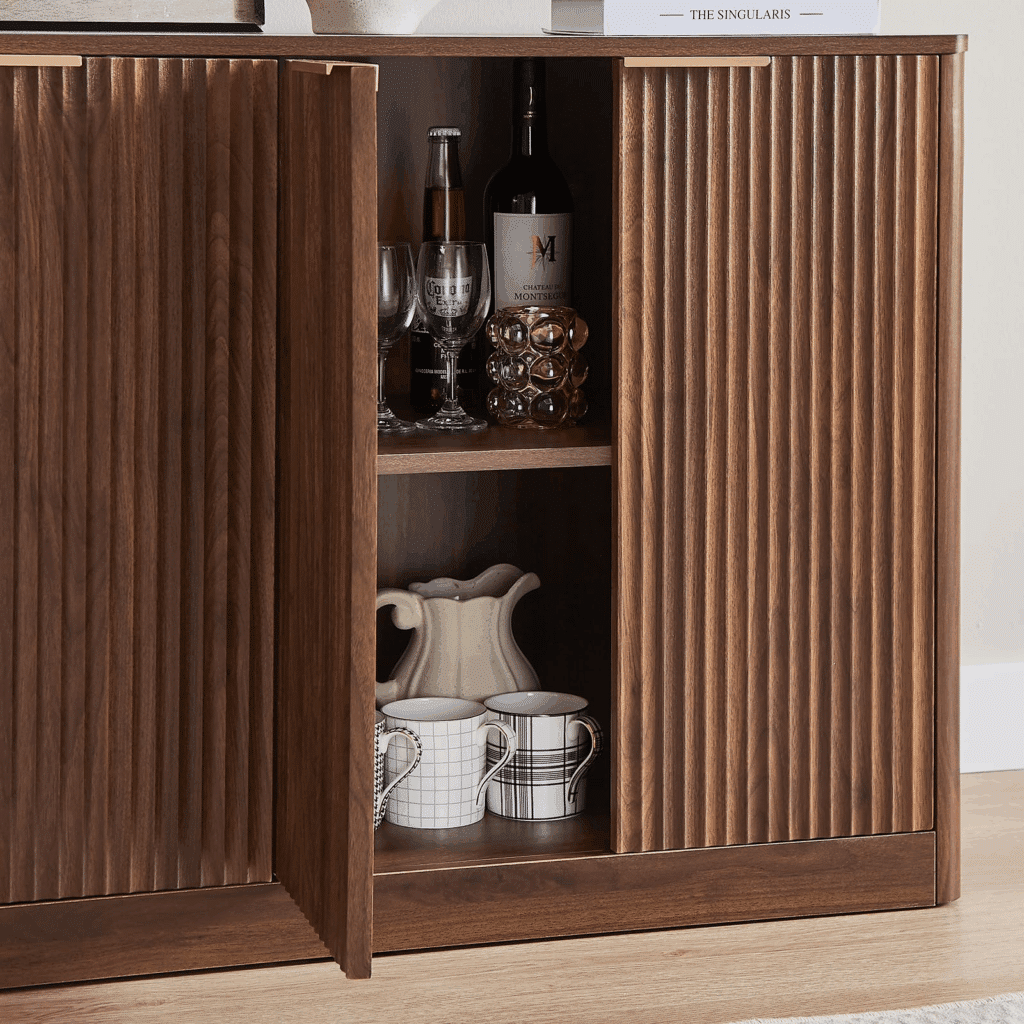
Vertical fluting creates a ribbed surface. This fluted detail suits modern kitchens and transitional kitchens.
Near windows or directional lighting, the fluted surface creates light play and visual movement. The effect changes as the light shifts across the ribs.
Pantry doors, island facings, and storage that runs floor to ceiling all suit fluted cabinet fronts. On walnut, the fluting softens the wood's warmth.
Pair textured cabinetry with smooth stone countertops and matte metal fixtures. Fluted cabinet fronts also work with minimal hardware or touch-latch systems. These complementary elements reduce visual clutter.
Fluted fronts hide fingerprints and signs of wear more effectively than flat fronts. Fluted cabinetry also suits active households.
The vertical texture brings movement to a room. Fluted walnut cabinetry adds depth, character, and practicality, and it can be used in selected areas or across the whole space.
Walnut Cabinets Without Handles
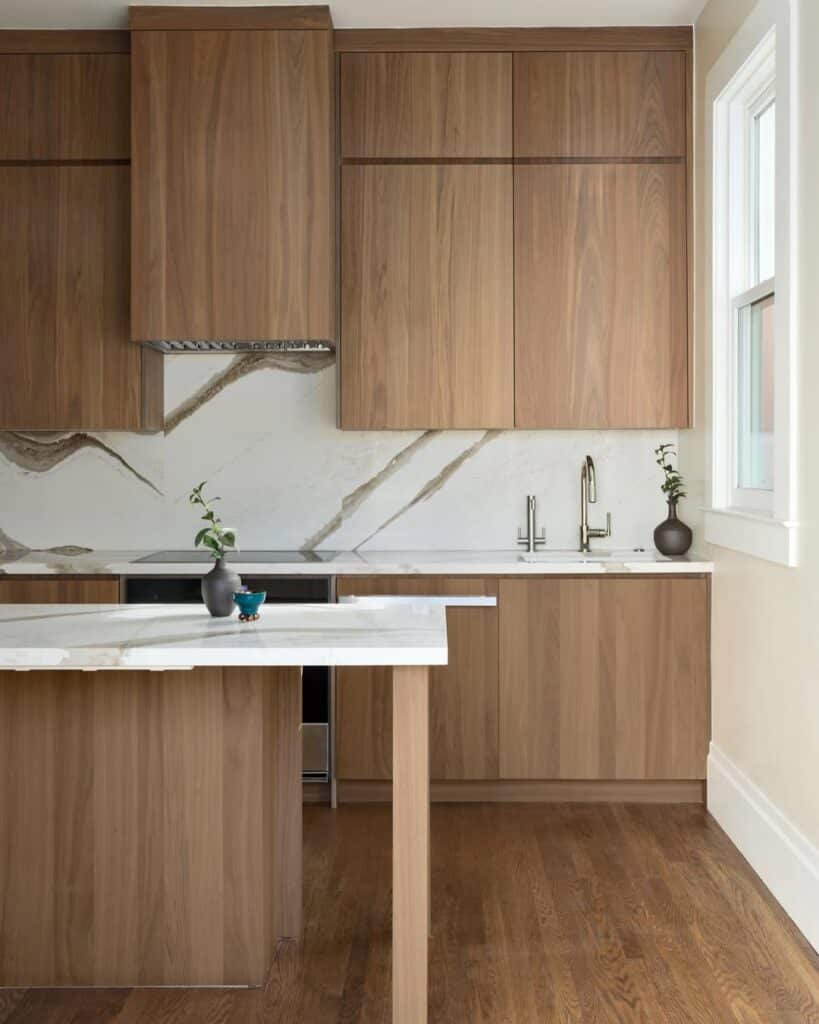
Uninterrupted walnut grain highlights the handle-free design. With no visible hardware, the cabinetry reduces hardware distractions.
Integrated edge pulls keep the cabinet opening visually simple. Push-to-open mechanisms offer another option, and both approaches maintain cabinet functionality.
Waterfall countertops, a stone slab backsplash, and integrated lighting pair with handleless walnut cabinetry. Soft-close mechanisms support everyday usability.
Handleless walnut cabinetry suits high-traffic kitchens. Cleaning the cabinet surfaces is easier.
Under-cabinet lighting or overhead spotlights can define the cabinet silhouette. Handleless walnut cabinetry gains textural contrast from a matte concrete floor and a backsplash made with hand-thrown ceramic.
Handleless walnut cabinetry supports a seamless kitchen environment and its functionality.
Walnut Open Shelving

Open shelving provides airiness in heavy or enclosed kitchens.
Matching walnut shelving maintains material cohesion. Open shelving adds visual variation.
Matching walnut open shelving provides display space and a contrast to closed storage. Walnut tones visually anchor the shelving, while lower cabinetry provides concealed storage. Use the open shelves for ceramics, cookbooks, or greenery.
Transitional walls are one suitable place for open shelving, along with sinks and cooking zones. Keeping the shelving out of high-traffic zones helps reduce clutter.
Floating shelving has brackets that are not visible. Integrate lighting underneath the shelving. Walnut open shelving suits Scandinavian, Japandi, and organic modern styles.
Walnut shelving pairs with a light-toned backsplash or plaster walls. Limit visible items to useful or beautiful pieces.
Open shelving combines utility, visual storytelling, warmth, and practicality.
Brass Hardware on Walnut Cabinetry
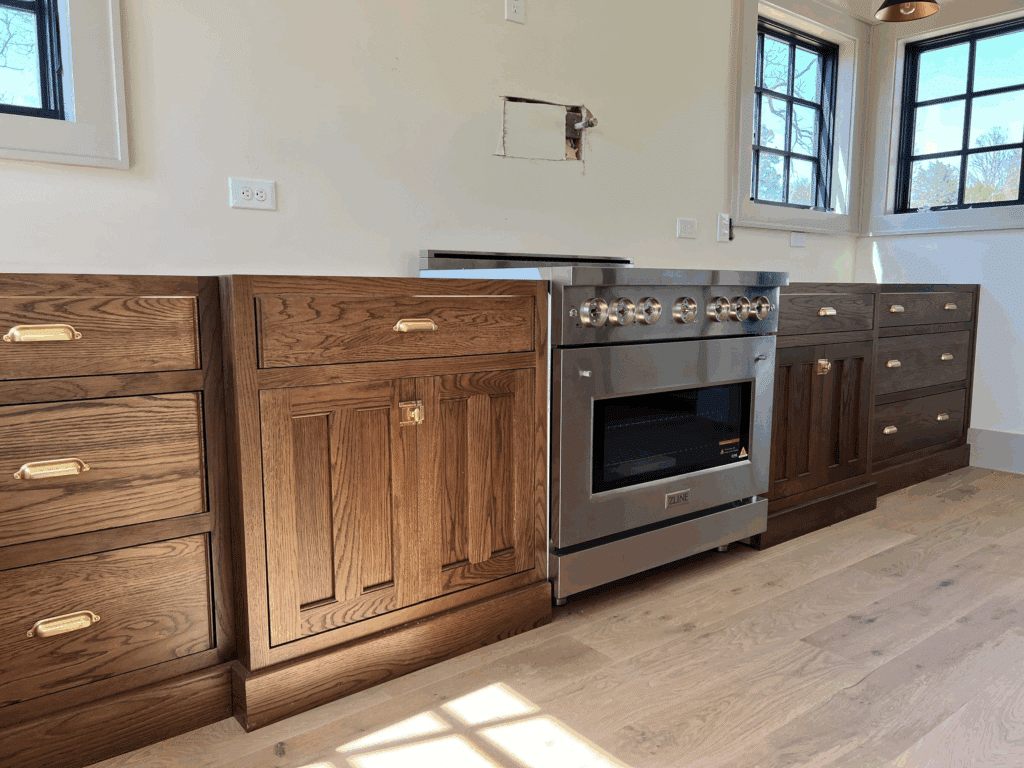
Walnut cabinetry is paired with brass hardware. The matching material creates a connected detail between the cabinetry and hardware.
Walnut brown pairs with the warm tones in brass. The hardware is available in brushed, aged, and polished finishes.
Minimalist knobs, cup handles, and bar pulls can move hardware design between vintage-inspired and ultra-modern styles. Slim hardware provides subtlety, while oversized handles provide boldness.
Walnut and brass suit farmhouse kitchens, mid-century kitchens, and transitional kitchens. Complementary accents can include brass light fixtures, brass faucets, and brass toe-kick vents.
Maintain finish consistency across the brass hardware. Limit its quantity.
High-quality brass has durability and ages over time. Its appearance changes as the hardware ages.
Custom Walnut Island
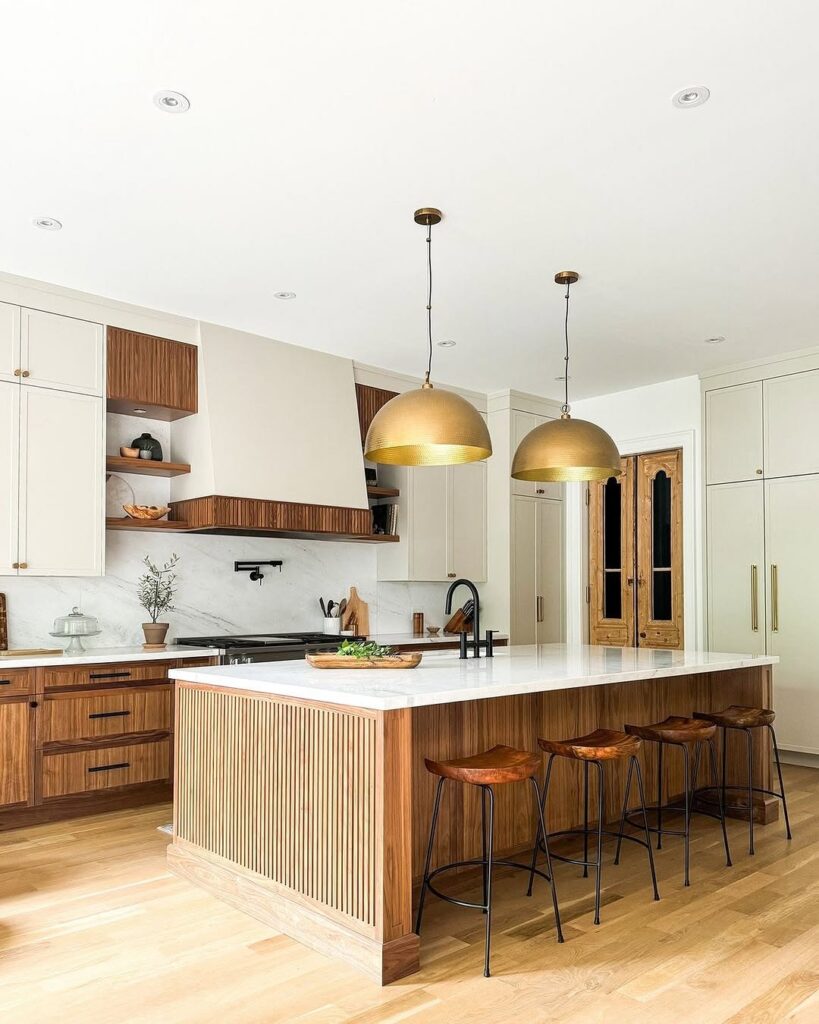
Walnut brings a rich surface to the kitchen. When thoughtfully designed, the island becomes a focal point in the layout.
Natural walnut grain has its own variation, with unique grain shaping each custom island. The island can serve as both a workspace and a gathering hub. Its coloring and artisanal character differ from mass-produced surfaces.
The countertop combines contrasting honed granite and brushed quartz around a walnut island. The island can include a waterfall edge, a seating overhang, drawers for appliances, or open shelving.
Lighting should be integrated underneath the island. Keep outlets concealed in discreet locations. A walnut island suits both traditional kitchens and contemporary kitchens.
Cabinetry around the island can use painted finishes in lighter tones. This keeps the island visible without making the room feel overwhelmed.
A custom island gives busy households a place for meal preparation and gathering. The walnut selection also supports quality, texture, and lasting appeal.
Walnut Glass Door Cabinetry

Glassware, dish sets, and collections can sit behind the glass. The glass fronts provide display space while reducing the visual weight of a full-wood kitchen.
Clear, frosted, or ribbed glass panels break up solid wood expanses while preserving the flow of the cabinets. The glass frames the walnut patterning, creating a balanced mix of enclosure and exposure.
Upper cabinets suit glass-front cabinetry. The same cabinetry can flank the stove hood and sink area, while its interiors can match the surrounding walnut. Matching interiors create visual continuity.
Inside the cabinets, LED strips illuminate the cabinet contents. Consider discreet hardware and soft-close hinges.
Glass-front cabinets provide functional storage and encourage organization and mindful storage. They suit transitional kitchens as well as Scandinavian-inspired interiors.
Glass and walnut combine a layered, cohesive appearance while the glass fronts provide visual relief. This combination preserves both craftsmanship and clarity. The nearby wood keeps the overall look connected.
Sustainably Sourced Walnut Cabinetry
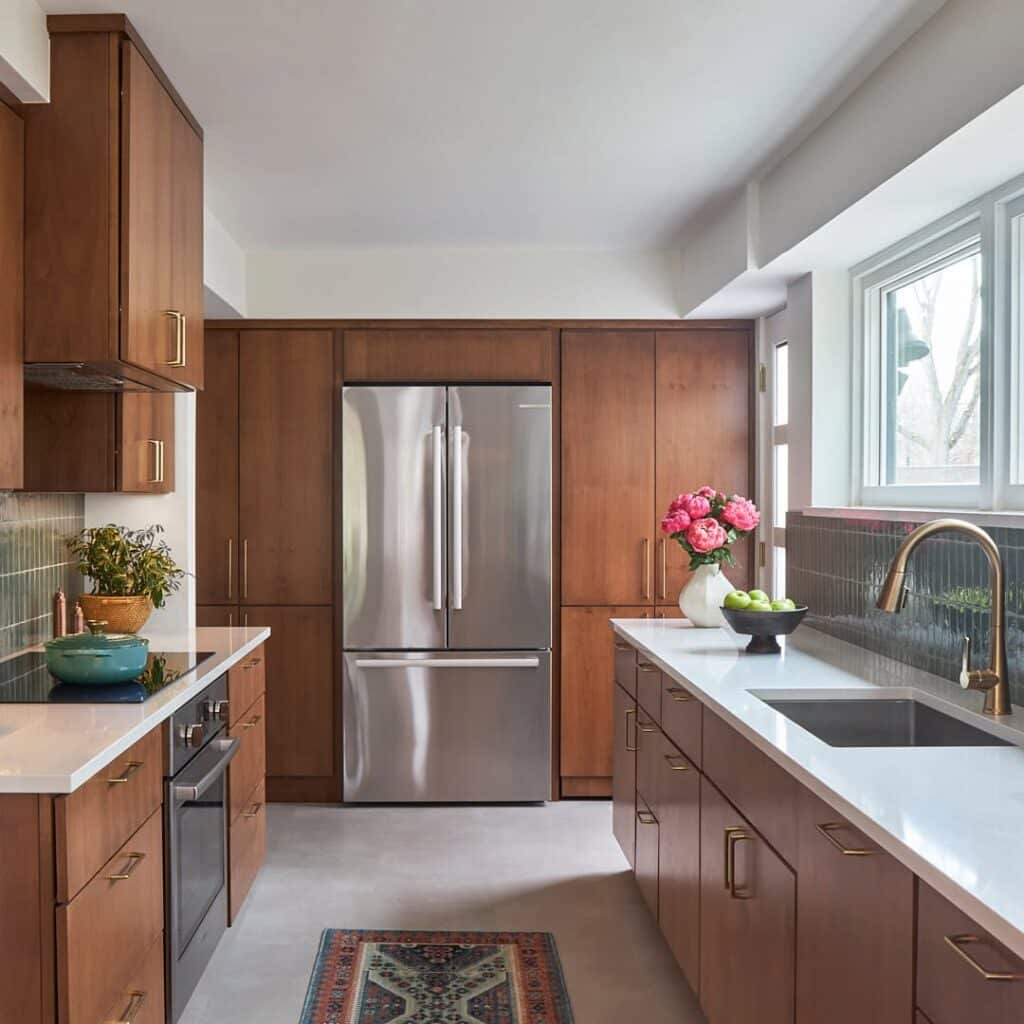
Environmental responsibility is the priority when sustainable practices apply to walnut cabinetry sourcing. The source of the walnut matters alongside the cabinetry itself.
Walnut cabinetry combines aesthetics and ethics. Choose certified walnut or walnut that has been responsibly harvested to support forest stewardship.
Sustainably sourced walnut can match conventionally milled walnut in strength, color variation, and durability. This walnut option also has a lighter environmental footprint.
In one part of the production process, sustainability-focused manufacturers often use formaldehyde-free construction, renewable energy processes, and low-VOC finishes.
Sustainable production choices can improve indoor air quality and support environmental protection. Indoor air quality is often overlooked.
Sustainable walnut cabinetry retains its expressive grain and warm undertones. Those warm undertones and grain help define the walnut.
Construction choice affects both the budget and the project scope. Walnut cabinetry may be custom-built or semi-custom, and it can pair with recycled glass counters and energy-efficient appliances. FSC certification, which means Forest Stewardship Council certification, helps verify wood origins.
Sustainable sourcing does not require sacrificing elegance. It indicates responsible material handling.
Walnut is the defining material at the surface. Sustainable walnut cabinetry provides lasting durability and supports environmental balance over the long term.
Dark Walnut Cabinetry
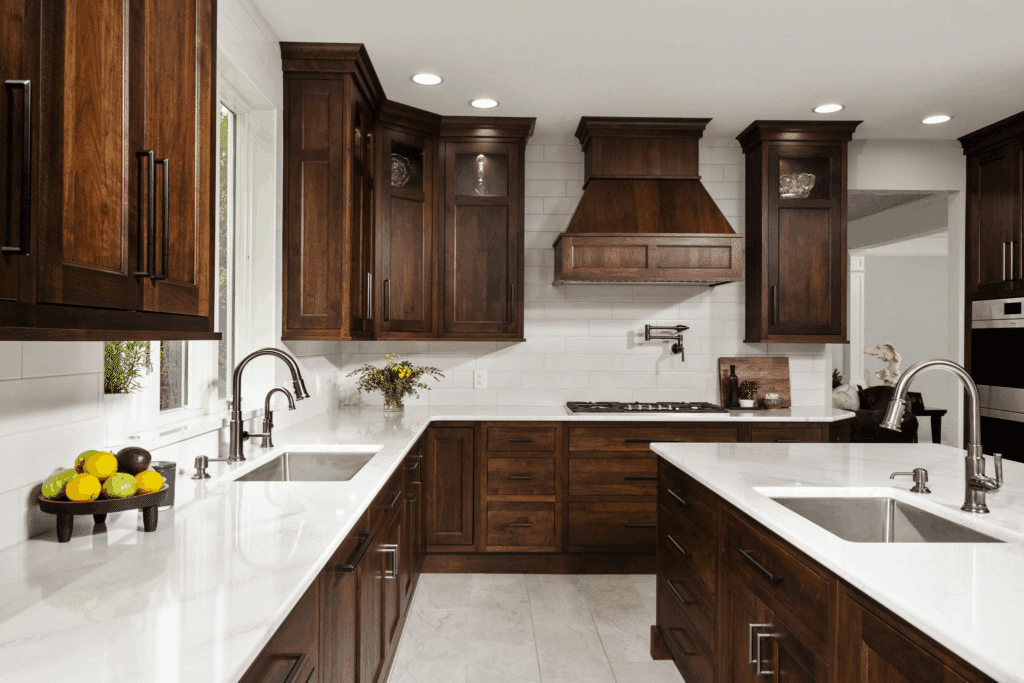
The natural walnut grain has extra depth, giving the cabinetry a dramatic look. The kitchen feels moody and refined without becoming starkly minimalist.
Pale oak flooring sets up a contrast with the crisp white walls. Muted metal accents in matte bronze and antique pewter pair with the oak and reinforce that contrast.
A dark stain helps minimize the appearance of everyday wear and fingerprints. Integrated lighting keeps the cabinetry from feeling visually heavy. Designers often pair dark-stained walnut with high-traffic areas.
Dark-stained walnut works with industrial, transitional, and contemporary farmhouse styles. Because cabinet depth draws attention to lighting, consider directional fixtures mounted on the ceiling and warm LEDs beneath the cabinets.
Walnut has natural durability. When stained, its character persists over time, bringing together boldness and longevity.
Darkened grain gives the cabinetry both texture and visual presence. It helps create a kitchen character that feels grounded, polished, and personal.
Walnut and Marble Cabinetry
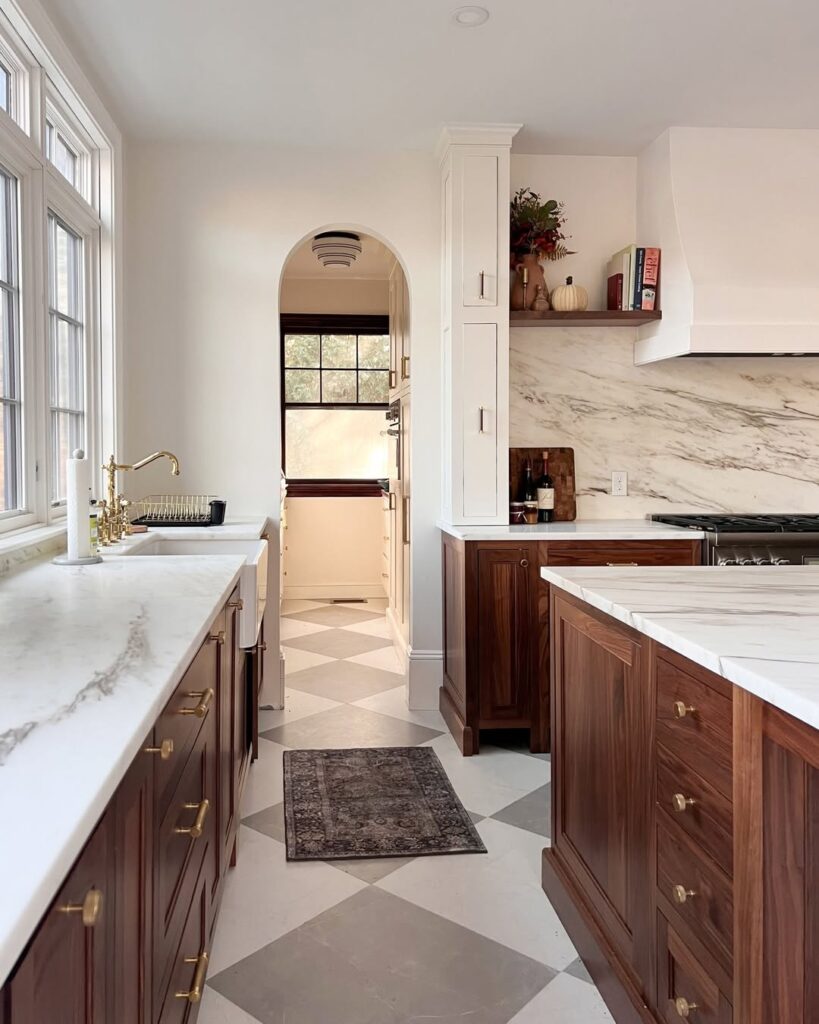
Marble countertops are paired with walnut cabinetry. The countertop brings marble into the walnut kitchen.
Marble veining contributes coolness, while walnut contributes warmth. Together, walnut and marble combine material contrast.
White Carrara and Calacatta marble bring soft gray veining to the room. Walnut grain complements these patterns. For a bolder approach, choose marble veining in taupe or charcoal.
Marble is available in polished, honed, or leathered finishes. Seal the marble for durability maintenance, especially on islands and in prep zones.
Use recessed lighting, neutral backsplashes, and integrated storage in the surrounding design. The walnut and marble pairing suits traditional settings and contemporary settings, while limiting visual clutter.
Beauty, utility, and lasting appeal come together when walnut cabinetry is paired with marble countertops.
Walnut Cabinetry with Color Accents
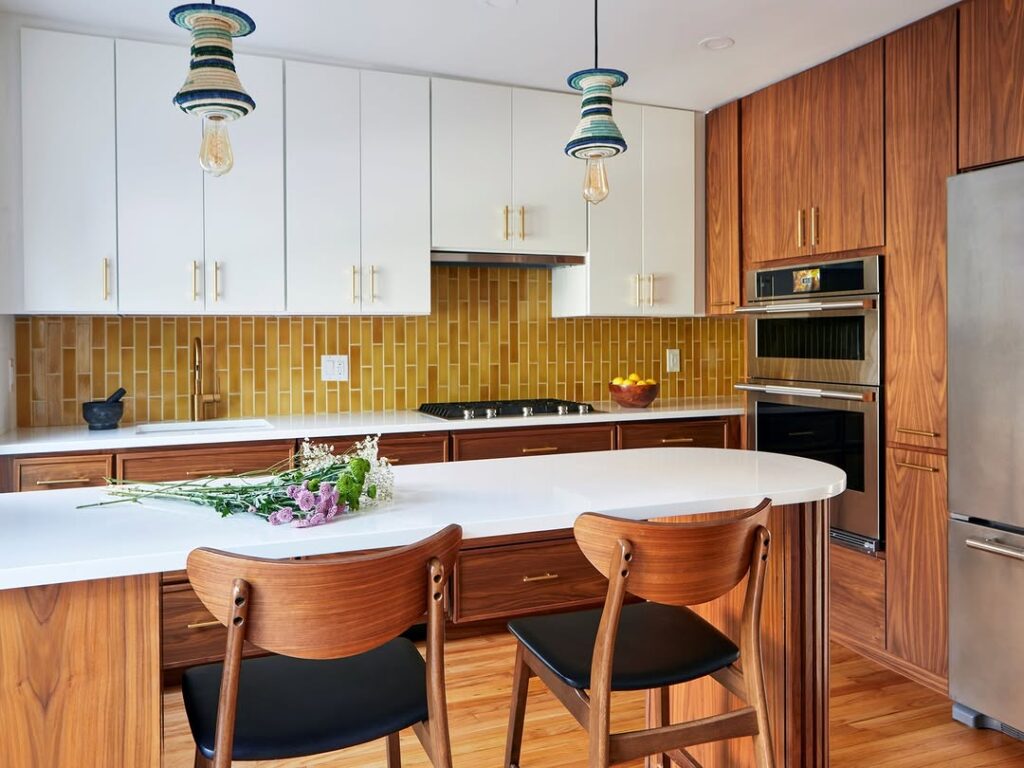
The combination preserves the walnut's natural texture. Colorful accents combine with walnut cabinetry.
Teal tile backsplashes, mustard-yellow stools, and an emerald green range hood can personalize the kitchen. These colorful accents should not overshadow the walnut grain.
Avoid a dominant accent layout. Saturated colors add energy and balance warm wood tones, but keep colorful elements limited so they act as visual punctuation.
A statement pendant light or a piece of vibrant art can bring color into a walnut kitchen. Walnut works with both jewel tones and earthy hues, and painted cabinet panels offer another option when a stronger change is acceptable. These methods avoid a major structural commitment.
Across the room, echo accent colors in small accessories such as dishware and textiles. Glossy finishes bring reflection and depth, while matte finishes add softness.
Repeated accent colors allow seasonal updates and trend refreshes while creating cohesion. Walnut limits visual chaos and remains the visual anchor.
Natural wood and color create a balanced space and support personalization. The walnut cabinetry gives the color a consistent material setting.
Appliance Panels in Walnut Cabinetry

Matching walnut appliance panels create consistent surfaces and uninterrupted lines. The panels carry the cabinetry material across the kitchen.
Across the kitchen, custom fronts conceal the dishwasher, refrigerator, and kitchen essentials. The fronts align with nearby cabinetry for a consistent run.
Walnut grain continues across the vertical surfaces. Integrated panels minimize visual noise.
Appliances still function as the kitchen's functional components. Their integrated appearance helps avoid visual distraction.
Panel-ready appliances are built for custom fronts. Use hidden or brushed finishes for the appliance hardware.
Open-plan homes benefit from integrated panels when the kitchen leads straight into living and dining areas. The kitchen connects directly to both adjacent spaces.
Glass-front details can punctuate the cabinetry, while solid walnut panels and slatted details fill out the composition. These mixed elements create intentional breaks.
Integrated walnut panels combine aesthetics and utility. They support a clean-lined design.
Matte Black with Walnut Cabinetry
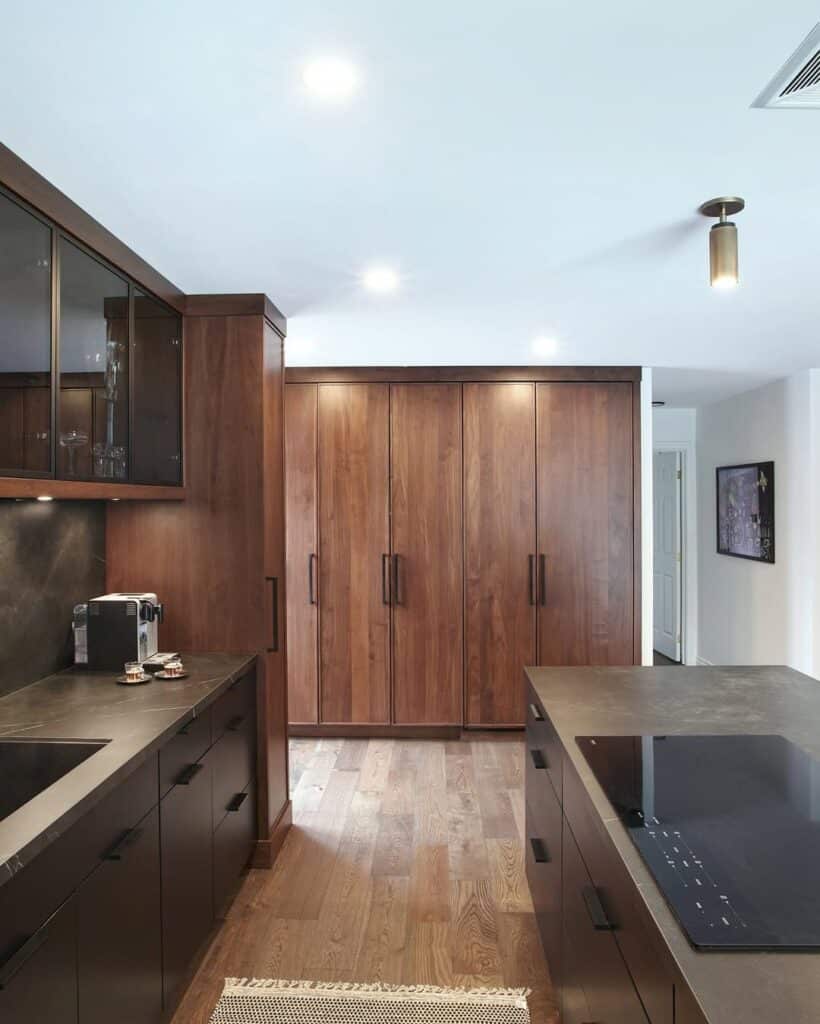
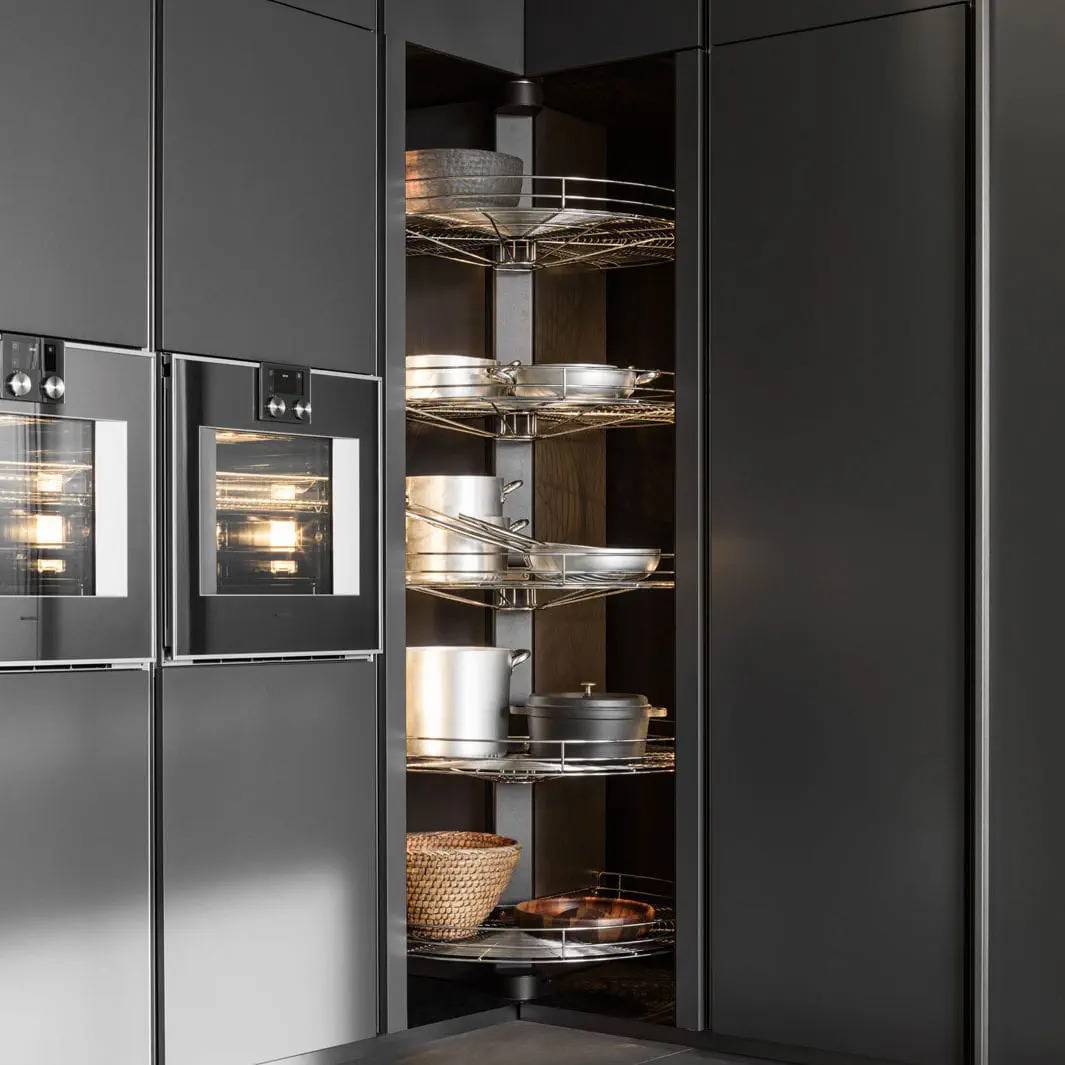
Deep matte black elements contrast with organic walnut cabinetry. The walnut material and its grain add warmth to the darker finish.
Walnut and matte black suit both modern kitchens and industrial kitchens. Matte black fixtures such as a gooseneck faucet, slim cabinet pulls, and industrial lighting accent the walnut cabinetry.
Black painted upper cabinets sit above walnut lower cabinets. The two are paired with countertops in black quartz or soapstone, and those countertops can also be paired with full walnut cabinetry.
Visual flow benefits from walnut, which also brings dimension. The matte finish reduces harsh reflections.
Concrete flooring pairs with the walnut and matte black combination. Metallic bar stools and fluted glass accents add further material and surface detail.
The walnut and matte black combination supports durability, design harmony, and functionality.
Walnut Cabinets in a Mid-Century Revival
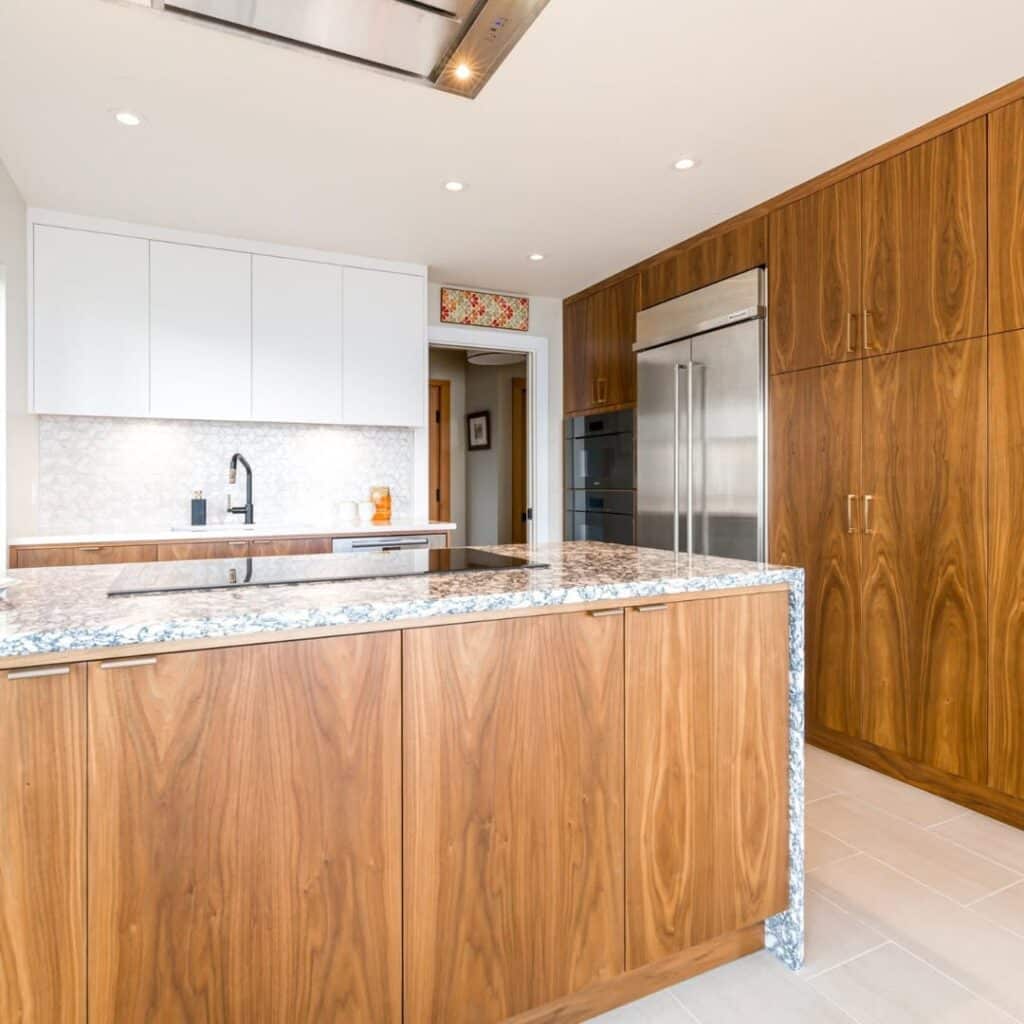
Clean geometry and sleek lines align with the natural grain of walnut. The combination brings together mid-century design and mid-century modern cabinetry.
Terrazzo floors set a light foundation for the walnut cabinetry. Flat-panel fronts, horizontal wood grain, and slender cabinet legs keep the forms clean, while brass and brushed gold hardware accents add detail. A subtle pastel backsplash, globe pendants, and the terrazzo all pair with the walnut.
Walnut cabinets can withstand daily use because the wood has density and durability. The mid-century walnut style suits open-plan layouts and ages gracefully.
Integrated appliances preserve modern convenience while supporting mid-century authenticity. Recessed cabinet handles do the same without adding visible hardware.
Mid-century walnut style supports visual warmth, longevity, and practical livability.
Walnut harmonizes with mid-century silhouettes, creating a natural connection between the material and the cabinet forms.