15 Wooden Kitchen Cabinets That Highlight Texture and Tone
Wooden kitchen cabinets bring a natural grain, warm undertones, and durable finishes to the room. They can suit all design styles.
Wood cabinetry adds organic textures and supports the use of lasting materials. It also provides practicality in the kitchen.
Wood finishes make kitchen personalization easier. Light oak creates one look, while deep walnut creates another.
A wood tone can anchor the kitchen aesthetic during a renovation or a simple refresh.
Wooden cabinet ideas bring three concerns into view: how the cabinets function, the style they establish, and how their appearance holds up over time. These choices connect daily use with visual character and lasting appeal.
Reclaimed Wood Cabinetry
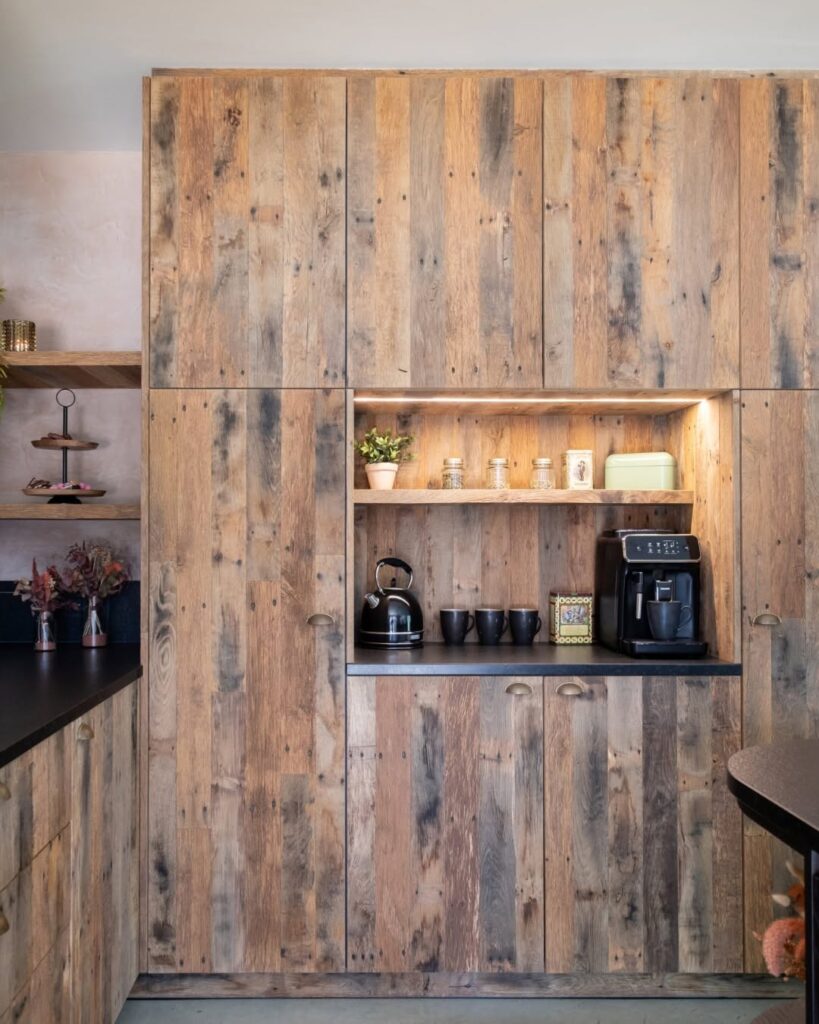
Reclaimed wood brings a weathered surface to the cabinetry. The reclaimed wood is used for the cabinet construction.
Weathered texture, nail holes, and saw marks give reclaimed wood its character. The material can come from old barns, industrial buildings, or shipping materials.
Reclaimed wood cabinetry adds character while also supporting sustainability. Both qualities are part of the cabinet choice.
Sustainable living is supported by reclaimed wood cabinetry. Common choices include oak, pine, and chestnut, often kiln-dried and refinished for structural stability. Reusing this wood reduces demand for virgin lumber and keeps material out of landfills.
Matte black fixtures pair with reclaimed wood cabinetry for an industrial style. White quartz countertops can be combined with the wood for a balanced look. The cabinetry can adapt to various styles.
Seal reclaimed wood cabinetry to protect it against stains and humidity. A modern finish improves kitchen suitability while preserving the wood's natural patina.
Slight color variation is part of reclaimed wood cabinetry. Imperfections are expected, and each run differs.
The material choice does not require a style compromise. Reclaimed wood cabinetry can be installed throughout a full kitchen or used on an island.
Vertical Grain Cabinetry
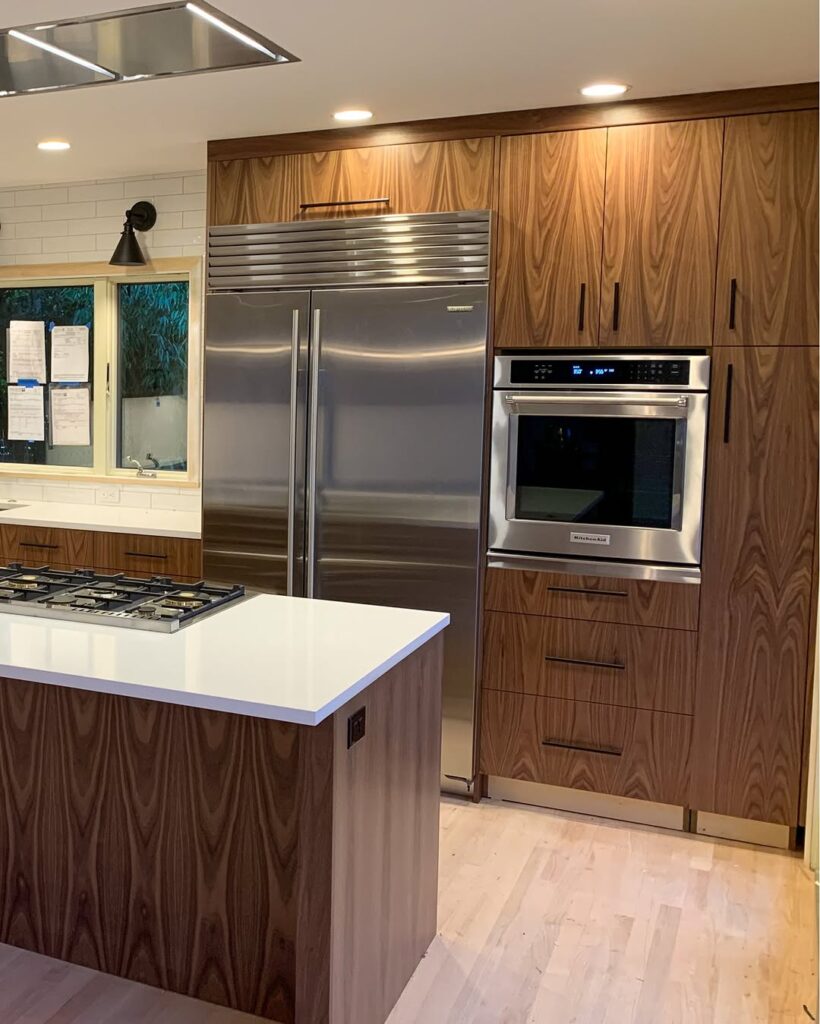
Perceptual design techniques apply to low-ceiling kitchens. Vertical details are one way to affect how the ceiling height is read.
Natural timber with vertical grain creates the illusion of added height. The vertical grain directs the eye upward.
Quarter-sawn oak, walnut, and straight-grain maple can produce elongated vertical-grain cabinetry. Vertical grain contrasts with horizontal grain.
Vertical grain cabinetry works well with full-height layouts and tall pantry units.
Vertical grain orientation maximizes visual height. It fits minimalist kitchens as well as modern design schemes.
Cabinet doors have flat panels and no ornamentation. Slim vertical handles or touch-latch mechanisms can be paired with them.
Use directional downlighting with vertical grain cabinetry to emphasize the grain's direction. In open-plan kitchens, the cabinetry can also serve as an architectural element.
Choose neutral countertops and muted backsplashes to maintain focus on the vertical grain. The muted and neutral surfaces keep attention on the cabinetry.
Vertical grain cabinets suit compact kitchens and low-ceiling kitchens. They provide both elongation and natural wood character.
Accessible Wooden Corner Storage

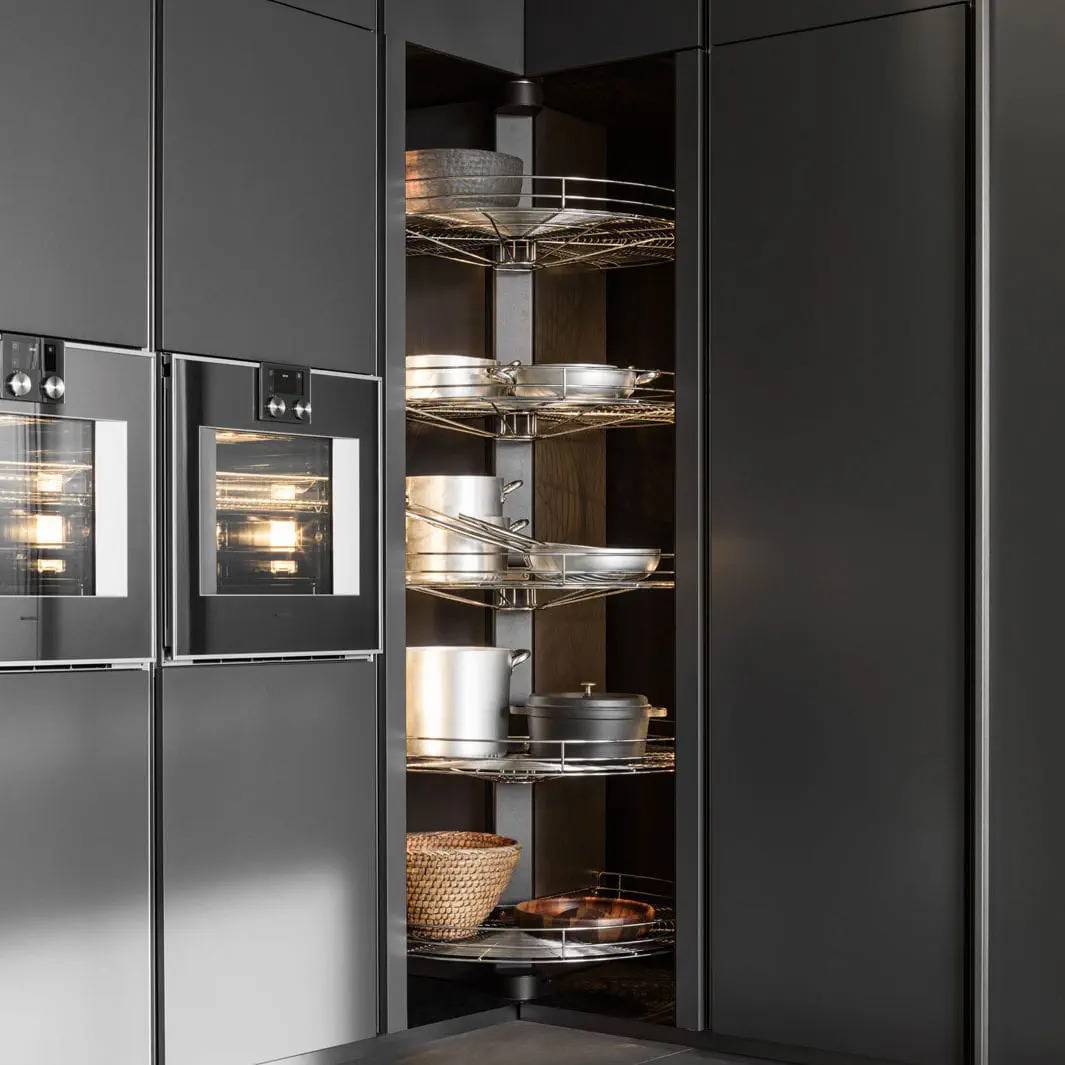
In tight corners, pull-out cabinets convert traditional cabinetry areas that are hard to reach into accessible storage. The design addresses the difficulty of reaching into corner cabinets.
Pull-out trays bring stored contents forward, reducing the need to dig through shelves. The system may use rotating trays or sliding trays.
Hardwood construction supports durability in a corner cabinet. Maple and birch are hardwood options that maintain visual consistency in the kitchen.
A corner cabinet finish should match the surrounding cabinetry. Match both the grain direction and the stain.
Pull-out mechanisms can include kidney-shaped shelves, full-extension drawers, and soft-close features. These options support the cabinet's operation.
Corner pull-outs can accommodate pots and pans, dry goods, and small appliances. Hardware needs reinforced tracks and reinforced hinges, because hardware quality determines durability and smooth gliding.
When storage space is limited, corner pull-out cabinets work well in kitchens with L-shaped or U-shaped layouts. They ease item retrieval and reduce strain, making them suitable for aging-in-place designs.
Corner pull-out systems improve kitchen flow and reduce dead zones. With correct installation, they also preserve kitchen aesthetics.
Corner pull-out cabinets use wood construction while combining it with modern hardware utility. The cabinet material and hardware serve different parts of the system.
Modular Adjustable Wood Cabinets
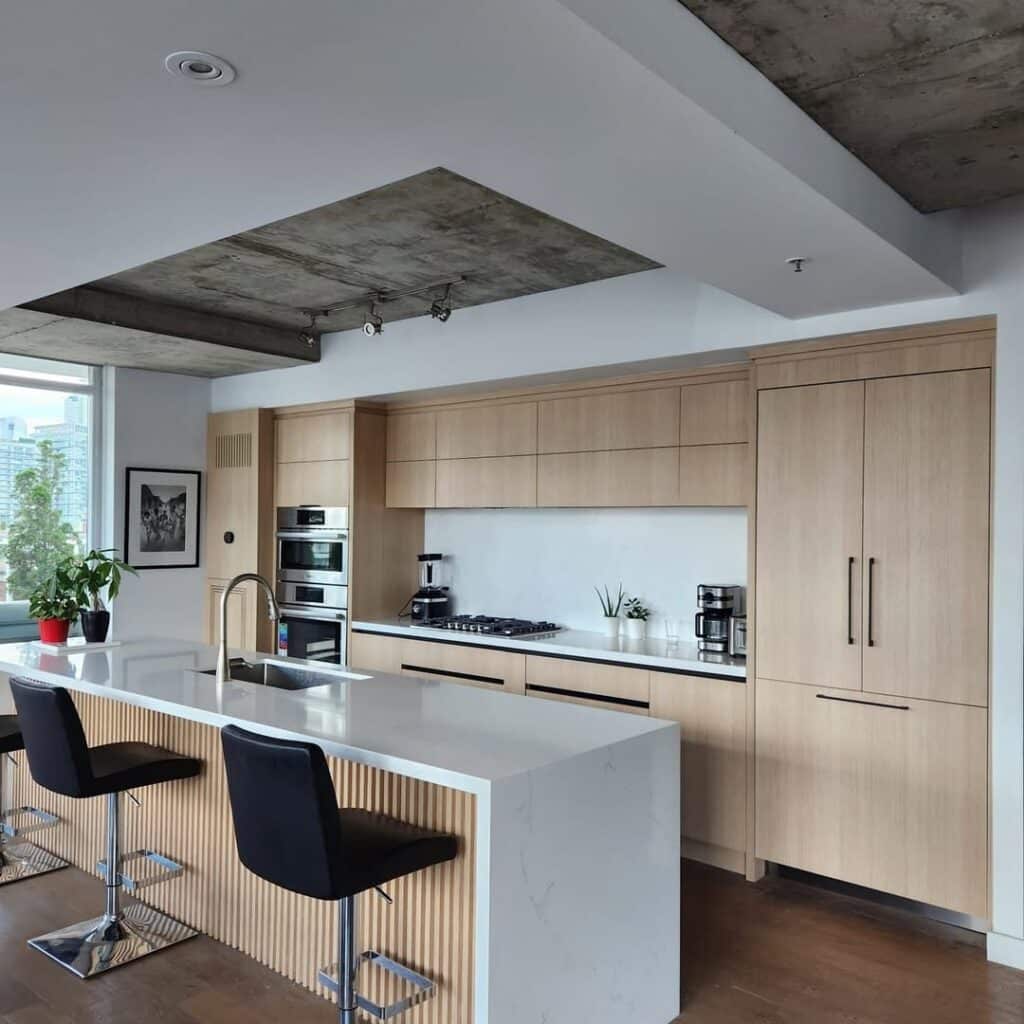
Modular wooden cabinets can adapt to lifestyle-based changes in the layout and long-term needs. The system is adjustable as those needs change.
Unlike fixed cabinetry, modular systems use independent units. These units can be rearranged, replaced, or expanded as needs change.
Birch, walnut, and engineered oak are common wooden finishes, offering warmth and durability. Modularity supports changing kitchen routines.
Modular cabinet units are made in various widths. Available configurations include drawer units, tall larders, and integrated appliance panels.
Across modules, keep the wood grain running consistently and use the same finish. This matched treatment supports a cohesive appearance.
Small-kitchen modules pair with wall-mounted units. Stagger the modules vertically to use vertical space, avoid clutter, and make better use of the layout.
Spice inserts and utensil trays are examples of storage accessories. Modular storage can also customize interiors and drawer mechanisms. Cabinet hardware can be mixed, matched, or updated while preserving the core design.
Modular wooden cabinetry suits rental-friendly setups and long-term homes. It supports responsive kitchen layouts.
Modular wooden cabinetry avoids a fixed future layout. It also supports design autonomy.
Glass Front Wood Cabinets
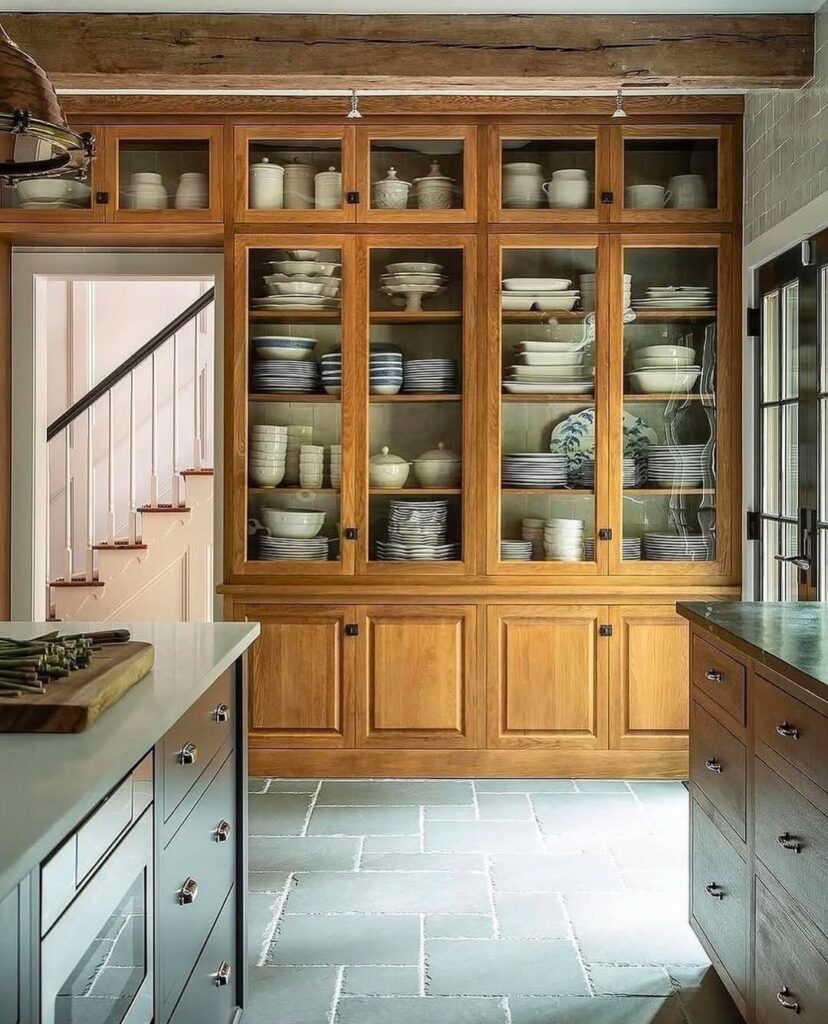
Kitchen storage can support both organization and display. Glass-front wooden cabinets make those two uses part of the storage plan.
A wood frame surrounds the glass front of these cabinets. The glass provides visibility and display space for dishware, vintage glass, and collections.
Glass-front wooden cabinets provide both utility and appearance. They serve as practical storage while keeping selected items visible.
Glass inserts reduce the visual bulk of cabinet fronts. The cabinet frames are made from wood species such as oak, maple, or walnut.
In upper cabinetry, glass-front cabinets can create a lighter appearance. Choose frosted, ribbed, or clear glass panes according to privacy and aesthetic goals.
Keep cabinet hardware subtle. Glass-front cabinets are convenient when placed near prep zones or the dining area. Interior lighting can be integrated into the cabinets.
In open-concept kitchens and small layouts, glass-front wooden cabinets suit the space. The glass reduces the sense of enclosure.
Organize the visible interiors of glass-front cabinets. The arrangement remains on view through the glass.
Glass-front wood cabinets offer both storage and display. Pair them with natural stone countertops and solid lower cabinets.
Fluted Cabinets With Built In Light
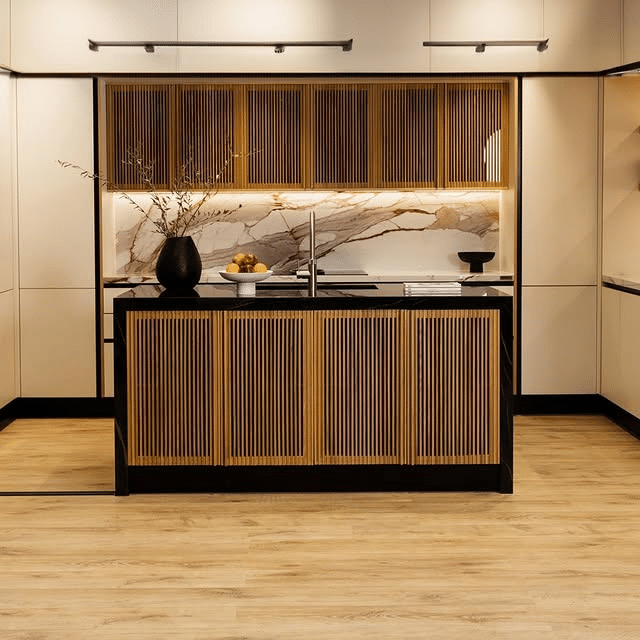
Integrated lighting adds depth to the cabinet surface. The flat cabinet panels have vertical grooves that create visual rhythm.
Light appears beneath the shelves, inside the glass sections, and along the vertical seams. It combines with the fluted wood cabinets and supports cabinet function.
Lighting enhances the wood grain and helps with visibility in the work zone. It also highlights the shadows created by the fluting.
The cabinet texture provides tactile appeal. Fluted wood cabinets suit mid-century, Scandinavian, and Japandi kitchens.
White oak and ash keep bright spaces feeling light, while walnut and teak add visual drama with their darker tones. Recessed lighting can come from an LED strip or puck fixture.
Manufacturers offer custom fluting in different depths and widths. Select sealed finishes for fluted cabinet grooves to make dust maintenance easier. Custom fluting also helps preserve durability.
Fluted wood cabinets combine mood and utility in urban lofts and earthy minimalist kitchens.
Dark Wood Cabinetry

Near-black walnut cabinetry and espresso-toned oak cabinetry provide richness. Dark wood cabinetry also supports bold contrasts.
Dark stains preserve the wood grain and enhance the natural wood texture. They provide character and depth to the cabinetry.
In one kitchen, dark-stained cabinetry pairs with metallic hardware, neutral backsplashes, and light countertops. These elements provide contrast around the cabinets.
Dark cabinetry can function as a statement piece. Dark finishes suit a refined, grounded atmosphere and work especially well in open kitchens.
Lighter elements help reduce the visual heaviness of dark cabinetry. Many designers recommend adding lighter flooring, open shelving, or glass-front upper cabinets to create balance.
Undercabinet LEDs can work with natural and artificial lighting to support comfort and brightness. Warm pendants add another light source.
In high-traffic kitchens, dark-stained cabinetry can be a practical choice. High-quality stains protect the cabinet surface while minimizing smudge and fingerprint visibility.
Properly sealed dark-stained cabinets require maintenance similar to that of lighter cabinets. The similarity depends on the dark cabinets being properly sealed.
Dark-stained cabinetry is compatible with transitional, industrial, and contemporary kitchens. It also supports usability.
Sleek Wood Cabinets Without Handles

Handleless cabinet fronts have clean wood lines that expose the wood grain. The fronts keep the cabinet material visible.
Push-to-open mechanisms and recessed channel pulls support the sleek finish. Handleless cabinets suit modern, Scandinavian, and Japandi kitchens.
Light wood such as white oak and ash supports an airy appearance. Walnut and stained cherry create a moodier appearance.
In open-concept kitchens, drawers can use horizontal grain. Handleless cabinets can include internal storage and soft-close hinges.
Seamless surfaces can make small kitchens feel larger. Handleless surfaces appear seamless, while a high-durability matte sealant resists fingerprints and moisture buildup.
Integrate appliances behind cabinet panels to support continuity with the living area.
Handleless wooden cabinets apply to compact apartments and new builds. Handleless cabinets also provide long-term usability.
Built-In Wood Pantry Storage

A wooden pantry system can look visually cohesive with the main cabinetry. How storage is used affects kitchen design efficiency.
A floor-to-ceiling wooden pantry system retains the warmth of wood. Its tall storage fills the full height of the kitchen.
Pantry configurations can maximize usability with hinged, bi-fold, or pull-out options. The pantry exterior can match the surrounding stain, wood grain, and cabinet finish.
Oak, birch, and walnut are options for a wooden pantry system. Oak is valued for durability, while birch is valued for versatility. Walnut offers both versatility and durability.
A countertop-level workspace gives small appliances a place inside the pantry. The interior can include adjustable shelving, spice racks, pull-out drawers, and additional countertop workspace. Soft-close mechanisms support quiet operation, while LED lighting in the pantry interior improves visibility.
A unified kitchen layout is one benefit of an integrated pantry. In small kitchens and open-concept kitchens, it removes the need for a separate closet.
When the pantry has matching cabinet doors, it becomes visually indistinct. Integrated pantries suit a clutter-free preference and a clean-line preference.
Storage stays hidden behind the doors, while the integrated pantry provides hidden storage. The pantry doors maintain the kitchen aesthetic.
An integrated wooden pantry system supports efficiency, accessibility, and visual harmony. It also offers long-term value.
Textured Wood Cabinetry
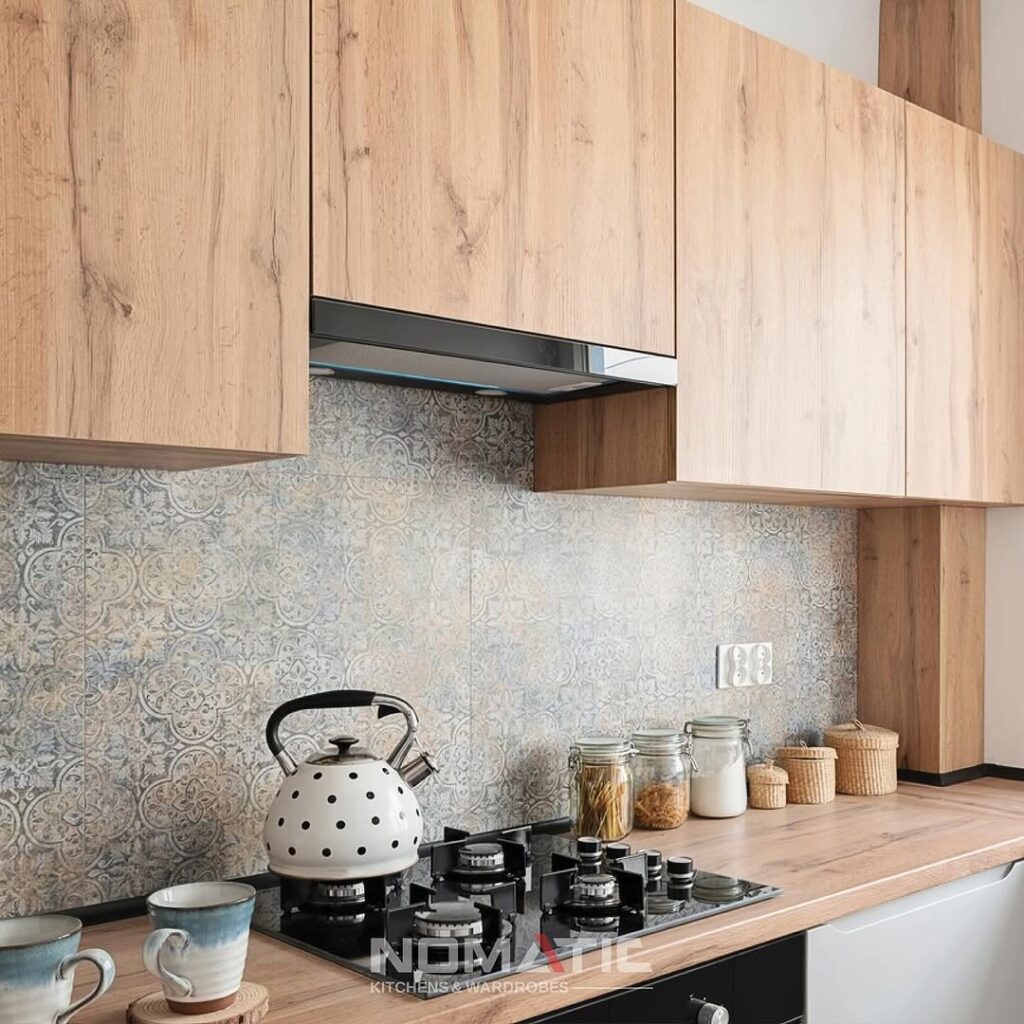
A textured wood finish gives cabinetry a tactile layer and adds visual depth. The texture can be felt as well as seen.
Wire-brushed oak and hand-scraped hickory finishes both work on flat-panel doors. These wood treatments emphasize the natural grain.
Textured surfaces show fewer fingerprints than high-gloss finishes and make minor wear less visible. That makes textured finishes useful in busy households.
Textured wood finishes suit transitional, organic-modern, and rustic kitchens. Their material character works across all three kitchen styles.
Pantry doors and island panels can use a textured wood finish. The wood texture creates subtle shadows that change as the lighting shifts throughout the day.
Light wood finishes with a soft, weathered appearance look gentler than dark stains. A dark wood stain adds dimension and reduces the flatness of cabinetry.
A matte, oil-rubbed sealant supports longevity while preserving the raw wood appearance. The finish keeps the wood looking natural.
Woven pendants, matte black fixtures, and natural stone countertops all work with textured wood finishes. These materials can sit alongside the cabinetry.
Textured wood surfaces should be dusted occasionally and cleaned gently. This light maintenance helps maintain surface freshness.
As a practical cabinetry solution, textured wood finishes preserve the authenticity of wood while helping reduce a one-dimensional appearance.
Bamboo Cabinets
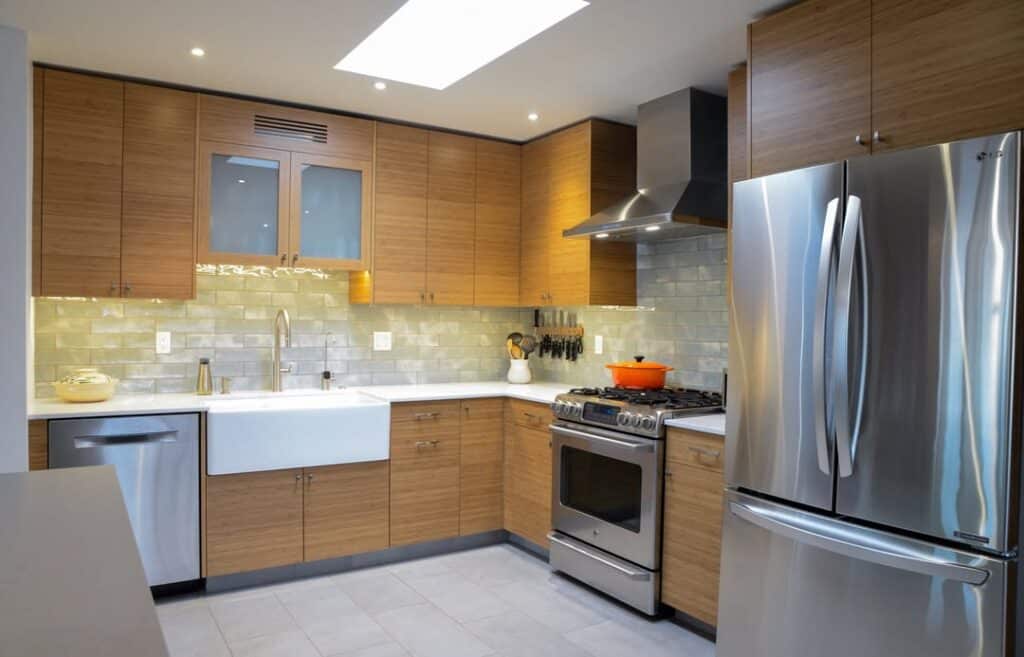
Bamboo is a sustainable material used as a kitchen-design material. It can form the cabinetry itself.
In one kitchen, bamboo cabinetry offers an alternative to hardwood cabinetry. Bamboo grows quickly, has high strength, and is renewable.
Bamboo supports long-term use. Its linear grain suits contemporary styles, giving the material a consistent linear pattern.
Bamboo reaches harvest maturity in five years or less, while hardwood trees mature over decades. Bamboo therefore matures faster than hardwood trees.
Engineered bamboo panels come in vertical, horizontal, and strand-woven patterns. Bamboo supports eco-conscious construction, and its growth rate reduces deforestation pressure.
Bamboo accepts sealant and stain. Its finish supports palette customization, with options including natural blonde, rich caramel, and espresso.
Bamboo is more warp-resistant and more moisture-resistant than some traditional woods. That makes bamboo cabinetry suitable for humid kitchens.
Bamboo surfaces should be cleaned gently. Eco-safe finishes support indoor air quality.
Bamboo cabinetry signals responsible living. The material communicates that choice through the cabinetry.
In modern sustainable kitchens, bamboo cabinetry combines ethics and efficiency while supporting performance. Its use is recommended for this type of kitchen.
Modern Floating Wood Cabinets

Open flooring beneath the cabinets leaves the room's lines clean. Modern floating cabinetry has a suspended appearance.
Floating wooden cabinets support easier cleaning. They also add visual lightness.
At base level, floating cabinets leave space beneath the storage. This arrangement suits small kitchens and open-plan layouts.
Teak and rift-sawn oak are preferred wood choices. They offer strong structural integrity and clear grain.
Cookware and pantry goods can be stored in floating cabinets, but professional anchoring is needed for long-term support. Install wall anchoring systems professionally.
Floating cabinets pair with under-cabinet LED lighting. The open space below makes the floor feel larger.
In the space beneath floating cabinets, accent flooring can be displayed and low-profile stools can fit below. The open area reduces visual bulk, while floating cabinets complement open shelving and vertical cabinetry.
Floating cabinetry uses matte flat-panel doors. Streamlined appliances and minimalist hardware complete the pairing.
Scandinavian, Japandi, and transitional kitchens suit floating wooden cabinets. The suspended form fits each of these kitchen styles.
Floating cabinetry combines style and functionality. Its placement keeps both qualities in the kitchen plan.
Mixed Material Wood Cabinets
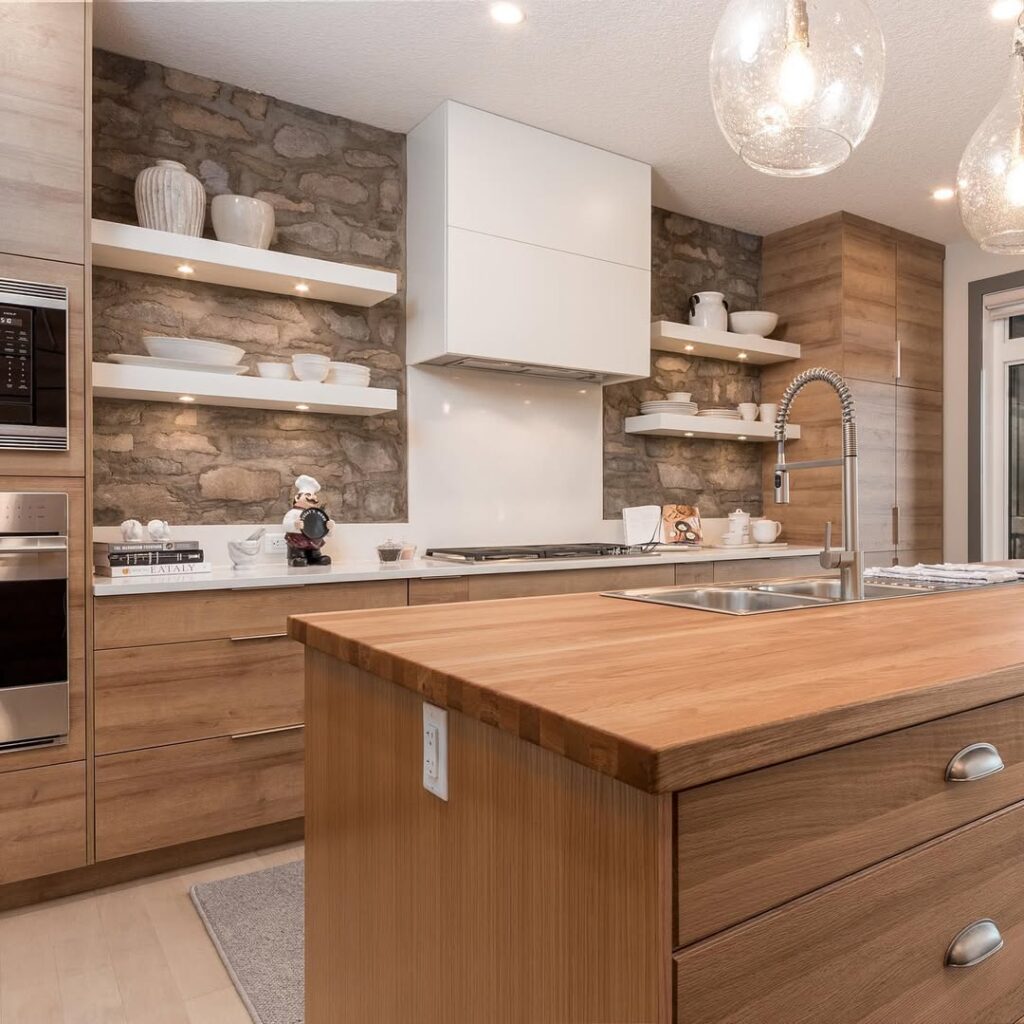
Natural wood brings texture and contrast to the room. Mixed-material cabinets pair it with metal, concrete, or painted finishes.
Layered cohesion helps mixed-material cabinets feel connected. The combination also supports personalization.
Wood cabinetry provides warmth and structure. Birch can be combined with brushed brass panels, while walnut works with matte black steel and oak with soft white lacquer.
Mixed-material cabinets can be custom-designed with tactile surfaces. The result is a cabinet system shaped to the chosen materials.
Material zoning helps keep the kitchen visually organized. Wood suits drawers and lower cabinetry, while metal or paint finishes can be reserved for upper cabinets and kitchen islands. Choose neutral concrete or quartz for the countertops.
Mixed-material cabinets allow sectional updates. Paint or hardware can be changed in individual sections, metal supports durability in high-touch areas, and the wooden core retains long-term style.
Mixed-material cabinets support material efficiency. Different materials can be used where they are most suitable.
Good planning and balanced proportions allow mixed-material cabinets to deliver both visual impact and usability.
Bold Wood And Painted Cabinet Pairing

Natural wood brings warmth and keeps the grain visible. It contrasts with bold cabinet colors such as forest green, navy, and matte black.
Use two-tone cabinet colors on the island or distribute them between the upper and lower cabinets.
Birch and maple pair well with bold paint tones. Cabinet surfaces can alternate between open grain and smooth lacquer, creating dimensionality.
Matte finishes support modern style. Wood tones reduce the sterility that can come with a plain painted kitchen.
Saturated colors work well on the base cabinets, while natural tones can go on the upper cabinets. This color placement can make the ceilings appear taller.
Neutral backsplash materials include quartz and concrete. Pair two-tone cabinets with neutral countertops.
Matte black cabinet hardware gives the room an understated effect. Brushed brass hardware adds luxury.
Contemporary and transitional kitchens both suit two-tone cabinets. The two-tone approach also provides design flexibility.
Live Edge Shelving

Each live-edge wood slab is individual, with an edge that follows the original tree shape. Live-edge wood preserves that tree shape.
Live-edge wood used as open shelving can combine storage and artisanal character.
Live-edge shelving suits industrial, modern rustic, and farmhouse kitchens.
Minimal brackets, darker metals, and hidden supports are options for shelf hardware. Use minimal bracket hardware so the natural contours of live-edge shelving remain visible.
Ceramics, cookbooks, and pantry jars are easy to access on open shelving. Open shelving can replace upper cabinets.
Hardwood shelves provide strength, with walnut, acacia, and reclaimed elm among the wood options. The shelf finish should preserve wood imperfections and highlight grain patterns.
Around the sink or while cooking, moisture can put live-edge wood at risk. Properly sealing it helps prevent moisture damage.
Live-edge shelves support kitchen use, but they are not heavy-duty storage.
Live-edge shelving can stand alone or be integrated into the kitchen. Either arrangement adds organic warmth.