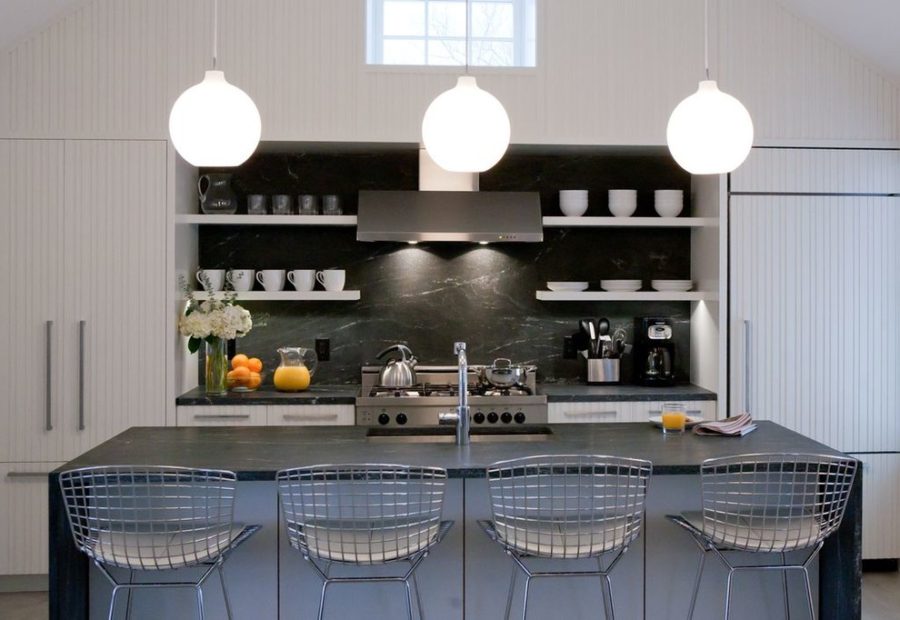
10+ White Kitchen Ideas for Clean, High-Impact Interiors
White kitchens suit many kinds of modern design, from farmhouse rooms to high-gloss contemporary spaces. Their look can adapt across a wide range of aesthetics.
White kitchens can make a room feel more spacious and may increase long-term home value. They remain an enduring favorite.
Texture, contrast, and subtle accents give a white kitchen room for customization. White kitchen design still requires an appropriate approach for the space.
These current design ideas offer practical guidance for white kitchen updates, whether you are planning a remodel or refreshing the space around real-life needs.
Brass Hardware in a White Kitchen
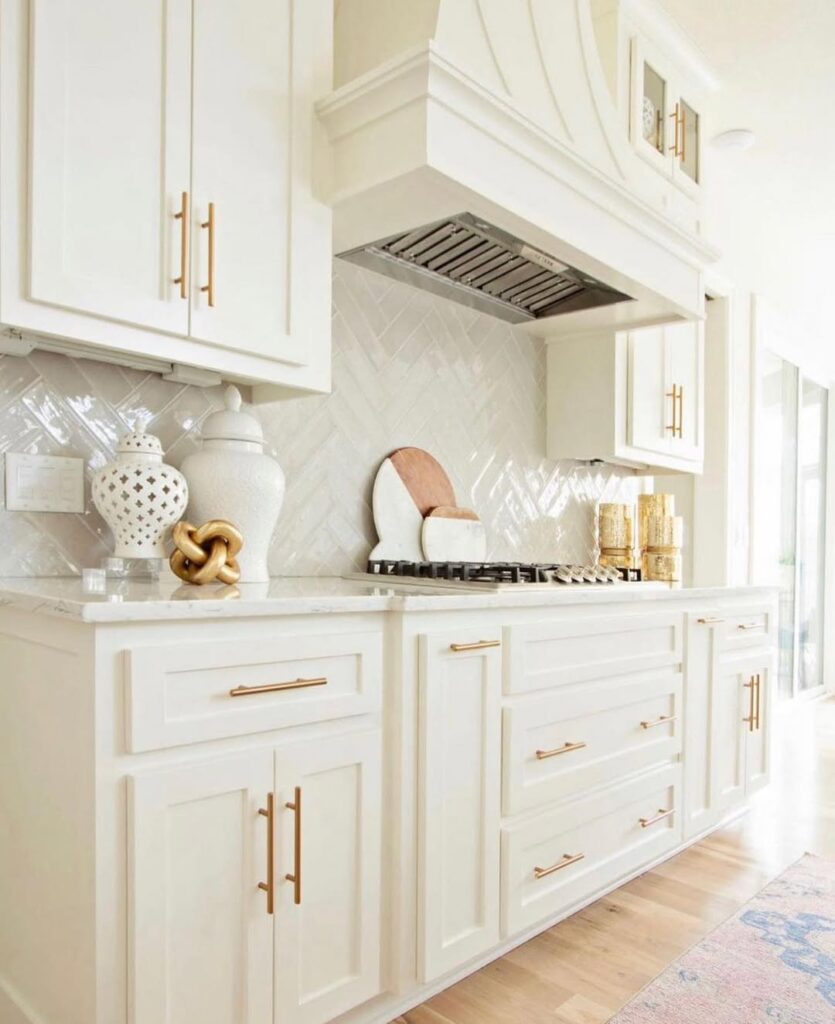
Brass hardware creates visual contrast and adds warmth to a white kitchen. A hardware update requires minimal effort and can include drawer pulls, knobs, and faucet fixtures.
The design mood can be modern, transitional, or vintage-inspired. Choose a brushed, satin, or antique-patina brass finish according to the desired mood.
Brass has golden undertones that add dimension. Those undertones contrast with white cabinetry.
A marble countertop, wood accent, and statement lighting can pair with brass hardware. The brass connects these kitchen design elements.
Brass is warmer than stainless steel and warmer than chrome. It also avoids clashing with the surrounding tones.
Curved or ornate handles can give the kitchen a classic style, while linear handles create a modern look. A brass bridge faucet is one example of a single hardware change, and the hardware shape can change the kitchen tone.
Patina develops on brass over time and creates a lived-in appearance. Brass hardware is durable and easy to maintain, but it requires an appropriate finish.
A hardware upgrade refreshes a white kitchen and adds metallic character. It is suitable for a limited renovation.
Checkerboard Kitchen Floor
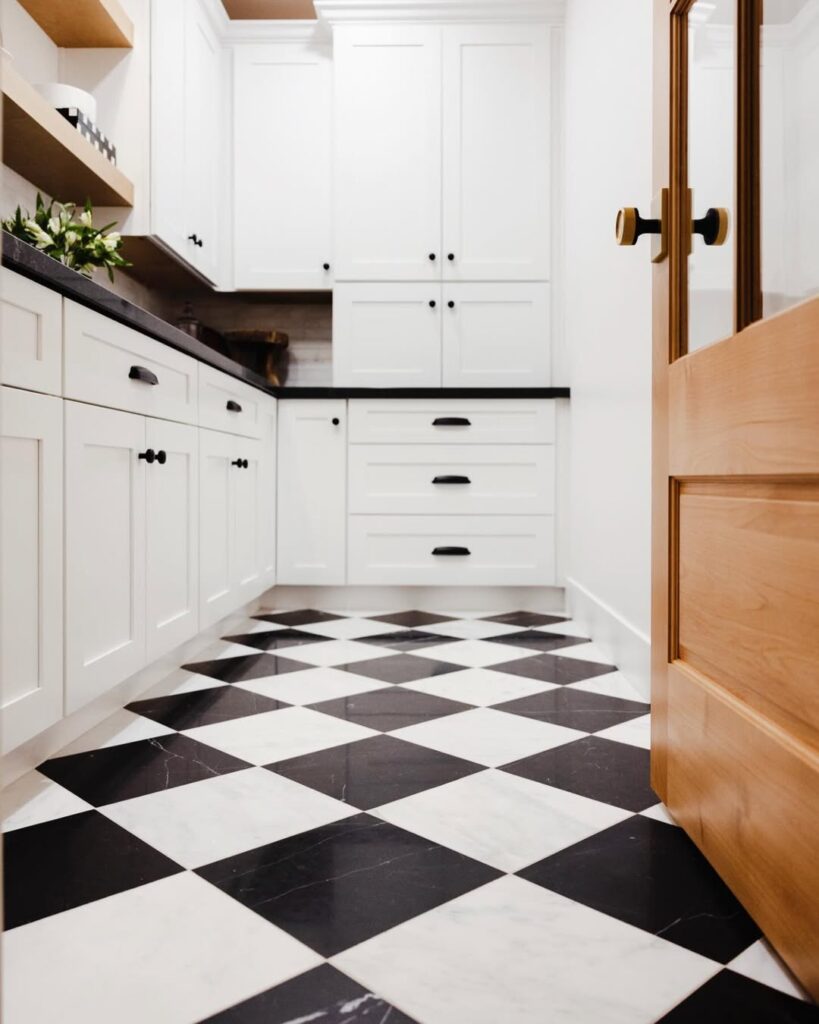
Alternating tiles give the checkerboard floor a retro-modern pattern that reduces visual monotony in kitchens. Color pairings can include black and white, greige and ivory, or soft gray and chalky white.
A checkerboard layout can use square or diamond shapes. Flooring options include porcelain, marble, and vinyl, with vinyl positioned as a budget option. Installation depends on the layout shape.
The checkerboard pattern directs attention to the floor. Checkerboard flooring adds dimension and depth while anchoring an all-white kitchen, treating the floor as a design element.
The checkerboard pattern is especially effective in narrow spaces and galley kitchens. Depending on the grid layout, the room may appear longer or wider, changing its perceived size.
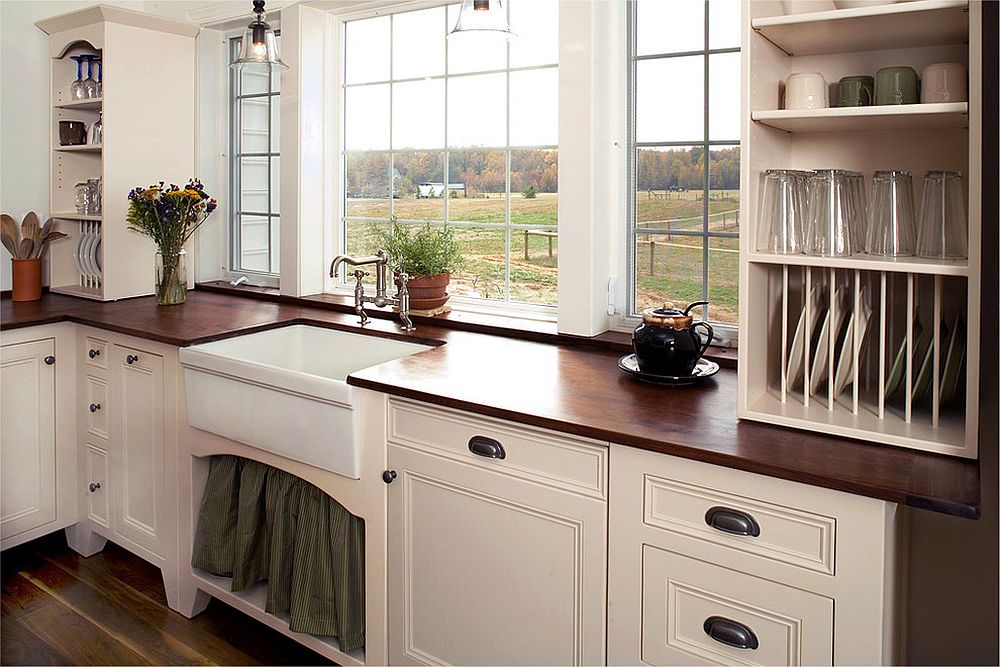
White cabinetry pairs with a checkerboard floor and an apron sink. The combination can suit either a traditional or transitional style.
Brass or matte black fixtures can support a modern style and also work with the heritage character of checkerboard flooring. Use sealed grout and suitable finishes to maintain the flooring, since sealed grout supports straightforward cleaning.
Against the white-on-white interior, checkerboard tile brings a timeless, graphic contrast. Its look is dynamic.
White Marble Waterfall Island
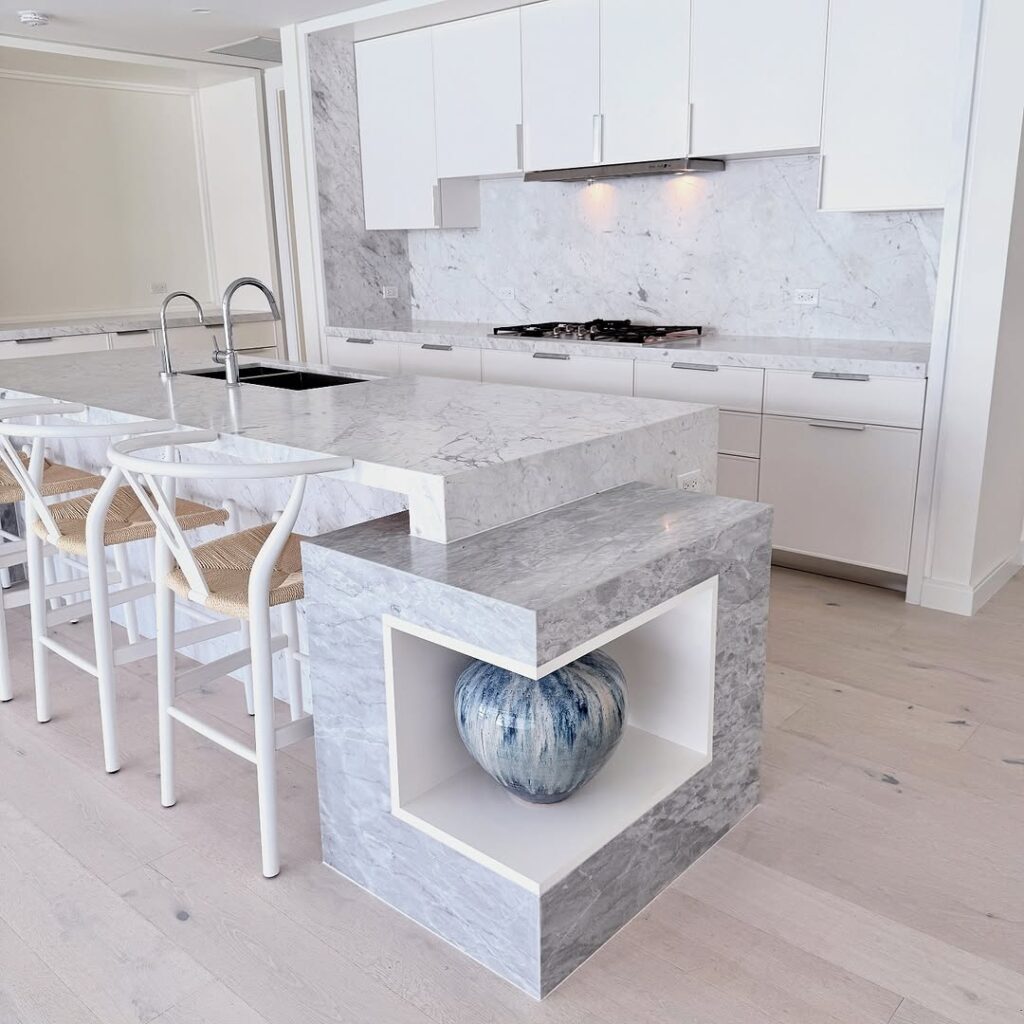
The island has slab-covered sides and a continuous slab surface, giving it plenty of visual weight. Its waterfall edge needs no complex trim or decorative corbels.
Subtle veining makes Calacatta marble stand out against white cabinetry, as well as light flooring. Carrara marble has subtle veining too, set against the white cabinetry and the light flooring.
An uninterrupted waterfall silhouette unifies the countertop and cabinetry. It also protects the kitchen's high-traffic corners.
Marble has natural patterns that introduce organic movement. The patterns appear across the island surface.
Casual dining is one role for this large waterfall island. It also serves as a prep zone and a storage hub.
Integrated drawers and hidden shelving under the overhang make the waterfall island more usable while preserving its design integrity. Minimalist bar stools and under-island lighting pair with the island.
Natural lighting brings out the luster of marble surfaces. Warm LED lighting can be used with the marble as well.
The white kitchen has a statement island located within it. The island adds substance to the room.
Handcrafted Glazed Terracotta Zellige Tile Insets
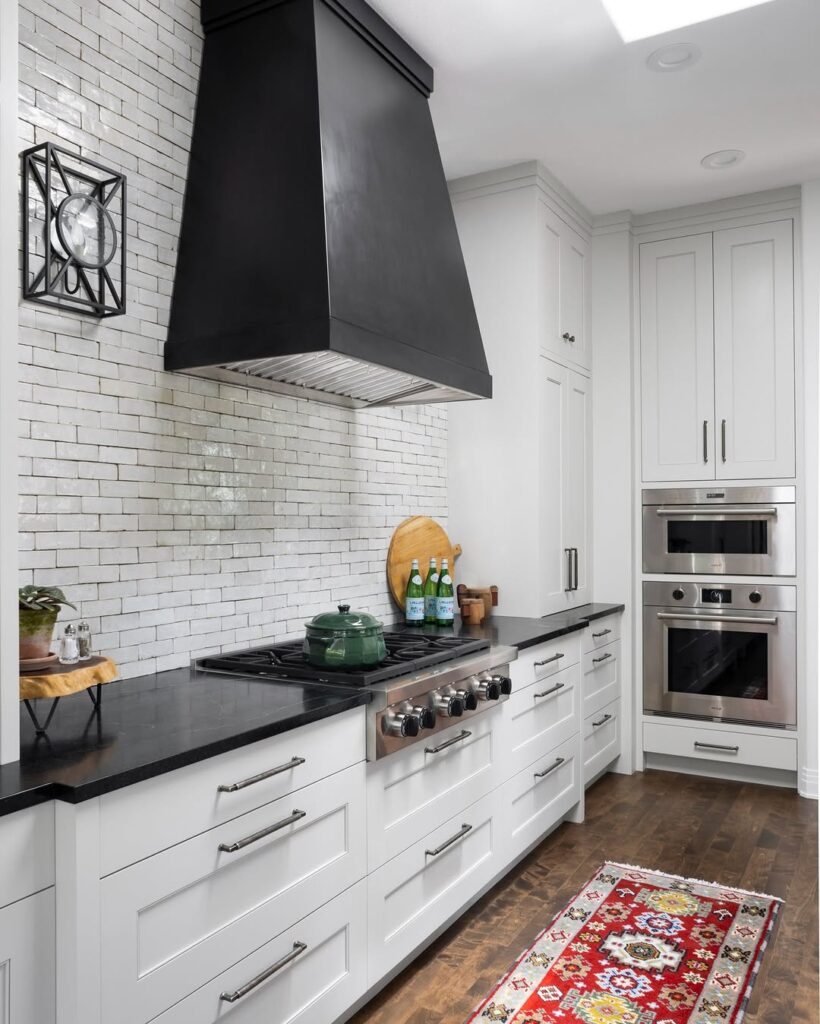
Moroccan Zellige tile is used in a white kitchen. Its handcrafted, glazed terracotta surface disrupts white-on-white predictability.
Zellige tiles have uneven surfaces that catch light, produce depth, and create a natural shimmer. Their light behavior differs from factory-made tile.
The tiles have changing tones and shapes because they come from handcrafted production. Each one is hand-cut, then fired on its own.
Artisan tile can cover a stove backsplash, a coffee nook backdrop, or an accent wall. Use it sparingly to limit visual intensity.
Artisan tiles pair with rattan pendant lights, oak shelving, and matte black hardware. Each adds a nearby material or finish to the tile.
Neutral or white glazes suit artisan tiles. For bold palettes, choose muted pastels or earth tones to keep the contrast understated.
Zellige tiles have durability and water resistance when sealed properly. Seal the tiles properly before using them where water is present.
Zellige tile fits contemporary white kitchens while preserving design cohesion.
Concealed Kitchen Storage
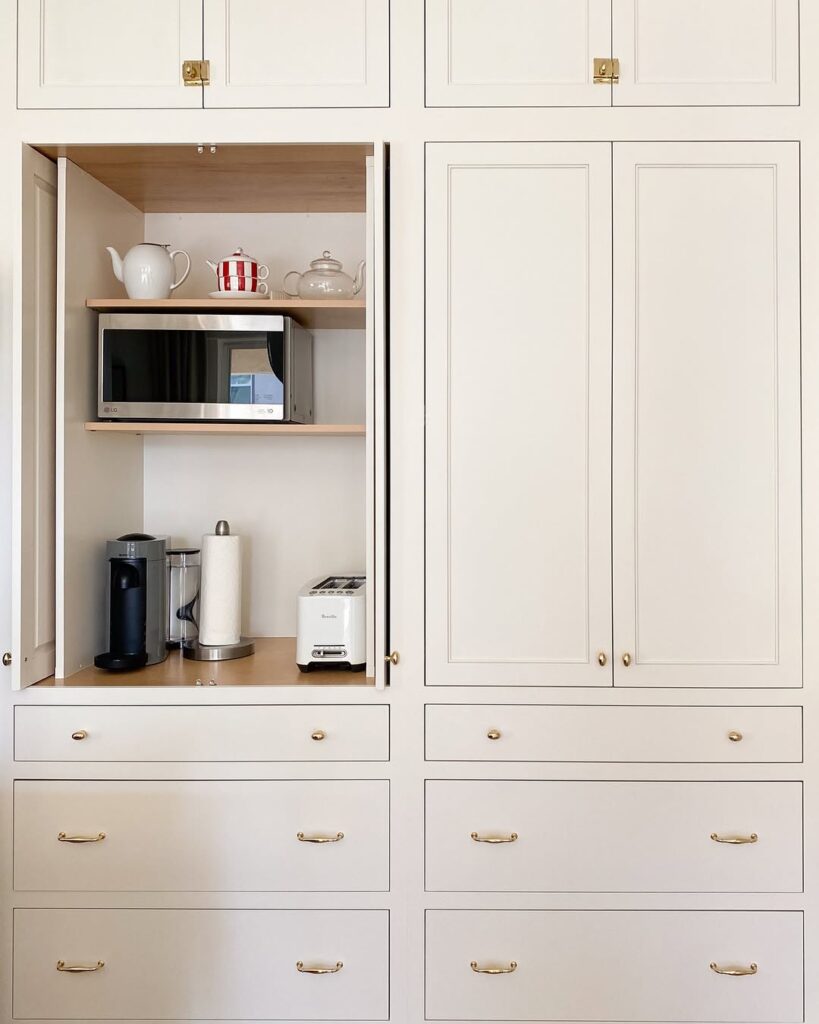
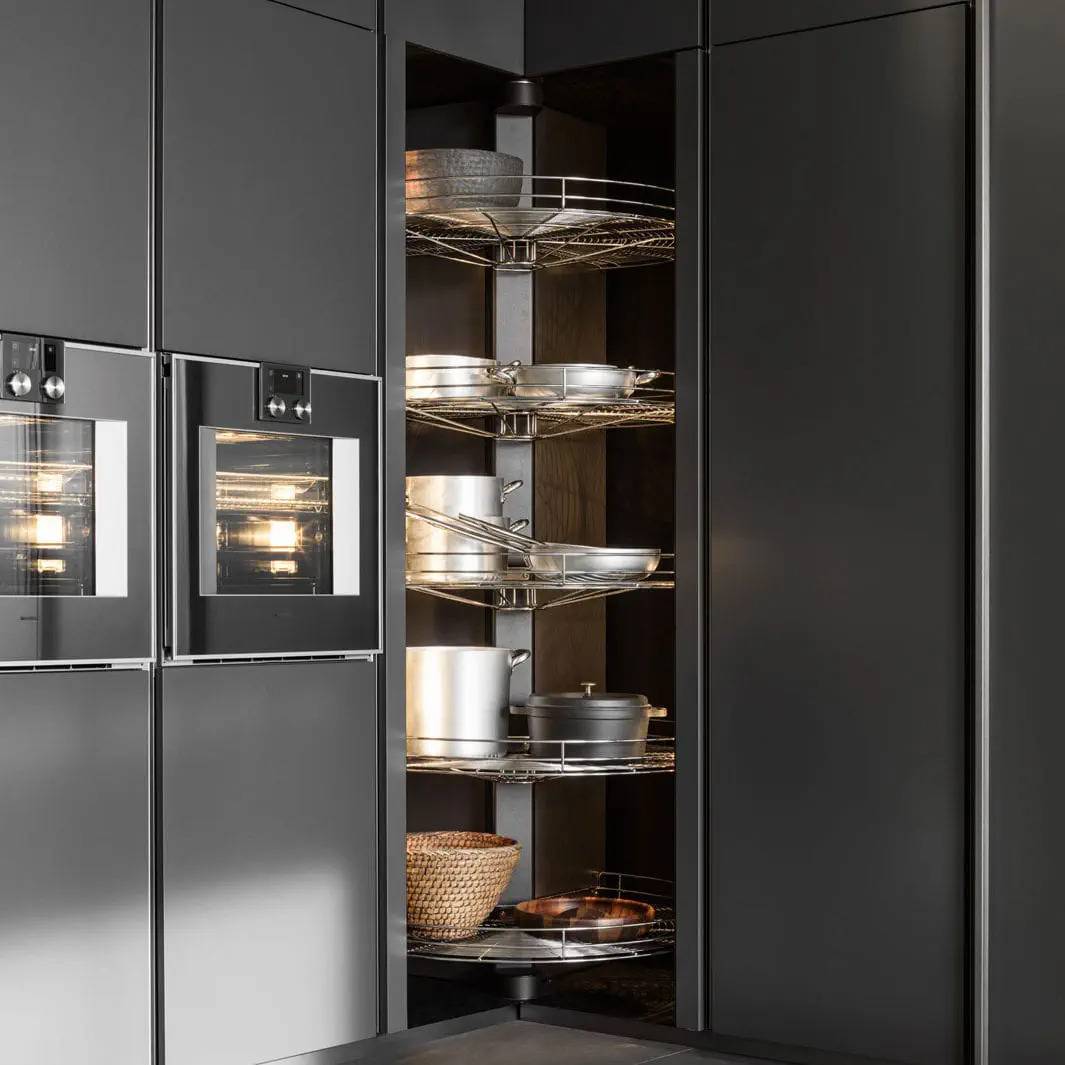
Behind white panels, storage systems conceal organization systems. Concealed storage hides the organization behind the white panels.
In the kitchen, built-in full-height cabinetry and a built-in appliance garage blend into the kitchen design. These concealed built-ins hide clutter while preserving functionality and accessibility.
A sliding shelf, hidden spice rack, tray divider, and pantry pullout can sit behind one door. The door may use a touch-latch or an integrated handle.
Hidden storage streamlines visual lines and supports a minimalist appearance. It is useful in high-use kitchens, where it can improve traffic flow.
Behind cabinetry, a concealed trash compartment and concealed coffee bar keep these functions out of sight. An integrated-storage drop zone can be built into side walls or under counters.
Concealed storage reduces countertop crowding and supports assigned locations for items.
In the kitchen, a white panel façade unifies the appearance and supports a cohesive room. Precisely designed storage can increase perceived room size, improve navigation, and support a calmer kitchen.
Concealed built-ins support kitchen usability. They serve a functional design while supporting an organized appearance.
Cashmere White Tones
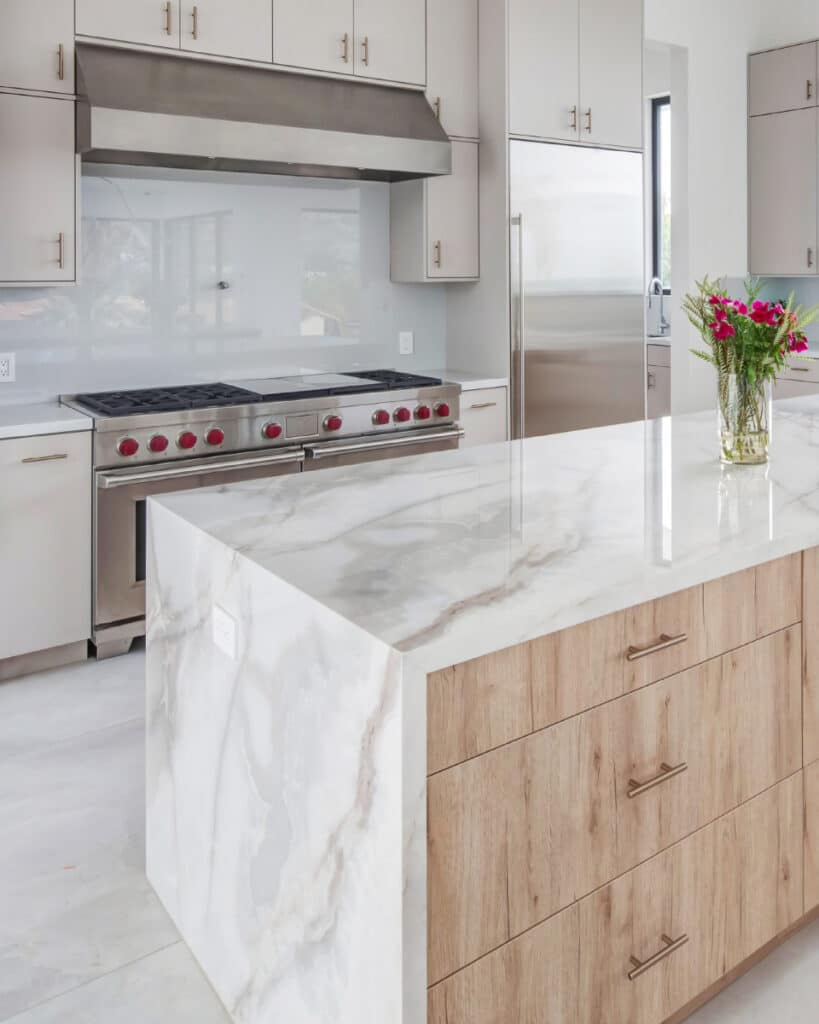
The cashmere white color family has a creamy undertone. It sits in the white range with a softer position than the brightest, clearest whites.
Cashmere white works well in open-concept spaces and traditional kitchens. Compared with stark white, it has a gentler look.
Cashmere white creates the base, while the choice of hardware and fixtures shapes the overall aesthetic. Brushed gold, polished chrome, and matte black accents each offer a different pairing for the cashmere white finish.
Cashmere white works as a base color in transitional design. It complements oak flooring and travertine tiles.
In a room with limited natural light, cashmere white cabinetry can keep the space bright without adding much glare. Choose a satin finish or one that is lightly glazed to preserve brightness.
Cashmere white cabinetry can cover full cabinetry runs, built-in pantries, and range surrounds. The color also supports balance throughout the room.
For anyone who prefers a timeless design, a cashmere white palette is worth considering. It ages slowly as design trends change.
Cashmere white supports a high-end appearance without the cool-white stark contrast. Its softer quality helps avoid that sharper look.
Minimalist White Tech-Integrated Cabinetry
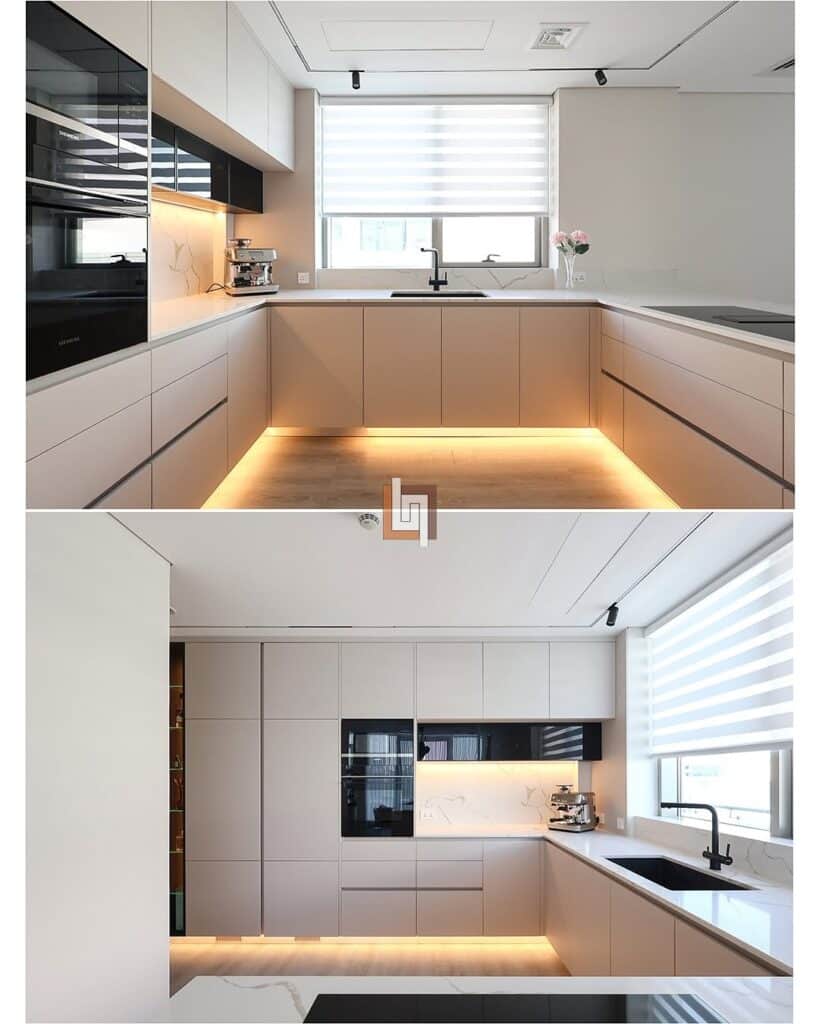
Tech-integrated cabinetry combines function and subtlety.
Smooth, handleless cabinets can contain a touch-to-open mechanism, a concealed charging station, and a smart appliance panel. Each feature is embedded in the cabinet.
A built-in flush induction cooktop preserves visual flow. A pop-up outlet and motion-sensor lighting add other integrated features.
Statement lighting pairs with white cabinets, while natural textures keep the setting from feeling overly uniform. The cabinets can conceal integrated technology and use either satin lacquer or high-gloss lacquer.
Tech-integrated cabinetry supports multi-tasking kitchens with a concealed waste compartment, a push-to-open drawer with concealed hardware, a built-in tablet station, and a climate-controlled pantry drawer. These features can serve a workspace, a family hub, or a casual dining area.
Across the room, the white-on-white scheme uses tech-integrated cabinetry. This smart design enhances daily efficiency.
Urban apartments often favor tech-integrated cabinetry and prioritize space efficiency. Minimalist homes favor it as well, with an emphasis on aesthetic consistency.
White and Natural Wood Kitchen
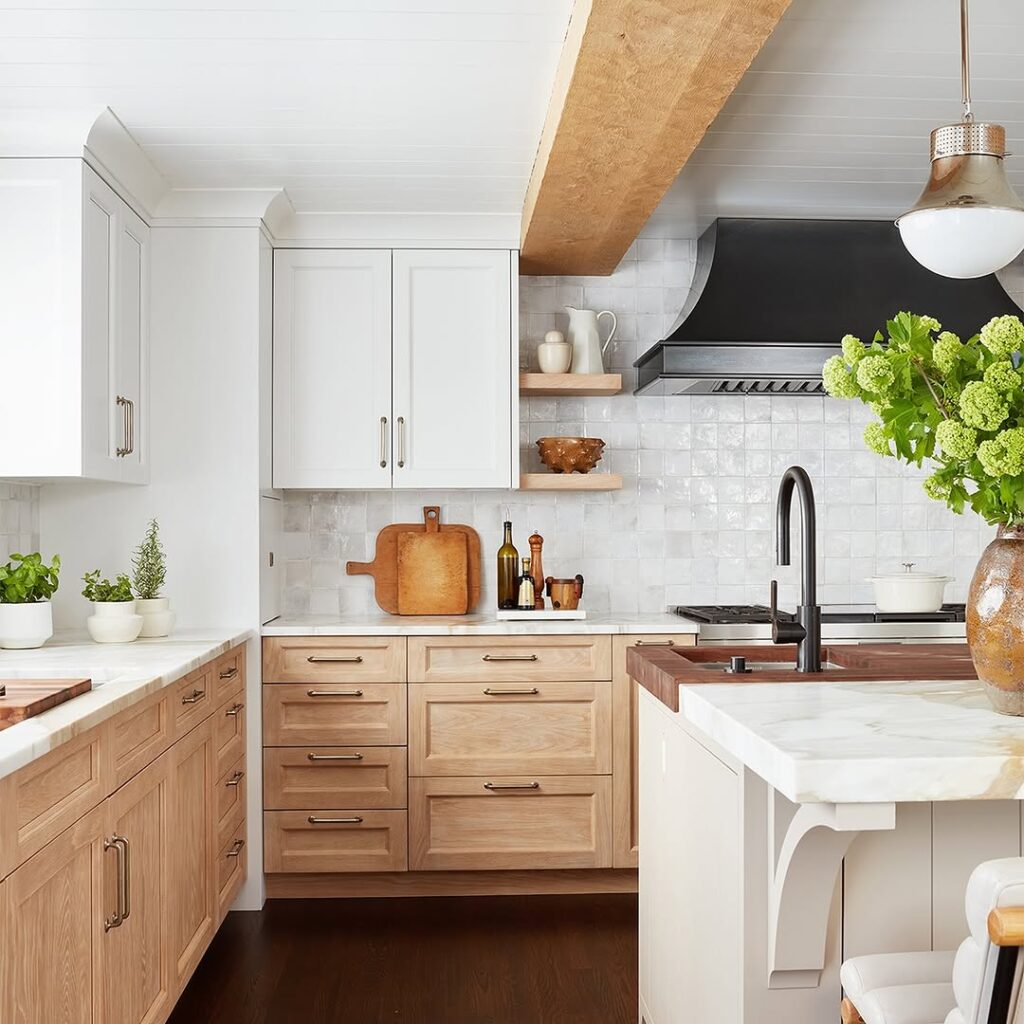
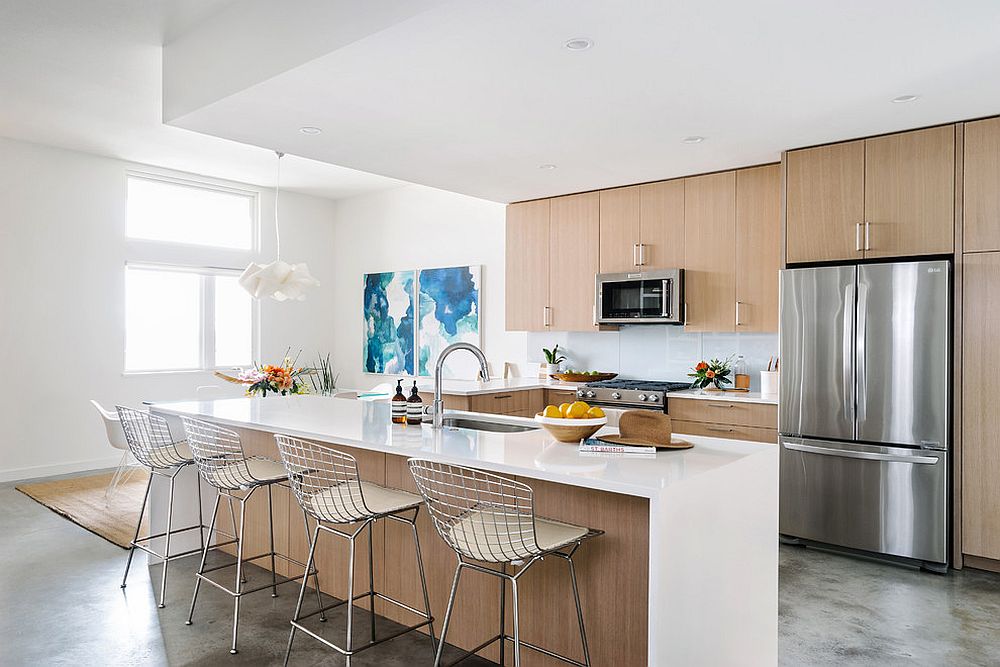
White finishes paired with natural wood tones add warmth and depth. The combination feels less sterile than an all-white setup.
Lower cabinetry can use light oak, ash, or walnut, while upper cabinetry stays white. Choose the wood according to the desired palette temperature.
The white and wood combination preserves a clean aesthetic. Wood grain adds character.
Flat-panel and Shaker cabinet doors suit modern farmhouse and Scandinavian interiors. Wood elements add texture, including exposed beams, floating shelves, and wood-clad islands.
Natural wood supports personalization in the kitchen. It can also increase the kitchen's perceived value.
A white and wood pairing can adapt to changing trends without a full renovation. Swap the hardware or change the wall paint to refresh the kitchen look.
The white and wood pairing is a timeless formula when it is executed carefully. It supports visual harmony, avoids clashing, and uses subtle contrast to emphasize both finishes.
Layered White Kitchen Design
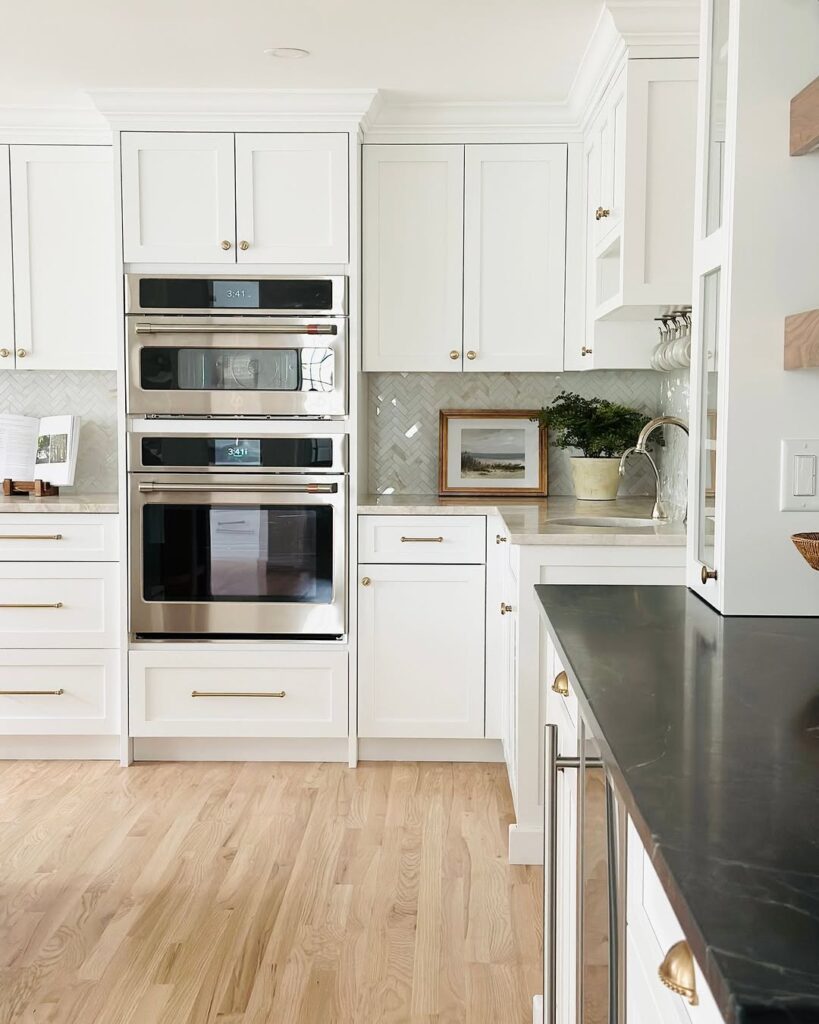
Layered whites replace flat uniformity.
White tones may range from warm to cool, with neutral shades included. Layered whites can cover cabinetry, countertops, walls, and textiles, avoiding bold colors and heavy contrast.
Satin cabinetry, matte walls, and high-gloss trim or tile bring texture variation to the white palette. The varied finishes create that change in texture.
Honed marble and white quartz may both have organic veining, which provides soft contrast.
A white palette uses taupe and gray undertones alongside cleaner whites. The taupe and gray undertones add warmth.
Layered whites suit open-plan homes. Their appearance also responds to changing daylight.
Neutral hardware and neutral lighting fixtures deemphasize themselves.
Layering can make a white kitchen non-plain. Detail-driven choices can be applied across the entire space.
White Ceiling with Wood Beams
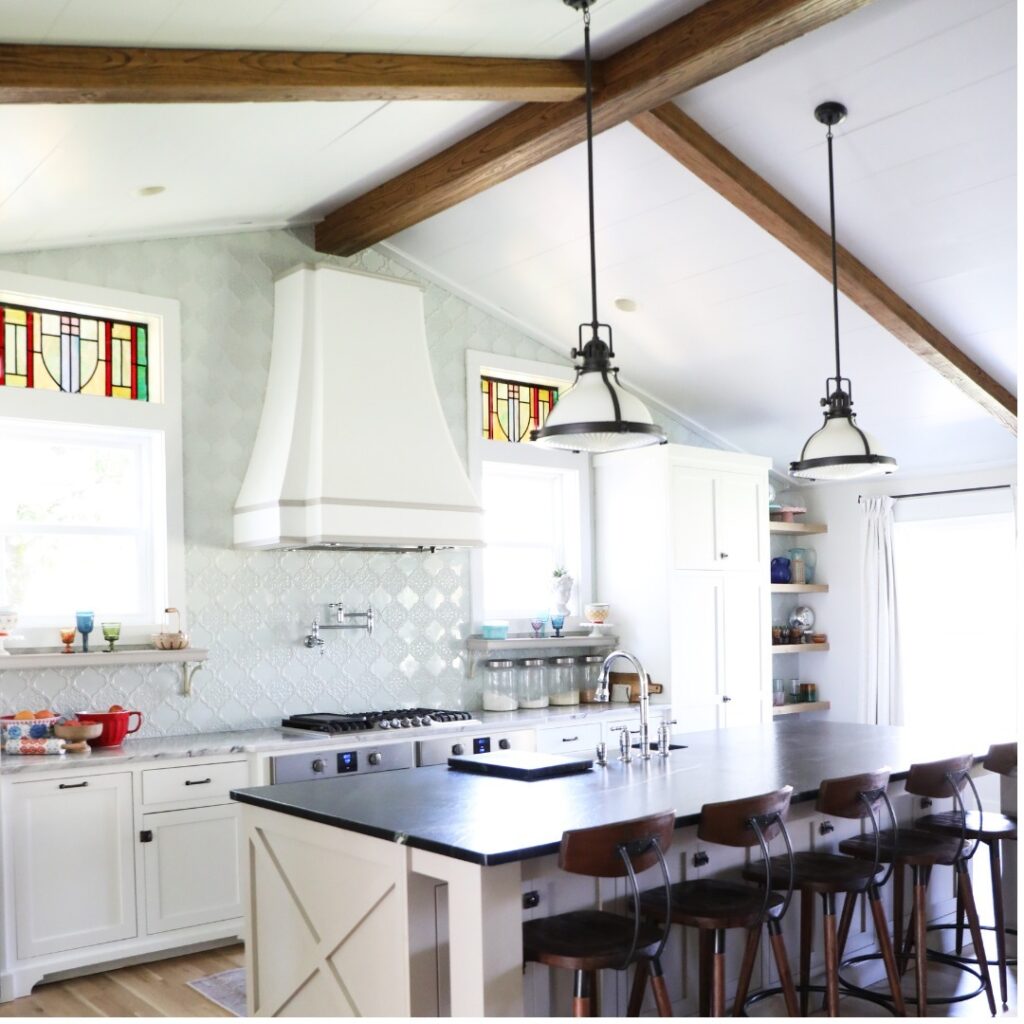
Exposed wood beams add warmth and definition beneath the white ceiling. Their wood tones stand out against the white cabinetry, while pale flooring keeps the contrast clear.
Wood beams bring natural texture without overwhelming a light palette. Reclaimed wood, whitewashed wood, and lightly stained wood are suitable options.
In open-plan and vaulted kitchens, ceiling beams add overhead visual weight. The ceiling treatment is especially effective in both settings.
Shallow boxed details and faux beams offer nonstructural alternatives for flat ceilings. Ceiling beams direct attention upward, create a structured rhythm, and increase perceived depth and height.
Light wood beams in light oak or bleached pine pair with cooler whites. For a rustic style, choose dark wood beams with a dark stain, and select the beam color according to the white temperature.
Rattan lighting, brass details, and matte black fixtures pair with the wood beams.
All-white surfaces can feel less uniform when wood beams break them up. The beams also have a design function.
Ceiling beams frame the kitchen and can adapt to modern organic or farmhouse style. This ceiling beam strategy requires low maintenance.
LED Tray Lighting Below Cabinets
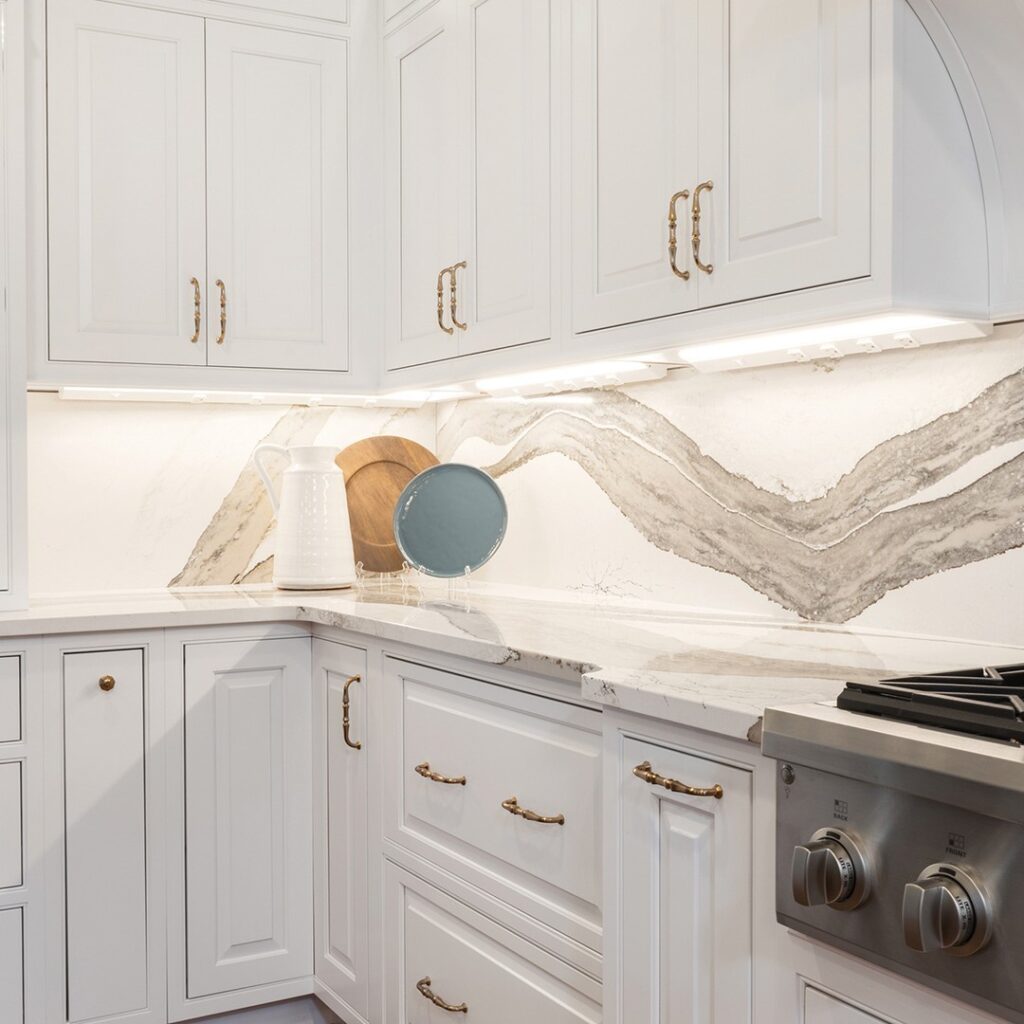
Tray lighting beneath the cabinets reduces shadows on the countertop. It also provides ambient light.
Slim LED strips beneath the upper cabinetry illuminate work surfaces and improve task visibility. The lighting helps with kitchen tasks such as chopping and measuring.
In white kitchens, under-cabinet lighting increases brightness while avoiding harsh glare.
Under-cabinet lighting highlights veined countertops and textured backsplash tiles.
The light can shift in color and brightness. This lighting system is color-adjustable and dimmable, with task lighting suited to the day and mood lighting recommended for evening use.
For a retrofit, battery-powered lighting installation offers a straightforward option. Hardwired installation is another option.
A corner counter area can use integrated tray lighting, as can a deep counter. The lighting minimizes shadows from both ceiling lights and pendant lights.
Touchless sensors pair with tray lighting and provide hands-free convenience. Smart home controls can be paired with it too.
Tray lighting combines performance and ambiance in a white kitchen layout.
White and Earthy Kitchen Design
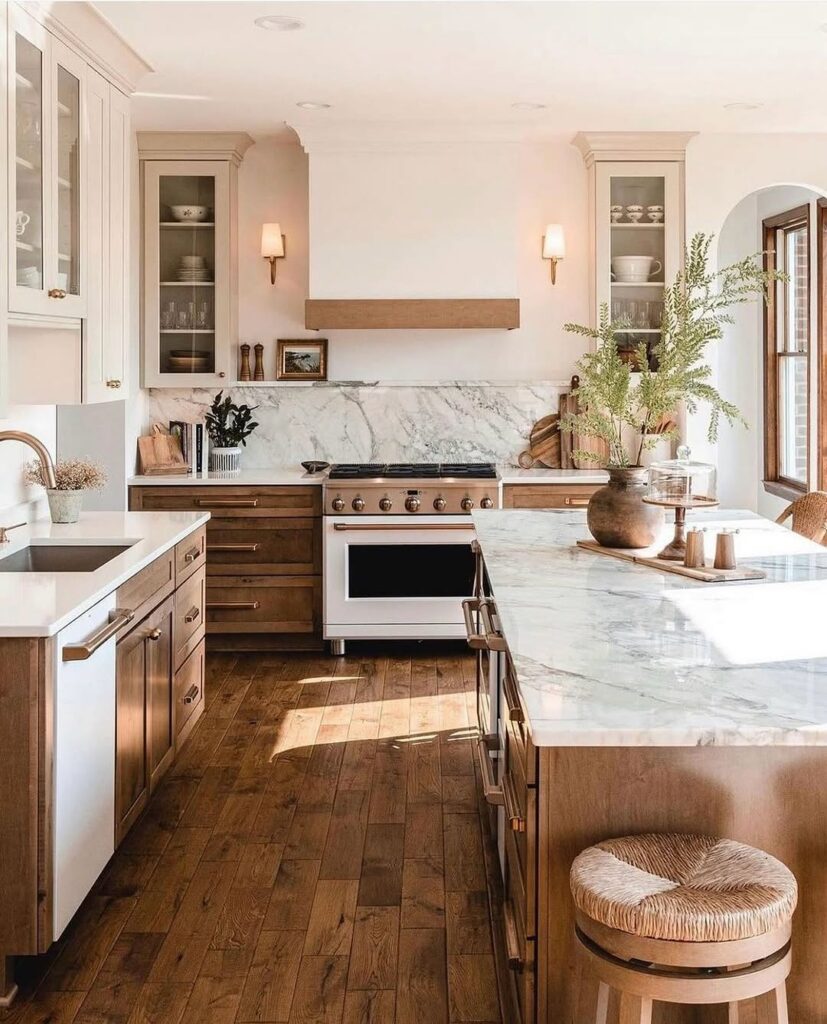
Terracotta, sand, clay, and olive accents bring warm, tactile depth to this kitchen. The white base keeps the kitchen fresh and natural, providing a clean canvas for the earthy colors. Together, the accents add warmth.
Natural hues soften the space through subtle tonal shifts. This approach also supports a lived-in feel.
The upper cabinetry is warm white or off-white. Lower cabinetry and the island can take on sage green, muted taupe, or clay red, with both located in the kitchen.
A jute rug and reclaimed wood open shelving support an organic material scheme. Desert-tone ceramic decor reinforces the earthy kitchen style, as does handmade pottery. A matte finish is used in the two-tone design.
Subtle earth tones work with natural light while reducing harsh reflection. In a white kitchen, they help avoid starkness and monochrome.
The two-tone approach is warm, serene, flexible, and distinctive. It bridges minimalism and comfort, so the result can feel modern without feeling cold or colorful without becoming loud. According to the source text, this approach is gaining traction and supports personal adaptation.
Dopamine Decor Shelving
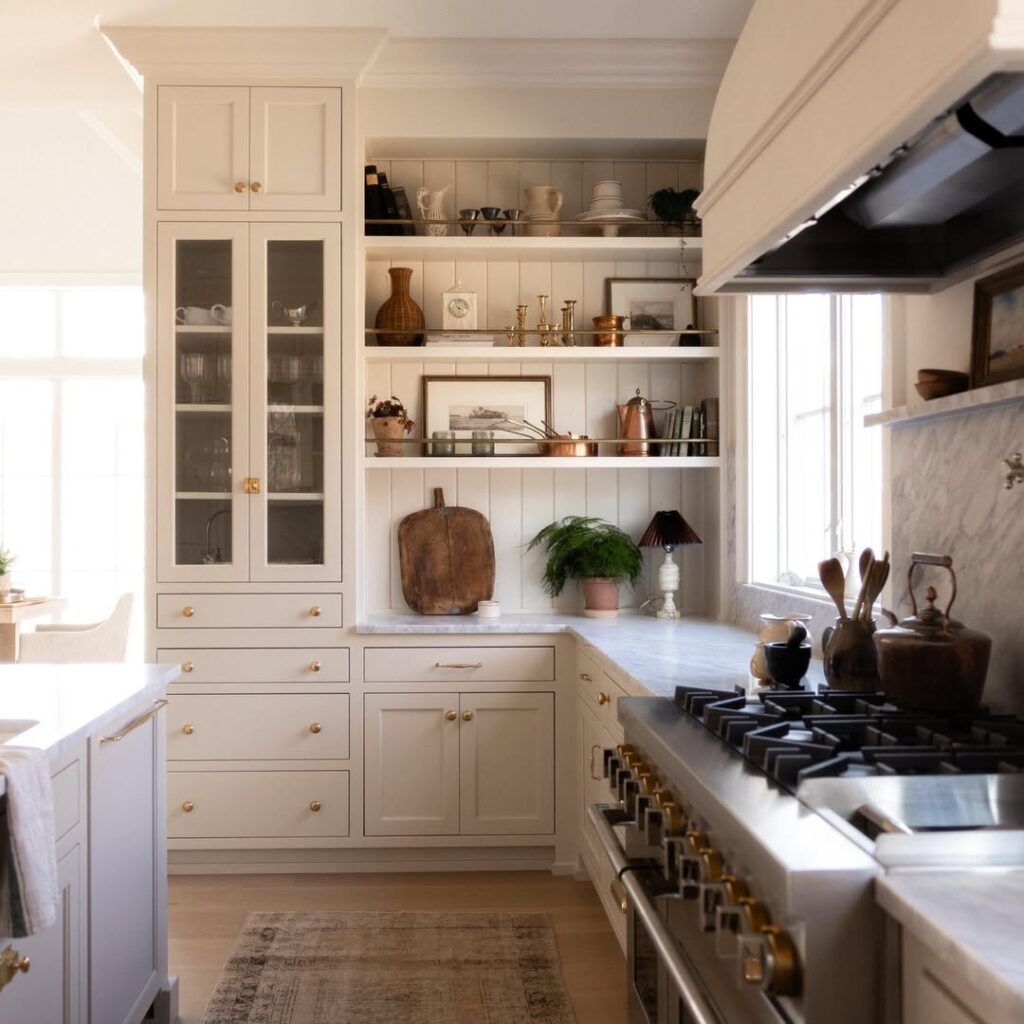
Across a white kitchen, open shelving can be used for dopamine decor, a mood-oriented design approach. The shelving becomes part of a mood-oriented design.
The display on the open shelves mixes dishes in bright colors, bowls with patterns, vases with texture, and playful accessories. Its objects express individuality while functioning as visual statements.
White walls and white cabinetry provide a backdrop for shelf collections. The white backdrop lets the collections stand out and reduces visual clashing.
Whitewashed wood shelving supports a natural style, while lacquered shelving supports a polished style. The shelving finish depends on the interior direction.
Each shelf item serves as a functional display. With an open format, the collection encourages mindful selection and can be rotating.
Dopamine decor is not about chaos. It has roots in psychology and became popular through social media aesthetics. The approach uses intentional choices to support happiness and personality.
On open shelves, vintage cookbooks sit with hand-thrown ceramics, potted herbs, and glass jars filled with spices. These shelf displays keep essentials within reach.
Open shelving uses wall space and can be especially effective in small kitchens. It offers budget flexibility and allows seasonal refreshes without requiring structural changes. Closed cabinets may overwhelm small kitchen layouts.
An accessory selection adds warmth and whimsy. Open shelving with accessories creates a personalized kitchen display.
White Scallop and Flute Tile
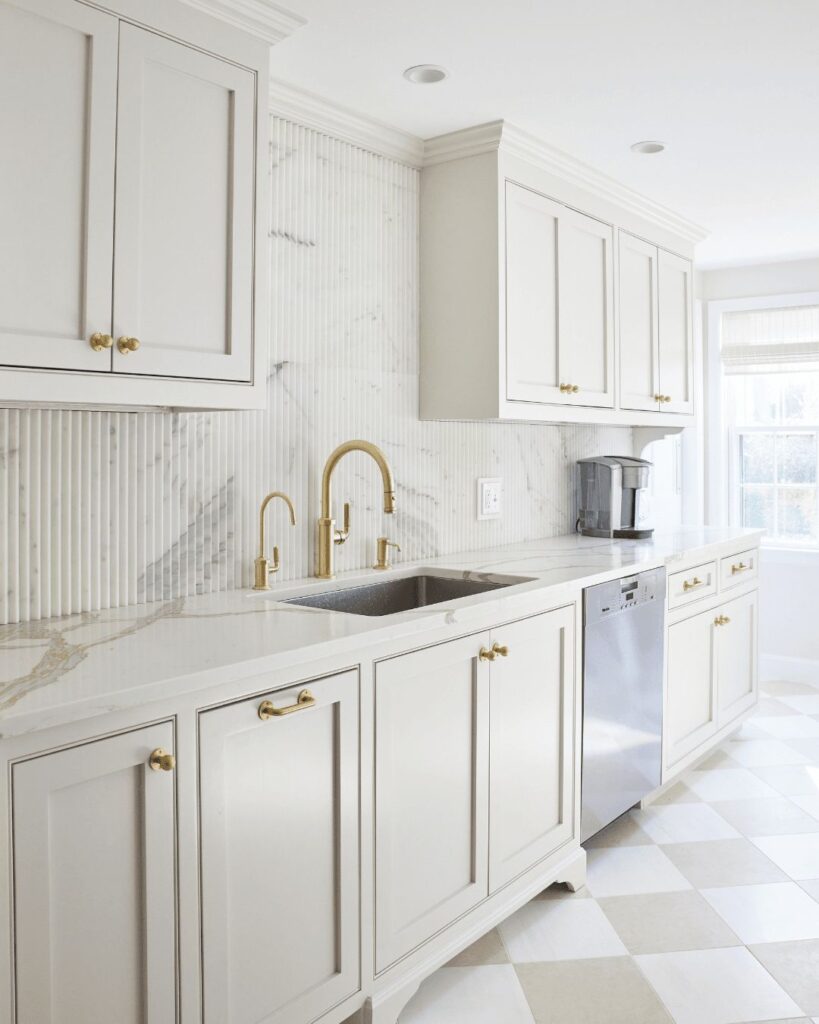
Dimensional white tiles can be used on a backsplash or accent wall. Their curved surface creates changing shadows and curvature as daylight shifts, with scalloped and fluted styles offering the dimensional effect.
Scalloped or fluted tiles add architectural interest and provide tactile texture. They are a useful choice for minimalist kitchens.
Glazed scalloped tiles, also known as fan tiles or mermaid scales, create highlights along their contours. They work well in whimsical spaces and feminine spaces.
Vertical fluted tiles have a linear orientation. This design suits contemporary interiors and art deco interiors.
Scalloped or fluted tiles are a common choice behind the range, above the prep sink, and on the breakfast bar wall.
Pale cabinetry and understated white countertops keep the tile pairing serene. The surrounding surfaces maintain a calm appearance.
Curved and ridged tiles provide a textural design option and can suggest artisan craftsmanship. They are also durable and easy to clean.
Herringbone Marble Tilework
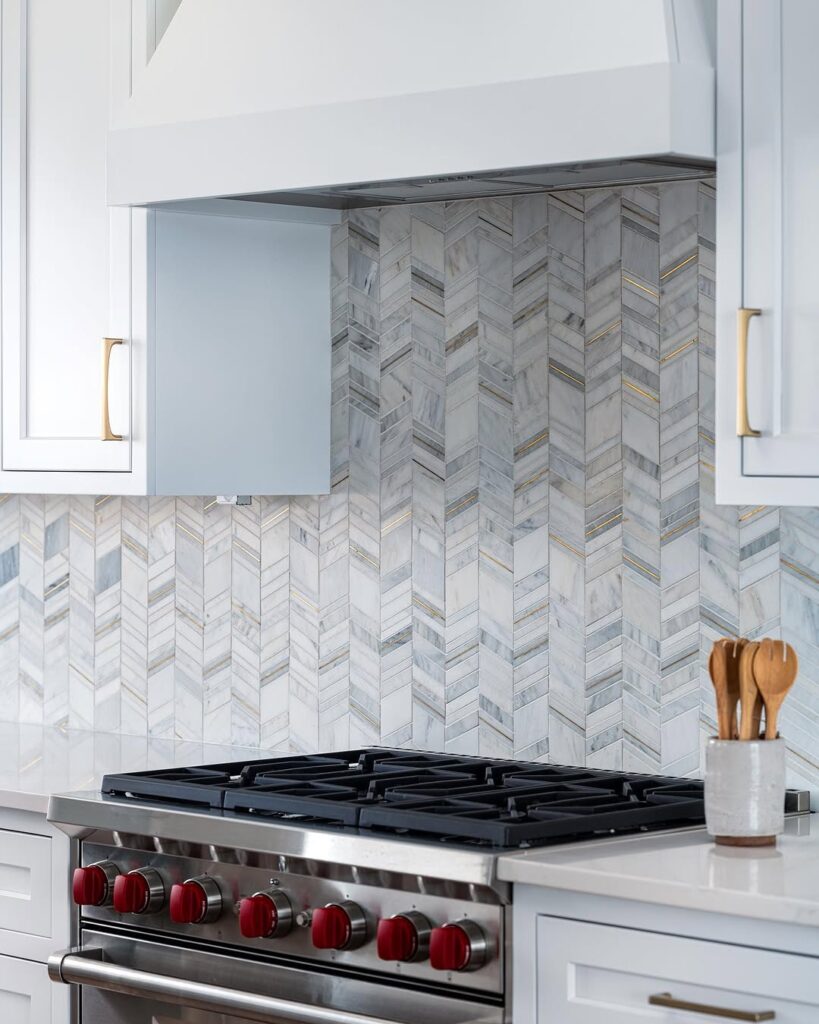
A white marble backsplash in an intricate herringbone pattern creates a focal point without dominating the space. The layout draws attention through its pattern.
Marble backsplash tiles can be placed diagonally behind cooktops, behind sinks, or across a full wall. The diagonal placement adds texture and depth.
Carrara and Calacatta marble can bring subtle gray veining to a serene color palette. That veining provides contrast without disrupting the calm colors.
White cabinetry with light quartz or light marble countertops keeps the surrounding palette restrained. A matte marble backsplash reduces glare and enhances the stone texture, while also softening the stone effect for a more lived-in appearance.
A herringbone backsplash works in farmhouse, transitional, and contemporary kitchens. Its pattern breaks up a monochromatic scheme while maintaining white-on-white cohesion.
With correct sealing, a marble backsplash is surprisingly durable and easy to clean. Seal the marble backsplash correctly to support that durability.
Install the backsplash tiles in a herringbone pattern. The finished backsplash provides a functional surface and adds an architectural detail to the kitchen.