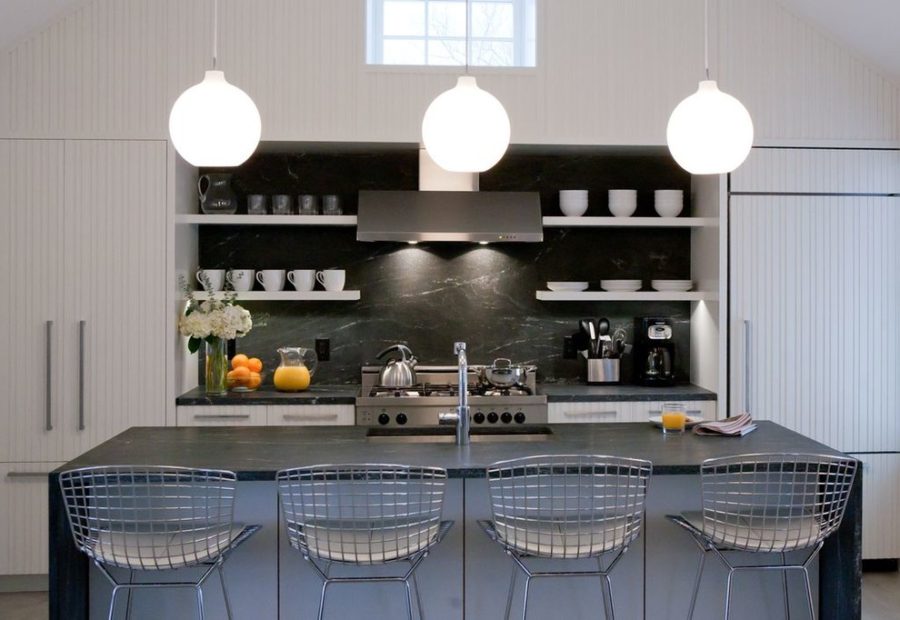
10+ White Marble Kitchen Ideas for a Bright, Balanced Look
White marble kitchens bring together luxury and practicality. They remain sought-after by homeowners.
A crisp white palette keeps the kitchen clear, while distinctive marble veining adds depth without creating visual overload. White marble kitchens appear in both high-end homes and everyday homes.
Calacatta marble has dramatic veining, while Carrara marble is more subtle. Both options have resale value, and marble as a whole has timeless appeal.
White marble styling continues to expand across design trends. It can shape statement islands as well as full-height backsplashes.
These white marble kitchen ideas suit current lifestyles while keeping lasting function in view.
White Marble Floors and Contrast Grout
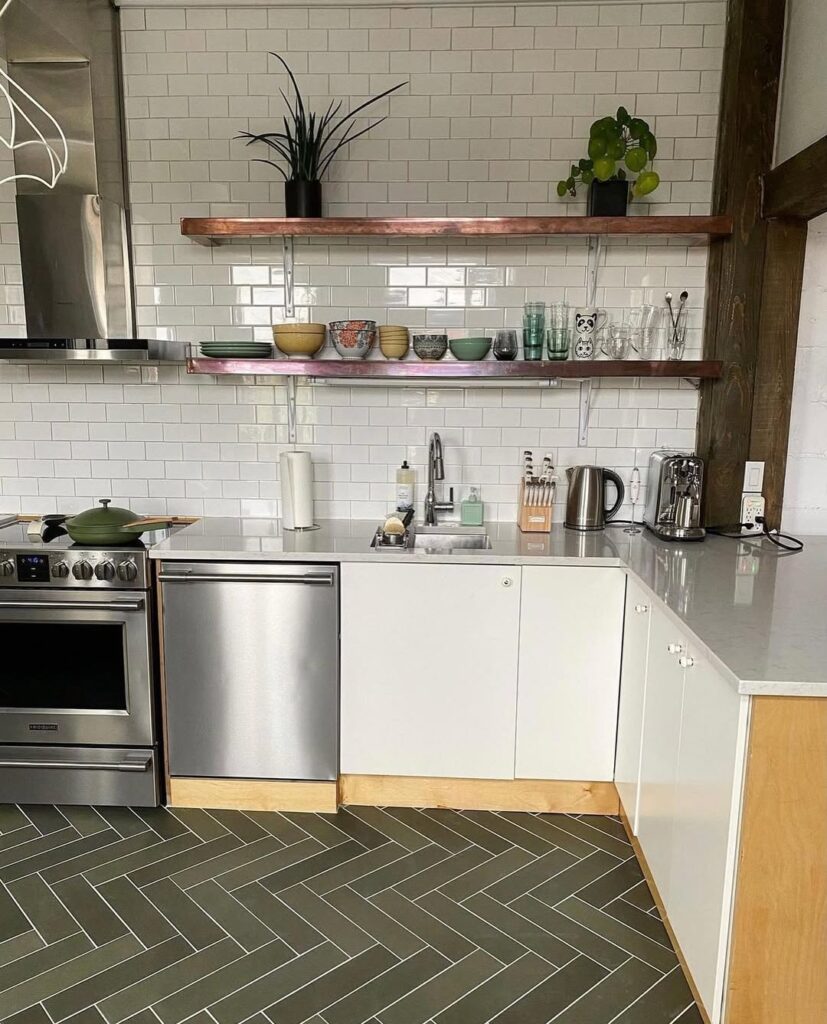
White marble tile gets its definition from dark grout lines. The floor pattern becomes rhythmic.
Contrasting grout enhances the floor geometry and emphasizes the marble veining. The tiles can follow a herringbone, chevron, or grid layout.
Designers often pair white marble flooring with medium gray grout or a charcoal option. Color-matched grout may make the surface look flat, while these contrasting shades give the pattern more definition.
Dark grout adds texture and structure to an open-plan kitchen while defining the boundaries between marble pieces. It can also reduce discoloration and make visible wear less noticeable over time, which suits high-traffic areas.
Ground-level depth comes from this flooring combination. In a space with light reflection and pale surfaces, glass-front uppers, brushed brass finishes, and matte cabinetry can work with the contrasting marble floor.
Contrasting grout can conceal minor imperfections and add resilience. Seal the marble flooring properly so it can support daily foot traffic.
In a kitchen with white marble, homeowners often favor contrasting grout for practicality. It introduces floor character without cluttering the space.
Open Shelving with Marble Backing
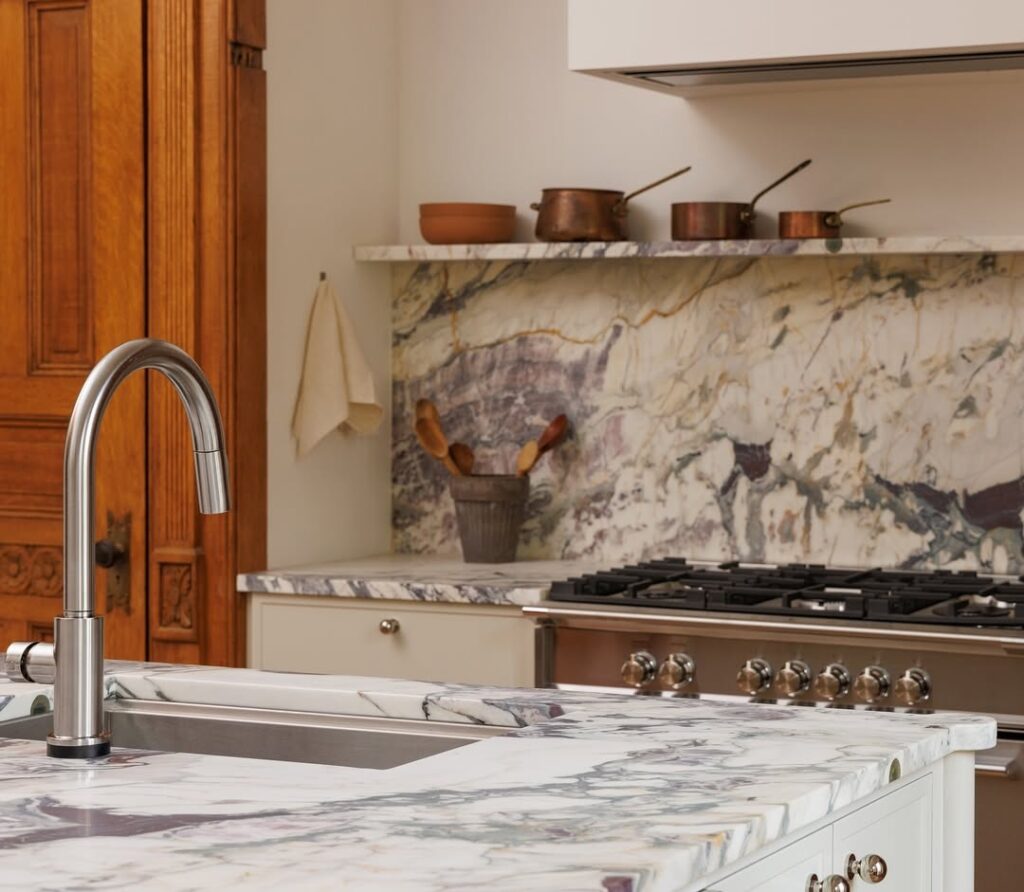
Matching islands can work with a marble shelving backdrop. Marble-backed open shelving also pairs with matching countertops.
On the shelves, ceramics, glassware, or spices benefit from the marble backdrop. The marble shelving backdrop supports item display.
White Carrara and Statuario marble provide surface variation without becoming distracting. Both types can be used for the marble backdrop.
Shelf lighting highlights the stone texture. It can be placed above the shelves or beneath them, while open shelves work with brass brackets or matte black brackets.
Limited-upper-cabinet kitchens can use marble-backed shelving. This approach keeps open shelving as part of the kitchen design.
Marble-backed shelving serves a utility role and supports essential-item display. Compared with drywall or paint, the marble backdrop provides a different surface.
On marble-backed shelving, displayed essentials combine utility and style. The shelving can also function as a backsplash alternative.
Marble Pattern Wallpaper
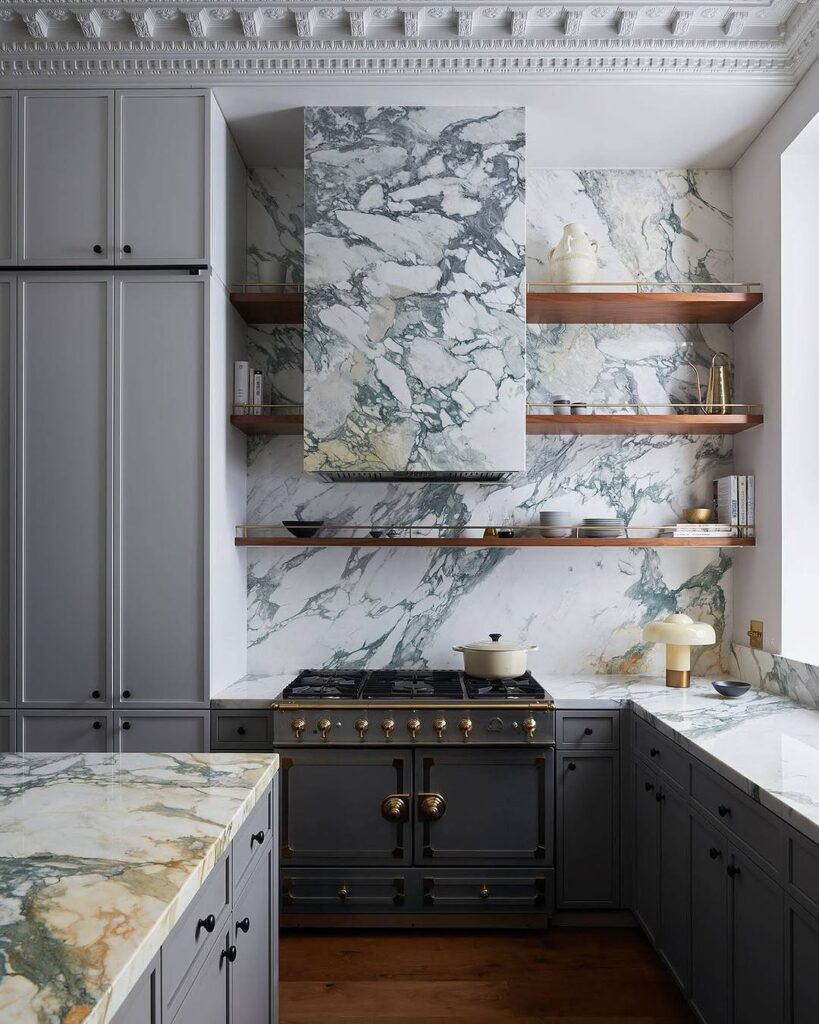
Marble-inspired wallpaper supports material experimentation in the kitchen.
Natural-stone veining is one of the details marble-inspired wallpaper mimics. It also copies natural-stone tones, while costing less and weighing less than natural marble slabs.
In kitchen dining nooks or on accent walls, premium wallpaper can replicate the depth and luminosity of marble. Embossed and pearlescent finishes add to that effect. The wallpaper surface remains smooth and supports easy maintenance.
Real marble shelves and real marble countertops give the wallpaper pairing tactile materiality. Together, the wallpaper and marble combine tactile and visual materiality.
Marble-inspired wallpaper offers visual impact at a lower cost than full marble cladding. It suits small spaces, where full marble cladding may overwhelm a small layout.
Marble-inspired wallpaper can use gray swirls or taupe veining. White, gray, ivory, and taupe wallpaper palettes coordinate with cabinetry and flooring schemes.
Designers use wallpaper behind open cabinetry and behind floating shelves. It can cover floating-shelf backs or create open-cabinetry backdrops.
Marble-inspired wallpaper supports nonpermanent experimentation. Compared with real marble, it involves different installation logistics and less permanence.
Marble Shelving
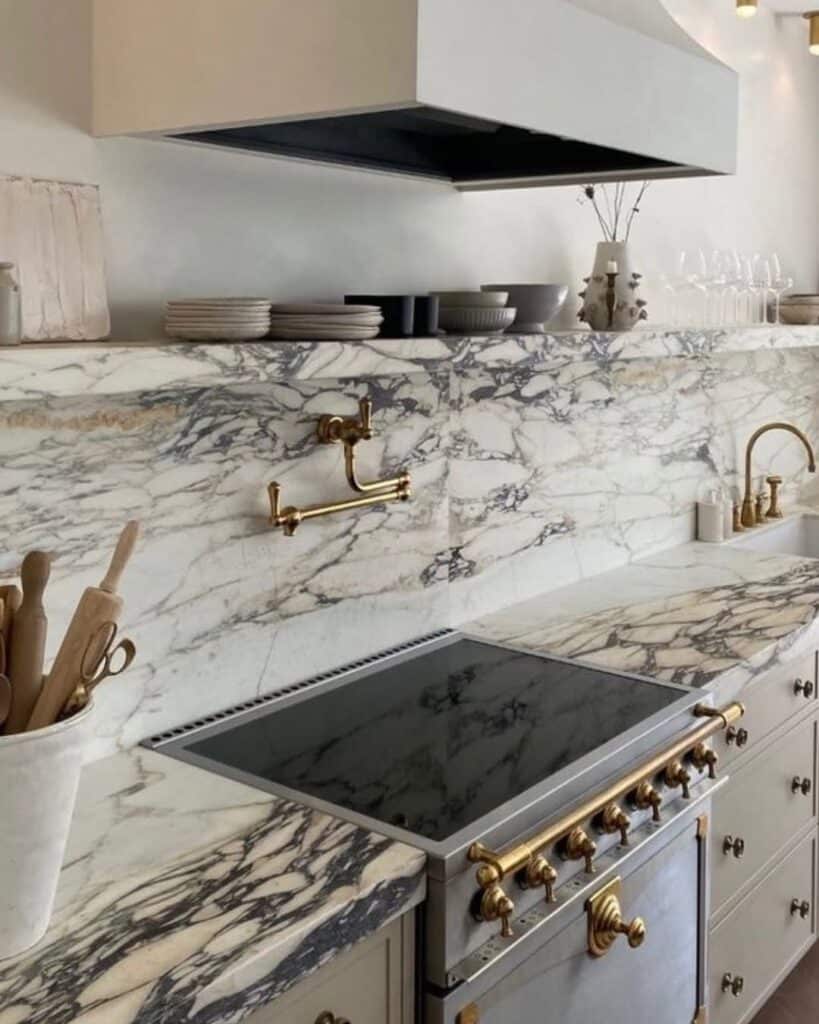
Within a backsplash or alcove, marble shelving becomes part of the surrounding surface. The shelves are installed directly into the backsplash or alcove.
Marble shelves match the wall finish instead of introducing wood or metal. Match them with the countertop or backsplash slab for a consistent material choice.
Marble shelving maintains material consistency and supports the flow of the room. The shelves keep that connection close to the wall.
The marble shelves provide storage while displaying spice jars, ceramics, and glassware.
In an open-shelf arrangement, thin marble shelves provide structural strength for everyday storage.
A subtle honed or leathered marble finish works well on the ledges. Backlighting under the shelves supports the marble shelving.
For an open-shelving preference, integrated marble shelves suit the space without adding bulky pieces.
Marble shelving pairs with soft-neutral cabinetry and recessed lighting. Both details stay close to the shelves.
This setting uses white marble in a contemporary design. The marble shelving is part of that setting.
Mixed Island Materials
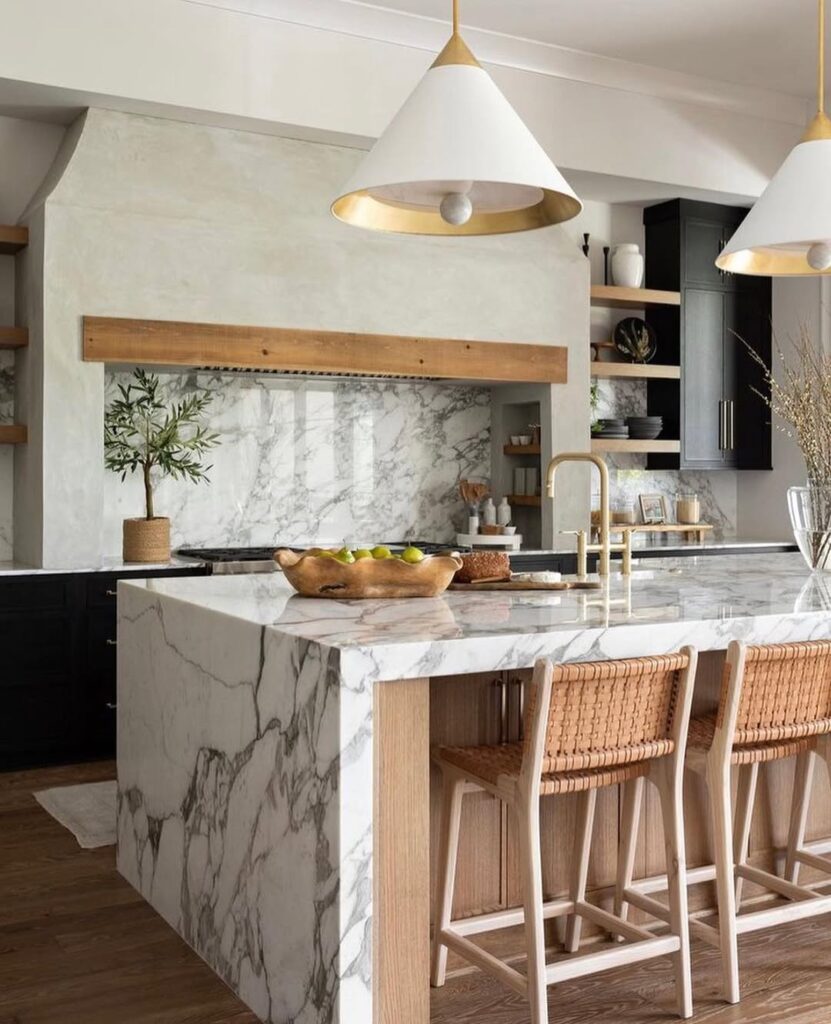
In the center of the kitchen, a white marble island gains dimension and character from contrasting textures.
Rift-sawn oak, fluted panels, and matte metal inserts bring warmth and tactile difference to the island. This material variation contrasts with the white marble main countertop.
The island materials should complement the marble veining. They should not compete with it.
The honed Carrara marble waterfall end pairs with natural oak island drawers, which have a ribbed surface on the working side. The overhang uses walnut for the breakfast bar, creating a clear juxtaposition.
Mixed island materials zone storage, seating, and preparation areas. Each material can serve a functional purpose.
Material blending supports customization. It can accommodate practical needs as well as individual style preferences.
Across the kitchen, material selection can prioritize a collective design narrative without prioritizing uniformity. Mixed materials support personal expression.
Selected materials can collaborate with white marble, so the marble need not dominate the kitchen design.
White Marble Range Hood
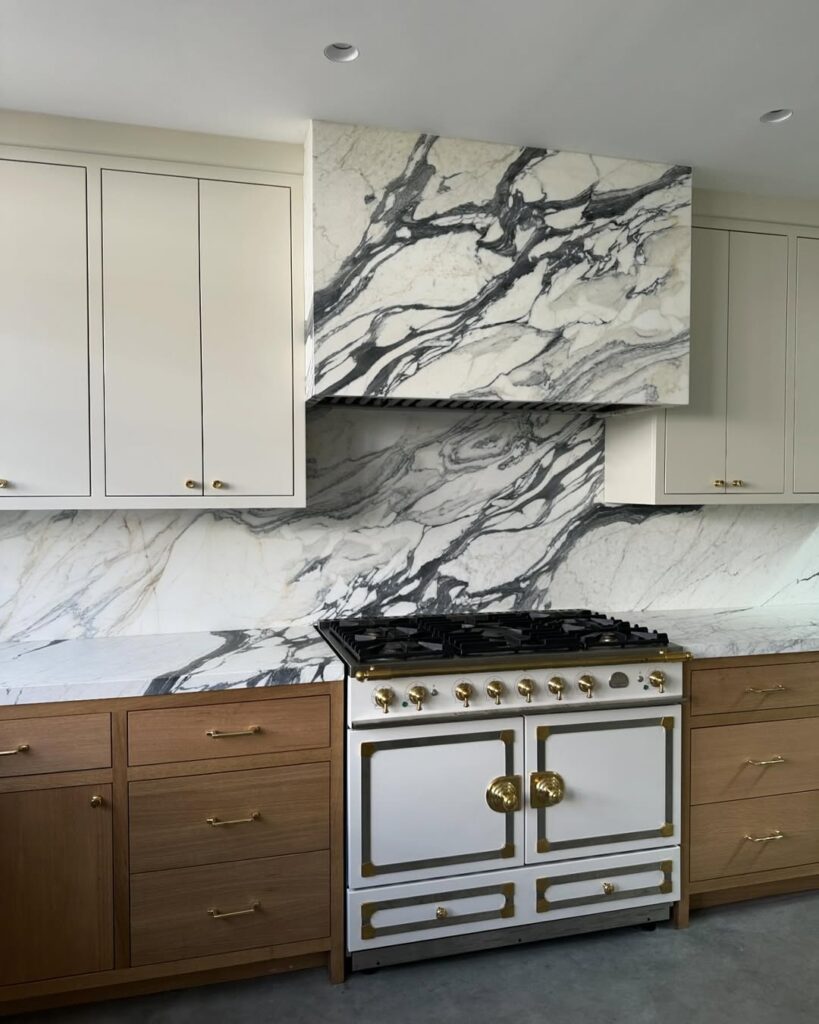
White marble clads the hood above the cooktop. A marble-clad hood suits a symmetrical kitchen.
The hood can be built as a full slab or made with a sculpted and veneered construction. Positioned above the cooktop, the marble hood avoids steel features.
Match the marble on the range hood with the countertop marble.
A marble-clad hood suits tall ceilings, where its height displays the marble veining.
The marble hood keeps its ventilation function with a high-performance system placed behind the marble facade. The system is contained within the hood without interrupting its appearance.
The hood silhouette can be tapered, curved, or sculptural. Its shape defines the main outline of the marble hood.
A marble hood balances thin brass trim, recessed cooktop lighting, or soft matte walls. These accents sit around the hood.
The marble hood combines utility and design in the same kitchen feature.
Backlit Marble Backsplash
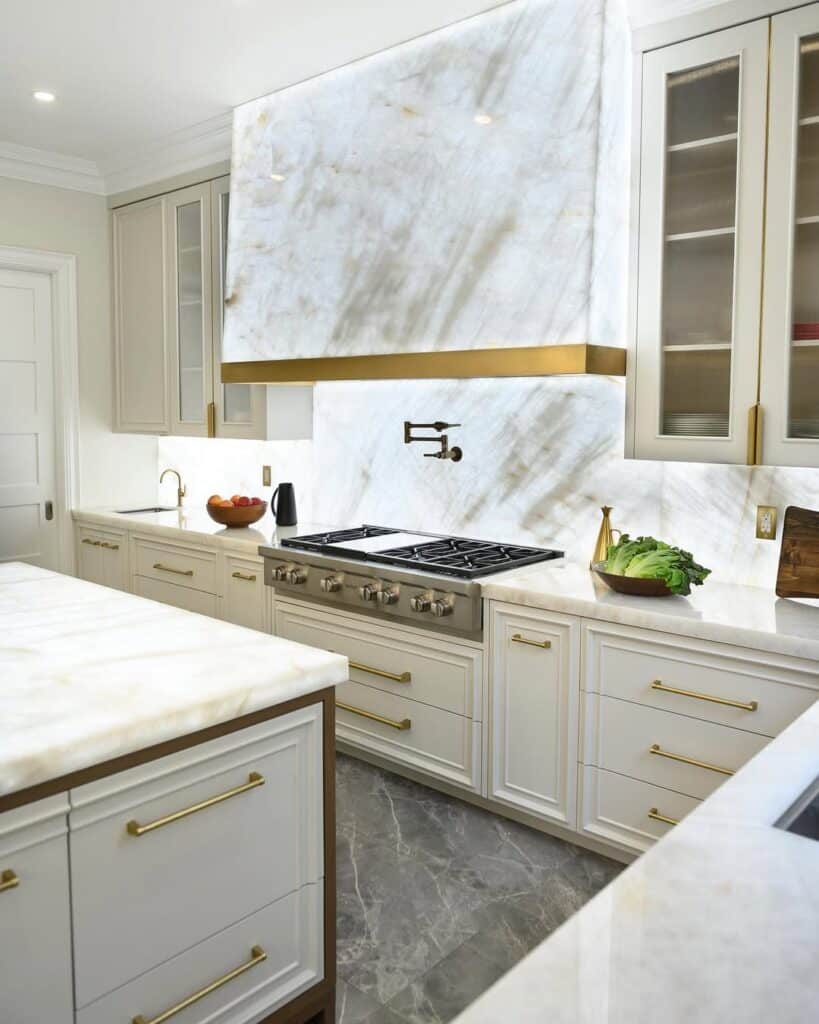
Marble adds the main surface here, while the backsplash lighting gives the kitchen a defined lighting feature.
Translucent stones such as white onyx and quartzite can carry light from built-in LEDs. Used in the marble backsplash, that lighting becomes a glowing feature.
The marble itself functions as the light source rather than relying only on separate accent lighting. Backlit marble makes the surface part of the lighting plan.
With the lighting off, the marble has a classic appearance. Once it is on, the mineral texture reveals visible veining.
A simple surrounding design keeps the focus on the kitchen. Appliances stay out of sight behind frameless cabinetry, while minimal hardware supports the clean look.
A backlit backsplash provides ambient utility in low-natural-light areas and works especially well in galley kitchens.
Thin LED systems are energy-efficient and can last multiple years, so replacement is infrequent. The controls can be dimmable and color-adjustable, allowing the light to vary by mood or time.
Marble combines the functions of the lighting and backsplash, but a backlit marble backsplash requires a high investment.
Marble Statement Surfaces
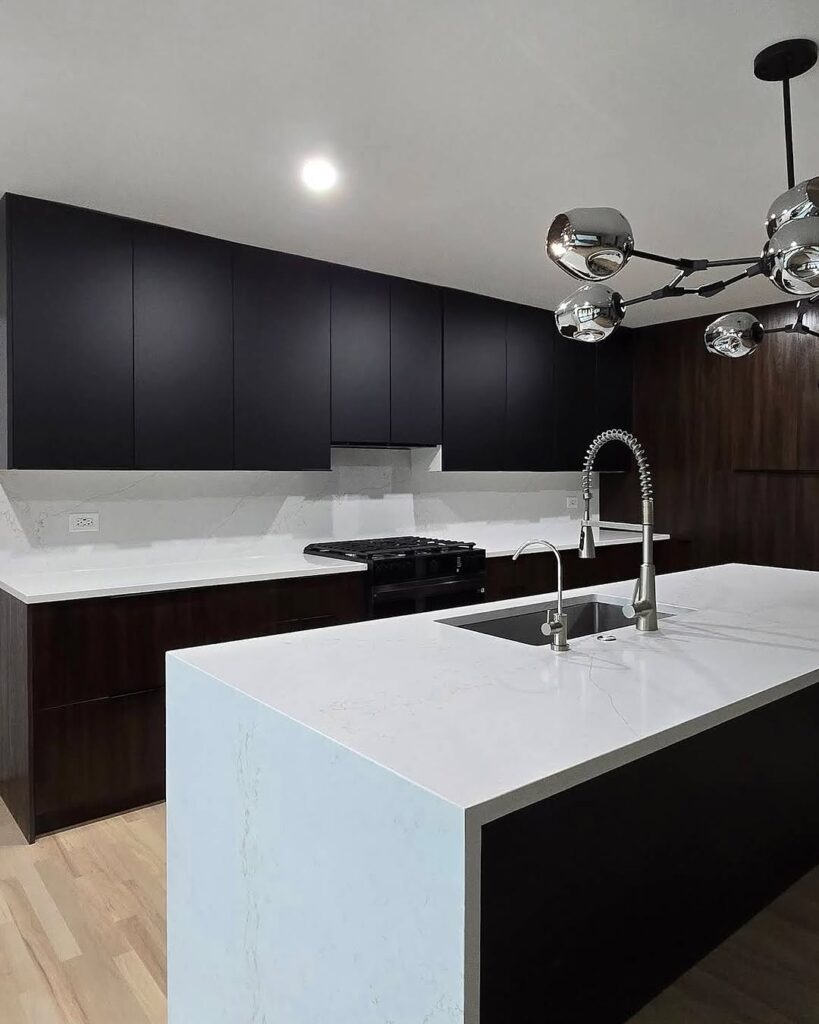
Dramatic veining in dark gray and charcoal marks luxury kitchens. A white marble slab can serve as the countertop and function as the room's focal point.
Prominent veins add depth and visual energy. Because they provide so much movement, they reduce the need for extra patterns and extra textures.
The bold marble direction suits high-impact aesthetics.
Panda White can run up the wall as a finish and can also cover expansive countertops. Calacatta Macchia Vecchia offers the same uses, with bold ink-like patterning on both the wall and counter surfaces.
Matched veining creates continuous flow. Match the countertop veining to the backsplash veining.
Use a handleless design for cabinetry. Choose alabaster or ivory cabinetry with clean lines and a flat matte finish.
The bold marble approach suits renovations as well as custom builds.
Strong marble veining works as a design signature when it is balanced with restrained elements.
Wood with White Marble
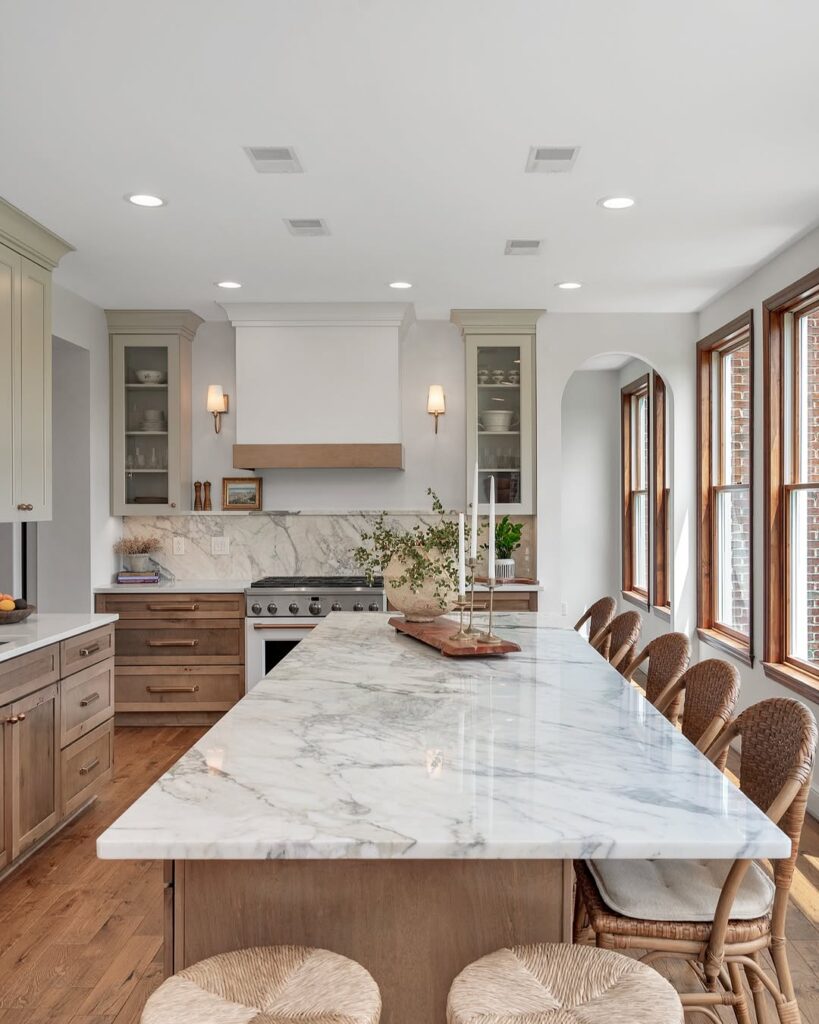
Wood detailing paired with white marble creates material contrast. The marble-and-wood pairing keeps both materials visible.
Smooth marble in Carrara or Calacatta varieties pairs with wood cabinetry made from oak, walnut, or ash.
Wood drawer fronts sit beneath the marble countertop. The island combines a ribbed wood base with a white marble top.
A marble-and-wood kitchen avoids an all-white sterile effect.
Natural lighting reveals the wood grain and marble veining. The marble-and-wood pairing suits a kitchen with natural light.
This marble-and-wood pairing suits modern rustic, Japandi, and Scandinavian minimalism.
Hardware helps coordinate the white marble and wood combination. Matte black pulls and brushed brass taps provide the available options.
The marble-and-wood pairing supports both form and function. Each material remains part of the working kitchen.
Countersplash Integration
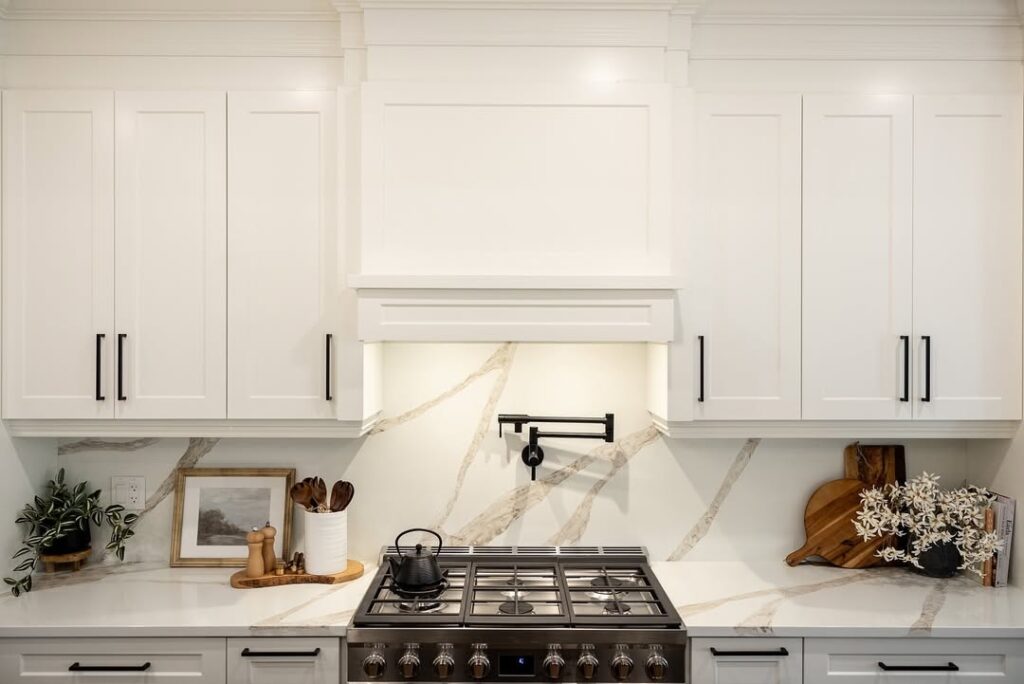
The countersplash integrates the countertop and backsplash in the same marble slab. It joins both surfaces into one detail.
A countersplash is a shared marble surface that joins horizontal and vertical surfaces. It eliminates visual breaks between them.
Uniform marble material makes cleaning easier and eliminates grout lines. The countersplash also has a practical function.
A countersplash can become the kitchen's defining feature.
Subtle veining supports surface continuity in a countersplash. Statuario marble and Bianco Lasa are both options with subtle veining.
Countersplash marble suits either a honed finish or a matte finish. Both options retain the softness of the stone and reduce reflective glare.
A flush-mounted cooktop pairs with the countersplash, as does an integrated sink. Together, the integrated sink and flush-mounted cooktop support an uninterrupted aesthetic.
A countersplash works well where the kitchen opens into another layout. Its surface can continue visually into the surrounding zones.
A countersplash combines function with visual impact.
White Marble Drawer Fronts
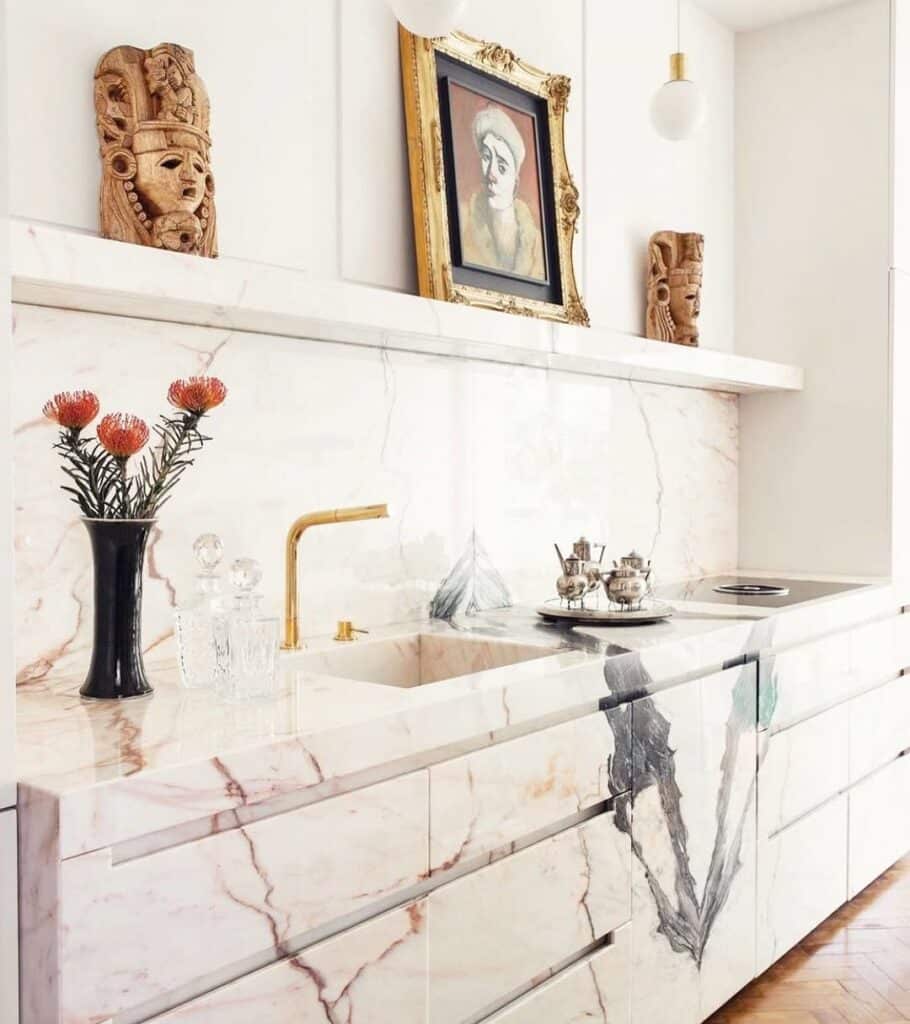
Marble drawer fronts provide concentrated stonework without covering an entire marble island. White marble cladding on the drawer fronts uses less material than large marble countertops.
A single drawer bank can use marble drawer fronts. They can also be added to wood cabinet groupings.
Thin marble forms the drawer panel. Fabricators recommend using thin panels or veneer slabs with a lightweight drawer-front backing, and the backing reduces hardware strain.
Thin marble fronts retain marble veining and marble authenticity. Compared with solid marble, they have a different profile and less bulk.
In a kitchen, marble drawer fronts can pair with minimal hardware, matte cabinets, and flat-faced cabinets. Cabinet colors can include ash, sand, or charcoal.
A honed or polished marble finish has a reflective quality. The finish draws attention to the drawer sections.
Marble drawer fronts support functional variety in kitchen desks, prep zones, and butler's pantries.
Marble drawer fronts can be used for partial kitchen updates. The installation scope does not require a full redesign.
Marble Look Lighting
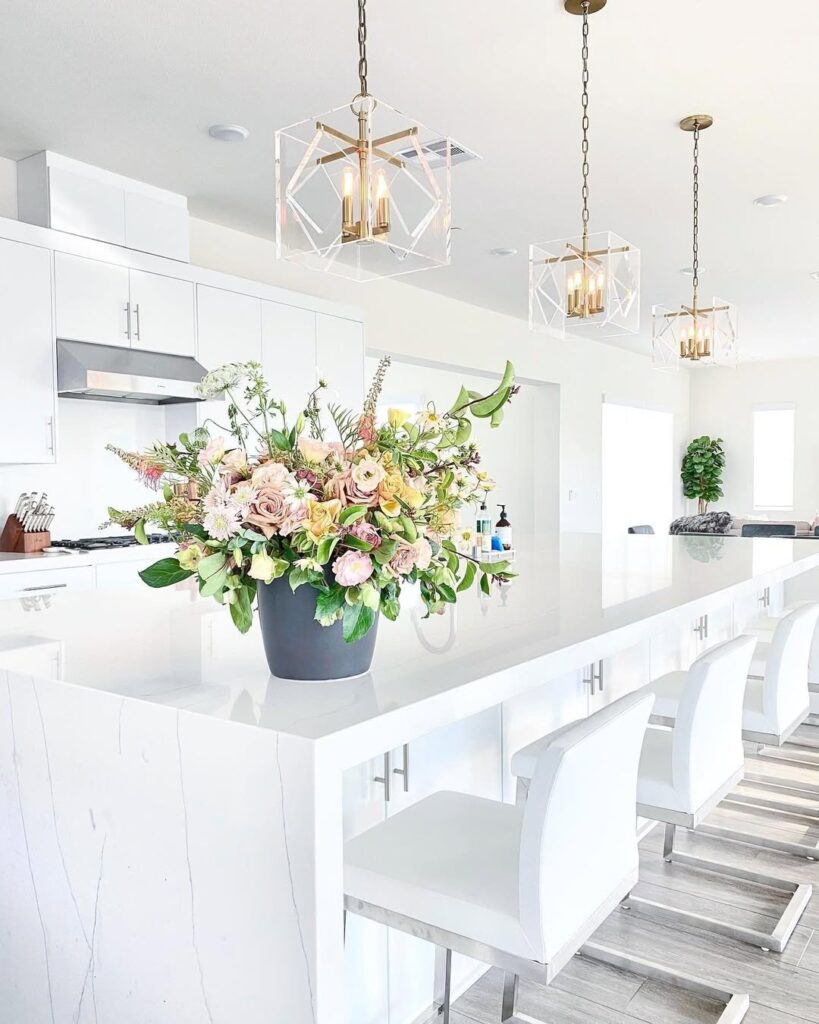
Ceramic-look resin and carved stone can give marble-inspired lighting its material character. In a kitchen with white marble elements, this lighting supports material continuity.
Stone-inspired fixtures provide kitchen lighting in several forms. A pendant light can hang above the island, a sconce can sit beside open shelves, and a minimalist chandelier can have a marble base.
Marble-inspired fixtures echo the kitchen's material language when used with marble countertops. Marble accents can reinforce that connection.
Streamlined silhouettes reduce design clashes in marble-inspired lighting. Designers favor white or lightly veined lighting finishes.
Brass, matte black, and chrome fixture finishes support stone-textured lighting.
An alabaster-style diffuser softens the light and adds ambient warmth. This kind of lighting works well with white marble surfaces.
Marble-inspired fixtures serve a functional lighting role while casting placed illumination. They also serve a decorative function.
Design-precise kitchens can use marble-inspired lighting. The fixtures also suit performance-focused kitchens.
Utilitarian fixtures can become design focal points. Marble-inspired lighting unifies functionality and material style.
Cashmere Kitchen Scheme
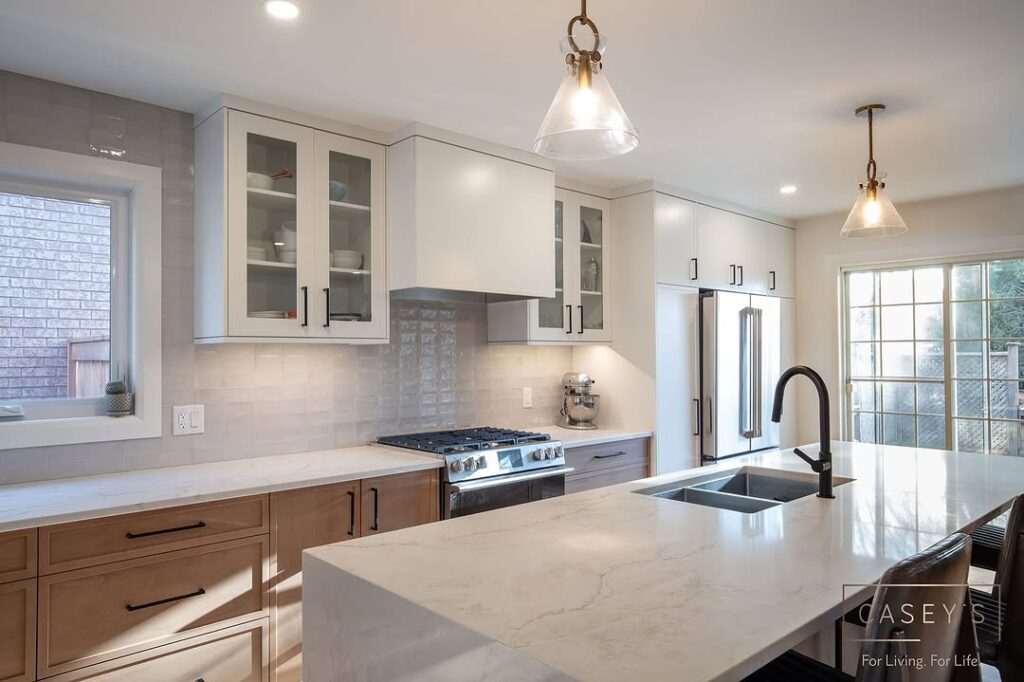
The creamy cabinetry softens the visual impact of the white marble. In this warm cashmere kitchen, light beige cabinets pair with a countertop of crisp white marble, while cashmere tones take the place of stark contrasts.
Soft gray marble veining echoes the light beige cabinetry. The cashmere palette creates a soothing atmosphere and brings cohesion to the kitchen.
The cashmere kitchen aesthetic works well in open-plan layouts and suits neutral upscale designs. An open-plan kitchen also connects visually with adjacent living spaces.
Matte black and brushed brass hardware can both pair with the warm cashmere kitchen. The hardware provides contrast and allows the marble to remain prominent.
Pale tones reflect sunlight and enhance the perceived space. The cashmere kitchen style also performs well in natural light.
Pale wood flooring in plank form suits the cashmere kitchen. Large-format porcelain tile in oatmeal or sandy shades works too, supporting the warm palette.
The cashmere kitchen aesthetic combines practicality with comfort and unifies the room through one visual language.
Textured White Marble
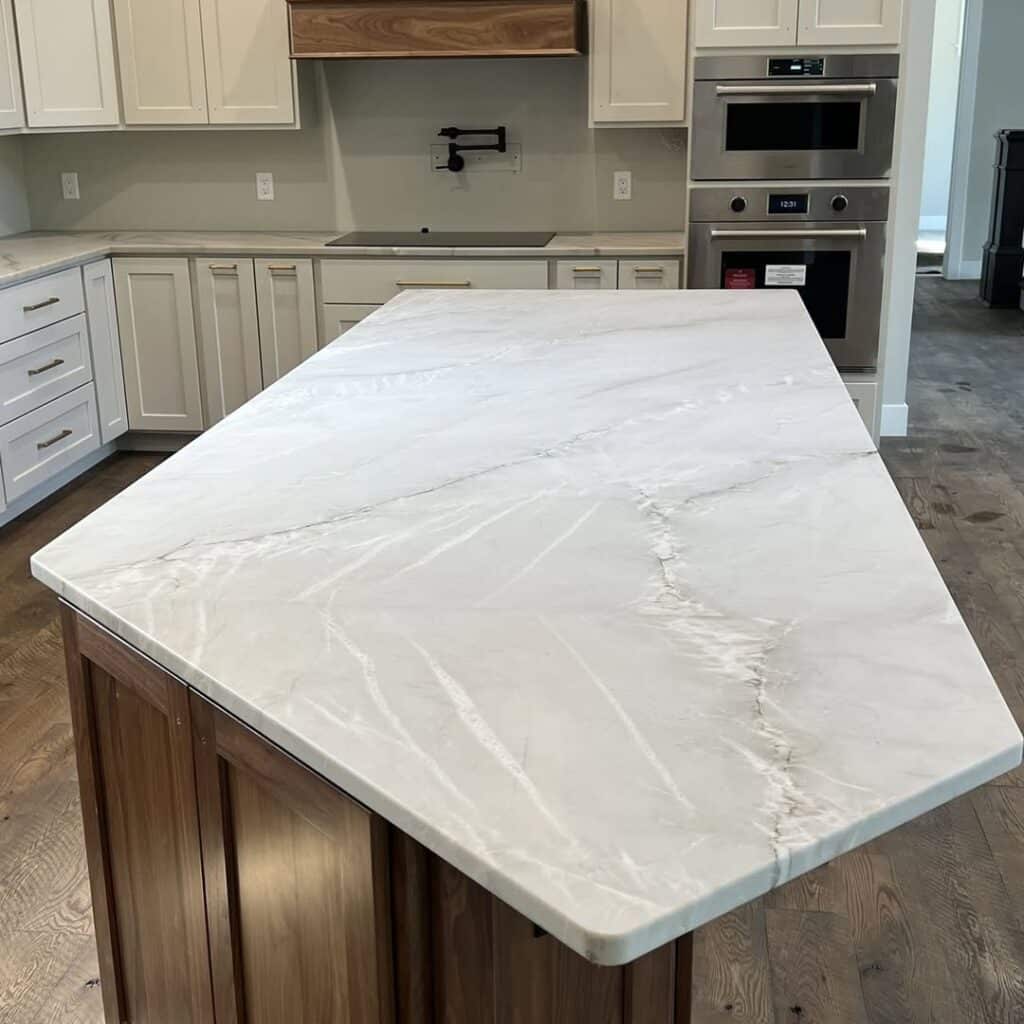
Textured marble finishes include leathered, brushed, and flamed options. They offer a different surface from flat polish.
A textured finish reduces glare on the marble. It also reveals mineral variation.
Countertops or islands are a practical setting for textured marble. In busy households, its surface conceals small etch marks and fingerprints more effectively than polished marble.
The textured finish maintains a natural-stone appearance.
Neutral cabinetry pairs with textured white marble, as do matte fixtures. The finishes keep the surrounding materials understated.
Textured marble pairs with smooth finishes. A brushed countertop can be paired against a honed backsplash.
For e27, the options are under-cabinet strips and spotlights, and the lighting accentuates e23.
In the kitchen, textured white marble supports both luxury and livability.
Curved White Marble Island
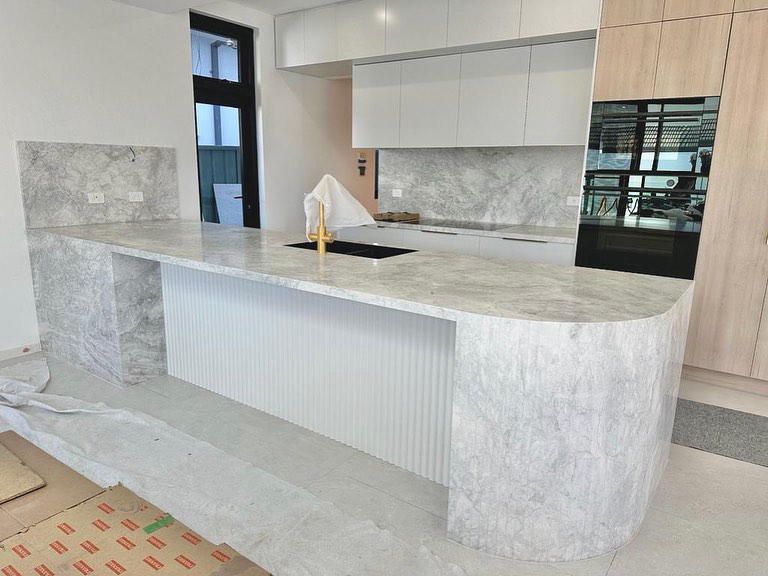
A curved island uses soft arcs rather than angular island lines. The rounded form changes the outline of the white marble island.
Curved islands suit open layouts because the shape reduces intrusive corners and supports movement.
Curved marble fabrication requires precision craftsmanship.
Oval, semi-circular, or rounded-edge shapes reduce the perceived weight of the stone. These options give the curved island a softer profile.
A waterfall curve can wrap down the side of the island, supporting its ergonomics. Rounded seating or soft-edge stools pair with the curved marble island.
Storage drawers sit within the island arc. They are integrated into e35, while the lighting can be globe pendants or circular recessed fixtures. This lighting echoes e35.
A curved marble island combines utility and design.