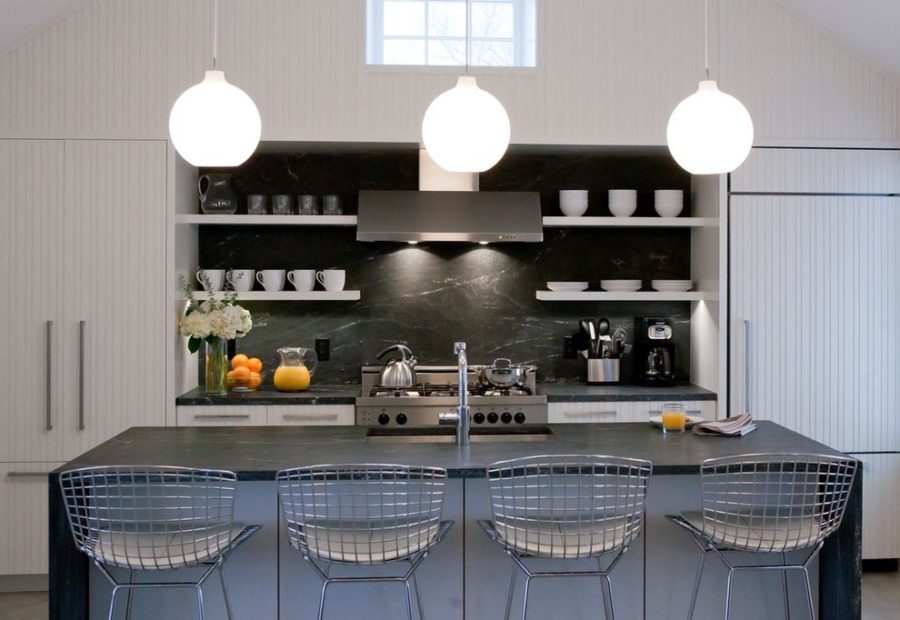
10 Aesthetic Kitchen Ideas for a Magazine-Worthy Cooking Space
Kitchens are increasingly becoming a place to show personal style. That style also affects how the space feels and functions.
Kitchen design balances appearance with daily practicality. It also gives kitchens room for creativity.
A full renovation can change the kitchen, but a small refresh can help too. Aesthetic upgrades may improve both atmosphere and usability in this home center.
A kitchen's appearance and function are shaped by several design factors. Material choices affect the look, while layout strategies influence how the room works. Color palettes also help shape the kitchen. Together, these choices guide both its visual character and its everyday use.
These kitchen ideas target modern tastes while leaving room for personal style. With the right choices, kitchen design can remain timeless.
Sustainable Kitchen Materials
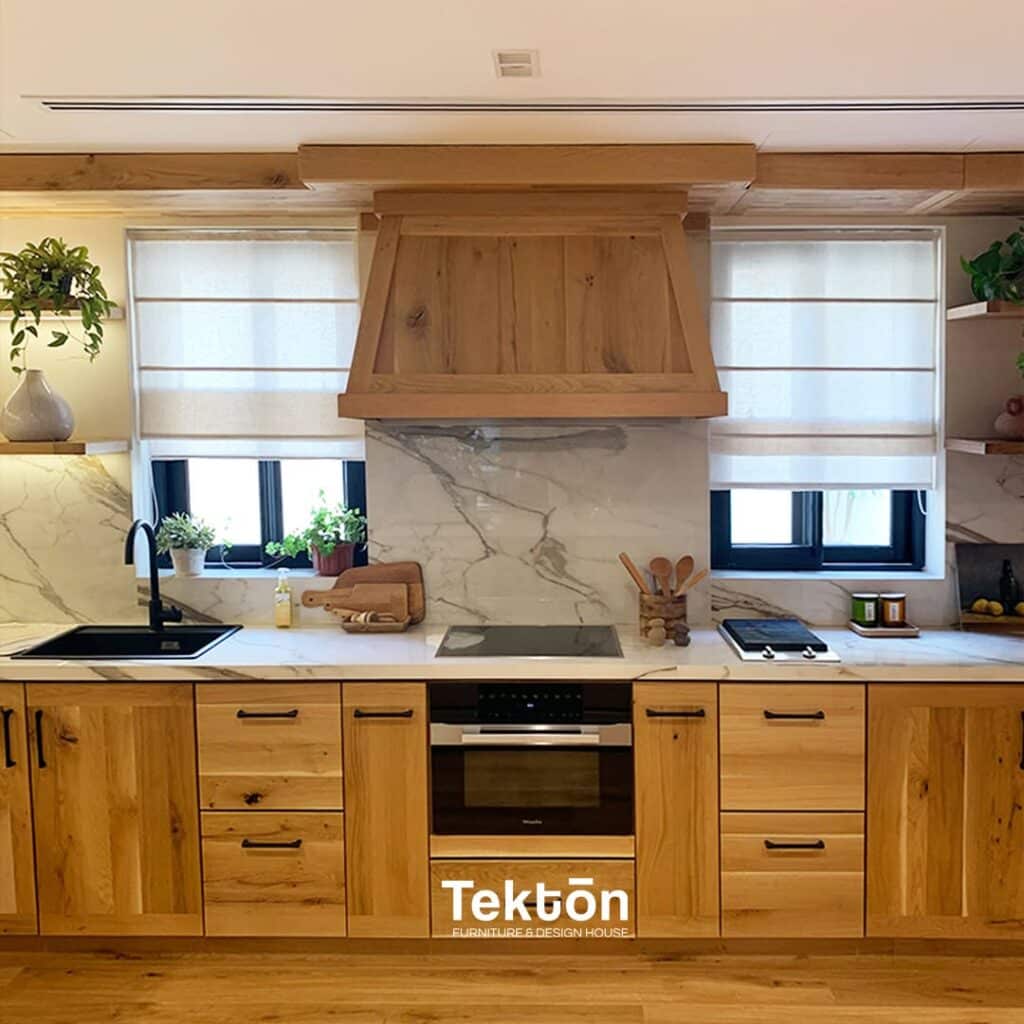
Sustainable materials now define kitchen design shaped by environmental awareness. The result is a kitchen with a clear ecological focus.
Recycled glass can form the countertops, while reclaimed wood is used for the cabinetry. Bamboo flooring and eco-friendly paint add other material choices. Sustainable materials preserve style and support responsible spaces.
Homeowners seeking to reduce their impact may choose salvaged vintage pieces, low-VOC finishes, and FSC-certified wood.
Recycled terrazzo and post-consumer composite countertops both offer durability. The countertops bring recycled materials into the kitchen while providing a durable surface.
Local sourcing supports regional artisans and regional manufacturers. Source local materials to reduce the carbon footprint, favor durable surfaces and durable fixtures, and prioritize long-lasting choices. These design choices help avoid frequent replacement.
Organic cotton works well for kitchen textiles. Biodegradable storage solutions support an eco-friendly commitment alongside the cotton textiles.
Natural materials provide organic warmth and tend to vary more than manufactured products. Sustainable materials can introduce changes in tone, texture, and pattern.
A sustainable kitchen must perform well as part of daily life. It balances beauty, performance, and responsibility.
Sustainable materials are often described as a wise investment. They support both contemporary kitchens and timeless kitchens, and their use is now mainstream.
Thoughtful selections support long-term resilience. The choices are made with lasting performance in mind.
Mid-Century Style Details
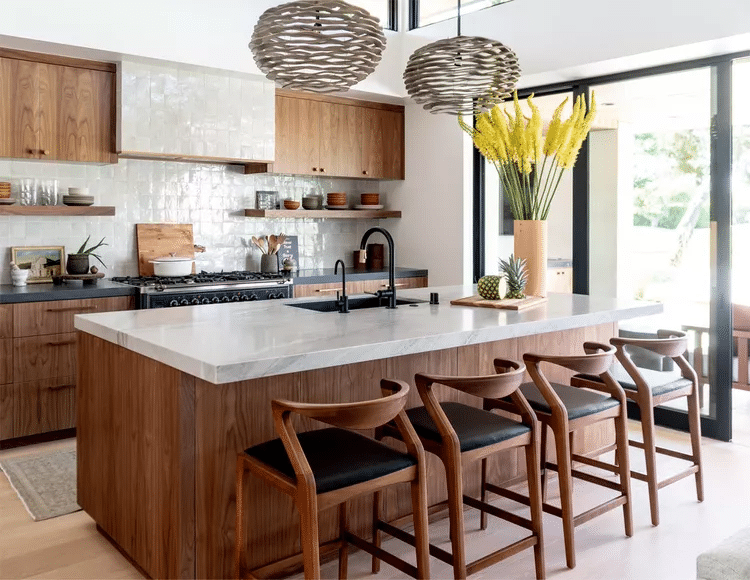
Retro influences give contemporary kitchens their character. Mid-century modern elements are the retro-inspired features that bring that look into the room.
Tapered legs and natural wood finishes give mid-century design a simple presence. Its clean lines and organic curves keep the look free from excessive ornamentation.
Muted quartz and terrazzo countertops bring restrained color and texture to the room. Flat-panel cabinetry with minimalist hardware keeps the main forms simple.
In one corner, mustard yellow, teal, or burnt orange accents can be applied to neutral backdrops. The colors add a clear retro reference.
Globe pendants, Sputnik chandeliers, and cone-shaped sconces reference mid-century style. The lighting fixtures carry that influence overhead and on the walls.
Open shelving and modular storage support functional design. Walnut, teak, and oak bring richness and texture to the room.
Small-scale geometric tiles create floor patterns that reinforce a nostalgic style. Appliances with retro curves and brushed metal finishes add another period detail.
Mid-century modern design combines classic elements with contemporary elements. The result brings both periods into one kitchen.
Across the room, mid-century modern design combines sleek functionality with organic forms. The two qualities work together in the kitchen.
Warm White Kitchen Design
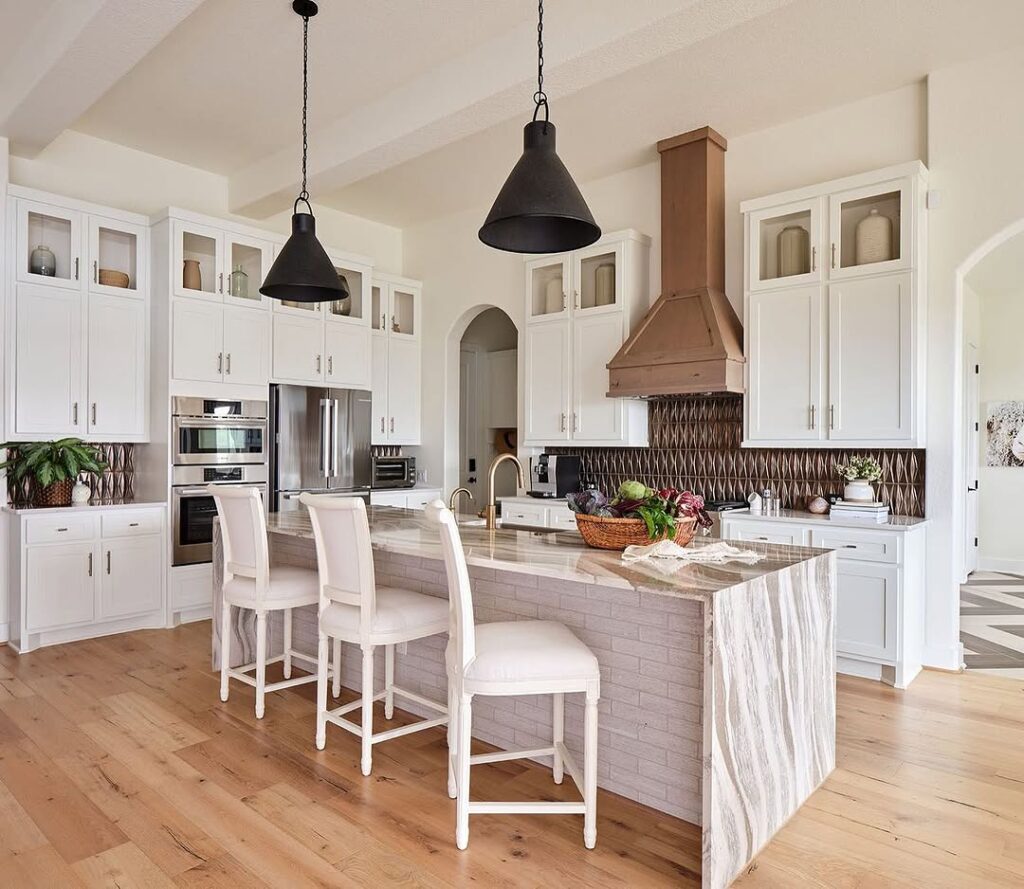
A warm white kitchen can create a cozy atmosphere. Without thoughtful execution, though, neutral kitchens may feel impersonal.
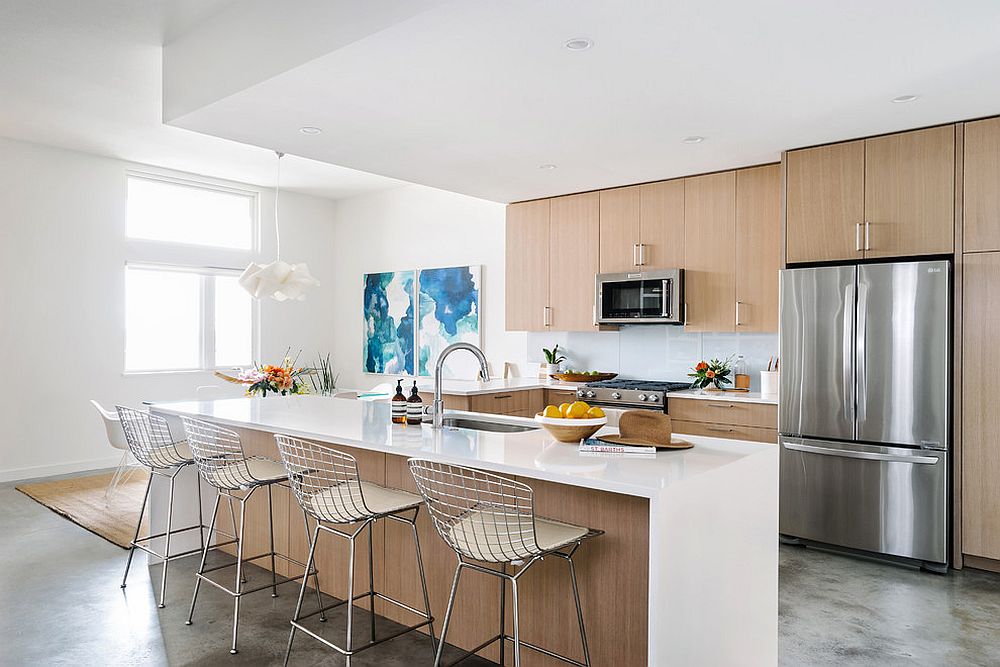
Cream tones and soft natural textures support a clean atmosphere. Used together, they also help avoid a sterile feeling.
Off-white cabinetry pairs with a marble countertop that has light veining. Brushed brass fixtures complete the combination.
Pale oak shelves and a whitewashed dining table bring in wood elements. Soft textiles can include linen cafe curtains and handwoven rugs.
Warm bulbs work well in both sconces and pendant lights. Warm-toned lighting supports creamy hues.
A matte ceramic finish can be layered with glazed tile and brushed metal. These layered finishes add dimension, but they should avoid visual clutter. This warm white approach benefits small kitchens by increasing their perceived openness.
Warm white kitchens suit daily meals as well as guest entertaining. They are also described as timeless.
Open Shelf Displays
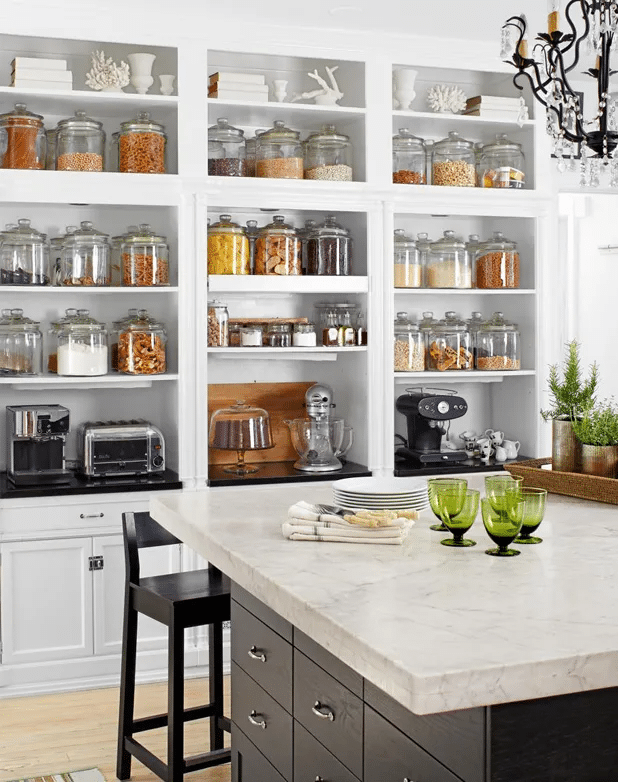
Open shelving provides functional accessibility and replaces some upper cabinets.
Open shelves replace some upper cabinets and provide access to storage.
Natural wood, wrought iron, and floating glass shelves can be grouped by size, material, and color. A grouped arrangement prevents clutter.
In one kitchen area, ceramic dishware, vintage cookware, potted herbs, and artisan glassware are displayed on open shelves.
Open shelving combines storage and personal expression and favors thoughtful curation. Wall textures such as exposed brick, beadboard, and subway tile can be placed behind open shelves.
Spot and under-shelf lighting support open shelving. Shelf lighting also supports functionality.
Open shelving allows future updates and seasonal rotation. Shelf updates avoid major renovations.
Open shelving combines form and function.
Open shelving supports kitchen personalization while retaining practicality.
Two Tone Cabinet Ideas
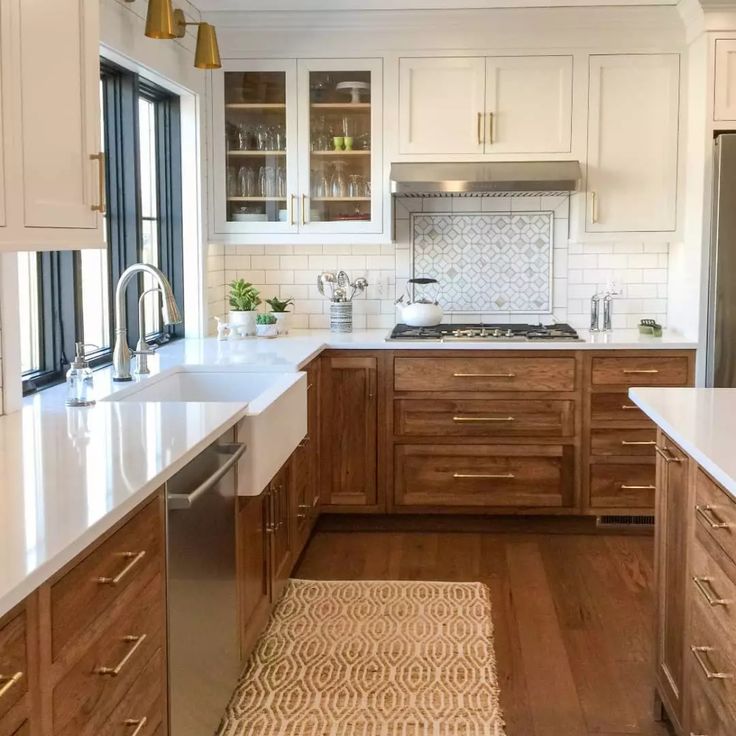
Mixed cabinet colors add dimension as well as depth to the kitchen.
Use two tones in the kitchen cabinetry to highlight architectural elements.
Place the darker lowers beneath lighter uppers. Navy blue lower cabinets paired with crisp white upper cabinets create this two-tone arrangement.
Emerald green and matte black upper cabinets draw attention toward the upper cabinets. Painted cabinet finishes can be mixed with a wood tone.
Brushed gold handles and oil-rubbed bronze pulls can work with two-tone cabinets. These hardware choices unify the cabinet tones.
In small kitchens, prefer tonal difference. Choose complementary or contrasting cabinet shades, since tonal difference is less busy than stark contrast.
Neutral stone and a subtle pattern are preferable for a backsplash and countertop that support the cabinetry. The backsplash and countertop should support the cabinetry.
Two-tone cabinetry is located in the kitchen.
Farmcore Kitchen
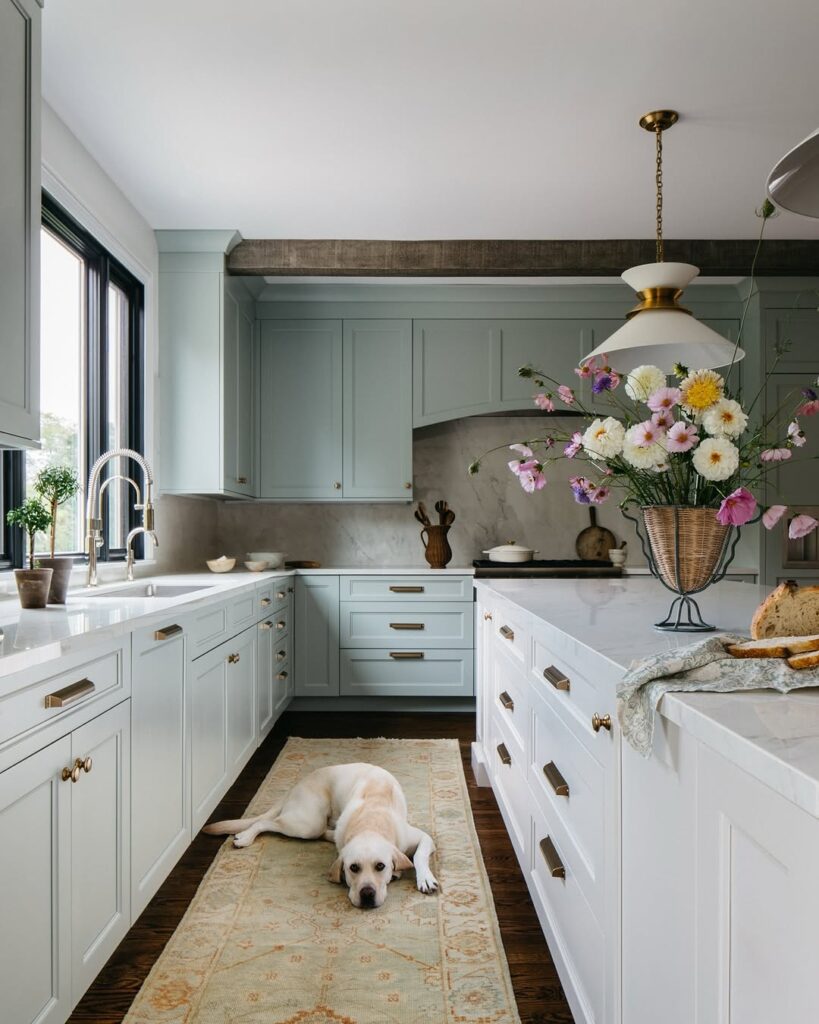
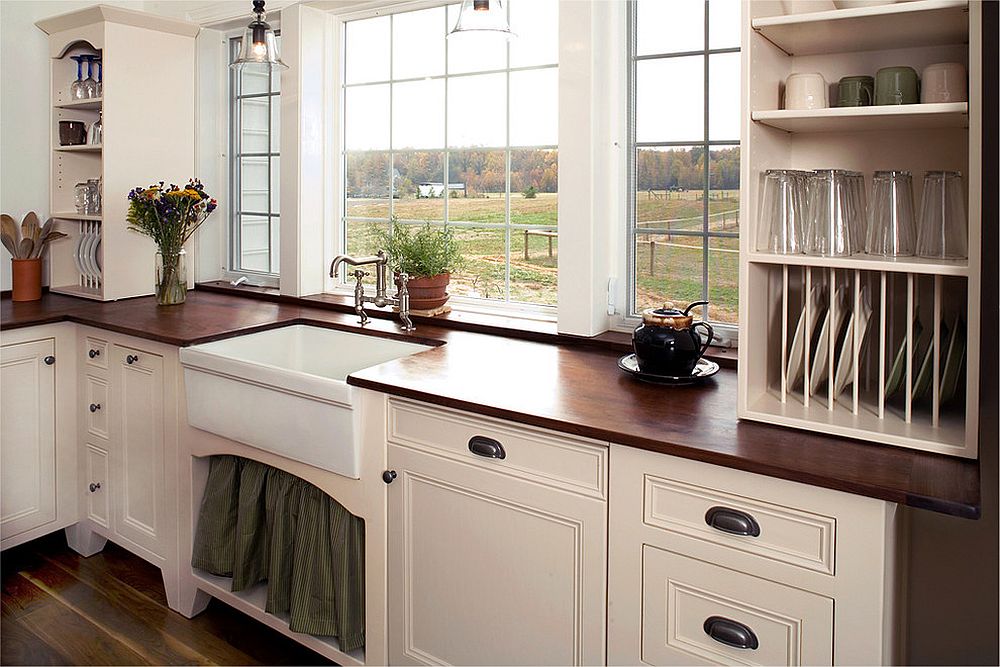
Rustic, authentic character now dominates kitchen trends through the farmcore aesthetic. The style centers on a rustic kitchen look.
The farmcore kitchen has thoughtful styling, but it still feels uncontrived.
An exposed beam adds a visible structural detail. Raw wood supports the farmcore aesthetic, while a shelf made from reclaimed barn wood adds storage. A chunky island has a butcher block surface.
Vintage-inspired hardware is paired with the raw wood elements. The kitchen also uses an unlacquered brass faucet and wrought iron drawer pulls.
Open shelves display preserved goods, mismatched antique dishes, and earthenware. Handmade ceramic pieces are also displayed on the shelves as part of the farmcore aesthetic.
A woven basket and natural linen bring texture to the farmcore kitchen. Potted herbs are placed throughout the space. Its earthy, warm palette includes muted cream, soft sage, buttery yellow, and terracotta.
Handblown glass pendants and retro schoolhouse fixtures are used in the farmcore kitchen.
Tumbled limestone and wide-plank oak flooring give the farmcore kitchen a lived-in, deeply rooted sense of tradition. The style combines practicality and romanticism.
Farmcore is associated with a kitchen retreat and a slower, meaningful lifestyle.
Organic Kitchen Textures
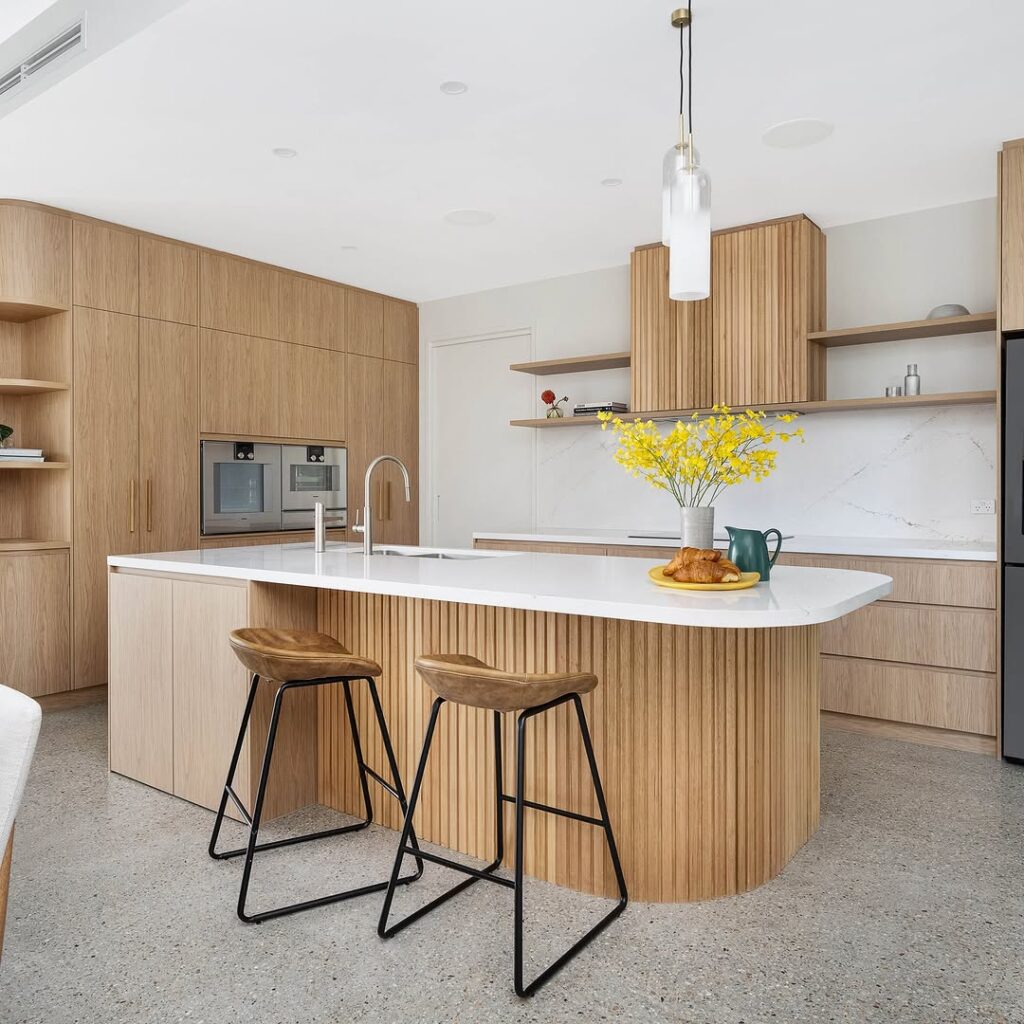
Textural variation supports natural kitchen character. It also gives the kitchen a lived-in quality.
Depth and character come from organic textures made with raw wood, natural stone, rattan, terracotta, or handwoven textile. Compared with flat glossy surfaces, organic textures are more dimensional. They add both depth and character.
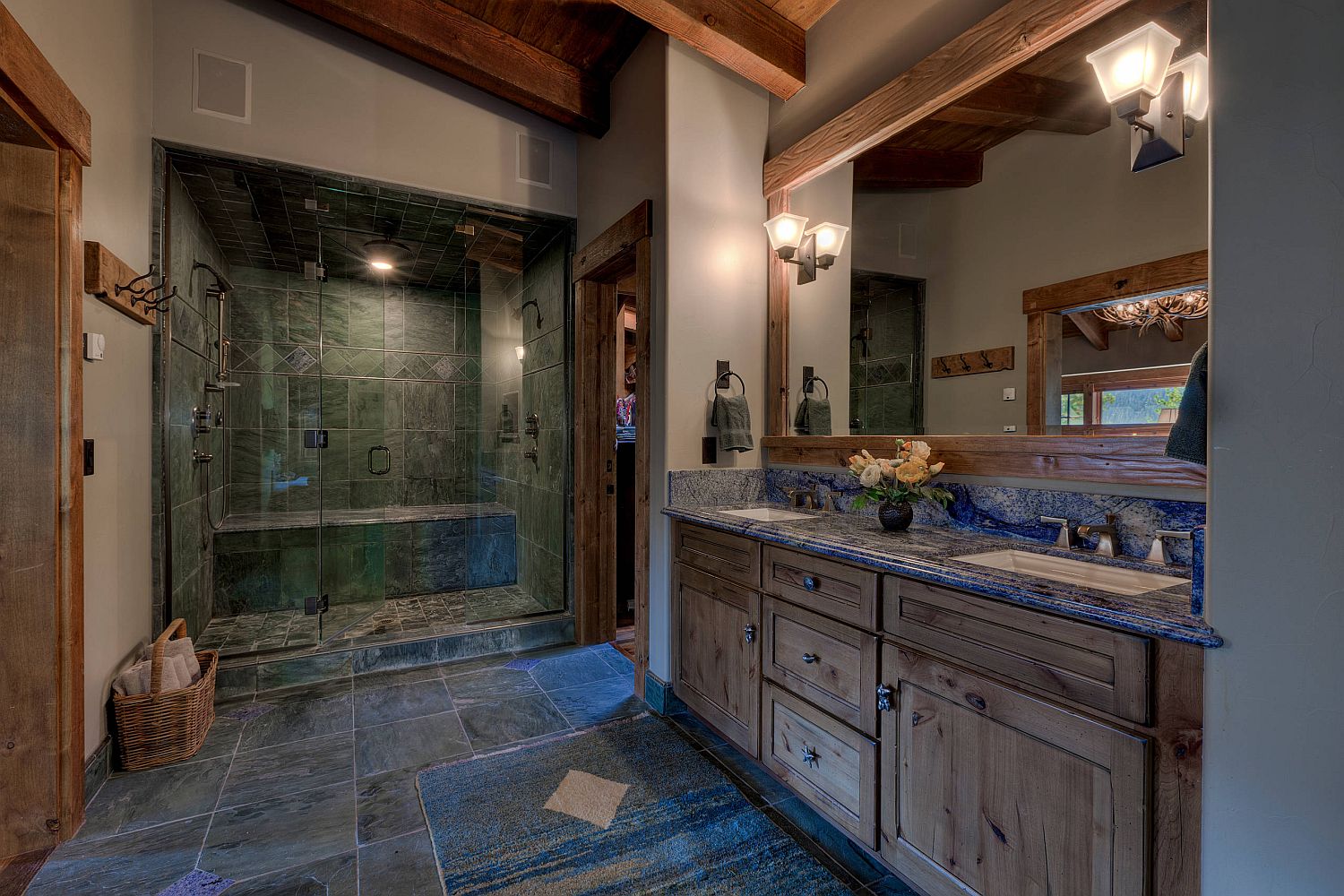
In one corner, a limewashed wall meets handmade clay tile and a butcher block countertop. Rough-hewn wood beams add more organic material, providing tactile richness.
Sisal appears in the rug, linen in the napkin, and ceramic in the dishware. Each material reinforces a tactile sensibility.
On open shelving, a worn copper pot, imperfect pottery, and an heirloom wood cutting board soften marble and stainless steel surfaces.
An earthy, muted color palette works with organic materials. The organic kitchen embraces natural imperfections and prioritizes texture over color.
Natural woven material and aged metal pair with a textural backdrop. Lighting amplifies the organic textures.
Organic texture in a kitchen supports everyday use and special gatherings. It contrasts with high-gloss sterile design.
Kitchen design should prioritize tactile surfaces. An organic texture kitchen has a timeless longevity.
Eclectic Kitchen Combinations
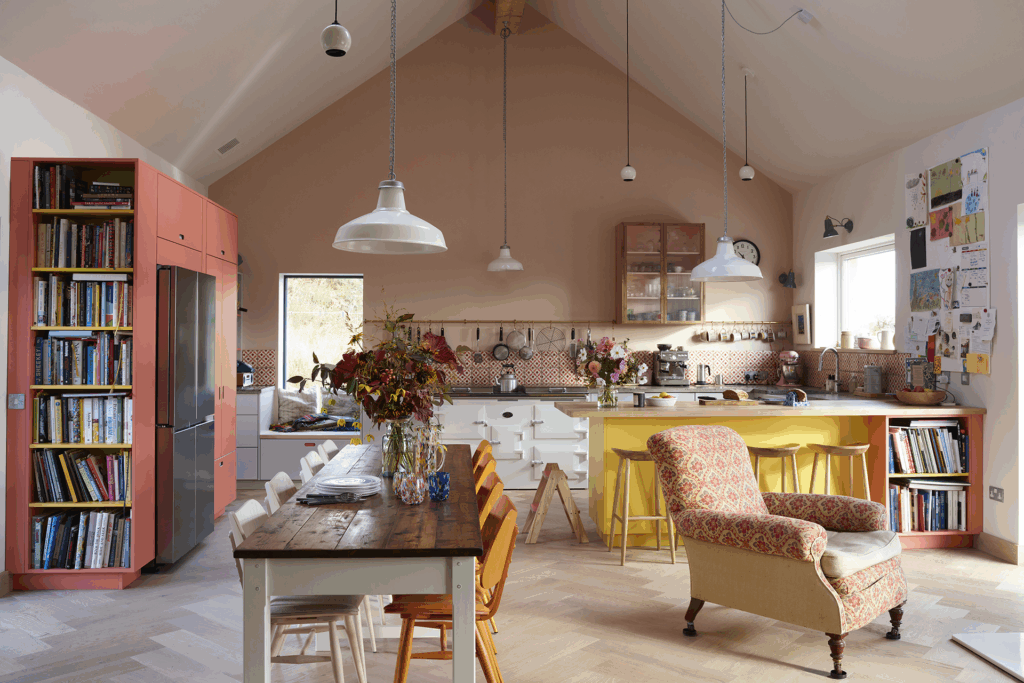
Eclectic kitchens combine materials, styles, and influences rather than following uniform design. Eclectic design contrasts with a uniform space.
Across the room, colorful Moroccan backsplash tile can sit beside minimalist open shelving. Vintage cabinets pair with modern fixtures, while industrial lighting illuminates a rustic farmhouse table.
Eclectic design needs color to keep its different elements in balance. Muted earth tones and deep jewel hues can form a palette that provides visual continuity.
Artwork, heirloom pieces, and travel finds can reflect the homeowner's identity. Repeat textures and materials, using unifying details such as matte metals and hand-thrown ceramics.
Open shelving displays varied objects. Eclectic design can layer pieces from different periods, finishes, and levels of ornament without using the same visual treatment throughout.
Eclectic kitchens offer an alternative to uniform spaces. The approach leaves room for a less matched composition.
Materials and furnishings can combine functionality with expressive artistry. Eclectic kitchens reflect resident personality, while traditional design rules can be broken with intention.
Appliance Integration
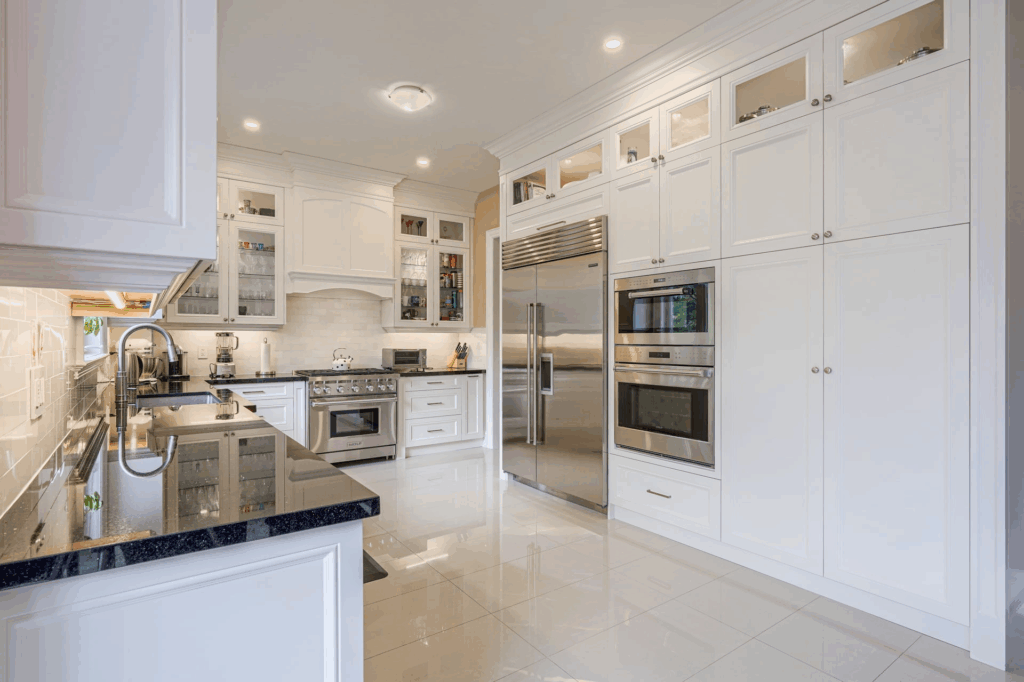
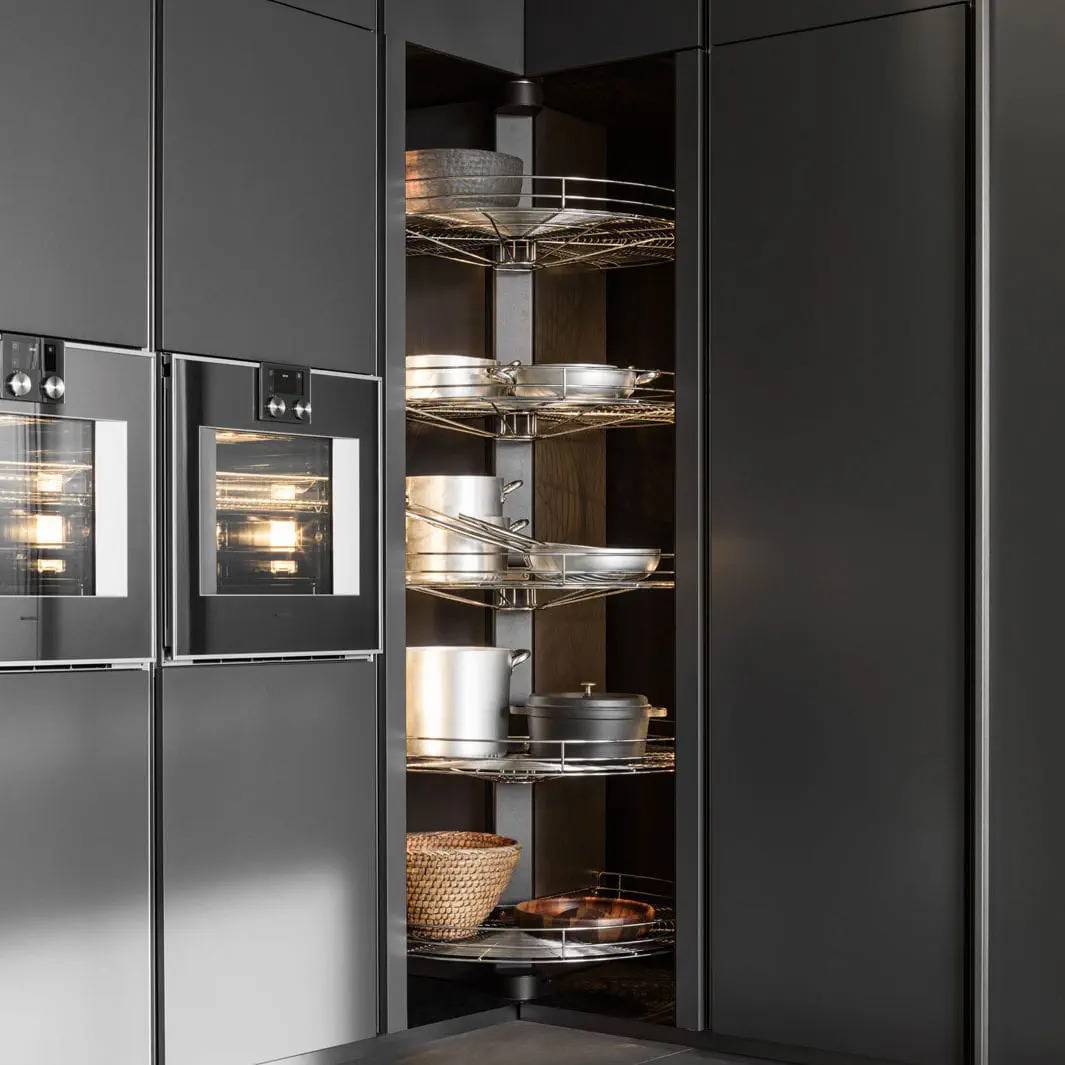
Countertops and cabinetry can contain integrated appliances within their surfaces. This placement supports streamlined kitchens.
Custom panels conceal the refrigerator, dishwasher, and microwave. This integrated approach reduces visual clutter.
Flush-mounted cooktops, downdraft vents, and undercounter beverage centers keep the appliances close to the work areas. Together, they minimize visual clutter, maximize usable workspace, and support a minimalist approach.
Touchscreen controls, app connectivity, and voice activation are now standard features of appliance technology. The technology connects kitchen appliances with current ways of controlling them.
Appliance paneling should coordinate with the cabinetry. When the paneling matches or complements the cabinetry, finish consistency supports visual unity.
Streamlined, hidden handles help maintain aesthetic continuity. Integrated appliances maintain uninterrupted sightlines, support spatial expansiveness, and benefit small kitchens.
Across the room, sleek recessed range hoods can avoid architectural disruption. Integrated appliances support both functionality and aesthetics.
Integrated kitchen design prioritizes functionality and efficiency. It supports modern living.
Understated Luxury
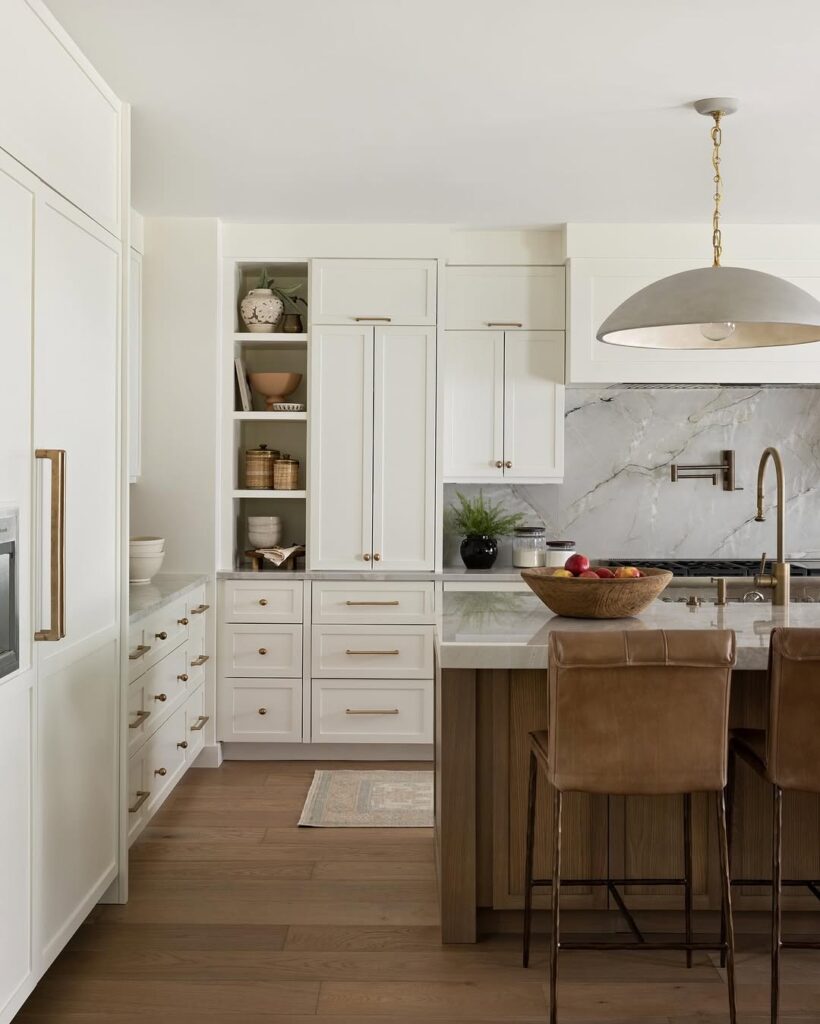
Neutral luxury kitchens put simplicity first, using refined neutral colors and subtle textures. The overall effect feels refined.
Neutral luxury kitchens use restrained color and selected materials. Together, these choices shape the room without excess.
A color palette can move from creamy off-whites to soft taupes and warm greiges. Muted clay tones add the remaining shade.
Natural oak appears with brushed brass, while honed marble and suede-finished quartz complete the selection. These premium materials provide texture.
In one corner, sculptural lighting in alabaster, handblown glass, or patinated metal adds a distinct form. Sleek cabinetry profiles and minimal hardware keep the room controlled, while matte finishes reduce visual noise.
Artisan-crafted surfaces, precision joinery, and seamless edges distinguish neutral luxury. The craftsmanship details make the category identifiable.
Discreet storage and integrated appliances support clean-lined design. Both features keep the kitchen's visible elements orderly.
In one corner, neutral luxury emphasizes craftsmanship and appeals to homeowners seeking enduring design. The focus remains on made details and lasting style.
In neutral luxury kitchens, the approach is restrained and honest about materials. Subtle contrasts are part of the focus, and the result supports longevity.
Statement Light Fixtures
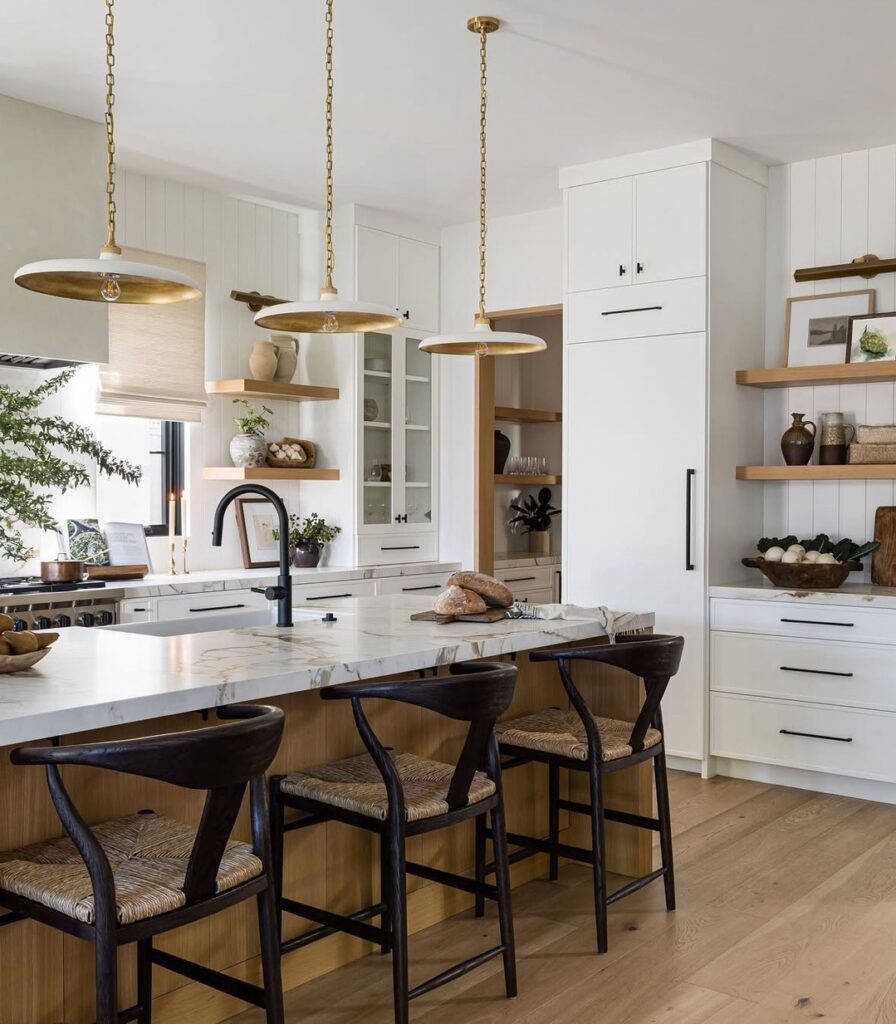
Functionality is provided by the kitchen lighting. It also serves as the main design feature.
Across the room, oversized, sculptural fixtures made from unexpected materials can change the character of a kitchen. These are forms of statement lighting.
A large woven pendant hangs over the kitchen island. The kitchen is modern farmhouse in style and uses a chandelier finished in antique brass. An industrial sconce sits above the open shelving.
Statement lighting provides necessary illumination while anchoring open-concept zones. It can separate the cooking area from the entertaining area and the dining area.
Handblown glass, patinated metal, woven fiber, and polished alabaster are fixture materials that create focal points.
Warm, soft lighting supports coziness. Color temperature is a factor in lighting selection, while cool-toned lighting energizes industrial and minimalist aesthetics.
Consider the ceiling height when choosing an oversized light. The centerpiece light should also be considered in relation to the room's scale and proportion.
Task lighting should be combined with ambient and decorative lighting. This layered lighting supports kitchen functionality.
In the kitchen, statement lighting combines form and function. The fixtures provide light while contributing a distinct visual element.
Standout lighting works with rustic, vintage, coastal, and contemporary styles. Its relevance extends beyond short-term trends.
Fisherman Kitchen Aesthetic
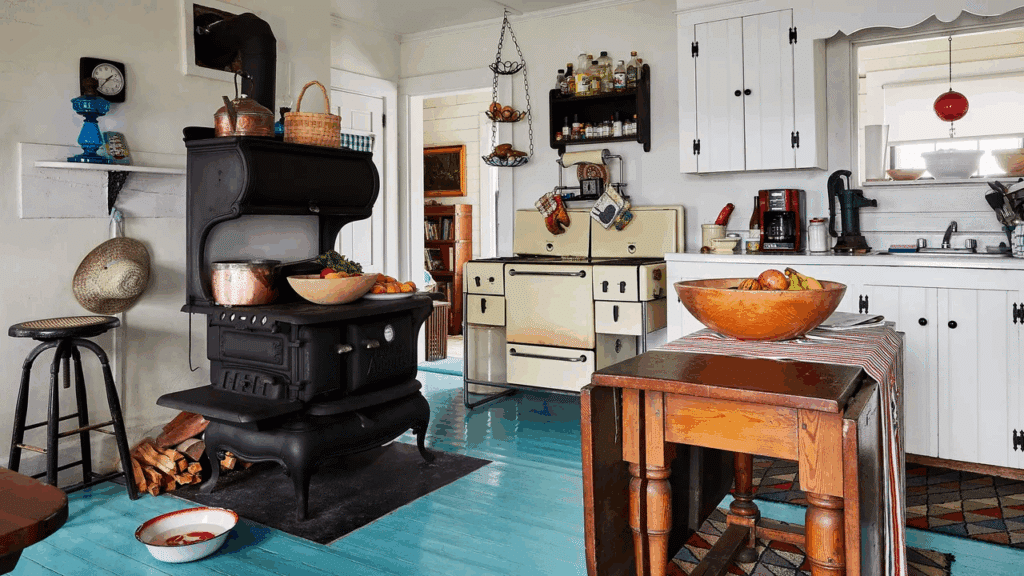
Nautical elements from fisherman cottages inform the kitchen design. Fisherman cottage design remains practical.
Weathered wood, galvanized metal, and a palette of navy blue, seafoam green, and sandy beige define the fisherman cottage aesthetic.
Enamelware accessories sit alongside a pendant light made from vintage rope and a shelf built from reclaimed driftwood. All three are used in the same setting.
A fisherman palette draws from coastal tones, with sandy beige, navy blue, and seafoam green shaping the color scheme.
Beadboard covers the wall, and butcher block forms the counter surface. Raw brass fixtures and utilitarian storage support everyday use in a fisherman kitchen.
In one corner, a light fixture takes its inspiration from netting. Vintage glass floats sit on a driftwood shelf, alongside hand-thrown pottery.
Hand-scraped oak flooring sits near painted checkerboard tile. The fisherman aesthetic uses muted color, emphasizes natural textures, and favors restraint.
A large farmhouse sink reflects working seaside kitchens. Open shelves and utilitarian storage reflect them as well, while the fisherman kitchen supports modern living.
Craftsmanship and simplicity form the design basis of a fisherman cottage kitchen. The approach balances rugged materials with a soft palette.
Cherry Red Kitchen Design
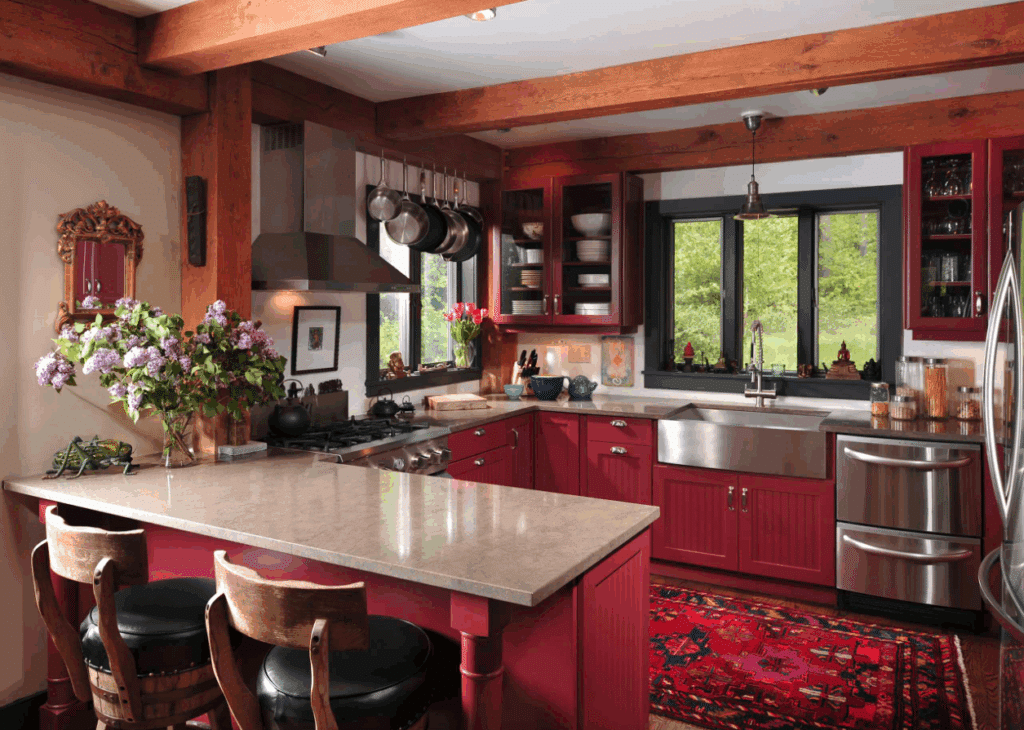
A neutral kitchen gives cherry red accents room to add energy and personality.
Small red accents can serve as focal points, but room-wide red is recommended instead. The stovetop holds a crimson Dutch oven, while a vintage red bar stool adds another detail. A mixer in candy-apple red brings the color to the counter.
Cherry red pairs with a color palette of sand, ivory, and soft taupe. Pair cherry red with warm neutrals.
Matte black hardware pairs with the main feature. Brushed brass hardware pairs with it too. Dark or brass hardware limits excessive playfulness.
A ruby backsplash is one way to include red accessories. Other options include vintage red tin signs and patterned red tea towels.
A cherry red retro refrigerator is an example of a statement appliance. This statement appliance can become a centerpiece.
Warm bulbs can moderate the harshness of red. Cherry red accents support individuality while retaining livability.
Kitchens are used for living, cooking, and gathering.
Fluted Glass Kitchen Design
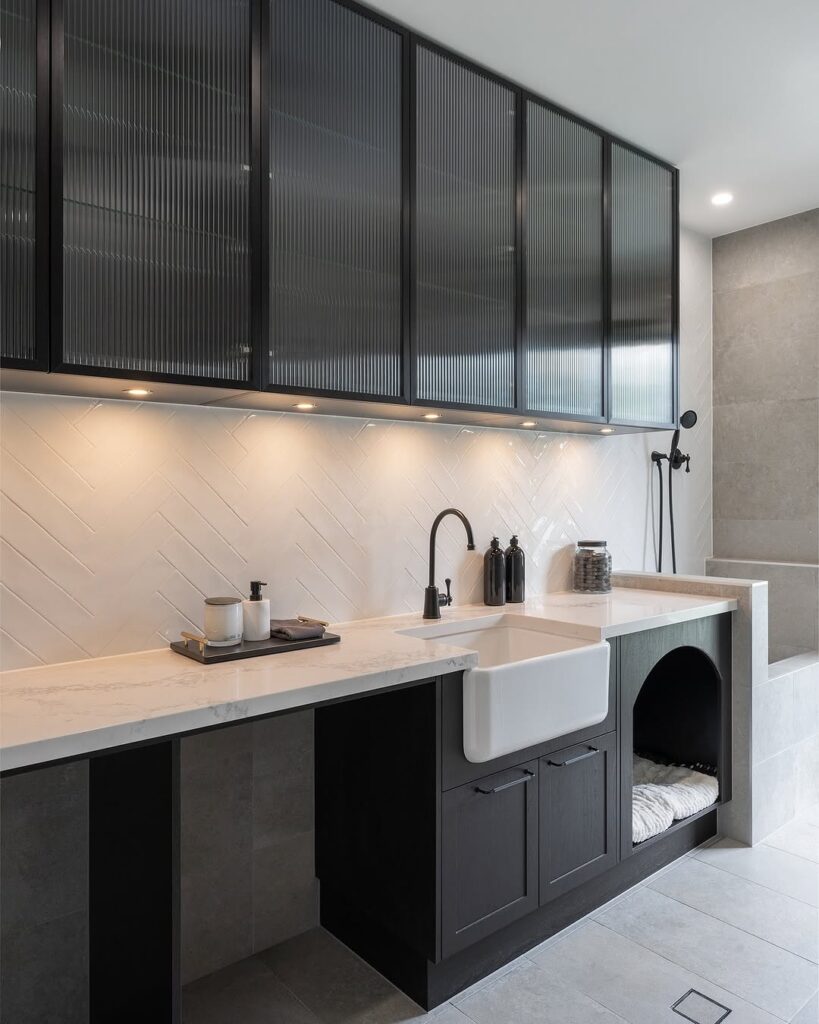
Textured fluted glass brings a surface detail to the kitchen. Fluted glass can be used in kitchen design while supporting daily practicality.
Pantry doors are one place to use fluted glass. It can also appear on cabinet fronts or partition panels, where it diffuses light, provides privacy, and retains brightness.
Fluted glass can display glimpses of kitchenware while balancing transparency with concealment. It can hide clutter without blocking every view.
Muted minimalist cabinetry works well with fluted glass. Warm gray, sage green, and dusty blue are color options for this pairing.
Brushed brass handles can be used with the fluted glass. A slim frame surrounds the glass.
A glass-front island is another way to apply fluted glass. The same feature can be used on overhead shelving.
This fluted glass backsplash offers a different option from traditional tile. Clean the fluted glass regularly using a microfiber cloth.
Fluted glass visually opens small kitchens. It can also bridge classic style and contemporary minimalism.
Fluted glass supports livable kitchen design.
Checkerboard Kitchen Design
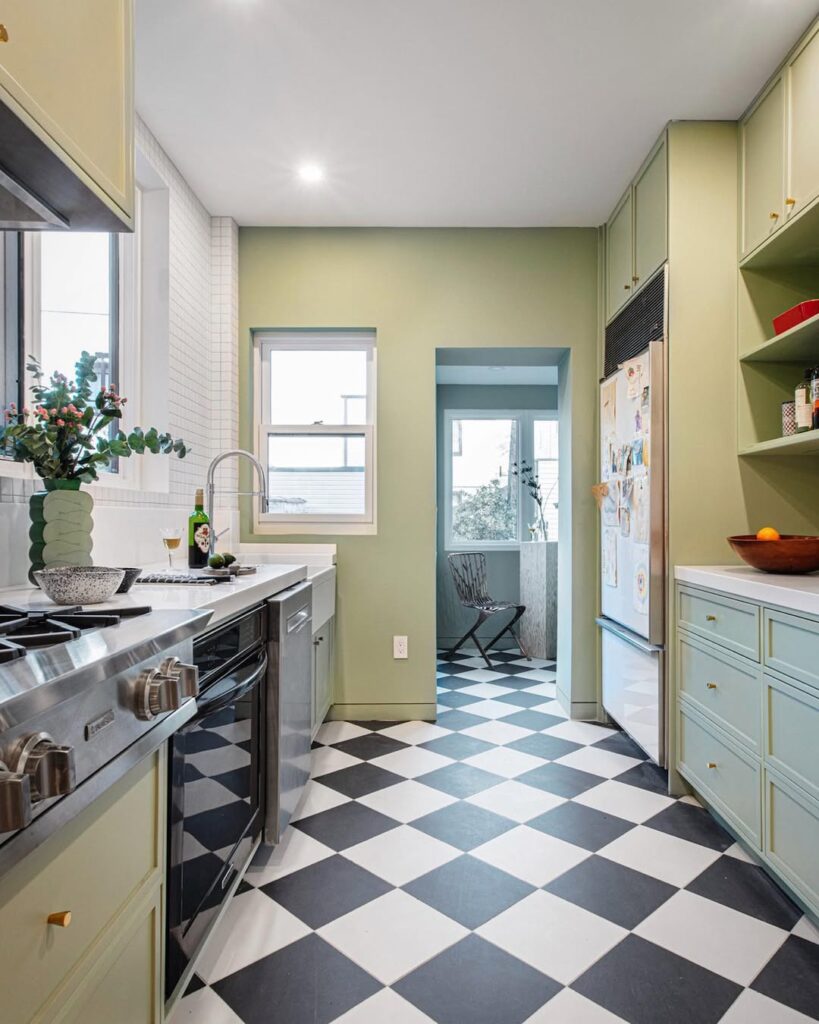
The retro checkerboard pattern is associated with mid-century diners and vintage European interiors.
A checkerboard floor can use muted palettes. Sage green with cream, terracotta with beige, and charcoal with off-white are three options.
Softer tones can reduce the boldness of a checkerboard pattern. Even so, the pattern has graphic impact.
Matte checkerboard tiles provide worn texture, while painted wood floors provide lived-in texture. Checkerboard floors can suit both rustic kitchens and modern kitchens.
Choose simple cabinetry to balance the pattern. Open shelving can balance it as well.
On a backsplash, the checkerboard pattern keeps the treatment to a smaller area. This approach avoids installing the pattern across the full floor.
An industrial pendant light complements the surrounding feature. A vintage-inspired sconce complements it as well.
Checkerboard design aligns with nostalgic home design and personality-driven interiors.
Checkerboard design is recommended for distinctive kitchens, with a qualification: avoid excessive visual impact.