15 Brown Kitchen Cabinets for Rich, Elegant Wood-Toned Kitchens
Brown kitchen cabinets are a familiar choice in interior design. Warm neutrals have also become more popular in current kitchens.
Brown kitchen cabinets can ground a space and add depth. Brown cabinets work with both modern accents and rustic accents.
Brown kitchen cabinets are timeless, versatile, and practical. They can suit new construction as well as kitchen layout updates.
Current kitchen trends give brown cabinetry a useful place in the room. These ideas consider both its appearance and its function. The right brown cabinet style can shape how a kitchen works while adding a clear visual character.
Cabinet finishes can range from matte surfaces to natural grain. These upgrades keep the cabinets functional and current.
Textured Brown Cabinets
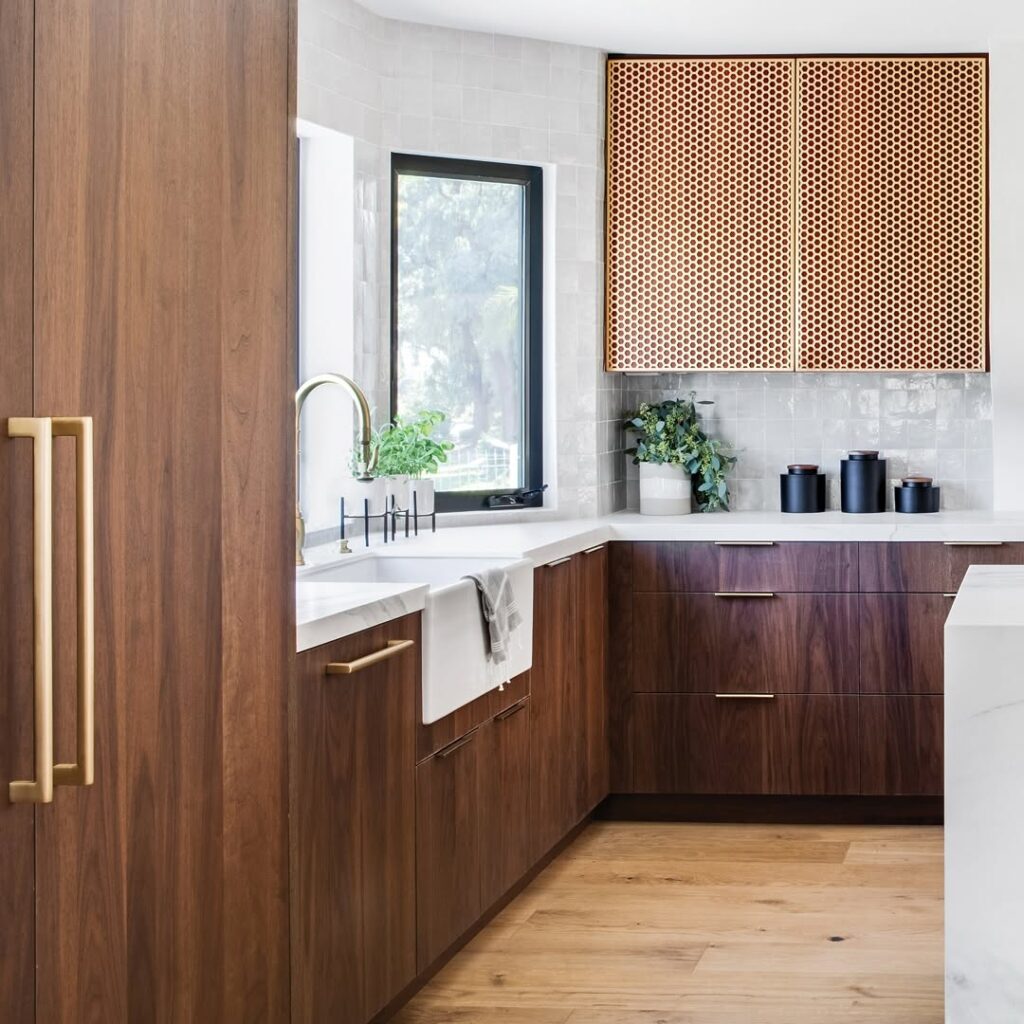
The textured finish gives brown cabinets more dimension than flat, smooth finishes. Hand-scraped walnut and wire-brushed oak are two ways to create this effect.
Ridges, grooves, and visible wood grain respond to natural light across the surface. These details change as the light moves.
Choose hardware and fixtures that suit textured brown cabinets. The cabinets can work in transitional, rustic, or contemporary interiors.
A matte finish emphasizes the wood's organic characteristics. A semi-gloss topcoat adds moderate sheen while preserving the raw appeal.
Textured brown cabinets pair with hand-thrown ceramic backsplashes. Stone countertops and concrete flooring also work with the cabinets.
Cabinet texture stands out against neutral color schemes. Textured cabinetry remains the focal point in minimalist surroundings.
Textured finishes suit busy family kitchens. Their tonal variation adds visual movement, while the surface helps hide fingerprints and smudges.
Small variations across textured surfaces give the cabinets a unique, artisanal quality. Textured cabinets suit detail-oriented homeowners.
Textured surfaces reflect visible craftsmanship. The finish makes that craftsmanship part of the cabinet design.
Two-Tone Cabinetry
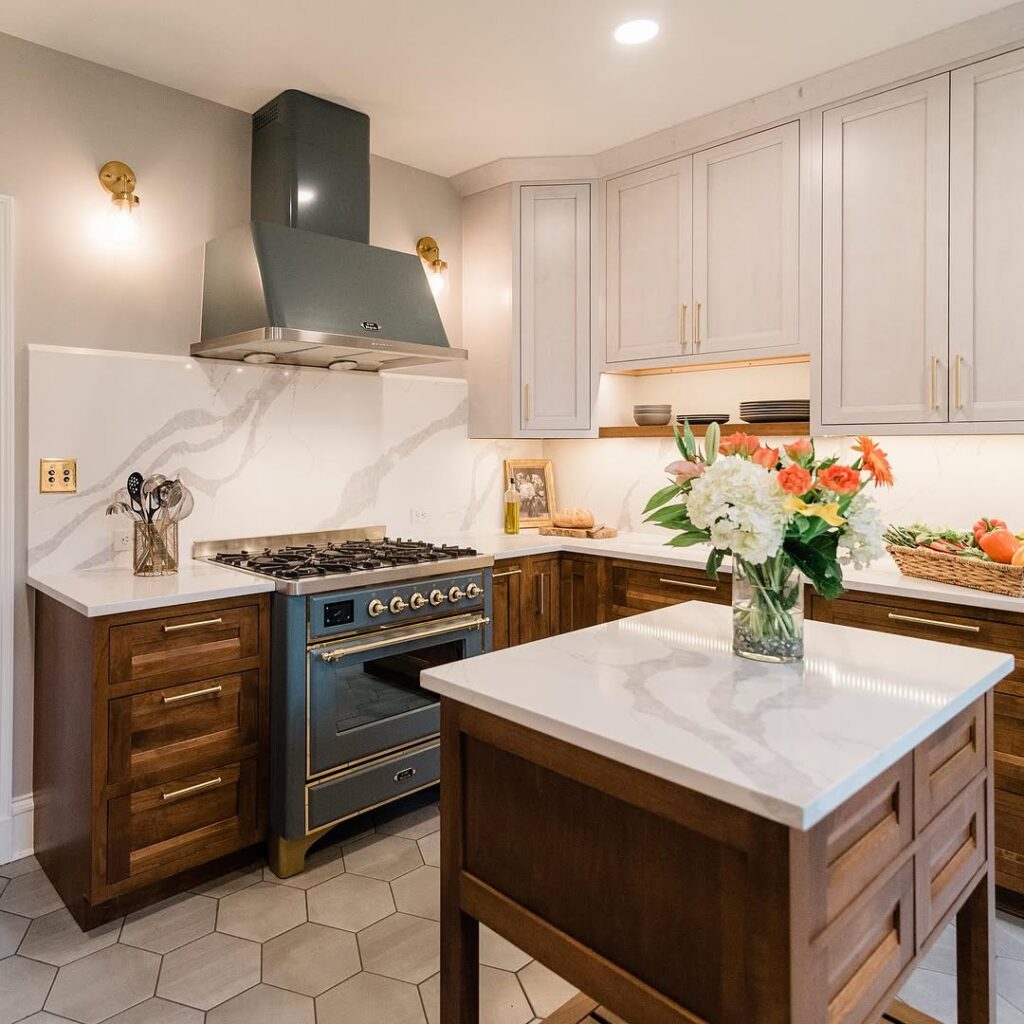
Brown cabinetry combines with a complementary shade to create color contrast. This two-tone approach uses two cabinet colors together.
A two-tone setup can use dark walnut lower cabinets with cream upper cabinets, or espresso lower cabinets with pale greige upper cabinets. The arrangement uses brown lower cabinets and lighter upper cabinets.
Lighter upper cabinets support an open feel, while darker lower cabinets provide contrast. The upper cabinetry stays lighter than the lower cabinetry, maintaining unity within the two-tone design.
Two-tone cabinetry suits a partial brown commitment while retaining brown richness.
Tone transitions can be guided by consistent hardware and matching worktops. A continuous backsplash is another way to link them.
Wood flooring with a neutral undertone and subtle grain can bridge cabinet color differences. This two-tone strategy suits modern, transitional, and farmhouse styles.
Two-tone cabinetry can reduce the need for a full renovation. It supports cohesion and contrast while allowing accessory updates and seasonal color changes.
Brown cabinetry supports personalization. A dual-finish approach demonstrates cabinet flexibility, and brown cabinetry can be dynamic.
Retro Kitchen Details
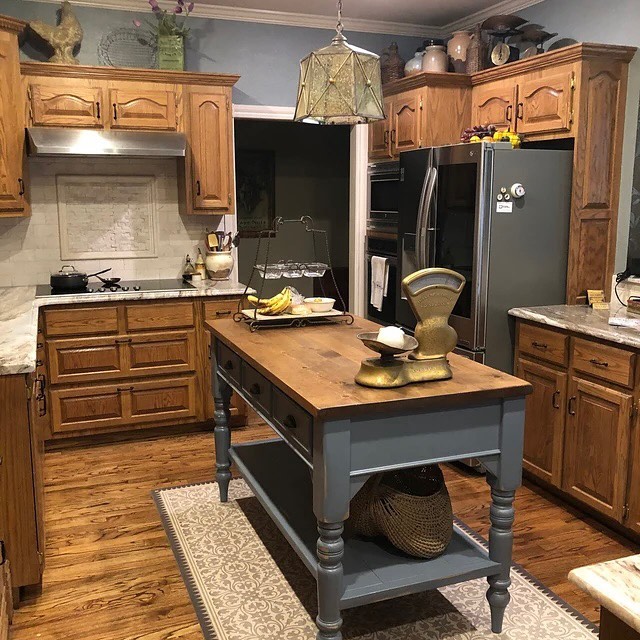
Nostalgic hardware and timeworn textures support lived-in character. Timeworn brown kitchen cabinets can carry this feeling through their surfaces, while nostalgic hardware reinforces it.
Traditional character comes through when retro elements are used carefully. Aged bronze handles, beadboard paneling, and antique-inspired fixtures help, while the dated look is avoided.
Warm wood tones such as mahogany, chestnut, and tobacco suit vintage aesthetics. These tones work with the brown kitchen cabinet.
Classic subway tile, a checkerboard floor, and scalloped wood trim pair with a timeworn brown cabinet.
Pulls shaped like cups and matching latches reinforce a retro style. Unlacquered brass and wrought iron are the available finishes.
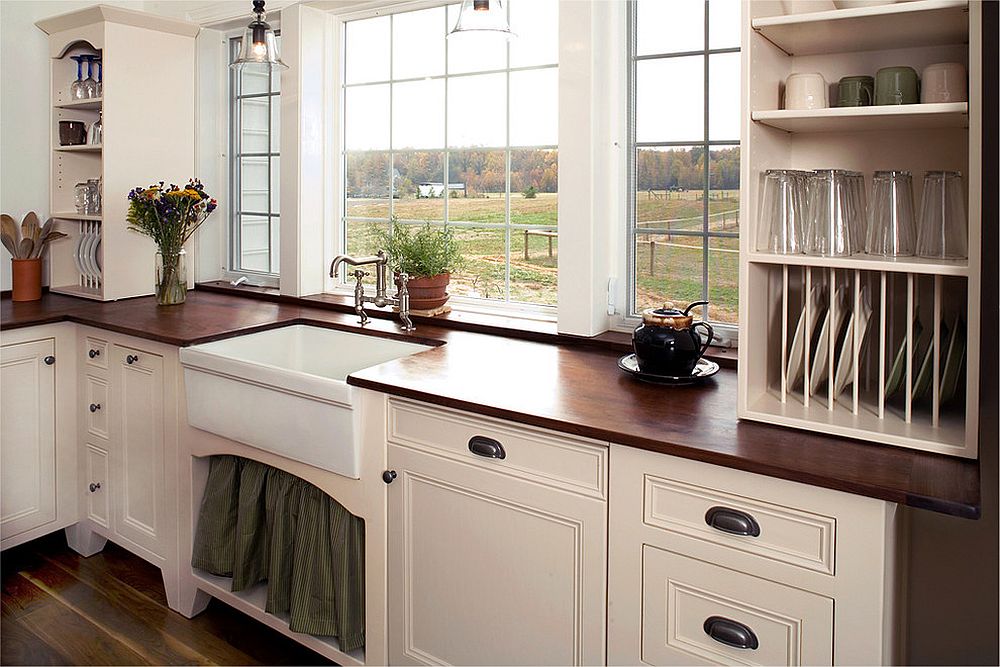
A painted brick wall can accompany an open plate rack, a retro lighting fixture, and a farmhouse sink. Consider a farmhouse sink and an enamel range.
Modern drawer hardware and soft-close hinges support usability. The vintage kitchen exterior can still reflect heritage.
Brown cabinets pair with olive green and warm cream.
Vintage design gives priority to visible workmanship, aged surfaces, and personal character. It contrasts with sterile minimalism.
A vintage-inspired brown-cabinet kitchen honors the past.
Countertop Contrast
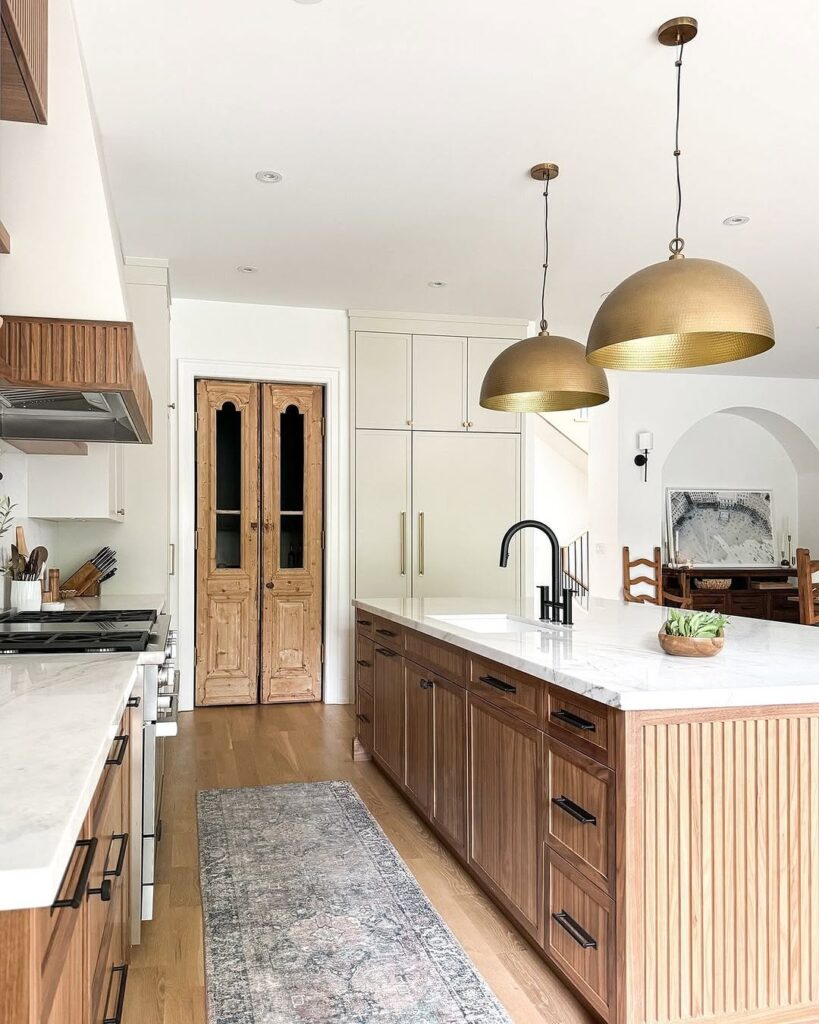
A brown cabinet pairs with a contrasting countertop. The countertop separates the cabinet elements visually.
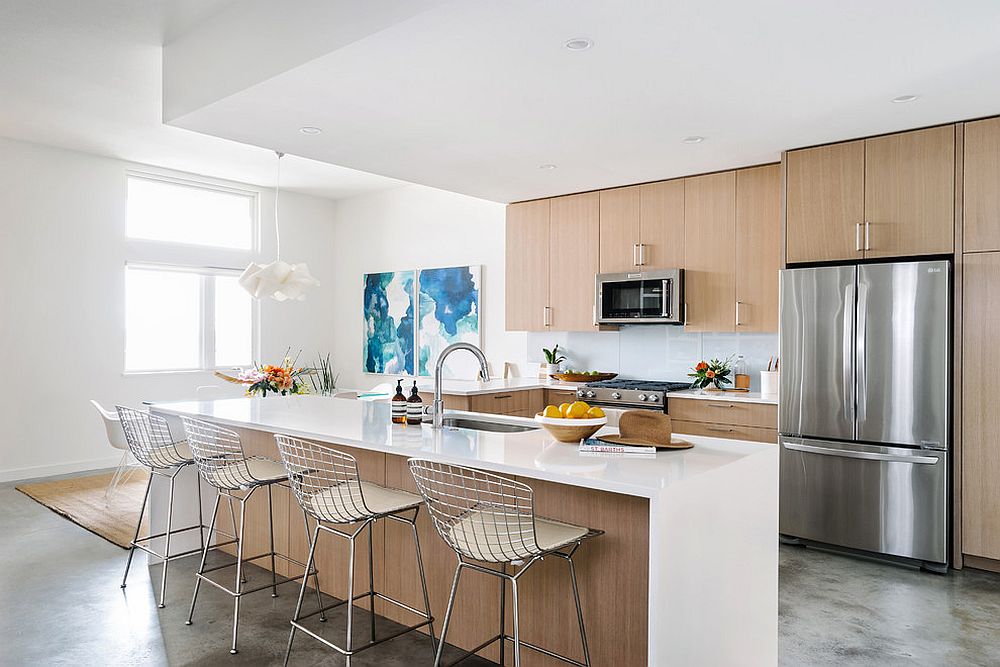
In a kitchen with light countertops, dark wood cabinetry provides balance. White quartz, pale granite, and travertine pair with brown cabinets and increase light reflection.
Pale counters reflect more light, which can make a small kitchen with limited space feel more open. Pairing them with dark cabinets in chocolate or espresso creates the impression of greater room.
A large kitchen can use countertop contrast to create clear zones. Prep areas and storage areas read as separate parts of the room.
Butcher block gives a rustic effect and pairs with mid-tone browns. Honed marble and concrete create a contemporary effect, while patterned surfaces such as veined stone or terrazzo interact with the wood grain.
Countertop details such as the edge profile and backsplash material should coordinate. Neutral countertops can retain interest with rich-hued cabinets such as chestnut or cocoa.
Contrasting countertops suit a dynamic contrast without creating an overcomplicated look.
Different countertop tones balance natural warmth against crisp finishes. The countertop choice can also personalize the kitchen palette.
Cashmere Cabinets
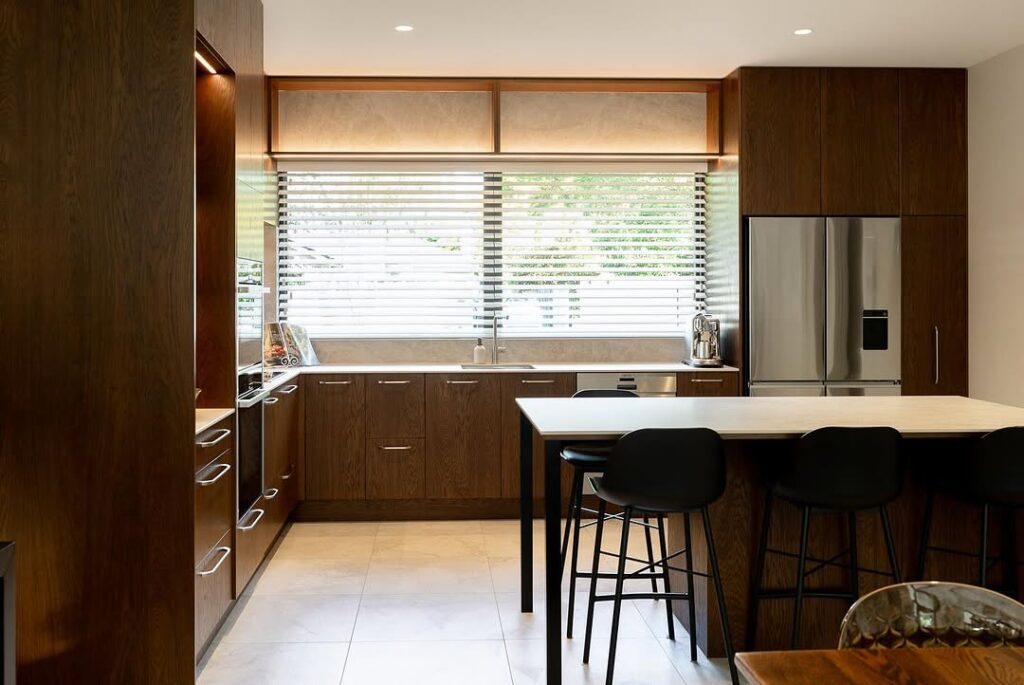
Cashmere brown cabinets have subtly warm taupe and beige undertones. They work with modern and transitional styles, support light interiors, and offer an alternative to white and gray.
Open-concept living works well with cashmere cabinets. White marble is one countertop option, while limestone is another.
Brushed nickel and aged bronze hardware complement cashmere cabinets. Creamy white walls and soft sage walls suit the cabinets as well.
Terracotta tiles complement cashmere brown. With its high versatility as a base color, cashmere brown also works with oak flooring and linen upholstery.
Layered lighting helps cashmere brown suit calm kitchens. The color also works with clean lines and integrated appliances.
Dark-tone warmth comes through without making the room feel smaller. Cashmere brown reflects ambient light, suits small kitchens, and avoids visual shrinkage.
Cashmere brown sits between tones rather than at the stark white end of the range. It offers a midpoint between lighter and darker colors.
Built In Lighting
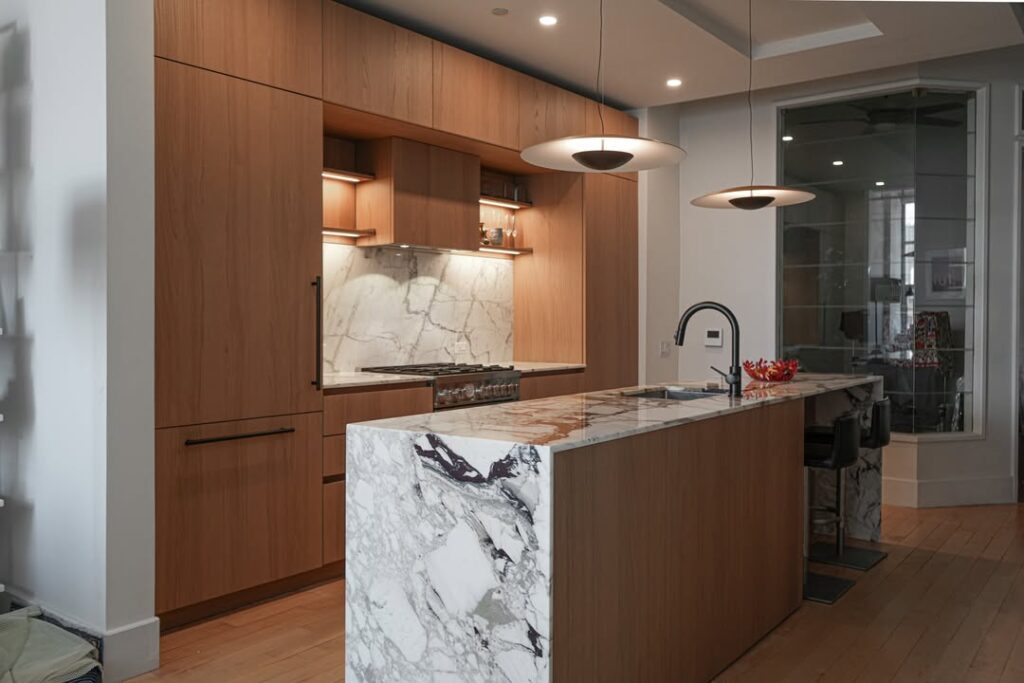
Placed lighting supports both the function and presentation of brown cabinetry.
Integrated lighting highlights the wood grain and finish while enhancing usability. It can be installed under cabinets, inside cabinets, or in the toe-kick area.
LED strips fitted beneath cabinets improve visibility and reduce shadows. They also illuminate chopping and cooking tasks.
Warm white LEDs pair well with dark cabinets in walnut or coffee tones. They enhance the richness of the finish and avoid a cold hue.
Overhead directional lights and puck lights fitted within cabinets with glass doors can spotlight curated display items. The two light sources draw attention to the pieces from above and from inside the cabinets.
Toe-kick lighting provides pathway illumination and supports pathway safety. Smart controls allow settings to be adjusted for the time or activity, including dimming and adjustment.
Open-shelf decor becomes a display feature when integrated lighting is used. Lighting in deep drawers and pull-outs increases functionality and reduces the need for external illumination, while open-shelf lighting softens structural wood.
Cabinet lighting integration feels natural when it supports storage, display, and illumination. Built-in lighting can handle all three.
Eco-Friendly Brown Cabinets
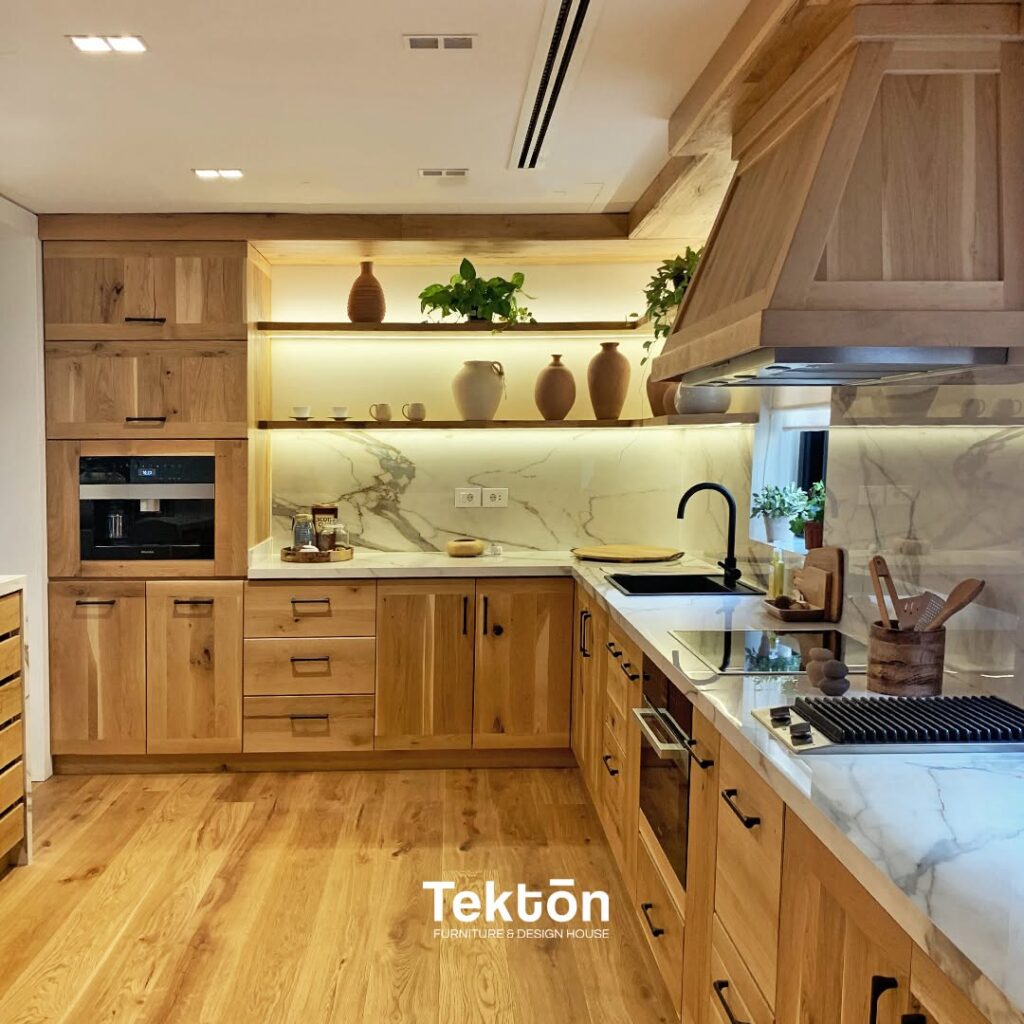
Responsible sourcing gives brown cabinets a role in sustainability. Responsibly sourced brown cabinets can also support environmental goals.
Cabinet wood options include FSC-certified wood, bamboo, and reclaimed timber. FSC-certified wood supports sustainable forestry.
Low-VOC stains and water-based lacquers are cabinet finish options. Both can lower indoor air pollution.
In one kitchen, cabinet doors made from recycled or repurposed materials can reduce landfill waste. These recycled or repurposed doors have a rustic quality.
Recycled glass countertops pair with sustainable cabinets. Stone countertops are another pairing for sustainable cabinets.
Soft-close hinges support cabinet function, while integrated pull handles add another practical feature. Modular inserts can also support waste efficiency.
LEDs and solar-powered accents support low-impact design. Sustainable flooring options include durable cork and reclaimed hardwood, and both materials are durable.
Sustainable brown cabinets connect high design with mindful living. The cabinets keep those two ideas together in the kitchen.
Personalized Kitchen Accents
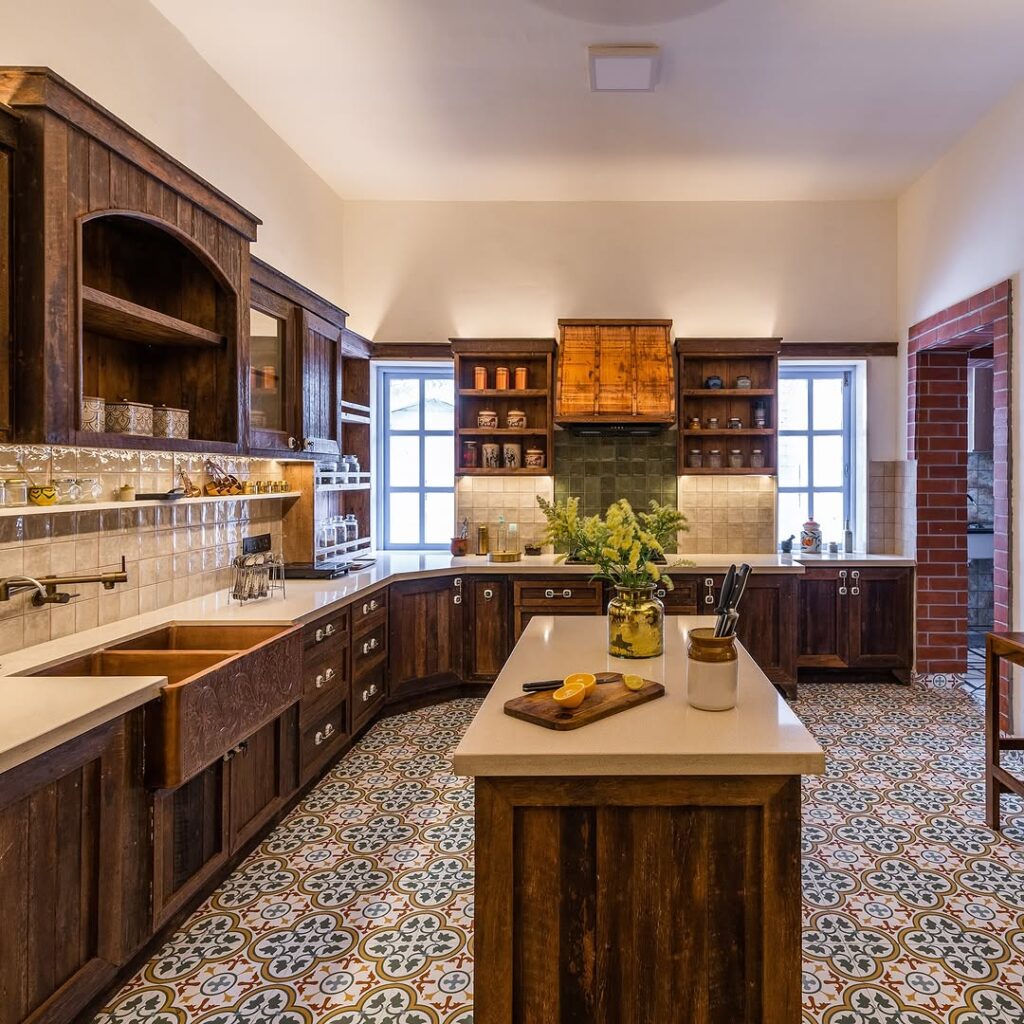
Personalized accents pair with the surrounding design while adding individuality and character. Examples include custom hardware, unique backsplash tiles, and drawer fronts painted by hand.
Personalized accents can preserve design cohesiveness.
Hardware can come from local artisans or family inheritance. Ceramic knobs and engraved metal pulls function as functional art.
Hand-glazed backsplash tiles with a subtle pattern contrast with brown cabinetry. They add visual interest.
On open shelving, vintage glassware, heirloom pottery, and family recipe books can provide practical use as well as display.
Custom accents such as monogrammed cutting boards and custom range hoods can change the feel of cabinetry. Color-matched trim is another option, and none of these accents require major alterations.
Earthy greens, muted blues, and terracotta pair with brown cabinets. These wall colors support a cohesive backdrop.
Unique-shaped pendant lights and reclaimed wood stools can each serve as a functional element. Together, they extend a personalized theme.
Personalized accents connect the cabinetry with the homeowner's style. Individuality depends on meaningful detail, not extravagance.
Rustic Cabinet Retreat
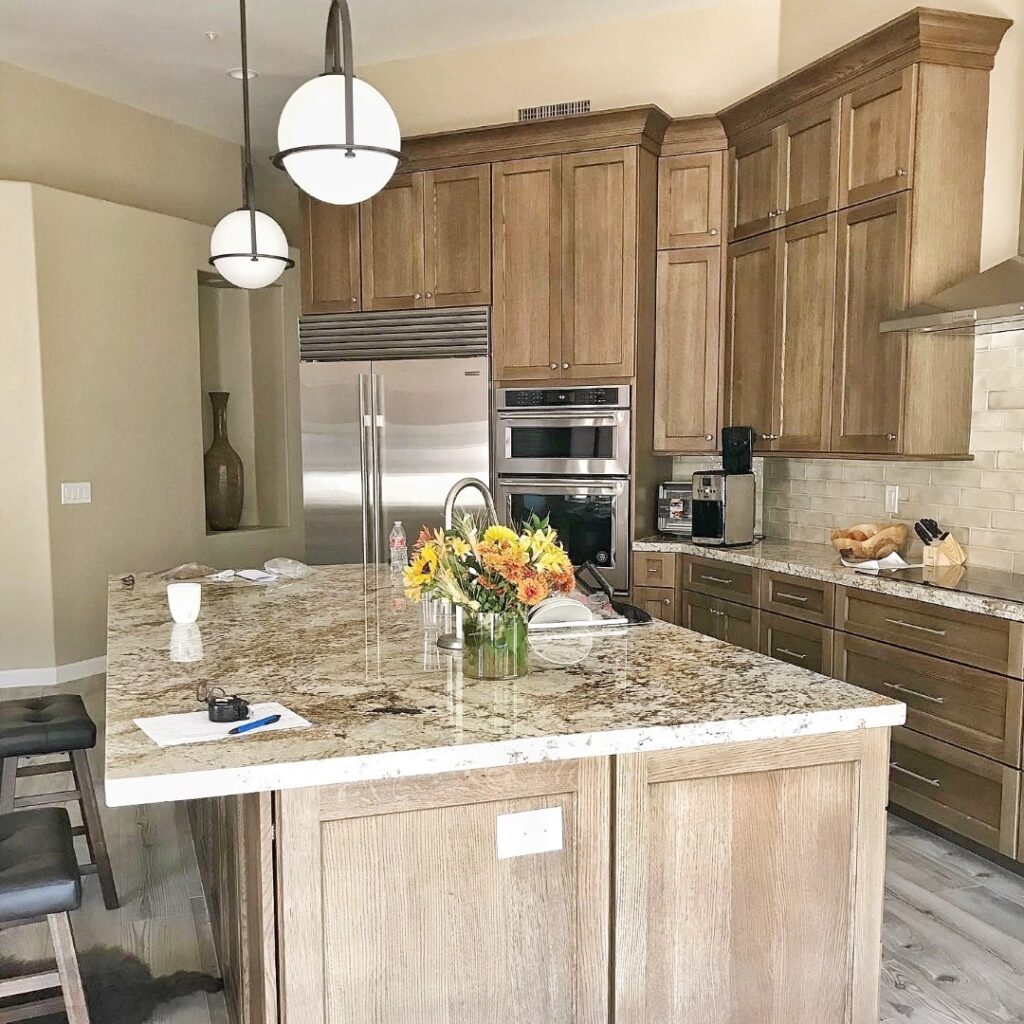
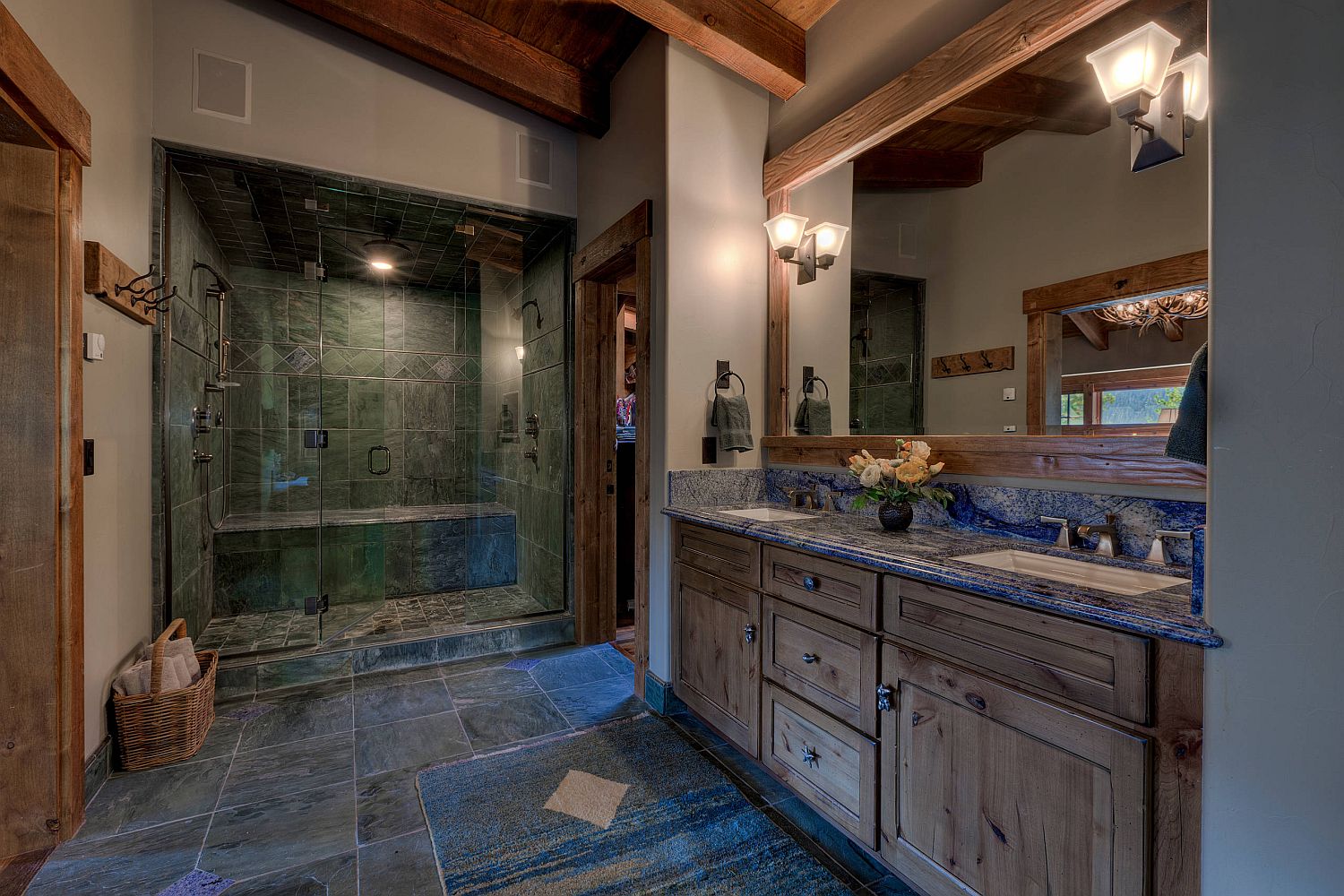
Rustic brown cabinets suit authentic kitchens. Their wood shows visible grain, with weathered and distressed finishes, plus hand-hewn edges.
Reclaimed timber and aged oak bring organic texture to the cabinets. That texture supports heritage character.
Rustic cabinets pair with a farmhouse sink, open shelving, and stone countertops. The farmhouse sink is one of the kitchen elements that fits this style.
Exposed beams suit rustic kitchens. A shiplap backsplash does too, while wrought iron pulls and antique brass knobs suit rustic cabinets.
Pendant fixtures and wrought iron chandeliers can use warm Edison bulbs.
The rustic palette works with three parts of the room: terra cotta flooring, butcher block countertops, and an off-white wall color.
Everyday wear can disappear into the cabinet texture. Rustic brown cabinetry uses unfussy finishes, accepts imperfections, and appeals to nature-inspired interiors.
Rustic style prioritizes comfort, warmth, and sense of place. These three qualities shape the style.
Smart Storage Brown Cabinets
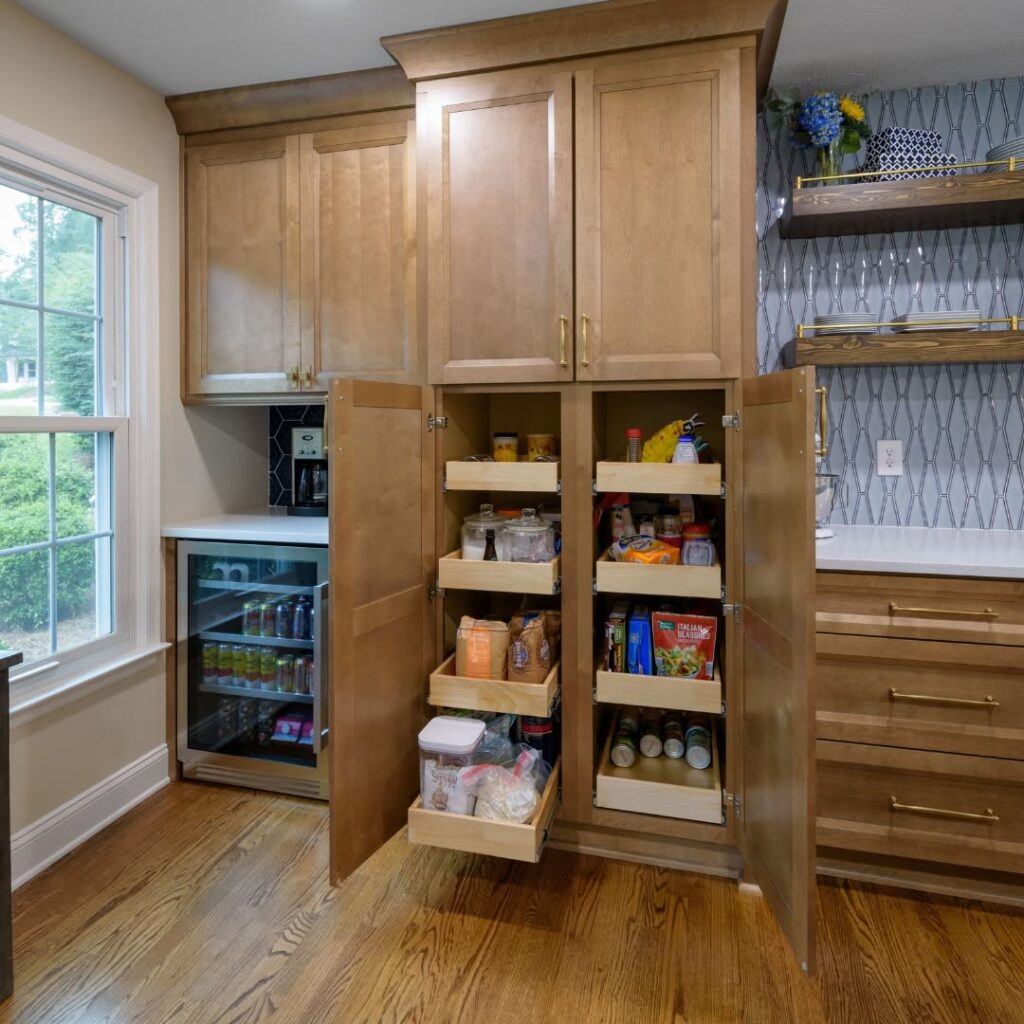
Built-in smart storage is part of these brown kitchen cabinets. Built-in storage maximizes kitchen space and maintains an uncluttered appearance.
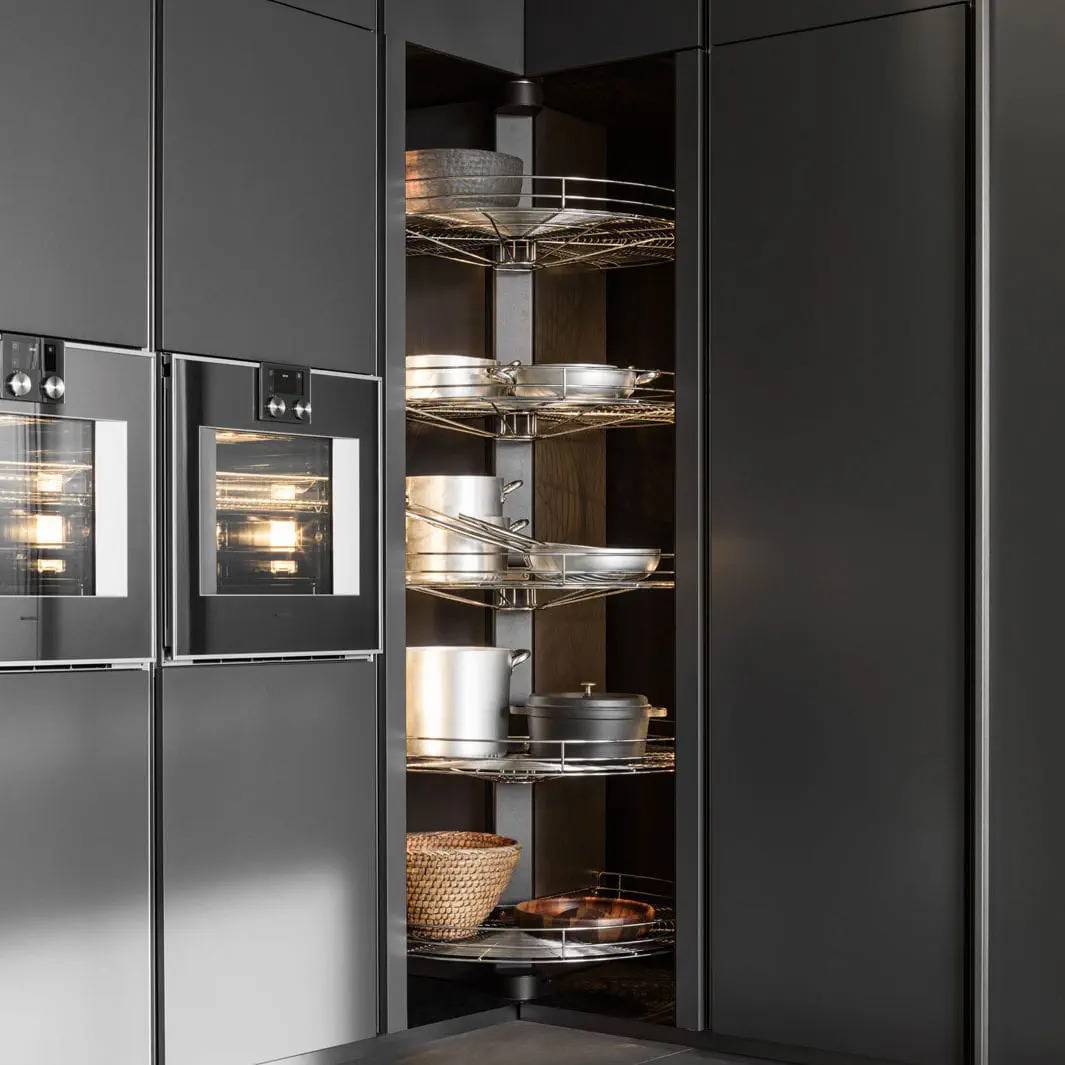
Corner carousel units make use of awkward cabinet space. Deep drawers that pull out can also improve daily functionality.
Full-extension drawer slides provide deep-drawer access. Hidden toe-kick compartments behind the toe kicks use otherwise wasted space.
For baking trays and cutting boards, use vertical dividers. Spices stay reachable in tiered pull-outs.
Inside the cabinet, rollout shelves, pull-down racks, and appliance garages can be customized to cooking habits. These storage features make the interior more useful.
Brown cabinet finishes keep a neutral exterior while concealing organized interiors. Options include walnut, espresso, and chocolate oak.
Integrated cabinet handles reduce visual clutter, while soft-close technology reduces noise. Smart storage is recommended for open-plan living.
In a kitchen, smart storage is efficient and accessible. It suits order-focused homeowners.
Moody Brown Cabinets
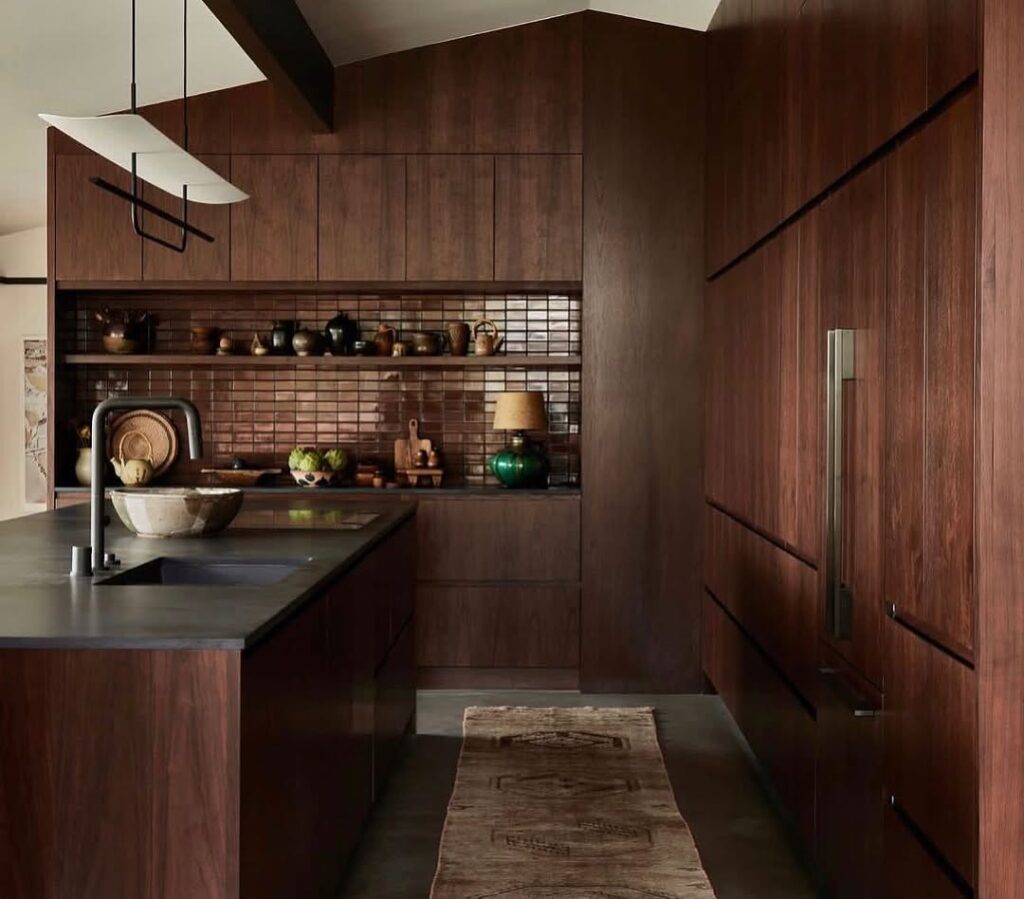
Darker kitchen palettes are becoming increasingly popular. These darker palettes appeal to people seeking dramatic character.
Moody brown cabinets establish an atmospheric setting. Undertones such as espresso, truffle, and charcoal-infused walnut suit statement interiors.
White marble counters and warm brass fixtures pair with deep brown hues. High-contrast surfaces preserve cabinet dominance, provided the room is not overpowered.
Moody brown cabinets pair with vertical subway patterns and zellige tiles. Backsplash colors in soft neutrals keep these pairings controlled.
Integrated LEDs and aged-metal globe pendants enhance shadow and tone variation. The lighting highlights the moody brown depth of the cabinets.
Interior lighting turns cabinets with glass fronts into a display for dinnerware and specialty items.
The kitchen can serve as both a social hub and a creative hub. Moody brown cabinetry pairs with herringbone oak flooring or honed slate flooring, and moody brown palettes are recommended for intimate social kitchens.
In a kitchen, moody brown cabinetry creates a warm, dramatic, and permanent presence.
Matte Brown Cabinets
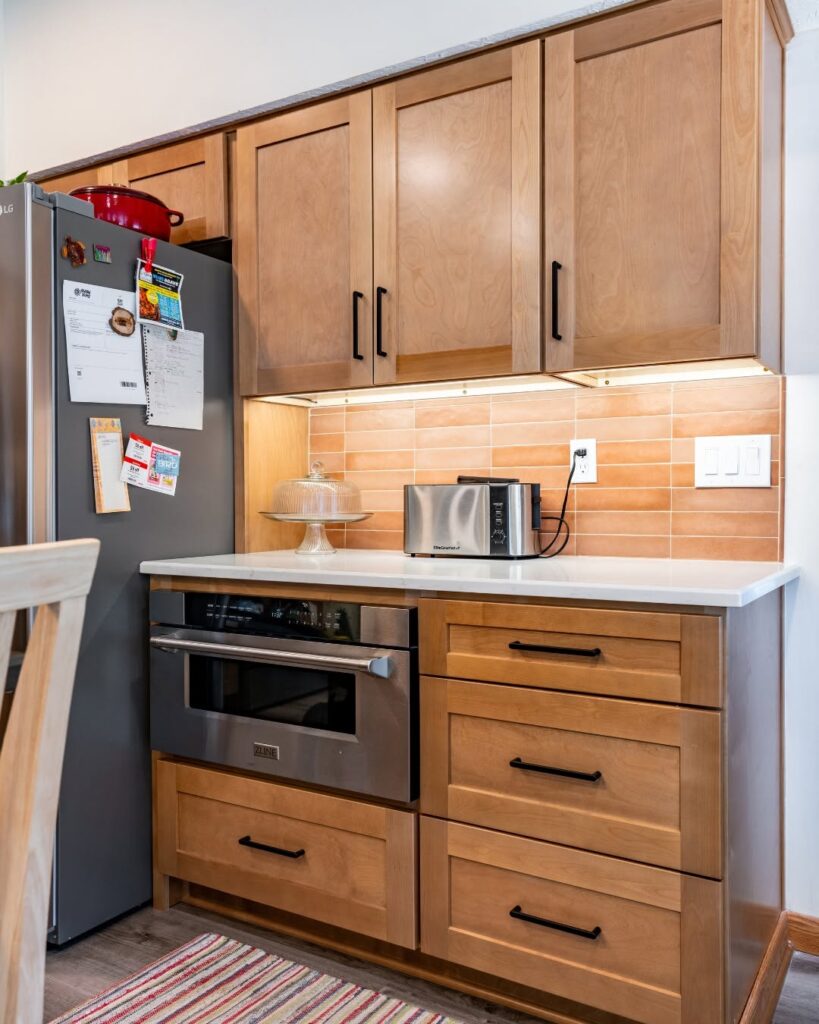
The velvety surface of matte brown kitchen cabinets absorbs light instead of reflecting it. This finish can suit urban and rustic interior styles.
Matte finishes work well in open spaces because they eliminate glare. This is especially useful when natural light and artificial light share the room.
Matte surfaces are more muted than glossy cabinetry. The brown cabinet finish therefore has a quieter visual quality.
Busy households can benefit from matte cabinets because they make fingerprints and small smudges less noticeable. Brushed hardware works well with them. Textural backsplashes and solid-surface countertops do too.
Matte brown comes in shades such as mushroom, clay, and espresso.
Matte brown cabinets pair with engineered hardwood or polished concrete floors. The matte surface supports a cohesive look with either flooring choice.
Interior designers use matte cabinetry in understated kitchens. The finish gives these kitchens an upscale quality.
Matte finishes are practical and low-maintenance. They suit people who prefer balance in a kitchen finish.
Oxblood Cabinetry
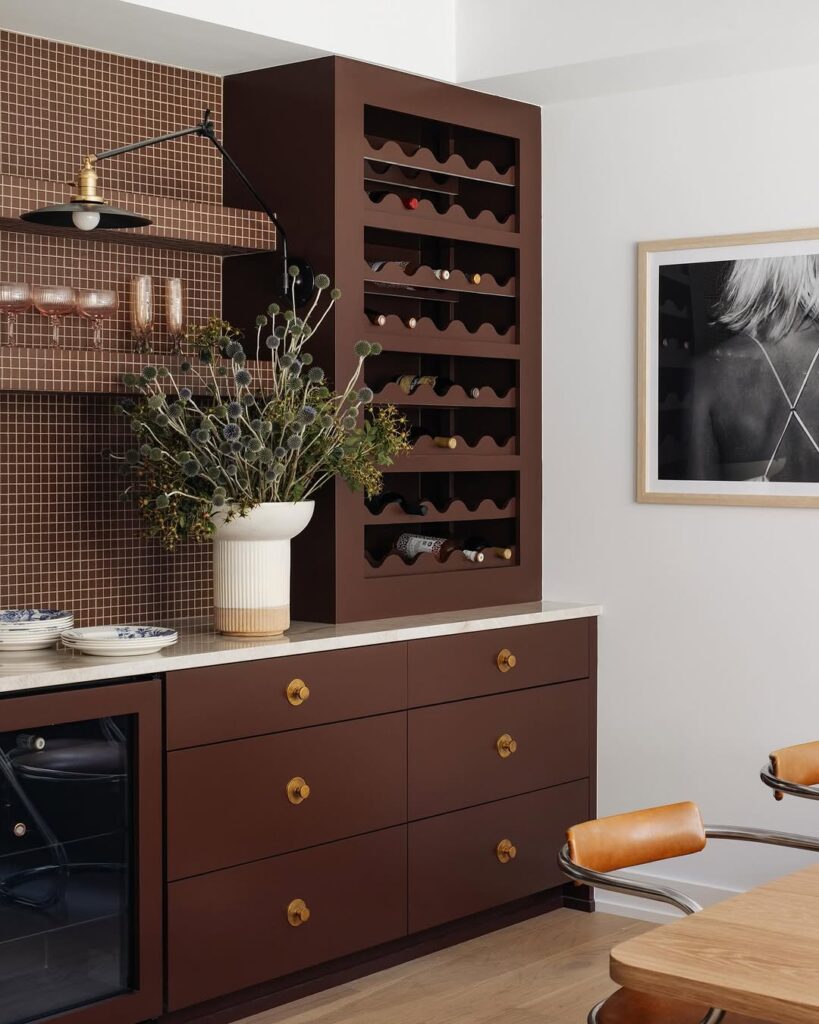
The cabinets are oxblood brown with a deep burgundy undertone over a wood-toned base. Oxblood cabinets provide richness and refinement.
A subtly reddish hue gives the oxblood cabinets their character. They pair with matte black fixtures, brushed gold accents, and brass hardware, and suit both contemporary and traditional interiors.
Oxblood brown works well with natural light. Natural light reveals its warm pigments.
Creamy quartz countertops and a veined marble backsplash pair with the oxblood cabinetry. Light oak flooring or neutral stone tile creates contrast with the cabinetry.
Designers favor the oxblood tone for kitchens that move beyond neutral colors.
In an open-plan kitchen, oxblood cabinetry can serve as a visual anchor. It supports a moody, upscale style.
The slightly darker oxblood cabinetry is easy to maintain. Its darker tone conceals minor smudges and tolerates daily wear.
Oxblood cabinetry is increasing in popularity and supports a bold expression.
Open Shelf Arrangement
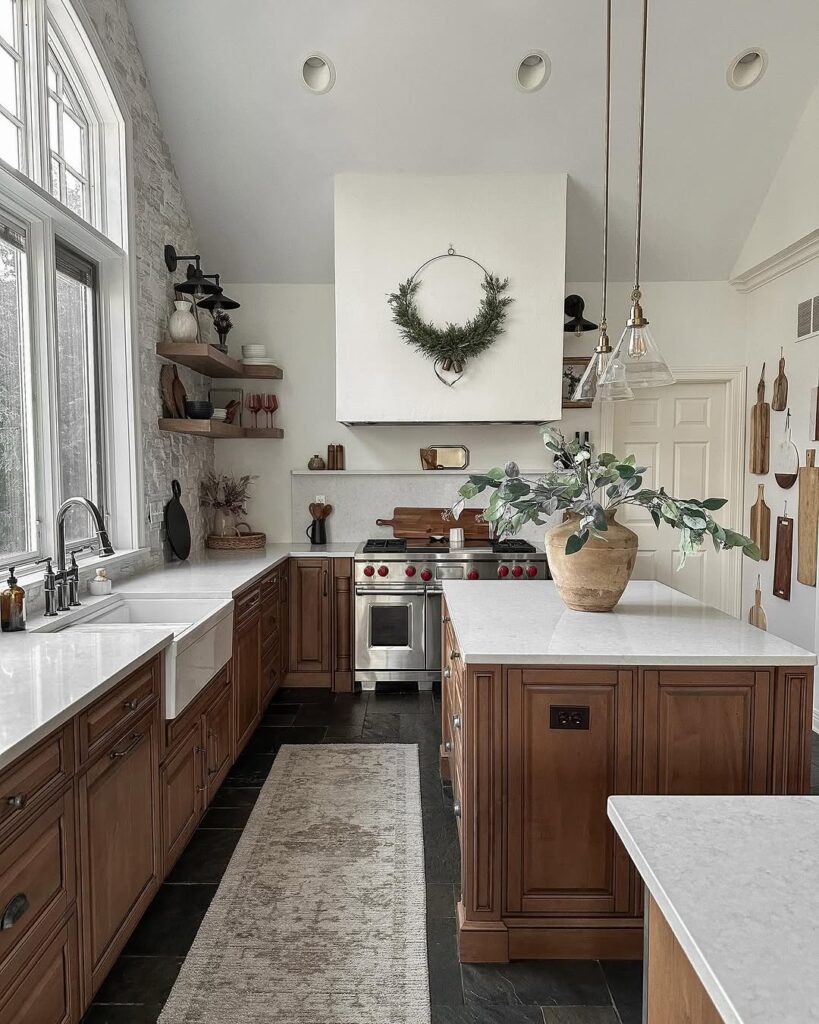
Open shelving gives the kitchen display space while reducing visual weight. It works with brown cabinetry and mixed storage, adding lighter elements without reducing function.
Open shelving provides display opportunities. Shelves can use cabinet wood, metal, or glass.
Place open shelving near cooktops and prep zones for quick access. This placement also supports an uncluttered layout.
Reclaimed wood and powder-coated steel give the shelving visual texture without making the look too heavy. This shelf mix pairs with a dark brown cabinet in espresso or walnut.
Shelf lighting supports everyday usability. Ceramics, cookbooks, and greenery can be displayed for a more personal arrangement, while lighting placed above or beneath the shelves highlights those pieces.
Airiness can be especially useful in smaller kitchens, where full cabinetry feels closed. Open shelving introduces that airiness, while mixed storage still benefits the smaller kitchen.
Closed storage hides clutter, while open storage showcases curated pieces. Together, the two types of storage create a contrast between concealed and displayed items.
Mixed storage balances functionality and style. Designers frequently use both open and closed storage, and that contrast can modernize brown cabinetry.
Mixed Material Brown Cabinets
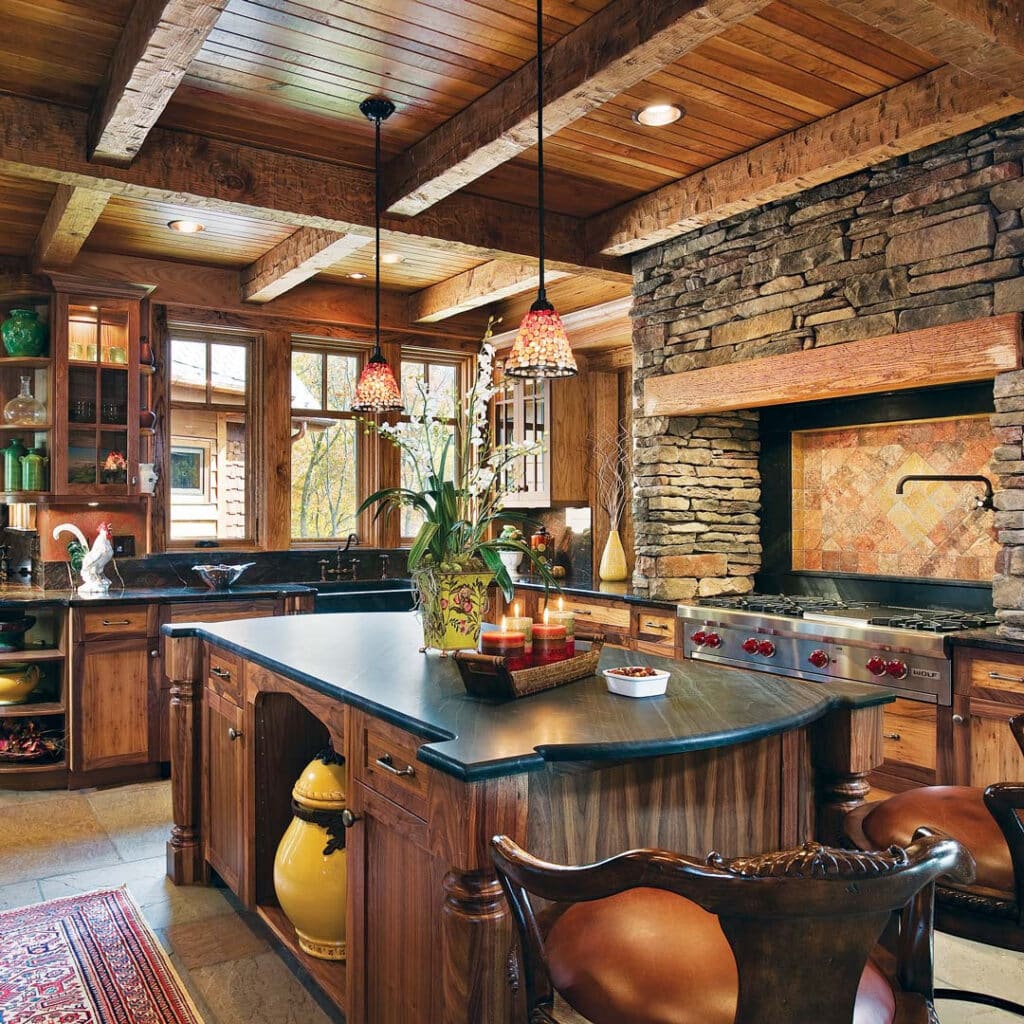
Metal, stone, and glass can bring different surfaces into the kitchen. Brown kitchen cabinets serve as the anchor among these mixed materials.
Wood tones provide warmth within mixed surfaces. The combination also balances the materials and prevents visual monotony.
In one kitchen, walnut or chestnut cabinetry can combine with fluted glass doors, metal mesh inserts, and concrete countertops. The mixed materials create contrast in both texture and tone.
Darker brown cabinet bases pair with lighter wood upper cabinets. Ribbed metal accents add another material between the darker bases and lighter wood frames.
Brown wood with stainless steel supports an industrial style. Brown wood with marble supports a luxurious style, while mixed materials support adaptability.
Woven cane panels suit transitional kitchens. Black iron handles are another option, and they are recommended for farmhouse kitchens.
Brown cabinets anchor cooking areas. Unique surface materials can highlight prep stations and islands, while selected finishes define open-concept zones.
Layered materials suit homeowners seeking dynamic cohesion. Combining several materials keeps the kitchen visually connected without making every surface identical.