10 Modern Farmhouse Kitchen Ideas From Updated Century Homes
Kitchen design can bring warmth, practicality, and character to the room. Modern farmhouse style remains relevant for today's kitchens.
Modern farmhouse style combines rustic details with contemporary function in a streamlined form. The result is a cozy kitchen that works for busy families and design enthusiasts alike.
The kitchen is a central gathering place in the home. Natural textures and neutral palettes give it a grounded look. Smart innovations can make the space easier to use while also strengthening its style.
Whether the project is a remodel or a new build, start by identifying the details that shape a modern farmhouse kitchen. These defining elements should fit the way people live today.
Modern Farmhouse Shelf Displays
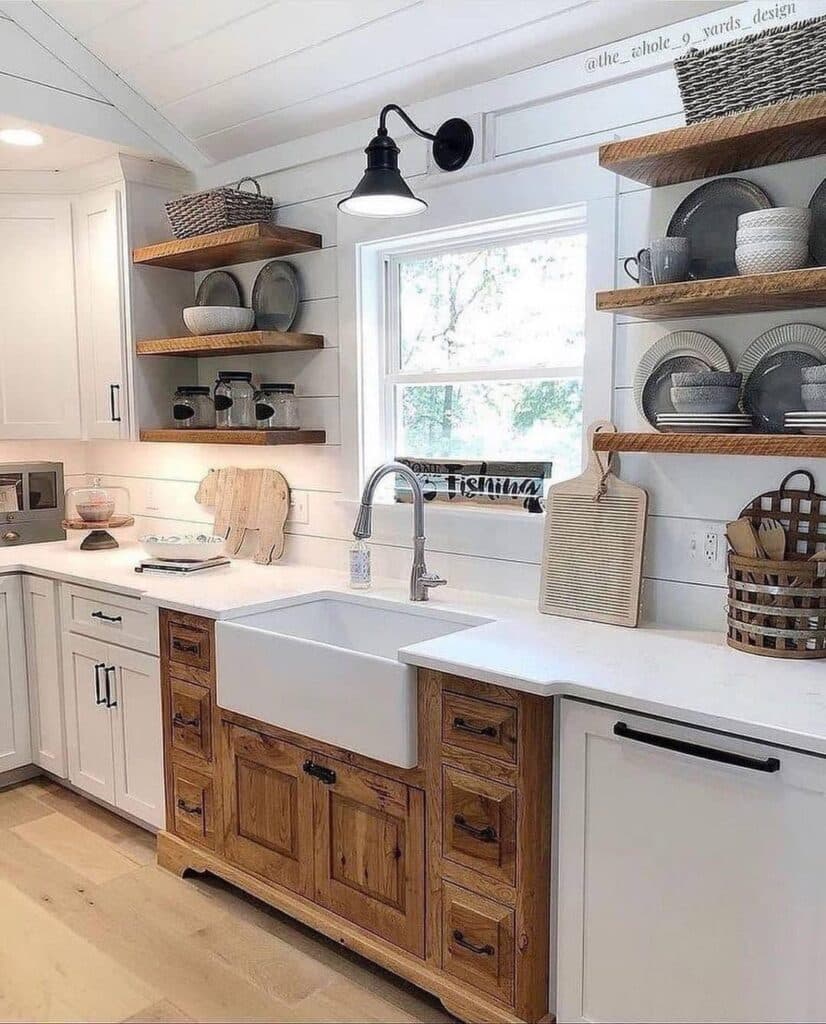
Open shelving provides both storage and display in a modern farmhouse kitchen. The shelves keep selected kitchen items visible.
Dishware and greenery add useful detail to the display. A reclaimed or whitewashed wood shelf can hold vintage crockery, glass canisters, and greenery. Polished surfaces soften the natural texture of the wood.
Group shelf items by color and material to reduce clutter. White ceramics and clear jars keep the arrangement simple, while woven baskets add warmth and texture.
Open shelves can use floating brackets or hidden supports. Hidden supports preserve clean lines. Maintain shelf spacing for accessibility and clutter reduction.
A subway tile wall works with open shelving and a kitchen island. Shelf lighting above or below the shelving provides ambient lighting.
Open shelving keeps essentials used each day within reach. For personalization, it can take the place of upper cabinets.
In cabinetry-heavy layouts, use open shelving to break up the cabinetry.
Farmhouse Breakfast Nook Seating
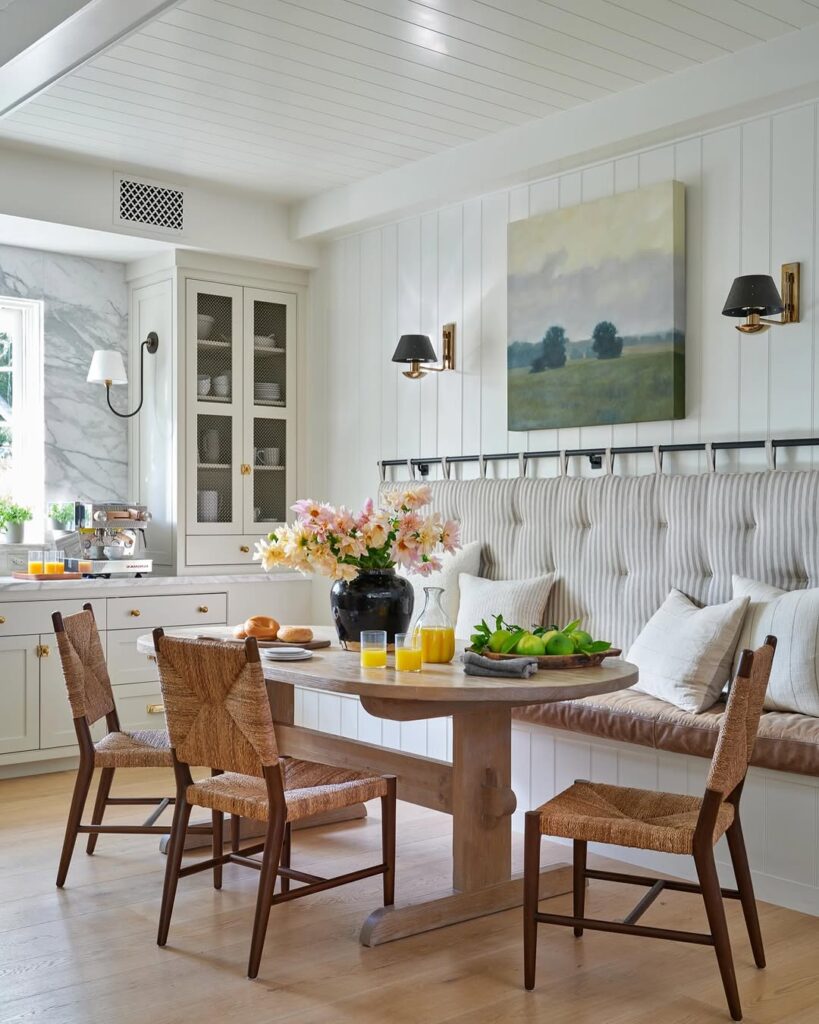
A farmhouse-style nook provides a casual dining spot.
A breakfast nook can fit in a corner or beneath a bay window. The bench has hidden storage for linens, games, and kitchen tools.
Gingham, ticking stripe, and neutral linen fabrics suit the nook. Upholstered cushions and throw pillows with patterned fabric should match the drapes and nearby textiles.
The table sits in the center of the nook and can use a pedestal or trestle style. Pendant lighting and a wall sconce light the built-in breakfast nook.
A wood-paneled wall and adjacent shiplap support farmhouse style. A USB outlet and smart lighting improve everyday usability.
Daily use can include meals, homework, reading, and weekend brunches. The breakfast nook supports all of these activities.
A built-in nook customized to the kitchen's scale and style provides seating and dining space. This feature combines character, comfort, and purpose. It is recommended as a long-term investment.
Two Tone Cabinet Layouts
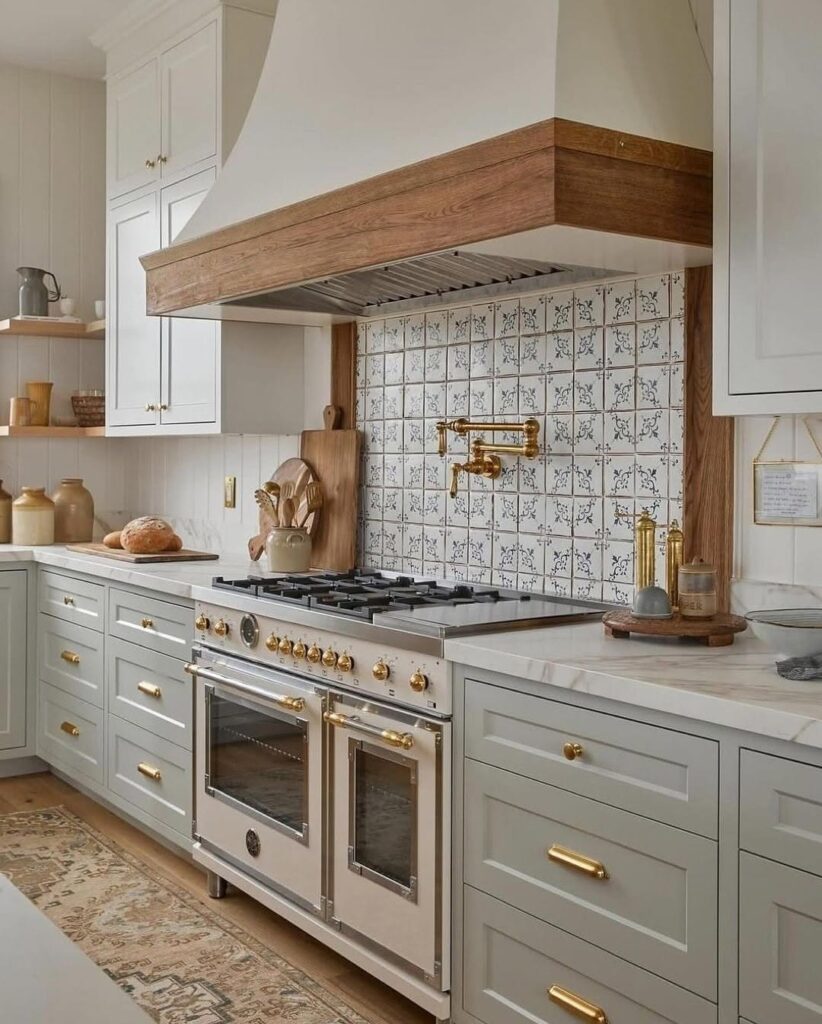
Single-color cabinetry gives the kitchen one consistent finish, while two-tone cabinetry brings in more contrast and harmony. This approach combines modern flair with farmhouse warmth.
Upper cabinets can define separate zones while keeping the kitchen space visually open. Use crisp white or soft cream above darker lower cabinets in navy, charcoal, or matte black. The lower cabinetry anchors the space, and the contrast affects how large or open the kitchen feels. Two-tone cabinetry works especially well in open-concept kitchens.
Cabinet doors with distressed finishes, white oak, and shaker or flat-panel styles introduce texture and dimension. A kitchen island can carry a bold hue, while pantry units can use a rustic stain.
Color blocking gives two-tone cabinetry room for personal style. It pairs with matte backsplash tiles and quartz countertops, and it can help avoid design overload.
The darker cabinet base at the lower level supports visual stability. The lighter cabinets have open shelving over them, which maintains brightness. Two-tone cabinetry complements stainless steel appliances, along with matte black hardware.
Two-tone cabinetry combines farmhouse authenticity with clean lines. It remains functional and timeless, and it suits kitchens of any size.
Reclaimed Wood
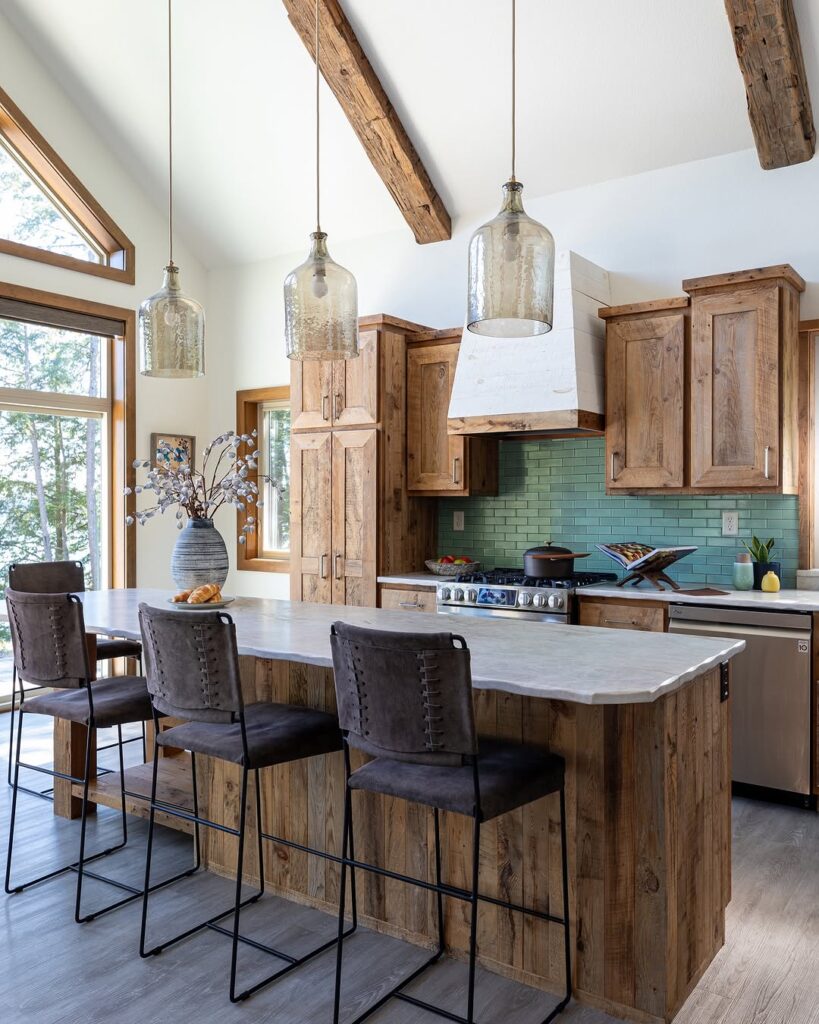
Reclaimed wood carries the history of its earlier use through patina and imperfections. As a reclaimed material, it differs from mass-produced materials.
Reclaimed wood brings aged character from old barns, floors, and factories into the kitchen. Age may leave behind nail holes, knots, and darkened grain. Use the material for beams, open shelving, range hoods, or islands.
The wood contrasts with sleek surfaces such as quartz countertops and stainless appliances. That combination supports a farmhouse-modern blend.
A floating shelf above the stove adds warmth, especially when made from reclaimed wood. A statement beam on the ceiling brings in another warm detail. Use these pieces selectively so they do not overwhelm clean lines.
Reclaimed wood harmonizes with light palettes and dark palettes. A matte or low-sheen sealing finish protects the wood and supports kitchen use.
Reclaimed wood suits sustainability-minded homeowners and has an eco-friendly environmental profile. Individual reclaimed wood pieces vary in individuality.
Iron brackets, ceramic tiles, and vintage-style fixtures can be incorporated with reclaimed wood. These paired elements support time-honored design.
Across the kitchen, reclaimed wood provides natural contrast and connects the room to farmhouse tradition. It can serve as a design anchor.
Farmhouse Sliding Barn Door
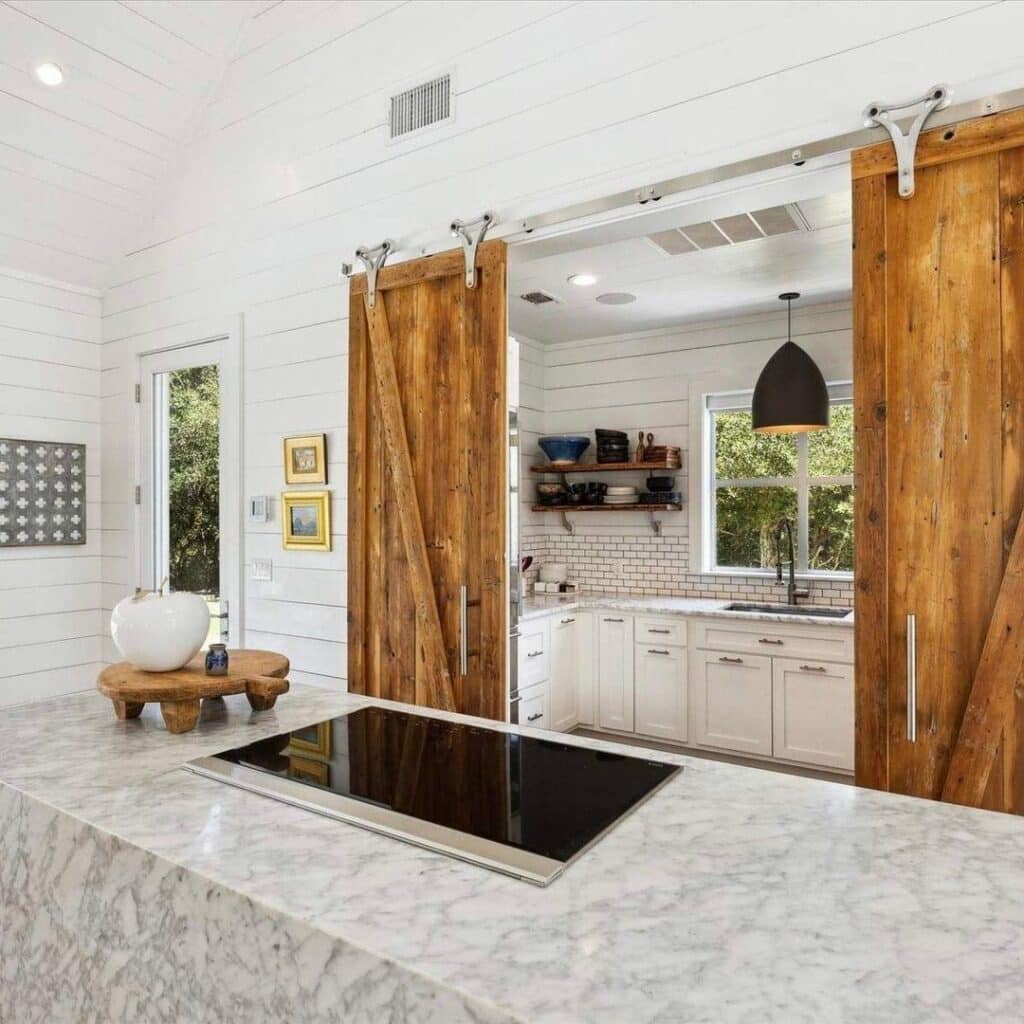
A barn door offers a space-saving alternative to traditional doors in modern kitchens. Its look is both rustic and streamlined.
This sliding door suits compact layouts, including a pantry, laundry nook, or connecting space. Exposed hardware in black or brass supports the farmhouse door, while the sliding mechanism minimizes obstruction.
Door designs such as cross-braced panels or vertical planks bring texture to the kitchen without making nearby cabinetry feel too busy. Weathered oak, distressed white, and matte black finishes can work with wood floors as well as contemporary tile.
Iron detailing and frosted glass inserts can be used in a farmhouse sliding door. Its soft-close track provides quiet operation and is particularly relevant to open-concept layouts.
Shiplap walls, vintage lighting, and apron sinks pair with the door. The sliding door defines zones without requiring rigid walls, making it a practical solution.
A wood vent hood or matching trim pairs with the farmhouse door. Either coordinating accent supports design cohesion and anchors the design.
In farmhouse living, this door has high flexibility. It can conceal utility rooms, separate prep areas, and provide an efficient solution.
Farmhouse Shiplap Surfaces
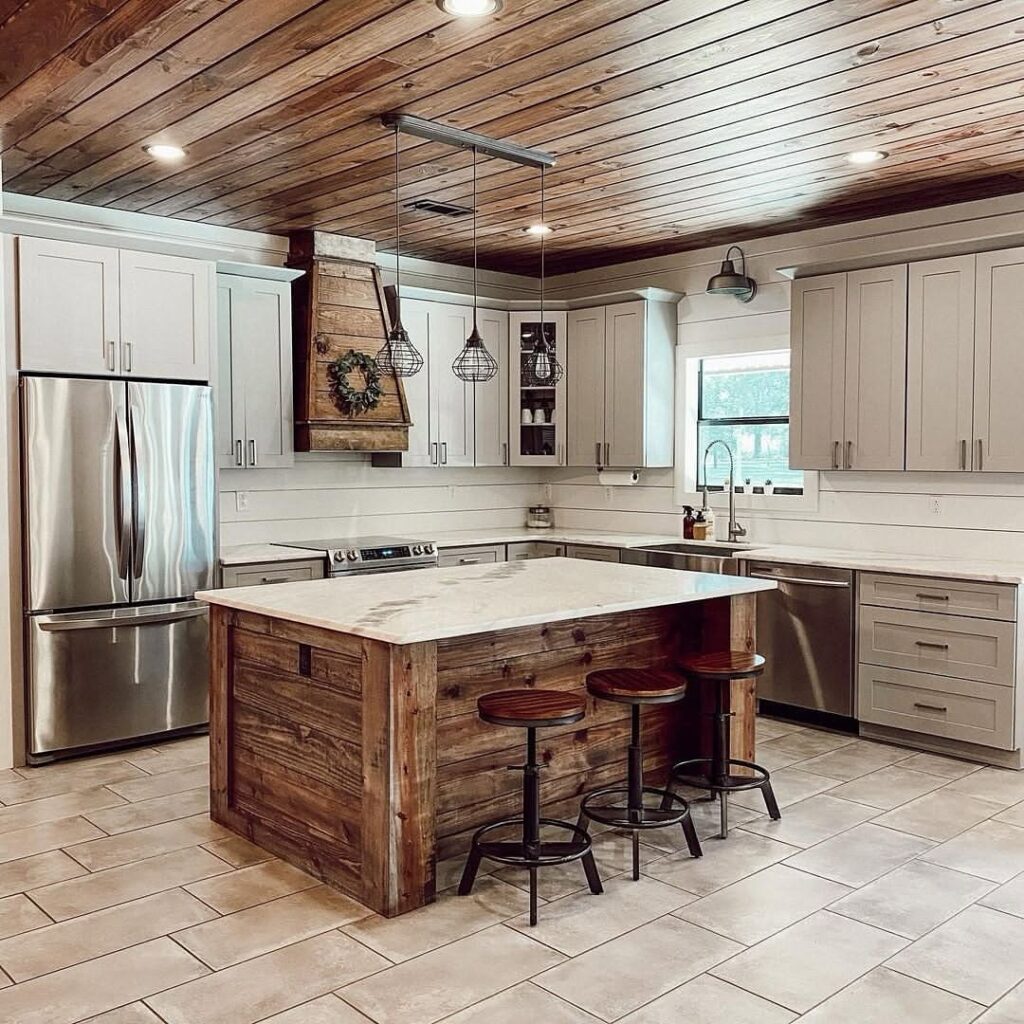
Shiplap consists of linear boards. Its linear form adds architectural detail.
Shiplap boards run horizontally across kitchen walls or ceilings. Horizontal shiplap coordinates with butcher block counters and marble finishes. Butcher block counters add one material option, while marble finishes add another.
White-painted, gray-washed, and wood-toned shiplap offer different finishes. In smaller kitchens, vertical shiplap on the ceilings can make them appear taller.
A shiplap surface is durable, easy to clean, and resistant to minor dings. It also works well with open shelving and traditional cabinetry.
Exposed beams pair with shiplap on ceilings for beams. Crown molding and industrial lighting fixtures pair with it as well.
In a breakfast nook, shiplap can frame the space. On the vent hood wall, it can add emphasis and support either vintage style or modern style.
Shiplap supports comfort, tradition, and modern appeal.
Wood Accents in the Kitchen
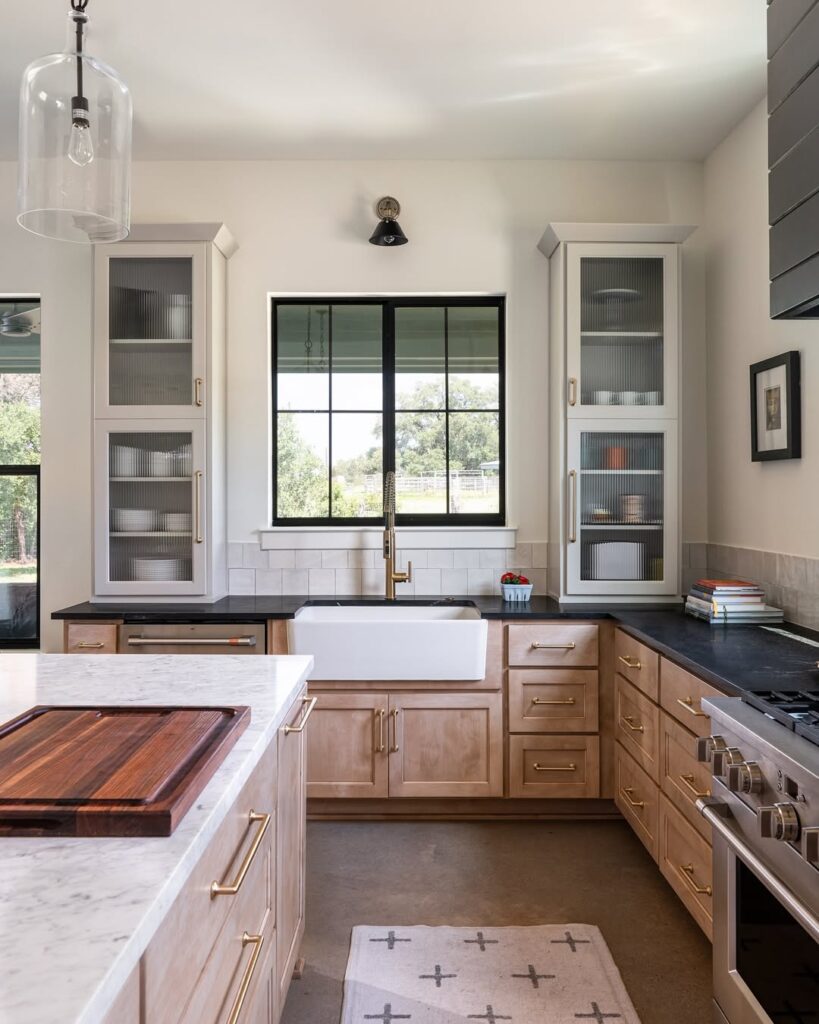
Natural wood brings an organic texture and an earthy element into the kitchen. As an accent, it adds both warmth and character.
Wood with a subtle grain adds warmth and authenticity. Maple, walnut, and white oak offer durable options for the room. Exposed wood ceiling beams and reclaimed wood open shelving bring that character forward, while the material complements neutral cabinetry and sleek surfaces.
Wood tones pair with plaster walls and white shiplap walls. Weathered wood lower cabinets and a butcher block kitchen island contrast with polished countertops.
Floating shelves provide storage and display ceramics, vintage glass jars, and greenery. Wood barstools and wood cutting boards add related details around the kitchen.
Wood elements finished with a matte sealant can support high-traffic use. Wide-plank engineered hardwood flooring provides design continuity.
Natural wood accents connect the kitchen with nature. They are enduring and can bridge old and new design.
Vintage Style Appliances
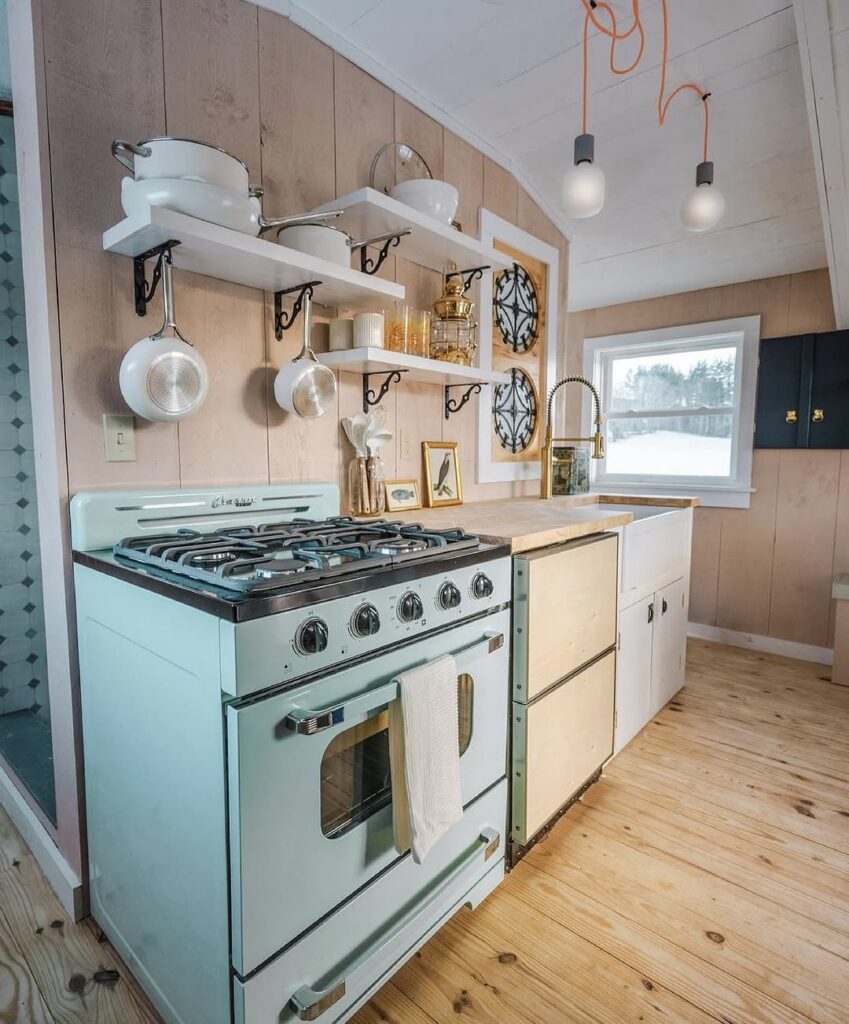
A vintage-style appliance has a nostalgic appearance with modern efficiency and modern performance. The old-fashioned look does not change its current function.
Smeg, Big Chill, and Elmira Stove Works make retro appliances with modern technology. A pastel vintage refrigerator can sit beside a cast-iron range. The range has polished brass knobs.
Appliances in cream, mint, or robin's egg blue can contrast with stainless steel while coordinating with butcher block counters and shaker cabinets.
Wood beams and patterned tile floors work with an oven hood that has curved edges, toggle switches, and rounded corners. These rounded appliance forms complement both features.
Antique appliances differ from vintage-inspired appliances in efficiency and technology. A vintage-inspired appliance keeps a classic façade while adding energy efficiency, digital controls, a convection oven, and smart features.
A statement appliance serves as both a functional appliance and a design centerpiece. White shiplap forms the backdrop, with two-toned cabinetry on either side.
Vintage-inspired appliances serve current kitchen needs. They provide reliability and modern function.
Modern Farmhouse Statement Lighting
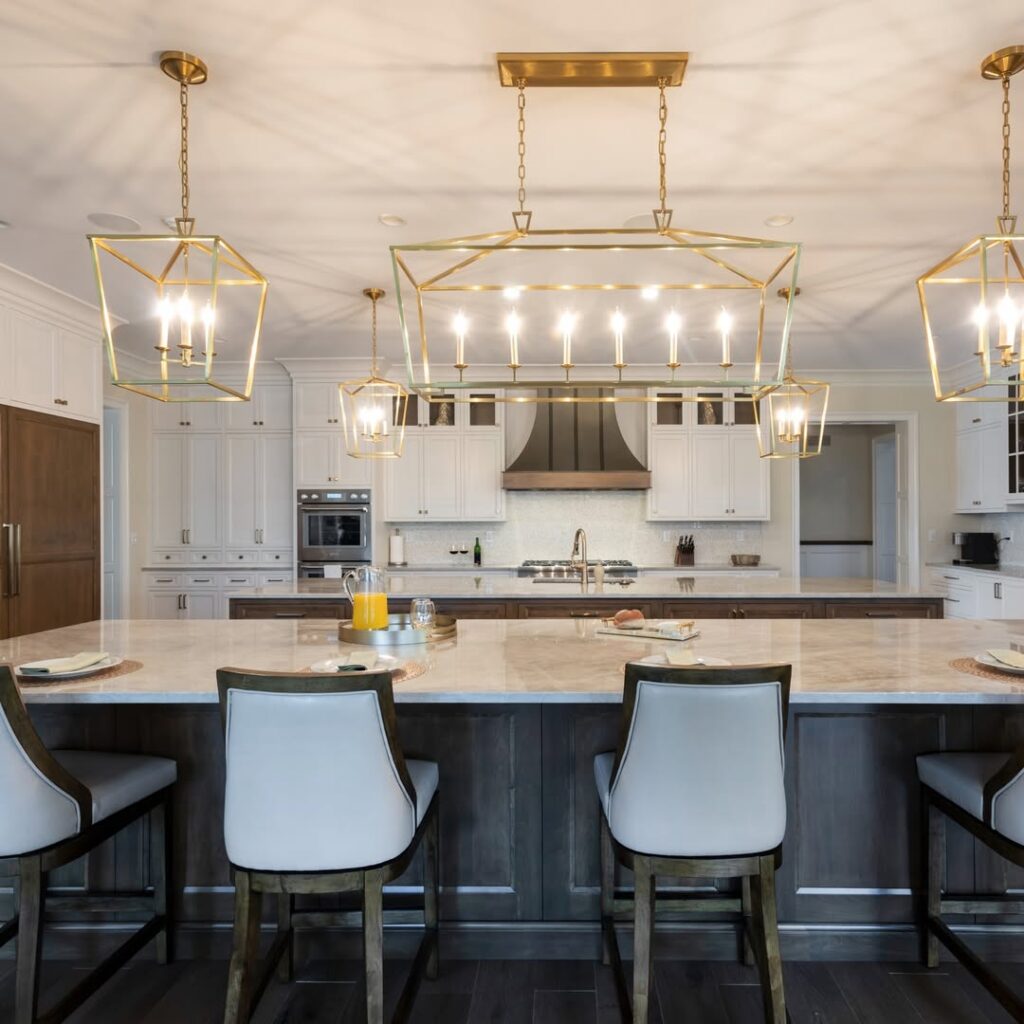
The kitchen setting gives lighting two jobs. It provides utility while adding visual emphasis to a modern farmhouse kitchen.
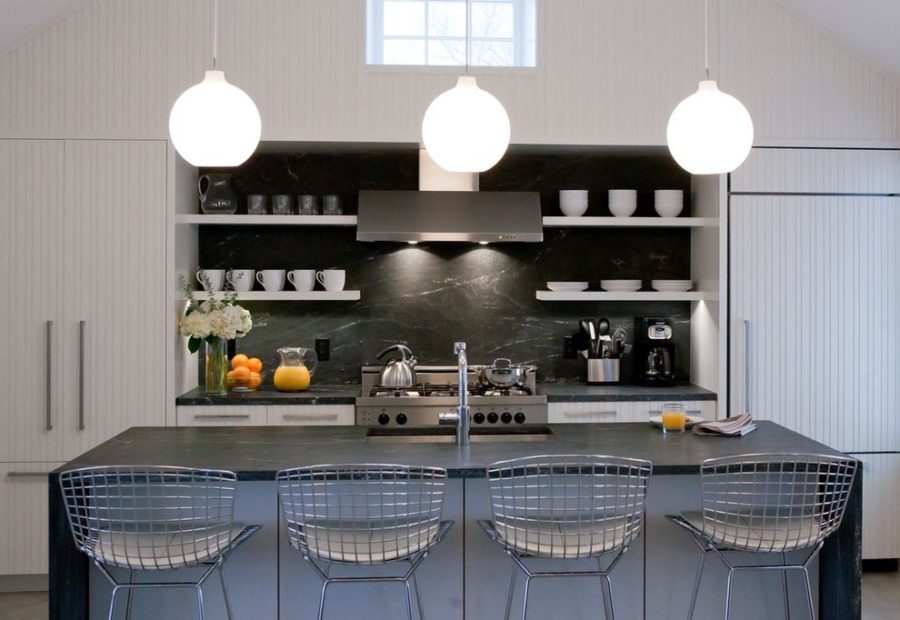
Wrought iron, aged brass, and natural fibers bring material contrast above the island. Oversized pendant lights emphasize the kitchen island as the central hub.
A lantern chandelier, a dome pendant, and an industrial sconce layer with recessed lighting. Thoughtful layering provides ambient lighting, task lighting, and accent lighting.
Exposed bulbs connect with farmhouse tradition through a vintage-inspired look. Edison-style LED bulbs add energy efficiency.
Over an island or countertop, keep pendant lights 30 to 36 inches up. A fixture that is too high or too low can affect the room's balance.
Black iron pendants match matte black drawer pulls. Coordinate the lighting finish with the hardware finish and faucet finish.
Statement lighting helps the kitchen remain practical and draws attention to its key zones.
Neutral Color Accents
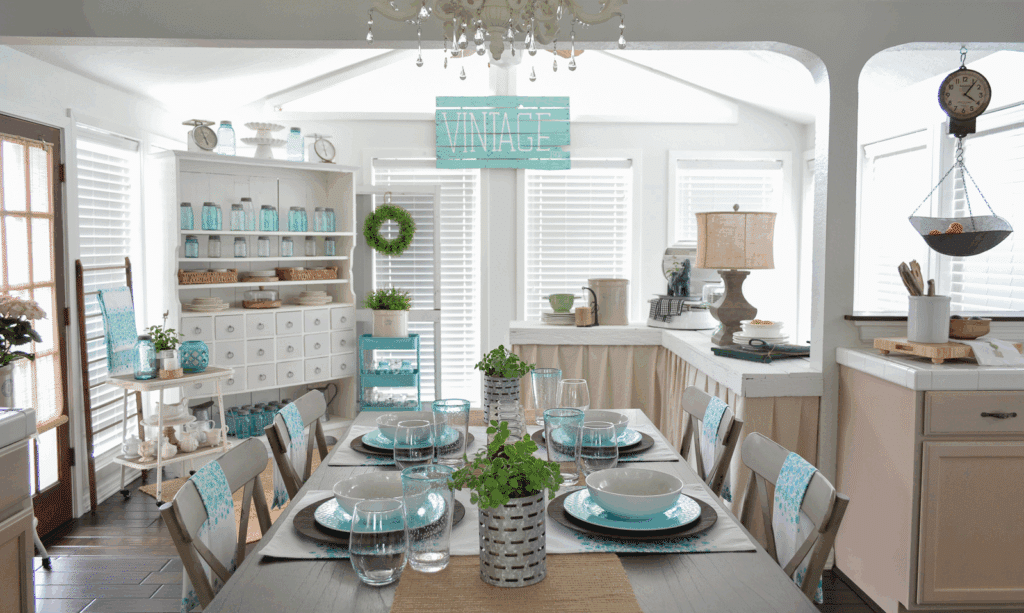
A classic neutral palette works well in kitchens. Soft white, creamy beige, and warm gray can form the palette.
Matte paint and matte stone surfaces support a natural aesthetic. The neutral palette can be used on cabinetry, walls, and countertops.
Painted barstools can introduce color without taking over the kitchen. Patterned floor rugs and hand-glazed tile backsplashes offer other ways to create contrast. Add color selectively to a neutral palette, keeping the accents from overpowering the room.
Accent colors can support a farmhouse association while also bringing modern energy. Sage green, navy, burnt orange, and mustard yellow are all options for that balance.
Dish towels, pottery, and pendant lights can carry accent colors through textiles and accessories. These accent items enable easy updates.
Keep neutrals as the dominant part of the palette. Accent colors can then direct attention toward the island or window trim.
In one corner, wood, linen, or ceramic can add natural texture. These materials support warmth and depth.
Color accents support personalization, while a neutral foundation supports design longevity. This color strategy can adapt over time.
A Mix of Metal Finishes
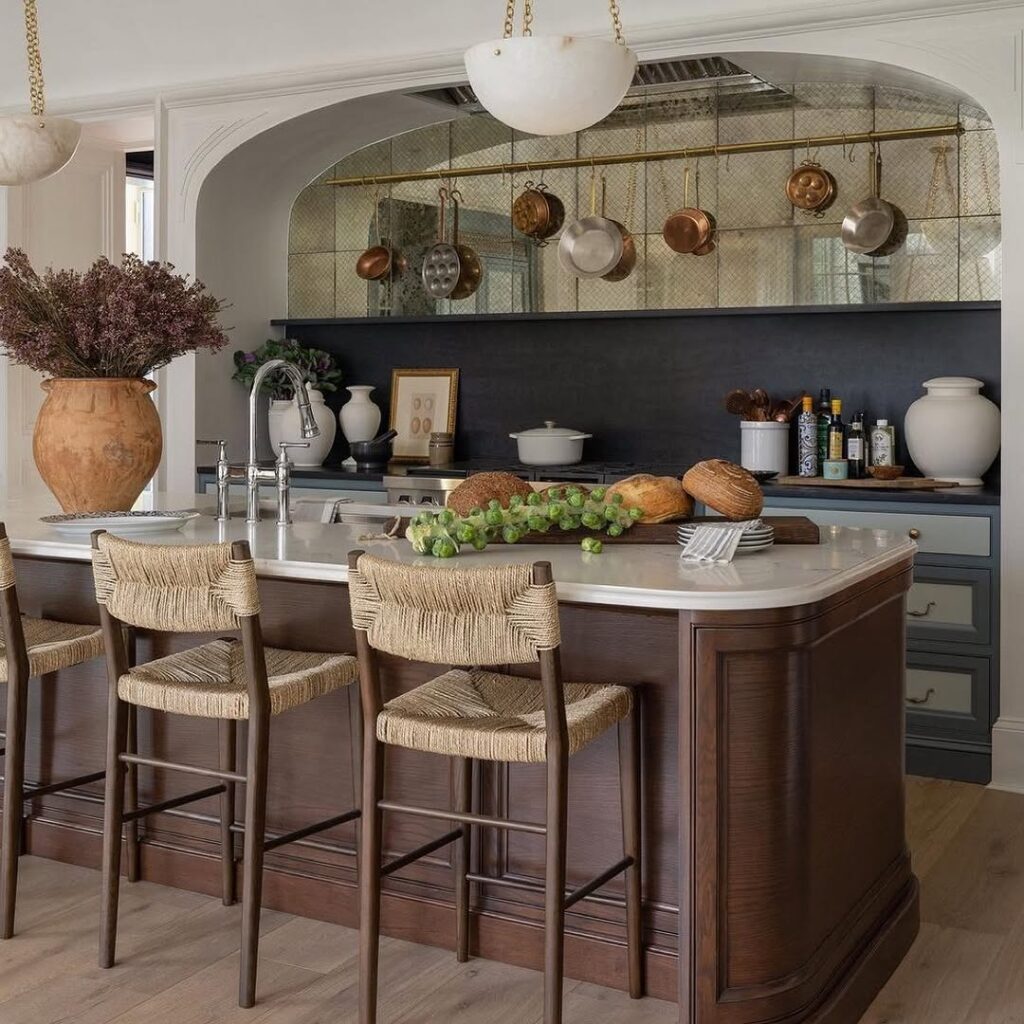
Use mixed metal finishes on hardware and fixtures to create contrast. This approach supports layered design and rejects matchy-matchy rules.
Brass cabinet pulls can start the mix. Matte black faucets pair with them, while stainless steel appliances pair with brushed nickel pendants. Mixed metal finishes can avoid a clashing result when the metals work together.
Choose one metal as the main finish, then introduce a second at spots such as light fixtures or barstool frames. Keep the added finish limited to small touches.
Polished chrome offsets darker metals, while wrought iron pairs with antique brass. Limit the kitchen to three mixed metals at most.
Drawer pulls do not have to match the lighting. Different metal styles can share a style or tone, so space the different metals throughout the kitchen.
Mixed metal finishes are on-trend and support a rustic-modern contrast. They are also flexible.
Mixed metals coordinate with chairs, decor, and range hoods. The same combination can connect these pieces across the kitchen.
Cabinet with Glass Fronts
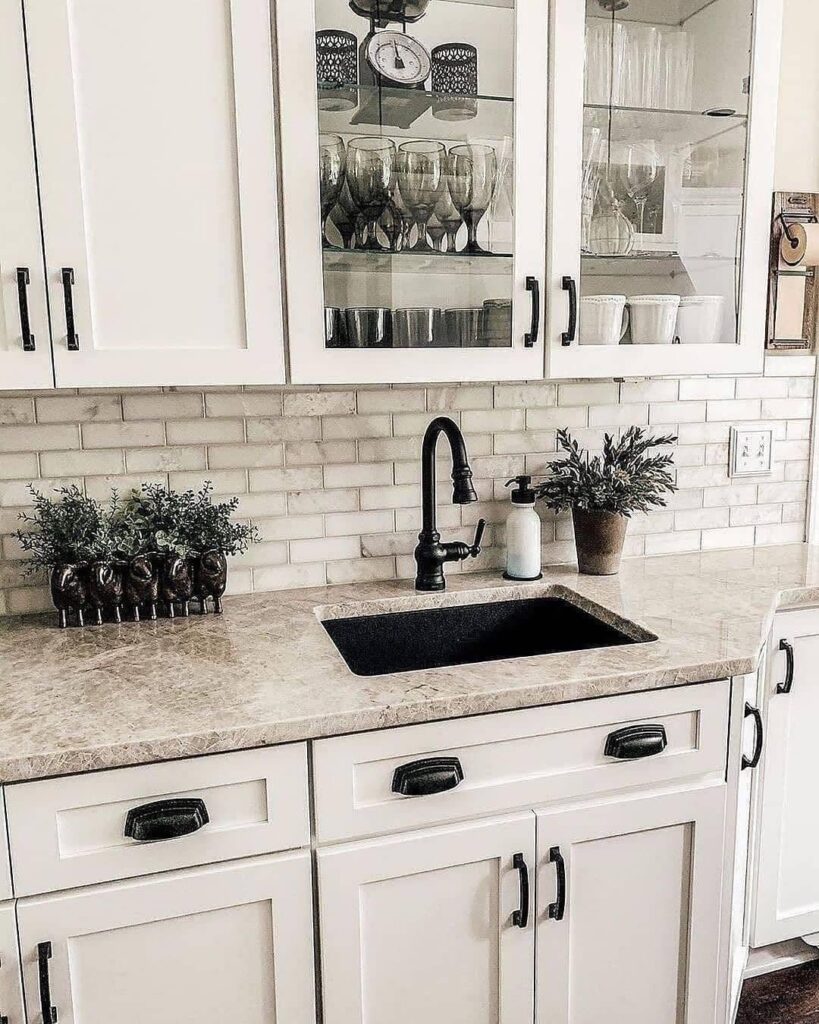
A glass-front cabinet balances accessibility with display function. The contents remain accessible while also being available for display.
Clear, frosted, or seeded glass panels give the cabinet limited exposure while adding a break from solid cabinet lines. The glass-front cabinet can hold dinnerware, glassware, or collected pieces, and a wood or metal frame surrounds the panel.
Interior LED strips or puck lights make the cabinet contents easier to see after dark. The lighting highlights what is inside, while the glass cabinet pairs with a solid lower cabinet to create a two-tone design. This approach works especially well for upper cabinets.
Coordinated ceramics, vintage jars, and matching dish sets help organize a glass-front cabinet. The cabinet is key to combining organization with display, so avoid overcrowding it.
A glass-front cabinet pairs with open shelving in a transitional farmhouse kitchen. It retains its rustic roots.
Cabinets finished in soft white paint or natural oak frames can coordinate with backsplashes, islands, and other kitchen elements. The finish keeps those nearby features visually connected.
Beside practical storage, the glass-front cabinet provides a display function. It adds depth and interest while holding useful items.
Farmhouse Sink Feature
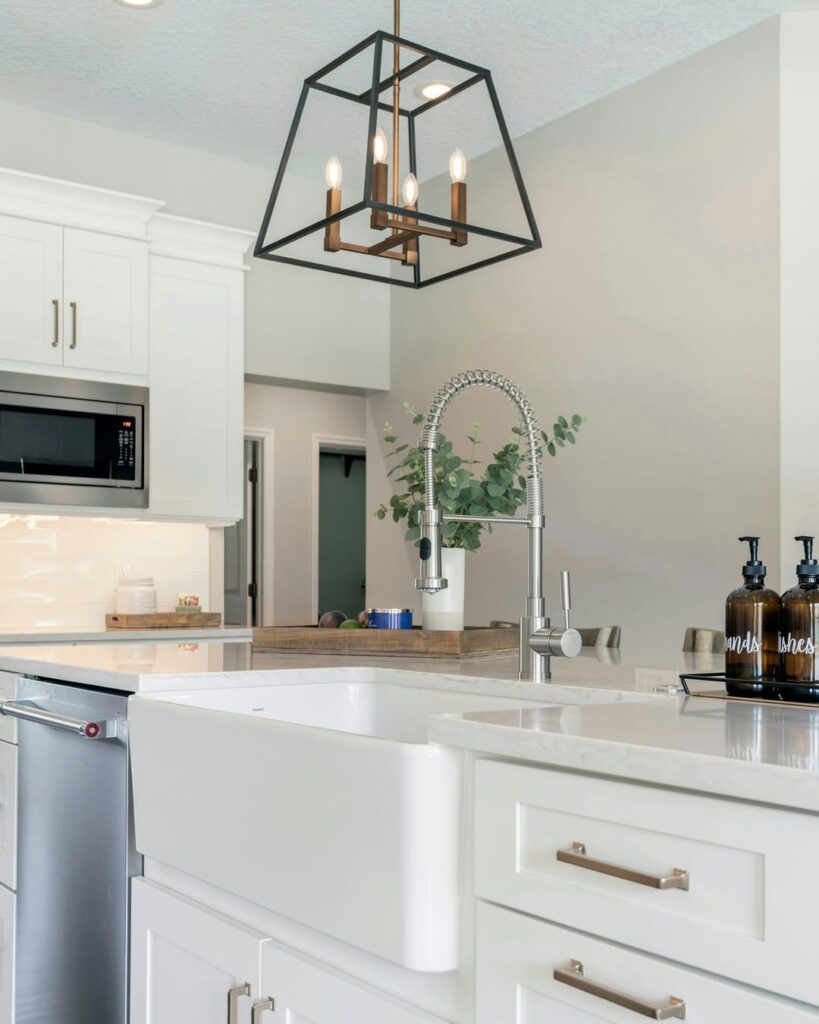
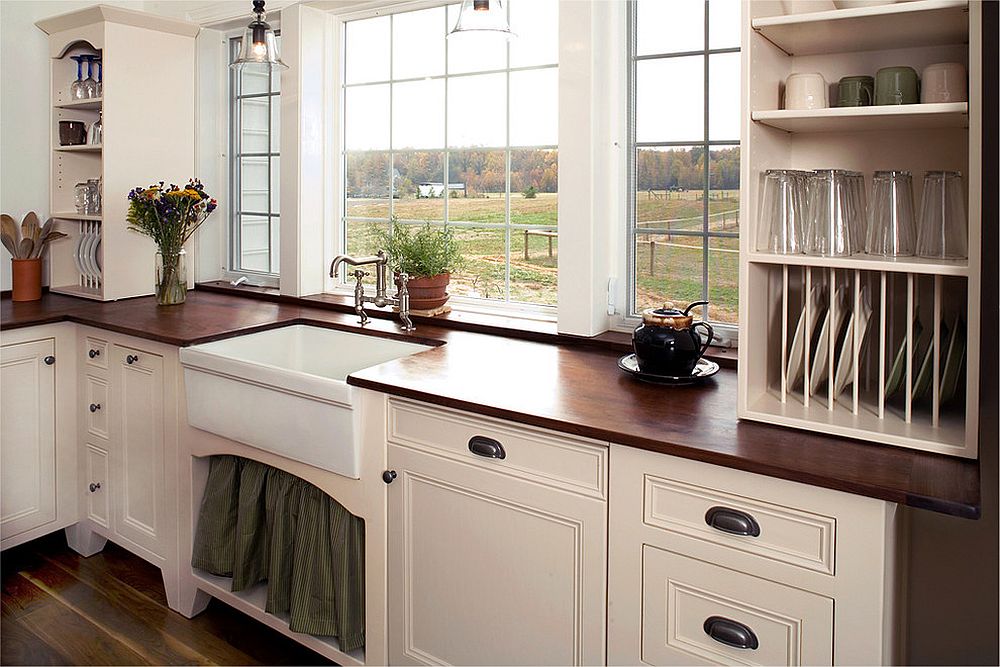
A generous deep basin gives the farmhouse sink a strong presence and helps define the kitchen space. This style is also called an apron-front sink.
The farmhouse sink supports daily kitchen tasks and entertaining. Its deep basin can be made from cast iron or fireclay, and it handles large cookware.
A sleek pull-down faucet brings a clean silhouette to the farmhouse sink. It remains user-friendly and may include different spray modes along with filtration. Matte black, brushed gold, and stainless steel are finish options.
A farmhouse sink fits both flat-panel cabinetry and shaker cabinetry. It pairs with quartz countertops or butcher block countertops.
Consider minimalist handles for a simple look. Knurled fixtures add knurled texture, while minimalist handles keep the style minimalist.
Place the sink below a large window to make the most of natural light. Handcrafted tile or wood paneling can surround the sink.
At the center of the kitchen, a sink and fixtures can serve as the kitchen focal point while meeting current needs. A farmhouse sink with contemporary fixtures supports kitchen efficiency.
Modern Farmhouse Tile Patterns
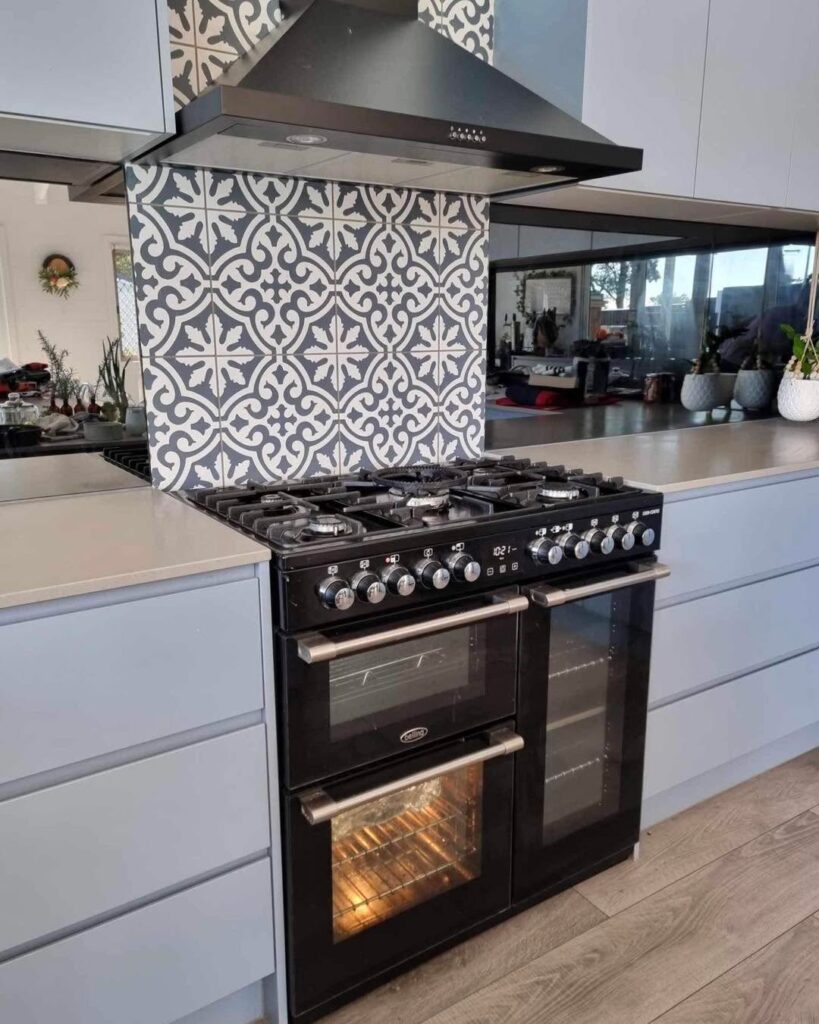
Patterned backsplash tile adds color, visual detail, and rhythm to the kitchen.
Moroccan-inspired tile motifs bring a distinct pattern to the backsplash. Encaustic cement tile and hand-painted ceramic tile offer the material options.
In slate gray, indigo blue, and terracotta, an earthy tile palette can pair with neutral cabinetry or open shelving. The backsplash can cover a full wall or sit behind the stove.
Artisanal imperfections support authenticity in the backsplash. Choose a matte finish instead of a glossy one to retain its rustic tone. Repeated pattern adds structure.
Lighting and countertops should coordinate with the tile color tones, as should the hardware. In areas with frequent splashes, darker grout provides higher contrast and easier maintenance.
For active cooking spaces, consider cement tile or ceramic tile. Both are durable, heat-resistant, and moisture-resistant.
A reclaimed wood shelf and an apron sink pair with patterned tile. The patterned tile works with both apron sinks and reclaimed wood shelves.
Patterned tiles balance strong visual impact with timeless style.
Integrated Kitchen Technology
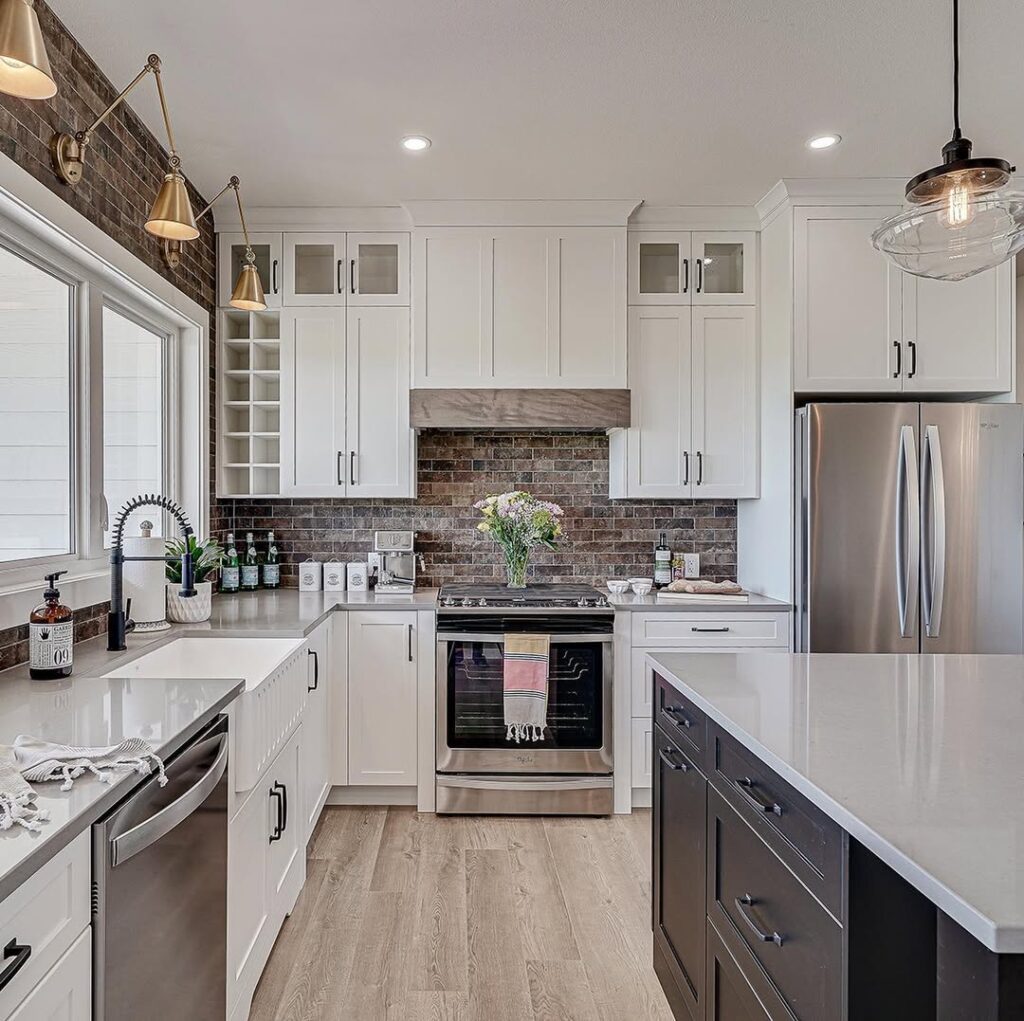
Integrated kitchen technology supports kitchen efficiency while farmhouse charm coexists with it. Integrate technology subtly.
Smart kitchen features can streamline daily routines. Voice-activated faucets, touch-control lighting, and app-managed appliances are options, and they can sit behind traditional finishes when a less noticeable look is preferred.
Wi-Fi wall ovens, camera refrigerators, and motion-sensor trash cabinets support usability while preserving design integrity.
Discreet smart systems can manage ambiance and comfort while preserving a rustic aesthetic. Smart thermostats, lighting systems, and speakers are among the options for an installation that does not disrupt the room's character.
Device finishes in matte black or brushed bronze can coordinate with cabinet pulls and fixtures. Matching these details keeps the hardware consistent.
Smart coffee makers and under-cabinet lighting can synchronize with daily habits. This synchronization supports convenience.
Concealed outlets help maintain a clean kitchen environment, and seamless control panels keep the technology visually quiet. Automation does not require flashy displays or high-tech visuals.
Prioritize integration when adding smart technology. Integration balances tech convenience with farmhouse warmth.
In the kitchen, smart integration preserves design character and supports daily ease. Avoid overpowering the aesthetic, and use smart elements to support it. The resulting kitchen is future-ready.