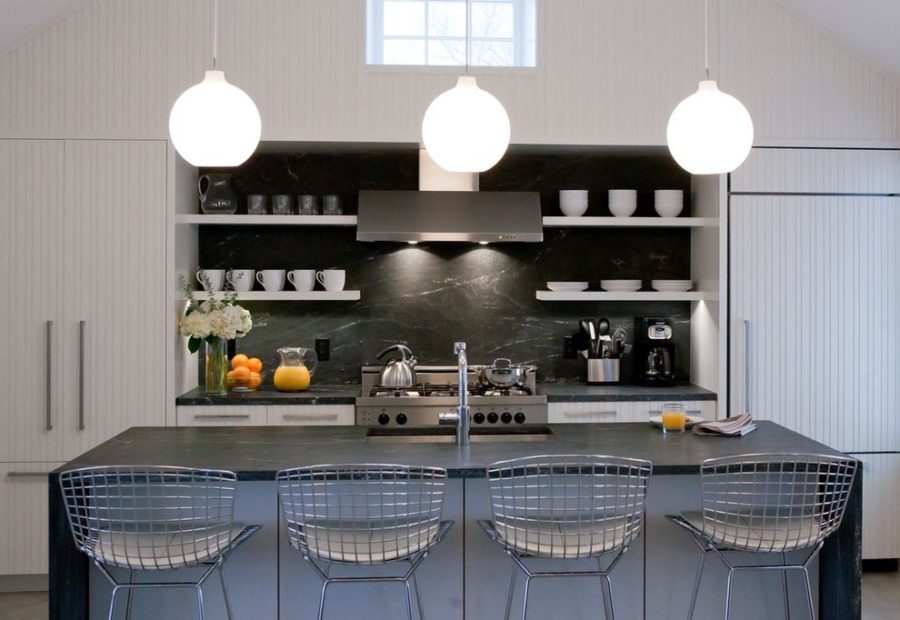
15 Moody Farmhouse Kitchen Ideas for a Rustic-Modern Look
A modern farmhouse kitchen can have a vintage character, dark tones, and weathered textures.
Modern farmhouse style can include moodier palettes, not only light and airy tones. Charcoal cabinetry gives the room a deeper base, while aged wood finishes add warmth. Antique brass hardware brings a timeworn note to the darker scheme. Together, these details keep the farmhouse look relaxed and familiar.
This approach suits people who want warmth without brightness and elegance without pretense.
Moodier farmhouse design responds to the need for personalized spaces while retaining a lived-in quality.
Moody farmhouse kitchens use shadow and authenticity as part of their look.
Rustic Open Shelving
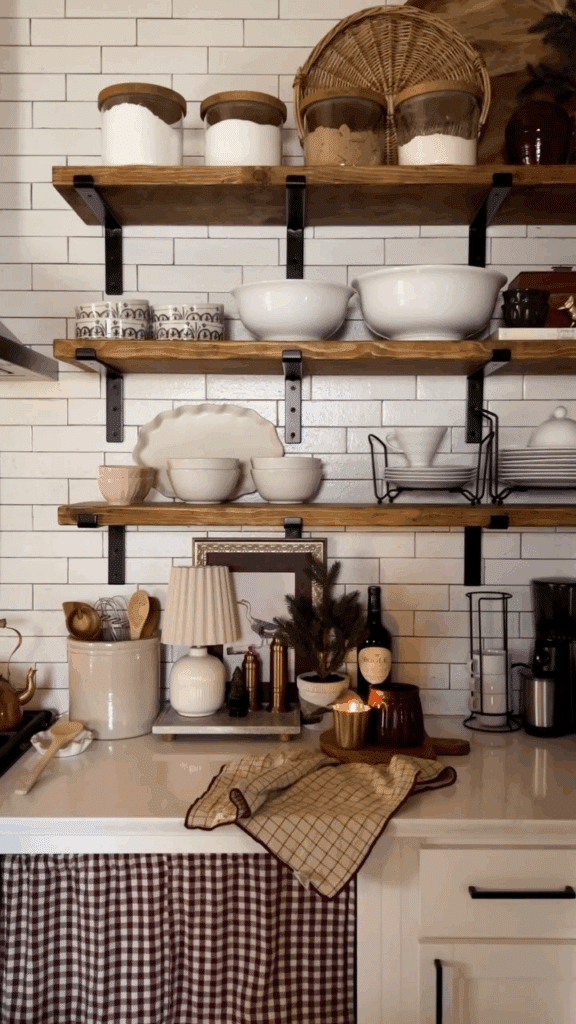
Exposed shelves suit a moody-toned kitchen by adding texture, accessibility, and visual space. The shelves keep everyday items within reach.
Farmhouse open shelving displays rustic decor and supports a lived-in feel. The shelves make the decor part of the kitchen rather than keeping it only for display.
A reclaimed wood shelf with an imperfect edge rests on a wrought iron bracket and aged corbel. It holds vintage crockery and timeworn cookware.
Open shelving contrasts with deep cabinetry. In a darker kitchen, it adds dimension and reduces visual weight.
Across the room, a stoneware pitcher and enamel container can sit with an aged recipe book, a copper mug, and dried herbs. Combining utilitarian objects with decorative objects adds interest without clutter.
Cream, terracotta, olive green, and earthy brown create a warm, neutral palette. That combination works against a charcoal wall and walnut cabinetry.
A nearby pendant and an under-shelf spotlight highlight the shelves' textures. The nearby lighting also enhances contrast.
Shelves should support everyday use while also adding visual interest. Give use priority over display-only styling.
Open shelving gives prominence to everyday objects and serves practical and aesthetic functions in a moody farmhouse kitchen. It becomes a defining feature of the room.
Textured Backsplash
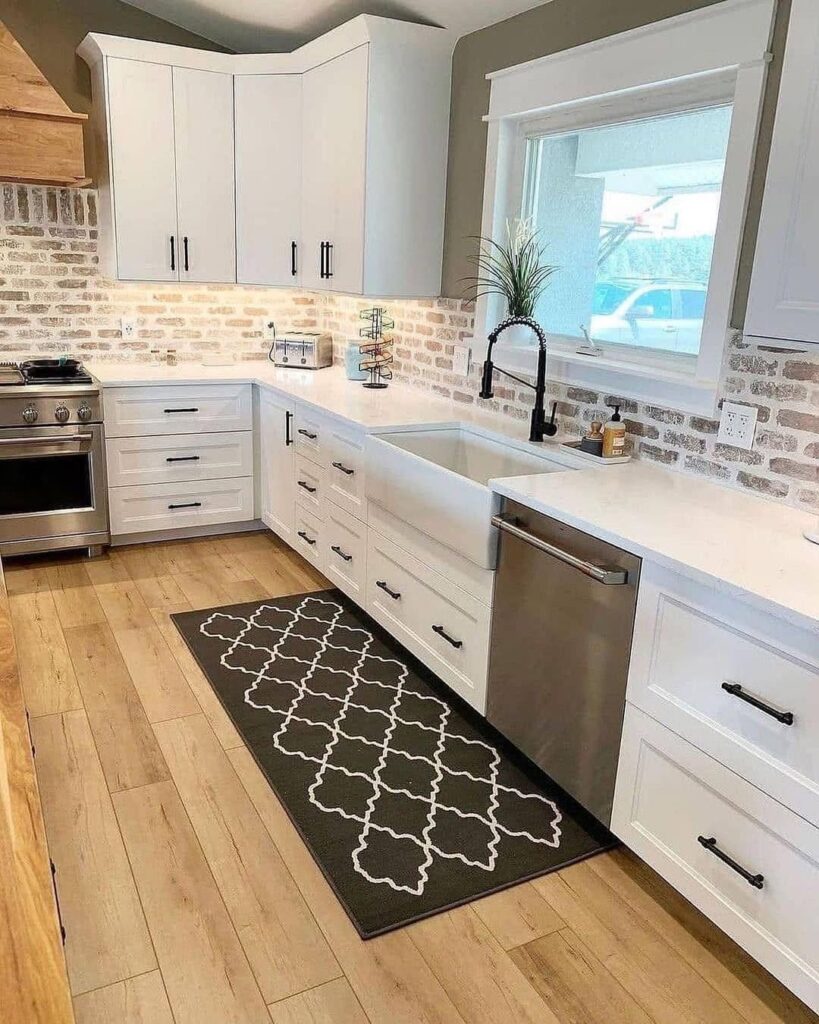
A kitchen surface can act as a texture canvas, while a backsplash provides depth and visual texture.
Handmade zellige tile, reclaimed brick, and tumbled natural stone can each be used as a textured backsplash. Together, these materials add layered richness.
Textured backsplash materials echo heritage homes and support a lived-in character.
Uneven glaze gives a tile surface an irregular detail. Chipped corners and worn edges suggest age, support authenticity, and function as features.
Warm gray limestone and charcoal zellige each have tonal complexity. Warm lighting affects the backsplash appearance, while the limestone pairs with wooden shelves and the zellige works with dark cabinetry.
Light grout used with dark tile adds tile definition. Tone-on-tone grout creates an understated effect.
A textured backsplash should be balanced so it does not compete with the countertops or the range hoods.
The butcher block counter sits below a textured backsplash section. That backsplash extends across the full wall and continues behind the stove.
Textured backsplash materials apply to utilitarian walls and create movement and shadow.
Dark Stone Countertop
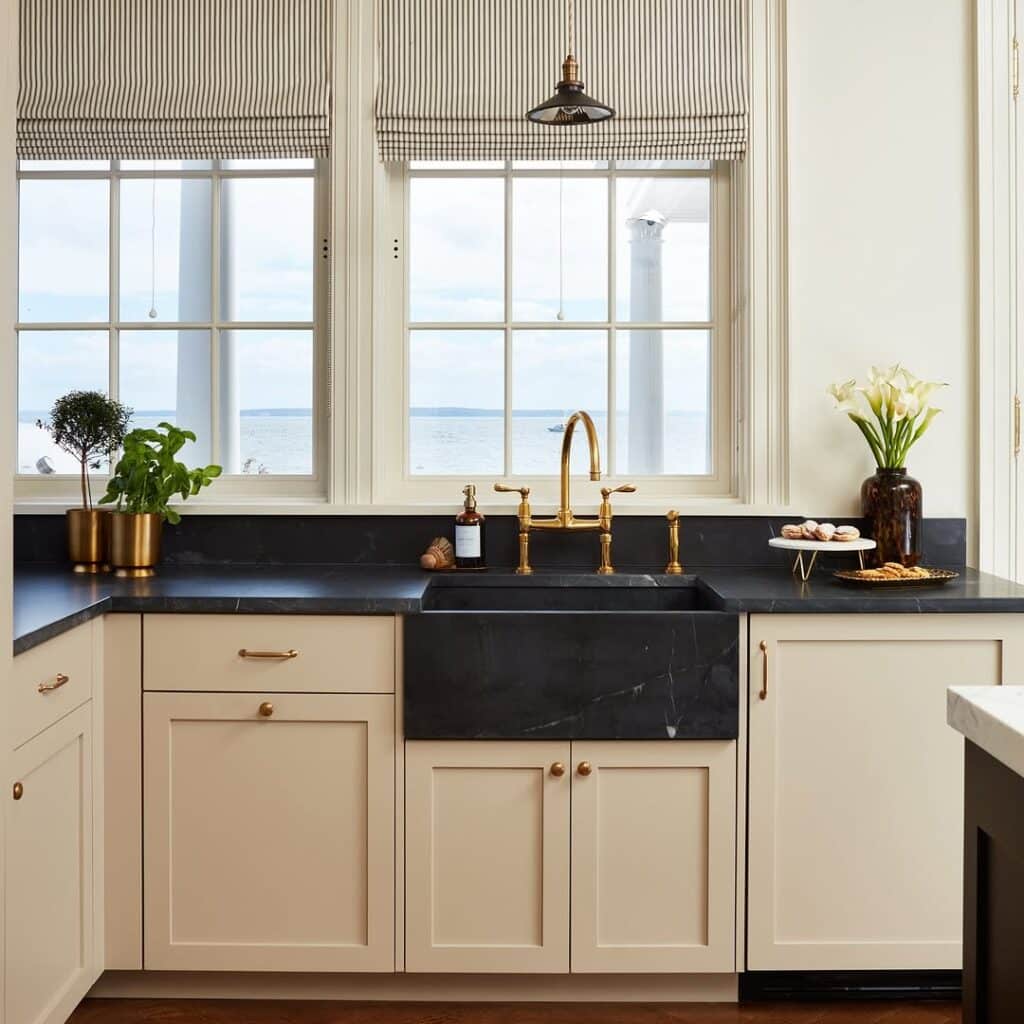
Dark stone countertops set the kitchen tone.
Around the kitchen, slate and soapstone offer different versions of a dark work surface. Leathered granite and honed black marble add more options, while dark stone countertops bring natural depth and a tactile surface.
Dark stones suit farmhouse kitchens because their raw, unpolished finish feels grounded. Their durability improves with time.
A busy kitchen can gain a moody ambiance from dark countertops. They also resist heat, scratches, and general wear.
Shiplap, beadboard, and rough plaster walls work with dark stones. The stones bring soft veining and organic patterns to these wall materials.
Aged wood cabinets and antique brass fixtures pair with dark countertops. The pairing creates textural contrast.
In a small kitchen, pair dark countertops with lighter walls or a lighter backsplash. The surrounding lighter surfaces support balance.
Many designers embrace natural aging and use matte sealers. These methods maintain the natural stone character.
Dark stone countertops provide prep space and function as a visual anchor.
At the center of a farmhouse kitchen, a dark stone surface serves as the room's center.
Hardware in Mixed Metals
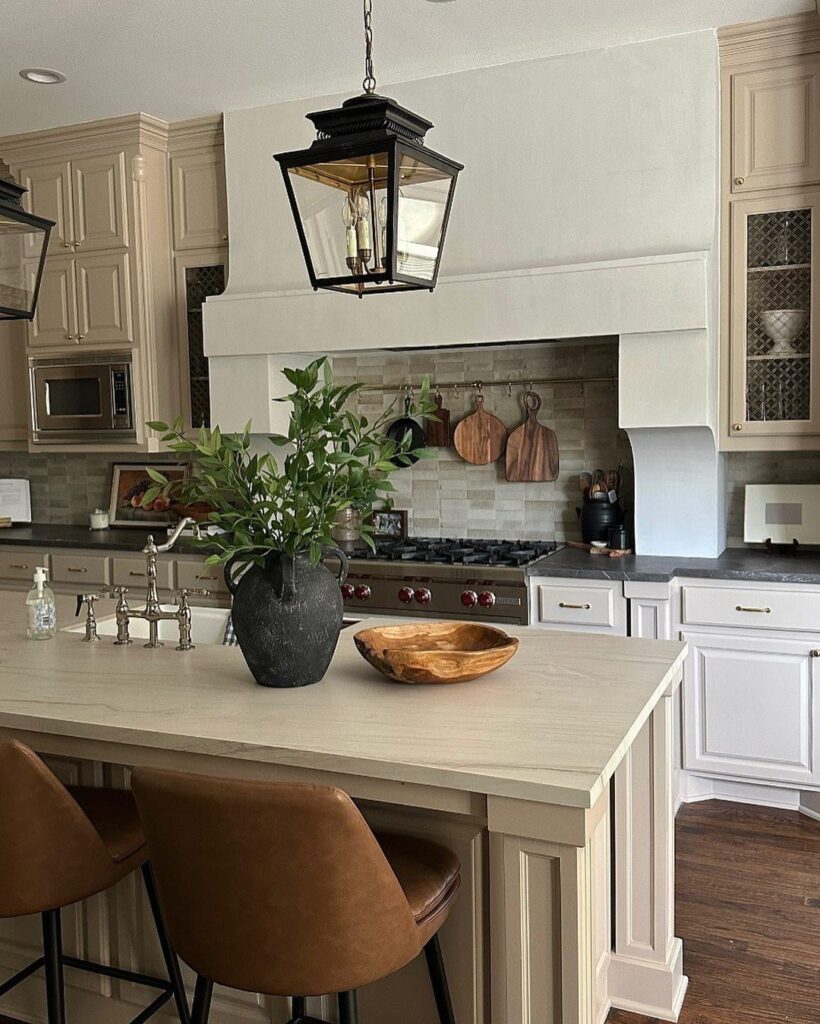
Farmhouse design does not require uniform finishes. It allows contrast between finishes.
In moody farmhouse kitchens, mixed metal hardware adds interest and complexity. It becomes a defining detail rather than a minor finishing choice.
Oil-rubbed bronze and antique pewter are included in the hardware. The mixed metal hardware also contains aged brass and matte black pieces.
Above the stove, the pot filler has a pewter finish. The drawers use aged brass knobs and the cabinets have matte black pulls, with strategic placement of the mixed hardware helping prevent a chaotic appearance.
Layered hardware reflects the evolution of older kitchens and aligns with farmhouse principles. Its necessity is driven by that older kitchen evolution.
Vintage lighting, open wood shelving, and a dark stone counter complement mixed metals.
Choose no more than three metal finishes. Repeat each selected finish at least twice so the repetition creates cohesion.
Avoid trend-based fixtures when using blended metals. This approach supports function and form while giving the space a personalized, timeworn look.
A mixed metal approach gives a moody farmhouse kitchen an eclectic yet grounded character.
Edible Kitchen Color Stories
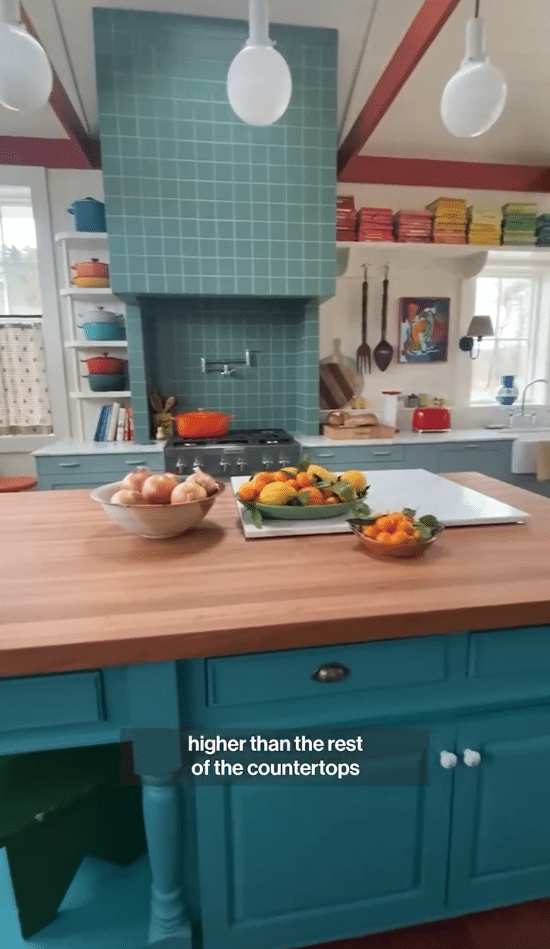
Draw kitchen color choices from pantry colors.
An earthy food-inspired palette brings together figs, heirloom tomatoes, roasted coffee, and burnt sugar.
In the kitchen, food-inspired colors support warmth and evoke nostalgia. They also increase the personal quality of the room.
Mushroom beige and cinnamon spice are wall colors, paired with an aubergine island base and a mustard tile.
A caramel glaze accent wall can alter the room atmosphere. An ochre backsplash is another single accent surface.
Iron fixtures, unlacquered brass, and reclaimed wood pair with food-inspired hues.
Plum, sage, and nutmeg can move through the room in soft textiles. Use the shades on tea towels and table runners, then repeat them on seat cushions.
Food-inspired hues age more gracefully than trendy color bursts. Pair them with butcher block counters, vintage ceramics, and open shelving.
A food-inspired palette supports timeless design. It still retains a moody quality.
This design approach gives spaces a homegrown character and a comforting quality.
Olive Cabinetry
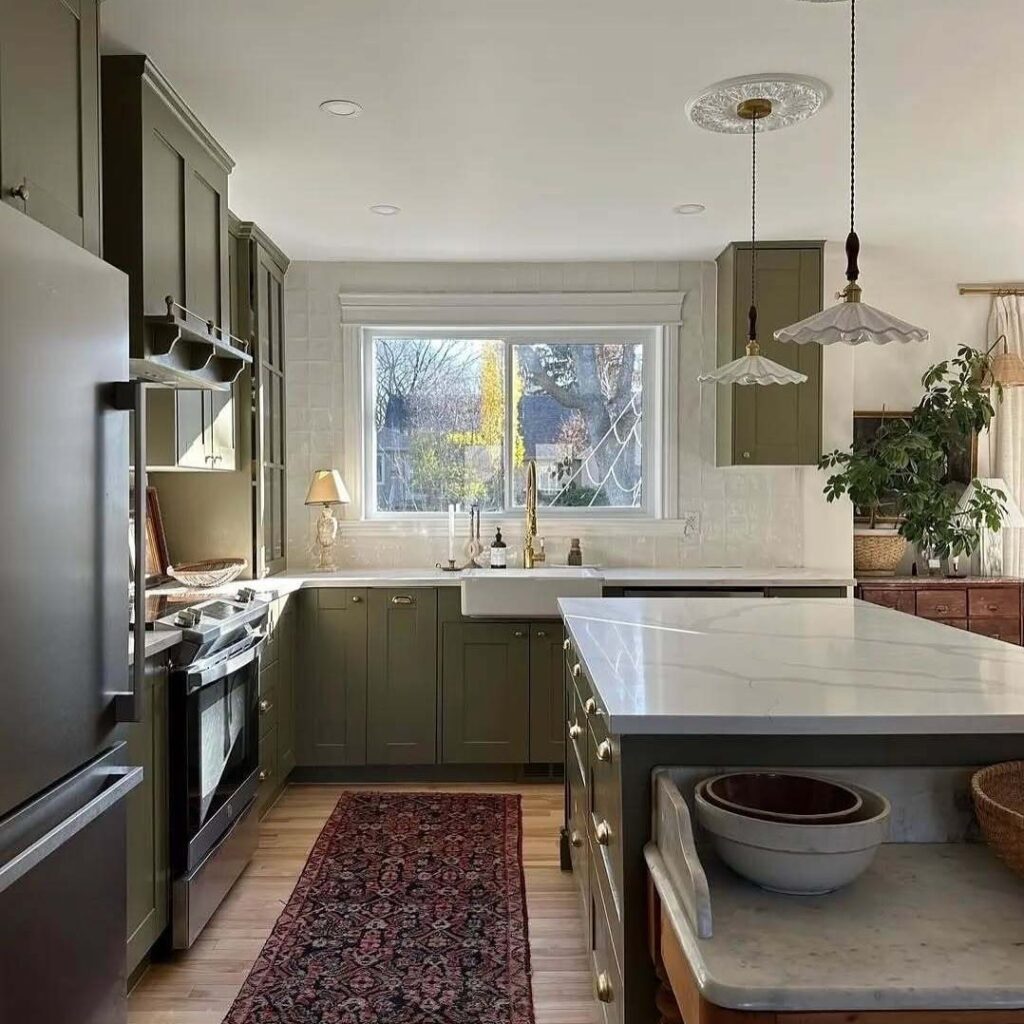
Olive green cabinetry has a brown undertone that suits modern farmhouse style.
Antique hardware, raw textures, and moody palettes harmonize with olive cabinetry. The cabinetry deepens the kitchen atmosphere.
Olive color appears warm in natural light. Vintage pendant bulbs make the same color look dramatic.
Olive cabinetry pairs with butcher block countertops, bronze faucets, and cream zellige backsplashes. Use it on shaker cabinets, paneling, or freestanding hutches.
Antique knobs and aged brass cup pulls are cabinet hardware options.
On open shelving, ceramics, wooden bowls, and copper cookware complement olive cabinetry.
Olive green has a farm-rooted appeal and is more stable than trend-driven hues.
When depth and comfort take priority over gloss, olive green cabinetry functions as a visual anchor.
Moody Farmhouse Range Hood
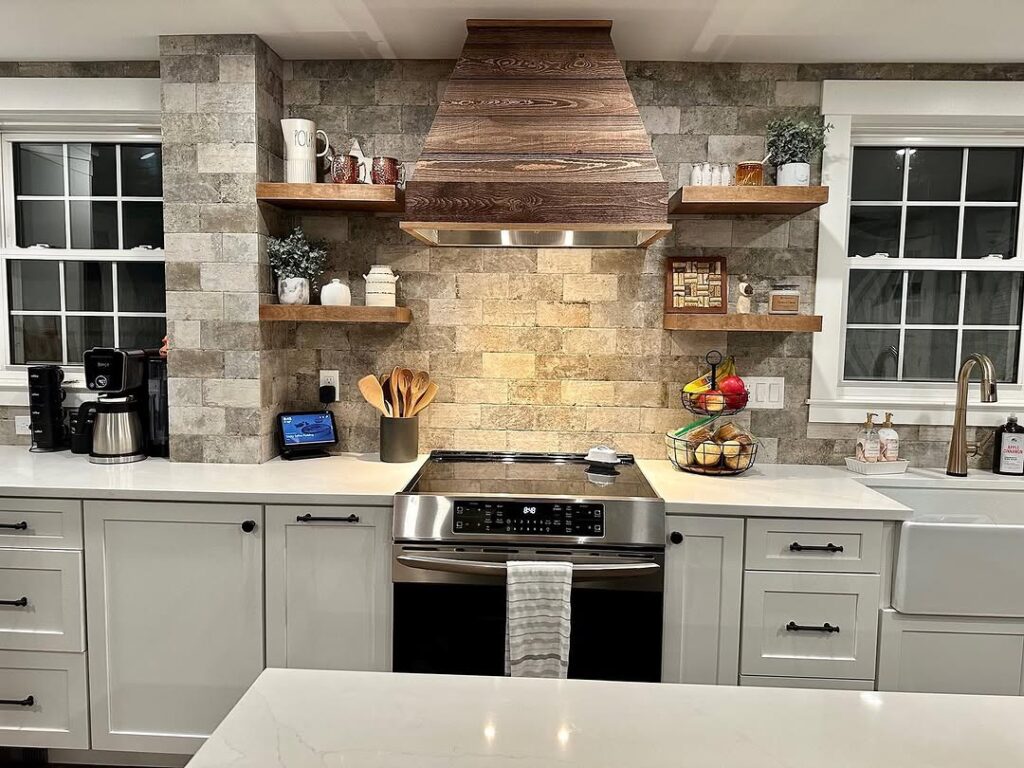
The range hood acts as the design anchor above the stove, which serves as the kitchen focal point. It supports a moody farmhouse design.
An oversized, sculptural range hood gives the kitchen architectural weight while retaining its function. It can be made from plaster, raw wood, or blackened steel.
This range hood handles ventilation and works as a visual anchor. It supports the overall kitchen aesthetic.
An aged plaster hood has a matte, hand-troweled finish. It pairs with stone countertops and reclaimed wood beams, so choose the hood material carefully.
The wood hood can have a stained or natural finish. It balances darker tones and supports a rustic style. A patinaed industrial metal hood may include strapping and exposed rivets.
A textured backsplash sits behind this range hood, while warm vintage bulbs hang beneath it. The hood shapes the lighting and shadows.
Floating shelves and tall pantry units can sit symmetrically around the range hood. The hood breaks up the upper cabinetry.
Placed in the center of the room, the range hood organizes the kitchen layout. It combines form and function.
A moody farmhouse kitchen can use depth and heritage as part of its character. The statement hood provides ventilation and serves as the kitchen centerpiece.
Integrated Herb Garden
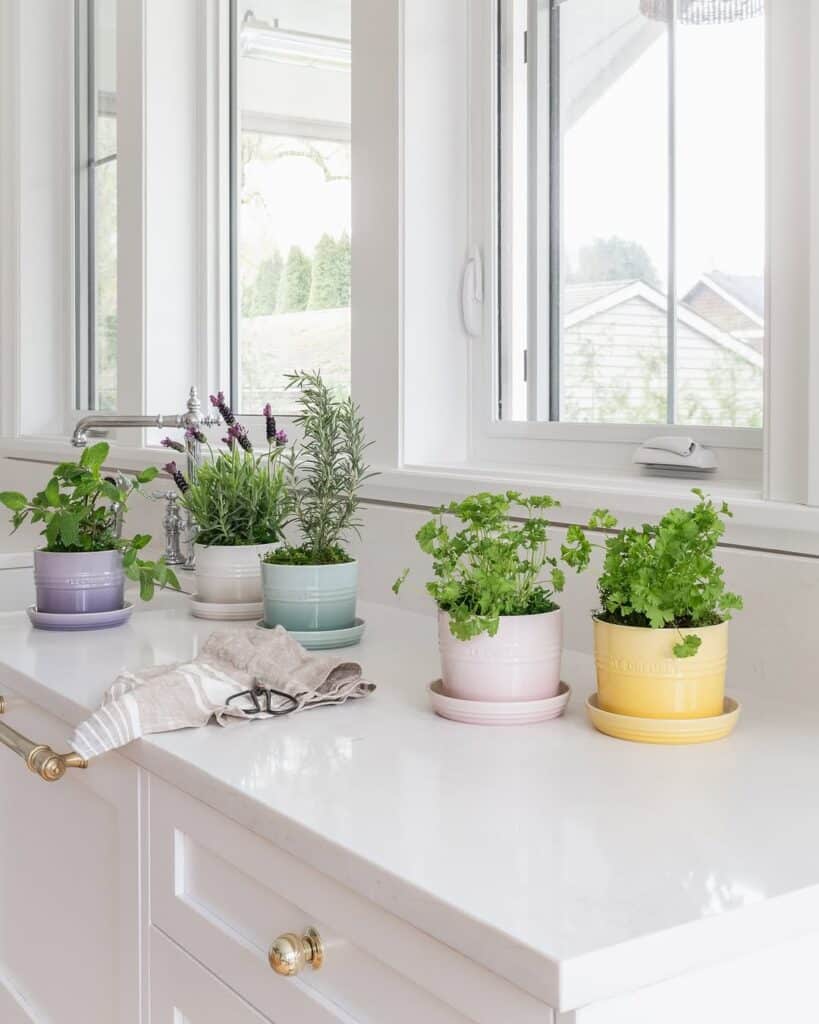
A built-in herb garden provides culinary utility while adding greenery to the kitchen.
A vertical herb garden can fit on a windowsill, in an island planter, or on a sunlit wall. It supports culinary convenience and contrasts with darker finishes.
Across the kitchen, herbs such as basil, thyme, and rosemary work with slate and oak. The greenery adds texture, freshness, and aroma.
Daily clipping encourages interaction with the kitchen. Culinary herbs function as useful plants that invite regular use.
A herb garden frame made from reclaimed wood and matte black materials supports a farmhouse aesthetic.
LED grow lights make year-round growth possible in low-light kitchens. Their discreet placement contrasts with structured cabinetry, while wild-growing greens add organic interest without clutter.
Store-bought herbs do not need to be the default with an integrated herb garden. The garden supports zero-waste cooking.
In a modern moody farmhouse kitchen, an herb garden built into the space brings practical use and rooted style.
Moody Kitchen Artwork
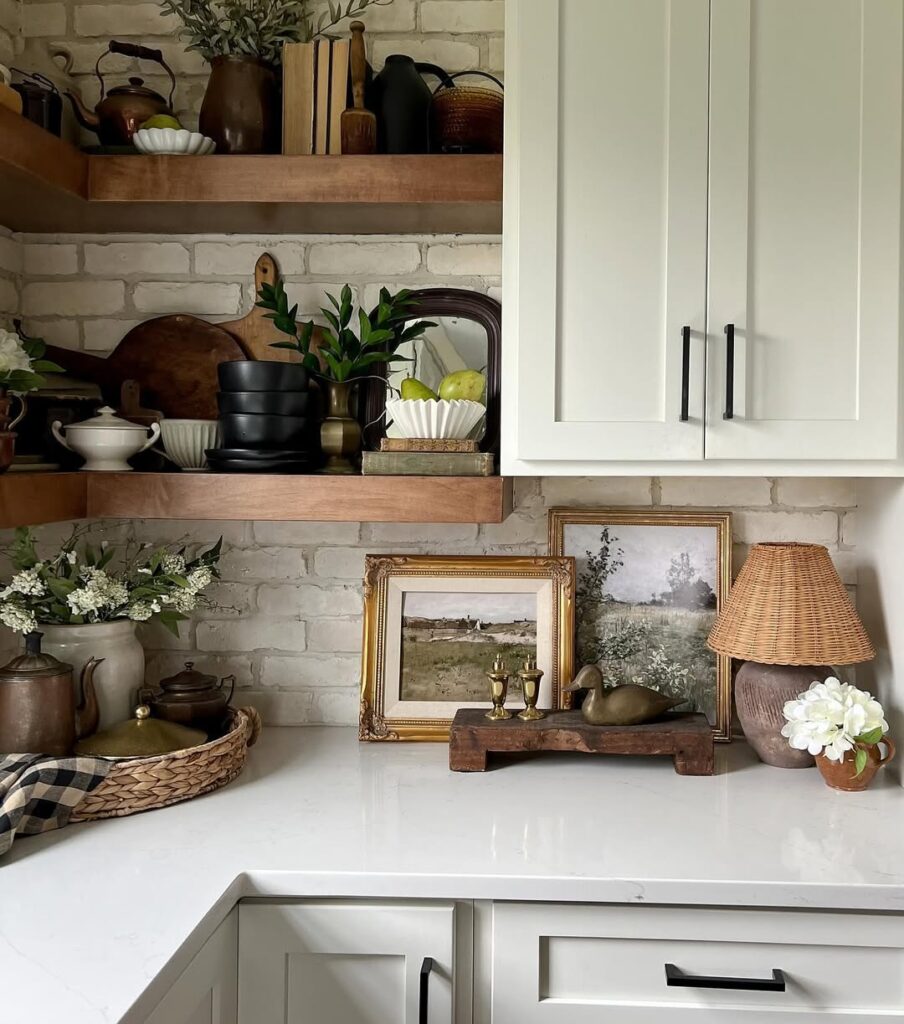
Wall decor shapes the kitchen atmosphere and helps establish the room's atmosphere.
The artwork provides historical character through sepia photography, antique signs, weathered landscapes, and vintage still lifes. A rustic framework supports it.
A matte wall sits behind the artwork. Its color options are slate, olive, and muted taupe.
Artwork frames can use raw wood, tarnished brass, and blackened metal. These materials echo the cabinetry and hardware.
Wall artwork uses a few large-scale pieces and keeps visual density low. A small gallery wall is included without overcrowding.
Decor such as sculptural pottery, iron candleholders, and woven wall hangings adds texture variation. These pieces bring different surfaces to the kitchen.
Aged cutting boards can lean against the backsplash, with apothecary jars nearby for pantry staples.
On breakfast nook walls, above open shelves, or over a vintage sideboard, decor can look collected rather than staged.
Moody decor can express personal history and support the kitchen's identity.
Layered decor gives a working space storied kitchen character. Its role is to alter the feel of that space.
Vintage Style Lighting
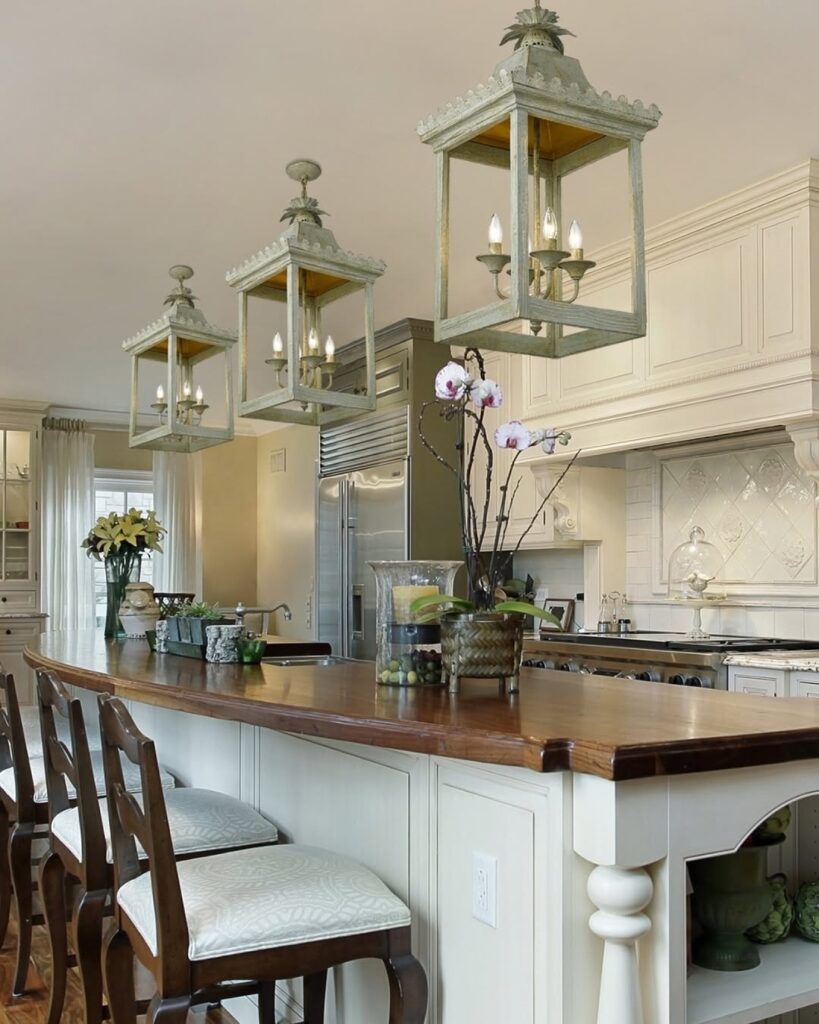
A vintage-inspired light fixture influences the mood of a moody farmhouse kitchen in ways that go beyond color or cabinetry. Used in the kitchen, it supports both authenticity and balance.
Wrought iron lanterns and aged brass sconces complement weathered textures and dark palettes. Fluted glass pendants join them, and all three types of lighting cast warm ambient light.
Vintage lighting provides illumination and reinforces the kitchen's character.
Porcelain enamel pendants from antique shops blend with butcher block, brick, and beadboard walls. An industrial shade with a patina finish works with those same materials.
Burnished tones and matte black can shape the lighting palette. Match the lighting finishes to cabinet hardware and faucet details.
Across the room, fixture height and bulb warmth affect the lighting placement. Both also influence the surface shadows in the kitchen.
The dining area and island can sit beneath a vintage chandelier. In an open-concept space, the chandelier anchors the room.
In a moody farmhouse kitchen, vintage lighting combines function and form. Avoid excess detail so the fixtures do not overwhelm the room.
Butcher Block Kitchen Counters
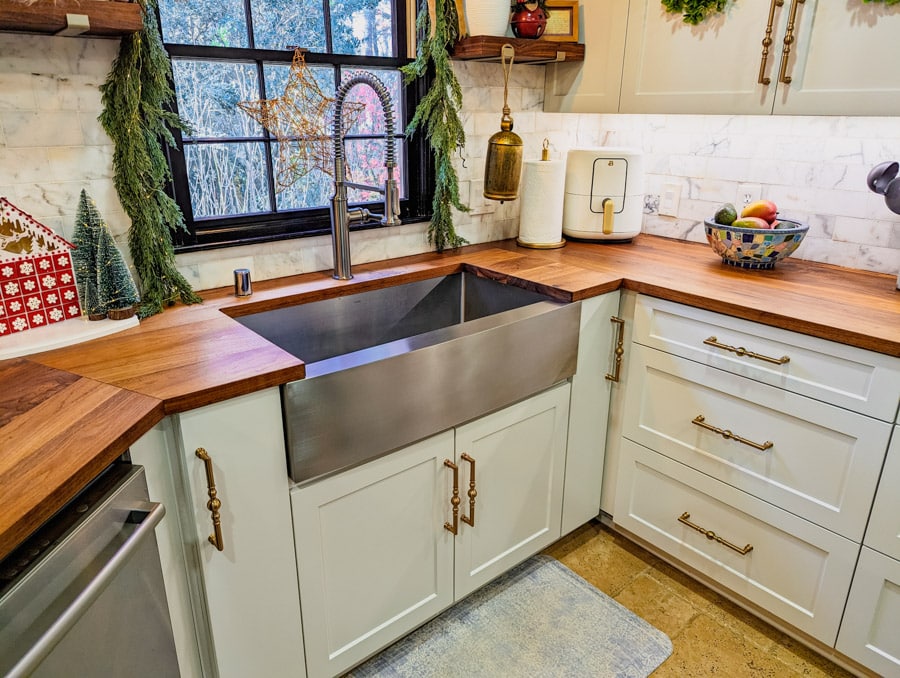
A natural wood butcher block countertop brings warmth to a dark kitchen. This countertop material is used in farmhouse kitchens.
In the kitchen, a wood countertop provides visual and functional value, along with warmth and patina. It balances heavier tones.
Visible aging is part of the wood countertop aesthetic. Unlike stone or quartz, wood countertops show age in a noticeably different way.
As the surface develops richness, its color and grain vary by species. Maple, walnut, and oak are favored choices, and the butcher block countertop complements matte black hardware, reclaimed shelving, and dark cabinetry.
In high-use areas such as prep stations and sink surrounds, oil the wood countertop regularly. Regular oiling enhances the wood tone and preserves durability.
A natural wood countertop pairs with vintage-inspired lighting and antique brass fixtures.
A butcher block on the kitchen island can serve as a centerpiece for kitchen styling and resale presentation. It also supports a functional layout.
The butcher block countertop provides a practical surface for everyday use while serving as a traditional design element in a moody farmhouse interior.
Full Wood Interiors
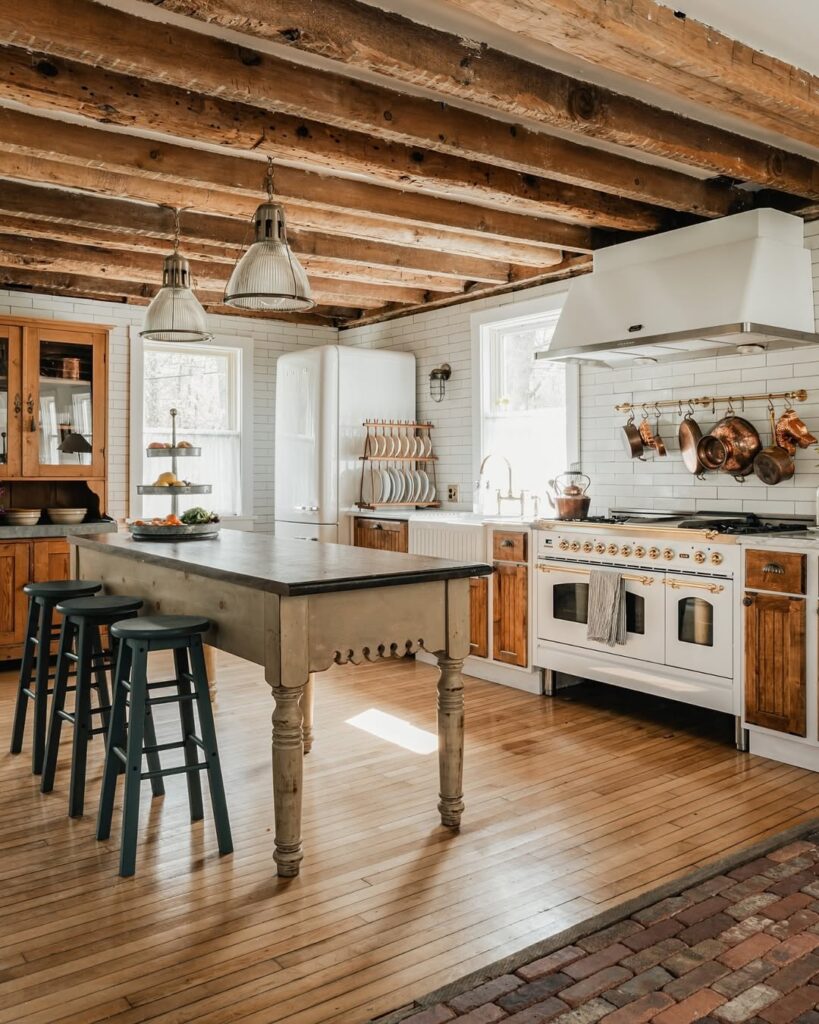
Natural textures can change the kitchen atmosphere. A moody farmhouse interior may use dark or mid-tone wood finishes.
Across the room, wood can extend over floors, cabinets, ceilings, and beams. This continuity gives the space a cohesive feel and adds intimacy.
Matching wood species can be applied to kitchen elements such as cabinetry, open shelving, and vent hoods. The choices are oak, walnut, or hickory.
In low-lit spaces, a matte finish can reduce glare. A wire-brushed finish is another wood option to consider.
Aged brass or blackened steel can join wood-saturated surfaces in the kitchen. Vintage tile backsplashes and creamy stone countertops balance the wood, while wood continuity suits open-concept homes and lets the kitchen serve as a visual anchor.
Lantern lighting and farmhouse sinks pair naturally with wood continuity. The combination also aligns with the quiet luxury movement.
In a cooking space, this enduring design solution creates a grounded setting. It can also give the room a soulful, character-filled feel.
Reclaimed Wood Kitchen Elements
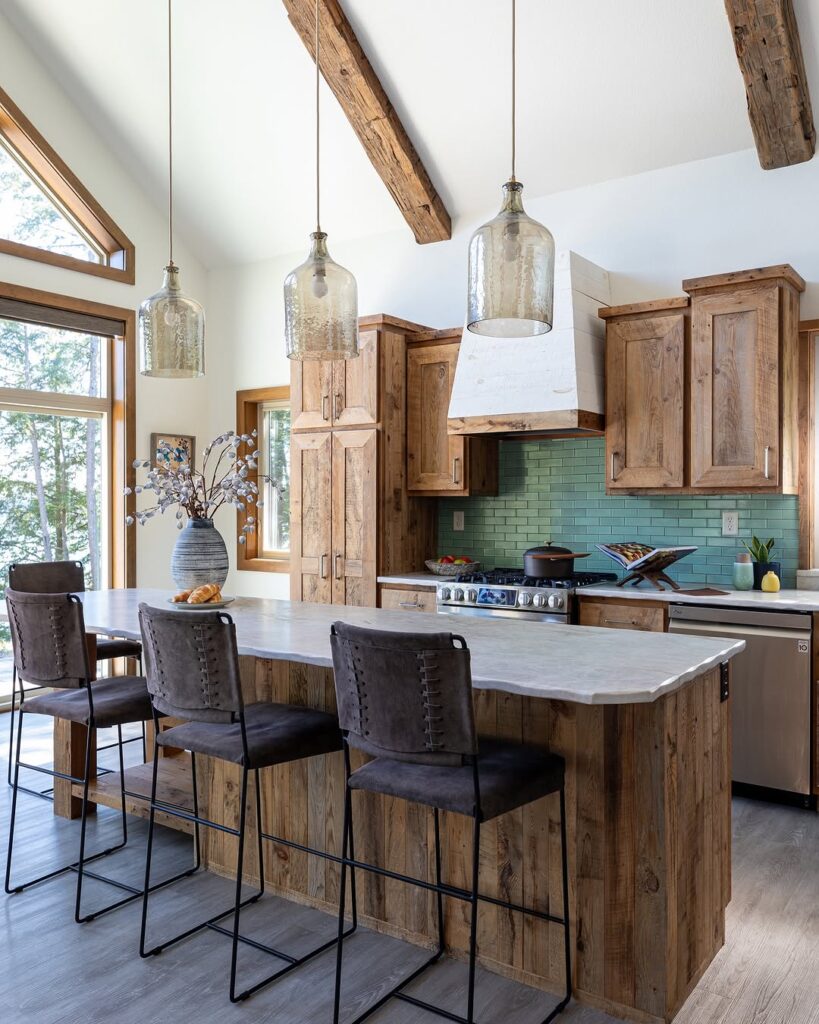
Salvaged material brings warmth and texture to kitchen design. Leave it unpolished for a more natural surface.
Reclaimed wood brings a warm, timeworn surface to the kitchen. It can shape ceiling beams, shelving, island facades, and hood framing, while also supporting eco-conscious design.
Reclaimed wood keeps its weathered look, with varied grain, nail holes, and a developed patina. Those marks are not replicated by mass-produced materials.
Reclaimed wood brings tactile interest to the kitchen. It blends with black accents, aged metal finishes, and stone counters.
Barns, old factories, and demolished homes can all supply reclaimed wood. Oak, pine, and chestnut are common species, and the history of each piece varies.
The island base uses reclaimed wood and combines rustic and refined qualities. It is paired with stools in matte black and charcoal cabinetry.
Reclaimed wood floating shelves vary in color and grain. They display dishware while keeping the material visible.
Natural oils help preserve the raw surface and support durability. Use natural oils on reclaimed wood instead of heavy sealants.
Reclaimed wood adds visual interest, warmth, and depth while also supporting sustainability.
Reclaimed wood gives a moody farmhouse kitchen lived-in character. It aligns with the kitchen's overall style.
Fabric Skirts for Kitchen Islands
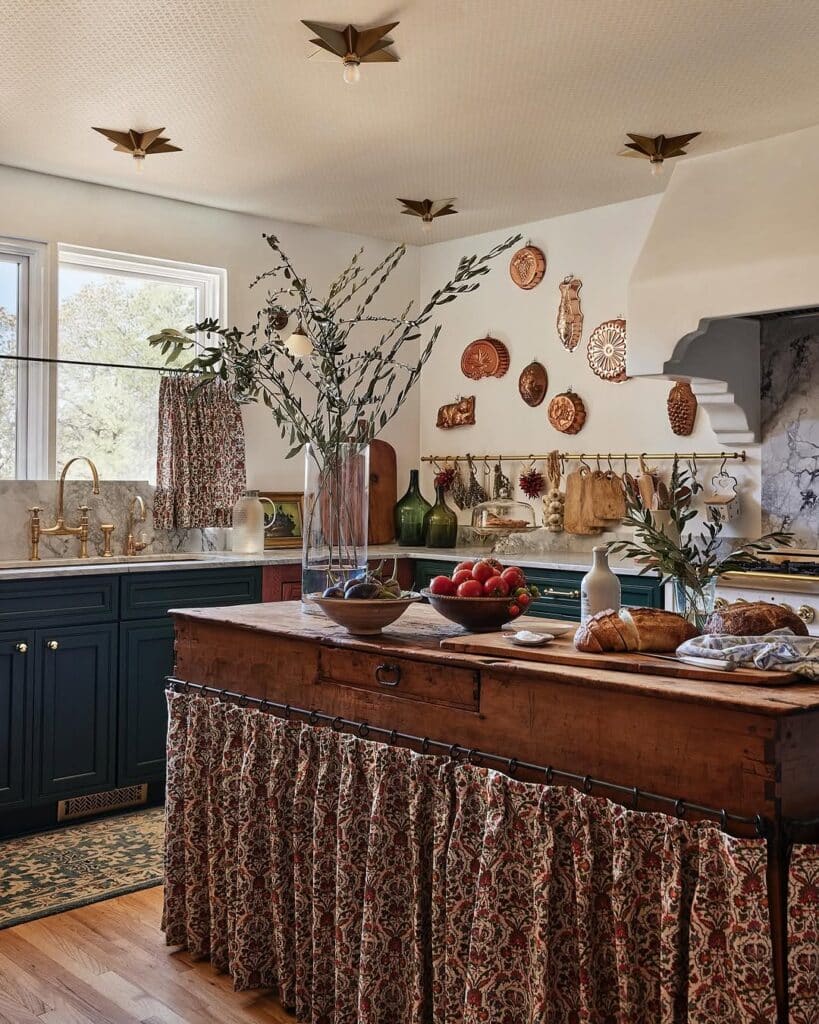
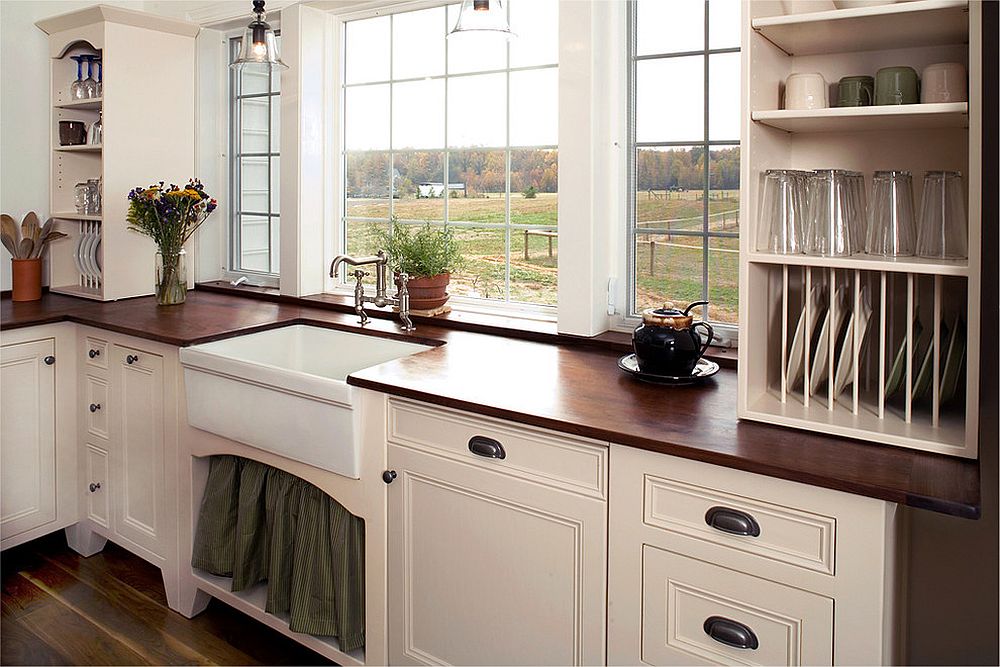
A fabric skirt gives the kitchen island a softer finish. Linen and cotton versions conceal lower storage while adding a useful layer of texture. Island skirts stand out against moody wood tones and aged metals, creating a clear contrast between soft fabric and harder surfaces.
Open shelving lets tucked-away essentials stay within reach and supports modern functionality. The skirted island also draws from traditional farmhouse aesthetics, combining familiar character with practical storage.
Skirted islands suit DIY renovators and renters, providing a quick upgrade. Choose muted patterns such as gingham, ticking stripes, or earthy solids.
Vintage hardware gives the skirted island pairing an older, collected look. Support details can include iron rods alongside salvaged wood countertops.
Café curtains and table linens can match the island skirt for a coordinated textile scheme. When choosing the skirt fabric, consider machine-washable material, with stain-resistant blends as another option.
In small kitchens, textile island skirts reduce visual heaviness.
Use the island as a foreground piece for charcoal cabinetry. A second placement puts it near an antique stove.
A skirted island requires little effort.
Moody Navy Design
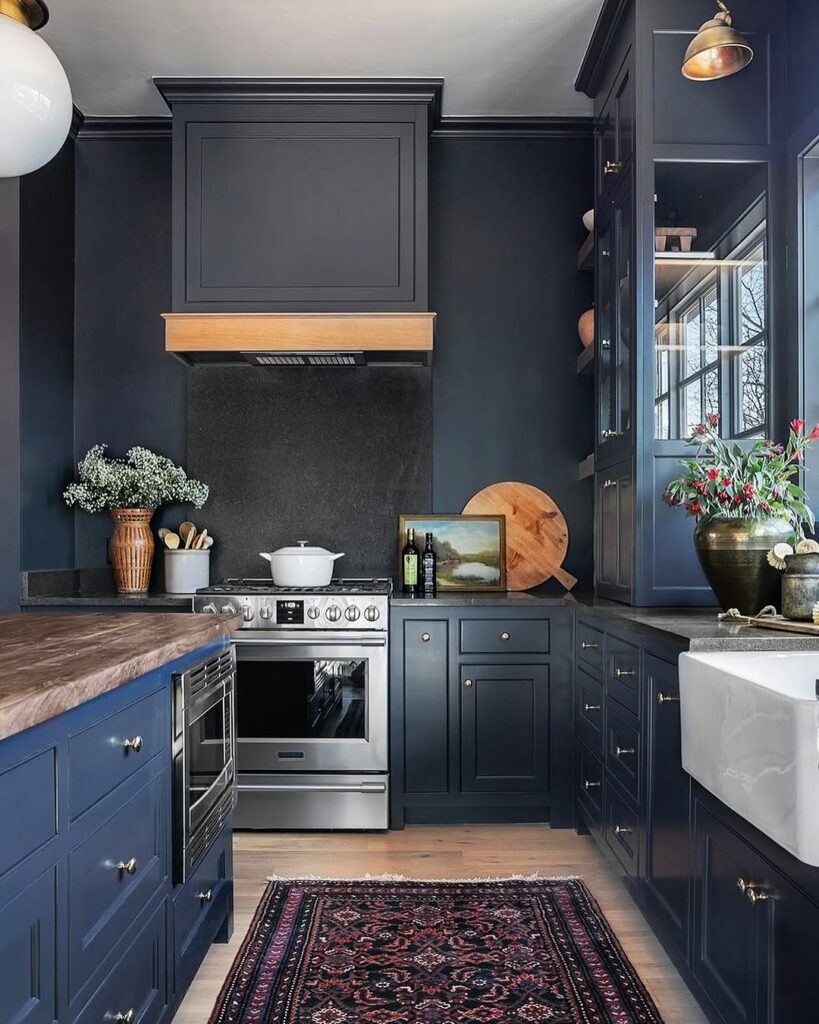
Farmhouse kitchens can use navy for added depth without making the room feel dark. The navy accent brings that moody farmhouse character into the kitchen.
Navy covers the range hood, cabinetry, trim, and an accent wall. It stands out against light wood, brass, and textured white surfaces.
A navy ceiling beam, deep blue pantry door, or navy stove hood can carry the color into key architecture. These accents provide high impact with a minimal color commitment, so reserve navy for the main architectural features.
Brass and copper pair naturally with navy cabinetry, while aged wood works against it. Interested users often look for navy cabinetry combinations with these materials.
Linen runners, hand-thrown pottery, and terracotta planters balance navy in a farmhouse kitchen. Use these linen, pottery, and terracotta materials to keep the color from taking on a nautical feel.
Navy reads as rich and dynamic throughout the day, whether the kitchen has low light or large windows. The same navy accent works in both lighting conditions.
Navy can sit alongside rustic farmhouse elements while setting the mood and adding depth. It is a designer favorite for darker farmhouse design.