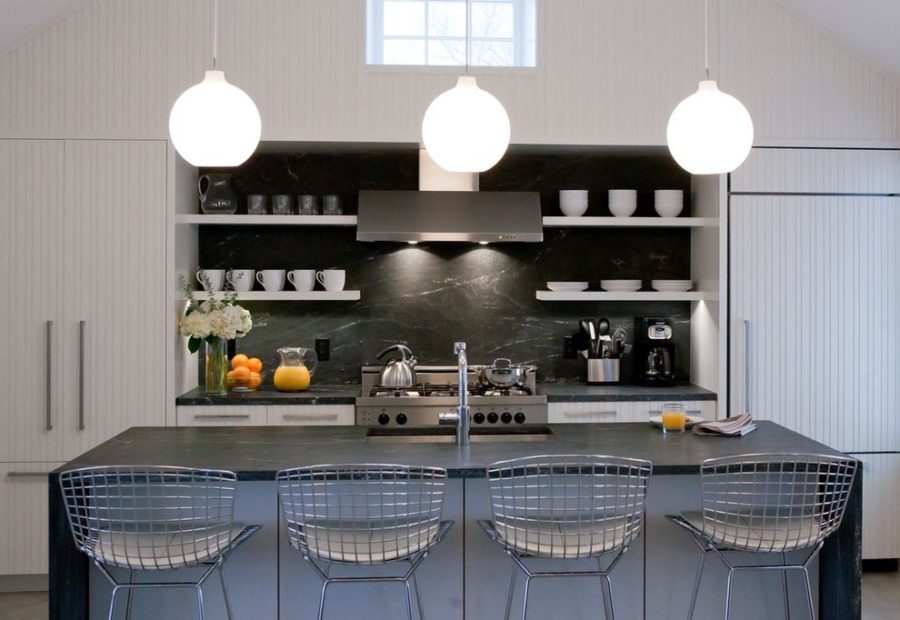
15 White Kitchen Cabinet Ideas That Handle Real Life
White cabinetry works in kitchens across all budgets and styles. It also suits everyday use.
White cabinetry can suit a full renovation or a small update. It also adapts as kitchen trends change.
White cabinetry brightens a space and works as a background accent. It is compatible with any hardware.
White cabinets come in finishes ranging from glossy surfaces to textured wood grain.
White cabinets support customization and leave room for creative design choices.
White Cabinets Integrated Lighting

Visibility improves when lighting is integrated into the cabinetry. That integrated lighting also supports kitchen efficiency.
Upper cabinets can hold strip or puck LED lighting underneath. It provides task illumination for meal preparation, while overhead lighting becomes less relied upon.
Interior lighting highlights display items in glass-front cabinets or on open shelving. It can draw attention to curated items and prized dishes.
A dimmer switch controls the integrated lighting. Dimmers allow adjustment by time of day and mood.
In the evening, warm light creates a cozy atmosphere for gatherings. Cool light is bright and provides clear visibility in the mornings.
Integrated lighting may increase real estate value through improved usability and attention to detail.
Smart lighting syncs with a home automation system.
Integrated lighting reduces dark corners where natural light is limited and balances shadows. It supports kitchen tasks such as slicing vegetables and reading labels.
Integrated lighting supports aesthetic and practical use. It keeps the lighting built into the cabinetry.
White Cabinets Wood Accents
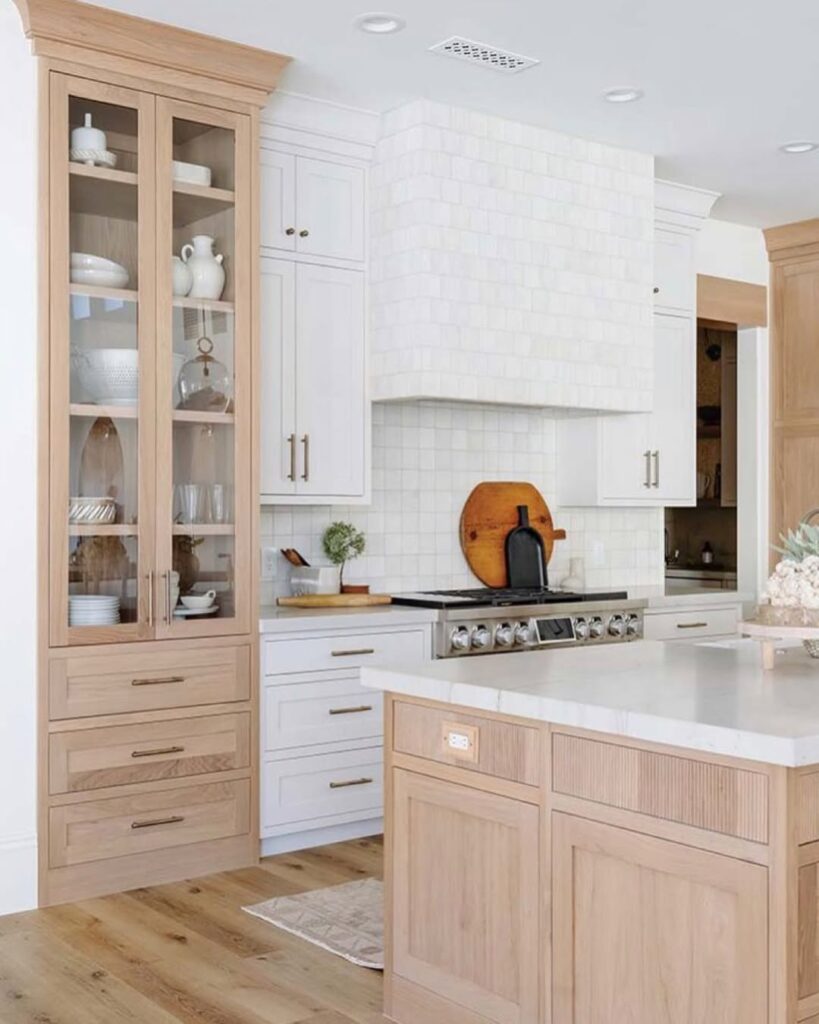
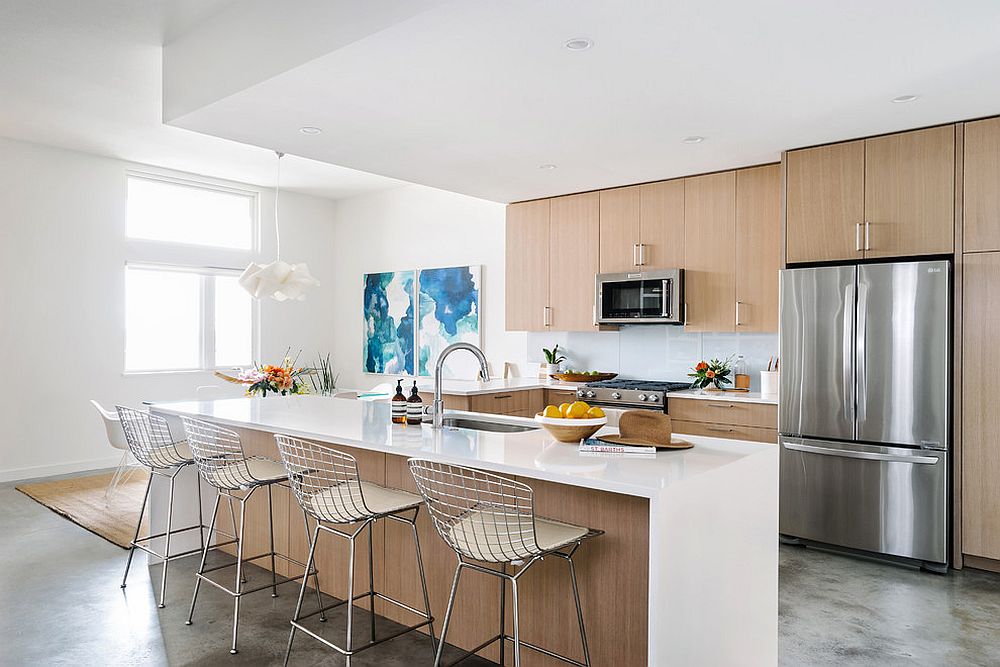
Natural wood accents combine with white cabinetry to add warmth and contrast. They preserve a light appearance while bringing wood into the design.
White upper cabinets pair with wood elements in open shelves, base cabinets, or an island. Oak and walnut are wood species to consider. The wood elements can be placed in any of those locations.
Wood introduces a connection to nature and softens white cabinetry. The material brings warmth while the cabinets keep the room light.
Wood grain adds personality, whether the wood is reclaimed or smooth and sealed. White cabinetry dominates the composition, while wood-and-white cabinetry suits Scandinavian, Japandi, and rustic-modern styles.
Start with the flooring and coordinate it with the wood tone. Warm metal hardware can be finished in aged brass or matte black.
Wood and white work together to soften a stark white interior. Above the wood accents, warm pendant lights or globe sconces can be used, while the pairing supports balance.
For remodels as well as new builds, wood-and-white cabinetry brings together crisp structure and nature-inspired texture.
Warm Creamy White Cabinets
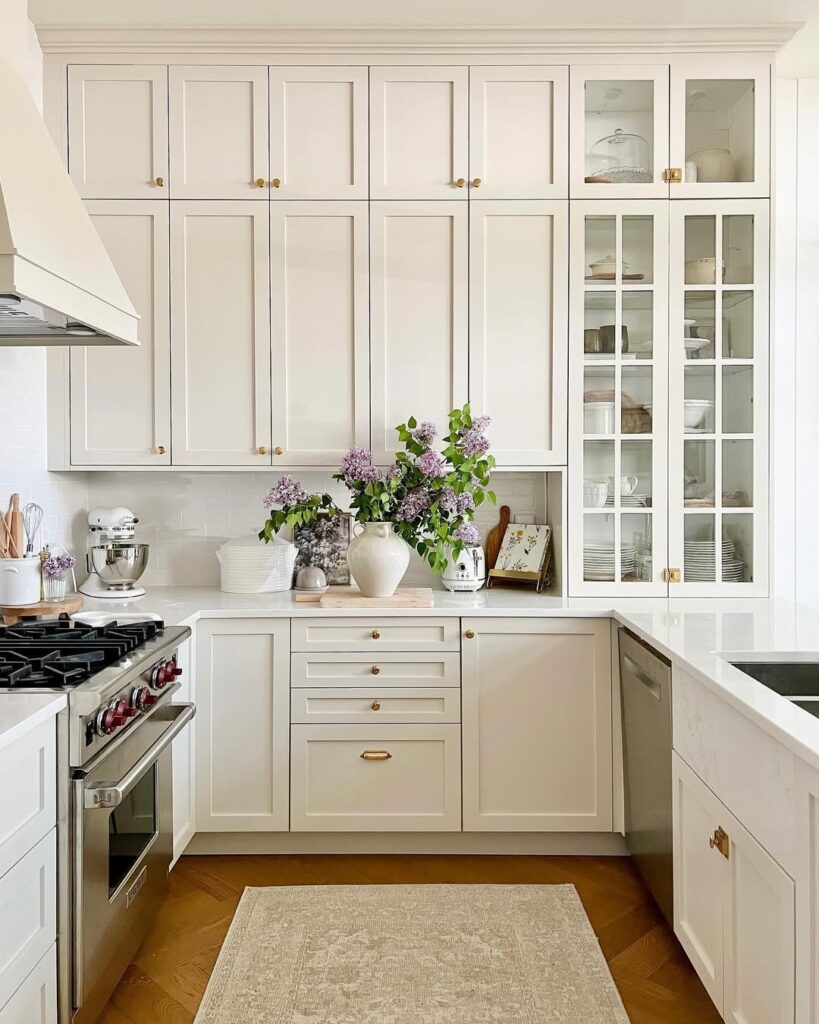
A warm undertone gives these creamy off-white cabinets their character. They work well as a background in the kitchen.
Creamy off-white is softer than classic white. The cabinet color has a gentler appearance than a brighter white.
Creamy off-white cabinets complement natural light. They can also help prevent spaces from looking sterile.
Creamy off-white cabinets pair with antique bronze hardware and brushed nickel hardware. Marble countertops and butcher block countertops work with them as well.
Creamy tones pair with ceramic backsplashes, brass fixtures, and wood floors.
Creamy off-white cabinets suit both traditional kitchens and transitional kitchens.
Taupe and sage green are flexible wall color options with creamy off-white cabinets. Compared with stark white, creamy off-white conceals smudges better and can reduce upkeep.
Designers say creamy off-white maintains brightness. It also has more depth than flat white.
Creamy off-white adds value as well as warmth. The cabinets pair with contemporary upgrades and vintage accents.
White Cabinets Marble Countertops
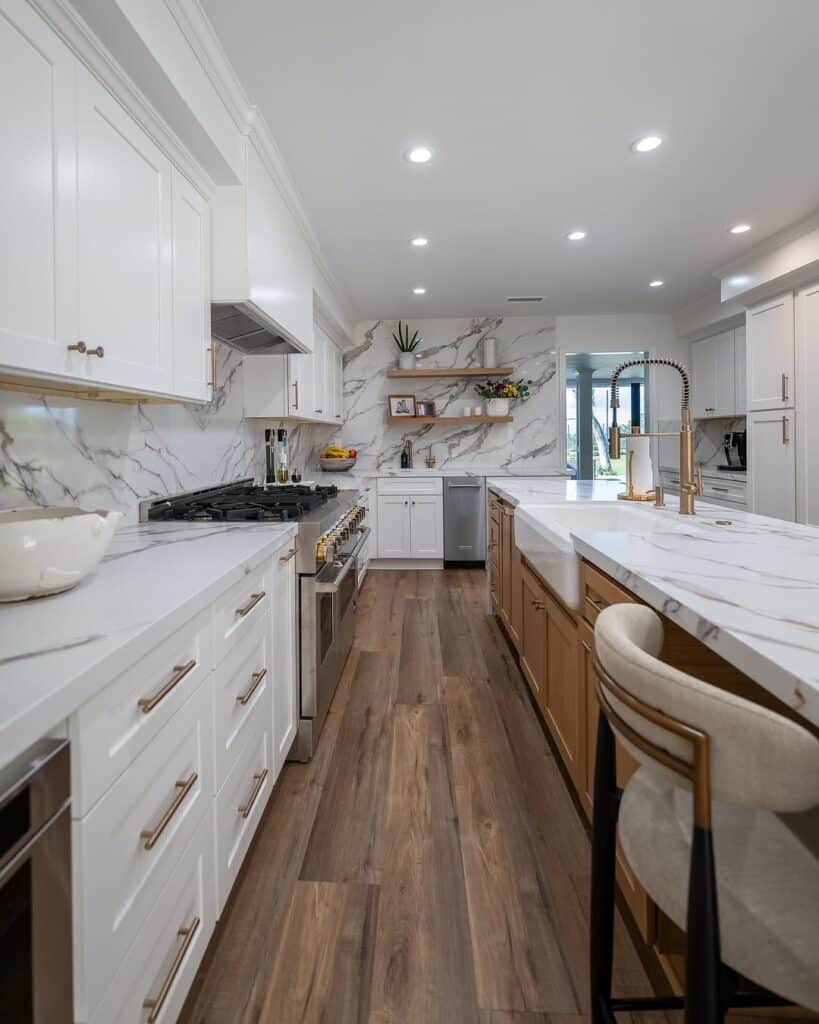
Marble countertops are paired with white cabinetry. Together, white cabinetry and marble are associated with luxury kitchens.
Marble brings natural veining to the room, while white cabinetry maintains a tonal harmony between the two surfaces.
Carrara, Calacatta, and Statuario marble complement white cabinetry.
Soft gray and gold marble veining adds depth and movement.
Seal the marble countertop, then maintain it regularly to support longevity, especially in kitchens with heavy traffic.
Honed marble offers reduced glare and resistance to minor etching. That finish is more forgiving in everyday use.
Matching marble or complementary tile can be used for the backsplash. Hardware in brushed nickel or antique brass should not overshadow the marble pairing, and it complements e40 while the backsplash coordinates with e41.
Under-cabinet lighting highlights the marble veining. Pendant lights above the kitchen island direct attention to the island.
White cabinetry and marble suit French country, transitional, and minimalist luxe styles. They may also improve resale appeal through broad market admiration.
Marble and white cabinetry offer performance alongside high visual impact. The combination works as a strong kitchen surface pairing.
White Cabinet Appliance Concealment
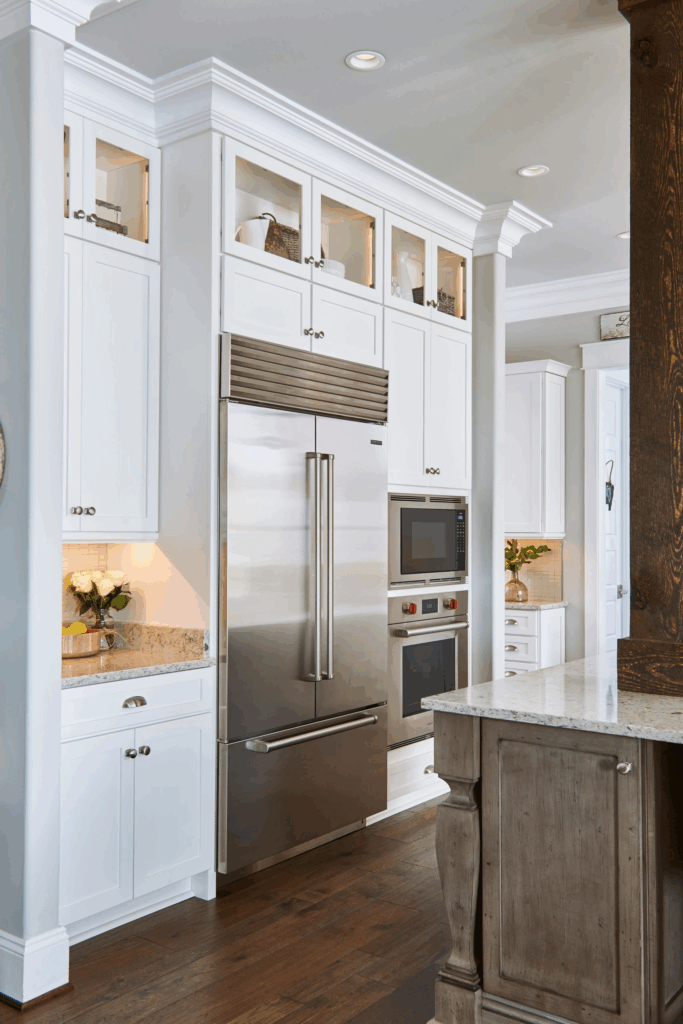
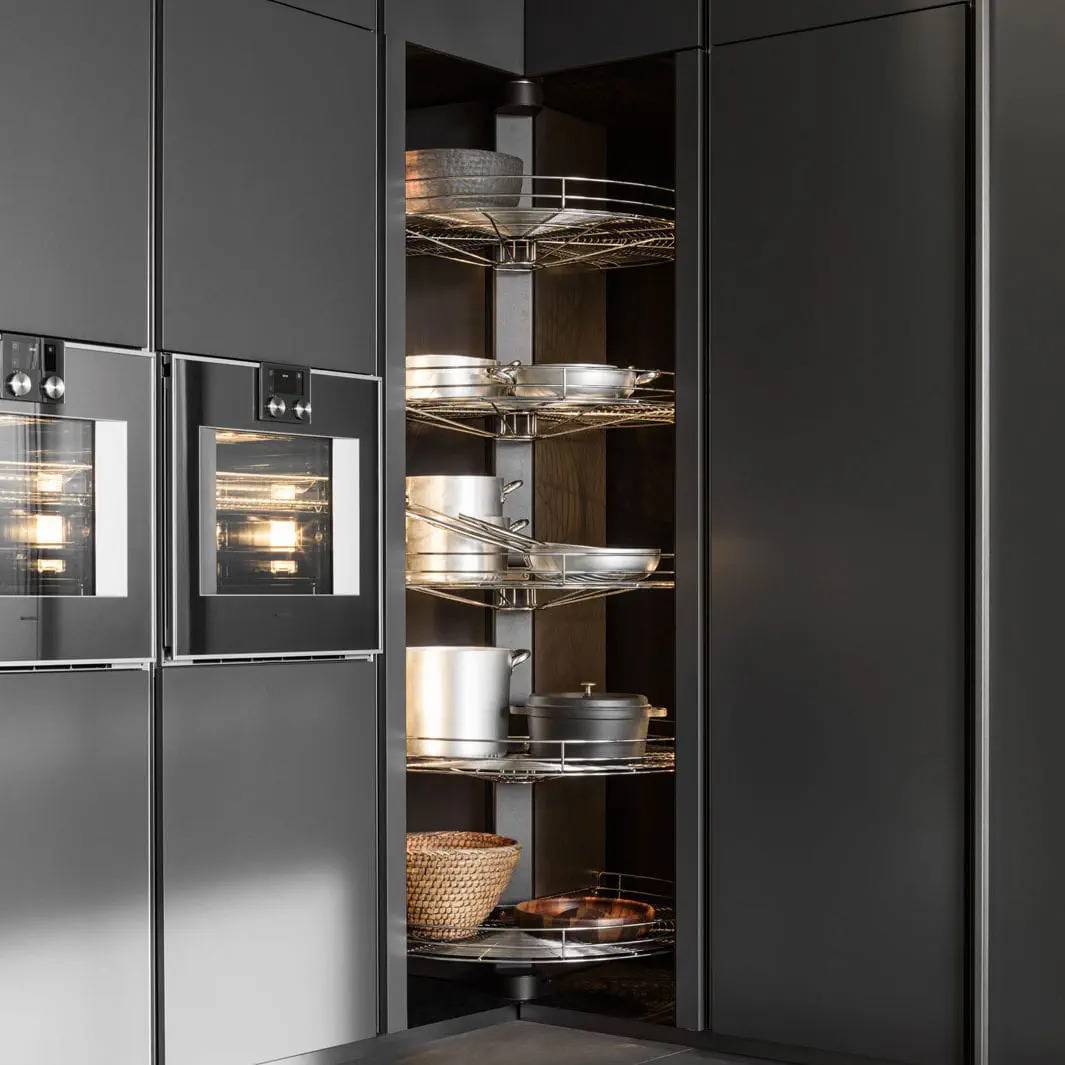
Concealed appliances are placed behind white cabinets. This supports seamless integration.
A panel-ready dishwasher, fridge, and range hood can sit behind white cabinet fronts. Concealing these appliances creates a continuous layout.
Matching cabinet fronts disguise concealed appliances and reduce visual clutter. That makes them suited to open-concept kitchens that need a cohesive flow.
Flat-panel doors and shaker doors can be used with hidden appliances. Push-to-open hardware and integrated handles both support a handle-free appearance.
Hidden appliances support a luxury finish and resale appeal. They can also increase perceived value.
With hidden appliances, layout flexibility increases and visual design constraints decrease.
Minimalist fixtures, concealed storage, and neutral backsplashes pair well with hidden appliances, a combination designers recommend. Proper placement and ventilation remain critical.
Concealed appliances minimize visual interruptions and support kitchen flow. They also maximize kitchen practicality and support a minimalist aesthetic.
White Cabinets and Open Shelves
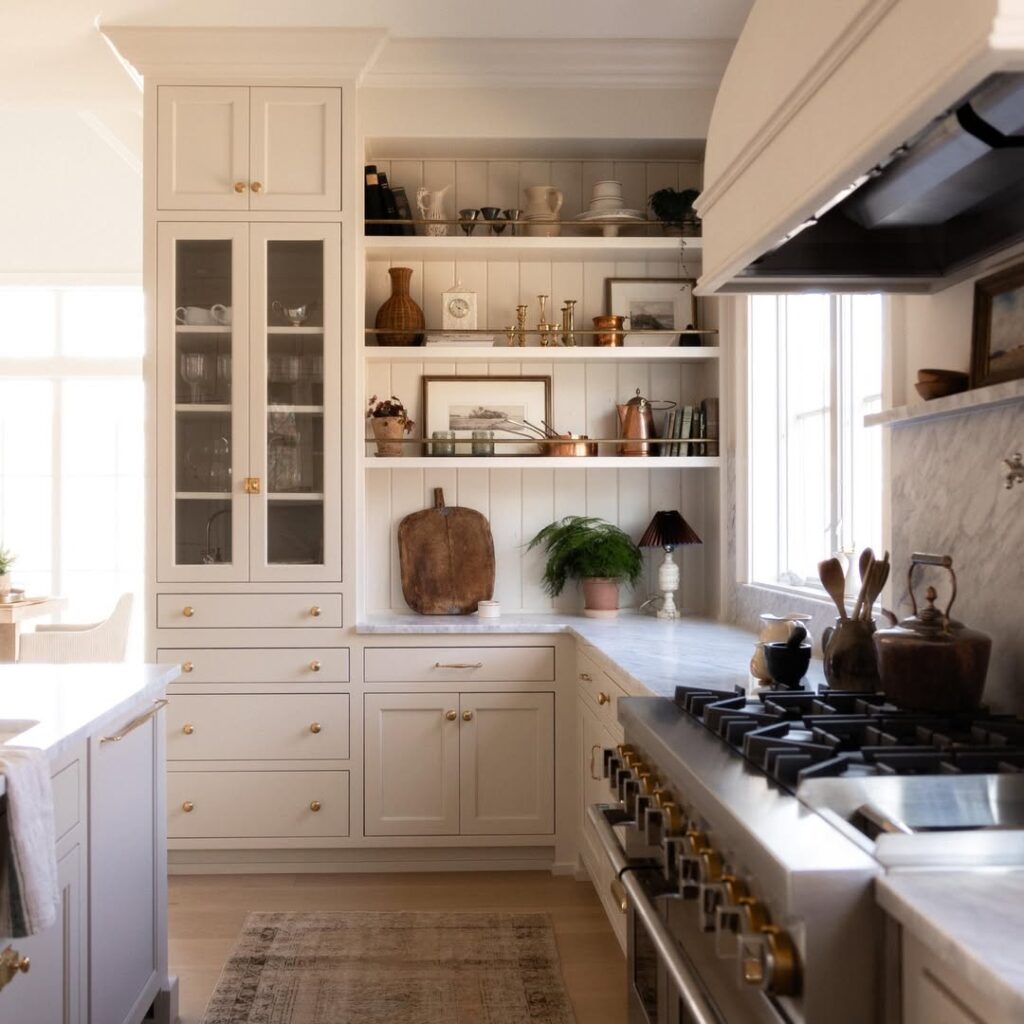
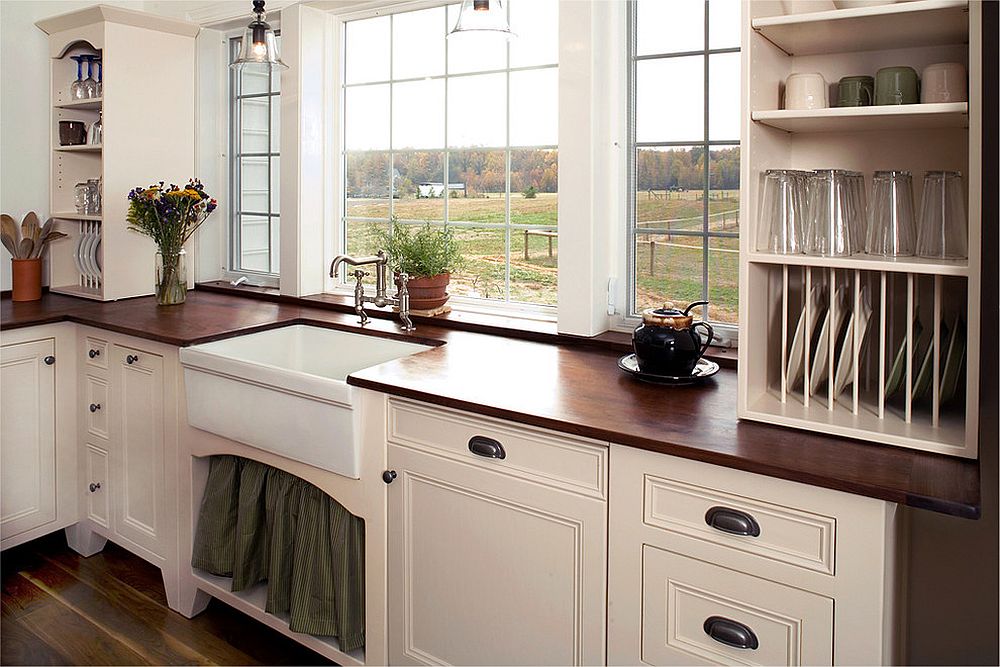
Open shelving provides display space and increases storage. It breaks up continuous cabinet lines and, when used with white cabinets, reduces visual load.
Natural wood, black metal, or glass can be used for the shelving. The shelving is paired with e1, and plates, mugs, and cookbooks are stored on it. Open shelves keep these everyday items accessible.
Open shelves suit smaller kitchens because they reduce a boxed-in feeling. Use them near stoves, sinks, and prep zones, replacing a limited section of the upper cabinets.
Use neutral dishware, small plants, and glass jars as display items. Maintain consistent spacing on the shelves, consider under-shelf lighting, and limit the shelf contents.
In the kitchen, open shelving supports kitchen function and adds accessibility without a full remodel. It does require regular dusting.
Open shelving supports adaptability and budget-conscious updates. With white cabinetry, it combines modern minimalism with traditional style.
White Cabinets Gold Hardware
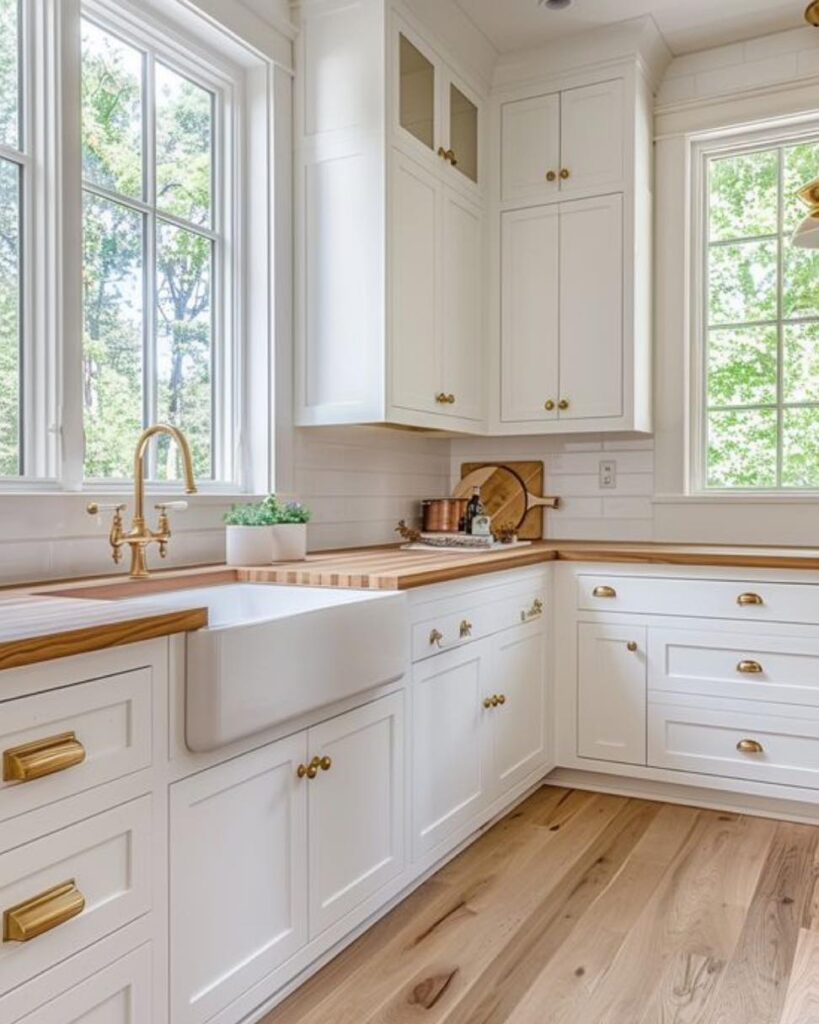
White cabinets set the base for this kitchen design. Gold-finish hardware is paired with the cabinets.
The design combines modern and traditional style.
White cabinetry contrasts with the hardware. Gold finishes draw attention to the hardware details.
A brushed, polished, or champagne-toned finish works for the gold hardware. Whichever option is used, the hardware has moderate shine.
Marble, quartz, and butcher block countertops work well with white cabinetry. A backsplash with metallic accents can echo the gold hardware, while soft gray, navy, and forest green are suitable cabinet color pairings.
Polished gold knobs and slim contemporary bar pulls offer different directions. Polished gold conveys a formal mood, while brushed gold feels more relaxed. The bar pulls contrast with ornate vintage knobs, and vintage cup pulls are another option.
White cabinets paired with gold hardware are trending in 2025. The combination brings versatility and visual interest.
Refresh the surrounding decor while retaining the base cabinetry.
Black Hardware on White Cabinets
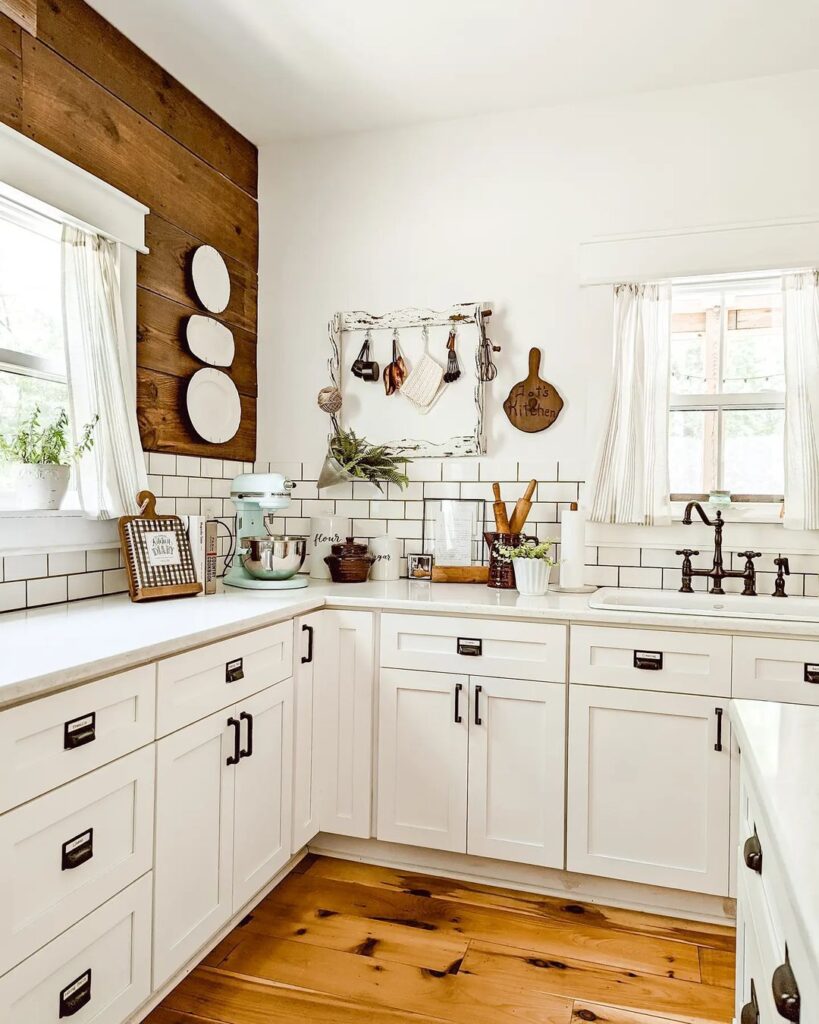
White cabinets paired with black hardware create monochrome contrast. The combination suits almost any kitchen layout.
Black pulls, knobs, and handles define the cabinet lines. Matte, satin, and wrought finishes add tactile depth and update shaker doors.
Match the hardware with black pendant lights and other black fixtures to support cohesion across the space. Farmhouse and traditional kitchens can use vintage knobs, while contemporary kitchens suit long horizontal pulls.
Stone countertops and natural wood flooring pair with the white-and-black cabinet combination. Natural materials should limit excessive contrast.
Light gray grout works with a white tile backsplash. It does not overpower the white cabinetry and subtly echoes the tones of the black hardware.
Black finishes can make cleaning less demanding. They also resist fingerprints more effectively than polished metals.
Black pairs with a range of surfaces and accent colors. Black hardware also supports future upgrades.
A hardware update changes the look of white cabinetry. This step does not require a full renovation.
Textured White Cabinetry

White cabinet finishes can be smooth, glossy, or textured. Textured finishes provide tactile dimension.
Brushed wood grain and linen-textured laminate can be used on white cabinets. These textured finishes remain within a white palette while adding subtle contrast.
Texture lines can run vertically or horizontally. They create visual movement and add interest.
Textured surfaces provide warmth and depth. Compared with flat fronts, they offer more depth and warmth.
Textured white cabinets can include white rift-cut oak veneer and embossed thermofoil panels. The embossed thermofoil has the appearance of a natural material.
Textured white cabinets combine a white appearance with organic texture. The cabinets retain the white look while adding surface variation.
Textured surfaces reflect light differently as lighting conditions vary. Depending on the time of day and lighting, they cast shifting shadows.
Brushed nickel and soft bronze are handle finish options for textured white cabinets. These cabinets pair with natural stone backsplashes and matte countertops.
Textured white cabinets add nuance and provide an alternative to traditional cabinetry. They avoid overwhelming the space.
Two-Tone White Cabinetry
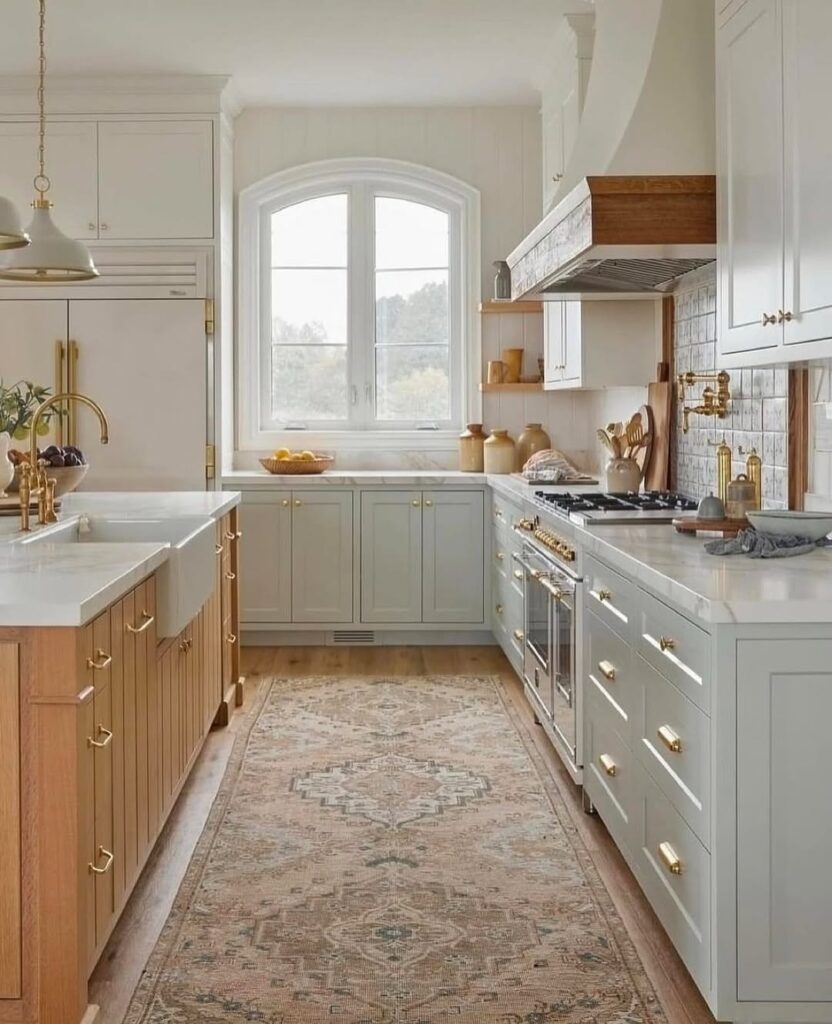
A contrasting second finish pairs with white cabinetry. Two-tone cabinetry allows experimentation with color and texture, while the white cabinetry preserves an open feel.
Dark upper cabinets with white lower cabinets create a dramatic effect. This arrangement is worth considering in kitchens with high ceilings. The reverse pairing also works, with white uppers above lower cabinets in a deeper finish or wood tone.
Navy, olive, charcoal, and sage are among the colors designers suggest for base cabinets beneath painted white uppers.
Two-tone cabinetry avoids an all-white monotony. It also preserves a timeless appeal.
Two-tone cabinetry can use brushed brass or matte black hardware. Choose hardware that unifies both cabinet tones, since either finish works across the color divide.
The backsplash and countertop set the tone. Depending on the desired aesthetic, these choices can either amplify or neutralize the contrast.
A different-finish island functions as a focal point and defines the cooking area. It can also define the dining area, while two-tone layouts improve visual zoning.
A new cabinet tone can refresh the entire look. The cabinetry also becomes easier to update.
White components support a fresh appearance, while a second tone supports personalization. Two-tone kitchens have versatility and functionality, and they allow customization.
White Cabinetry with a Bold Backsplash
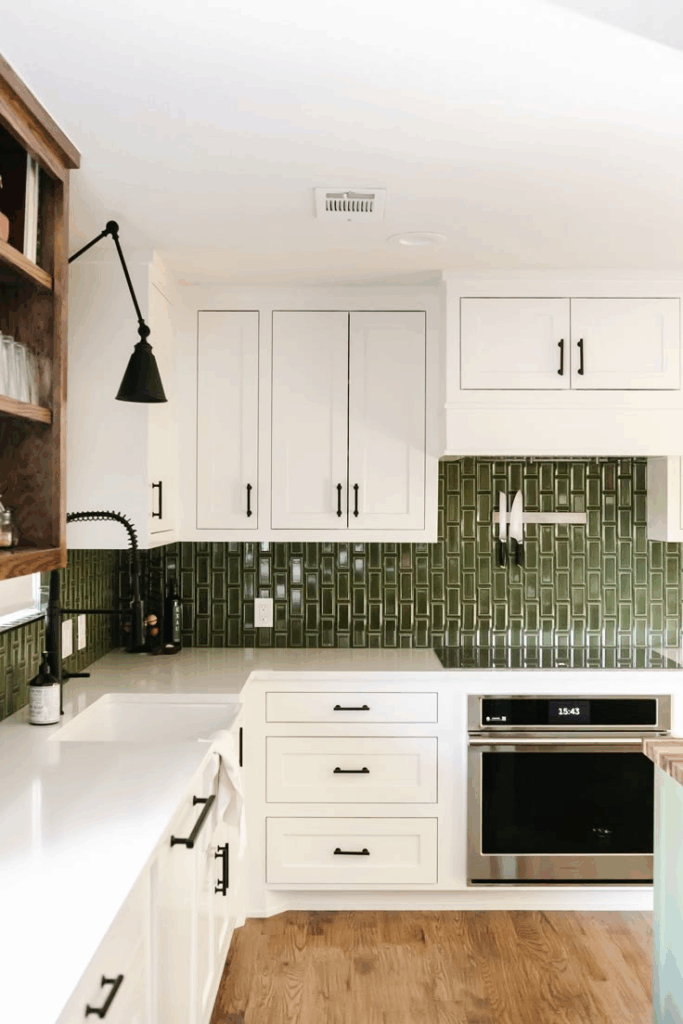
A vivid or patterned backsplash pairs with white cabinetry. The white cabinetry allows the use of bold materials and bold colors, while the bold backsplash works with the cabinetry as a clean backdrop.
Moroccan tile, herringbone, and mosaic glass can serve as a visual anchor. This type of backsplash suits neutral upper and lower cabinetry.
Blue, emerald, terracotta, or matte black backsplash colors contrast with white cabinetry. Geometric lines, chevron designs, and hand-painted motifs add texture and narrative.
Keep the countertops simple with white quartz or butcher block so the backsplash receives more emphasis. Brushed hardware coordinates with the backsplash and cabinetry.
White cabinetry lets a bold backsplash suit eclectic, bohemian, and maximalist styles. In minimalist layouts, the backsplash adds controlled personality.
Cabinetry is easier to update than a backsplash.
Ceramic, zellige, and peel-and-stick backsplash materials can set the design tone. White cabinetry provides flexibility.
White Cabinetry with White Oak

Crisp white cabinetry meets natural wood tones in this combination.
White oak brings natural texture and warmth. White cabinetry adds brightness through a clean white palette.
White oak provides organic texture. The white cabinetry maintains a light palette throughout the kitchen.
This white oak and white cabinetry combination works in Japandi kitchens and Scandinavian kitchens. Modern farmhouse kitchens can use it too.
Use oak on the central island and base cabinets, with white cabinets on the upper cabinets. The upper white cabinets visually open the room.
White oak and white cabinetry pair with matte black hardware or brushed brass hardware.
Designers put natural stone countertops with the combination, then use handmade-style backsplashes too.
The oak grain is enhanced by soft ambient lighting as white surfaces reflect brightness toward darker corners.
Natural variation in the oak can conceal wear over time. The white elements help preserve a fresh appearance.
White oak and white cabinetry support long-term relevance. Together, they also support everyday usability.
White Glass-Front Cabinets
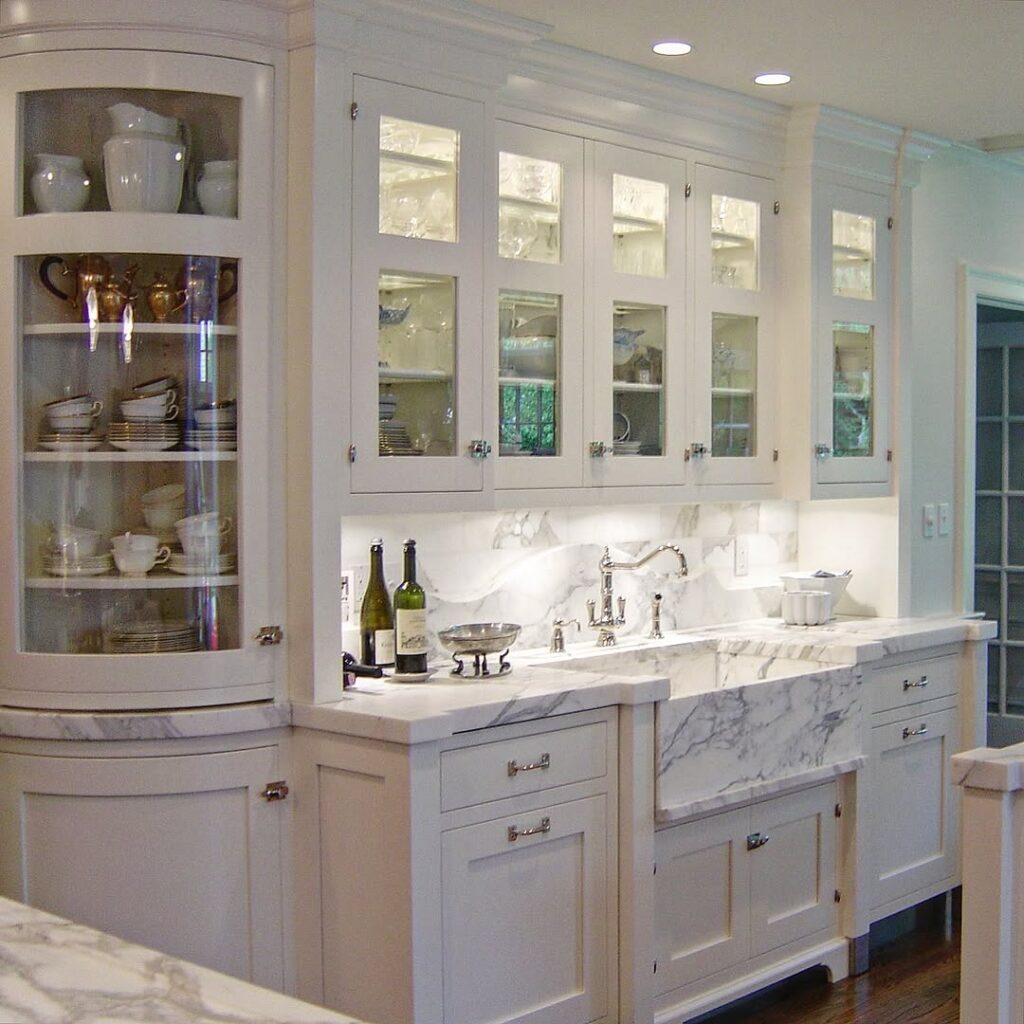
Glass-front cabinetry admits natural light. It allows glassware, dinnerware, and decor to remain on display.
Partial glass inserts break up solid cabinetry and may give the kitchen a lighter feel.
Glass panels may be frosted, seeded, or clear, with variable transparency. Choose the glass transparency according to privacy needs.
Install interior cabinet lighting for nighttime visibility.
Inside the cabinets, LED strips highlight small plants, barware, and dishes. Cabinet frames can use wood accents with white and black colors.
Glass-front cabinets work in both contemporary and traditional kitchens. Placing them in the upper sections helps reduce visual bulk.
Group similar items to maintain order. Use uniform containers to maintain cohesion.
Glass-front cabinets reduce visual clutter and support organization. Visible contents can encourage order.
Glass-front cabinets suit small kitchens. They can reduce a confining feel.
White Fluted Cabinetry with Vertical Grooves

The vertical grooves add tactile texture to the cabinet panels. They also increase visual depth.
A rhythmic pattern gives fluted detailing a handcrafted feel and interrupts the sameness of flat surfaces.
The cabinetry is fluted, making it suitable for contemporary and classic interiors. Vertical lines can give the ceiling a taller appearance and make the space seem larger.
Fluted detailing suits small kitchens by adding architectural interest without making the room feel bulkier.
Minimal pulls can emphasize the texture of fluted cabinet doors. Pair the doors with smooth drawer fronts and flat side panels, using brushed-metal handles for the cabinet hardware.
Travertine or matte stone can be used as natural materials with neutral walls to avoid visual competition. Side lighting adds soft groove shadows, and the shadows bring dimensionality.
Fingerprints and daily smudges are less of a problem on fluted surfaces than on glossy flat ones.
Fluted detailing can give a white-on-white kitchen a unique look without adding color or pattern.
Glossy White Slab Cabinets
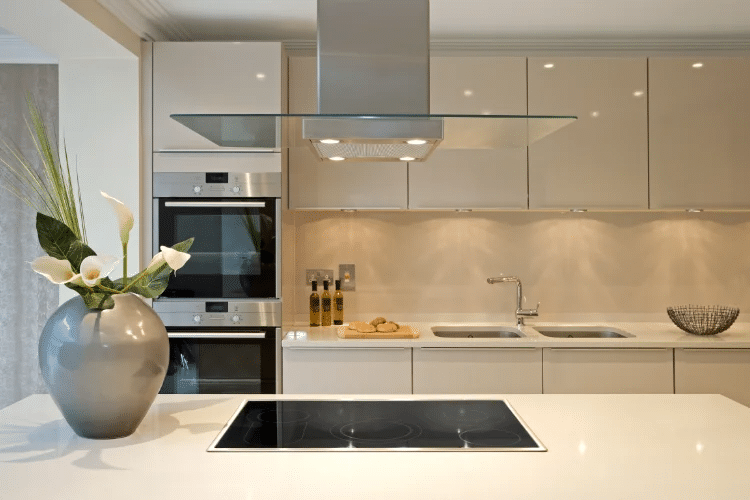
A high-shine finish gives these slab-front cabinets an ultra-clean profile, with modern and contemporary styling.
The sleek slab-front cabinets have no raised panels and no visible handles. Their reflective surface can make the kitchen feel larger.
A glossy finish supports light maximization. Glossy slab-front cabinets work especially well in city apartments and small layouts.
Integrated hardware and push-to-open options keep the cabinetry streamlined. The glossy finish reflects both artificial light and natural light.
Minimalist neutrals pair with glossy cabinets. Navy, emerald green, and black accents also work with the cabinets.
Polished quartz countertops pair with glossy cabinets, as do stainless steel countertops. Textured flooring or matte flooring can balance the glossy finish.
Wipe down smooth cabinet surfaces as part of regular maintenance.
Slab-front cabinetry makes a modern design statement.
Slab-front cabinetry supports clutter-free spaces and aligns with clean living. It suits tech-forward homes.
Slab-front cabinets support accent lighting. They also provide a simple backdrop for sculptural decor.